



2025
Nicolas Cage
Horror Actor · Biography · Horror Filmography · Family · Collaborators · Credits
Horror subgenres & themes
Most represented across this person's horror filmography:
BODY HORROR
• FOLK
• HALLOWEEN
• TRUE CRIME
Biography
Nicolas Cage and the Horror of Uncontrolled Transformation
Nicolas Cage has developed one of the strangest horror careers of any major American actor. He did not become associated with the genre through a single franchise or recurring monster. Instead, horror repeatedly gave him characters who could push performance beyond ordinary behavioral limits: a man convinced he is becoming a vampire, a father infected with murderous rage, a grieving survivor descending into a psychedelic nightmare, a man confronting an impossible alien color, a silent drifter destroying possessed animatronics, Dracula himself and finally the grotesque occult killer at the center of Longlegs.
These roles suit Cage because horror allows emotional states to become physical. Fear can become screaming, grief can become violent transformation, obsession can alter the voice and body, and madness can exist without requiring the performance to remain conventionally naturalistic. Cage has repeatedly used the genre as a space where exaggeration and sincerity can occupy the same moment.
His horror filmography also demonstrates an unusual movement from cult outsider to established genre icon. Vampire's Kiss initially appeared as an eccentric black comedy that many audiences did not know how to process. Decades later, films such as Mandy, Color Out of Space, Willy's Wonderland, Renfield and Longlegs increasingly treated Cage's capacity for extremity not as a problem to control but as one of the principal reasons to cast him.
Vampire's Kiss and the Birth of Horror Cage
Robert Bierman's Vampire's Kiss became the foundational horror performance of Cage's career. He plays Peter Loew, a New York literary agent whose encounter with a mysterious woman convinces him that he is transforming into a vampire.
The film deliberately keeps the reality of that transformation unstable. Peter behaves increasingly like a creature of the night, avoids daylight, purchases cheap plastic vampire teeth and terrorizes the people around him, yet the possibility remains that the entire transformation exists within a rapidly collapsing psychological state.
Cage responds by abandoning almost every expectation of restrained screen naturalism. Peter's accent changes, his body contorts and ordinary conversations become theatrical events. The performance can be comic, disturbing and pathetic within the same scene.
The notorious moment in which Cage eats a live cockroach became part of the mythology surrounding the film, but the deeper importance of Vampire's Kiss lies in the performance style it established. Horror gave Cage permission to treat transformation as something that could happen simultaneously to voice, body and psychology.
Robert Bierman and the First Horror Transformation
Robert Bierman was therefore an important early horror collaborator even though he and Cage made only one film together. Vampire's Kiss created a template that later horror filmmakers would repeatedly rediscover.
Peter Loew does not require elaborate creature effects to become monstrous. Cage turns performance itself into the special effect. The increasingly bizarre movement and speech communicate transformation before the story offers any objective evidence that a vampire exists.
This distinction became central to Cage's horror persona. Later filmmakers could surround him with monsters, cults, cosmic entities or supernatural killers, but the actor remained capable of creating horror simply through the instability of his own behavior.
The Wicker Man and Horror Becoming Internet Mythology
Neil LaBute's 2006 remake of The Wicker Man became one of the most notorious films in Cage's career. He plays police officer Edward Malus, who travels to an isolated island while investigating the disappearance of a young girl and discovers a community organized around rituals he increasingly suspects are connected to the case.
The film was poorly received, but its afterlife became enormous. Scenes of Cage panicking, shouting and reacting to increasingly bizarre threats circulated widely online and transformed sections of the movie into internet-era cult material.
That reception is important to Cage's later horror career. Audiences increasingly began treating the intensity of a Cage performance as an attraction in itself. Horror filmmakers eventually learned to build material around that expectation instead of accidentally colliding with it.
The Wicker Man therefore occupies an awkward but significant position. It is not one of Cage's strongest horror films, yet its cultural survival helped establish the exaggerated public version of Nicolas Cage that later filmmakers could consciously manipulate.
Pay the Ghost and Supernatural Fatherhood
Pay the Ghost returned Cage to more conventional supernatural horror in 2015. He plays Mike Lawford, a professor whose young son disappears during a Halloween carnival and who gradually discovers that the disappearance may belong to a much older supernatural pattern.
The role is substantially more restrained than Vampire's Kiss or his later cult performances. Cage functions primarily as the parent attempting to understand an impossible threat and recover his child.
The film demonstrates the breadth of his horror persona. Cage does not always need to become the monster or the most unstable person in the story. He can also operate as the relatively ordinary human point of entry into supernatural events.
Mom and Dad and Murderous Parenthood
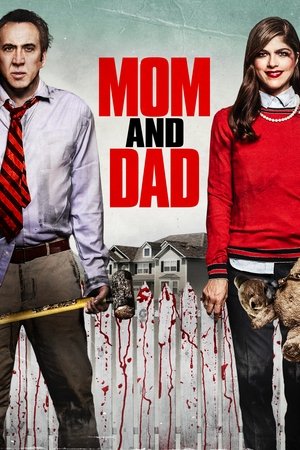
Brian Taylor's Mom and Dad gave Cage another extreme horror-comedy premise. A mysterious phenomenon suddenly causes parents to develop an overwhelming desire to murder their own children.
Cage plays Brent Ryan opposite Selma Blair as Kendall. Their ordinary frustrations with middle age, parenthood and unrealized expectations become grotesquely amplified once the unexplained homicidal impulse begins.
The concept works because the characters do not begin as monsters. Domestic dissatisfaction already exists, but the horror transforms resentment into literal violence. Cage can therefore move between frustrated father, comic grotesque and homicidal threat without the film requiring those modes to remain separate.
Taylor uses Cage's capacity for explosive performance directly. The film's manic energy gives him room to move from ridiculous physical comedy to genuine danger while preserving the emotional exhaustion underneath the spectacle.
Mandy and Grief as a Descent into Hell
Panos Cosmatos's Mandy (2018) became the decisive modern horror film in Cage's career. Cage plays Red Miller, a man living an isolated life with Mandy Bloom until a cult led by Jeremiah Sand destroys that existence.
The first half of the film establishes the intimacy between Red and Mandy before violence ruptures the relationship. What follows is revenge cinema transformed through psychedelic horror, demonic imagery, heavy-metal aesthetics and extreme practical violence.
Cage's performance is crucial because the movie requires grief to become physically enormous. One of its most memorable sequences isolates Red after Mandy's death as he drinks vodka, screams, cries and attempts to process an emotional state too large for controlled behavior.
The scene demonstrates why Cage and horror can be so compatible. His extremity does not necessarily undermine seriousness. The performance is visually and emotionally excessive because the film itself has entered a world where ordinary expression is no longer sufficient.
Panos Cosmatos and the Reinvention of Cage as Horror Icon
Cosmatos understood that Cage's intensity could function within a carefully controlled visual environment rather than simply overwhelm it. Mandy surrounds the actor with saturated color, smoke, heavy music, fantasy imagery and practical gore until Red appears to be travelling through a personal version of Hell.
Instead of asking Cage to become more realistic, Cosmatos creates a cinematic world capable of matching the scale of the performance.
The collaboration became a turning point. After Mandy, Cage increasingly appeared in horror projects designed specifically around the expectation that his presence could support unusual, extreme or deliberately cult-oriented material.
Color Out of Space and Lovecraftian Mutation
Richard Stanley's Color Out of Space brought Cage into direct contact with H. P. Lovecraft. He plays Nathan Gardner, whose family and isolated property become contaminated after a meteorite brings an impossible color into their environment.
The horror develops through corruption rather than conventional invasion. Plants change, animals mutate, time becomes unreliable and human bodies begin undergoing increasingly disturbing transformations.
Cage allows Nathan's behavior to deteriorate alongside the landscape. His vocal patterns become unstable and moments of paternal authority begin collapsing into aggression and confusion.
The performance therefore mirrors the central Lovecraftian idea: contact with something fundamentally outside human understanding does not simply threaten the characters physically. It destroys their ability to interpret reality.
Richard Stanley and Cosmic Horror
Stanley's direction gives Cage another environment in which exaggeration becomes narratively useful. Nathan is not simply having a psychological breakdown. His family is being affected by an alien presence that alters biology, perception and space.
The film's increasingly unnatural color palette, mutations and sound design create a world in which Cage's behavioral changes feel like part of the same contamination affecting everything else.
The collaboration consequently connects two artists strongly associated with cult cinema and unusual genre material. Cage supplies emotional instability while Stanley provides a cosmic mechanism capable of making that instability part of the physical universe.
Willy's Wonderland and the Silent Horror Hero
Willy's Wonderland (2021) performs one of the strangest experiments in Cage's horror career: his character never speaks.
Directed by Kevin Lewis, the film casts Cage as an unnamed drifter forced to clean an abandoned family entertainment center populated by murderous possessed animatronic mascots.
The absence of dialogue reverses the popular image of Cage as a performer defined by unusual vocal delivery. The Janitor instead communicates through movement, facial reactions, ritualized breaks and sudden acts of extreme violence.
The joke is that the monsters appear to believe they are trapping another victim inside the building, while Cage's character treats destroying them almost like another part of his cleaning assignment.
The film therefore converts the actor from endangered protagonist into almost unstoppable horror hero. The possessed animatronics are the monsters, but the narrative increasingly suggests that they have made the mistake of locking themselves inside with him.
Kevin Lewis and Horror Without Dialogue
Kevin Lewis understood that removing Cage's dialogue would not remove his screen identity. The performance remains unmistakably Cage because physical rhythm replaces speech.
The Janitor cleans, drinks energy drinks, plays pinball and returns to work according to a private routine that the film never explains. This refusal to provide backstory makes him almost as mysterious as the supernatural creatures.
The collaboration demonstrates how adaptable Cage's horror persona had become. A performer famous for verbal and emotional excess could carry a feature through deliberate silence.
Renfield and Finally Becoming Dracula
Chris McKay's Renfield (2023) gave Cage the role that Vampire's Kiss had almost predicted decades earlier: Count Dracula.
Where Peter Loew desperately believes he has become a vampire, Dracula requires no uncertainty. Cage enters a character already defined by more than a century of literary and cinematic history.
The film approaches the mythology through horror-comedy, centering on Renfield's attempt to escape his abusive relationship with his master. Cage consequently plays Dracula as supernatural predator, narcissistic employer and grotesque comic presence simultaneously.
Makeup allows Dracula to appear in different stages of physical recovery, but the performance remains recognizably built around Cage's willingness to shift rapidly between charm, vanity and explosive threat.
Chris McKay and the Dracula Connection
McKay's casting gains particular significance from Cage's earlier horror history. The actor who once played a man psychologically disintegrating because he believed himself to be a vampire now becomes cinema's most famous vampire outright.
Renfield deliberately treats Dracula as an enormous personality, making Cage's established screen excess part of the character rather than something that needs to be restrained.
The result is less traditional Gothic terror than violent horror-comedy, but the role completes an important circle within Cage's relationship with vampire cinema.
Longlegs and Cage Becoming Unrecognizable
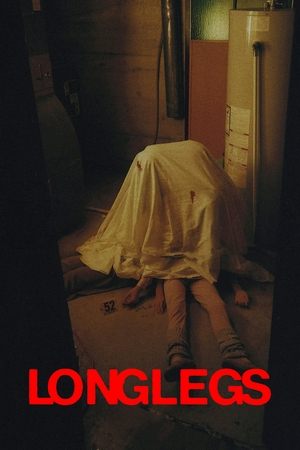
Osgood Perkins's Longlegs (2024) gave Cage one of the most radical transformations of his horror career. He plays the title character, an occult serial killer connected to a series of family murders investigated by FBI agent Lee Harker.
Heavy makeup, pale skin, long hair and an unusual high vocal register make Cage difficult to recognize. The transformation is important because his celebrity normally enters a film before the character does. Perkins attempts to interrupt that familiarity.
Longlegs appears relatively sparingly, yet the character's presence hangs over the entire investigation. The film builds anticipation around him before providing sustained contact.
Cage and Perkins also deliberately limited his interaction with Maika Monroe before their principal scene together, allowing Lee Harker's encounter with Longlegs to retain an element of genuine unfamiliarity.
The performance differs sharply from the physical rage of Mandy or the silence of Willy's Wonderland. Longlegs is disturbing through voice, appearance and behavior that seem slightly disconnected from recognizable human social rhythm.
Oz Perkins and the Horror of Withholding Cage
Perkins understood that a Nicolas Cage horror performance did not need constant screen time to dominate a film. Instead, Longlegs frequently withholds him.
The strategy turns Cage into anticipation. The audience knows he is somewhere inside the story long before the investigation provides a clear understanding of who or what he is.
When Longlegs finally occupies the screen more directly, the transformation prevents the normal comfort of recognizing the movie star underneath the character.
The collaboration therefore represents another major reinvention. Cage had already demonstrated that he could dominate horror through screaming, grief, silence and black comedy. Perkins discovered how effective he could be when reduced almost to an apparition.
Arcadian and the Father in the Creature Feature
Arcadian (2024) returned Cage to creature horror in a far more restrained mode. He plays Paul, a father attempting to protect his sons after civilization has collapsed and nocturnal creatures have made survival increasingly dangerous.
The film gives much of its attention to the younger characters, allowing Cage to function as the experienced parent rather than the primary source of spectacle.
This restraint is significant within his horror career. By this stage filmmakers could use audience expectations surrounding Cage and then deliberately refuse to deliver another wildly exaggerated performance.
Paul's purpose is protective. The creatures carry the grotesque physical energy while Cage provides the emotional structure of the family trying to survive them.
The Carpenter's Son and Religious Horror
The Carpenter's Son (2025) moved Cage into explicitly religious horror. He plays the Carpenter, a version of Joseph, within a story imagining the adolescence of the Boy in a world where miraculous power and supernatural threat begin to emerge together.
The film uses religious mythology as the basis for horror rather than treating faith simply as protection against a conventional demon. The family confronts forces connected directly to the identity and developing abilities of the child.
Cage's role is comparatively restrained beside several of his modern genre performances, functioning primarily as an authoritarian and frightened father attempting to control circumstances he cannot fully understand.
The project extended an already diverse horror filmography into another subgenre, adding biblical and religious horror to the vampires, cosmic mutation, killer cults, possessed machines and occult serial killers that had preceded it.
Performance as a Horror Effect
The strongest connection across Cage's horror roles is transformation. Sometimes makeup provides it, as in Longlegs. Sometimes the environment produces it, as in Color Out of Space. Sometimes grief transforms the character, as in Mandy. In Vampire's Kiss, performance itself creates the transformation.
Cage's willingness to risk embarrassment is particularly useful to horror. Fear, possession, insanity and extreme grief can look ridiculous when performed without commitment. Cage frequently crosses that boundary deliberately and continues until the ridiculousness becomes disturbing again.
This is why his horror performances can sustain apparently contradictory reactions. Audiences may laugh and remain unsettled at the same moment. The actor does not require those responses to cancel each other.
Nicolas Cage's Horror Legacy
Nicolas Cage entered horror through Vampire's Kiss, where Robert Bierman allowed him to construct a transformation almost entirely through performance. Decades later, Panos Cosmatos used grief, psychedelic imagery and extreme violence to reinvent him as the avenging center of Mandy. Richard Stanley placed him inside Lovecraftian bodily and environmental corruption in Color Out of Space.
Kevin Lewis then removed Cage's voice entirely in Willy's Wonderland, proving that his horror persona could survive without dialogue. Chris McKay finally turned him into Dracula in Renfield, while Oz Perkins buried the familiar actor beneath the disturbing physical and vocal construction of Longlegs.
These films do not create one consistent Nicolas Cage horror character. Their importance comes from the opposite quality. Each director discovers another way to use a performer whose screen identity appears capable of mutation.
That makes Cage unusually suited to horror. The genre continually asks what happens when familiar people, bodies and environments cease behaving according to expected rules. Nicolas Cage has spent much of his career doing exactly the same thing to acting itself.
Photos (20)
Images: TMDB
Selected Work
Notable Horror Collaborators
Notable collaborators and creative partners throughout Nicolas Cage's horror career.
RB
Robert Bierman
Formative Horror Director
Bierman directed Cage in Vampire's Kiss, the cult horror performance that first established transformation, instability and extremity as central elements of his genre identity.
 Panos Cosmatos
Defining Horror Director
Cosmatos reinvented Cage as a modern horror icon through Mandy, turning grief and rage into the center of a psychedelic nightmare.
 Richard Stanley
Lovecraftian Horror Director
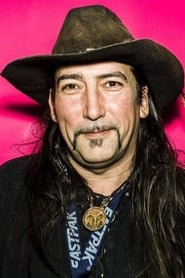
Stanley cast Cage at the center of Color Out of Space, using his escalating instability as part of the film's cosmic and bodily corruption.
KL
Kevin Lewis
Cult Horror Director
Lewis built Willy's Wonderland around Cage as a completely silent horror hero, transforming physical routine and controlled violence into the character's entire language.
 Oz Perkins
Defining Modern Horror Director
Perkins transformed Cage almost beyond recognition for Longlegs, using limited screen time, makeup and an extreme vocal performance to create an occult horror presence.
CM
Chris McKay
Gothic Horror-Comedy Director
McKay cast Cage as Dracula in Renfield, completing a remarkable horror progression from the imagined vampirism of Vampire's Kiss to the genre's most famous vampire.
Panos Cosmatos
Defining Horror Director
Cosmatos reinvented Cage as a modern horror icon through Mandy, turning grief and rage into the center of a psychedelic nightmare.
Richard Stanley
Lovecraftian Horror Director
Stanley cast Cage at the center of Color Out of Space, using his escalating instability as part of the film's cosmic and bodily corruption.
KL
Kevin Lewis
Cult Horror Director
Lewis built Willy's Wonderland around Cage as a completely silent horror hero, transforming physical routine and controlled violence into the character's entire language.
Oz Perkins
Defining Modern Horror Director
Perkins transformed Cage almost beyond recognition for Longlegs, using limited screen time, makeup and an extreme vocal performance to create an occult horror presence.
CM
Chris McKay
Gothic Horror-Comedy Director
McKay cast Cage as Dracula in Renfield, completing a remarkable horror progression from the imagined vampirism of Vampire's Kiss to the genre's most famous vampire.
Nicolas Cage Horror Movies
Acting (13 credits)
2024
2024
2023
2021
2021
2020
2018
2017
2015
2013
2006
1989
Production (6 credits)
2025
2024
2024
2021
2006
2000