



2026
Joko Anwar
Horror Director · Biography · Horror Filmography · Collaborators · Credits
Horror subgenres & themes
Most represented across this person's horror filmography:
FOLK
• HAUNTED HOUSES
• BODY HORROR
• WITCHCRAFT
Biography
Joko Anwar and contemporary Indonesian horror
Joko Anwar became one of the most internationally visible Indonesian filmmakers of the twenty-first century and a central figure in the modern revival of the country’s horror cinema. After beginning his career as a journalist and film critic, he moved into screenwriting and directing before developing a sustained body of horror through films including The Forbidden Door, Ritual, Satan’s Slaves, Impetigore, Satan’s Slaves 2: Communion, Grave Torture and Ghost in the Cell. His television work also includes the supernatural series Halfworlds and the anthology Joko Anwar’s Nightmares and Daydreams.
Anwar’s horror draws extensively on Indonesian supernatural traditions, religious belief and regional folklore while remaining closely connected with contemporary urban and family life. His films have also played a substantial role in the international circulation of Indonesian genre cinema through festivals, streaming platforms and theatrical distribution outside Southeast Asia. His success developed alongside a wider generation of Indonesian horror filmmakers, including Kimo Stamboel and Timo Tjahjanto, whose work helped restore the genre to commercial and critical prominence after earlier periods of Indonesian horror production.
Early life and work as a film journalist
Joko Anwar was born in Medan, North Sumatra, on January 3, 1976. He grew up as an enthusiastic film viewer and later studied aerospace engineering at the Bandung Institute of Technology, although he did not pursue that field professionally. He worked as a journalist and film critic before entering the Indonesian film industry, giving him a professional background in writing about cinema before he began making films himself.
His early screenwriting work included projects for other directors before he made his own feature-directing debut. The transition took place during a period of significant renewal in Indonesian cinema following political and industrial changes around the end of the Suharto era. A younger generation of filmmakers was working with greater stylistic freedom and rebuilding genres that had strong local histories but had declined commercially during the previous decade.
Joni’s Promise and the beginning of a directing career
Anwar made his feature-directing debut with Joni’s Promise in 2005. The film is a romantic comedy centered on a cinema projection courier and does not belong to horror, but it established him professionally as a director and demonstrated his knowledge of popular film culture. His subsequent work moved increasingly toward darker material.
This broader early career remains important because Anwar never worked exclusively within horror. Crime, drama, superhero cinema and science fiction appear elsewhere in his filmography, and his genre work developed alongside those interests. Horror became his strongest international identity only after several years of directing and screenwriting.
Dead Time and early supernatural filmmaking
Dead Time, originally titled Kala, in 2007 combined noir, mystery and supernatural material within a stylized urban setting. The film follows an investigation into a series of violent events and gradually develops a mythology connecting the present with hidden history. Although its genre identity extends beyond horror, it introduced several characteristics that became important in Anwar’s later work, particularly an interest in supernatural explanations embedded within modern social environments.
The film also established working relationships that continued through later projects. Anwar has repeatedly collaborated with a relatively stable group of Indonesian performers, cinematographers, composers and producers, allowing visual and musical approaches developed on one production to evolve across subsequent films.
The Forbidden Door
The Forbidden Door in 2009 moved Anwar further into psychological horror. Fachri Albar plays Gambir, a successful sculptor whose apparently stable professional and domestic life becomes increasingly disturbed by mysterious messages and evidence of hidden abuse. The narrative develops through uncertainty about what is physically real and what belongs to another level of the character’s perception.
The film became one of Anwar’s early international festival successes and helped establish his reputation outside Indonesia. Its combination of psychological instability, violent imagery and shifting narrative perspective differs substantially from the folklore-based supernatural films he directed later, demonstrating the range of approaches present within his horror career.
Ritual and survival horror
Ritual, released internationally as Modus Anomali, in 2012 strips the setting down to a forest and a protagonist attempting to reconstruct what has happened to his family. Rio Dewanto plays a man who awakens without clear memory and gradually discovers evidence of violence and pursuit. Information is deliberately restricted so that the viewer learns the structure of the situation at roughly the same pace as the protagonist.
The film relies more heavily on survival horror and psychological manipulation than on the Indonesian folklore associated with Anwar’s later international successes. It demonstrates his ability to construct horror around narrative information and physical environment without requiring a large supernatural mythology.
Halfworlds and supernatural television
Anwar directed the first season of HBO Asia’s Halfworlds, a supernatural series set in Jakarta and based around demonic beings living alongside human society. The production expanded his genre work into serialized television and gave him experience handling a larger ensemble and mythology over multiple episodes.
The series also contributed to the growing visibility of Southeast Asian genre production through regional premium television. Its mixture of local supernatural concepts and contemporary urban settings anticipated some of the ways Anwar later presented Indonesian beliefs within internationally distributed horror films.
Satan’s Slaves and the return to an Indonesian horror classic
Satan’s Slaves in 2017 became the decisive film in Anwar’s horror career. It revisits the 1980 Indonesian film Pengabdi Setan, directed by Sisworo Gautama Putra, a movie Anwar had admired since childhood. His version uses the original as a starting point while developing a new family history and supernatural mythology. Tara Basro plays Rini, the eldest daughter of a financially struggling family whose mother has been seriously ill for years.
After the mother dies, supernatural events begin around the family home. Anwar builds the first section around illness, financial pressure and the responsibilities carried by Rini and her younger siblings before explaining the occult dimension of the story. This family structure became especially important to the film’s reception because the supernatural events remain tied closely to relationships established before the haunting intensifies.
Production and locations of Satan’s Slaves
Anwar has discussed the importance of shooting on real locations because Indonesian horror productions often lack the budgets required to construct extensive studio sets. For Satan’s Slaves, the central house became a major component of the film’s atmosphere. Its rooms, staircase and surrounding land provide much of the spatial organization of the scares, allowing the production to create a detailed haunted environment without relying on large-scale visual effects.
Cinematographer Ical Tanjung and composers including Aghi Narottama contributed to the film’s audiovisual identity, establishing collaborations that continued through later Anwar horror projects. The film’s commercial success in Indonesia and strong festival circulation abroad made it one of the key titles in the international recognition of contemporary Indonesian horror.
The family structure of Satan’s Slaves
Rini’s relationship with her siblings provides the narrative center. The children have different levels of understanding of the supernatural events, and the absence or limited availability of adult protection increases their responsibility for one another. The mother’s history gradually becomes connected with a much larger occult organization, expanding what first appears to be a household haunting.
Anwar’s treatment of family relationships became a recurring part of his horror. He has spoken about his interest in relationships between adults and children, a subject that appears again in Impetigore, Grave Torture and other work. In Satan’s Slaves, this interest gives the supernatural mythology a direct connection with inheritance and decisions made by earlier generations.
Folklore: A Mother’s Love
Anwar contributed the episode A Mother’s Love to HBO Asia’s anthology Folklore. The story draws on the Indonesian figure of Wewe Gombel, traditionally associated with children and neglect. A mother struggling economically discovers that her son has become connected with the supernatural entity.
The episode allowed Anwar to work directly with a specific Indonesian folk belief within an anthology designed around supernatural traditions from different Asian countries. Its compact format also differs from the increasingly large mythology of the Satan’s Slaves films.
Impetigore and Indonesian folk horror
Impetigore in 2019 became another major international success for Anwar. Tara Basro plays Maya, a young woman who travels with her friend Dini to a remote village after learning that her family may have left property there. The trip gradually reveals a connection between Maya’s parents, the history of the village and a curse affecting newborn children.
The film combines rural horror with traditional cultural material and body horror. Anwar has traced one of its central ideas to a childhood story he heard about shadow puppets supposedly made from human skin. He later explained that the image remained with him for years before becoming part of the film. Wayang performance and village history therefore enter the narrative through a cultural form with direct relevance to the setting rather than through imported Gothic imagery.
Inherited violence in Impetigore
The village in Impetigore has organized much of its social life around an attempt to end the curse affecting children. Maya enters without understanding her connection to the events that produced the situation. Information about previous generations becomes increasingly important as the film reveals how responsibility has been transferred across families.
Christine Hakim, Ario Bayu, Marissa Anita and Asmara Abigail form part of the ensemble around Basro. The film’s strong festival presence, including a Sundance screening, expanded Anwar’s international profile and helped establish Indonesian folk horror as a visible part of contemporary global genre cinema.
The Queen of Black Magic and collaboration with Kimo Stamboel
Anwar wrote the screenplay for Kimo Stamboel’s 2019 The Queen of Black Magic, another contemporary film derived from a well-known Indonesian horror title. Rather than directing the project himself, Anwar supplied a story in which adults return with their families to the orphanage where they were raised and confront the consequences of violence committed there in the past.
Stamboel’s direction places particular emphasis on physical horror and graphic effects, while Anwar’s screenplay structures the revelations around childhood memory and institutional abuse. The project is important because it demonstrates Anwar’s role in Indonesian horror beyond his own directing credits and his willingness to collaborate with another major filmmaker of the country’s contemporary genre revival.
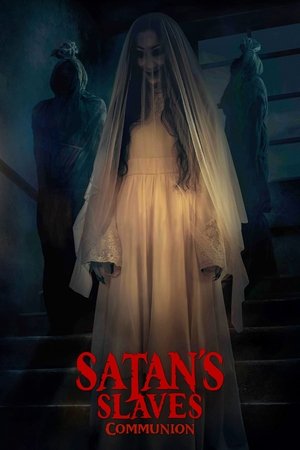
Satan’s Slaves 2: Communion
Anwar returned to the family from Satan’s Slaves with Satan’s Slaves 2: Communion in 2022. The surviving characters have moved from the isolated house of the first film into a large apartment complex, believing that living among many other people will provide greater safety. The new setting allows the sequel to expand the number of characters while using corridors, stairways and separate apartments as interconnected horror spaces.
The film retains Tara Basro, Endy Arfian and other returning performers while developing the occult organization introduced previously. Asmara Abigail and several recurring Anwar collaborators also return. The sequel became another major commercial success in Indonesia and received international festival exposure, confirming that the mythology could support a larger production without abandoning the family established in the first film.
Ical Tanjung and the visual development of Anwar’s horror
Cinematographer Ical Tanjung became one of Anwar’s most important recurring technical collaborators. Their shared horror work includes the Satan’s Slaves films and Impetigore, followed by later projects. Tanjung’s cinematography has been discussed extensively in home-video supplements devoted to Anwar’s films, reflecting the importance of lighting and location photography to their visual identity.
The repeated collaboration has allowed different types of space to be approached within a consistent production relationship. Rural villages, old houses, apartment complexes and later institutional settings are photographed according to their own architectural characteristics rather than through one fixed visual formula.
Aghi Narottama and music in Anwar’s horror
Composer Aghi Narottama has also worked repeatedly with Anwar and became an important contributor to the sound of his horror films. The collaboration includes major productions such as Satan’s Slaves, Impetigore and later work. Narottama often works with other composers, reflecting the collaborative structure of music production across these projects.
Anwar’s films make substantial use of music and sound as part of supernatural anticipation, particularly in the Satan’s Slaves series, where songs and domestic sounds can acquire narrative significance. The long-running relationship with Narottama provides continuity across films that otherwise use very different settings.
Grave Torture and religious horror
Anwar developed the concept behind Grave Torture first as a short film and later returned to it for the 2024 feature Siksa Kubur. The story draws on Islamic beliefs concerning punishment in the grave and follows characters whose attitudes toward religion have been shaped by traumatic experience. The feature version expands the original premise into a broader examination of belief, skepticism and the desire for proof.
The film is especially important within Anwar’s career because it engages directly with religious concepts familiar to Indonesian audiences rather than treating them as general supernatural mythology. Faradina Mufti and Reza Rahadian lead the cast, with several actors and technicians from Anwar’s previous work returning in supporting roles or behind the camera.
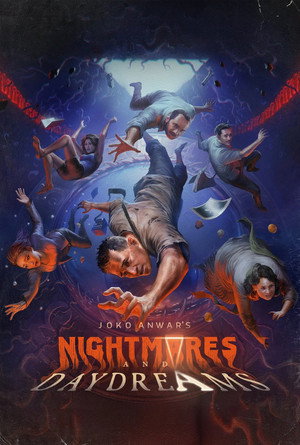
Joko Anwar’s Nightmares and Daydreams
The Netflix series Joko Anwar’s Nightmares and Daydreams in 2024 expanded Anwar’s work into a connected anthology format combining supernatural horror and science fiction. He created the series and worked with other Indonesian directors across its episodes. Individual stories follow ordinary people encountering unusual events that gradually reveal connections with a larger mythology.
The series allowed Anwar to use a broader group of filmmakers while retaining overall creative supervision. It also placed Indonesian speculative storytelling before a worldwide streaming audience at a scale different from the festival and theatrical distribution that had carried films such as Impetigore.
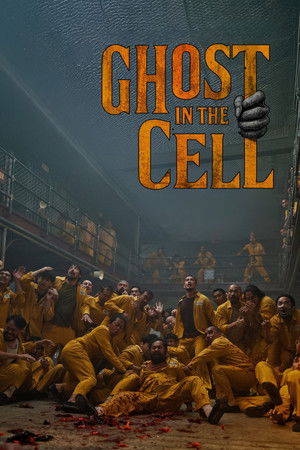
Ghost in the Cell
Ghost in the Cell, released in 2026 after premiering at the Berlin International Film Festival, moved Anwar into supernatural horror comedy set inside an Indonesian prison. The film follows prisoners and staff whose environment is already defined by corruption and institutional inequality before a supernatural threat begins affecting the facility. Endy Arfian, Bront Palarae, Kiki Narendra and other performers associated with Anwar’s earlier work appear in the ensemble.
Anwar described the prison setting as a means of discussing conditions in Indonesian society through horror and comedy. He also emphasized the long relationship between Indonesian audiences and ghost stories, noting that supernatural belief remains deeply embedded in popular culture. The film therefore continues his use of locally recognizable supernatural ideas while changing tone and setting from the family-centered horror of his earlier major successes.
Recurring actors and production collaborators
Anwar has built a relatively stable network of collaborators across horror and other genres. Tara Basro became especially important through Satan’s Slaves, Impetigore and Satan’s Slaves 2. Asmara Abigail appeared in several horror shorts before taking roles in Satan’s Slaves, Impetigore and the sequel. Endy Arfian moved from the Satan’s Slaves films into Ghost in the Cell.
Behind the camera, Ical Tanjung, Aghi Narottama and producer Tia Hasibuan have provided substantial continuity across Anwar’s mature period. These repeated relationships are important because his films often involve difficult location work and elaborate supernatural material on budgets considerably below those of major American studio horror productions.
Indonesian horror history and international circulation
Anwar’s work belongs to a national horror tradition extending well before his career. Indonesian cinema produced important supernatural and exploitation films during the 1970s and 1980s, including the original Pengabdi Setan and The Queen of Black Magic. Anwar’s remakes and reinterpretations brought direct attention back to that earlier period rather than presenting contemporary Indonesian horror as a completely new phenomenon.
International festivals, streaming services and specialist home-video distributors subsequently helped make both Anwar’s films and older Indonesian horror more accessible outside the country. This circulation has contributed to a wider reassessment of Southeast Asian genre history and placed Anwar among the filmmakers most closely associated internationally with its contemporary revival.
Joko Anwar’s place in contemporary horror
Anwar’s horror career combines commercial success in Indonesia with sustained international visibility. Satan’s Slaves became a major domestic hit, while Impetigore, Satan’s Slaves 2 and later films continued appearing at international festivals and through global distribution. His work also extends across feature films, television and screenwriting for other directors.
His historical importance lies partly in helping contemporary Indonesian horror reach an audience that had limited familiarity with the country’s earlier genre cinema. The films retain culturally specific beliefs, locations and social environments while using forms recognizable to international horror audiences. By the middle of the 2020s, that combination had made Anwar one of the principal filmmakers through whom Indonesian horror was discussed and distributed outside Southeast Asia.
Selected Work
Notable Horror Collaborators
Notable collaborators and creative partners throughout Joko Anwar's horror career.
 Tara Basro
Director / Actor Collaborator
Basro became one of Anwar’s principal horror performers through Satan’s Slaves, Impetigore and Satan’s Slaves 2: Communion. Her leading roles provide continuity across the director’s haunted-family and folk-horror work.
AA
Asmara Abigail
Director / Actor Collaborator
Abigail worked with Anwar in horror shorts before appearing in Satan’s Slaves, Impetigore and Satan’s Slaves 2: Communion. Her recurring work spans several stages of the director’s modern horror period.
EA
Endy Arfian
Director / Actor Collaborator
Arfian plays Toni in Satan’s Slaves and Satan’s Slaves 2: Communion and later returned for Ghost in the Cell. The three films connect Anwar’s major supernatural franchise with his later prison horror comedy.
 Ical Tanjung
Director / Cinematography Collaborator
Tanjung photographed several of Anwar’s principal horror films, including the Satan’s Slaves series and Impetigore, and continued working with him on later projects. Their repeated collaboration has been central to the visual continuity of Anwar’s horror cinema.
 Aghi Narottama
Director / Music Collaborator
Narottama has composed or co-composed music for several Anwar horror productions, including major films from the Satan’s Slaves and Impetigore period and later projects. He is one of the director’s longest-running technical collaborators within the genre.
 Tia Hasibuan
Director / Producer Collaborator
Hasibuan became a major production collaborator during Anwar’s mature horror period and worked on projects including Satan’s Slaves 2, Grave Torture, Nightmares and Daydreams and Ghost in the Cell. Their partnership extends across feature film and streaming production.
Joko Anwar Horror Movies
Directing (13 credits)
2024
2024
2022
2019
2018
2017
2016
2016
2012
2012
2009
2007
Writing (12 credits)
2026
2024
2024
2022
2019
2019
2018
2017
2012
2012
2009
2007
Acting (5 credits)
2024
2022
2018
2017
2009
Editing (4 credits)
2026
2024
2024
2012
Production (3 credits)
2026
2024
2024
Creator (1 credits)
2024
Other Crew (1 credits)
2023