

From the 16 mm Short to the Feature
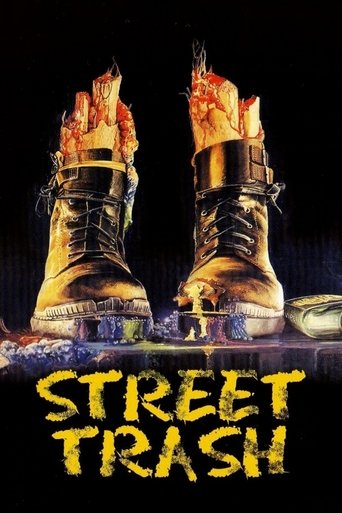
The feature grew from a much smaller Street Trash short directed by Muro several years earlier. That original version was photographed on 16 mm and already contained the essential comic-horror idea of cheap contaminated alcohol causing catastrophic bodily dissolution. Mike Lackey and several performers later associated with the feature appeared in the short, allowing Muro to demonstrate that the central effect and tone could function before a feature-length production existed. The short subsequently became important enough to the film's history that later Synapse editions preserved it alongside the feature rather than treating it merely as an abandoned student exercise.
Roy Frumkes, who had taught Muro at the School of Visual Arts, became writer and producer of the expanded version. The feature does not simply stretch the original Viper gag to ninety minutes. Frumkes constructs an ensemble around the scrapyard community, introducing Bronson, Fred, Kevin, Bill the police officer and numerous supporting characters whose stories sometimes operate almost independently of the toxic liquor. This unusually loose architecture explains why Street Trash can shift from body horror to police material, war trauma, broad comedy and deliberate provocation without behaving like a conventional cause-and-effect horror story.
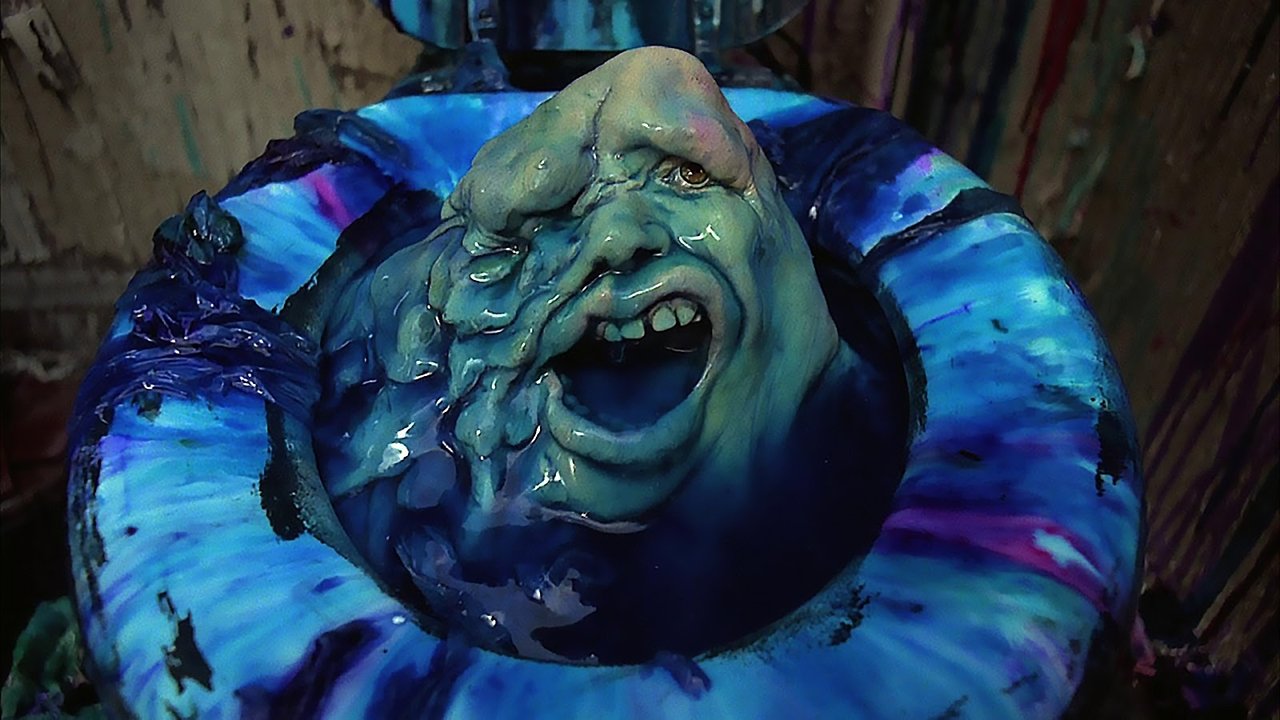
The production itself remained connected to the film-school and independent New York environment from which the project emerged. Several crew members were at early stages of their careers, and the set functioned as a place where technical ambition often exceeded available resources. That disparity became productive. Instead of simplifying the visual plan until it resembled an ordinary exploitation movie, Muro pushed camera movement while Aspinall pushed increasingly elaborate physical effects, making technique one of the principal attractions of the completed film.