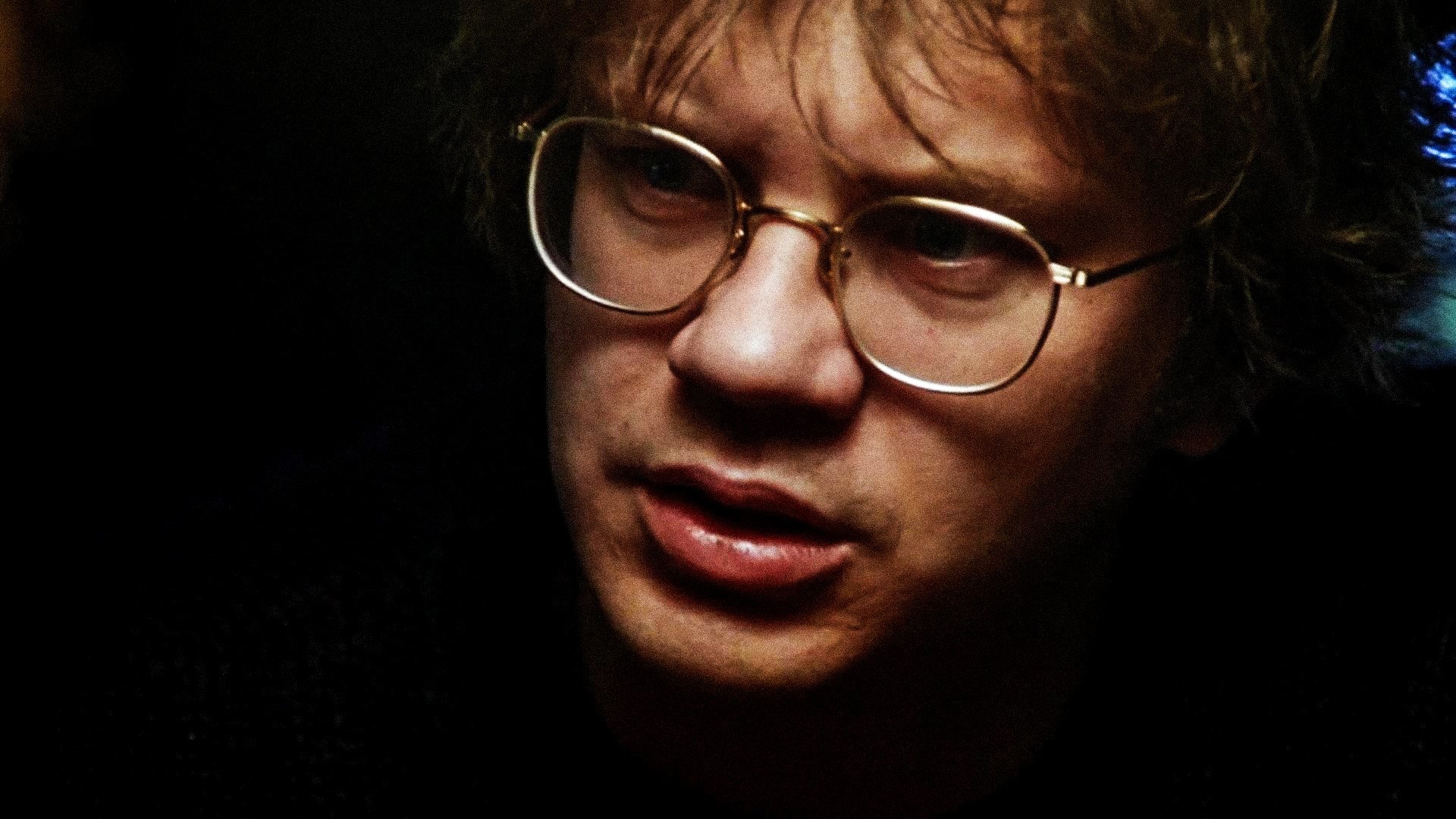
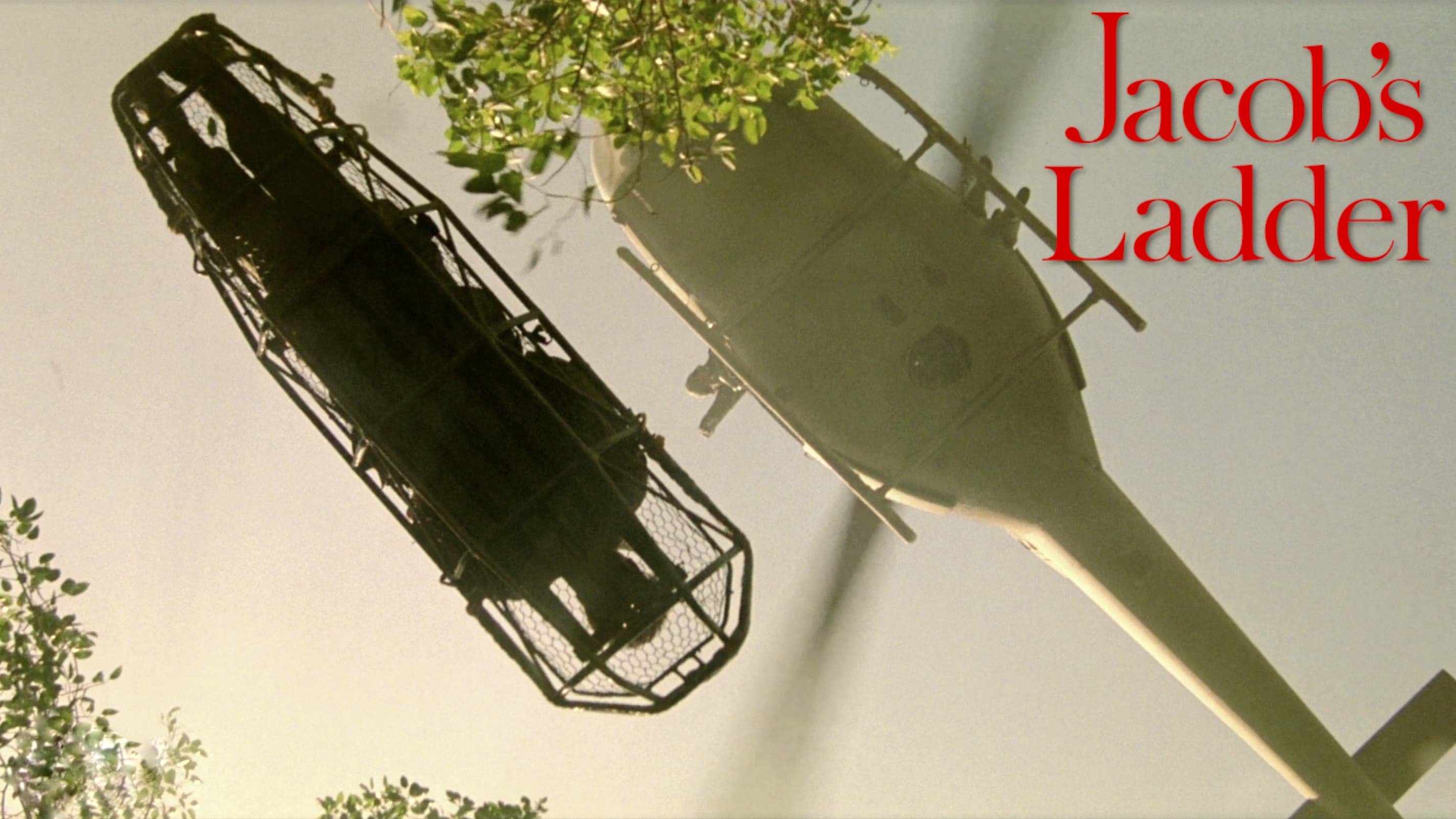
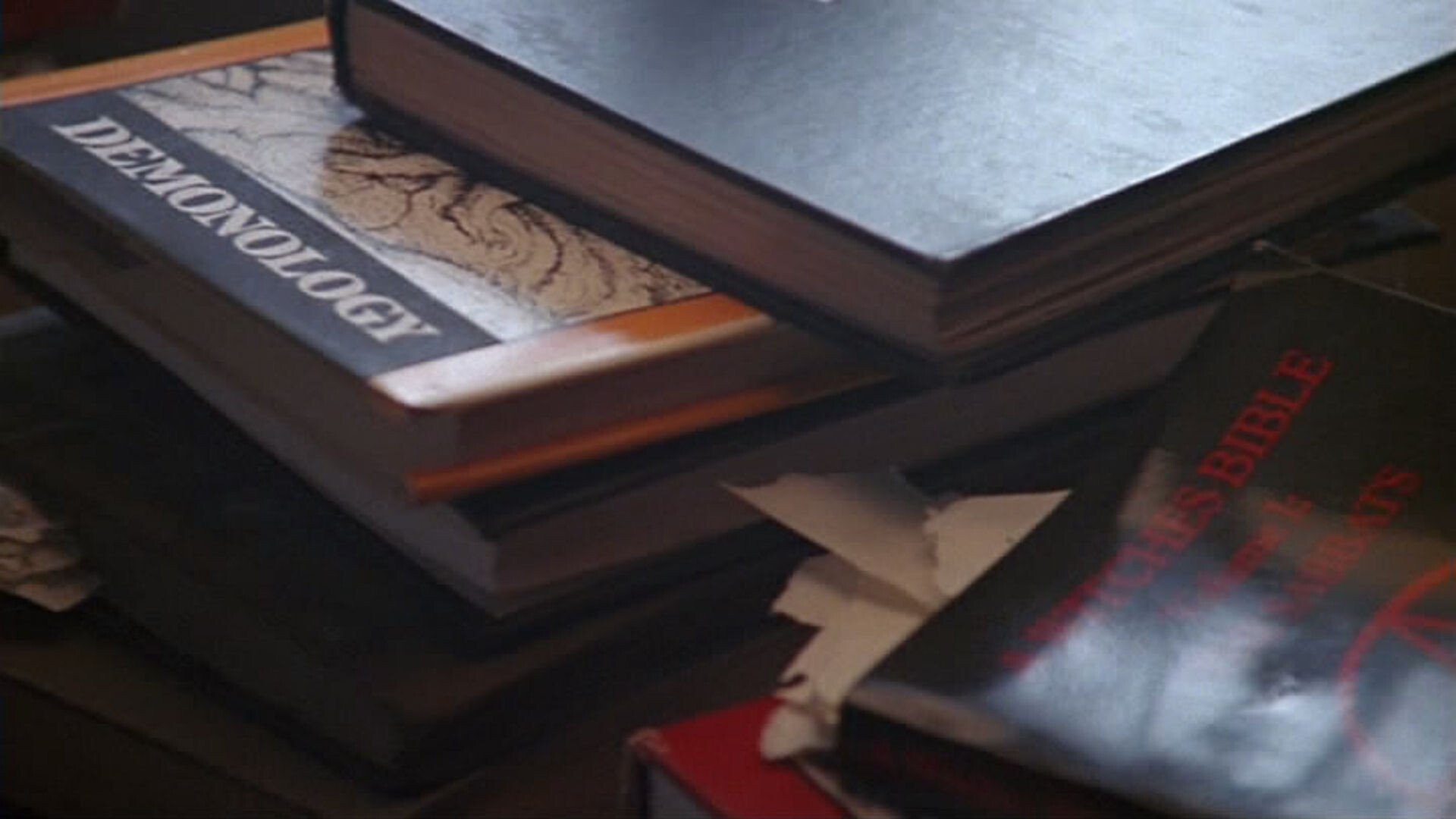
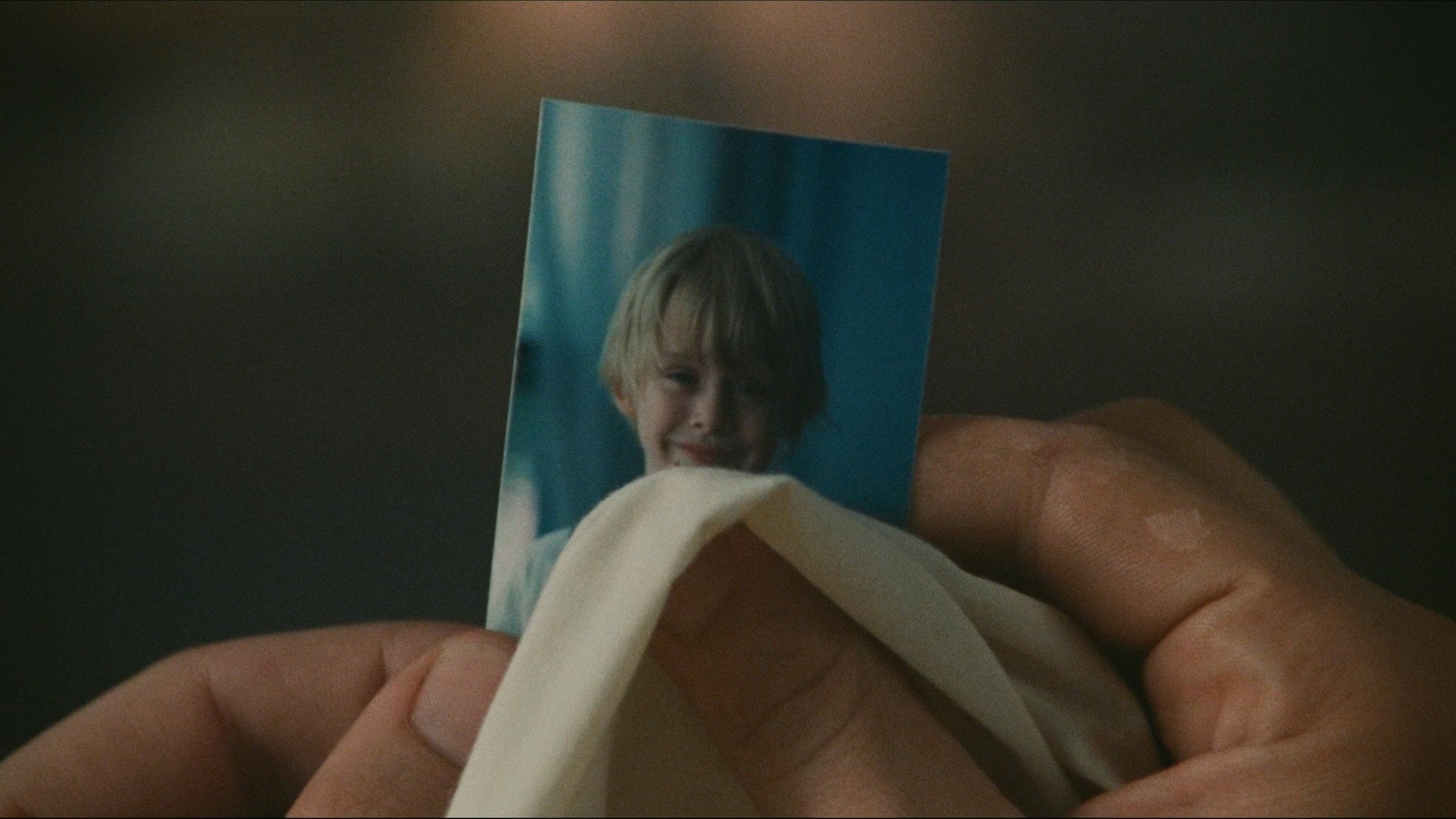
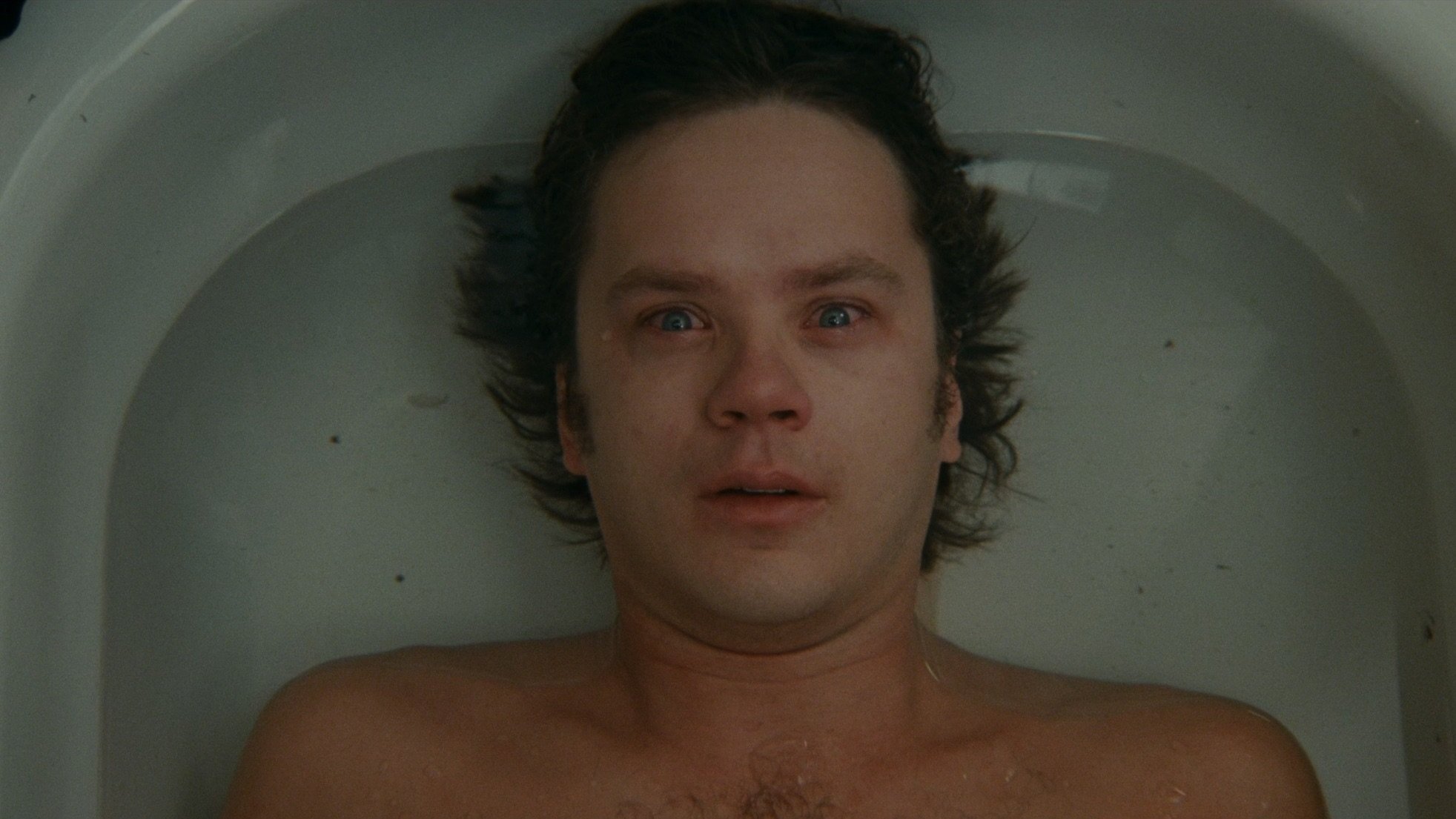
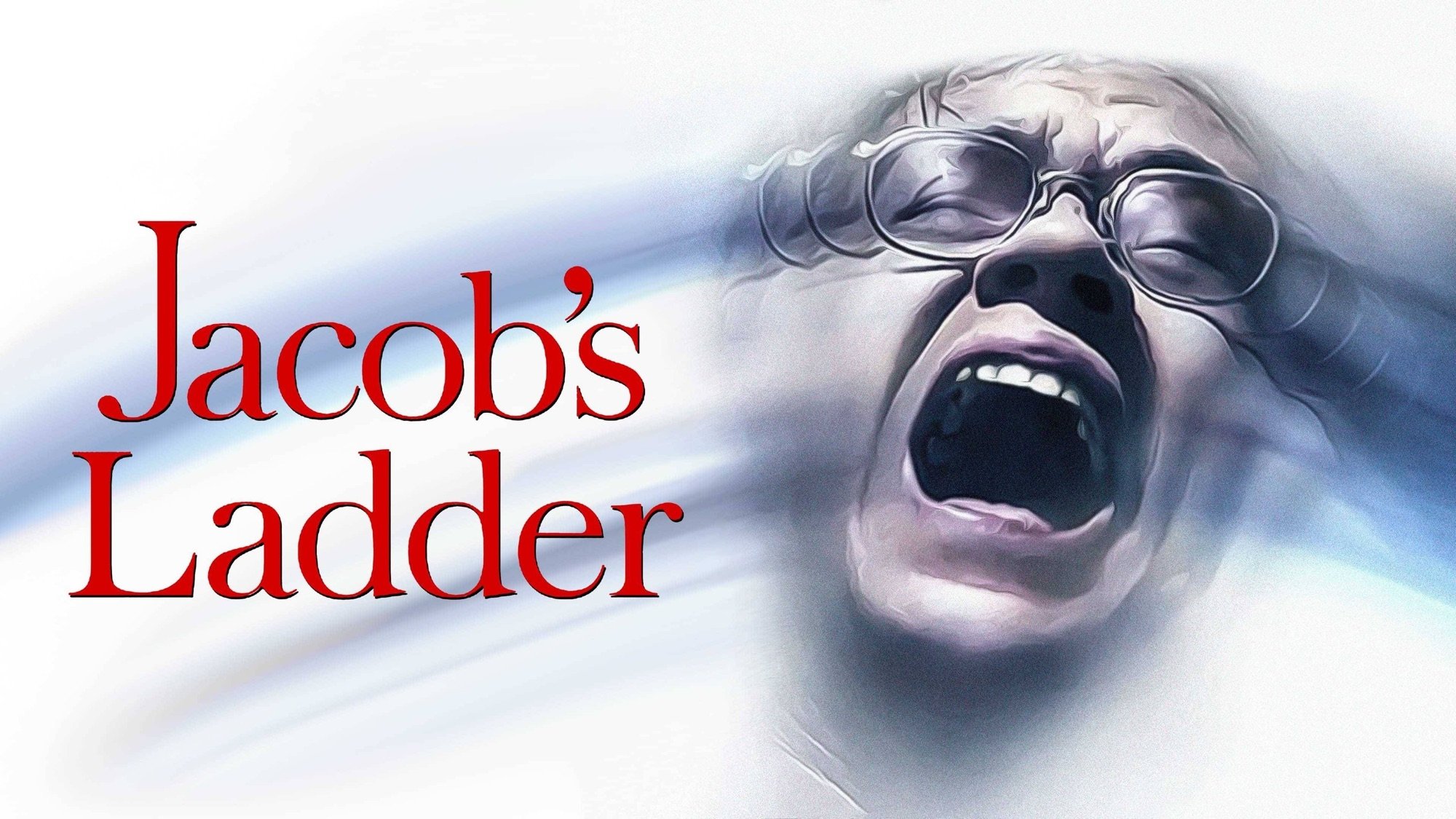
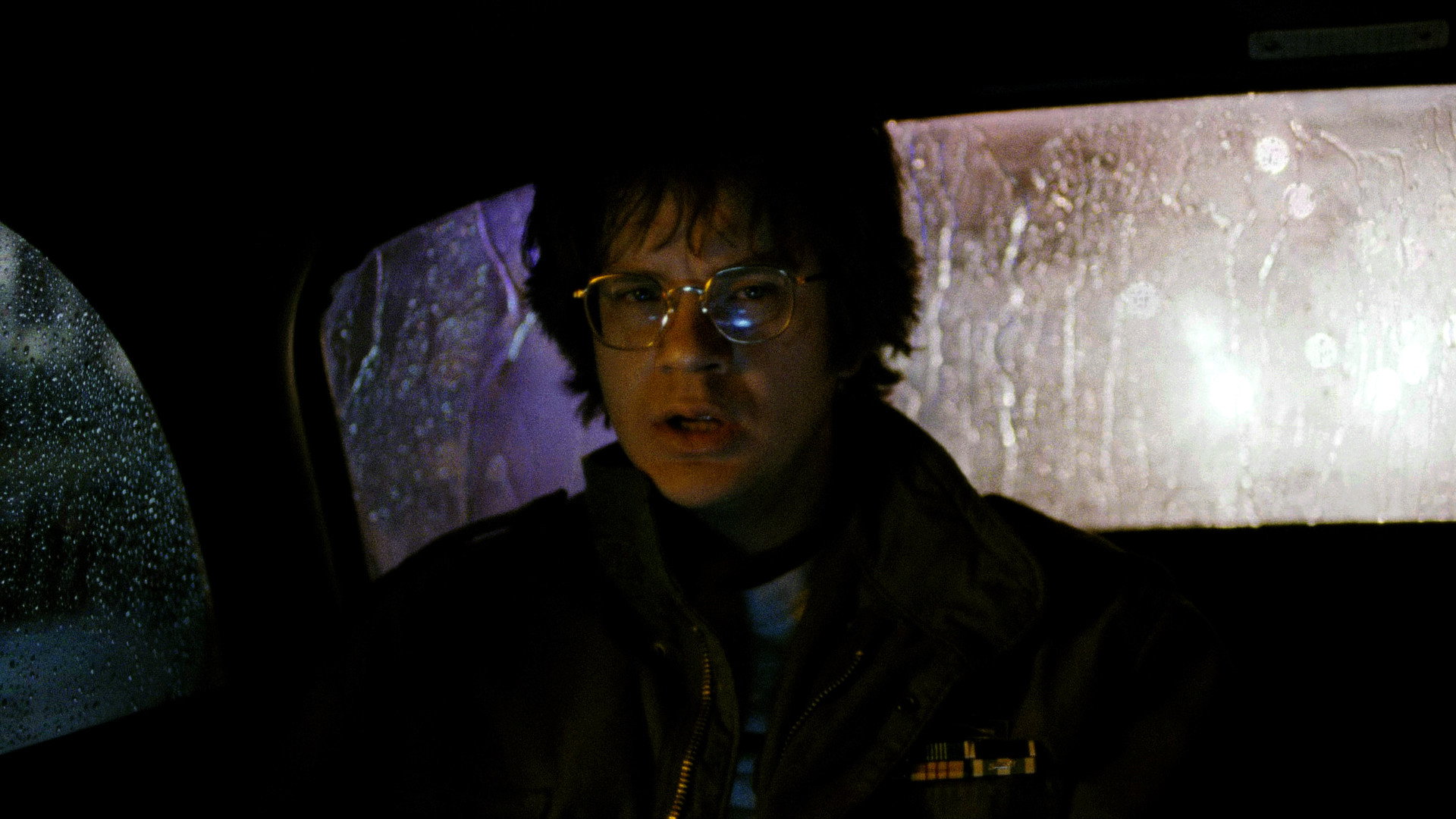
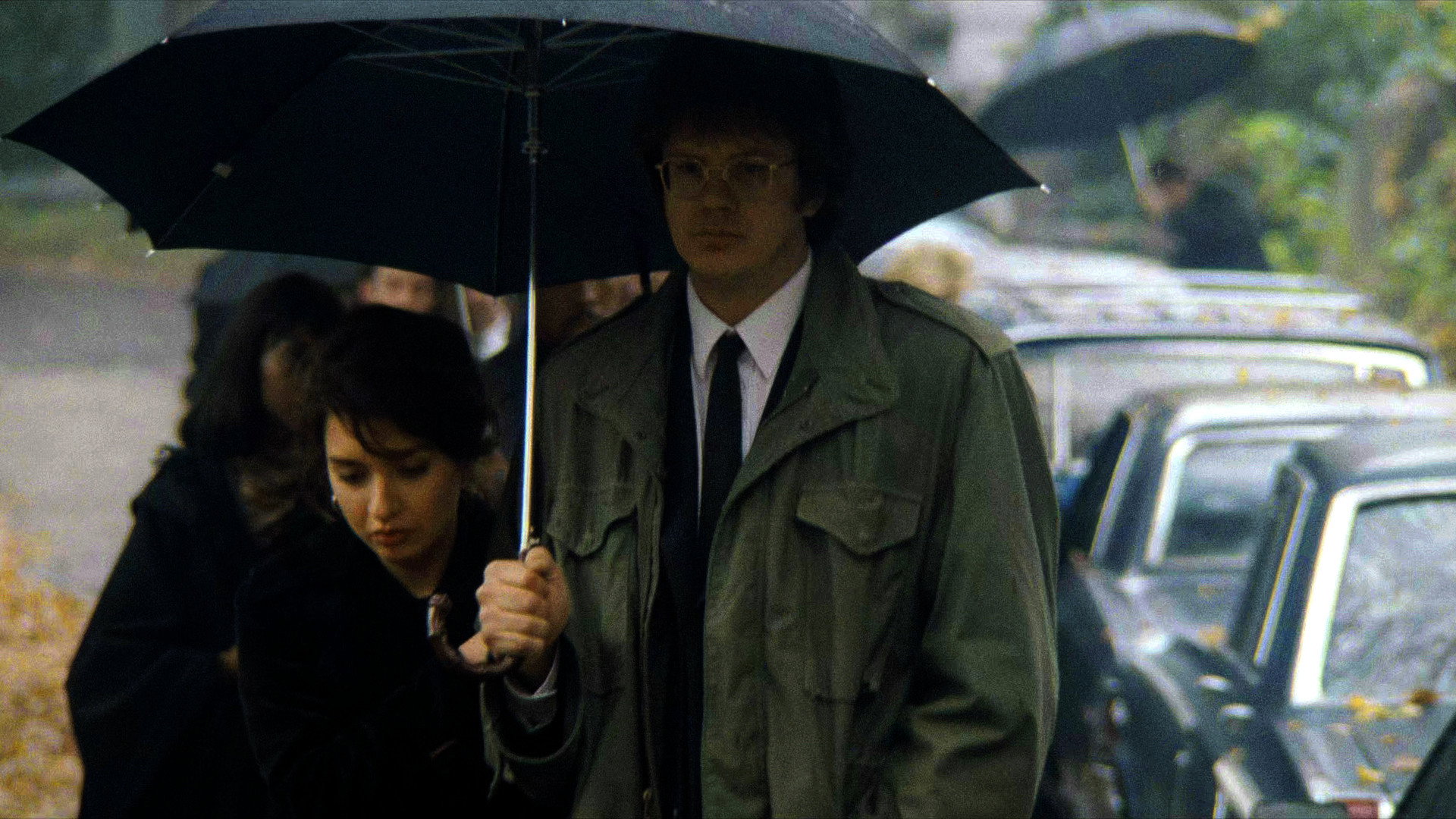
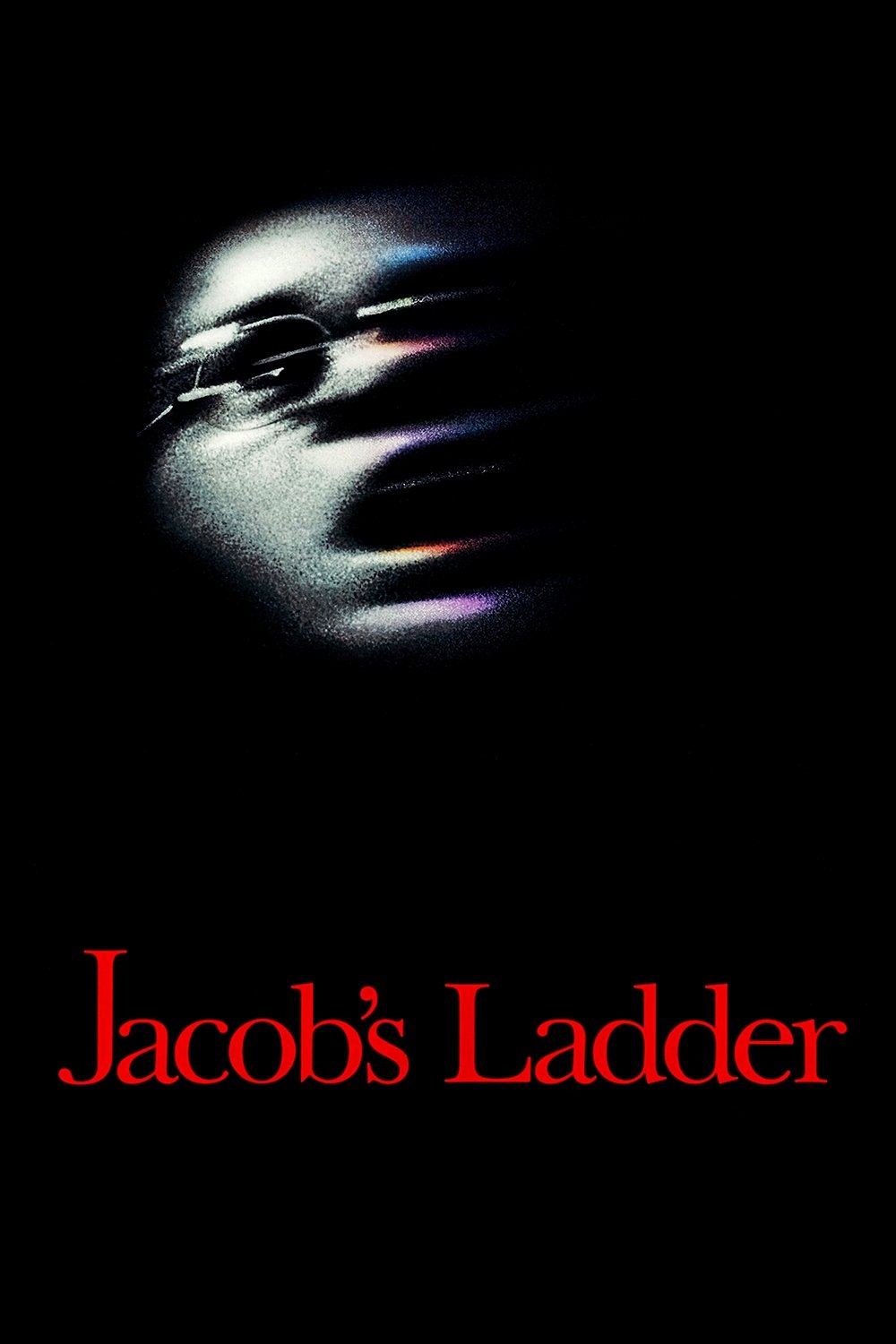
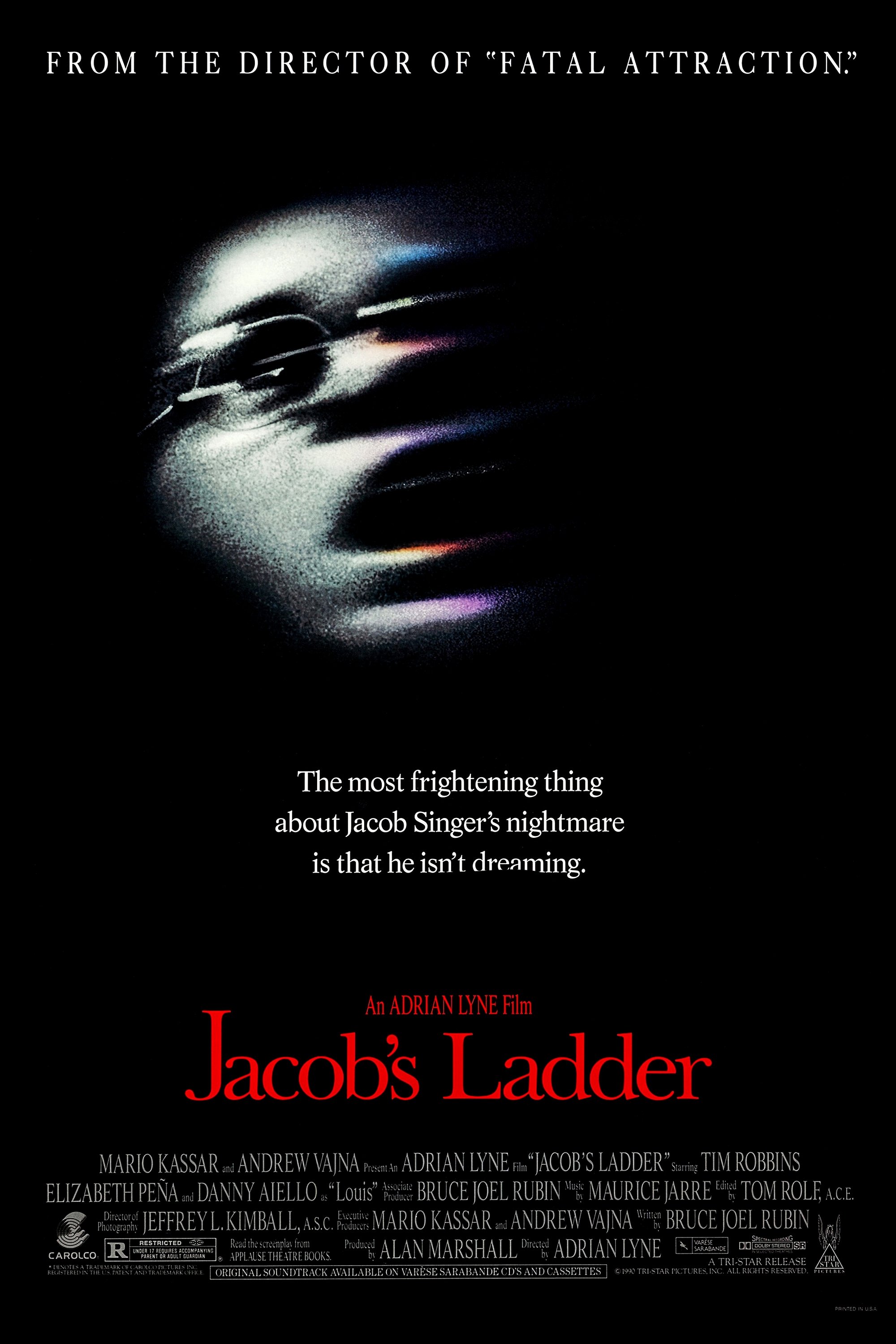
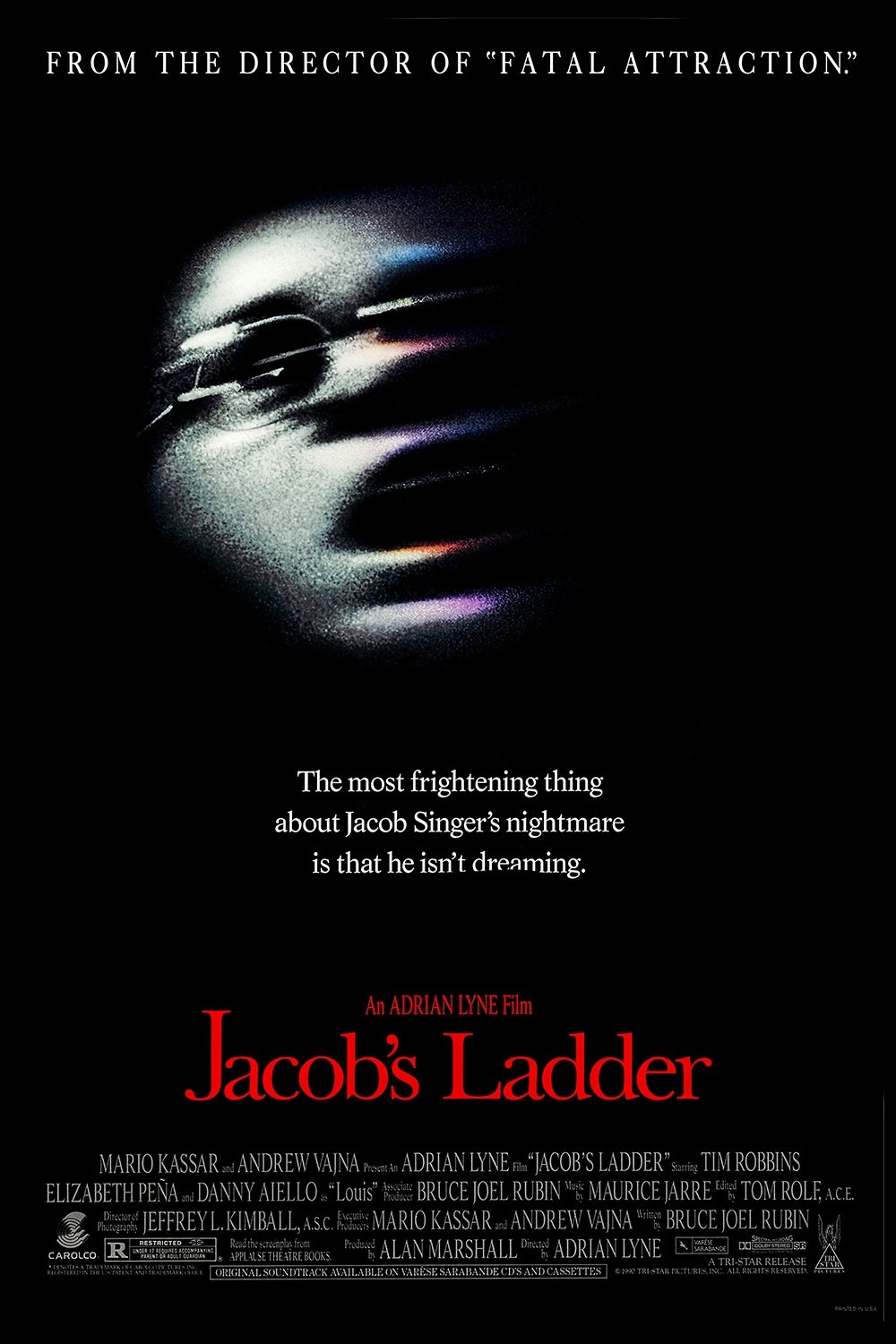
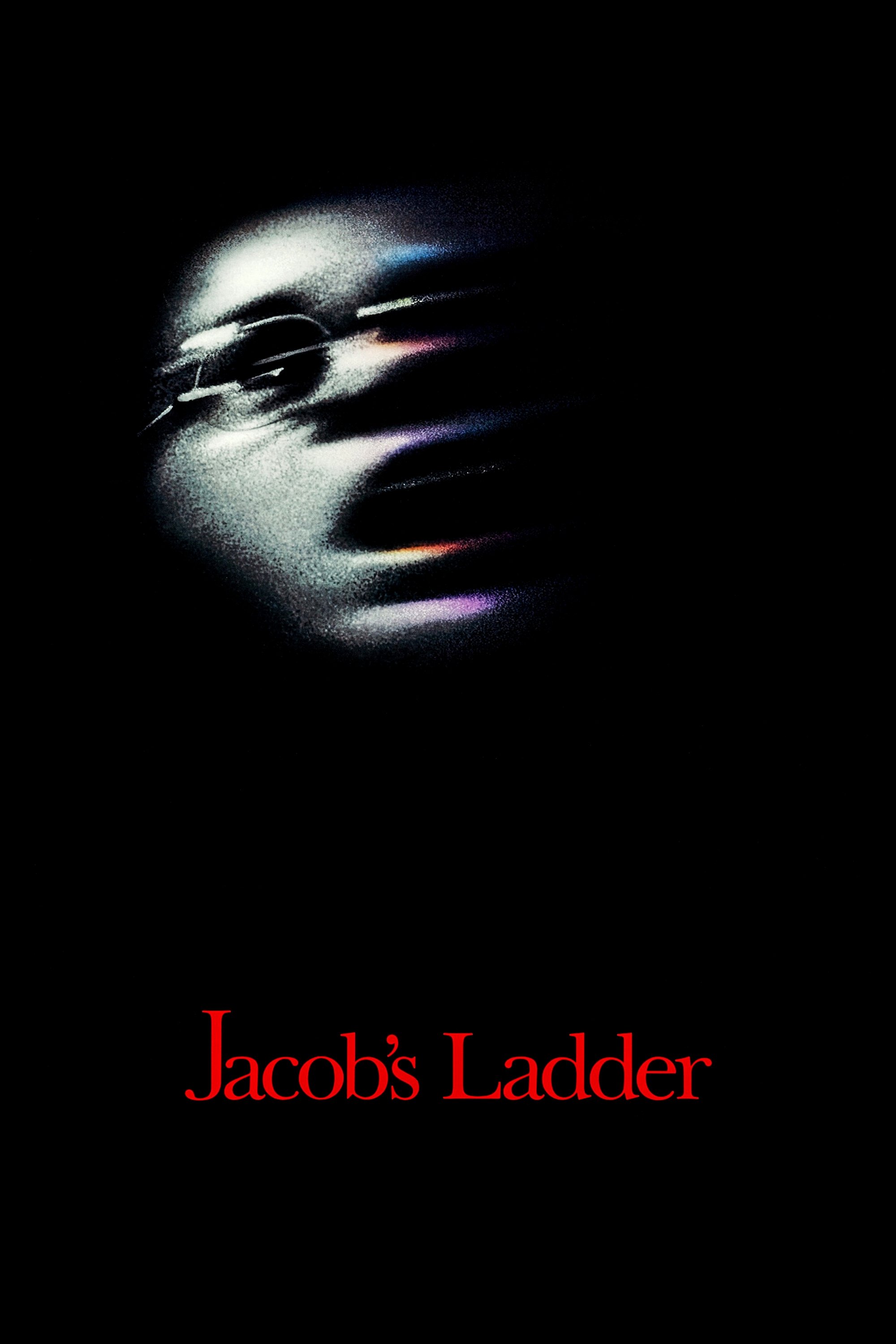
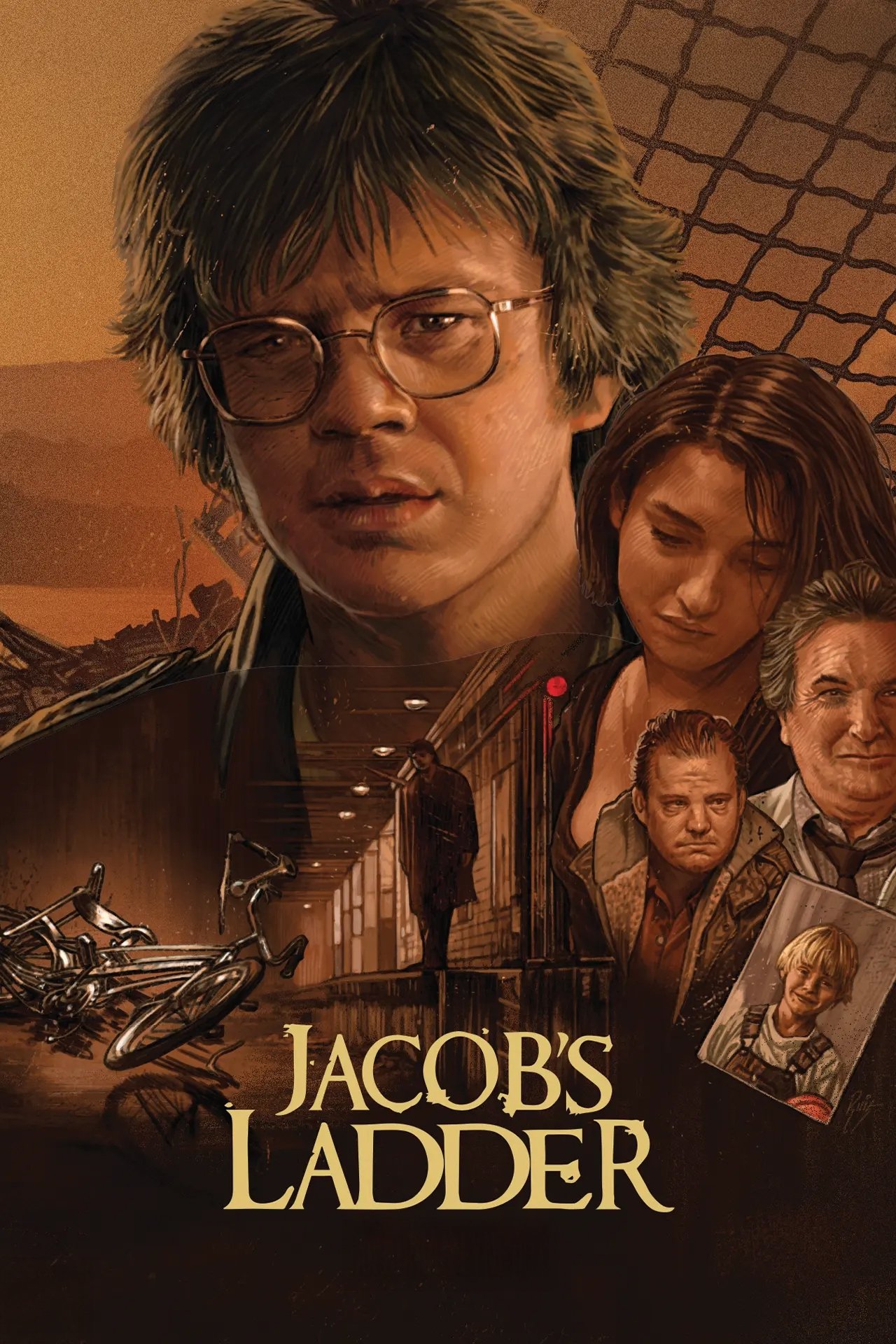
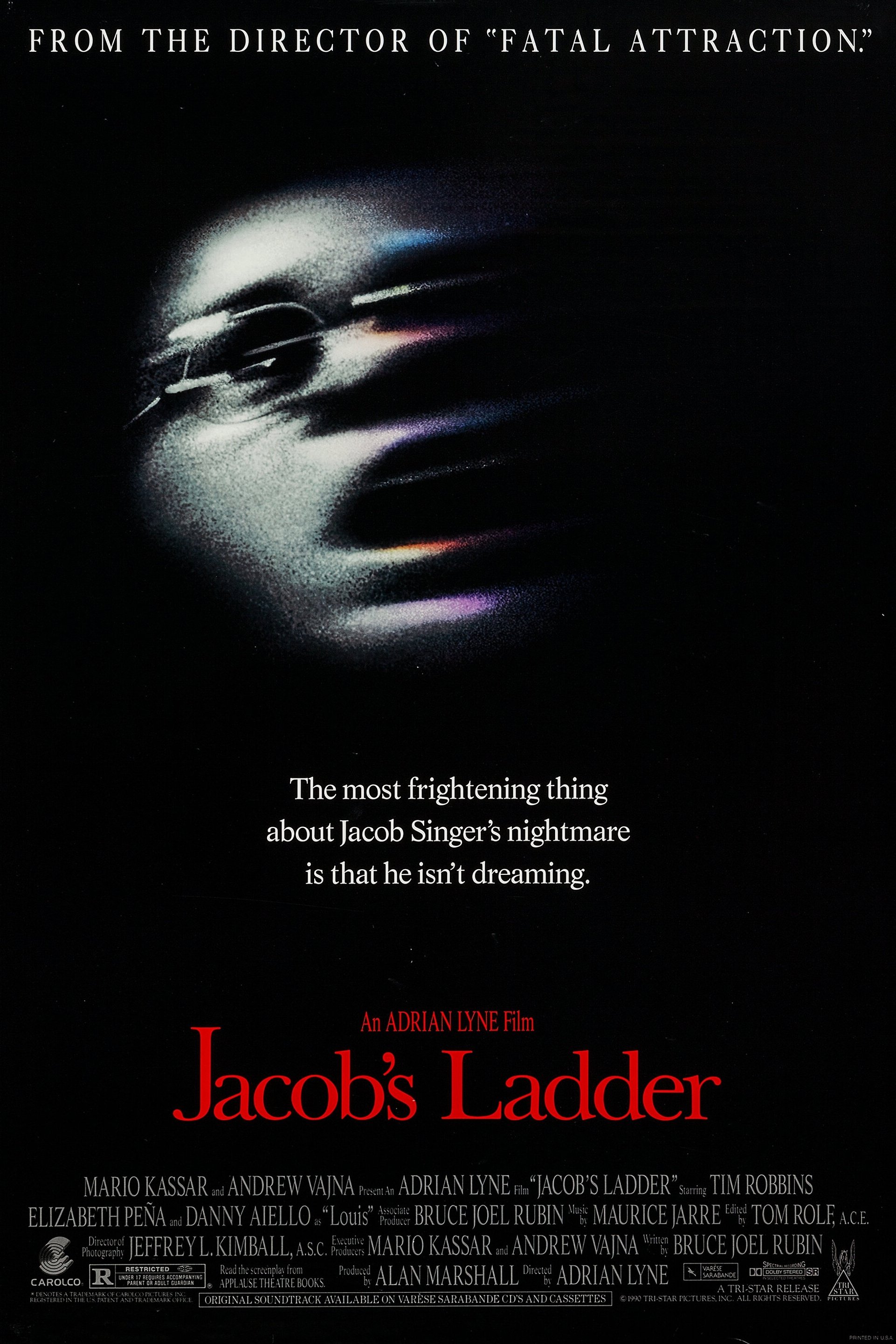
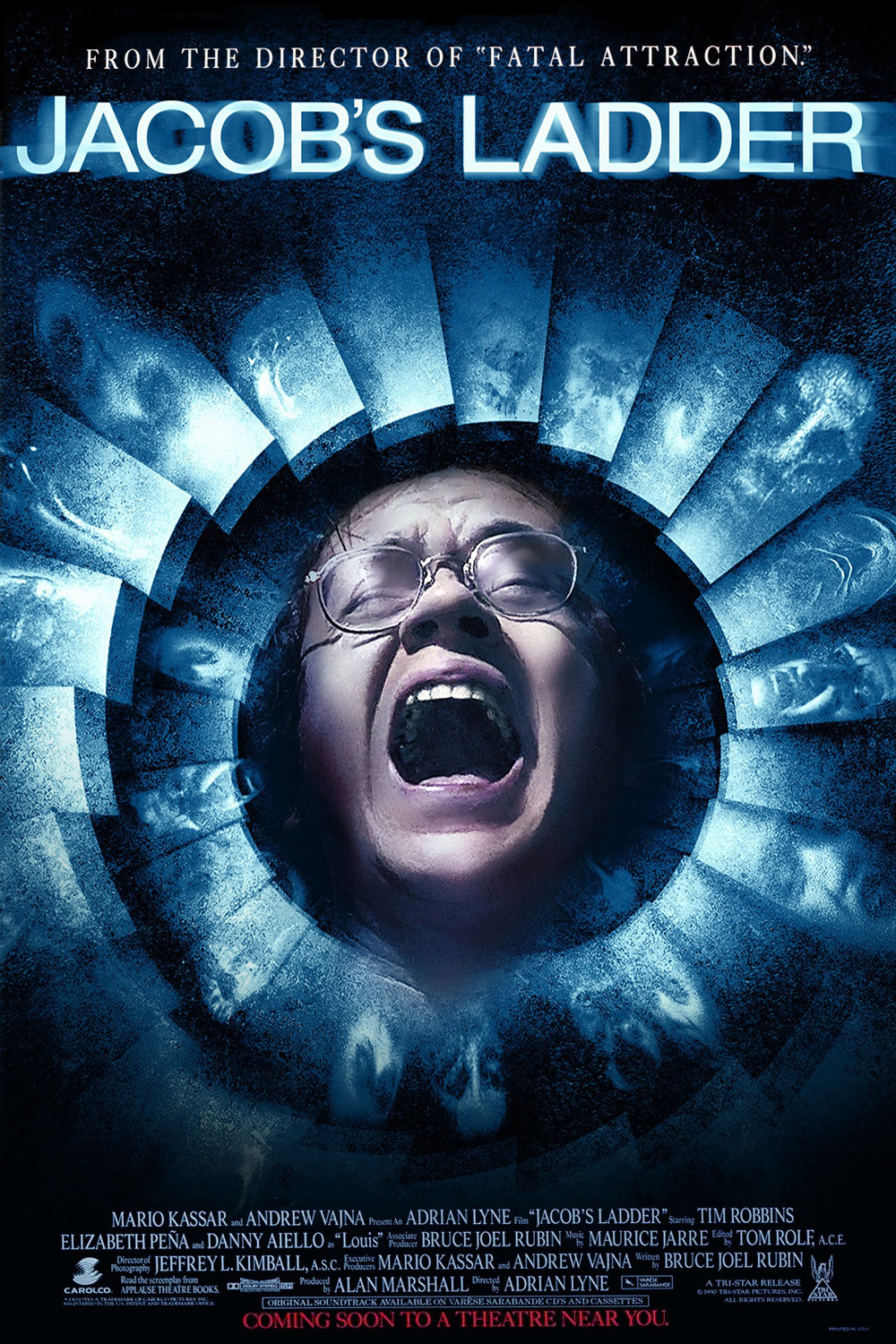
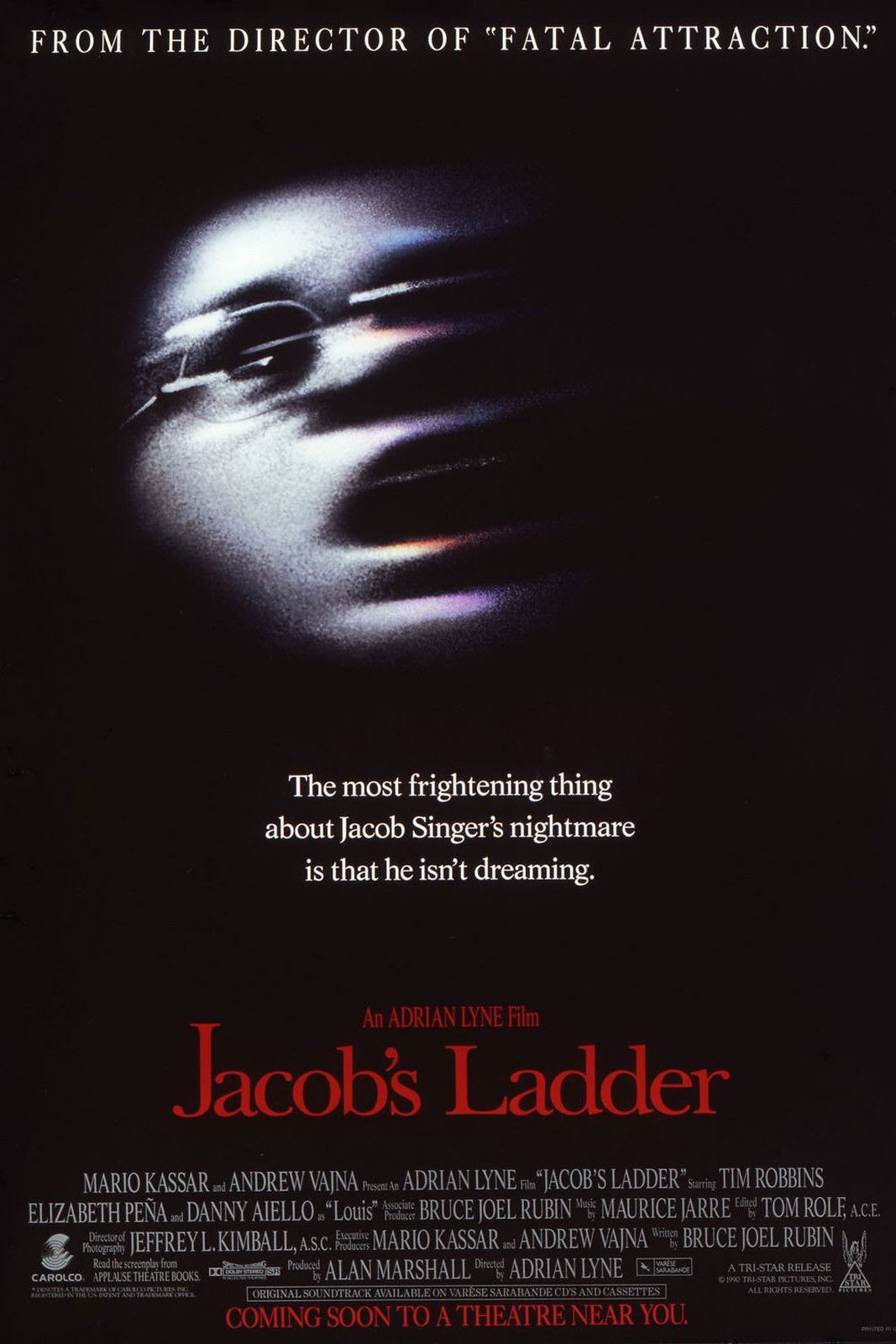
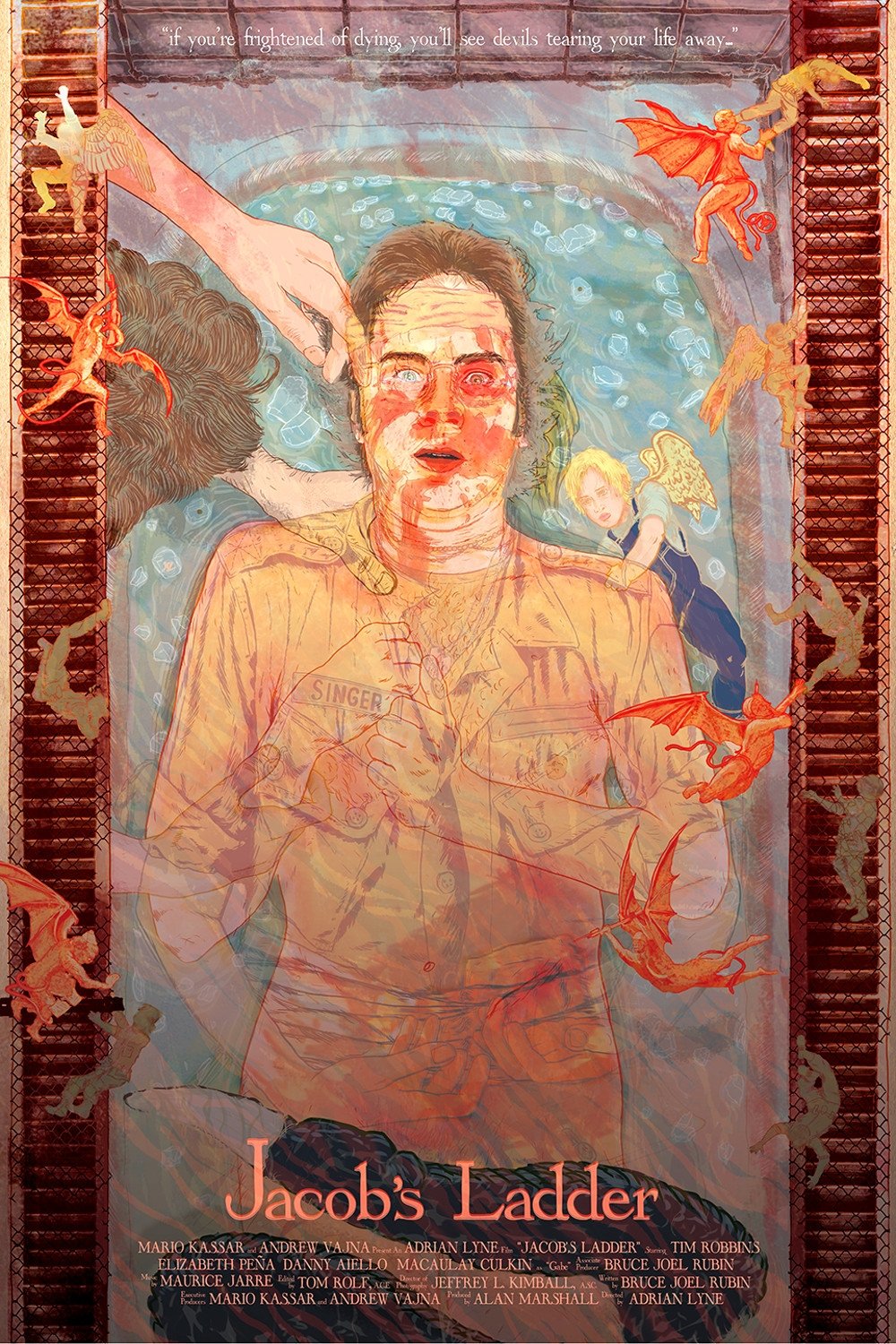
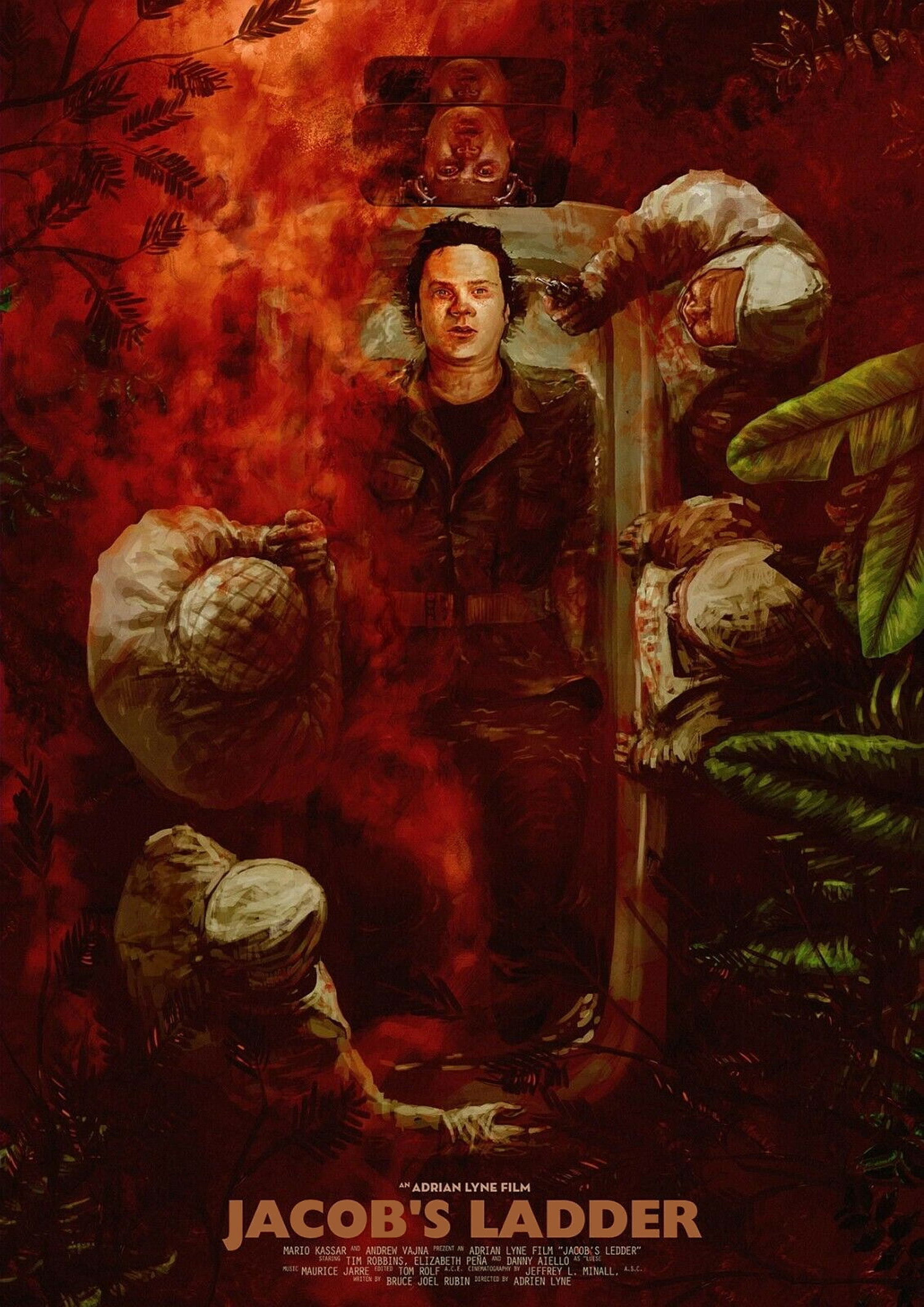
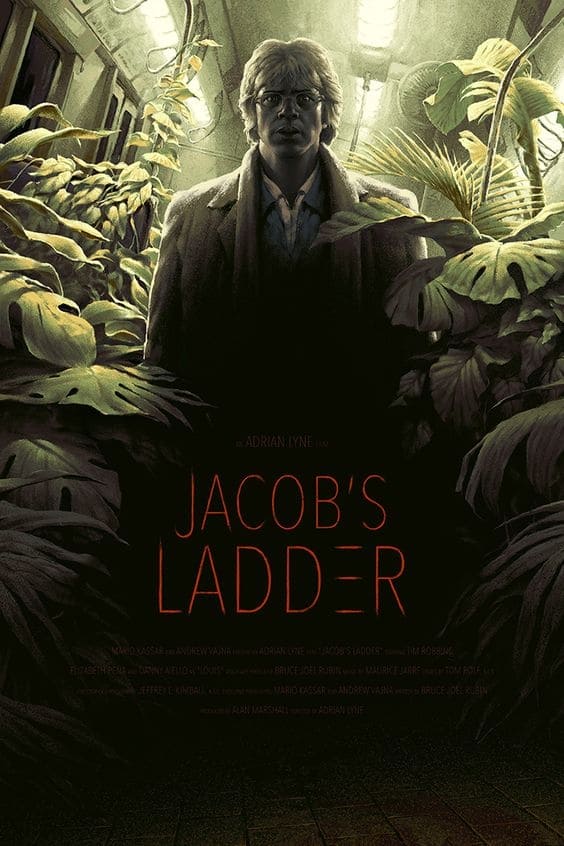
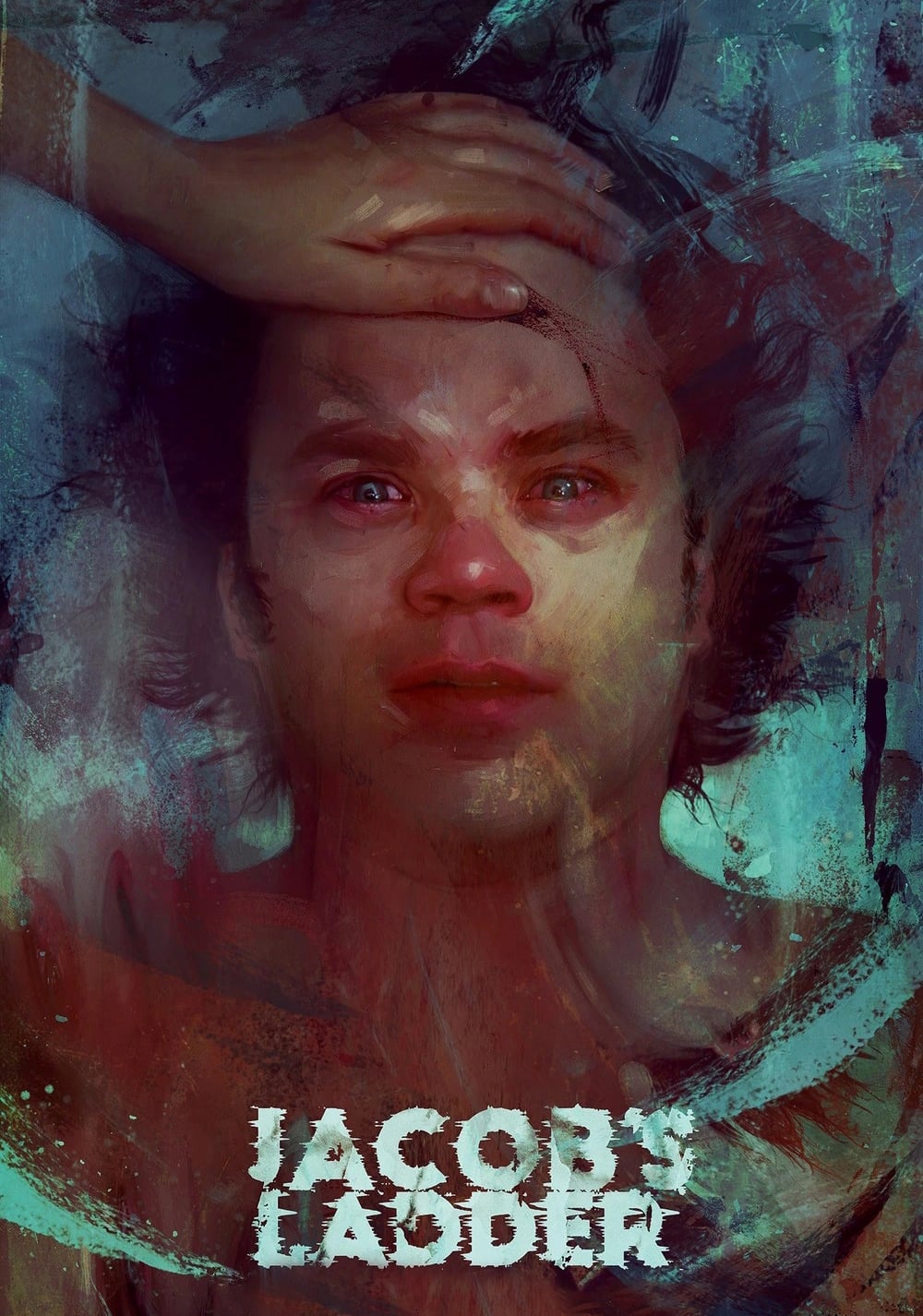
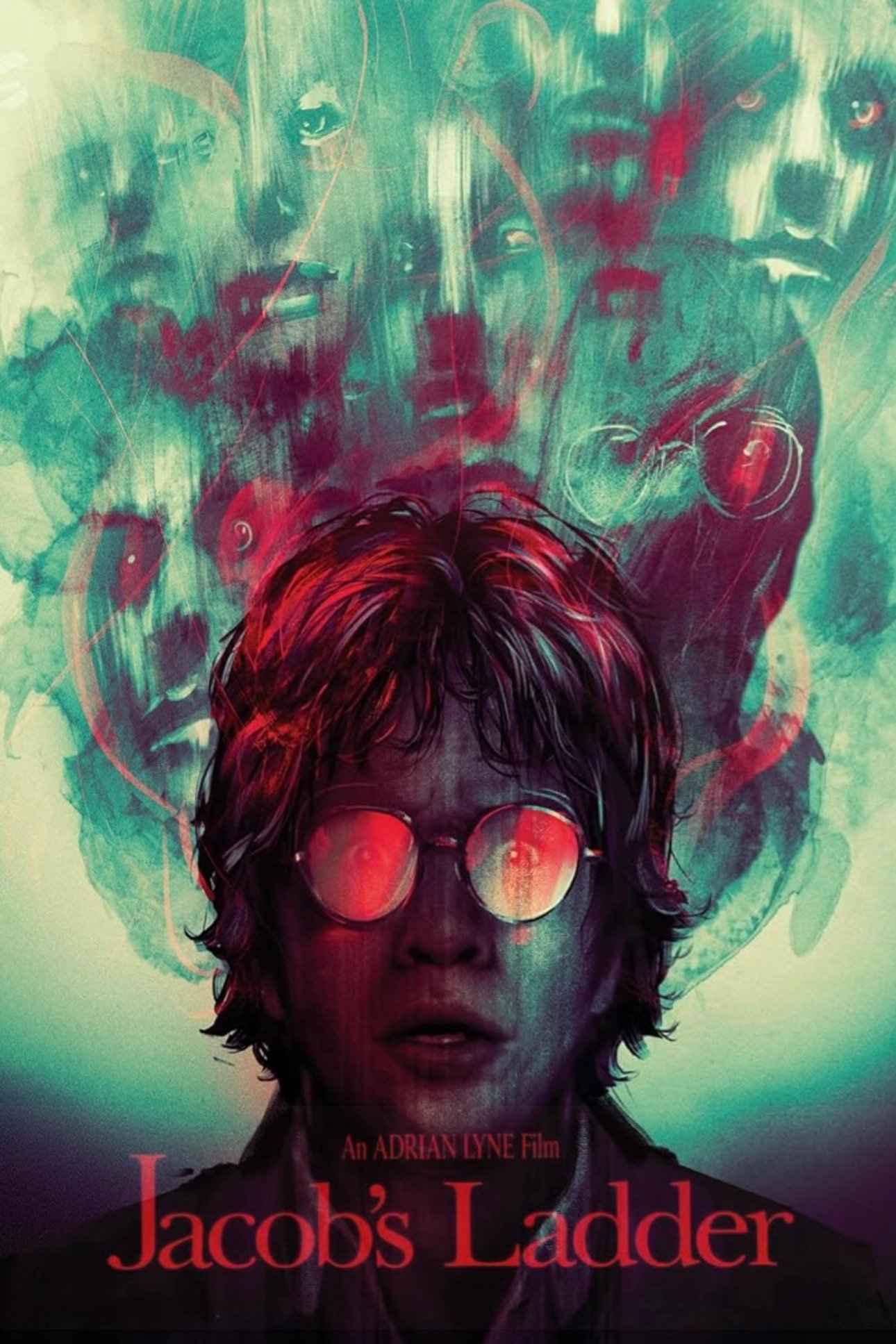
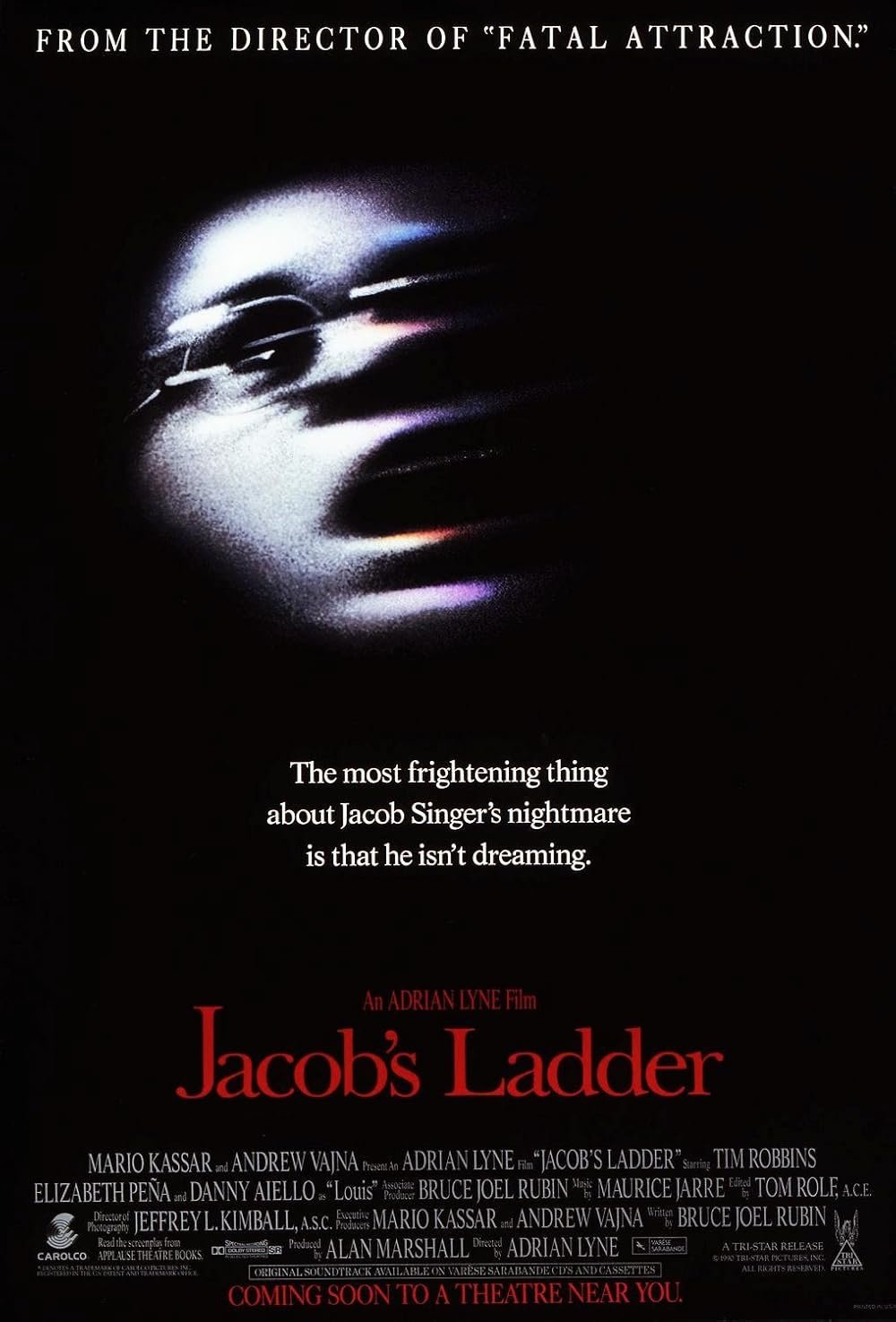
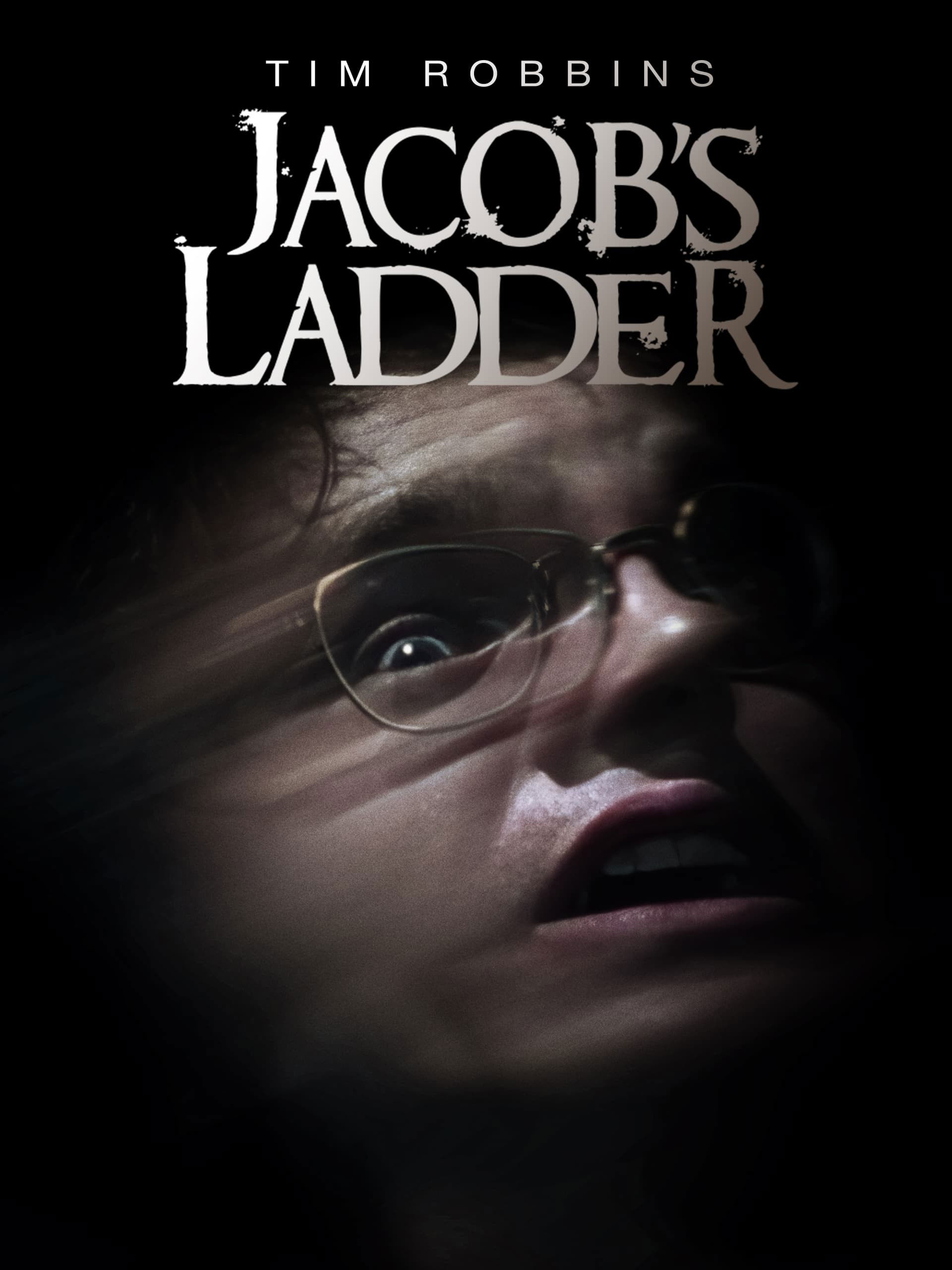
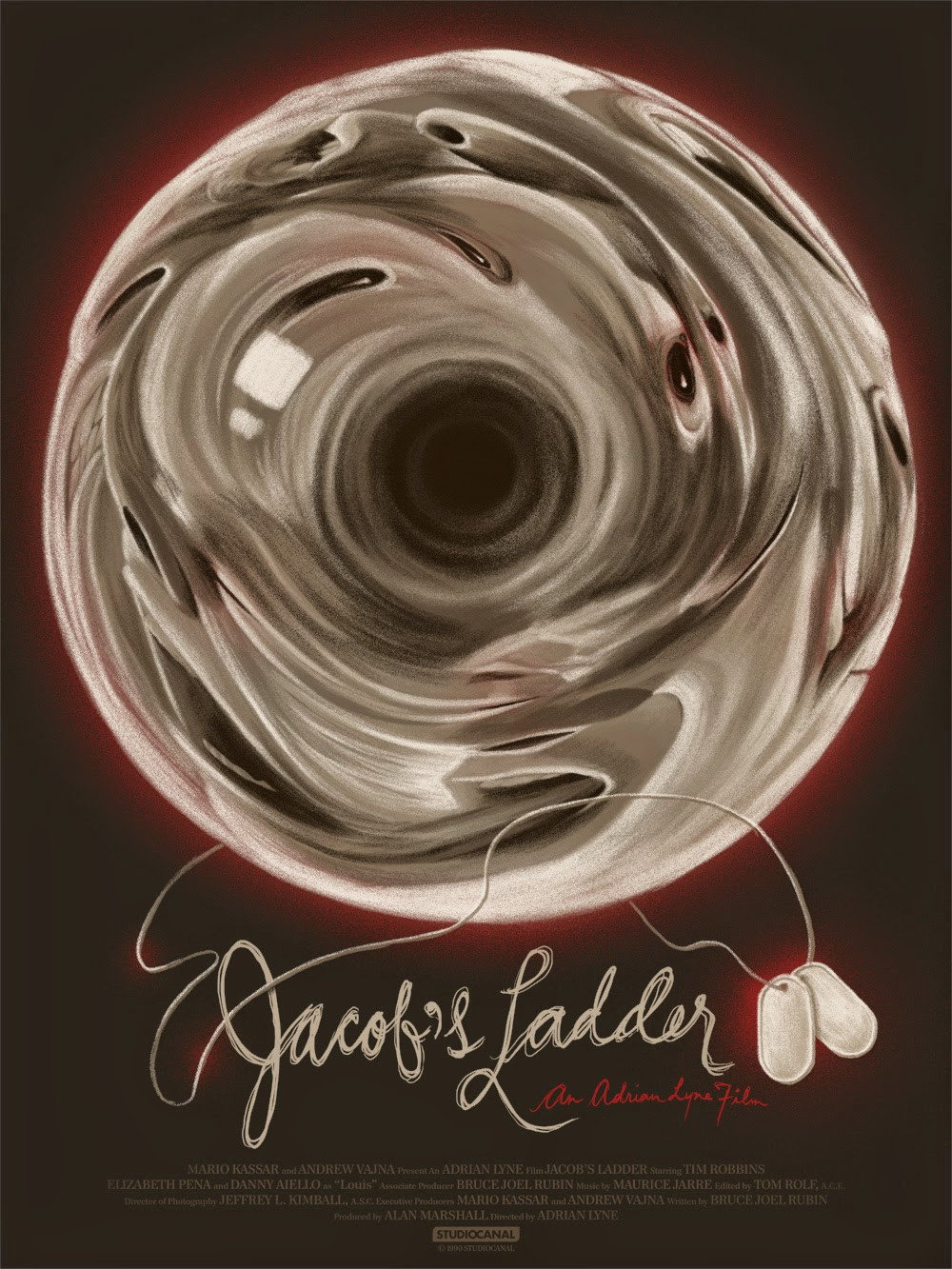
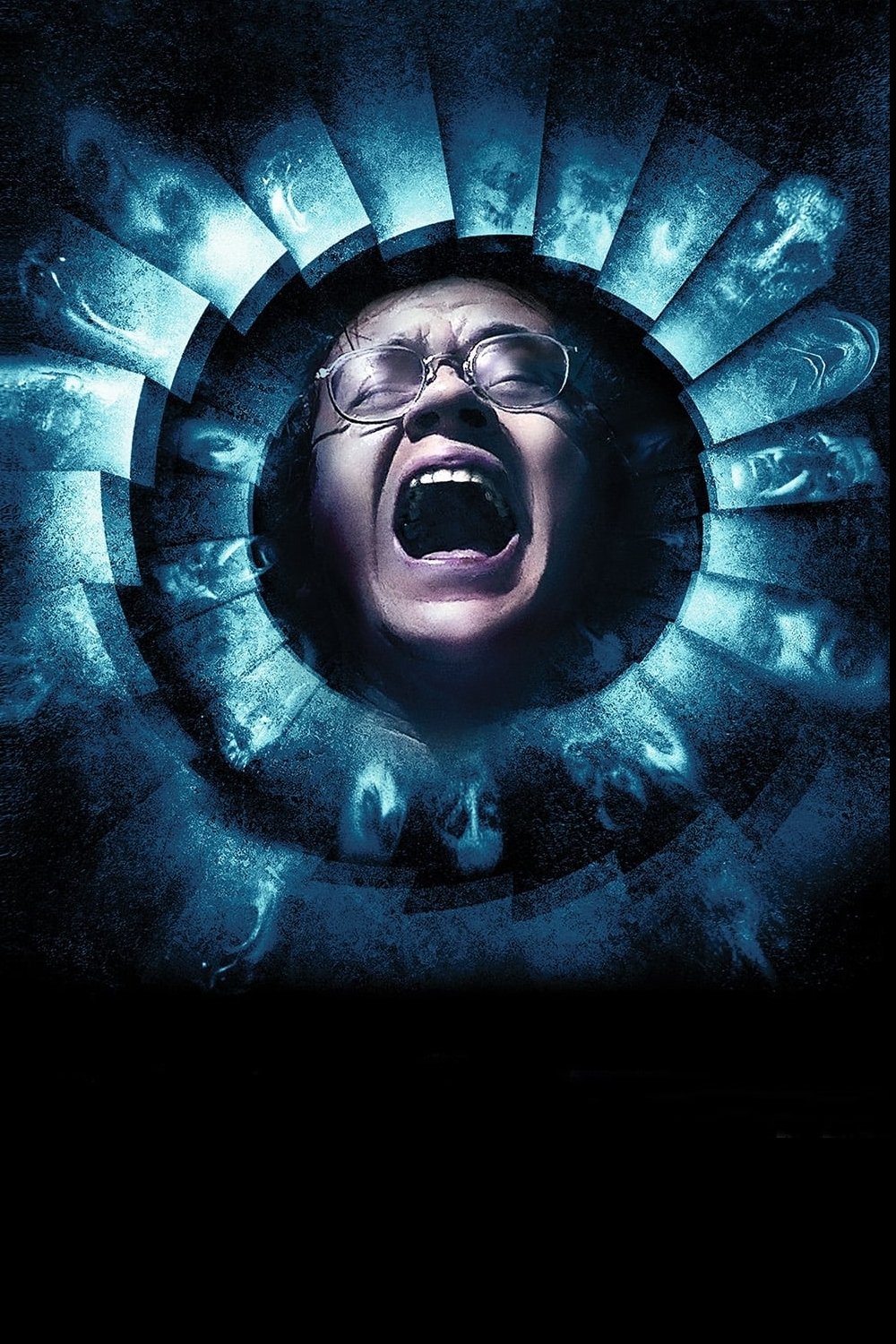
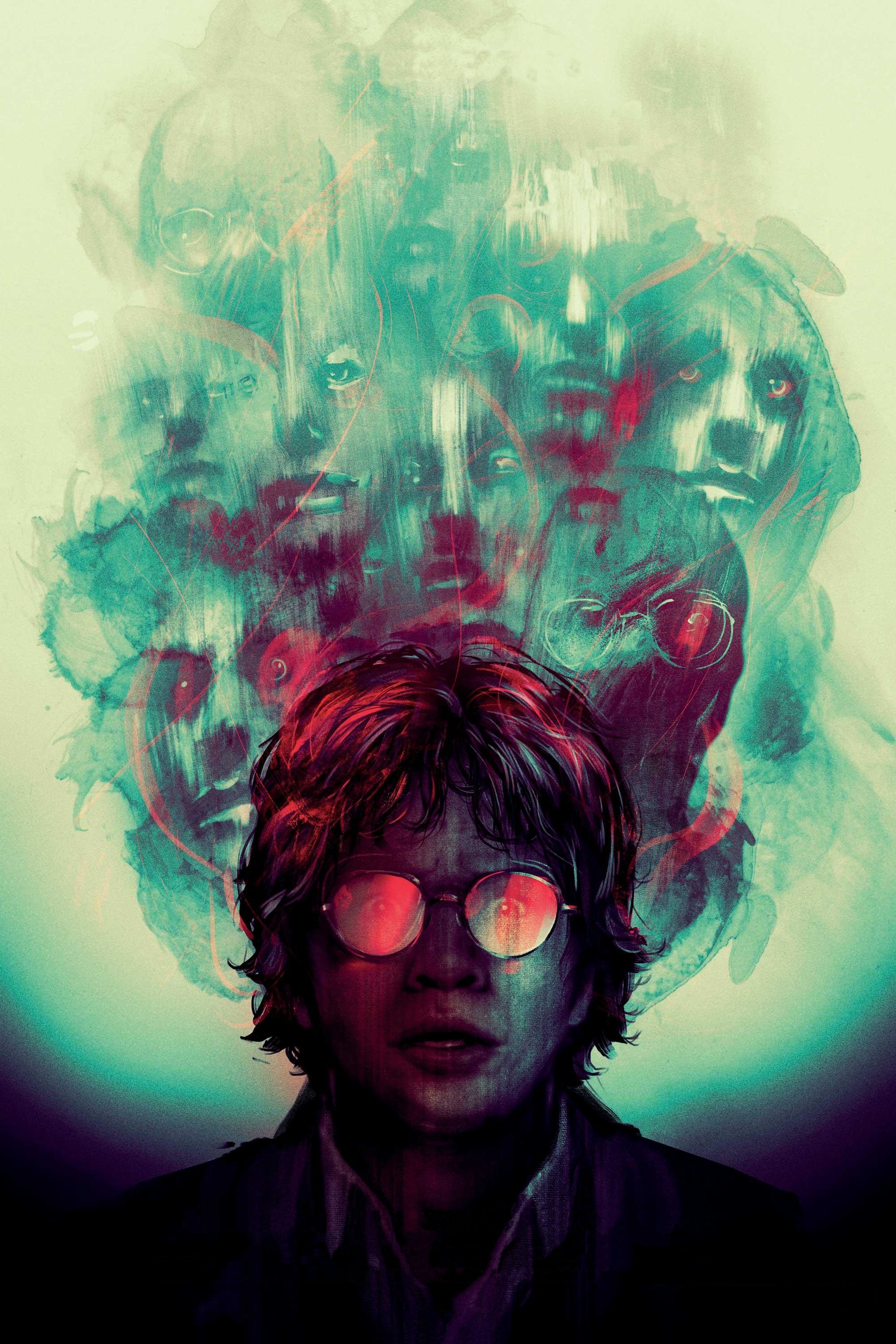
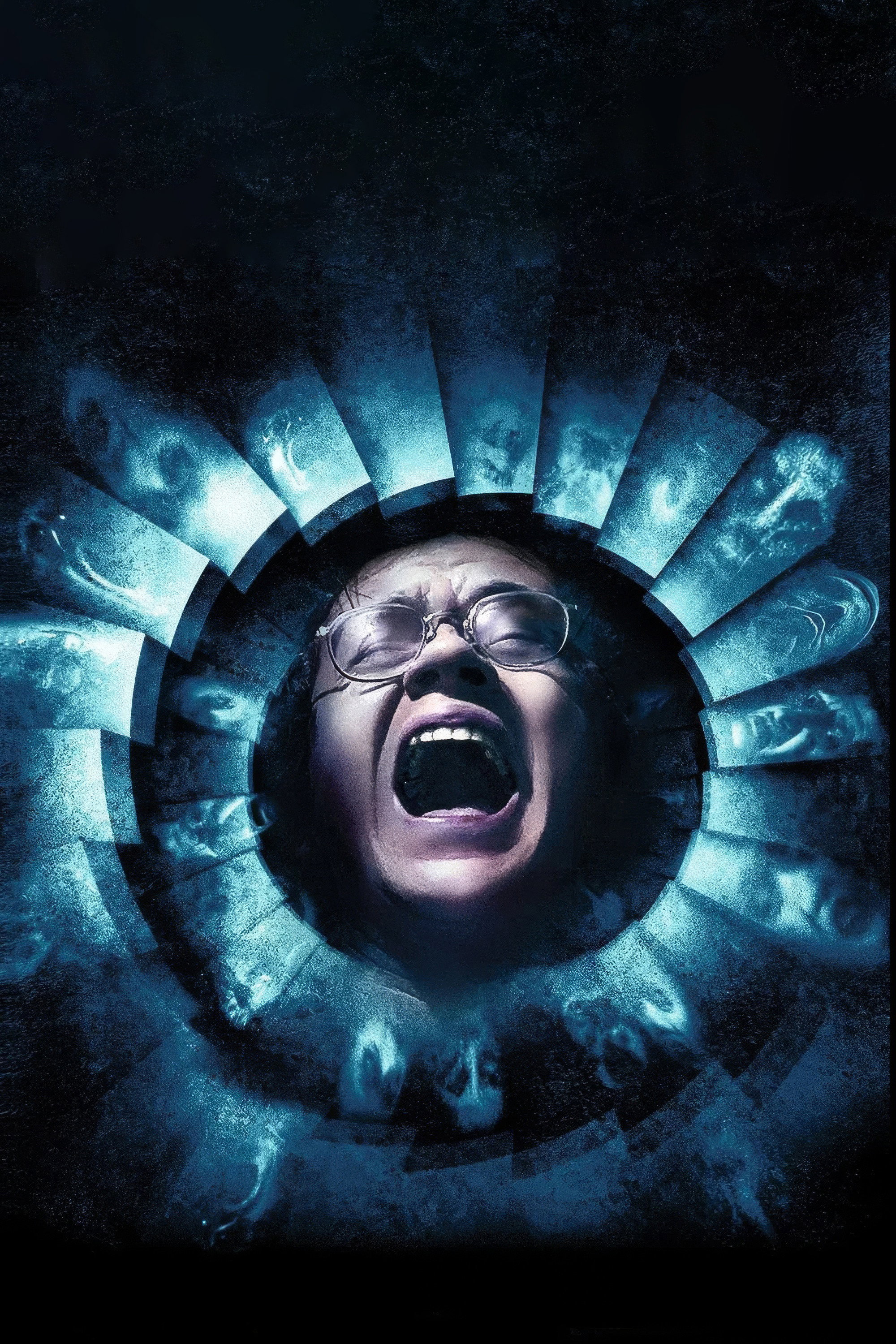
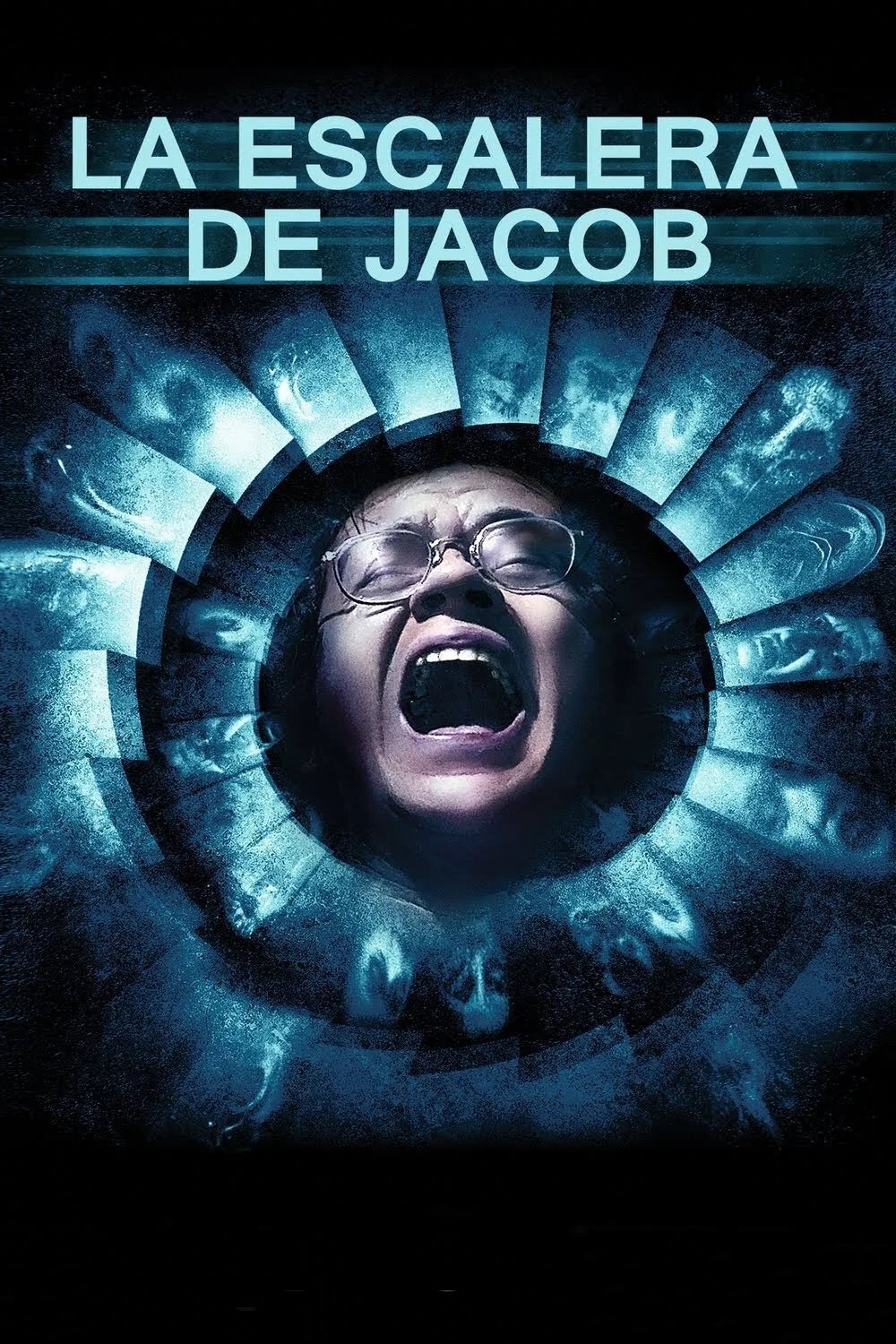
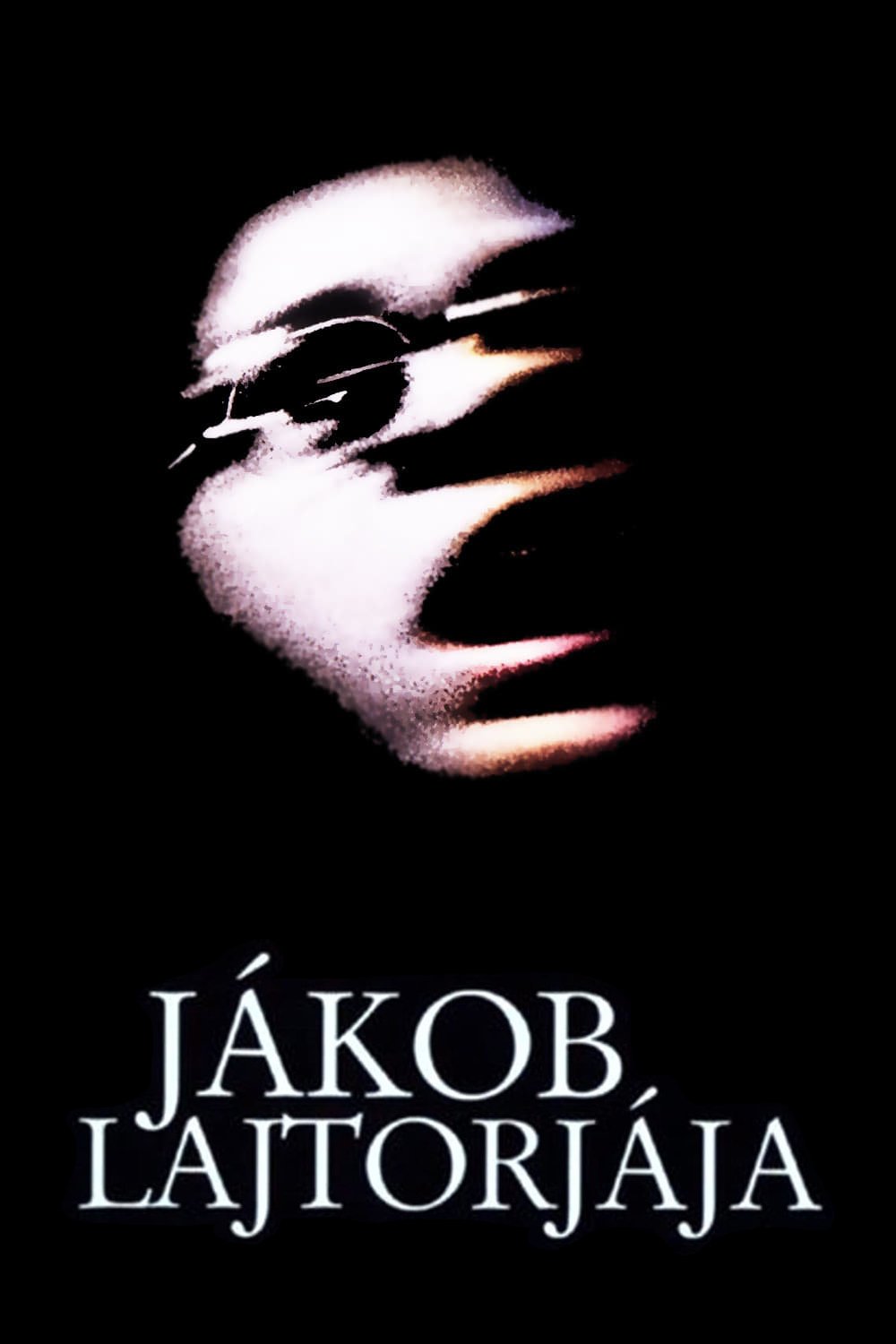
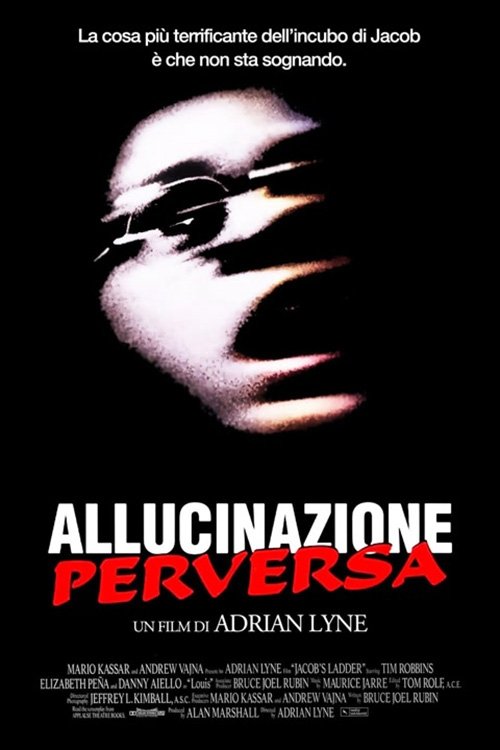
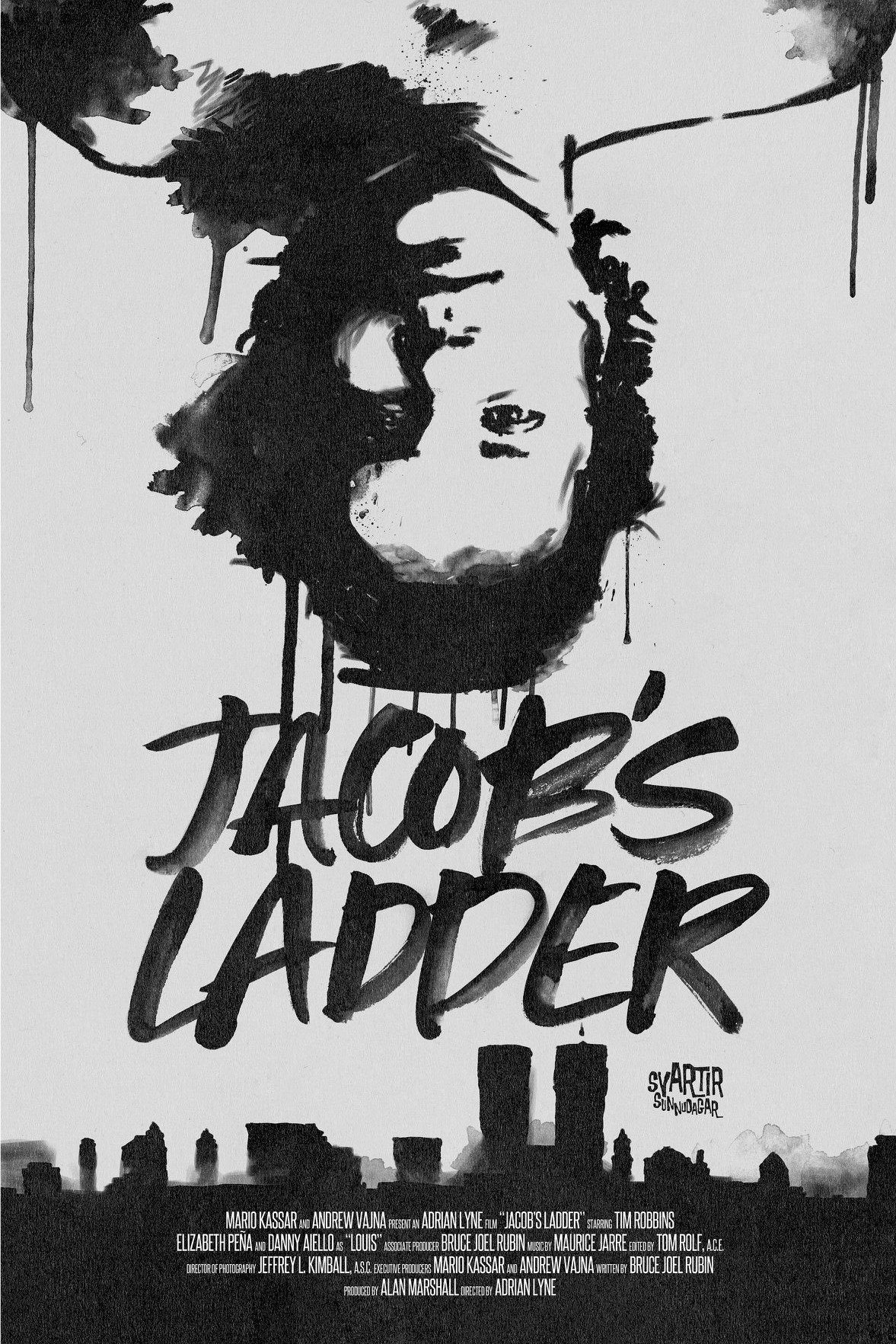
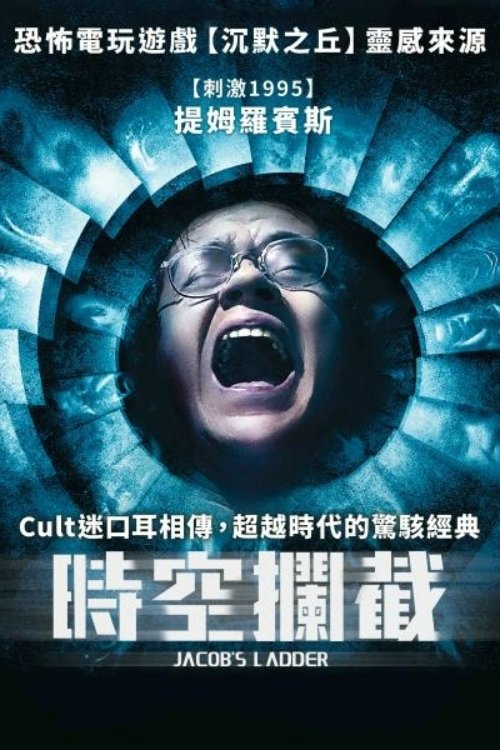
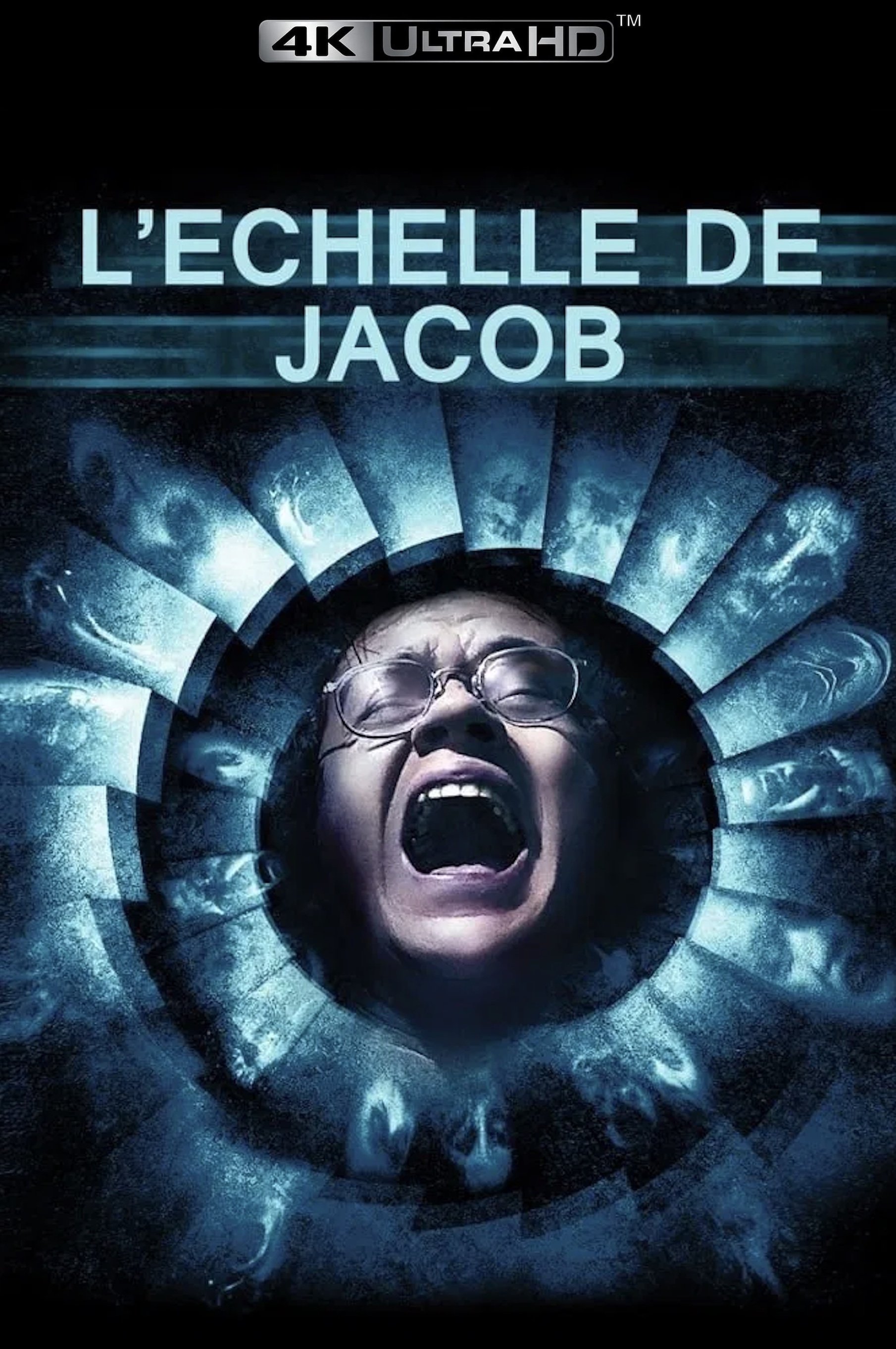
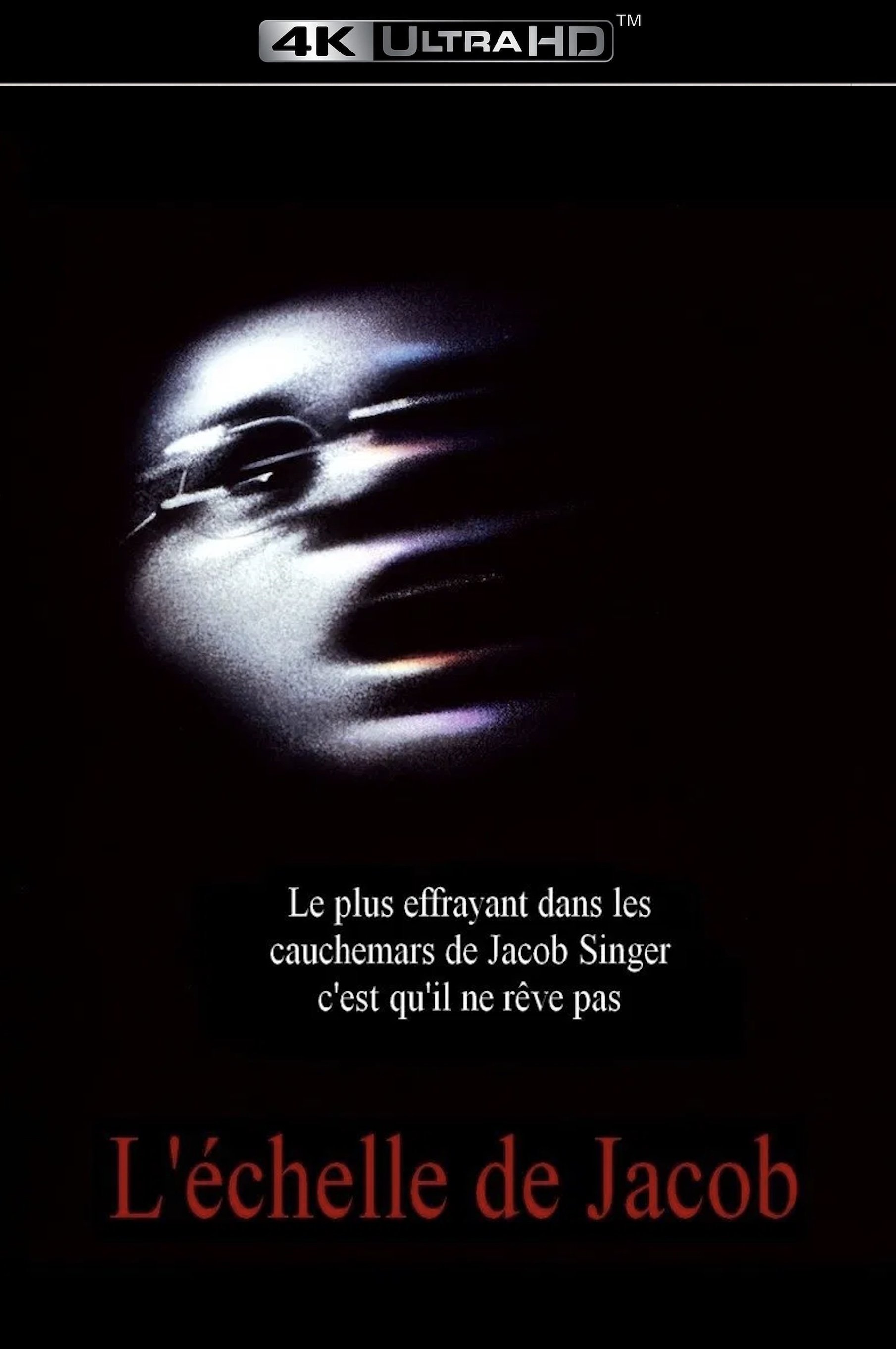
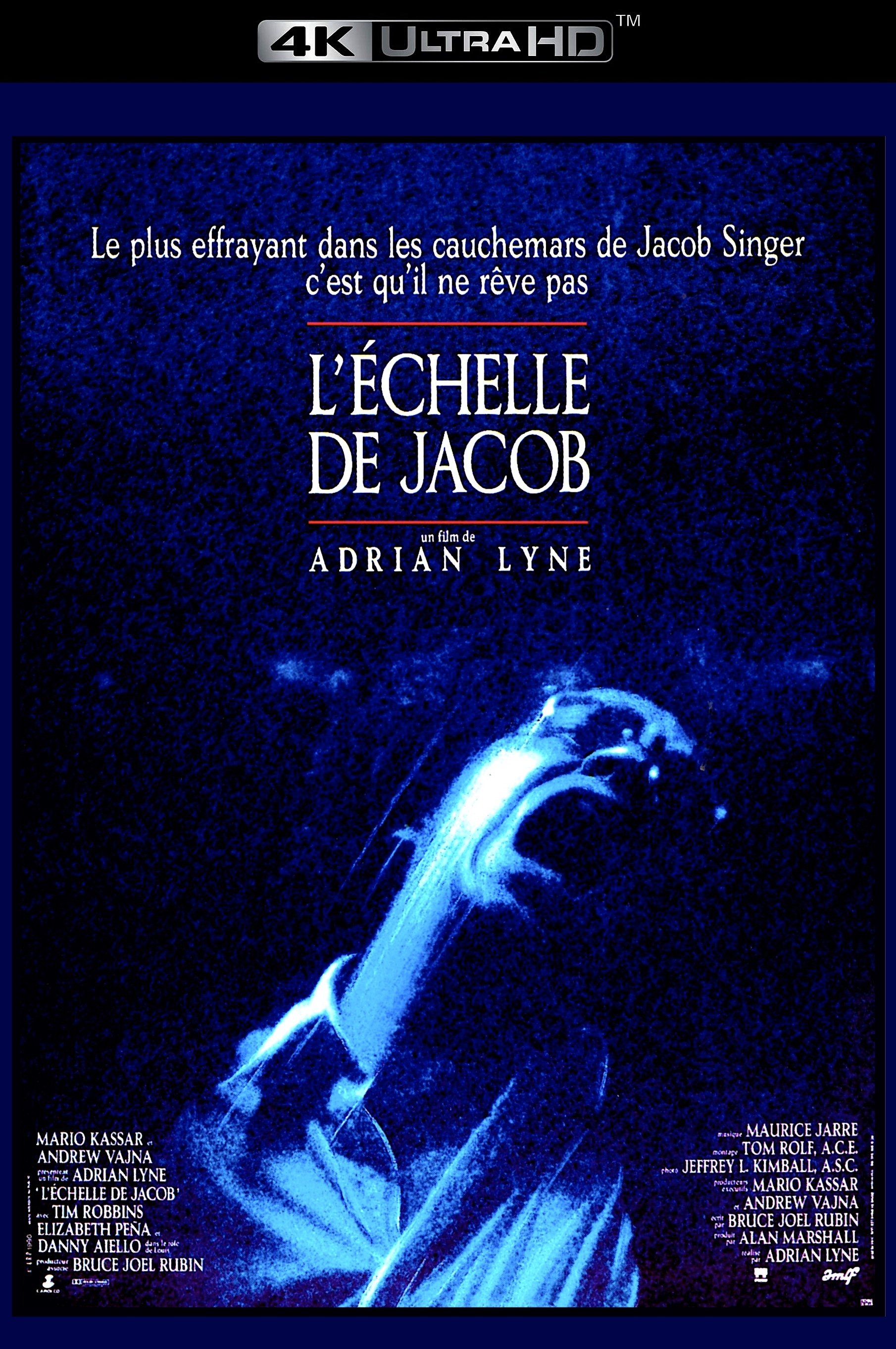
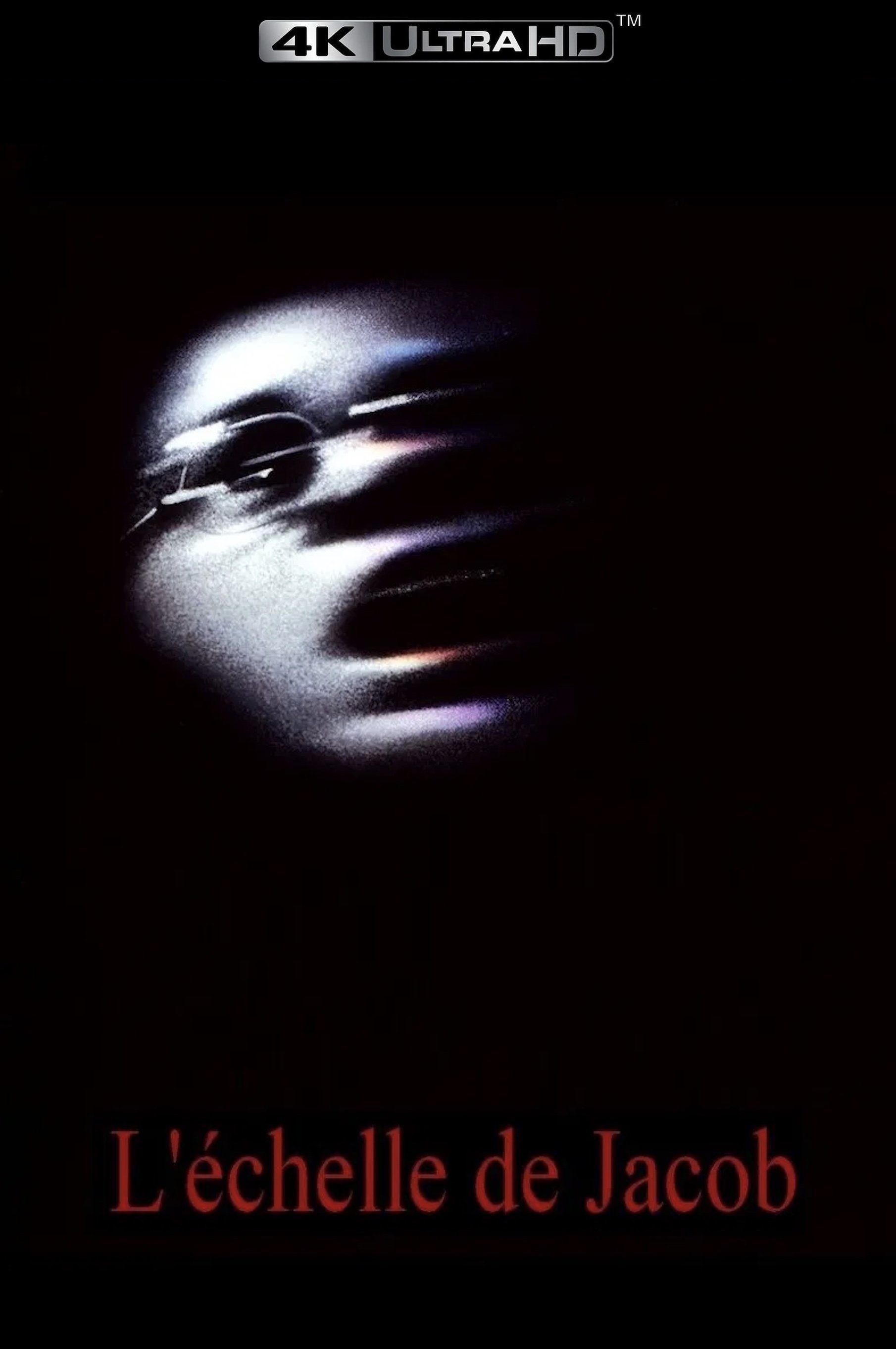
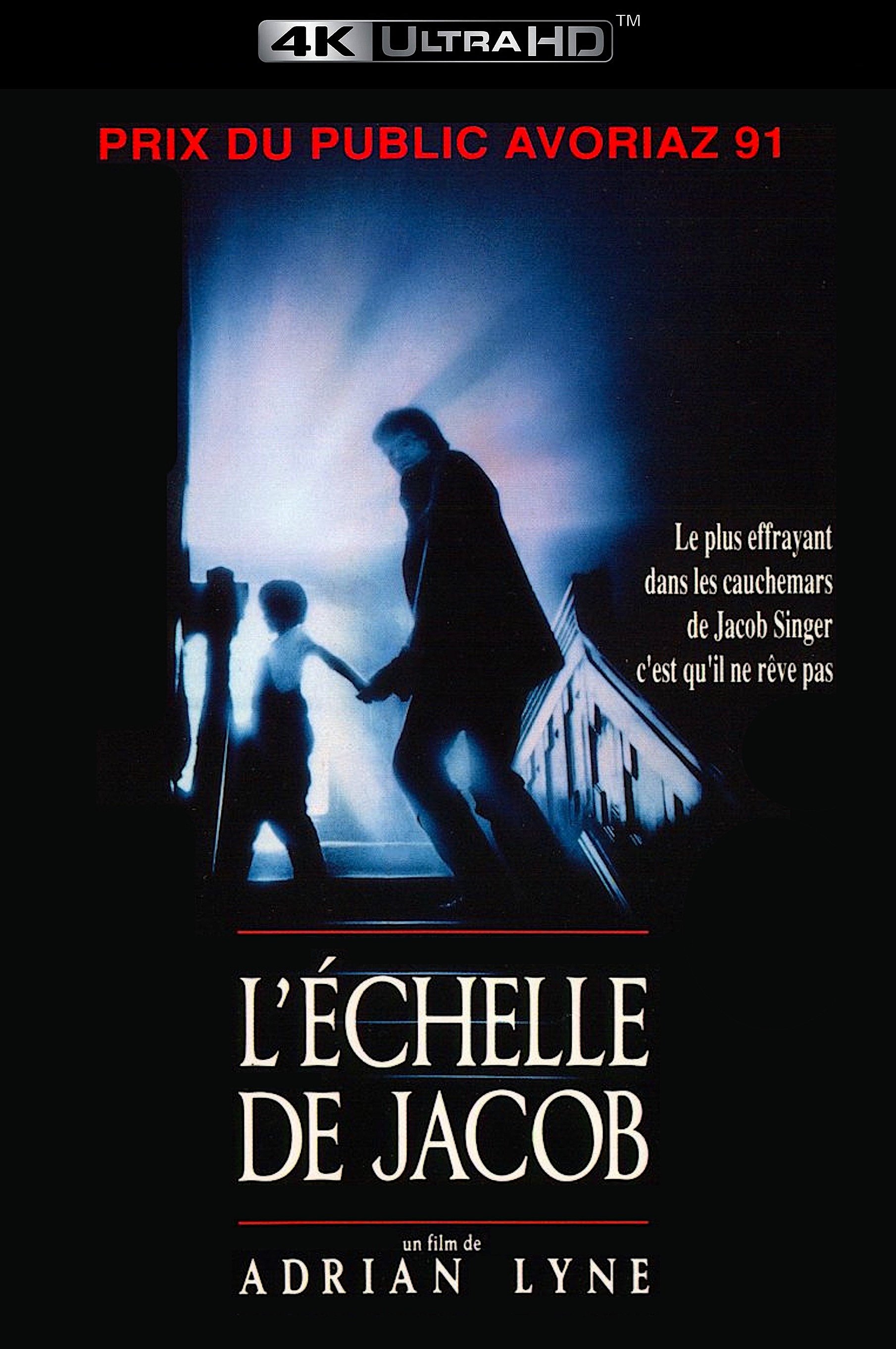
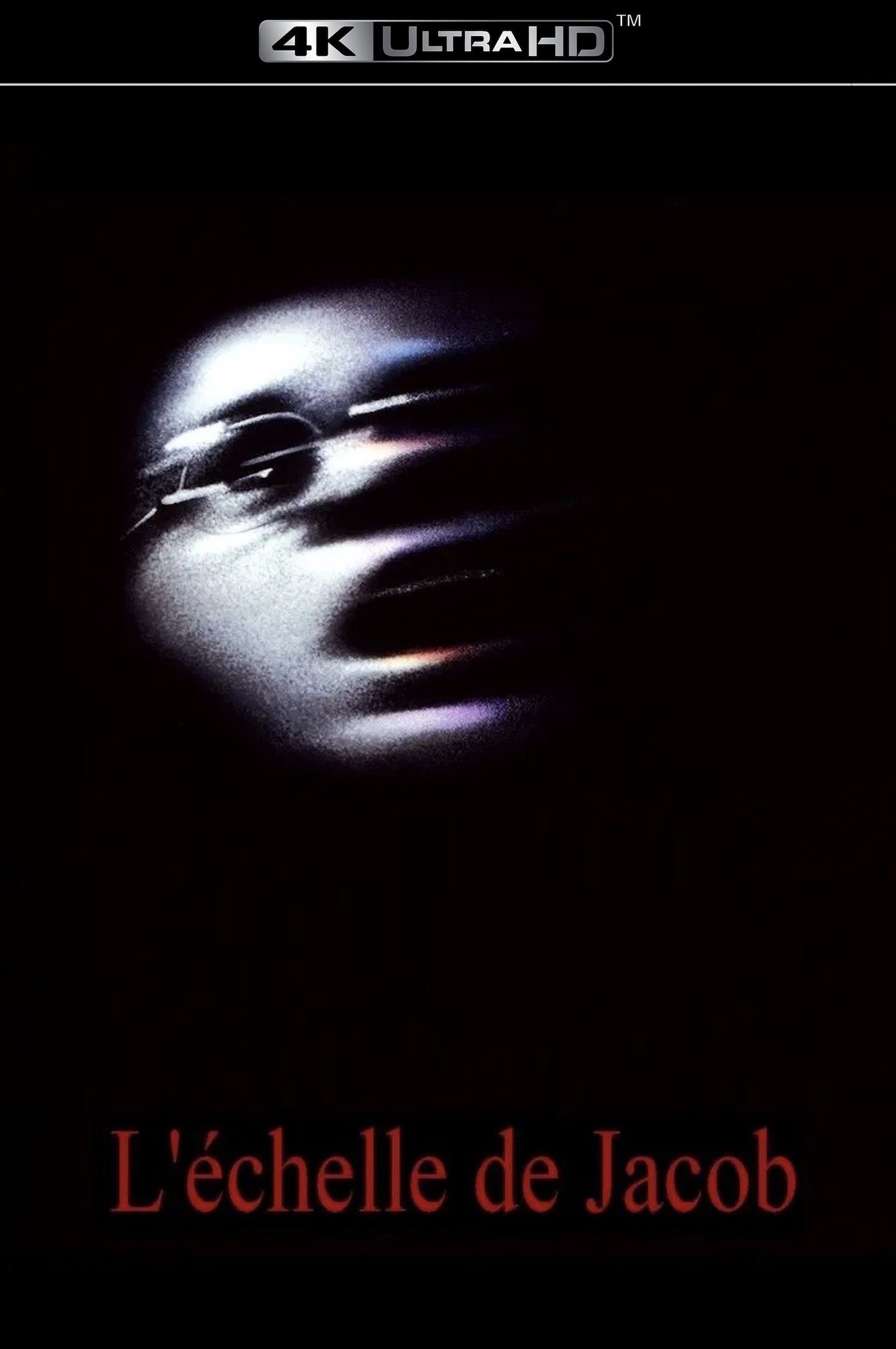
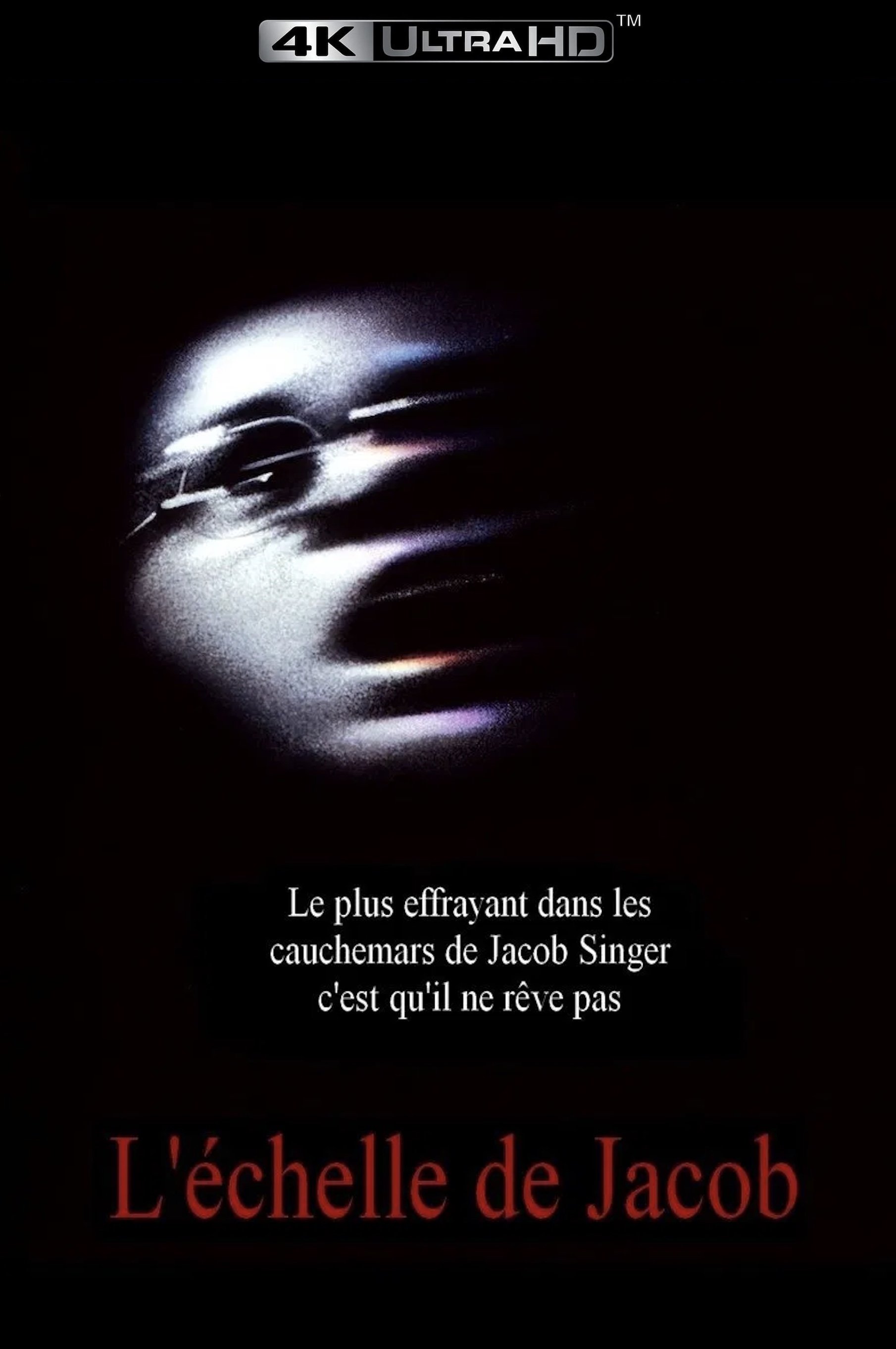
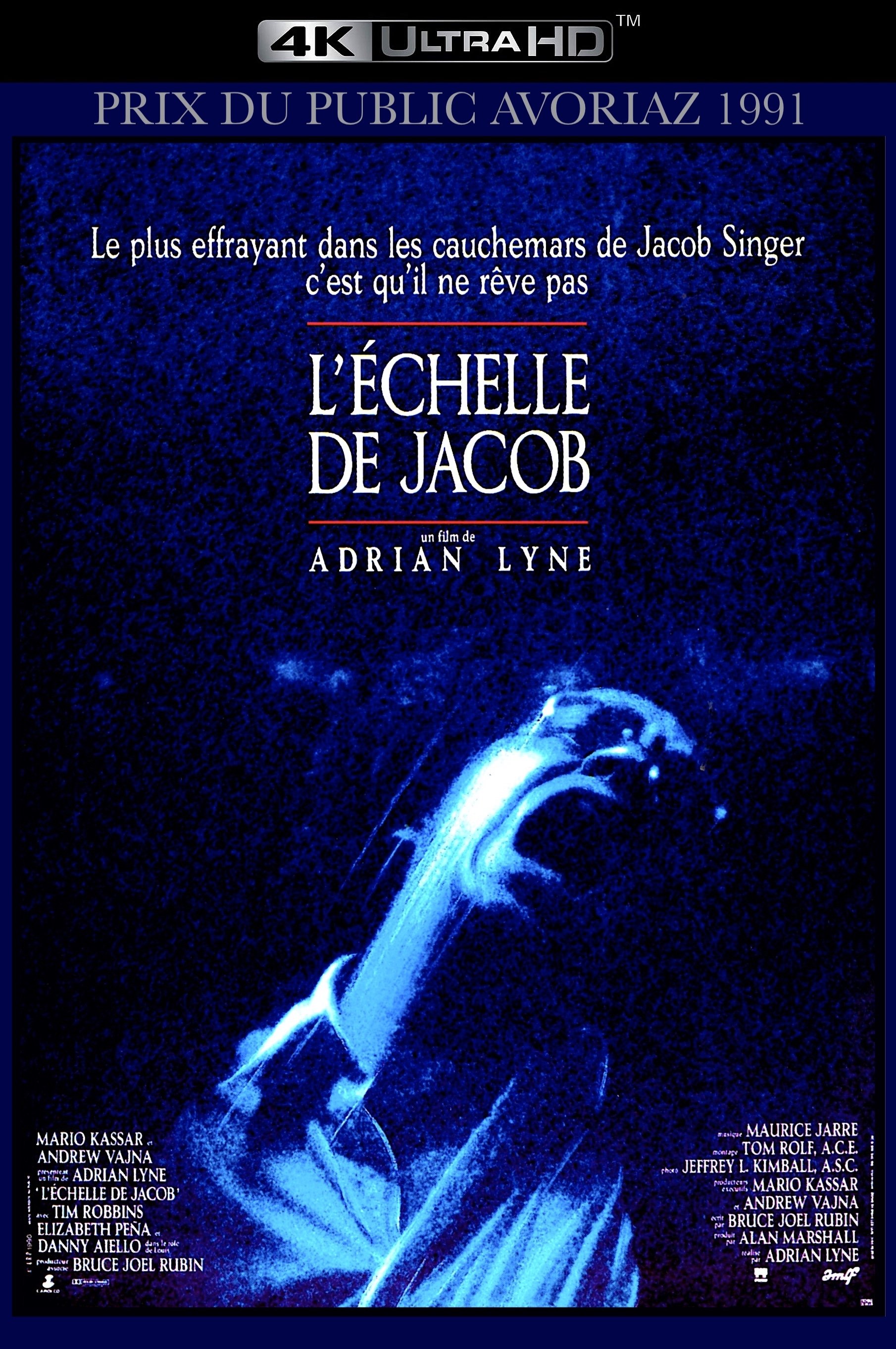
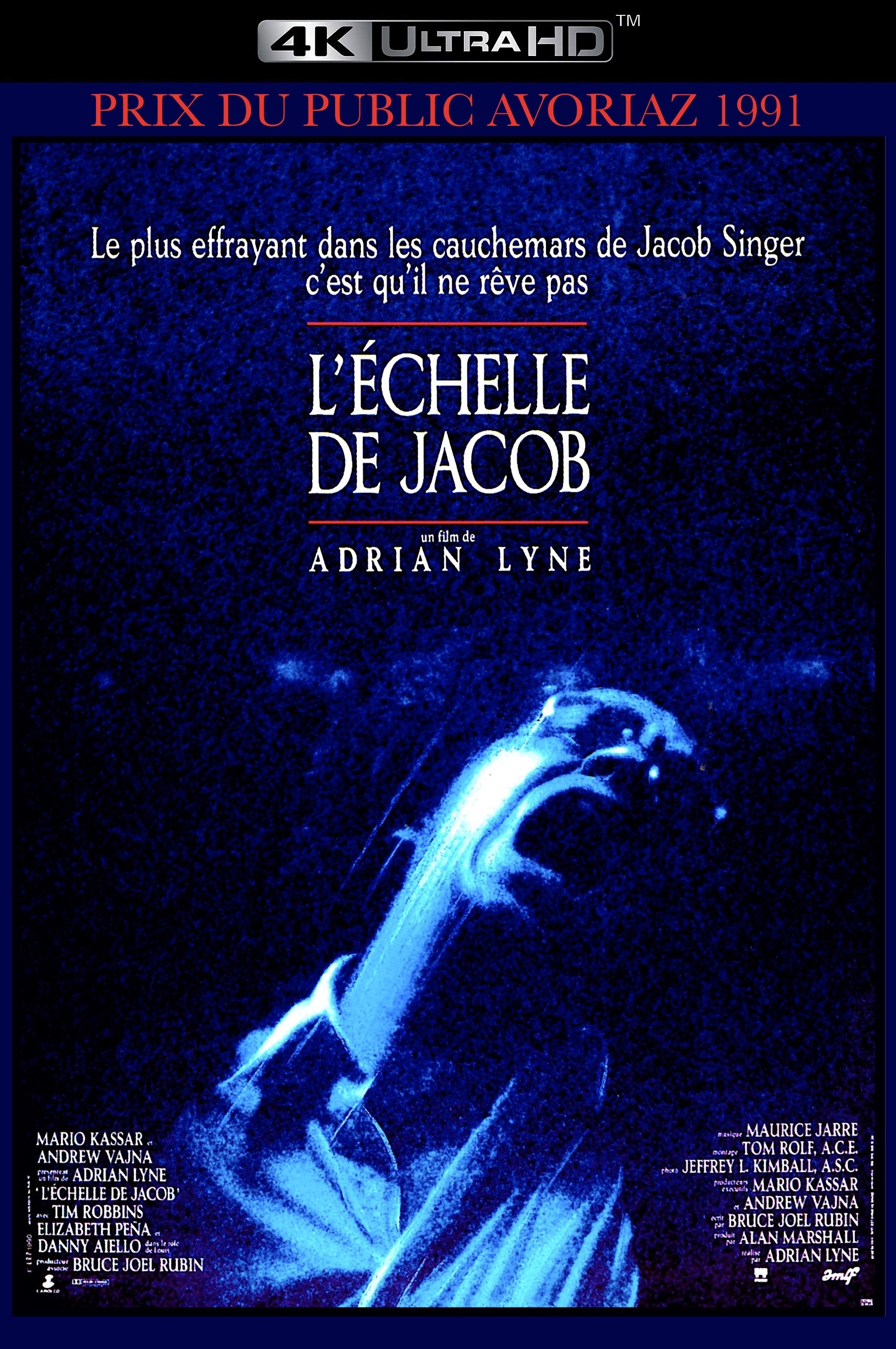
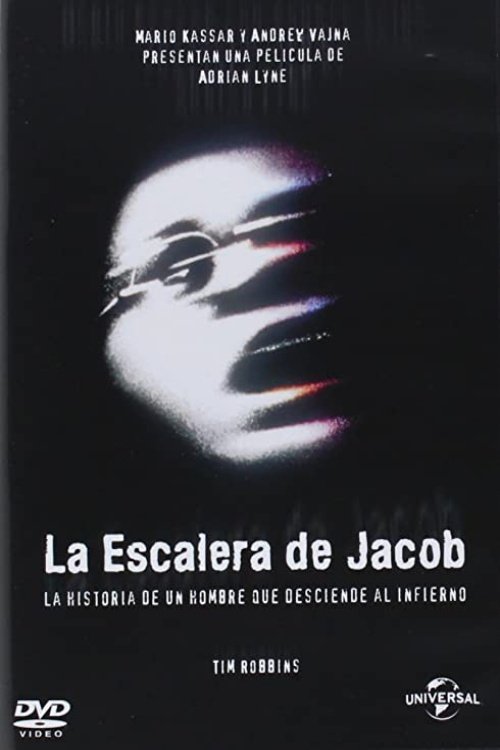
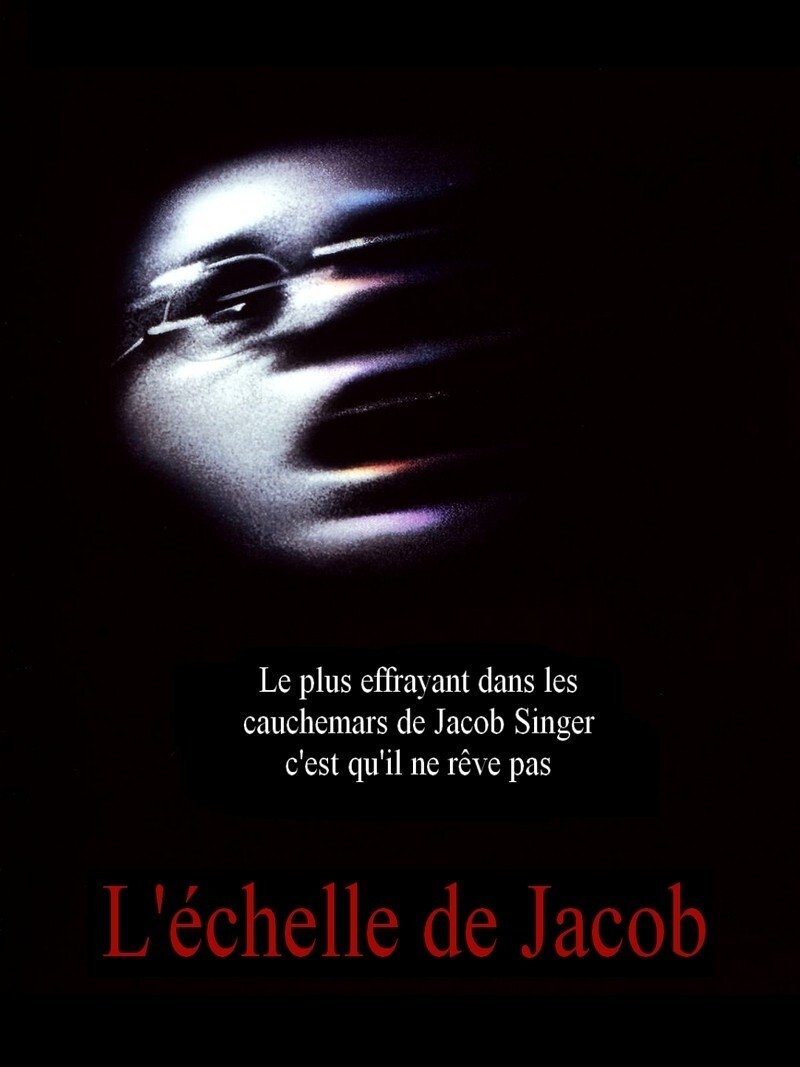
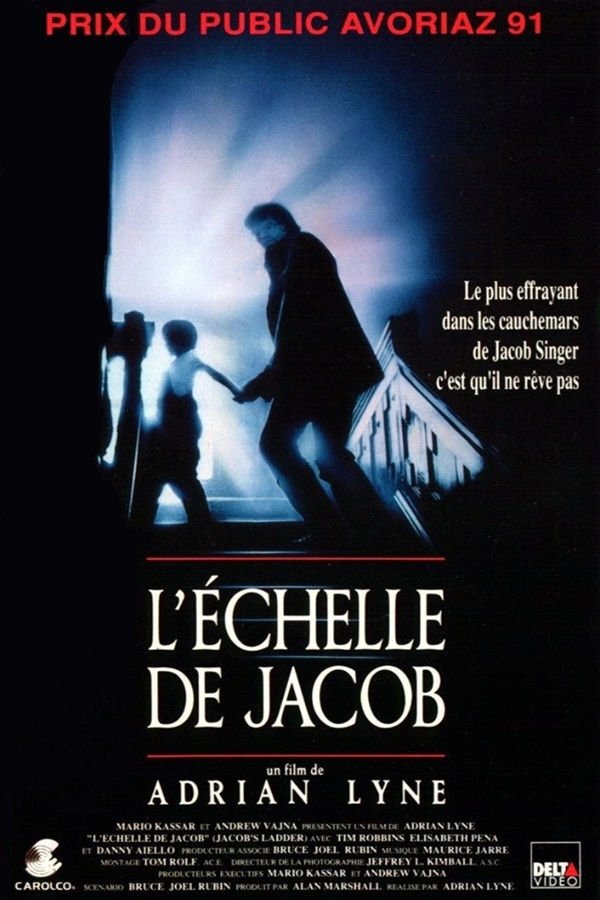
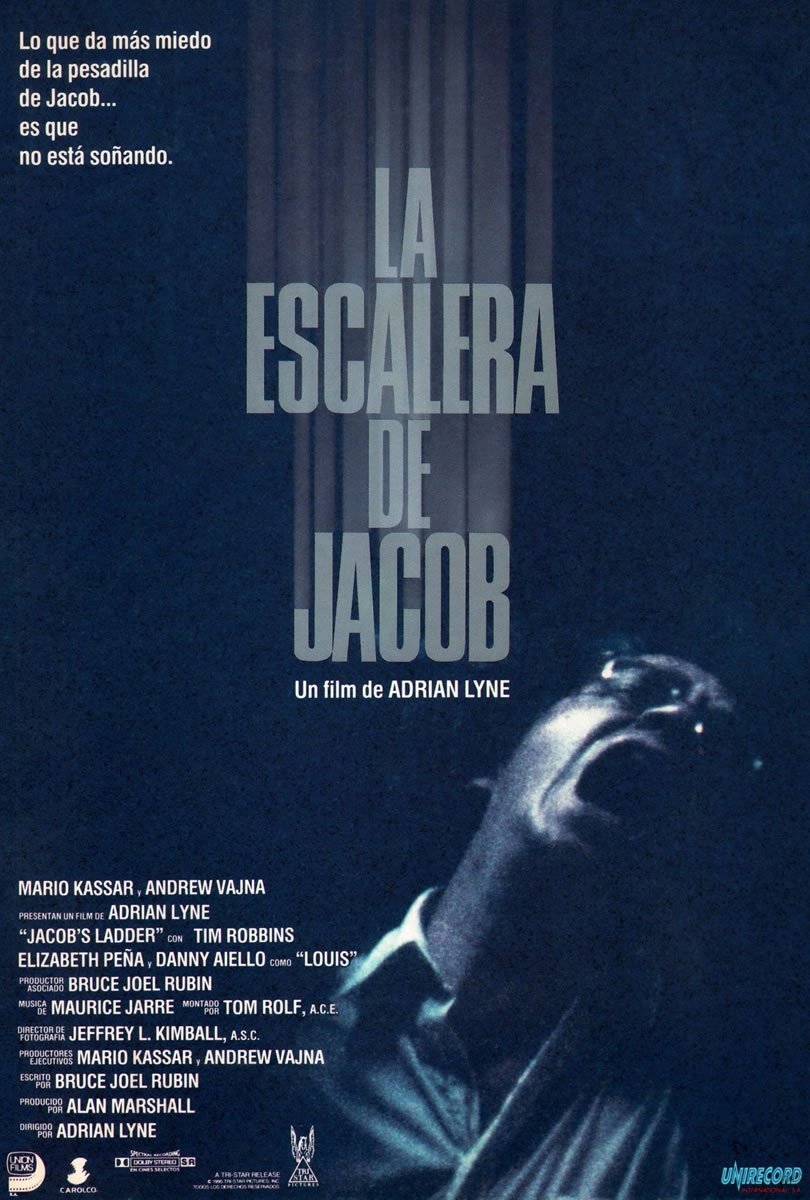
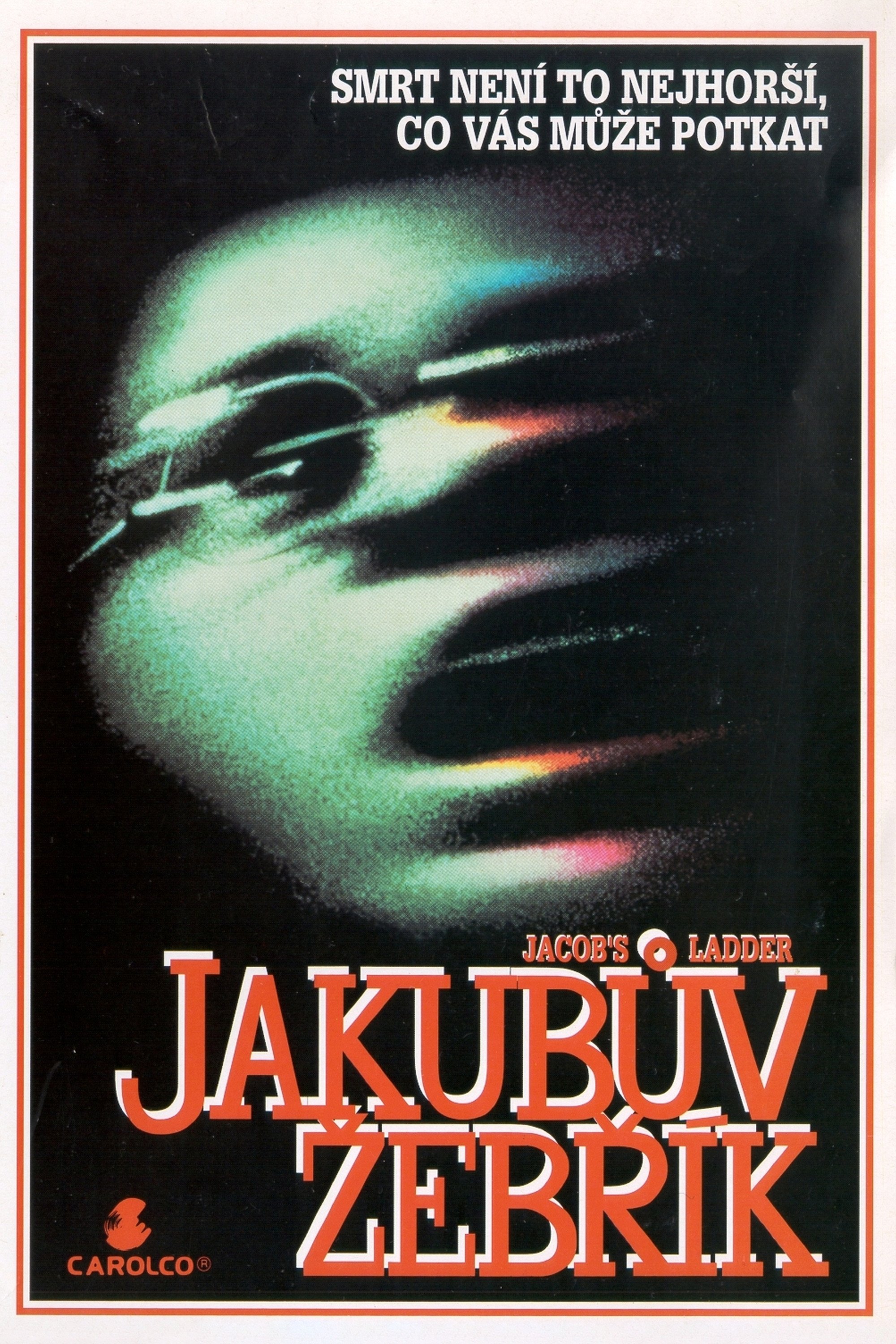
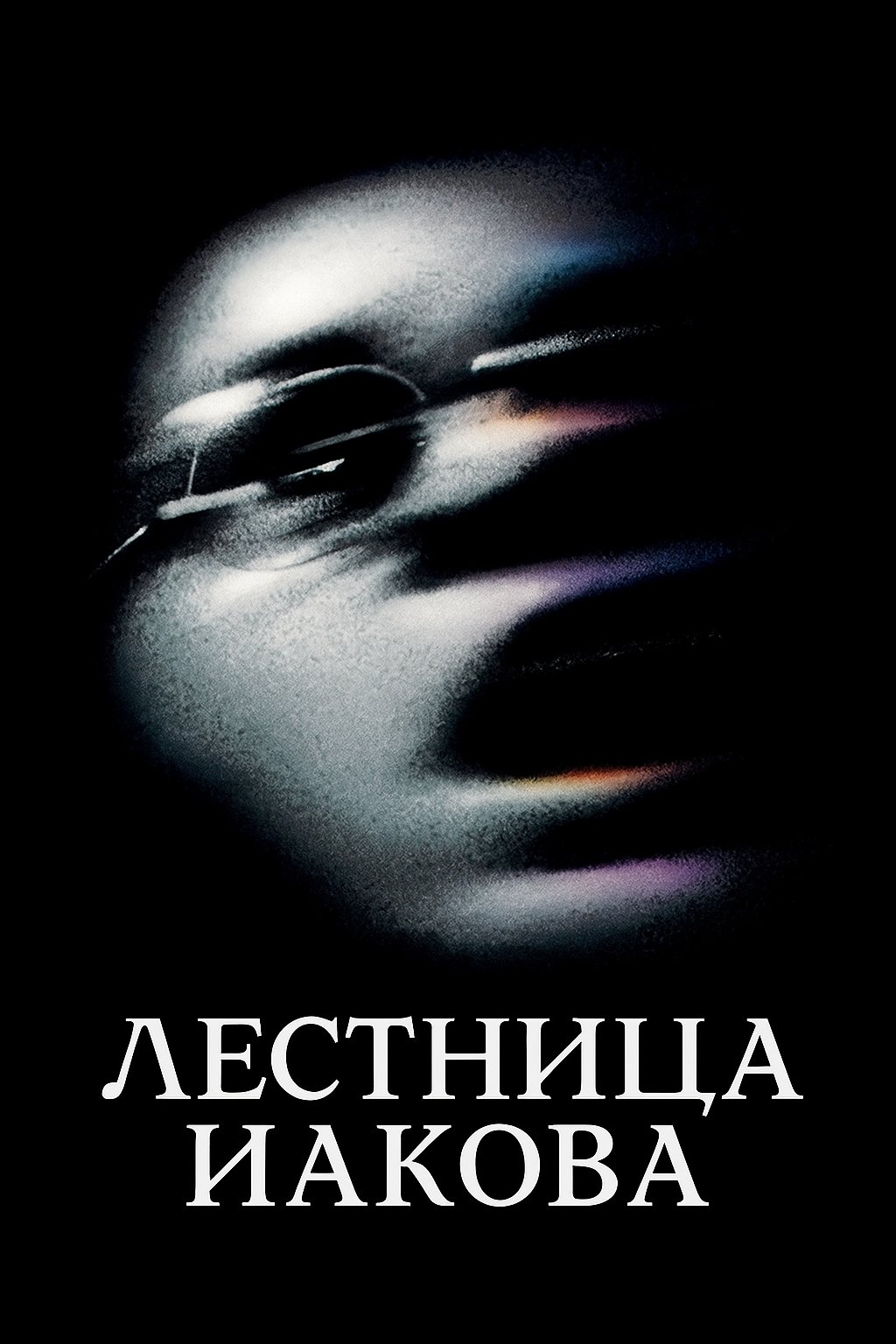
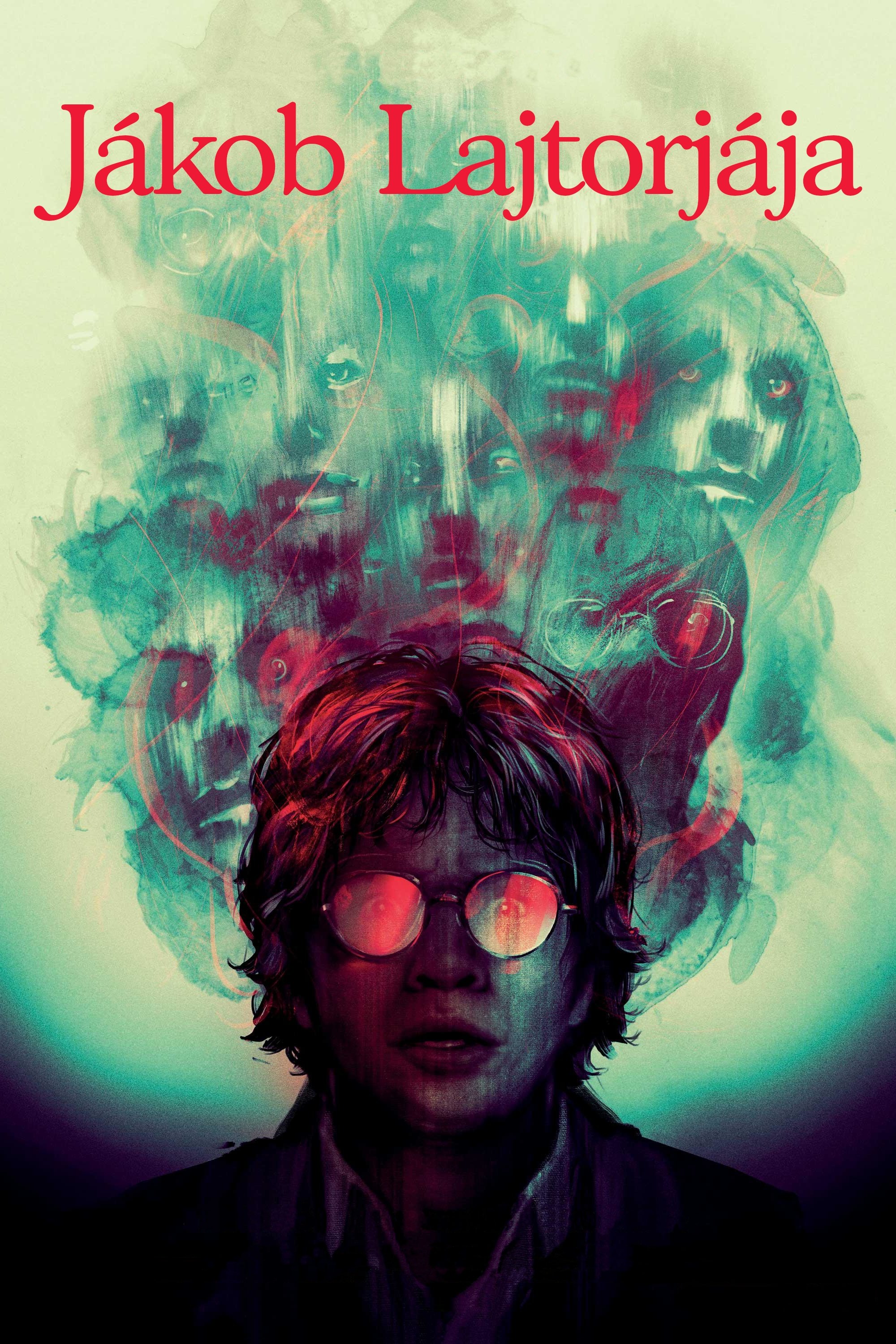
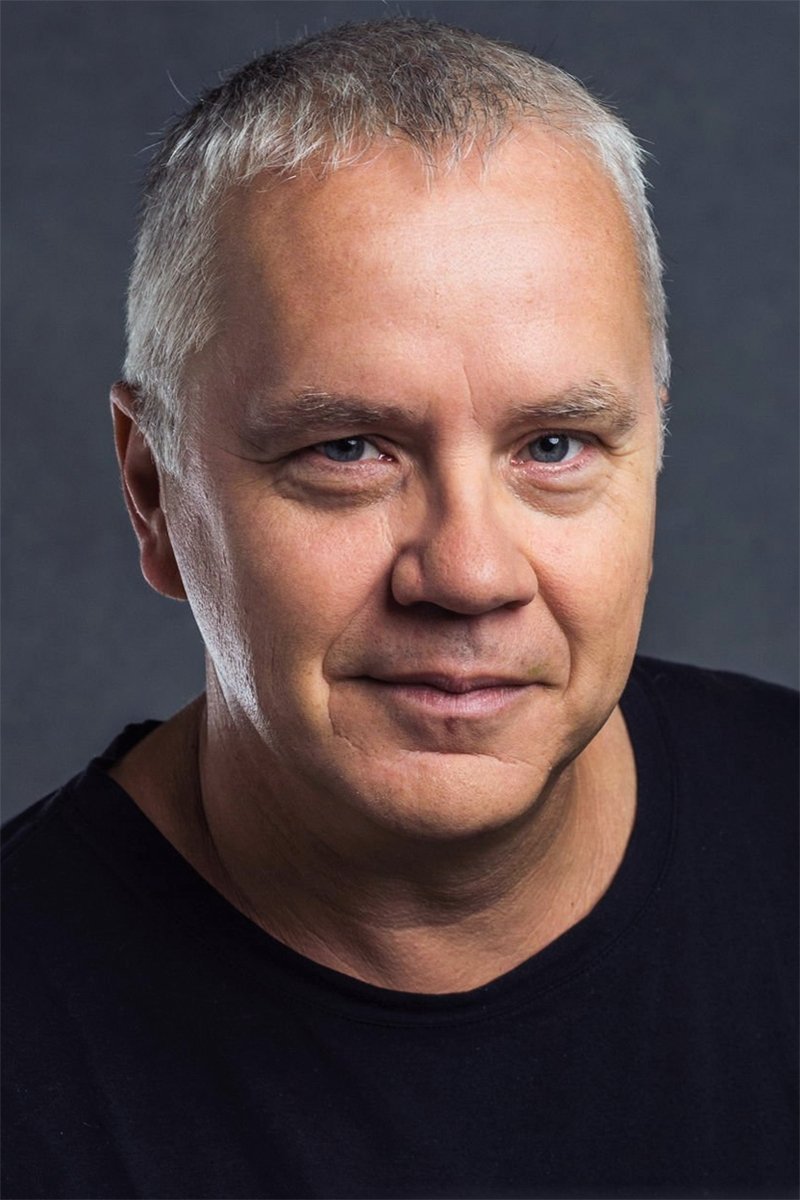
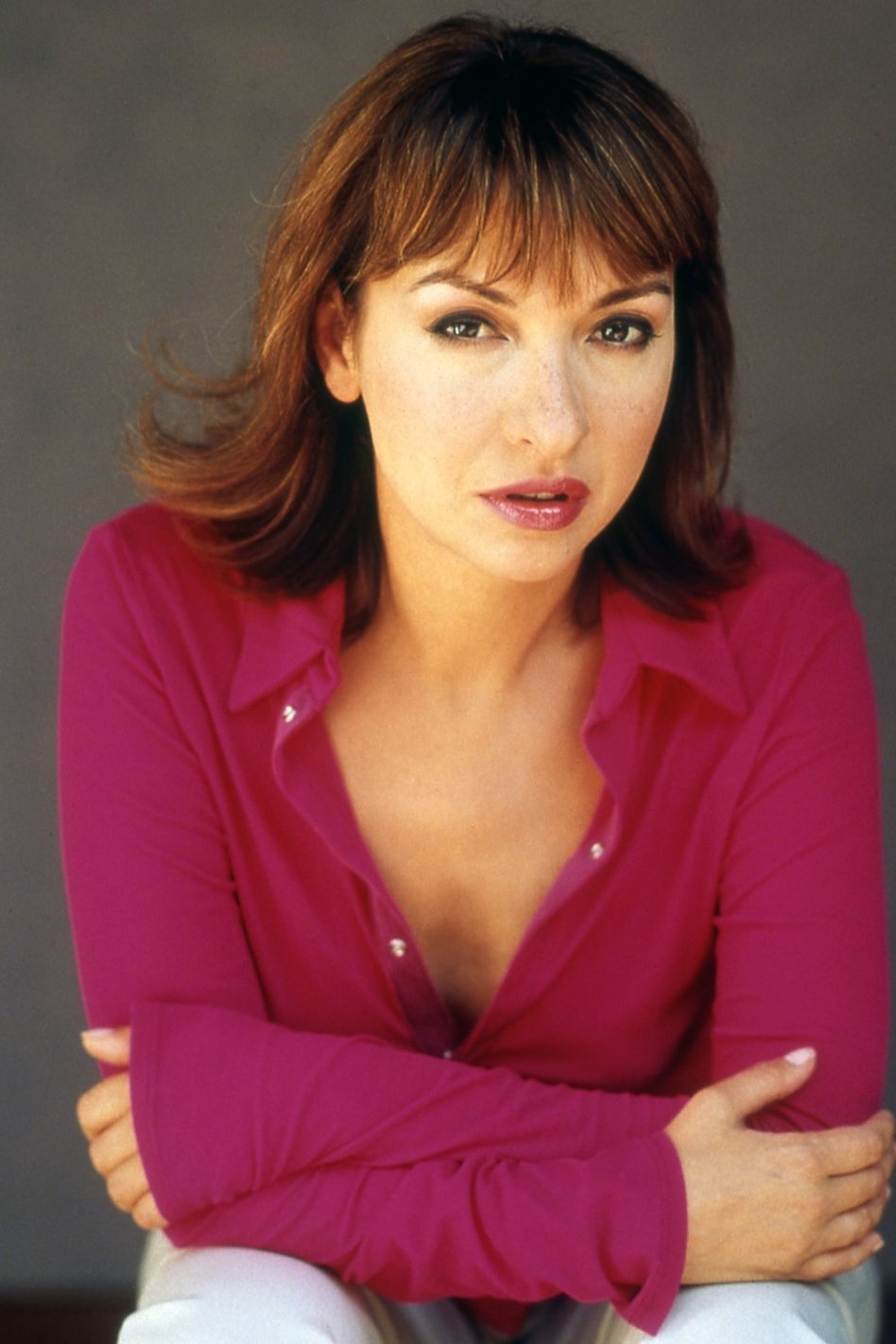
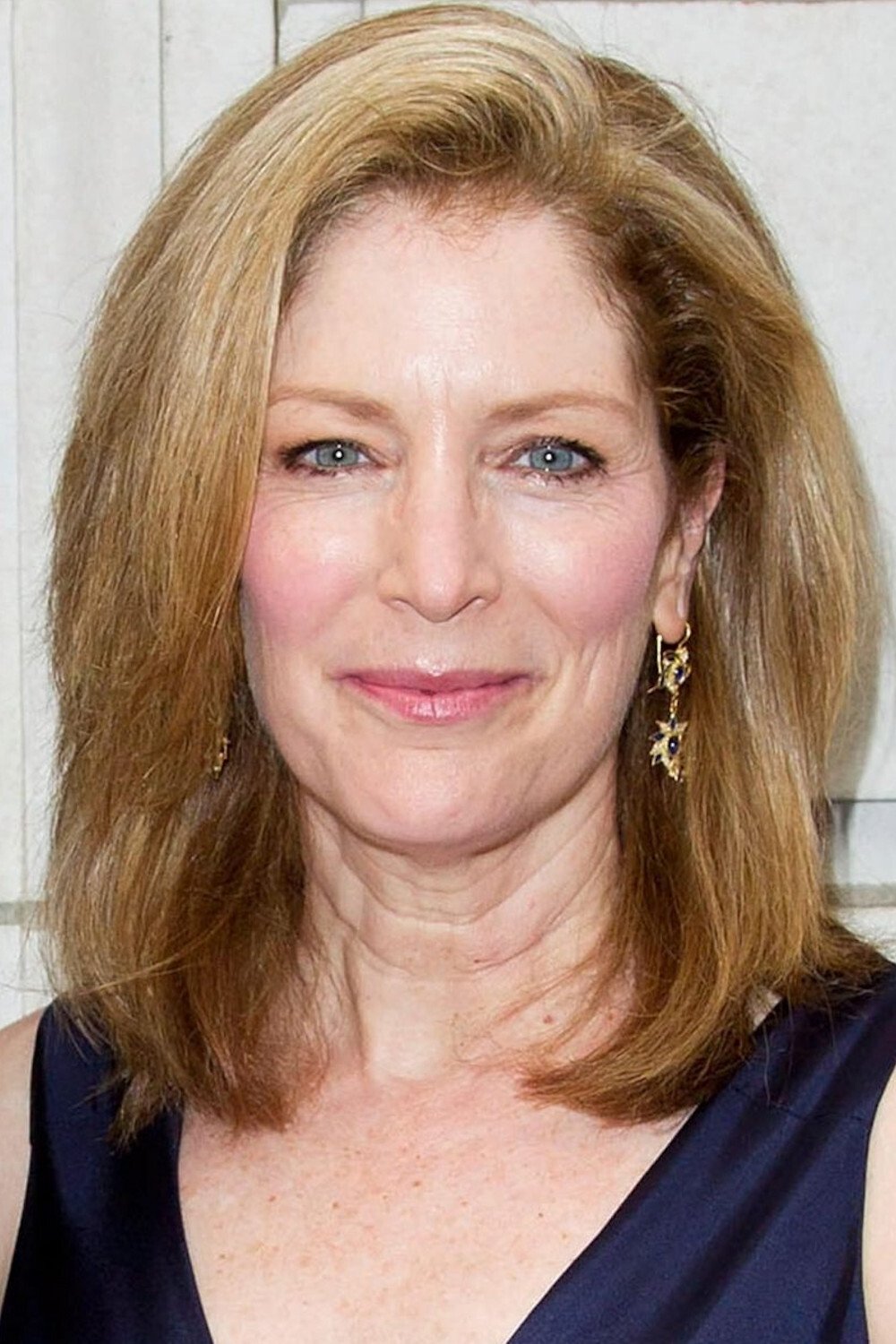
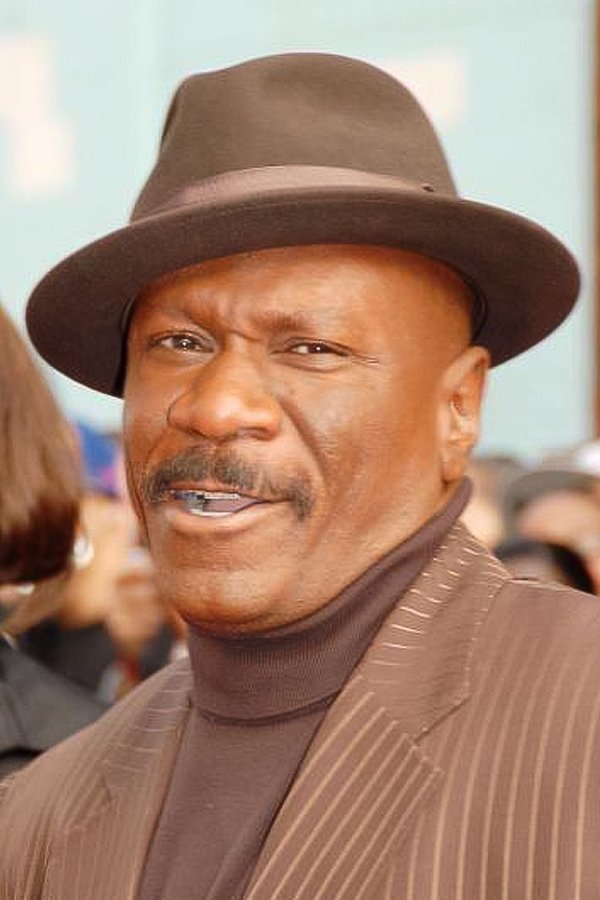
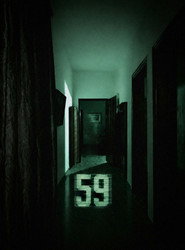
After returning home from the Vietnam War, veteran Jacob Singer struggles to maintain his sanity. Plagued by hallucinations and flashbacks, Singer rapidly falls apart as the world and people around him morph and twist into disturbing images. His girlfriend, Jezzie, and ex-wife, Sarah, try to help, but to little avail. Even Singer's chiropractor friend, Louis, fails to reach him as he descends into madness.
Alternative Titles
Стълбата на Яков (Bulgaria) — BulgarianAlucinações do Passado (Brazil) — PortugueseL'échelle de Jacob (Canada) — French异世浮生 (China) — ChineseJakubův žebřík (Czechia) — CzechJacob's Ladder - In der Gewalt des Jenseits (Germany) — GermanTrappen til helvede (Denmark) — DanishL’escala de Jacob (Spain) — CatalanShow all 39 alternative titlesLa escalera de Jacob (Spain) — SpanishJaakobin painajainen (Finland) — Video Box TitleJacob's mardröm (Finland) — Swedish TitleL'Échelle de Jacob (France) — FrenchXypnima ston efialti (Greece) — transliterationΞύπνημα στον Εφιάλτη (Greece) — Greek時空攔截 (Hong Kong SAR China) — ChineseJákob lajtorjája (Hungary) — Hungarianחיים בצל הסיוט (Israel) — HebrewAllucinazione perversa (Italy) — Italianジェイコブス・ラダー (Japan) — Japanese야곱의 사다리 (South Korea) — KoreanDžeikobo kopėčios (Lithuania) — LithuanianAlucinaciones del pasado (Mexico) — SpanishLa escalera de Jacob (Mexico) — alternative titleJacobs inferno (Norway) — NorwegianDrabina Jakubowa (Poland) — PolishA Escada de Jacob (Portugal) BZ - Viagem Alucinante (Portugal) Scara lui Jacob (Romania) — RomanianDzejkobova lestvica (Serbia) — Television TitleЈаковљева лествица (Serbia) — SerbianЛестница Иакова (Russia) — RussianJacobs inferno (Sweden) — SwedishЛестница Иакова (Russia) — Russian Titleไม่ตาย ก็เหมือนตาย (Thailand) — ThaiDehşetin Nefesi (Türkiye) — Turkish時空攔截 (Taiwan) — ChineseДрабина Якова (Ukraine) — UkrainianDante's Inferno (United States) Jacobova ljestvica uzasa (Serbia) — Croatian Title
Adrian Lyne’s psychological horror transforms Vietnam trauma and the fear of death into a fractured New York nightmare, with unsettling in-camera effects and Maurice Jarre’s score.
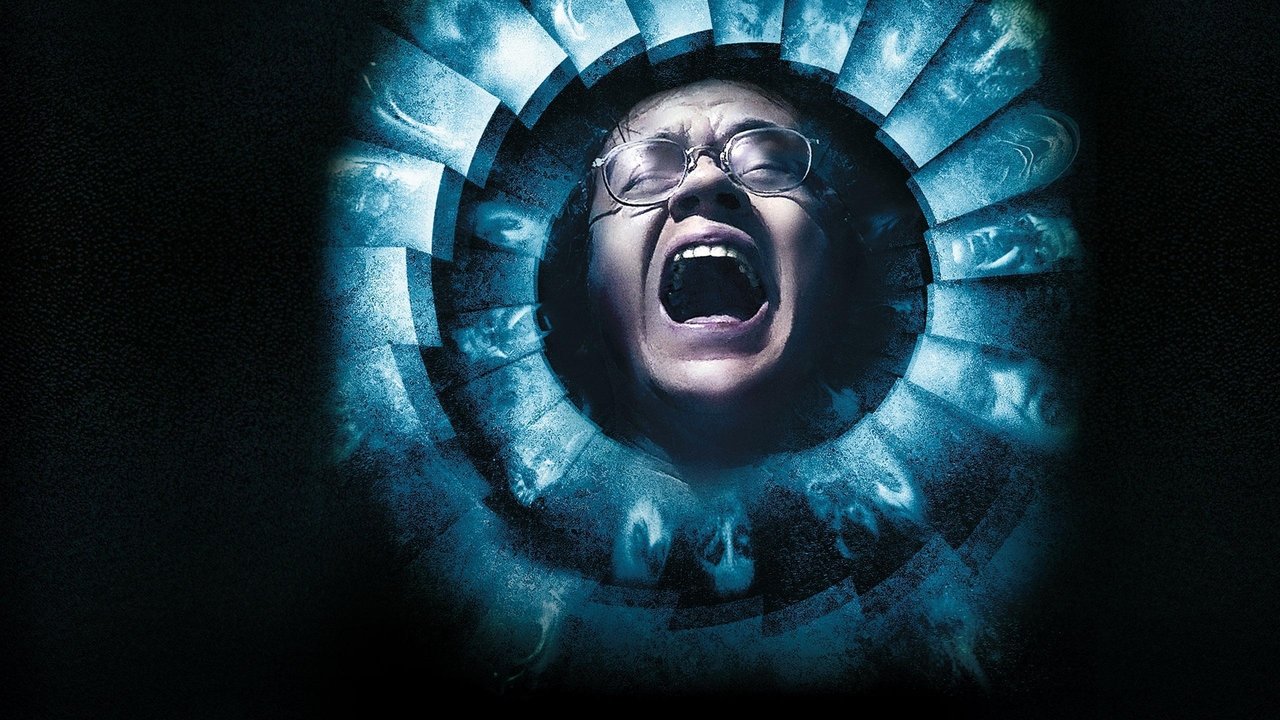
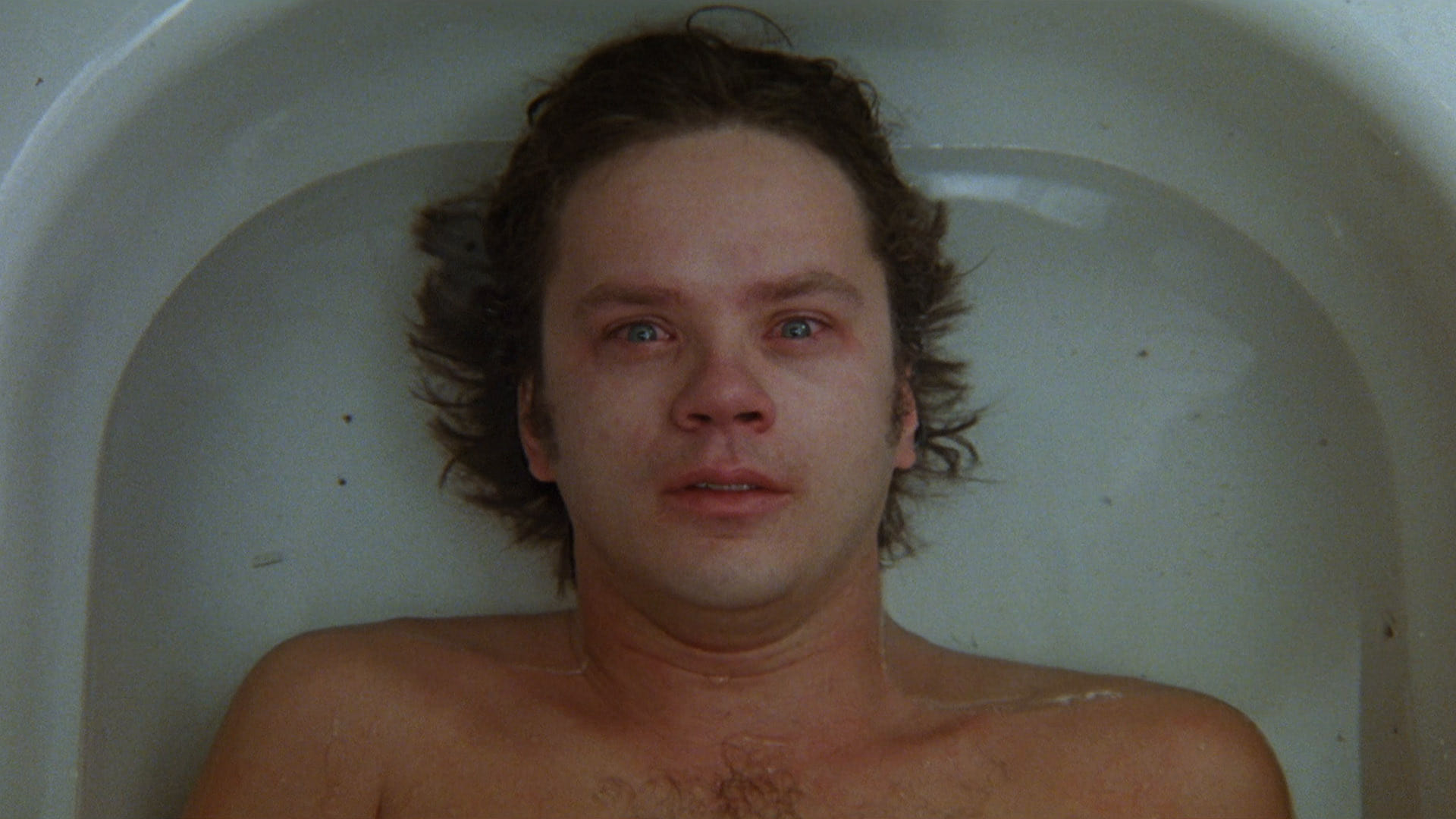
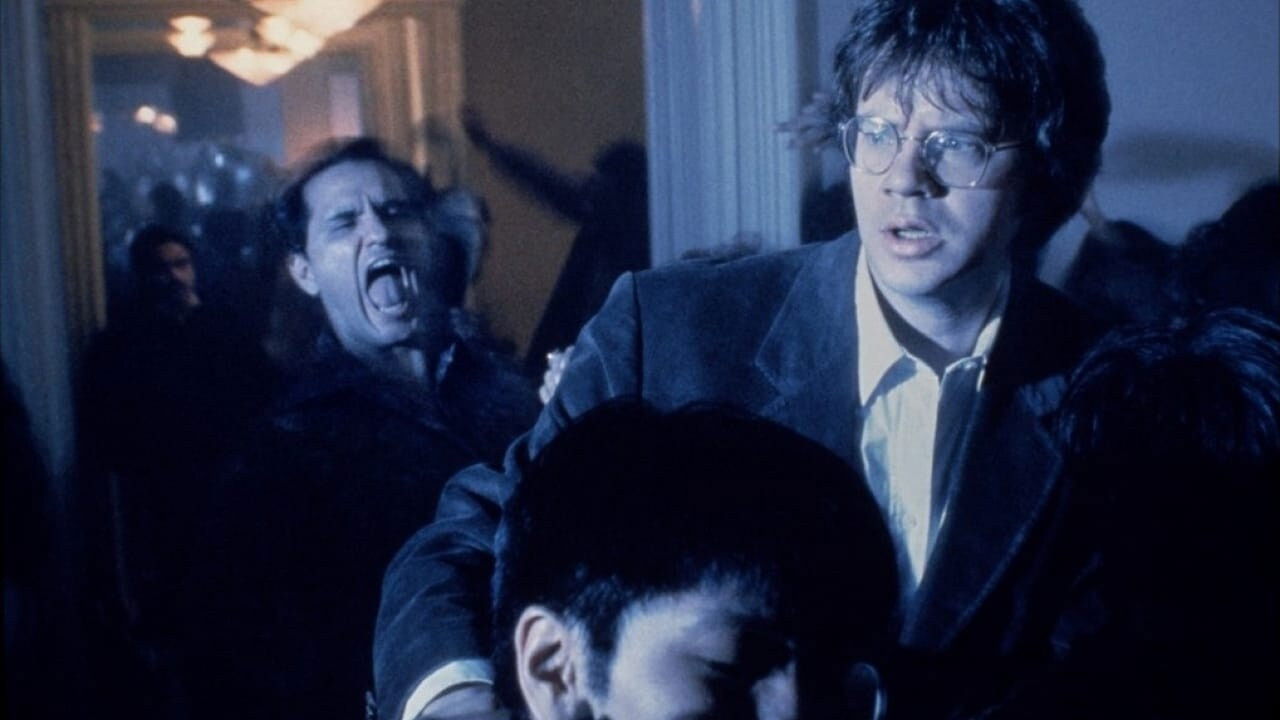
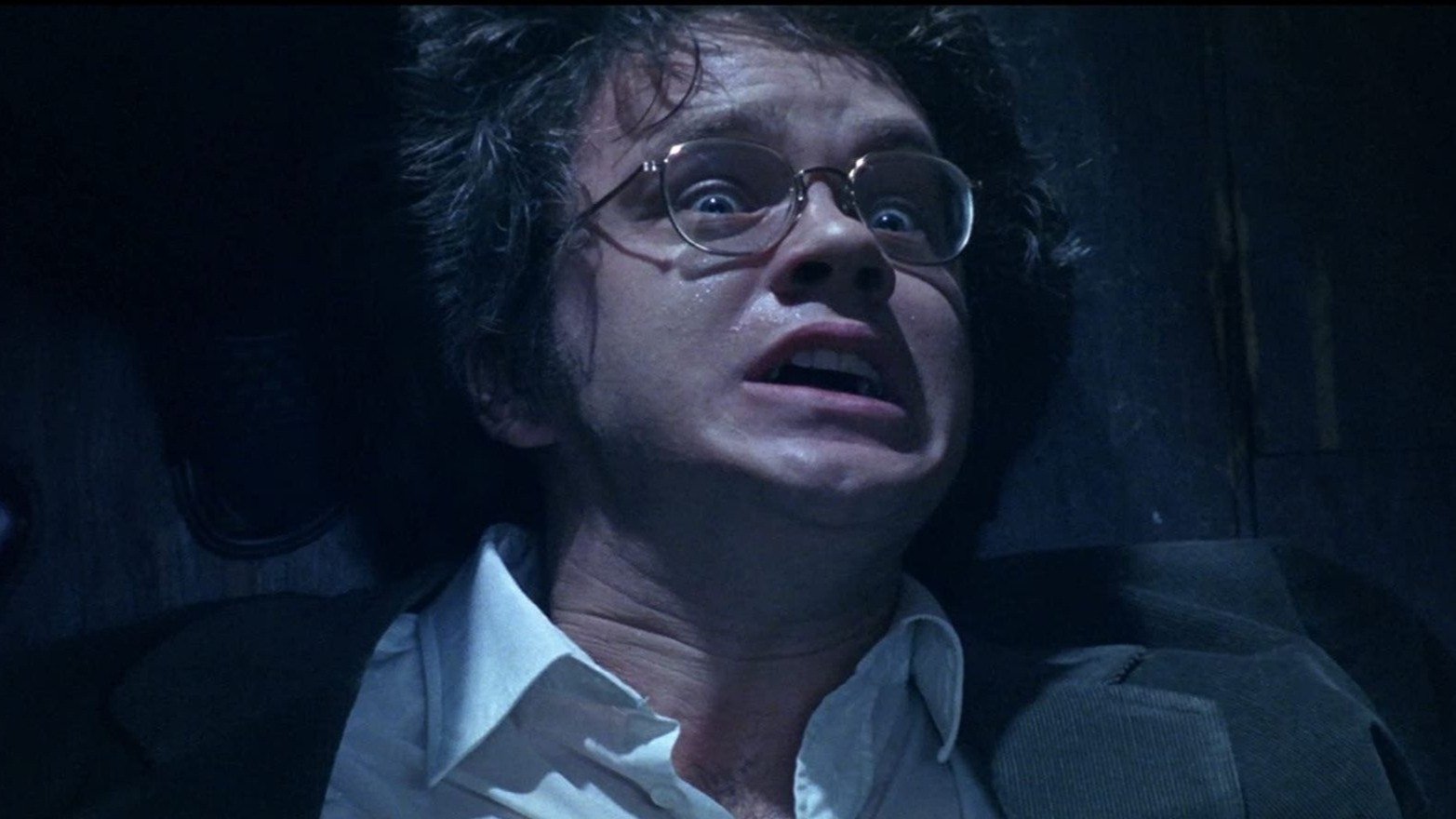
Jacob’s Ladder (1990), directed by Adrian Lyne from a screenplay by Bruce Joel Rubin, occupies a distinctive place in American psychological horror. Tim Robbins plays Jacob Singer, a Vietnam veteran whose apparent life in New York is interrupted by feverish visions, memories of battlefield violence and encounters with human figures whose bodies move in impossible ways. A subway platform, a dance floor and a hospital become places where familiar surroundings can suddenly turn hostile. The film draws much of its terror from its refusal to establish whether these experiences originate in the outside world, an injured mind or a state beyond death.
The production brought an unusually abstract screenplay into a commercial studio film while retaining its spiritual preoccupations. Lyne and cinematographer Jeffrey Kimball translated Rubin’s descriptions into a deliberately unstable visual language, combining ordinary locations with physical makeup, manipulated camera speeds and abrupt transitions between periods of Jacob’s life. Its horror is inseparable from the protagonist’s grief over his son, the violence of the Vietnam War and the fear that his own memories cannot be trusted. Later restoration and retrospective discussion have kept attention on the film’s singular treatment of mortality and perception.
Development and Screenplay
Bruce Joel Rubin traced the origin of Jacob’s Ladder to a nightmare in which he was trapped inside a deserted New York subway station. While living in Illinois in the early 1980s, he transformed that sense of entrapment into a screenplay about a man caught between existence and death. Rubin has described the work as an attempt to find a passage through despair, informed by his interest in spiritual experience and the intermediate state of consciousness associated with Tibetan Buddhism. The first draft dates to 1981, and the script soon acquired a reputation in the industry despite remaining unproduced. American Film identified it among Hollywood’s outstanding unmade screenplays in 1983.
The project advanced after Adrian Lyne read the script in 1988, during the Writers Guild of America strike. According to contemporary reporting, the director was attracted to the material but regarded its densely described visions as exceptionally difficult to put on screen. He and Rubin spent about a year debating the representation of hell, angels and the film’s more extravagant supernatural imagery. Lyne rejected readily recognisable religious spectacle in favour of unfamiliar, bodily forms and a comparatively intimate resolution. Those disagreements were consequential creative decisions: the finished film preserves the screenplay’s metaphysical question while making its terrifying images appear to intrude into an otherwise recognisable urban world.
Locations and Fractured Reality
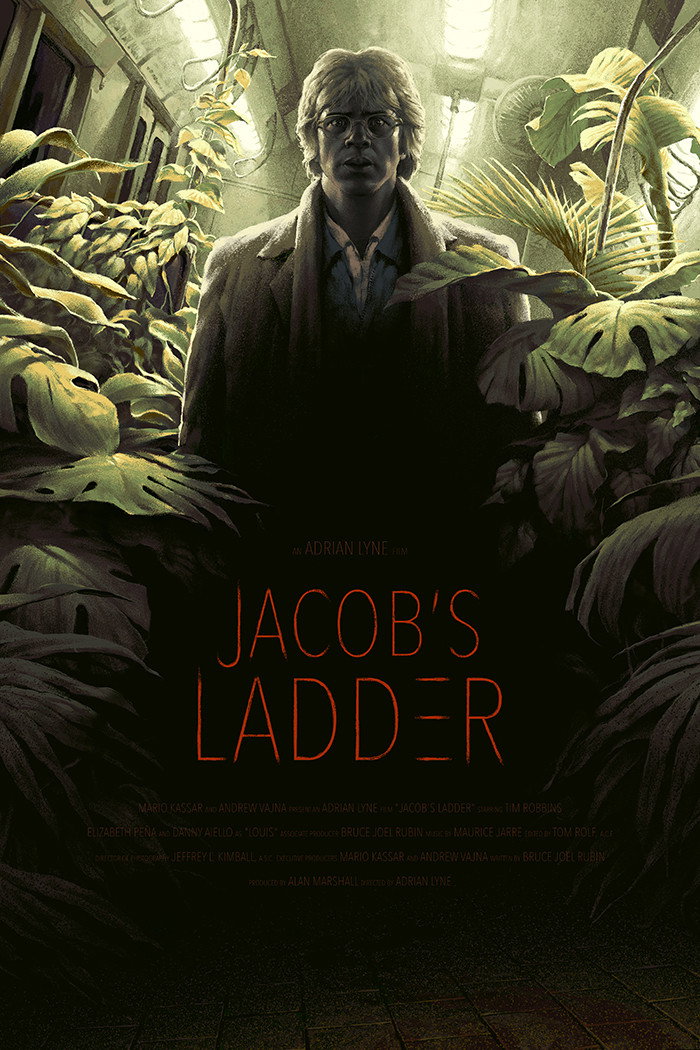
Principal photography began in New York in September 1989. The production used sites across several boroughs, including the disused lower level of Brooklyn’s Bergen Street subway station and Staten Island’s Sea View Hospital. A tenement interior was recreated on a Manhattan soundstage, while the Vietnam scenes were completed in Puerto Rico in early 1990. The use of functioning urban environments alongside abandoned institutional spaces helps the film move between everyday detail and nightmare without announcing a formal change in reality. The subway entrance, in particular, turns the writer’s original dream of an inescapable station into a physical route that Jacob must navigate.
Tom Rolf’s editing repeatedly interrupts the apparent present with memories of the war, scenes of Jacob’s family and fragments that seem to belong to incompatible versions of his life. Cuts can connect an injury on the battlefield to a gesture years later, making bodily memory more reliable than conventional chronology. Kimball’s photography usually remains close to Jacob’s experience rather than presenting an objective account of the apparitions. The effect is important to the film’s horror: viewers have little secure distance from a protagonist who can neither verify what he sees nor establish how much time has passed between the events confronting him.
Creature Effects and Cinematography
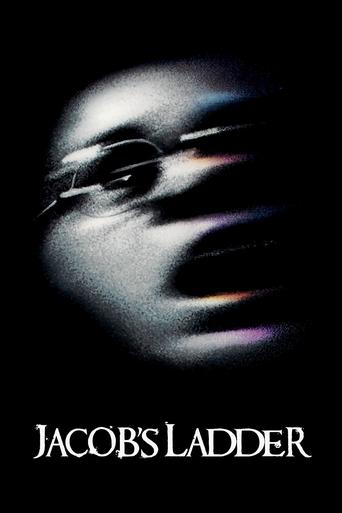
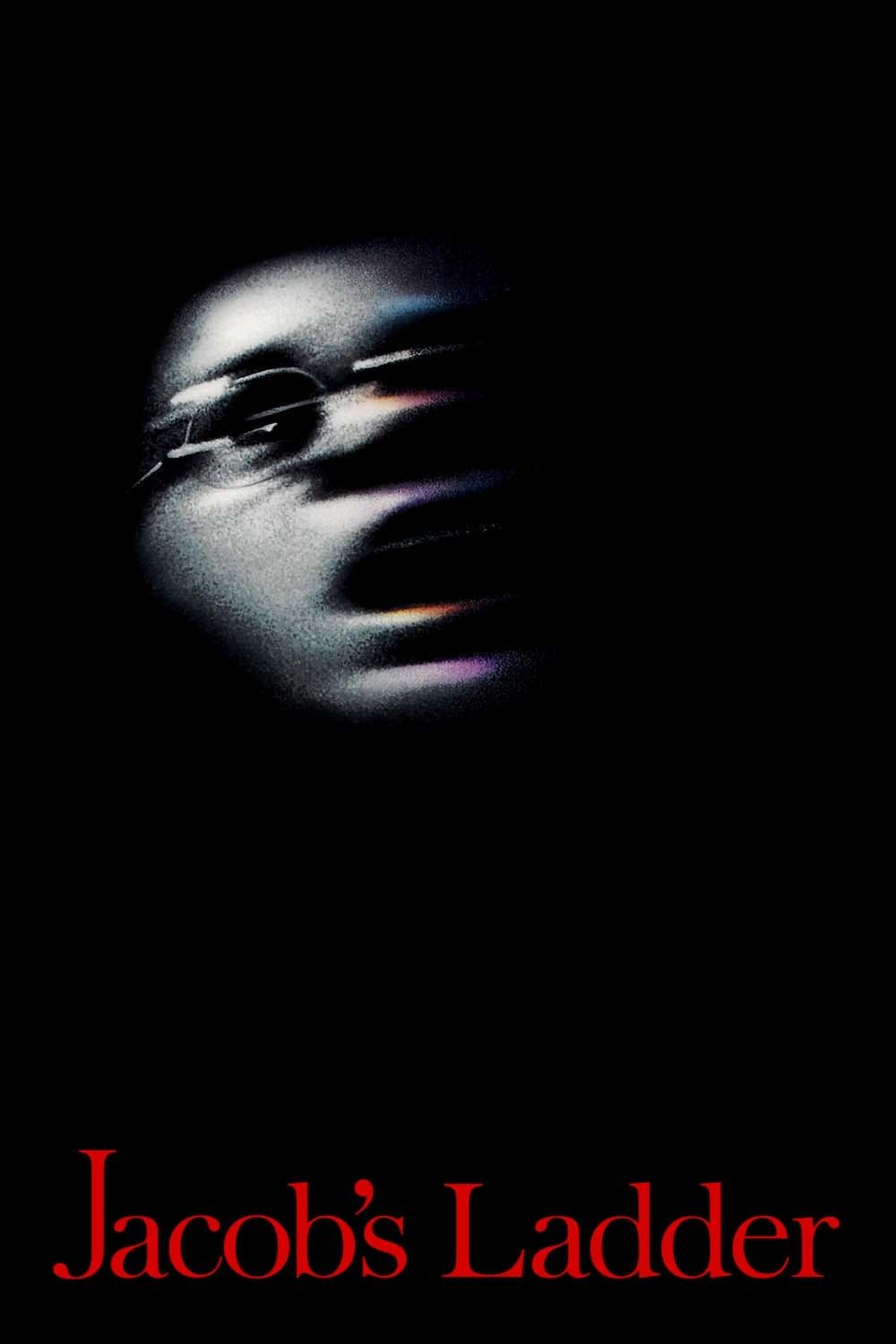
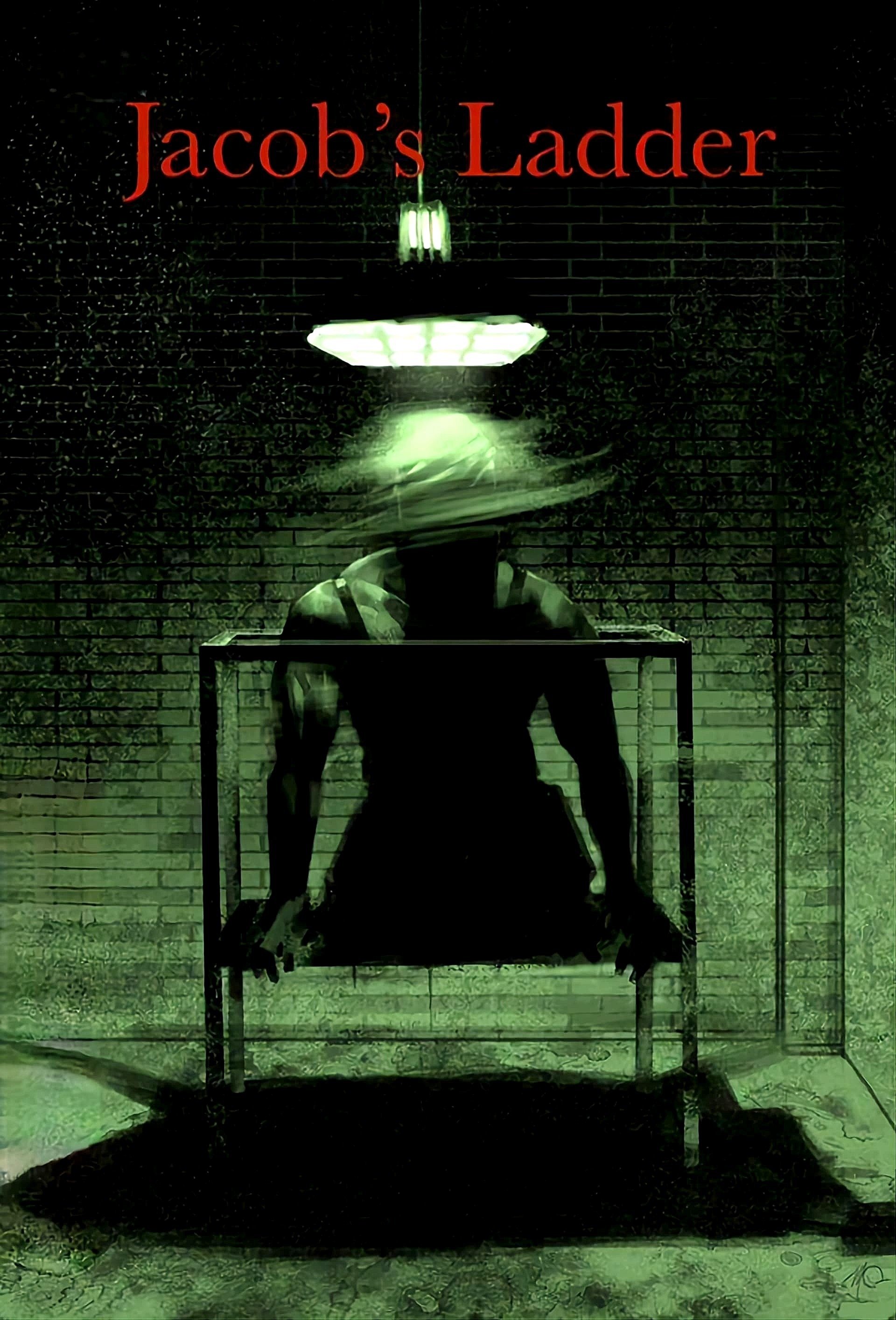
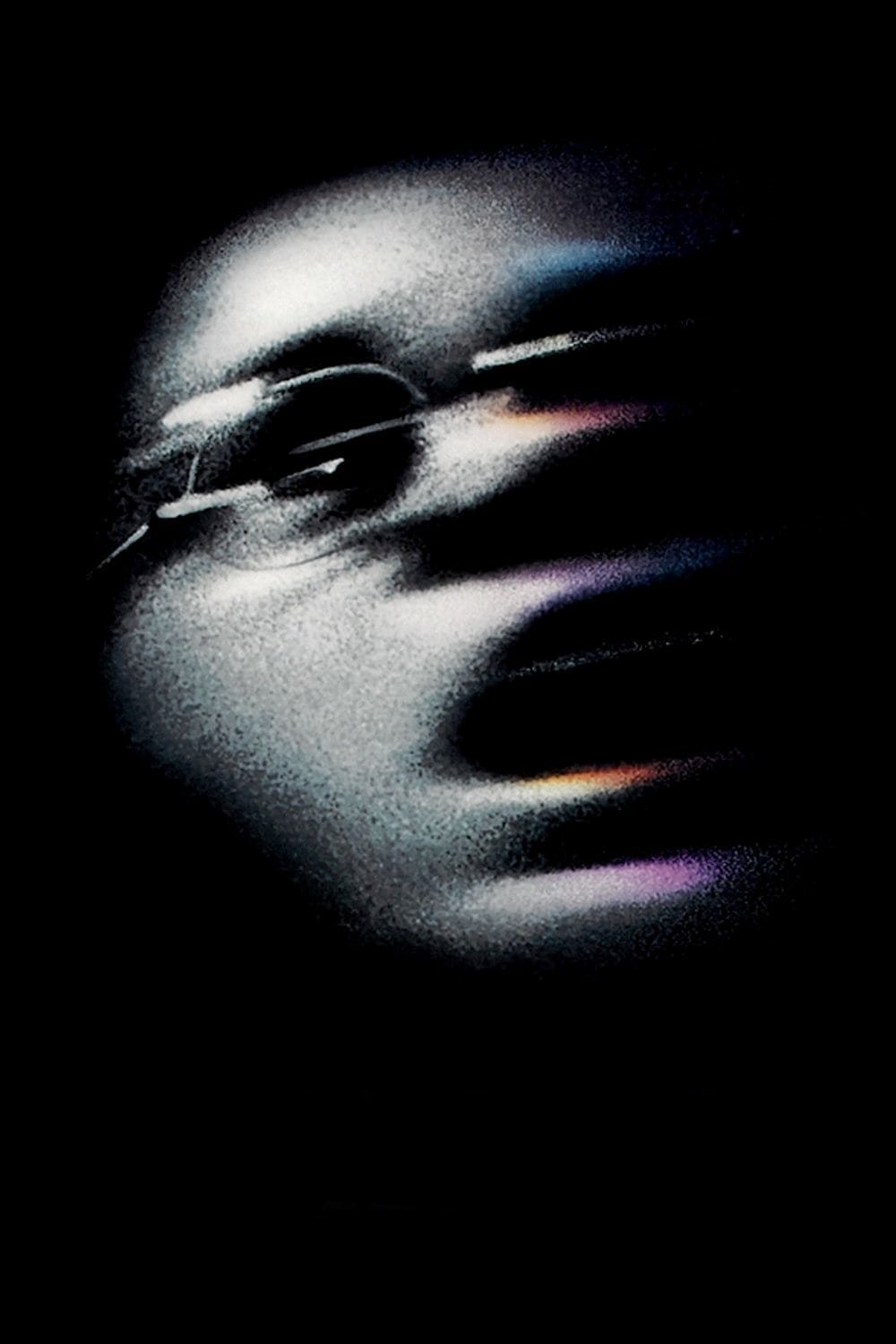
The film’s most recognisable visual disturbance is the violent, unnatural movement of certain figures’ heads. Lyne achieved the effect in-camera by filming at four frames per second for projection at the normal twenty-four frames per second, while also using camera movement to intensify the distortion. The accelerated motion turns human anatomy into something difficult to read, creating a sense of bodily instability without relying on a clearly visible monster. The director cited Francis Bacon’s paintings as a source for the blurred and contorted imagery. That reference concerns the visual conception of the apparitions, rather than an attempt to reproduce individual paintings.
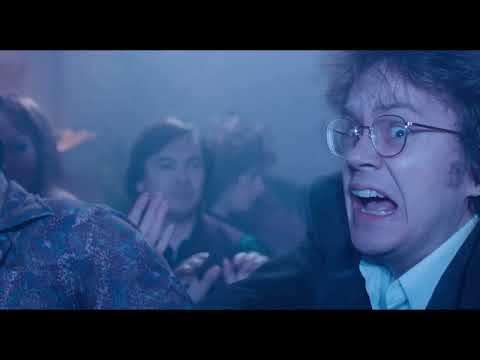
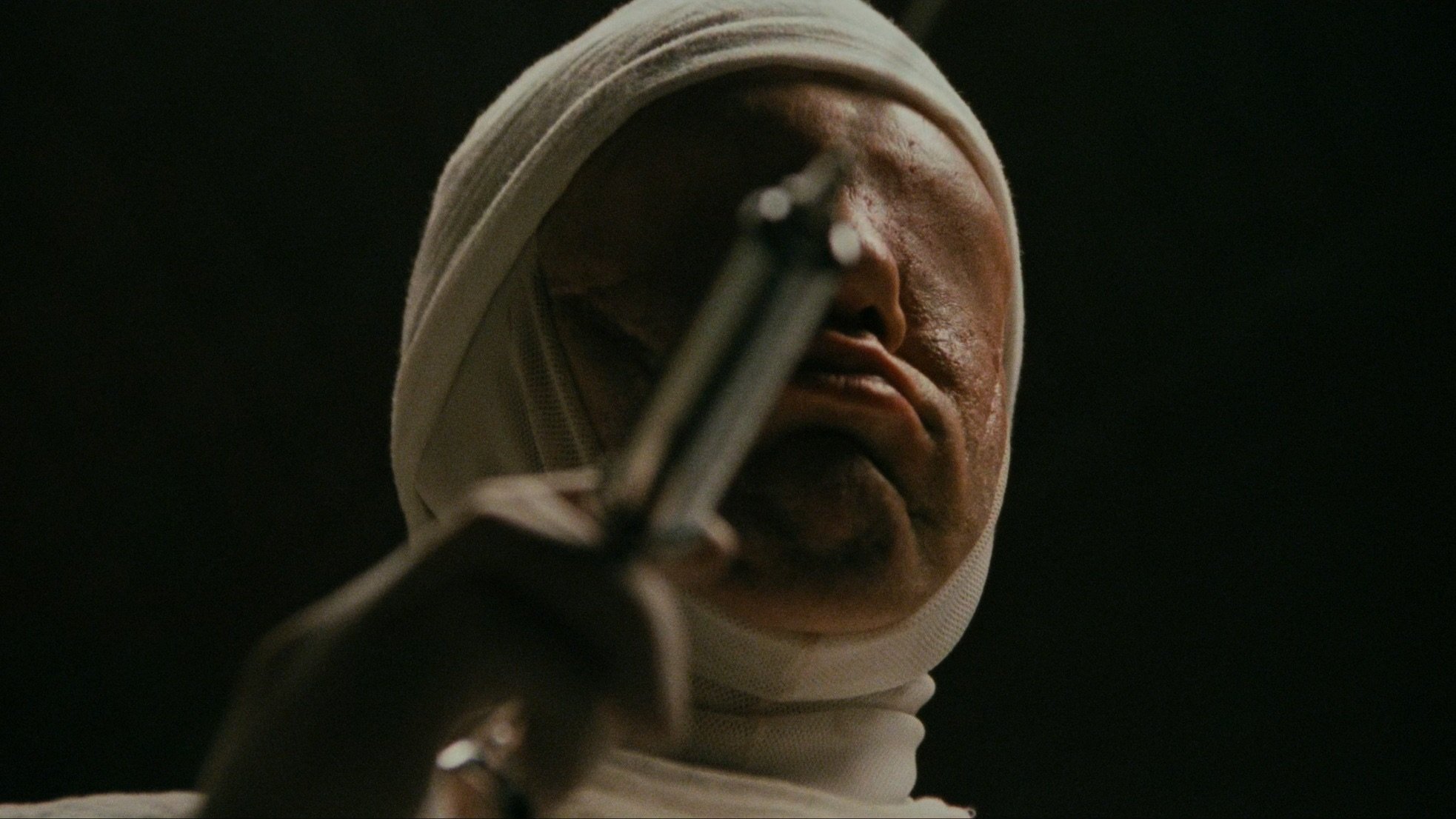
Makeup work by J. Gordon Smith’s FxSmith team provided distorted faces and bodies, sometimes glimpsed only briefly in crowded or obstructed spaces. The dance sequence makes intimacy threatening through an increasingly grotesque physical intrusion, while the hospital passages combine medical equipment, damaged flesh and impersonal corridors in a sustained descent through institutional horror. Lyne deliberately avoided a single, fully legible design for the demonic figures. Accounts of the production also describe a strategy of keeping Robbins separate from the filming of apparitions, allowing him to react later to remembered impressions. These decisions align performance, practical makeup and camera technique around the same uncertainty: whether a frightening image has any existence beyond Jacob’s consciousness.
War Trauma, Grief and Spiritual Horror
The Vietnam setting provides a historical and emotional framework for Jacob’s suspicion that soldiers were subjected to a covert experiment. His recollections of a confused, violent incident in the Mekong Delta make the possibility of military betrayal a plausible explanation within the narrative. The closing epilogue refers to allegations concerning the hallucinogenic agent BZ and a Pentagon denial; those statements belong to the film’s own framing and should not be mistaken for independently established evidence about the particular fictional events shown. The story brings together memories of combat, distrust of institutions and the disorientation of a man trying to reconstruct a traumatic experience.
Rubin’s account of the screenplay supplies another, explicitly spiritual dimension. He has connected its structure to Ambrose Bierce’s An Occurrence at Owl Creek Bridge, in which an apparently extended experience is compressed into a dying moment. The film’s title evokes the biblical ladder between earth and heaven, while Jacob’s chiropractor Louis offers a way of understanding frightening presences in relation to attachment and the acceptance of death. The final return to Jacob’s son Gabe reframes earlier horrors without rendering the suffering that preceded them meaningless. These religious and literary connections are supported by Rubin’s stated intentions, although the film’s particular images remain open to interpretation rather than operating as a fixed symbolic code.
Music and Sound
Maurice Jarre’s score uses timbre to make the boundaries between tenderness and apprehension less stable. In a 1990 interview, the composer described combining electronic textures with instruments from different musical traditions. He specifically identified the Japanese shakuhachi as a sound that contributed to the film’s nightmarish quality and recalled working with an Indian sarangi player who was visiting Los Angeles. His comments establish deliberate instrumental choices rather than a merely generic association between synthesizers and supernatural cinema. The production’s credits also identify a group of specialist synthesizer performers, reflecting the electronic resources available to Jarre at the time.
The film places this music in a sound world where recognisable songs and disturbing visual events can coexist. Al Jolson’s recording of Sonny Boy, noted in contemporary coverage of the soundtrack, carries associations of parental affection that acquire a different weight within Jacob’s memories of Gabe. Elsewhere, electronic and acoustic sonorities are woven through scenes whose apparent settings are already uncertain. Jarre’s approach is especially effective because it does not consistently mark each vision with an obvious musical announcement. The score can preserve an emotional connection to Jacob even as the surrounding images become grotesque, helping sustain the film’s mixture of personal grief and physical terror.
Editing, Theatrical Release and Versions
Preview screenings substantially changed the film before its theatrical opening. Contemporary reports collected by the American Film Institute describe cuts amounting to roughly thirty minutes, concentrated largely in the later portions. Among the removed material were particularly graphic imagery and a scene involving a professor connected to Jacob’s intellectual background. Lyne argued that reducing the more explicit horror could make the remaining material more unsettling, while Rubin acknowledged that removing explanatory passages altered the way viewers encountered the story. These were changes to the pre-release edit; the existence of deleted scenes should not automatically be treated as evidence of an officially released alternative director’s cut.
TriStar released Jacob’s Ladder in the United States on 2 November 1990. The film led the domestic box office on its opening weekend with approximately $7.5 million, according to contemporary trade reports assembled by AFI, but subsequent weeks brought a marked decline. Some historical budget reports also differ, with contemporary figures of $25 million and $40 million both appearing in the record; a definitive production cost should therefore not be asserted without resolving that discrepancy. Its release illustrates the commercial challenge of presenting a film structured around disorientation and religious ambiguity. The theatrical version’s sharply concentrated final movement was the result of substantial editorial choices rather than simply a shortened copy of an otherwise settled film.
Reception, Restoration and Influence
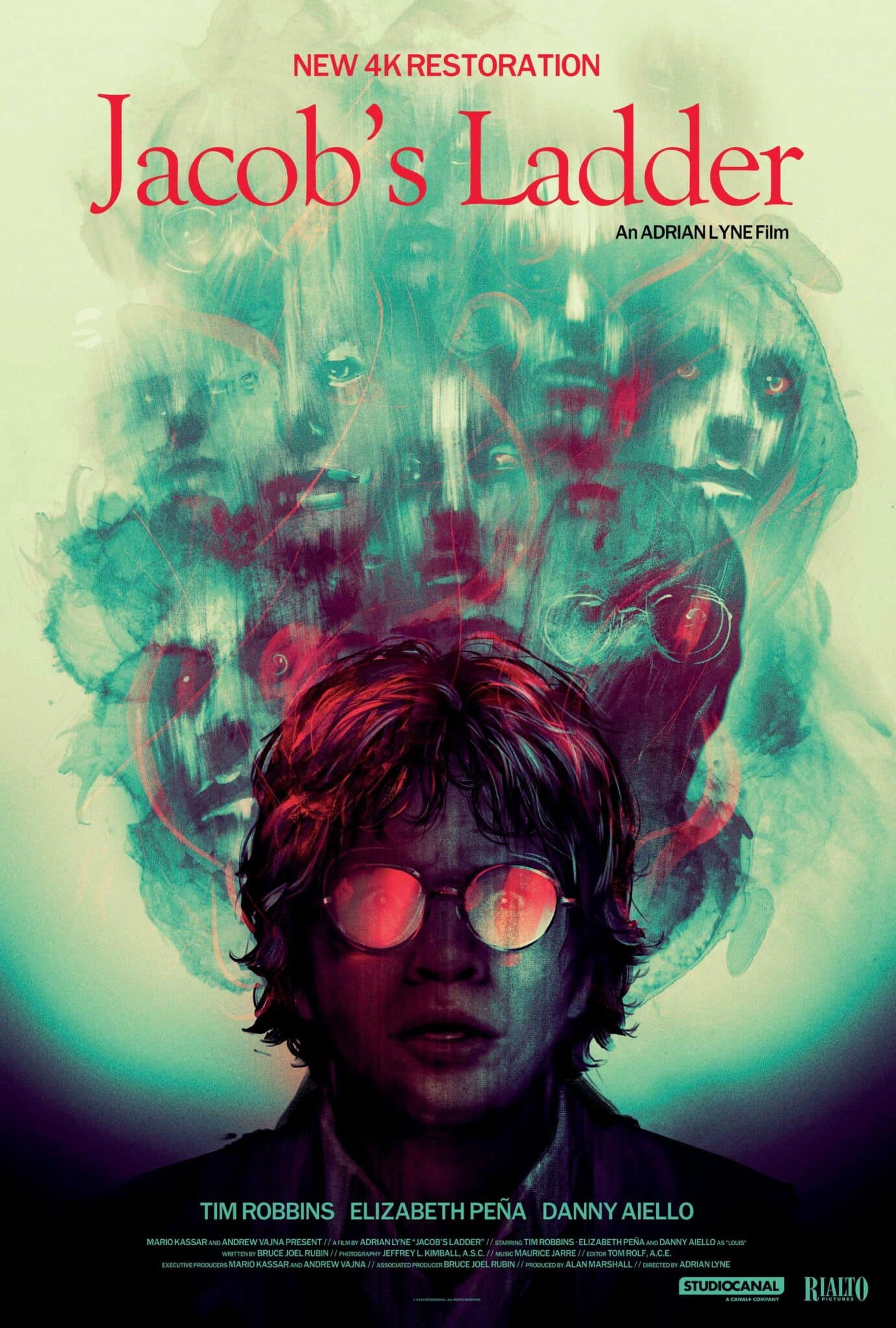
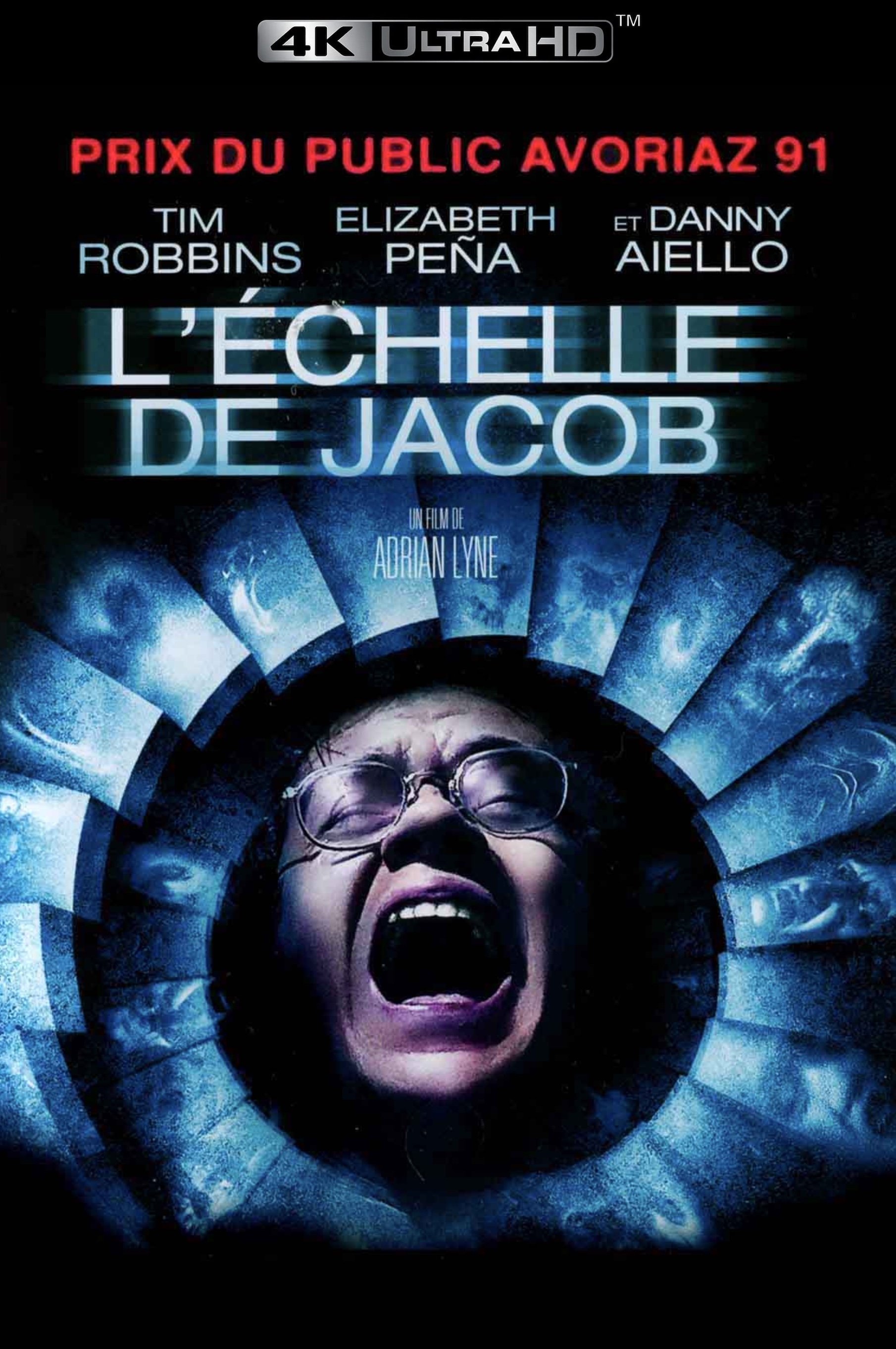
The film’s initial critical reception was divided. Some contemporary reviewers admired its unnerving imagery, while others found its mixture of Vietnam-era paranoia, metaphysical speculation and bodily horror excessive. The early reviews should be distinguished from the later attention given to Lyne’s visual techniques and Rubin’s construction of subjective time. The 2025 restoration also provided a new occasion to examine those qualities on a cinema screen. The American Cinematheque hosted the world premiere of the restoration at Beyond Fest on 28 September 2025; the picture was scanned from its original negative and restored in 4K, with color grading supervised by Lyne.
Later horror creators have identified Jacob’s Ladder as a point of reference for stories in which a familiar environment becomes an expression of a character’s inner state. Discussing Silent Hill in 2026, filmmaker Christophe Gans explicitly named the film among the works that shaped the series’ existential, inescapable nightmare atmosphere. That is a documented statement of influence, rather than a claim that every later work featuring distorted bodies or unstable realities derives from it. The film’s enduring interest rests in the particular way its practical horror images, fractured time and spiritual narrative work together, allowing the same events to be experienced as persecution, memory and a struggle to relinquish earthly life.
The screenwriter’s firsthand account of the original subway nightmare, the 1981 screenplay, its spiritual framework and his literary point of reference.
Archival production history documenting development, filming locations, camera effects, preview cuts, original release and contemporary box-office reports.