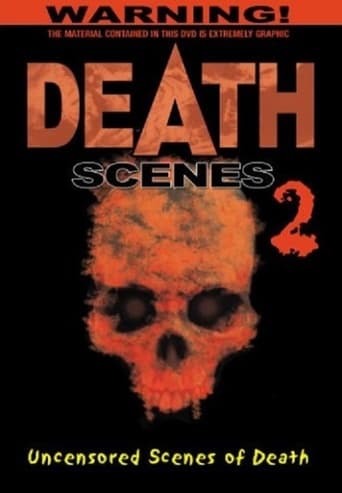
Death Scenes 2 (1992)

US
HORROR FILM Documentary
SUBGENRES SHOCKUMENTARY
Runtime
82 min
Release
January 1, 1992
Death Scenes 2 (1992) poster
Director
Plot

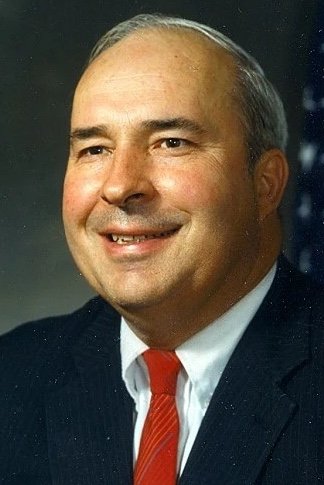
Narrated by Harold Wells, the second Death Scenes video gathers footage of the Manson murders, war and other violent incidents. It includes the 1982 accident on the set of Twilight Zone: The Movie, the Zapruder film of President John F. Kennedy's assassination, and the televised suicide of Pennsylvania politician R. Budd Dwyer. News and documentary recordings replace much of the still-photograph format of the 1989 film.

Film Guide & Analysis

Nick Bougas shifts from archival crime photography to moving images of public violence, while later video releases complicate the sequel numbering.

Death Scenes 2 (1992) continues Nick Bougas's series of American shock documentaries, replacing much of the first video's historical police photography with moving images of fatal events. The original Death Scenes (1989) drew its identity from a Los Angeles homicide detective's scrapbook and Anton LaVey's narration. Its successor reaches across modern wars, public catastrophes and filmed violence, giving the viewer a succession of records made for very different purposes. The relationship between those original purposes and the later compilation is central to the work: an image recorded as news, evidence or instruction can acquire a different meaning when edited into horror entertainment.

The sequel is associated with the subtitle Manson, reflecting its use of material concerning the Tate-LaBianca murders. Yet the film's chronological survey extends far beyond that case, moving from twentieth-century political violence to disasters caught by increasingly mobile cameras. Harold Wells supplies narration, while the soundtrack helps impose a continuous mood on disparate images. Scholars Mikita Brottman and Christoph Seelinger have examined the film in unusually specific detail, making it possible to discuss its construction without relying on promotional claims. Their accounts also document the complicated release numbering that has obscured the identities of the Death Scenes installments.

An Archival Sequel Built Around Moving Images

Where the first Death Scenes chiefly displayed still pictures, the second interweaves photographs and motion-picture records. Its historical movement begins with images of earlier wars and political regimes before approaching events familiar from television news. Brottman's analysis describes the film's juxtaposition of archival publicity images and postmortem photographs, a method especially visible in its treatment of Hollywood personalities. The alteration in source material changes the experience of the montage. A fixed image allows extended inspection; a filmed incident carries its own duration and the reactions of people present when it occurred. The sequel exploits this difference while continuing the series' fascination with the aftermath of violence.

Seelinger notes that the compilation incorporates photographs associated with the antiwar activist Ernst Friedrich, material from the Second World War and Vietnam, and images of deaths connected with the entertainment industry. Such sources belong to separate historical contexts, and the film's chronological arrangement does not make them part of a single documented causal history. Wells's narration encourages audiences to see a continuous record of human violence, while editing supplies connections that the original camera operators could never have intended. The work is most usefully understood as a new audiovisual construction from existing records, with the authority of documentary footage pressed into an exploitation framework.
The Manson Case and Hollywood Mortality

The Tate-LaBianca murders provide the best-known material associated with the sequel's Manson subtitle. Brottman's account identifies crime-scene photographs and documentary records among the images assembled for this passage. The film positions these records within a broader progression of American criminal violence, using their notoriety to give a recognizable center to an otherwise wide-ranging compilation. The cases were real, but the choice of images and their order belong to Bougas's editorial presentation. The film is therefore a poor substitute for investigative records or historical accounts when determining facts about the murders; its importance here lies in how infamous events were repackaged for the VHS shock market.

A later passage turns to celebrity deaths and to a tragedy during the production of Twilight Zone: The Movie (1983). Brottman records the sequel's repeated use of footage of the helicopter accident that killed actor Vic Morrow and two child performers during filming in 1982. The recurrence of the same event from different perspectives makes the editing strategy unusually clear. Repetition prolongs exposure to a real fatal incident and invites spectators to inspect it as a spectacle. By placing production-accident footage near material about Hollywood death, the video transforms distinct forms of documentation into a shared sequence of cinematic horror imagery.

Safety Films, Television Footage and Documentary Context

Death Scenes 2 also uses footage from Signal 30, the American driver-education film made to warn motorists about dangerous driving. Seelinger examines this borrowing as a revealing change of context. Material originally intended to discourage risky behavior through frightening evidence becomes part of a compilation marketed to viewers seeking disturbing images. The footage's factual origin remains important, but the educational purpose does not automatically survive its transfer into another film. The same pictures can therefore perform different cultural functions depending on their soundtrack, surrounding scenes and exhibition setting. This makes the sequel especially relevant to the history of shockumentaries assembled from pre-existing audiovisual records.

The film's later material includes news images connected with the Heysel Stadium disaster in 1985 and the Hillsborough disaster in 1989. Seelinger observes that the accompanying commentary reflects on the growing reach of television cameras and the immediacy of transmitted disasters. These recordings were not manufactured for an exploitation film, and their appearance in a later compilation raises questions about consent and about the distance between public witnessing and commercial reuse. The difference matters when discussing authenticity. The presence of real event footage supports identifying the recordings as documentary material; it does not validate all narrative claims made over the images or justify treating the people shown as anonymous horror effects.

Narration, Release Variants and Critical Scholarship

Harold Wells takes over the speaking role associated with Anton LaVey in the original production. Brottman argues that Wells's delivery lacks some of the first film's distinctive performance, and she also discusses the changed musical accompaniment. Those judgments belong to a published critical reading, although the change in narrator itself is a production fact. Her chapter in The Horror Film considers the second installment more immediate and visually aggressive because it combines older still photographs with footage showing incidents unfolding on camera. The distinction is useful for describing the film's aesthetic organization without assuming that every segment was recorded or licensed in the same way.

The original sequence of releases has also been confused by subsequent video editions. Seelinger documents how Anthem Pictures reassigned the numbers of the three Death Scenes films on DVD, so that the second production circulated as Death Scenes 1: Manson. A separate bibliographic discrepancy concerns its date: Brottman's study places the Wavelength Productions release in 1992, while Seelinger lists a 1993 VHS edition. Neither record alone establishes that every edition appeared in the same year. The film should therefore be identified by its director, material and place in Bougas's original series, with alternate numbering and the unresolved dating of particular copies kept distinct from the underlying work.

References

  1. JSTOR / Rutgers University Press Mondo Horror: Carnivalizing the Taboo

    Mikita Brottman's chapter in Stephen Prince's The Horror Film examines Death Scenes 2 directly, including its archival montage, Manson case material, Twilight Zone accident, soundtrack and narration.

  2. Buechner-Verlag Tod im Kino: Indexikalisches Sterben in ikonisch-symbolischen Ordnungen des kinematographischen Diskurses

    Christoph Seelinger's open-access doctoral study discusses Death Scenes 2, its chronology and reused safety-film footage, and documents the conflicting numbering and VHS date (pages 558-560, 572).

  3. Northumbria University Research Portal Mondo movies: a historical study of a polysemous genre

    Erin Elise Wiegand's doctoral thesis provides historical research on the changing definitions of mondo cinema, exploitation marketing and the later video-culture reception of shock documentaries.

Connections

Cast

View Full Cast & Crew →

Release & Distribution

Release History (1)

Release DateTerritoryRelease TypeFormatDistributorCertificationNotes
1992-01-01 United States Theatrical — — NR