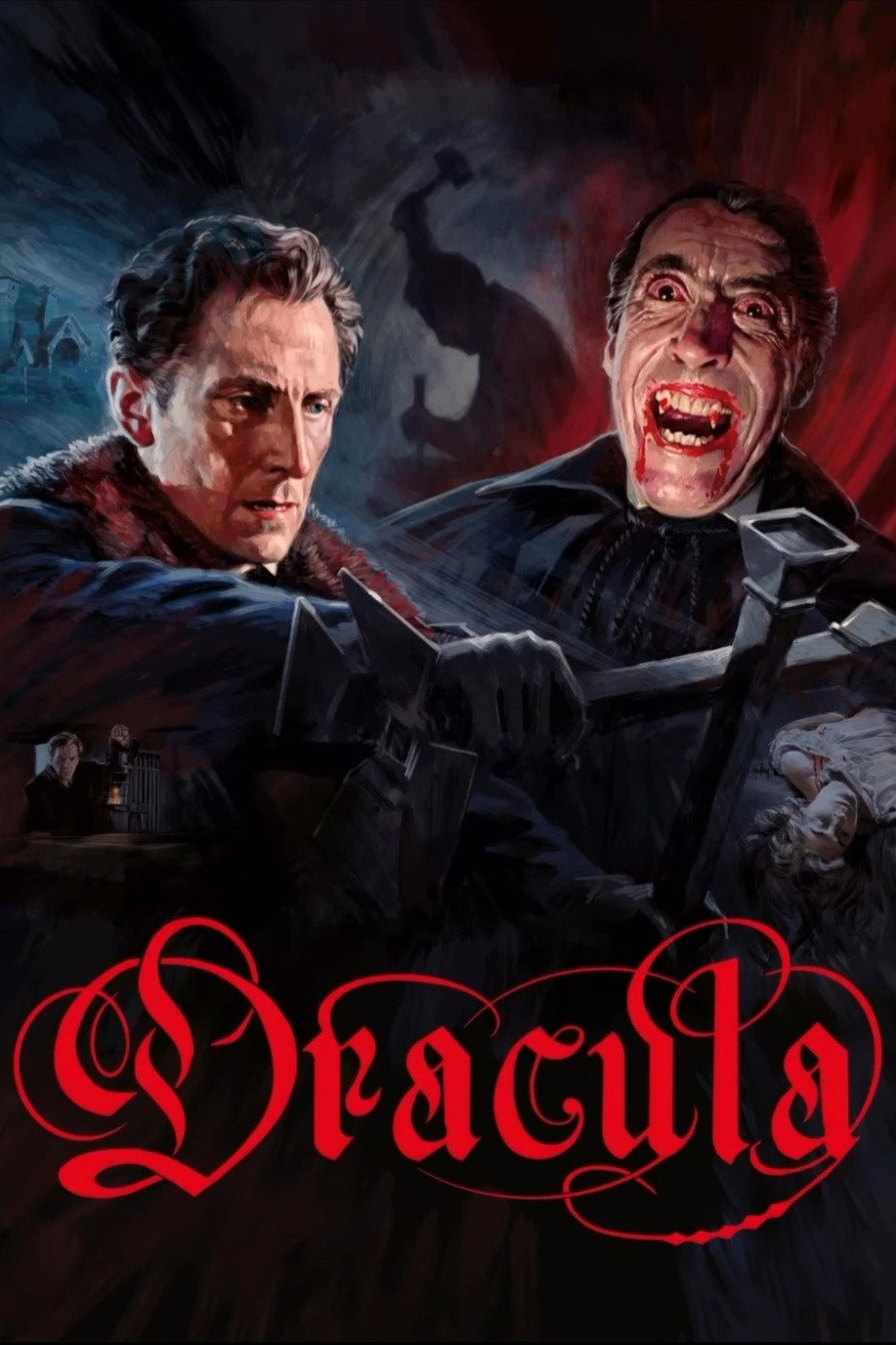
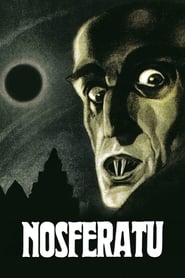
Dracula (1958)

GB
HORROR FILM
SUBGENRES GOTHIC VAMPIRE
7.0/10 5 votes
Runtime
82 min
Release
May 22, 1958
Budget
$104,880
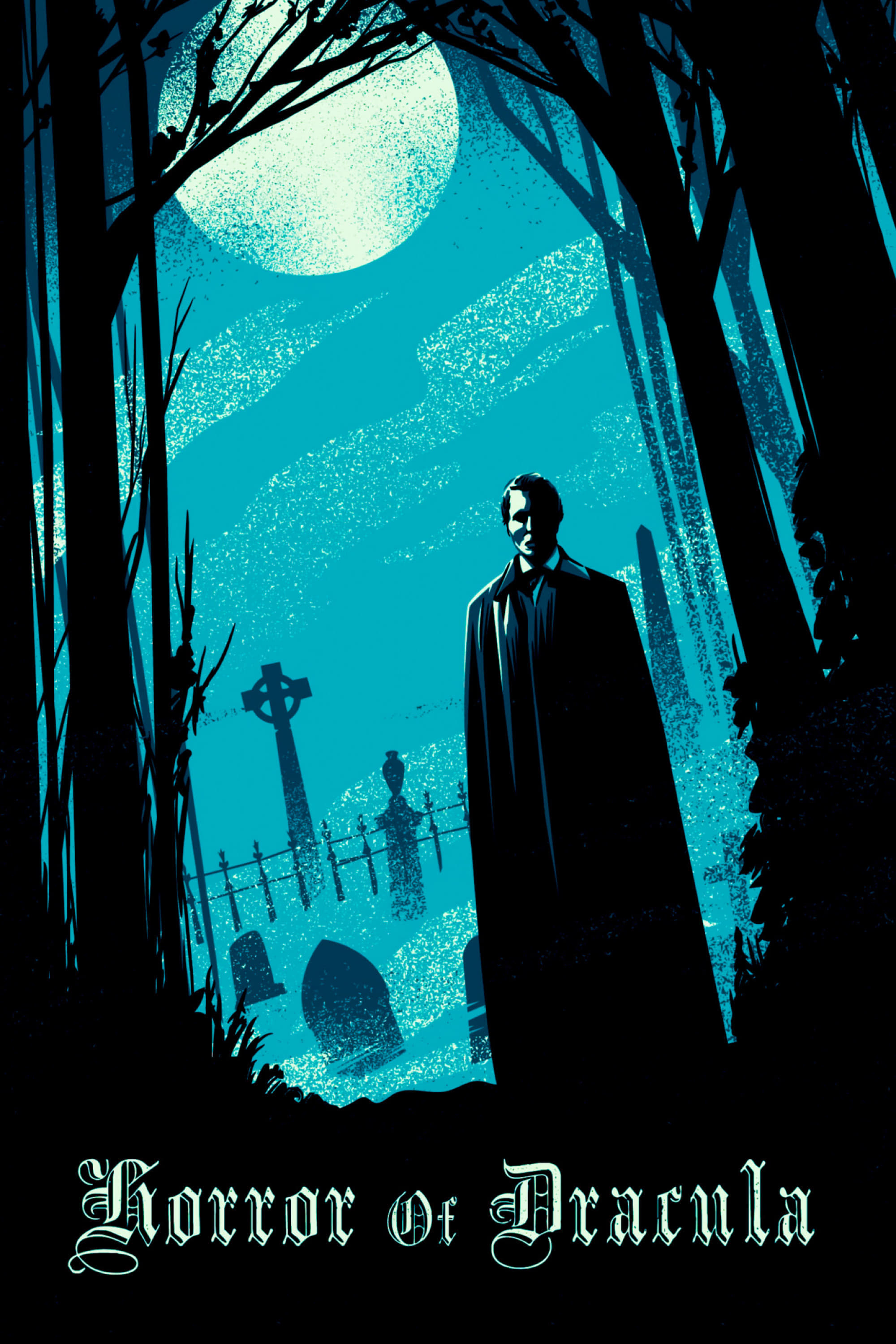
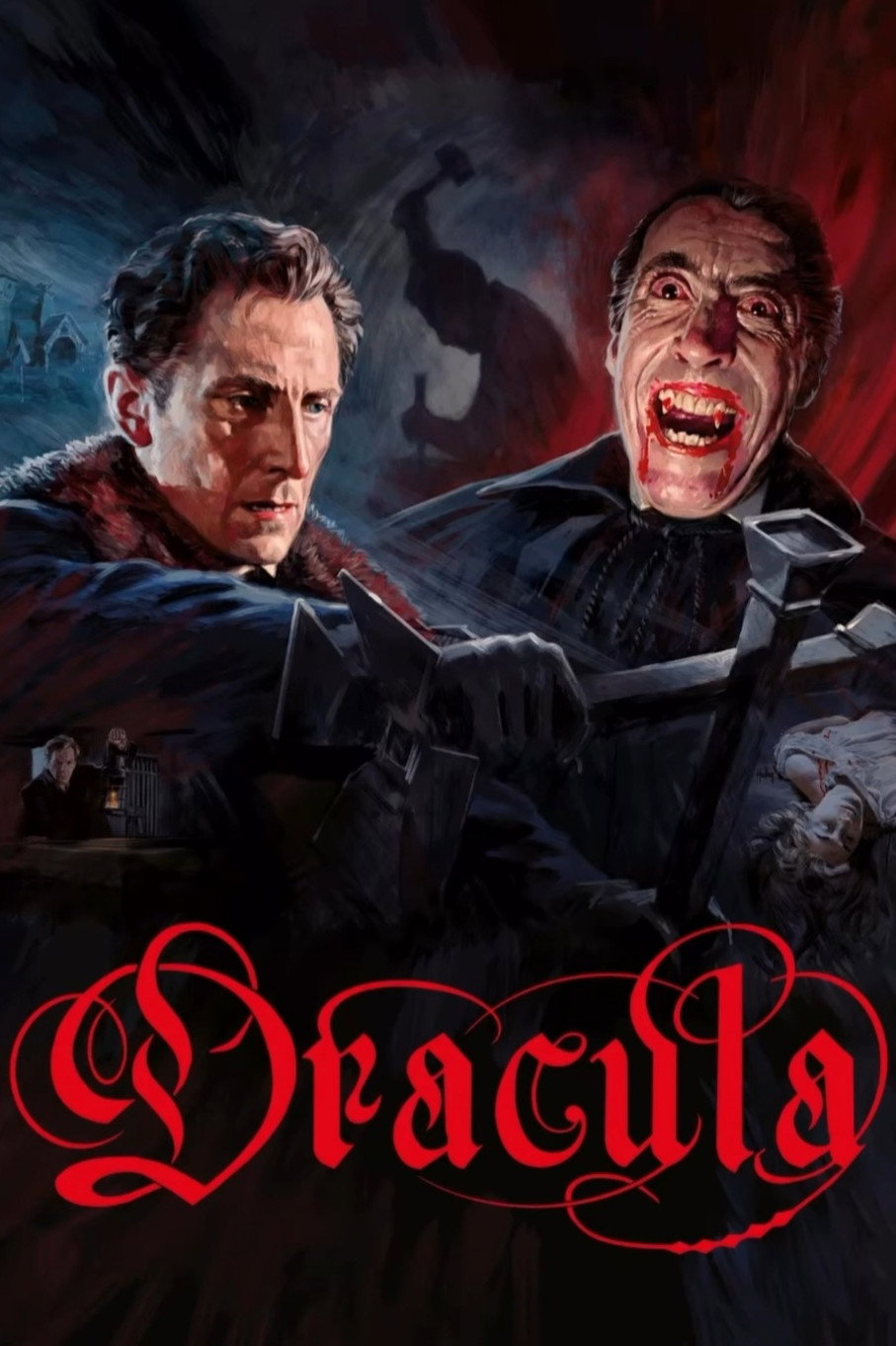
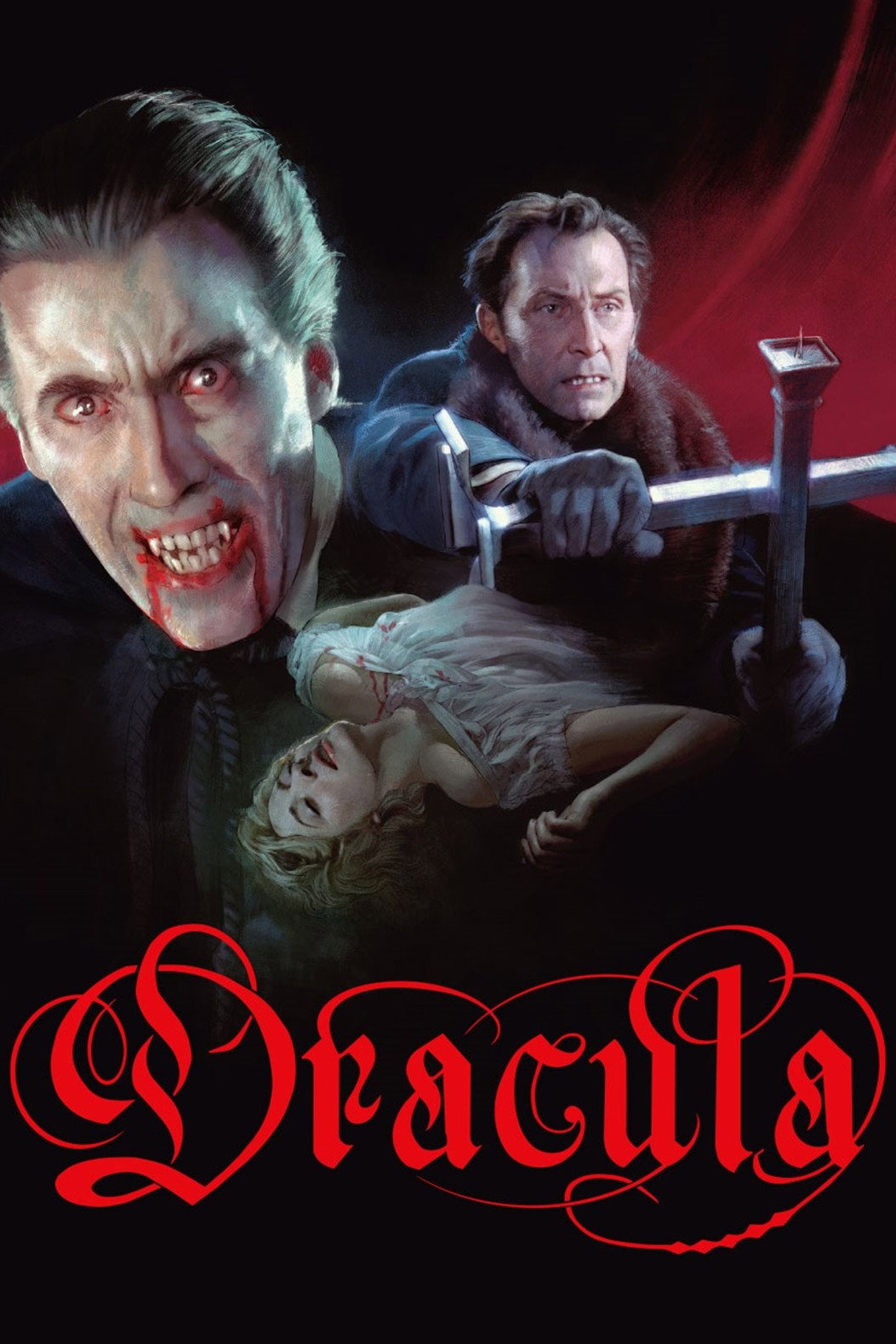
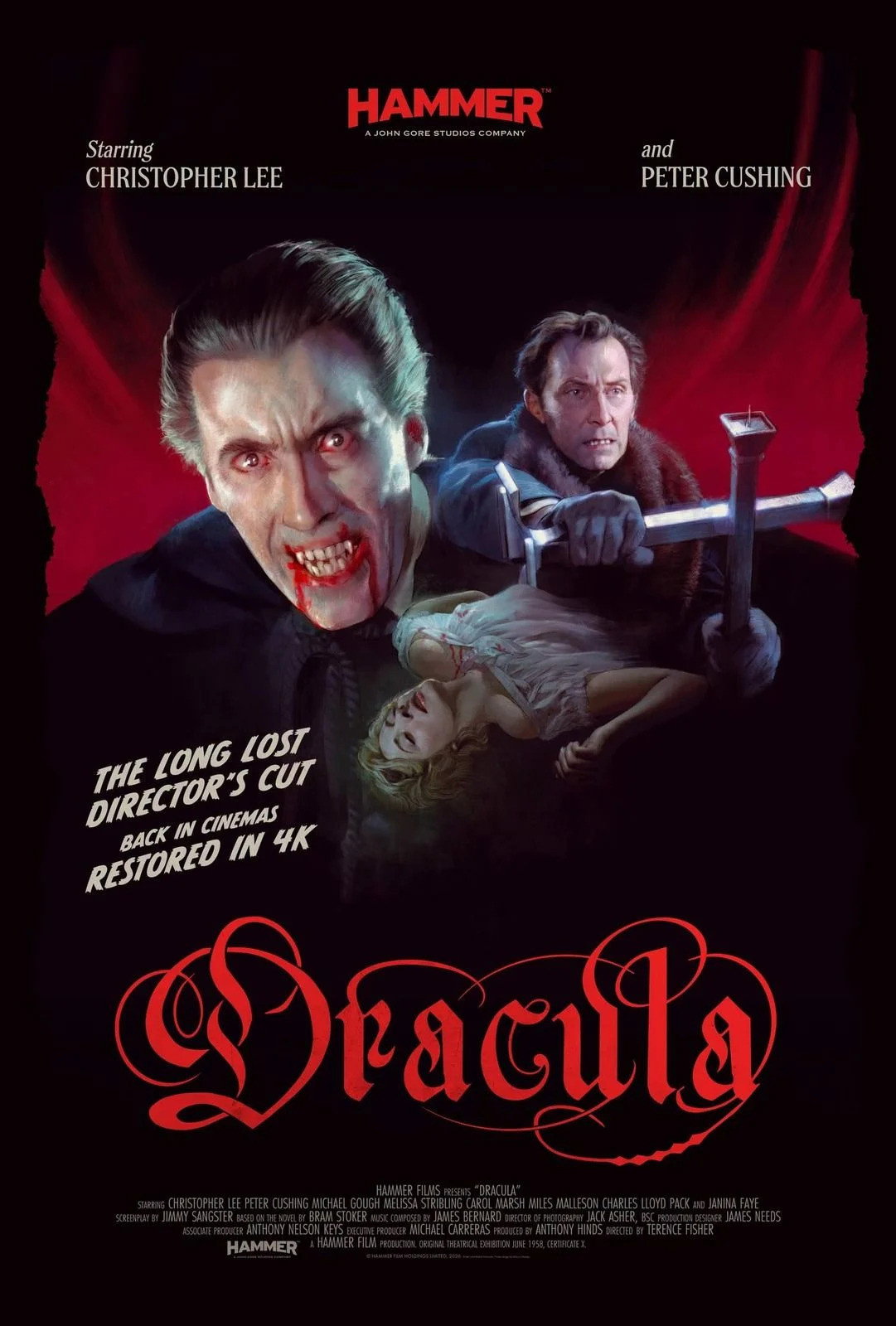
Dracula (1958) poster
Director
Plot

After Jonathan Harker attacks Dracula at his castle (apparently somewhere in Germany), the vampire travels to a nearby city, where he preys on the family of Harker's fiancée. The only one who may be able to protect them is Dr. van Helsing, Harker's friend and fellow-student of vampires, who is determined to destroy Dracula, whatever the cost.

Alternative Titles
Дракула (Bulgaria) — Bulgarian Horror de Drácula (Brazil) — Television Title 恐怖德古拉 (China) — Chinese Drácula (Spain) — Catalan Dracula, pimeyden prinssi (Finland) — Finnish Pimeyden prinssi (Finland) — Television Title Le Cauchemar de Dracula (France) — French Drakoulas, o vrykolakas ton Karpathion (Greece) — transliterated ISO-LATIN-1 title
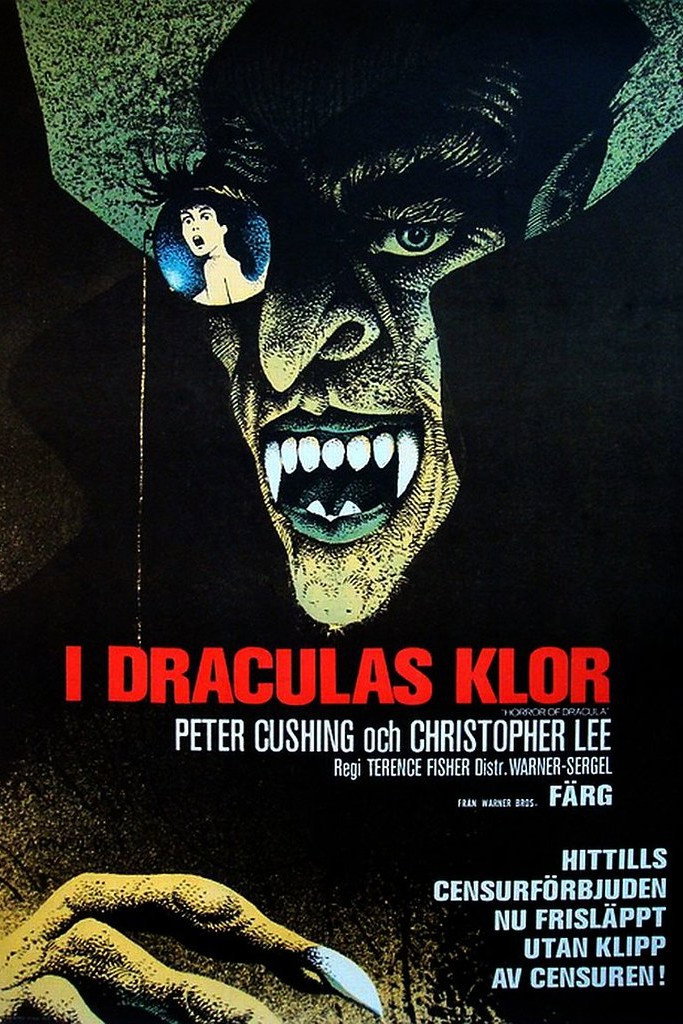
Show all 29 alternative titles Δράκουλας, ο βρικόλακας των Καρπαθίων (Greece) — Greek 恐怖德古拉 (Hong Kong SAR China) — Chinese Drakula (Hungary) — Hungarian Dracula il vampiro (Italy) — Italian Kyuketsu ki Dracula (Japan) — romaji 吸血鬼ドラキュラ (Japan) — Japanese 괴인 드라큐라 (South Korea) — Korean 恐怖德古拉 (Macao SAR China) Drácula (Mexico) — Spanish De nachtmerrie van Dracula (Netherlands) — informal literal title Horror Draculi (Poland) — Polish Horror de Drácula (Portugal) — Portuguese O Horror de Drácula (Portugal) Groaza lui Dracula (Romania) — Romanian Drakula (Serbia) — Serbian Дракула (Russia) — Russian I Draculas klor (Sweden) Dracula'nın Dehşeti (Türkiye) — Turkish Дракула (Ukraine) — Ukrainian Hammer's Dracula (United States) — promotional title Horror of Dracula (United States)

Trailers & Videos

3 videos

Film Guide & Analysis

Terence Fisher and Hammer Films transformed Bram Stoker's vampire into a creature of blood, sexuality and physical menace, redefining Gothic horror for the colour era.

Dracula (1958), released in the United States as Horror of Dracula, arrived only twenty-seven years after Béla Lugosi's defining Universal performance but behaves as though an entire cinematic tradition must be rebuilt from the ground up. Jonathan Harker travels to Dracula's castle not as an unsuspecting solicitor but as a secret vampire hunter already committed to destroying the Count. His failure brings Dr. Van Helsing into the story and turns the film into a rapidly escalating duel between two purposeful adversaries: Christopher Lee's physically imposing Dracula and Peter Cushing's equally energetic vampire hunter.

Hammer's version abandons much of the geographic and narrative complexity of Bram Stoker's novel, but the compression gives Terence Fisher a different kind of power. The film moves quickly through seduction, vampirism, pursuit and destruction, filling its Gothic spaces with vivid colour, visible blood and an erotic tension that earlier mainstream Dracula adaptations had largely suppressed. Christopher Lee's Count could be civilized one moment and animalistic the next; Cushing's Van Helsing was not an elderly authority explaining the supernatural from a safe distance but a scientist capable of chasing Dracula across tables and tearing down curtains with his own hands. Together they established a new screen vocabulary for the vampire film and helped turn Hammer into the company most closely associated with British Gothic horror.

Production & Hammer's Gothic Breakthrough

Dracula followed directly from the international success of Hammer's The Curse of Frankenstein (1957), the film that had demonstrated how effectively the studio could revive nineteenth-century horror through colour, more explicit violence and a recognizably modern pace. Terence Fisher had directed that film with Peter Cushing as Frankenstein and Christopher Lee as the Creature, while Jimmy Sangster had written the screenplay. Reuniting Fisher, Sangster, Cushing and Lee around Stoker's vampire gave Hammer an opportunity to apply the same strategy to another property already deeply associated with earlier cinema.

Sangster's shooting script was dated October 18, 1957, only weeks before photography began at Bray Studios. Hammer's production base was modest compared with the major British studios, and the company had become highly skilled at creating elaborate-looking films from limited physical resources. Producer Anthony Hinds, production designer Bernard Robinson, cinematographer Jack Asher and Fisher formed part of a production system in which sets could be constructed, redressed and reused quickly without allowing the finished images to appear as economical as the circumstances behind them.

The production followed The Curse of Frankenstein closely enough that Dracula and The Revenge of Frankenstein would also share resources. That economy did not translate into visual modesty. Bernard Robinson's interiors give Dracula's castle enormous doors, imposing stairways and decayed spaces that seem considerably larger than Hammer's Bray facilities, while domestic interiors later in the film create a warmer Victorian world for Dracula to invade. Fisher uses the opposition efficiently: the Count's castle is not simply another old house but the first manifestation of a world whose influence gradually enters supposedly civilized rooms.

Hammer's success with Dracula confirmed that The Curse of Frankenstein had not been an isolated phenomenon. The studio now possessed a repeatable model for Gothic horror built around familiar literary mythology but presented with colour, stronger physical violence, sensuality and stars audiences could identify with the new cycle. Dracula was consequently both an individual film and the moment when Hammer's Gothic identity became unmistakable.
Rewriting Bram Stoker

Jimmy Sangster does not attempt a condensed transcription of Stoker's novel. He restructures it. Jonathan Harker is no longer a solicitor travelling to Transylvania to arrange Dracula's property transaction but a man who has deliberately entered the castle under the pretext of becoming its librarian. He is already working with Van Helsing and intends to destroy Dracula. The change removes much of the novel's gradual discovery of vampirism and replaces it with immediate dramatic conflict.

The geography is similarly compressed. The complicated movement between Transylvania, Whitby and London disappears, and characters who occupy separate narrative functions in the novel are removed, combined or reassigned. Renfield is absent entirely. Dracula's three female vampires become a single woman in the castle. Family relationships are reshaped to connect Harker's failure more directly to the household Dracula later attacks. These alterations allow Sangster to preserve the central opposition between vampire and hunters while building a film that can move from one decisive confrontation to another in little more than eighty minutes.

The adaptation also changes the rules of vampirism whenever the streamlined narrative requires it. Fisher and Sangster are less interested in cataloguing every piece of Stoker's mythology than in establishing a small group of rules the film can dramatize visually. Van Helsing approaches vampirism as something to be observed, tested and understood. He records information, examines corpses and distinguishes useful knowledge from folklore, giving the supernatural conflict an almost procedural structure.

This compression is one reason the film feels so different from earlier Dracula adaptations. The Count is no longer primarily an exotic visitor gradually invading England through an elaborate network of letters, diaries and journeys. He becomes an active predator locked in conflict with an equally active opponent. Sangster loses much of Stoker's social and narrative scale, but in exchange he provides Fisher with a remarkably direct horror mechanism: Dracula attacks, Van Helsing learns, and each encounter brings them closer to physical confrontation.

Christopher Lee & a New Dracula

Christopher Lee had already worked opposite Cushing in The Curse of Frankenstein, but Dracula transformed his screen identity. His unusual height, angular face and commanding physical presence, characteristics that had sometimes complicated his earlier casting, became advantages. When he first descends the castle staircase and introduces himself to Harker, he is controlled, articulate and outwardly courteous. Fisher initially allows Lee to inhabit the familiar aristocratic qualities associated with Dracula before revealing how abruptly they can disappear.

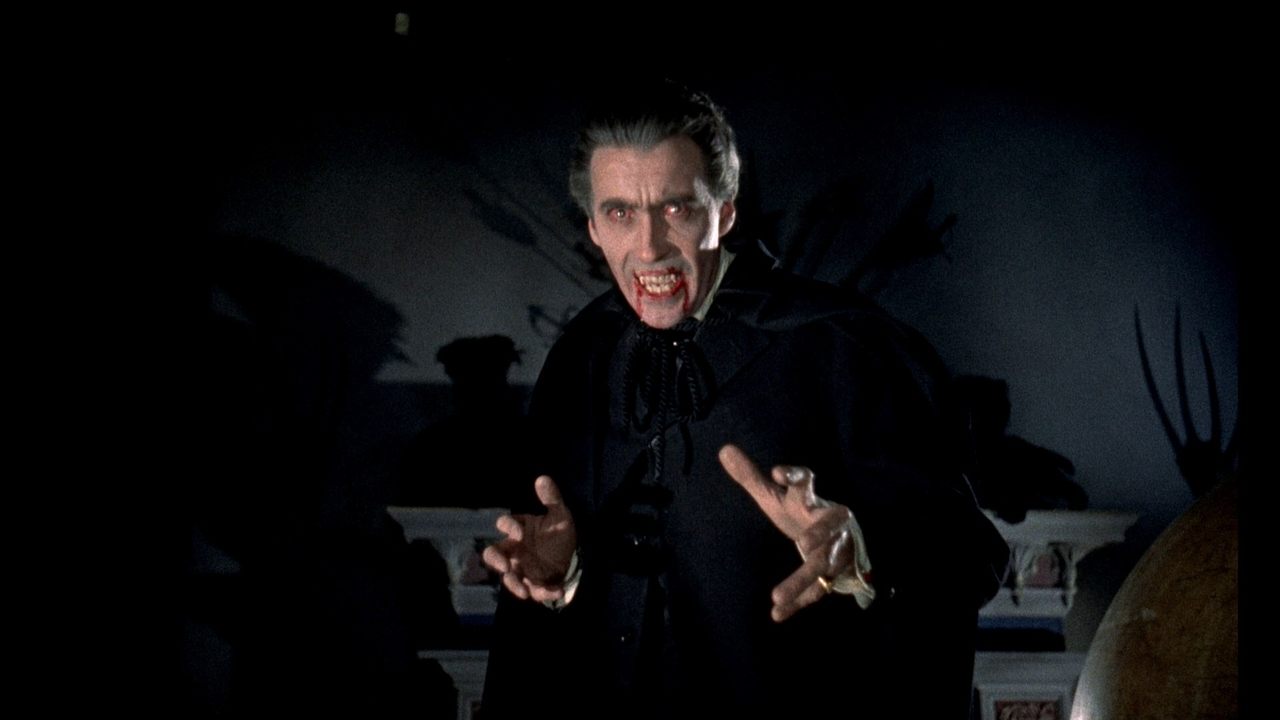
The transformation is crucial. Lee's Dracula does not remain elegantly sinister throughout the film. When threatened or feeding, his face changes, blood appears around his mouth and his movements become violent and predatory. His performance can move from stillness to explosive motion with very little transition. The effect separates him sharply from Lugosi's hypnotic, deliberate interpretation. Lee preserves the aristocratic vampire but adds an animal whose civilization is only temporarily restraining appetite.

Sexual attraction becomes part of that danger. The women Dracula attacks do not respond only with terror. Fisher's staging, Lee's physicality and the performances of Carol Marsh and Melissa Stribling allow vampiric encounters to carry unmistakable erotic excitement. The vampire's entrance into bedrooms and private domestic spaces therefore threatens more than physical life. Dracula represents desire operating outside the behavioural restrictions of the respectable society surrounding his victims.

Lee's subsequent frustration with being identified so strongly with Dracula is part of the role's impact. He would return to the character repeatedly for Hammer, but the essential screen image was established here: tall, dark-clad, sexually magnetic and capable of sudden feral violence. The film does not give him an enormous amount of explanatory dialogue because it does not need to. Fisher turns Dracula into a presence whose body, movement and gaze communicate threat before the character has to explain anything.

Peter Cushing & the Reinvention of Van Helsing

If Lee revolutionizes Dracula, Peter Cushing performs an equally important transformation of Van Helsing. Earlier screen versions had established the character primarily as an intellectual authority: the man who understands vampires and tells others what must be done. Cushing retains that intelligence but makes knowledge inseparable from action. His Van Helsing investigates, performs autopsies, carries stakes and crosses, runs after Dracula and is willing to place himself physically inside the danger he is studying.

The scientific quality of the performance is especially important. Van Helsing does not accept every piece of vampire folklore indiscriminately. He treats vampirism almost as a pathological condition, comparing its compulsions with addiction and separating observed properties from superstition. His equipment and recorded notes make him look like a modern professional confronting an archaic disease. This rational method gives the film a bridge between its Gothic setting and the post-war audience for whom science had become one of the dominant ways of explaining the world.

Cushing was also unusually involved in the physical construction of the role. He performed much of Van Helsing's energetic movement himself, and his ideas contributed to the climactic destruction of Dracula. Instead of ending with a static staking, the confrontation becomes a chase through the castle. Van Helsing races along a table, leaps toward the curtains, tears them down to expose Dracula to sunlight and finally improvises a cross from candlesticks to force the vampire into the deadly beam.

The climax defines Fisher's conception of both men. Dracula is physically powerful but vulnerable to the rules governing him; Van Helsing wins because he understands those rules and is fast enough to exploit them. Their conflict is therefore neither purely spiritual nor purely muscular. Intelligence becomes action. The dynamic between Lee and Cushing proved so effective that it helped establish one of horror cinema's most recognizable actor pairings.

Colour, Bray Studios & the Hammer Gothic

Dracula was only Hammer's second major colour Gothic horror after The Curse of Frankenstein, and Jack Asher's photography makes colour fundamental to the film's effect. The opening credits immediately announce the difference from the black-and-white vampire tradition as vivid blood appears across Dracula's tomb. Fisher and Asher allow red to become part of the visual identity of Hammer horror.

Bernard Robinson's production design works with that colour strategy. Dark wood, heavy fabrics, candles, stone interiors, flowers and richly dressed bedrooms create a Gothic world in which red and green can become unusually expressive. The film does not require enormous sets because Fisher frequently uses doorways, staircases and corridors to imply spaces beyond the frame. Bray's limitations encourage architectural concentration: Dracula appears in entrances, victims are discovered inside bedrooms and movement through the castle can be communicated through a few carefully designed environments.

The visual contrast between Dracula's castle and the Holmwood household also supports the film's treatment of corruption. The castle openly belongs to death; the domestic world appears orderly and socially controlled. Dracula's arrival introduces the imagery of the castle into the home through blood, nocturnal visits and transformed women. The invasion is therefore visible not only through plot but through the contamination of spaces associated with safety.

Hammer's Gothic look would become so familiar through later films that it can be difficult to recover how forceful it appeared in 1958. Earlier major vampire cinema had been dominated by monochrome shadows. Fisher, Asher and Robinson showed that Gothic horror could instead exploit colour, flesh, costume and décor. The result would influence Hammer's own production design for years and contribute to a broader revival of period horror in which the supernatural no longer needed to hide from colour photography.

Blood, Desire & Censorship

What appears relatively restrained to modern audiences was confrontational enough in 1958 to create serious difficulties with British censors. The BBFC required alterations before the film's original UK theatrical release, which received an X certificate. Contemporary correspondence identified several particularly problematic areas, including Lucy's staking, Dracula's seduction of Mina and the extended details of the Count's destruction in the finale.

These objections reveal what was genuinely new about Hammer's approach. The violence was not only more visible; it was connected with sexuality. Lucy's transformation changes her behaviour as well as her body, while Mina's encounter with Dracula is staged with an intimacy that makes vampirism resemble forbidden erotic experience. The blood around Lee's mouth makes the physical consequences impossible to ignore. Hammer was exploiting material already latent in vampire mythology but presenting it with a directness that mainstream British horror had rarely permitted.

The cuts created different versions in different territories. The United Kingdom and United States removed material in different ways, while Japan and apparently some European markets screened material closer to Fisher's uncensored cut. Over time, this led to confusion around what became known informally as the "Japanese version." Hammer has since clarified that a separate expanded version was not specifically shot for Japan; rather, the Japanese release preserved material removed elsewhere.

The censorship history is particularly valuable because it demonstrates that the film's reputation for blood and sexuality was not created retrospectively. Those elements were precisely what classification authorities confronted in 1958. Hammer's later films would push both considerably further, but Dracula established the combination that became central to the studio's identity: the Gothic monster could now bleed, desire and physically attack with a directness that made older cinematic conventions suddenly seem distant.

James Bernard & the Sound of Dracula

James Bernard's score gives Dracula an identity as forceful as its colour. Bernard had already become an important Hammer collaborator, but his music for Dracula produced one of the studio's most recognizable themes. The central three-note figure corresponds rhythmically to the syllables of the Count's name, allowing the orchestra effectively to pronounce "Dra-cu-la" without words.

The motif appears with a pounding insistence during the opening credits, immediately establishing the Count as the dominant force even before Christopher Lee appears. Bernard's orchestration can be aggressive and almost physical, matching Fisher's preference for movement rather than the more restrained mystery associated with earlier Gothic films. The score does not merely signal that something frightening may happen; it drives the film toward confrontation.

Bernard also helps unify a story that moves with unusual speed. Sangster's compressed script leaves little time for extended transitions, so the music can maintain menace as characters travel, investigate and discover the next stage of Dracula's attack. The recurring musical language ensures that the Count's influence remains present even during scenes from which Lee himself is absent.

The importance of the score extended beyond this single film. Bernard would become the composer most closely associated with Hammer's classic horror period, and the combination of forceful brass, recurring motifs and dramatic orchestration became part of the studio's recognizable sound. Dracula's music works particularly well because it shares the film's governing principle: familiar Gothic material is not treated delicately but given renewed physical energy.

Release, Restoration & Legacy

The film premiered in the United States in Milwaukee on May 8, 1958 under the title Horror of Dracula. The alternative title helped distinguish it from Universal's famous 1931 Dracula, which remained strongly identified with Béla Lugosi. Hammer's film proved a major international success, confirming the commercial promise already demonstrated by The Curse of Frankenstein and establishing Cushing and Lee as leading figures in the studio's Gothic cycle.

The critical response was far more hostile than its subsequent canonical reputation might suggest. British reviewers objected strongly to the colour blood, sexuality and violence, sometimes treating the film's X certificate as insufficient warning. Audiences responded differently. The commercial success encouraged Hammer to continue mining classic Gothic material and ultimately produced an extended Dracula cycle, while Cushing, Lee and Fisher became central figures in the international identity of British horror.

The film's physical history continued long after its initial release. The BFI restored the UK theatrical version in 2008. Later, damaged material recovered from a Japanese print allowed Hammer's 2012 restoration to reincorporate portions of footage absent from the surviving British and American theatrical versions. That Japanese element had suffered both fire and water damage, however, and it remained incomplete.

A major breakthrough came in 2026 when Warner Bros. located substantially better archival elements corresponding to the uncensored material. Hammer and Silver Salt Restoration used these materials for a new 4K restoration presenting Fisher's film in what Hammer describes as its most complete form to date, including material previously removed from the UK and US releases. The restoration was scheduled to return to UK cinemas from October 16, 2026, followed by home release later that month.

Few horror films can claim such a clear before-and-after effect on their genre. Dracula did not invent the cinematic vampire, the erotic vampire or colour horror, but it combined those possibilities with unusual concentration. Lee transformed Dracula from a remote Gothic aristocrat into a physically immediate predator; Cushing transformed Van Helsing into a modern action hero; Fisher and Hammer transformed Victorian horror into fast, sensual popular cinema. The numerous Hammer vampire films that followed are the most obvious legacy, but the deeper influence lies in how natural it subsequently became for screen vampires to be simultaneously frightening, sexual and spectacularly physical.

References

  1. BFI Why I Love... Dracula

    Kevin Lyons examines Jimmy Sangster’s adaptation, Christopher Lee’s interpretation of Dracula, Peter Cushing’s physical approach to Van Helsing and the film’s transformation of Gothic horror.

  2. Film Comment TCM Diary: Bernard Robinson, Hammer Horror Designer

    Farran Smith Nehme examines Bernard Robinson’s production design, drawing on historical testimony to explain the castle interiors, architectural illusions, use of colour and economical reuse of Bray Studios sets.

  3. Historical Journal of Film, Radio and Television The Curse of the Thing Is Technicolor Blood: The BBFC and Hammer’s Colour Films, 1957–1962

    Paul Frith’s peer-reviewed historical research uses original BBFC correspondence and examination reports to reconstruct censorship negotiations surrounding Dracula and Hammer’s early colour horror productions.

  4. Hammer Films The Limited Collector’s Edition of Dracula: The Q&A with Hammer’s Steve Rogers (Part One)

    Extended interview documenting the original censorship cuts, surviving Japanese-release footage, newly discovered Warner Bros. archival materials and the technical restoration of Terence Fisher’s original version.

  5. Hammer Films The Women of Dracula

    Detailed examination of Valerie Gaunt, Carol Marsh and Melissa Stribling, exploring the screenplay’s restructuring of Bram Stoker’s female characters, their narrative functions, performances and the film’s treatment of sexuality.

Connections

Cast

View Full Cast & Crew →

Release & Distribution

Distributors (1)

  • The Rank Organisation GB

Release History (14)

Release DateTerritoryRelease TypeFormatDistributorCertificationNotes
1958-04-21 United Kingdom Theatrical — — — Rated X
1958-05-08 United States Theatrical — — —
1958-08-08 Ireland Theatrical — — 12
1958-12-12 Germany Theatrical — — 12 West Germany
1958-12-20 Italy Theatrical — — VM14
1997-02-27 United Kingdom Physical — — 15
2003-01-13 United Kingdom Physical — — 15
2003-06-14 Netherlands TV — — 12 SBS 6
2006-04-15 Italy Physical DVD — VM14 DVD
2007-08-08 United Kingdom Theatrical — — 12A Re-release
2012-12-04 United Kingdom Physical — — 12
2013-01-02 United Kingdom Physical — — 12
2013-01-10 United Kingdom Physical — — 12
2013-08-06 United Kingdom Theatrical — — 12A Re-release

News & Features

All horror news
Who will his bride be tonight?