The Fly (1958)

US
HORROR FILM Science Fiction Drama
6.3/10 4 votes
Runtime
94 min
Release
July 16, 1958
Budget
$700,000
Revenue
$3,000,000
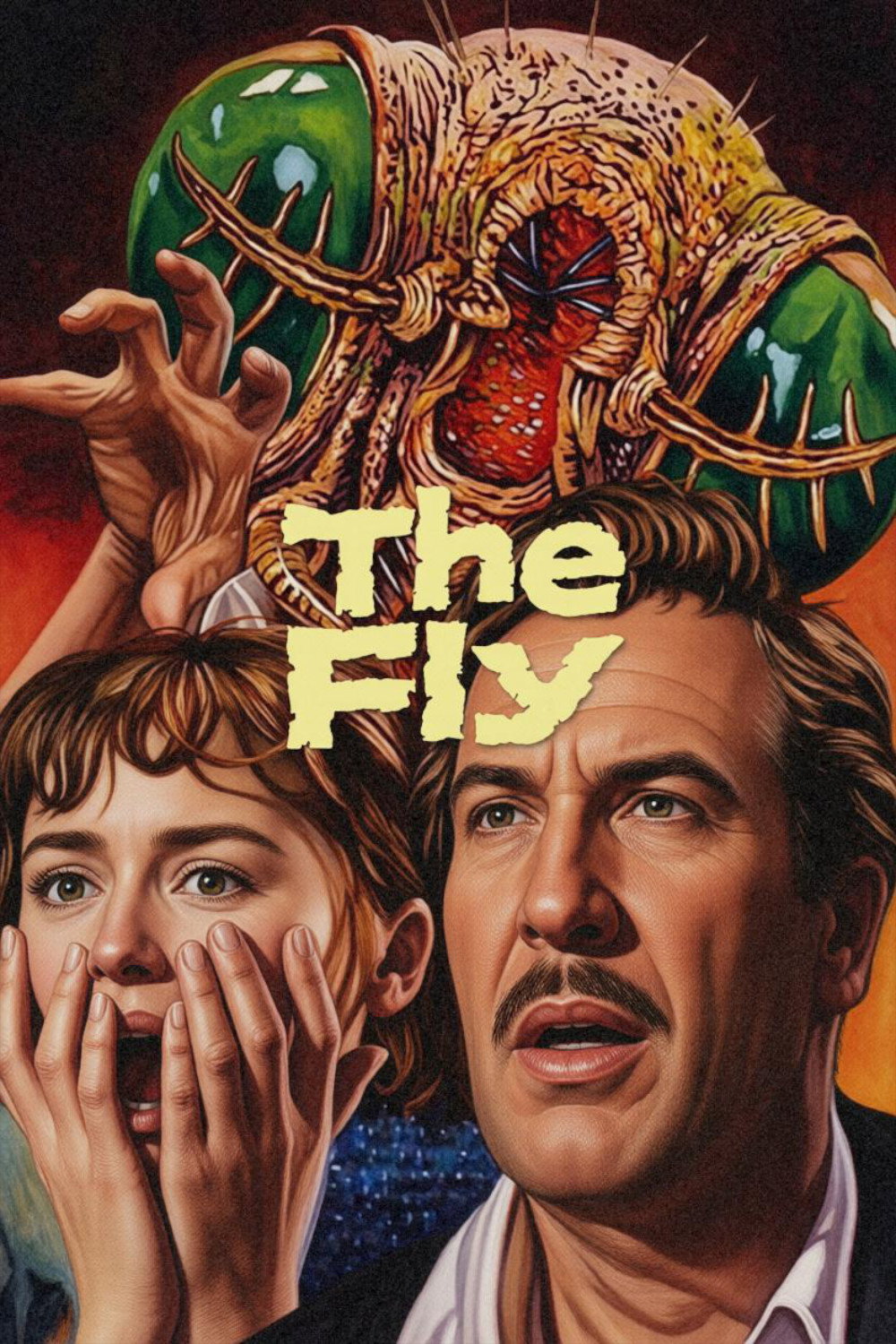
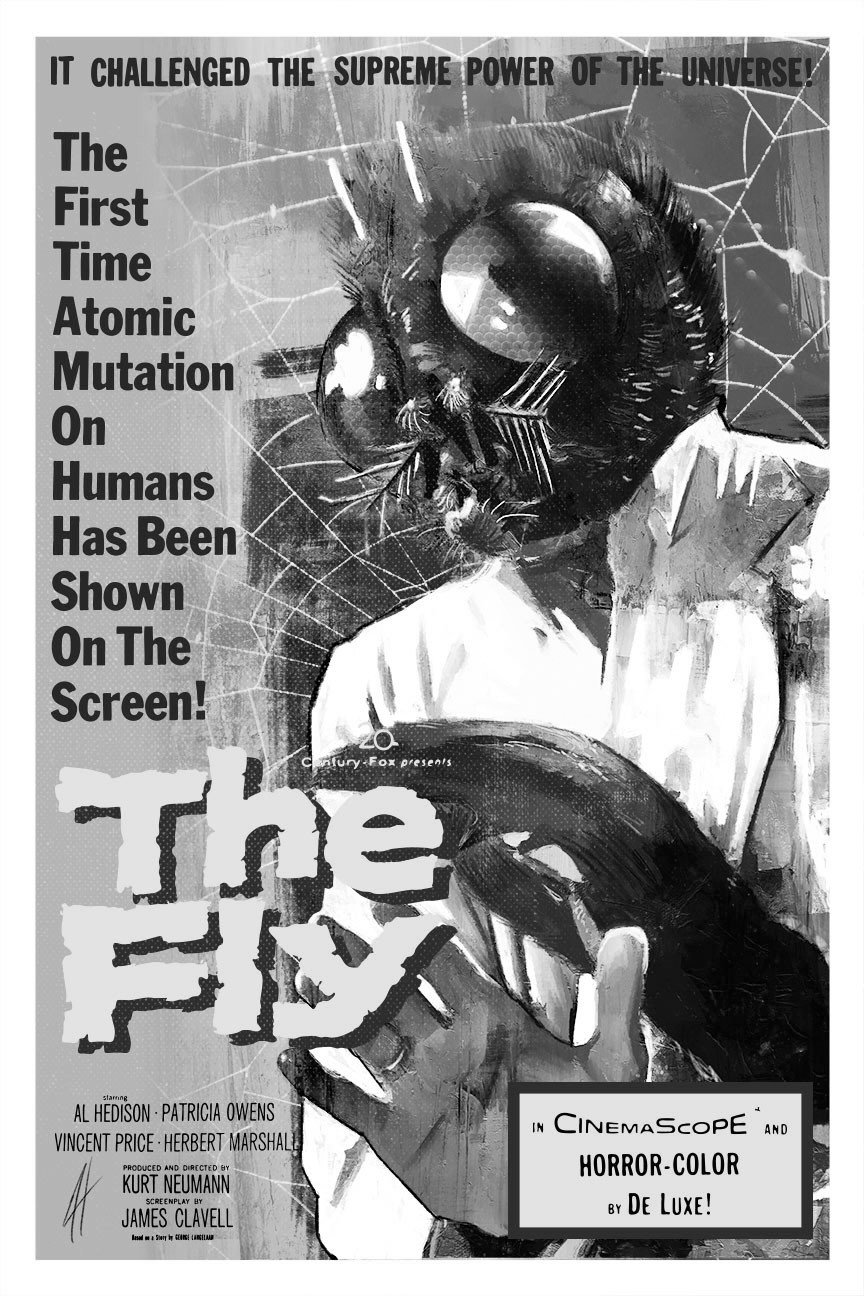
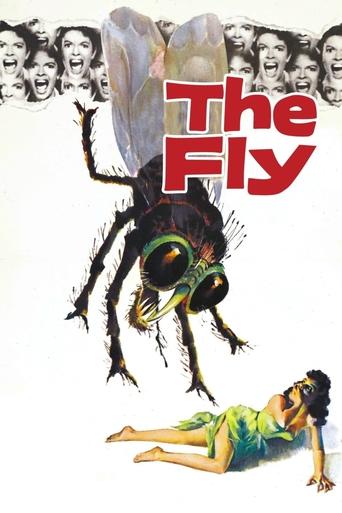
The Fly (1958) poster
Director
Production Companies
20th Century Studios , Regal Films
Plot

Industrialist François Delambre is called late at night by his sister-in-law, Helene Delambre, who tells him that she has just killed her husband, André. Reluctant at first, she eventually explains to the police that André invented a matter transportation apparatus and, while experimenting on himself, a fly entered the chamber during the matter transference.

Alternative Titles
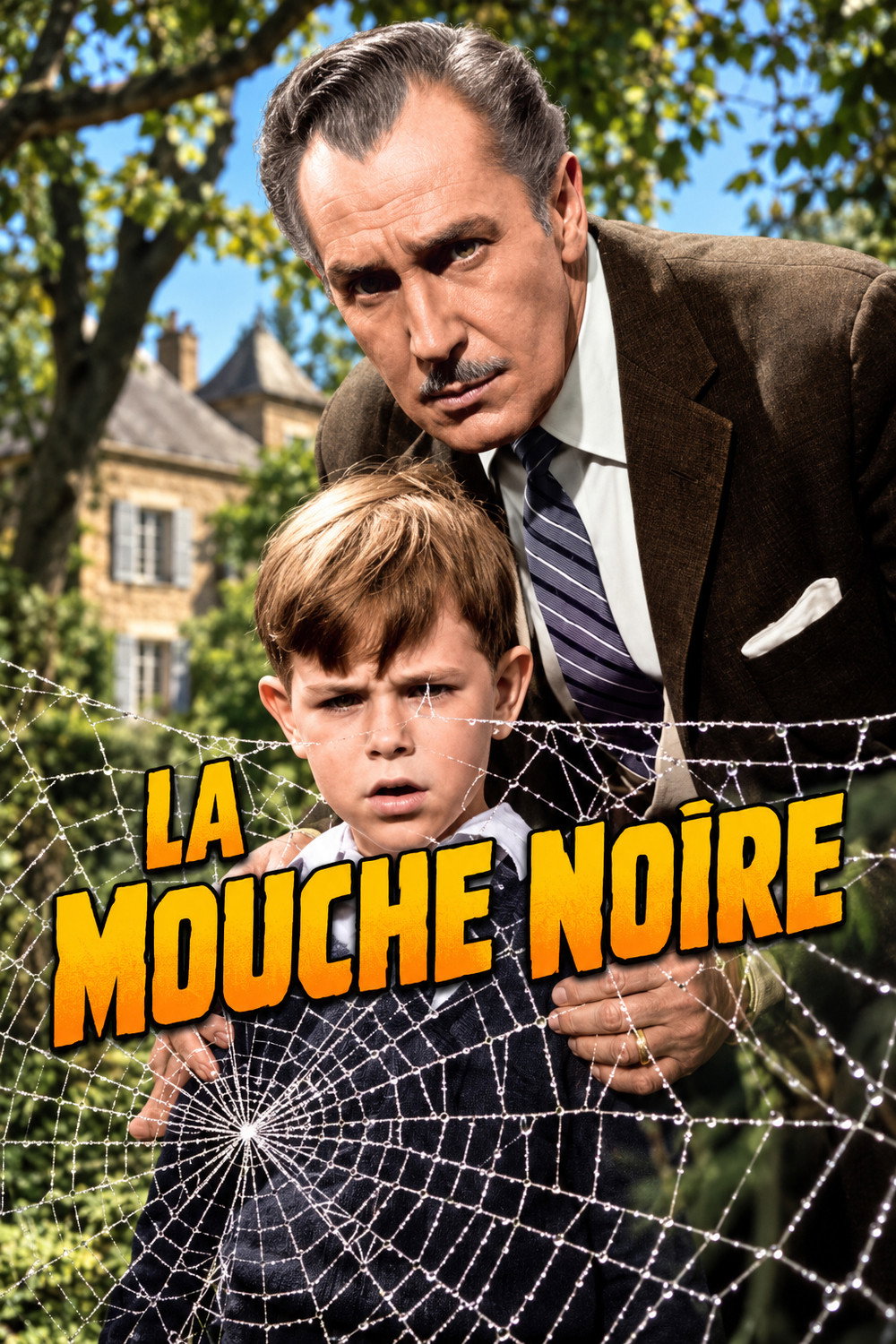
La Mosca de la Cabeza Blanca (Argentina) — Premiere Title Milçək (Azerbaijan) De vlieg (Belgium) — Flemish Title La mouche (Belgium) — French Title A Mosca da Cabeça Branca (Brazil) — Portuguese La Mouche noire (Canada) — French 变蝇人 (China) — Chinese Moucha (Czechia) — Czech
Show all 35 alternative titles Die Fliege (Germany) — German Fluen (Denmark) — Danish La mosca (Spain) — Spanish Flugan (Finland) — Swedish Title Kärpänen (Finland) — Finnish La Mouche noire (France) — French I myga (Greece) — DVD Title I myiga (Greece) — transliteration Η Μύγα (Greece) — Greek 變蠅人 (Hong Kong SAR China) — Chinese Muha (Croatia) — Croatian A légy (Hungary) — Hungarian הזבוב (Israel) — Hebrew L'esperimento del dottor K. (Italy) — Italian ハエ男の恐怖 (Japan) 플라이 (South Korea) — Korean La mosca (Mexico) — Spanish La mosca de cabeza blanca (Peru) Mucha (Poland) — Polish A Mosca (Portugal) — Portuguese Муха (Russia) — Russian Flugan (Sweden) — Swedish Муха (Russia) — Russian Title Öldüren Arzu (Türkiye) — Turkish 變蠅人誕生 (Taiwan) — alternative title Муха (Ukraine) — Ukrainian Con Ruồi (Vietnam)

Trailers & Videos

4 videos

Film Guide & Analysis

Kurt Neumann’s 1958 science-fiction horror adapts George Langelaan’s story into a tragedy of experimental teleportation, bodily transformation and family loss, distinguished by Ben Nye’s insect makeup and L. B. Abbott’s photographic effects.

The Fly (1958) is an American science-fiction horror film produced and directed by Kurt Neumann from a screenplay by James Clavell, adapted from George Langelaan’s short story published in Playboy in June 1957. Set in Montreal, the film follows Hélène Delambre, who admits to killing her husband André with an industrial hydraulic press. Her account reveals that André, a scientist developing an experimental matter-transmission device, accidentally combined parts of his body with those of a housefly. Al Hedison, later known professionally as David Hedison, portrays André, alongside Patricia Owens as Hélène, Vincent Price as François Delambre and Herbert Marshall as Inspector Charas.

Released by Twentieth Century-Fox in July 1958, The Fly combines a murder investigation with a tragedy of scientific experimentation and bodily transformation. Its CinemaScope photography by Karl Struss and color presentation distinguish it from many inexpensive monster pictures of the period. Makeup artist Ben Nye created the insect prosthetics, while L. B. Abbott supervised special photographic effects, including the disturbing image of a human-headed fly trapped in a spider’s web. The film became a major commercial success and established the original screen continuity subsequently developed through two sequels. Its premise was later reinterpreted by David Cronenberg in 1986.

Literary Origins & Development

The source of The Fly was a short story by George Langelaan, a British writer born in Paris whose experiences included wartime intelligence work and reconstructive surgery undertaken to change his appearance. Published in the June 1957 issue of Playboy, the story combined an experimental technology with an accidental exchange of human and insect anatomy. The premise developed a frightening consequence from an apparently successful scientific achievement: a machine capable of transmitting matter could preserve the outward integrity of ordinary objects while producing an irreversible biological catastrophe when two organisms entered its mechanism together.

The property attracted Robert L. Lippert, whose Regal Films had supplied relatively inexpensive productions to Twentieth Century-Fox. Director Kurt Neumann had already worked with the company on She Devil (1957) and Kronos (1957), two science-fiction films photographed by Karl Struss. The Fly was initially prepared within the Regal production arrangement, but the project subsequently became an official Fox feature. The American Film Institute records that Fox replaced Lippert as the credited producer because of a labor dispute involving residual payments. Neumann ultimately received both the directing and producing credits, while Lippert retained an important role in the project’s development.

James Clavell adapted Langelaan’s story for his first produced Hollywood screenplay. The adaptation preserved the principal mechanism of the transformation and the mystery surrounding a woman who apparently murders her husband at his request. It transferred the action from France to Canada and changed aspects of the original conclusion, reducing the accumulation of deaths. Clavell would subsequently become known for screenwriting and novels including King Rat and Shōgun. His screenplay for The Fly was unusual among contemporary monster pictures because its explanation of scientific disaster remained closely connected to a marriage and the consequences of a concealed family tragedy.
The Murder Mystery & the Transformation

The film begins after the central catastrophe has already occurred. Hélène is discovered at the Delambre factory beside the industrial press used to crush her husband’s head and one of his arms. She admits responsibility but refuses to explain her actions. François Delambre, André’s brother, and Inspector Charas initially have no reason to accept an extraordinary explanation for the killing. Hélène’s composure appears inconsistent with the violence of the scene, while her intense interest in capturing a fly with a white head suggests a disturbing connection between the murder and an apparently insignificant insect.

François eventually persuades Hélène to describe the events preceding André’s death. The film then moves into an extended flashback showing the scientist’s development of an apparatus capable of disintegrating matter and reconstructing it elsewhere. André initially demonstrates the equipment with an ordinary object. Experiments involving living creatures prove less predictable: a family cat disappears during transmission, leaving only a disembodied cry, while a later attempt involving a guinea pig succeeds. The demonstrations establish both the potential value of the invention and the dangerous limits of André’s understanding before he makes the decision to enter the apparatus himself.

During the human experiment, an unnoticed housefly enters the transmission chamber. The machine apparently operates, but André emerges with the head and arm of an insect, while the corresponding fly acquires human features. Unable to speak or allow his wife to see him, André communicates through written messages and conceals his altered body beneath a cloth. Hélène desperately searches for the second organism, hoping that recovering it might permit another experiment capable of reversing the accident. The uncertainty surrounding the missing fly gives the domestic scenes an increasingly urgent purpose, transforming a familiar household nuisance into the possible means of saving a human life.

Scientific Horror & Human Tragedy

The film’s emotional force depends upon the relationship between André and Hélène. Before the accident, their marriage is presented as affectionate and comfortable, supported by André’s successful work and the presence of their young son Philippe. His invention initially appears to offer an extraordinary benefit to humanity, making the subsequent disaster the consequence of a mistaken scientific judgment rather than a deliberate attempt to harm another person. André’s enthusiasm for discovery also explains his willingness to experiment upon himself. He recognizes the machine’s limitations but underestimates the possibility that an apparently ordinary intrusion could alter its results.

Once transformed, André remains capable of affection and rational decision-making. His written instructions show concern for Hélène and for the consequences of allowing the apparatus to survive. The appearance of the insect limb introduces another danger: he fears that the alien biological components may gradually overwhelm his human judgment. His inability to communicate through speech makes physical movement especially important. Reaching toward Hélène or attempting to protect her becomes ambiguous because the same gestures expose the uncontrolled characteristics of the creature attached to him.

The narrative reaches its most painful moment when André determines that the experiment cannot safely continue. After another unsuccessful attempt to restore himself, he destroys the laboratory equipment and directs Hélène to operate the hydraulic press. Her participation is presented as an act of desperate obedience to her husband’s wishes, although it leaves her exposed to prosecution for murder. The conclusion subsequently supplies independent evidence of the transformation when François and Charas discover the human-headed fly trapped in a spider’s web. The insect’s tiny cries reveal that part of André has remained alive in another body. The scene completes the original accident’s physical consequences while confirming the truth of Hélène’s account.

Production & Laboratory Design

Principal photography took place from mid-March to mid-April 1958, following the production methods established during Neumann’s earlier work with Regal Films. David Hedison recalled that the feature was completed in eighteen shooting days. The principal cast included Patricia Owens, Vincent Price, Herbert Marshall and Charles Herbert as Philippe. Hedison was billed under his original professional name, Al Hedison. In a later interview with Nick Thomas, he remembered being surprised to receive top billing above more established performers. He also expressed considerable confidence in Clavell’s screenplay, regarding its developed characters as an important reason for the film’s commercial appeal.

The production combined a relatively contained domestic mystery with elaborate sets devoted to scientific experimentation. Art directors Lyle R. Wheeler and Theobold Holsopple developed the environments, with set decoration credited to Walter M. Scott and Eli Benneche. The Delambre laboratory included equipment obtained from surplus American military sources, according to contemporary Fox publicity materials preserved in the Academy of Motion Picture Arts and Sciences archives. Its arrangement established a modern research facility filled with electrical apparatus, control panels and transmission chambers. The equipment’s recognizable mechanical functions helped make the proposed matter transmitter appear credible within the conventions of contemporary science-fiction cinema.

The laboratory also connects the scientist’s private work to the industrial setting of the opening murder. The machinery required for the transmission experiment initially suggests extraordinary technological possibility, while the heavy press used at the factory becomes the instrument through which André must destroy the consequences of his discovery. The contrast between the two locations is significant because the final action requires no speculative technology. An ordinary industrial machine ends an experiment that could not be controlled through more sophisticated scientific procedures. The film’s practical settings therefore participate directly in the narrative’s treatment of technological ambition and human vulnerability.

Ben Nye’s Makeup & Photographic Effects

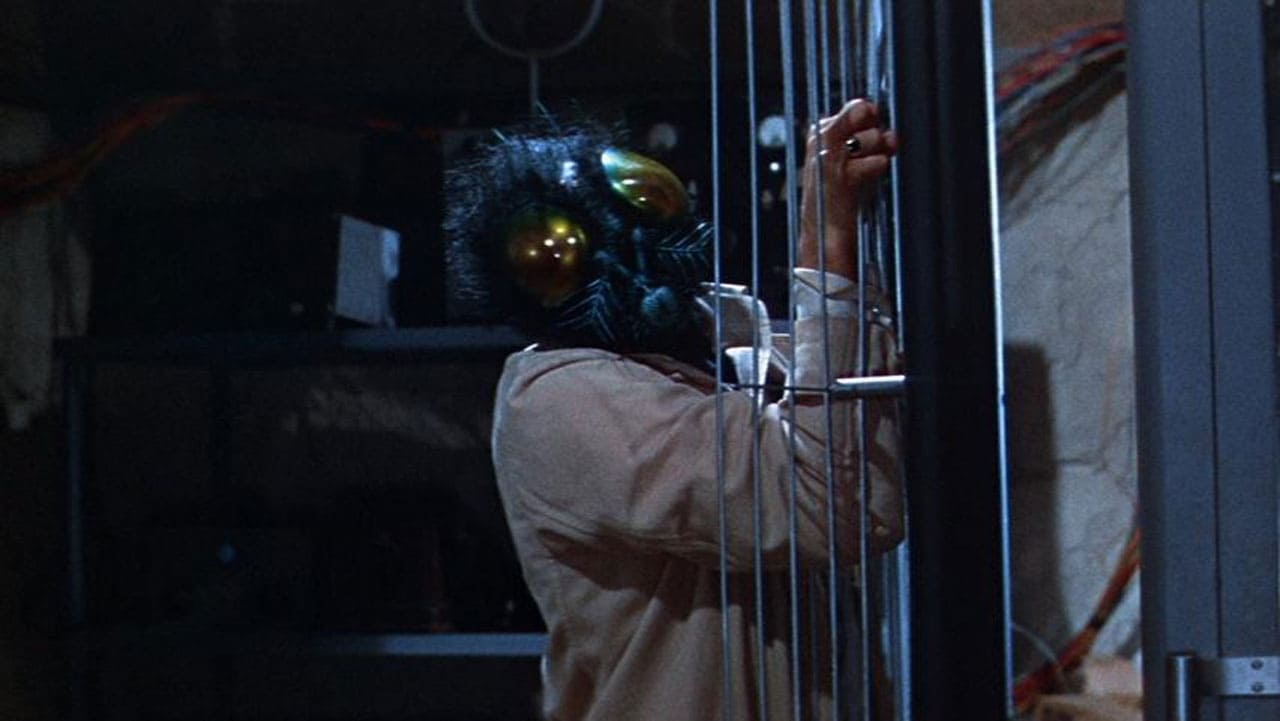
Makeup artist Ben Nye created the insect head and associated prosthetics worn by Hedison. The original design required the actor’s human features to disappear beneath a large artificial structure combining prominent compound eyes, antennae and a movable proboscis. Production information collected by the American Film Institute describes a rubber covering fitted around Hedison’s head, with the proboscis attached to a wooden component held within his mouth. Small movements of the actor’s mouth could consequently animate the insect feature. An early design employing beaded eye surfaces was replaced by more iridescent domes, producing the reflective appearance visible in the completed film.

The Walt Disney Archives has preserved photographs of the original production documenting Nye’s work. Their historical significance lies in establishing the physical construction of a creature whose appearance was produced through wearable makeup rather than a fully mechanical model. Hedison later recalled that his hidden face required a different acting technique. Unable to rely upon ordinary expressions, he communicated André’s distress through bodily movement and the character’s increasingly restricted interactions with Hélène. The costume became particularly effective when the camera concealed its complete appearance, allowing a covered head or an emerging insect limb to create anxiety before the full transformation was revealed.

L. B. Abbott supervised the special photographic effects, which were particularly important for the creature’s other form. The image of a tiny fly possessing André’s head and arm required optical integration of human features with a magnified insect body. Its appearance within a spider’s web produced a disturbing difference in scale between the recognizable human face and the approaching predator. The effect gives the final scene a grotesque quality that cannot be achieved through the full-sized costume alone. The two creations represent opposite outcomes of the same accident, emphasizing that the transmission apparatus has damaged both organisms rather than simply transforming the scientist into a conventional monster.

Cinematography, Music & Sound

Karl Struss photographed The Fly in the CinemaScope format with color processing by De Luxe. The production’s widescreen presentation provides considerable space for the laboratory equipment and the domestic environments surrounding the principal characters. Struss had previously photographed Neumann’s Kronos and She Devil, and his experience with the director contributed to the efficient visual organization of a short production schedule. The film repeatedly contrasts the controlled, brightly illuminated laboratory with the growing uncertainty of Hélène’s domestic surroundings. Its distinctive color presentation also emphasizes the artificial surfaces of the insect makeup at the moments when the creature becomes fully visible.

Neumann delays the complete revelation of André’s altered head through the use of concealment and restricted viewpoints. The audience first encounters written messages, covered features and a disturbing insect limb. When Hélène finally sees the head, the film briefly presents her through a fragmented, multiple-image perspective intended to suggest the vision of an insect’s compound eyes. Turner Classic Movies identifies the effect with Struss’s cinematographic work. The sequence makes the revelation subjective, presenting a familiar human face as an image broken into numerous simultaneous views. The technique intensifies the moment without requiring the camera to remain continuously upon the monster itself.

Merrill G. White edited the film, while Paul Sawtell received the music credit. The score moves between dramatic suspense and the more intimate circumstances of the Delambre family. Its emotional role is particularly important because the screenplay repeatedly returns from the investigation to the couple’s earlier happiness. Sound personnel Eugene Grossman and Harry M. Leonard contributed to the soundtrack, with editing credited to Dick Jensen and Don Isaacs. The laboratory’s electronic noises and the insect’s persistent buzzing become important signs of danger, while the disembodied cry of the lost cat gives an early experiment an unsettling consequence that cannot be directly observed.

Release, Reception & Historical Legacy

Twentieth Century-Fox released The Fly in July 1958, with a documented American premiere on 16 July. The film ran approximately ninety-four minutes and received Production Code approval under certificate number 19036. The British Board of Film Censors examined the theatrical version on 7 July 1958, recording a running time of ninety-three minutes and thirty-nine seconds. Differences between later British video running times and the original theatrical measurement should be considered in relation to the technical standards of the formats involved rather than treated automatically as evidence of narrative alterations.

The production became one of Fox’s major commercial successes of 1958. Turner Classic Movies reports approximately $3 million in domestic receipts, although historical accounts provide different estimates of the original production budget. Contemporary critical assessments frequently recognized the film’s unusual combination of horror and a relatively persuasive mystery structure. The American Film Institute records Variety’s favorable response to its apparent believability. Later criticism has remained divided over the scientific premise, with some commentators emphasizing the implausibility of the transformation and others responding more favorably to the emotional circumstances in which the grotesque effects occur.

Neumann died in August 1958, shortly after the film’s initial release. Its success nevertheless encouraged Fox to continue the story through Return of the Fly (1959), directed by Edward Bernds, and Curse of the Fly (1965), directed by Don Sharp. The sequels developed the consequences of the Delambre family’s experiments, although their production values and narrative emphases differed from the original. The 1958 film also contributed to Vincent Price’s increasing association with horror cinema. His performance as François relies heavily upon restraint and concern for the family, contrasting with the more theatrical characters he would play in subsequent genre productions.

David Cronenberg’s The Fly (1986) returned to Langelaan’s premise through a different biological conception. The transformation of scientist Seth Brundle, played by Jeff Goldblum, unfolds gradually and involves the progressive alteration of his entire body. Neumann’s film instead treats the accident as an immediate exchange of anatomical characteristics, making the search for the corresponding insect essential to the possibility of reversal. The later version introduced an explicitly progressive form of bodily degeneration, while the original centered its horror on the concealment of a completed physical catastrophe. Both adaptations use the disintegration of an individual body to examine the limits of scientific control and the consequences of intimate relationships under extraordinary physical circumstances.

In a 1999 Fresh Air interview, Victoria Price described The Fly as an important return to the Fox studio environment for her father following a period of limited work. She also recalled that Vincent Price and Herbert Marshall repeatedly struggled to maintain their composure while filming the climactic spider-web scene because they were acting opposite a rudimentary stand-in prop. Her recollection illustrates the practical separation between the finished special effect and the actors’ experience on set. The Fly remains an important example of 1950s science-fiction horror because its memorable prosthetic and photographic effects emerge from a story of familial loss, scientific misjudgment and the disturbing survival of human consciousness within an altered biological form.

References

  1. American Film Institute The Fly (1958) — AFI Catalog

    Archival production history documenting the development by Robert L. Lippert and Kurt Neumann, the James Clavell screenplay, principal credits, filming period, original theatrical presentation, laboratory equipment and construction of the creature makeup.

  2. Turner Classic Movies The Fly (1958)

    Richard Harland Smith’s historical study of the adaptation of George Langelaan’s story, early production arrangements, casting, initial reception, commercial performance and subsequent development of the film series.

  3. The Walt Disney Archives — D23 What’s the Buzz — A Look at The Fly

    Cesar Gallegos’s 2020 archival feature documenting the original 1958 production and Ben Nye’s design of the insect prosthetics, accompanied by historical photographs preserved by the studio.

  4. Boomer Magazine David Hedison’s Hollywood Voyage

    Nick Thomas’s firsthand interview with David Hedison documenting the eighteen-day shooting schedule, casting circumstances, the strength of Clavell’s screenplay and the physical demands of acting beneath the creature makeup.

Connections

Cast

View Full Cast & Crew →

Release & Distribution

Production Companies (2)

  • 20th Century Studios US
  • Regal Films US

Distributors (1)

  • 20th Century Studios US

Release History (15)

Release DateTerritoryRelease TypeFormatDistributorCertificationNotes
1958-07-16 United States Theatrical — — —
1958-07-31 United Kingdom Theatrical — — — London
1958-09-05 Italy Theatrical — — —
1958-09-14 United Kingdom Theatrical — — —
1958-10-03 Germany Theatrical — — 16 West Germany
1958-10-03 Ireland Theatrical — — 12
1958-10-03 Netherlands Theatrical — — —
1959-05-13 France Theatrical — — 16
1975-06-25 France Theatrical — — — Re-release
1983-02-02 France Theatrical — — — Re-release
2007-01-29 Netherlands Physical DVD — 16 DVD
2008-07-04 France Theatrical — — — Re-release
2011-10-07 Netherlands Physical Blu-ray — 16 Bluray
2012-11-05 United Kingdom Physical DVD — PG DVD
2013-09-16 United Kingdom Physical Blu-ray — PG Bluray
If she looked upon the horror her husband had become...She would scream for the rest of her life!