Recovered Writing and the 1994 Television Production
Carol Serling found the material while sorting papers for transfer to the Rod Serling Archives at Ithaca College. In a contemporary Los Angeles Times interview, she recalled that the script had been forgotten among the family's stored documents. Her attorney Rene Golden brought it to producers Michael O'Hara and Lawrence Horowitz, who saw the potential for a new television production. The principal attraction was the completed Where the Dead Are screenplay. Its recovery supplied an unusual opportunity to produce original writing by a major television dramatist who had died in 1975.
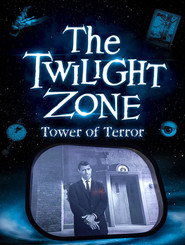
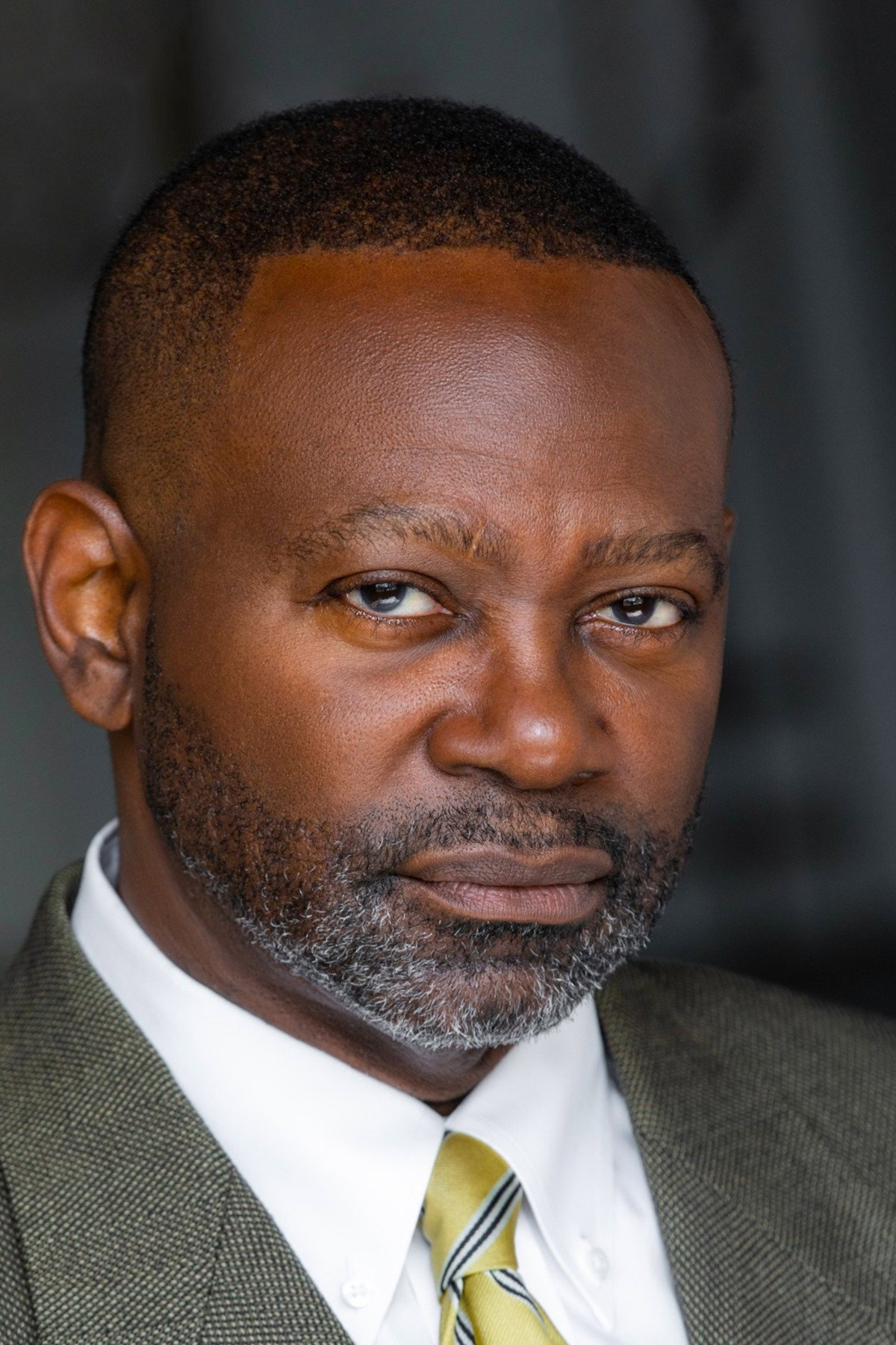
A finished long-form script did not automatically fill a two-hour commercial broadcast slot. O'Hara and Horowitz therefore selected another Serling treatment, The Theatre, and commissioned Richard Matheson to develop it for television. Matheson wrote the shorter screenplay; the longer segment retained Serling's dialogue apart from reported deletions. Carol Serling participated in the production, and S. Bryan Hickox was credited as producer. Robert Markowitz directed both stories for O'Hara-Horowitz Productions, with James Earl Jones taking the place of the original series' writer-host as their on-screen presenter.
A producer acknowledged that the period drama might not have sold without Serling's name. CBS nevertheless broadcast the resulting anthology as a single two-hour programme rather than introducing a new weekly series. That format explains its relationship to the earlier franchise: the familiar title and framing device connected two newly filmed works, but did not convert them into missing episodes of the original run.
The Theatre: Cinema, Memory and Premonition
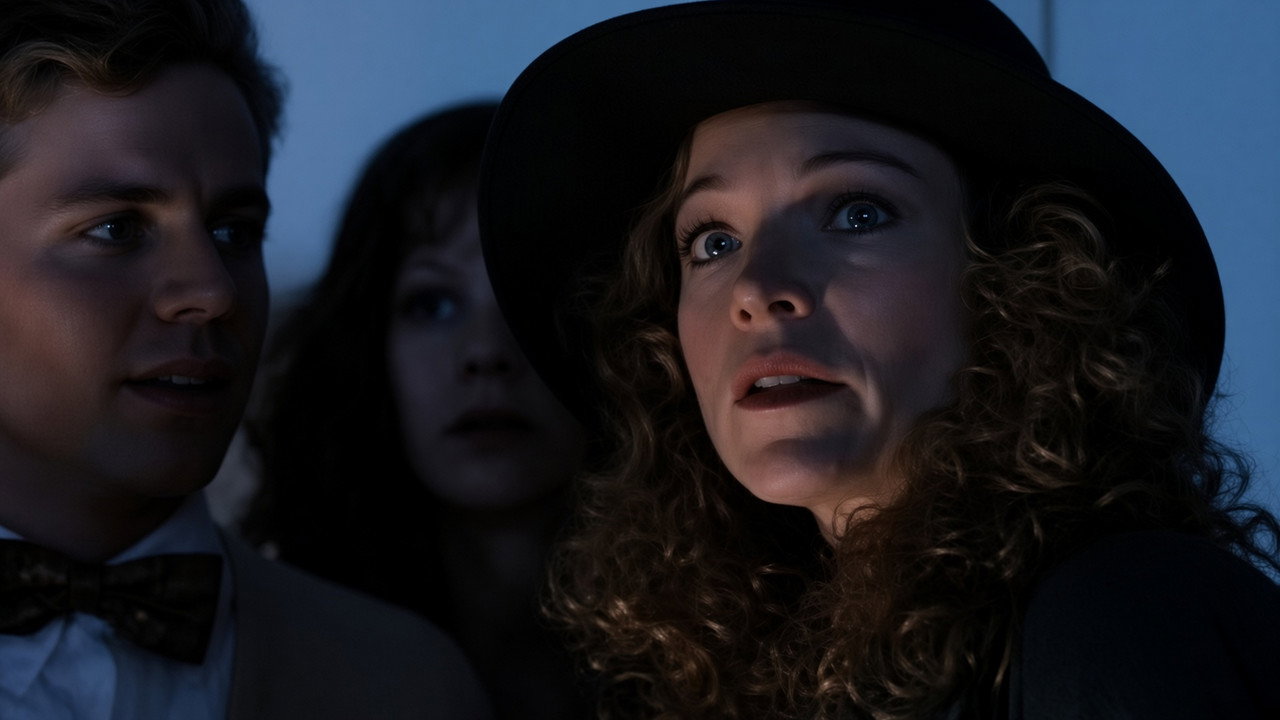
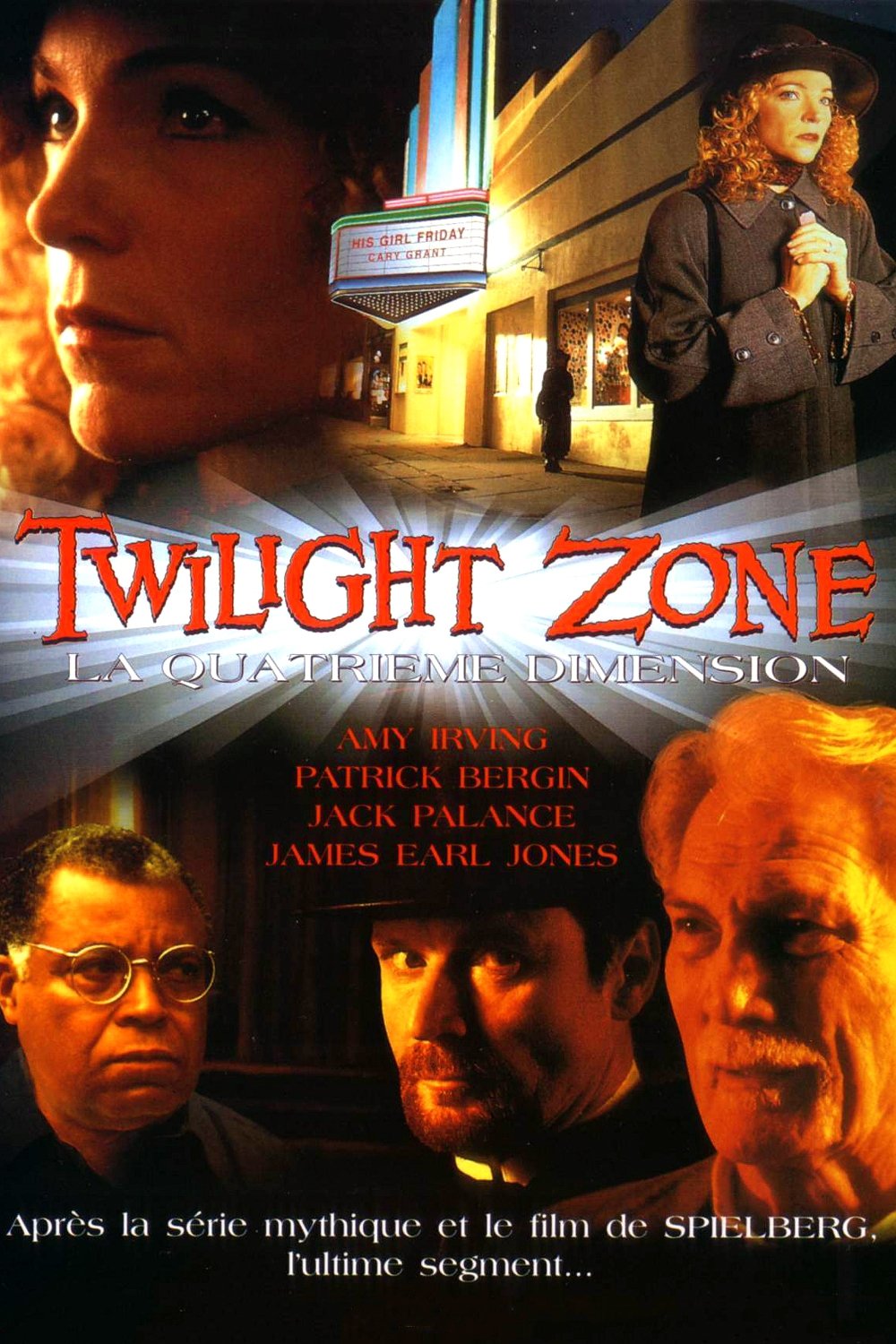
The Theatre begins with Melissa Sanders, played by Amy Irving, struggling to make decisions about her work and her relationship with James, played by Gary Cole. Melissa is a sculptor rather than the secretary described in the earlier treatment, one of the character details modernized for the 1994 adaptation. She goes to a screening of His Girl Friday (1940) after James is unable to accompany her. Instead of experiencing the comedy as other spectators do, she notices scenes from her own recent life on the screen. The film within the film becomes a private display of information that should not be available to an ordinary projector.
The disturbance intensifies when Melissa sees events that have not yet occurred, including a frightening possibility involving her own death. Nobody else in the auditorium confirms her experience. She suspects an elaborate joke or manipulation, but the images resist explanation through the ordinary workings of a cinema. The device requires neither a haunted house nor a visible monster. What had been a shared entertainment becomes an experience that isolates one viewer from everyone sitting beside her.
Matheson's screenplay connects this disturbance with Melissa's indecision, particularly her belief that choices can be postponed. The premise recalls the original anthology's recurrent concern with time and personal responsibility, although its mechanism is specifically cinematic: the protagonist sees herself turned into an image before learning whether she can alter what follows. Cary Grant and Rosalind Russell's romantic sparring in His Girl Friday supplies an ironic accompaniment to Melissa's own troubled relationship. The images may be warnings or fixed predictions.
Where the Dead Are: A Surgeon Confronts an Impossible Survival
Where the Dead Are takes place in 1868, after the American Civil War. Dr. Benjamin Ramsey, played by Patrick Bergin, is a Boston surgeon who encounters a patient whose body presents an impossible history. The man dies after an operation, but an old cranial injury suggests that he should have been dead many years earlier. Ramsey follows this medical anomaly to an isolated island and to Dr. Jeremy Wheaton, portrayed by Jack Palance, a physician who has conducted experiments in tissue regeneration. The investigation turns an initially clinical question into the discovery of a community maintained by a profoundly unnatural intervention.
Wheaton's apparent achievement is the ability to revive people after death. The residents who have benefited from his work depend on the continuation of treatments they cannot produce for themselves. Their survival, far from freeing them, creates a relationship of fear and possession with the scientist. As Ramsey learns what has occurred, his professional curiosity encounters questions that the successful performance of an operation cannot answer: whether a revived body remains part of a natural human life, what a medical investigator owes to those already subjected to an experiment, and what happens when the person controlling the treatment can no longer provide it.
The story's horror develops through the changing status of the islanders. People who initially appear to be ordinary patients become threatening as the arrangement breaks down, and the threat acquires the bodily character of a revenant tale. The post-Civil War setting places medical progress beside death's apparent finality. Serling's completed script allows the argument about mortality to be played at length between Ramsey and Wheaton, with the latter's pride and vulnerability concentrated in Palance's performance.
CBS Premiere, Critical Response and Later Availability
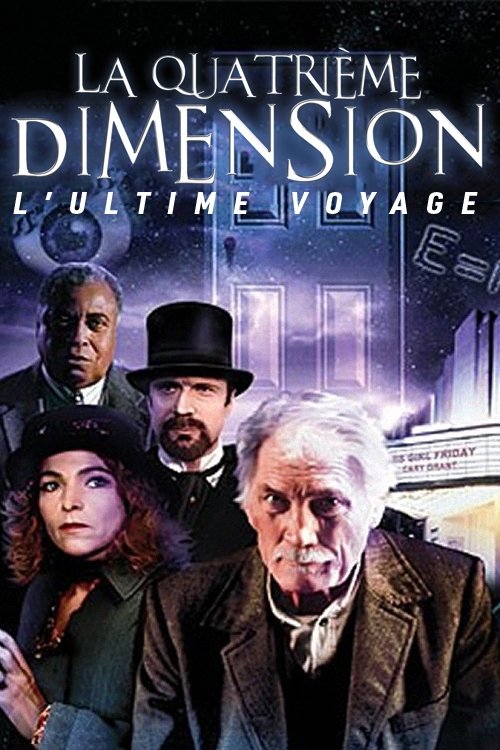
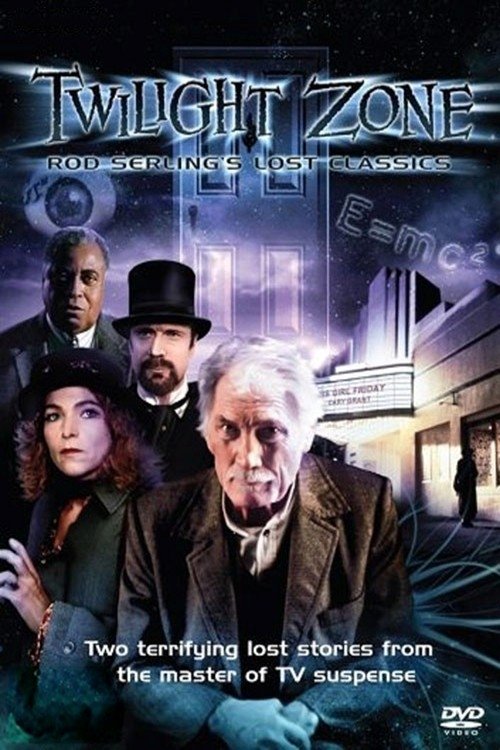
CBS scheduled The Twilight Zone: Rod Serling's Lost Classics for Thursday, 19 May 1994, from 8 to 10 p.m. Contemporary previews emphasized the recovery of an unproduced Serling screenplay, the participation of Carol Serling and the reunion of his name with Richard Matheson. The title risked suggesting that both were fully scripted and intended for the original programme, although one required adaptation decades later. The premiere was thus promoted through literary discovery and nostalgia, but the actual scripts represented different stages of the writer's career and different amounts of later adaptation.
Subsequent criticism has been less uniformly celebratory than the occasion of the premiere. In a 2023 retrospective for /Film, William Bibbiani found The Theatre's premise promising but considered its treatment of Melissa's relationship insufficiently developed. He regarded Where the Dead Are as a more conventional Gothic horror narrative, with Palance's performance and the threat of resurrection more prominent than the sharply ironic reversals associated with the original Twilight Zone. These later judgments do not establish the 1994 reception. They help identify why the special occupies an unusual position between tribute, recovered screenplay and independently constructed television horror.
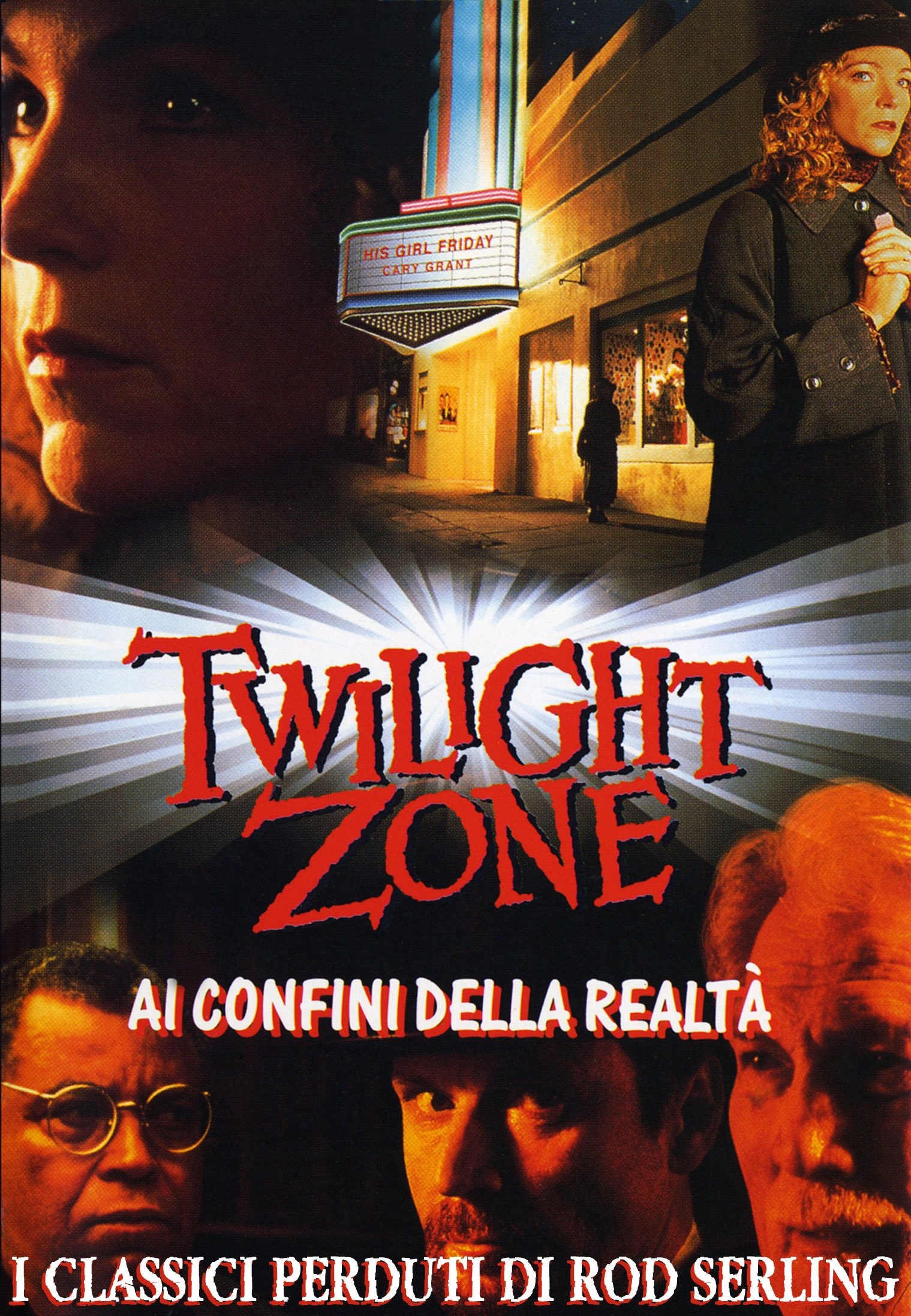
The film has also had a fragmented afterlife. ACMI retains a DVD and access copy, while an Italian home-video distributor marketed the two stories together under a localized Twilight Zone title. Availability and running times vary among territories, so neither a current streaming listing nor a specific package can stand for the entire release history. It preserves work Serling did not see produced, alongside Matheson's adaptation of his concept. It should be catalogued as a 1994 anthology film connected to the larger Twilight Zone tradition, not as an additional season of the original series.