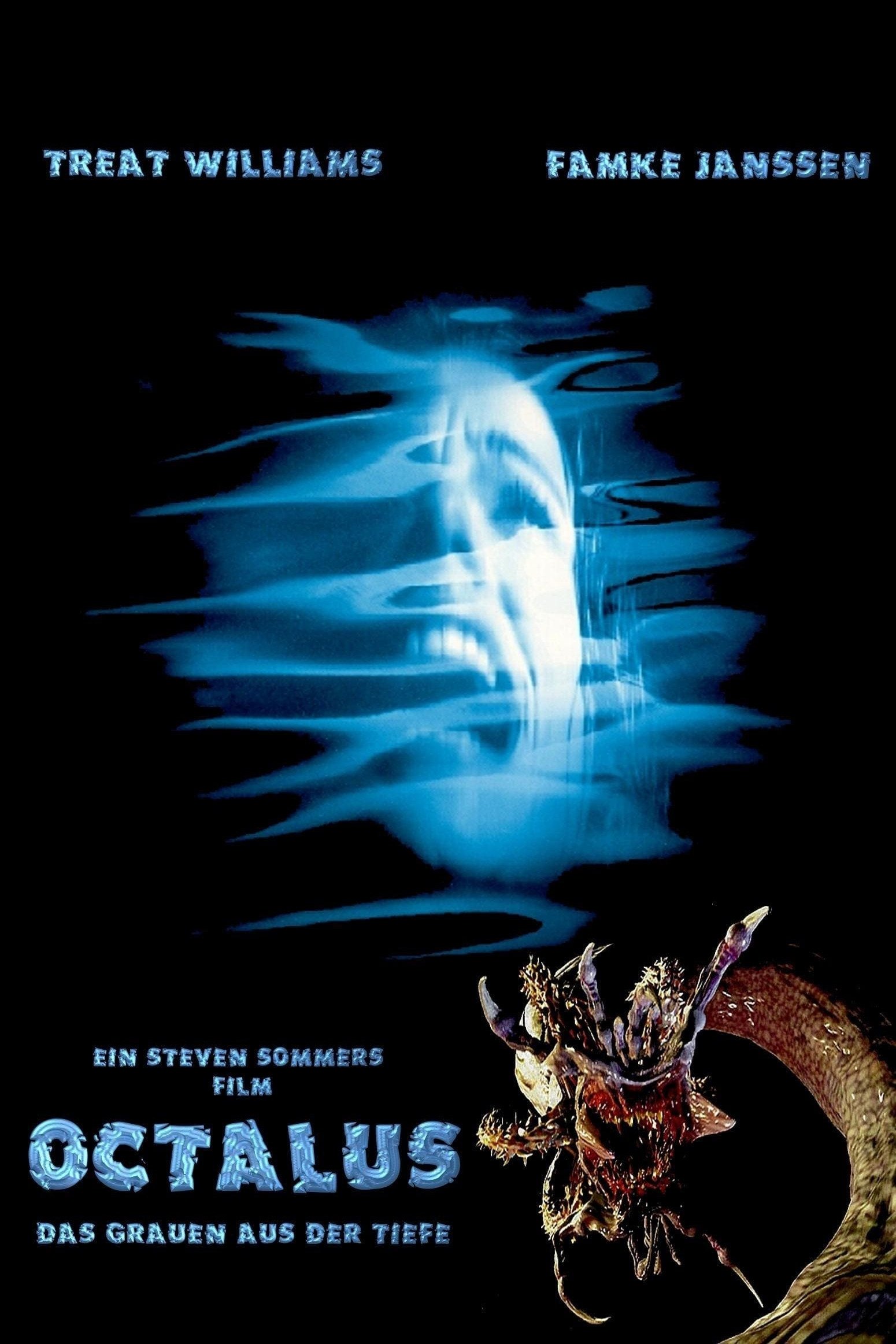
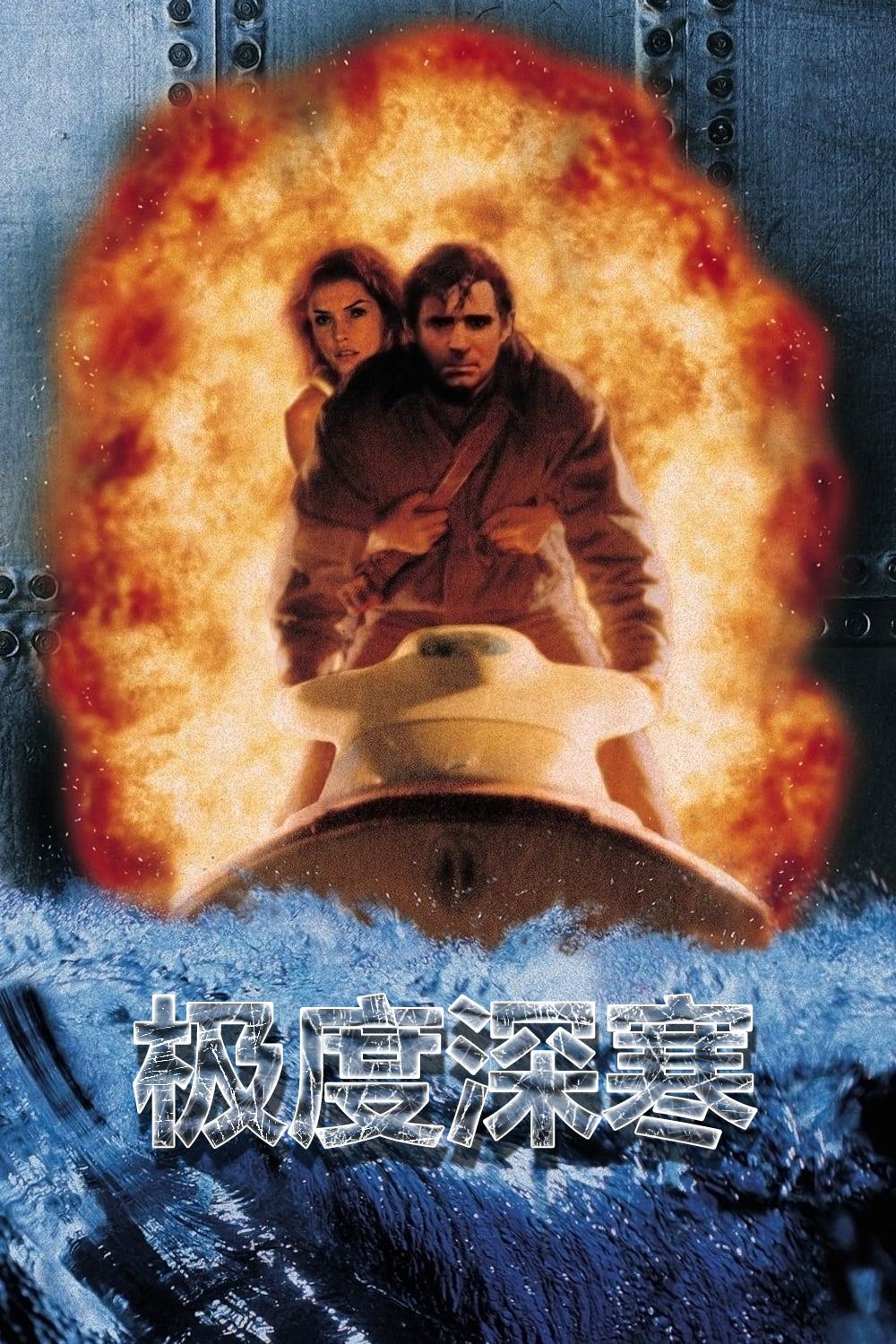
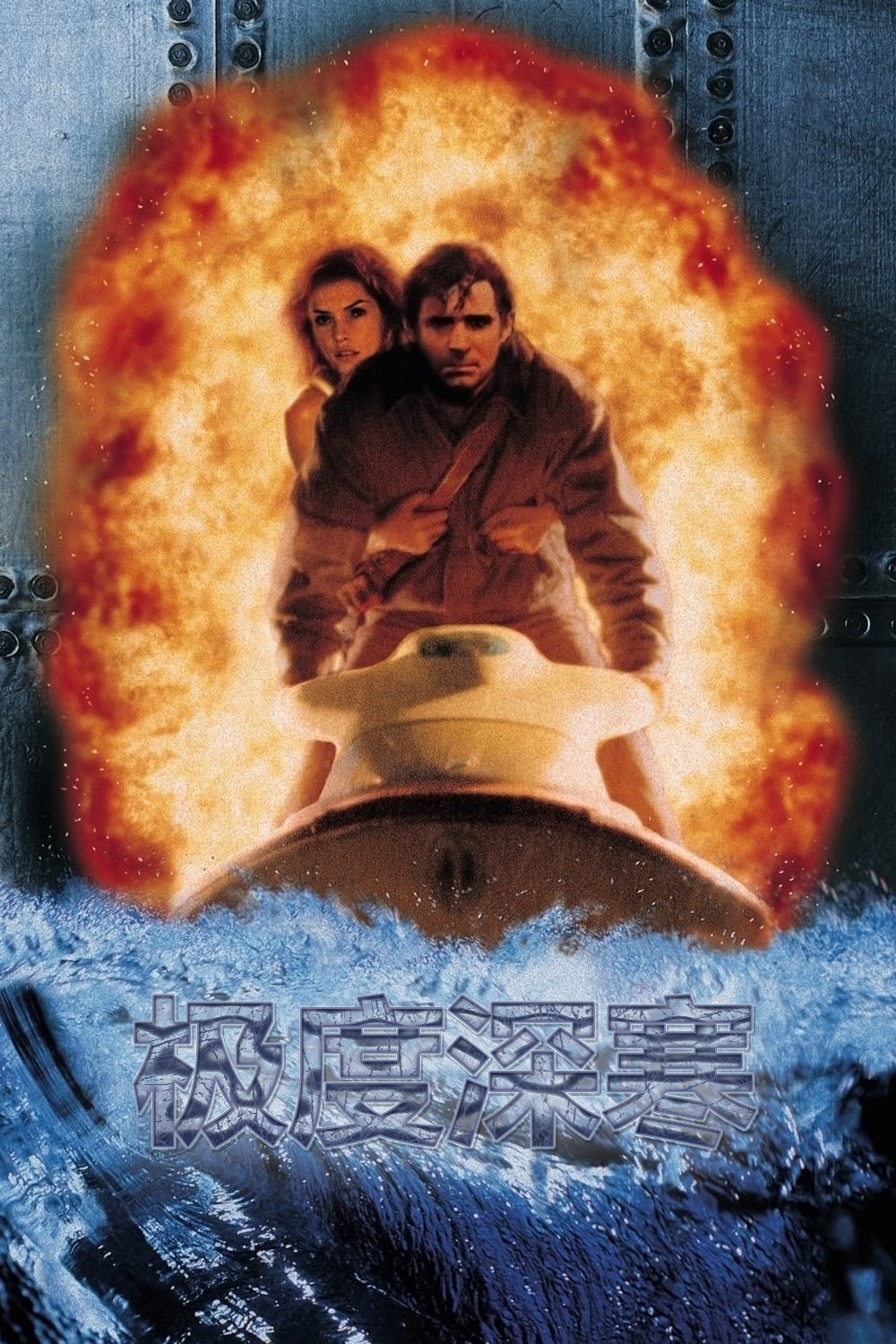
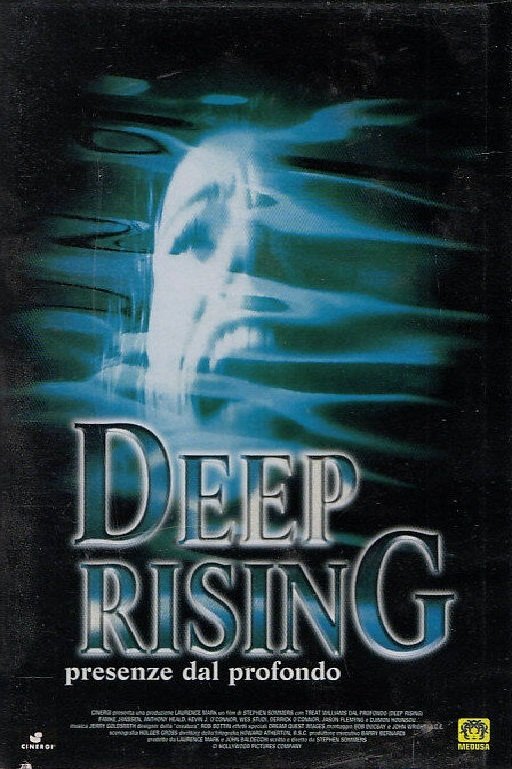
A Hijacking Story Meets a Deep-Sea Monster
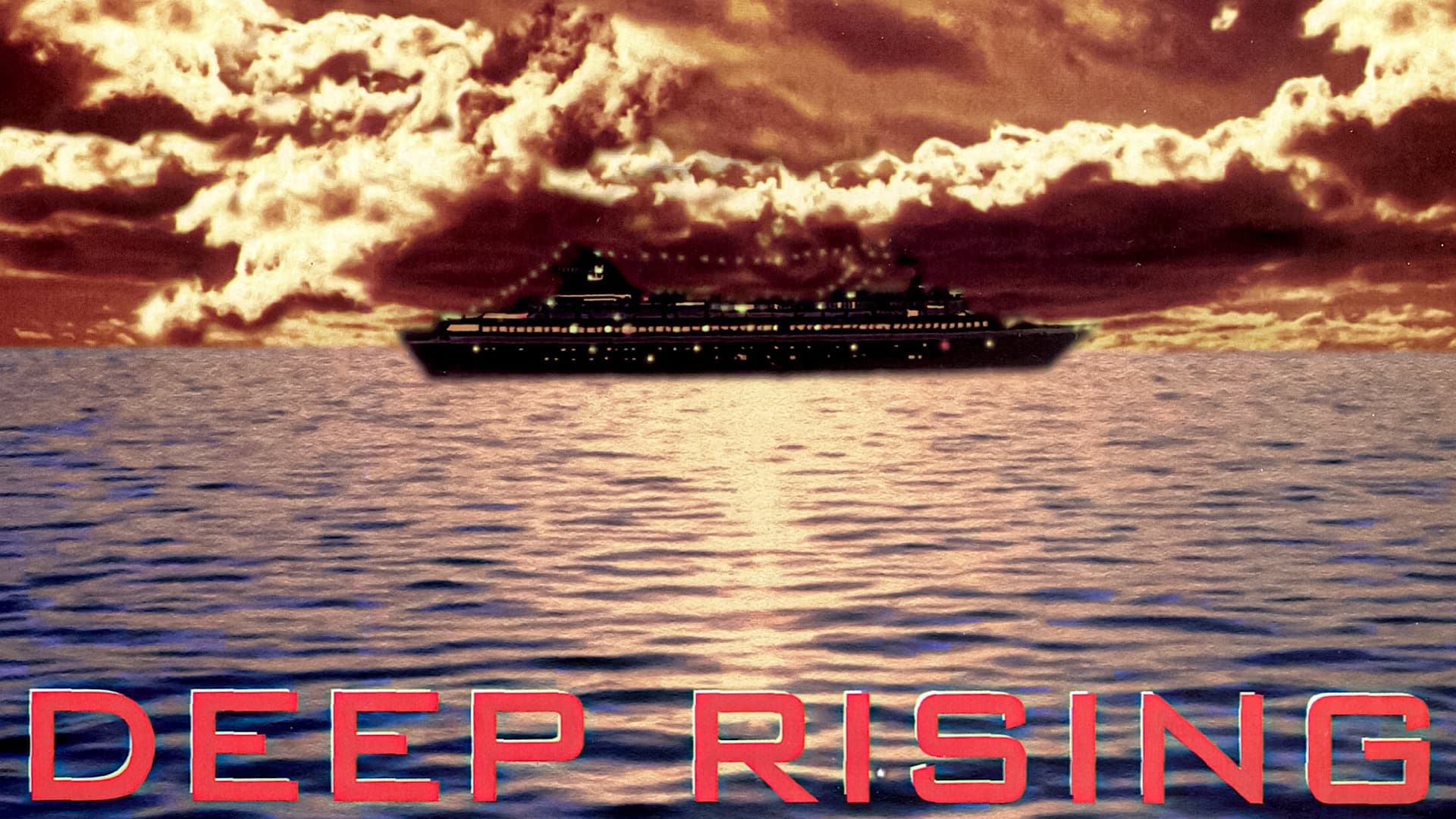
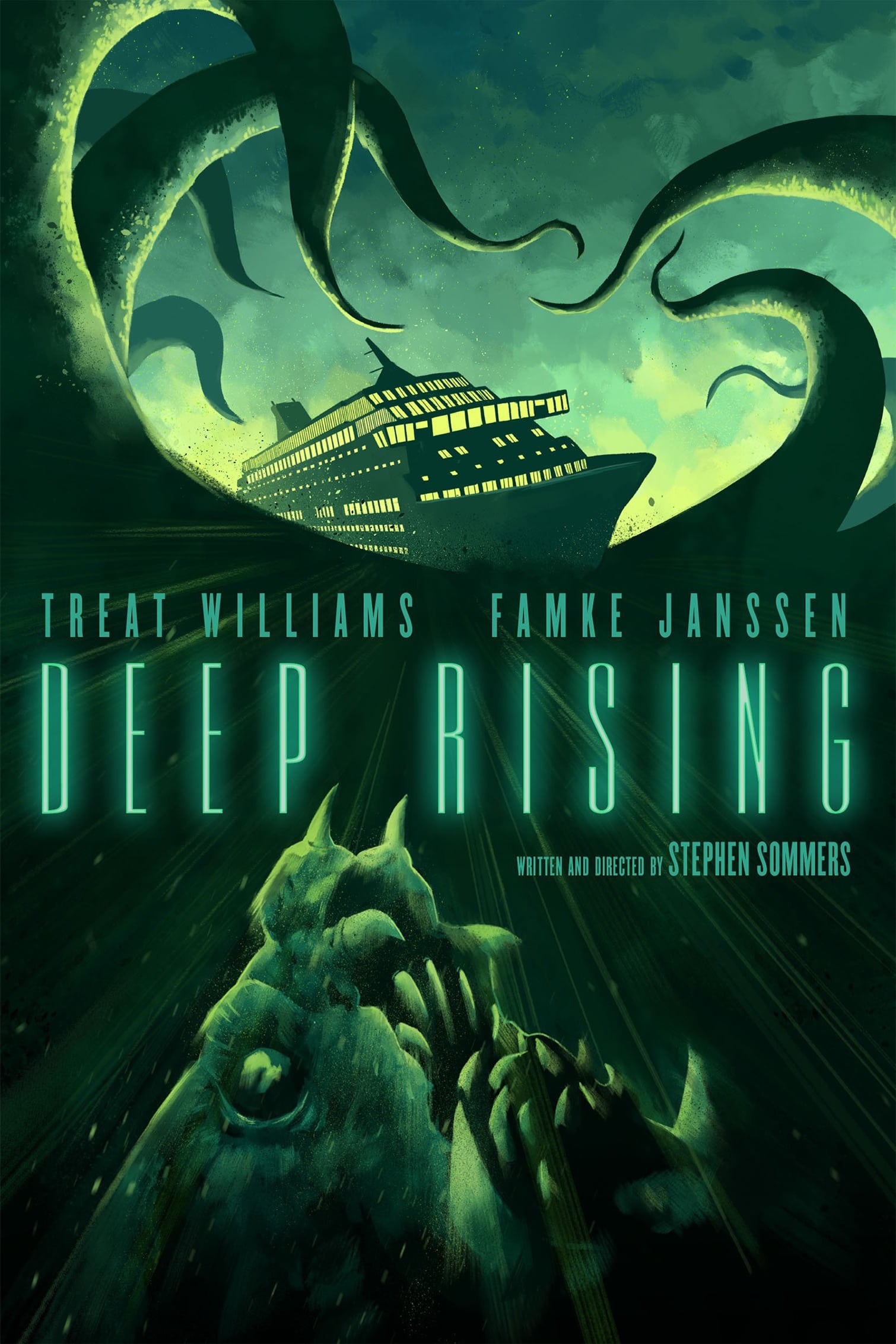
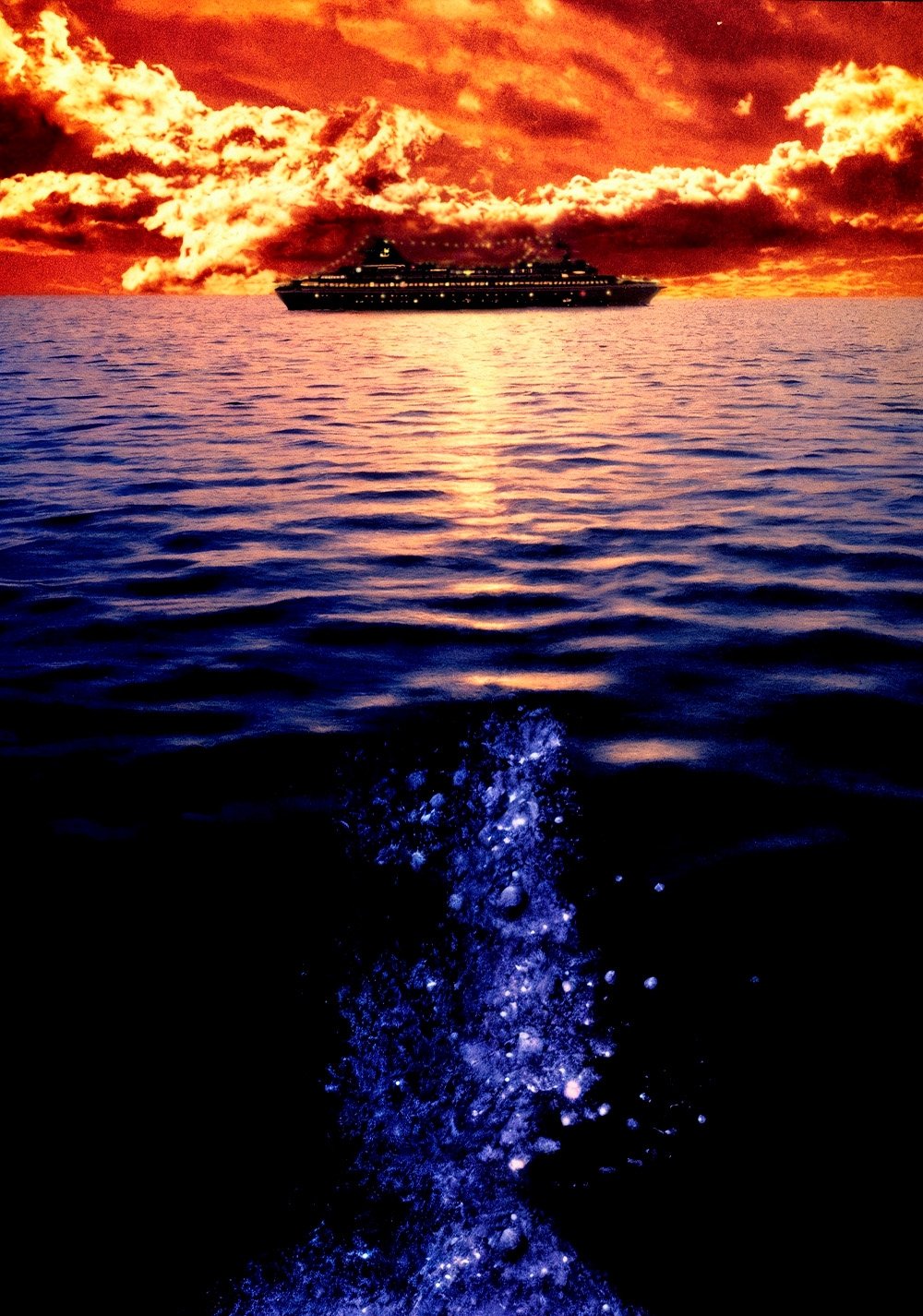
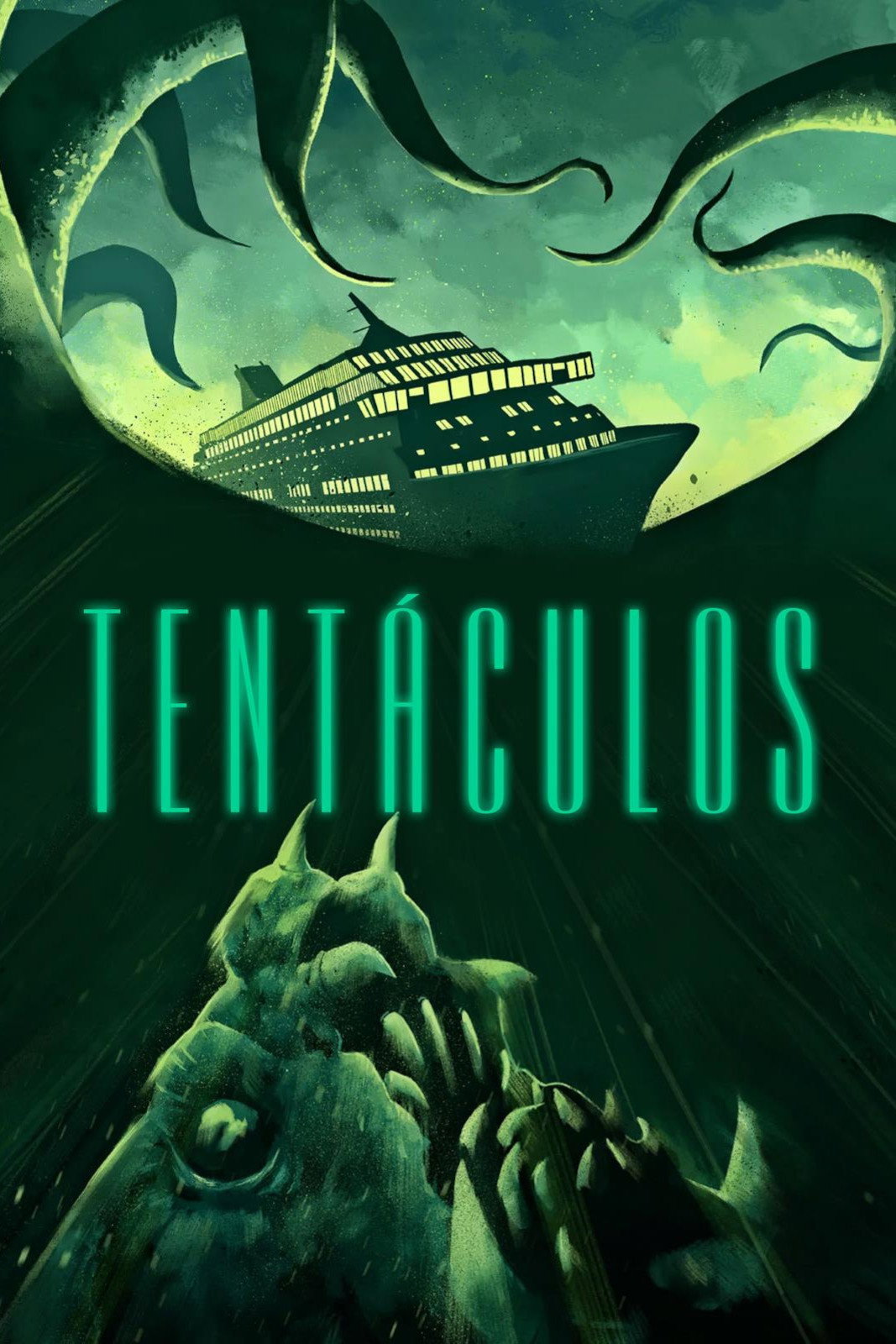
Sommers conceived the film around two narrative lines that collide at sea. A heavily armed gang intends to rob the wealthy passengers of a technologically advanced cruise ship, while an unknown organism has already begun attacking that same vessel. By the time Finnegan brings the raiders aboard, the planned crime has lost its purpose. His crew has been drawn into an emergency that neither the attackers nor the ship’s owners understand. This arrangement allows the picture to begin as a maritime action thriller before establishing a more sustained pattern of monster attacks.
The film was made through Disney’s Hollywood Pictures label, which permitted material considerably bloodier than the studio’s family-oriented releases. Sommers described the creatures during production as enlarged versions of recognizable organisms and emphasized their organic movement. He wanted them to behave in ways that could not be achieved with performers inside conventional monster suits. The central threat was therefore designed from the outset for computer animation supported by mechanical interaction on set. Its exact nature is withheld from the characters, who initially encounter separate attacking appendages and cannot judge the size of the animal controlling them.
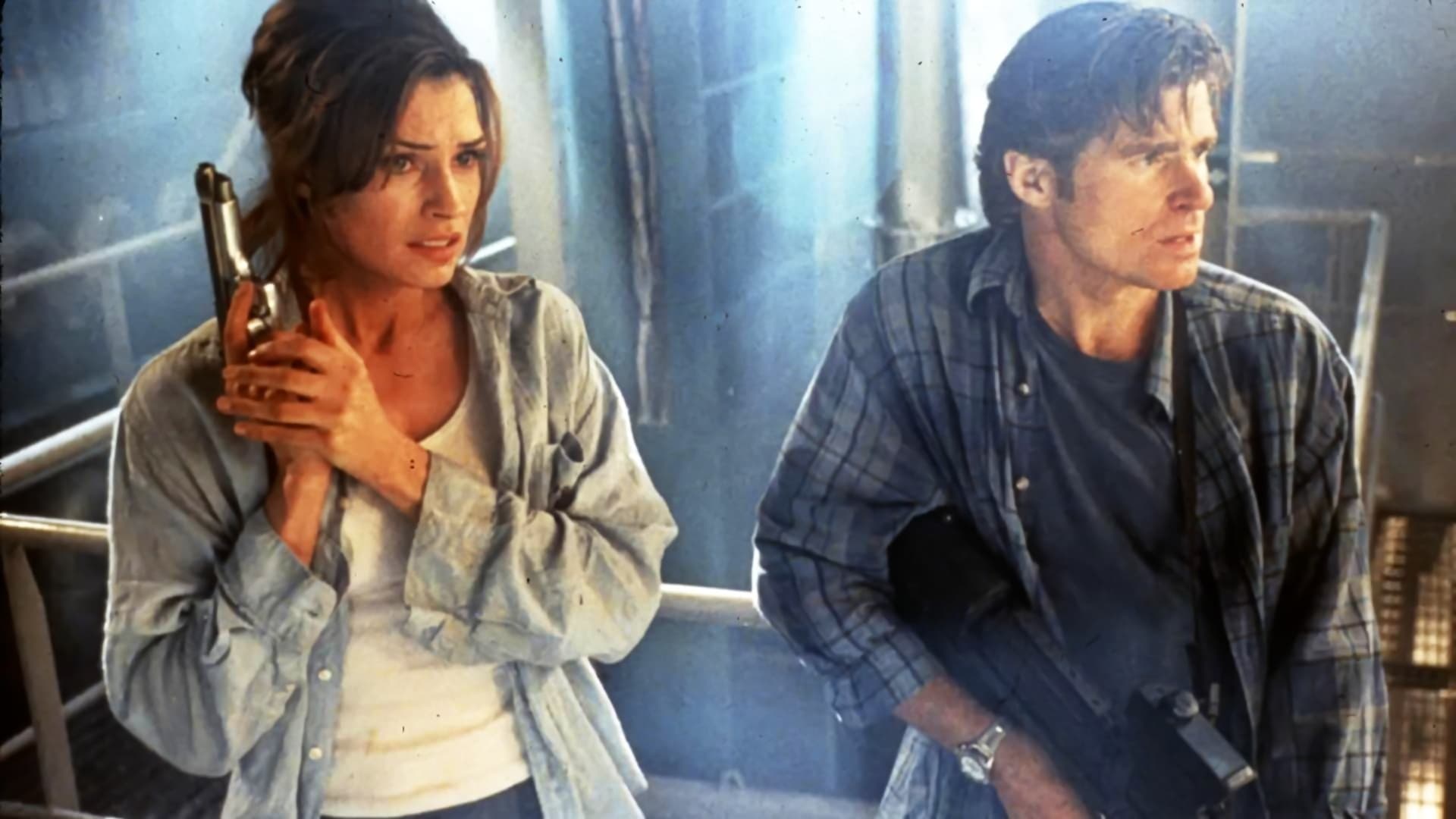
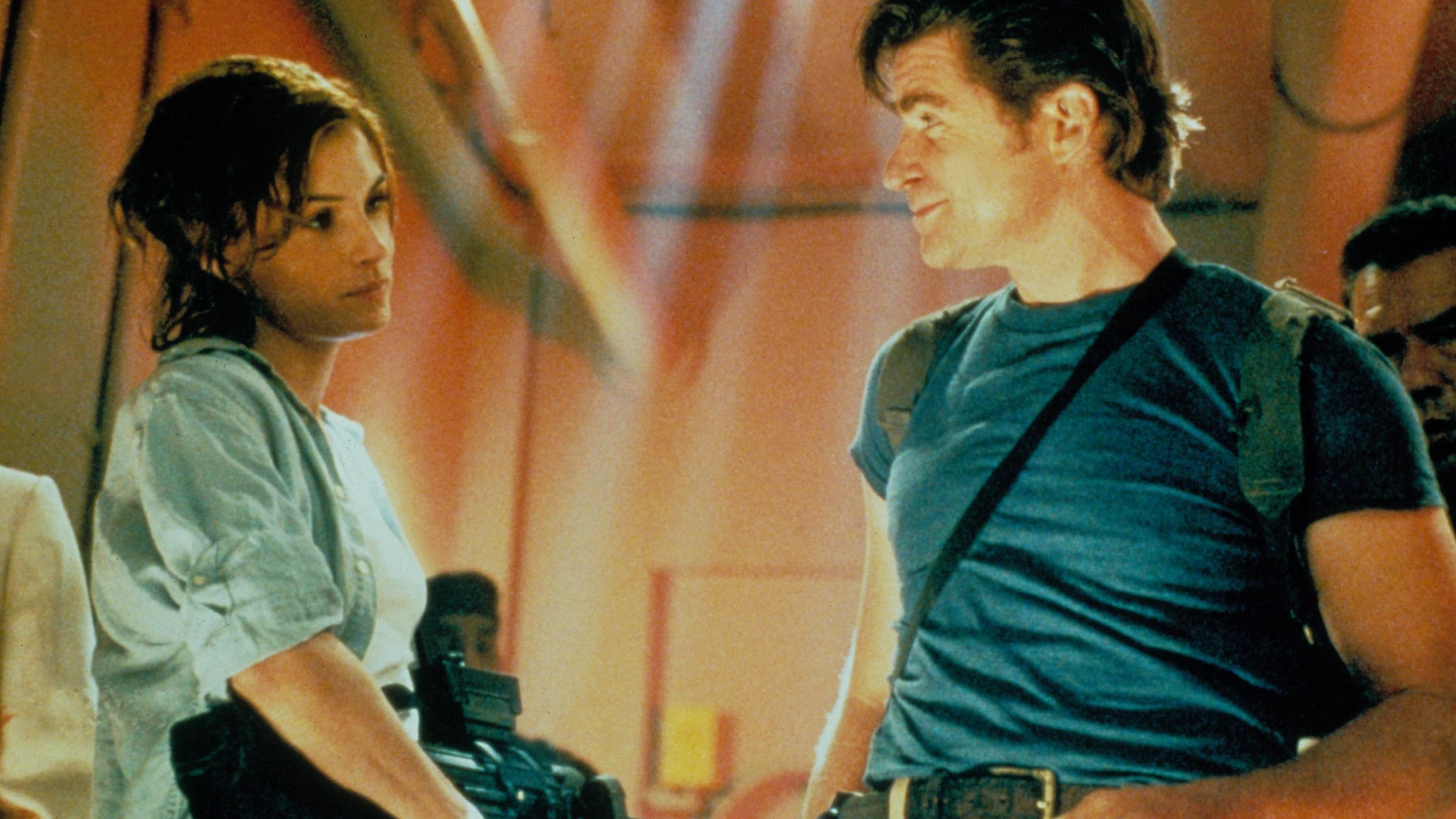
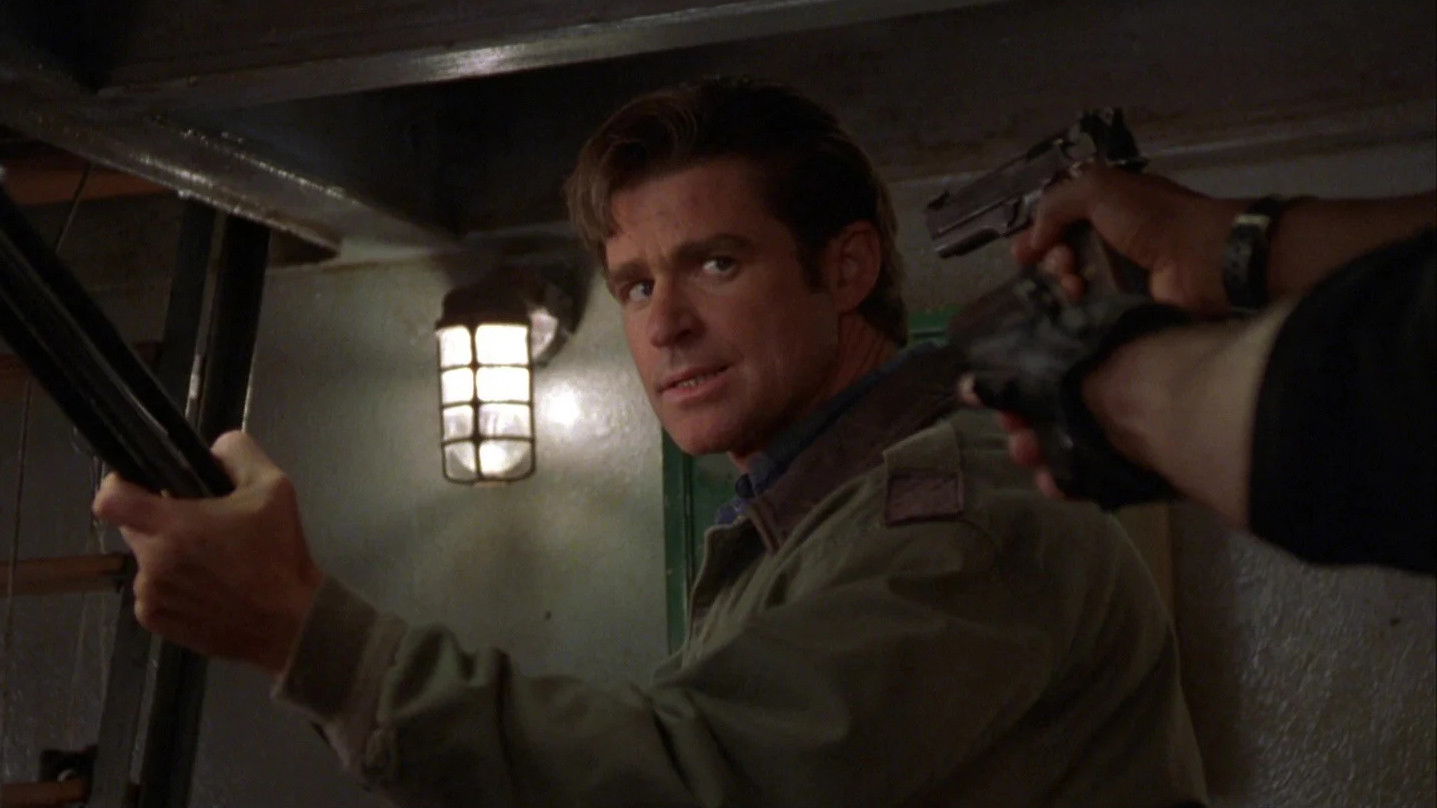
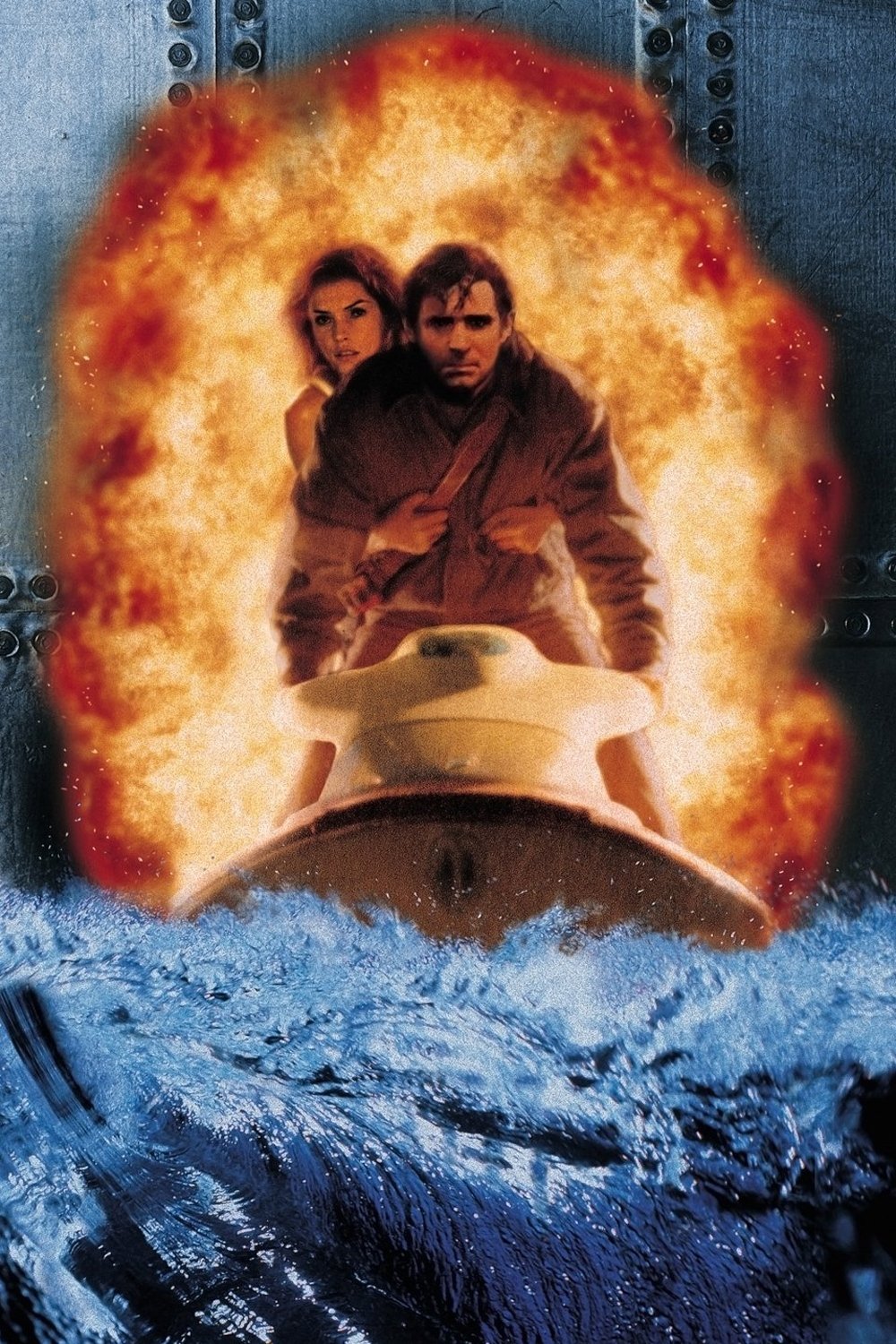
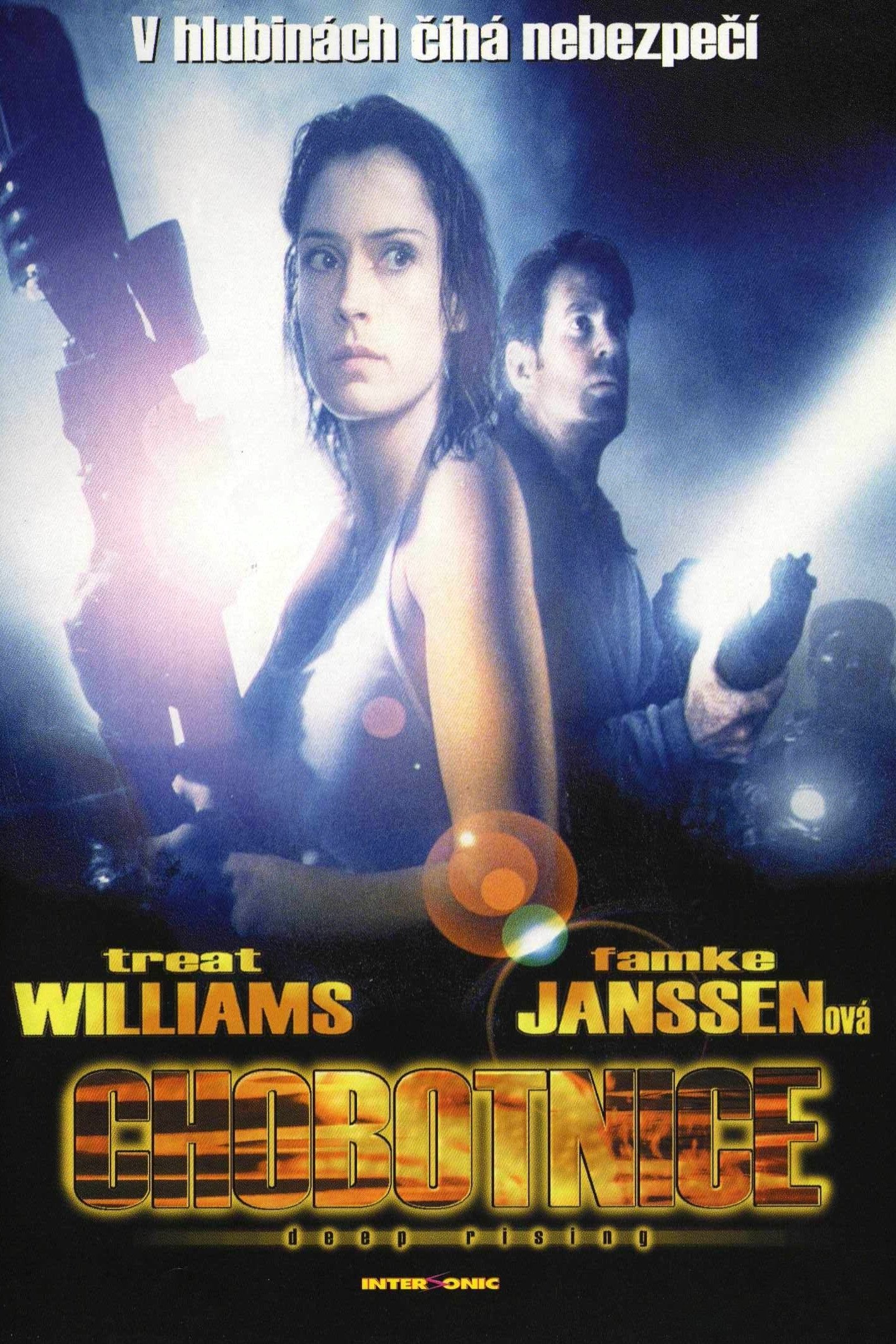
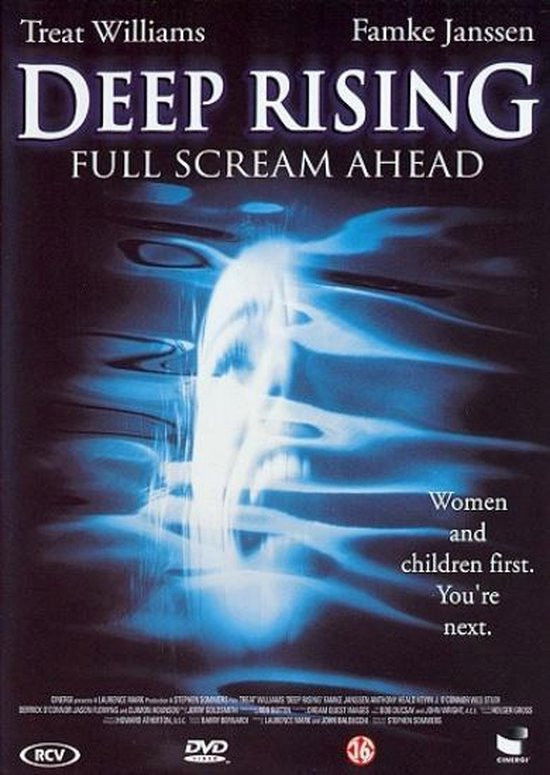
Treat Williams approached Finnegan as a straightforward action-adventure hero, while the script regularly interrupts his composure with the complaints of mechanic Joey Pantucci. Famke Janssen’s Trillian, a jewel thief trapped aboard the liner, provides another perspective on the catastrophe. In a contemporary set interview, Janssen described the character as confident in her abilities despite repeatedly getting caught. The resulting alliances arise from immediate danger rather than a shared mission: raiders, criminals, and people trying to survive must navigate the same devastated ship.
Building the Argonautica in Vancouver
The production filmed in and around Vancouver, British Columbia, with extensive work at Versatile Shipyards on the city’s waterfront. Rather than depend on an actual ocean liner at sea, the filmmakers built large interior environments and water facilities that could be flooded under controlled conditions. Sommers cited the practical difficulties of filming on open water and explained that different sets required water levels ranging from knee-deep to nearly submerged. The film’s expensive maritime setting was assembled through production design, tanks, studio work, and the exterior imagery added to the finished picture.
Production designer Holger Gross oversaw the labyrinth of service passages and engine-room spaces encountered by the characters. A reporter visiting the shipyard found interconnected walkways, pipes, and compartments constructed inside large industrial buildings, with crew members working in waist-high water. These environments give the Argonautica two contrasting identities. Its public rooms suggest luxury and security, while the technical areas below deck are crowded with machinery and conceal places where the creature can approach unseen. The movement downward into flooded service spaces gradually strips away the liner’s outward appearance of control.
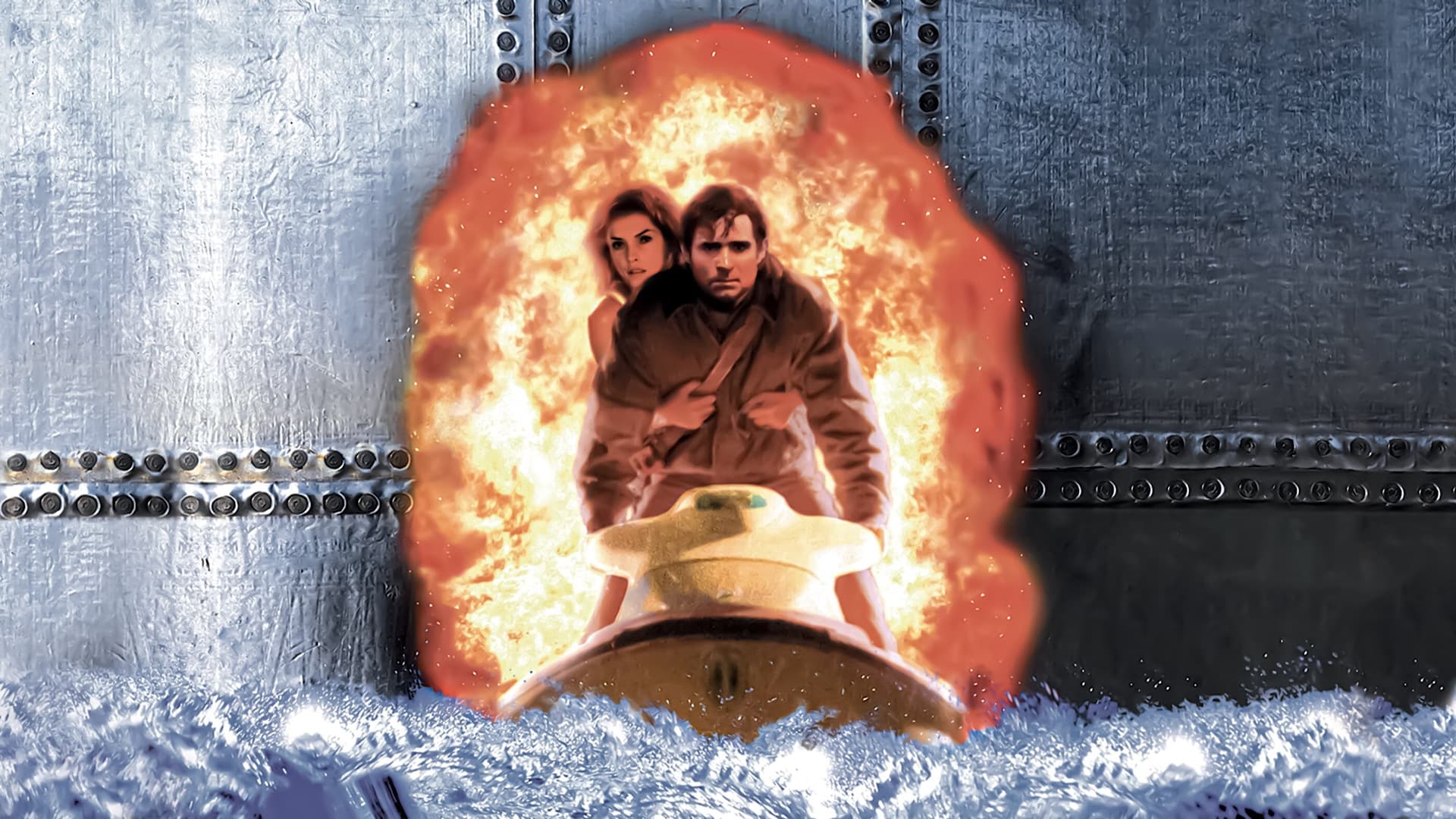
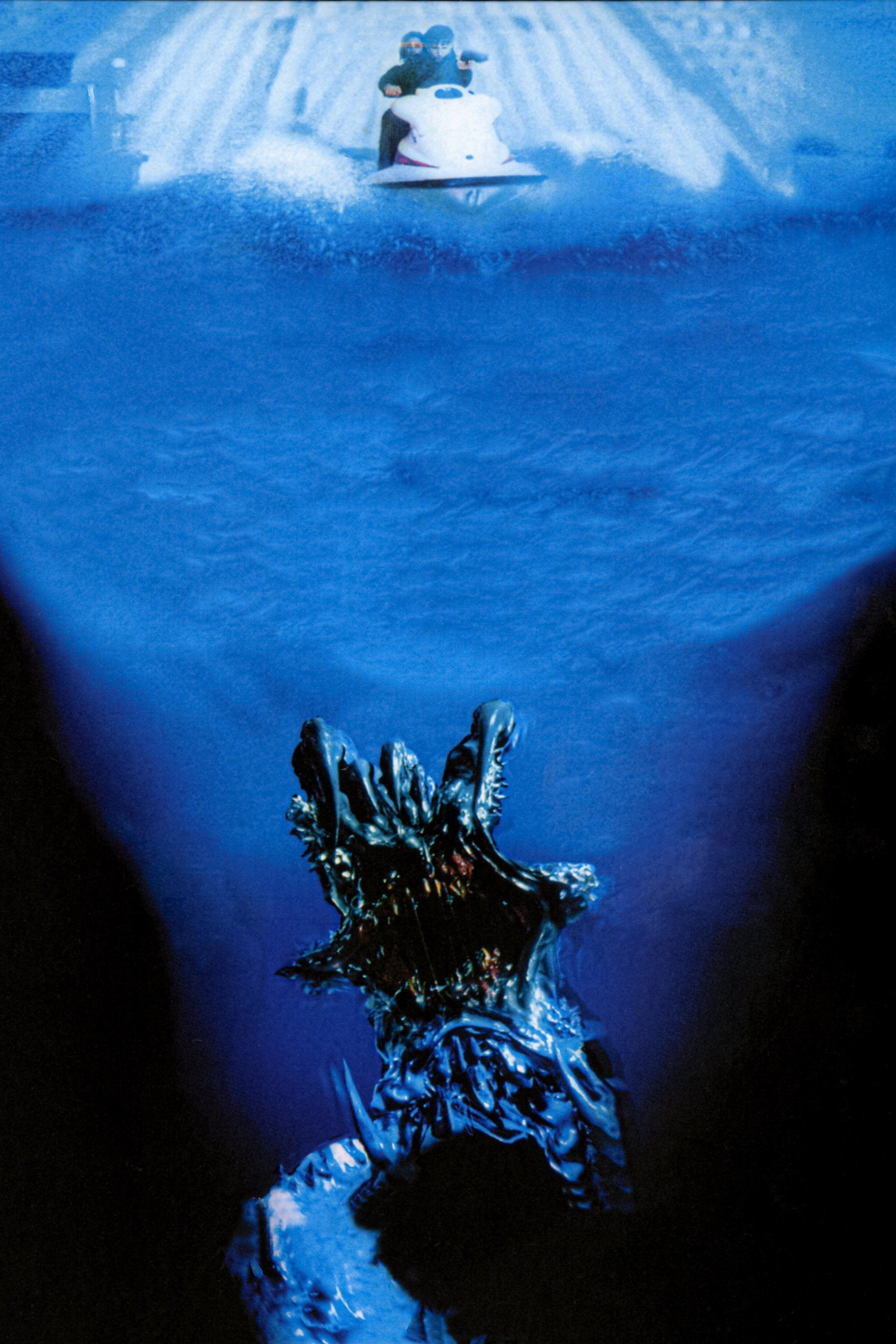
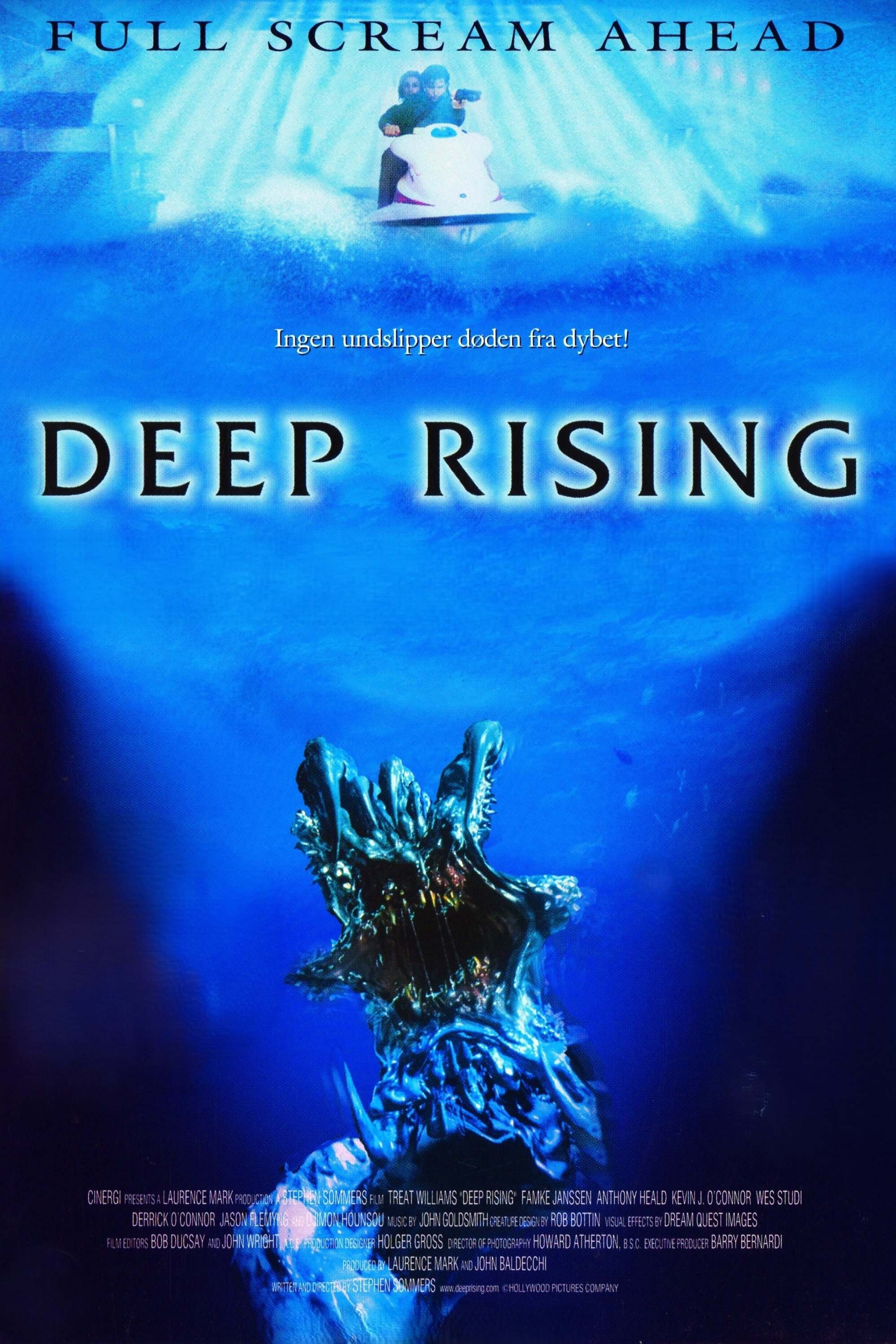
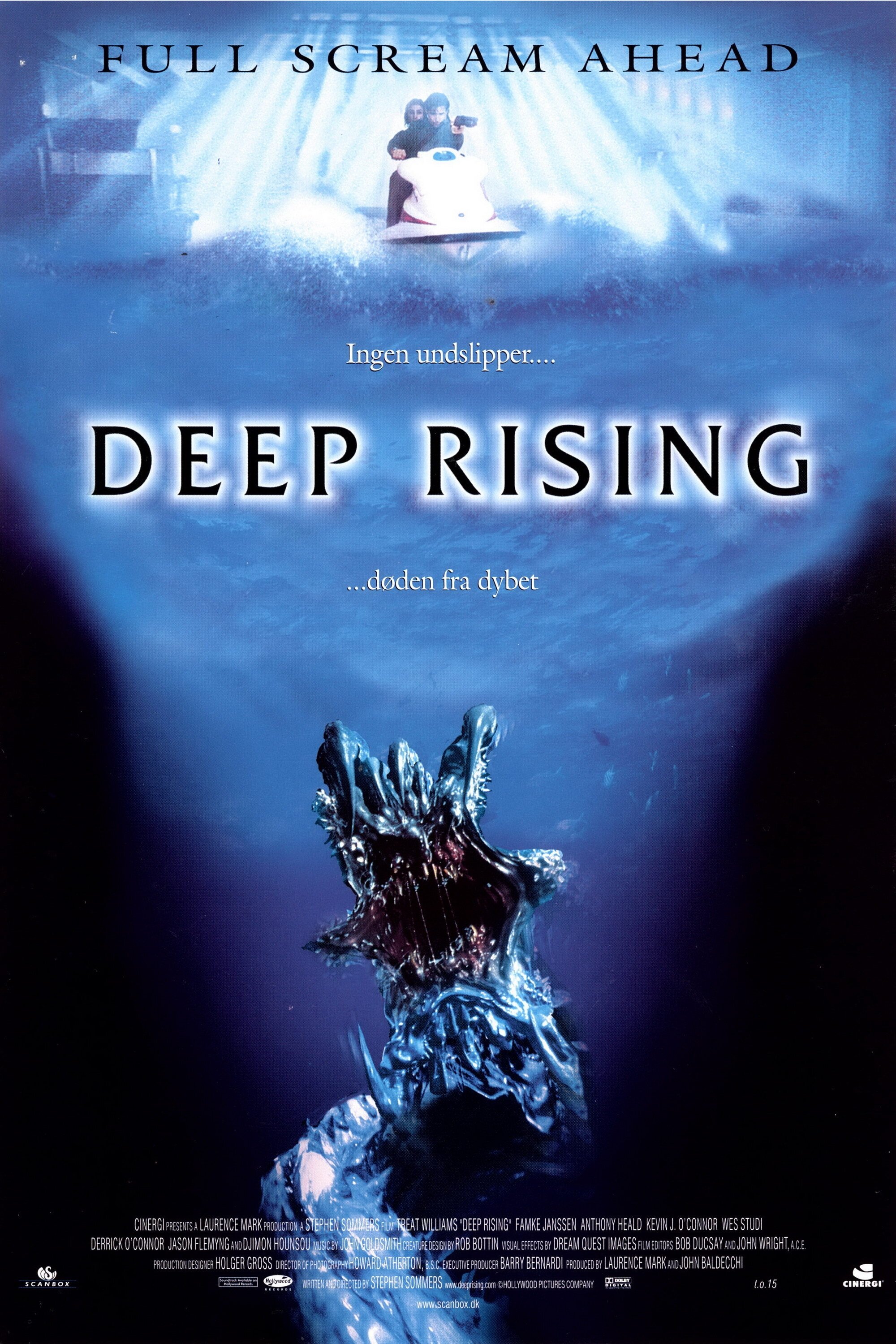
Water also determines the film’s action staging. A large tank was prepared for the jet-ski escape sequence, and additional facilities accommodated closer views of submerged performers and sets. Because the characters repeatedly return to damaged passages and blocked routes, the ship functions as a changing obstacle course. Corridors that initially allow retreat become flooded or penetrated by tentacles. The storm outside prevents an easy escape, yet the passages within the vessel are equally dangerous. The production’s physical construction keeps the threat anchored to a recognizable maritime environment.
The Predator and the Horror of Digestion
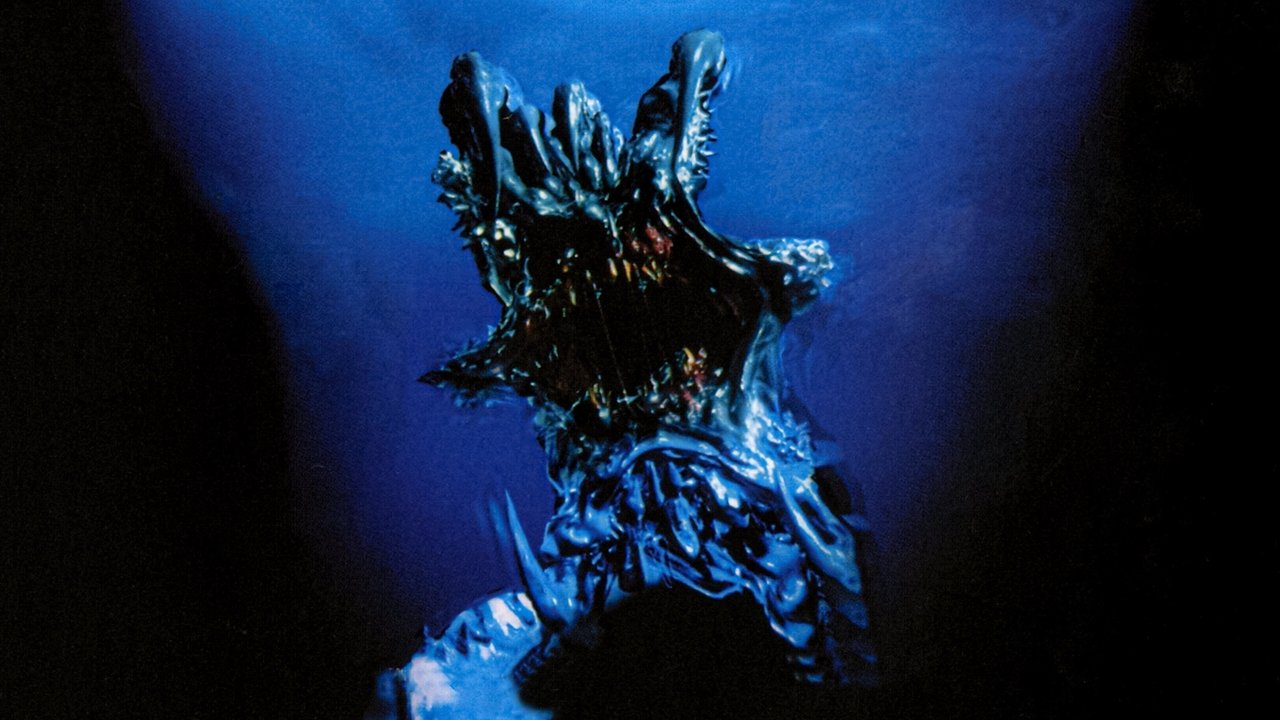
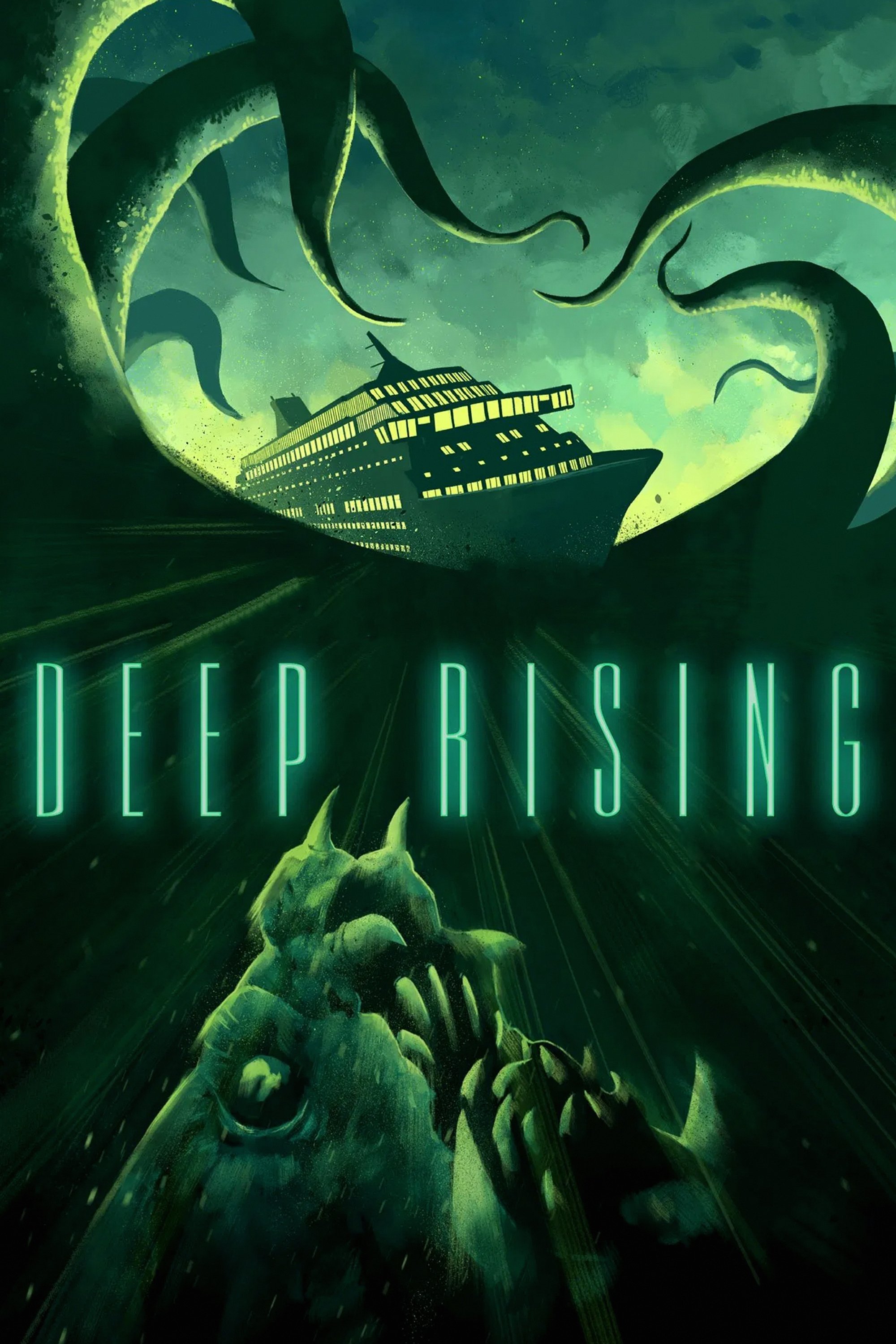
The animal’s design was supervised by special makeup and creature effects artist Rob Bottin, already associated with the transformations and bodily destruction of John Carpenter’s The Thing. In Deep Rising, the first attacks suggest several serpentine monsters moving independently through vents, flooded corridors, and narrow openings. Their mouths open into rings of teeth, and their flexible bodies can seize victims far from the water. The delayed revelation of a larger central organism changes the characters’ understanding of what has been stalking them throughout the ship.
The feeding process supplies the film’s most explicit body-horror imagery. The organism draws people into its appendages and extracts their bodily contents, leaving recognizable remains or partially digested victims. One sequence reveals a large accumulation of human debris inside the liner, transforming an ostensibly luxurious passenger vessel into a scene of mass consumption. In another, a man is expelled from an attacking appendage while still alive, with severe injuries that expose the extent of his digestion. The film repeatedly suggests the creature’s scale through the remains it leaves behind before showing its full form.
Sommers wanted the organisms to appear convincing and extraordinarily aggressive, with computer-generated movement accompanied by mechanical effects during filming. Their appetite is given no elaborate supernatural explanation; the ship has entered the territory of an exceptionally dangerous deep-water predator. Treat Williams discussed the creatures during production as animals engaged in feeding behavior, even while the people aboard experience their attacks as deliberate pursuit. This emphasis on consumption links the film to the tradition of aquatic creature horror, where an unknown species turns a familiar human environment into an extension of its habitat.
Physical Makeup and Digital Reconstruction
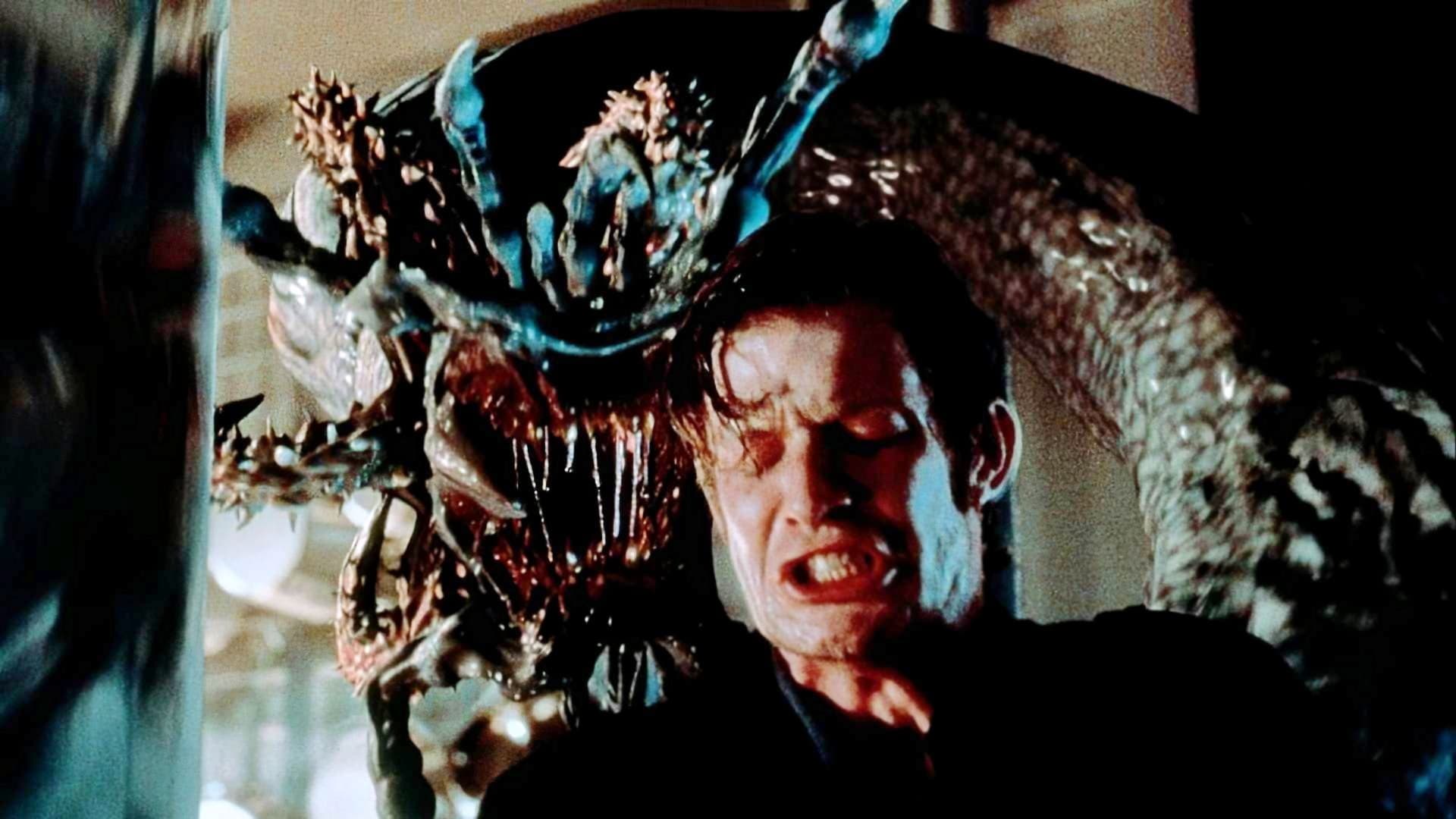
The partially digested survivor became a particularly demanding example of the film’s combination of practical makeup and computer imagery. Bottin’s team prepared the performer’s injuries and coated his body with wet, reflective material for the scene. Sommers described the desired result during production as a figure whose destroyed face would allow the audience to see through the damaged eye area. The footage required effects that extended beyond what could be accomplished with makeup alone, including the apparent removal of portions of the performer’s face and hand.
Blur Studio was assigned a small number of difficult shots after an earlier effects company had been unable to complete them. In a later interview, Blur co-founder David Stinnett recalled that the glossy makeup, the actor’s abrupt movements, and inconsistent motion blur prevented straightforward image tracking. The team reconstructed the missing anatomy in three dimensions and aligned it manually with the live-action plates. According to Stinnett, three artists spent approximately seven weeks tracking three shots, using 3D Studio Max and associated compositing software available at the time.
The result illustrates a particular stage in 1990s creature-effects practice. Physical material established the injured body’s contact with light, water, and surrounding scenery; digital work opened wounds and voids that would have been much harder to sustain with prosthetics. The film’s wider creature work also involved Dream Quest Images and Industrial Light & Magic. In the finished sequence, the half-digested man stumbles into view before collapsing, briefly making the consequences of the organism’s feeding process visible as an injured human body rather than an anonymous trace of gore.
Jerry Goldsmith’s Action-Horror Score
Jerry Goldsmith’s music treats the material as a sustained action-horror picture. Sommers’s mixture of comic dialogue, creature attacks, and lengthy escape sequences presented a different dramatic problem from an atmospheric suspense film that relies on long stretches of quiet. Goldsmith responded with forceful orchestral writing, placing particular emphasis on brass figures and rhythmic patterns associated with the organism’s assaults. Lower brass instruments carry a menacing creature motif, while more energetic material accompanies Finnegan’s boat and the action around it.
The score makes room for suspense in the empty liner, but its most conspicuous passages accompany accelerating physical danger. Aggressive brass and string writing follows the attacks, giving the scenes an urgent momentum that competes with the characters’ frantic exchanges. Keyboards contribute to the texture without displacing the orchestra. The original Hollywood Records soundtrack presented a selection of ten cues totaling about thirty-three minutes, considerably shorter than the music written for the film.
A substantially expanded edition was issued by Intrada in 2014, drawing on original multitrack digital session masters held through Walt Disney Records. It restored music missing from the first album, including material for the creature’s climactic appearance and an unused version of the opening. The expanded presentation makes the score’s thematic organization easier to hear across the full progression from the first mysterious incidents to the final confrontation. Its survival also preserves a record of Goldsmith’s large-scale orchestral approach to a horror film built around frequent visual effects.
Theatrical Reception and Later Following
Hollywood Pictures released Deep Rising in the United States on January 30, 1998. Its reported production cost was approximately $45 million, a substantial commitment to a film with graphic monster violence and an R rating. The release came during the commercial success of Titanic, another large-scale film built around a doomed passenger vessel, although Sommers’s picture offered a very different mixture of pulp adventure and horror. Deep Rising failed to recover its production cost through its original domestic theatrical run, and its expensive effects did not translate into a major box-office success.
Contemporary criticism varied in its response to the formula. In the San Francisco Chronicle, Mick LaSalle described the film as an entertaining action spectacle and singled out the grotesque creature and the resilience of Famke Janssen’s character. Other reviewers were less persuaded by the script’s reliance on familiar situations from earlier monster and science-fiction films. The film’s enclosed setting, armed ensemble, sudden attacks, and mounting casualties invited comparisons with Alien, while the ocean liner provided a disaster-movie framework for the action. Its conspicuous gore also distinguished it from less violent mainstream adventure releases of the period.
Later discussion has placed Deep Rising within the tradition of comparatively expensive, adult-oriented creature features. A twenty-fifth-anniversary retrospective in The Ringer emphasized the unusual scale of its monster effects and the tension between its studio budget and B-movie storytelling. The film’s final scene, in which the surviving characters reach an island only to hear another creature, leaves its adventure open-ended; no direct sequel followed. Its growing cult reputation rests particularly on Bottin’s monster conception, the half-digested survivor, and Sommers’s willingness to interrupt wisecracking action with sustained images of bodily destruction.