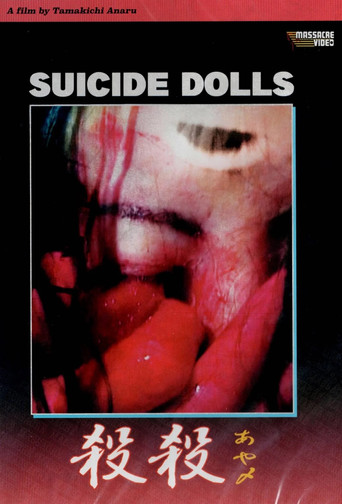
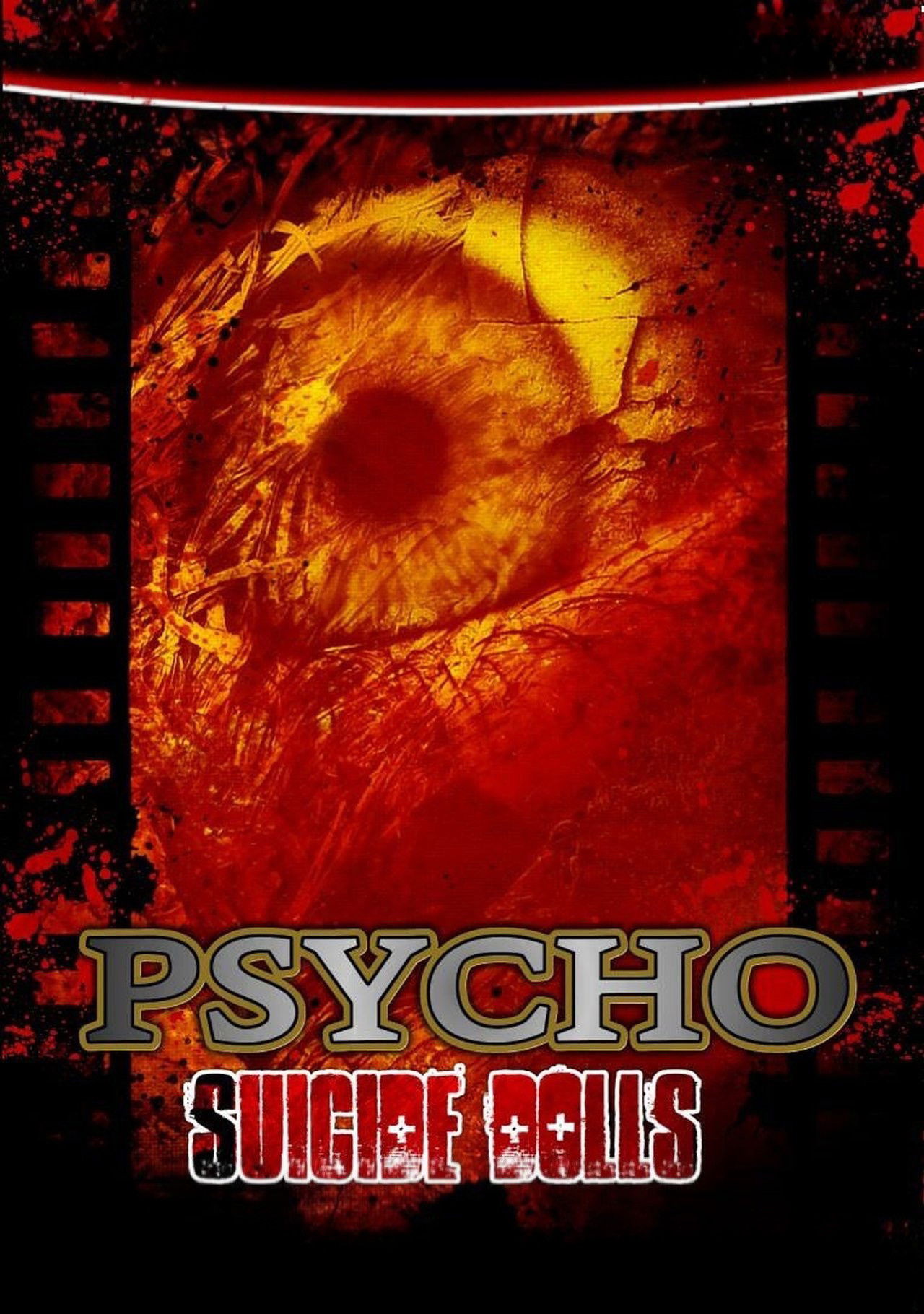
A woman shoots herself. A woman hangs herself. A woman commits harakiri. Were they the victims of "Suicide Dolls", or were they themselves the dolls?
Alternative Titles
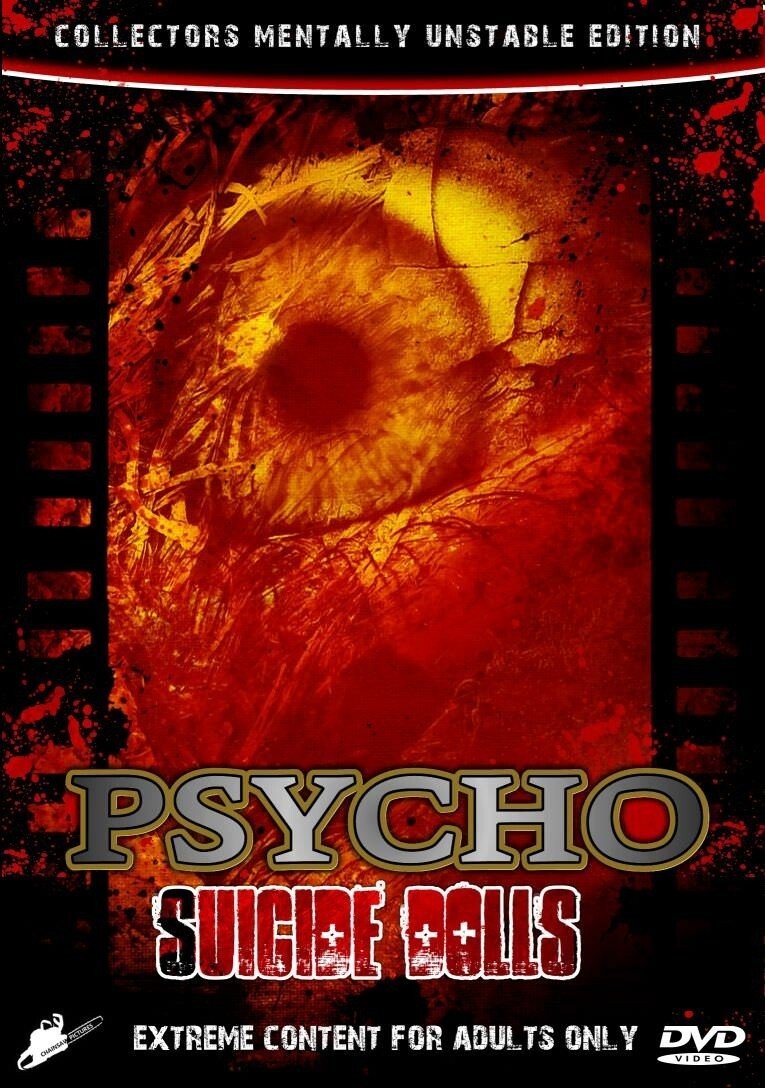
自杀娃娃 (China) — Chinese自殺娃娃 (Hong Kong SAR China) — ChineseDisclosed Death (Japan) A Chant in the Darkness (United States) — Bootleg titlePsycho: Suicide Dolls (United States)
▤
Film Guide & Analysis
Tamakichi Anaru follows Tumbling Doll of Flesh with an austere three-part shot-on-video work in which ordinary domestic spaces become the setting for increasingly explicit acts of self-destruction.
Suicide Dolls, originally released in Japan in 1999 as Satsu satsu (ayame), is a roughly hour-long direct-to-video horror film directed by Tamakichi Anaru. It presents three separate episodes centered on women approaching their own deaths under very different circumstances, without a continuous narrative. The first two stories unfold with relatively little spectacle, while the final section moves much closer to the explicit practical-effects territory associated with Anaru's other underground work.
Coming immediately after Tumbling Doll of Flesh, the film retains Anaru's preference for inexpensive video imagery, restricted locations and situations presented with minimal cinematic distance. Its subject is different, however. There is no elaborate pseudo-snuff conspiracy or extended torture scenario tying the episodes together. Suicide Dolls is organized around waiting, isolation and the unsettling normality surrounding each character before violence occurs. That restraint makes the eventual physical horror feel less like a conventional set piece and more like a rupture inside deliberately ordinary recorded environments.
Three Stories of Self-Destruction
The film consists of three independent stories without a recurring protagonist. Massacre Video's official synopsis describes a young woman whose unstable situation escalates after she encounters a firearm, a married woman overwhelmed by debt and the collapse of her relationship, and an adult-video performer who plans an extreme final act in front of a camera. The episodes share the same destination but approach it through different emotional and visual circumstances.
The anthology structure allows Anaru to vary the amount of explicit horror. Much of the first two segments is devoted to solitary behavior and confined interiors, allowing inactivity and repetition to become part of the atmosphere. The third story is markedly more graphic and reconnects the film with the practical gore associated with Anaru's better-known extreme productions. Because the stories are short and largely self-contained, Suicide Dolls avoids the elaborate mythology or narrative explanation found in more conventional horror anthologies. The recurring idea is simply the camera remaining present as private despair becomes physical action.
Shot-on-Video Intimacy
Suicide Dolls belongs to the Japanese direct-to-video underground in which technical limitations could become part of the aesthetic. The image lacks the polished lighting and compositional control of theatrical horror, but that roughness gives the rooms an uncomfortable immediacy. Static framing and long stretches of ordinary activity frequently leaves the viewer to observe long passages without the cues of rapidly edited suspense. The spaces feel private precisely because they are presented with so little visual decoration.
That approach connects the film to Anaru's broader interest in the camera as an object inside situations of exploitation and bodily harm. In Tumbling Doll of Flesh, recording equipment becomes inseparable from a fictional adult-video production that turns violent. Suicide Dolls is less elaborate, but the final episode again places recording and performance close together. The resulting horror depends on practical effects and the uncomfortable sensation that inexpensive video technology is documenting something that should remain unseen.
Underground Circulation and Preservation
Suicide Dolls was produced for the Japanese video market, and for years its international visibility depended largely on specialist collectors and the underground circulation surrounding Anaru's work. The film remained far less widely available than mainstream Japanese horror from the same period, while its director became known internationally primarily among audiences interested in extreme and shot-on-video cinema.
Massacre Video eventually issued an official DVD edition with newly created removable English subtitles, reversible artwork incorporating the original Japanese VHS design, a still gallery and trailers. Most importantly for the film's documentation, the disc included Making of Suicide Dolls, a separate 1999 behind-the-scenes video directed by Anaru and featuring both Anaru and Shino Setsuna. Massacre Video has also continued to circulate Suicide Dolls and its making-of through its specialist catalogue. Those releases provide a legitimate route to a work whose reputation had previously depended heavily on obscure video copies and collector culture.