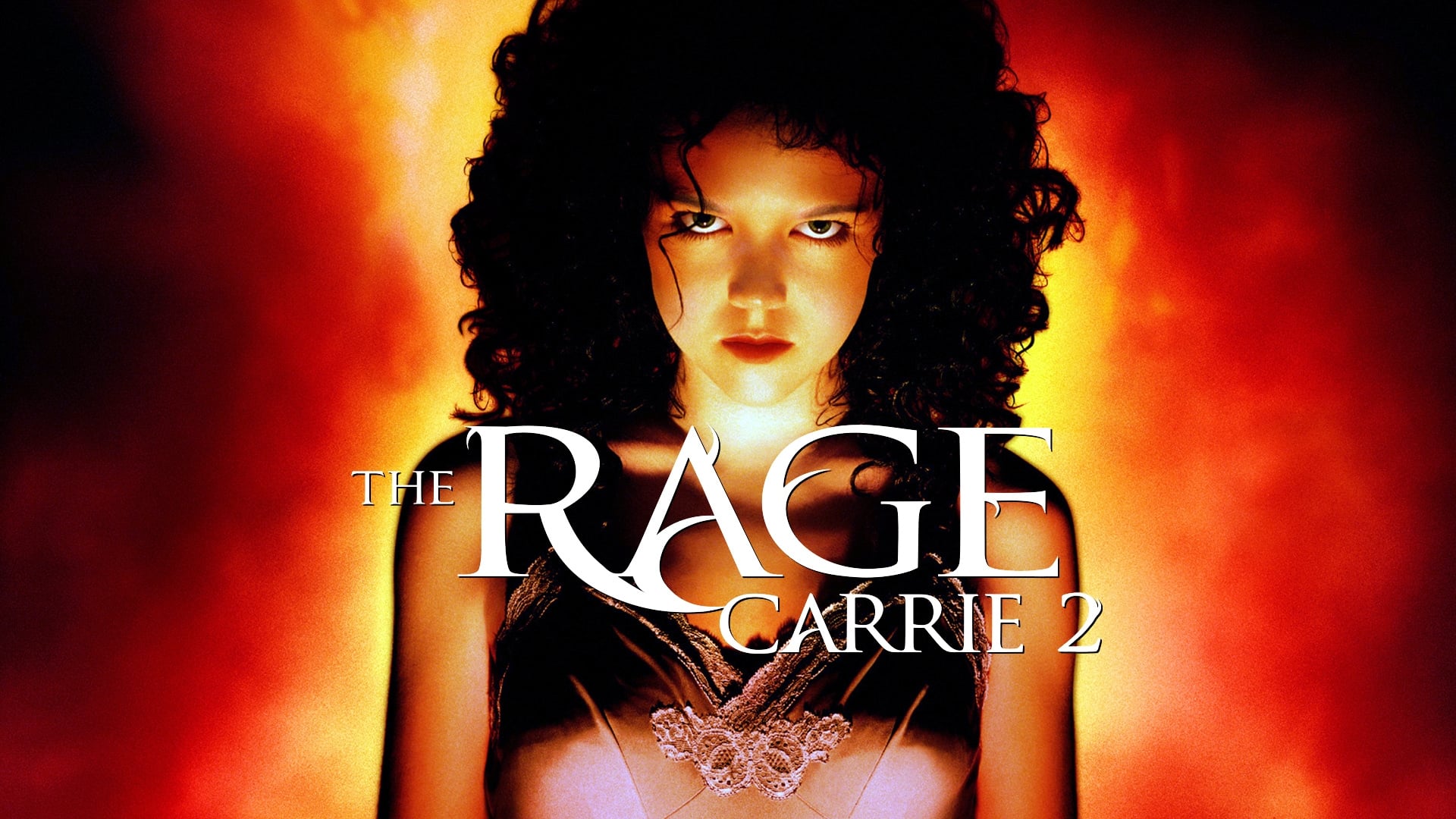
The Rage: Carrie 2 (1999)

US
Runtime
105 min
Release
March 12, 1999
Budget
$21,000,000
Revenue
$17,762,705
The Rage: Carrie 2 (1999) poster
Director
Production Companies
United Artists , Metro-Goldwyn-Mayer , Red Bank Films
Plot

Rachel Lang is a socially isolated high-school student whose friend Lisa dies after a devastating encounter with members of the school’s popular athletic circle. Rachel’s distress exposes unusual telekinetic abilities, placing her at the center of new confrontations with classmates who use romantic relationships as instruments of cruelty. School counselor Sue Snell recognizes disturbing similarities between Rachel’s experiences and the tragedy she survived years earlier. As Rachel begins a relationship with Jesse, she faces an escalating campaign of intimidation and betrayal. Sue tries to intervene before the circumstances repeat themselves. The conflict builds toward a gathering where the people responsible for the abuse discover the full extent of Rachel’s powers.

Alternative Titles
Гняв: Кери 2 (Bulgaria) — Bulgarian A Maldição de Carrie (Brazil) — Portuguese Carrie 2: A Maldição (Brazil) 魔女嘉莉2:邪气逼人 (China) Carrie 2 (Czechia) — Czech Carrie 2 - Die Rache (Germany) Carrie 2 (Denmark) — Danish La ira (The Rage: Carrie 2) (Spain) — Spanish
Show all 29 alternative titles Carrie 2 – raivo (Finland) — Finnish Carrie 2 : La haine (France) — French 凶靈2 邪靈再生 (Hong Kong SAR China) — Chinese Carrie 2 (Croatia) — Croatian Düh - Carrie 2. (Hungary) — Hungarian הזעם: קארי 2 (Israel) — Hebrew Carrie 2 - La furia (Italy) — Italian キャリー2 (Japan) — Japanese 캐리 2 (South Korea) — Korean Carrie 2: La Ira (Mexico) — Spanish Furia: Carrie 2 (Poland) — Polish A Maldição de Carrie (Portugal) — Portuguese Carrie 2: Furia (Romania) — Romanian Кэрри 2: Ярость (Russia) — Russian Carrie 2 La Ira (El Salvador) เดอะ เรจ: แค้นสยอง จิตสั่งตาย (Thailand) — Thai Günah Tohumu 2 (Türkiye) — Turkish 邪氣逼人 (Taiwan) — Chinese Керрі 2: Несамовитість (Ukraine) — Ukrainian Carrie 2: Say You're Sorry (United States) — Working Title The Curse (United States) — Working Title

Trailers & Videos

6 videos

Film Guide & Analysis

Katt Shea revisits Carrie: a troubled North Carolina production, Rachel Lang, sexual exploitation, telekinetic effects and a divided 1999 reception.

The Rage: Carrie 2 (1999), directed by Katt Shea, returns to the world of Brian De Palma's Carrie through another teenager whose telekinetic powers emerge amid humiliation and cruelty. Rachel Lang, played by Emily Bergl, lives with foster parents after her mother's psychiatric hospitalization and finds little security at school. When her friend Lisa dies by suicide following sexual exploitation by a popular athlete, Rachel begins investigating a secret competition among the football players. Her developing relationship with Jesse Ryan seems to offer an escape from their social hierarchy, until the group's manipulation reaches a violent climax at a house party.

Written by Rafael Moreu, the film reintroduces Amy Irving as Sue Snell and establishes that Rachel and Carrie White share a father. Its production was unusually disrupted when Katt Shea replaced original director Robert Mandel after filming had begun. The sequel combines supernatural revenge with a specific account of late-1990s adolescent masculinity, sexual coercion and the failure of adult protection.

Development: From The Curse to Carrie

The screenplay originated as a project called The Curse before the producers reshaped it into a continuation of the 1976 Carrie film. Later production histories associate this early version with a 1993 California scandal involving the Spur Posse, a group of young men who assigned points to sexual encounters and were investigated for assaults. The fictional competition between football players gives that material a direct dramatic function, turning the pursuit of social prestige into an organized system for exploiting girls. This is a historically reported influence on the story, not evidence that the film reproduces particular victims or events from the case.

The project spent an extended period in development, with plans changing during the mid-1990s. Its working titles included The Curse and Carrie 2: Say You're Sorry. Writer Rafael Moreu's final screenplay provides a link to Stephen King's characters through Sue Snell and a family relationship that places Rachel within the White bloodline. The sequel is not an adaptation of a second Carrie novel. It instead constructs a new contemporary story around the same ability and the consequences of social persecution. Producer Paul Monash, associated with the earlier film, returned for the new production, while United Artists and MGM handled its release.

Change of Director and North Carolina Production

Robert Mandel initially directed the film, but left after shooting had begun in North Carolina in 1998. Katt Shea, whose earlier work included Stripped to Kill and Poison Ivy, was brought in with little preparation time. A detailed JoBlo production retrospective describes her decision to reshoot footage already completed so that the finished film would have a more consistent visual approach. The schedule was not enlarged to compensate for that work. Accounts differ on the precise number of shooting days completed by Mandel and the reasons for his departure; describing the change as a production disruption is better supported than assigning one conclusively established motive.

The production used locations in and around Charlotte, with school and residential settings standing in for the fictional town. Donald M. Morgan served as cinematographer, Richard Nord edited the picture, and Peter Jamison was production designer. The film alternates commonplace high-school spaces with more stylized images of Rachel's mental distress. Shea's approach makes lockers, corridors, cars and domestic interiors participate in the violence once Rachel loses control of nearby objects. An October 1999 assessment of the director's recorded commentary confirms that she discussed the difficulty of taking over an already active shoot and explained the visual choices made during the remaining production.

Rachel Lang, Sue Snell and the Link to Carrie

Emily Bergl's Rachel is more openly defiant than the frightened Carrie played by Sissy Spacek. Her clothing and behavior place her outside the school's popular circles, but she is capable of confronting people who mistreat her. The opening establishes a traumatic childhood, when her mother Barbara paints protective markings around the house before being taken away for psychiatric care. Rachel consequently grows up uncertain whether the disturbances around her represent a dangerous inherited condition. Her telekinetic outbursts follow intense grief and anger, while the people who could help have little understanding of their source.

Amy Irving returns as Sue Snell, who survived the catastrophe at the end of De Palma's film and now works as a school counselor. Recognizing similarities between Rachel and Carrie, Sue investigates the younger girl's parentage and discovers that both have the same father, Ralph White. The film uses brief footage of Spacek from the 1976 production to connect Sue's memories to the earlier disaster. Retrospective reporting states that Spacek authorized this archival material after it was proposed for the sequel. Sue's attempts to intervene are shaped by her previous experience, yet knowledge of the earlier catastrophe does not make her capable of preventing a new one.

Sexual Coercion, Bullying and the School Hierarchy

The film's principal human threat is a group of athletes who treat sexual encounters as competitive achievements. Lisa Parker, played by Mena Suvari, becomes the first major victim of this system when Eric Stark rejects her under pressure from his friends. Her death prompts Rachel to confront the group and draws attention to their efforts to escape accountability. The boys' parents and school authorities protect reputations more readily than vulnerable students. Kevin Thomas, reviewing the film for the Los Angeles Times on its release date, identified this treatment of adolescent machismo as a source of its distinctive force.

The story also makes the camera an instrument of power. Images of girls circulate among boys who regard intimacy as evidence of status, and Rachel's trust becomes vulnerable to the possibility of being recorded and exposed. Gabriela Almeida's later analysis in Fangoria examines how these acts of looking and collecting images contribute to the film's horror. The threat is embedded in social relationships before the final supernatural violence begins. Girls at the school are not represented as a uniformly supportive group either: several help enforce the same hierarchy, making Rachel's isolation more difficult to escape.

Jesse, played by Jason London, complicates this pattern because he appears genuinely attracted to Rachel while remaining associated with the athletes' social world. His hesitation and compromised loyalties prevent him from functioning as an uncomplicated rescuer. The relationship matters to the finale because Rachel must decide whether his personal behavior can be separated from the actions of his friends.

Telekinetic Horror and the House-Party Destruction

Shea gradually intensifies the physical signs of Rachel's abilities. Objects react to emotional pressure, and sudden movements or breaks interrupt scenes that otherwise belong to a contemporary adolescent drama. The film's photography combines color with monochrome or desaturated passages and abrupt editing effects, giving the supernatural incidents a distinct visual texture. Danny B. Harvey composed the score, while the sound design heightens impacts and moments of panic. Those techniques become more conspicuous as the story moves toward a party whose opulence provides the surfaces and objects used in Rachel's retaliation.

The climactic house sequence required extensive mechanical destruction and coordinated effects work. In JoBlo's account of the shoot, the specially constructed party environment was available for only a limited period, imposing considerable pressure on both principal and secondary filming units. Glass, furniture, fixtures and improvised weapons turn the affluent house into a dangerous enclosure. The violence is staged as an escalating loss of control, with objects that previously signified privilege becoming hazards for the people gathered there. The effects do more than increase the body count: the setting itself becomes an expression of the humiliation and anger that the partygoers have deliberately provoked.

A later release preserved deleted scenes and an alternate ending, discussed by Shea in her audio commentary. A contemporary DVD review records her explanation that the ending was changed after audiences did not respond to its intended effect. The existence of an unused conclusion is a documented aspect of post-production; it should not be confused with a separate theatrical cut or a completed alternative feature.

Performances and the Tragic Final Act

Bergl gives Rachel a combination of sarcasm, suspicion and emotional vulnerability that distinguishes her from Carrie White while preserving the premise of extraordinary power in a persecuted teenager. Jason London's Jesse moves between the privileges of the football team and his attraction to someone his friends despise. Dylan Bruno's Mark functions as an especially threatening representative of that hierarchy, while Zachery Ty Bryan's Eric becomes central to the circumstances surrounding Lisa's death. Sue's presence gives the story an older witness who understands the danger but cannot consistently command the attention of the students or authorities.

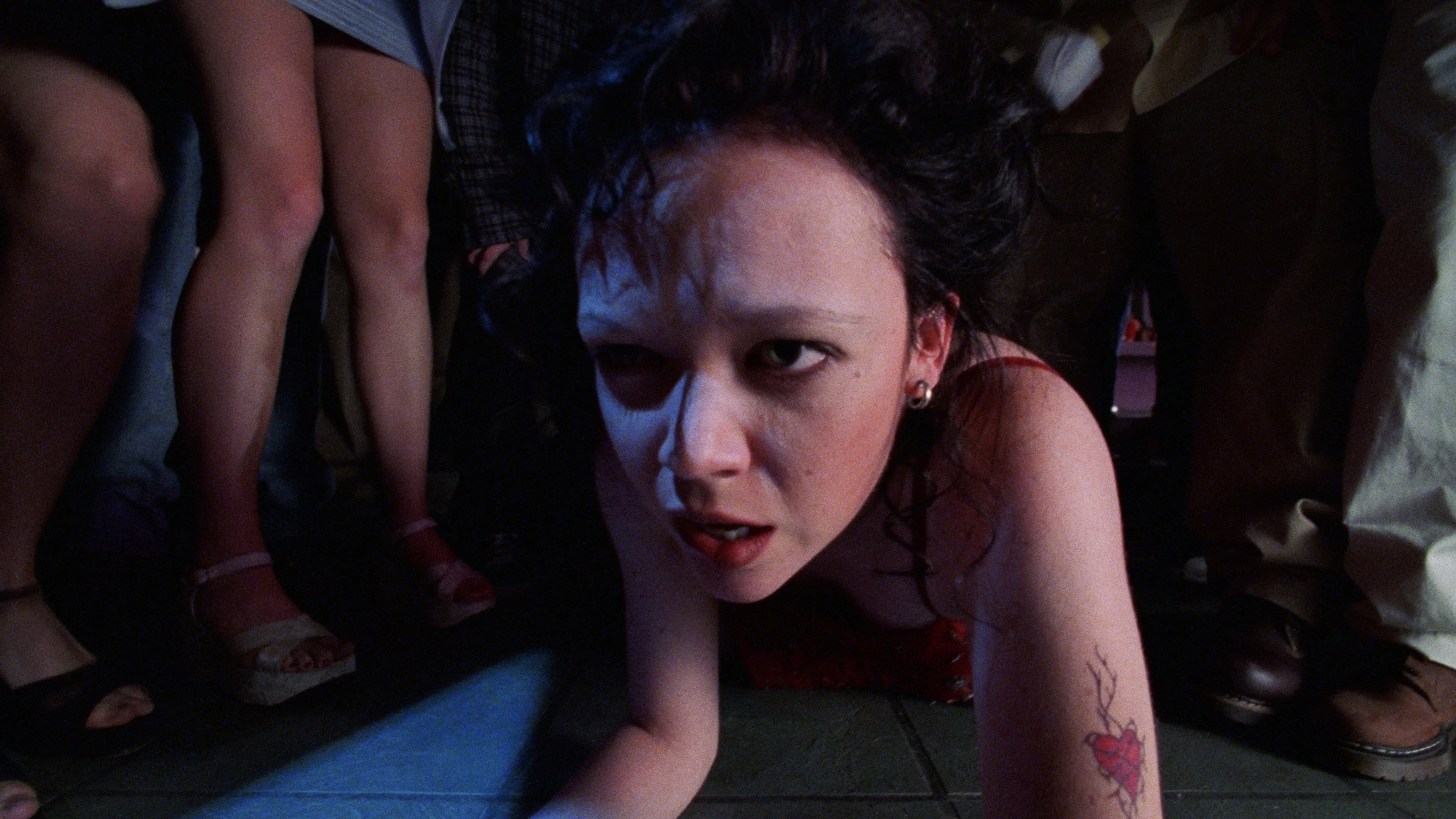
At the party, a recording of Rachel's intimate encounter with Jesse is exposed to the assembled students, turning private trust into public spectacle. Her retaliation causes widespread injuries and deaths. Jesse's eventual expression of love allows a moment of recognition amid the chaos, but Rachel dies saving him. The later images of Jesse haunted by her memory deny the story a simple victorious ending. The sequence resembles the catastrophic prom of the original Carrie while changing the immediate cause of the humiliation and placing the survivor's responsibility at its center. Its bleakness comes from the fact that the damage is already irreversible by the time affection is finally acknowledged.

Release, Critical Reception and Later Reassessment

The Rage: Carrie 2 opened in the United States on March 12, 1999, with an R rating. The American Film Institute records a running time of 105 minutes and credits Shea, Moreu, Morgan, Nord and composer Danny B. Harvey. Contemporary box-office reporting places its North American gross at approximately $17.8 million against a reported production budget of around $21 million. Those numbers indicate a disappointing domestic theatrical performance, but they do not establish a complete worldwide return or the film's final profitability after other markets and later distribution.

Critical opinion was sharply divided. Kevin Thomas wrote favorably in the Los Angeles Times about Shea's interest in male aggression, the script's social detail and Bergl's performance. Roger Ebert criticized the sequel for reproducing the narrative progression of the original without matching its emotional conviction. Walter Addiego similarly considered it an inferior update. These responses are part of the film's contemporary history, which is more varied than a single negative score can convey. The comparisons with De Palma's widely admired film were unavoidable, but the points of disagreement concerned both execution and the legitimacy of revisiting its structure.

Later criticism has paid more attention to the story's depiction of gendered humiliation, sexual violence and the circulation of intimate images. Alexandra Heller-Nicholas and Gabriela Almeida have discussed the film in the context of women-directed horror and the treatment of girls by institutions and peers. Those readings provide grounds for reappraisal without establishing a universal change in reputation. The film remains a sequel built on conspicuous repetition, but its late-1990s setting and social details give it a distinct place in the screen history of Carrie.

References

  1. American Film Institute The Rage: Carrie 2 (1999)

    Institutional catalog record identifying credited personnel, release date, 105-minute running time and the connection to characters created by Stephen King.

  2. Los Angeles Times Mature Sequel to Carrie Rages Against High School Machismo

    Kevin Thomas contemporary March 12, 1999 review analyzing sexual coercion, the football team, Katt Shea direction and Emily Bergl performance.

  3. Fangoria Simmering Rage: Forgotten Feminist Sequel Carrie 2

    Gabriela Almeida critical analysis of the film connection to the Spur Posse case, gendered exploitation, recording technology and tragic finale.

  4. JoBlo The Rage: Carrie 2 (1999) - WTF Happened to This Horror Movie?

    Cody Hamman retrospective production history covering the earlier screenplay, change from Robert Mandel to Katt Shea, locations and difficult effects shoot.

  5. DVD Review & High Definition The Rage: Carrie 2

    Mike Long October 1999 review documenting Katt Shea audio commentary, deleted scenes and the alternate ending described by the director.

Connections

Cast

View Full Cast & Crew →

Release & Distribution

Production Companies (3)

  • Metro-Goldwyn-Mayer US
  • Red Bank Films
  • United Artists US

Distributors (1)

  • Metro-Goldwyn-Mayer US

Release History (9)

Release DateTerritoryRelease TypeFormatDistributorCertificationNotes
1999-03-12 Belgium Theatrical — — 18
1999-03-12 Mexico Physical — — C
1999-03-12 United States Theatrical — — R
1999-08-23 United Kingdom Theatrical — — 15
1999-08-23 Italy Theatrical — — 14
1999-08-24 Germany Theatrical — — 16
1999-08-24 France Theatrical — — 12
1999-11-02 Portugal Limited Theatrical — — M/16 Cineclube do Porto
2006-02-09 Australia Physical — — MA15+ https://www.sanity.com.au/products/2200692/Carrie-02---Rage-The
Looks can kill.