Army of Darkness (1992)

US
HORROR FILM Comedy Fantasy
7.4/10 7 votes
Runtime
89 min
Release
October 31, 1992
Budget
$11,000,000
Revenue
$21,502,976
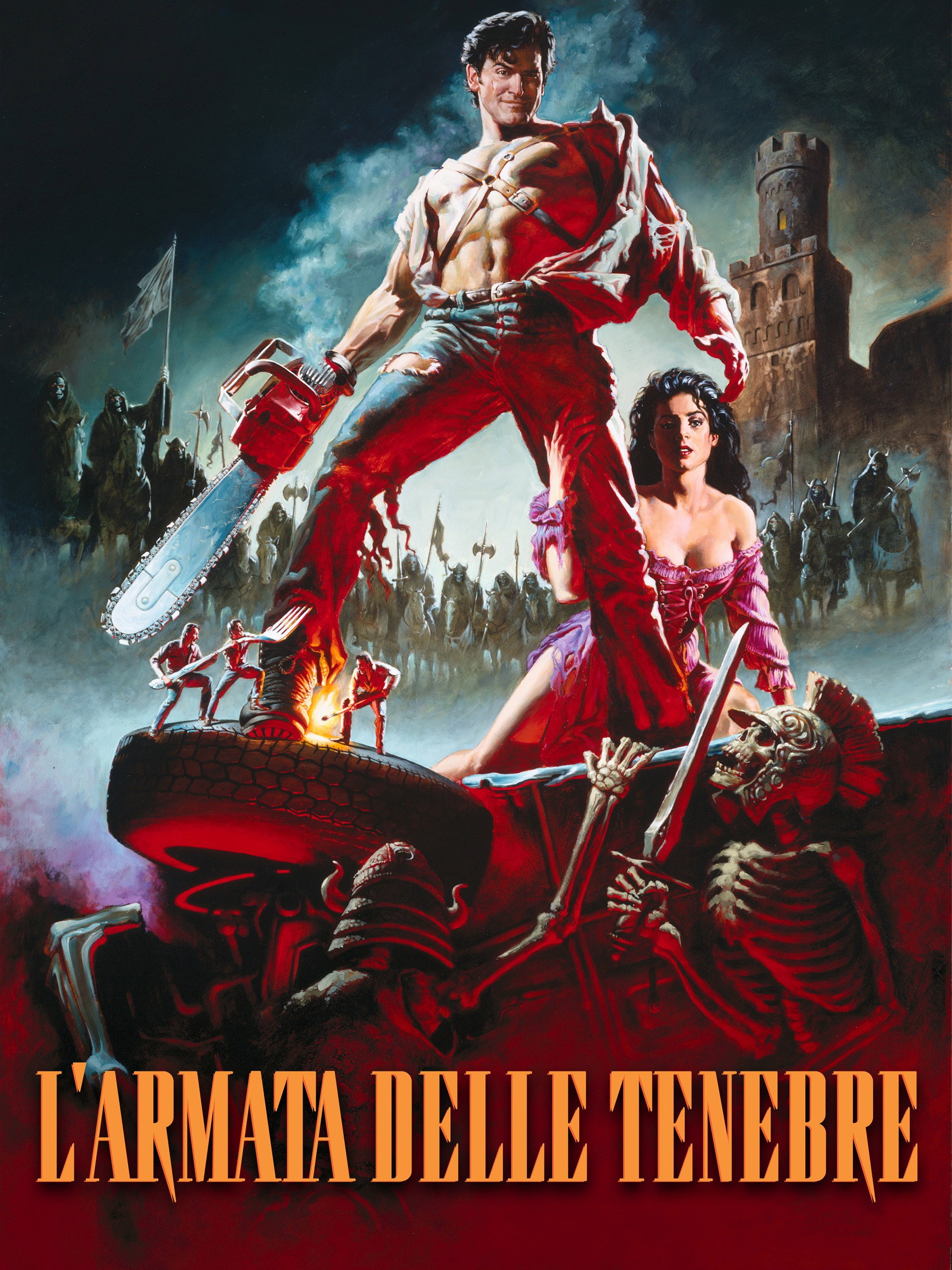
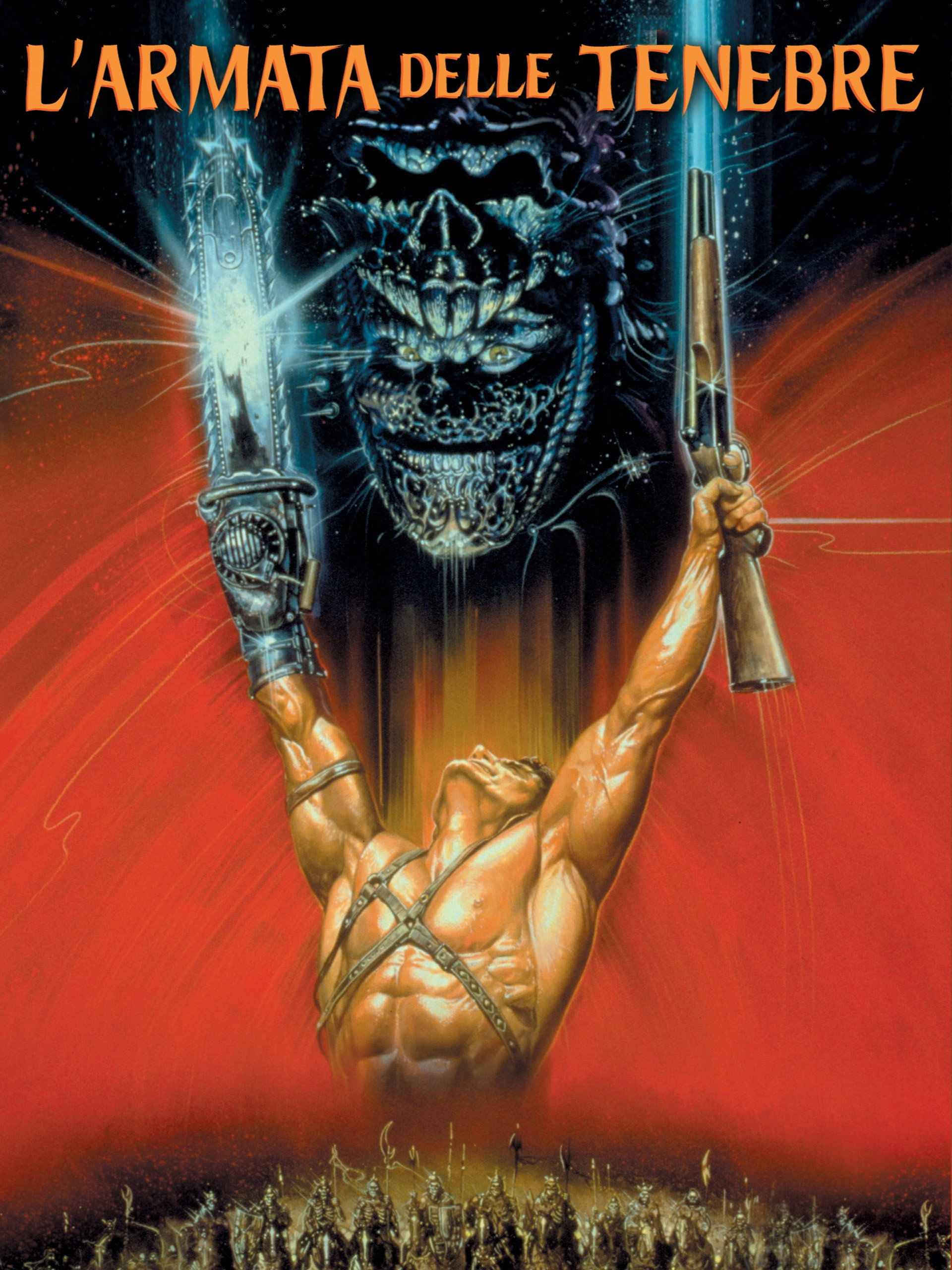
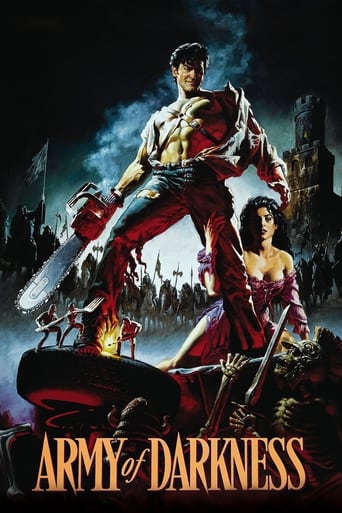
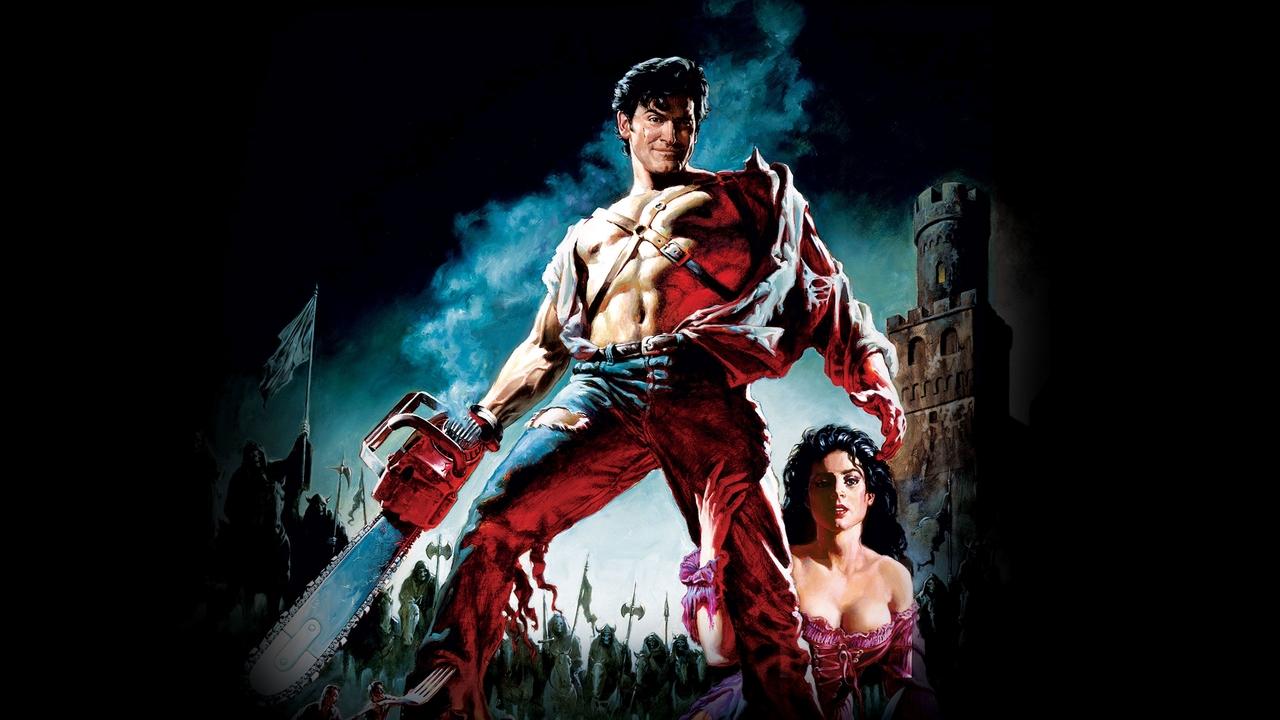
Army of Darkness (1992) poster
Director
Production Companies
Renaissance Pictures , Introvision International , Dino de Laurentiis Communications
Plot

After being pulled through a temporal vortex, Ash Williams finds himself in a medieval kingdom besieged by supernatural enemies. His modern weapons, knowledge and overconfidence make him both useful and troublesome to the people who hold him captive. To find a way home, he must recover a dangerous book connected to the evil pursuing him, but his actions unleash further chaos. Drawn into a conflict between a human settlement and an army of the dead, Ash turns his improvised fighting skills toward a much larger and stranger battlefield.

Alternative Titles
Evil Dead 3: El Ejército de las Tinieblas (Argentina) Noche alucinante 2: el ejército de las tinieblas (Argentina) — alternative title Злите мъртви III: Армията на мрака (Bulgaria) — Bulgarian Uma Noite Alucinante 3 (Brazil) L'armée des ténèbres (Canada) — French 鬼玩人3:魔界英豪 (China) — Chinese Armáda temnot (Czechia) — Czech Smrtelné zlo 3 (Czechia)
Show all 55 alternative titles Armee der Finsternis (Germany) — German Tanz Der Teufel 3 (Germany) Tanz der Teufel 3 - Armee der Finsternis (Germany) Tanz der Teufel III: Armee der Finsternis (Germany) El ejército de las tinieblas (Spain) — Spanish L'exèrcit de les tenebres (Spain) — Catalan Pimeyden armeija (Finland) — Finnish Evil dead 3 - L'armée des ténèbres (France) — DVD box title Evil dead 3 : L'armée des ténèbres (France) — French Evil dead 3 : L'armée des ténèbres. (France) — Visa d'exploitation L'armée des ténèbres - Evil dead III (France) Army of Darkness: The Medieval Dead (United Kingdom) — Home Video Title The Evil Dead 3: Army of Darkness (United Kingdom) — DVD box title Ο Στρατός του Σκότους (Greece) — Greek 人玩鬼 (Hong Kong SAR China) — Chinese 人玩鬼(1992) (Hong Kong SAR China) Vojska tame (Croatia) — Croatian A sötétség serege (Hungary) — Hungarian מוות אכזרי 3 (Israel) צבא האופל (Israel) — Hebrew इव्हिल डेड थ्री (India) — Hindi ارتش تاریکی (Iran) — Persian L'armata delle tenebre (Italy) — Italian Captain Supermarket (Japan) — English title キャプテン・スーパーマーケット (Japan) — Japanese 死霊のはらわたIII/キャプテン・スーパーマーケット (Japan) 이블 데드 3: 암흑의 군단 (South Korea) — Korean Tamsos kariuomenė (Lithuania) — Lithuanian El despertar del diablo 3 (Mexico) — alternative title El Ejercito De Las Tinieblas (Mexico) — Spanish El ejército macabro (Peru) Armia Ciemności (Poland) — Polish O Exército das Trevas (Portugal) Armata întunericului (Romania) — Romanian Армија мрака (Serbia) — Serbian Зловещие мертвецы 3: Армия тьмы (Russia) — Russian جيش الظلام (Saudi Arabia) — Arabic Army of Darkness - Evil Dead III (Sweden) — Swedish Posesión Infernal 3 El Ejercito de las Tinieblas (El Salvador) อภินิหารกองพันซี่โครง (Thailand) — Thai Karanlığın Ordusu (Türkiye) — Turkish 魔誡英豪 (Taiwan) — Chinese Зловісні мерці 3: Армія темряви (Ukraine) Bruce Campbell vs. Army of Darkness (United States) — on-screen title Evil Dead III: Army of Darkness (United States) The Medieval Dead (United States) — Working Title Binh Đoàn Bóng Đêm (Vietnam) — Vietnamese

Trailers & Videos

7 videos

Film Guide & Analysis

Sam Raimi threw Ash Williams into the Middle Ages and transformed Evil Dead from cabin-bound splatter horror into a handmade fantasy spectacle of Deadites, stop-motion skeletons, slapstick violence and an increasingly ridiculous hero.

Army of Darkness begins where Evil Dead II ends but immediately breaks the scale of the series apart. Ash Williams, his shotgun, chainsaw and Oldsmobile are thrown into a medieval world threatened by the same supernatural forces connected with the Necronomicon. What had once been a story about a handful of people trapped inside an isolated cabin becomes an adventure involving castles, armies, sorcery, skeleton soldiers and a full-scale siege. Sam Raimi retains the Deadites and physical cruelty of the earlier films, yet reorganizes them through fantasy adventure, Three Stooges slapstick and the exaggerated heroics of a character whose confidence consistently exceeds his intelligence.

The shift also completes the transformation of Bruce Campbell's Ash. The frightened survivor of The Evil Dead and increasingly battered comic protagonist of Evil Dead II has now become a swaggering parody of the action hero, capable of delivering commands, building weapons and presenting himself as the smartest person in any century while repeatedly causing disasters through arrogance and carelessness. That version of Ash became one of the franchise's most durable contributions to horror culture. Army of Darkness was not a major American theatrical success, but its practical effects, quotable dialogue, multiple versions and increasingly cult reputation gave the third Evil Dead film an afterlife far greater than its original box-office performance suggested.

From Evil Dead II to Medieval Dead

The medieval direction was already embedded in the ending of Evil Dead II, where Ash is pulled through a temporal vortex and lands in the distant past. Army of Darkness turns that deliberately excessive ending into an entire feature. Sam Raimi wrote the screenplay with his brother Ivan Raimi, expanding Ash's displacement into a fantasy narrative structured around the search for the Necronomicon, his accidental resurrection of the Deadite army and the eventual defense of a medieval castle. The working title Medieval Dead made the relationship with the earlier films explicit while summarizing the new mixture of genres.

The production circumstances were dramatically different from those surrounding the first Evil Dead. Raimi had directed Darkman for Universal, demonstrating that the filmmakers who had begun with an independently financed cabin movie could operate inside a major studio structure. Producer Robert Tapert later explained that Universal nevertheless wanted restrictions on the stranger and more violent elements associated with Raimi's work. According to production reporting preserved by the American Film Institute, the studio also objected to the title Medieval Dead and pushed the project toward the more independent identity of Army of Darkness.

That distancing produced an unusual third installment. The film continues directly from Evil Dead II and depends on Ash, the Necronomicon and the Deadites, yet its title does not advertise itself as Evil Dead III in the United States. Some international material did use the extended association. The result reflects the changing scale of the franchise itself: Army of Darkness is unmistakably an Evil Dead film, but Raimi was now using the mythology to enter territory closer to adventure fantasy, Ray Harryhausen spectacle and comic-book heroism.
Ash Williams and the Comic Hero

Army of Darkness makes Ash the undisputed center of the Evil Dead mythology. Bruce Campbell is no longer surrounded by a group of contemporary characters whose deaths progressively isolate him. Medieval society exists largely to react to Ash: some inhabitants see him as a possible savior, others as an arrogant outsider, and almost everyone eventually has to depend on him. The exaggeration allows Campbell to develop the character through physical comedy, vanity and an increasingly theatrical style of speech.

Raimi has repeatedly described Ash in terms that undercut traditional heroism. He is boastful, selfish, frequently cowardly and capable of making disastrous decisions. His failure to remember the words required to retrieve the Necronomicon creates the very army he later has to defeat. His apparent superiority comes primarily from possessing twentieth-century technology and knowledge in a medieval environment. A shotgun, automobile and basic understanding of chemistry can make him look miraculous to the people surrounding him without making Ash himself particularly wise.

That contradiction is the source of much of the comedy and one of the reasons this incarnation endured. Ash can genuinely save people while remaining responsible for a significant portion of their problems. Campbell plays the arrogance so broadly that the traditional square-jawed action hero becomes almost a caricature. The chainsaw hand, shotgun, blue shirt and exaggerated confidence that developed across the first two films finally operate here as a complete iconographic package. Later Evil Dead stories could age Ash or change his surroundings, but the essential comic personality had been established.

Building the Medieval World

Army of Darkness was photographed principally in California rather than attempting to place the production inside authentic European castles. Production notes preserved by AFI record two weeks of interior work in Hollywood followed by approximately five weeks around Acton, California, where the filmmakers constructed sections of the castle in a desert environment. Additional California landscapes allowed Raimi to present a world that feels intentionally closer to illustrated fantasy than to a historically exact reconstruction of the Middle Ages.

The castle had to support a climax far larger than anything previously attempted in the series. Human fighters, horses, skeleton armies, explosions, siege machinery and the Deathcoaster all needed to occupy the same battle. Tony Tremblay's production design therefore works as a foundation for effects. Walls and courtyards had to interact with projected miniature environments, animated characters and mechanical action while still supplying physical surfaces for Campbell and the other actors.

Bill Pope's cinematography embraces the artificiality. Wide lenses, aggressive angles, rapid camera movement and strongly modeled lighting prevent the medieval setting from becoming naturalistic. Raimi approaches the landscape like a comic-book panel capable of changing scale from one gag to another. A graveyard can become a slapstick arena, a windmill can contain multiple miniature versions of Ash and the castle can expand into the stage for an impossible war. The heightened photography allows all of those modes to belong to the same world.

Introvision, Stop Motion and the Army

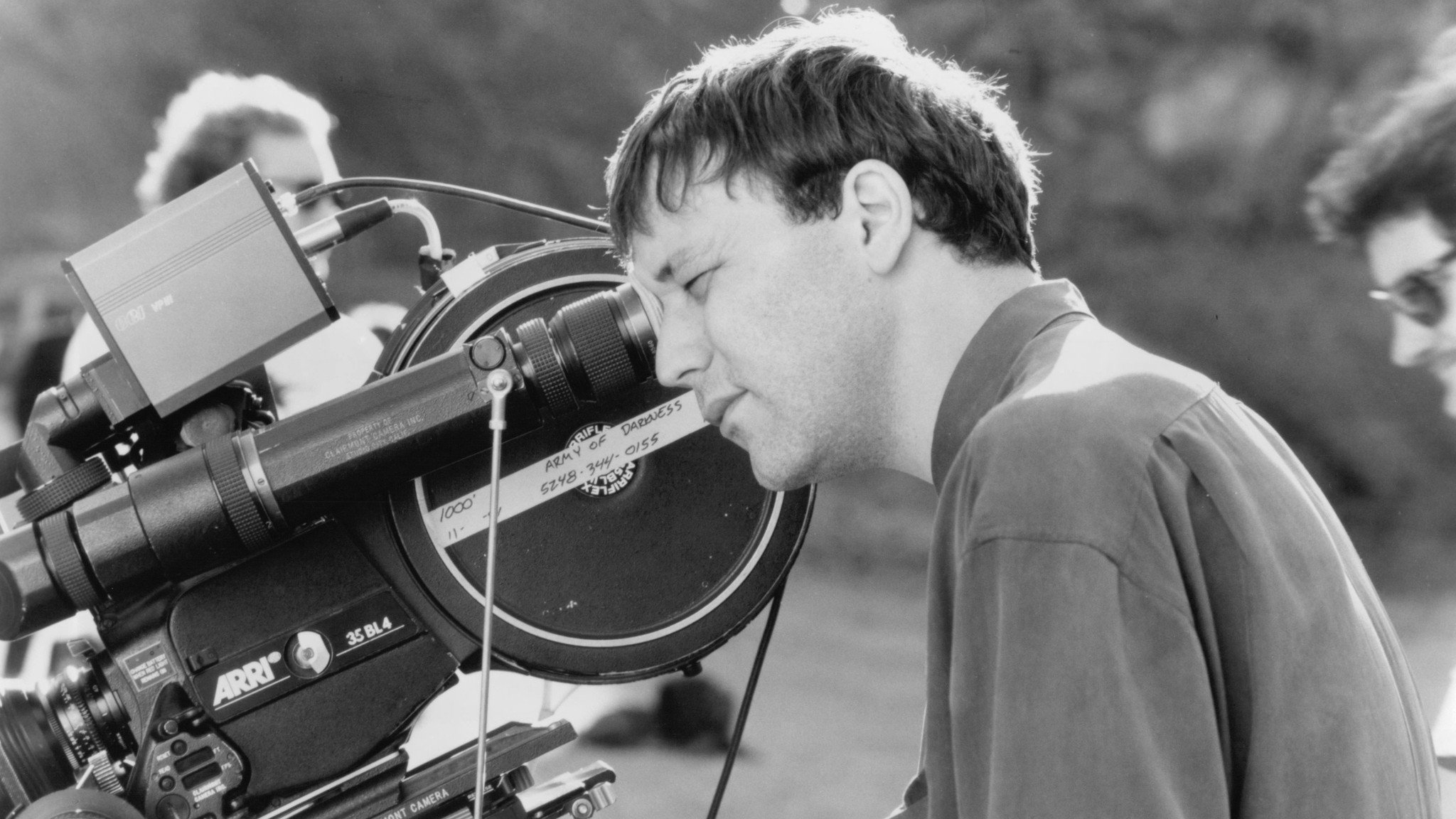
The scale of the title army required a mixture of effects techniques rather than one technological solution. Introvision International handled a major portion of the visual-effects work under William Mesa, using its front-projection and motion-control system to combine full-sized performers with miniature environments and other separately photographed elements. Raimi valued the system because it allowed him to view much of the interaction through the camera during production instead of waiting for conventional optical compositing to reveal the final relationship between foreground and background.

American Cinematographer reported that Introvision produced more than five hundred effects shots for the film, then a record workload for the company, at a cost of approximately two million dollars. The process could place Campbell behind or in front of projected elements while retaining camera movement that would have been difficult with a simpler static front-projection arrangement. This flexibility became essential for a film in which live actors repeatedly share the frame with miniatures, animated skeletons and environments that exist at several different scales.

Stop-motion and go-motion style animation supply the clearest connection with the fantasy cinema of Ray Harryhausen. Skeleton warriors move independently, attack human soldiers and participate directly in the castle battle. Their slightly unnatural rhythm is not disguised as realistic human motion. Instead, Raimi incorporates the artificial quality into a world already functioning like live-action animation. The army is frightening enough to remain connected to the Deadites, but its movement also contributes to the film's comic-book and fantasy personality.

Makeup, Puppetry and Multiple Ashes

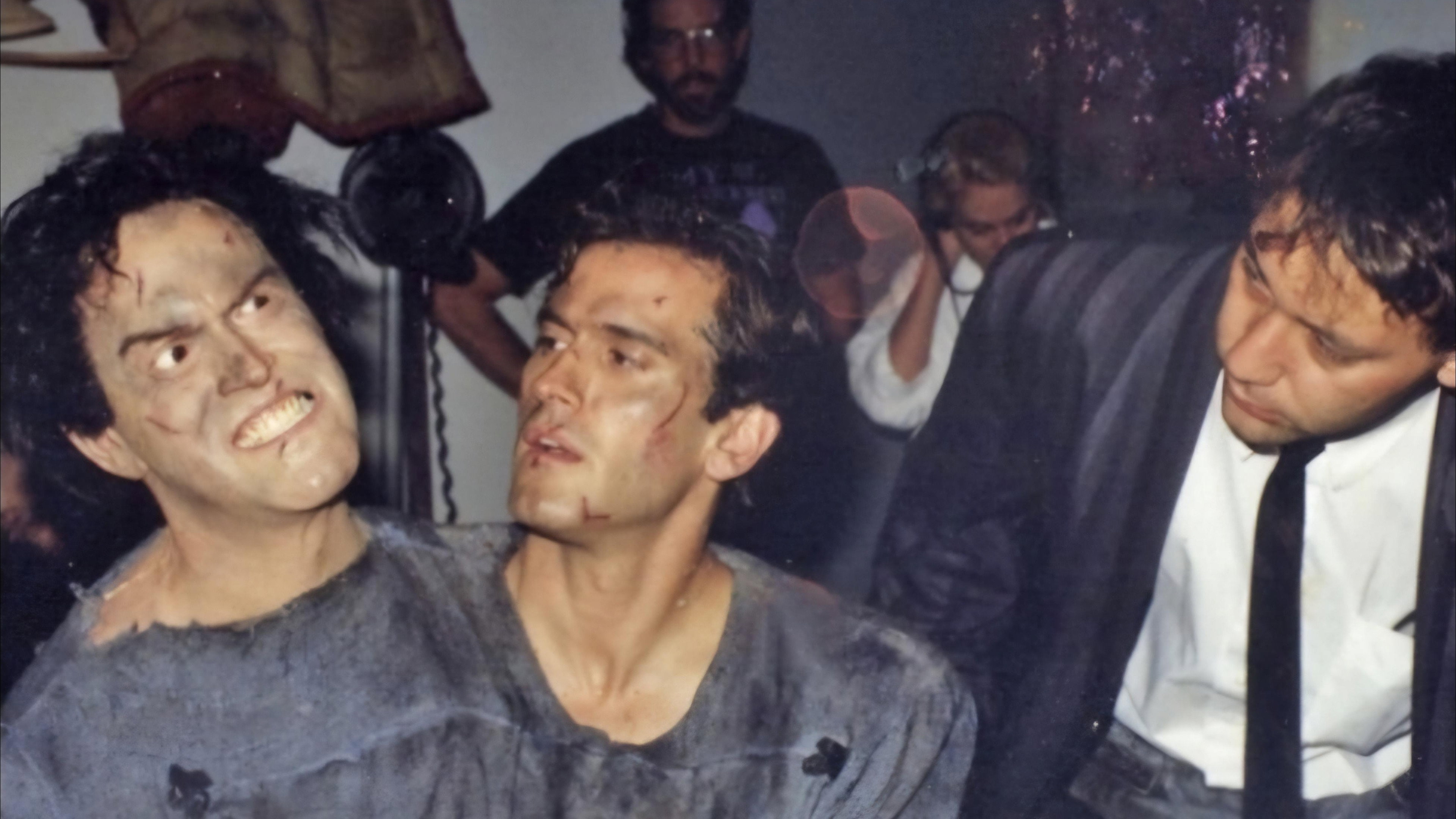
The physical-effects workload was divided among several specialized teams. KNB EFX Group, founded by Robert Kurtzman, Greg Nicotero and Howard Berger, handled large quantities of Deadite and character makeup, skeleton work and puppetry. Tony Gardner and Alterian Studios concentrated particularly on Ash, Evil Ash, Sheila and the complicated sequence in which miniature versions of Ash attack their full-sized original. Mechanical-effects crews simultaneously handled weapons, flying rigs, explosions and the increasingly elaborate machinery used during the final battle.

The windmill sequence demonstrates the deliberately mixed methodology. After Ash shatters a mirror, multiple tiny versions of himself emerge and begin tormenting him. Alterian used several stunt performers made up to resemble Campbell, mechanical puppets and other scale techniques rather than searching for a single seamless effect. The later emergence of Evil Ash likewise combines prosthetic heads, body rigs, physical performance and animation as a second version of the character grows directly from Ash's body before being separated from him.

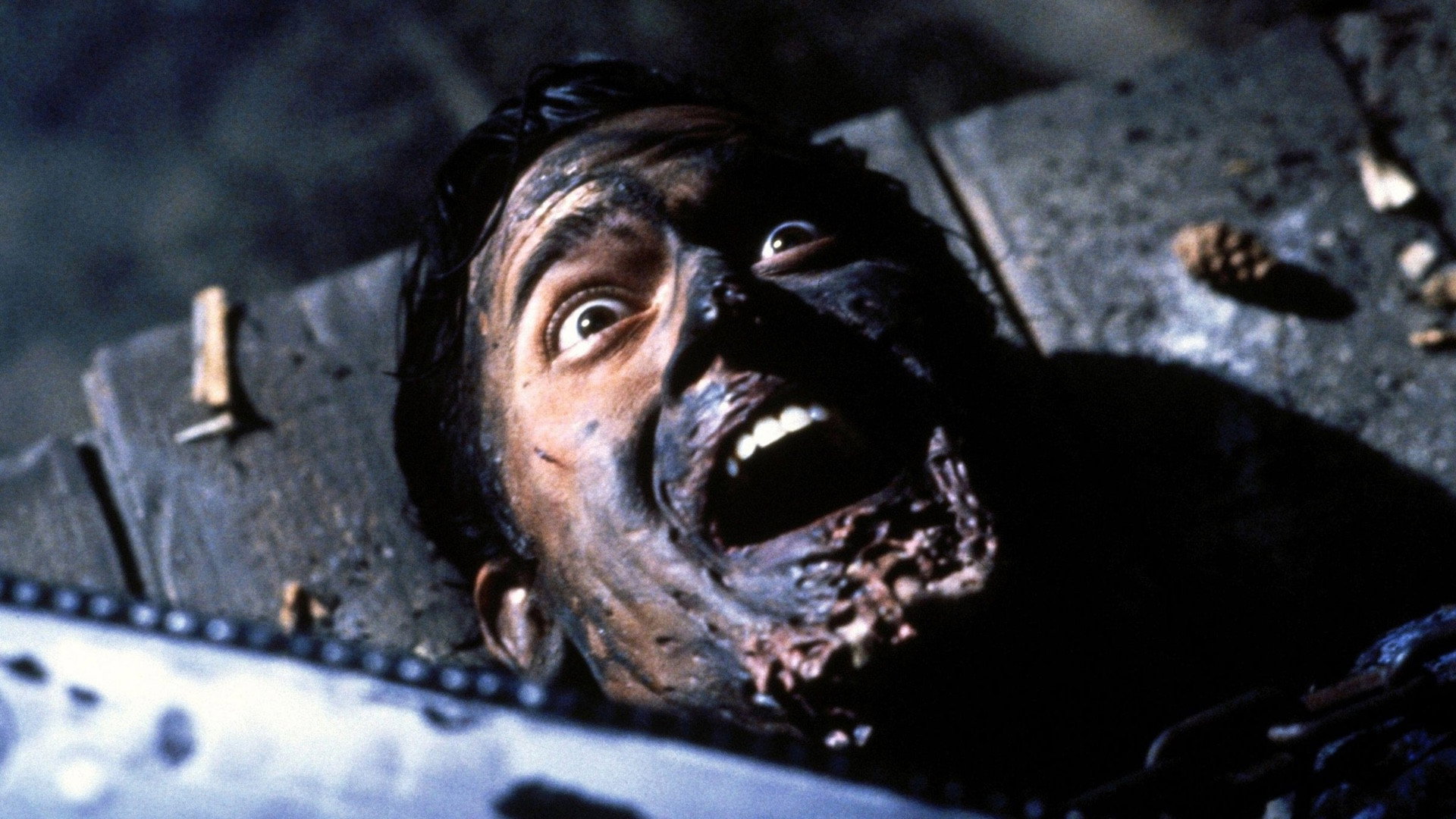
These effects extend the bodily comedy that Raimi and Campbell had developed in Evil Dead II. Ash's body is still an object that can be attacked, duplicated, stretched and disassembled for humor, but the production now has enough resources to make the gags considerably more elaborate. Evil Ash then converts that joke into the principal antagonist. His increasingly decomposed appearance allows Campbell to perform against an exaggerated monstrous version of his own arrogance while giving the Deadite army a recognizable leader.

Music and Fantasy Scale

Joseph LoDuca returned after scoring The Evil Dead and Evil Dead II, but Army of Darkness required music operating on a substantially larger scale. The story no longer takes place principally inside a cabin where intimate dissonance can dominate. Battles, medieval landscapes, supernatural quests and Ash's exaggerated heroism require the score to support fantasy spectacle while still remaining connected to the musical history of the series. LoDuca combined orchestral writing with the flexibility of electronic mock-ups during composition before the score was recorded with symphonic forces.

Danny Elfman, who had scored Raimi's Darkman, contributed the March of the Dead theme. The piece accompanies the scale and grotesque pageantry of the skeletal army with a musical identity somewhat different from LoDuca's surrounding score while remaining suited to the exaggerated fantasy environment. The collaboration mirrors the movie itself: material associated with the independent Evil Dead films now exists inside a production shaped by the larger resources Raimi had encountered through studio filmmaking.

Music also performs an important tonal function because Army of Darkness continually risks moving completely out of horror. LoDuca can treat the medieval world with genuine grandeur even while Ash behaves absurdly within it. Darker passages preserve the supernatural lineage of the Deadites, while heroic material can become knowingly excessive around Campbell. The score does not attempt to resolve whether the film is horror, adventure or comedy. It allows those identities to overlap.

Studio Cuts and Two Endings

The film's post-production became unusually complicated. Universal financed another round of editing intended to improve the flow and pushed Raimi toward a more accessible version of the material. The studio also objected to the ending originally conceived and filmed. In that version, Ash receives a potion that will allow him to sleep until his own time but miscalculates the dosage, awakens far beyond the twentieth century and discovers a ruined post-apocalyptic world. The gag completes the recurring pattern in which Ash's own carelessness destroys the reward he has been attempting to obtain.

Raimi later confirmed that Universal considered the ending too depressing and refused to release the film with that conclusion. He and Ivan Raimi therefore wrote a replacement in which Ash successfully returns to his own era and resumes his job at S-Mart. A Deadite follows him into the store, allowing the movie to end with Ash defeating the creature in front of his coworkers and delivering one final performance of his self-created heroic persona.

The two endings represent noticeably different interpretations of the character. Raimi's version punishes Ash once again for arrogance and incompetence, leaving him stranded even farther from home than before. The Universal ending rewards him with an audience before whom he can finally appear exactly as heroic as he imagines himself to be. Different cuts of Army of Darkness subsequently preserved the alternative ending and other material, making version history unusually important to the way the film has circulated beyond its original American theatrical release.

Release, Reception and Cult Status

Army of Darkness received its world premiere at the Sitges Film Festival on October 9, 1992. Its American release was delayed for reasons extending beyond the filmmaking itself, including a legal dispute between Dino De Laurentiis and Universal involving distribution negotiations connected with a proposed sequel to The Silence of the Lambs. Universal eventually opened the film widely on February 19, 1993. Box Office Mojo records an opening weekend of $4,424,535 from 1,387 theaters and a final domestic theatrical gross of $11,502,976.

Those results were modest relative to a production whose budget contemporary reporting placed around twelve million dollars. Critical reaction was also mixed rather than unanimously celebratory. Roger Ebert admired the ingenuity of the effects and makeup but considered the comic approach less successful than Evil Dead II. The film was clearly moving away from the intensity that had made the earlier entries notorious, becoming closer to fantasy adventure and slapstick while retaining enough monsters and bodily violence to remain part of the horror lineage.

Its long afterlife has nevertheless made the theatrical numbers increasingly unrepresentative of its cultural position. Army of Darkness consolidated the version of Ash that later returned in games, comics and Ash vs Evil Dead, while phrases, poses, weapons and visual ideas from the film became inseparable from the character. The movie also preserves a transitional moment in effects history, arriving immediately before digital imagery rapidly changed the practical and optical workflows used for large fantasy productions. Stop-motion skeletons, prosthetic creatures, mechanical effects, miniatures and front projection all coexist inside a film whose handmade quality became part of its appeal.

Within the Evil Dead series, Army of Darkness therefore occupies an unusual but essential position. The Evil Dead established the demonic nightmare and Evil Dead II turned it into increasingly violent physical comedy; Army of Darkness takes that combination out of the cabin and constructs an entire fantasy world around it. It may be the least frightening of Raimi's three films, but it is arguably the chapter that most completely turns Ash Williams from survivor into horror icon.

Connections

Cast

View Full Cast & Crew →

Release & Distribution

Production Companies (3)

  • Dino de Laurentiis Communications US
  • Introvision International
  • Renaissance Pictures US

Distributors (1)

  • Universal Pictures US

Release History (50)

Release DateTerritoryRelease TypeFormatDistributorCertificationNotes
1992-10-09 Spain Premiere — — 18 Sitges Film Festival
1992-10-31 South Korea Theatrical — — 12
1992-11-14 United Kingdom Premiere — — — BFI London Film Festival
1992-11-21 Taiwan Theatrical — — —
1993-02-11 Hong Kong SAR China Theatrical — — —
1993-02-19 Canada Theatrical — — PG
1993-02-19 Philippines Theatrical — — —
1993-02-19 United States Theatrical — — —
1993-03-08 Iceland Physical — — —
1993-03-11 Italy Theatrical — — T
1993-03-12 Belgium Premiere — — 16 Brussels International Fantastic Film Festival
1993-03-19 Türkiye Theatrical — — —
1993-04-22 Australia Theatrical — — M
1993-04-22 Switzerland Theatrical — — 12
1993-04-22 Germany Theatrical — — 16
1993-05-14 Austria Theatrical — — —
1993-06-10 Japan Theatrical — — —
1993-06-11 Finland Theatrical — — K-16
1993-06-11 United Kingdom Theatrical — — 15
1993-06-11 Ireland Theatrical — — 15
1993-06-11 India Theatrical — — —
1993-06-18 Sweden Theatrical — — 15
1993-07-08 Netherlands Theatrical — — 16
1993-07-09 Denmark Theatrical — — 15
1993-07-30 Spain Theatrical — — —
1993-07-30 Portugal Theatrical — — M/12
1993-08-04 United Kingdom Physical VHS — 15 VHS
1993-08-04 United States Physical — — R MCA/Universal Home Video #81288 [𝐕𝐇𝐒📼] 𝟴𝟭 mínutєѕ
1993-08-18 Norway Premiere — — 15
1993-12-15 Brazil Premiere — — 16
1994-01-03 France Theatrical — — 12
1994-01-05 Belgium Theatrical — — 16
1994-03-18 Brazil Theatrical — — —
1994-06-09 Hungary Premiere — — 16
1999-10-12 United States Physical — — R Anchor Bay Entertainment #SV10871 [𝐕𝐇𝐒📼] 𝟴𝟭 mínutєѕ
2002-10-01 Canada Physical — — —
2002-11-11 United Kingdom Physical DVD — 15 DVD
2003-09-02 Hungary Physical — — —
2003-09-26 Czechia Physical — — 15+
2003-11-01 Argentina Premiere — — — Buenos Aires Rojo Sangre Film Festival
2004-01-31 France Premiere — — — Gérardmer Fantasticarts Film Festival
2006-01-18 Italy Premiere — — — Future Film Festival
2007-04-13 United States Limited Theatrical — — — Ashland Independent Film Festival
2007-06-30 United States Limited Theatrical — — — Moonlit Matines Film Festival
2008-09-29 United Kingdom Physical Blu-ray — 15 Blu-ray
2009-09-15 Mexico Physical — — —
2013-02-01 France Physical — — —
2013-08-12 United Kingdom Physical DVD, Blu-ray — 15 The Evil Dead Trilogy (Blu-ray / DVD)
2016-10-11 Spain Physical — — —
2018-03-08 Italy Physical — — —
Trapped in time. Surrounded by evil. Low on gas.