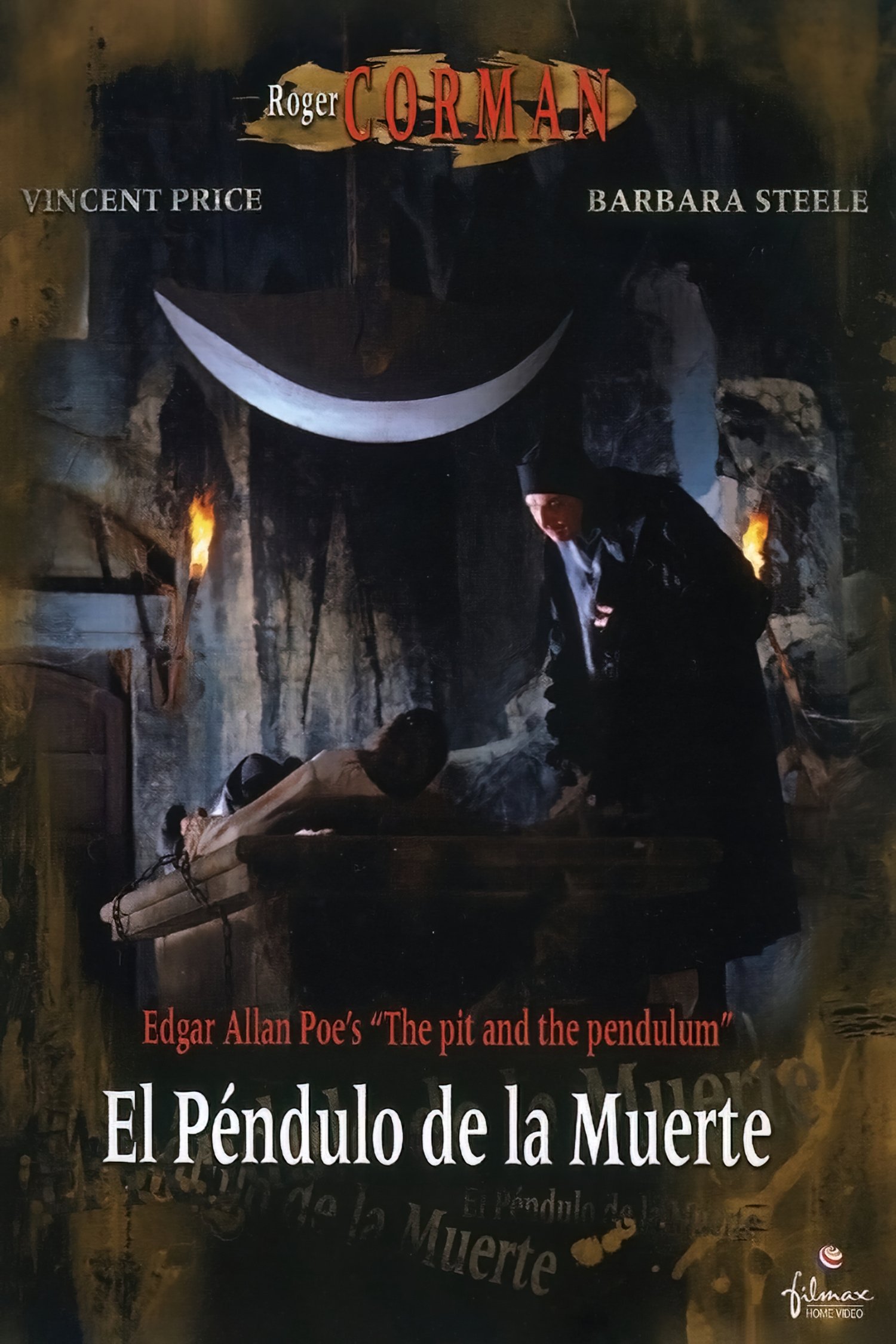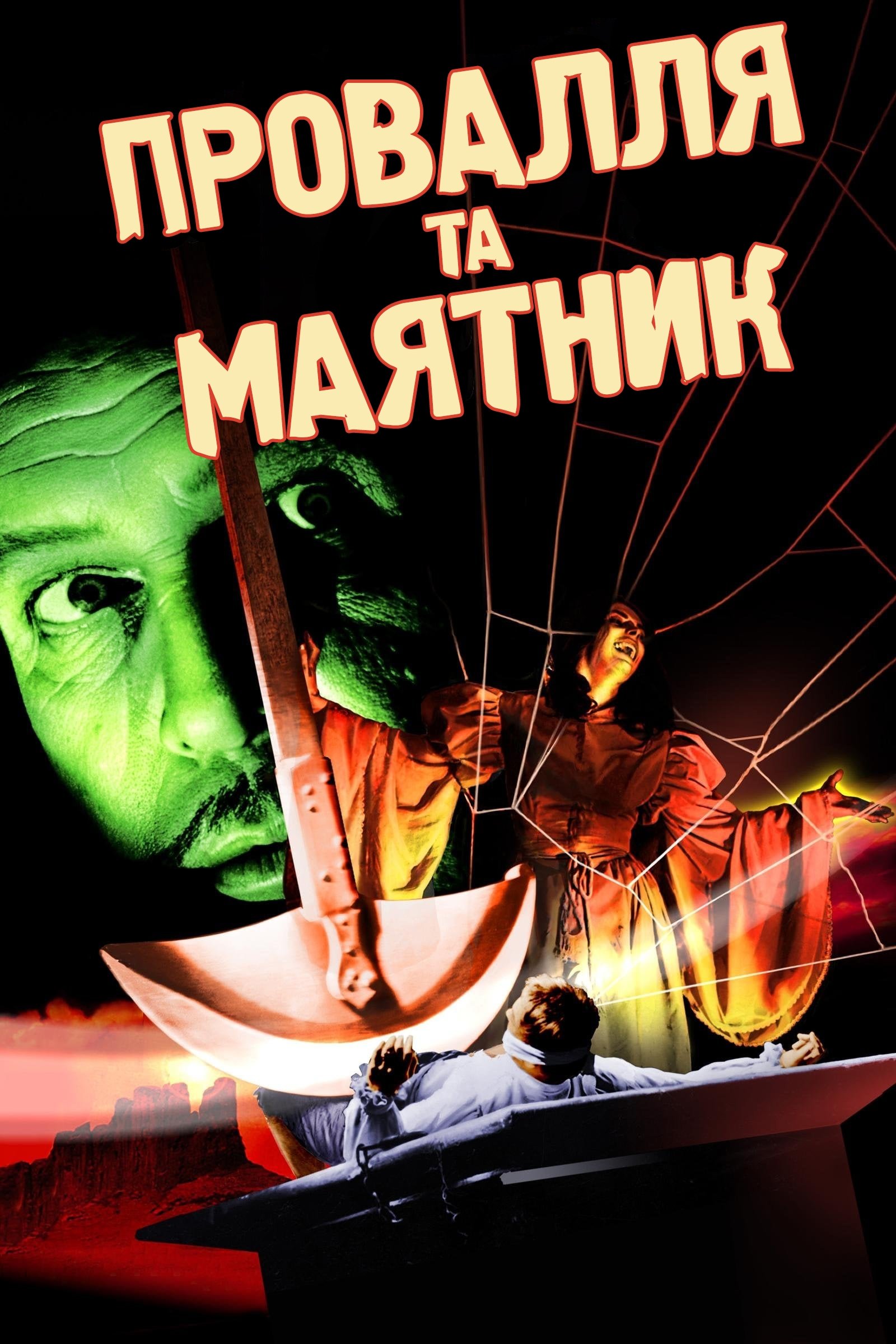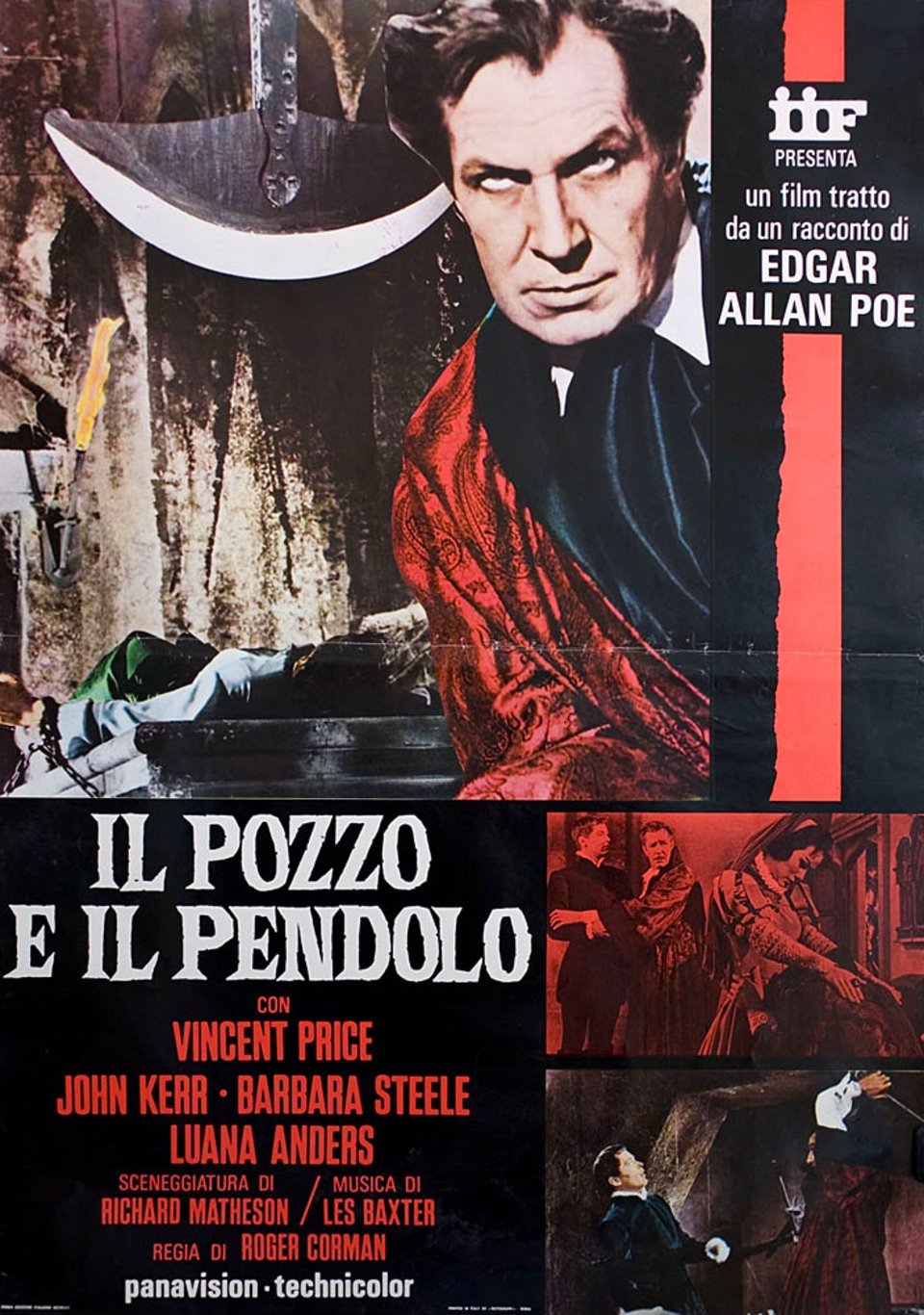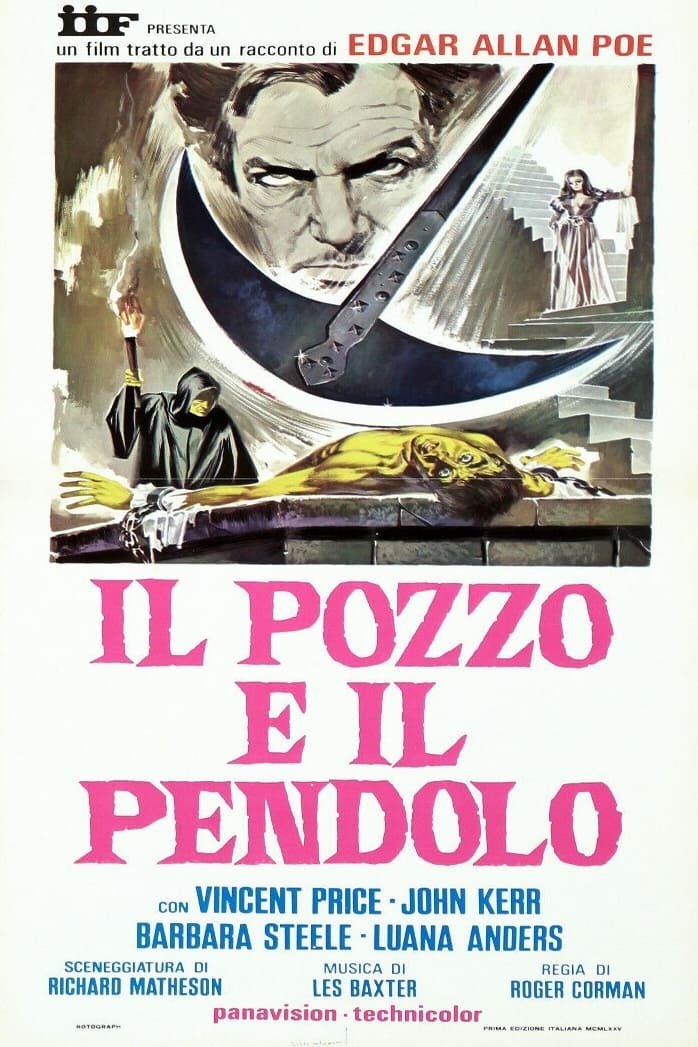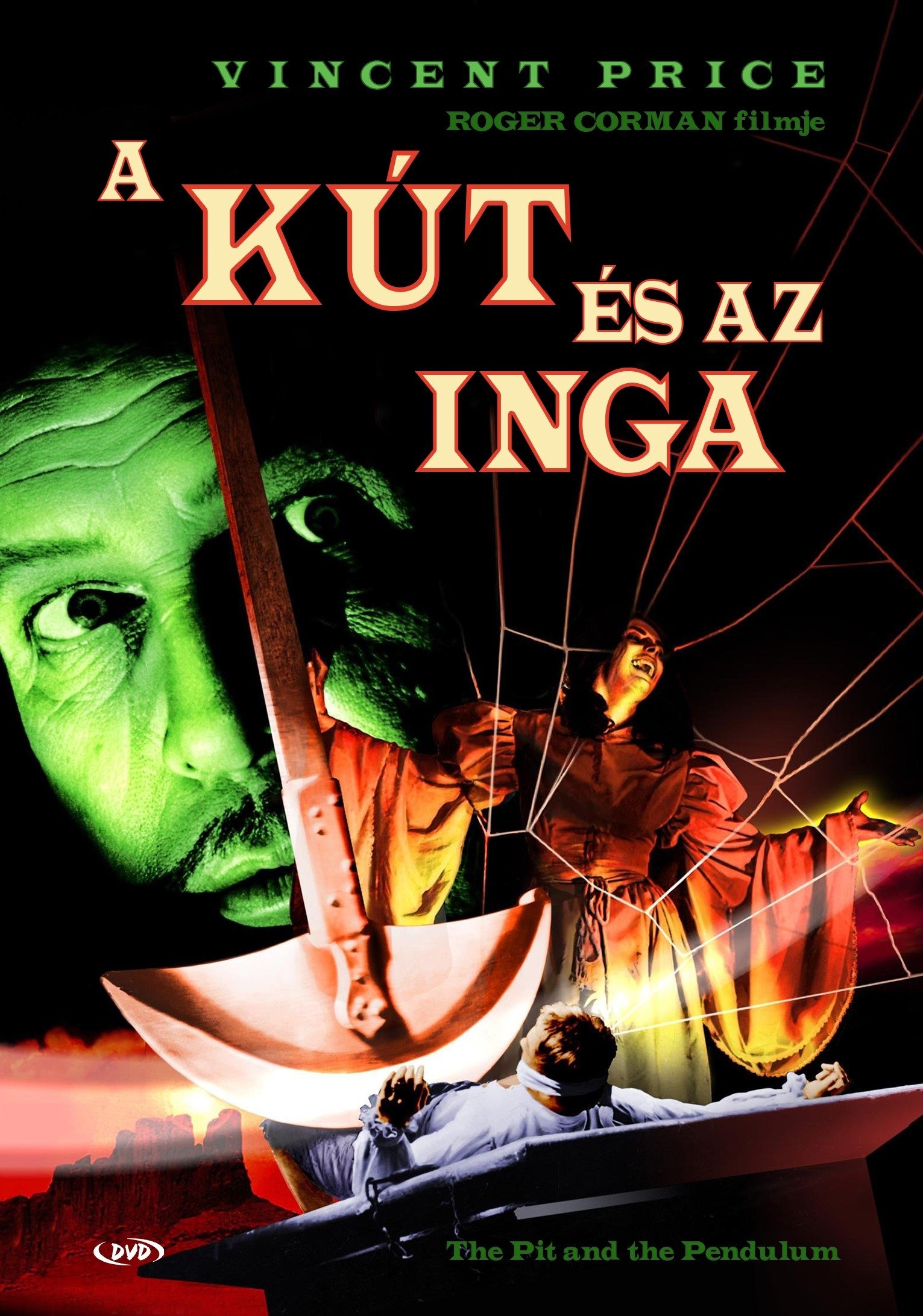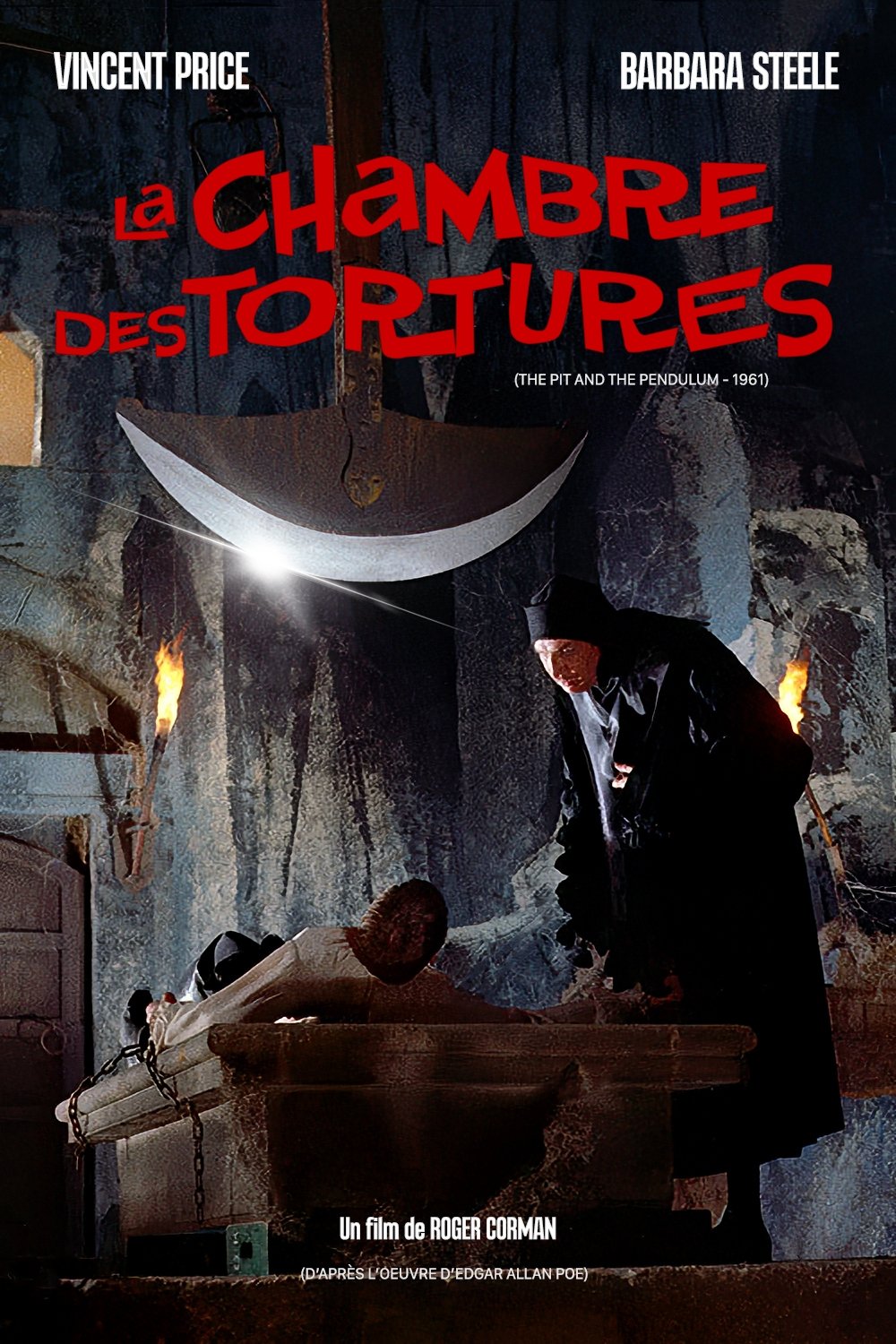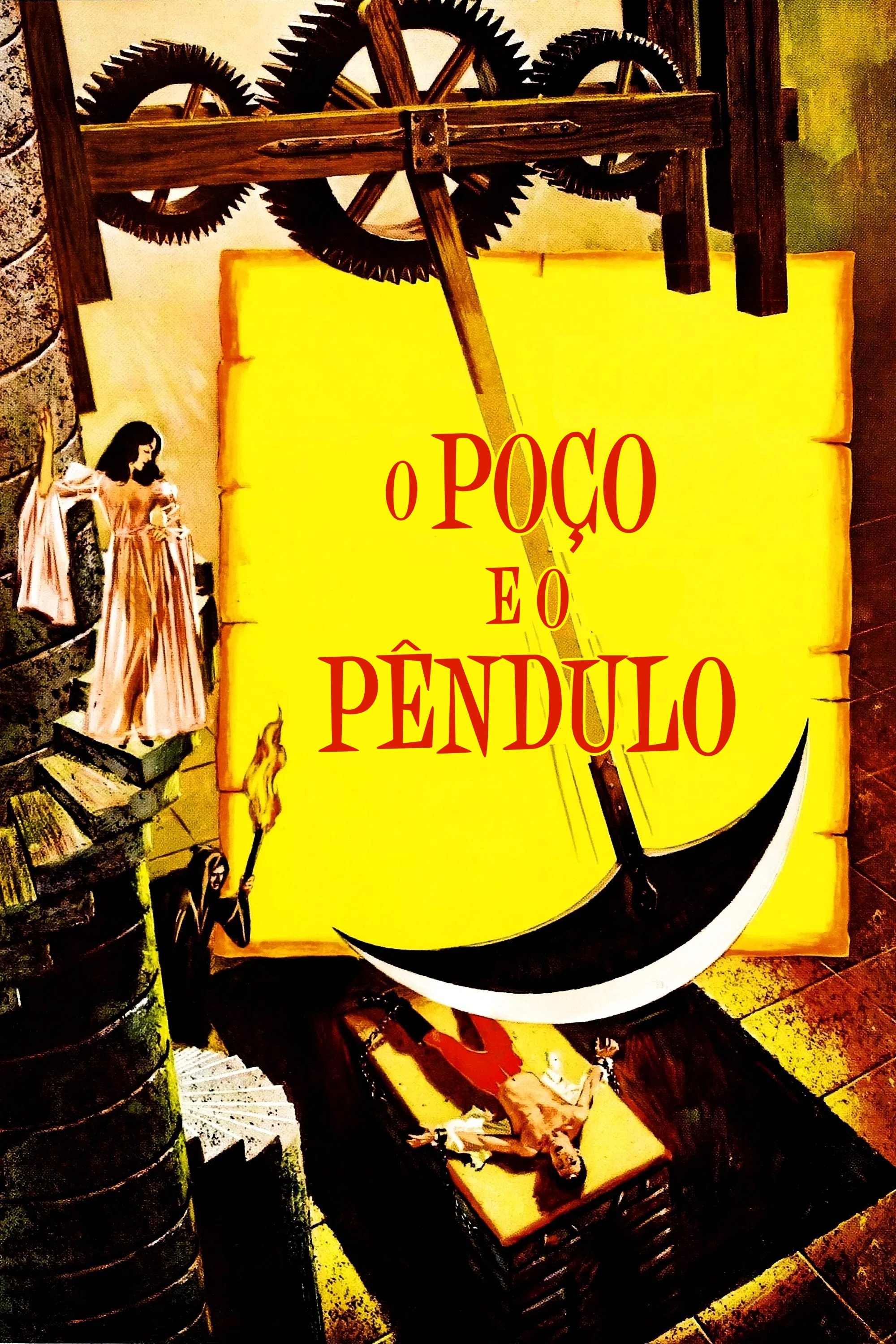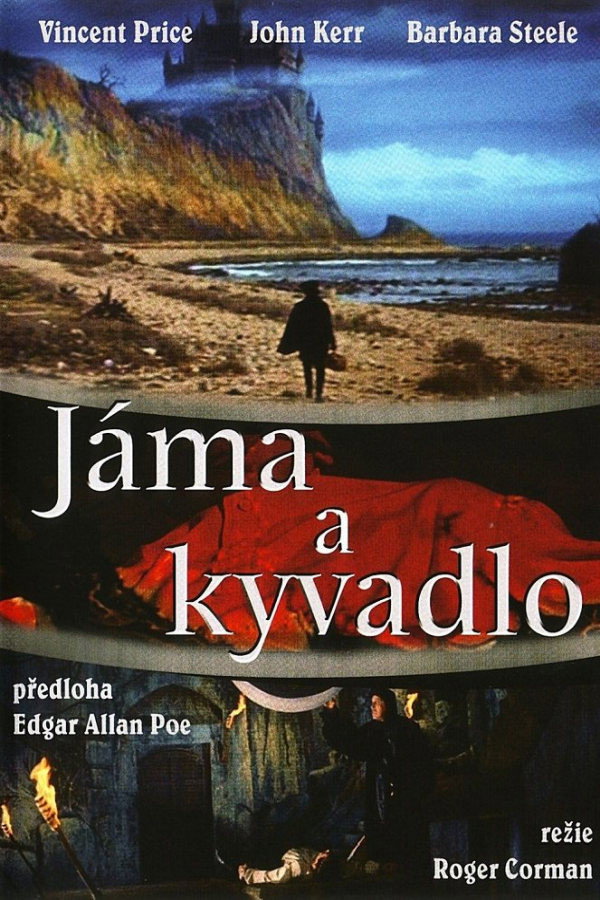
Pit and the Pendulum (1961)

US
HORROR FILM Mystery Thriller Drama
Runtime
80 min
Release
August 12, 1961
Budget
$200,000
Revenue
$2,000,000
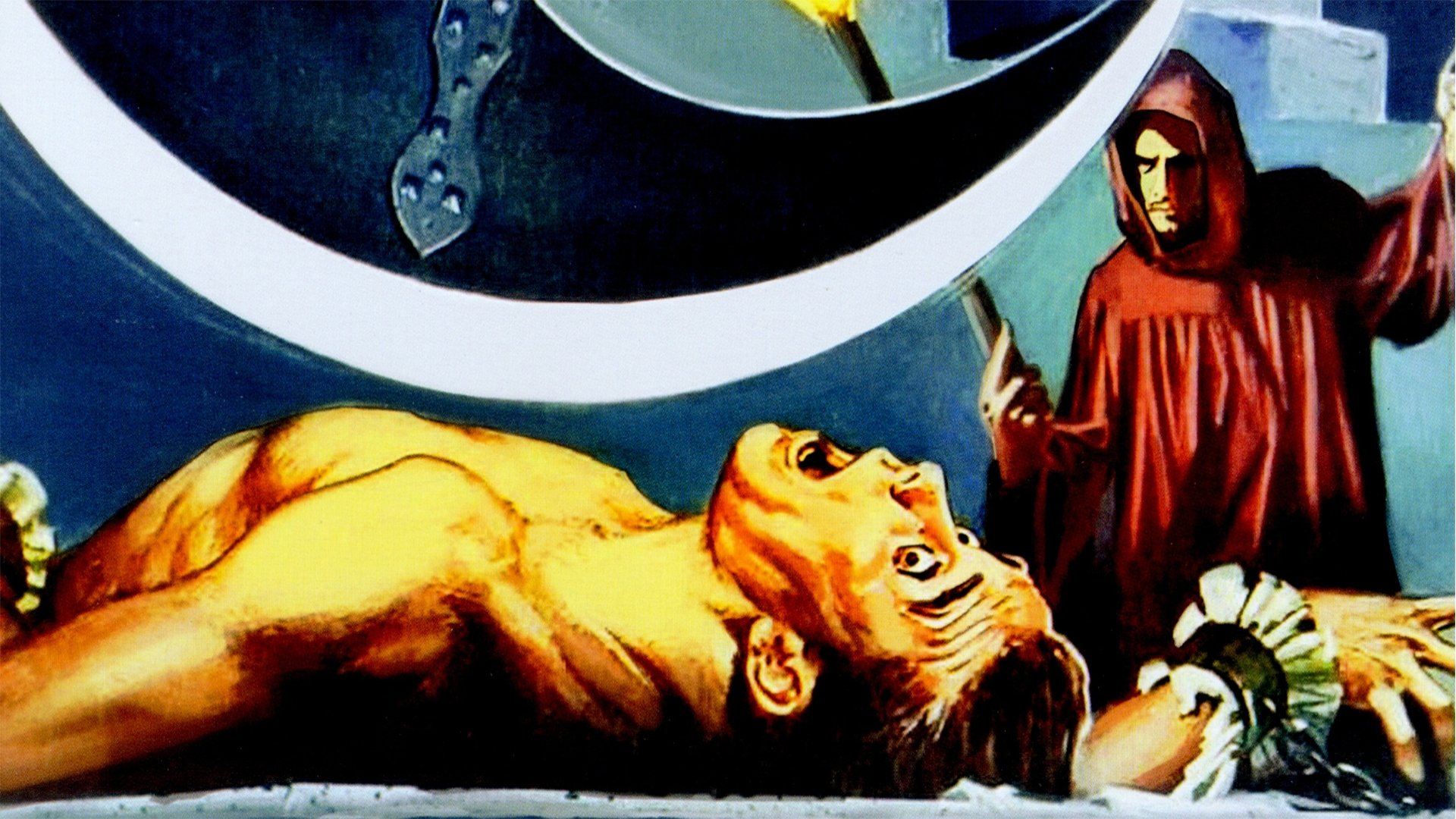
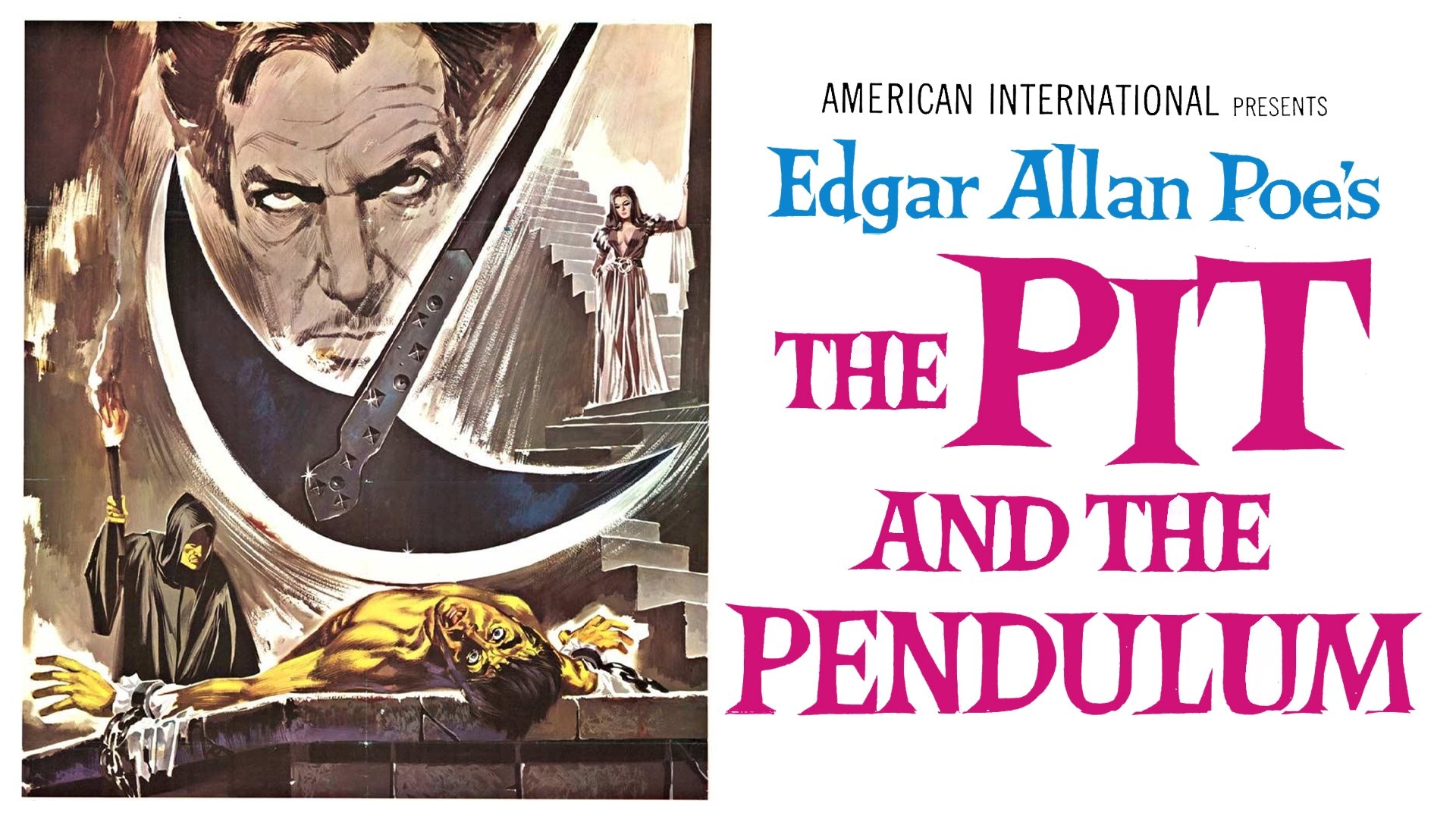
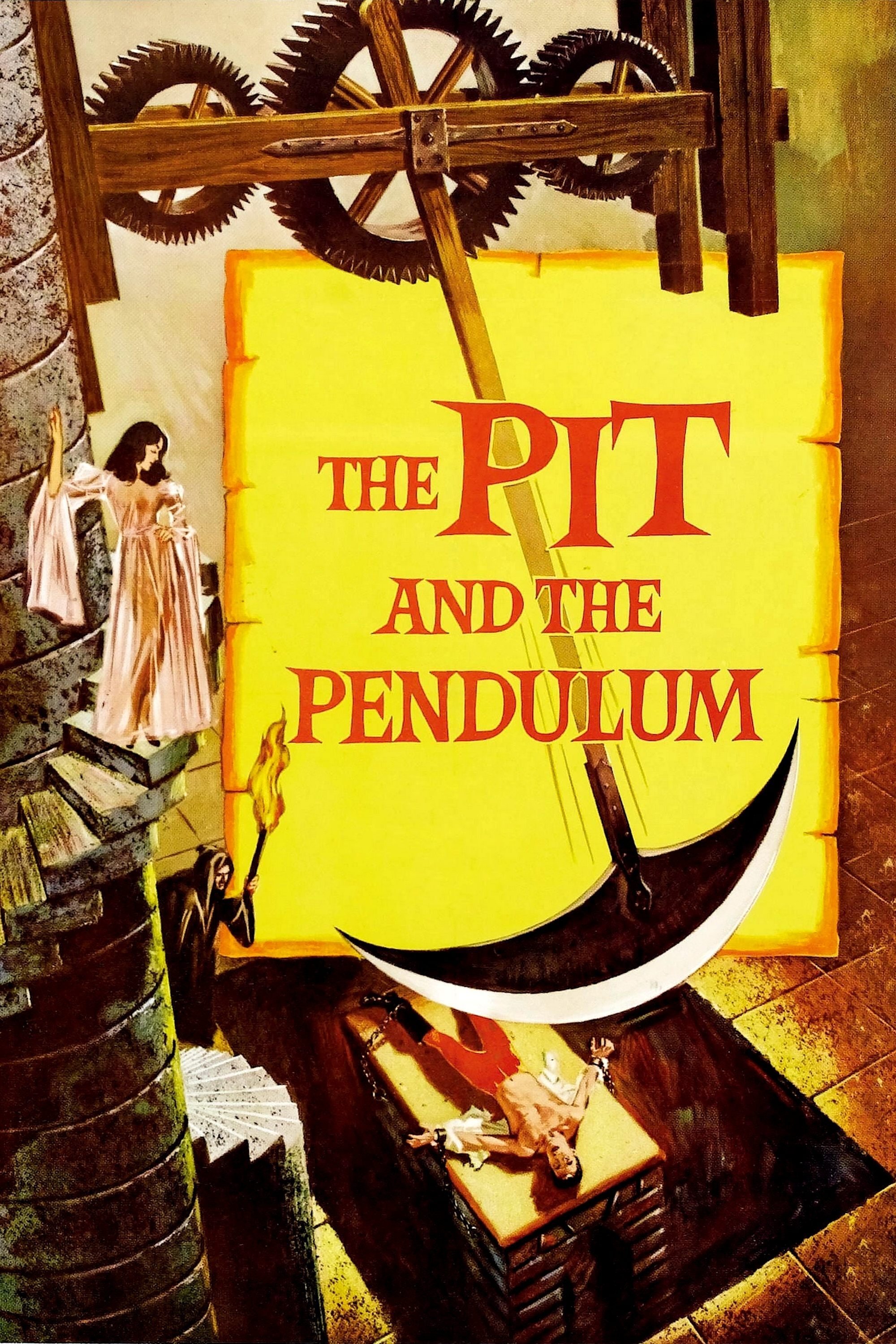
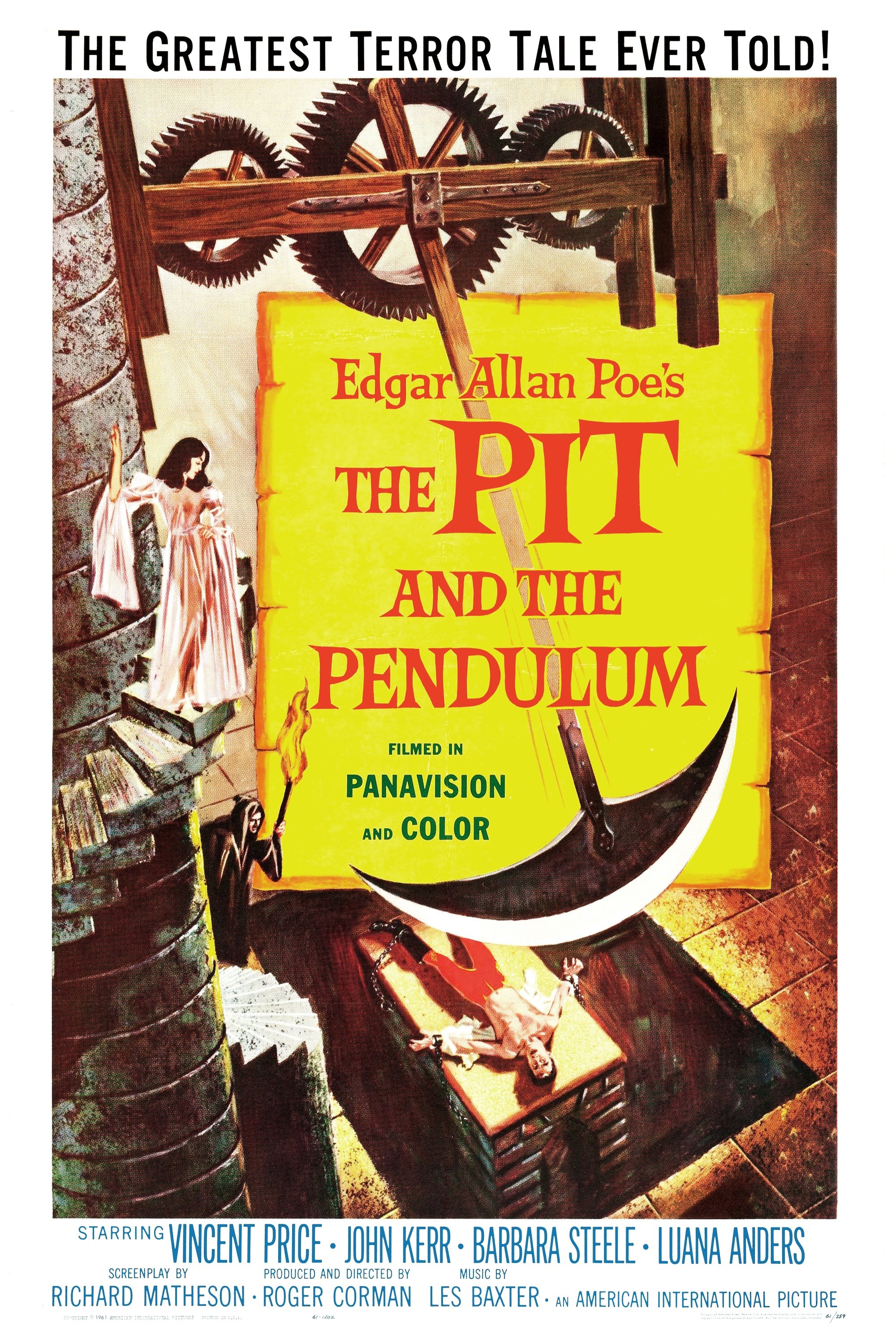
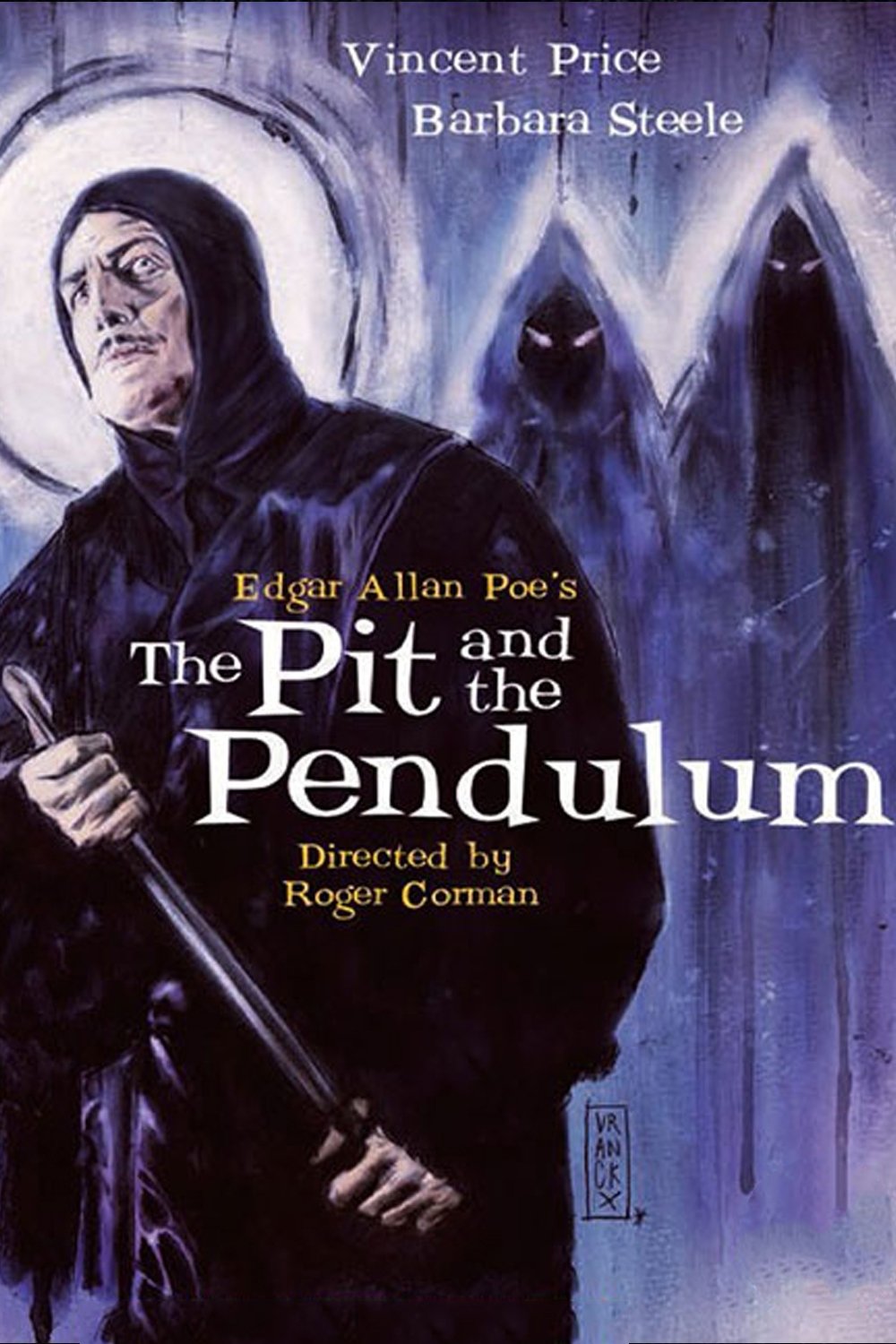
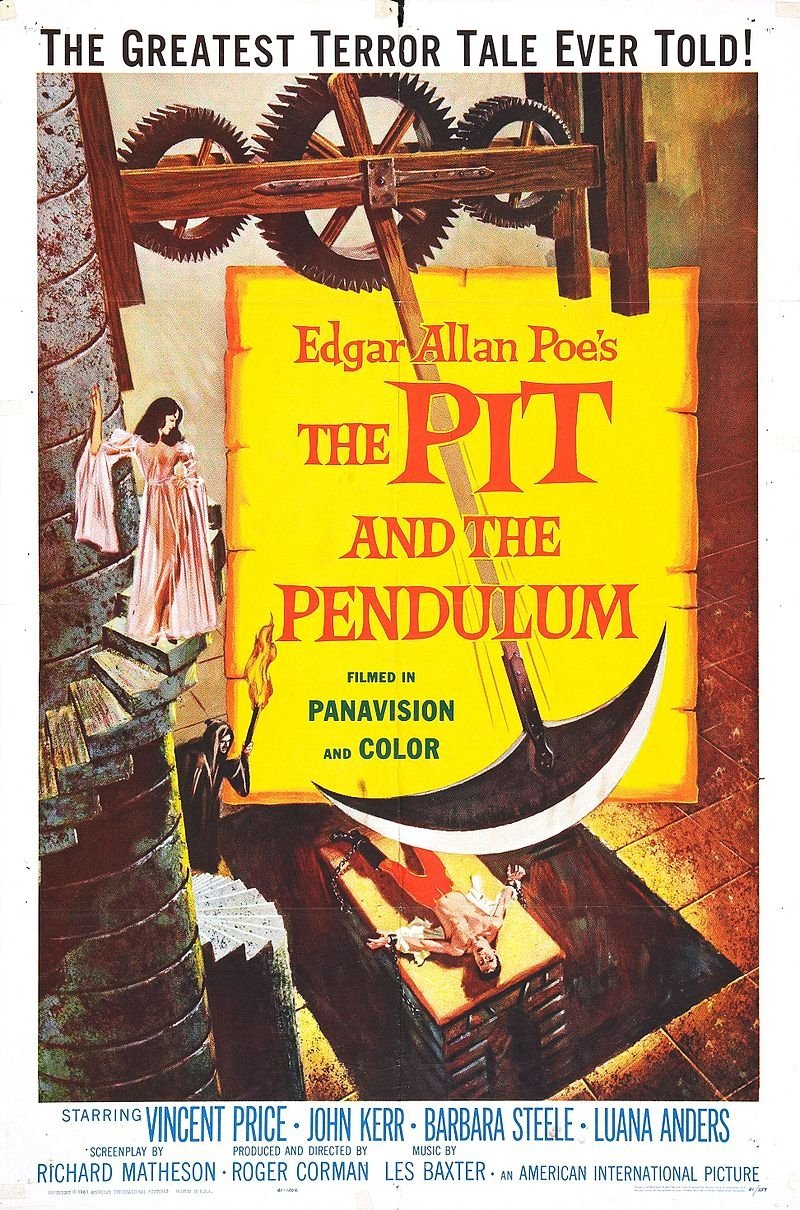
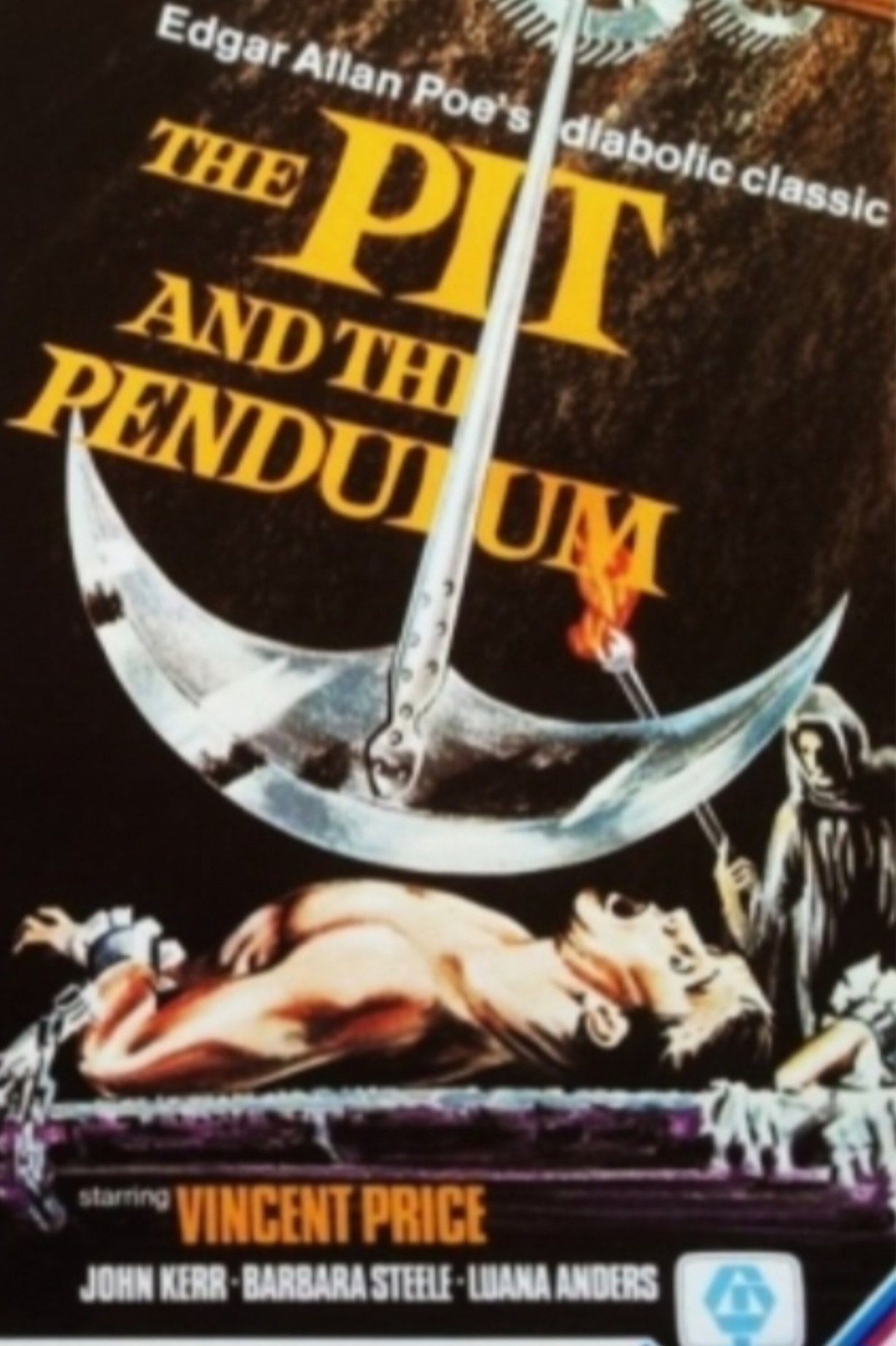
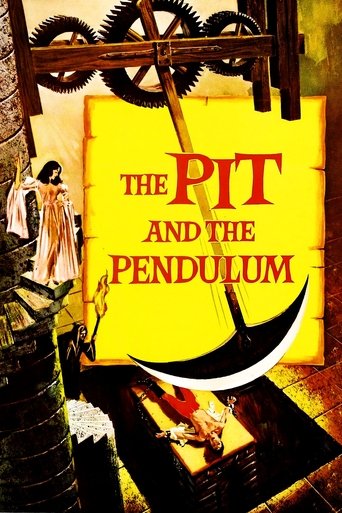
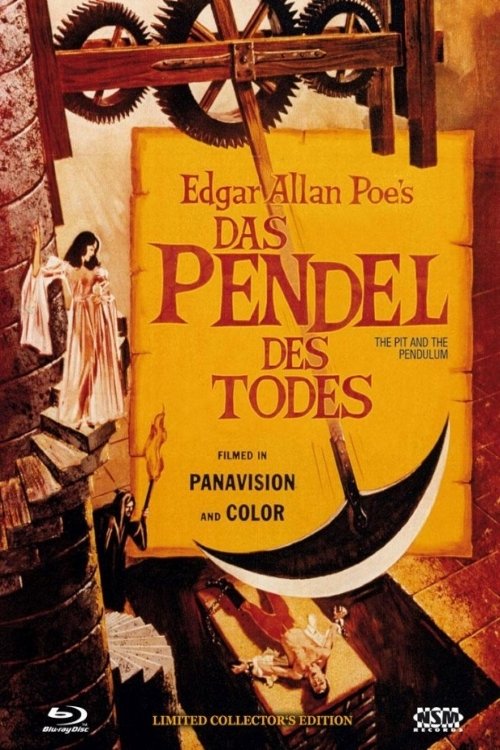
Pit and the Pendulum (1961) poster
Director
Production Company
Alta Vista Productions
Plot

Francis Barnard goes to Spain, when he hears his sister Elizabeth has died. Her husband Nicholas Medina, the son of the most brutal torturer of the Spanish Inquisition, tells him she has died of a blood disease, but Francis finds this hard to believe. After some investigating he finds out that it was extreme fear that was fatal to his sister and that she may have been buried alive!

Alternative Titles
El pozo y el péndulo (Argentina) La fosa y el péndulo (Argentina) — DVD title Бездната и махалото (Bulgaria) A Mansão do Terror (Brazil) O Poço e o Pêndulo (Brazil) La Chambre des tortures (Canada) — French El Péndulo de la Muerte (Chile) 陷坑与钟摆 (China) — Chinese
Show all 41 alternative titles Jáma a kyvadlo (Czechia) — Czech Das Pendel des Todes (Germany) Brønden og pendulet (Denmark) Dødspendulet (Denmark) — Home Video Title El péndulo de la muerte (Spain) El pou i el pèndol (Spain) — Catalan Kuilu ja heiluri (Finland) La chambre des tortures (France) Το εκκρεμές της αγωνίας (Greece) 陷坑與鍾擺 (Hong Kong SAR China) — Chinese Jama i klatno (Croatia) — Croatian A kút és az inga (Hungary) Il pozzo e il pendolo (Italy) 恐怖の振子 (Japan) — Japanese 저승과 진자 (South Korea) — Korean 함정과 진자 (South Korea) La fosa y el péndulo (Mexico) Het Mysterie van de Dodende Slinger (Netherlands) Dødspendelen (Norway) Studnia i wahadło (Poland) — Polish O Fosso e o Pendulo (Portugal) — Portuguese Fosa şi Pendulul (Romania) Puțul și pendula (Romania) — Romanian Jama i klatno (Serbia) Колодец и маятник (Russia) — Russian Dödspendeln (Sweden) Jama a kyvadlo (Slovakia) — Slovak Kолодец и маятник (Russia) Dehset Saati (Türkiye) — Turkish Провалля та маятник (Ukraine) — Ukrainian Edgar Allan Poe's Pit and the Pendulum (United States) El pozo y el péndulo (Venezuela) Njihalo strave (Serbia)

Trailers & Videos

2 videos

Film Guide & Analysis

Roger Corman's Poe adaptation: Matheson's Gothic mystery, inventive studio sets, low-key Panavision photography, Vincent Price and the mechanics of terror.

Pit and the Pendulum (1961) is a central work in Roger Corman's cycle of Edgar Allan Poe adaptations for American International Pictures. It followed the commercial success of House of Usher (1960), retaining Vincent Price and screenwriter Richard Matheson while pushing the Gothic material toward a mystery about inherited violence. The setting is a Spanish castle whose history of torture has become inseparable from its owner's family. The film's horror grows from the discovery of rooms, the reopening of buried events and the possibility that a dead woman has returned. Its climactic instrument of execution gives Poe's title a striking physical presence, although the machinery occupies only part of the story.

The production is also an unusually well documented example of how ambitious horror imagery could emerge from restricted resources. Contemporary accounts explain the construction of its vast interiors from rented scenery, the lighting devised by cinematographer Floyd Crosby and the optical treatment of disturbing flashbacks. Later testimony from Corman clarifies his decisions about casting, color and the dangerous-looking pendulum itself. These records make it possible to examine the film as both an adaptation and a specific achievement of studio craftsmanship, while its theatrical reception and subsequent preservation establish a documented place in American Gothic cinema.

From Poe's Torture Narrative to a Gothic Mystery

Poe's original story gives an unnamed prisoner of the Spanish Inquisition an immediate experience of terror. Darkness, the threat of a concealed pit and a descending blade turn his imprisonment into a struggle to understand the room around him. The narrator has little access to the identities or motives of his captors. Matheson's screenplay preserves the signature apparatus but constructs a different sequence of revelations: Francis Barnard travels to a castle to question the circumstances of his sister Elizabeth's death. Her husband, Nicholas Medina, seems devastated and unreliable, and each account of what happened introduces further uncertainty. The central mystery is therefore built around testimony and family history instead of the physical survival of an anonymous prisoner.

The narrative also gathers several familiar Poe concerns into one plot. Premature burial appears in Nicholas's fear about Elizabeth's fate, while the castle's decaying grandeur and ancestral guilt recall the world of The Fall of the House of Usher. Nicholas's father, Sebastian, was a torturer, and the son's recollections connect childhood trauma with the rooms concealed below the family residence. In interviews later cited by Turner Classic Movies, Matheson described imposing a suspense plot on a brief source story. The adaptation changes the nature of the suspense: viewers spend much of the running time deciding which explanation to trust before the violence of Poe's mechanism becomes unavoidable.
Production Planning and Studio Economy

American International Pictures turned to another Poe film after House of Usher demonstrated that a color period horror production could earn more than the company's inexpensive double-feature formula. AFI's reconstruction from contemporary trade publications records plans announced in 1960 and an early proposal to shoot in Italy. That plan changed as the company emphasized domestic production. Principal photography began at California Studios in Hollywood on January 4, 1961. The Academy of Motion Picture Arts and Sciences later described a production made for approximately $300,000 over fifteen shooting days. These figures are best treated as the Academy's documented estimate, since published accounts of the schedule and costs have not always agreed.

Corman told American Cinematographer that the short schedule depended on meetings with his principal collaborators before the company entered the stages. He rehearsed performers in advance so camera placement and dramatic intention did not have to be renegotiated repeatedly during photography. The arrangement gave the production a degree of preparedness that is visible in the complexity of its tracking shots. His account also describes a willingness to abandon literal period accuracy when a heightened image served the story better. That flexibility helps explain the film's deliberately composite Gothic architecture, which draws its effect from dramatic space and atmosphere instead of an exact reconstruction of sixteenth-century Spain.

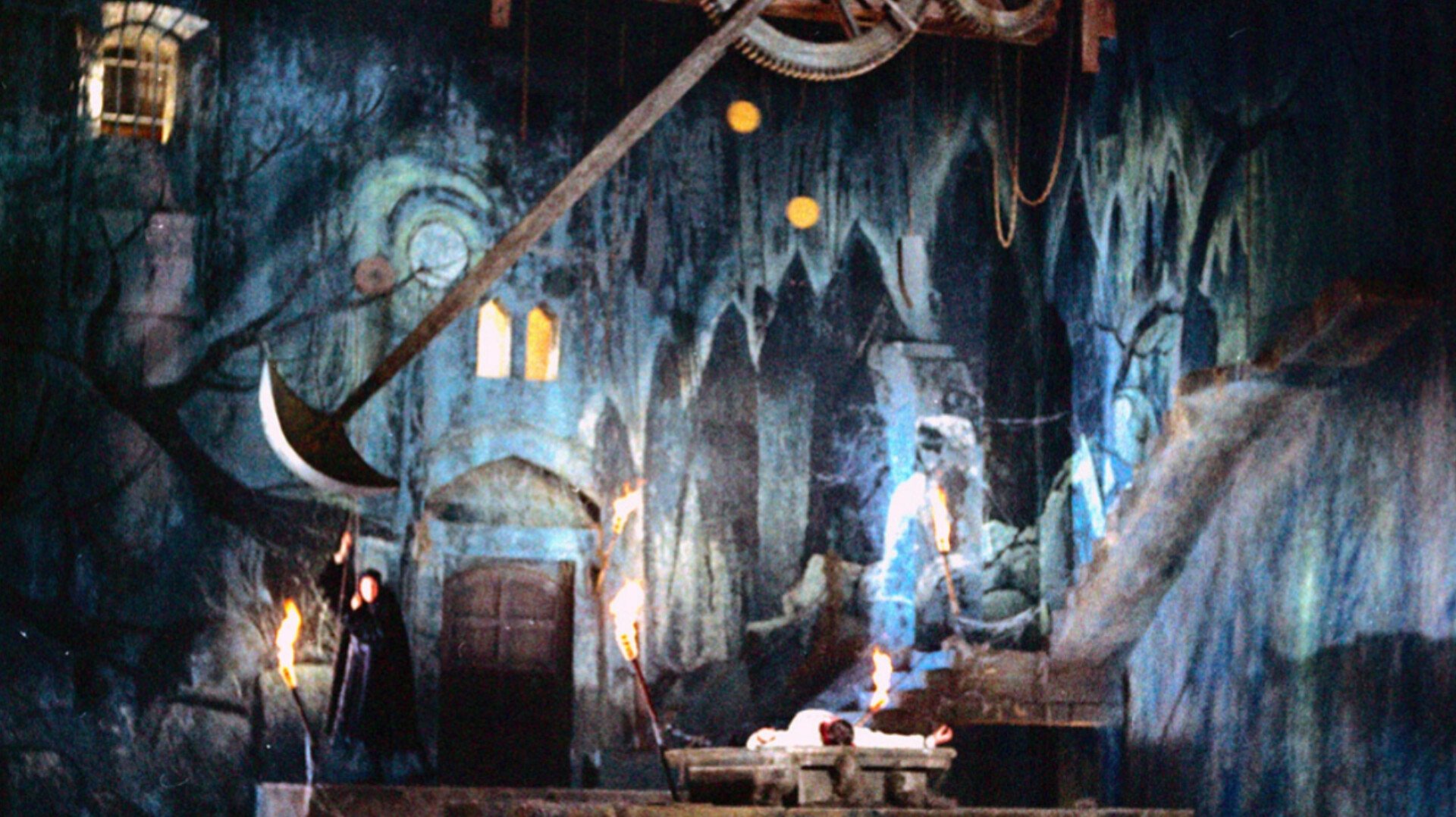
The most consequential economy involved Daniel Haller's sets. According to the original technical report in American Cinematographer, Haller designed a split-level castle and then rented existing architectural units from major-studio storage areas. Universal supplied arches, fireplaces, doorways and old torture props; staircases and stone walls came from other sources. The pieces were assembled across four sound stages, with additional construction joining them into a coherent interior. The dungeon was built conventionally. Recycling these elements provided a much larger apparent building than new construction alone would have allowed, and its connected levels were planned to accommodate complicated camera movement.

The Castle as a System of Confinement

The castle's principal rooms initially present a recognizable world of wealth and family ceremony. Their large doorways and broad staircases offer passage between spaces, yet the architecture steadily directs the visitor toward buried areas where ordinary household rules no longer apply. That descent is important to the film's conception of horror. The family residence contains evidence of an earlier institution of punishment, and a character trying to discover what happened must enter spaces controlled by someone else's memories. Francis can question Nicholas in the upper rooms, but the basement chambers have a different authority: their physical equipment embodies the violence associated with Sebastian Medina.

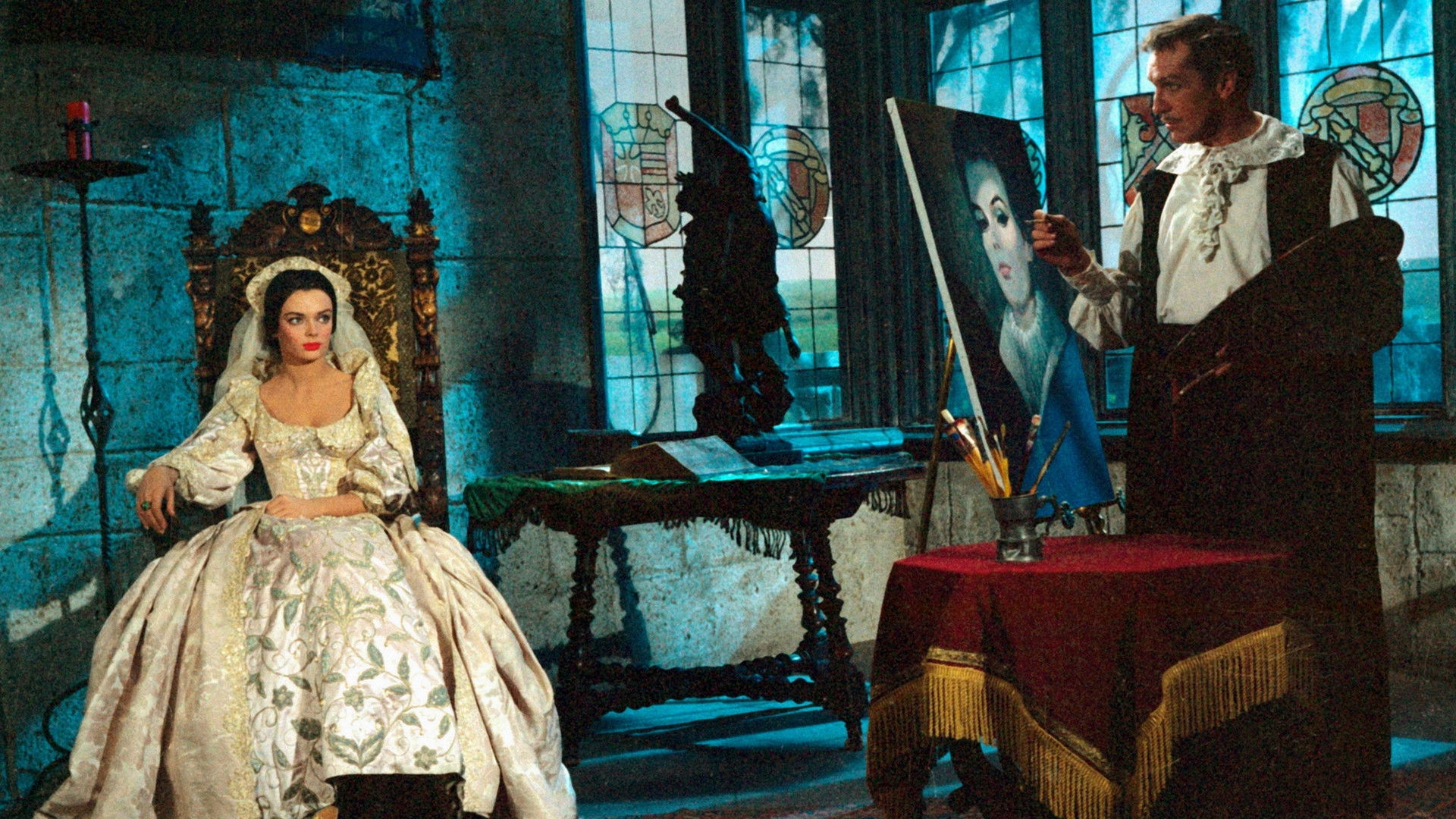
Haller's spatial arrangement also permits extended movement without breaking the continuity of a scene. Crosby described the difficulty of lighting action that might travel through four or five adjoining rooms in a single shot. For spectators, these transitions make the castle feel connected while allowing characters to disappear around corners or emerge from unexpectedly deep passageways. The sets contain a deliberate mixture of Spanish, French and German Gothic features. The film makes no claim to architectural scholarship; instead, windows, arches and staircases establish a space large enough to hold secrets and restrictive enough to prevent easy escape. Its geographic uncertainty intensifies as the investigation moves below ground.

Color Photography and Distorted Memory

Crosby's photography gives the film a visual progression from partial clarity to increasingly severe darkness. In the 1961 American Cinematographer study, he explained that the early castle scenes were handled in medium low-key light, while later passages moved toward extreme low-key conditions. He sometimes underexposed faces and backgrounds separately to preserve figures against receding stonework. Torches appear to motivate light within the story, but Crosby deliberately avoided the conventional flicker effect: with extensive camera travel and limited shooting time, maintaining its consistency would have been impractical. The result is carefully controlled illumination that sustains the atmosphere across moving compositions across successive shots.

The flashbacks are much less stable. Corman, Haller and Crosby sought a recognizable difference between present action and Nicholas's fragmentary childhood recollections. They filmed the remembered material in monochrome, then used tinting and toning to produce blue highlights and red shadows. Wide-angle lenses, slanted frames, violent camera movement and optical distortion break the ordinary spatial order. Vignetting further restricts what can be seen. American Cinematographer describes these operations in unusual technical detail, making it possible to identify an engineered photographic treatment instead of attributing the images vaguely to psychedelic influence. As an interpretation, their disturbed perspective reflects the difficulty of separating remembered events from Nicholas's present fear.

The exterior prologue required a different adjustment. The coastline at Palos Verdes supplied waves and cliffs, but Crosby encountered bright weather when the script called for an ominous arrival. A polarizing filter and underexposure darkened the sky on location. Painted extensions then helped establish an imposing building beyond what was physically available. In a 2021 interview, Corman recalled discussing a sombre color range with Haller, combining blues and other subdued tones without allowing black to dominate the composition. The controlled palette links the exterior journey with the heavy interior atmosphere, while its contrasts remain visible in the widescreen compositions.
Vincent Price, Barbara Steele and the Family Curse

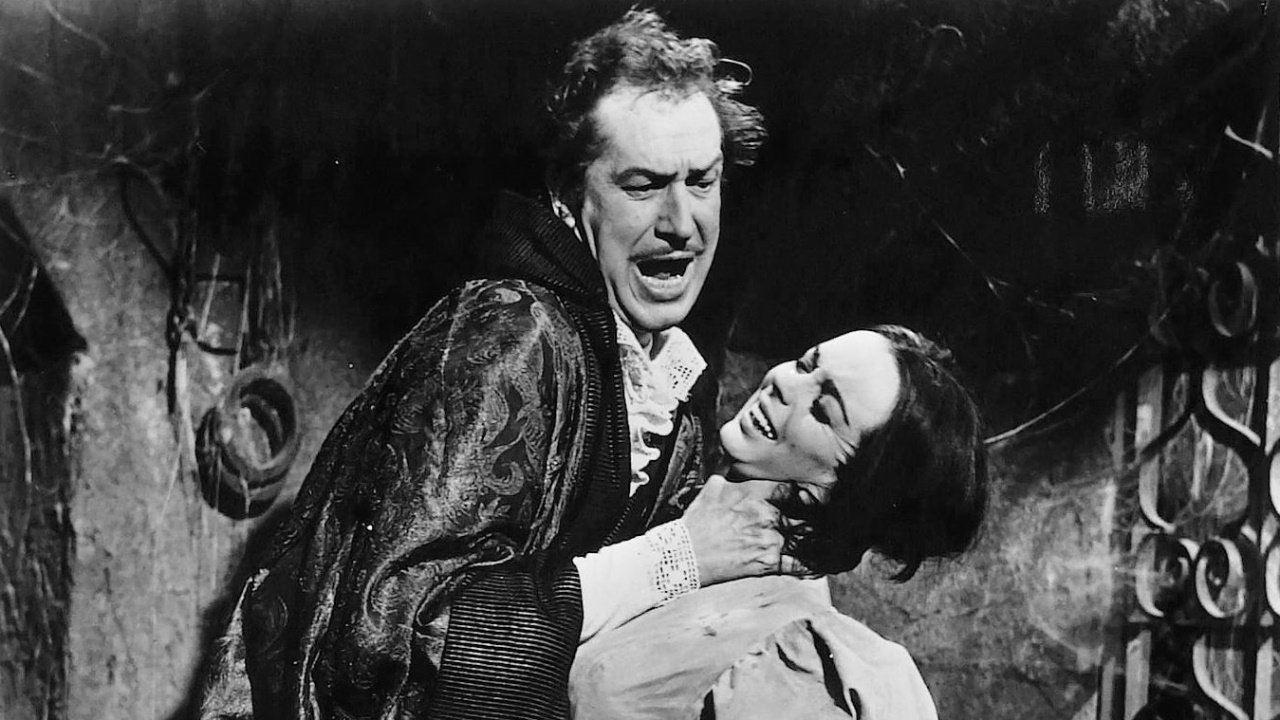
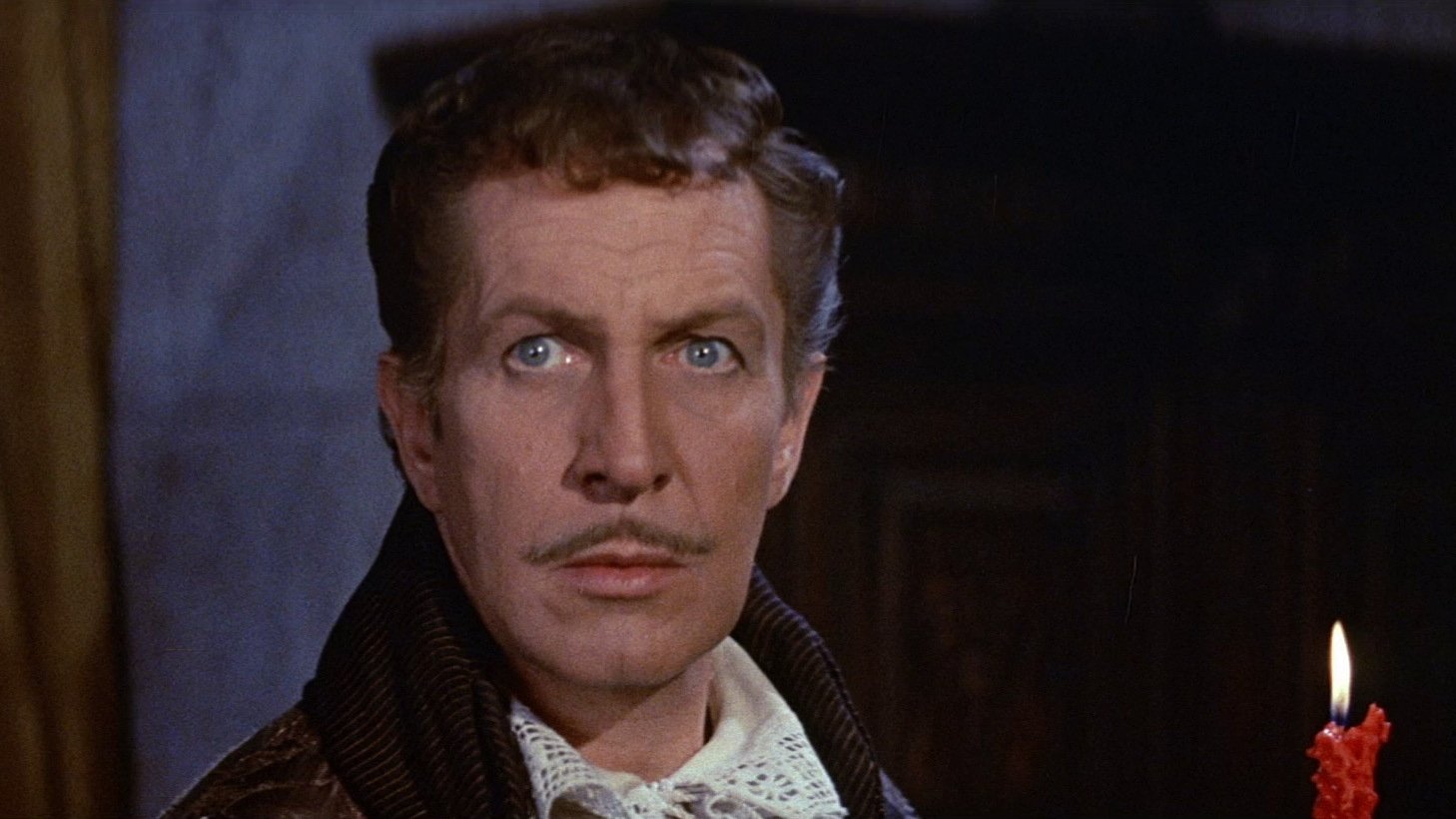
Price's work depends on a contrast between Nicholas's exhaustion and the commanding cruelty associated with his father. The film allows the actor to inhabit both Nicholas and Sebastian, making the resemblance an explicit expression of the son's fear of inherited violence. Nicholas speaks and moves as someone who has been weakened by grief, then becomes increasingly subject to the old torturer's authority. The eventual transformation turns a question about supernatural haunting into a crisis of identity. Price's heightened gestures in the climactic scenes are inseparable from this change in role, and the grotesque theatricality of the final confrontation follows the story's obsession with ancestral punishment.

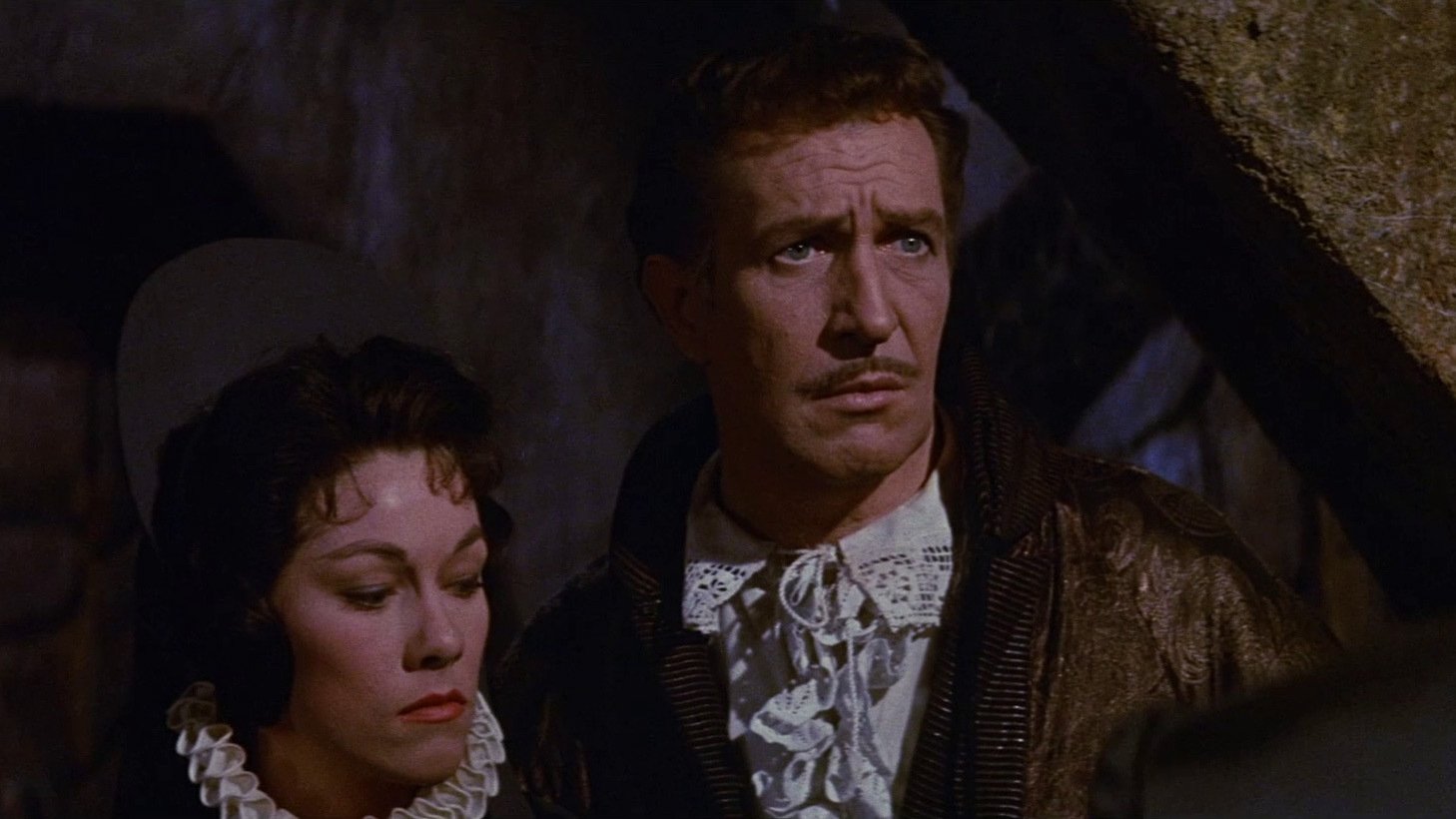
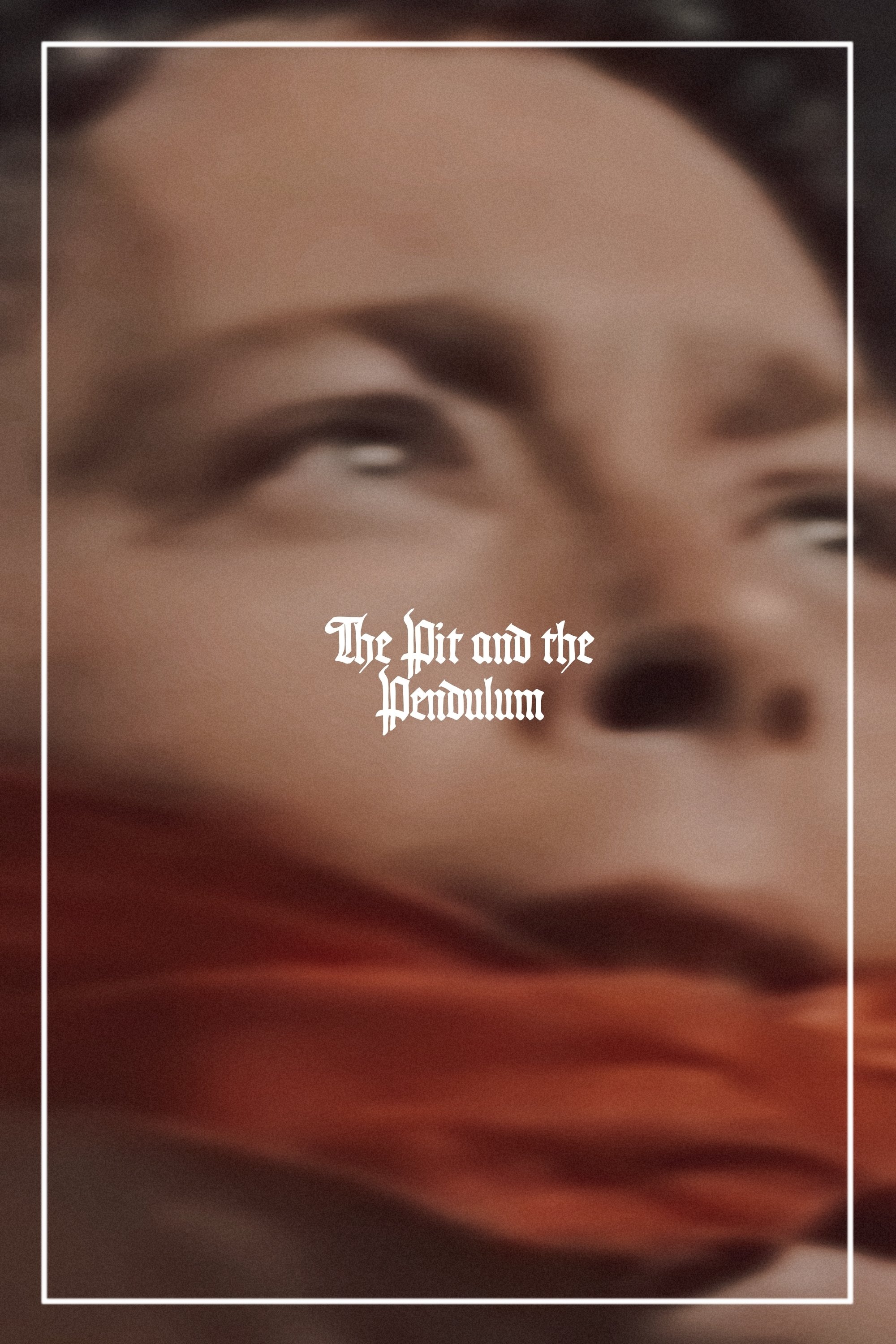
Corman's account of casting Barbara Steele is unusually specific. He had seen her performance in Mario Bava's Black Sunday (1960) and considered its dark quality suited to Elizabeth. He also recalled being surprised by her everyday English accent after seeing her in an Italian film, and bringing in a dialogue coach for the aristocratic character. These recollections explain a production decision without establishing every detail of her eventual soundtrack treatment. On screen, Steele's presence remains concentrated in images of death, apparent resurrection and confinement. John Kerr provides a more restrained counterpart as Francis, whose insistence on a rational explanation keeps the investigation moving through increasingly troubling evidence.

The Pendulum, Mechanical Fear and the Climax

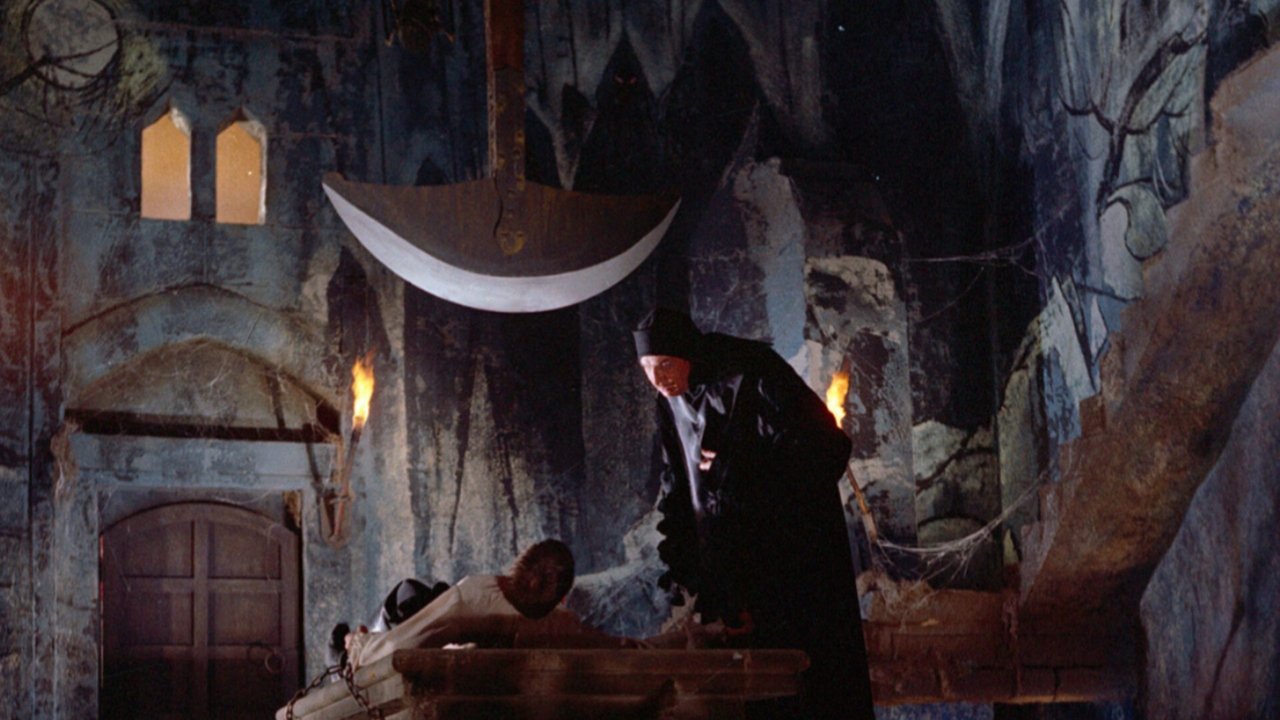
The famous torture device required a dedicated sound stage. Haller's enormous set rose toward the rafters; Crosby photographed it with a wide-angle Panavision lens, leaving room for extensions added by optical printing. These techniques expanded the apparent dimensions of the chamber and gave the swinging blade a scale beyond the practical space. Low-positioned lights cast its moving shadow across the background, a decision Crosby said required a late adjustment to the planned lighting. The image emphasizes the gap between the immobile prisoner and an apparatus whose motion cannot be negotiated. Poe's immediate terror is thus restored at the point where the film's mystery becomes physical danger.

The danger had a material counterpart during rehearsals. Corman later remembered that the pendulum carried a blunted blade, yet Kerr worried about being placed beneath it. The director lay on the platform himself to demonstrate the setup and admitted that the experience made him reconsider how safe it felt. His recollection documents the performance circumstances, although it should not be inflated into a claim of an actual injury or mechanical failure. The sequence draws suspense from the interval between successive swings, supported by Les Baxter's ominous score and Anthony Carras's editing. Corman also remembered recording additional camera movements near the end of the allotted day and intercutting them with the principal apparatus footage.

After the apparent mystery resolves, the film retains the possibility of a further punishment. Its final close-up returns to a trapped woman whose attempted manipulation has placed her in the position formerly occupied by the victims of the Inquisition. The disclosure has an especially severe meaning because the chamber has been declared permanently sealed. The last image makes the old torturer's methods persist after the characters believe they have ended them. The ending's visual cruelty is achieved through framing and withheld escape, with no requirement for an extended display of bodily mutilation.

Release, Critical Response and Preservation

The American Film Institute records a New York opening on August 23, 1961, followed by a Chicago premiere later that month and a Los Angeles opening in September. American International promoted the Chicago engagement with an oversized pendulum attached to the theater marquee, according to period reporting preserved in the AFI catalogue. This emphasis on the instrument connected a literary title to an immediately legible cinema attraction. AFI also documents commercial success and reports that, by early 1962, the film was positioned to exceed the cumulative domestic gross of its 1960 predecessor. That comparison establishes a contemporary trade assessment without requiring uncertain worldwide revenue totals.

Critical responses were not uniform. AFI characterizes the initial reviews as mixed, while Turner Classic Movies preserves several favorable contemporary judgments. Howard Thompson's New York Times review emphasized the combination of color, decoration and music; Time and The Hollywood Reporter also found strengths in its crafted atmosphere. These responses show how period commentators could admire the film's Gothic production values while remaining divided over the extravagance of its mystery and acting. The contrast is worth retaining because later enthusiasm for the Poe cycle can obscure the variety of its original reception. Corman subsequently returned to Poe with Premature Burial and Tales of Terror in 1962, extending the format developed by the two earlier successes.

The film's historical visibility has also been sustained through archival work. In 2016 the Festival de Cannes presented a 35mm copy in its Cannes Classics selection, describing preservation from the original negative and digital repair of damaged footage with Corman's supervision. That screening was part of the film's later archival circulation, separate from its 1961 commercial release. The combination of institutional preservation, first-hand technical documentation and continuing critical discussion gives this particular Corman production a well-grounded place in the history of color Gothic horror. Its achievement can be traced to identifiable choices of adaptation, photographic design and staging without relying on vague claims of influence.

References

  1. AFI Catalog The Pit and the Pendulum (1961)

    Film history assembled from contemporary trade reports, including the change in production plans, January 1961 shoot, theatrical premieres and commercial reception.

  2. American Cinematographer The Pit and the Pendulum: A Study in Horror Film Photography

    Herb A. Lightman's original 1961 technical investigation with testimony from Corman and Crosby on lighting, set reuse, lens work and optical flashbacks.

  3. Latin Horror Exclusive Interview: Roger Corman on 60th Anniversary of The Pit and the Pendulum

    Justina Bonilla's direct interview documents casting Barbara Steele, palette decisions, rehearsal of the swinging pendulum and late additions to the climax.

  4. Turner Classic Movies The Pit and the Pendulum (1961)

    Jeff Stafford's detailed historical feature incorporates Richard Matheson's accounts of adaptation, contemporary critical responses and the film's relation to the Poe cycle.
  5. Festival de Cannes The Pit and the Pendulum, Edgar Allan Poe Seen by Roger Corman
    Cannes Classics article covering the film's cinematic style and the archival preservation and repair of the 35mm version presented in 2016.

Cast

View Full Cast & Crew →

Release & Distribution

Production Companies (1)

  • Alta Vista Productions

Distributors (1)

  • American International Pictures US

Release History (6)

Release DateTerritoryRelease TypeFormatDistributorCertificationNotes
1961-08-12 United States Theatrical — — —
1961-11-24 United Kingdom Theatrical — — 12 London
1962-01-03 Italy Theatrical — — —
1962-09-10 Sweden Theatrical — — 15
1962-09-28 Ireland Theatrical — — G
2013-12-06 Germany Physical — — 12
Betrayal cuts both ways!