The Horrible Dr. Hichcock (1962)

IT
HORROR FILM
SUBGENRES GOTHIC NECROPHILIA
Runtime
88 min
Release
January 1, 1962
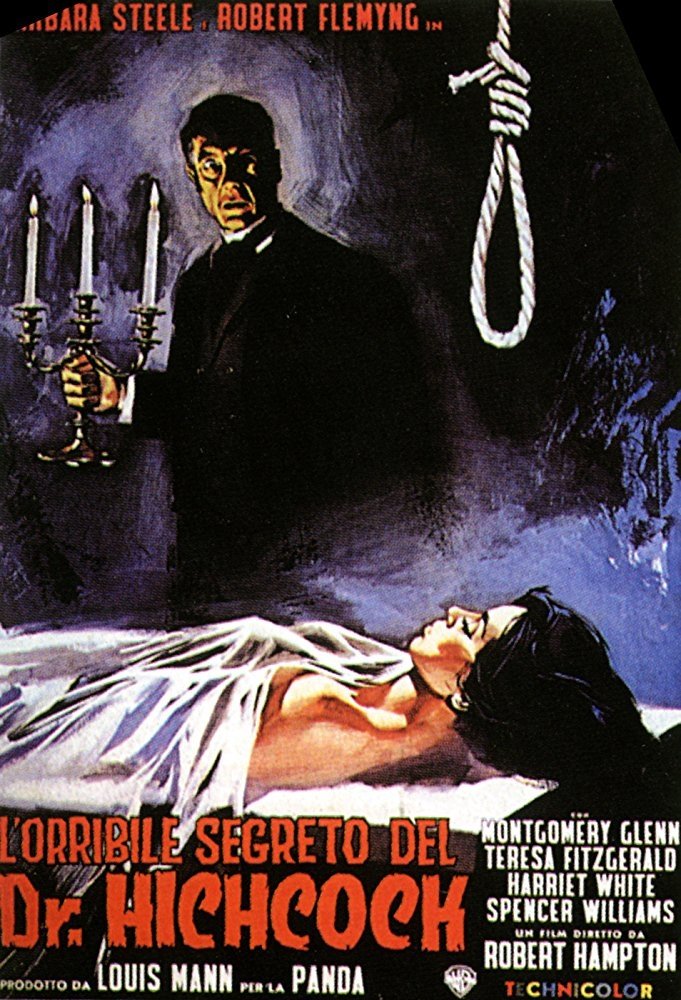
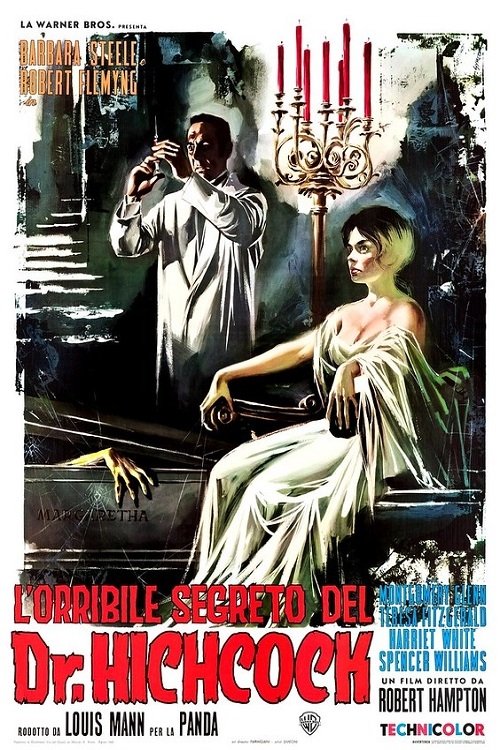
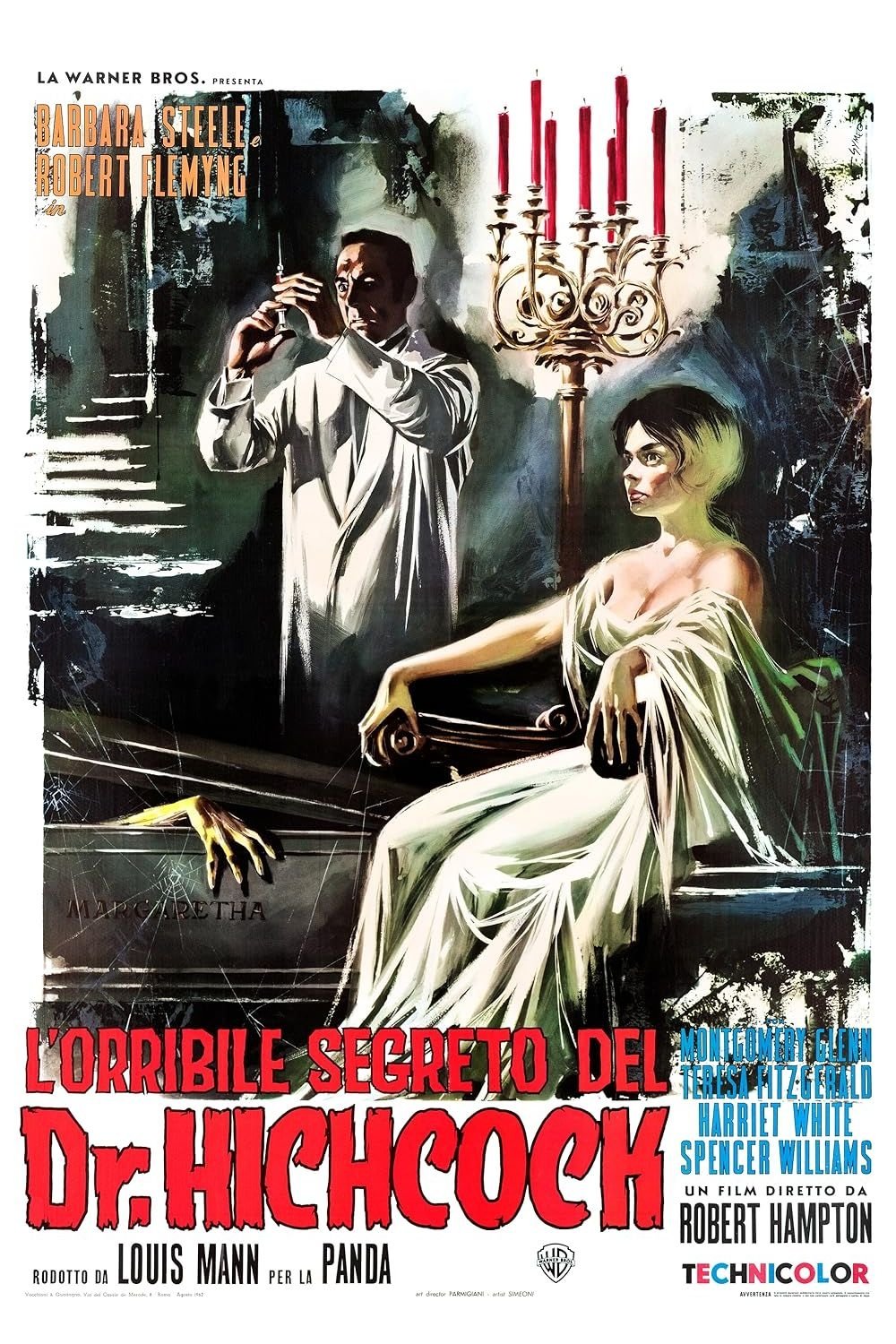
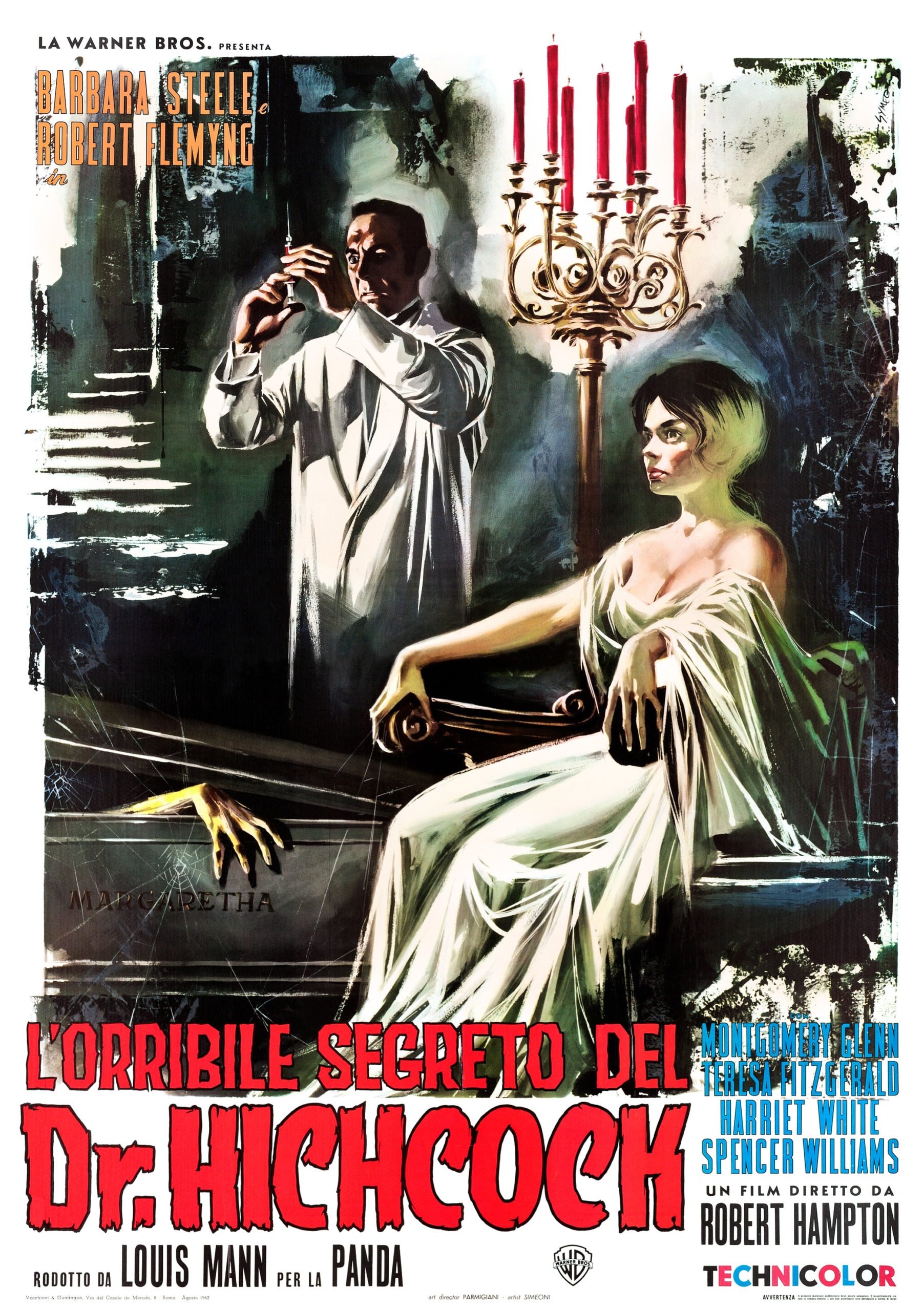
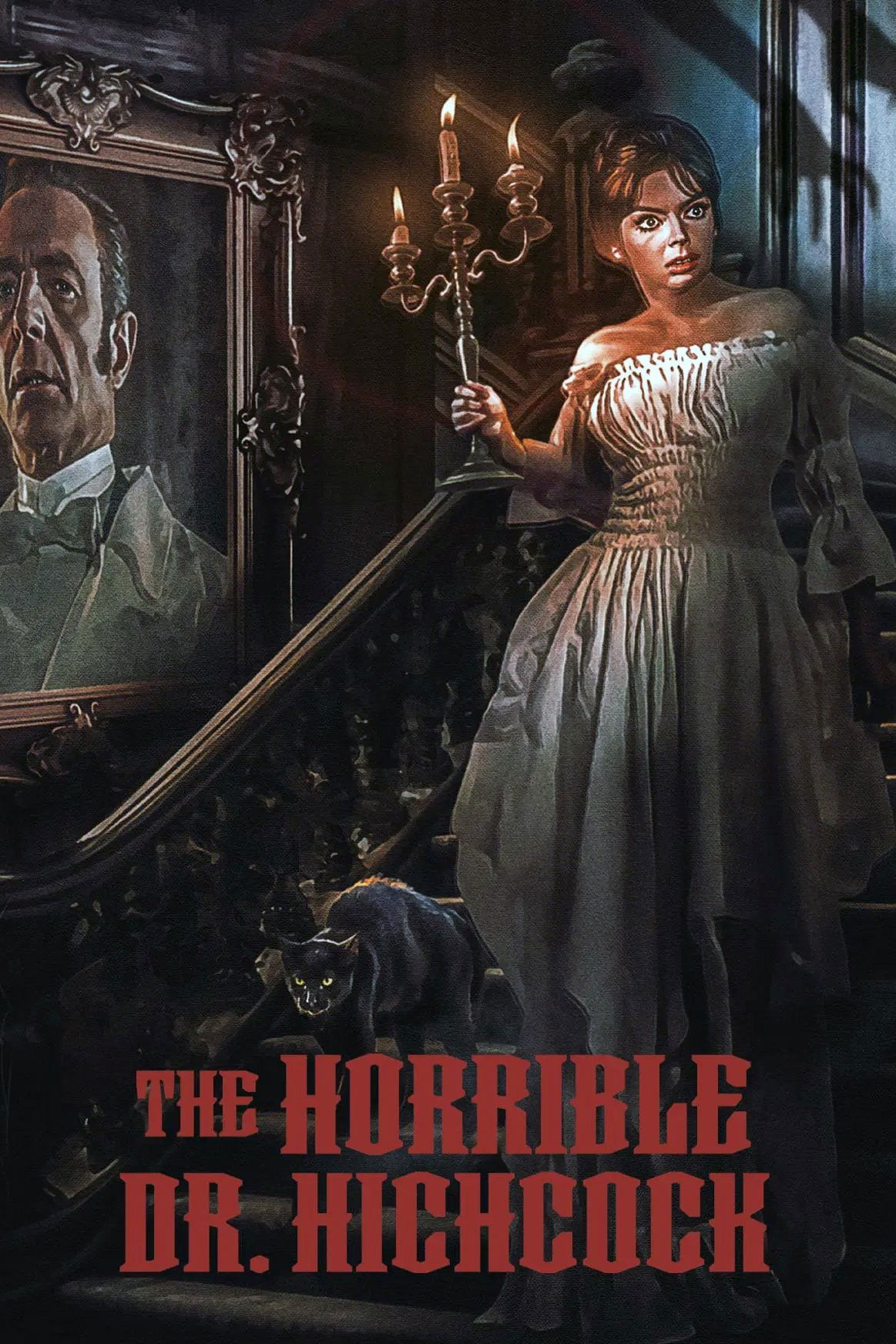
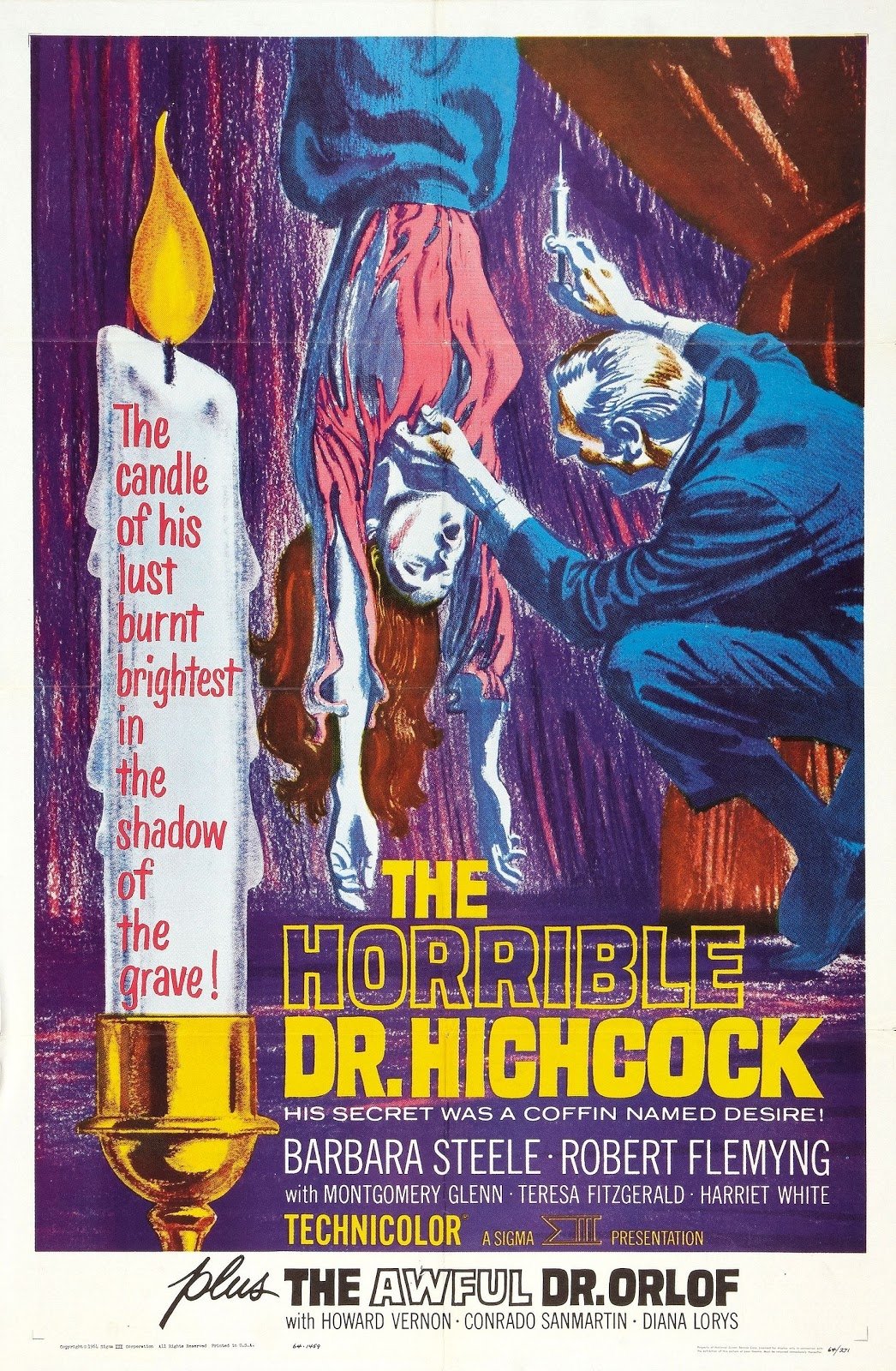
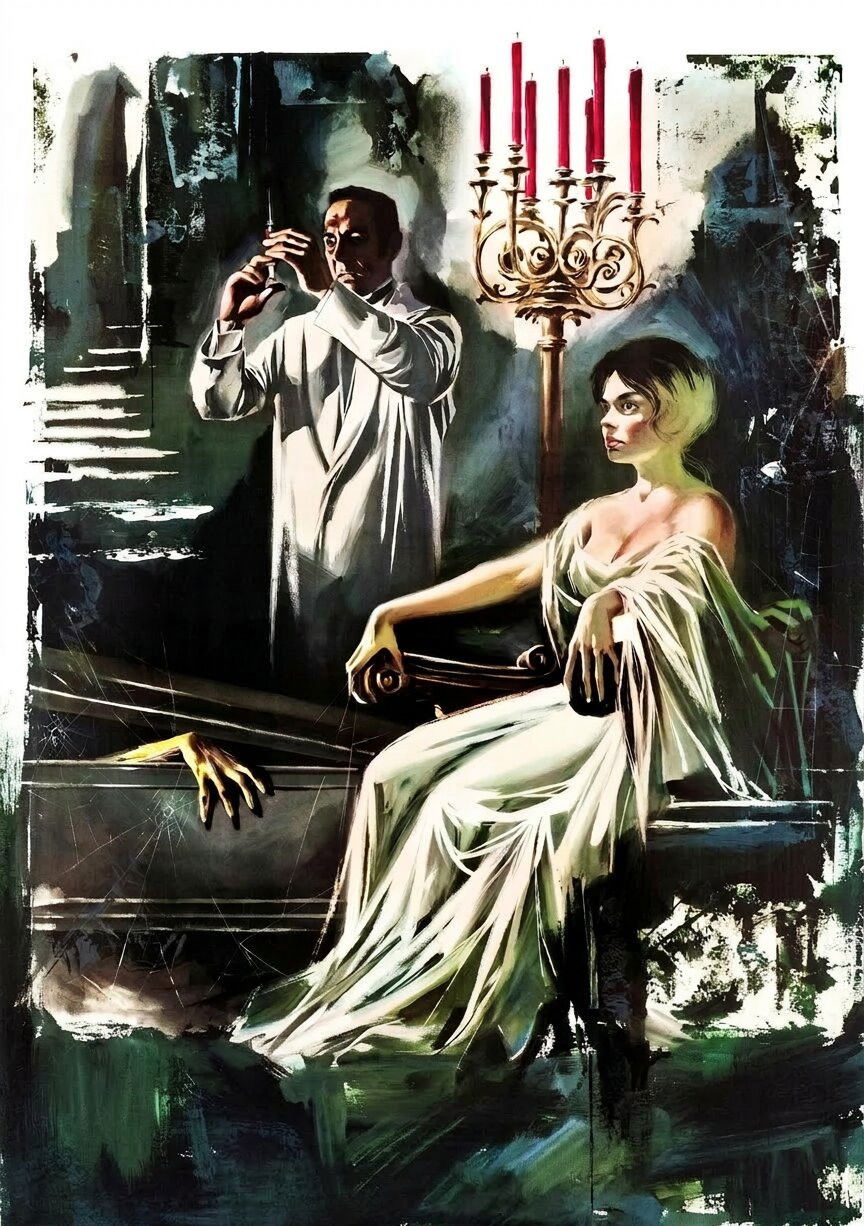
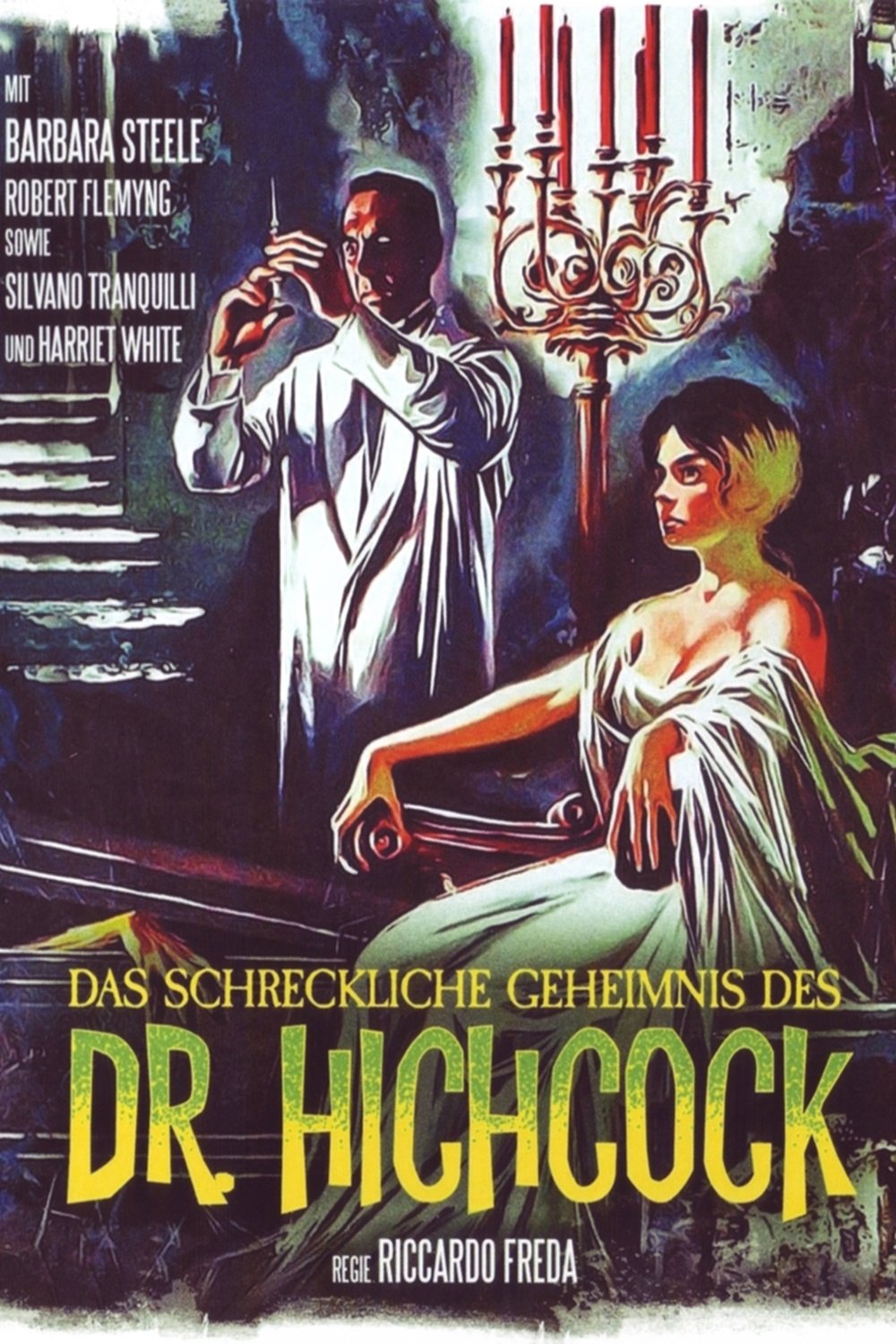
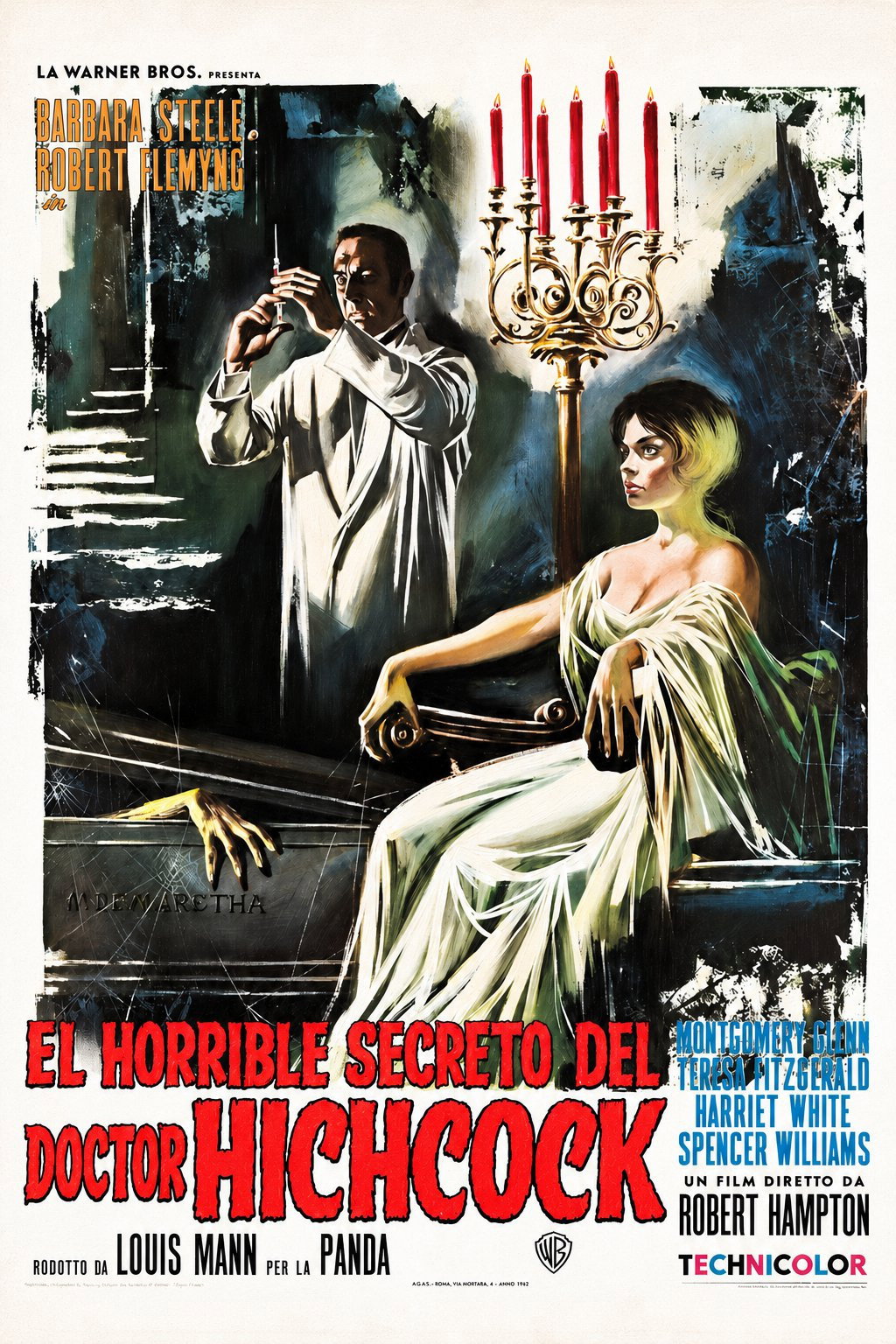
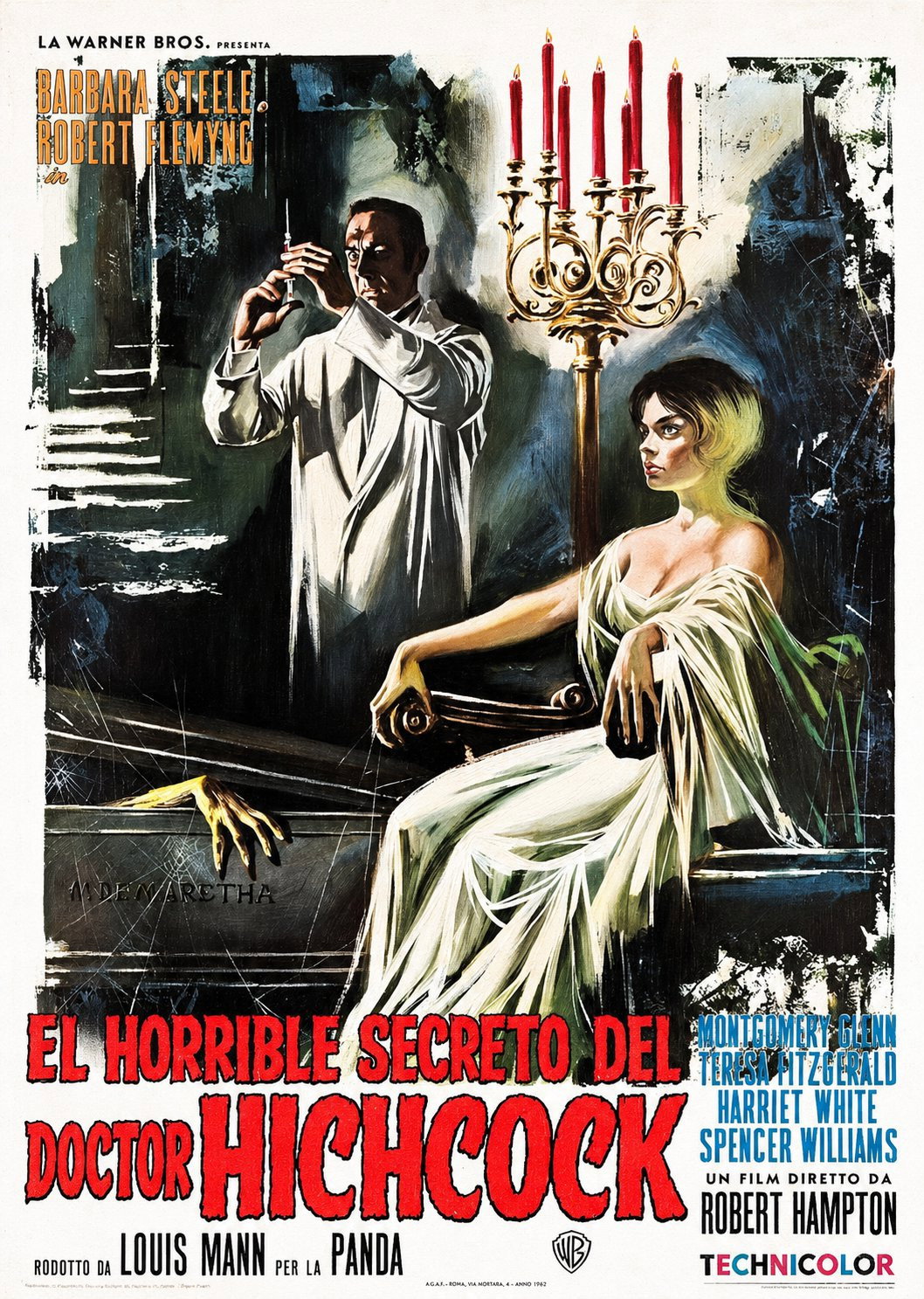
The Horrible Dr. Hichcock (1962) poster
Director
Production Company
Panda - Società per l'Industria Cinematografica
Plot

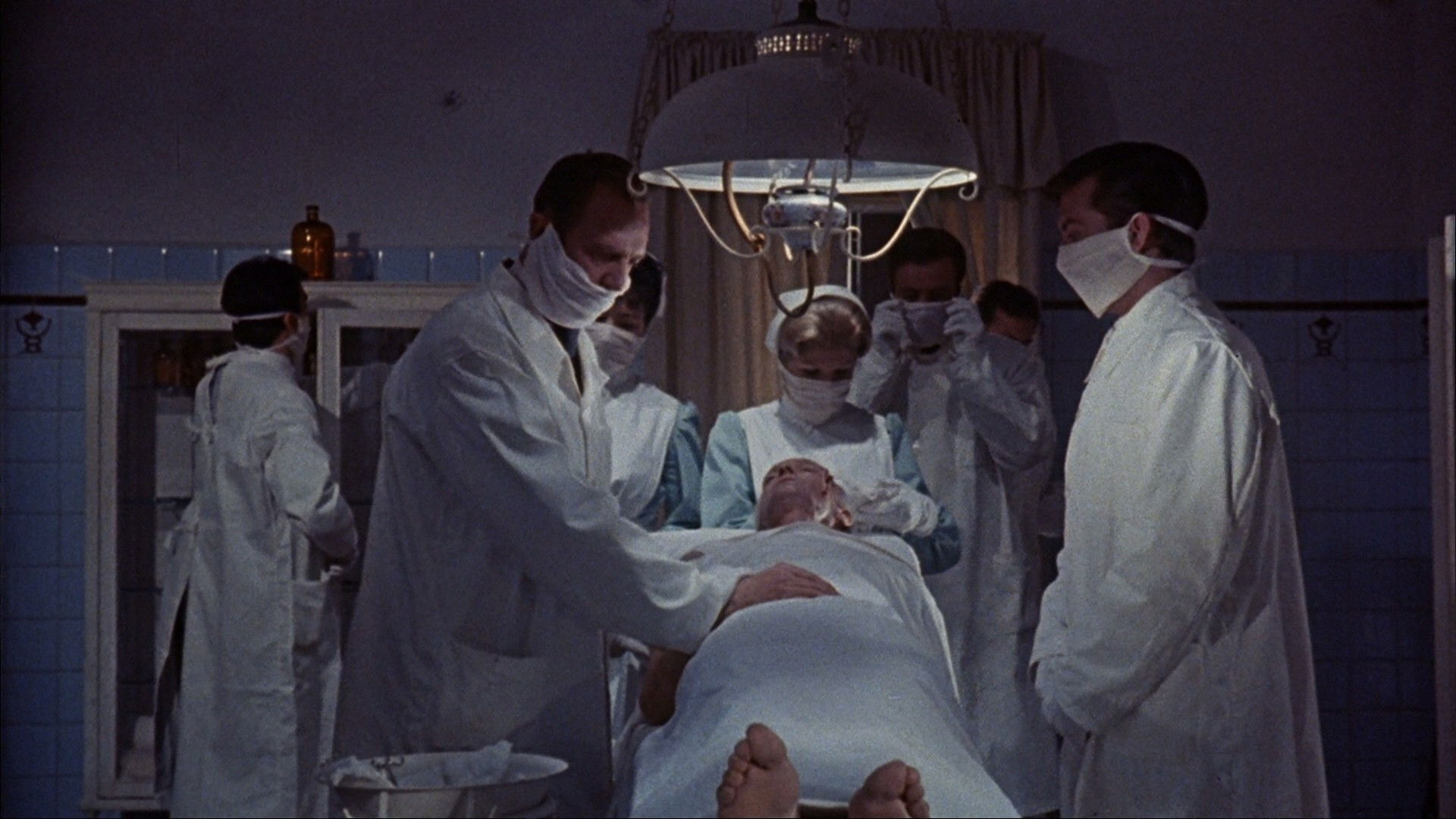
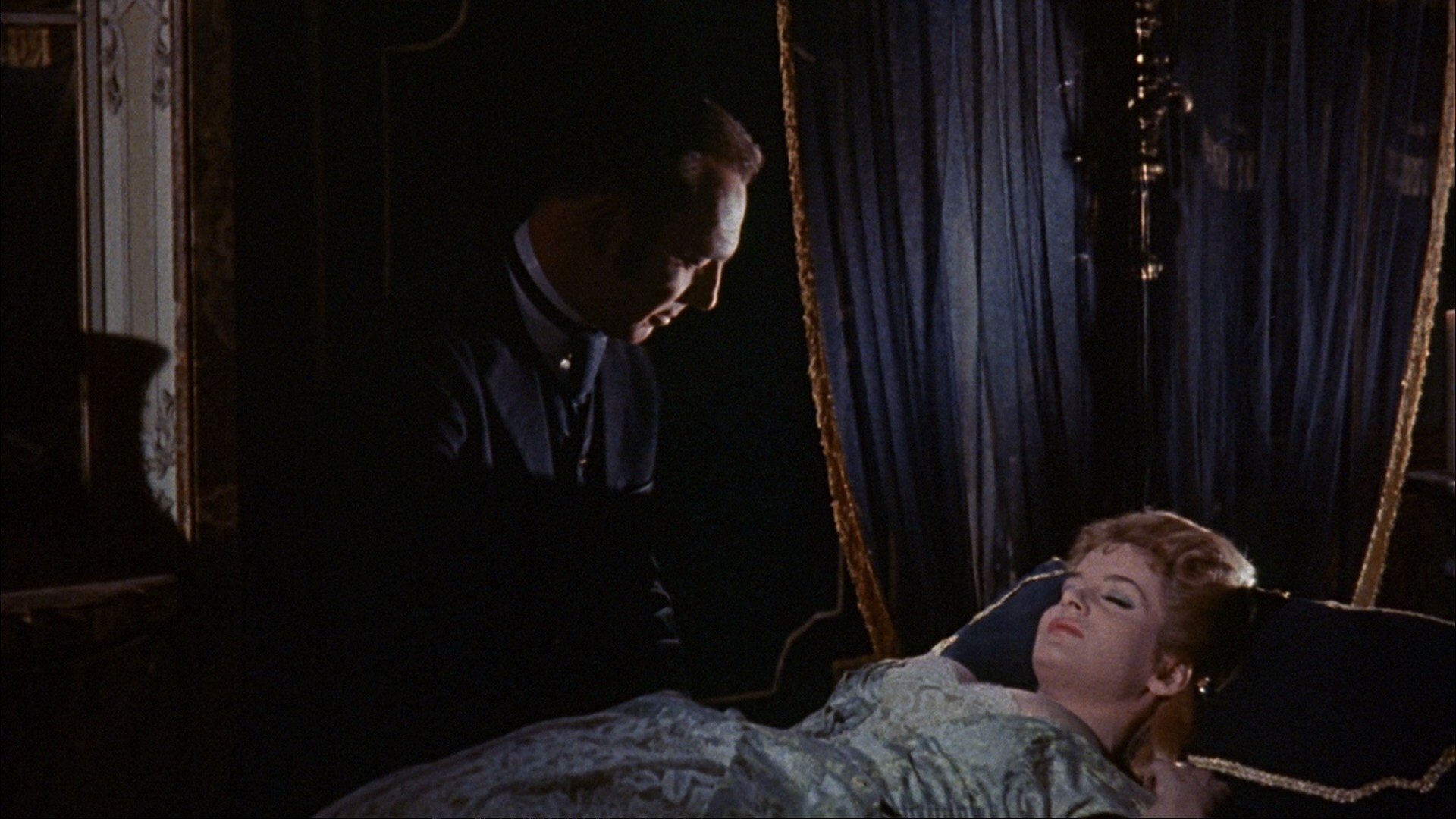
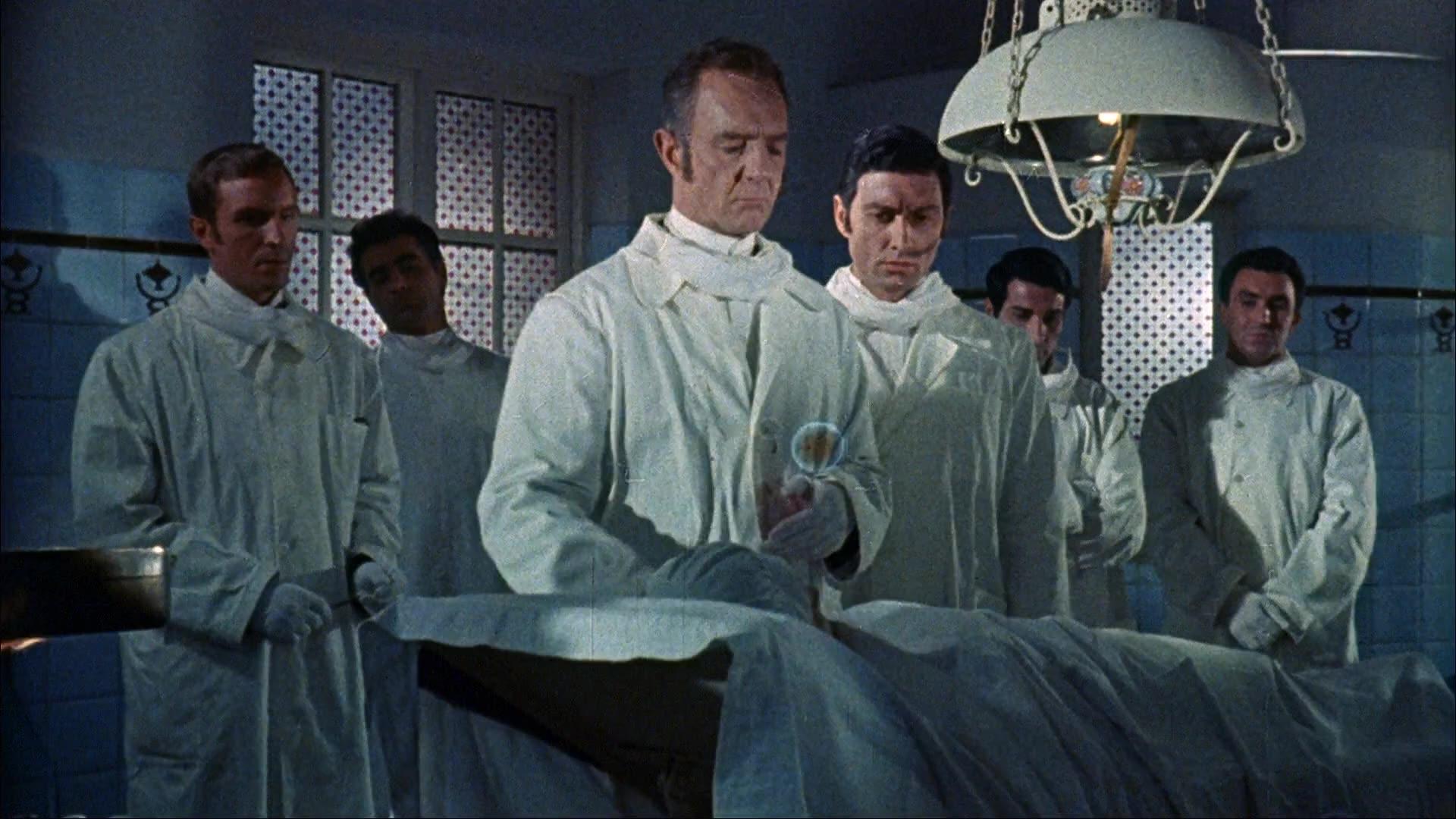
The year is 1885, and necrophiliac Dr. Hitchcock likes to drug his wife for sexual funeral games. One day he accidentally administers an overdose and kills her. Several years later he remarries, with the intention of using the blood of his new bride to bring his first wife's rotting corpse back to life.

Alternative Titles
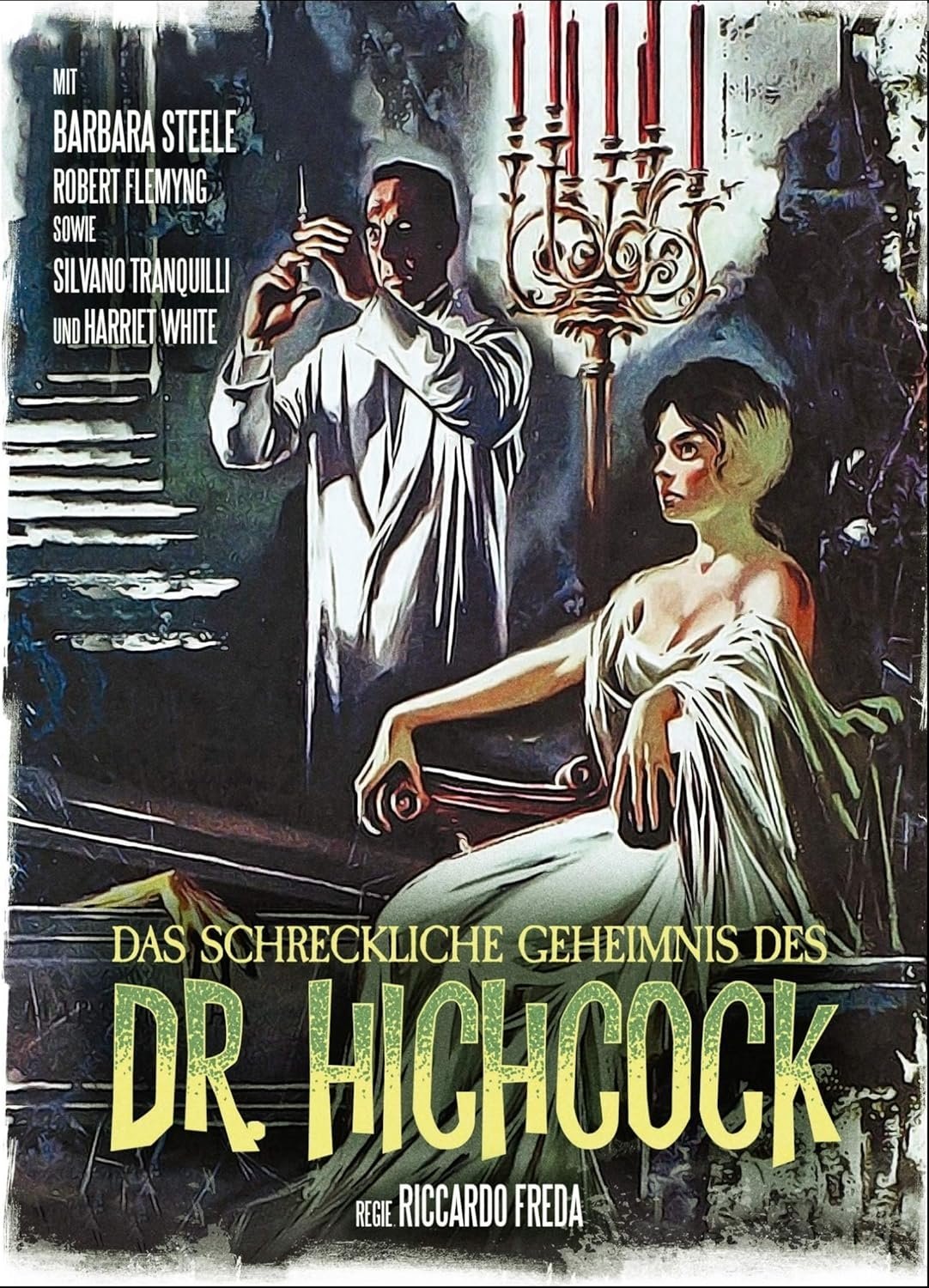
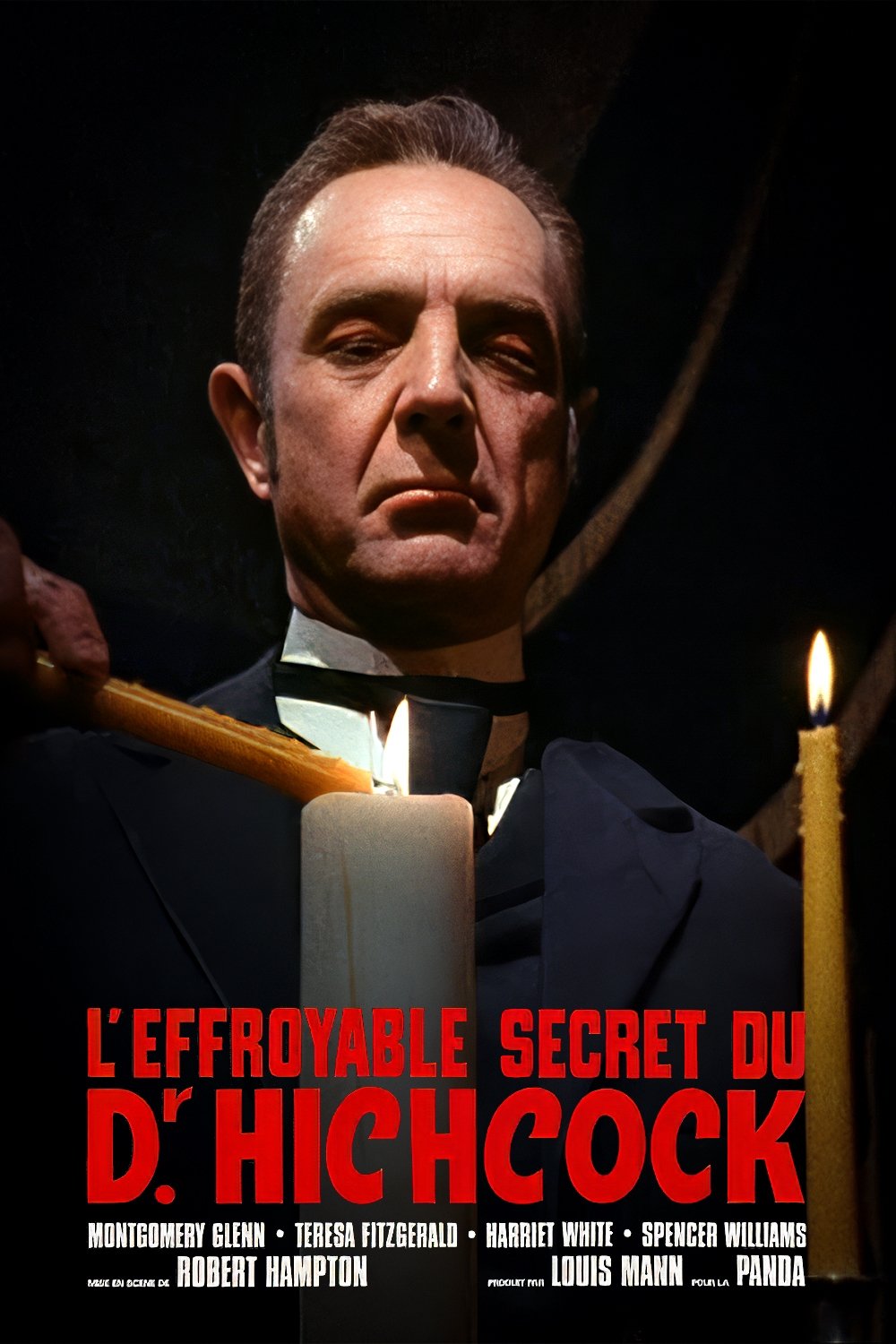
O Demônio e o Dr. Hichcock (Brazil) — alternative title O Horrível Segredo de Dr. Hichcock (Brazil) Raptus - O Diabólico Dr. Hichcock (Brazil) — Portuguese 海考克医生的骇人秘密 (China) — Chinese Das schreckliche Geheimnis des Dr. Hichcock (Germany) — German El horrible secreto del doctor Hichcock (Spain) — Spanish L'horrible secret del Dr. Hichcock (Spain) — Catalan L'Effroyable Secret du Dr. Hichcock (France)
Show all 16 alternative titles The Terror of Dr. Hichcock (United Kingdom) To tromero mystiko tou Dr. Hichcock (Greece) — Home Video Title The Secret of Dr. Hichcock (Hungary) — Hungarian 더 호러블 닥터 히치콕 (South Korea) — Korean El terrible secreto del Dr. Hichcock (Mexico) Fryktens time (Norway) Ужасный секрет доктора Хичкока (Russia) — Russian The Horrible Doctor Hitchcock (United States)

Trailers & Videos

2 videos

Film Guide & Analysis

Riccardo Fredas Italian Gothic horror: Ernesto Gastaldis screenplay, necrophilia, Barbara Steele, cinematography, disputed censorship and alternate versions.

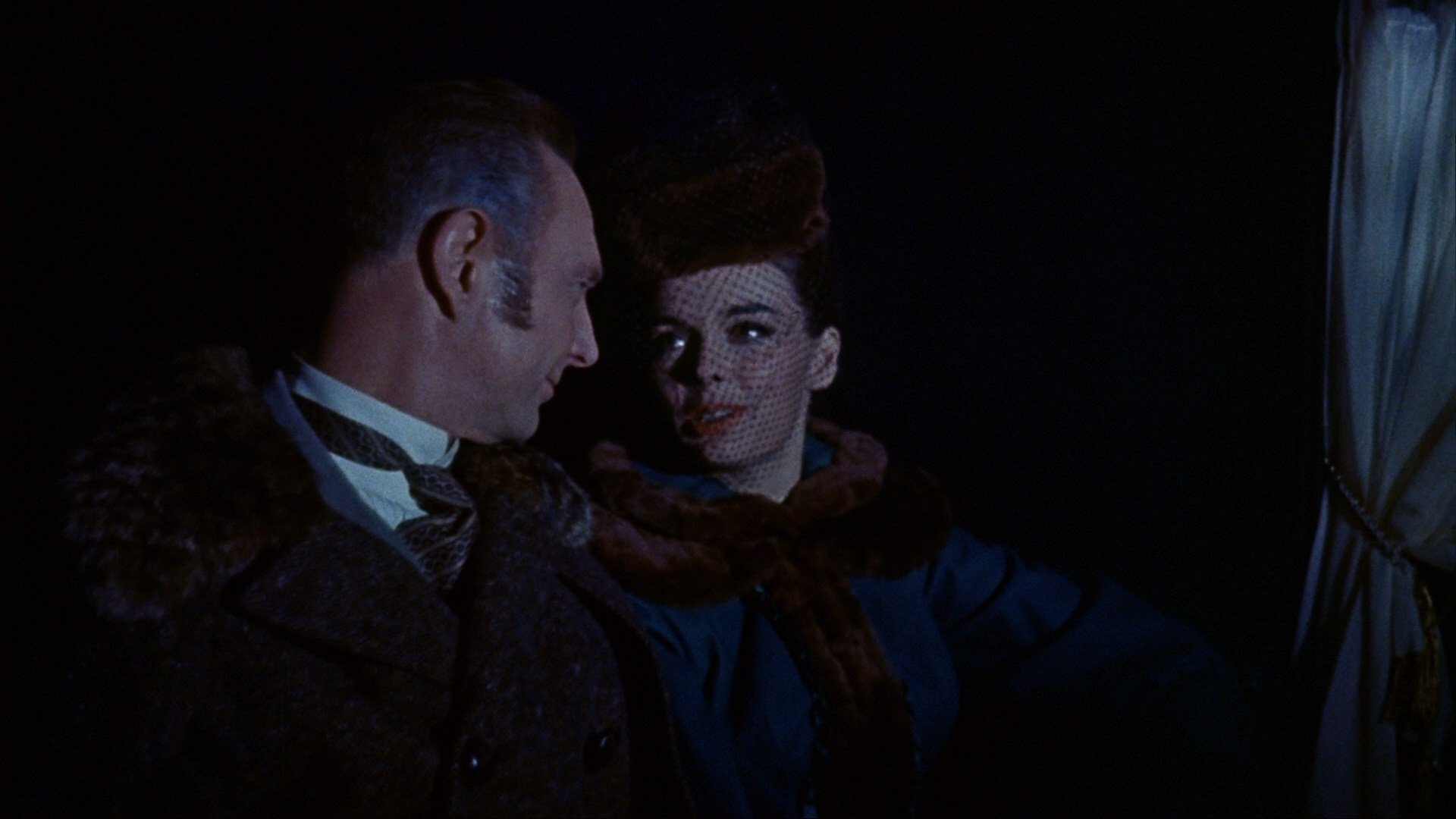
The Horrible Dr. Hichcock (1962), directed by Riccardo Freda, is an Italian Gothic horror film that places necrophilia at the center of a Victorian murder mystery. Set in London in 1885, it follows Bernard Hichcock, a surgeon who uses his experimental anesthetic to render his wife Margaretha temporarily unconscious during sexual rituals resembling death. When an excessive dose apparently kills her, he abandons his home and eventually returns with a second wife, Cynthia. The new marriage becomes a source of escalating danger as the doctor attempts to recover what he has lost. Barbara Steele, Robert Flemyng and Maria Teresa Vianello appear in a story that combines medical experimentation with the threatening architecture of the traditional Gothic household.

Written by Ernesto Gastaldi, the film emerged during the expansion of Italian Gothic production following the success of Black Sunday (1960). Its unusually explicit subject was conveyed through suggestion, saturated color and a series of encounters in which the distinction between a corpse and a living woman becomes increasingly uncertain. The production also has a complicated history involving conflicting accounts of the screenplay, international pseudonyms, restrictions on exhibition and substantially different export versions. These circumstances make it a significant example of the relationship between Gothic convention and sexual taboo in early 1960s Italian horror.

Origins and Screenplay Development

Screenwriter Ernesto Gastaldi developed the project for producers Ermanno Donati and Luigi Carpentieri. In an interview conducted by Michael Guarneri in 2018, he recalled that the producers replaced his working title Raptus with a title invoking the international reputation of Alfred Hitchcock. His recollections of the writing process have not always agreed with those of Freda, who subsequently asserted that the underlying idea of a necrophiliac doctor originated with him. The disagreements are particularly important because both men participated in the completed production. They establish competing accounts of creative authorship rather than providing independent confirmation that either participant alone conceived the finished story.

The original screenplay provided a more explicit chain of narrative explanations than the finished film. In an interview conducted by Luigi Cozzi in 1970, Gastaldi criticized Freda for removing material that clarified the characters and their motivations. He believed that the director had favored a succession of frightening situations at the expense of the story. Freda offered a different explanation in a 1971 interview with Cozzi, attributing some of the missing material to censorship and describing his preference for horror grounded in ordinary human behavior. These statements should be understood as distinct participant recollections. The surviving record demonstrates disagreement about the film, but does not conclusively establish the fate of every scene described in later interviews.

The existence of original writing material is supported by the Centro Sperimentale di Cinematografia, which announced in 2023 that its Luigi Chiarini Library had catalogued the archival collection donated by Gastaldi. The holdings include material relating to The Horrible Dr. Hichcock. This institutional documentation establishes the preservation of relevant screenplay material without implying that every draft has been examined or that the archived documents necessarily correspond to the final shooting script.

Production and Italian Gothic Cinema

Freda had already played an important role in the revival of Italian horror through I Vampiri (1957), a production completed with the involvement of cinematographer Mario Bava. By 1962, the domestic industry had developed a more substantial market for Gothic films, encouraged partly by the international success of British Hammer productions. The Horrible Dr. Hichcock entered this environment as a period horror film intended to circulate beyond Italy. Its setting in Victorian London and its predominantly English character names made the story more readily marketable internationally, while the subject offered a degree of provocation that distinguished it from less confrontational Gothic narratives.

The Italian credits used English-language pseudonyms for several members of the production. Freda appeared as Robert Hampton, while Gastaldi was credited as Julian Berry and cinematographer Raffaele Masciocchi as Donald Green. The national film archive maintained by ANICA confirms these identities and records the involvement of the Italian production company Panda Cinematografica. Such changes were part of a broader practice of disguising the national origin of Italian genre films for international audiences. The film was also produced with performers from different countries, with dialogue recorded through post-synchronization rather than relying on a single shared language during filming.

Accounts of the shooting schedule describe an exceptionally rapid production, although the precise number of filming days varies among participants and later historians. The short schedule is consistent with the methods used in commercially oriented Italian genre cinema of the period, where directors often relied on established crews and adaptable locations. Gastaldi later recalled that Freda worked with multiple units filming different portions of the screenplay simultaneously. That description provides a useful indication of the production method, but should not be treated as proof that every scene was photographed independently or that a single individual supervised all simultaneous activity.

Cinematography, Color and Gothic Atmosphere

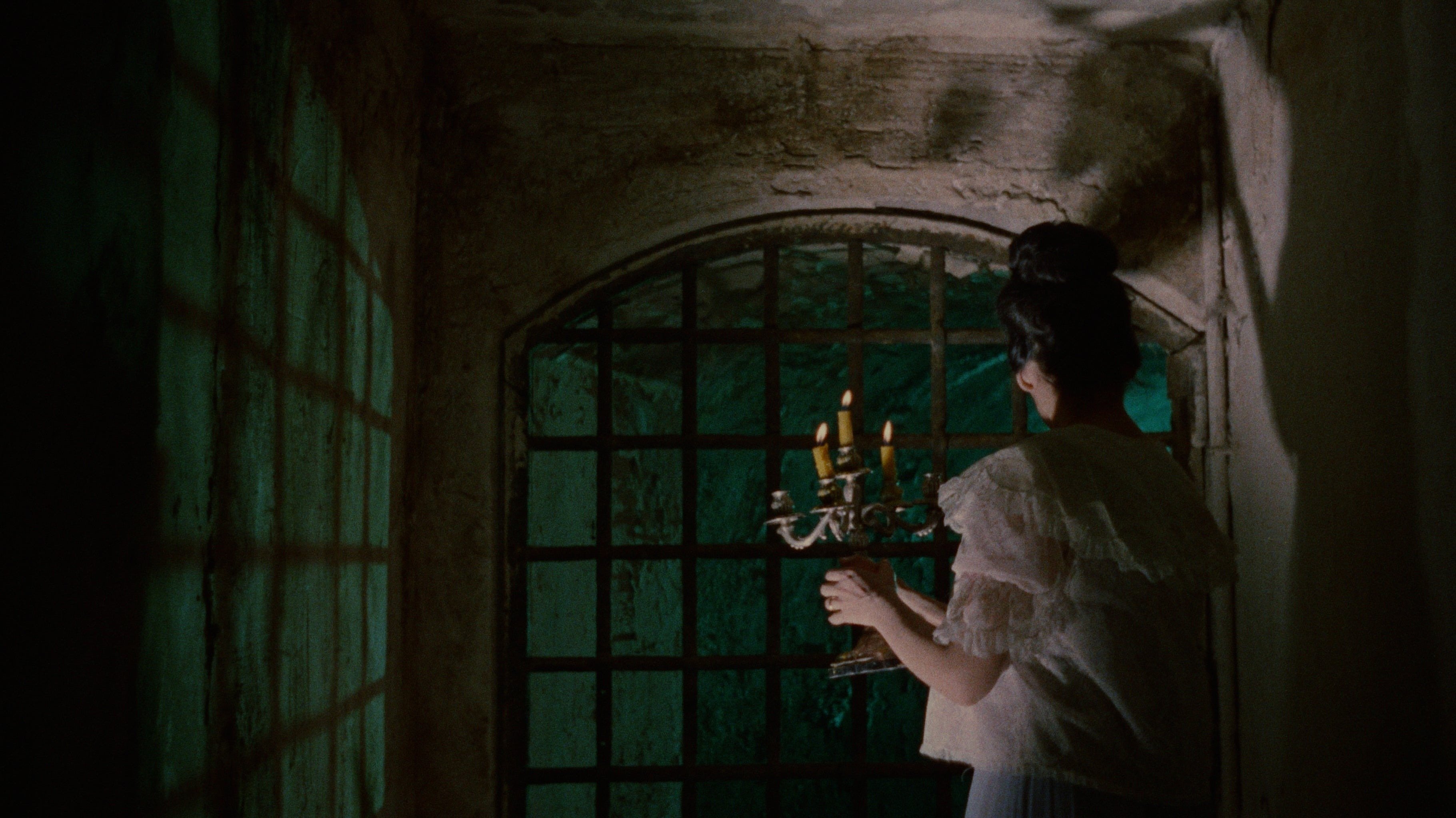
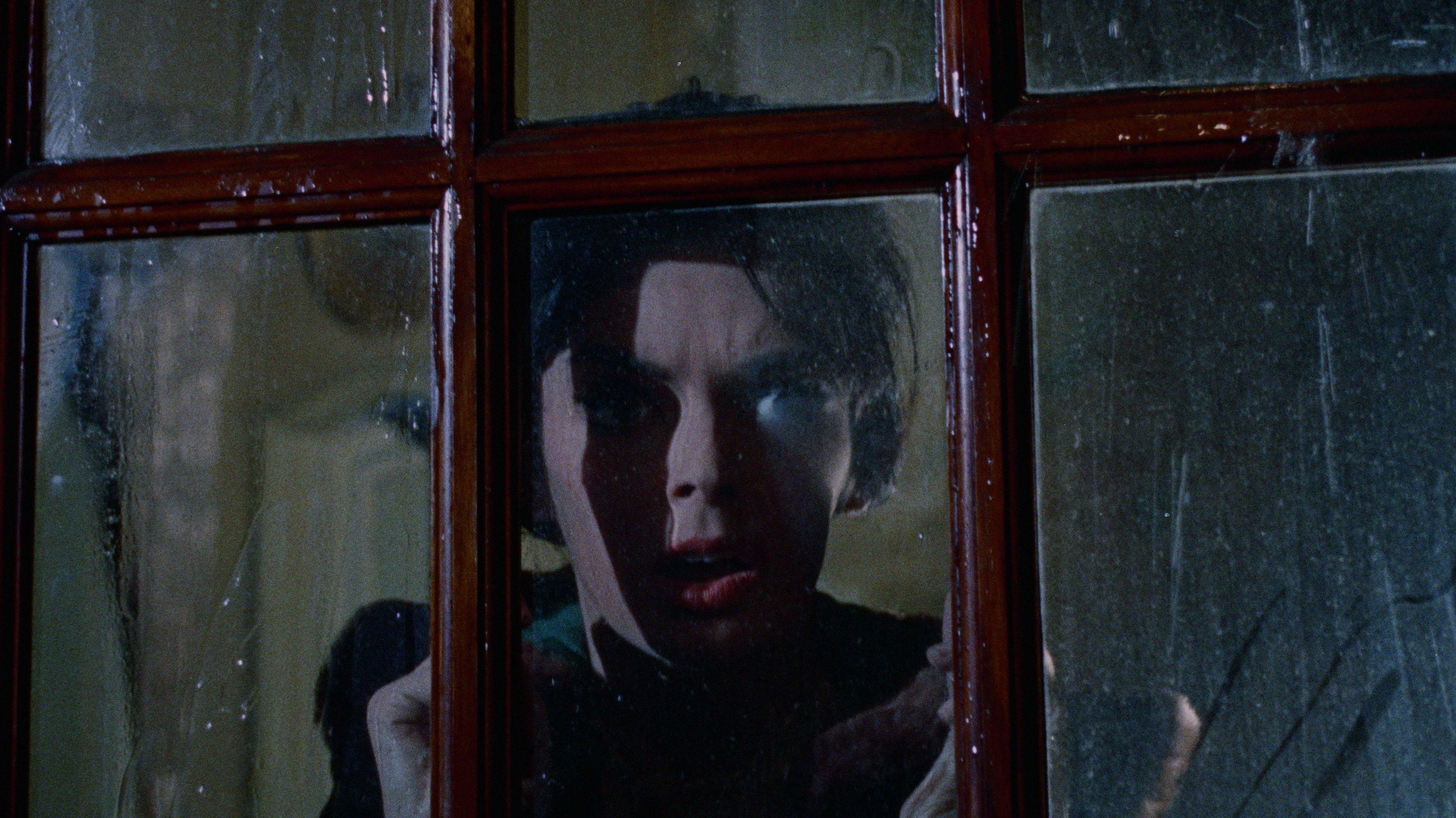
Raffaele Masciocchi photographed the film in color, making the contrast between cold domestic interiors and violent chromatic effects central to its visual character. The Victorian mansion contains heavy curtains, elaborate furnishings, portraits and enclosed rooms that preserve the presence of Margaretha after her apparent death. Freda repeatedly places Cynthia against these decorative elements, making the former wife seem to occupy the household even when she is absent from the frame. Corridors, staircases and locked rooms become threatening because the new bride cannot determine which parts of the building conceal an actual human presence. The apparent haunting depends on the distribution of knowledge within the house as much as on supernatural imagery.

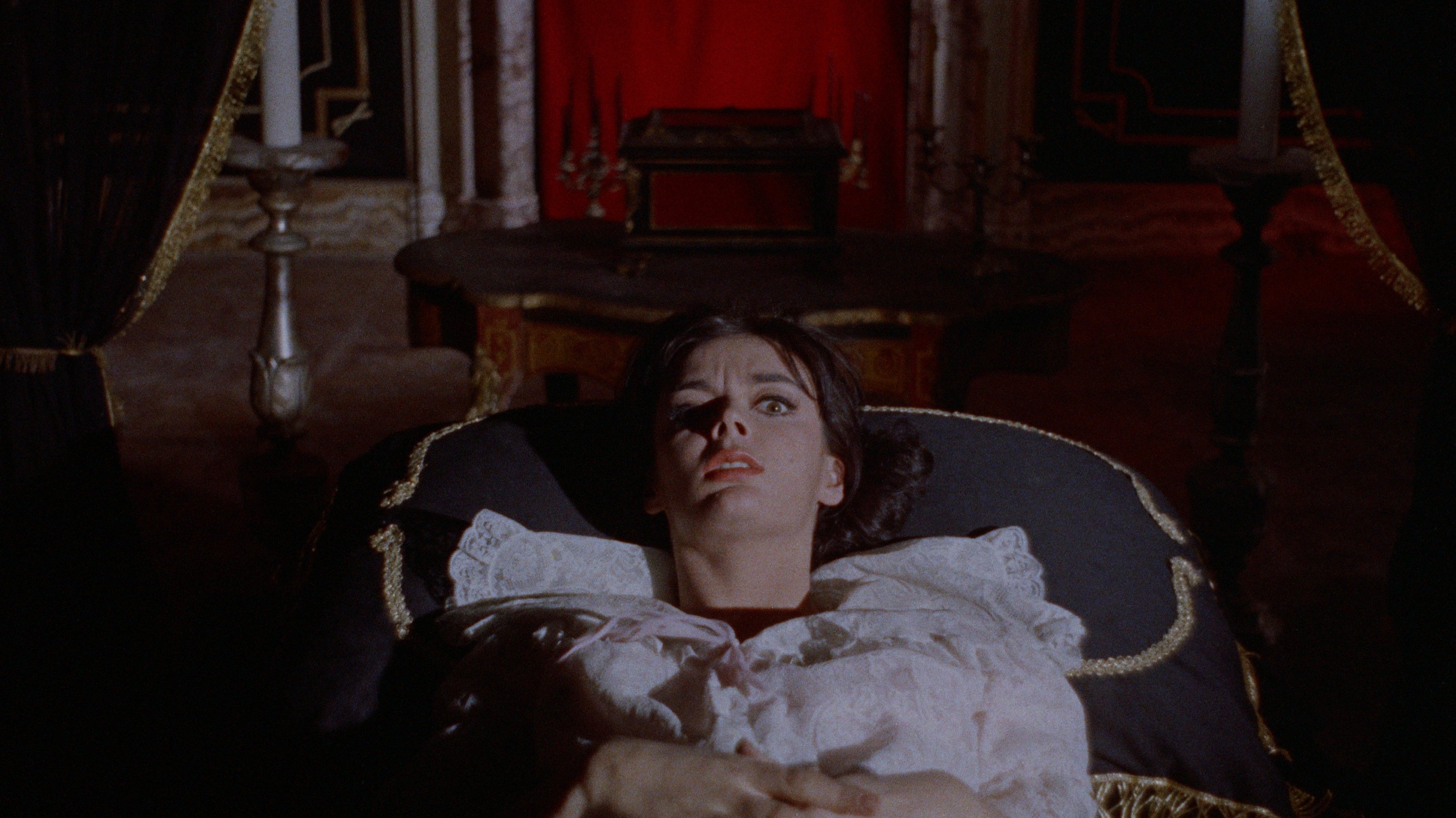
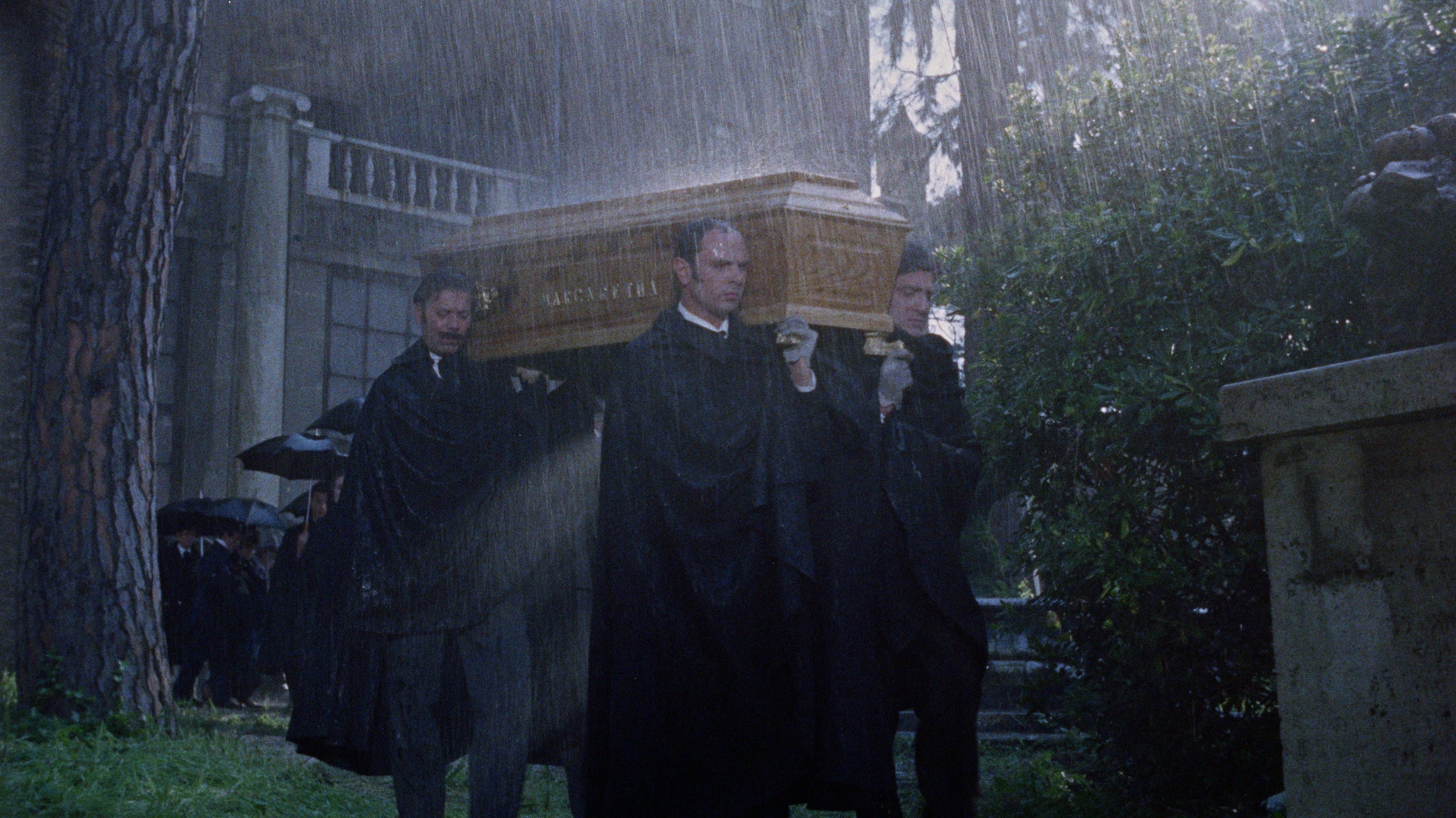
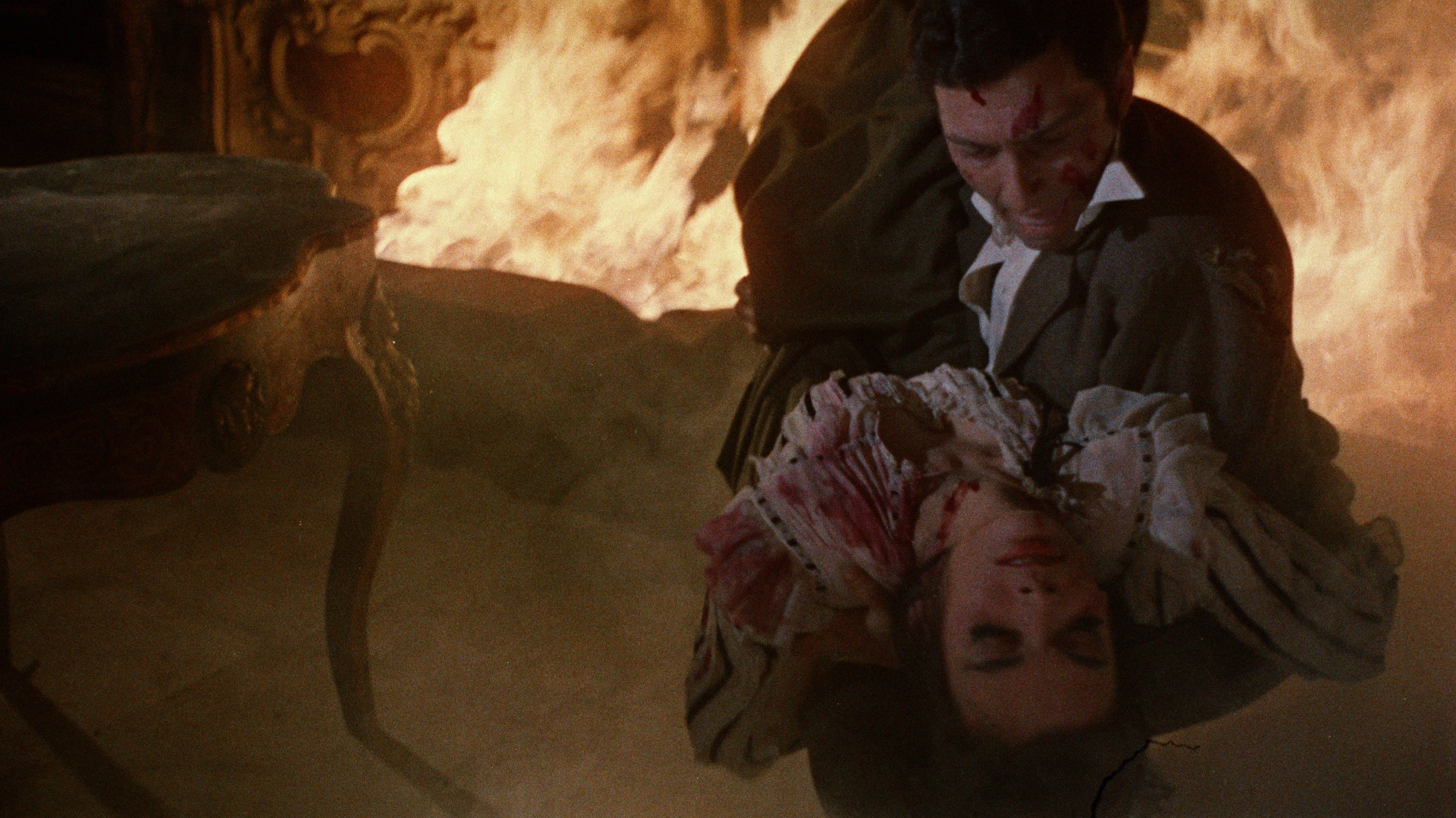
One of the most distinctive passages is the funeral procession, photographed during a rain shower with shafts of sunlight passing through the falling water. The scene gives the burial a beauty that contrasts with the doctor and his secret activities. Elsewhere, intense red light accompanies the return of his forbidden desires, while abrupt changes in illumination transform ordinary interiors into unstable visual spaces. These effects are not simply decorative additions to the Gothic setting. They make the concealed nature of Hichcock and the uncertainty of Cynthia visible without requiring the characters to explain every development.
The film also incorporates recognizable situations associated with Alfred Hitchcock. The threatening second marriage and the continuing authority of a deceased first wife recall Rebecca (1940), while the manipulation of a glass of milk evokes Suspicion (1941). Critical discussion has additionally identified similarities with the obsessive reconstruction of a lost woman in Vertigo (1958). These parallels are visible in the finished film, although they should not all be treated as independently documented production intentions. Freda combines familiar suspense conventions with an emphasis on the physical relationship between desire, unconsciousness and death.
Necrophilia and Medical Horror

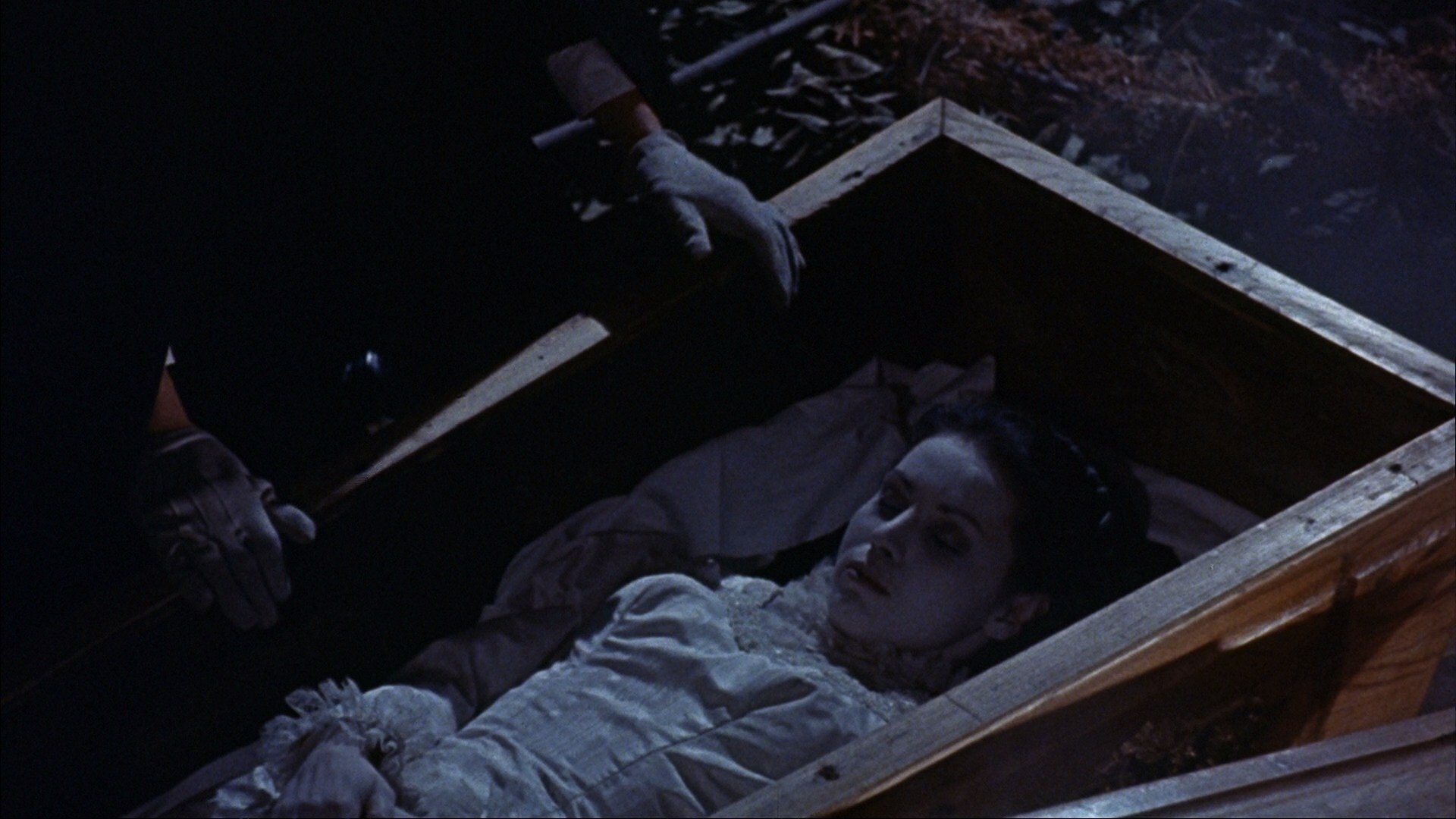
The opening establishes the doctor through a violation of the boundary separating the living from the dead. A recently buried woman becomes the object of a disturbing nocturnal intrusion, introducing a sexual obsession that the main narrative develops through Hichcock and his medical practice. The surgeon has created an anesthetic capable of producing a state resembling death, and his private use of the substance transforms a therapeutic invention into an instrument of sexual control. The premise joins two historically distinct sources of horror: fear of premature burial and anxiety about the authority exercised by physicians over unconscious patients.

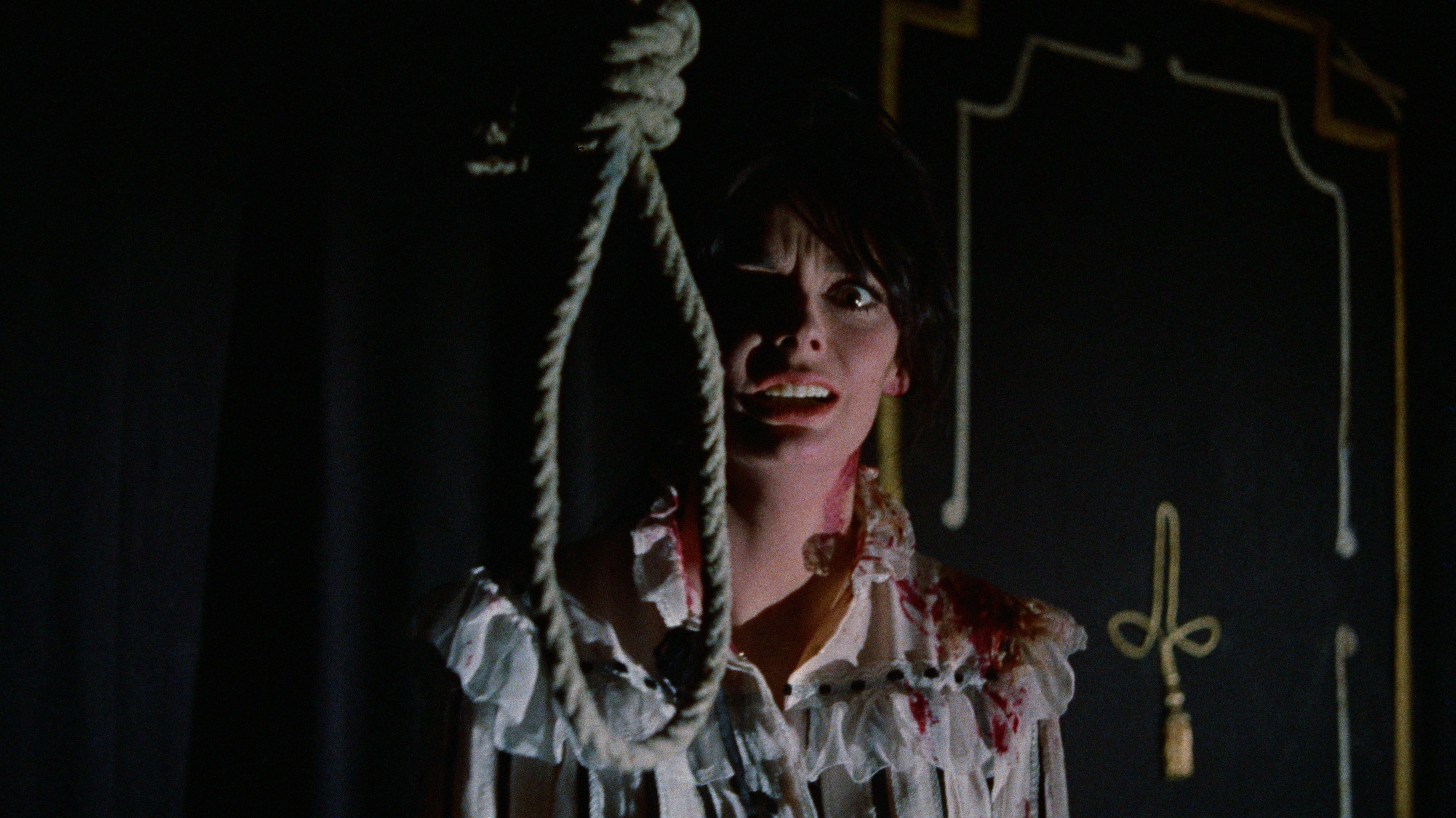
The apparent death of Margaretha exposes the contradiction in Hichcock. He seeks the absolute passivity of the beloved body, yet the loss of life creates an intolerable absence that he attempts to reverse. Cynthia becomes endangered because the doctor regards her body as a resource through which the previous marriage might be restored. The narrative therefore links the threat of violence to the denial of the second wife's autonomy. Its treatment of sexuality is disturbing because the physician's professional expertise allows him to create conditions in which another person cannot resist or even communicate.

The film conveys much of this material indirectly, through the preparation of injections, the appearance of bodies and the reactions of those who discover the doctor's behavior. Freda later maintained that explicit material had been removed, including an extended cemetery encounter. His statement documents what he recalled intending or filming, but surviving evidence does not establish a complete alternative version containing all those actions. The distributed film is sufficiently specific about its central taboo without requiring an imagined reconstruction of missing scenes.

Barbara Steele and the Threatened Bride

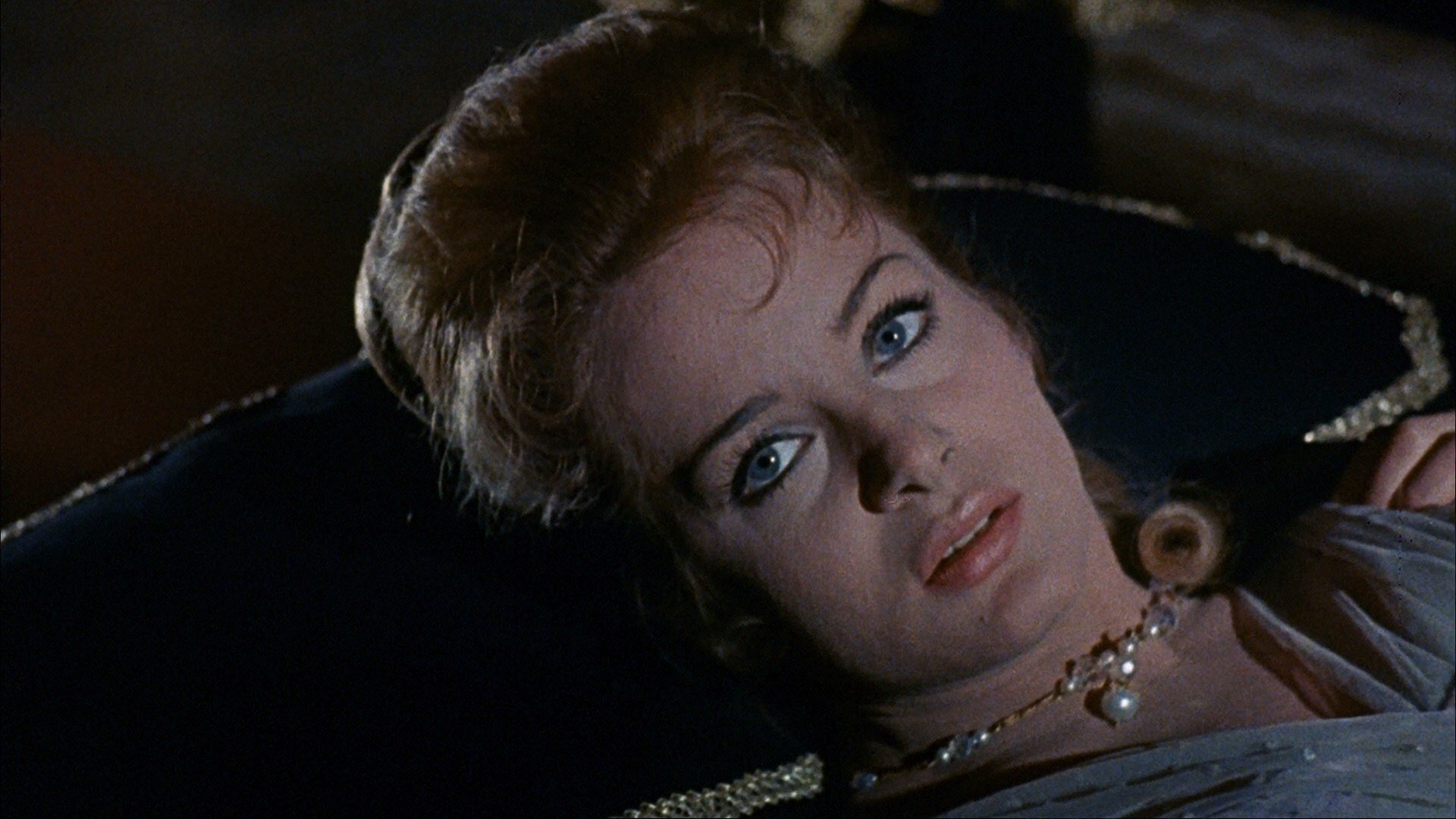
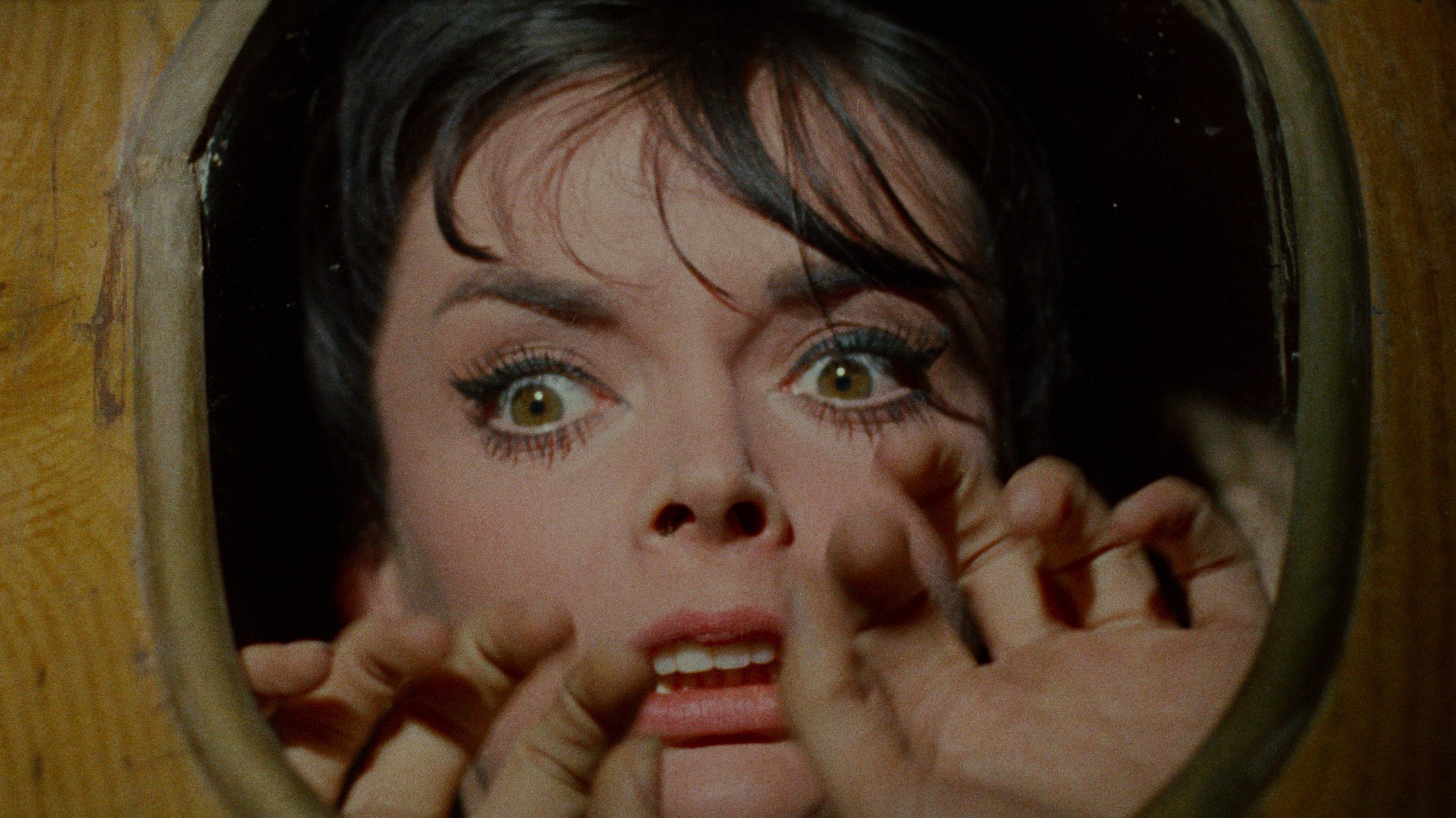
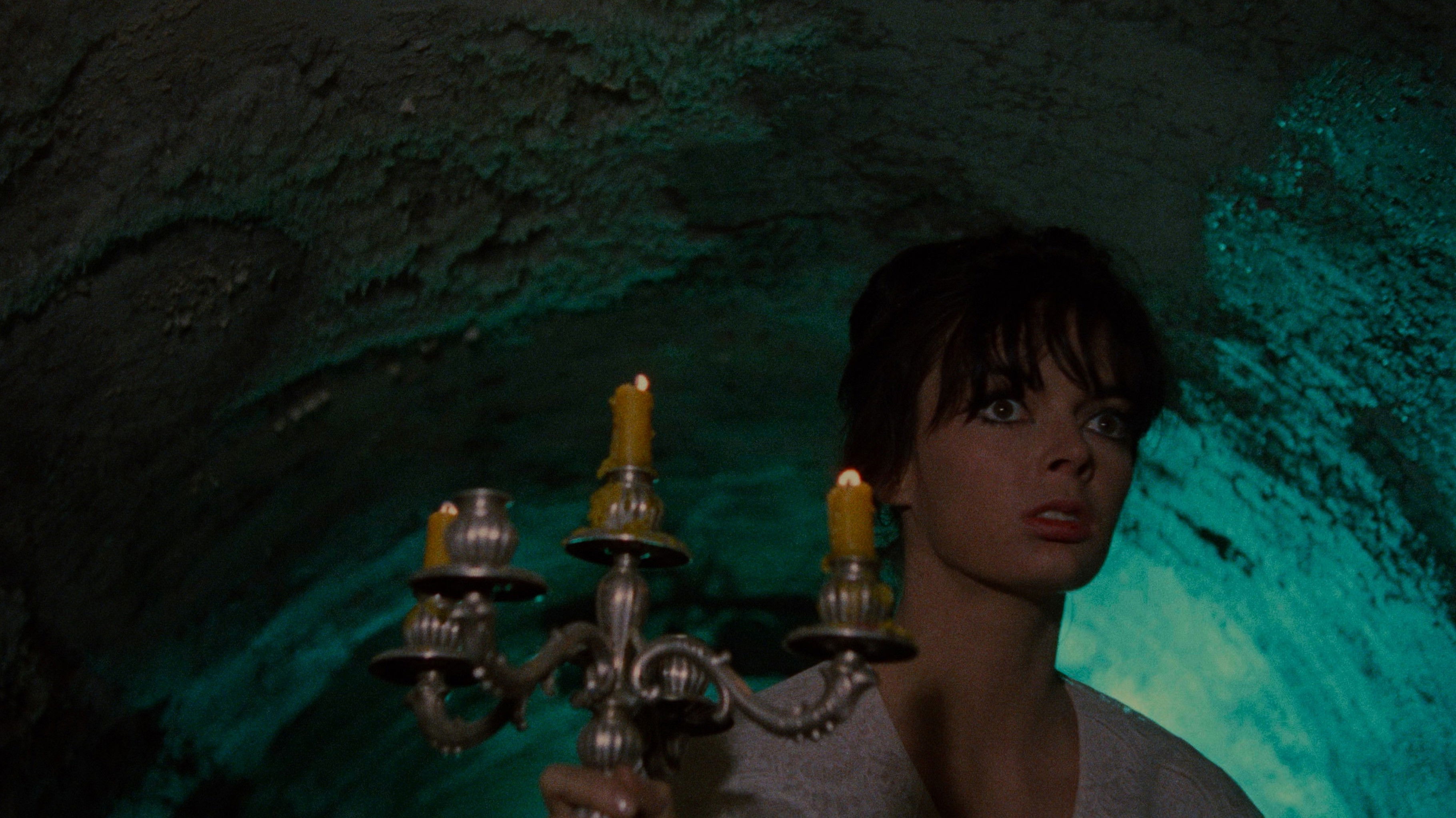
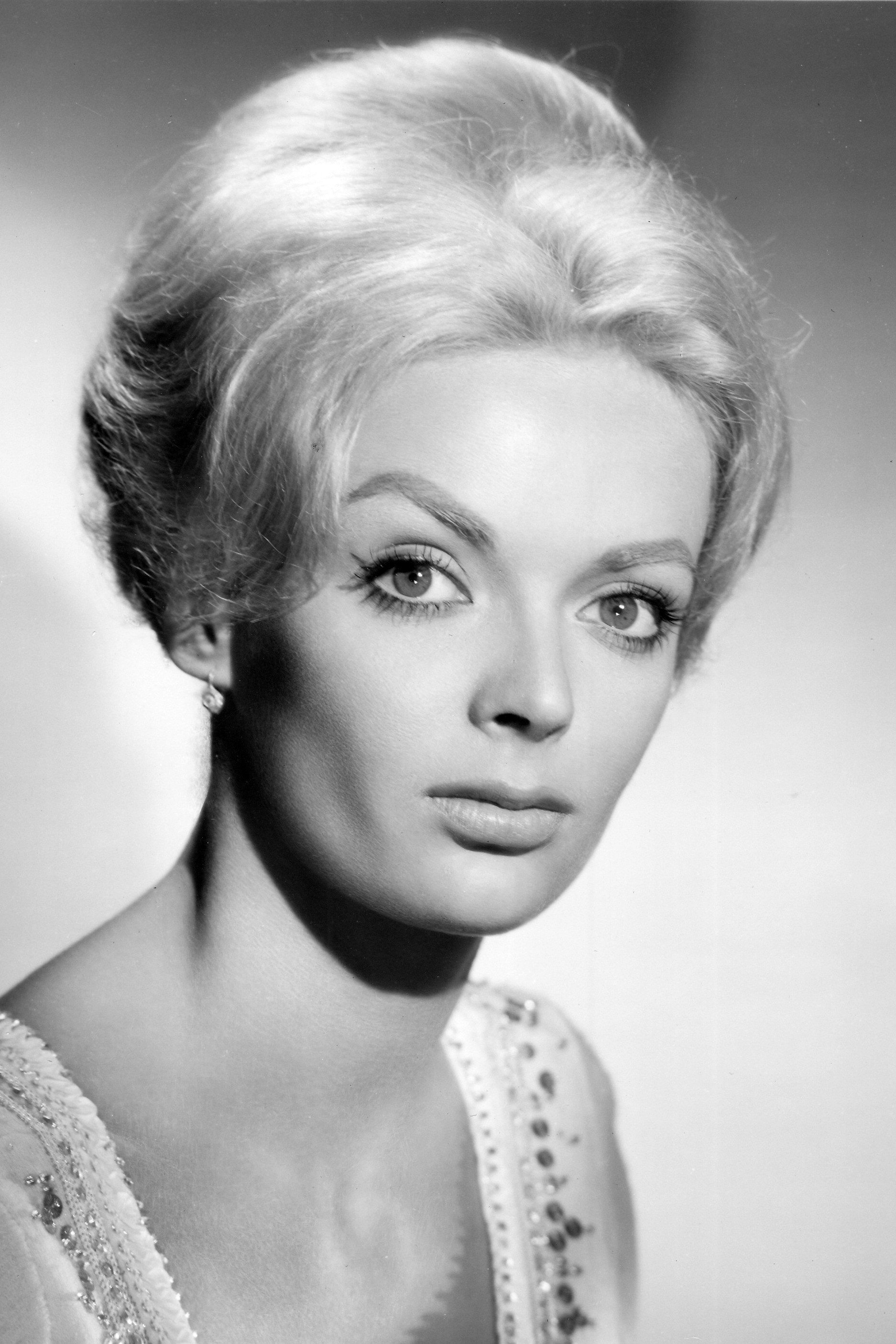
Barbara Steele plays Cynthia as a woman entering a household whose history is deliberately withheld from her. The performance depends heavily on her responses to the oppressive surroundings, the behavior of the servants and the increasingly erratic conduct of her husband. Her wide-eyed expressions and controlled movement became recognizable features of the Italian Gothic films in which she appeared during the early 1960s. In this production, they serve a narrative structured around uncertainty: Cynthia must decide whether she is witnessing a haunting, the consequences of medical experimentation or a deliberate attempt to frighten her.

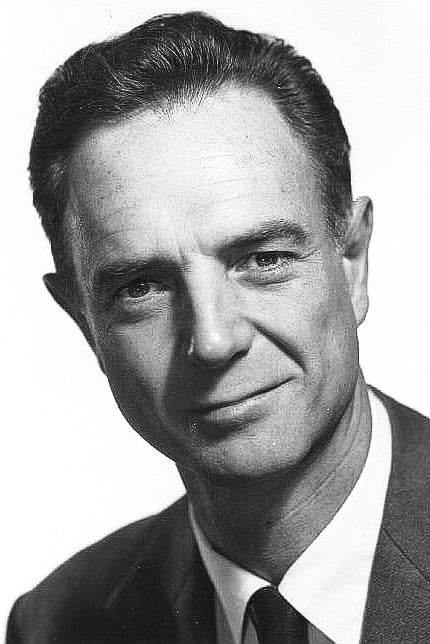
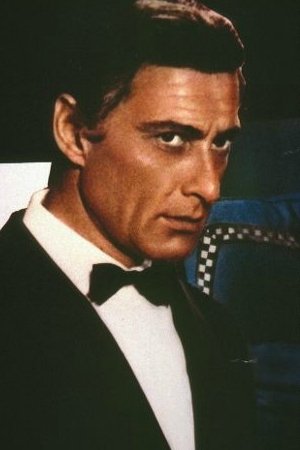
Robert Flemyng gives Bernard Hichcock a composed public manner that conceals a private obsession. His professional standing makes it difficult for others to challenge his conduct, while the authority of the doctor increasingly becomes inseparable from his capacity for violence. Maria Teresa Vianello, playing Margaretha, occupies a different position in the story. Her character is initially associated with memory, disappearance and bodily absence, before the later developments reveal the importance of her continued physical existence. The contrast between the two women sustains the domestic conflict without requiring them to function as interchangeable victims.

The supporting characters provide additional obstacles to Cynthia's understanding of the house. The servant Martha, played by Harriet Medin, guards the domestic environment and contributes to the impression that important information is being concealed. Silvano Tranquilli appears as Dr. Kurt Lowe, whose medical knowledge becomes relevant to the escalating crisis. Their positions within the story help establish the difference between Hichcock's socially respectable identity and the activities concealed behind it.

Makeup, Music and Sound

The supernatural appearance of several scenes depends on makeup, theatrical lighting and changes in the perceived condition of the human body. Hichcock's medical experiments and the deterioration associated with Margaretha's condition bring physical transformation into the film's Gothic imagery. The makeup effects are comparatively restrained beside the explicit mutilation found in some later Italian horror films. Their purpose is to make the distinction between living tissue, apparent death and renewed animation unstable. The effects also allow the film to connect its medical premise with the traditional Gothic fascination with bodily decay and unnatural preservation.

Roman Vlad composed the score, which uses orchestral agitation, abrupt musical accents and recurring piano material to reinforce the psychological unease. The music becomes particularly prominent during the scenes in which Cynthia encounters unexplained sounds or threatening visual impressions. Critical examination of the soundtrack has identified its relationship to the suspense techniques associated with Bernard Herrmann, although this is a stylistic comparison rather than evidence of a documented collaboration or direct musical borrowing. The combination of orchestral scoring, post-synchronized voices and sound effects gives the house a persistent auditory presence even when its rooms appear empty.

The sound design also supports the separation between what Cynthia observes and what she can establish as fact. Footsteps, voices and disturbances suggest movement in areas she cannot see, while the changing intensity of the music guides the viewer through uncertain situations. These audible cues work with the cinematography to create a form of suspense in which the source of danger is often withheld until the action has already progressed.

Release Versions, Reception and Historical Legacy

The film was submitted for Italian classification in June 1962 and released domestically under the title L'orribile segreto del Dr. Hichcock. Its treatment of sexual deviance contributed to an adults-only classification, V.M.18. Freda later complained that censorship had damaged the intended clarity of the story, but the surviving classification history should be distinguished from the separate editorial changes made for export. The film's subsequent international circulation involved a variety of titles, including The Terror of Dr. Hichcock in Britain and The Horrible Dr. Hichcock in North America. These names do not necessarily identify identical prints or the same running time.

The principal Italian version runs approximately 87 minutes, whereas the shortened North American version runs approximately 76 minutes. A detailed comparison published by Movie-Censorship in 2023 identified 61 differences, including seven sequences that had been rearranged, and a cumulative duration difference of approximately eleven minutes. The American version trims dialogue and scenes, changes some transitions and introduces additional explanatory material. The changes affect pacing and characterization, but they cannot all be described as censorship. Some appear to have been editorial decisions intended to make the film shorter or more accessible to a different audience.

The preservation of these versions has been important to the film's subsequent critical history. A restoration undertaken for the 2023 Radiance Films release used the original negative and presented the longer Italian version alongside an English-language presentation and the shorter American edit. The comparison allows different treatments of the narrative to be examined rather than assuming that the export version represents Freda's preferred structure. The recovery of the longer material is especially valuable because the earlier distribution history often obscured the distinction between editorial shortening and alleged censor intervention.

The film has become an important reference point in studies of Italian Gothic horror, particularly for its unusually direct combination of medical authority, sexual obsession and the threat of premature death. Its relationship with other productions is visible in the use of a persecuted woman, a threatening mansion and the destructive persistence of a previous marriage. The success of the film also encouraged the development of Lo spettro (1963), another Freda production starring Barbara Steele, although it is a separate narrative rather than a direct continuation of the Hichcock story. Retrospective criticism has increasingly examined the film as an example of how Italian Gothic cinema could adapt familiar international conventions to material rarely addressed so openly in mainstream horror.

References

  1. cinepugno Interview with Ernesto Gastaldi (November 2018)

    Original interview by Michael Guarneri documenting the working title, producers, screenplay history and the surviving pre-production censorship report.

  2. cinepugno Interview with Riccardo Freda (1971)

    English translation of Luigi Cozzi contemporary interview, preserving the directors recollections of the films sexual themes, intended scenes and censorship disputes.

  3. Slant Magazine Review: Riccardo Fredas The Horrible Dr. Hichcock on Olive Films Blu-ray

    Budd Wilkins critical analysis of the Gothic conventions, Hitchcock references, taboo sexuality, performances, color photography and Roman Vlad score.

  4. Movie-Censorship The Horrible Dr. Hichcock: US Version and Original Version Comparison

    Detailed shot-by-shot comparison documenting 61 differences between the original Italian cut and the shortened American version.

  5. Centro Sperimentale di Cinematografia Directors, Screenwriters, Playwrights - Archival and Bibliographic Collections - Luigi Chiarini Library

    Institutional archival inventory confirming the preservation of Ernesto Gastaldi screenplay materials, including The Horrible Dr. Hichcock.

Cast

View Full Cast & Crew →

Release & Distribution

Production Companies (1)

  • Panda - Società per l'Industria Cinematografica IT

Distributors (1)

  • Warner Bros. Entertainment US

Release History (2)

Release DateTerritoryRelease TypeFormatDistributorCertificationNotes
1962-08-01 Italy Theatrical — — —
1962-12-02 United States Theatrical — — NR
The candle of his lust burnt brightest in the shadow of the grave!