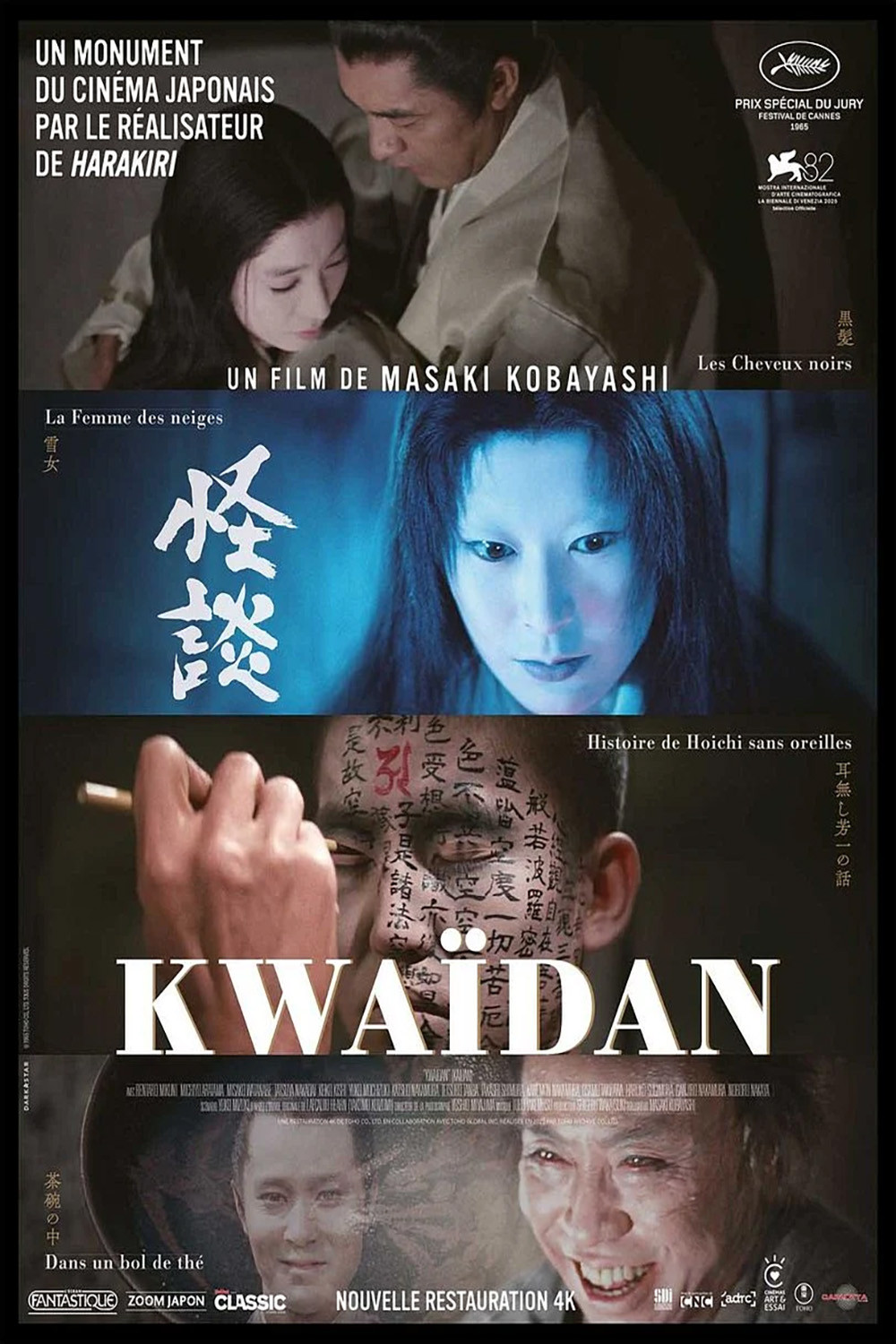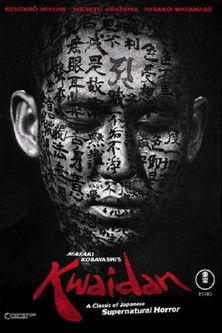
Kwaidan (1964)

JP
HORROR FILM Fantasy Drama
Runtime
183 min
Release
December 29, 1964
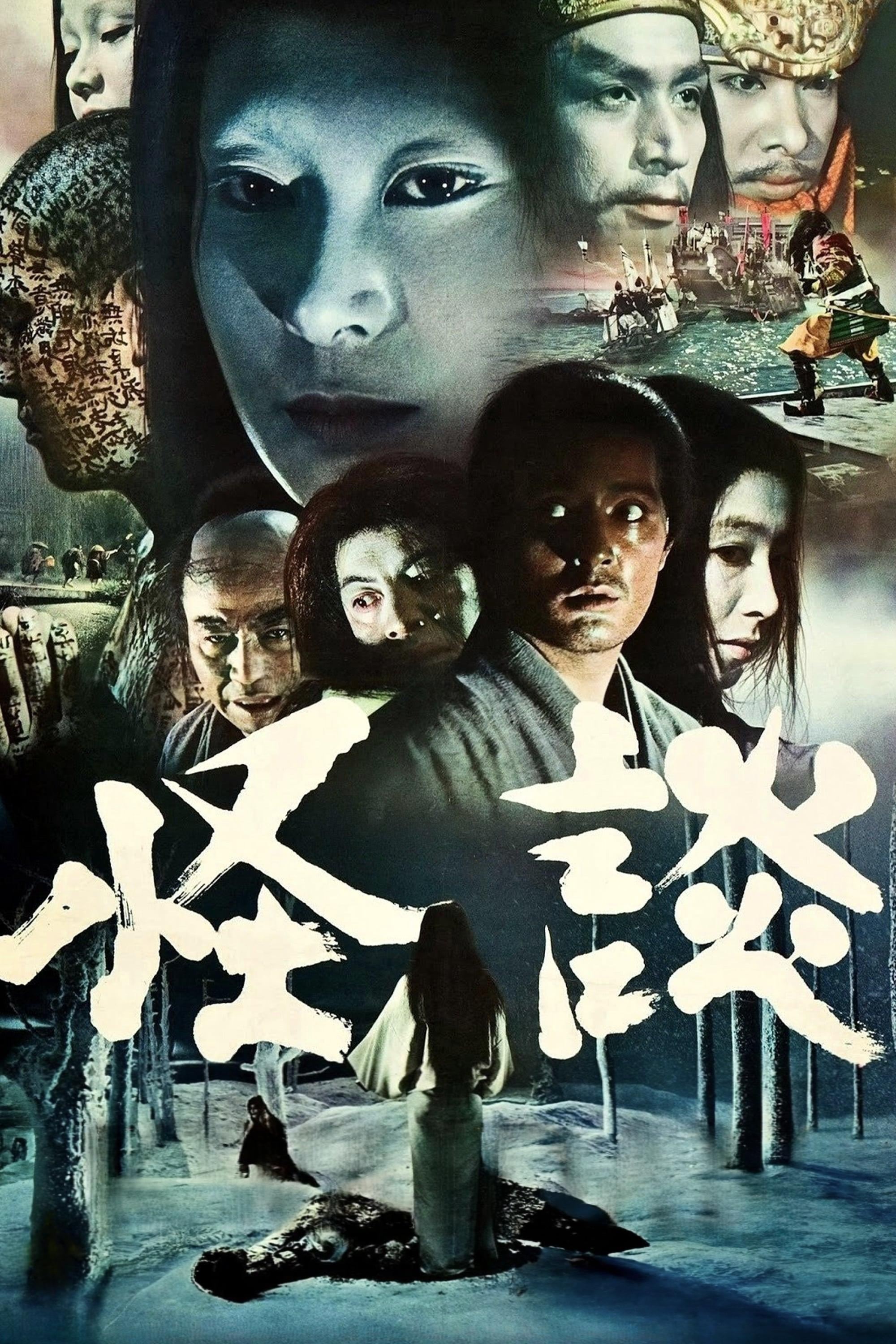
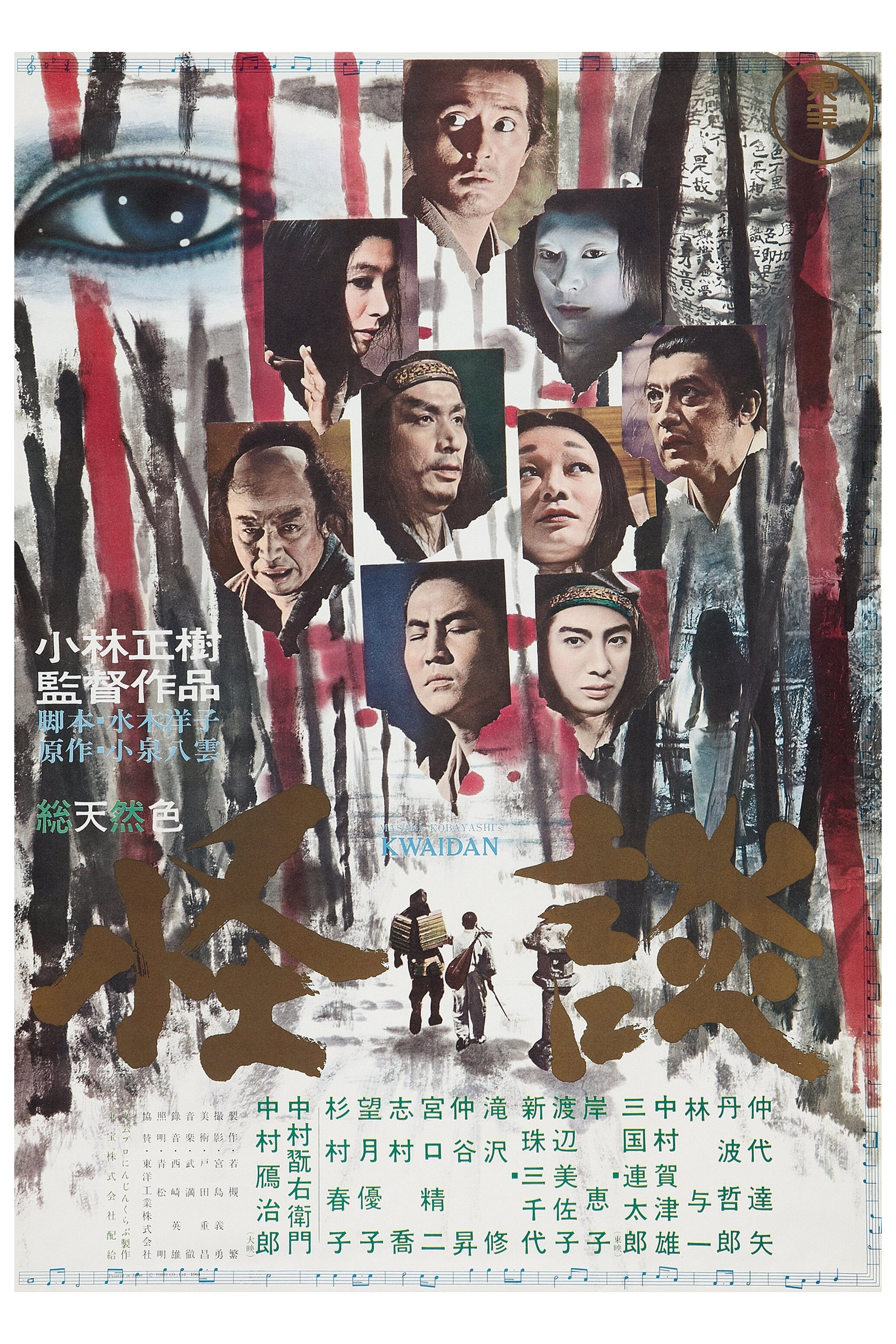
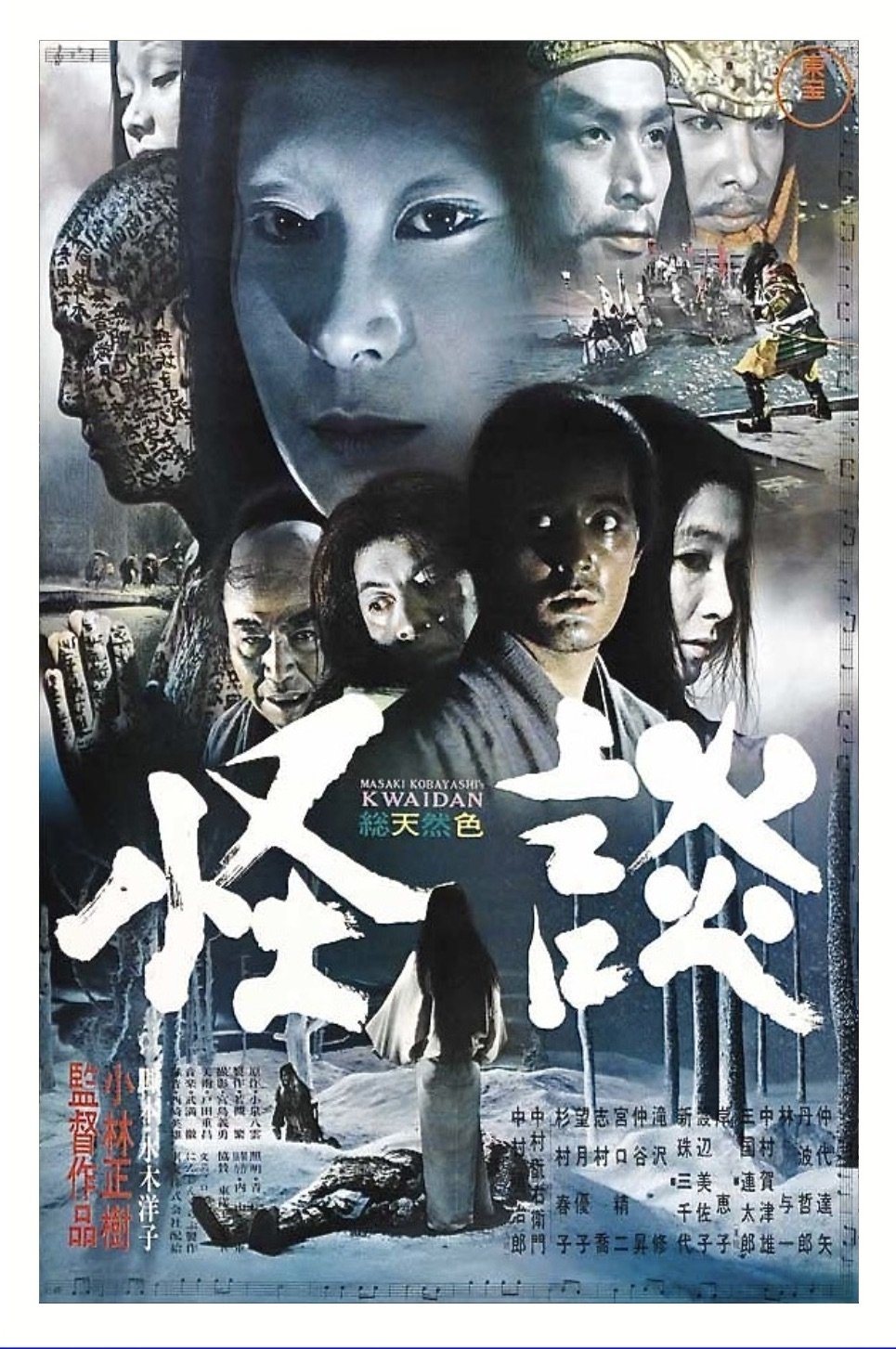
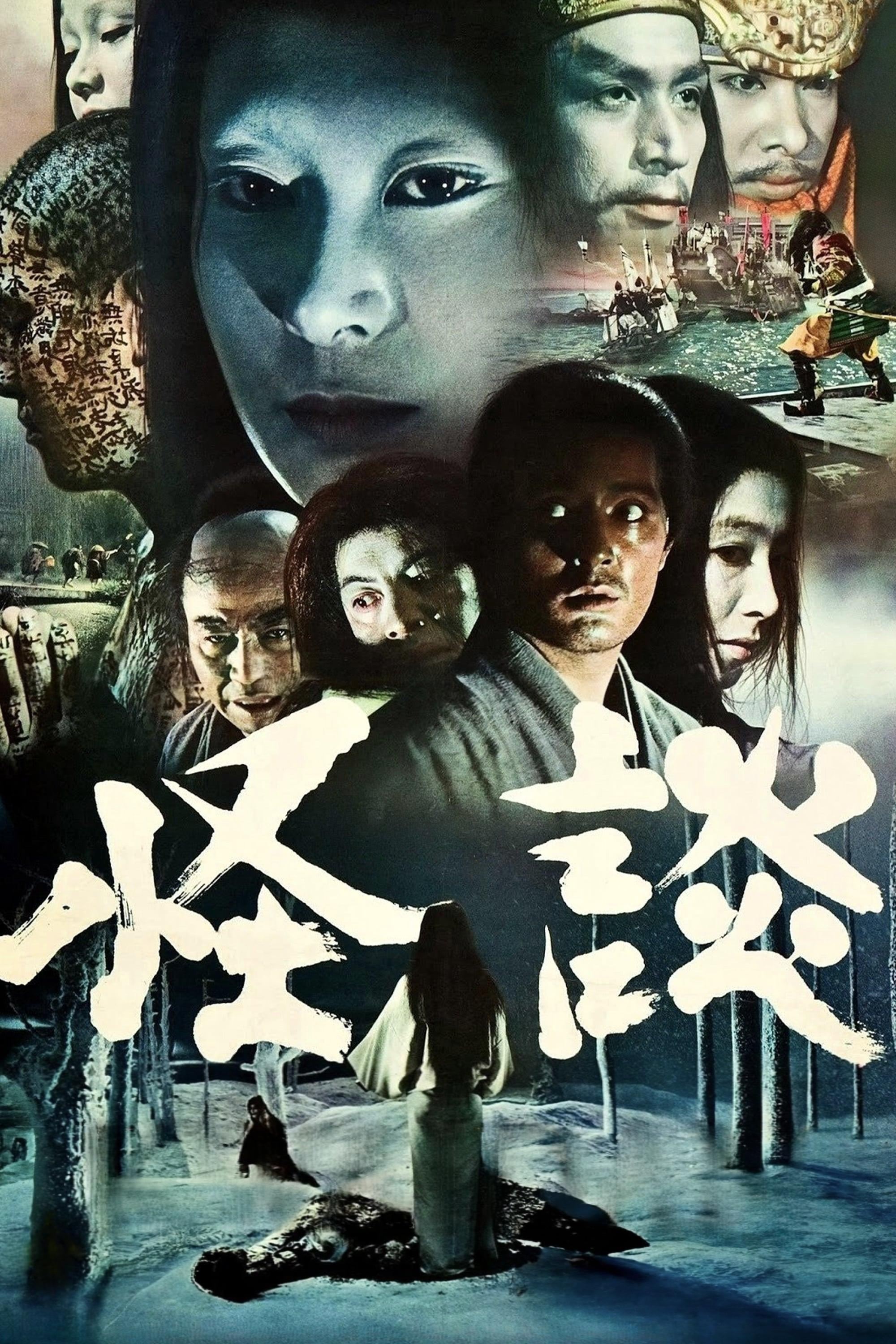
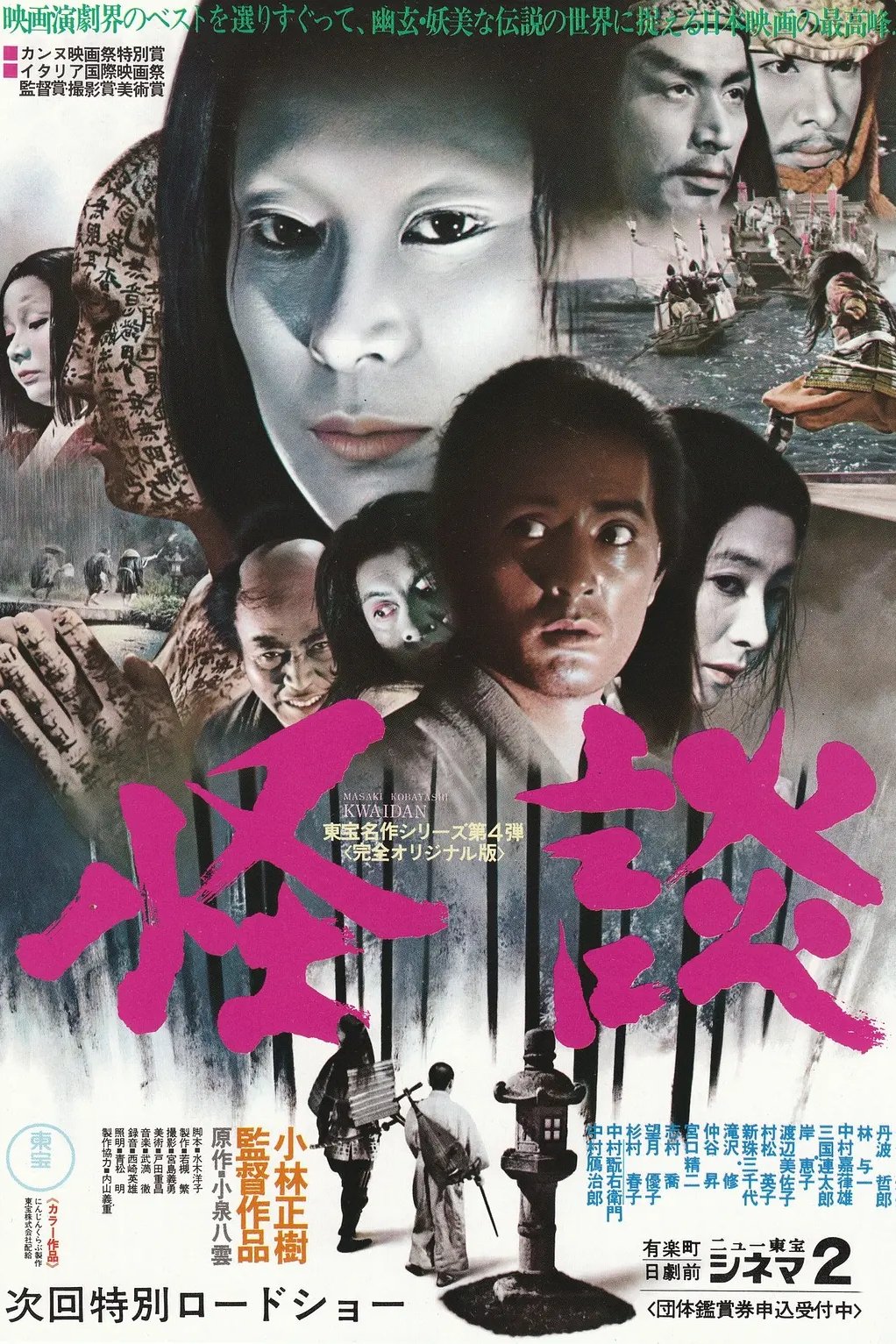
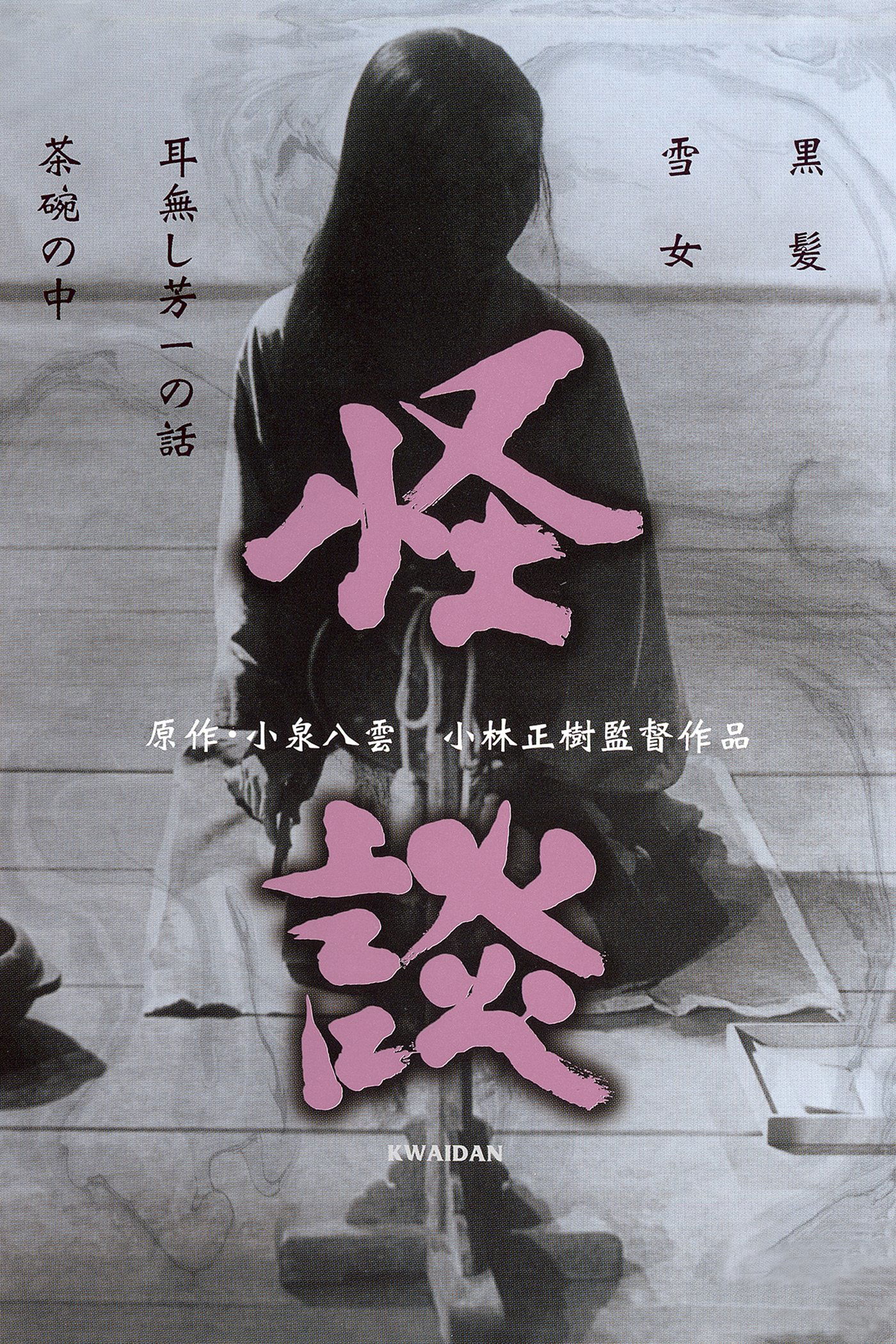
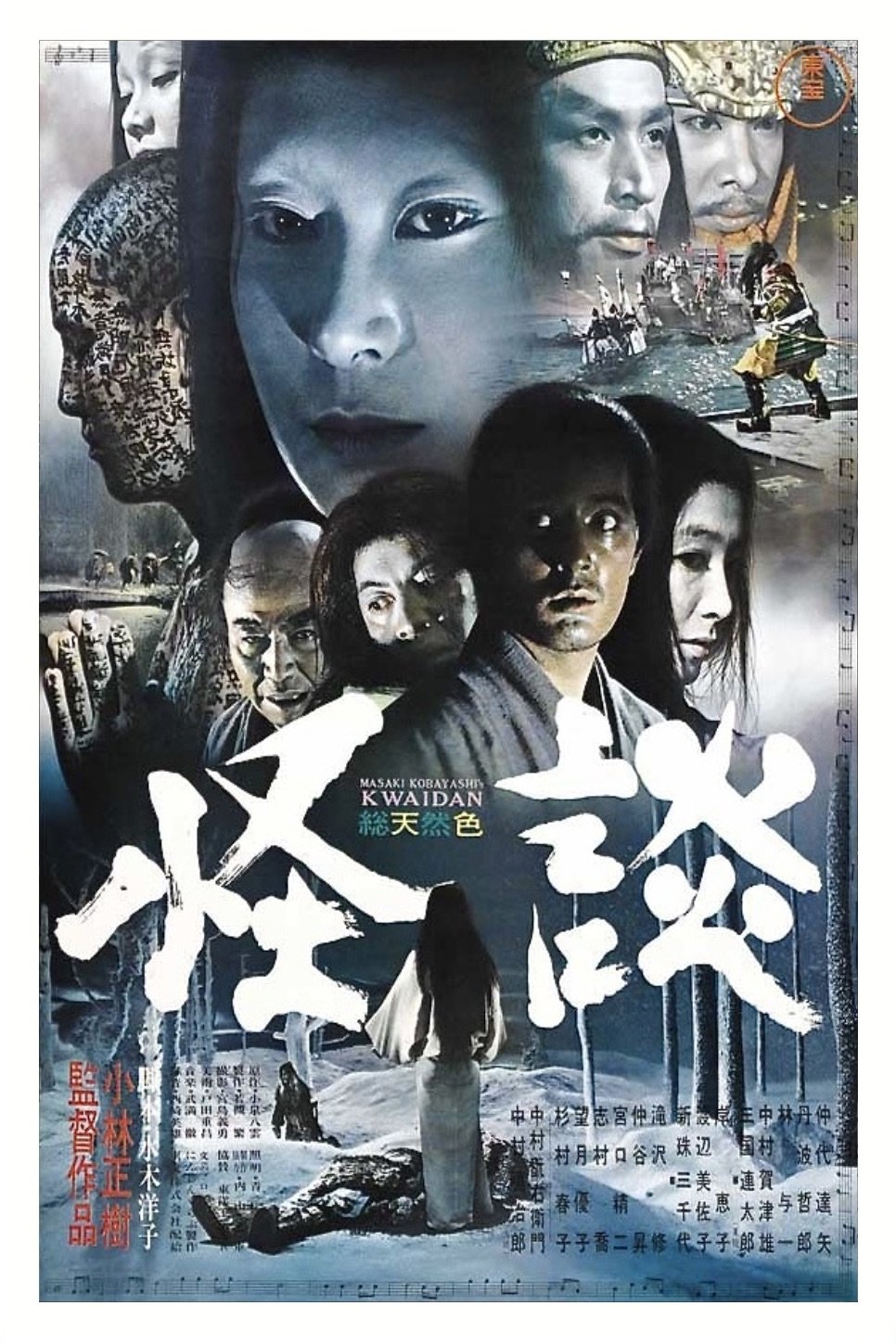
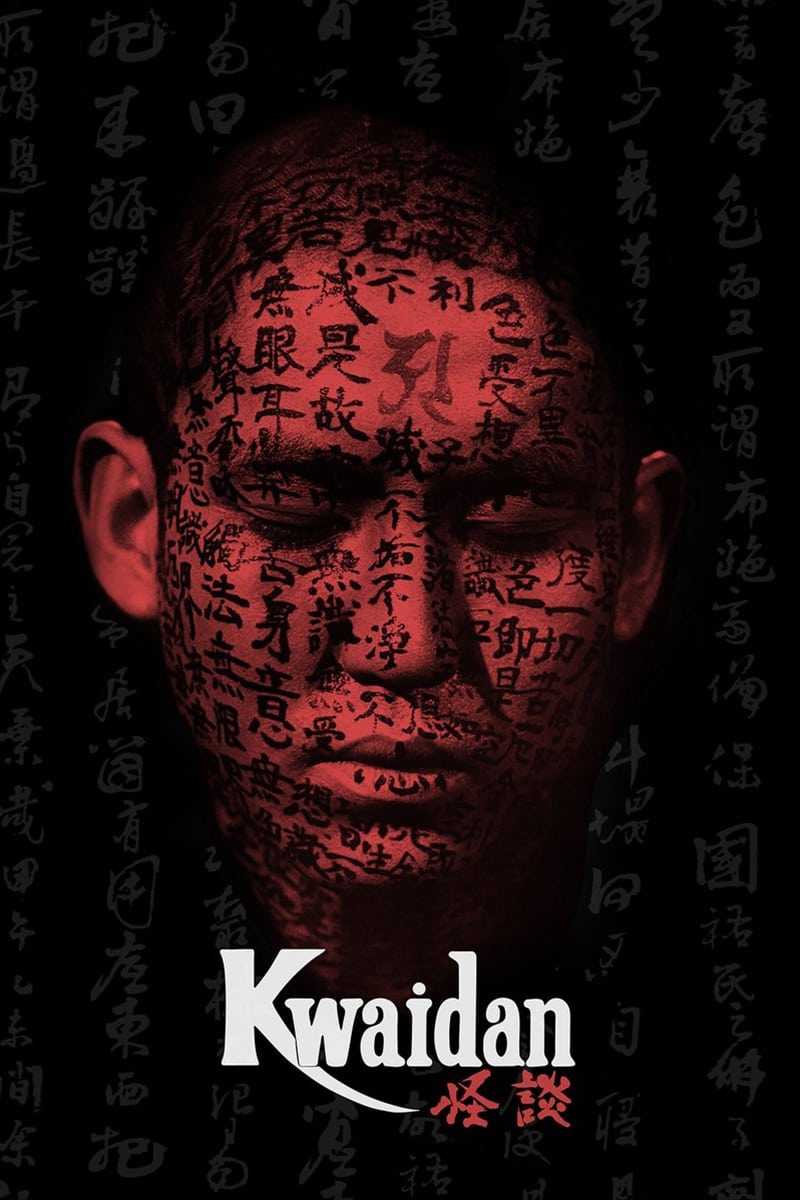
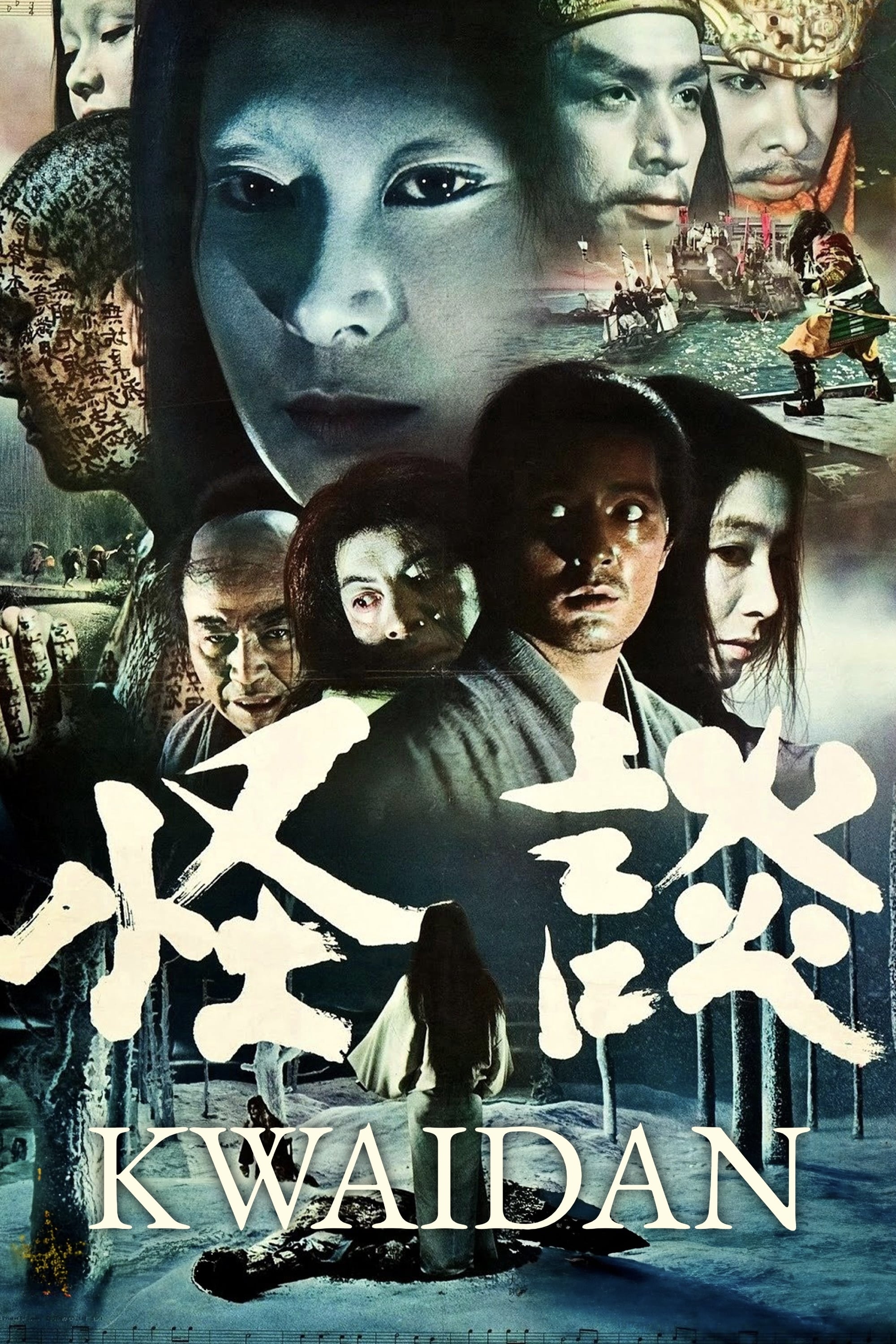
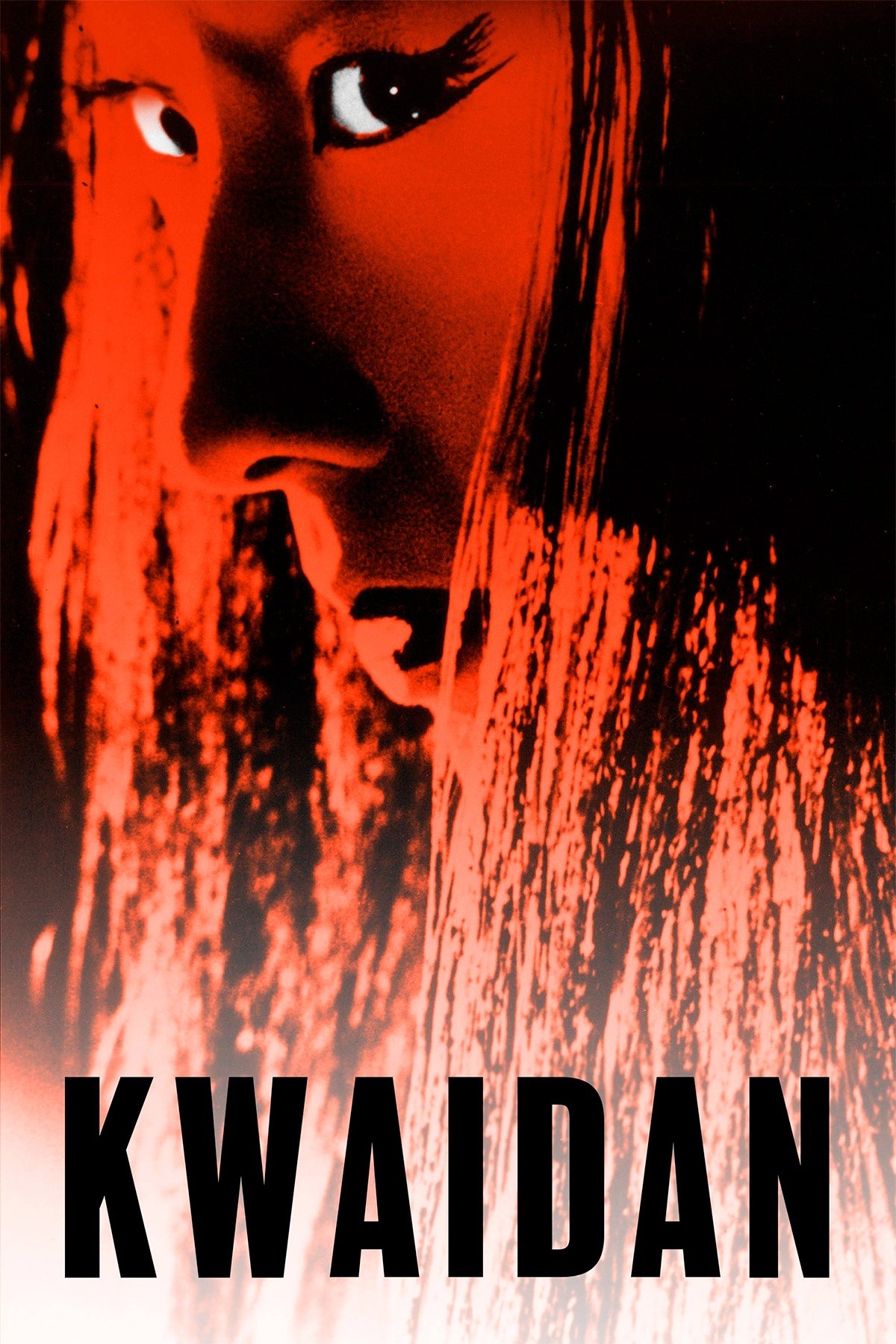
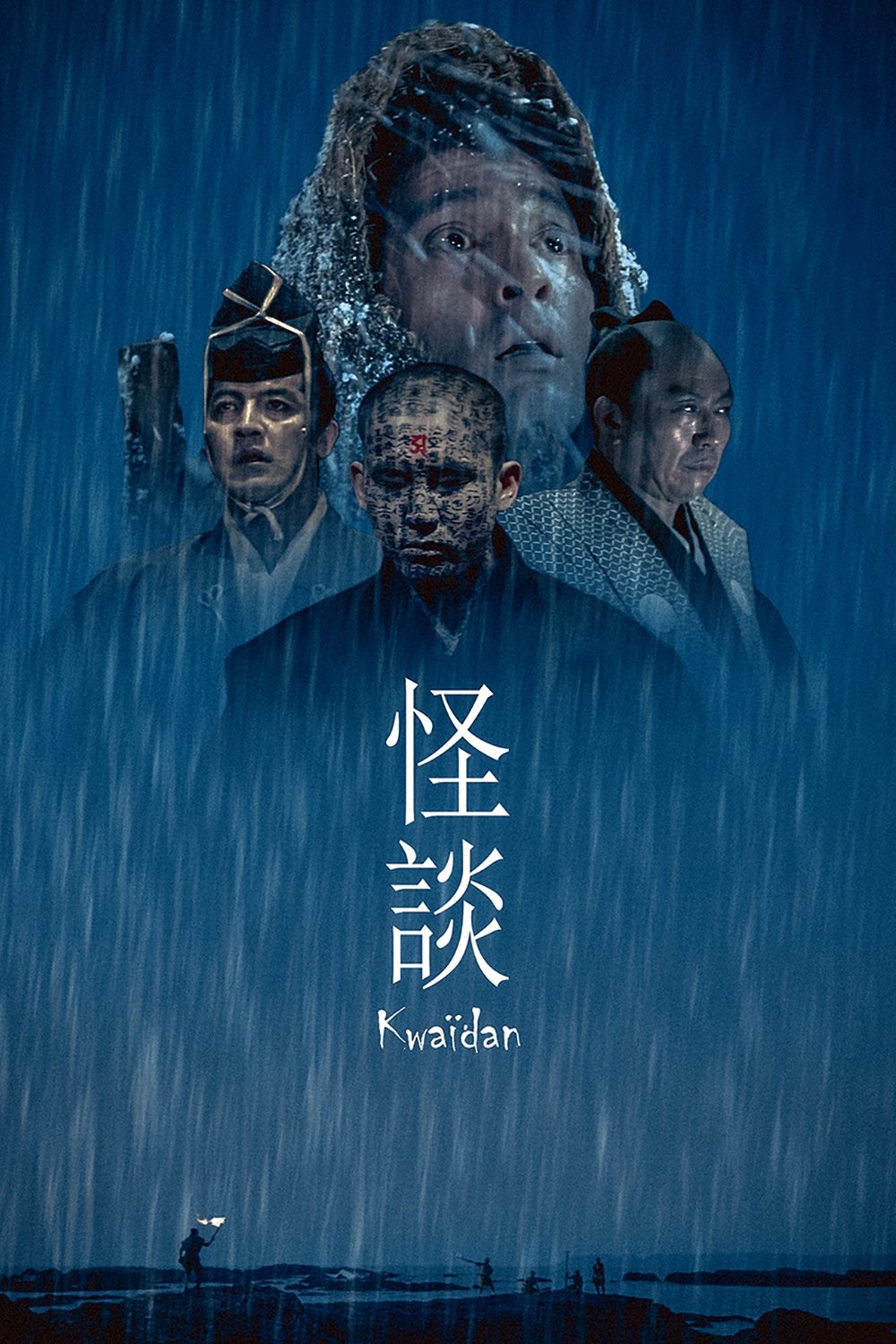
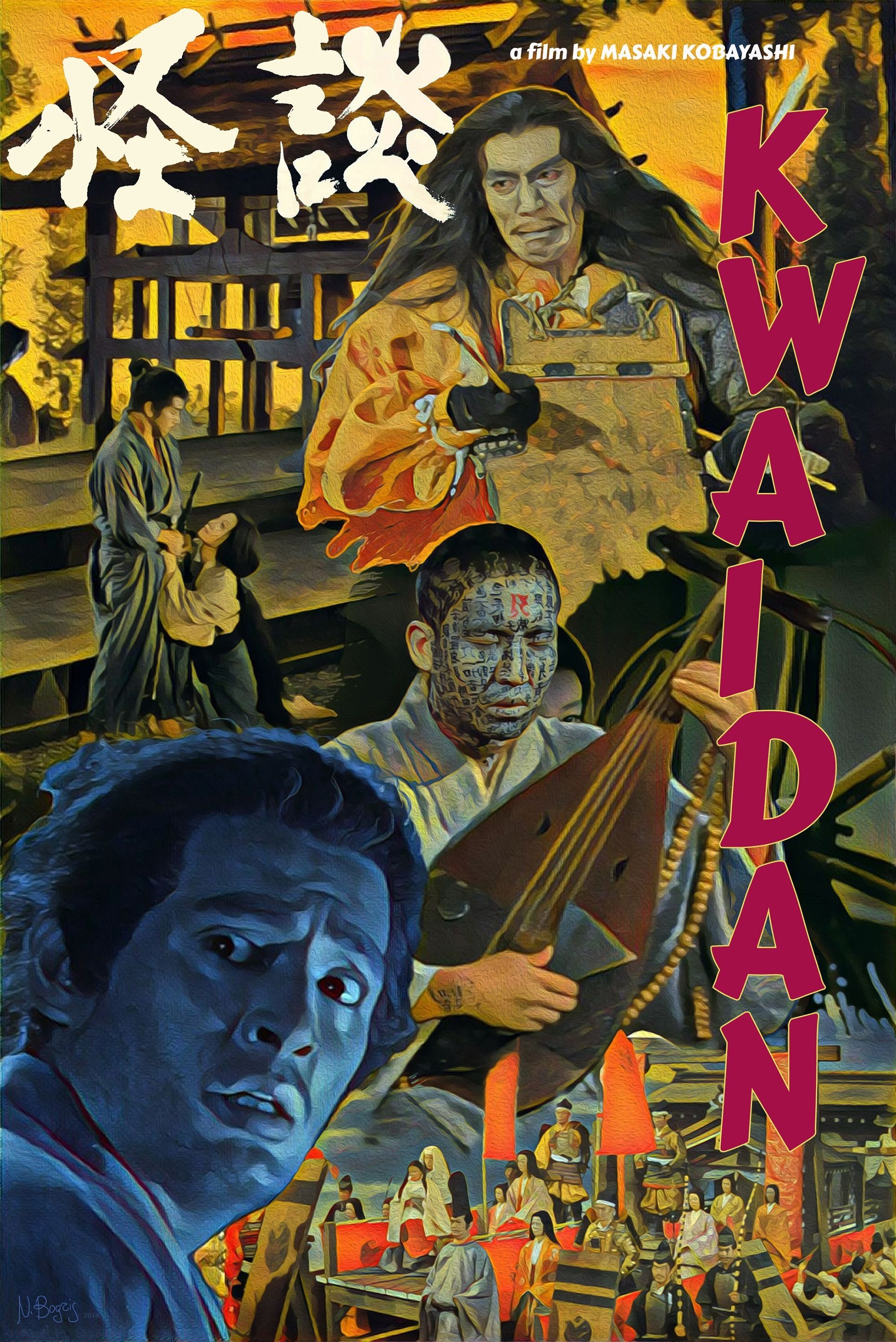
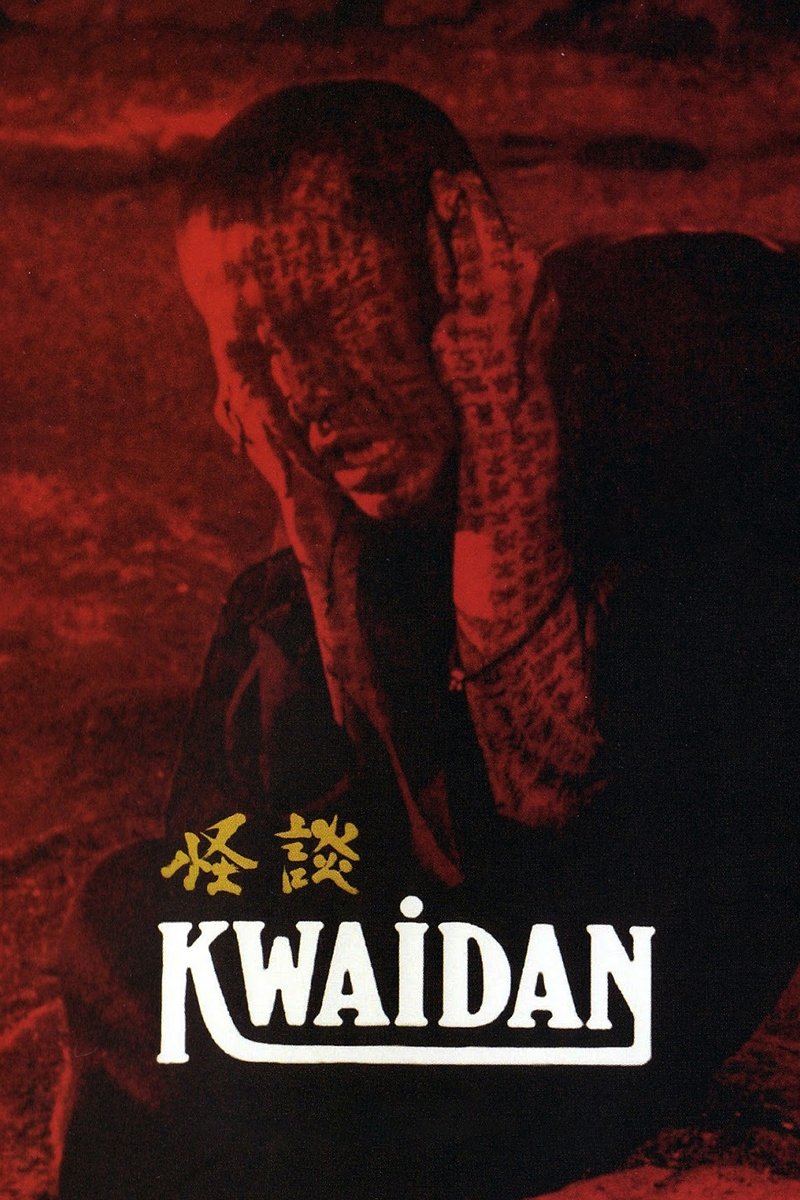
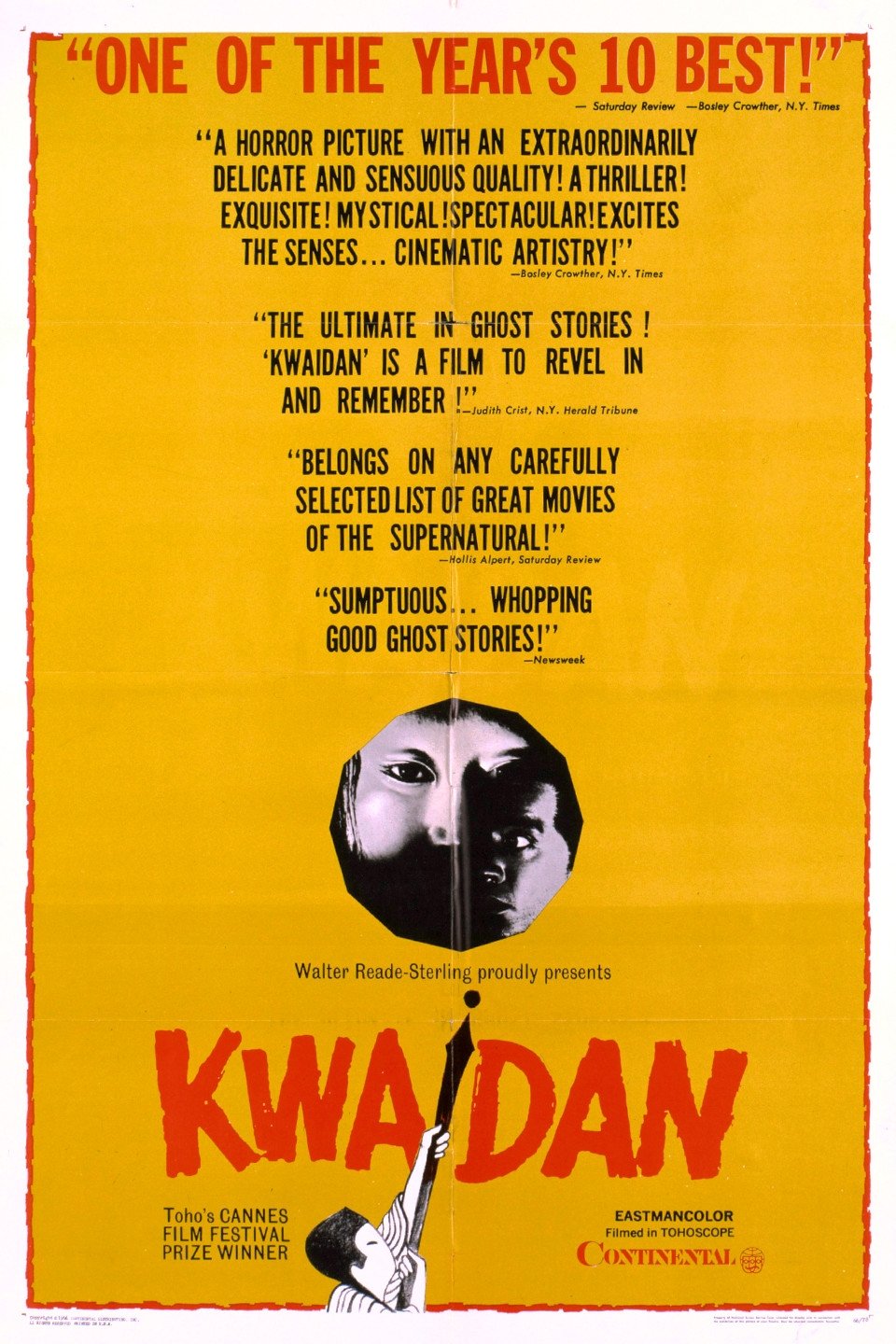
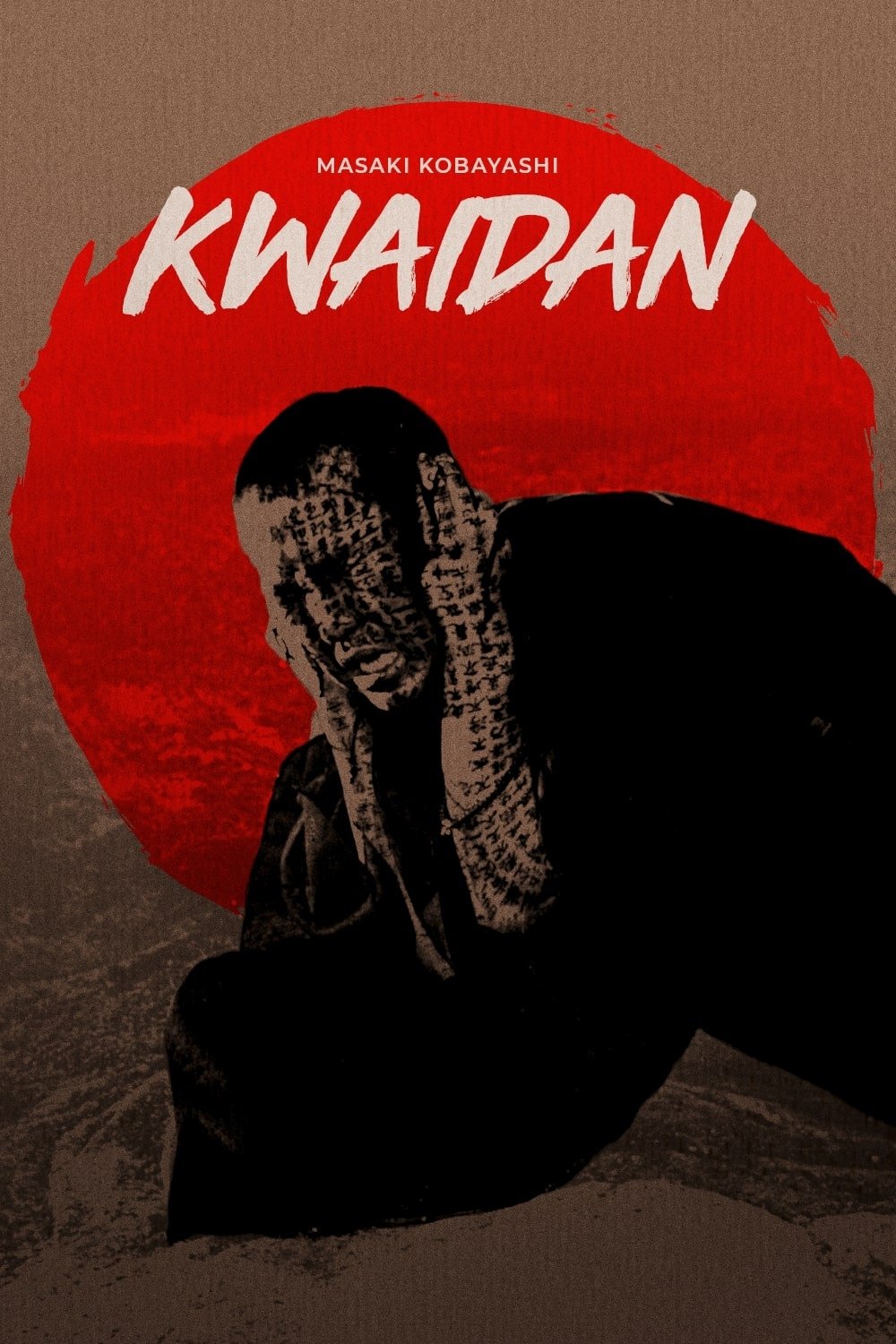
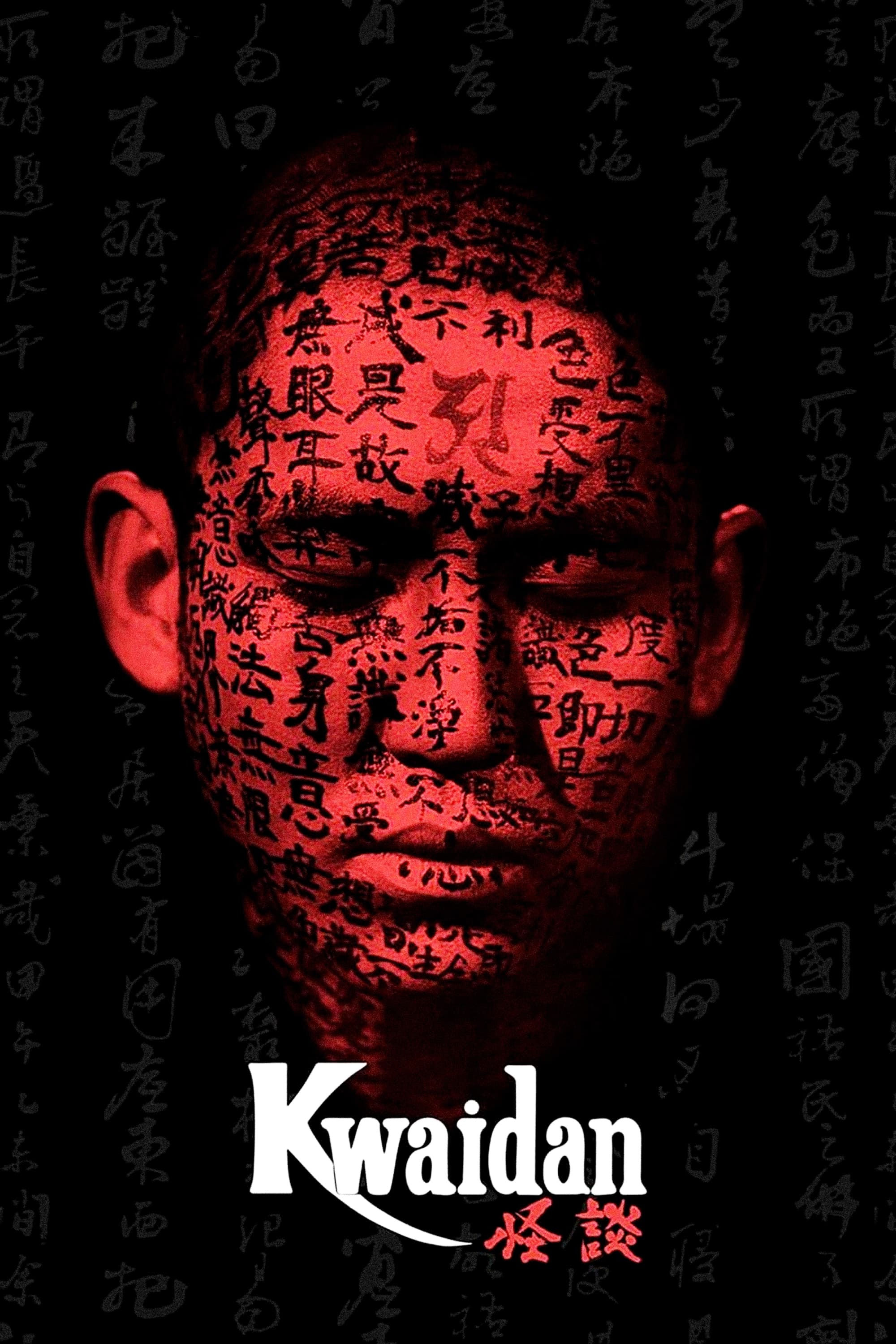
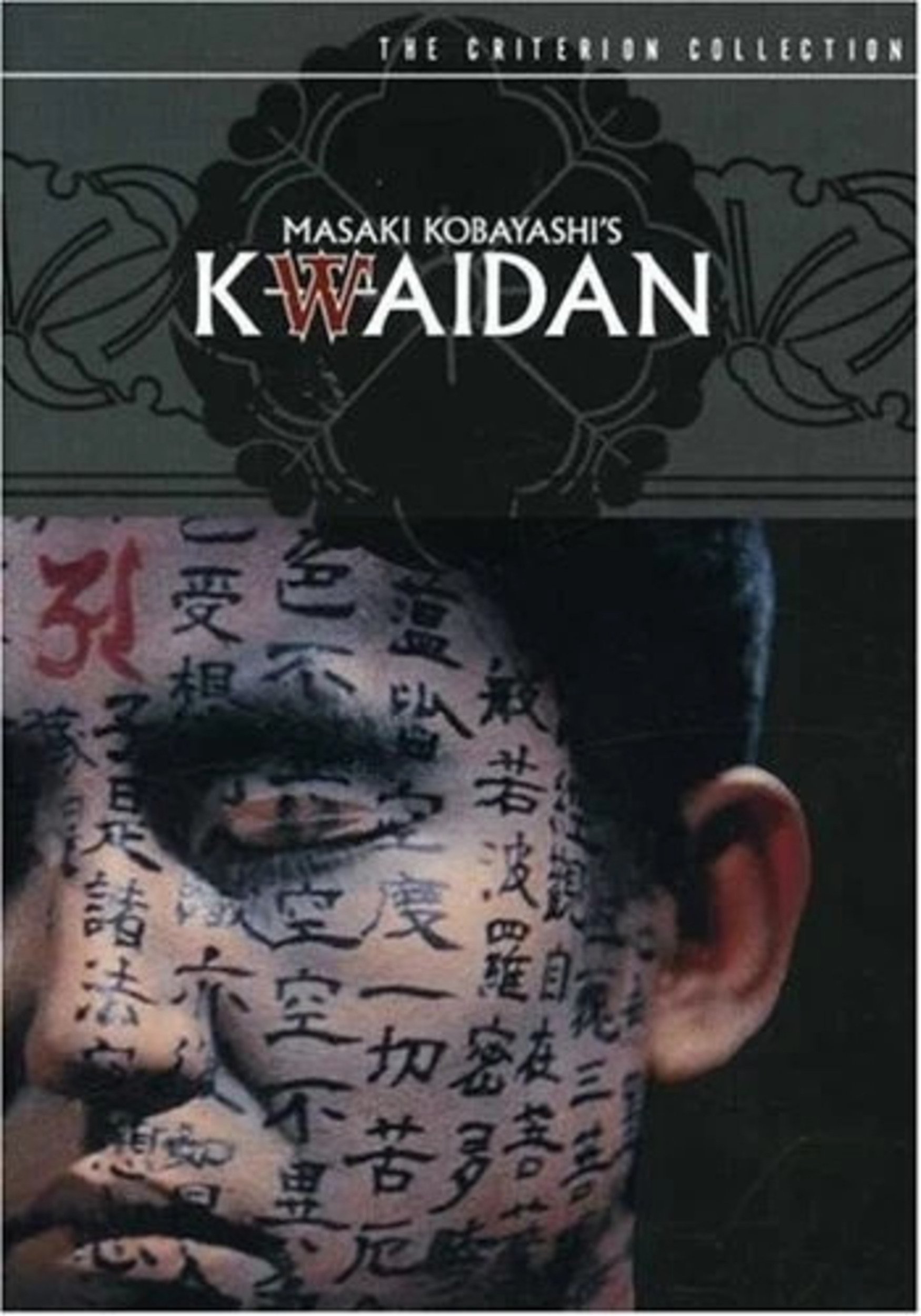
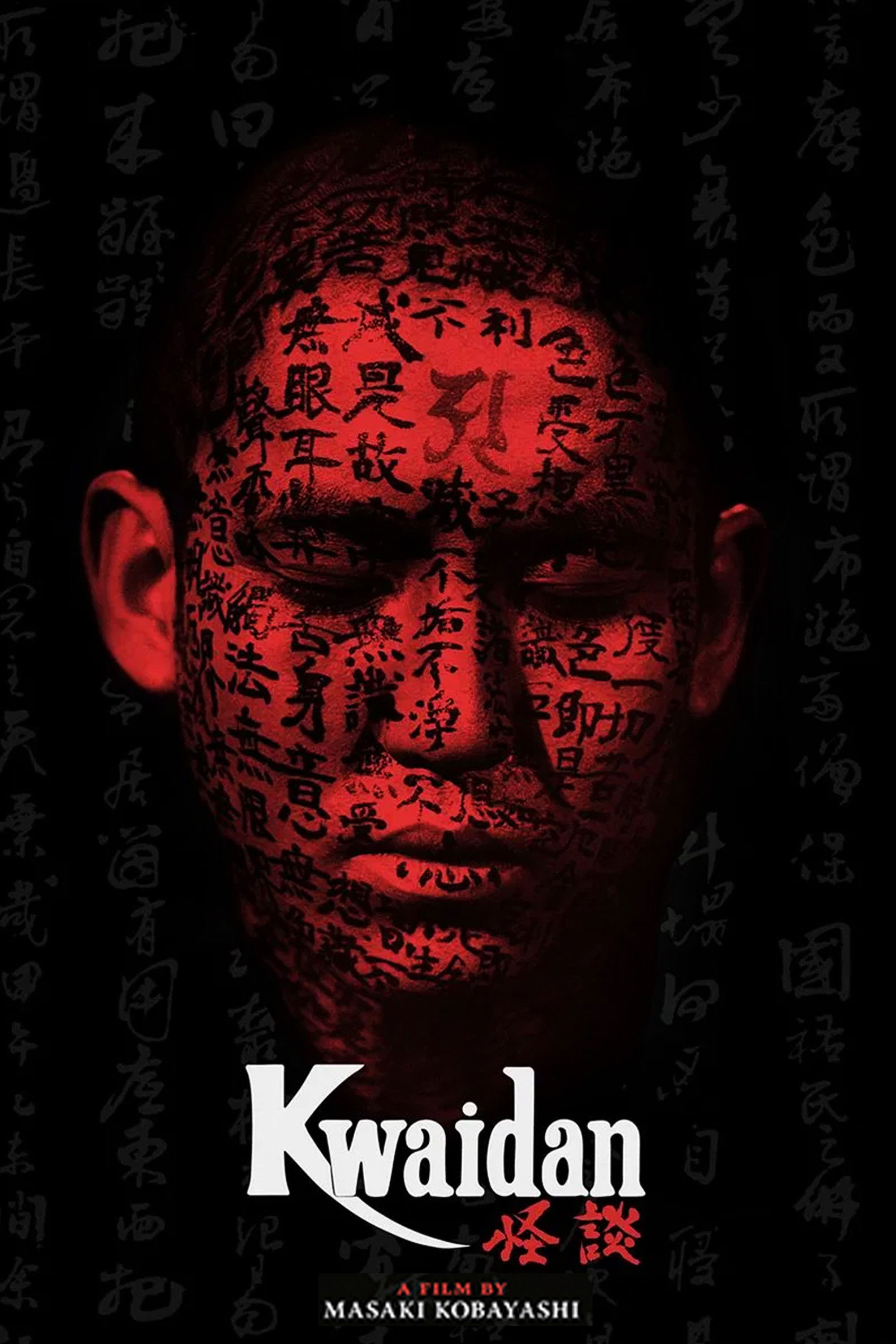
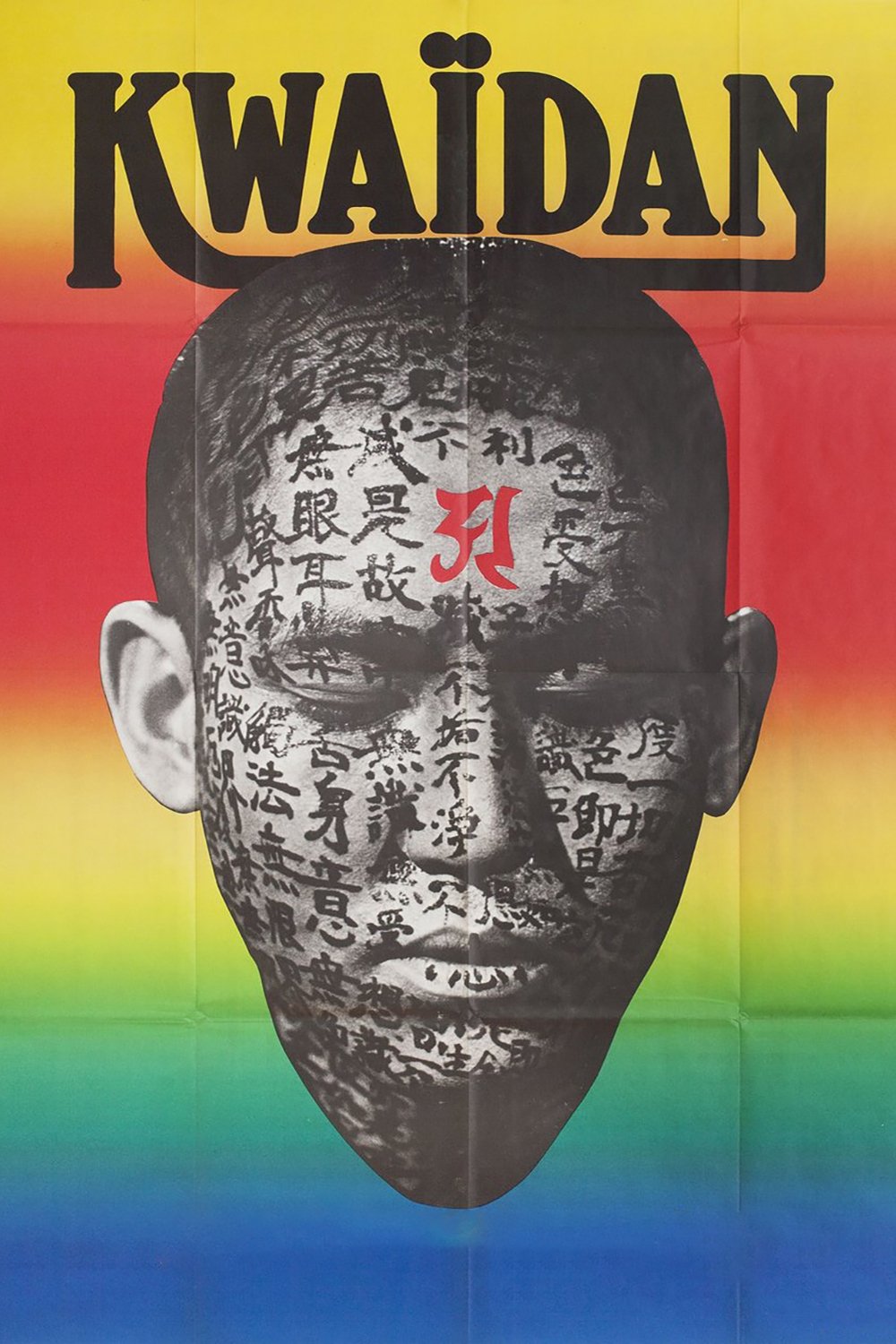
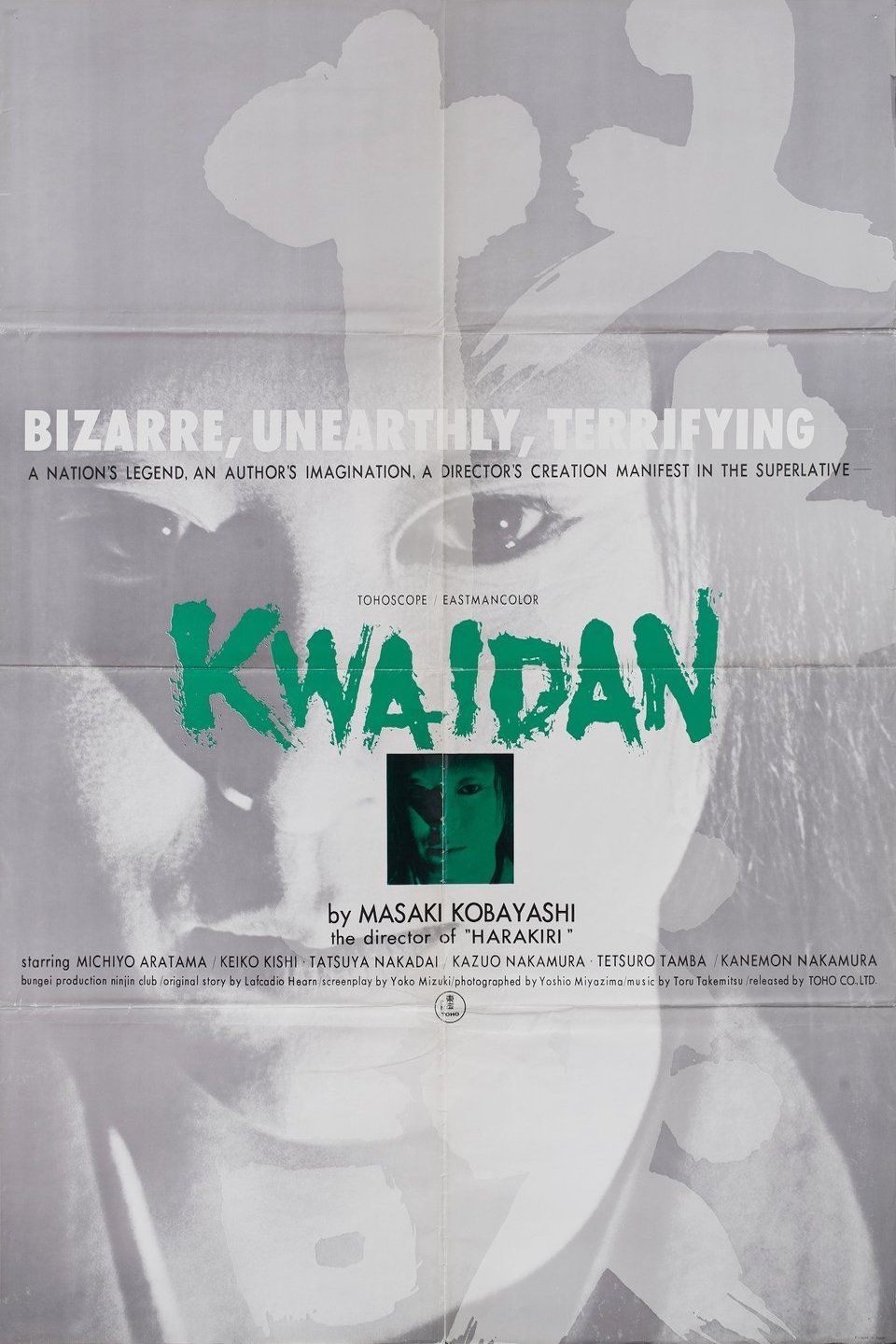
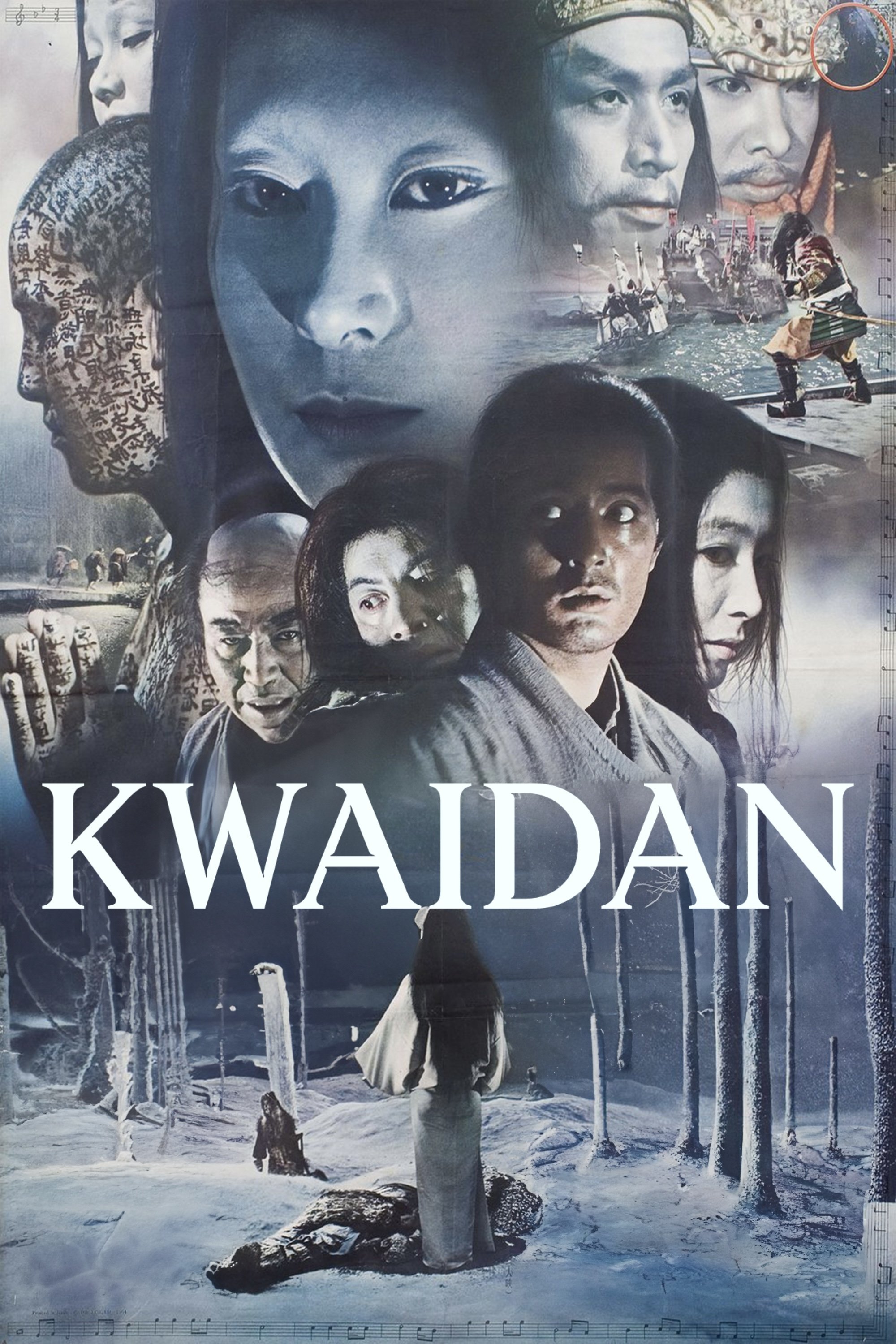
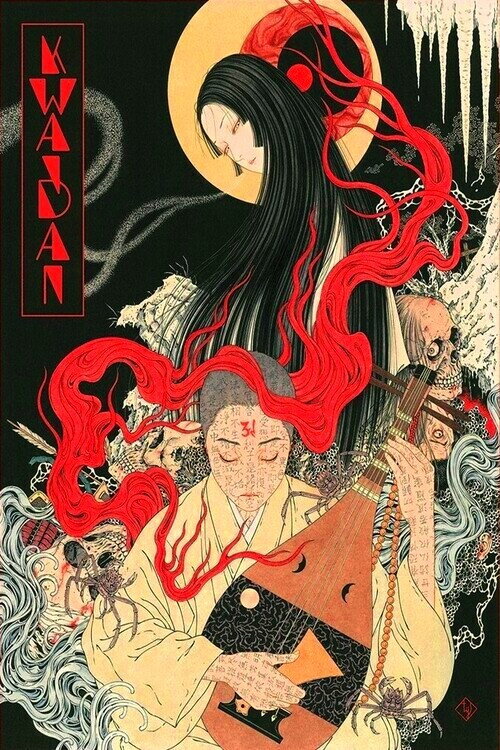
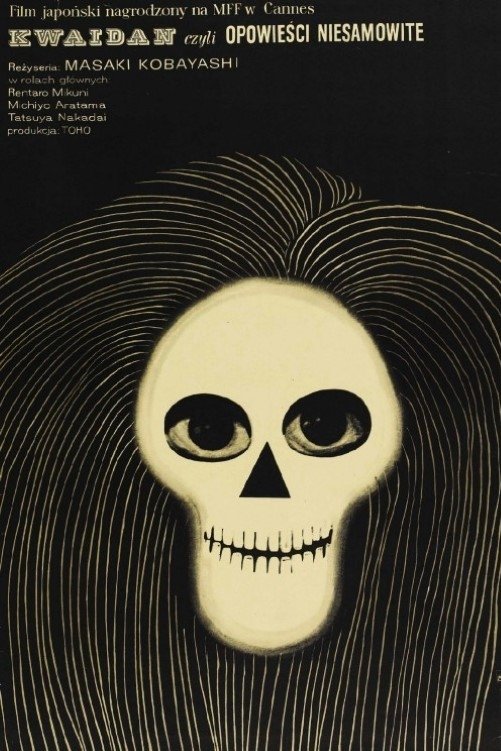
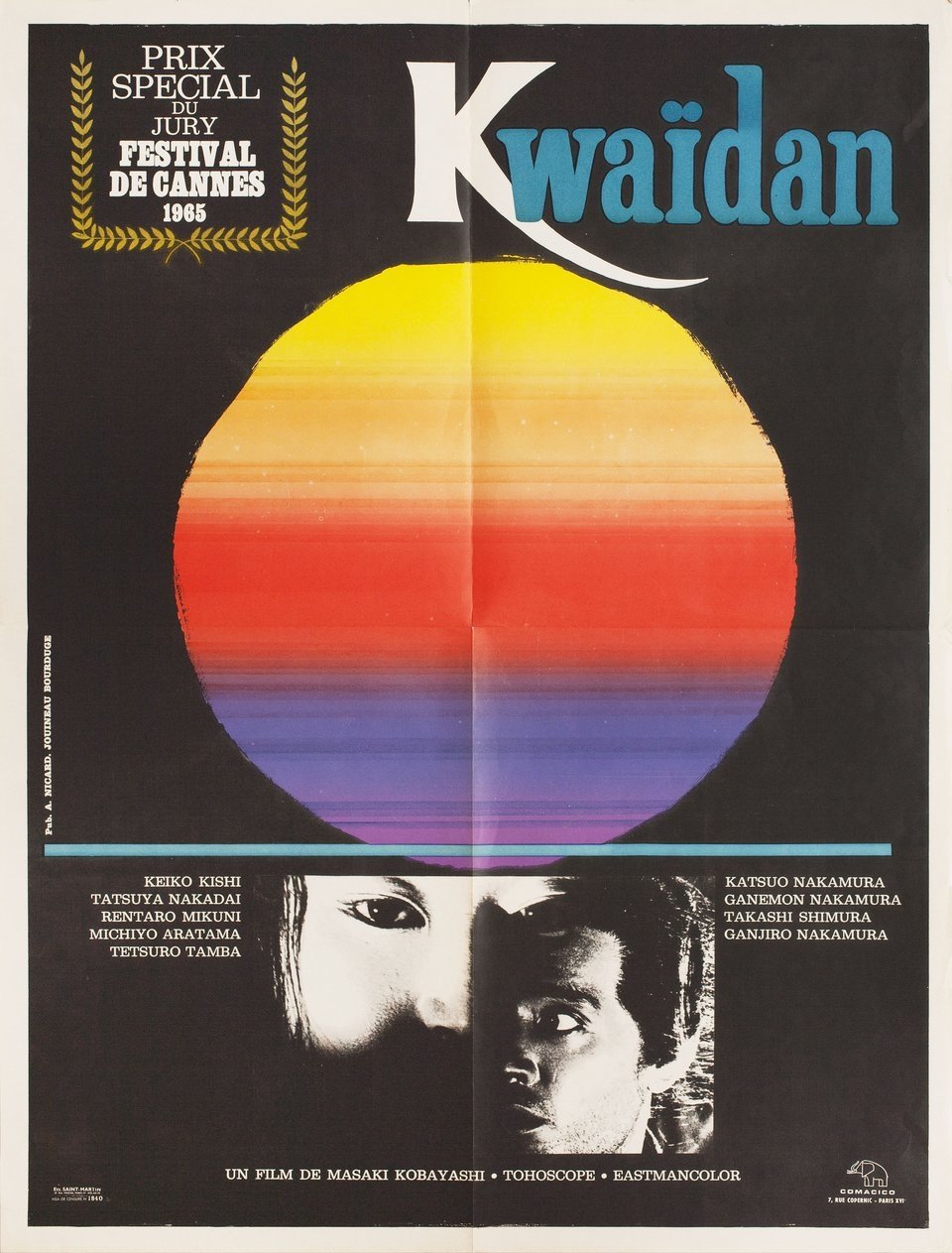
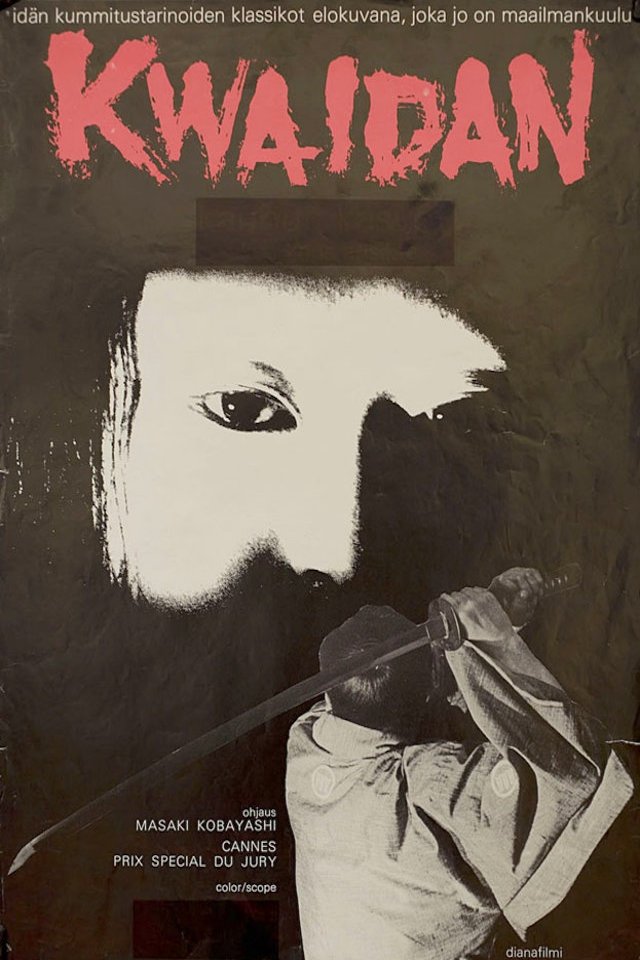
Kwaidan (1964) poster
Production Companies
Ninjin Club , TOHO
Plot

Taking its title from an archaic Japanese word meaning "ghost story," this anthology adapts four folk tales. A penniless samurai marries for money with tragic results. A man stranded in a blizzard is saved by Yuki the Snow Maiden, but his rescue comes at a cost. Blind musician Hoichi is forced to perform for an audience of ghosts. An author relates the story of a samurai who sees another warrior's reflection in his teacup.

Alternative Titles
Kwaidan: Historias Sobrenaturales (Argentina) Призрачни Истории (Bulgaria) Разкази за привидения (Bulgaria) — Bulgarian As 4 Faces do Medo (Brazil) Kwaidan: As Quatro Faces do Medo (Brazil) — Portuguese 奇谈 (China) 怪谈 (China) — Chinese El más allá (Spain) — Spanish
Show all 29 alternative titles Kwaidan - kauhun kasvot (Finland) — Finnish Kwaïdan (France) — French کوایدان (Iran) — Persian Kwaidan - Storie di fantasmi (Italy) Kaidan (Japan) — romanization 괴담 (South Korea) — Korean El más allá (Mexico) — Spanish Gjenferd (Norway) Kwaidan, czyli Niesamowite Historie (Poland) Kwaidan, czyli opowieści niesamowite (Poland) — Polish O Abismo da Morte (Portugal) Priče o Duhovima (Serbia) Кайдан (Russia) — Russian Квайдан: Повествование о загадочном и ужасном (Russia) Квайдан: Повествование о Загадочном и Ужасном (Russia) Hayalet Öyküleri (Türkiye) — Turkish Кайдан (Ukraine) — Ukrainian Ghost Stories (United States) Kaidan (United States) — Romaji Weird Tales (United States) Quái Đàm (Vietnam) — Vietnamese

Trailers & Videos

3 videos

Film Guide & Analysis

Masaki Kobayashi adapts four Lafcadio Hearn ghost tales through hand-painted supernatural landscapes and Toru Takemitsu sound design.

Kwaidan (1964) is Masaki Kobayashi's four-part Japanese ghost film, adapted by screenwriter Yoko Mizuki from literary retellings by Lafcadio Hearn. Its encounters with the supernatural occur in deserted houses, snowbound woods, a coastal temple and the reflection inside a cup of tea. Each setting subjects an ordinary person to a reality beyond familiar social rules. The film moves deliberately toward its revelations, allowing ominous spaces and unsettling sounds to accumulate force before the ghosts become fully visible. Its horror depends on abandoned promises, human vulnerability and the troubling survival of the past.

Kobayashi's first color feature is an ambitious supernatural production. Production designer Shigemasa Toda and cinematographer Yoshio Miyajima helped turn enormous painted environments into expressive supernatural landscapes, while Toru Takemitsu assembled a radical soundtrack from musical fragments, altered noises and silence. Although its earliest Japanese screening took place in December 1964, many international records list 1965, the year of its Cannes recognition. Different countries subsequently saw shortened versions. Studying the full four-story film makes its relationships among sound, memory, violence and the act of storytelling particularly clear.

Hearn, Kobayashi and the Production

Kobayashi had already established himself through The Human Condition and Harakiri, works concerned with institutional pressure and the human cost of rigid codes. For Kwaidan he turned to historical ghost narratives, retaining an interest in what happens when a person crosses a boundary enforced by a powerful social order. Hearn, who eventually settled in Japan and wrote under the name Yakumo Koizumi, had recorded and reshaped accounts from Japanese storytelling traditions. The film draws its chapters from several Hearn collections: Shadowings (1900), Kotto (1902) and Kwaidan: Stories and Studies of Strange Things (1904). The shared title should not imply that all four episodes originate in the 1904 volume.

Producer Shigeru Wakatsuki and Kobayashi pursued a production far beyond the scale normally associated with a ghost-story anthology. Yoko Mizuki's screenplay transforms brief written anecdotes into sequences that allow the architecture, changing seasons and characters' delayed decisions to become important. The shoot began in 1964 and extended over a difficult production period, with elaborate construction needed for each environment. Subsequent historical accounts describe growing costs, financing problems and the sale of Kobayashi's home as the filmmakers struggled to finish. Those reports help explain the exceptional expense; they should not be treated as a complete audited financial record.
The Black Hair: Marriage, Memory and Decay

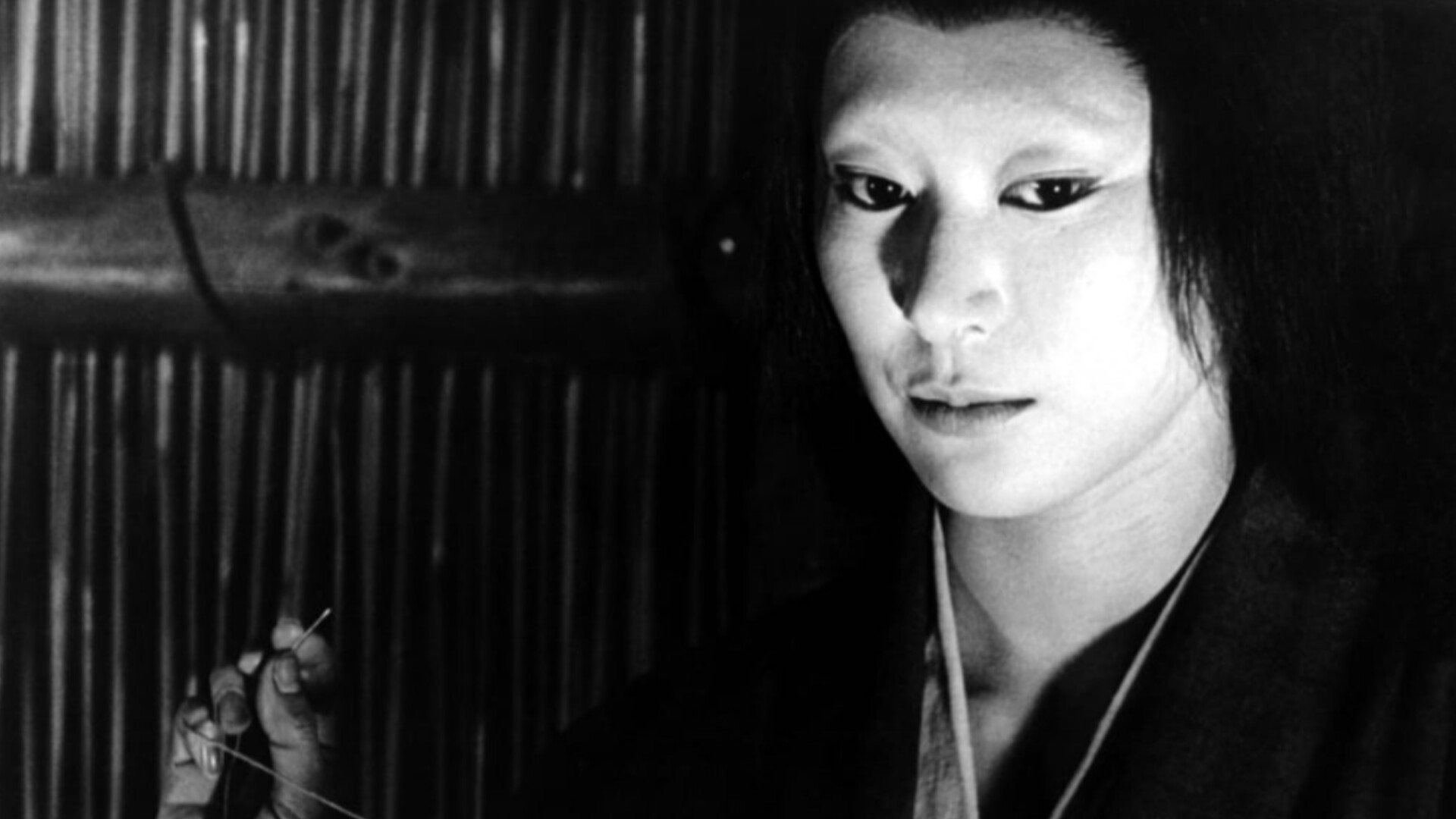
The opening episode, adapted from Hearn's The Reconciliation, follows a financially desperate samurai played by Rentaro Mikuni. He abandons his devoted wife, portrayed by Michiyo Aratama, to marry into a wealthier household. Advancement brings him little satisfaction, and his thoughts repeatedly return to the life he discarded. Years later he makes his way to their former home, finding the property neglected but his first wife apparently unchanged. She receives him with a calm affection that seems to offer a chance to repair the past. The film lets their reunion last long enough for the anticipated reconciliation to appear possible.

Morning exposes the true condition of the house and the woman he embraced. The living presence disappears, revealing a corpse and rooms overtaken by decay. Her black hair survives as the most terrifying remnant, moving through the neglected interior while the husband attempts to escape. Kobayashi's camera had already explored empty corridors before the characters appeared, preparing the building to feel inhabited by an unseen force. When the apparent domestic order collapses, familiar rooms lose their spatial reassurance. The encounter also makes aging and the passage of time immediately physical, as the returning man confronts consequences that no apology can reverse.

Michiyo Aratama's restrained performance gives the first wife an emotional reality before the transformation. The horror depends on the difference between her apparent patience and the condition concealed beneath that image. A discarded marriage becomes an irreversible event, preserved in a location that has ceased to belong to the living. The episode shares a subject with Japanese ghost melodramas such as Ugetsu, but its bright surfaces, deliberate pacing and sudden emphasis on the husband's disintegration give the story a specific visual identity. Love remains central to the threat because the ghost appears in the form the husband most wishes to recover.

The Woman of the Snow: A Fatal Promise

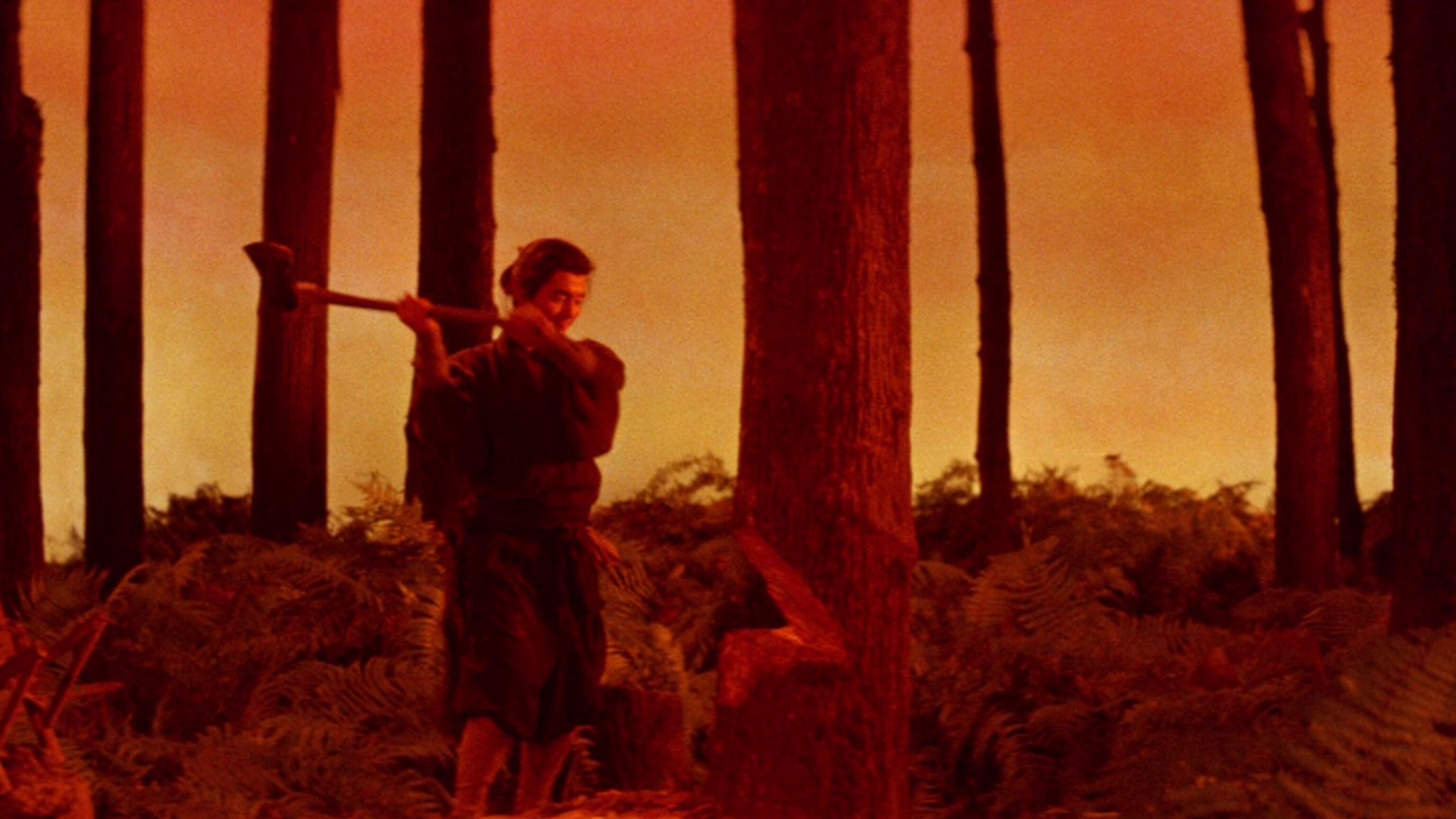
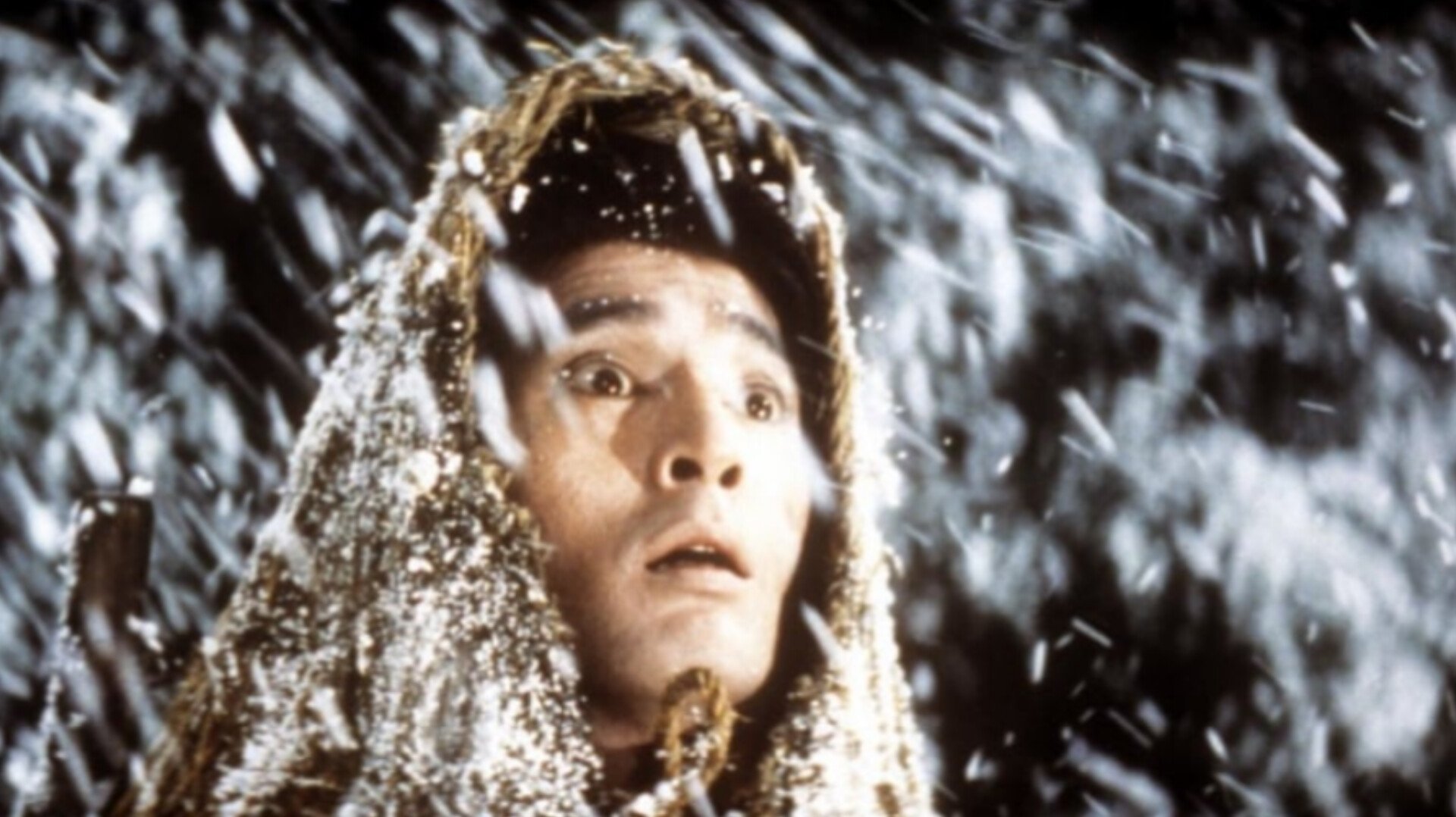
In the second chapter, the woodcutter Minokichi, played by Tatsuya Nakadai, is caught in a violent snowstorm with an older companion. They seek shelter in a hut, where a mysterious woman enters and kills the older man with her freezing breath. She spares Minokichi after noticing his youth, warning that he must never tell anyone what he witnessed. The condition turns survival into an obligation that extends beyond the immediate night. The encounter is frightening because the apparition exercises complete power over life and death without explaining the limits of her nature.

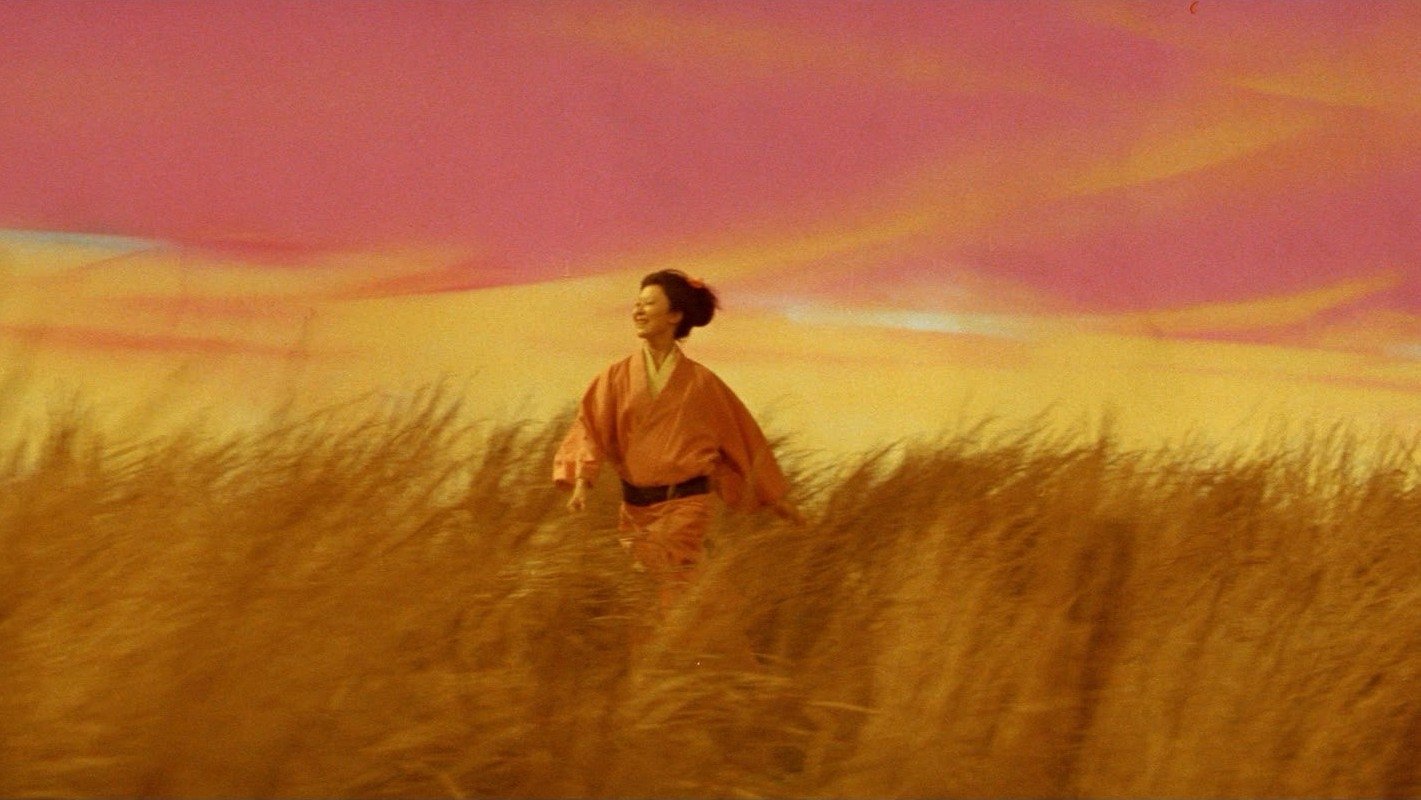
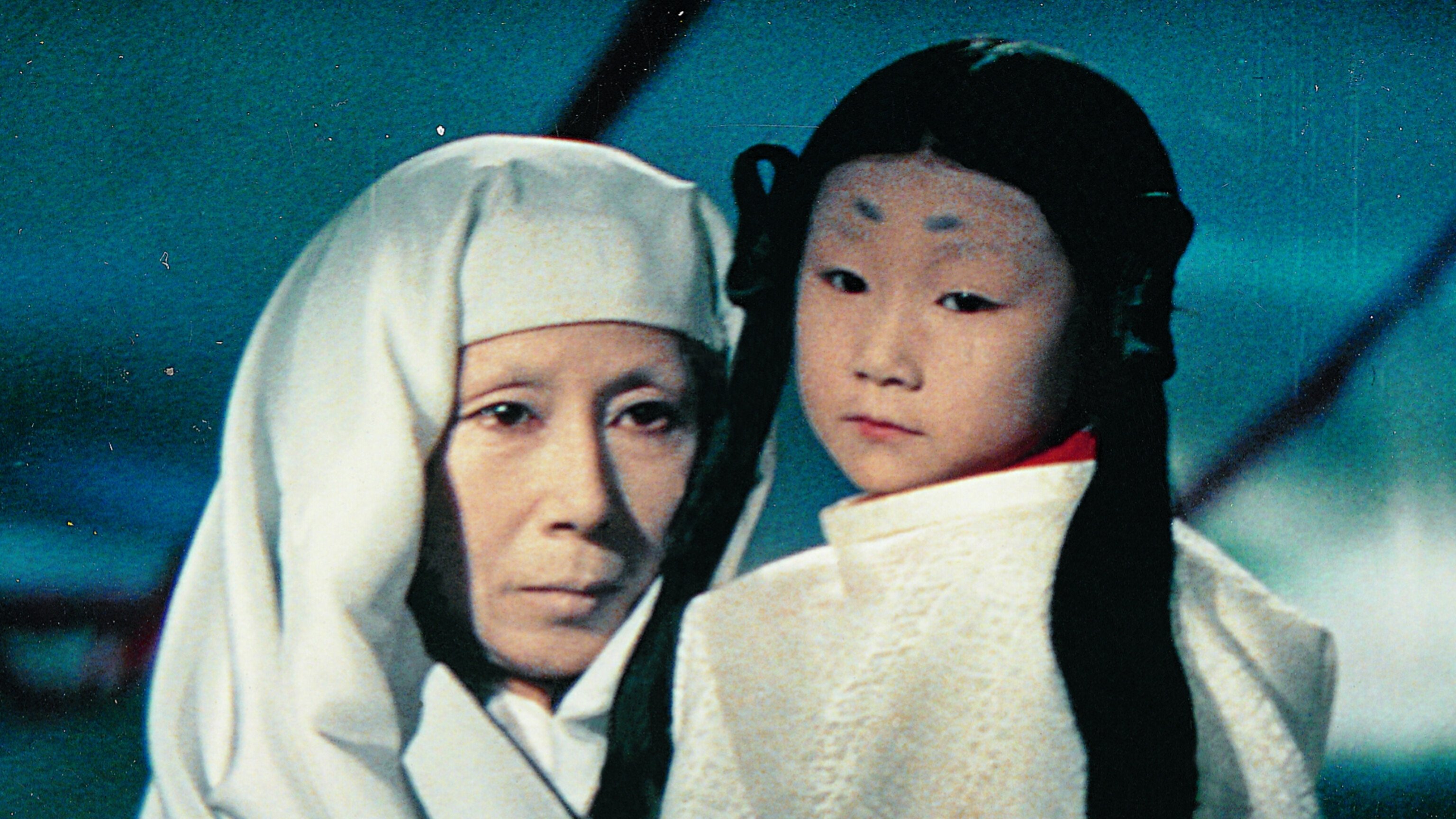
Minokichi returns to ordinary work and eventually meets a young woman named Yuki, played by Keiko Kishi. They marry and have children, creating a household that appears secure despite the secret he carries. As the years pass, Yuki retains the same youthful appearance. One evening Minokichi recounts his experience in the blizzard, recognizing a resemblance that he had never allowed himself to explore. His wife reveals her connection to the snow spirit and departs, sparing him for the children's sake. The punishment is a family loss whose emotional weight comes from the happiness established during the intervening years.

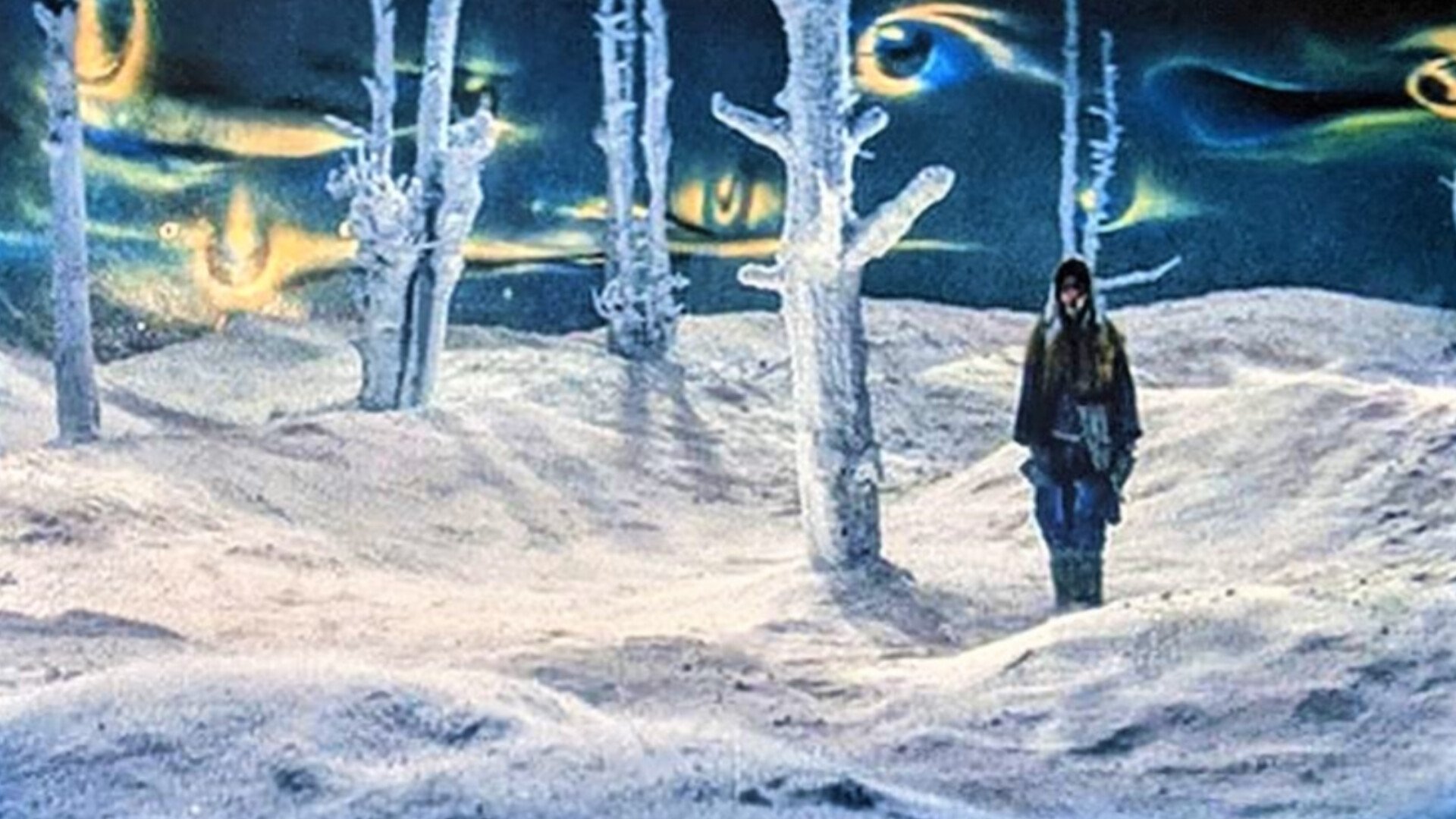
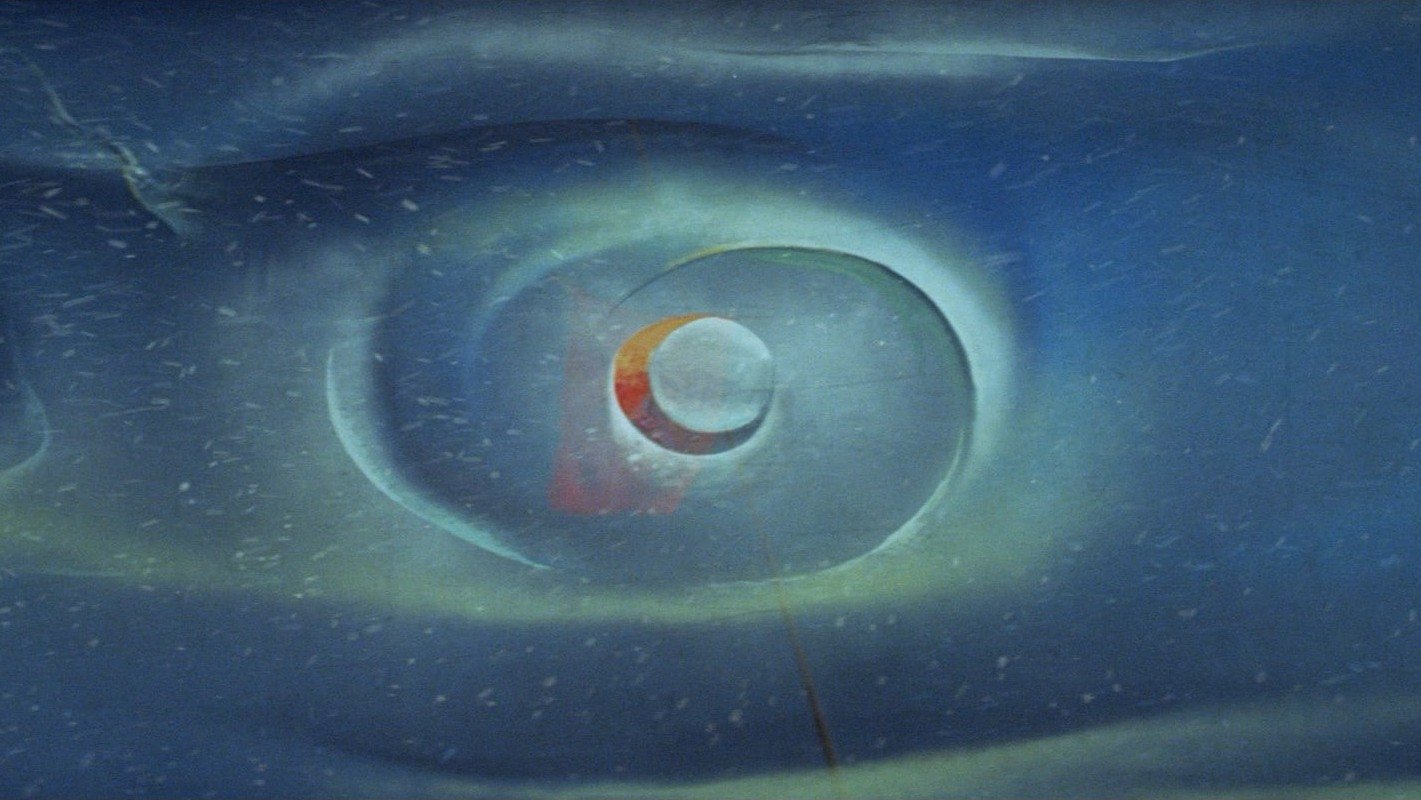
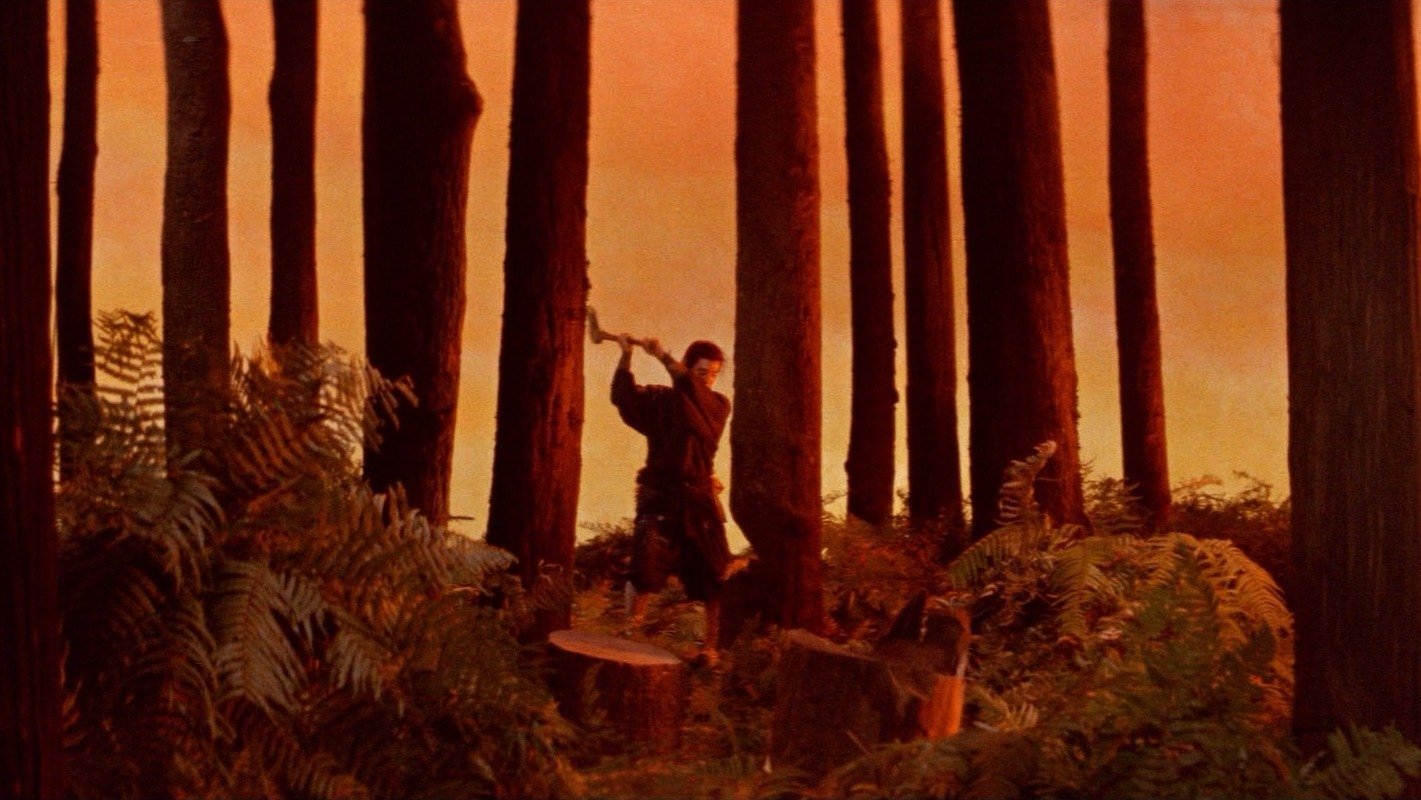
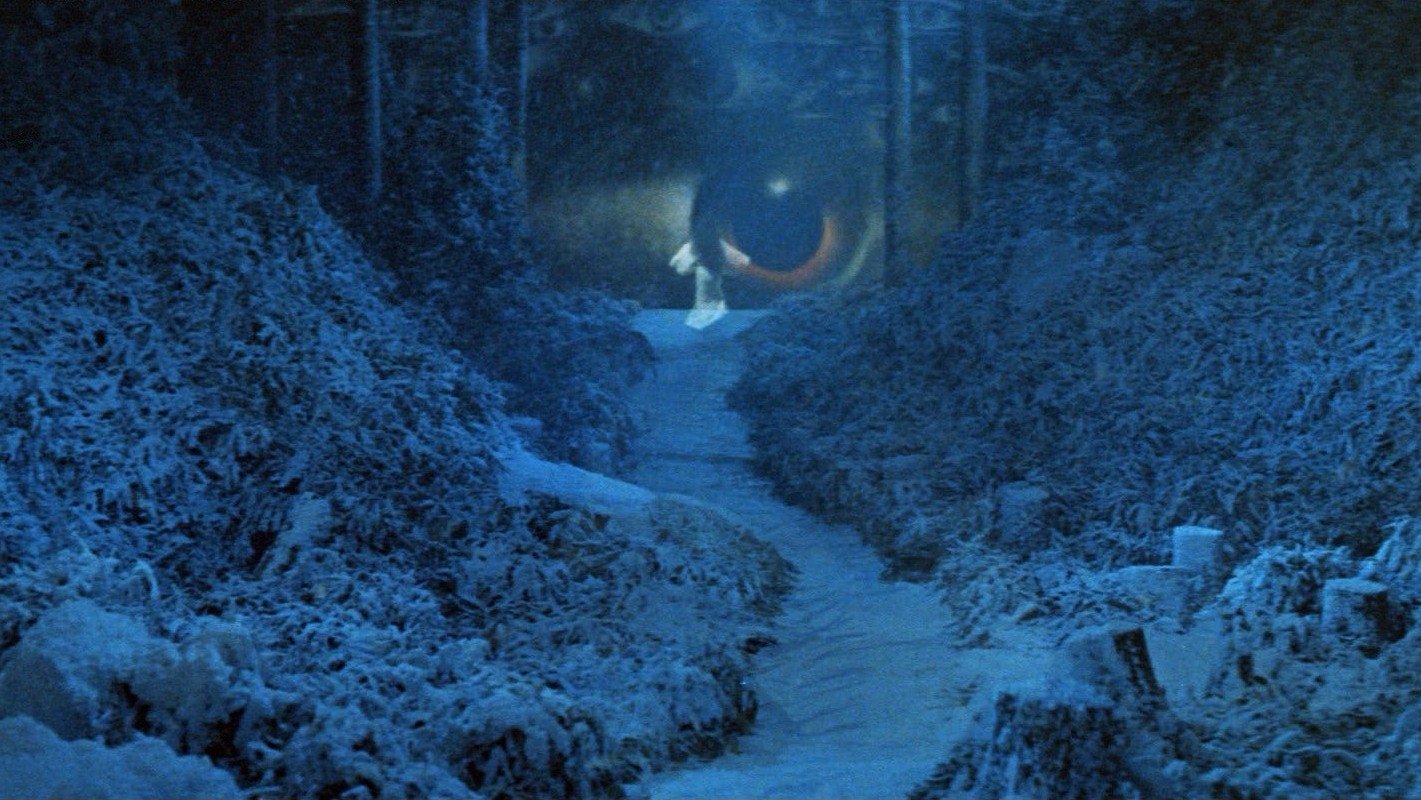
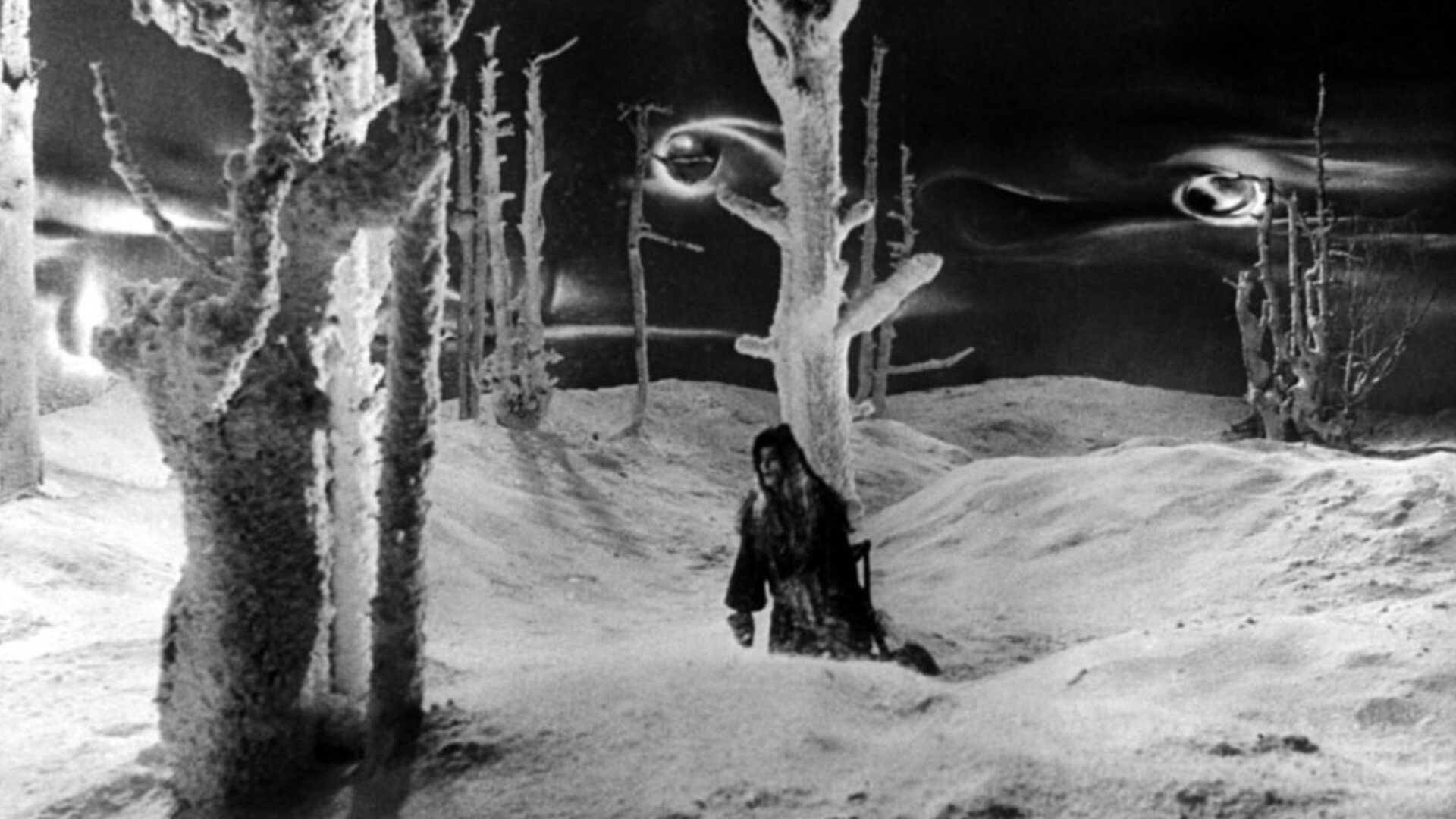
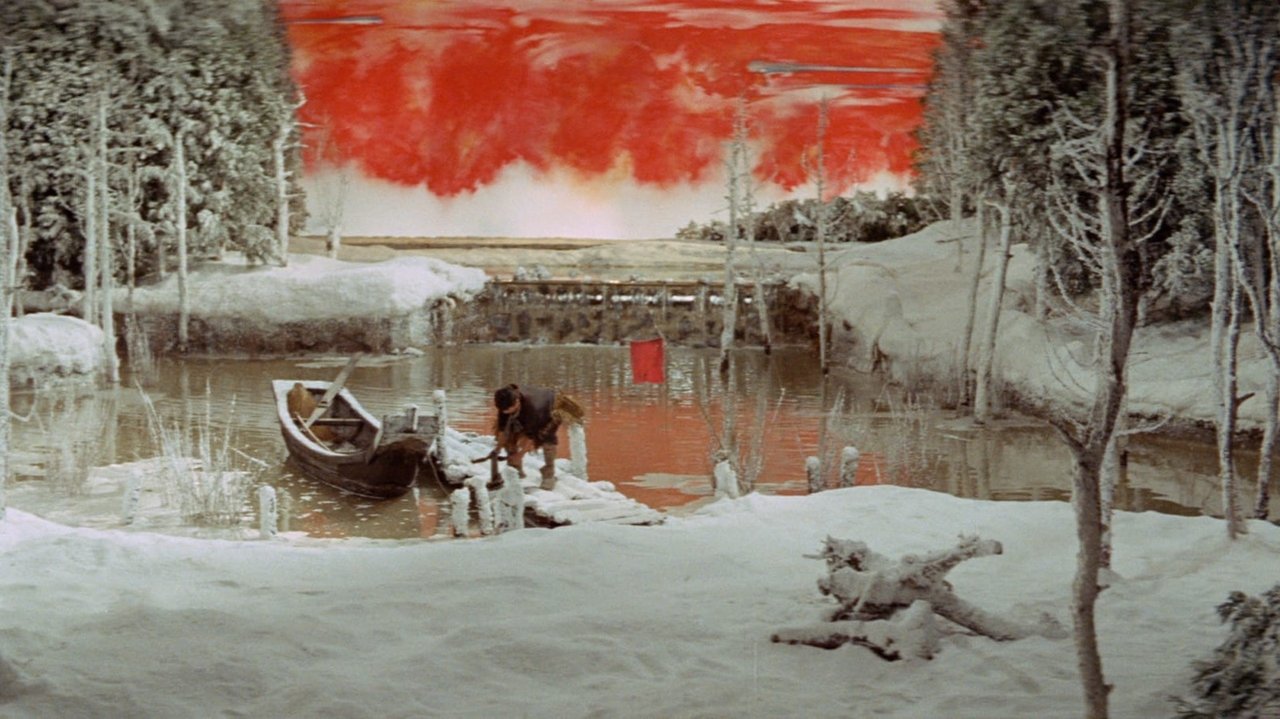
The episode's painted winter skies are filled with immense watchful shapes, and the forest is arranged in a nearly abstract pattern of bare trees. These features keep the natural world visibly artificial, making it seem governed by another intelligence even during quiet scenes. Changes in lighting separate the remembered encounter from the warmth of family life without removing the unease of the original promise. The supernatural woman's double identity complicates a simple classification of her as benevolent or malicious. Her attachment to the children is genuine within the tale, yet the prohibition imposed on Minokichi remains absolute.

Hoichi the Earless: The Dead Remember War

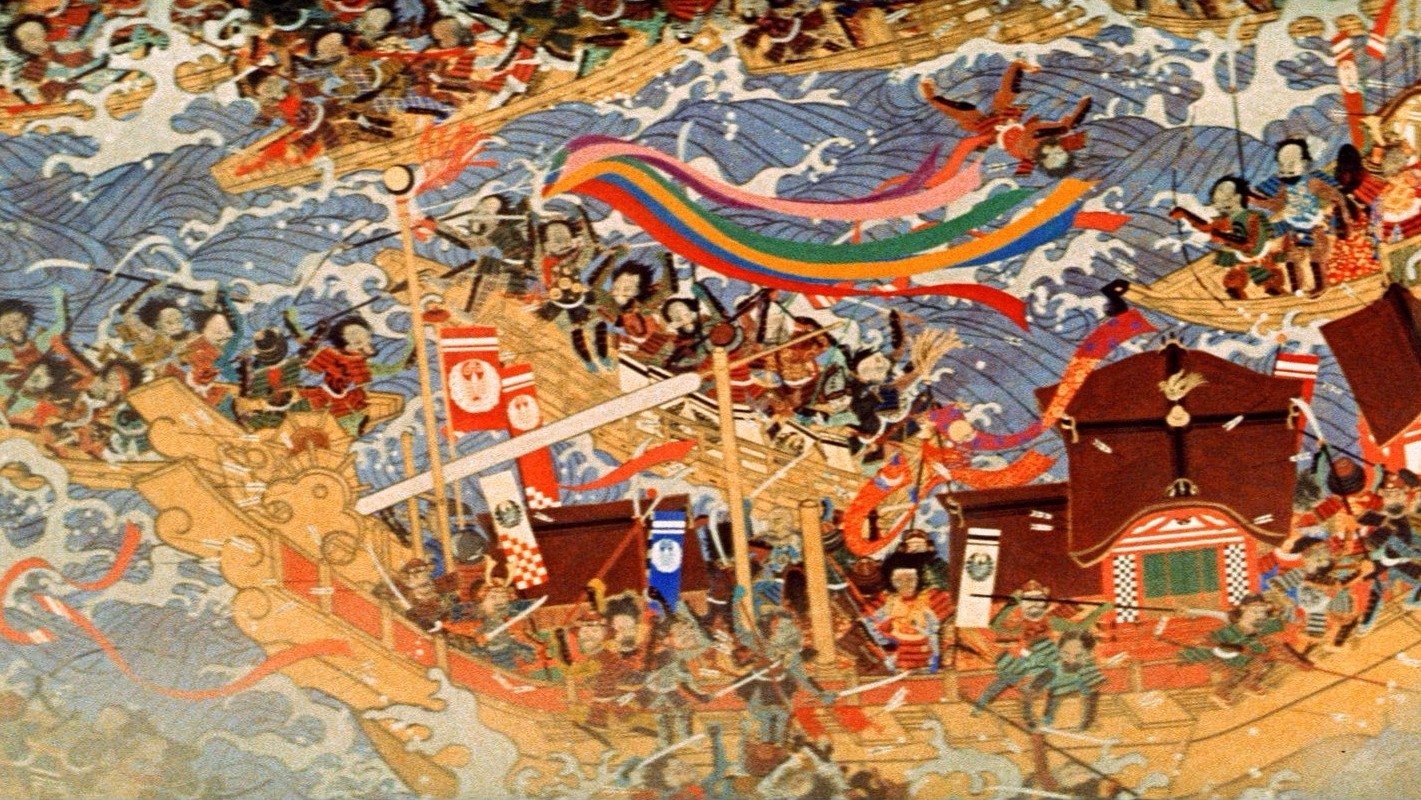
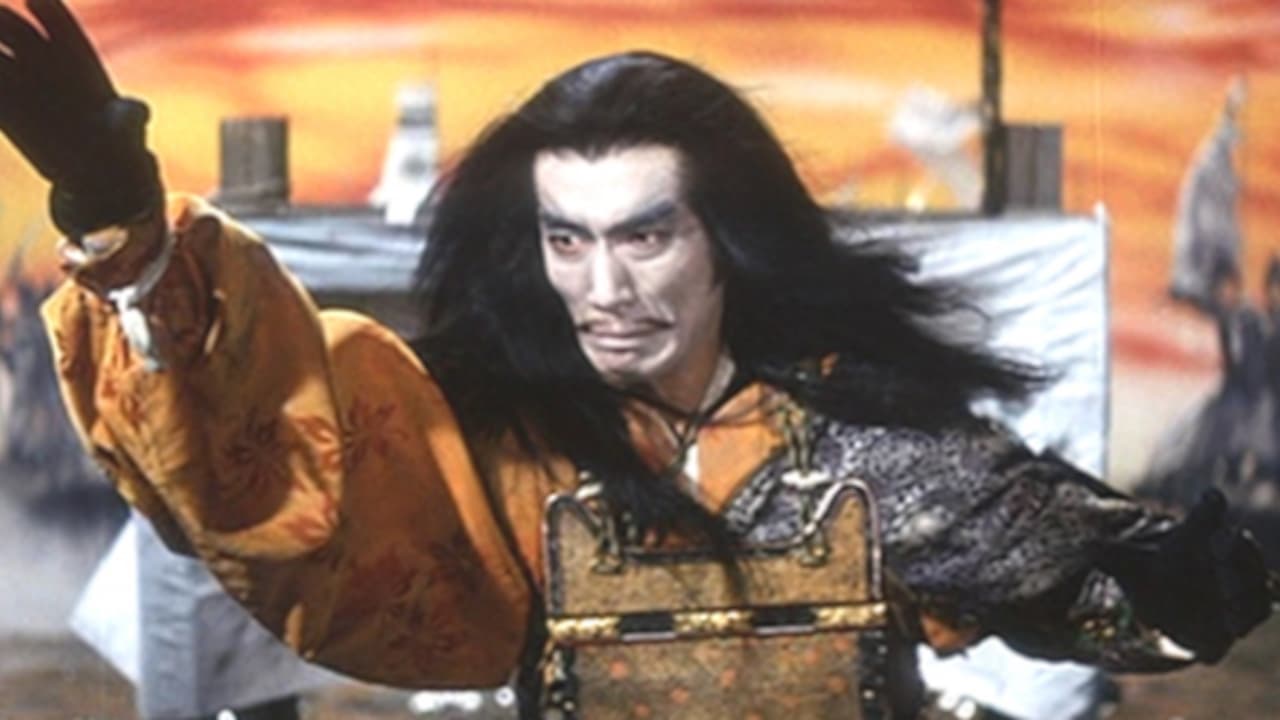
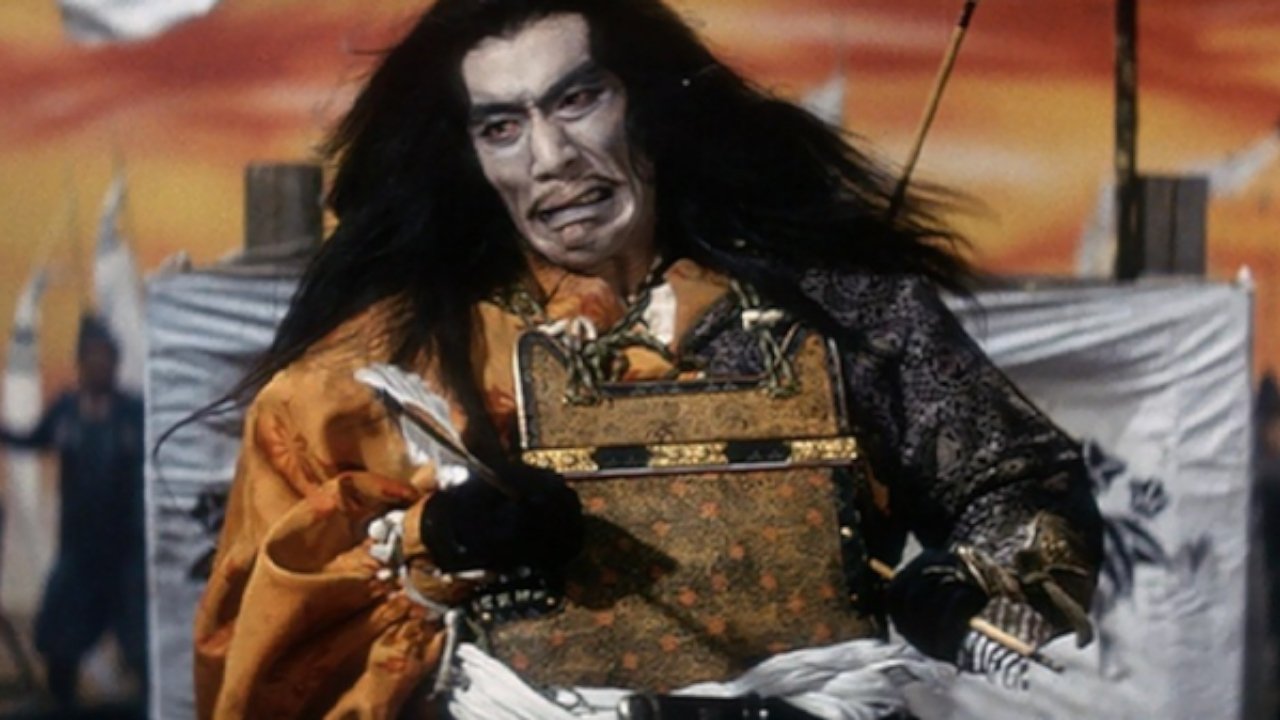
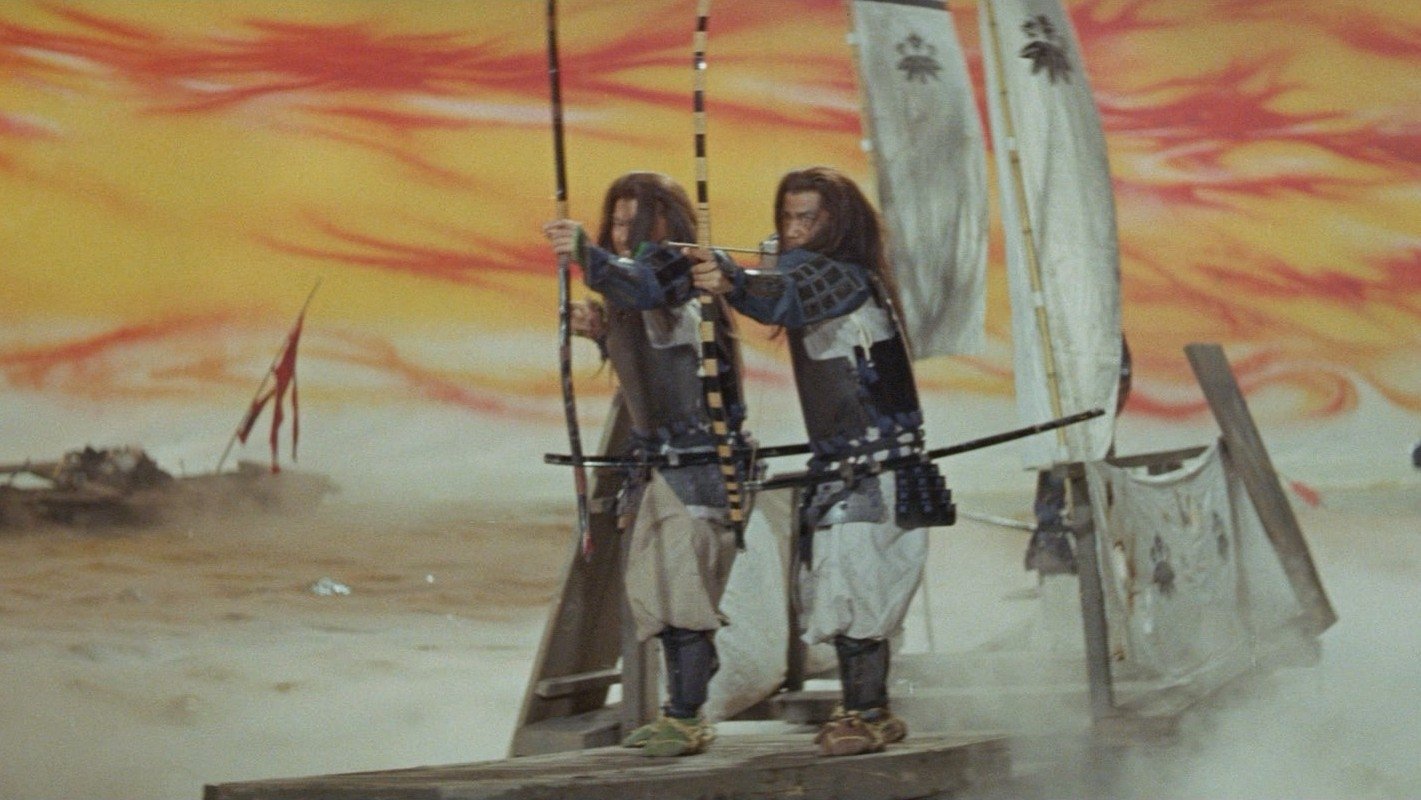
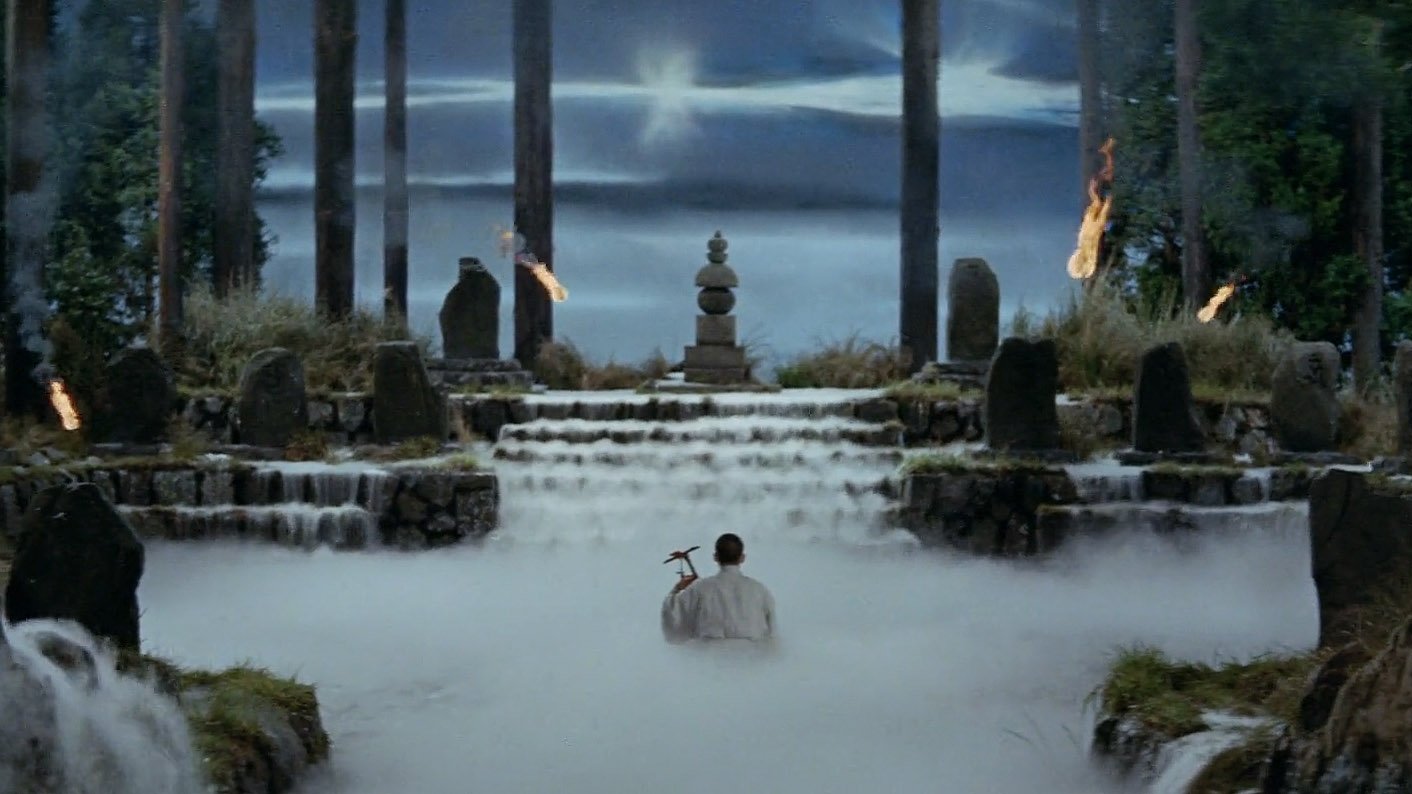
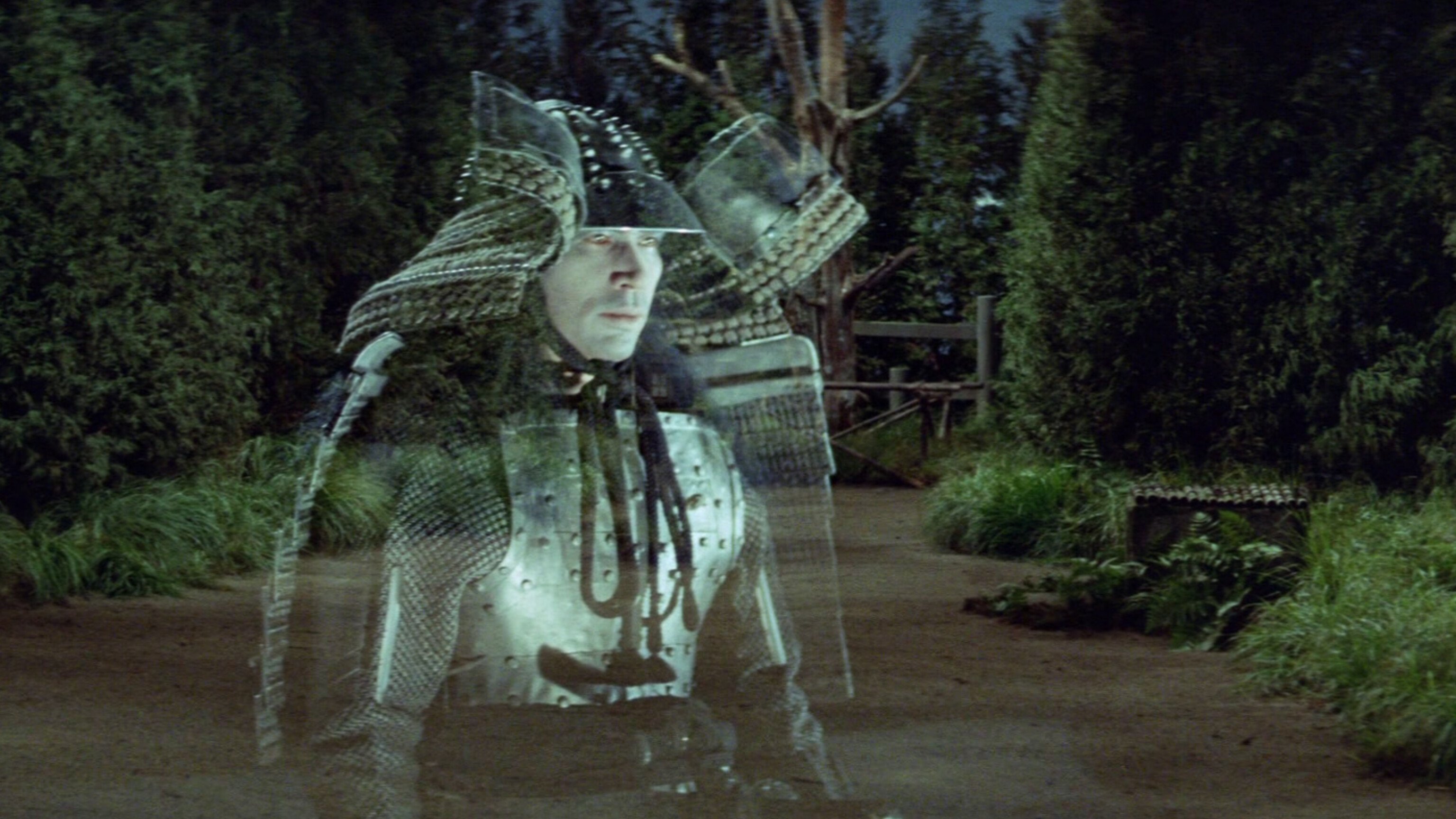
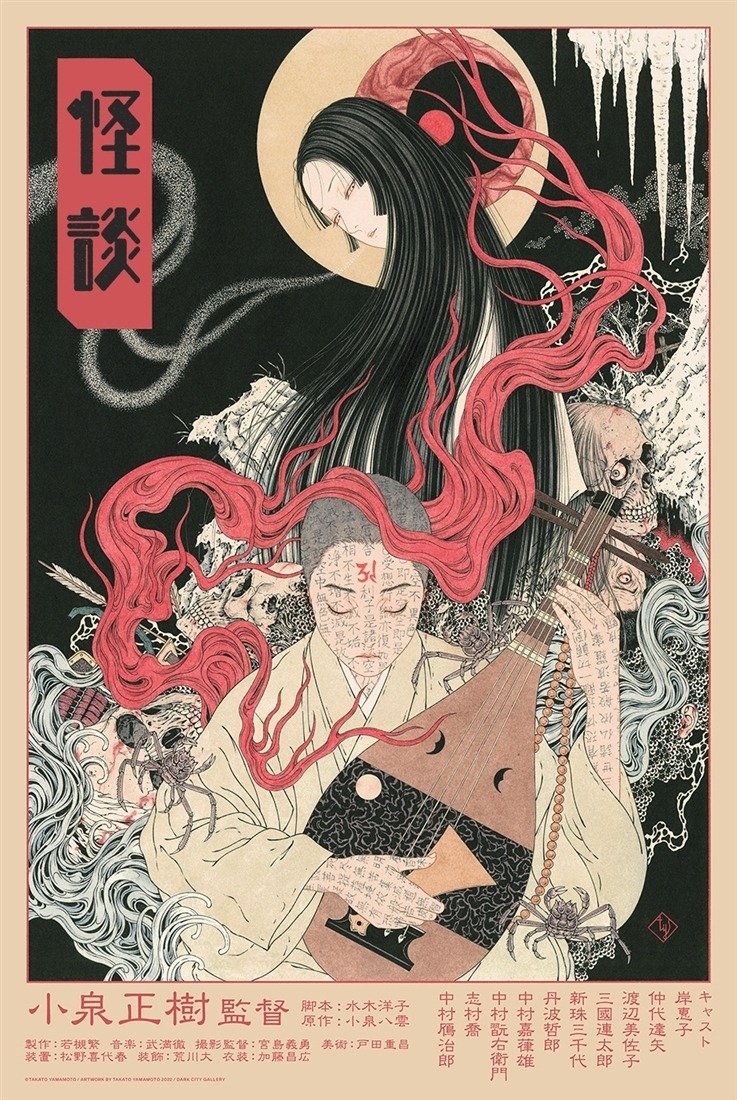
The longest episode centers on Hoichi, a blind musician played by Katsuo Nakamura, who lives at a Buddhist temple near the graves of warriors killed in the Battle of Dan-no-ura in 1185. His performance of The Tale of the Heike evokes the defeat of the Heike clan during the conflict with the Genji. Kobayashi presents the historical struggle as a great spectacle of painted images, stylized combat and ritualized movement. This passage gives the ghosts a shared history before Hoichi encounters them. Their presence expresses the continued force of a military catastrophe, with the dead seeking to hear their tragedy performed again.

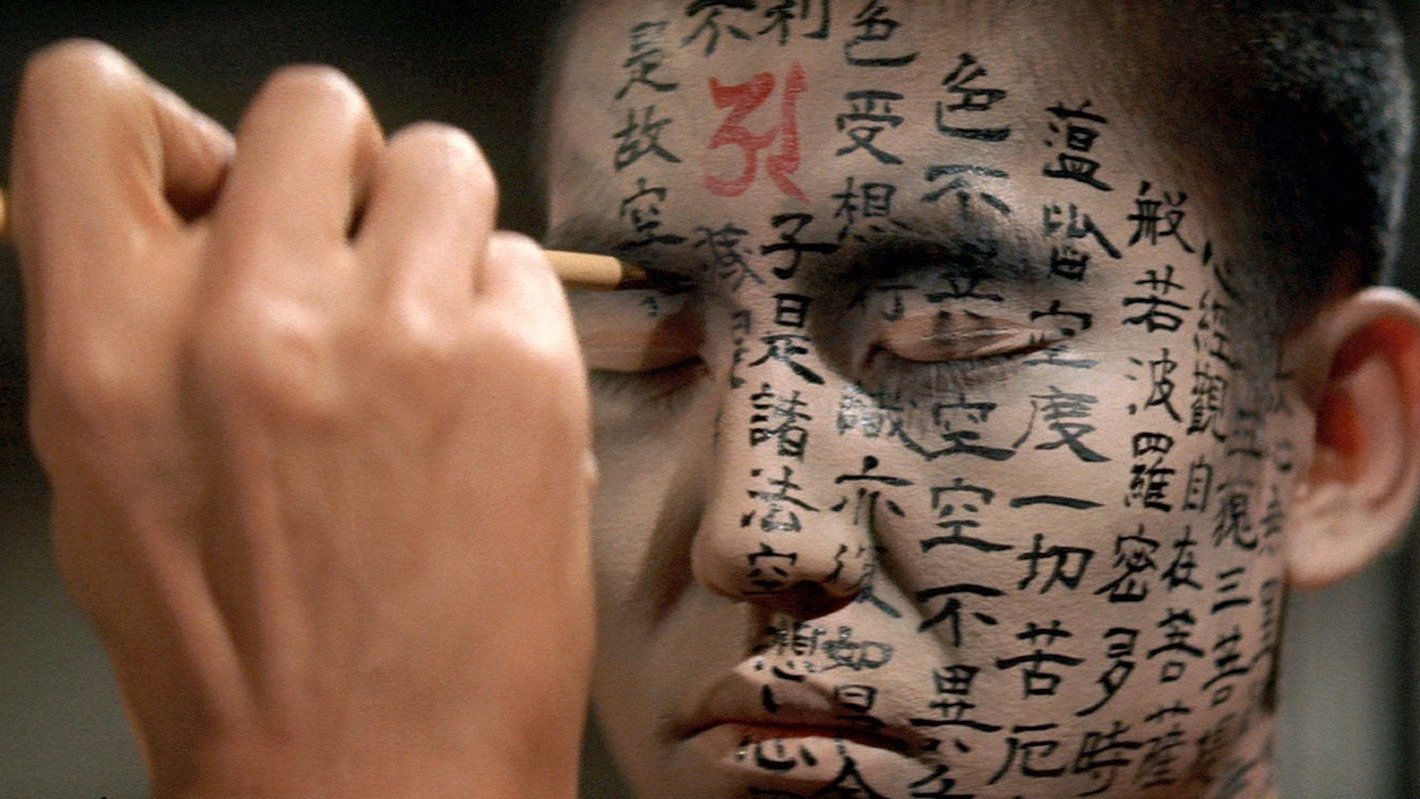
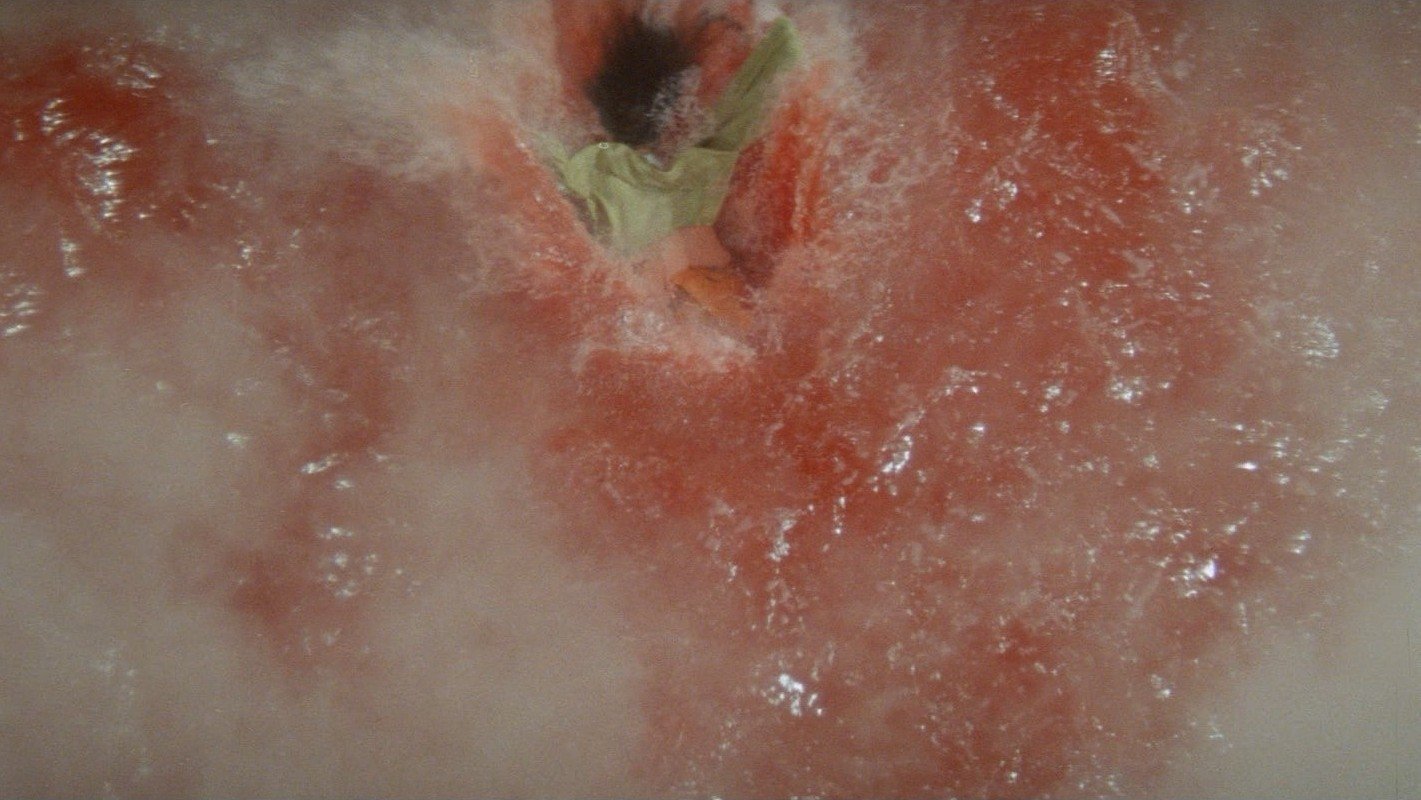
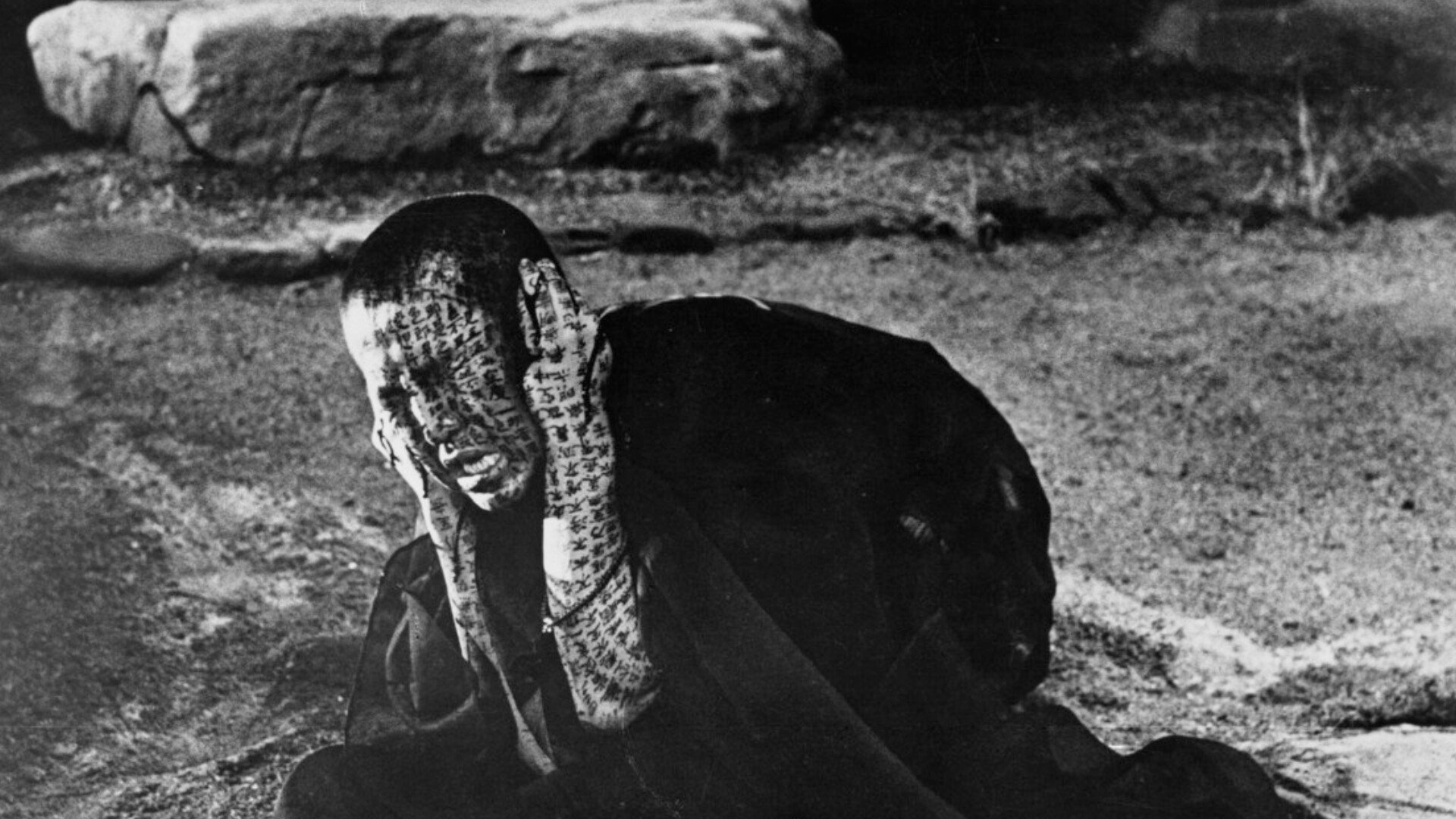
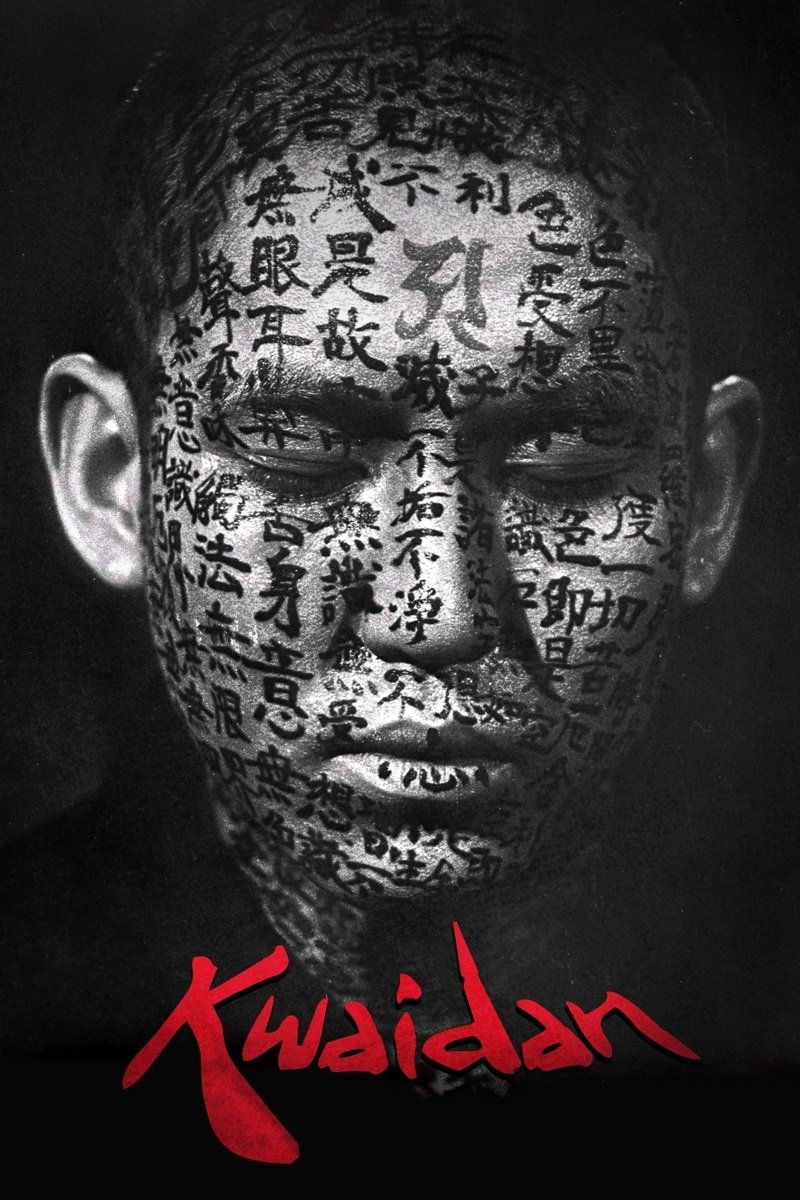
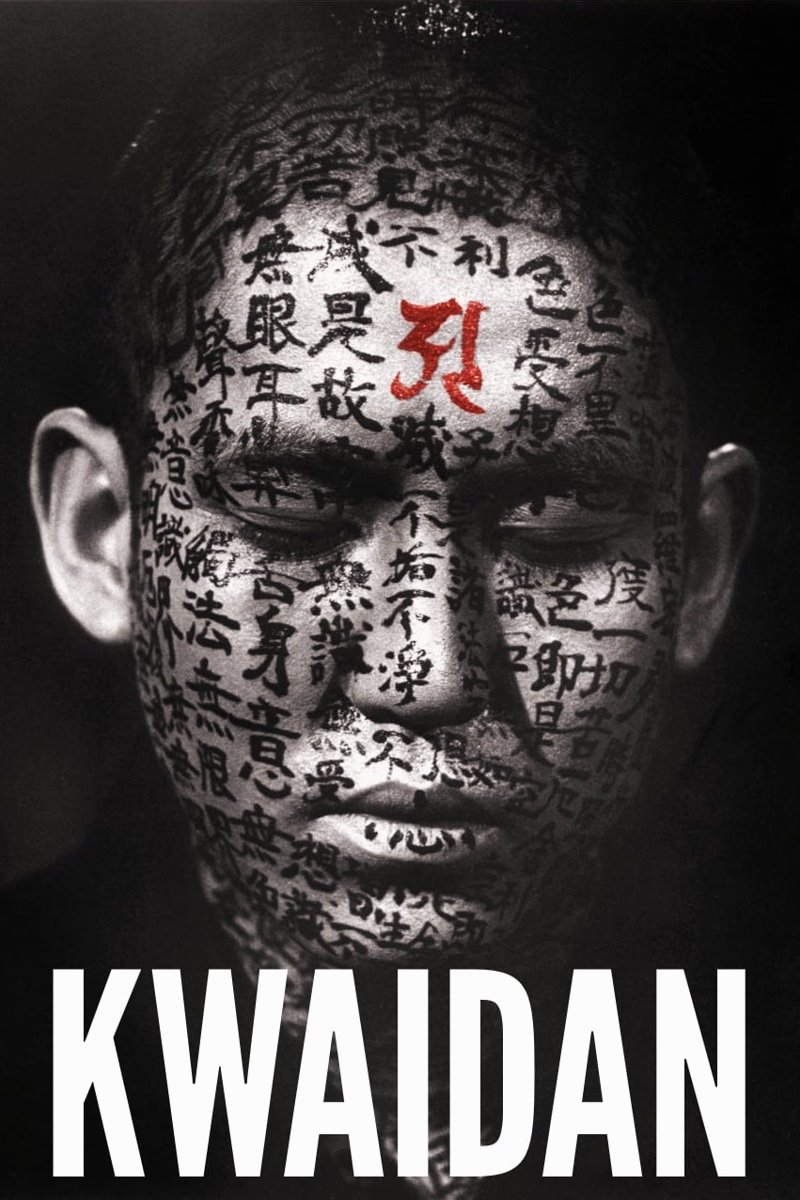
A spectral warrior repeatedly summons Hoichi to sing for what appears to be a noble audience. Because he is blind, the performer does not perceive that his listeners occupy a cemetery and that the apparent court belongs to the dead. The monks notice his nightly absences and discover the source of the summons. Fearing that the spirits will kill him, they cover his body with protective Buddhist writing and order him to remain silent when the visitor returns. The ritual seems complete, but the monks leave his ears uncovered. The supernatural messenger can see only those unprotected parts and tears them away.

The attack is one of the film's clearest moments of physical horror, prepared through lengthy scenes of musical performance and repeated nocturnal travel. Hoichi survives but carries the injury permanently, gaining renown through the very ordeal that almost destroyed him. The supernatural danger arises from a failure of protection as much as from the ghosts' determination. Religious inscription changes the visible body into a surface governed by rules the living only imperfectly understand. The overlooked ears become a precise vulnerability, exposing how a seemingly comprehensive defense can fail at the smallest detail.

Beyond that confrontation, the chapter is a study of historical grief. The biwa recital animates battles that concluded centuries earlier, making old warfare an immediate presence for musicians, monks and spectators. Images of burning ships and armed figures share the screen with painted representations of the conflict. Sound binds these modes of depiction together, permitting the performance to become an experience in which time is unstable. The dead seek continuity through a living artist, giving Hoichi's talent the same quality that makes him a target.

In a Cup of Tea: An Unfinished Haunting

The final tale begins inside a narrative frame, as a writer presents an unfinished account of a samurai who encounters the smiling face of an unknown man reflected in his tea. The figure remains visible despite the absence of anyone nearby. The samurai drinks from the cup, but the intruder subsequently appears before him as a bodily presence that cannot be dealt with through ordinary confrontation. Other apparitions follow, and attacks directed at them fail to establish whether they can be wounded. What had been a small visual impossibility grows into a threat whose boundaries remain undefined.

Kobayashi then returns to the circumstances in which the tale is being written. A publisher arrives to find that its author has disappeared, leaving behind an unfinished manuscript and a deliberately unresolved ending. The final image implicates the writer himself in the same kind of supernatural intrusion described on the page. Water and reflection connect the storyteller with his character, bringing the film's concern with the survival of stories into the present of its framing narrative. The audience is denied the conventional explanation that a concluding anthology segment might be expected to deliver.

This shorter chapter changes the mood after the scale and solemnity of Hoichi's experience. Its uneasy humor depends on how an apparently trivial object can give access to an unknown existence. The reflection functions as a visual fact that contradicts every account of the room's occupants. Once the intrusion extends beyond the manuscript, even the act of narrating a ghost story proves unsafe. The ending is deliberately incomplete at the level of its internal fiction while offering the viewer a final supernatural image.

Hand-Painted Worlds and Widescreen Photography

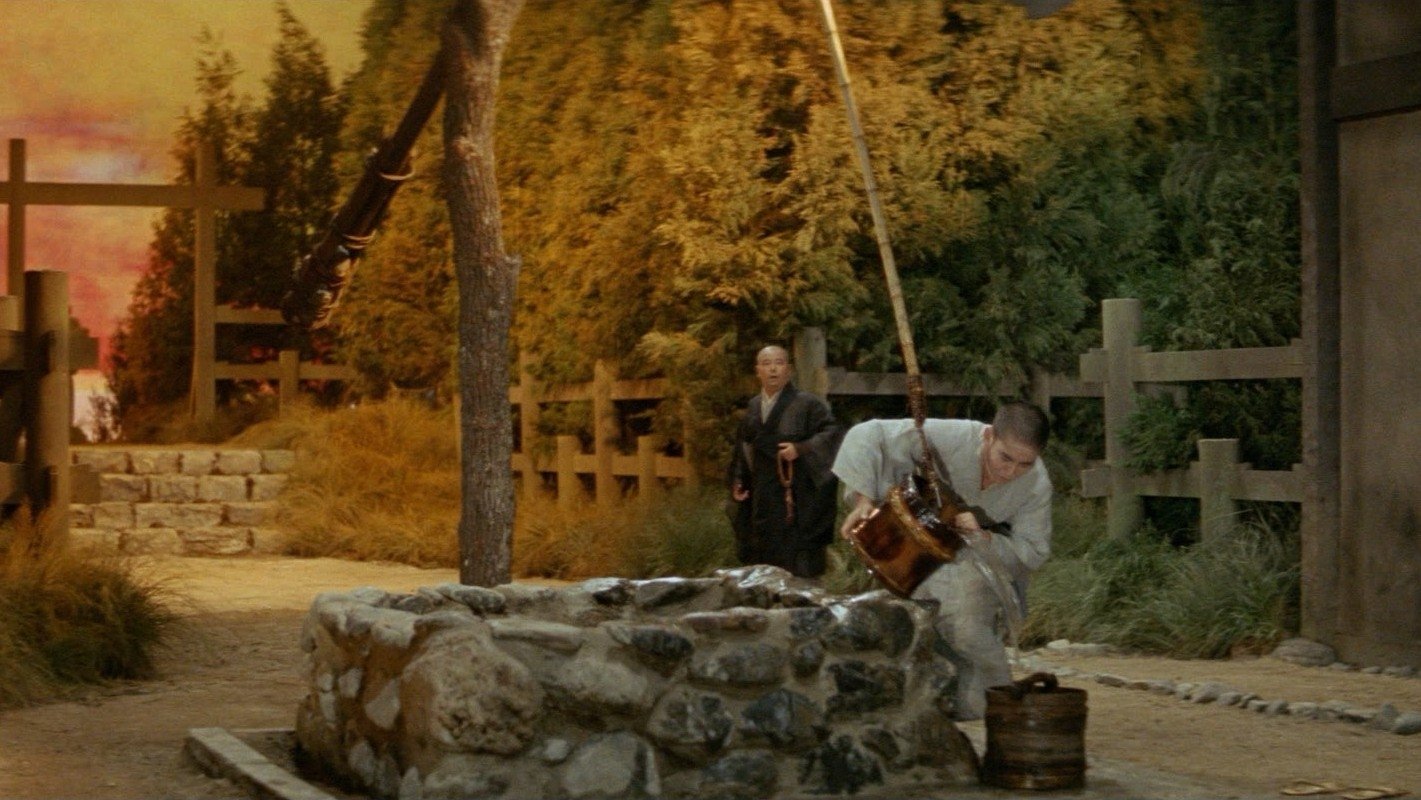
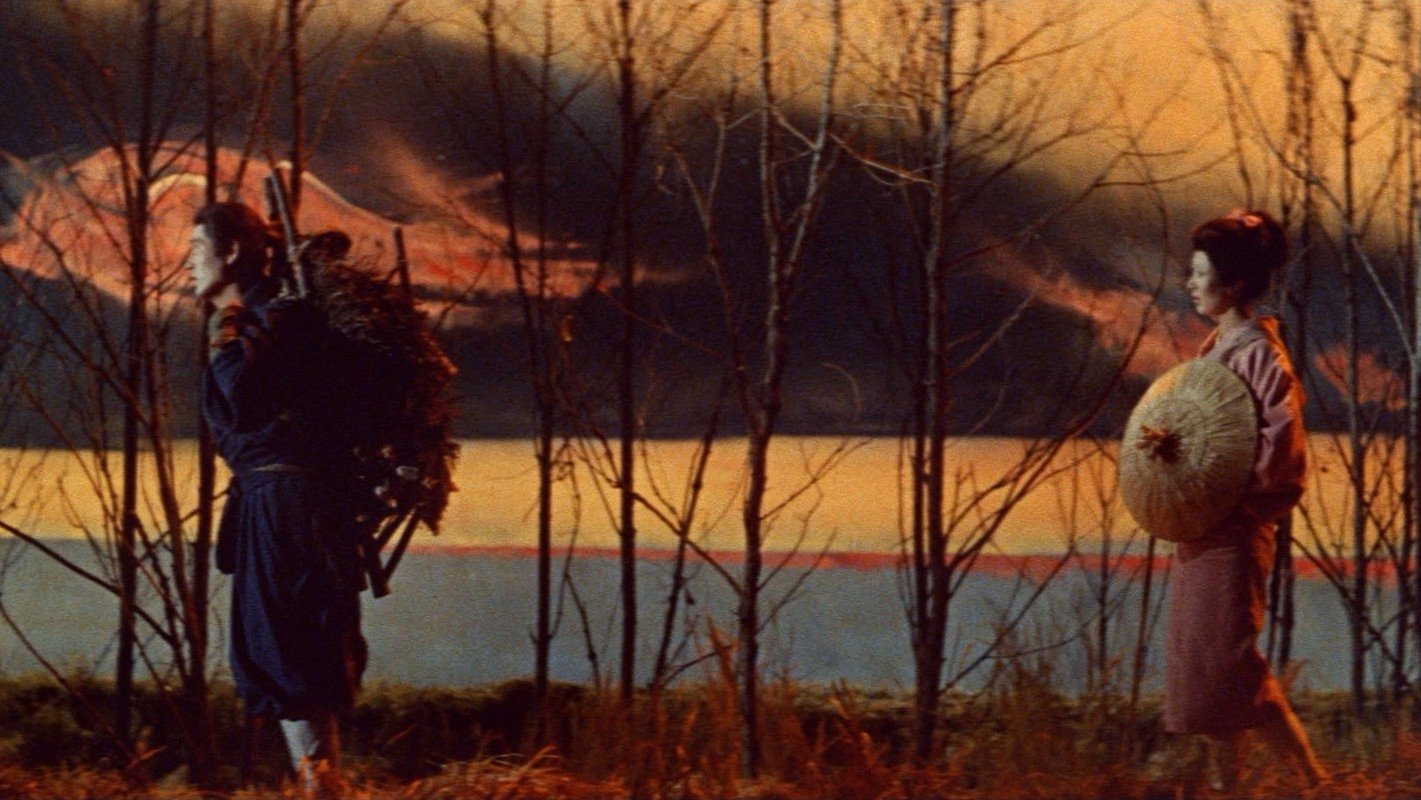
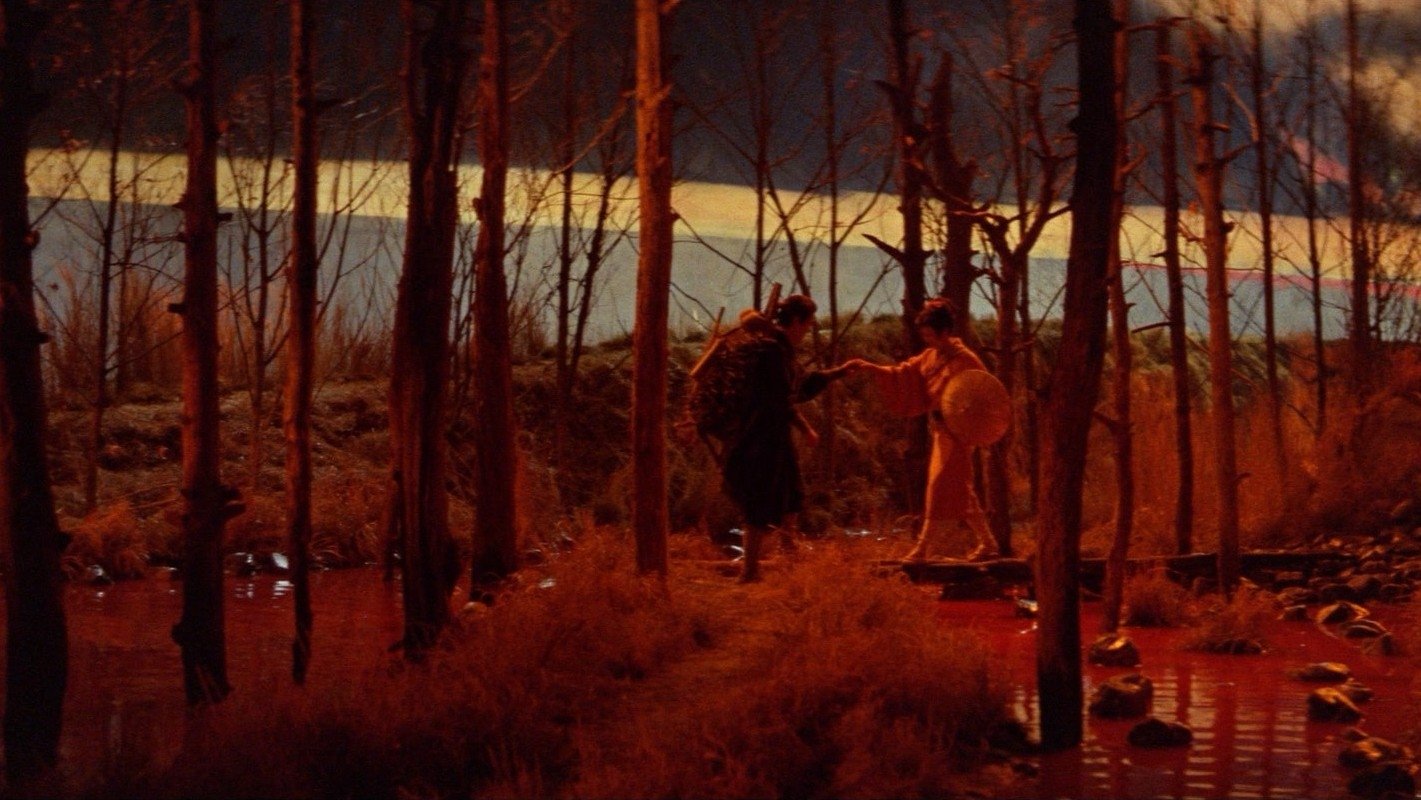
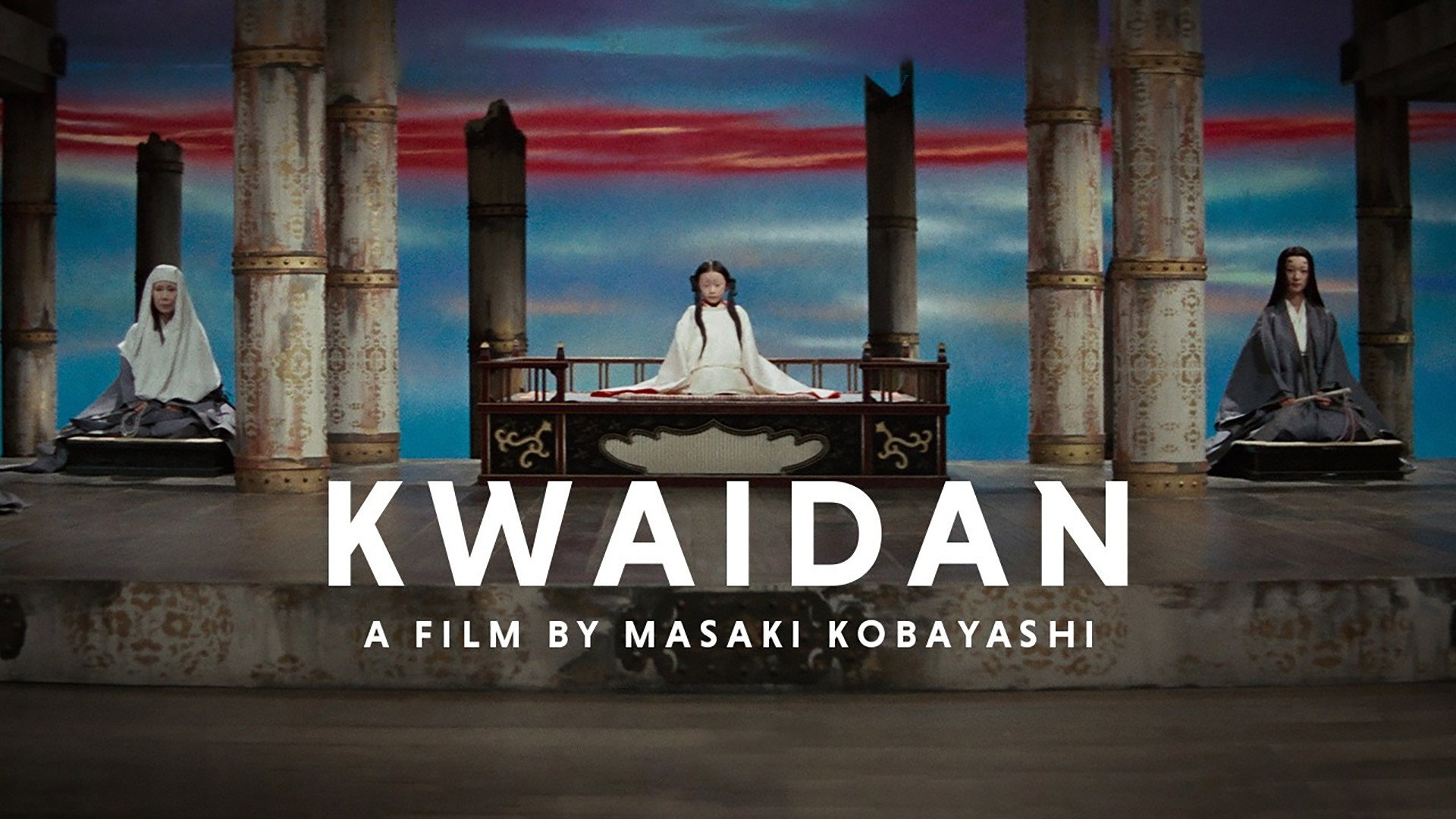
Kwaidan was photographed largely on sets constructed inside a former aircraft hangar. The enormous space permitted painted horizons, artificial forests and theatrical interiors on a scale unavailable to a conventional studio floor. Art director Shigemasa Toda and set designer Dai Arakawa worked within a design led by Kobayashi's desire for complete control of the frame. Yoshio Miyajima photographed the environments in the wide TohoScope format, allowing backgrounds to occupy as much attention as the performers. These are not attempts to disguise studio construction as ordinary outdoor footage. The visible design makes the world of each tale feel isolated from everyday reality.

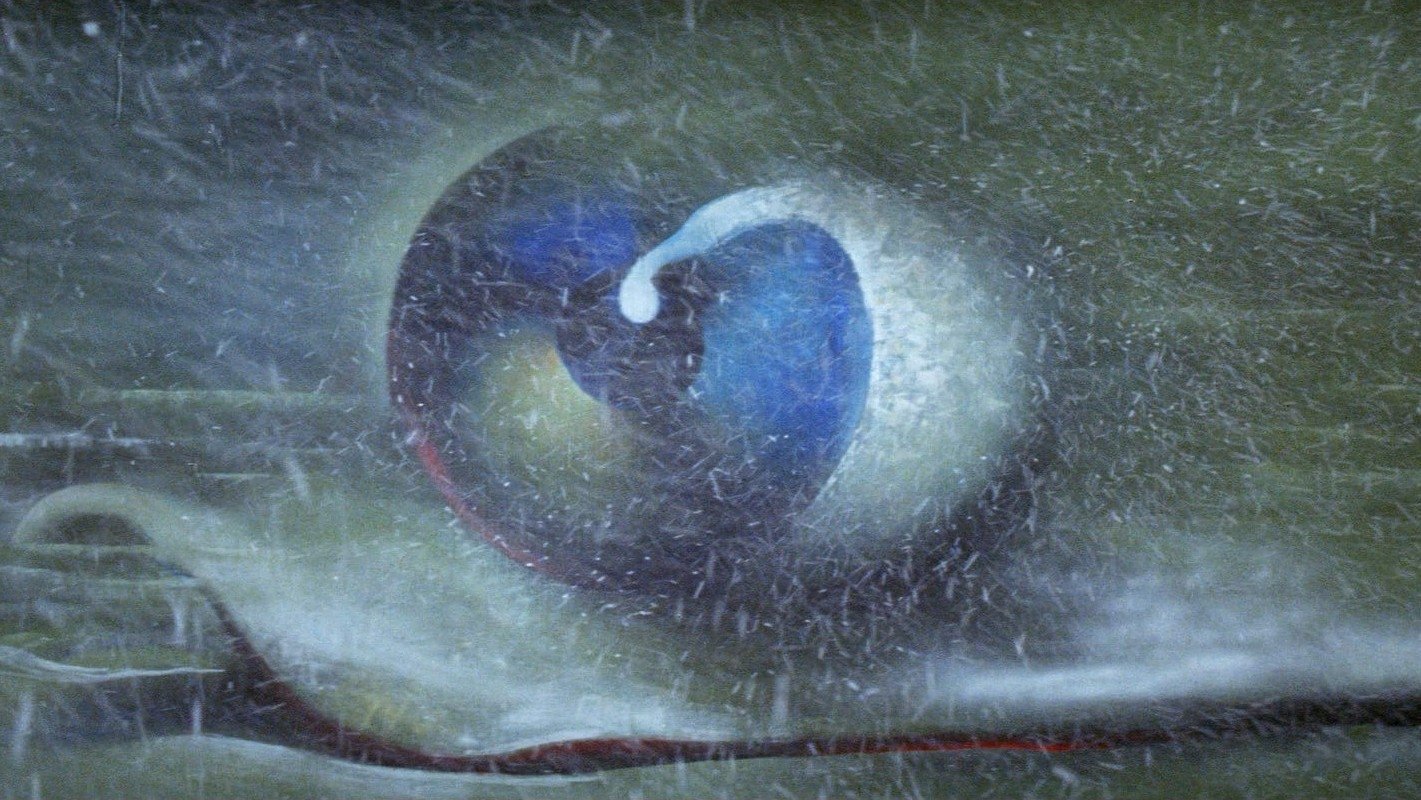
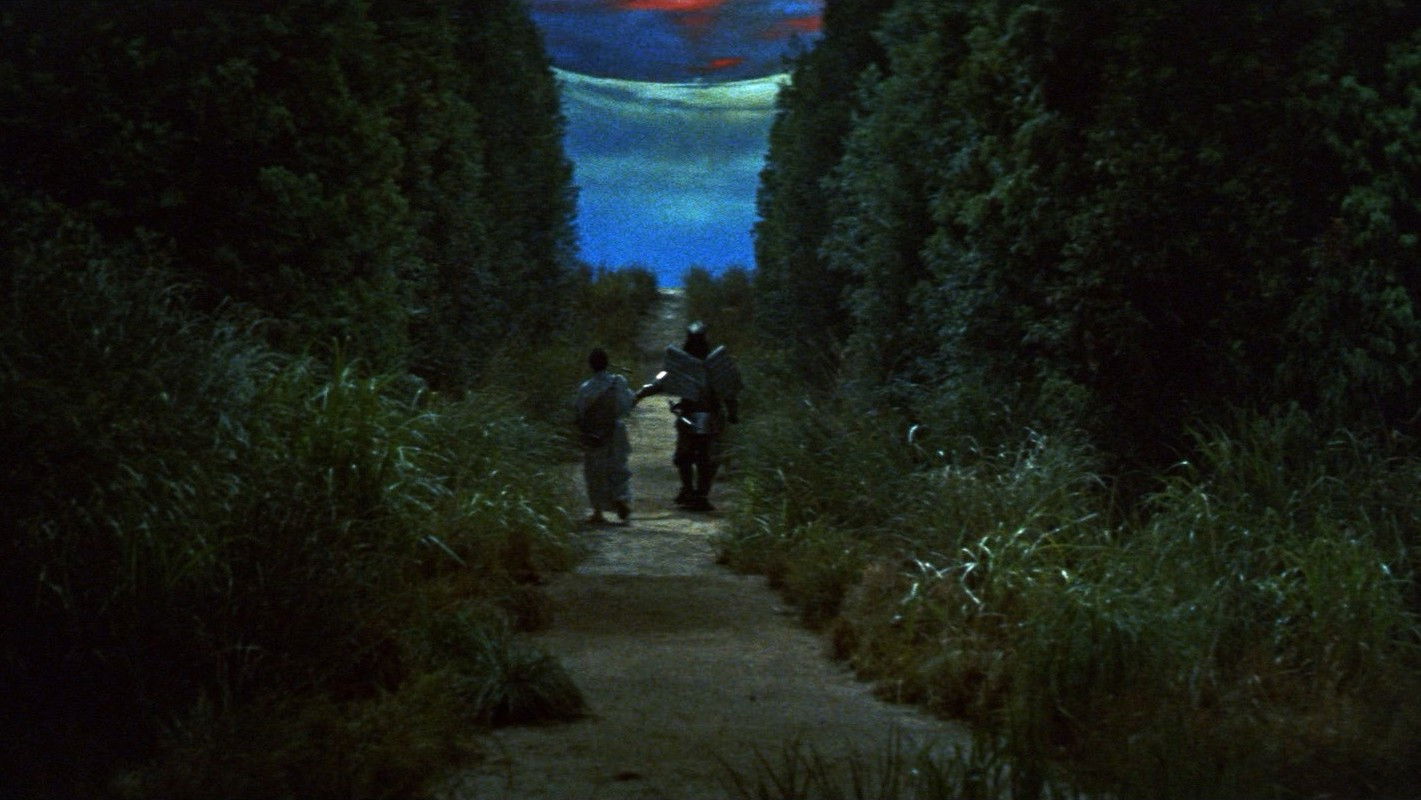
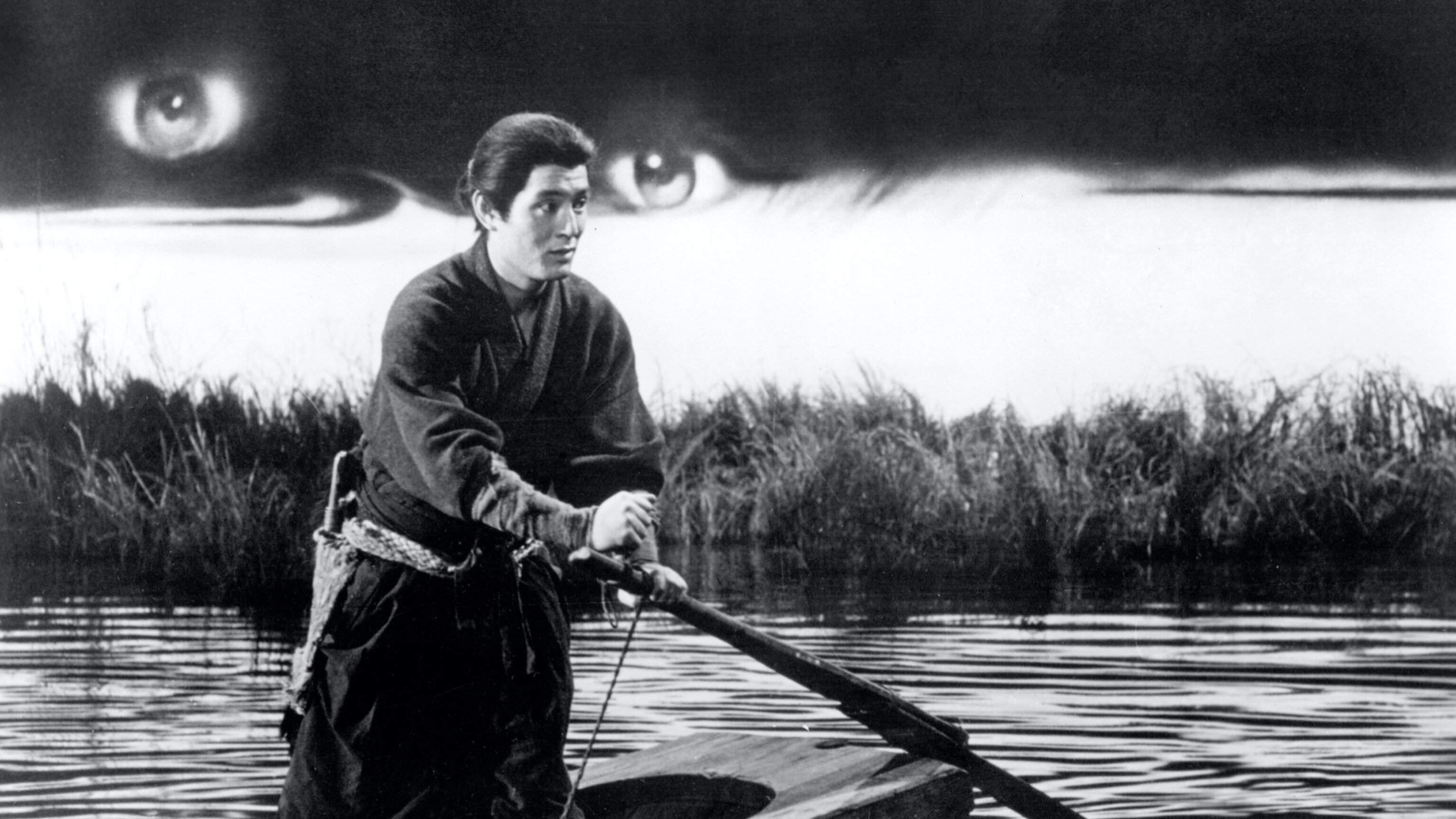
Color establishes the emotional conditions of the different hauntings. The deserted house in The Black Hair is marked by luminous surfaces and spreading deterioration; the snowbound forest receives skies bearing giant painted eyes. Hoichi's battle imagery uses intense, contrasting hues to create a historical spectacle unlike a naturalistic reconstruction. Set construction also allows figures to appear unusually small beneath towering ceilings or distant painted landscapes. The resulting compositions make individual decisions seem exposed to forces on a scale the characters cannot comprehend. The horror frequently arrives in spaces that are beautiful before they become dangerous.

The deliberate artifice gives these images their force. The settings evoke the controlled space of classical Japanese performance traditions, including aspects of Noh, Kabuki and puppet theatre, without reproducing one theatrical form in full. Kobayashi's cinema remains dependent on camera movement, montage and a panoramic frame. Across the four chapters, the viewer learns to inspect the edges of otherwise serene images for evidence that the space belongs to another order. Painted scenery is therefore part of the horror's operation, not merely an expensive backdrop.

Toru Takemitsu: Silence, Noise and the Unseen

Composer Toru Takemitsu developed a sound design that blurs distinctions between score and effects. Instead of supplying continuous melodic guidance, the soundtrack places abrupt creaks, isolated impacts, windlike textures and stretches of near silence against controlled images. Geoffrey O'Brien's detailed analysis includes Takemitsu's account of recording the cracking and tearing of real wood to construct sounds suited to the supernatural environment. The opening journey through the deserted house is already disturbing because the noises imply a hidden presence before the story has introduced its characters. Their unfamiliar placement makes ordinary material sound as though it originates from another reality.

The approach changes with each episode. Sparse and irregular sounds complicate the husband's passage through the abandoned dwelling, while sustained tones and silences intensify the isolation of the snowy forest. In Hoichi the Earless, performance itself becomes crucial to the drama, with the biwa recital carrying the story of the Heike into the world of the spirits. The older musical tradition and experimental sound construction coexist during that section, each performing a distinct function. The audience hears the dead through the music they demand and senses their environment through effects that resist an immediately identifiable source.

Contemporary and later criticism has emphasized the importance of how long individual sounds last and where silence occurs. The soundtrack does not merely reinforce an action after it has been seen; it may disturb the apparent stability of a room or landscape before a ghost appears. The careful post-synchronization of sound gives Kobayashi control over that relationship. Kwaidan's most frightening passages consequently depend on what the audience hears in a beautifully composed image, including sounds that have no visible cause.

Release Versions, Restoration and Reception

The film's earliest documented Japanese public showing took place at Tokyo's Yurakuza theatre on December 29, 1964, followed by engagements in 1965. That chronology explains the differing 1964 and 1965 dates used in respected filmographies and festival records. Kwaidan received the Special Jury Prize at Cannes in 1965 and was later nominated for the Academy Award for Best Foreign Language Film. Its international distribution nevertheless presented an important complication: shortened versions circulated for decades, including one that omitted the whole Woman of the Snow episode. Award recognition must therefore be considered alongside the fact that foreign audiences did not always see the complete anthology.

Accounts of the different cuts distinguish a roughly 125-minute three-story version, an intermediate edition of approximately 161 minutes and Kobayashi's original four-part construction lasting around 183 minutes. The shorter editions should not be described as equivalent, since the omission of an entire episode changes the film's treatment of domestic attachment and supernatural promises. The British Film Institute's archival programme notes preserve reactions to an earlier three-story release, offering evidence that period criticism sometimes assessed a substantially different film. Later restoration work made the complete structure widely available again, allowing the extended visual and musical progression to be evaluated on its own terms.

The Criterion restoration presented in 2015 recovered the approximately three-hour version, and a further 4K restoration by Toho was included in Venice Classics in 2025. The Biennale's official record identifies Toho Archive as the restoration laboratory and confirms the film's principal creative credits. These later presentations document the continuing institutional interest in preserving the original images. Kwaidan's place in horror history rests on an uncommon union of folklore, monumental art direction and experimental sound. Its ghosts remain emotionally specific even when the environments around them appear wholly detached from the physical world.

References

  1. The Criterion Collection - Current Kwaidan: No Way Out

    Geoffrey O'Brien examines the four stories, Hearn's sources, painted spaces, temporal ruptures and Takemitsu's firsthand account of constructing supernatural sounds.

  2. BFI Southbank Kwaidan - Programme Notes

    A substantial Philip Kemp essay and original Monthly Film Bulletin criticism covering the four episodes, production problems, sound and shortened early release versions.

  3. Deep Focus Review Kwaidan (1965) - The Definitives

    Brian Eggert provides an extensive film-specific study of Lafcadio Hearn, the large-scale production, individual ghost stories, sound design and historical distribution.

  4. La Biennale di Venezia Kaidan (Kwaidan - Ghost Stories) - Venice Classics 2025

    Official festival documentation of the 183-minute presentation, original filmmaking credits and Toho's 4K restoration.

  5. Festival de Cannes 1965 Awards - Kwaidan, Special Jury Prize

    Official Cannes awards archive confirming the Special Jury Prize awarded to Kwaidan in the 1965 competition.

Cast

View Full Cast & Crew →

Release & Distribution

Production Companies (2)

  • Ninjin Club JP
  • TOHO JP

Distributors (1)

  • TOHO JP

Release History (20)

Release DateTerritoryRelease TypeFormatDistributorCertificationNotes
1964-12-29 Japan Premiere — — — Yuurakuza Theater
1965-01-06 Finland Theatrical — — K-16
1965-01-06 Japan Limited Theatrical — — — Roadshow
1965-02-27 Japan Theatrical — — —
1965-07-15 United States Theatrical — — —
1965-07-28 France Theatrical — — TP
1968-02-28 Portugal Theatrical — — M/16
1968-05-13 Spain Theatrical — — —
1982-11-29 Japan Theatrical — — — Re-release
1994-07-30 Malaysia Theatrical — — — Japan Festival
2000-10-10 United States Physical DVD — — DVD
2005-09-01 Philippines Theatrical — — — Eigasai
2006-03-15 Australia Physical DVD — PG DVD
2006-05-29 United Kingdom Physical DVD — 15 DVD
2008-06-19 Netherlands Physical DVD — 12 DVD
2015-10-20 United States Physical Blu-ray — — Blu-ray
2020-05-27 United States Digital — — PG-13 HBO Max
2025-10-12 Thailand Premiere — — — Bangkok International Film Festival
2026-01-03 France Premiere — — — 4k restoration, Cinémathèque française
2026-07-01 France Theatrical — — —

Awards & Festivals

2 entries
YearFestival / AwardEntrySectionCategoryResultPremiere
1966Academy Award for Best International Feature Filmawardnominated
1966International Submission to the Academy Awardsawardnominated
In the tradition of "RASHOMON" and "GATE OF HELL."