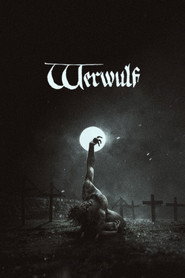
Terror-Creatures from the Grave (1965)

US
HORROR FILM Mystery
Runtime
85 min
Release
June 23, 1965
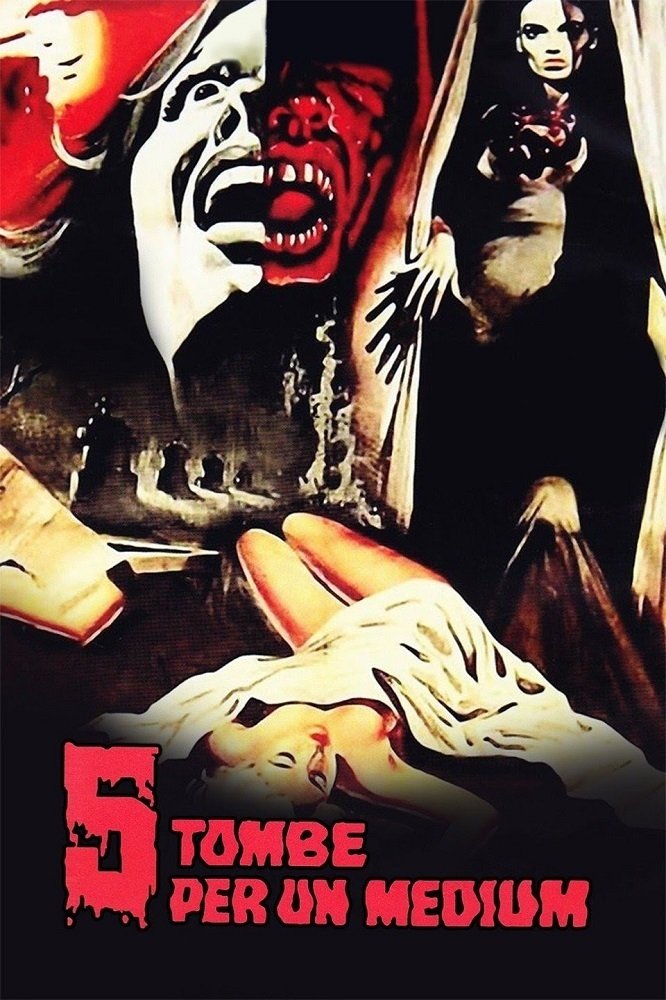
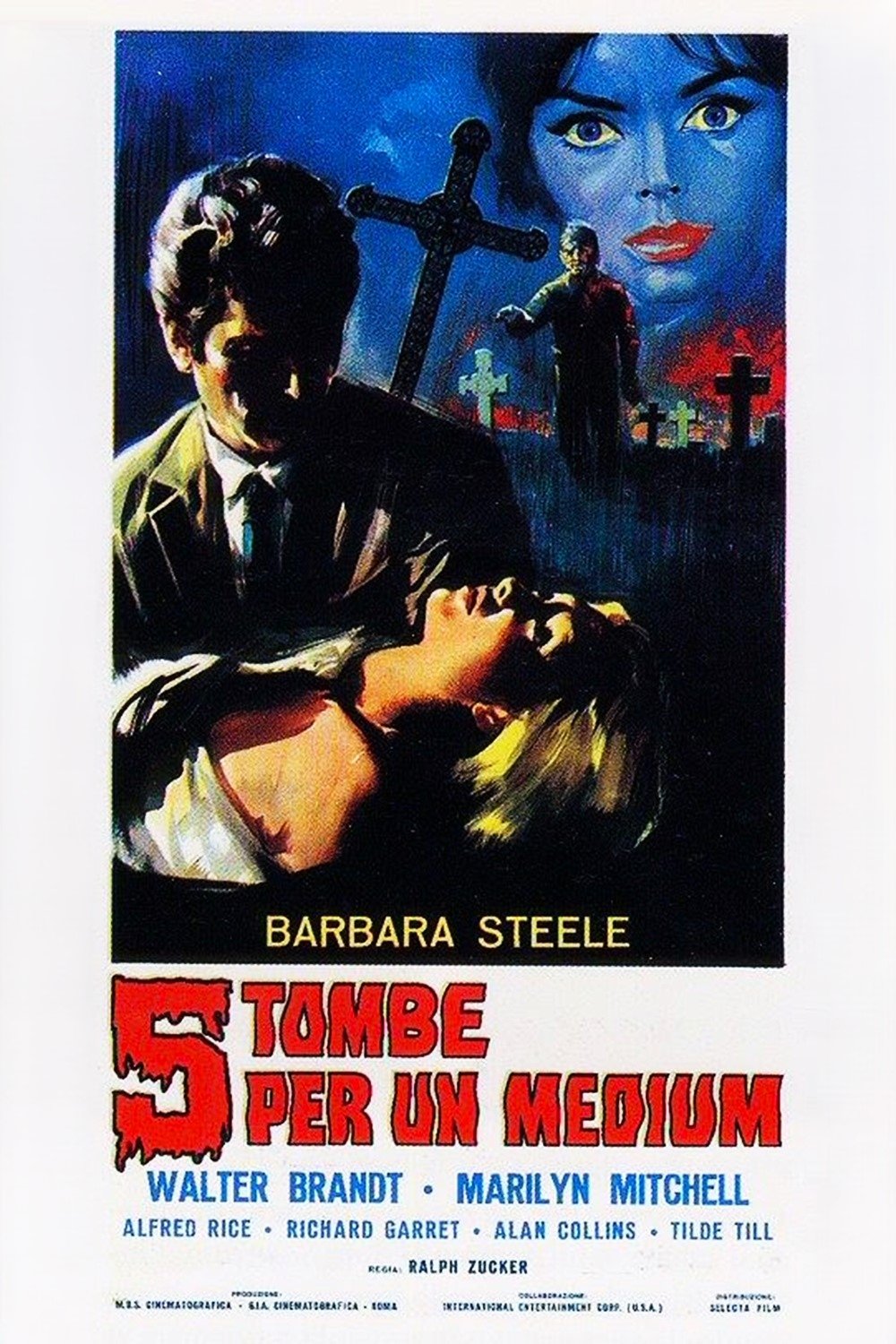
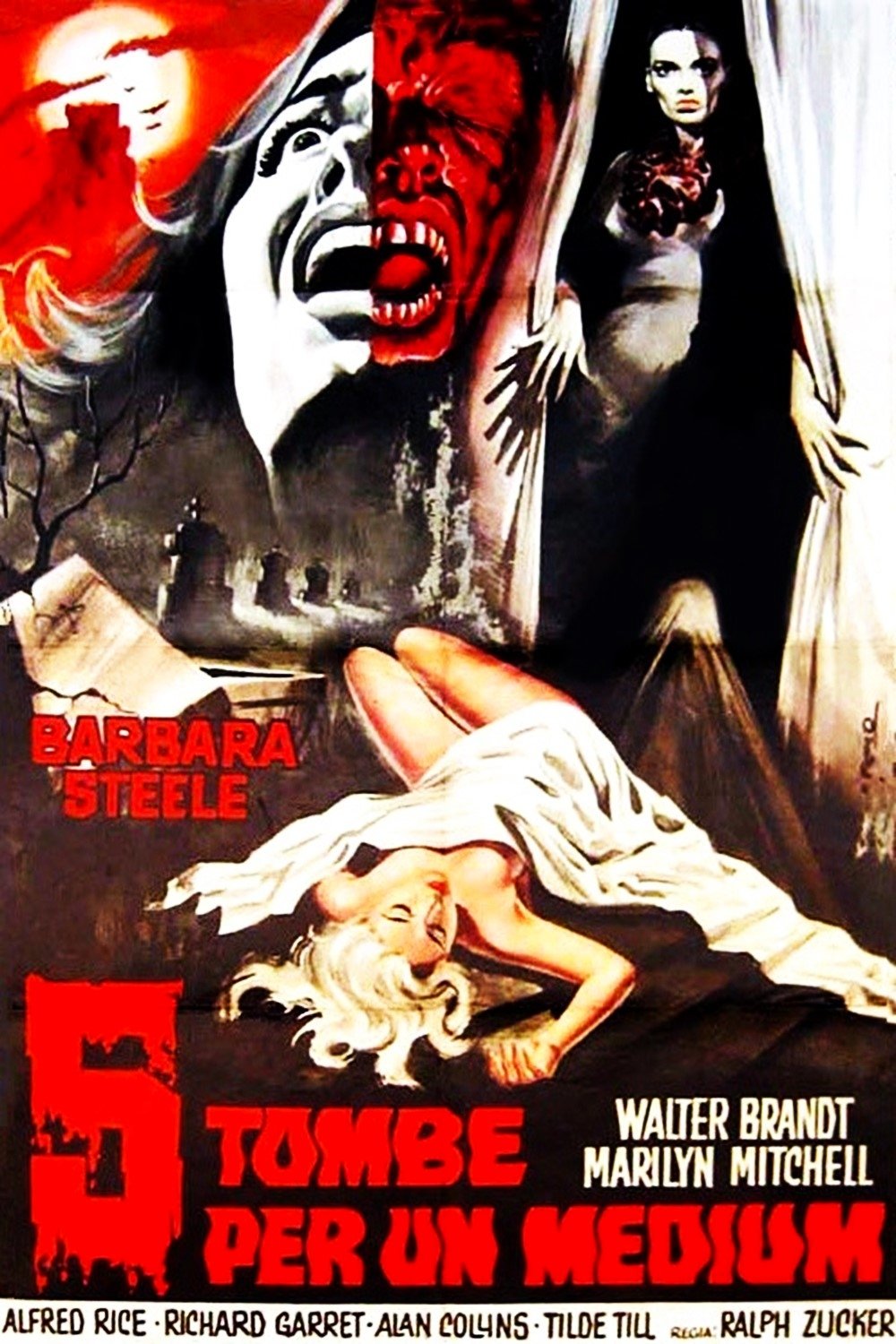
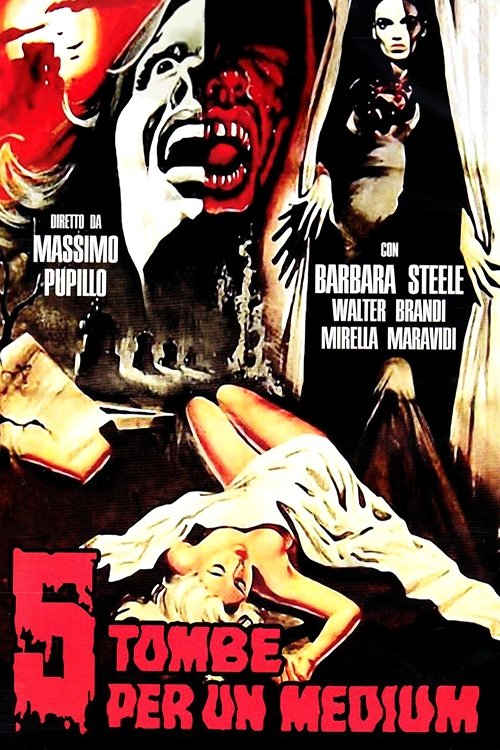
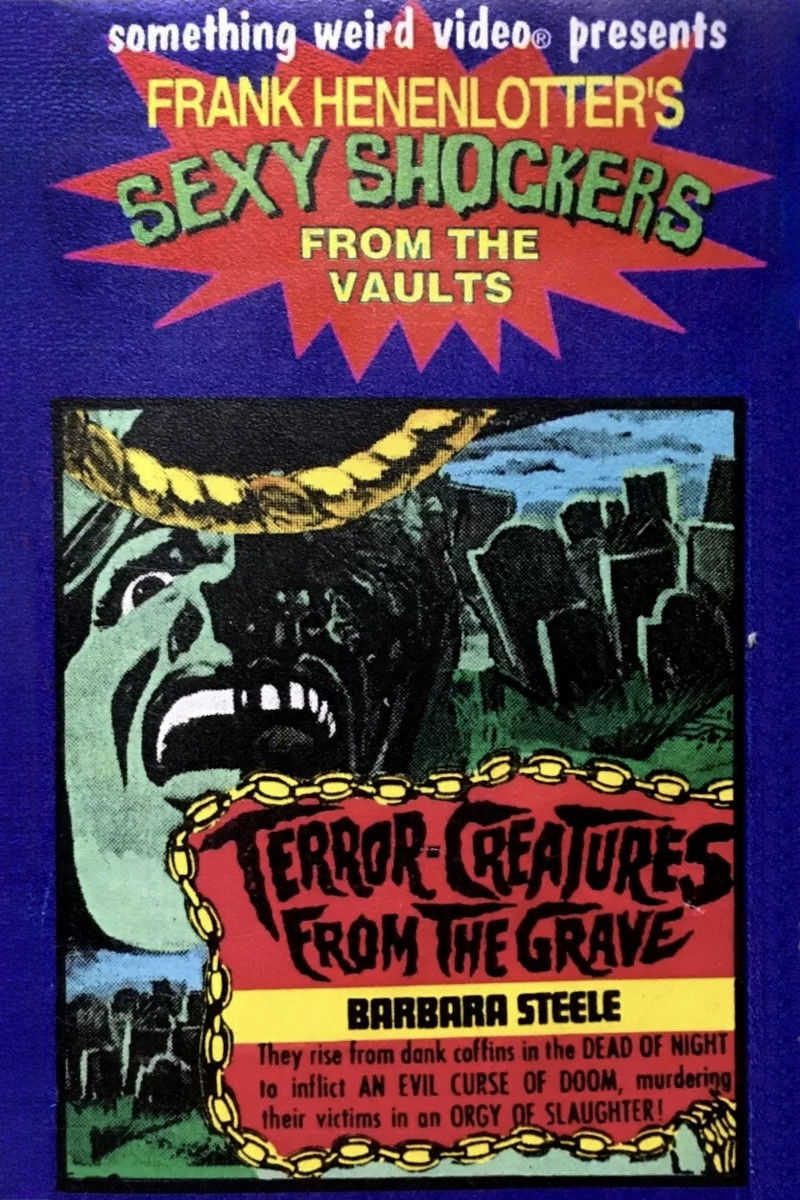
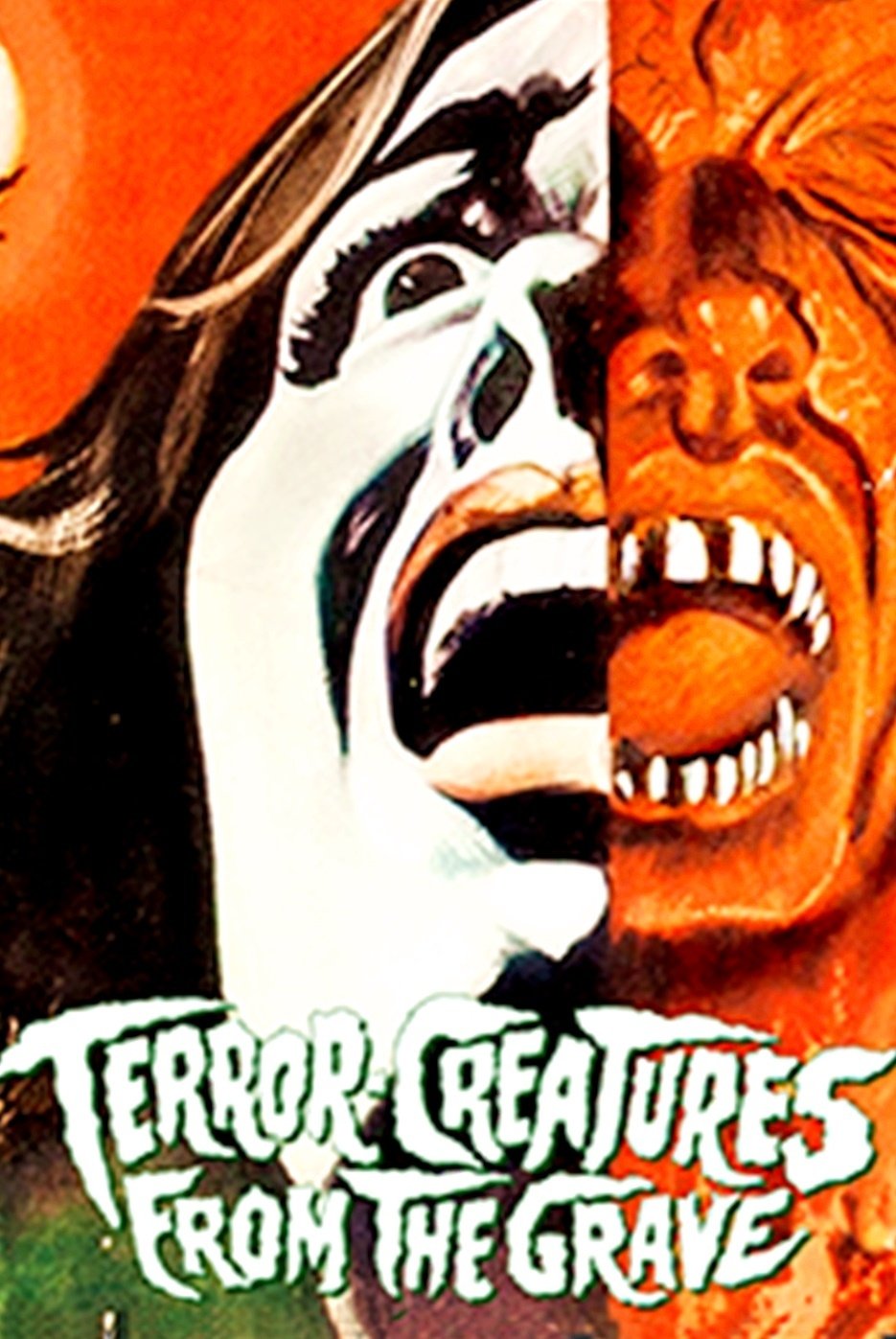
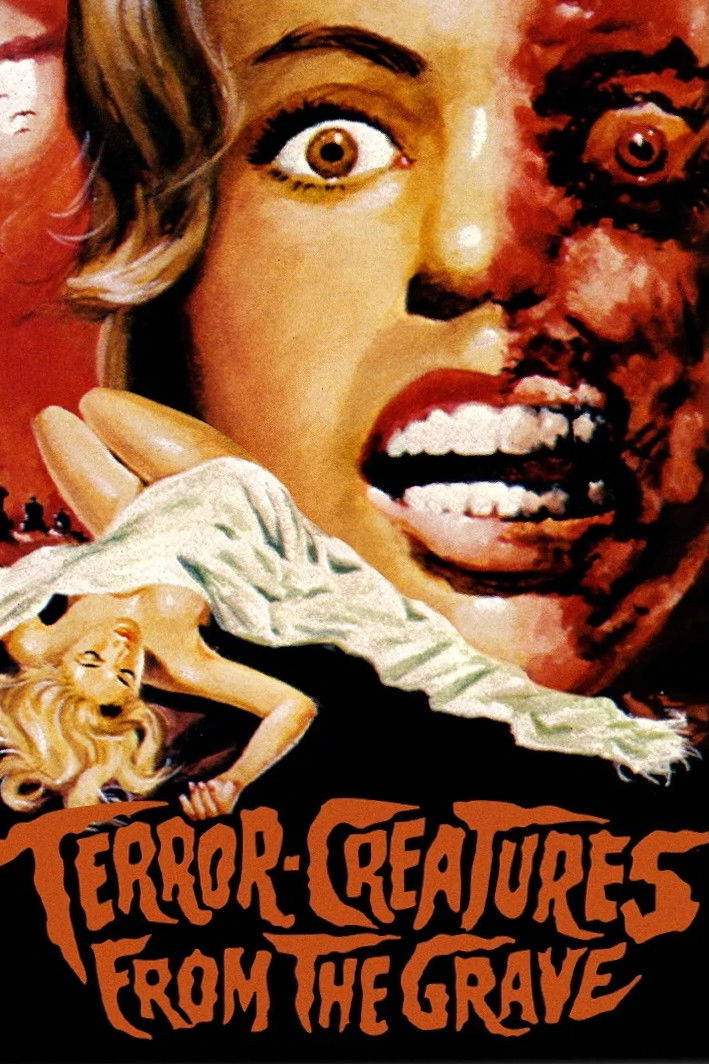
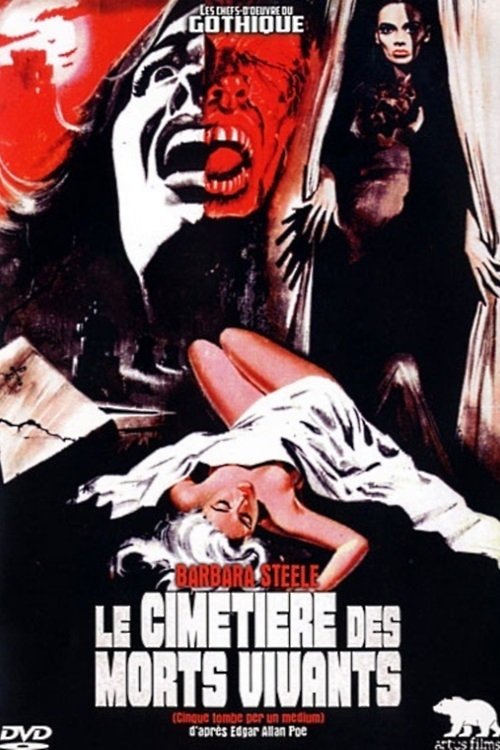
Terror-Creatures from the Grave (1965) poster
Director
Production Companies
M.B.S. Cinematografica , International Entertainment Corp. , G.I.A. Cinematografica
Plot

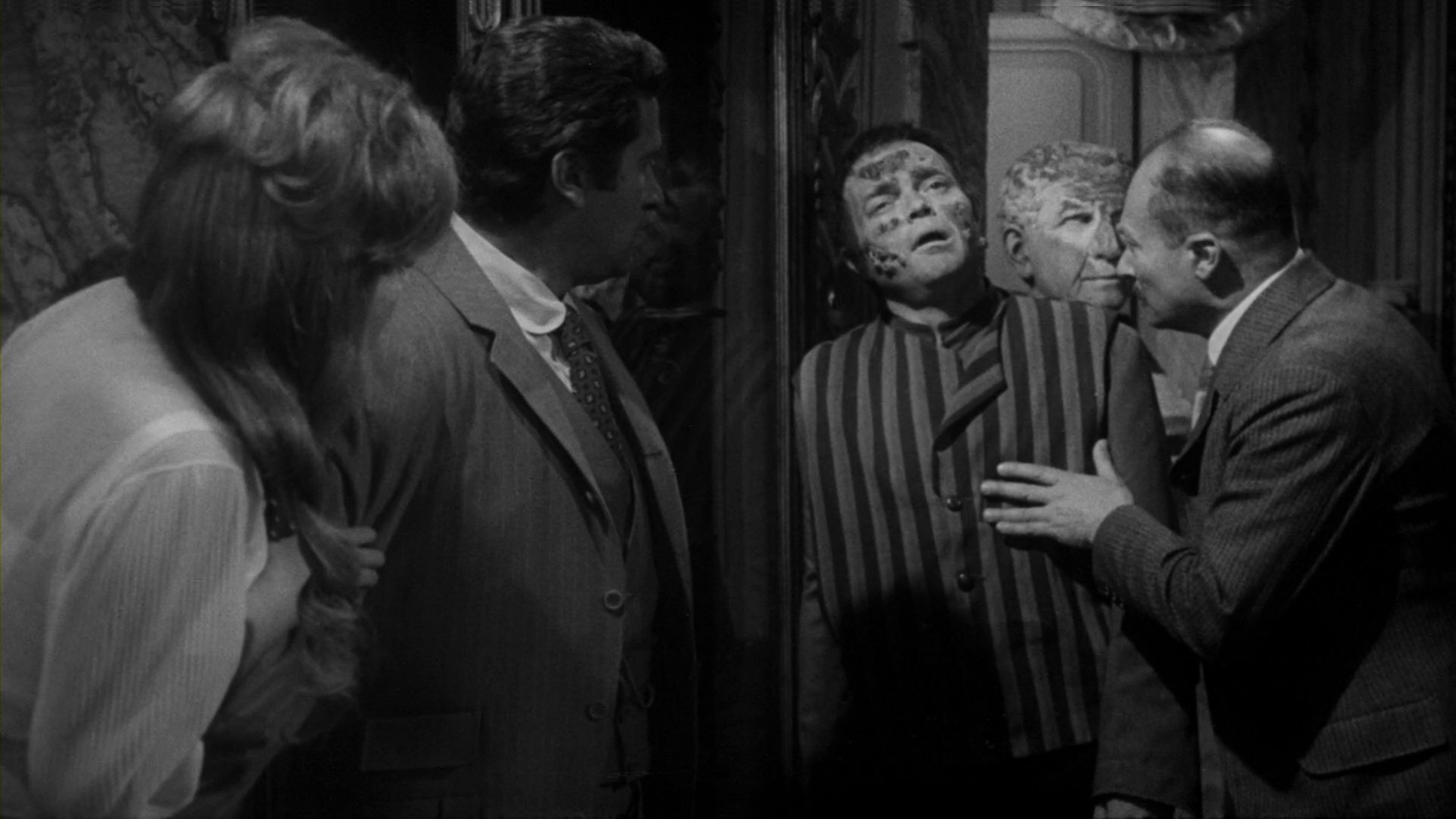
An attorney arrives at a castle to settle the estate of its recently deceased owner. The owner's wife and daughter reveal that he was someone who was able to summon the souls of ancient plague victims and, in fact, his spirit was roaming the castle at that very moment. Soon occupants of the castle begin to die off in gruesome, violent ways.

Alternative Titles
活人墓地 (China) — Chinese Cinco tumbas para un medium (Spain) Le Cimetière Des Morts Vivants (France) — French 活人墓地 (Hong Kong SAR China) — Chinese Five Graves for a Medium (Netherlands) Tombs of Horror (Netherlands) Cemetery of the Living Dead (United States) Five Graves for a Medium (United States)

Film Guide & Analysis

Massimo Pupillo's 1965 Italian Gothic horror: disputed direction, Barbara Steele, Carlo Di Palma's cinematography, alternate American footage and 4K restoration.

Terror-Creatures from the Grave (5 tombe per un medium, 1965) is an Italian-American Gothic horror film principally directed by Massimo Pupillo and starring Barbara Steele, Walter Brandi and Mirella Maravidi. Produced during the final years of the major Italian Gothic horror cycle, it combines a mystery surrounding a dead occultist with supernatural vengeance rooted in the medieval plague. Its unusual production history includes disputed directing credits, substantial differences between national release versions and additional scenes filmed specifically for American audiences. These circumstances make the film particularly relevant to the history of Italian horror distribution during the 1960s.

The film was photographed in black and white by Carlo Di Palma, with Castello Chigi at Castel Fusano providing its principal architectural setting. Its atmosphere depends heavily on the surrounding landscape, the imposing interiors and the gradual intrusion of supernatural phenomena into an apparently conventional murder mystery. Barbara Steele, already internationally associated with Italian Gothic cinema, plays the widow Cleo Hauff. The completed production would later become the subject of conflicting accounts about its direction, while its American release introduced more explicit violence. The surviving versions provide evidence of how Italian Gothic productions could be reshaped for different theatrical markets.

Production and the Disputed Direction

The production emerged from a collaboration between Italian companies M.B.S. Cinematografica and G.I.A. Cinematografica and the American company International Entertainment Corporation. This international arrangement was significant for an Italian horror production intended to circulate beyond its domestic market. Massimo Pupillo worked within a group of filmmakers and producers that also included Francesco Merli and Ralph Zucker. The same production circle was responsible for Bloody Pit of Horror, another 1965 Gothic exploitation film directed by Pupillo. Roberto Natale and Romano Migliorini supplied the screenplay, establishing a creative connection between the two productions that extended beyond their eventual distribution together in the United States.

The identity of the director became a longstanding subject of confusion. Contemporary credits assigned direction to Ralph Zucker, and some later filmographies treated that name as an English-language pseudonym for Pupillo. Zucker was, however, a separate individual who worked as a producer and had participated in various areas of film production. The contradiction became important when actor Walter Brandi attributed direction to Zucker in an interview subsequently discussed by Alan Upchurch in Video Watchdog in 1991. Later interviews with Pupillo and screenwriter Roberto Natale supported Pupillo as the principal director, although their accounts were not identical in their assessments of the filmmaking.

Pupillo explained retrospectively that he had allowed Zucker to receive the directing credit because he was dissatisfied with the result and because of arrangements surrounding the two films produced with M.B.S. The Italian film historian Roberto Curti examined these conflicting testimonies in Italian Gothic Horror Films, 1957–1969. The distinction is especially important because Zucker also directed material added for the American version. The production history therefore involves both an unusual assignment of screen credit and genuine directorial contributions by different individuals. Identifying Pupillo as the principal filmmaker does not require attributing the later American additions to him.
Gothic Architecture and Black-and-White Cinematography

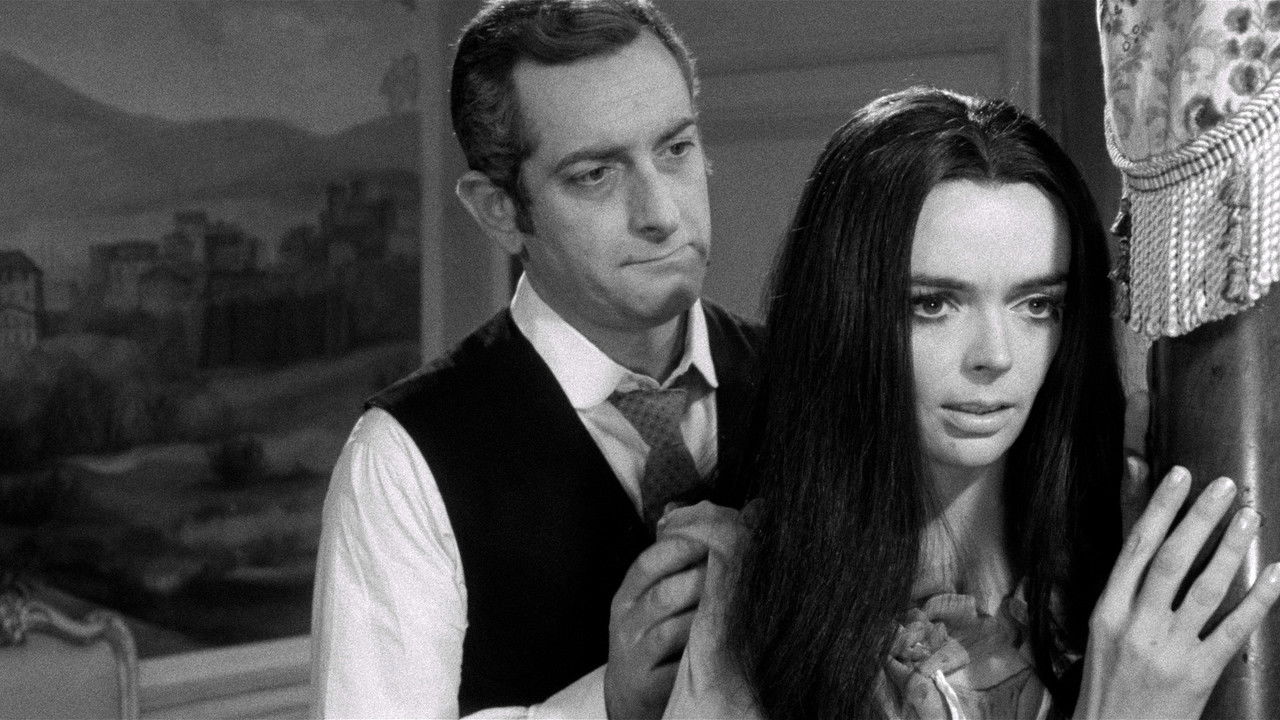
Much of the film's visual identity comes from Castello Chigi at Castel Fusano, near Rome. The location provides a large historical residence surrounded by open grounds, combining the architectural features of traditional Gothic horror with an early twentieth-century setting. Carlo Di Palma's black-and-white photography emphasizes the contrast between the exposed landscape and the enclosed spaces within the estate. Exterior compositions make use of the building's isolation, while interiors are organized around doorways, corridors and rooms filled with objects associated with the deceased owner. The photographic approach gives the production a visual consistency that survives its comparatively modest resources.

The mansion contains objects associated with death, anatomical preservation and occult investigation, including collections of skulls and severed hands. These details belong to a Gothic tradition in which the domestic interior also functions as a repository of forbidden knowledge. The film places visual emphasis on objects before their supernatural significance becomes apparent. A collection of preserved hands, for example, eventually becomes the subject of one of its most recognizable effects sequences. The production relies on the relationship between physical objects, human reactions and the suggestion that otherwise motionless things may become animated. The historical documentation does not provide a sufficiently detailed account of the effects techniques to identify specific materials or mechanisms.

The threat associated with the Black Death also gives the film an identity distinct from the more familiar vampire stories of the period. Its supernatural figures are connected to the monatti, the workers responsible for collecting and transporting the bodies of plague victims. The approach of their cart is associated with death and contamination, providing an auditory warning before the danger becomes apparent. This use of plague imagery belongs to a European historical tradition that was particularly compatible with Italian Gothic cinema. The film largely withholds its supernatural attackers from view, building its most characteristic sequences around their physical traces and the reactions of those they pursue.

Barbara Steele and the Italian Gothic Cycle

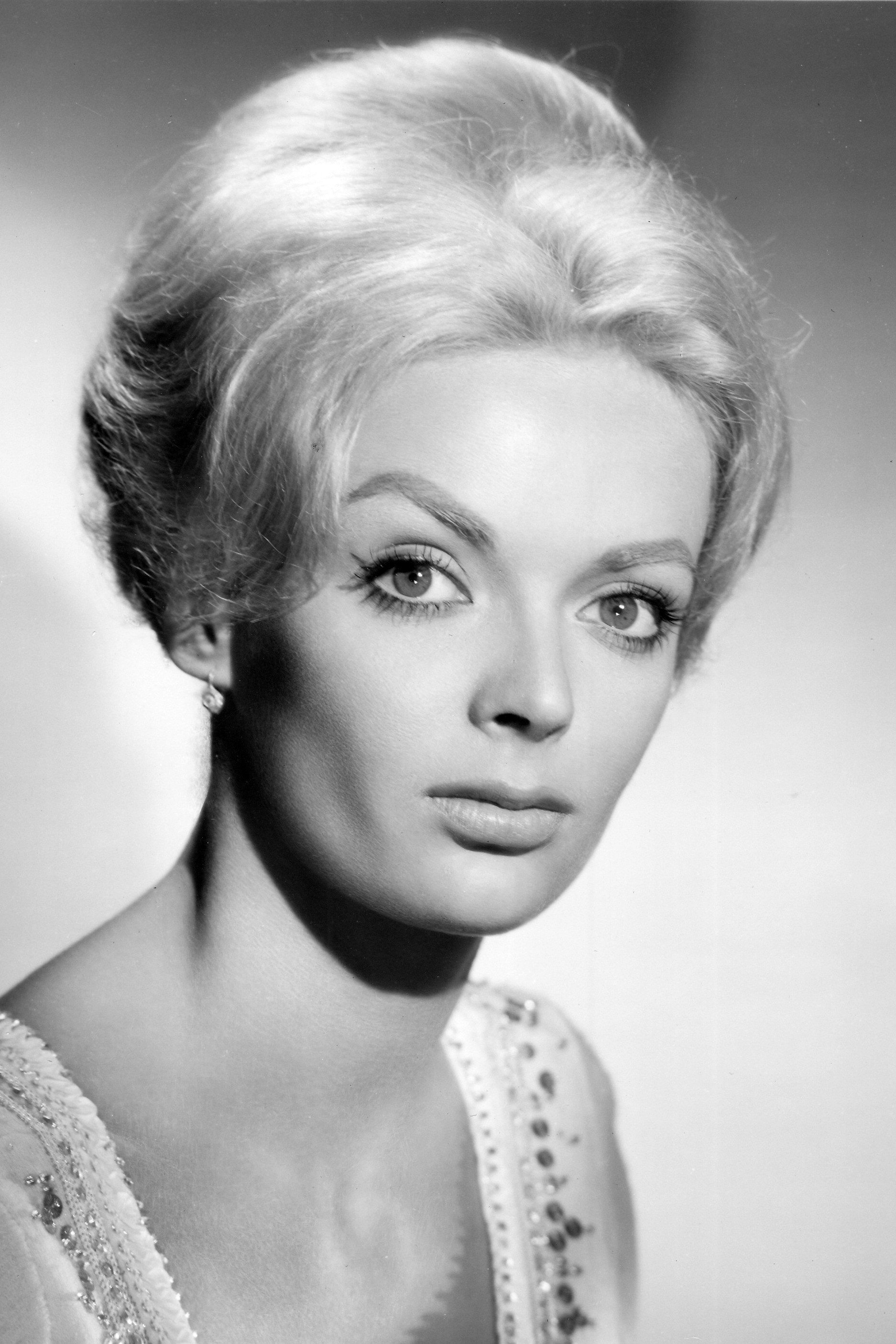
Barbara Steele's participation connected the production to an established cycle of Italian supernatural horror. Her international reputation had developed through Mario Bava's Black Sunday (1960), followed by films including The Horrible Dr. Hichcock (1962), Castle of Blood (1964) and The Long Hair of Death (1964). Those productions had made her a recognizable presence in stories concerning death, female sexuality, revenge and uncertain supernatural identities. Terror-Creatures from the Grave used that association while giving her a different type of character. Cleo Hauff is the widow of the deceased occultist, and her importance to the mystery depends on human relationships and concealed wrongdoing rather than a supernatural transformation of her own.

This distinction matters within Steele's broader Gothic filmography. In several earlier films, she embodied an explicitly supernatural woman or a character whose identity was closely connected to resurrection. Here, the supernatural retribution originates elsewhere, while Cleo's position is tied to the circumstances of her husband's death. The film nevertheless uses Steele's established screen persona, including her association with dangerous or morally compromised women, as part of its horror identity. Contemporary publicity could exploit her recognizable presence even though the character does not occupy the same narrative position as the figures she portrayed in Black Sunday or Castle of Blood.

Pupillo later recalled that his early working relationship with Steele had been difficult. In an interview subsequently discussed by Curti, he described tensions during the first days of photography and stated that the relationship improved after a confrontation on set. The account is a retrospective personal recollection and cannot independently establish the reasons behind Steele's performance or the finished film's artistic qualities. Its value lies in documenting an aspect of the collaboration between a filmmaker working on a series of low-budget genre productions and one of the most recognizable actresses in European Gothic horror.

The American Version and Additional Horror Footage

Terror-Creatures from the Grave exists in substantially different national versions. The Italian and French presentations begin with the arrival of a mysterious communication concerning the deceased Dr. Hauff, establishing the central mystery through the investigation undertaken by the young legal assistant Albert Kovacs. The American version instead introduces a separate sequence involving a man who encounters a threatening presence before fleeing to a stable. There he is fatally injured by a horse. The sequence ends with explicit facial damage and establishes a more violent opening than the material found in the earlier European presentations.

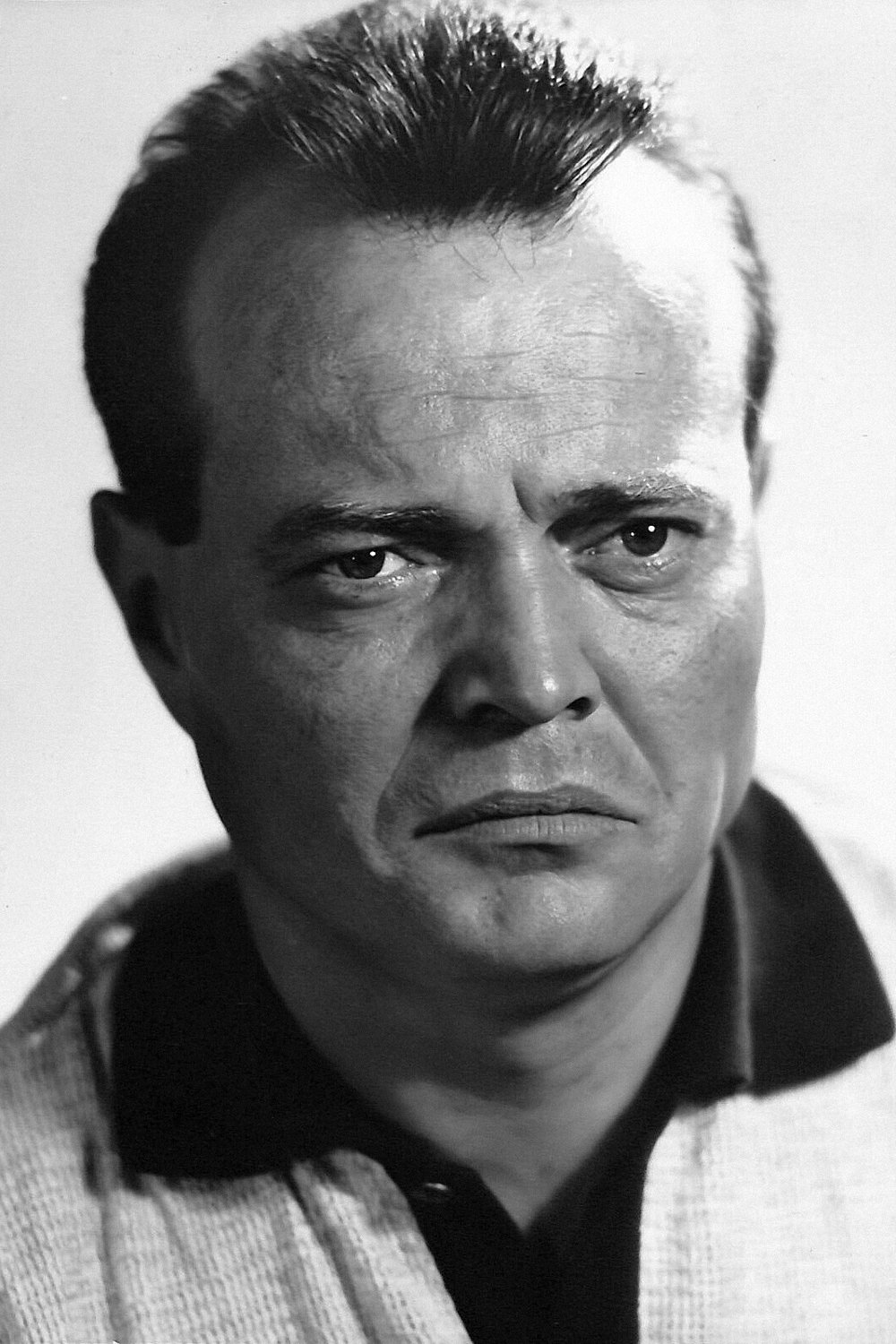
Another important difference concerns Oskar Stinnel, the wheelchair-bound character played by Ennio Balbo. In the European version, his death involves hanging. The American material substitutes an elaborate death in which he drives his wheelchair against a sword, producing a more graphic image of bodily injury. Accounts of the production attribute these additions to Ralph Zucker. Their presence demonstrates how the film was modified for the American exploitation market, where distributors could emphasize more immediate physical violence. These changes are important historically because they belong to a later production stage and should not be represented as scenes necessarily conceived or directed by Pupillo.

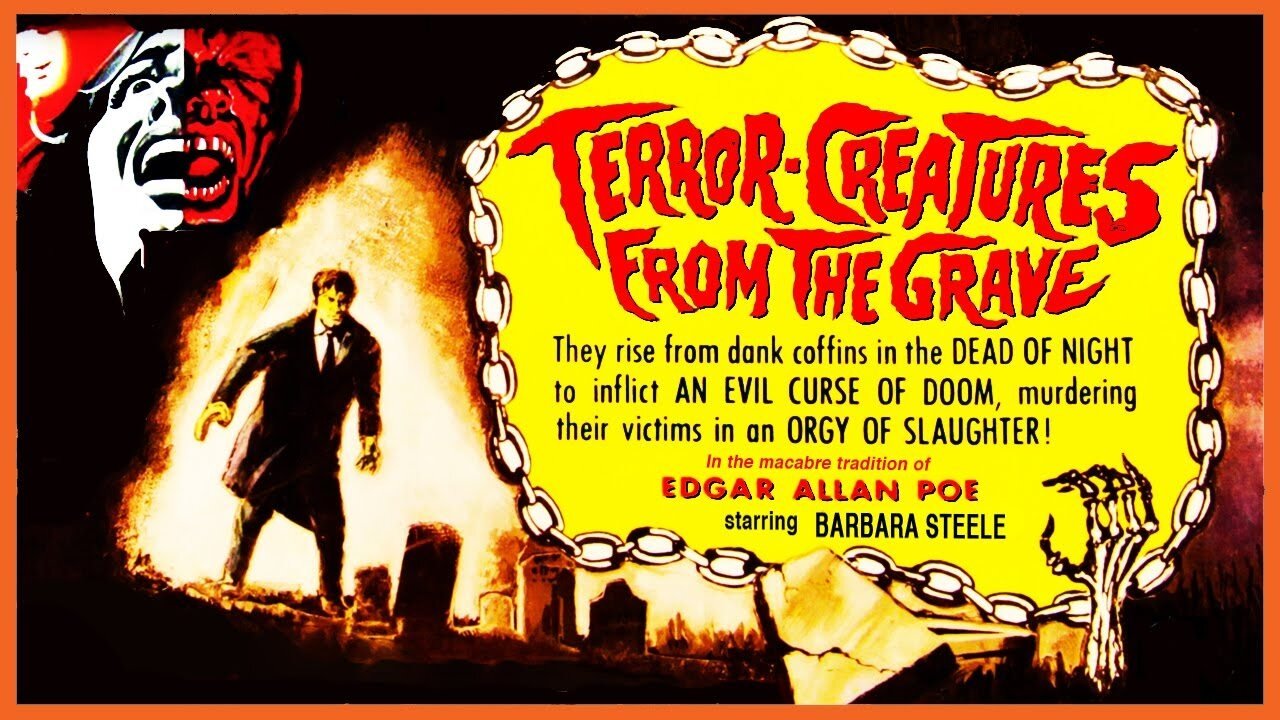
The American credits also describe the film as inspired by Edgar Allan Poe, although no specific Poe story has been established as the screenplay's direct literary source. Natale and Migliorini developed a narrative using recognizable Gothic materials, including revenge after death, a concealed murder and the supernatural consequences of historical wrongdoing. The Poe attribution belongs to the history of the film's marketing to English-speaking audiences; on its own, it does not establish a direct literary adaptation. Differences among later television, VHS and DVD presentations further complicated the film's circulation, particularly where particular scenes or passages of dialogue were absent. These editions should not automatically be classified as director-approved versions.

Theatrical Distribution, Reception and Restoration

Italian censorship documentation records authorization number 45219, dated June 16, 1965. Historical filmographic research gives June 23, 1965 as the Italian theatrical release, with distribution by Selecta and an adults-only classification. The American Film Institute, however, documents a Rome opening in April 1966. These records should be distinguished rather than treated as interchangeable evidence of a single national premiere. The AFI reconstruction is especially detailed concerning American circulation: Pacemaker Pictures acquired United States distribution rights from International Entertainment Corporation, an arrangement reported in Variety on February 1, 1967. The film subsequently appeared on a double bill with Bloody Pit of Horror, including a documented engagement at the Absecon Drive-In in New Jersey on May 12, 1967.

The double-feature arrangement connected two films produced within the same Italian-American commercial network and directed principally by Pupillo. Their American advertising emphasized sensational horror, while the addition of more explicit material gave Terror-Creatures from the Grave a different balance of Gothic mystery and physical violence. AFI research documents subsequent regional bookings and the continued circulation of the pairing as late as 1974. Contemporary critical opinion was less enthusiastic than the film's later visibility in cult-film circles might suggest. A 1968 review in the British Film Institute's Monthly Film Bulletin criticized the conventional nature of the horror and the limited visibility of the creatures promised by the English title. Later historical writing has placed greater emphasis on the film's photographic atmosphere and its unusual international release history.

The film experienced an extended afterlife through international home-video editions, many of which circulated with different running times and image quality. Earlier high-definition releases included a scan of a surviving American theatrical print, accompanied by supplementary interviews with Pupillo, actor Riccardo Garrone and film historian Fabio Melelli. In 2025, Severin Films announced a new 4K restoration from original camera negative elements for Danza Macabra Volume Four: The Italian Gothic Collection. The release presented both the Italian version, running approximately 90 minutes, and the American version, running approximately 85 minutes. Its supplements included archival material, historical commentary and a selected-scene discussion involving Barbara Steele.

The restoration has particular archival importance because it places the differing Italian and American presentations within the same edition, allowing their editing and violence to be examined comparatively. The material also supports a clearer distinction between the film photographed under Pupillo's principal direction and sequences added for foreign distribution. Its place in Italian Gothic history rests on that documented production complexity, the contribution of Carlo Di Palma's photography and its connection to the international circulation of low-budget European horror during the 1960s. The surviving record supports an assessment of the film as a distinctive example of the period without requiring unsupported claims of direct influence on later filmmakers.

References

  1. American Film Institute Terror-Creatures from the Grave — AFI Catalog of Feature Films

    Archival reconstruction of the American distribution history, including contemporary Variety reporting, documented theatrical engagements and the connection with Bloody Pit of Horror.

  2. Centro Sperimentale di Cinematografia Cinema Trevi: Barbara Steele, la regina del gotico

    Institutional retrospective providing historical context for Barbara Steele and documenting the contested directing credit attributed to Ralph Zucker rather than Massimo Pupillo.

  3. Severin Films Severin Unveils New Quartet of Italian Gothic Horror Classics with Danza Macabra Volume Four

    Official restoration announcement documenting the 4K negative scans, differences between the Italian and American cuts, their respective running times and archival interviews included in the 2025 edition.

Cast

View Full Cast & Crew →

Release & Distribution

Production Companies (3)

  • G.I.A. Cinematografica
  • International Entertainment Corp.
  • M.B.S. Cinematografica

Release History (3)

Release DateTerritoryRelease TypeFormatDistributorCertificationNotes
1965-06-23 Italy Theatrical — — —
1966-04-01 France Theatrical — — U
1966-04-01 United States Theatrical — — NR
They rise from dank coffins in the dead of night, murdering their victims in an orgy of slaughter!