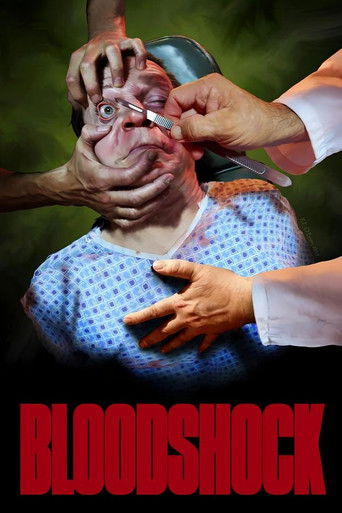
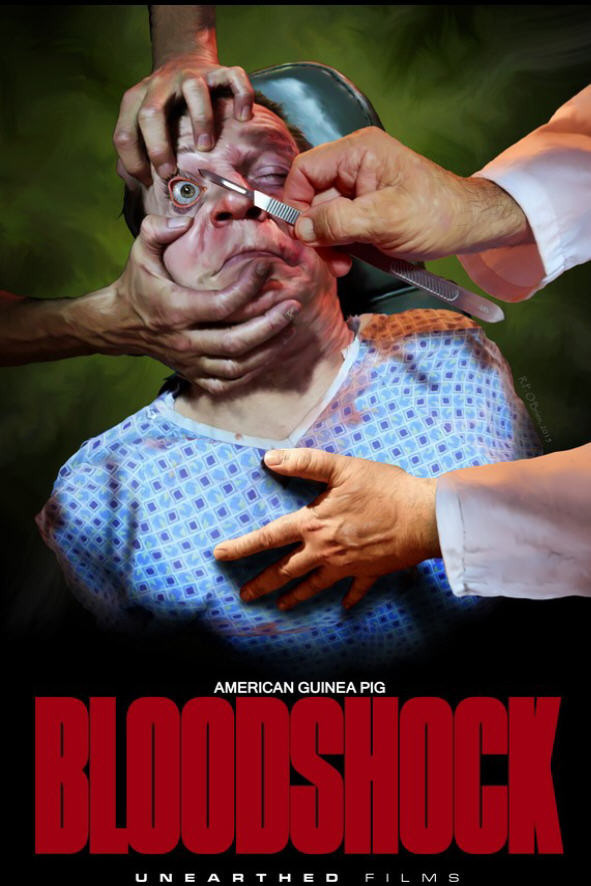
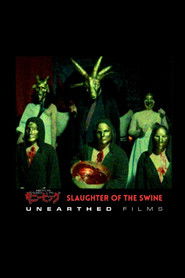
A captive man wakes in an isolated medical institution and is subjected to a succession of painful experiments by a doctor seeking to extract unusual properties from human blood. Confined in a cell, he becomes aware of another prisoner and begins communicating with her in secret. Their connection offers a fragile sense of hope as the procedures continue and the boundaries between bodily suffering, perception and obsession begin to blur. Presented predominantly in black and white, the film follows the prisoners' attempts to understand the institution's purpose and the fate that its clinical routines appear to have prepared for them.
Marcus Koch transforms the American Guinea Pig format through monochrome medical horror, prolonged practical effects and a nearly wordless lead performance.
American Guinea Pig: Bloodshock (2015) is the second entry in the American revival of the Japanese Guinea Pig cycle. Directed by special-effects artist Marcus Koch from a story developed by Stephen Biro, it moves the franchise into a clinical setting where an imprisoned man is subjected to repeated experiments. The approach shifts the emphasis from the staged snuff-film spectacle of its predecessor to the experience of one captive. The film remains firmly within extreme horror, yet its controlled locations and persistent focus on the patient's response give the violence a different narrative setting.
Bloodshock belongs to the independent exploitation network surrounding Unearthed Films and Oddtopsy Films. Its harsh monochrome presentation, minimal dialogue and extensive prosthetic work place it at the intersection of experimental horror and effects-driven cinema. The production attracted a specialist festival audience before reaching collectors through physical-media editions. Accounts from its makers and contemporary reviewers provide unusually concrete evidence of how the film was made, how it was financed after completion and why its visual strategy divided viewers.
Development and the American Guinea Pig Series
Unearthed Films had previously distributed the original Japanese Guinea Pig productions to American audiences. Biro then developed a new cycle under the American Guinea Pig name, beginning with Bouquet of Guts and Gore. Koch designed that film's physical effects and subsequently directed Bloodshock, changing his role from specialist collaborator to the person shaping the feature's performances and visual rhythm. Biro remained involved as writer and producer. In a later interview, he said he was satisfied with Koch's interpretation of the story and considered its experimental form part of the finished work's identity.
The sequel's premise confines most of its action to a medical institution whose purpose remains obscure to its prisoner. A doctor presides over the experiments, while notes from a woman in another cell provide the captive with a fragile means of communication. This structure gives the repeated procedures a continuing dramatic context. The confinement also distinguishes this entry from the earlier film's overt staging of violence for a camera within the fiction. The central relationship develops under conditions that neither patient controls, making uncertainty about their captors part of the suspense.
Monochrome, Space and Visual Design
Bloodshock was filmed and edited in color before its imagery was converted to black and white in postproduction. This distinction matters because the finished appearance was a deliberate grading choice, not evidence that the production used monochrome film stock. The largely colorless image emphasizes the difference between the bright padded cell and the darker rooms where the experiments occur. Clean institutional surfaces surround scenes of bodily injury. The visual arrangement gives the patient little spatial relief, and the alternation between confinement and examination helps organize sequences that otherwise share a similar physical setting.
The black-and-white treatment also changes how the prosthetic effects register. Blood appears through differences in tone and texture, while injuries are measured against pale skin and clinical backgrounds. A late transition to color disrupts the established palette and gives the ending a markedly different visual character. Reviewers disagreed about the result: some valued its oppressive atmosphere, while others argued that withholding red diminished the impact expected of a Guinea Pig film. Those assessments concern the aesthetic effect of the presentation, not a claim that the makeup itself was created differently for monochrome photography.
Practical Effects and Physical Performance
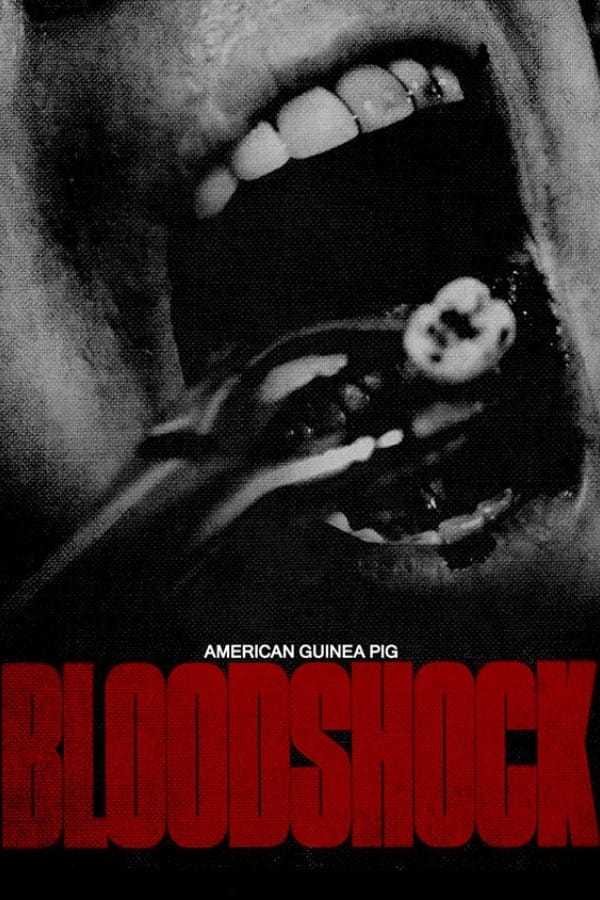
Koch's background in lifecasting, fabricated anatomy and injury makeup is central to the film's identity. Procedures involving exposed tissue and damaged body parts are constructed as sustained physical encounters, with the camera asked to preserve the illusion of contact. One especially demanding setup presents a dental procedure from an unusually intimate angle. The prosthetics serve the enclosed medical setting, where a convincing fabricated wound carries more weight than the suggestion of violence just outside the frame. The result depends on the interaction of makeup materials, positioning, editing and the actor's response.
Dan Ellis described the role as demanding because his character had to express fear and exhaustion with very little speech. In a 2016 interview, he said that performing alongside prosthetics helped him maintain the character's physical reality. He also recalled an intense shoot in Florida and long working days, presenting these as personal memories rather than independently established production totals. Ellis noted that some gore material was added after he had completed his own work. That detail is especially useful for understanding the completed imagery: what appears to be one uninterrupted experience of suffering could involve shots filmed with separate effects elements.
Sound, Repetition and Narrative Pressure
The small amount of dialogue places unusual weight on the patient's reactions and on the audible mechanics of the examination rooms. Kristian Day's industrial-leaning score contributes a sustained atmosphere of unease. Contemporary home-video criticism also identified a persistent metronome-like sound during the doctor's sessions. Its regular pulse contrasts with the unpredictable intervals of injury and recovery. Because the film repeatedly returns its subject to confinement, sound becomes one means of differentiating waiting from the next intervention. The sonic design intensifies a setting where a character's ability to speak has been severely restricted.
The arrangement creates a particular pacing problem for an effects-centered feature. Each procedure must establish its own tension even as the basic conditions of captivity remain constant. In his December 2016 assessment, Christopher Zabel of DoBlu praised the practical work but argued that the recurring torture passages became monotonous. He also found the concluding shift in tone difficult to reconcile with the preceding material. These were specific contemporary judgments, and they help explain why the film's methodical approach could seem disturbing to one viewer and dramatically static to another.
Festival Circulation and Home-Video Editions
The film was included in the 2015 Housecore Horror Film Festival in San Antonio, where contemporary announcements advertised its world premiere. Its subsequent visibility remained closely connected to specialist horror events; a 2016 review by Dread Central described a screening at Texas Frightmare Weekend. This circulation reflects a production aimed at an existing extreme-horror audience, with festival presentation preceding its broader availability on disc. The available evidence does not support treating a single festival screening as a conventional theatrical release, and documented international box-office figures are absent.
An Indiegogo campaign publicized in January 2016 was a presale initiative for a completed film, rather than a campaign to fund principal photography. The producers described a target of 30,000 dollars in presales intended to recover expenses and accelerate another installment. Limited editions and unusual supporter rewards were part of that strategy. Unearthed's later collector release included an extensive making-of documentary, filmmaker commentary, cast commentary and interviews, while a soundtrack CD accompanied the multidisc edition reviewed in December 2016. Those supplements preserve practical production testimony that might otherwise have remained inaccessible outside the underground distribution circuit.
April 2016 conversation about the performance without dialogue, practical effects, shooting conditions and collaboration with Marcus Koch.
Homepopcorn — Test DVD / American Guinea Pig: Bloodshock, realise par Marcus Koch
Substantive French critical account of the film's visual style and color grading, with an examination of the later collector edition and interviews.
Dread Central — Exclusive Images from American Guinea Pig: Bloodshock
January 2016 contemporary report containing original campaign details distinguishing postproduction presales from financing of the completed shoot.
DoBlu — American Guinea Pig: Bloodshock Blu-ray Review
Christopher Zabel's December 2016 review evaluates performance, effects, sound and pacing and documents the filmmaker commentaries and making-of materials.