This Night I'll Possess Your Corpse (1967)

BR
HORROR FILM Thriller Fantasy
Runtime
109 min
Release
March 13, 1967
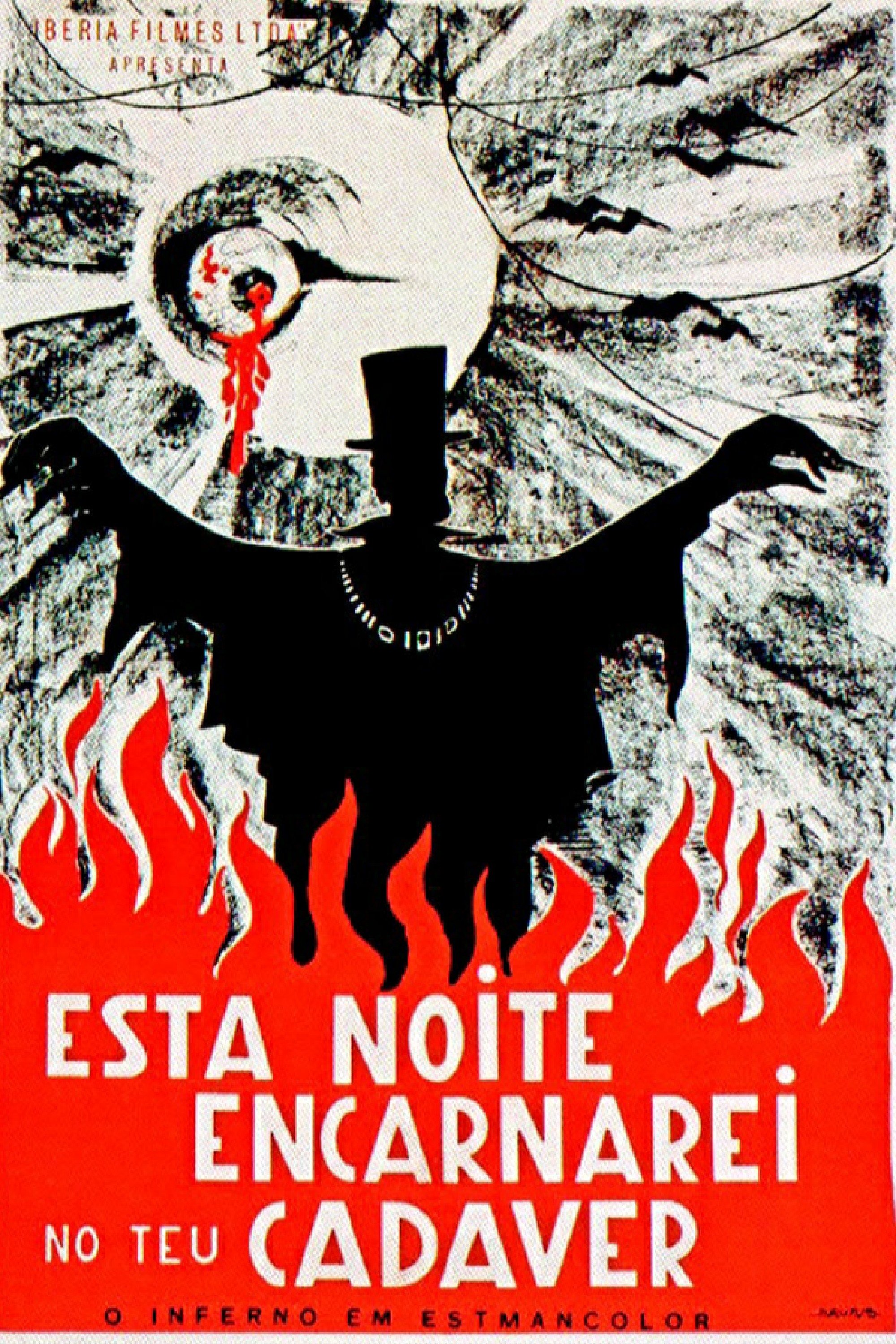
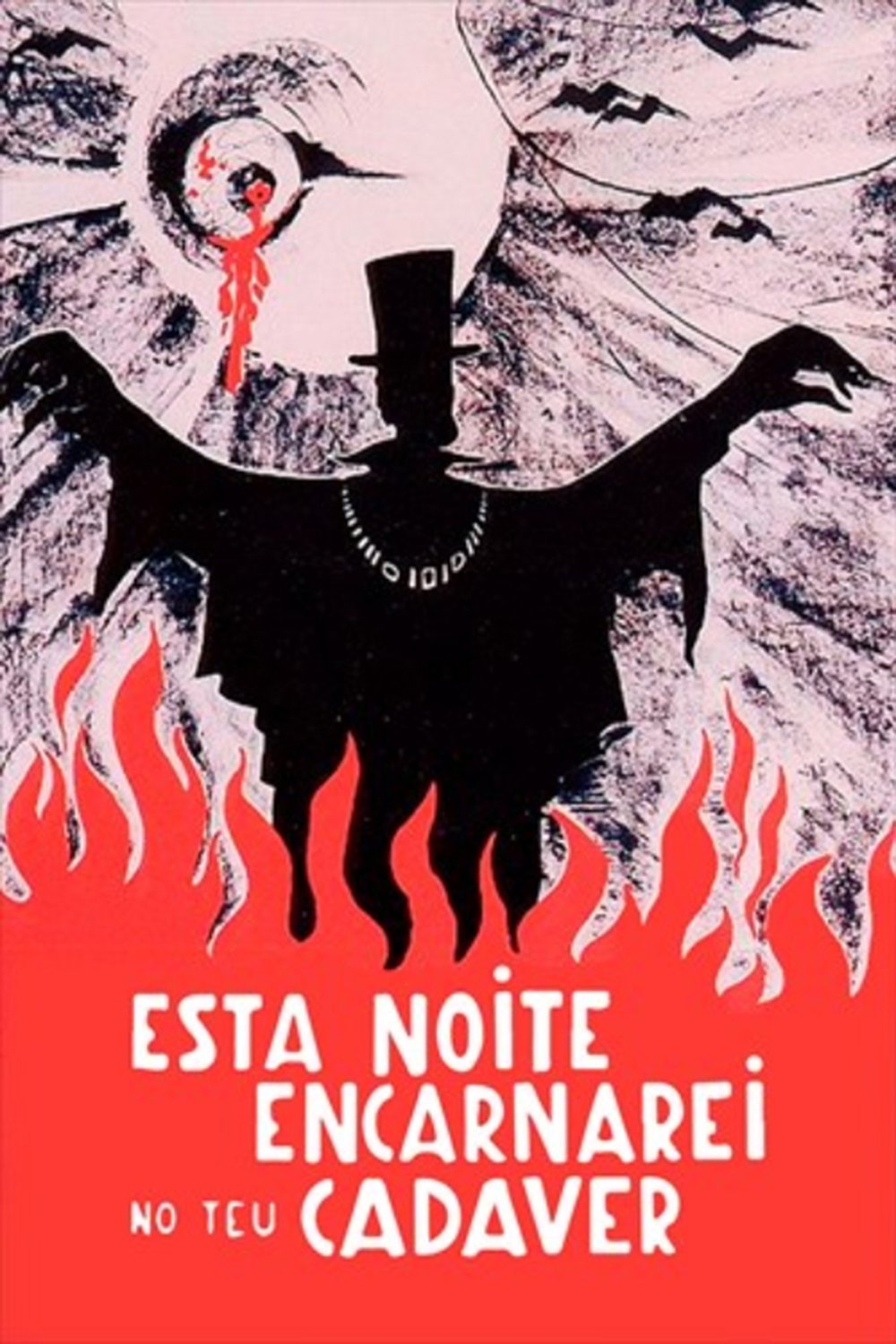
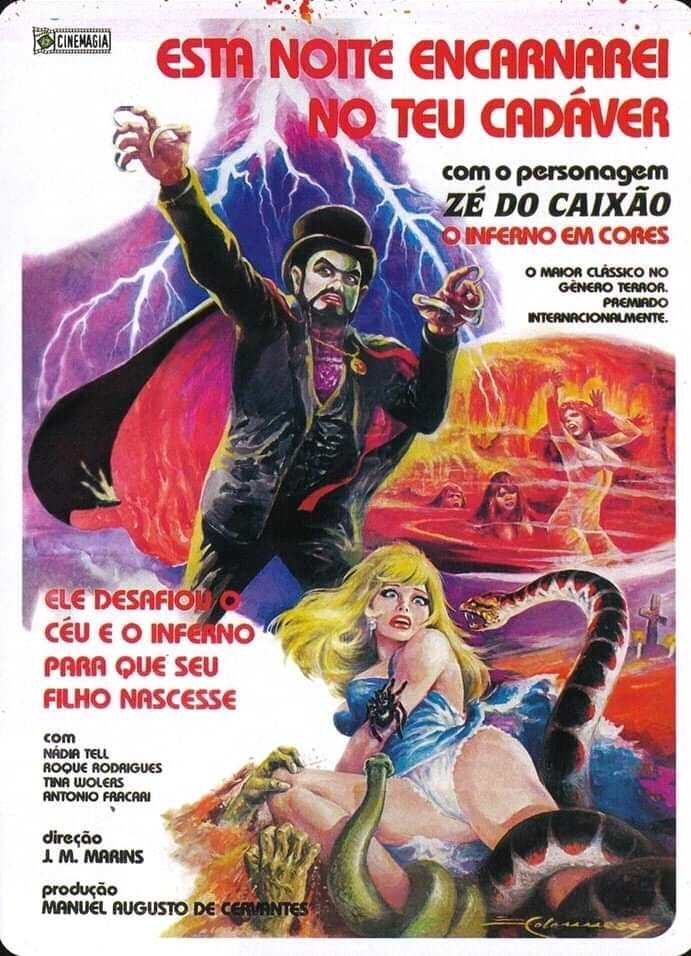
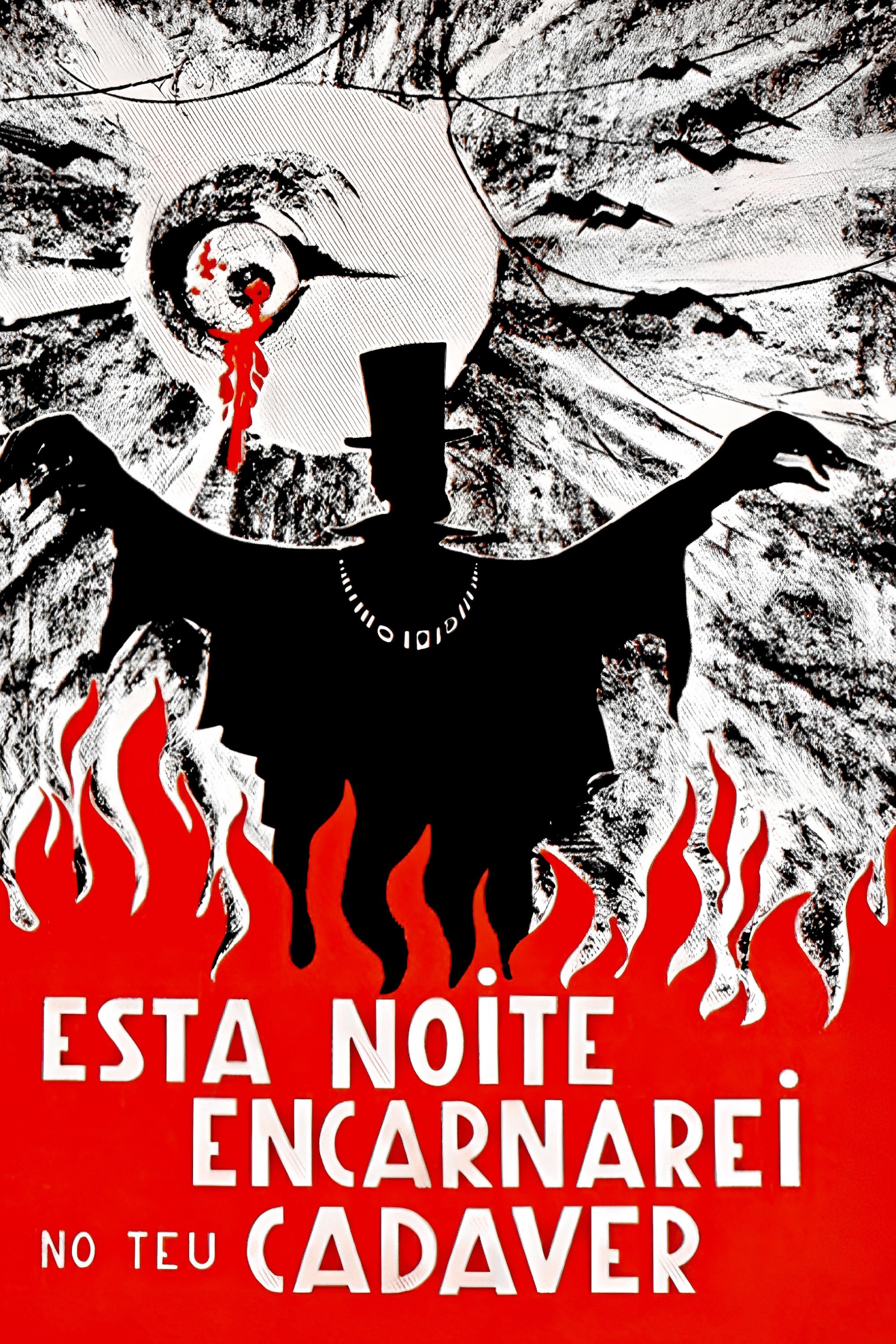
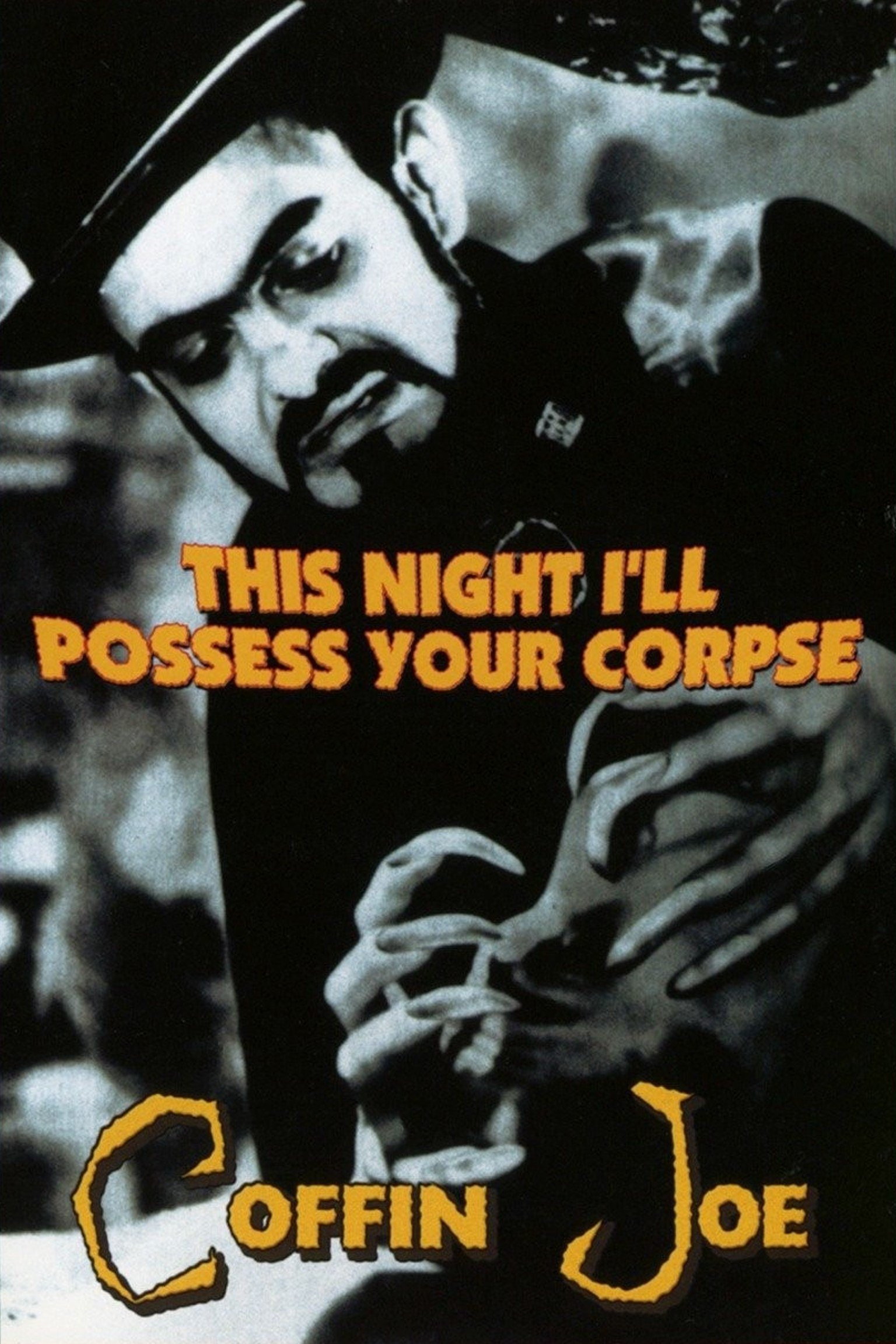
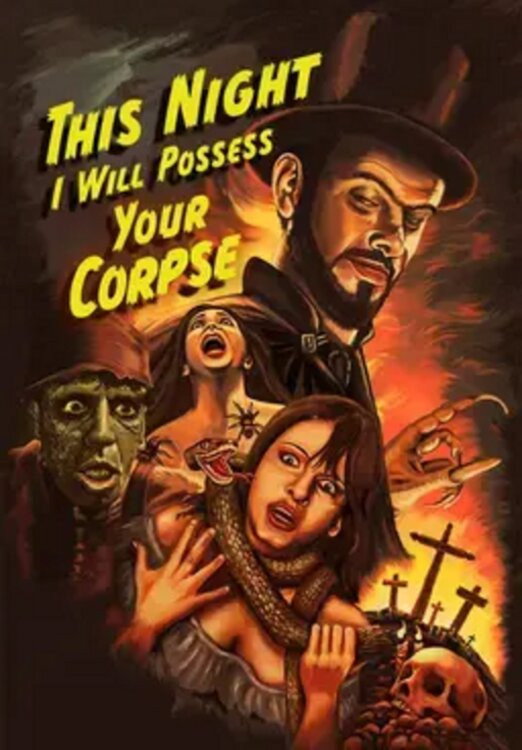
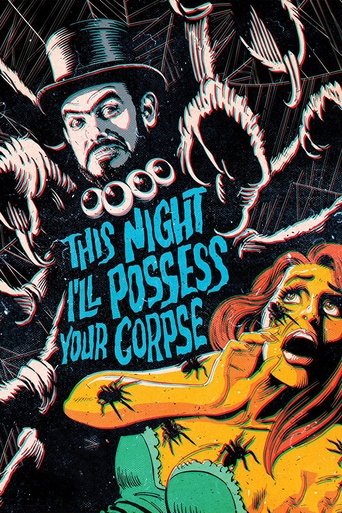
This Night I'll Possess Your Corpse (1967) poster
Production Company
Ibérica Filmes
Plot

After the events that made him notorious, Zé do Caixão continues searching for a woman who can provide the heir he believes will carry his superior bloodline. With the assistance of Bruno, he abducts women and submits them to trials designed to satisfy his cruel requirements. His actions provoke further fear and resistance, while disturbing visions of punishment challenge the undertaker's contempt for religion. The pursuit leads him into increasingly elaborate cruelty and forces him to confront the consequences of his own beliefs.

Alternative Titles
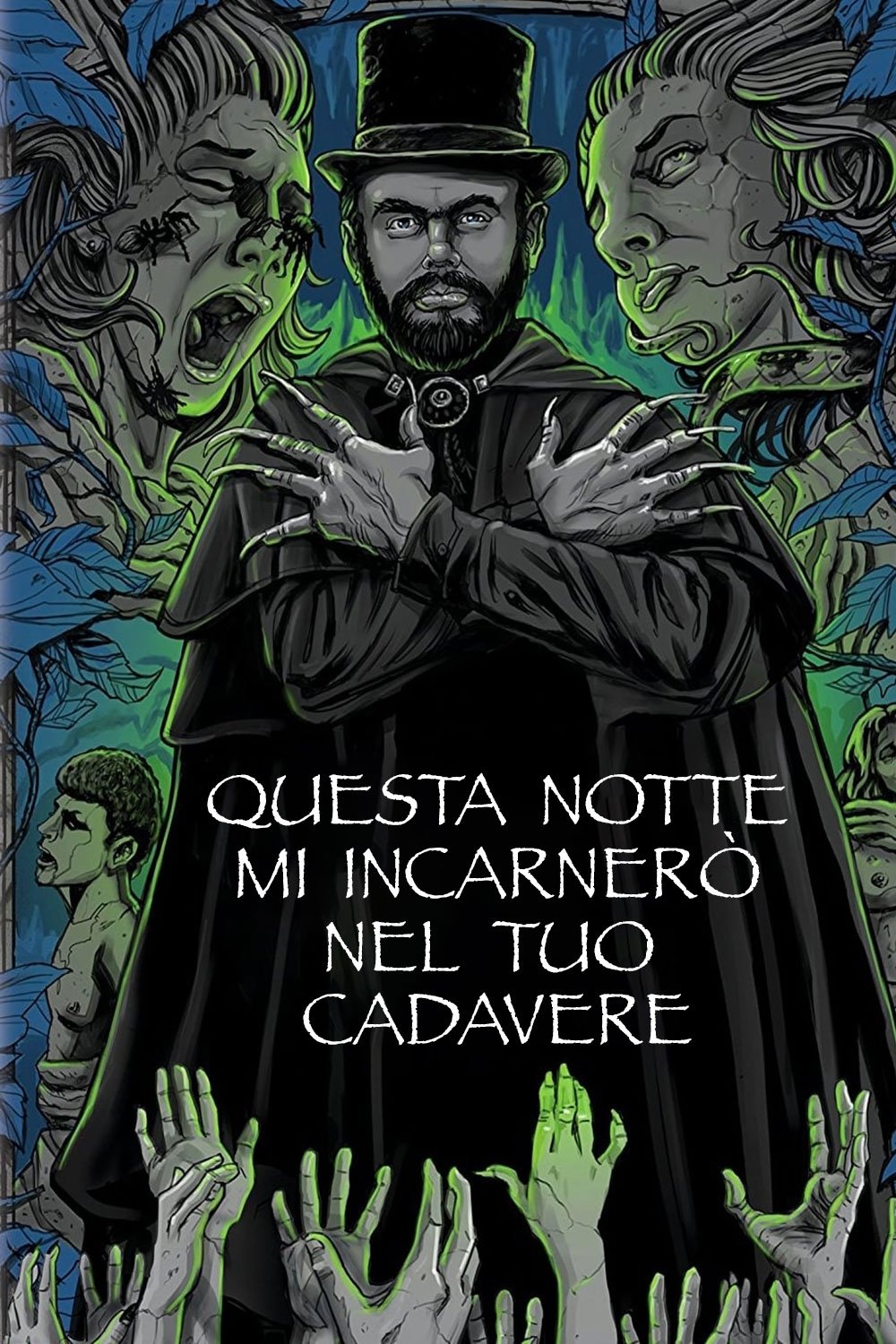
Bu Gecə Cəsədini Ələ Keçirəcəm (Azerbaijan) 午夜索尸 (China) — Chinese Dnes v noci se vtělím do tvé mrtvoly (Czechia) — Czech Esta Noche Poseeré tu Cadáver (Spain) — Spanish 午夜索屍 (Hong Kong SAR China) — Chinese Questa notte mi incarnerò nel tuo cadavere (Italy) — Italian 오늘 밤 네 시체 안에서 환생하리라 (South Korea) — Korean Сегодня ночью я вселюсь в твой труп (Russia) — Russian

Trailers & Videos

2 videos

Film Guide & Analysis

José Mojica Marins expands Coffin Joe through the color vision of Hell, theatrical cruelty and a climax rewritten by Brazilian state censorship.

This Night I'll Possess Your Corpse (1967) extends the story of Zé do Caixão, or Coffin Joe, the undertaker created and played by Brazilian filmmaker José Mojica Marins. Following At Midnight I'll Take Your Soul (1964), the sequel continues Joe's violent pursuit of a woman he considers capable of bearing a superior child. That premise gives the film an unusually explicit conflict between the character's contempt for religion and his conviction that biological reproduction can secure his personal immortality. Its cruelty is presented through theatrical confrontations, elaborate trials and the performance of a protagonist who speaks as though everyone around him must submit to his worldview.

The film is a landmark of Brazilian horror partly because it makes its limited resources visible as a particular kind of imagination. Most of the action is photographed in black and white, then an extended descent into Hell erupts in color. This shift turns a relatively confined independent production into a spectacle of bodies, punishment and religious terror. Released under Brazil's military dictatorship, the film also bears the marks of state intervention: censorship changed the force of its concluding confrontation with belief. The relationship between what Marins staged and what authorities permitted audiences to see is essential to its history.

The Sequel and Its Independent Production

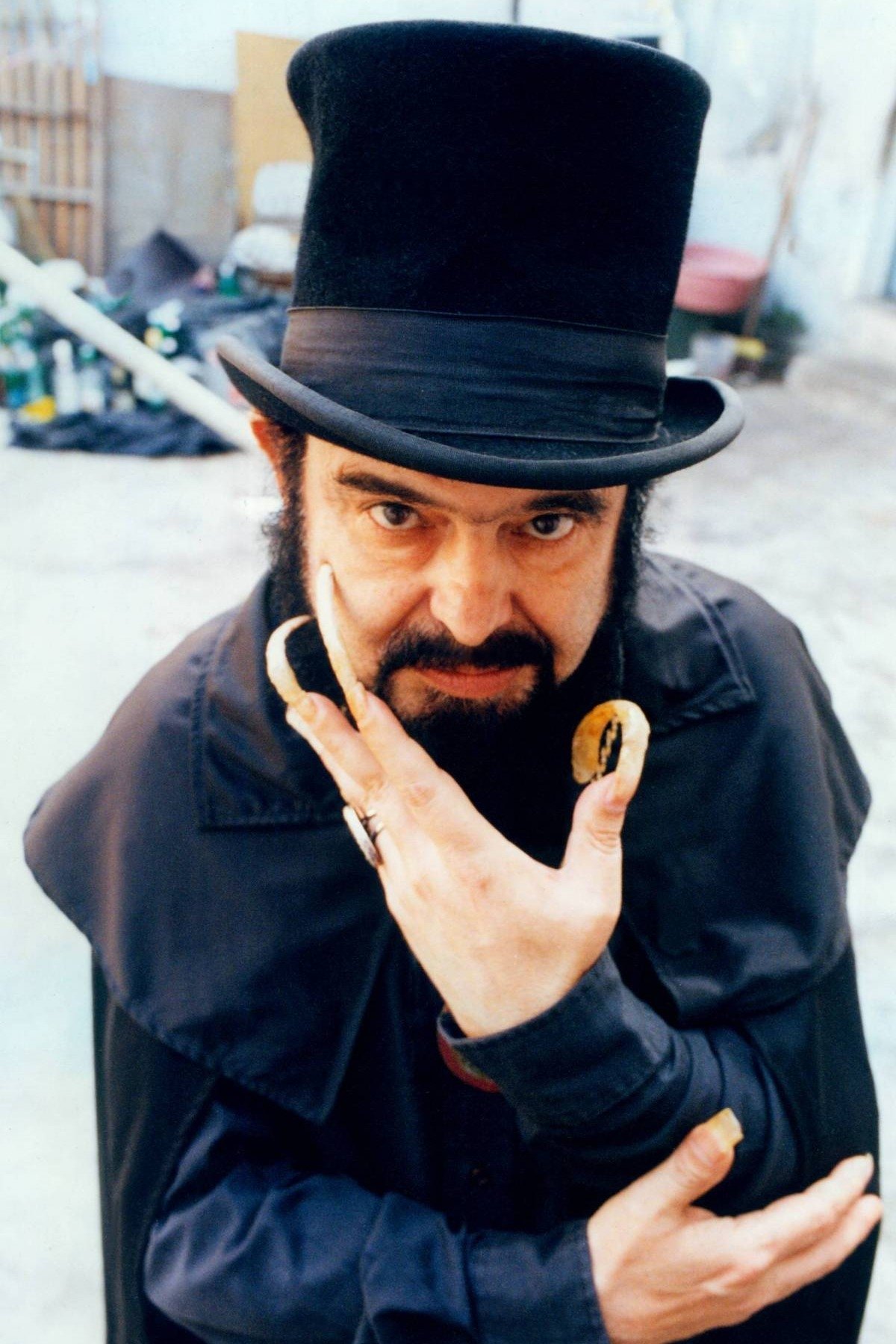
Marins developed Coffin Joe into a recurring screen figure after the notoriety of his 1964 horror debut. The earlier film gave Brazilian audiences a horror antagonist whose costume and manner were immediately identifiable: a top hat, dark clothing, long fingernails and an openly hostile attitude toward religious custom. The sequel resumes his story despite the apparently fatal supernatural attack that closed the first picture. This continuation preserves the character's central obsession while allowing Marins to enlarge the number of victims and the scope of the punishments inflicted upon them. The emphasis remains on Joe's conduct and the reactions it provokes, rather than on building a conventional mystery around his identity.

The production belonged to the resource-constrained environment of independent filmmaking in São Paulo. Itaú Cultural identifies the Brás neighborhood as an important location, while Kat Ellinger's historical essay describes the use of an abandoned synagogue and a cast that included amateur performers. Such details help explain the film's uneasy combination of recognizable interiors and stylized, constructed spaces. Marins did not attempt to disguise every theatrical seam. Instead, performers, scenery and abrupt changes in atmosphere create a world in which ordinary village life can give way to an elaborate ordeal almost without warning. The resulting visual language reflects material necessity as well as a director's preference for sensational spectacle.

In a 2011 interview for Film at Lincoln Center, Marins's son Crounel recalled that his father regarded the work as a form of handmade cinema. He also connected the decision to reserve color photography for Hell with the costs of production, while stressing the expressive possibilities of that restriction. Those remarks are a family recollection rather than an itemized production record. They nevertheless illuminate a consistent feature of Marins's early films: scarce resources encouraged conspicuous inventions of space and performance. The sequel's importance lies in how these choices support a recognizably personal horror language, even when a location or effect appears visibly artificial.

Coffin Joe, Reproduction and Religious Conflict

Joe's search for an ideal partner is the organizing principle of the sequel. He subjects women to ordeals designed to test their ability to withstand fear and to satisfy his own conception of physical and spiritual superiority. The proposed child represents a future version of himself, a way to extend his existence beyond his own mortality. He treats marriage, desire and human relationships as matters of selection, placing his theory above the welfare of anyone forced into its service. His claims of superior rationality therefore coexist with conduct that exposes the destructive consequences of his obsession.

Religion supplies an equally persistent adversary. The undertaker mocks the beliefs of his neighbors and imagines himself beyond divine punishment, while the surrounding community understands his acts through sin, sacrilege and retribution. The conflict gives the film a specifically Brazilian social setting without reducing it to an illustrated debate about doctrine. The representation of atheism belongs within a society shaped by Catholic authority and political anxieties about irreligion; this context complicates any reading of the character as a straightforward advocate for secular reason. Joe speaks for no coherent secular movement; his declarations are embedded in a fantasy of personal domination that the film repeatedly places under pressure.

The character's contradictions become sharper as his violence approaches the limits of his professed rules. He presents the continuation of life as a supreme value, yet destroys lives in pursuit of the woman who might give him a child. This tension helps explain the power of the supernatural episodes. They challenge a man who believes his own will is sufficient to determine the meaning of death. Marins's narrative does not invite a simple endorsement of Joe's defiance. Its central spectacle is the spectacle of certainty becoming unstable, with an antagonist forced to confront images whose moral authority he has spent the film denying.

Black-and-White Photography and the Color Hell

The film's monochrome passages are built around high-contrast interiors, exaggerated faces and spaces arranged for confrontation. Joe's dark costume and severe silhouette remain visually dominant whether he is speaking to a crowd or overseeing an ordeal in an enclosed room. The compositions often preserve the physical distance between the person issuing commands and the people required to endure them. Ellinger identifies traces of Expressionism and Gothic staging in this style, alongside the harsher visual language of exploitation cinema. Those associations describe the finished images; they should not be mistaken for a complete inventory of Marins's stated influences on the individual production.

The most conspicuous formal invention arrives when Joe enters a vision of Hell. A picture that has largely denied the audience color suddenly fills with intense hues, human bodies embedded in the surrounding surfaces and tormentors presiding over an apparently limitless punishment. The change is more than decoration. Color becomes the mark of a realm that Joe has repeatedly insisted cannot exist. Rather than gradually introducing the supernatural through small anomalies, Marins changes the film's visual rules at once. The spectator experiences a rupture in the image at the same moment the character's conviction is placed under its most severe test.

The setting has the crowded theatrical quality of a deliberately staged nightmare. Figures seem trapped within the architecture, giving the impression that suffering is built into the space itself. Joe encounters a demonic figure who resembles him, an encounter that turns his confidence into a terrifying confrontation with his own image. The grotesque artificiality of this scene is central to its effect: an obviously constructed Hell can still overwhelm the film's earlier world because its scale and chromatic intensity feel unprecedented within that world. Crounel Marins's remarks about cost help account for the limited use of color, while the sequence's artistic force is visible in the way that restriction concentrates its impact.

Cruelty, Stagecraft and the Grand Guignol

Mojica's horror depends on sustained displays of threatened bodies. Victims are made to endure physical ordeals while Joe watches, comments on their reactions and attempts to interpret pain as a measurement of worth. The scenes are prolonged enough for the audience to register the participation of performers and the arrangement of practical materials within the frame. Spiders and snakes contribute an additional form of unease because their presence makes the ordeal seem less controllable than a simple stage illusion. These devices give the film its abrasive physical texture, although the available production evidence does not justify attributing a specific makeup compound or mechanism to every effect.

A 2014 study by Lucio de Franciscis dos Reis Piedade and Laura Loguercio Cánepa examines the Coffin Joe trilogy through the theatrical tradition of the Grand Guignol. That comparison is useful for this film because violent action is frequently organized as an attraction, with bodies exposed to the gaze of both an on-screen persecutor and the spectator. The performances emphasize cries, threats and conspicuous transformations of emotion. Marins repeatedly gives the audience time to anticipate an ordeal, then allows its execution to occupy the center of the scene. The connection to Grand Guignol is an analytical framework grounded in this staging, not proof that a particular episode was copied from a specific theatrical production.

The mixture of physical shock and philosophical speech gives Joe an unusual relationship to his victims. He continually explains his principles while performing acts that render those principles monstrous. His rhetorical authority depends on the terror of people who cannot answer him on equal terms. In this sense the horror does not arise solely from the sight of suffering; it emerges from the effort to make suffering appear intellectually necessary. The film's set pieces expose the gap between Joe's abstract theory of human perfection and the real bodies he attempts to control. That distance is essential to the character's cruelty and to the film's confrontational tone.

Women, Violence and the Limits of Joe's Worldview

The ordeals imposed on the women in the story cannot be separated from Joe's reproductive project. He imagines a partner able to match his conception of courage, yet he reserves for himself the right to define the test and determine its outcome. This arrangement turns apparent admiration for a strong woman into an extreme exercise of control. The camera repeatedly positions the female body as an object of examination, forcing the viewer to confront the sexual and physical dimensions of the character's violence. The imbalance between the person conducting the trial and those subjected to it remains visible even when Joe describes the process in the language of an ideal union.

Research by Debora Kaizer Felicissimo considers the dehumanization of women across the first two Coffin Joe films, placing their violence in a historical discussion of gender and Brazilian cultural imagery. This perspective is particularly pertinent to the sequel's attempts to turn coercion into a claim about natural superiority. The film invites competing responses: its elaborate stagings may be read as a criticism of the protagonist's megalomania, but they also subject actresses' bodies to prolonged spectacles of vulnerability. Recognizing that tension allows the discussion to remain attentive to the film's cultural importance without treating the aggression as merely decorative. It also avoids confusing Joe's declared philosophy with an unqualified position held by the filmmaker.

Censorship and the 1967 Release

The film reached Brazilian cinemas during the military dictatorship established in 1964. The Cinemateca Brasileira's historical records identify a São Paulo opening on March 13, 1967, and record federal censorship documentation from the weeks surrounding that release. The production is also associated with 1966, a distinction between when the film was made and when it was publicly released that helps explain occasional disagreement over its year. The dictatorship's intervention did not take place in a vacuum: a story organized around blasphemy, torture and a public rejection of religious belief presented the authorities with material they considered objectionable. The surviving documentation offers a firmer basis for discussing censorship than generalized claims of a total ban.

The most consequential intervention involved the ending. In the version originally conceived, Coffin Joe was to maintain his denial of God as death approached. The authorities instead required dialogue in which he acknowledged divine truth and sought help from the cross and the priest. This change alters the dramatic meaning of the climax. A figure whose identity had been built around rejection of religious authority is made to speak the opposite conviction at the moment of defeat. It is therefore misleading to describe the released conclusion as an uncomplicated statement of Marins's own beliefs. The imposed lines belong to the history of the film's exhibition as much as to its narrative.

Everton de Sousa and Frederico Osanan Amorim Lima's 2025 study examines how censorship affected the movie's editing and sense, rather than treating the process as the mere removal of isolated offensive images. Related research on state censorship reports situates Marins's work within an authoritarian culture deeply concerned with controlling representations of violence. These studies allow the film's altered ending to be placed within an institutional history, while cautioning against assuming that every controversial sequence was banned or that all later circulating versions preserve the same original material. The available documentation does not establish the contents of a recoverable, complete original cut.

Reception and Place in Brazilian Horror

The 1967 sequel enlarged a figure who would become widely recognizable within Brazilian horror culture. Its appeal rests partly on the repeated presence of Marins himself, whose voice, posture and distinctive costume make Coffin Joe a forceful screen personality. Yet the character's value to the film is more complicated than recognizability. The sequel gives him an ideology, subjects that ideology to a supernatural assault and ends with a scene whose meaning was forcibly revised by state censors. The passage between these elements reveals why the work can be studied as a work of both popular genre entertainment and political-cultural history.

Outside Brazil, the film's audience expanded through later repertory screenings and home-video circulation. The Walter Reade Theater programmed the work in 2011, presenting it with live accompaniment by musician Gary Lucas, while the subsequent academic and critical literature has examined its violence, religious imagery and visual strategies. Kat Ellinger's 2017 essay argues for viewing the film within its Brazilian social context instead of reducing it to low-budget excess. The critical position is specific, not evidence of a unanimous reappraisal. The original film's international circulation and its later scholarly reception belong to different phases of the work's history.

The narrative was eventually linked to Embodiment of Evil (2008), released decades later as a continuation of Coffin Joe's story. That retrospective trilogy structure should not obscure the conditions of the 1967 film itself. Its black-and-white photography, abrupt chromatic descent into Hell and censor-altered ending are inseparable from the constraints under which it reached its first audience. Later viewers can revisit those decisions with evidence unavailable at the time, including records of state intervention and historical analysis of the scenes' treatment of human bodies. The sequel remains a central demonstration of how Marins shaped a personal horror mythology through an intensely physical form of cinema.

References

  1. Senses of CinemaThis Night I'll Possess Your Corpse (1967)

    Kat Ellinger analyzes Coffin Joe, the monochrome staging, the color Hell sequence and the Brazilian political and cultural context.

  2. Film at Lincoln CenterBrazilian Horror Icon Coffin Joe at LatinBeat

    Original 2011 interview with Crounel Marins on the sequel, handmade production, use of color and censorship during the dictatorship.

  3. CordisPUC-SP — Fragmentos de um filme cortado: Censura e estrategias de sobrevivencia em Mojica

    Everton de Sousa and Frederico Osanan Amorim Lima examine censorship, editing and the changes imposed on the 1967 film.

  4. Revista EspacialidadesUFRN — Zé do Caixão: entre violacoes e violencias

    Debora Kaizer Felicissimo analyzes violence against women and the historical representation of gender in the first two Coffin Joe films.

Connections

Cast

View Full Cast & Crew →

Release & Distribution

Production Companies (1)

  • Ibérica Filmes BR

Release History (1)

Release DateTerritoryRelease TypeFormatDistributorCertificationNotes
1967-03-13 Brazil Theatrical — — 18 Cinemateca
Hell in Eastmancolor