1920 (2008)

IN
HORROR FILM
Runtime
138 min
Release
September 12, 2008
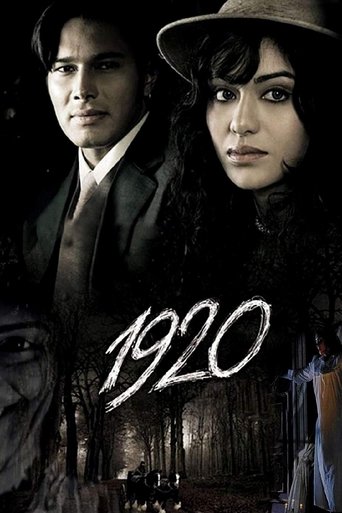
1920 (2008) poster
Director
Production Company
ASA Productions and Enterprises
Plot

1920, India. After forsaking his family and religion, a husband finds his wife is possessed by a spirit.

Alternative Titles
1920 Gayathri (India) — Telugu Dubbed

Trailers & Videos

1 video

Film Guide & Analysis

A Yorkshire castle, a marriage under siege and the collision of Gothic possession with Indian religious traditions.

Vikram Bhatt’s 1920 (2008) places a story of demonic possession inside the architecture of a period Gothic film. Its isolated manor, forbidden rooms and account of an earlier crime draw on familiar haunted-house conventions, while the central conflict turns on a marriage divided from its family and religious traditions. The setting belongs to colonial-era India, although the production used Allerton Castle in Yorkshire to provide the building’s formidable exterior and interiors. That meeting of Indian supernatural melodrama with a distinctly European-looking mansion gave the film an unusual visual identity within Hindi-language horror of the period.

The film follows Arjun Singh Rathod, an architect hired to demolish a secluded property and replace it with a hotel, and Lisa, the wife who accompanies him there. Disturbances in the house become increasingly focused on Lisa, eventually confronting the couple with a malevolent presence connected to events before their arrival. Bhatt had previously directed the supernatural thriller Raaz (2002), but 1920 pursued its horror through historical decoration, a sustained atmosphere of domestic isolation and possession scenes built around Adah Sharma’s performance. Its reception in September 2008 exposed an unusually sharp division between critics who admired its elaborate setting and those who found the period conceit unconvincing.

Development and Production Obstacles

Bhatt returned to horror at a difficult stage of his directing career. In a retrospective account published by Hindustan Times in March 2025, he recalled a succession of unsuccessful releases after Raaz and the difficulty of finding backers willing to support another project. He said that the idea for 1920 had remained with him while confidence in his work declined. His remarks describe a filmmaker determined to pursue a supernatural subject despite reservations from colleagues and distributors; they are recollections offered many years after the production, rather than a contemporary record of every financing decision.

The same account describes a troubled path to the screen after filming. Bhatt recalled arranging roughly thirty-five trial screenings without obtaining a buyer and said that he eventually took responsibility for getting the picture released. Such details help explain why a film built around a large, period-specific location and two relatively unfamiliar leads presented a commercial risk. Rajneesh Duggal and Adah Sharma made their feature-film debuts as Arjun and Lisa, leaving the story dependent on their ability to sustain an intimate relationship while one character underwent an increasingly extreme supernatural transformation. That casting choice also made the atmosphere of the house especially important to the film’s appeal.
Allerton Castle and Gothic Space

The principal architectural setting was Allerton Castle in North Yorkshire, England. In a September 2008 interview distributed by IANS, cast member Anjori Alagh described a roughly month-long schedule at the castle, followed by further work in Mumbai. She recalled the isolation of the property and rooms that crew members were discouraged from entering unaccompanied. Her account gives a concrete sense of the location as a working environment: the actors spent an extended period in a large historic building before returning to India for the remainder of the production.

Stories about the castle being haunted circulated during the publicity campaign. Alagh described an unsettling experience when she and Sharma entered one of the restricted rooms, while other coverage repeated claims about the property’s reputation. These were cast recollections and local stories, not verified paranormal events. Their circulation nevertheless shows how the production used its real location to reinforce the fiction’s principal attraction: a residence imagined as having a history and a will independent of the people occupying it. The film itself develops that idea through a building whose planned demolition provokes renewed violence.

Pravin Bhatt’s cinematography makes the scale of the castle a persistent part of the suspense. Corridors, staircases and ornate interiors allow the characters to appear small within spaces that they cannot adequately understand or control. The period furnishings and formal clothing separate the action from the contemporary urban settings of many Hindi thrillers. The choice was contentious. Reviewing the film on its release, Raja Sen argued in Rediff that the Yorkshire architecture and English-inflected costumes made the supposed Indian setting feel artificial; Taran Adarsh, writing for Bollywood Hungama, regarded the same location and its photography as major strengths. Their disagreement reveals how central the manor was to the film’s critical identity.

A Marriage Under Supernatural Attack

The screenplay establishes a conflict between Arjun’s commitment to Lisa and the family and religion from which he has distanced himself. His assignment at the manor appears at first to offer the couple independence. The haunting reverses that promise by making their home a place where Lisa’s body and Arjun’s judgment are placed under pressure. Apparitions and unexplained sounds gradually give way to possession, shifting the threat from a mysterious building to the person closest to Arjun. This progression ties the ordinary vulnerability of a marriage to the more physical horror of a body controlled by another intelligence.

The historical backstory introduces revenge and the politics of the colonial period into the supernatural explanation. It is delivered through a return to an earlier episode in the property’s history, so that the audience must reinterpret the haunting in relation to people who lived there before the couple arrived. Both Adarsh and Sen singled out this flashback, although they assessed its dramatic value very differently. The period is therefore more than decorative scenery within the narrative: the film makes an event from the past responsible for a present-day violation of domestic safety. Its treatment of that history remains part of the fiction, rather than an account of an actual colonial incident.

Religious practice becomes increasingly important as Lisa’s condition worsens. Father Thomas, played by Raj Zutshi, offers a specifically Christian form of intervention, while Arjun’s eventual recitation of the Hanuman Chalisa gives the climax a connection to the Hindu devotional tradition he had earlier abandoned. The collision of these responses is a distinctive feature of the film’s possession narrative. The screenplay brings different religious languages into the same struggle without requiring the haunting to be explained as a medical phenomenon. Arjun’s appeal to faith also completes the personal conflict established when he chose his marriage against his family’s expectations.

Performance and Bodily Horror

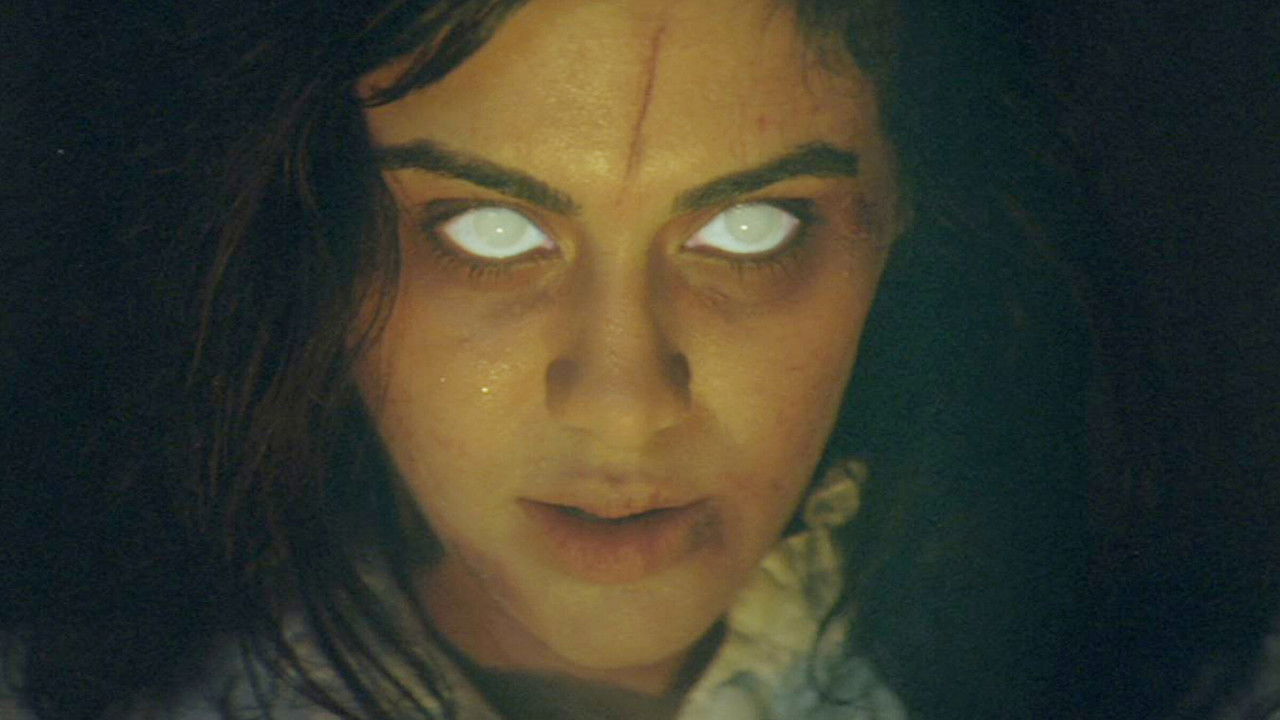
Sharma’s role changes substantially once the possession begins. Lisa initially functions as a partner caught in circumstances she cannot explain; later scenes require her to become the principal visible expression of the threat. Unnatural movement, altered facial expressions and abrupt shifts in voice change the meaning of a familiar character’s body. The horror depends on the audience having first encountered Lisa as a person whom Arjun loves and seeks to protect. Her transformation therefore threatens their relationship as well as their physical survival, with the possessed figure confronting the other characters at close quarters.

The contemporary critics gave this part of the film particular attention. Adarsh considered Sharma the stronger of the debuting leads and identified the medical examination and the encounter with the priest as effective passages after the spirit takes control. Sen was much less persuaded by the overall construction, dismissing the prolonged attempts to generate unease and the late revelations. These opposing assessments should not be collapsed into a uniform critical verdict. They indicate that the possession material was the centre of discussion even among reviewers who disagreed about the film’s success. Available production reporting does not establish the specific prosthetic or mechanical methods used for individual supernatural shots, so those techniques cannot responsibly be reconstructed in detail.

Songs and the Horror Soundscape

The music release demonstrates the difference between 1920 and horror productions built around an instrumental score alone. Its album, composed by Adnan Sami with lyrics by Sameer, was launched in Mumbai in August 2008. Business of Cinema reported a vocal roster that included Pandit Jasraj, Asha Bhosle, Parveen Sultana, Shubha Mudgal and Kailash Kher. The presence of these singers placed romantic and classically inflected material beside the film’s supernatural subject. Jasraj’s promotional recording, reported as his first performance for a feature film, was a particular point of interest in coverage of the launch.

The songs also served markedly different functions. Mudgal’s performance of Bichua was accompanied by a dance number featuring Rakhi Sawant, whereas the romantic tracks emphasised the relationship at the centre of the story. Contemporary reception treated that musical dimension as part of the film’s appeal: Adarsh praised Sami’s compositions and pointed to both the dance number and the more emotional songs. Sen instead drew attention to silence, footsteps and recorded music in his criticism of the film’s borrowed Gothic atmosphere. The contrast suggests how song sequences and suspense passages coexisted in the finished work. The music-launch coverage does not, however, provide enough evidence to attribute the complete background score or individual sound effects to Sami.

Release, Reception and Franchise

1920 opened theatrically in India on 12 September 2008. The release came after the uncertainty Bhatt later described around finding a purchaser for the completed film. In his 2025 recollection, he presented the eventual release as a turning point following repeated commercial disappointments. Hindustan Times reported an Indian box-office figure of approximately ₹14 crore, but that rounded figure is best treated as the publication’s retrospective account rather than an independently reconciled total across every market, format and later release.

The contemporary reviews were sharply divided. Taran Adarsh awarded the film three stars out of five in Bollywood Hungama, applauding its setting, possession sequences and climactic use of prayer while acknowledging slow passages and a comparatively weak flashback. Raja Sen’s review for Rediff challenged the credibility of the period design and found the pacing repetitive, arguing that the attempt to emulate older British Gothic films overwhelmed the intended scares. These responses are valuable because they address the same formal decisions from opposing perspectives. The central debate concerned the film’s combination of an imported-looking haunted house with specifically Indian romantic, historical and devotional material.

Its later importance is easier to establish through an observable continuation than through unmeasured claims of artistic influence. The success of the original supported further films using the 1920 title, beginning with 1920: Evil Returns (2012) and continuing with later entries. The series did not require every instalment to follow Arjun and Lisa; instead, the year-based branding became a way to return to supernatural horror and period-associated romance. In that sense, the first film established a commercially reusable identity within Hindi-language horror. Claims that it transformed the entire national genre would require a broader historical study than the available documentation supports.

References

  1. Hindustan Times Vikram Bhatt says even his lightman doubted him as he made 1920 after a string of flops

    A 2025 report of Bhatt’s retrospective interview on repeated setbacks, difficulties obtaining distribution, trial screenings and the film’s later commercial significance.

  2. Nowrunning / IANS 1920 is as haunted as it gets!

    A contemporary September 2008 interview with Anjori Alagh documenting the month-long Yorkshire castle schedule, subsequent Mumbai filming and the distinction between cast anecdotes and alleged hauntings.

  3. Business of Cinema BIG Music releases music of Vikram Bhatt’s 1920

    An August 2008 account of the album launch, composer, lyricist and featured vocalists, including Pandit Jasraj and Shubha Mudgal.

  4. Bollywood Hungama 1920 Movie Review

    Taran Adarsh’s release-day review on the castle’s visual role, possession sequences, the Hindu devotional climax, performances and songs.

  5. Rediff 1920 is disastrously boring

    Raja Sen’s September 2008 review questioning the credibility of the British Gothic setting, period costumes and protracted suspense.

Connections

Cast

View Full Cast & Crew →

Release & Distribution

Production Companies (1)

  • ASA Productions and Enterprises IN

Release History (1)

Release DateTerritoryRelease TypeFormatDistributorCertificationNotes
2008-09-12 India Theatrical — — A
A Love Made In Heaven... A Revenge Born In Hell...