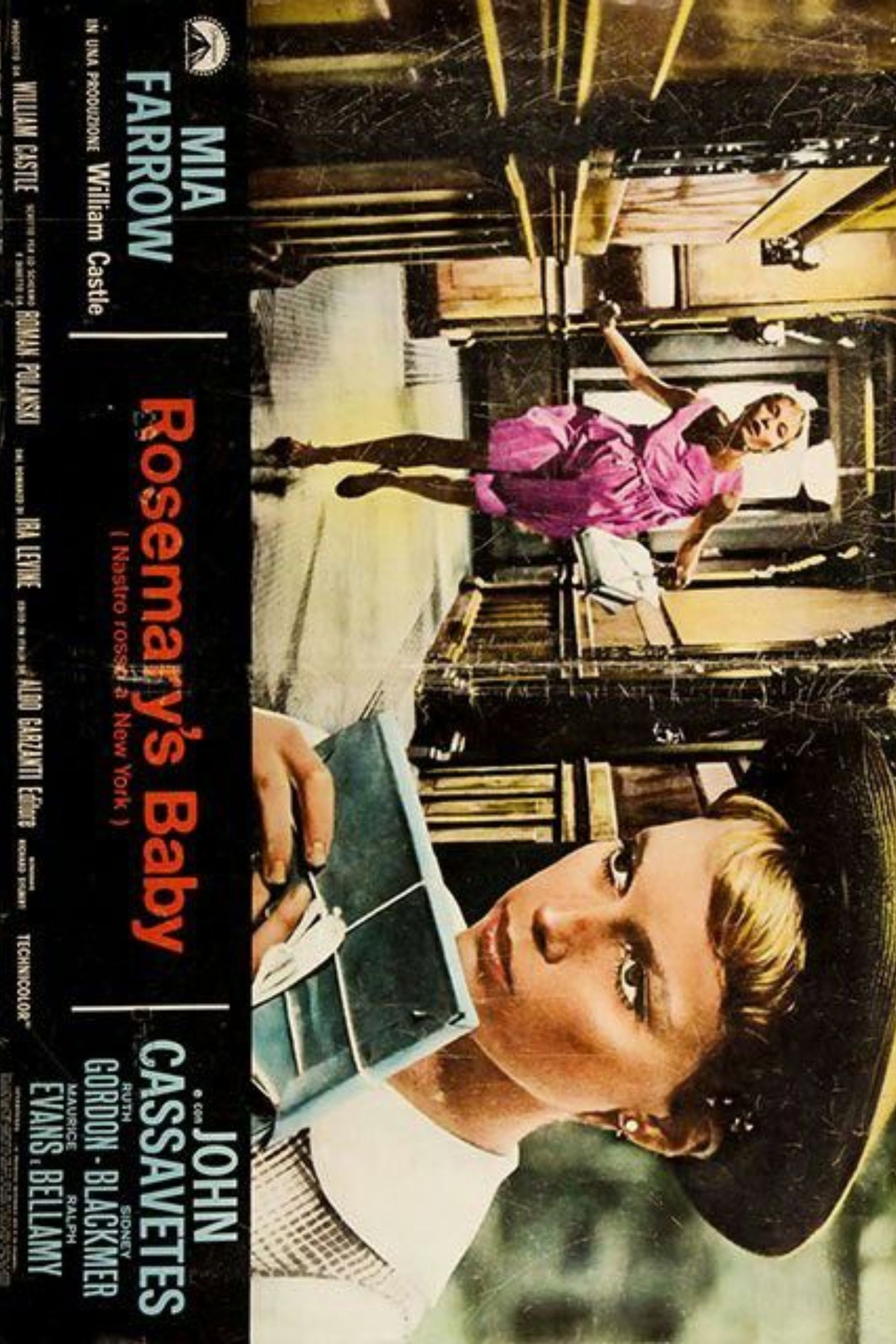
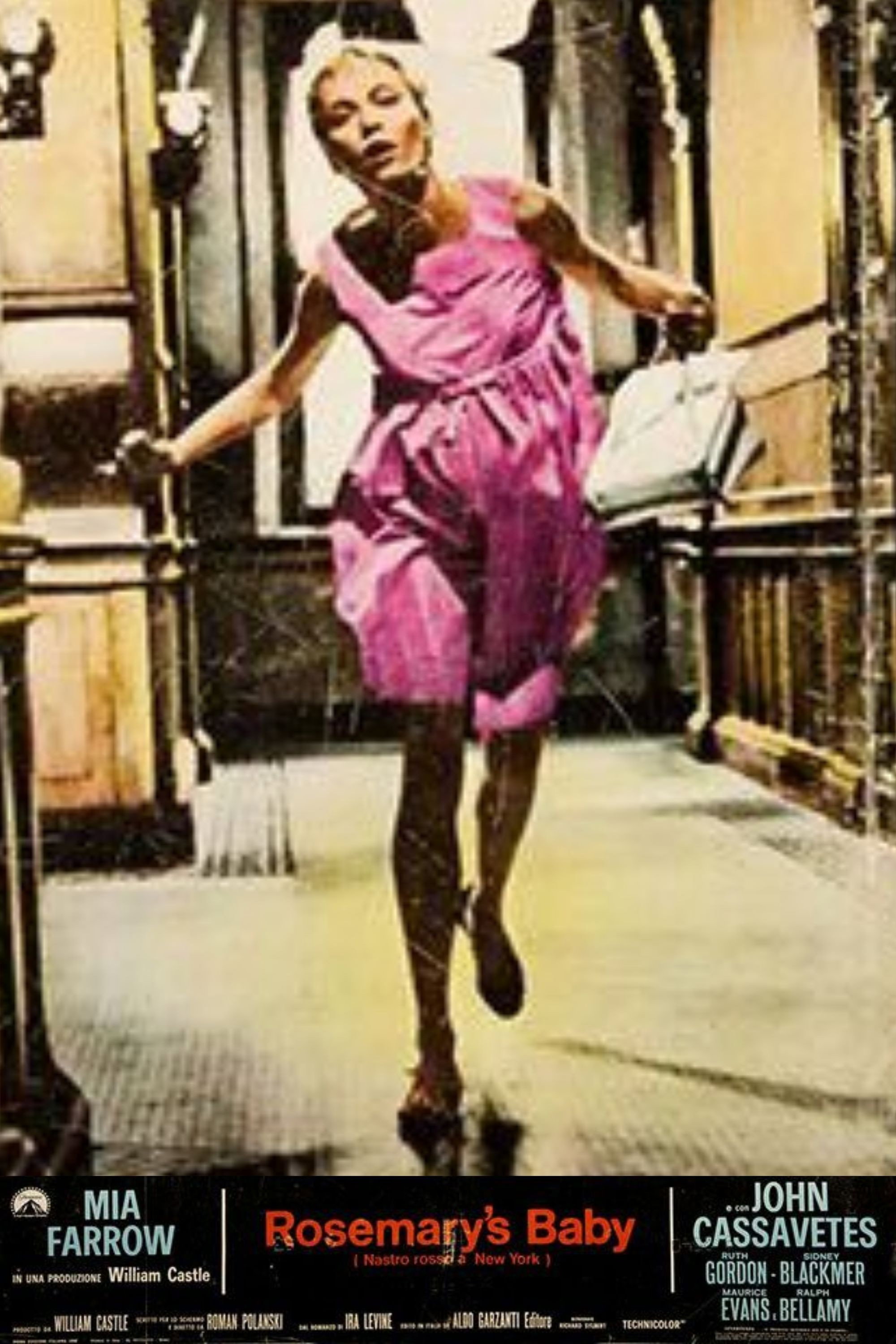
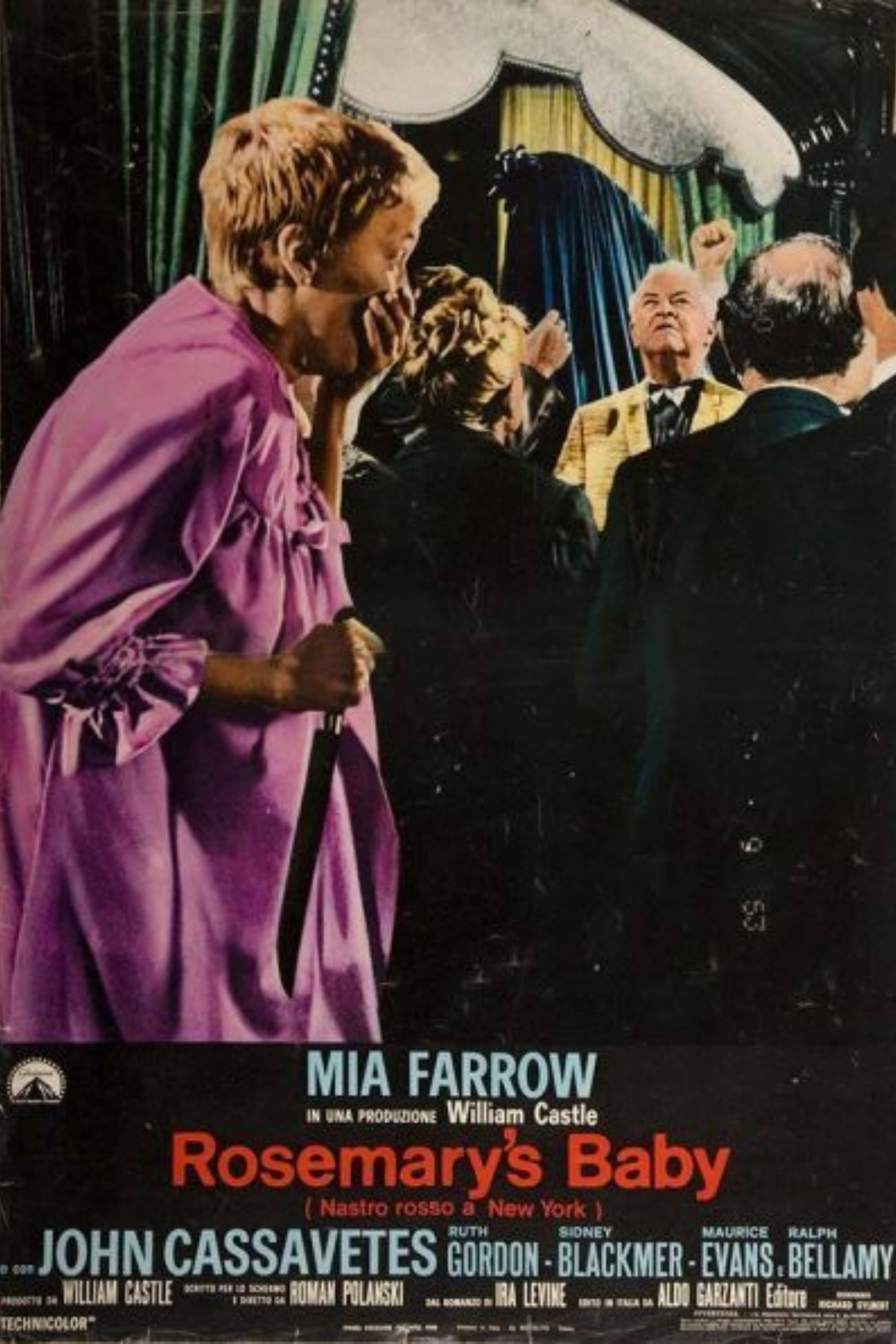
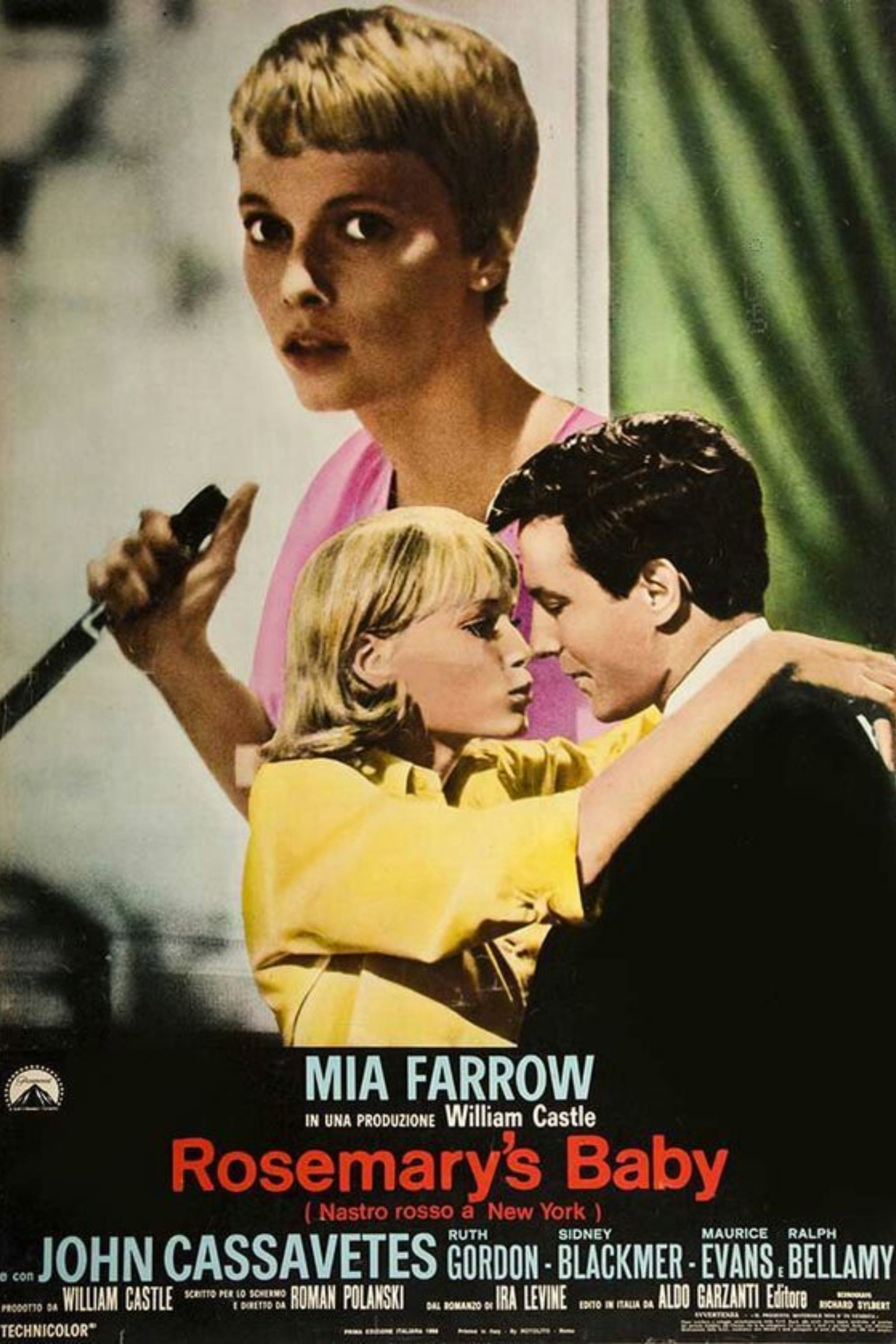
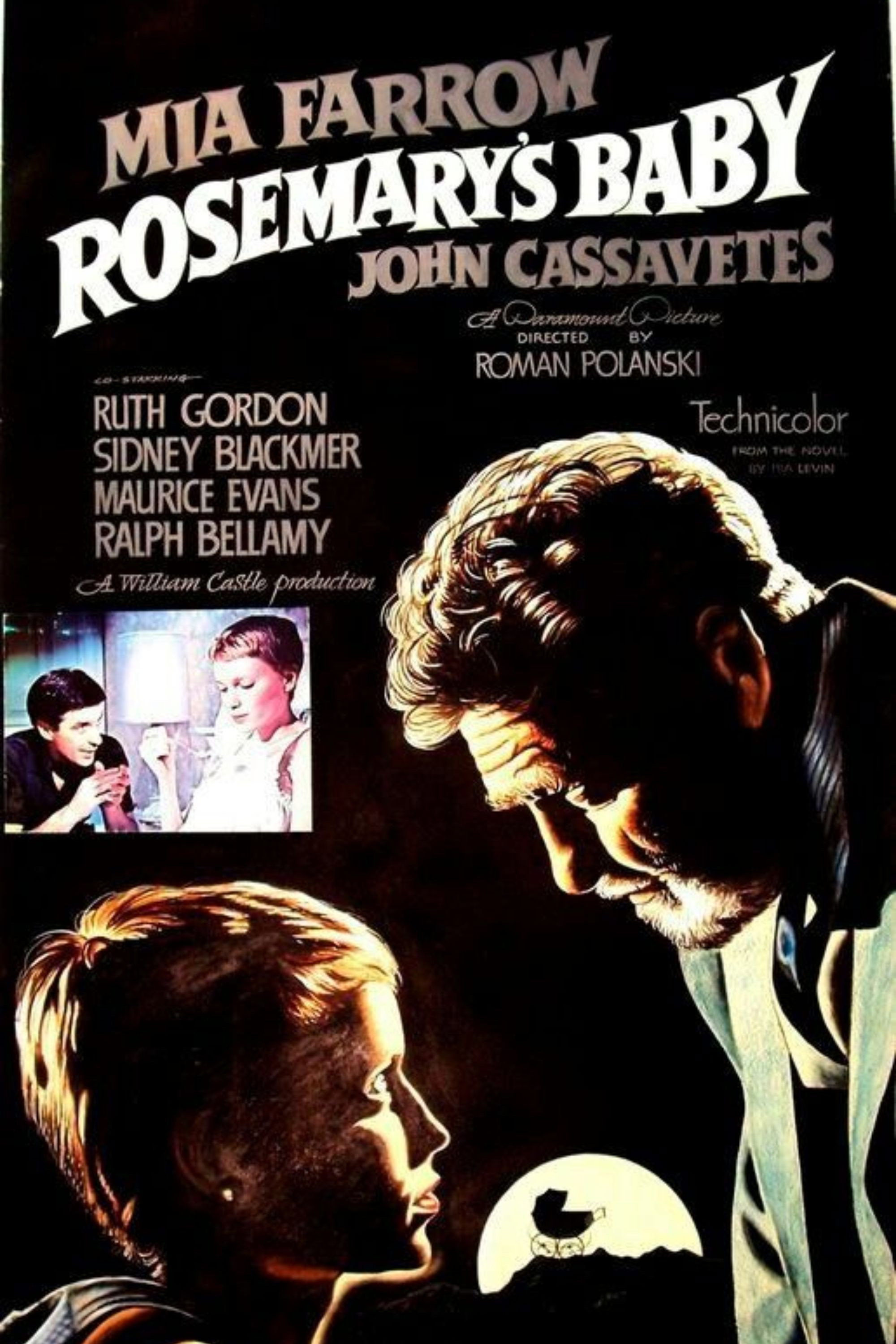
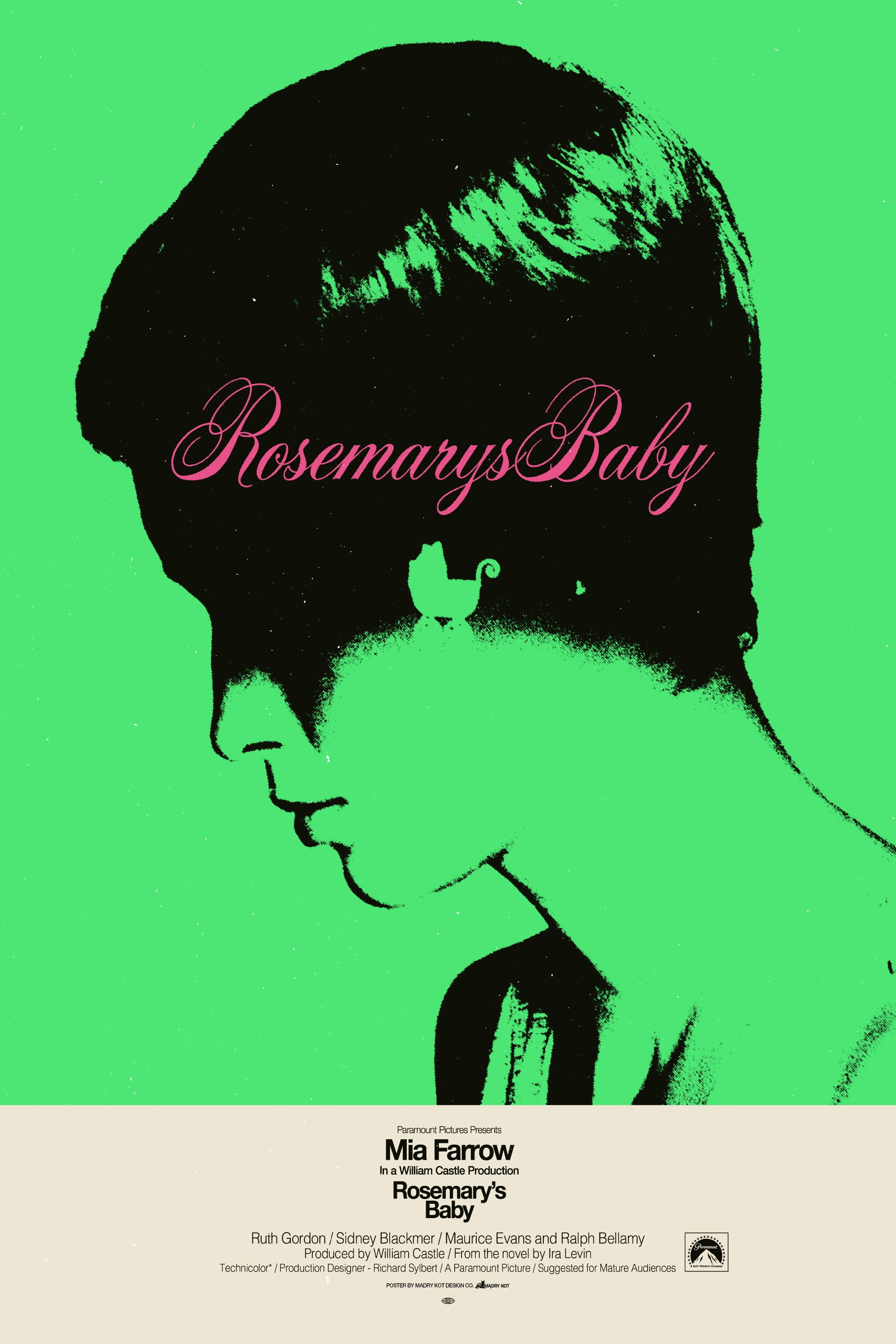
From Ira Levin's Novel to Paramount
Ira Levin traced the premise to an interest in delaying the moment of horror. In an afterword written in 2003, he remembered imagining pregnancy as a prolonged interval in which a reader might know that the fetus was developing into something malign. He considered an extraterrestrial father but rejected the idea partly because John Wyndham's The Midwich Cuckoos had already explored alien children. Levin chose the devil, despite describing himself as a nonbeliever, and began writing in late 1965. He anchored the supernatural story in Manhattan newspapers, transit disruptions and religious events, using local detail to make an implausible pregnancy narrative feel grounded in contemporary life.
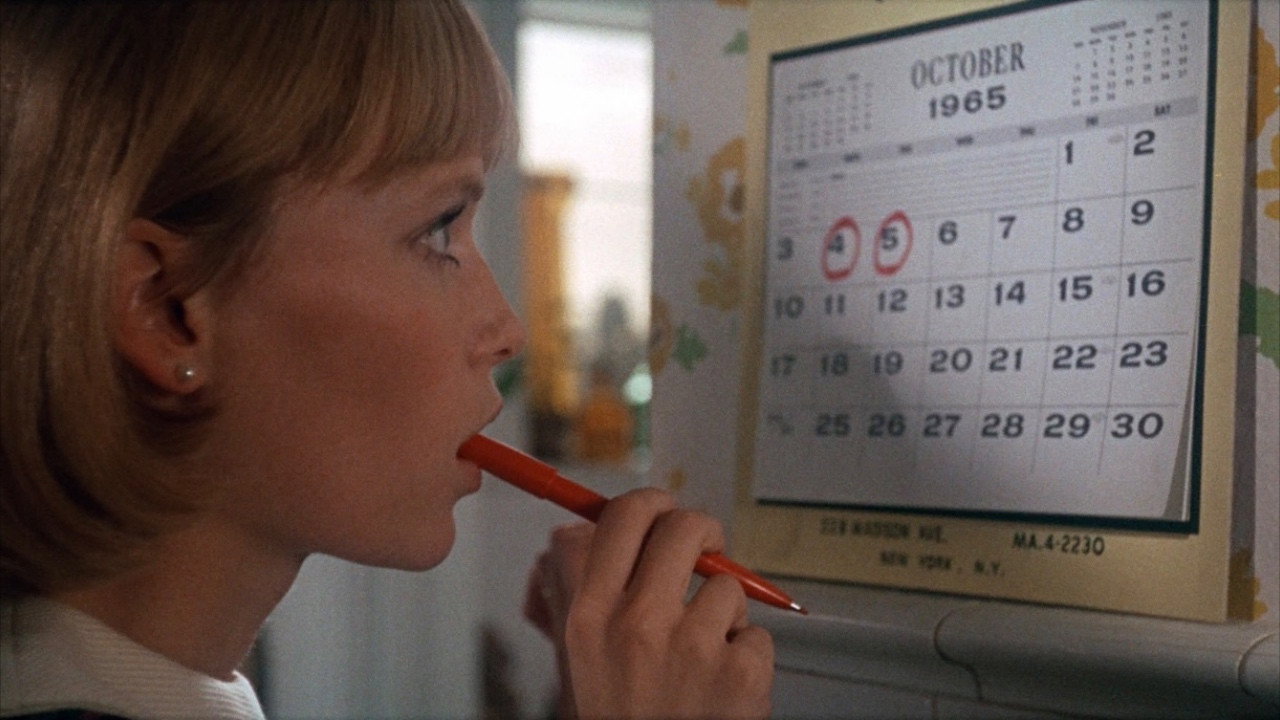
Levin also recognized that his novel inverted the Christian Nativity. He recalled finding Pope Paul VI's October 1965 visit to New York while checking dates for the fictional conception. These are the author's retrospective explanations of his method, and the account should not be mistaken for an independently documented record of every drafting decision. The resulting novel appeared in 1967 and became a best seller. Its early popularity meant that the adaptation arrived with an established readership, yet the filmmakers still needed to convey the same gradual unease through bodies, voices and physical space instead of a novel's description of Rosemary's thoughts.
Castle obtained the film rights before the book reached stores. The American Film Institute's historical dossier, compiled from contemporary trade reporting, records Paramount's involvement before publication and Polanski's appointment to write and direct in March 1967. Levin later described Castle turning to the studio for financing, with Robert Evans helping secure Polanski. Castle had previously built a reputation on sensational horror publicity, but this production placed him in a different relationship to the material: he remained producer while another filmmaker directed. That arrangement joined the instincts of an experienced genre promoter to a director attracted by ambiguity and deliberate visual control.
The Bramford, Camera Placement and Concealed Space
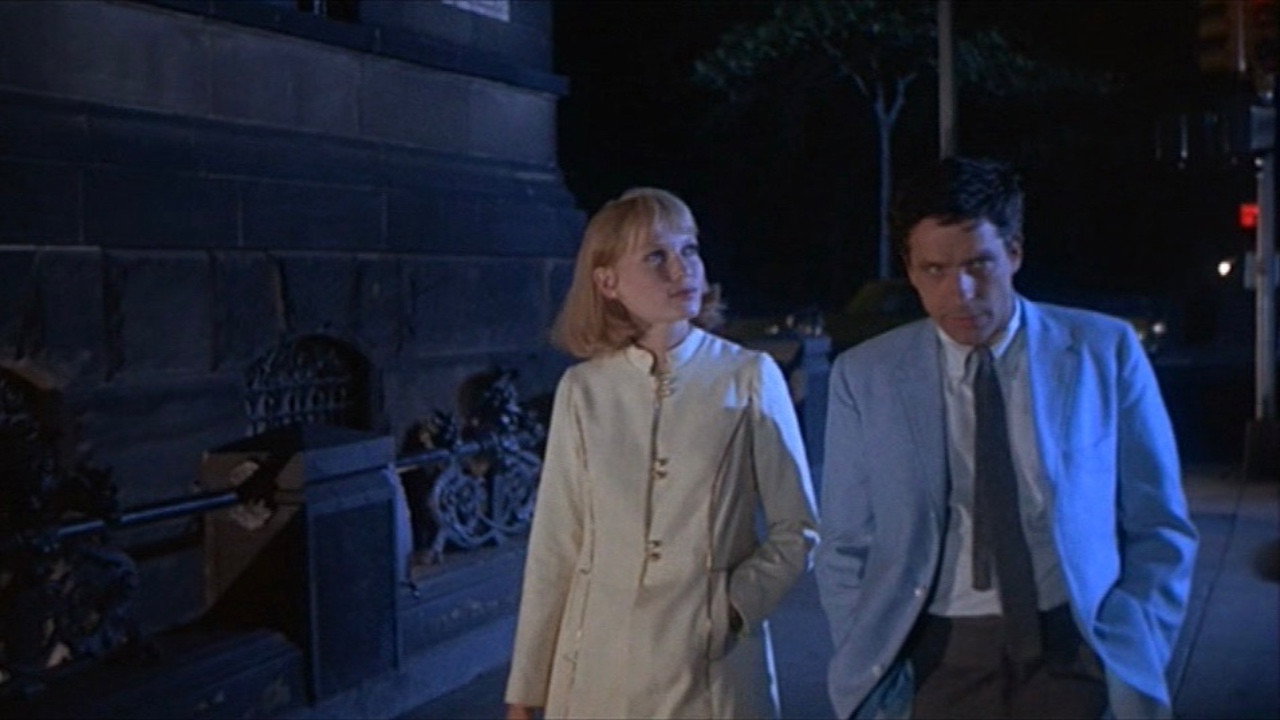
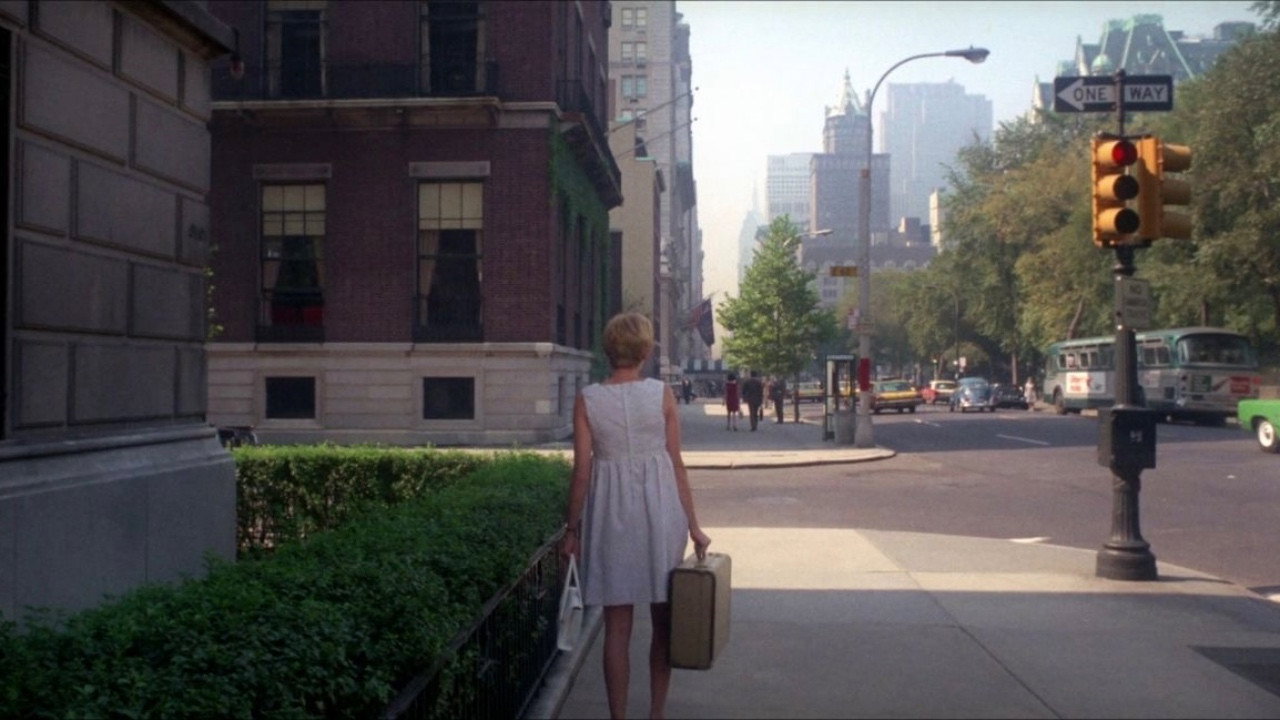
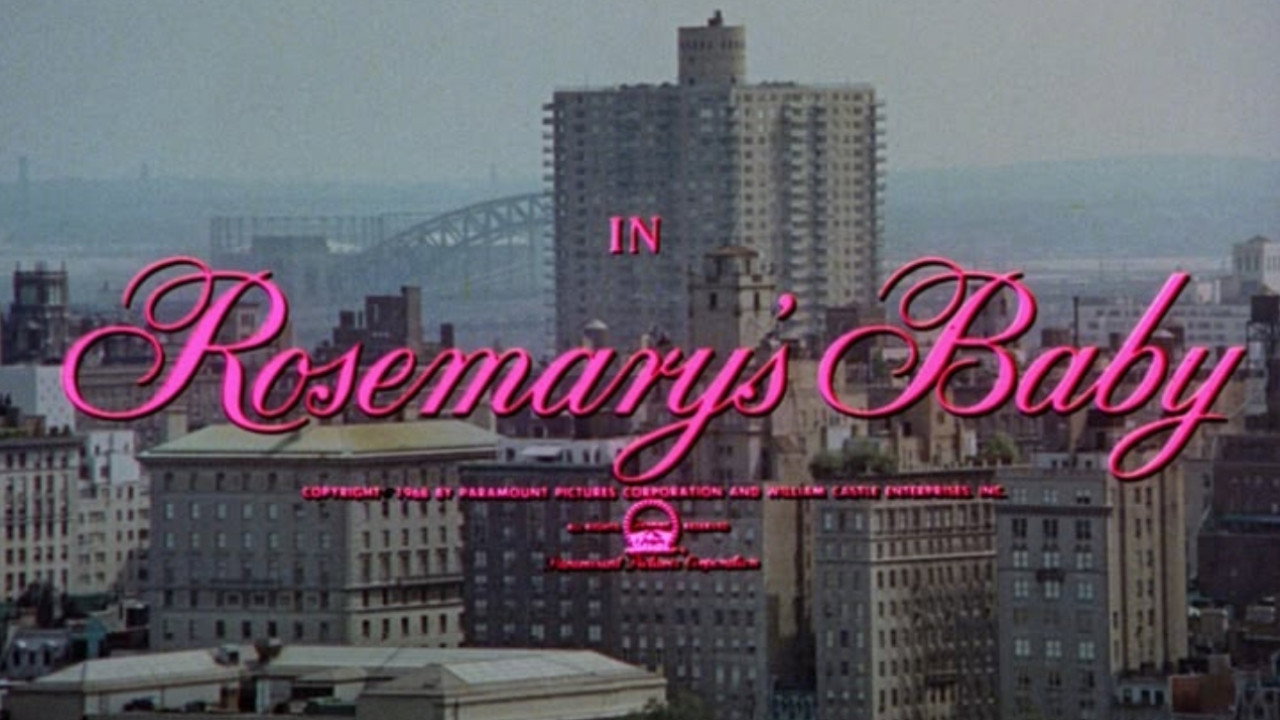
The fictional Bramford joins an imposing exterior to domestic interiors whose ordinary arrangement becomes steadily threatening. New York's Dakota provided the exterior photographed for the building, while the interior spaces were constructed for the production. The opening movement above Manhattan establishes an apparently coherent urban landscape before descending toward the couple's new address. In an interview preserved by the American Society of Cinematographers, Fraker recalled that this descending view required a specially extended platform projecting from a rooftop opposite the Dakota. The physical difficulty of the shot served a clear purpose: it introduced a building that would later seem capable of containing an entire hidden world.
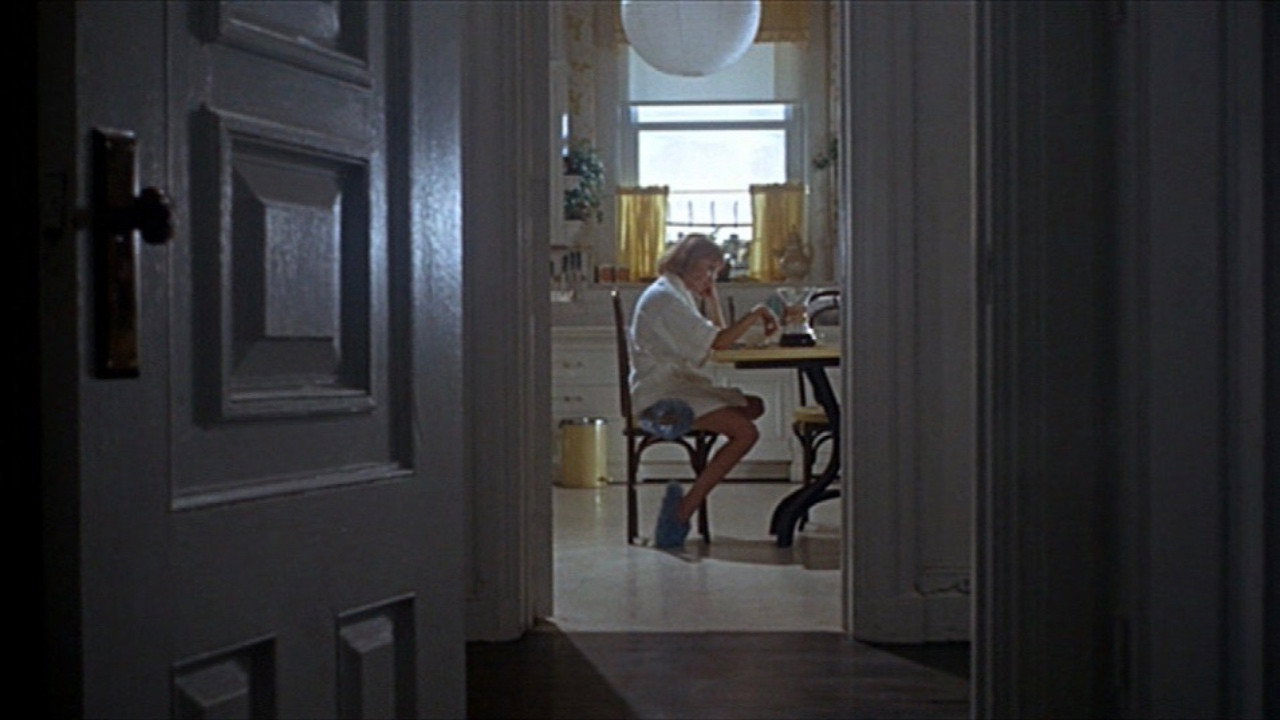
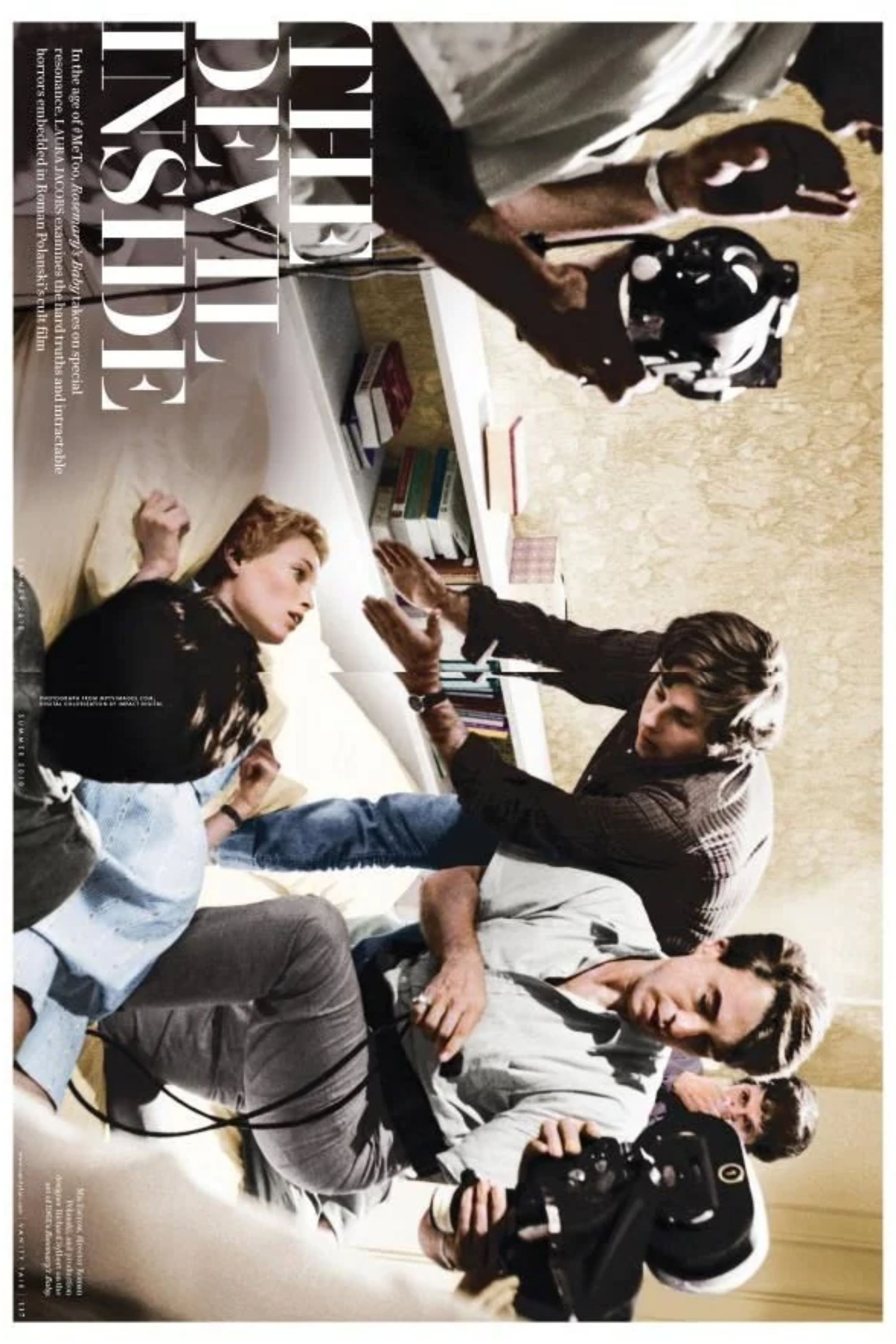
Fraker also recalled a composition involving Minnie entering a bedroom to make a telephone call. His initial plan presented her fully through the doorway. Polanski asked him to conceal part of her body and keep the telephone outside the frame. Only when watching the resulting footage did the cinematographer notice spectators leaning as though they could look around the door. That testimony documents a precise collaboration between director and camera department. The viewer is placed in Rosemary's incomplete line of sight and made to feel the frustration of a space that holds crucial information just beyond its visible edge.
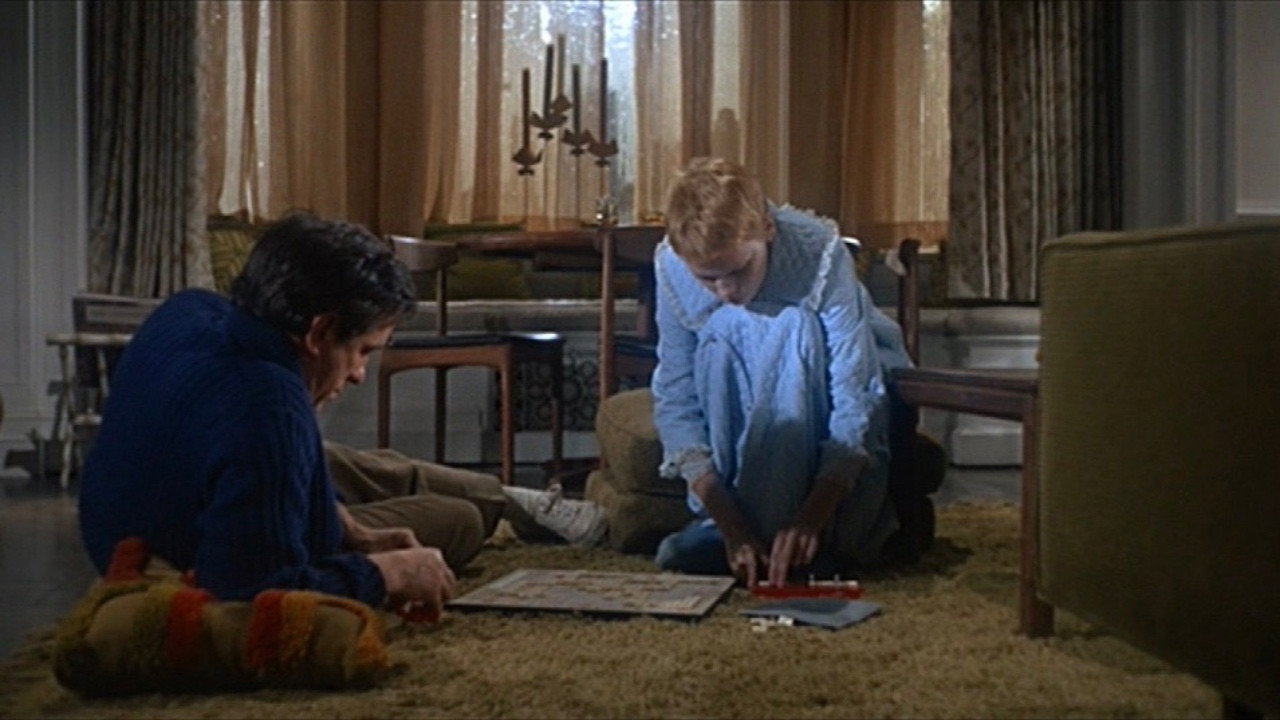
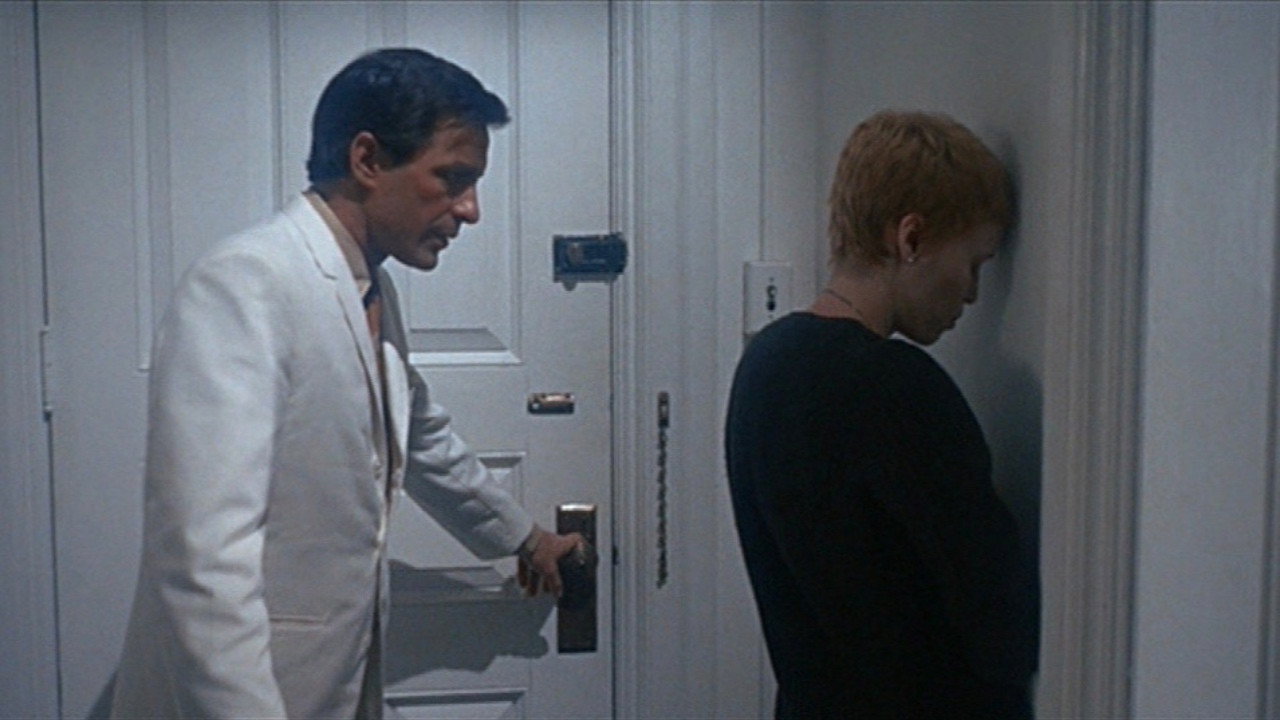
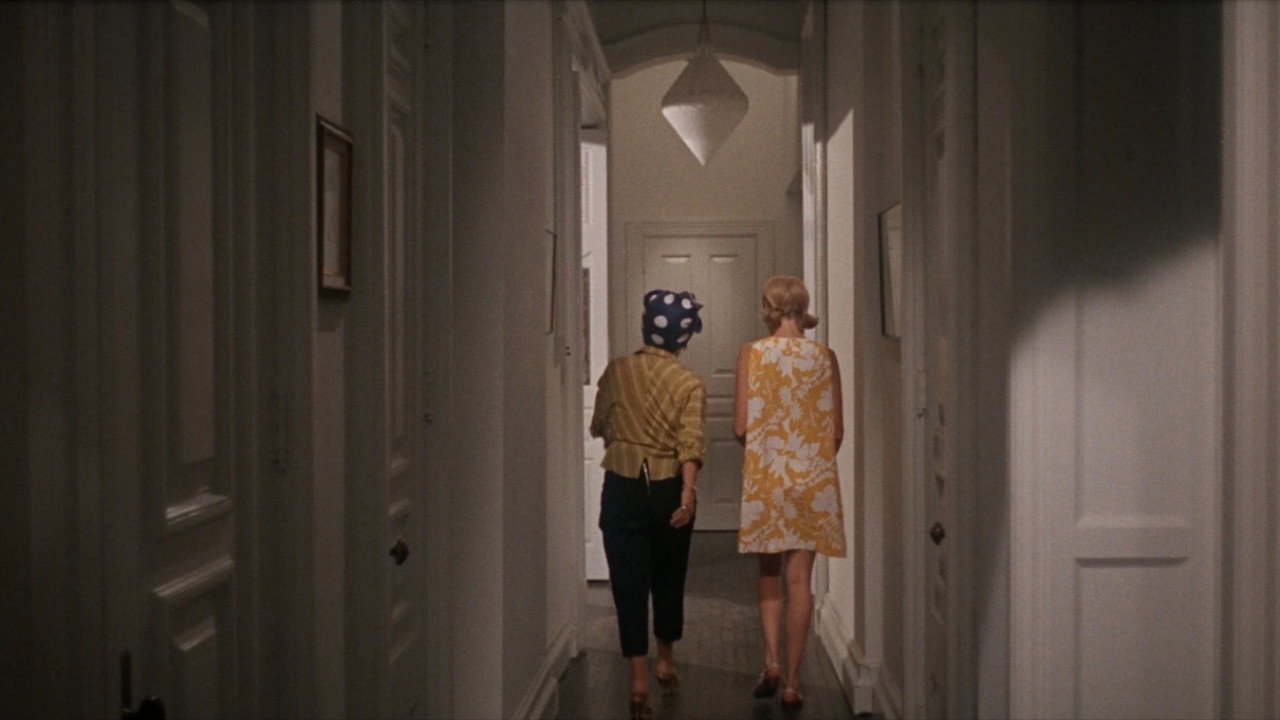
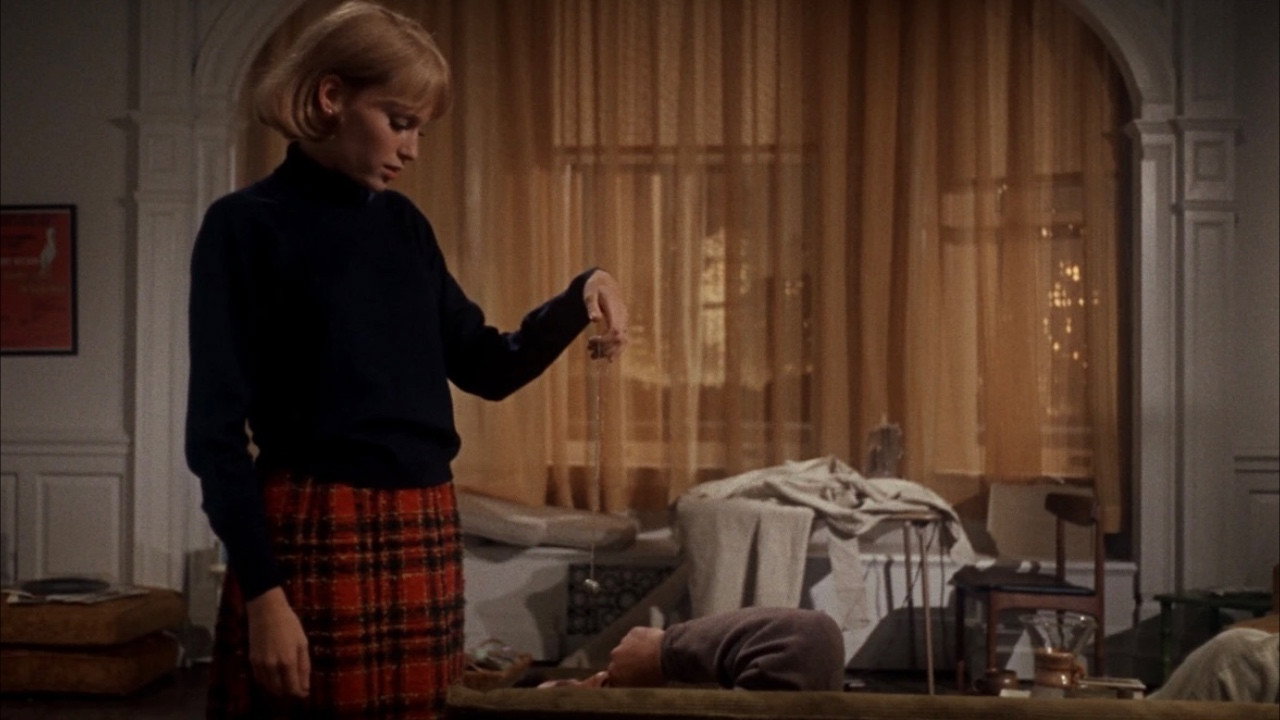
Polanski told American Cinematographer that he wanted depth within the frame, using foreground objects and restricted compositions to delay a discovery until the camera changed position. That approach helps the apartment retain two identities. It is a plausible place where tenants exchange food and conversation, but its adjacent rooms also permit acts of surveillance and passage unknown to Rosemary. The film's visual style does not require constant darkness or spectacular distortion. Doorframes, corridors and oblique views can generate fear because the audience understands the floor plan only gradually, while the characters who control the building know exactly how its spaces connect.
Pregnancy, Marriage and Coercive Authority
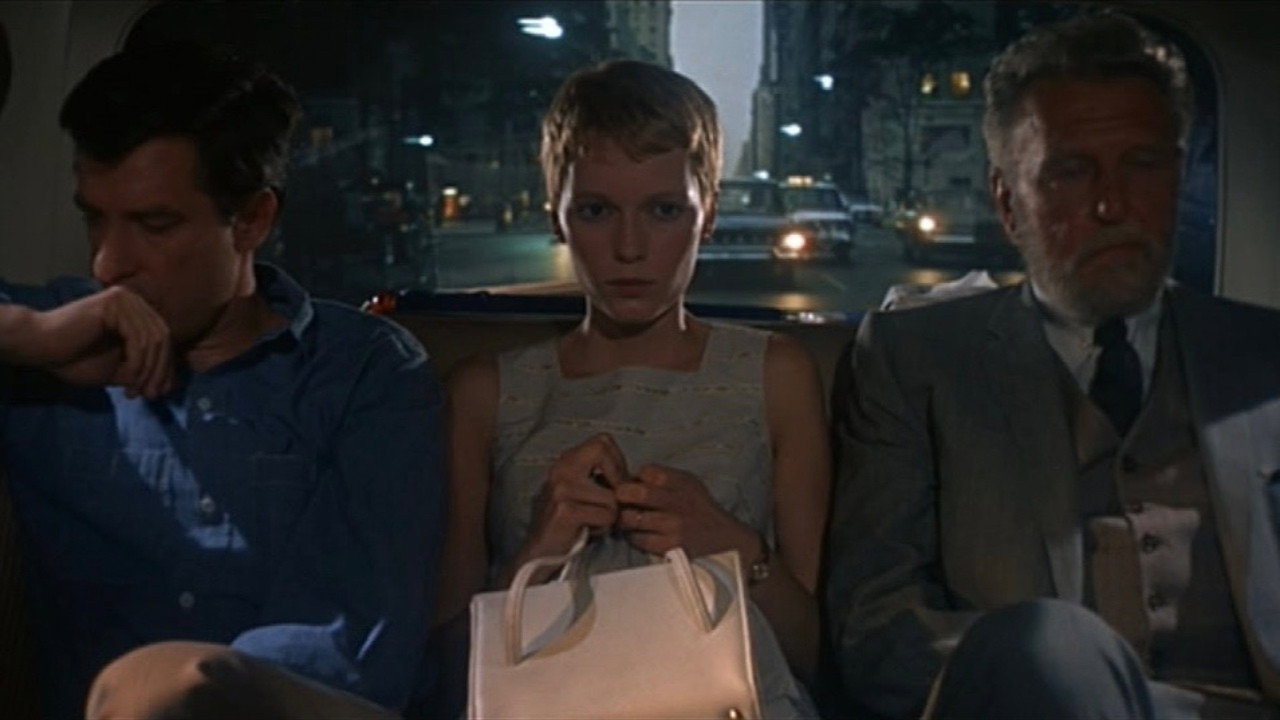
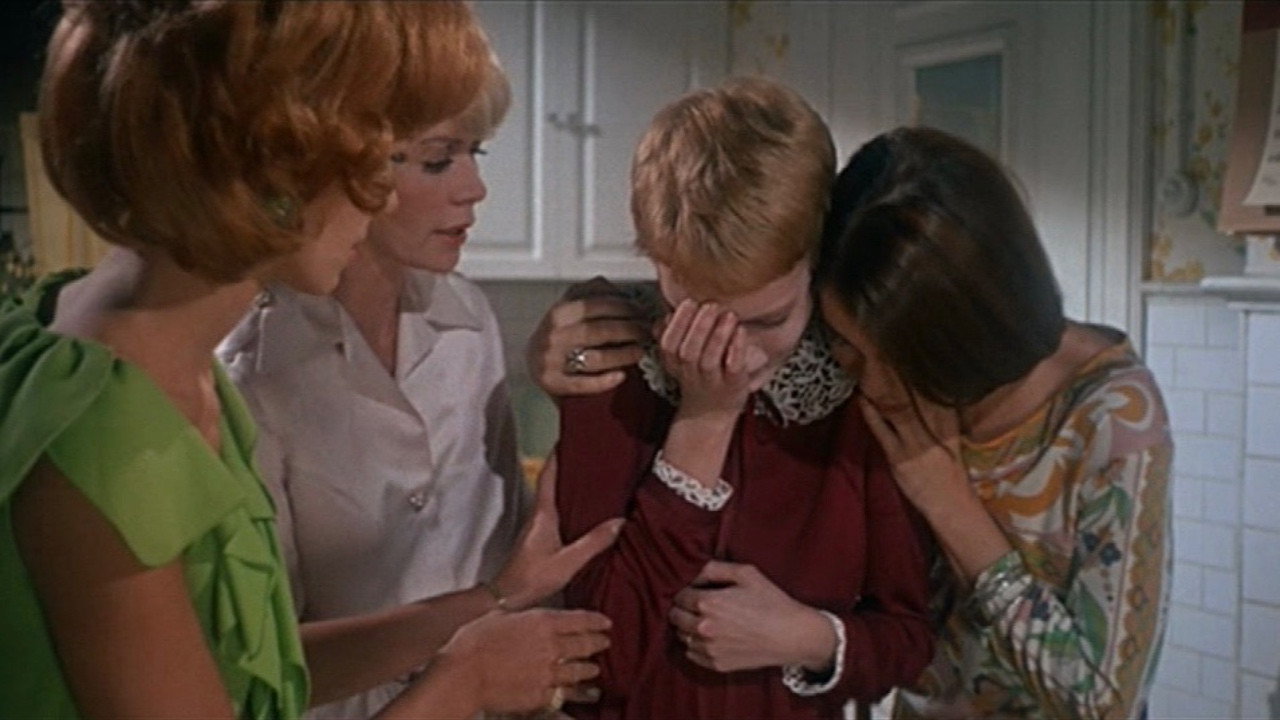
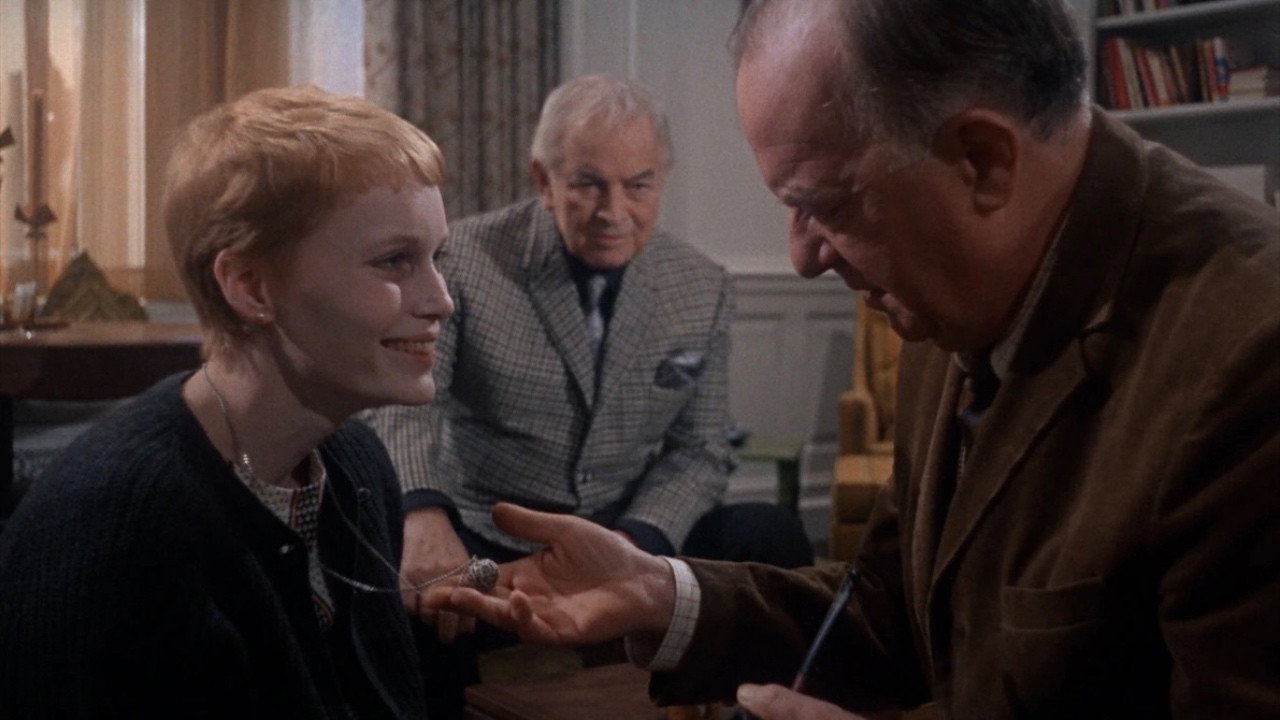
The pregnancy exposes Rosemary to a succession of decisions made by other people. Her husband controls aspects of their shared life that should involve mutual consent; the neighbors offer unsolicited advice; Dr. Sapirstein claims medical authority while discouraging independent information. Rosemary's pain and visibly changing health are treated as problems to be managed by people who insist that they know what is best for her. This creates an intimate source of horror even before the supernatural explanation becomes explicit. The threat is not merely the identity of the unborn child, but the loss of a woman's ability to decide whom she trusts and what happens to her body.
In a 2025 interview about her study of horror cinema and American feminism, Columbia University scholar Eleanor Johnson interpreted the film through reproductive autonomy. She situated the 1968 release before abortion was legal in New York and pointed to the screenplay's explicit acknowledgment of unsafe options available to women. Johnson's argument provides a historically informed critical reading; it is not proof that every member of the 1968 audience recognized the same political meaning. The story can be understood simultaneously as an occult thriller and as a drama about a husband, medical professionals and neighbors forming an alliance that overrides the pregnant woman's choices.
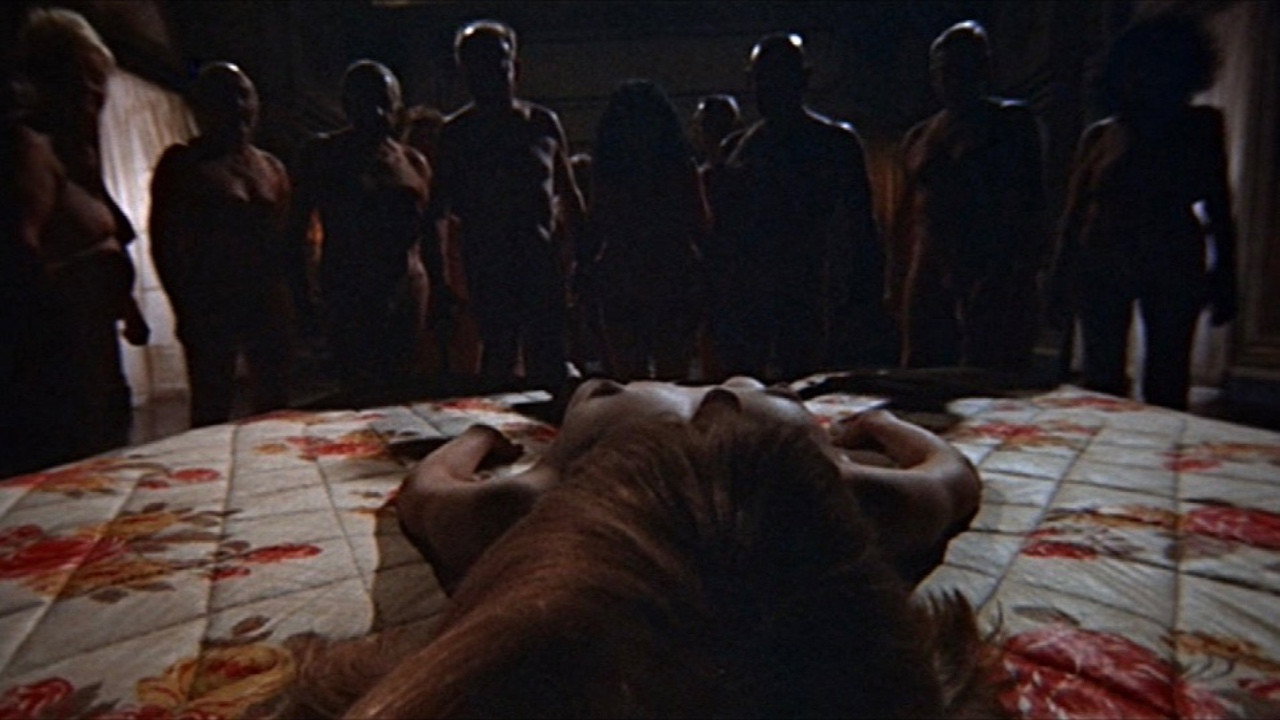
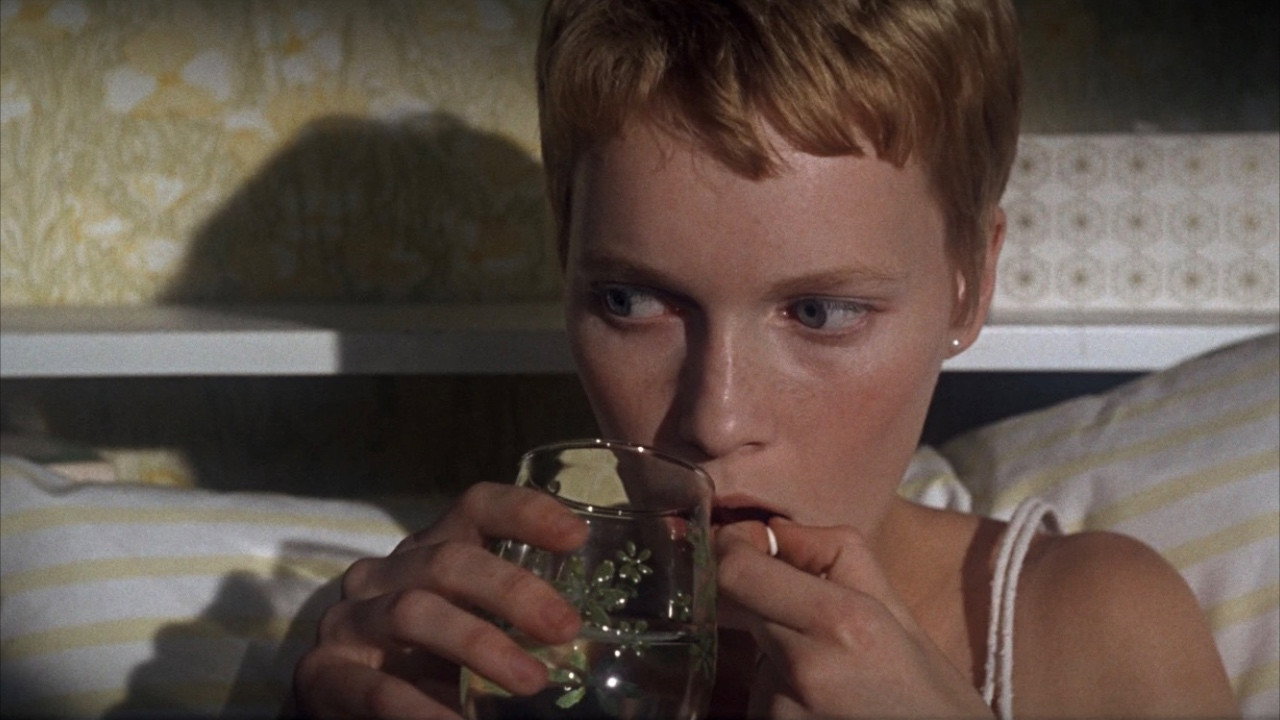
The dreamlike conception sequence is the darkest expression of that power. Rosemary is drugged, and the film combines a ritualistic gathering with distorted recollections whose boundaries she struggles to distinguish. Her later attempts to seek assistance are compromised because people in positions of trust can interpret her fear as evidence of irrationality. These episodes make the relationship between credibility and control central to the suspense. The viewer is invited to fear for Rosemary even when an apparently reasonable outsider might refuse to believe her account. The violence of the conspiracy operates through authority and reassurance as effectively as through its supernatural ritual.
Occult Imagery and the Refusal to Show the Monster
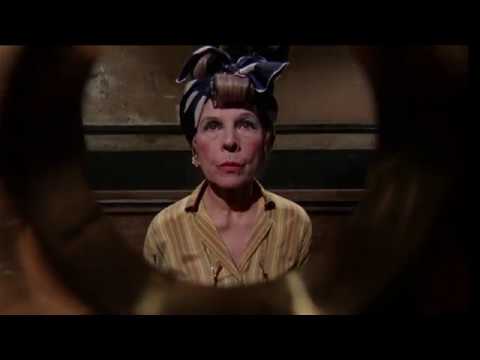
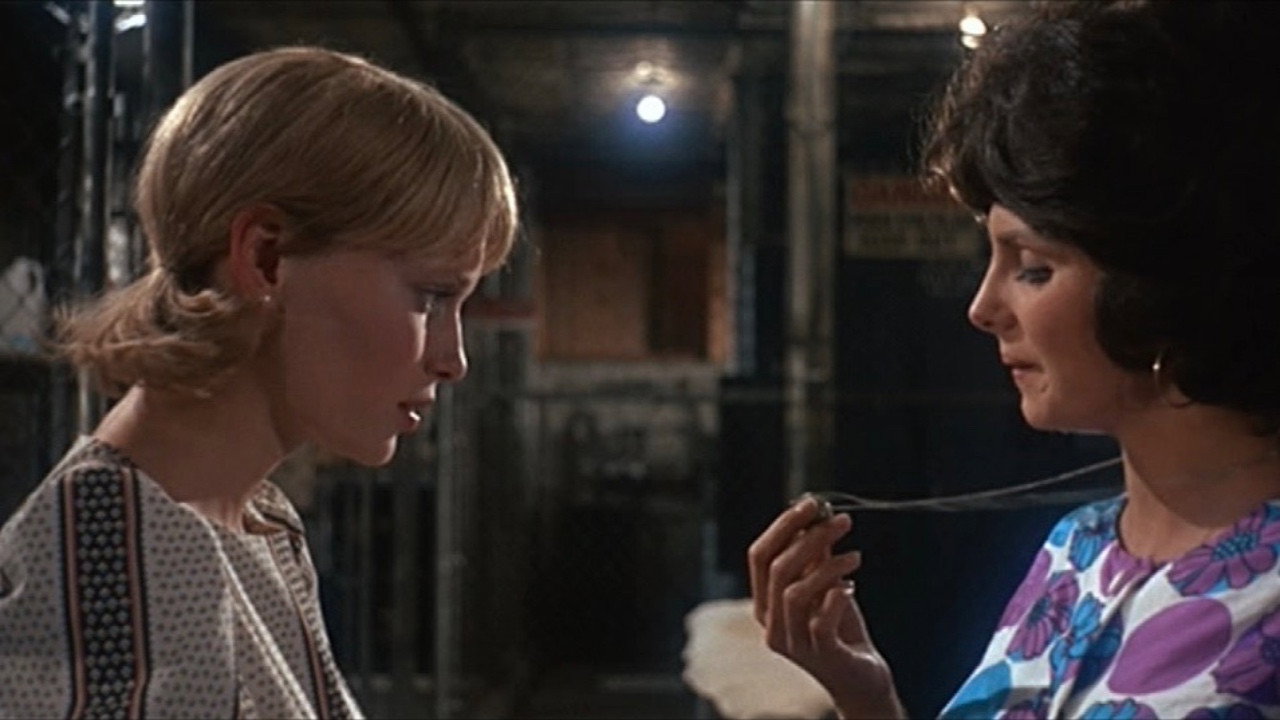
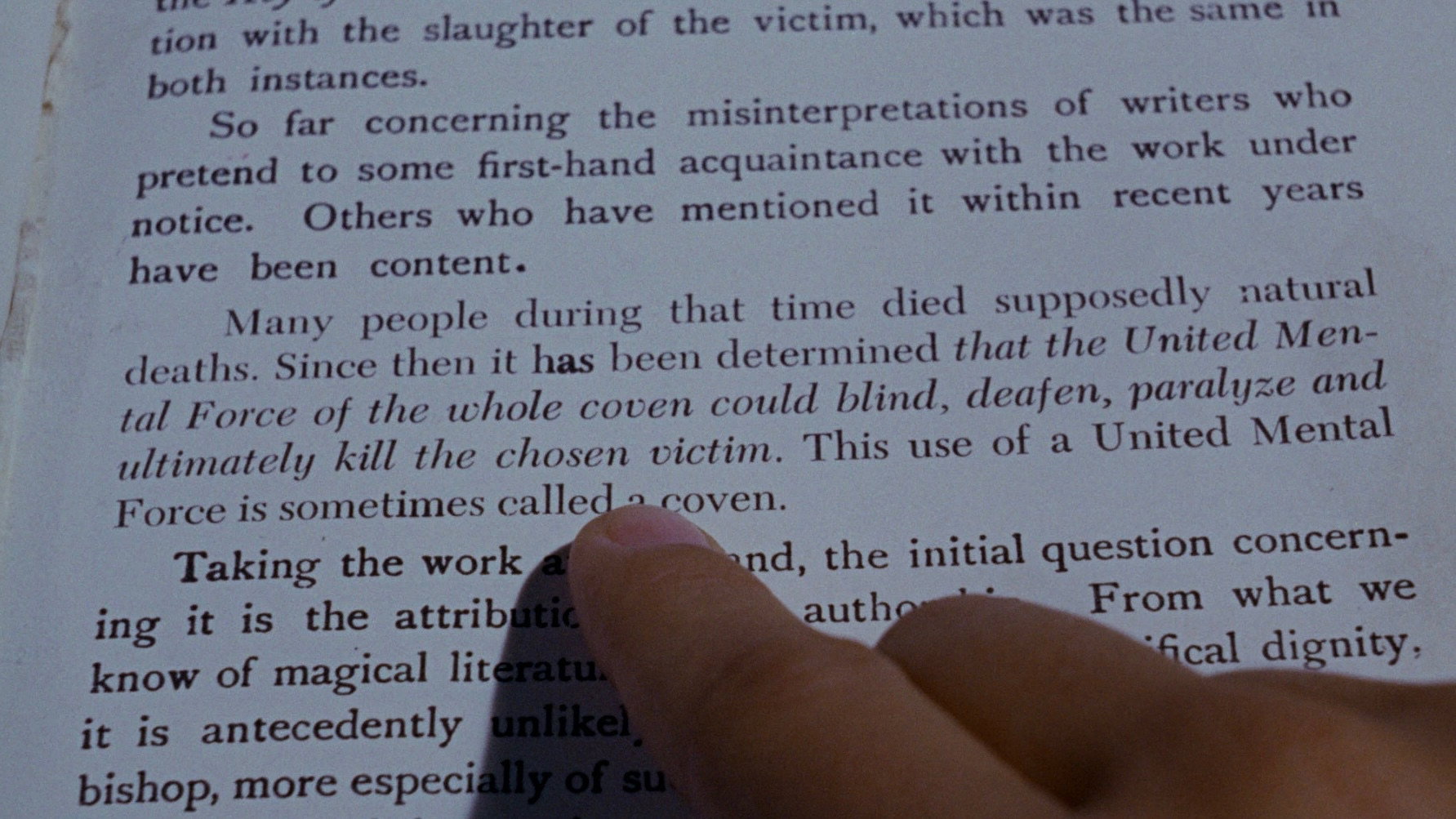
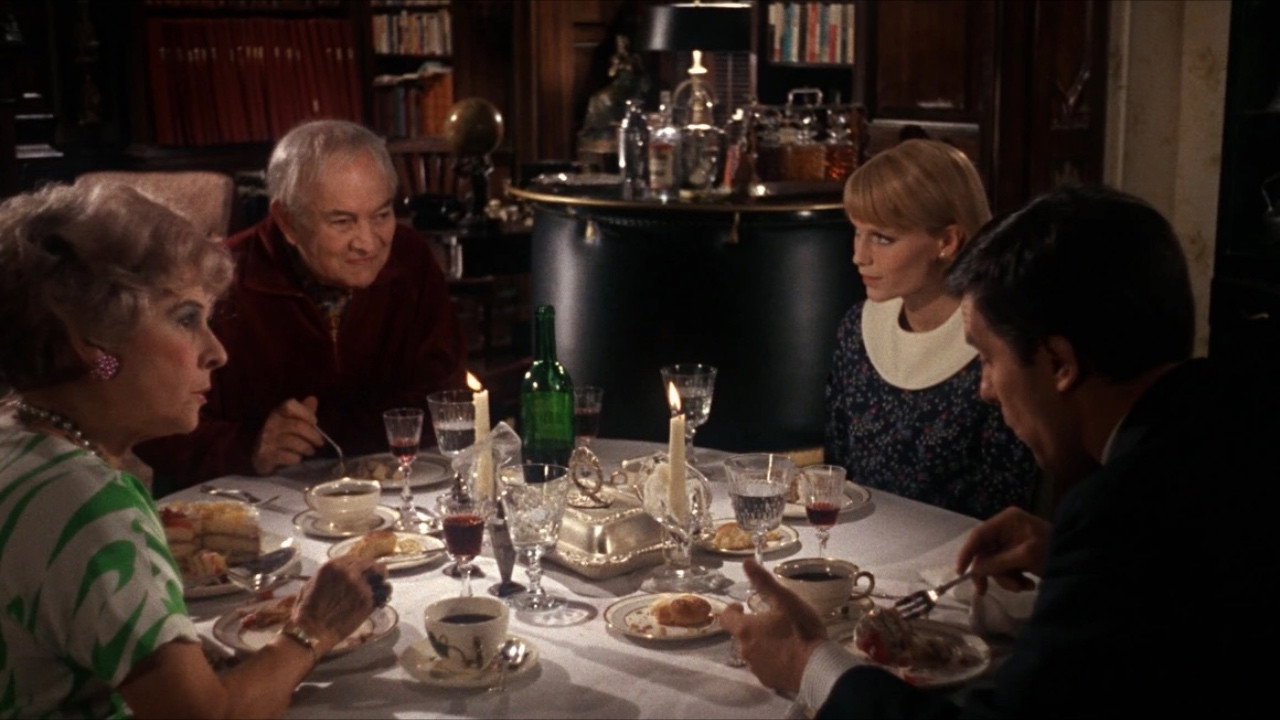
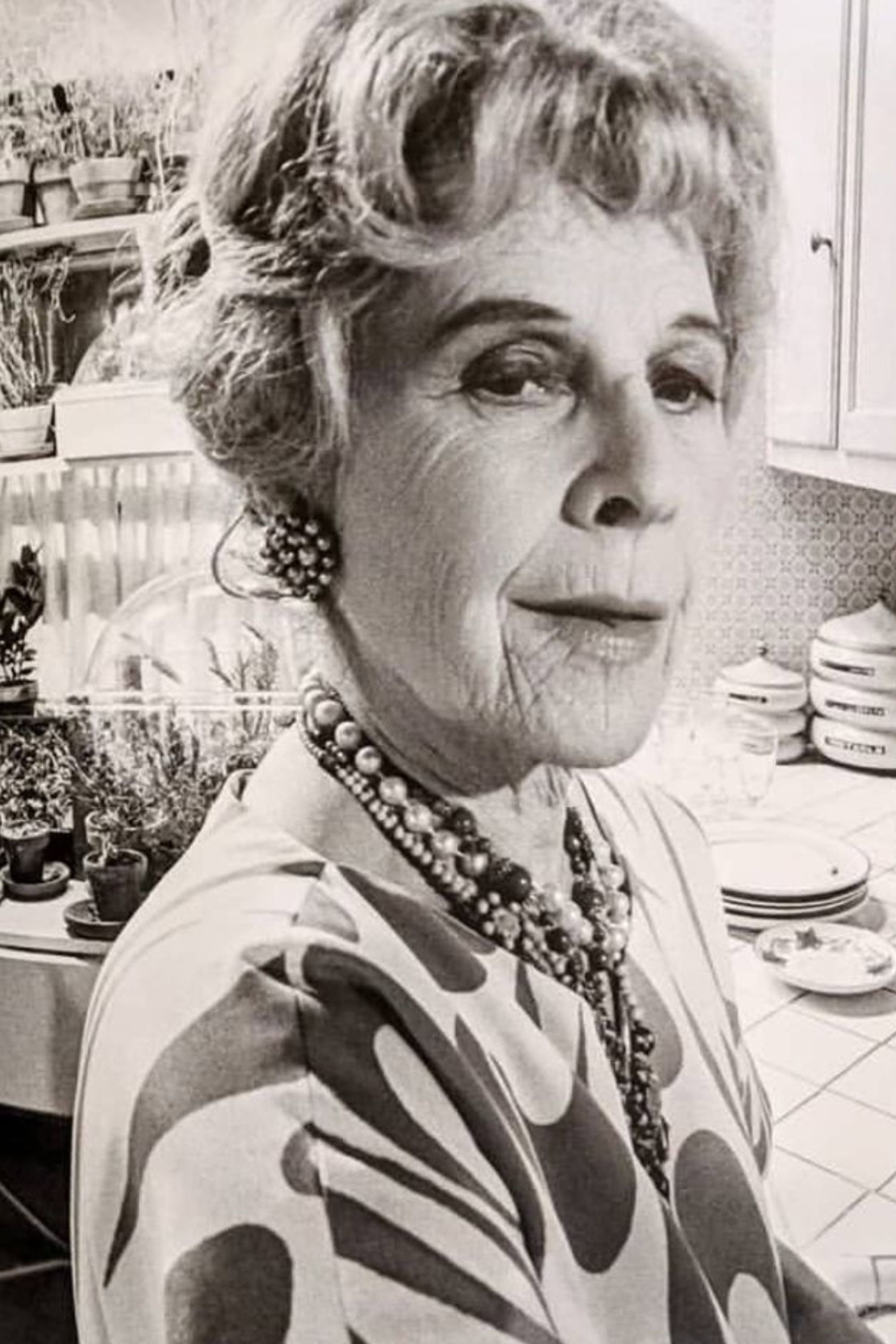
Levin's reversal of Christian birth imagery underpins the film's satanic framework. The coven conceives of the child as the fulfillment of a sacred mission inverted into blasphemy, yet its members look like ordinary older New Yorkers. Minnie and Roman Castevet organize social encounters with the efficiency of neighborhood hosts, turning occult conspiracy into the management of everyday routines. Their ordinariness is essential: the apparent friendliness of a familiar community makes the discovery of coordinated cruelty more troubling than an isolated encounter with a ceremonial villain. Religious symbolism enters the drama through private rituals conducted behind the respectable surface of an apartment building.
The conception sequence breaks the film's mostly naturalistic presentation. Distorted spaces, exposed bodies and fragments of religious or maritime imagery collide with Rosemary's uncertain awareness. It provides a glimpse of a supernatural violation without supplying a stable view of every event. Later scenes return to domestic realism, leaving her to interpret pain, medication and other people's evasions. The contrast preserves a persistent question about what can be witnessed directly. It also prevents the occult material from becoming a succession of elaborate effects demonstrations; its force comes from what those images imply about the human conspiracy surrounding her.
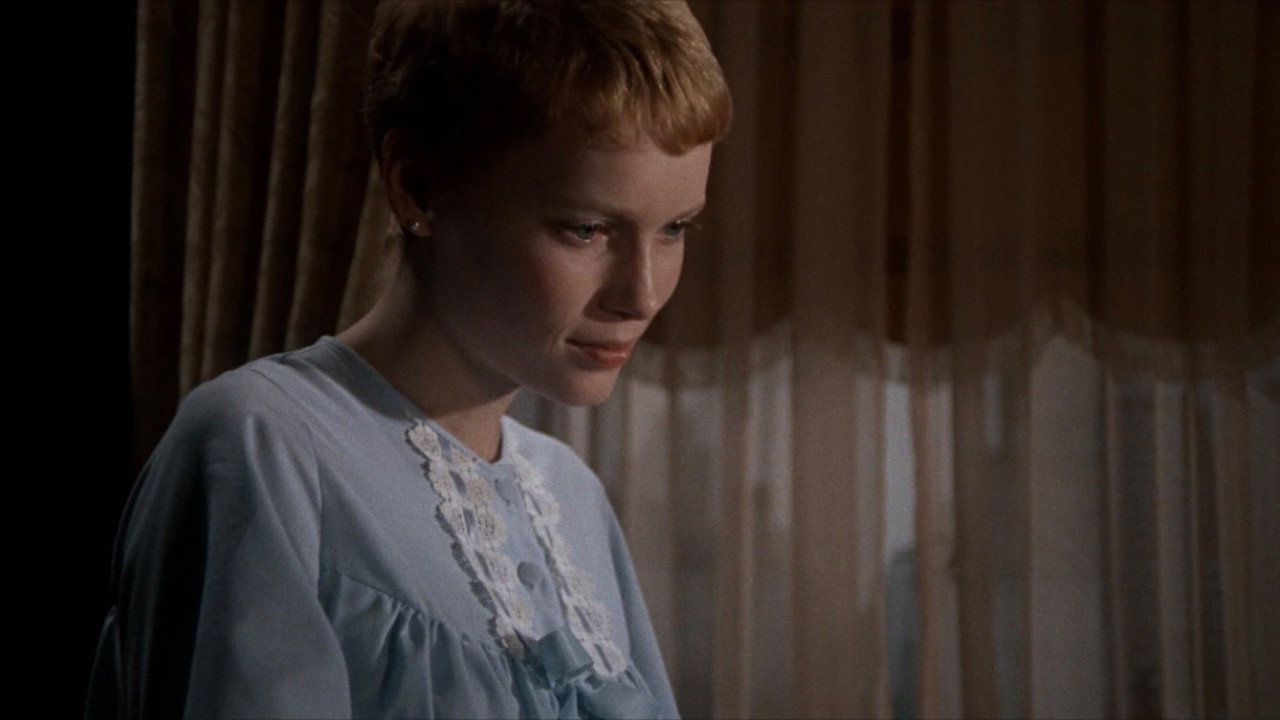
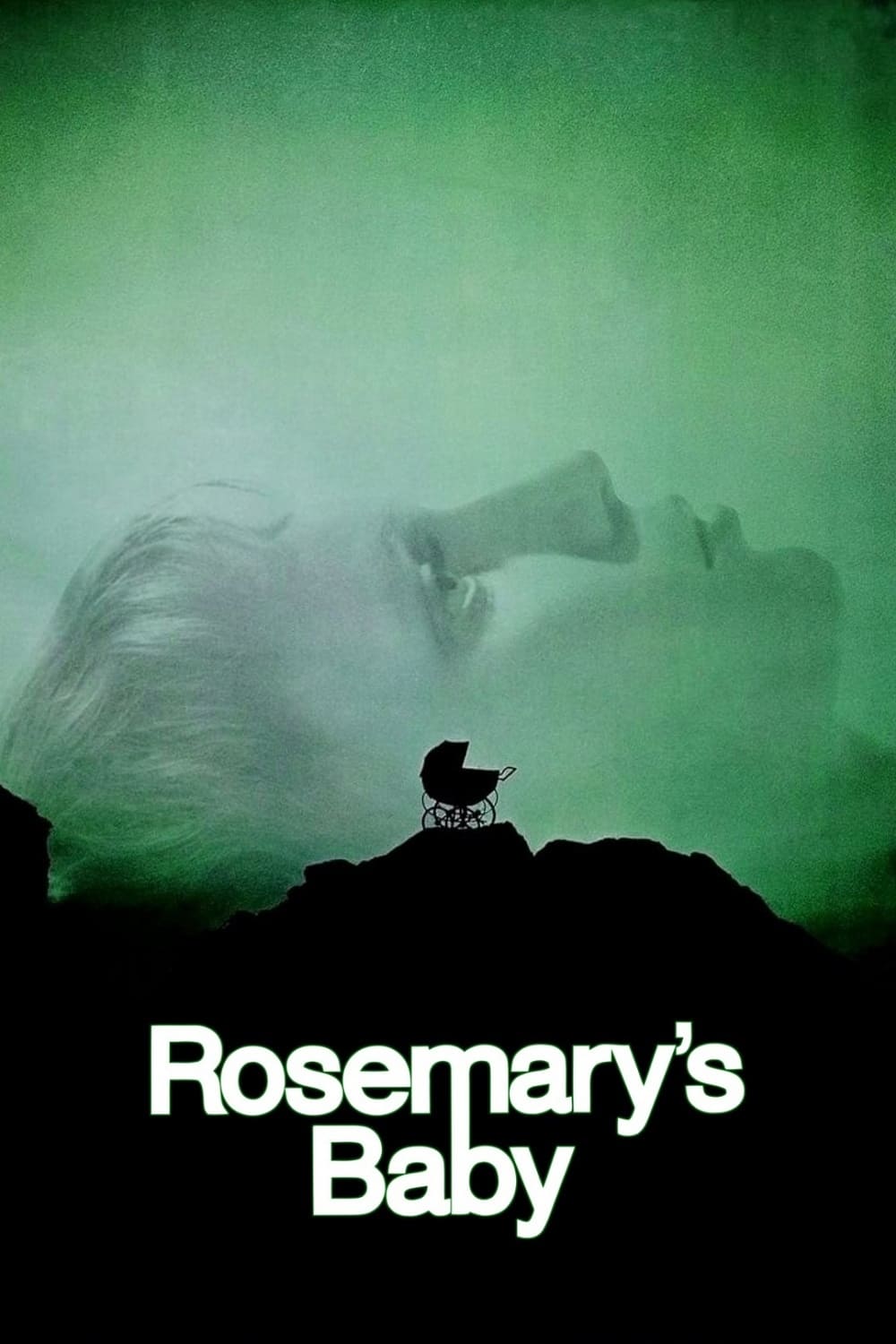
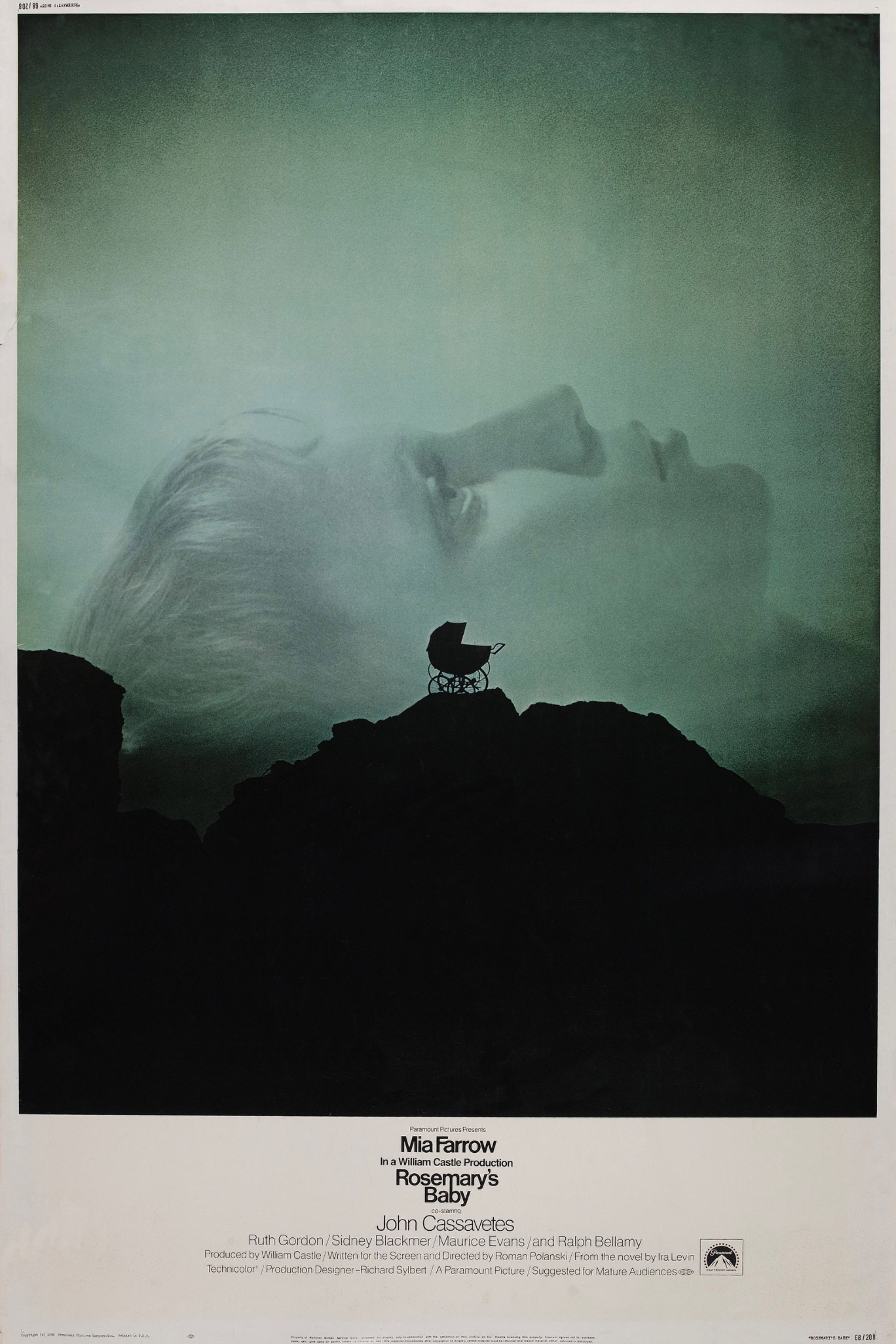
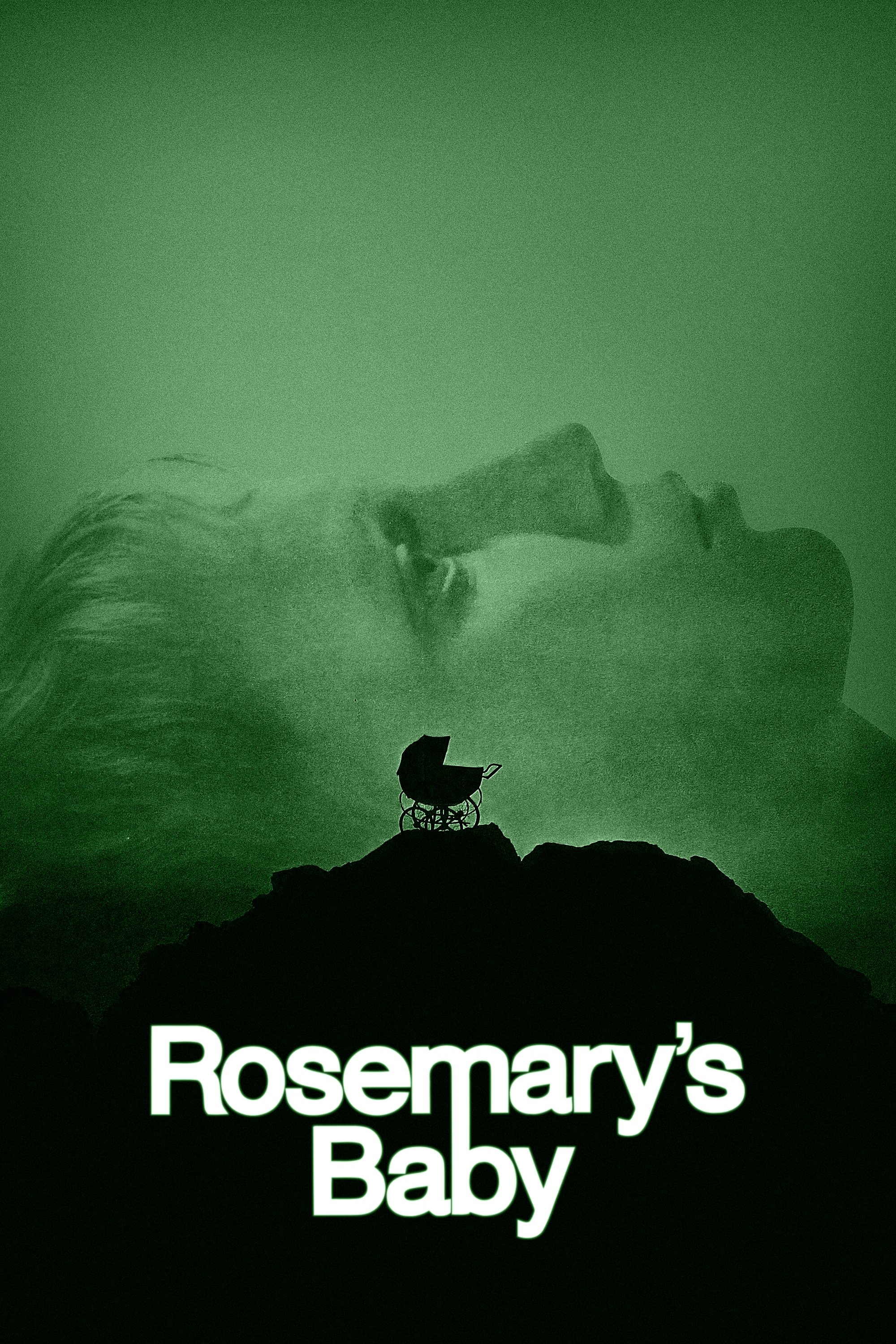
The ending makes this restraint unmistakable. Fraker remembered expecting a close-up of the newborn, only for Polanski to reject any shot revealing the child. Mia Farrow's face and the behavior of the gathered adults communicate the disclosure. The filmmaker's reported decision matters because the picture has spent its running time encouraging the audience to imagine an impossible infant. Showing a creature would have fixed one interpretation of that image and shifted attention away from Rosemary's response. The final moment instead holds fear and maternal recognition together, leaving the most sensational element of the premise outside the frame.
Komeda, the Lullaby and Domestic Sound
Krzysztof Komeda's music gives the film an emotional identity that is at odds with its eventual revelation. A gentle, wordless lullaby accompanies the opening city views, presenting the prospect of a child as something delicate before the story turns pregnancy into an ordeal. AFI's archival production history records a contemporary report that Farrow supplied the humming heard in the title music after other vocal possibilities had been considered. This detail connects the leading performer to the sound that frames her character's experience. The melody carries an intimacy that makes its later associations unsettling without requiring a barrage of dissonant musical shocks.
Silence and ordinary household noise are equally important to the film's construction. Conversations through walls, a telephone call just outside Rosemary's hearing and people moving between adjacent rooms create suspense because sound offers incomplete evidence. The audience must decide whether a voice signals casual neighborhood activity or a hidden arrangement. Fraker's account of the partially concealed telephone scene demonstrates the same principle visually: the camera withholds an object while the setting implies communication. Music, conversation and environmental detail support a style in which danger often reaches the spectator before it becomes a visible threat. The effect depends on duration and proximity, not on the frequency of onscreen attacks.
Release, Controversy and the Film's Place in Horror History
Rosemary's Baby opened in New York on June 12, 1968, followed by Los Angeles two days later. AFI's research into contemporary reporting records mixed early reviews, strong opening business and growing public interest as the release expanded. The National Catholic Office for Motion Pictures condemned the film over its treatment of Christian belief and aspects of its imagery. Levin later remembered hostile letters and a confrontation at a preview, although those memories should be distinguished from the documented institutional statement. The conflict demonstrated how a contemporary urban thriller could provoke controversy through religious inversion without relying on the sustained display of graphic bodily violence.
The initial American release also took place before the modern MPAA letter-rating system became operative in November 1968. The archival record describes a Production Code seal granted despite objections to language, with advertising advised to warn that the picture was for mature audiences. Describing the original June opening simply as an R-rated release would therefore impose a later classification framework on an earlier event. Film histories must distinguish a picture's first distribution circumstances from ratings subsequently attached to catalog editions or later showings. The difference is especially pertinent to a film whose subject and promotional campaign helped expose the changing boundaries of acceptable mainstream screen content.
A later critical history should retain the disagreement of first-run reviewers while explaining why the film acquired its enduring status. Ruth Gordon won the Academy Award for supporting actress, and Polanski received a screenplay nomination. Park's 2012 essay associates the film's success with subsequent occult-themed mainstream horror, including The Exorcist and The Omen. This is a historical relationship between popular works, not proof that one film alone created their stories. Rosemary's Baby remains central because it found a durable method for making demonic horror arise from marriage, medicine and the architecture of a modern home. Its supernatural premise is frightening precisely because the human arrangements that support it are recognizable.