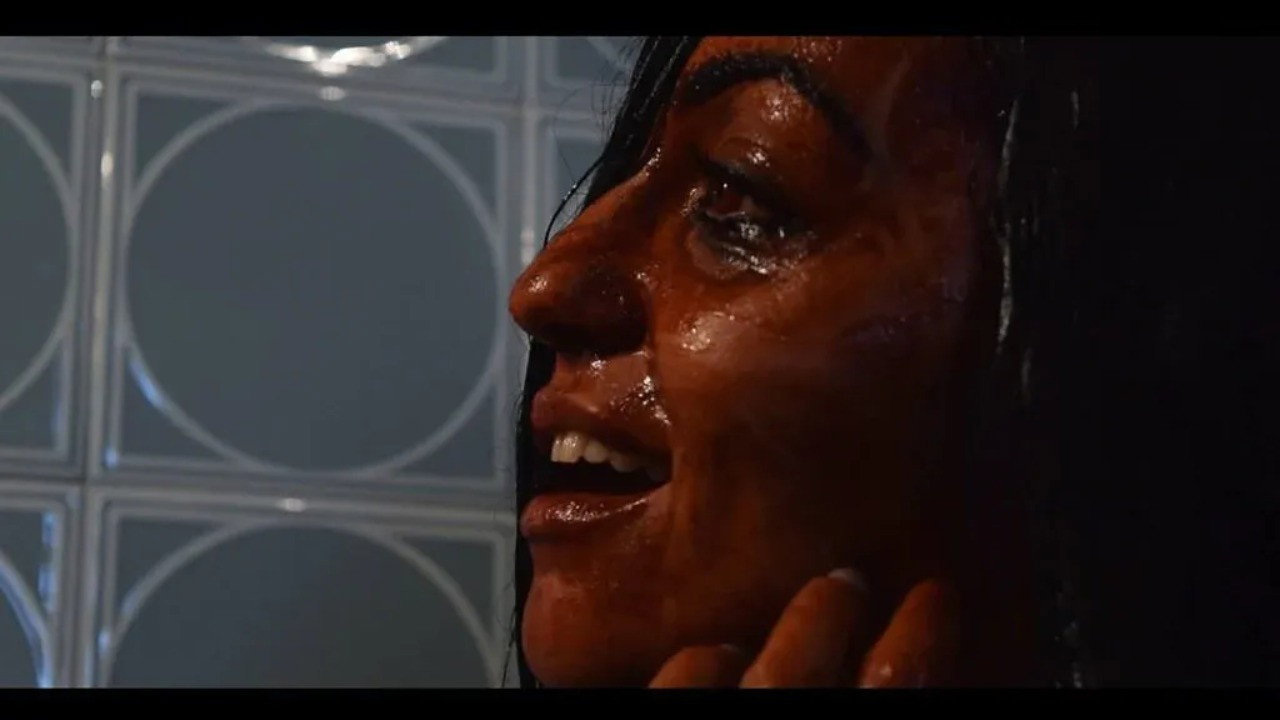
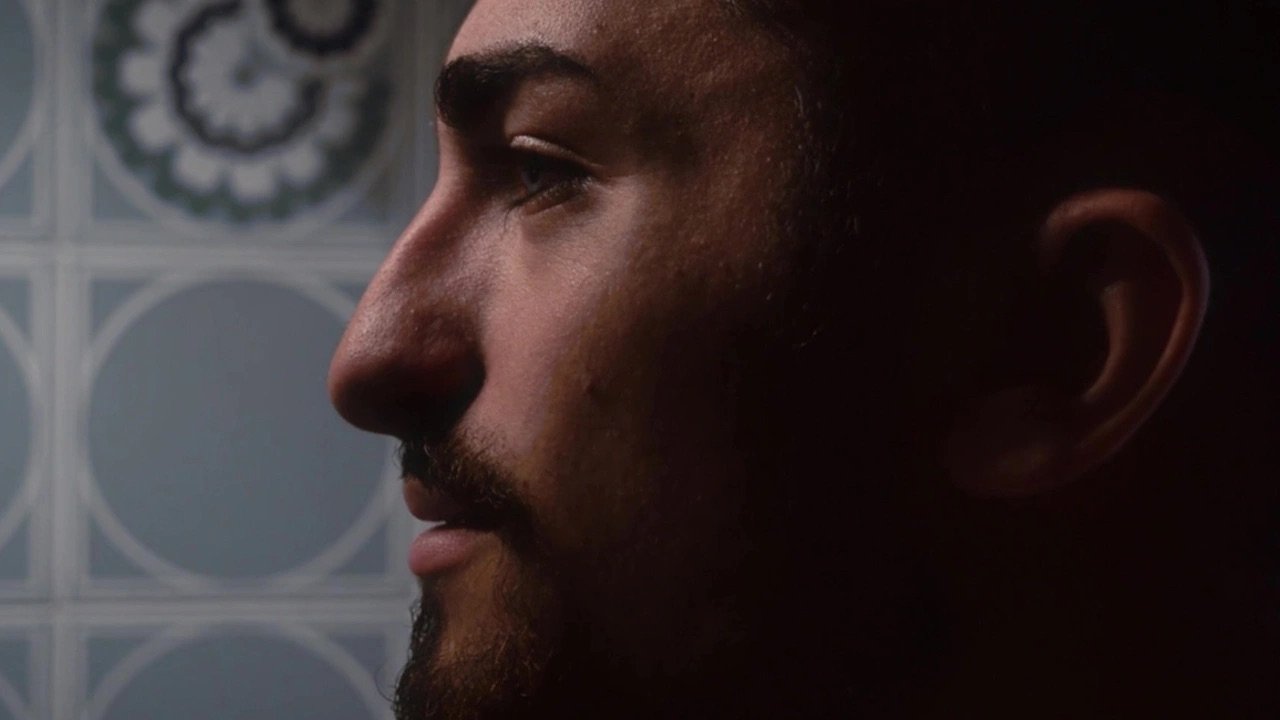
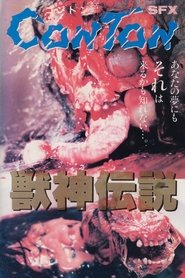
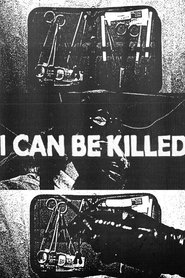
Daniel returns to the house associated with his father's death, carrying the effects of childhood trauma and a history of self-harm. Alone in a bathroom, he prepares a ritual using candles and improvised instruments, seeking contact with the goddess Ishtar. His actions move between self-punishment, spiritual invocation and an attempt to give meaning to memories that continue to trouble him. The film confines much of its action to the character's body and immediate surroundings, treating the ritual as a psychological as well as physical ordeal. The encounter he seeks gradually draws his private suffering into an unsettling supernatural framework.
Poison Rouge brings Italian body-art horror into the American Guinea Pig series through a film first developed for the Trilogy of Death.
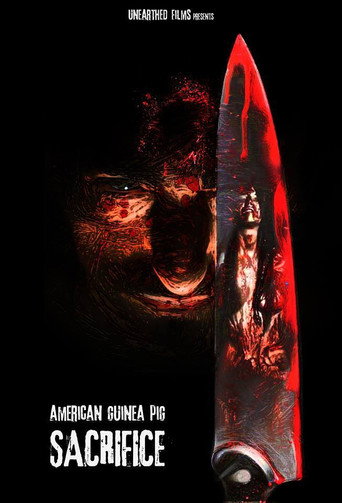
American Guinea Pig: Sacrifice (2017) occupies an unusual place in the revival of the Guinea Pig name. Directed by Italian performer Poison Rouge, it was developed within Domiziano Cristopharo's independent Trilogy of Death before being taken into the American Guinea Pig series associated with Stephen Biro and Unearthed Films. Its path into the franchise explains an aesthetic difference from the earlier American entries. A solitary man's ordeal is organized around grief, ritual and an uncertain promise of transformation, with the body treated as the principal setting for supernatural horror.
The feature also marks Rouge's directing debut and an intersection of Italian body-art performance with transnational extreme-horror distribution. Roberto Scorza plays Daniel, who returns to the family home after his father's death and seeks contact with the goddess Ishtar, played by Flora Giannattasio. The graphic imagery is central to the premise, although the film's makers placed considerable emphasis on performance and psychological distress. Contemporary interviews provide a detailed record of how a small independent production acquired its eventual series identity.
From Trilogy of Death to American Guinea Pig
The project originated in a three-film undertaking planned by Cristopharo, alongside Torment and Xpiation. In February 2017, screenwriter Samuel Marolla described Sacrifice as his first filmed screenplay and explained that its bodily extremity was paired with a nearly mystical concern for altered consciousness. Rouge separately credited Cristopharo and Marolla with the initial idea. Their recollections establish the film's Italian creative origins before its eventual American franchise association. The production was conceived for a specialist audience accustomed to confrontational independent horror, although its story was designed to stand on its own.
Cristopharo subsequently recalled that the project initially carried the working title Like a Guinea Pig Sacrifice. According to his 2017 account, Biro objected to a name that might suggest an official connection with his own series. Contact continued after the film was completed, and a screener led to its incorporation under the American Guinea Pig banner. This sequence matters to the film's identity: Sacrifice was not originally developed as a commissioned sequel with a predetermined franchise position. Its eventual branding connected an Italian production to Unearthed Films' international extreme-horror audience while retaining the separate Trilogy of Death context.
Direction, Script and Casting
Rouge had collaborated with Cristopharo in performance and production work before taking charge of the film. In a November 2018 interview she explained that directing had not been her initial ambition. Cristopharo was occupied with Torment, and changes in the cast had delayed the project. She recalled that the original lead was female and that an early version contained horror-comedy elements. Her account credits the final change to a male protagonist and the darker treatment of the material to decisions made during development. Those details illustrate a substantive shift in the screenplay's presentation, beyond a routine change in casting.
The director brought an existing interest in body art to a story whose central character performs most of the drama alone. She cited the Japanese Guinea Pig entries He Never Dies and Mermaid in a Manhole as works she valued for their distinct approaches to the grotesque. Her February 2017 interview also emphasized Daniel's wish to emerge from a closed, nightmarish existence in another form. This description is useful as an account of Rouge's intentions, though the transformation can be read in several ways. Scorza's extended, largely physical performance gives the screenplay a sustained human presence within its esoteric framework.
Confinement and Ritual Imagery
The narrative concentrates on Daniel's return to a domestic space marked by memories of his father. Much of the action is confined to a bathroom, reducing the available geography and keeping attention on the actor's movements. The room becomes the site of an attempted religious encounter, while the figure of Ishtar introduces the possibility that the experience has a supernatural dimension. This arrangement places the audience inside the character's private crisis and limits the amount of explanatory material supplied by other characters. The meaning of his apparent visions is left for the viewer to assess against the film's physical events.
The visual language draws on an uncomfortable contrast between ordinary household surfaces and elaborate ceremonial imagery. The film periodically leaves its central enclosure, but the prolonged return to it governs the pacing. In his 2018 review, Raffaele Picchio discussed the production's use of artistic references and its movement between bodily suffering and ideas of rebirth. Those associations are a critical reading of the finished film, not evidence that the depicted rituals have any basis in religious practice. The staging keeps the question of transcendence unresolved while allowing the horror to operate through the character's increasingly unstable sense of self.
Practical Effects and Physical Performance
The film's most confrontational material depends on fabricated injuries and the performer's ability to sustain their illusion. Rouge identified Cristopharo as an essential collaborator in both cinematography and makeup effects; she described the work with Scorza as carefully prepared. The director argued in 2018 that the picture contained fewer separate gore passages than audiences might assume from its reputation, and that acting supplied much of their emotional force. Her numerical account of the effects is a retrospective statement by a participant and should not be treated as an independently audited production measurement.
The effects are framed as part of Daniel's deteriorating mental and spiritual state. His solitary presence gives the production few opportunities to interrupt the tension through dialogue or action elsewhere, placing greater weight on duration, reaction and the visibility of the prosthetics. Rouge's account of a smooth shoot also differs from the publicity language sometimes attached to extreme cinema, where descriptions of suffering can blur fictional content and working conditions. The available interviews support the existence of planned practical makeup and controlled performance; they do not establish that an actor actually underwent the injuries shown on screen.
Release, Reception and Series Position
Sacrifice circulated in 2017, with the Macabro festival listing it in that year's program as a Latin American premiere. International attention later grew around its inclusion in the Unearthed Films series and its home-video availability. This distribution route suited an underground production whose extreme subject matter and sparse setting were unlikely to resemble mainstream horror releases. Exact commercial returns and a comprehensive theatrical history are not documented sufficiently to support reliable totals. The 2017 festival context and the 2018 interviews and reviews are firmer chronological reference points than unsupported box-office claims.
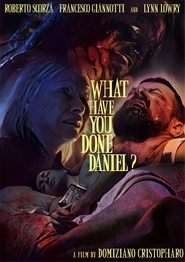
Picchio's September 2018 assessment praised the film's bodily imagery and Scorza's performance, while criticizing some narration and scenes outside the central location. Rouge reported both supportive reactions and hostile messages from viewers who objected to the film's treatment of the Guinea Pig identity. Those responses reveal a tension between the expectations attached to a recognizable exploitation label and the creative choices of a separate Italian production. Sacrifice remains distinctive within the American cycle because the brand was attached after the film had taken shape, leaving its connection to Cristopharo's Trilogy of Death visible in the finished work. A later prequel, What Have You Done, Daniel? (2022), directed by Domiziano Cristopharo, returned to Daniel's past with Roberto Scorza again in the lead role. TetroVideo issued the prequel in an exclusive limited Blu-ray collector's edition titled Daniel's Sacrifice, pairing it with Sacrifice and expanding the character's family history and connection to the cult of Ishtar.
References
Il Cineocchio — Intervista a Poison Rouge e Adam Ford su Sacrifice e Torment
February 2017 interview in which Rouge describes the origin of Sacrifice, its body-art influences and her interpretation of Daniel.