3 from Hell (2019)

US
HORROR FILM
Runtime
115 min
Release
September 16, 2019
Budget
$3,000,000
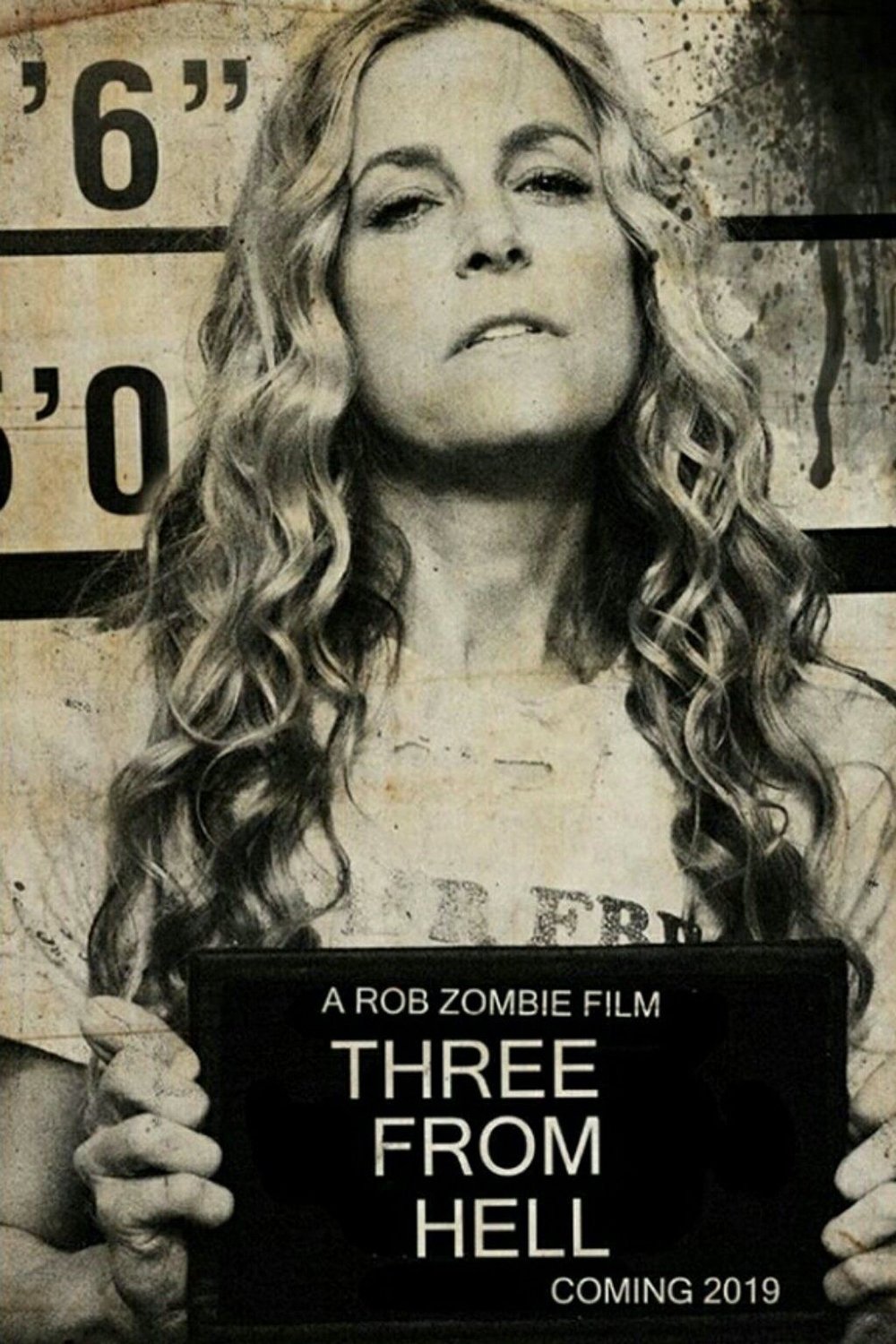
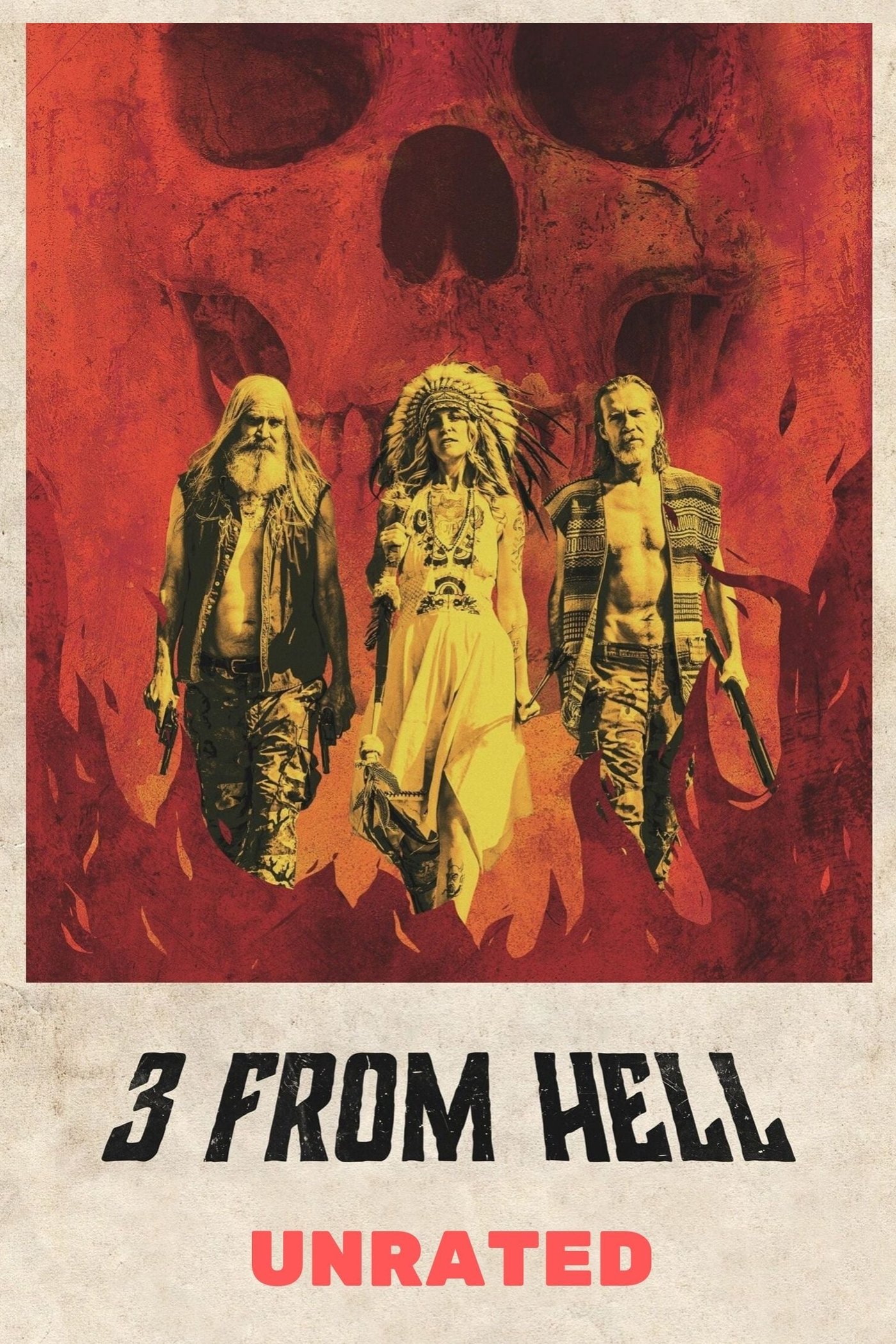
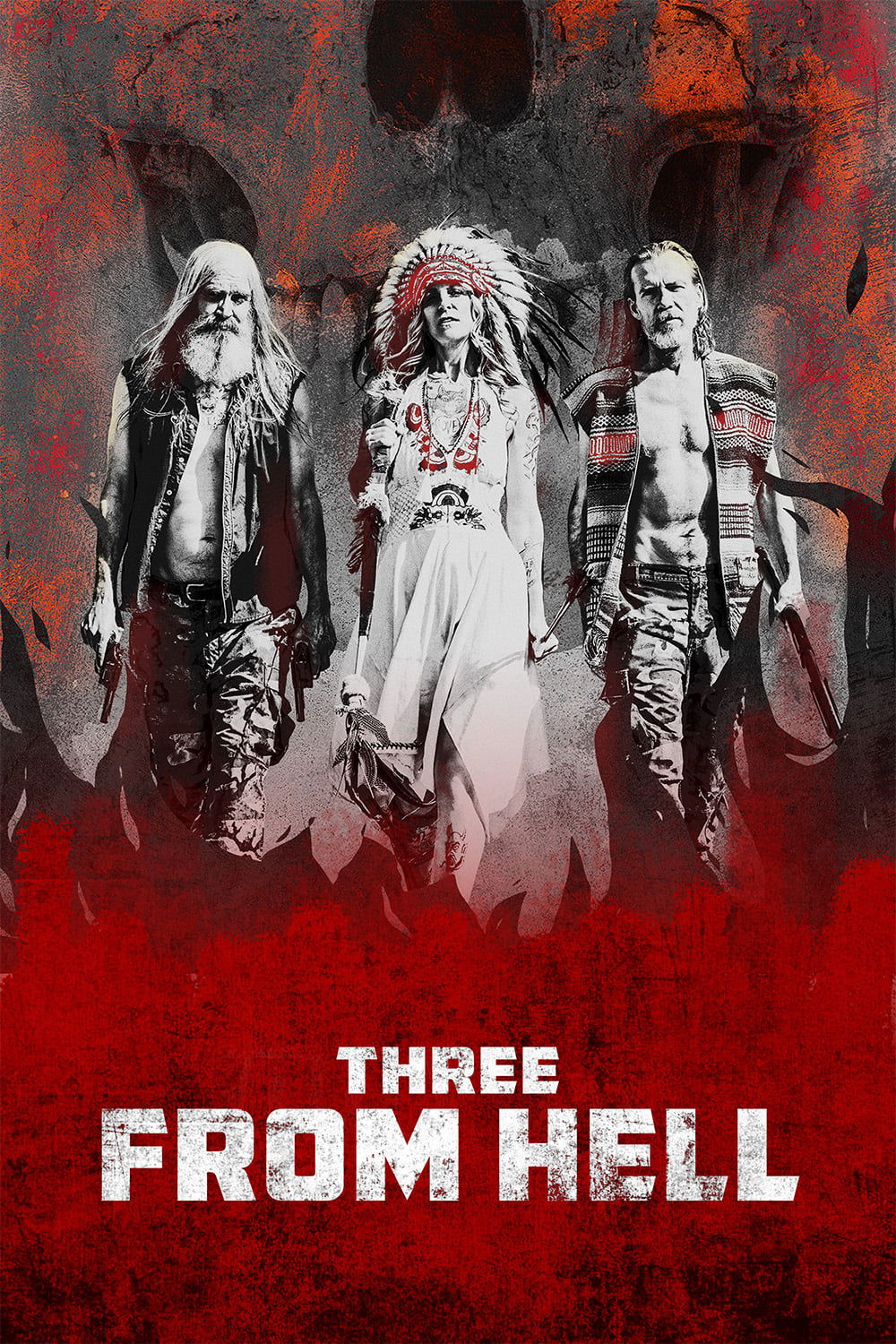
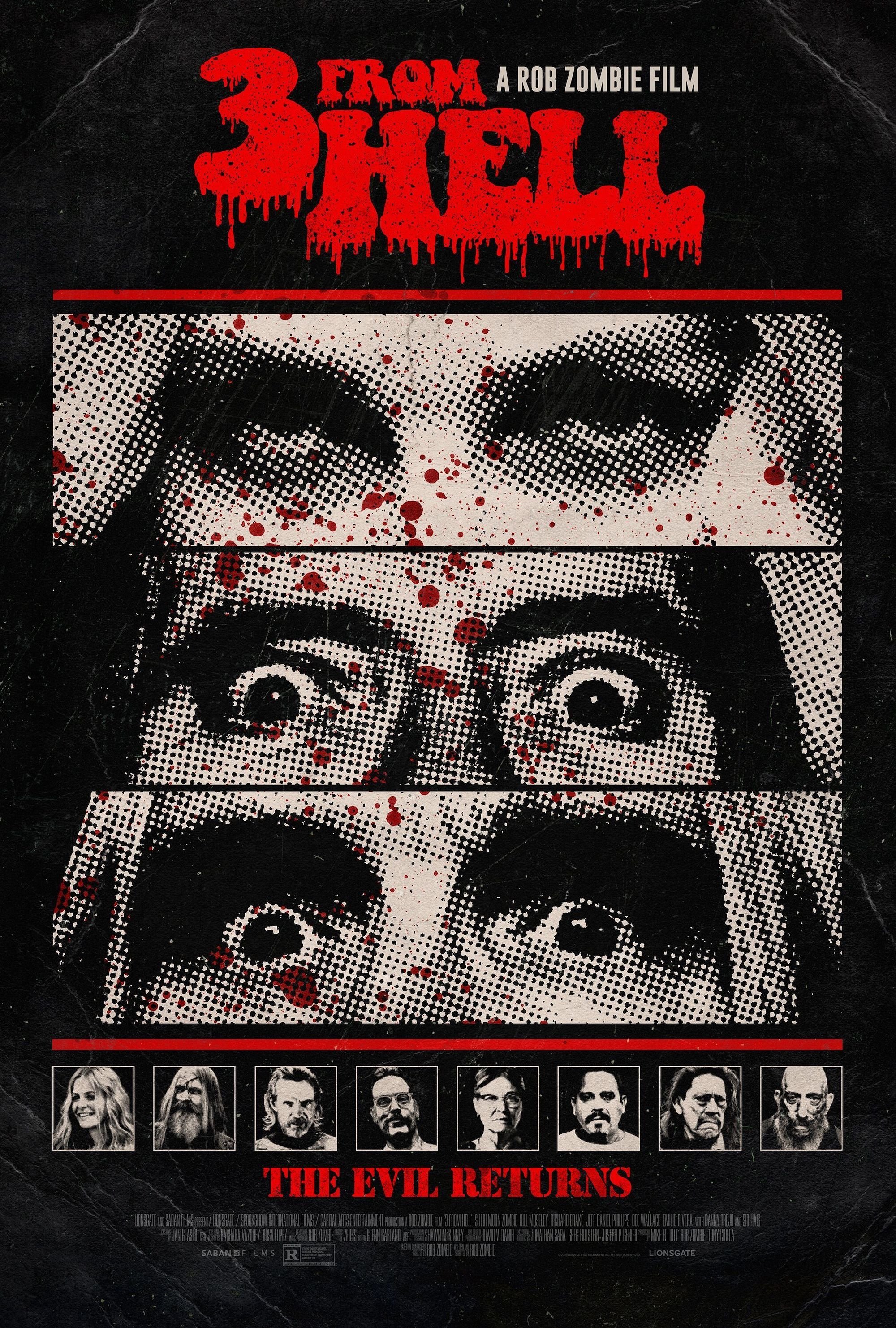
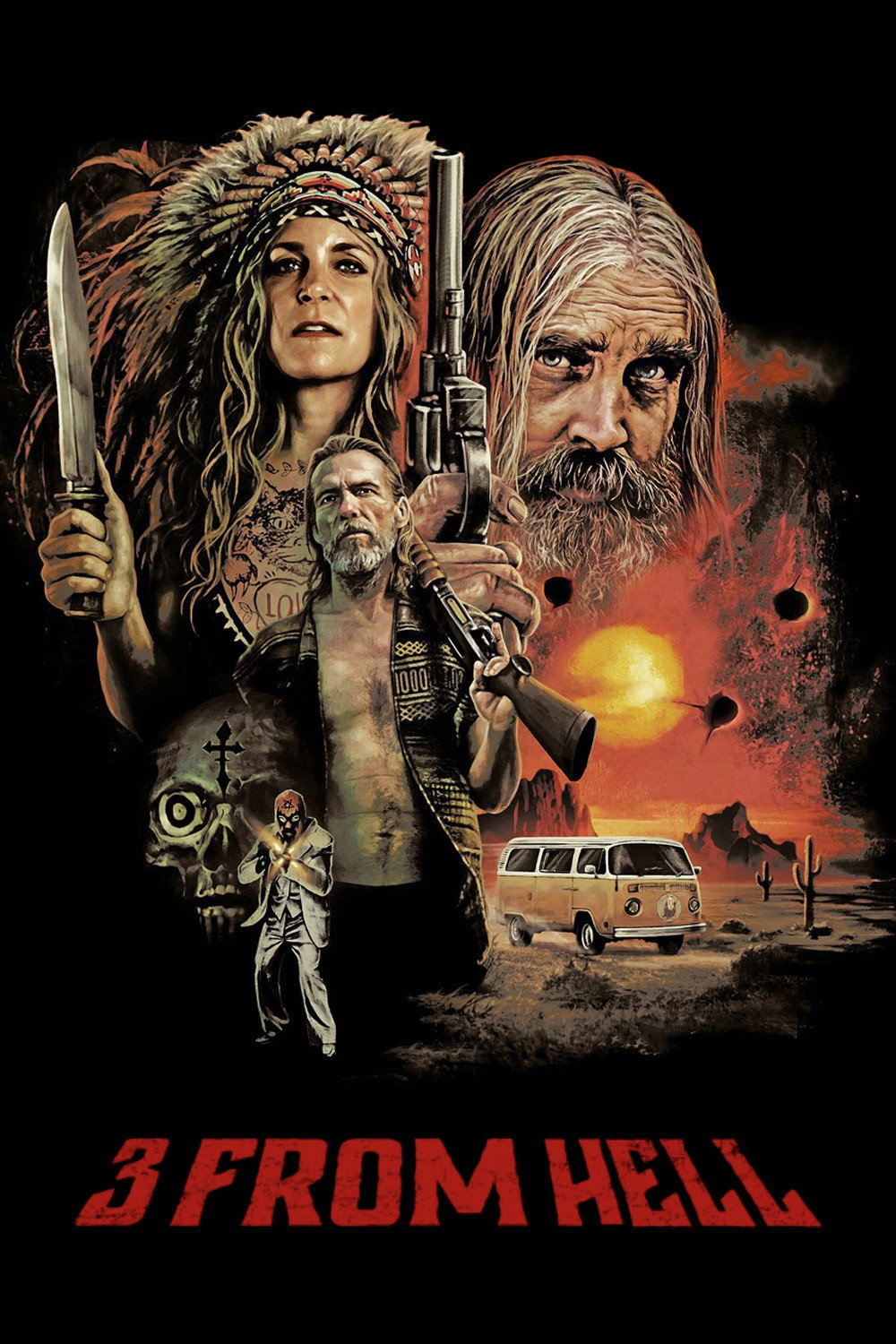
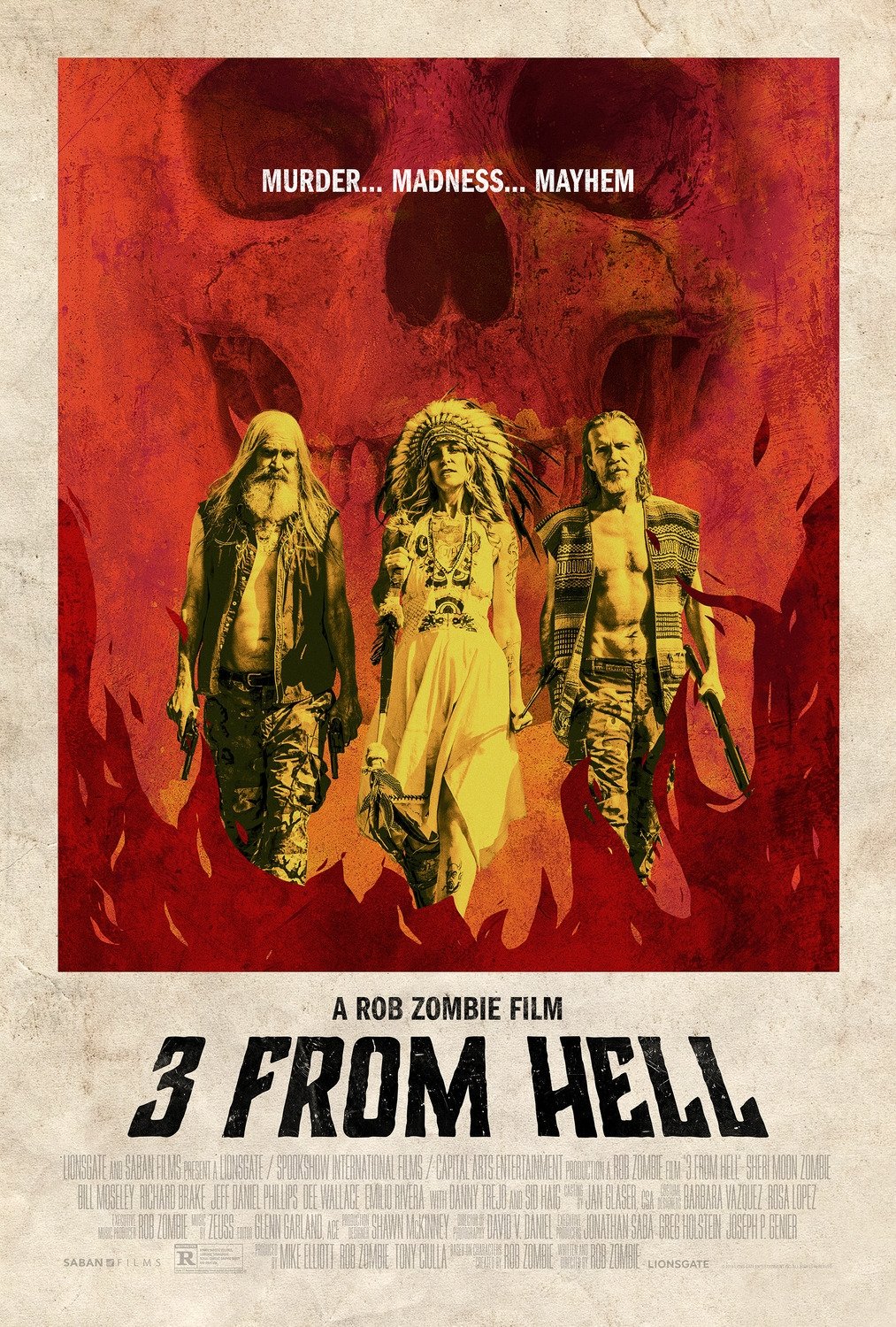
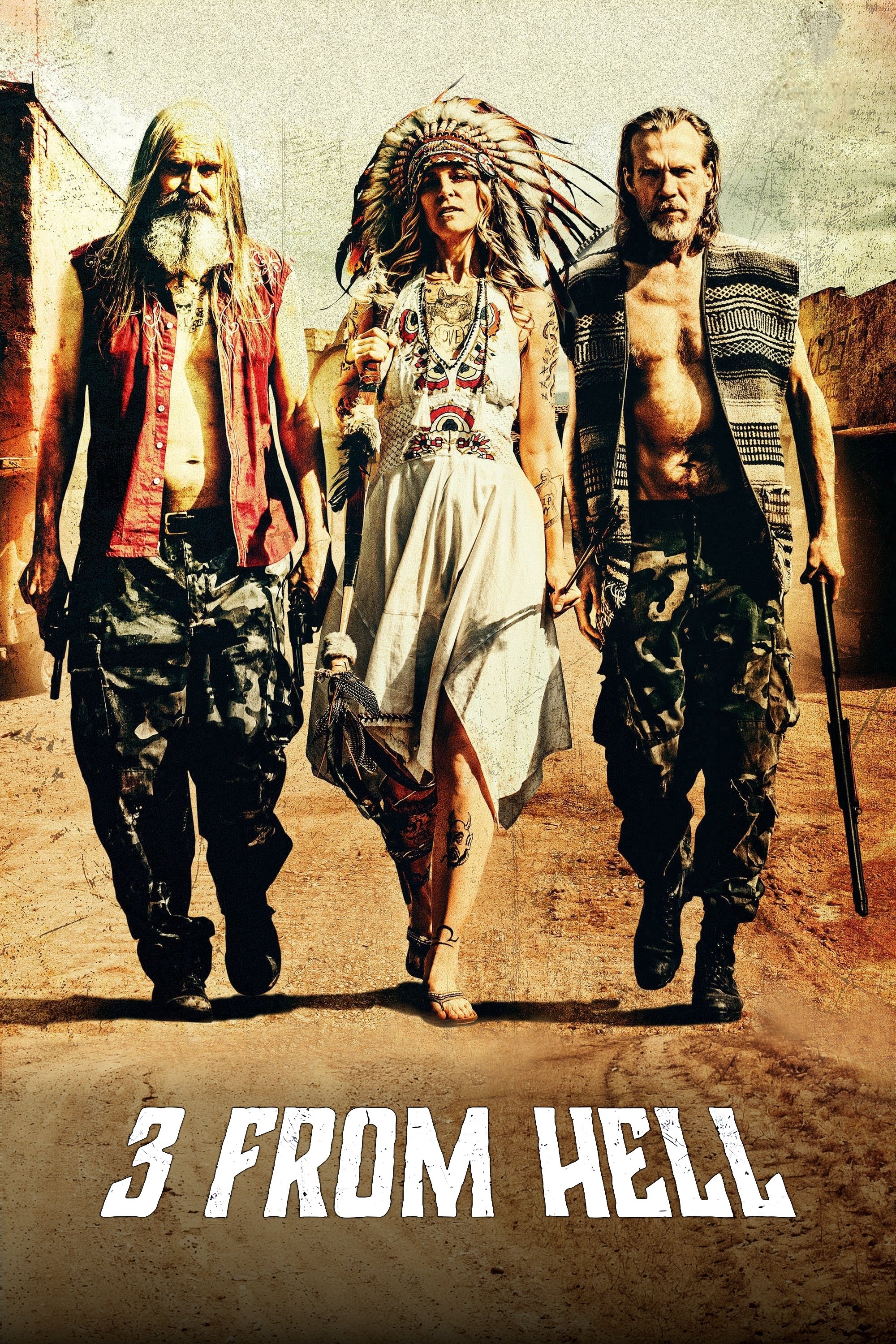
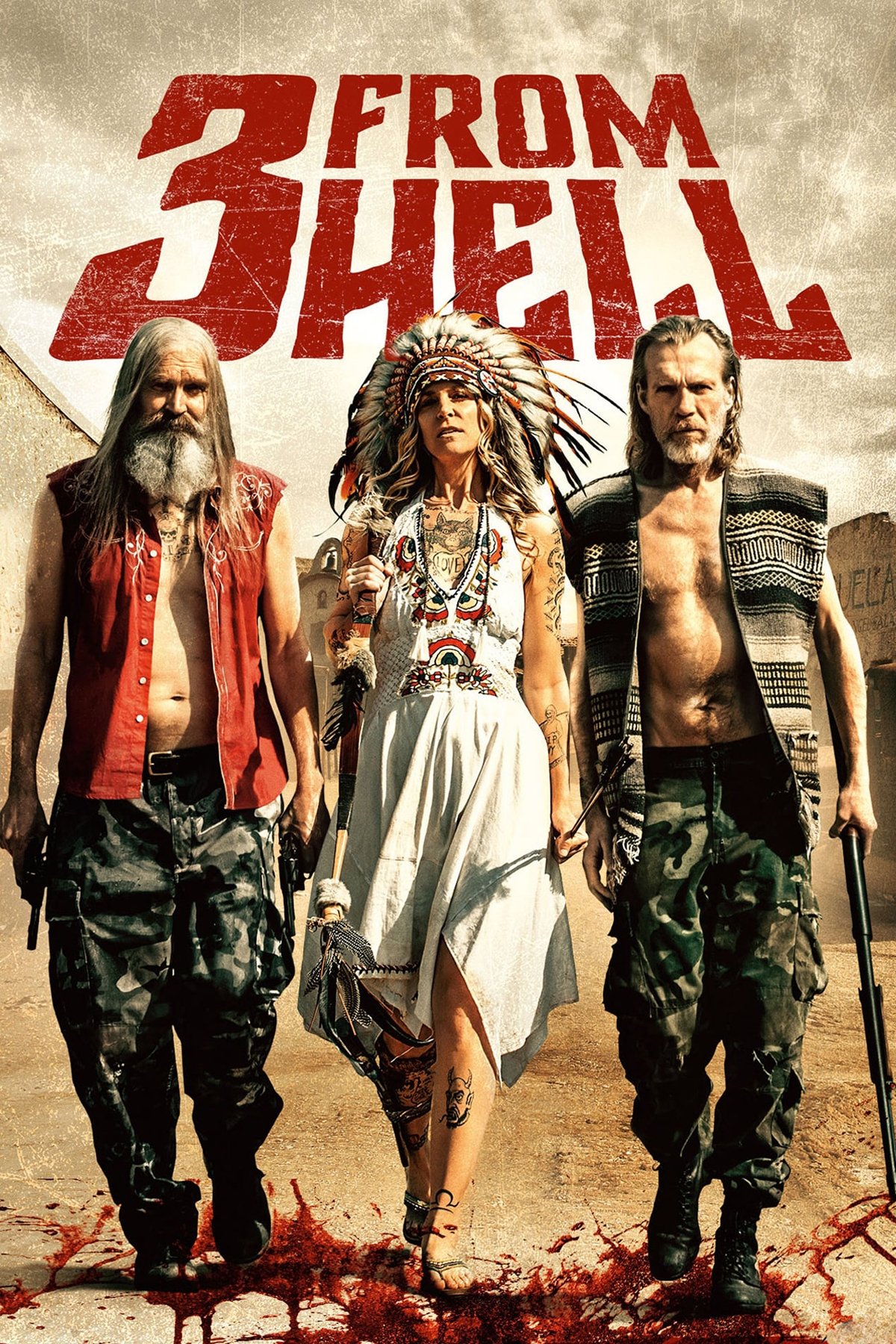
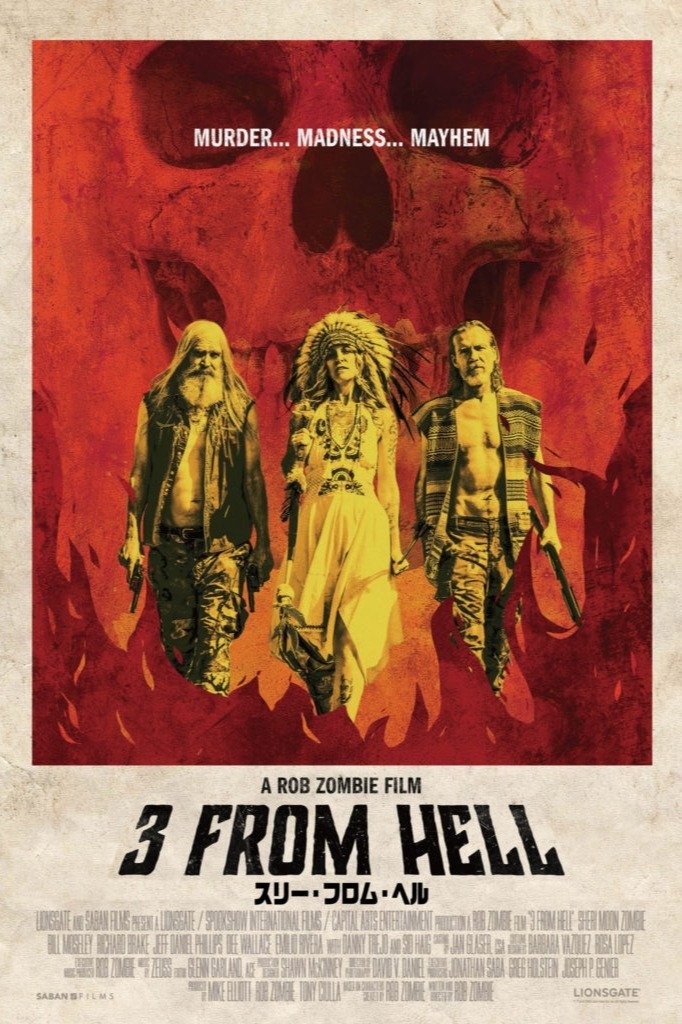
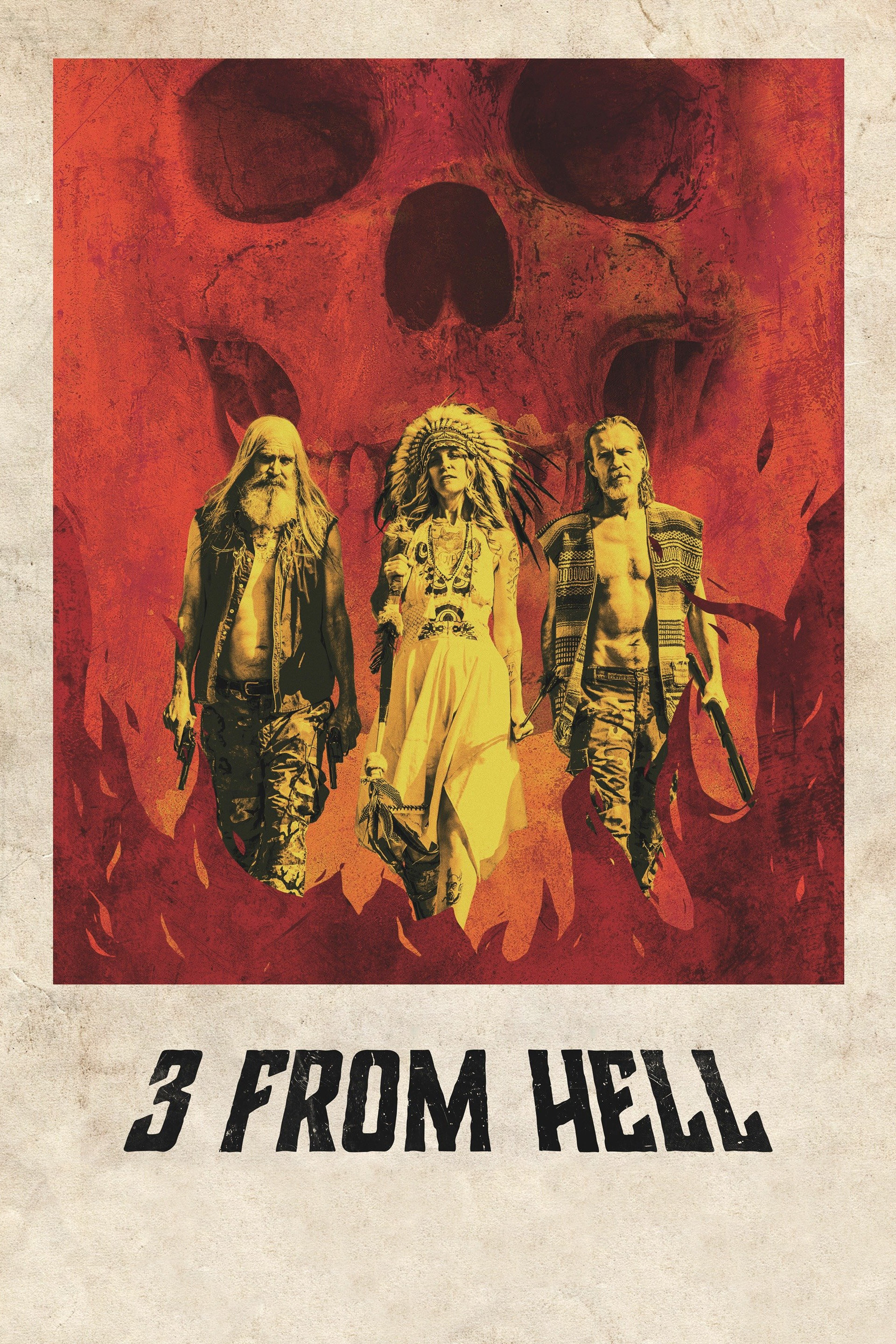
3 from Hell (2019) poster
Director
Writer
Plot

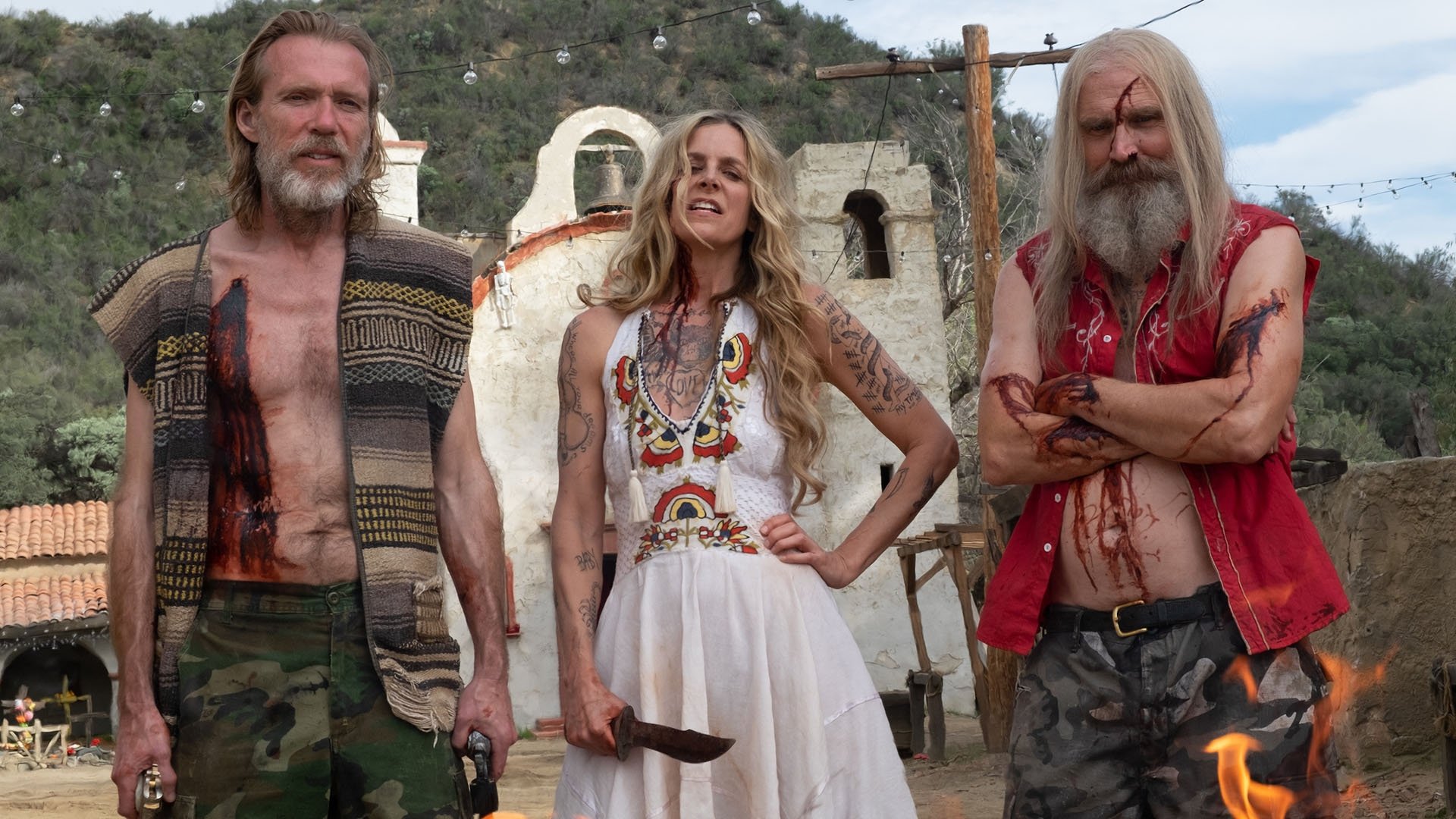
After barely surviving a furious shootout with the police, Baby Firefly, Otis Driftwood and Captain Spaulding are behind bars. But pure evil cannot be contained. Teaming up with Otis’ half-brother Winslow, the demented Firefly clan escape to unleash a whole new wave of murder, madness and mayhem.

Alternative Titles
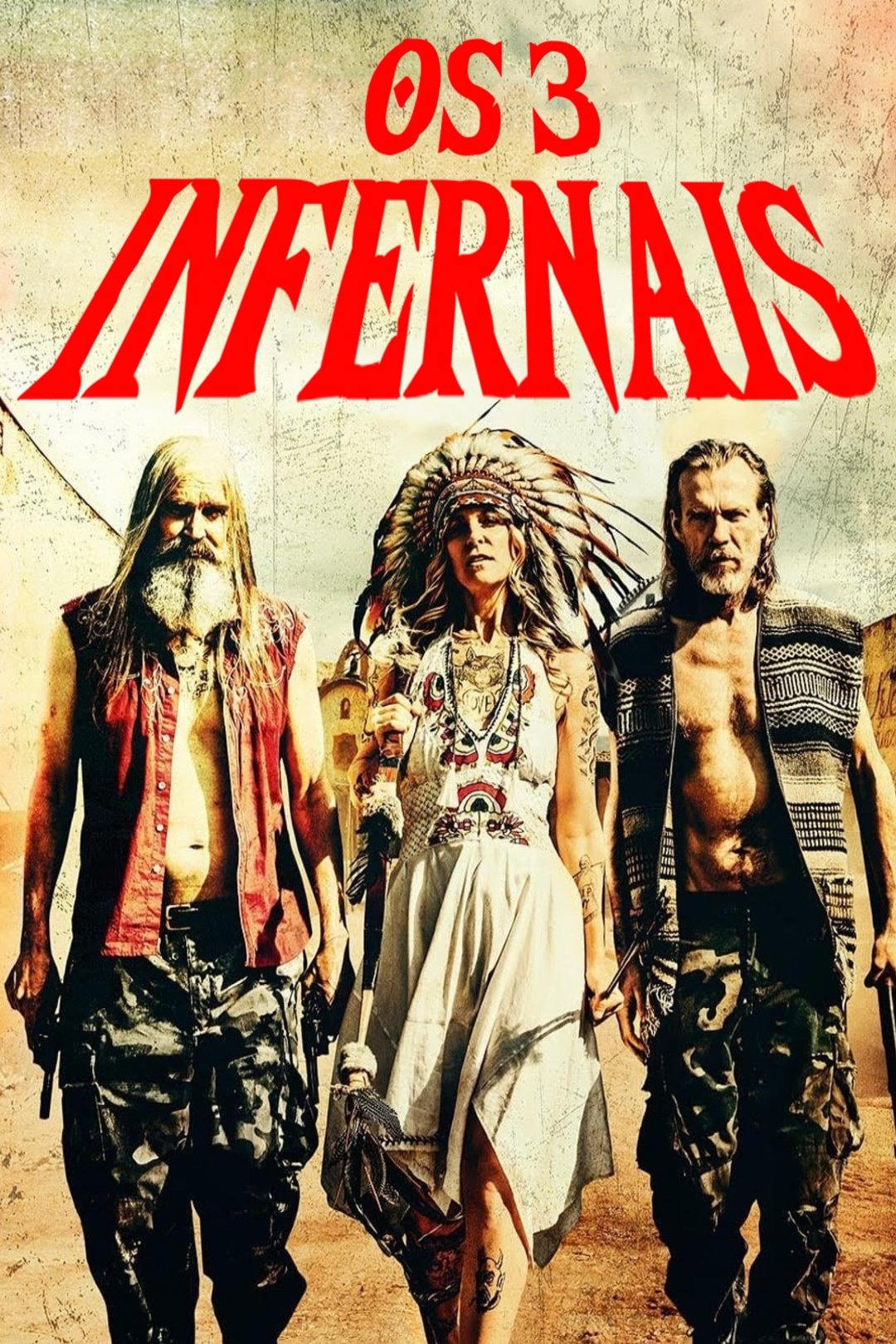
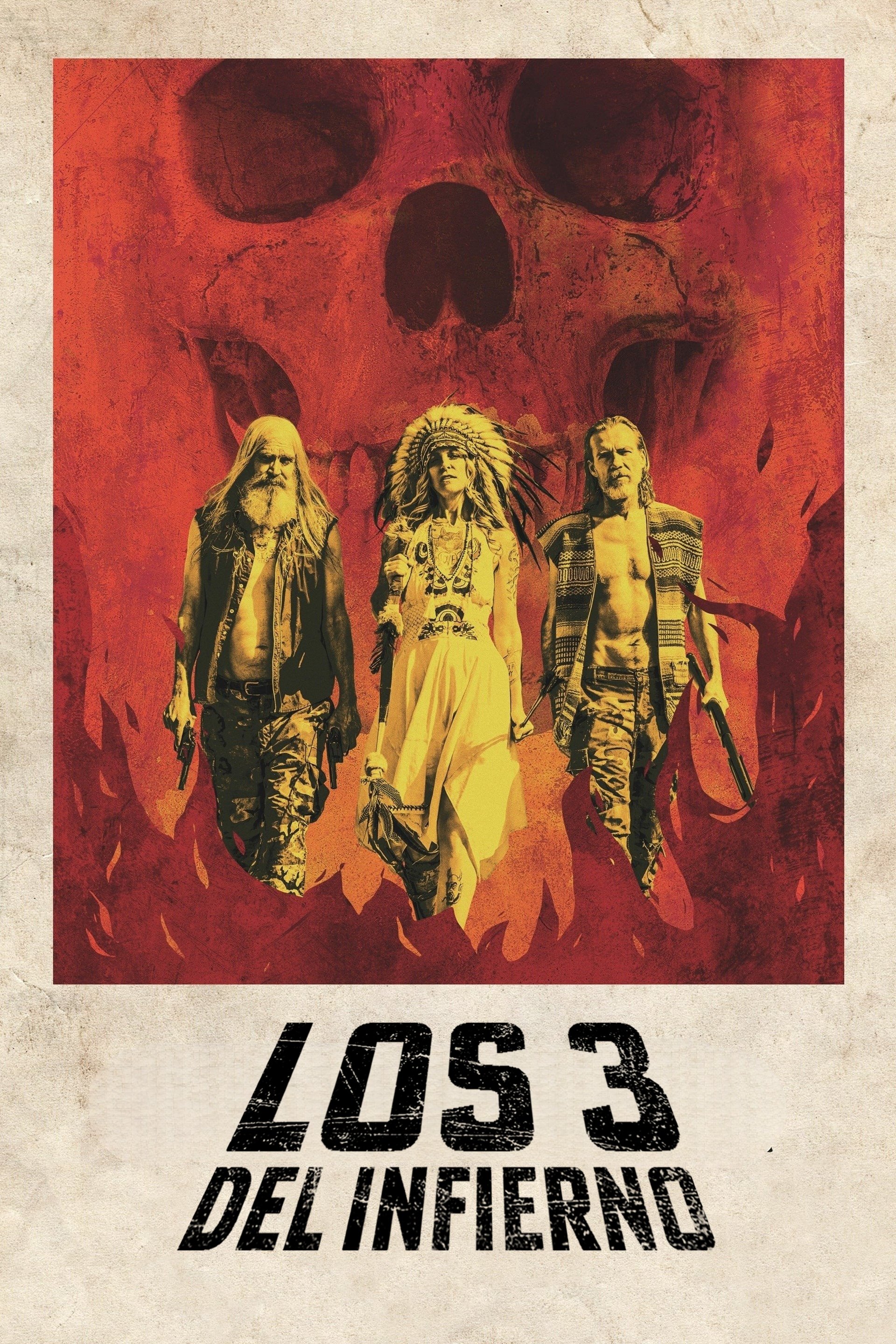
Трима от Ада (Bulgaria) — Bulgarian Os 3 Infernais (Brazil) — Portuguese House of 1,000 Corpses 3 - 3 from Hell (Canada) 千尸屋3 (China) — Chinese Tři z pekla (Czechia) — Czech 3 del infierno (Spain) — Spanish 3 από την Κόλαση (Greece) — Greek 千屍屋3 (Hong Kong SAR China)
Show all 23 alternative titles 地獄 3 人行 (Hong Kong SAR China) — Chinese 3 a pokolból (Hungary) — Hungarian スリー・フロム・ヘル (Japan) — Japanese 3 프롬 헬 (South Korea) — Korean 쓰리 프롬 헬 (South Korea) Los 3 del infierno (Mexico) — Spanish Трое из ада (Russia) — Russian 3 من الجحيم (Saudi Arabia) — Arabic 3 iz pekla (Slovenia) — Slovenian 3 จากนรก (Thailand) — Thai Cehennem Üçlüsü (Türkiye) — Turkish 地獄3人行 (Taiwan) Трійця з пекла (Ukraine) — Ukrainian Three From Hell (United States) — festival title Bộ 3 Từ Địa Ngục (Vietnam) — Vietnamese

Trailers & Videos

2 videos

Film Guide & Analysis

Fourteen years after The Devil's Rejects, Rob Zombie resurrects the Firefly outlaws for a prison escape and Mexican western shaped by age, notoriety and the loss of Captain Spaulding.

3 from Hell (2019) returns to the surviving Firefly killers long after the seemingly definitive ending of The Devil's Rejects. Otis Driftwood, Baby Firefly and Captain Spaulding are revealed to have survived the police barrage that closed the earlier film, becoming imprisoned celebrities whose crimes inspire both public disgust and a disturbing degree of fandom. Years later Otis escapes with the assistance of his half-brother Winslow Foxworth "Foxy" Coltrane, and the two eventually free Baby before crossing into Mexico in search of temporary sanctuary.

Rob Zombie does not attempt to reproduce the emotional finality of The Devil's Rejects. Instead, 3 from Hell treats the characters as people who have aged inside the mythology created around them. The film begins with pseudo-documentary material about their celebrity, turns into a prison and home-invasion story, then expands into a Mexican western dominated by guns, outlaw iconography and masked enemies. The result is looser and more episodic than its predecessor, less interested in escalating horror than in spending further time with characters Zombie had first created almost two decades earlier.

Returning to the Firefly World

Zombie had originally regarded the ending of The Devil's Rejects as a natural conclusion. Otis, Baby and Spaulding driving into a police blockade to the sound of "Free Bird" was constructed like the death of outlaw legends, and for years no continuation followed. When he eventually returned to the characters, he decided not to pretend that no time had passed. The opening section acknowledges their survival almost as an impossible piece of tabloid mythology, then moves the story forward by roughly the same amount of time that had elapsed between productions.

The documentary-like opening was strongly influenced by archival footage surrounding the Manson Family. Zombie was interested in the way notorious murderers could become media personalities, repeatedly photographed outside courtrooms and transformed into figures whom sections of the public treated almost as celebrities. In 3 from Hell, reports about the Firefly killers similarly produce supporters as well as condemnation. Their crimes have become cultural material, and the people themselves are already turning into legends before they leave prison.

That idea makes the opening more than an exposition device for explaining survival after the earlier film. House of 1000 Corpses presented the family as monsters hidden from ordinary society, while The Devil's Rejects pushed them onto the road. By 3 from Hell, society knows exactly who they are. Their identities circulate through television, newspapers, interviews and slogans, creating a grotesque version of celebrity in which public recognition no longer depends on moral approval.

Sid Haig, Captain Spaulding & the Creation of Foxy

The largest production change was not originally part of Zombie's plan. Captain Spaulding was written as one of the three principal characters and was intended to remain alongside Otis and Baby throughout the story. When production approached, however, Sid Haig was seriously ill. Zombie later explained that Haig had recently been hospitalized, had lost substantial weight and was physically incapable of undertaking the demanding role originally written for him.
The situation required a major restructuring. Haig could not obtain the normal medical and insurance clearance required for an actor of his age and condition to participate fully in the production. Zombie nevertheless considered Spaulding too important to the Firefly films simply to disappear without explanation. Lionsgate allowed Haig to work briefly, and Zombie used the limited time available to give the character a final scene rather than replacing him silently or pretending that he remained active elsewhere in the story.

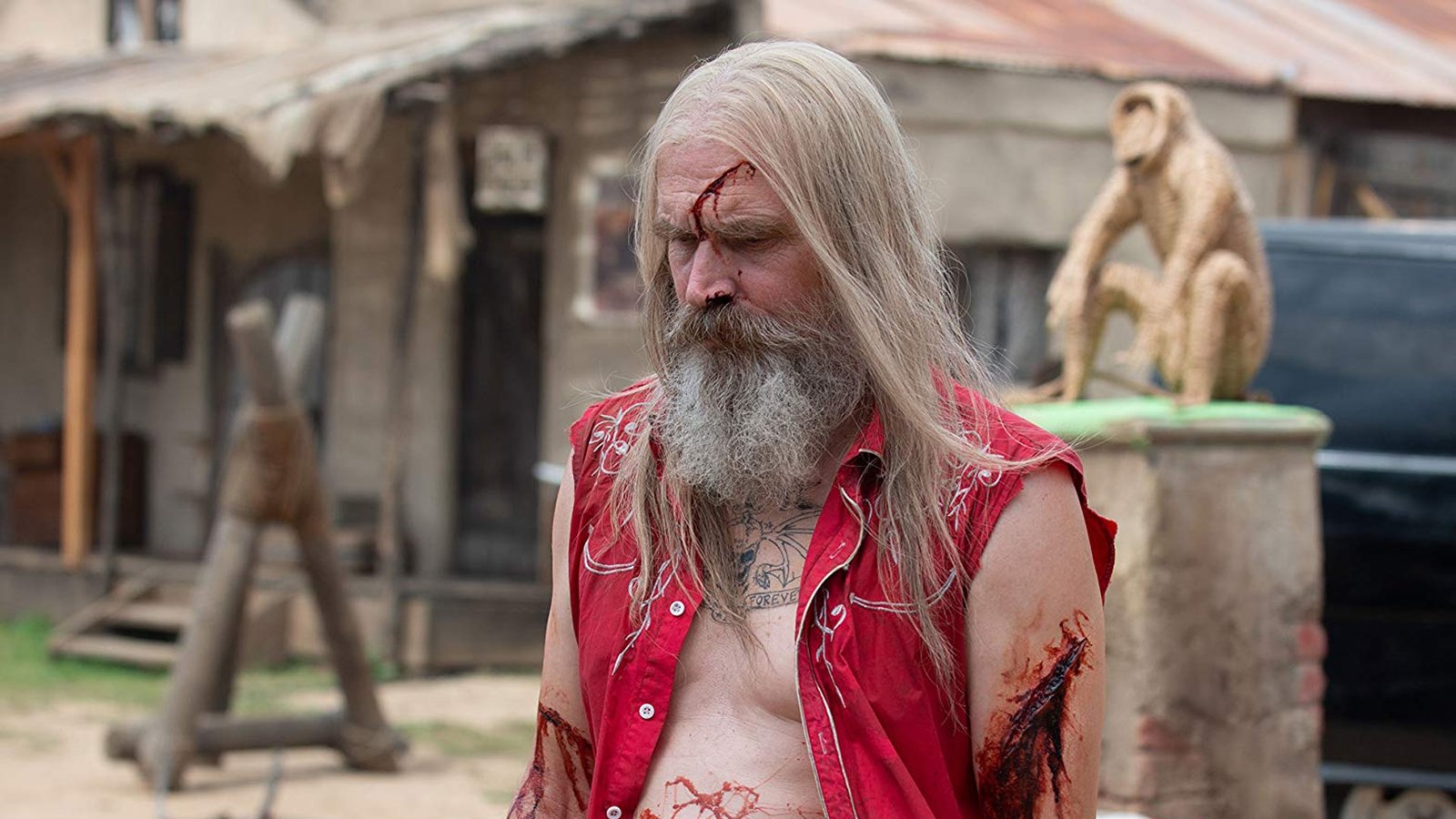
Richard Brake's Foxy was created almost immediately to fill the structural gap. Zombie had recently worked with Brake on 31 and saw him as someone capable of entering the established chemistry between Bill Moseley and Sheri Moon Zombie. Brake was working in Spain when he received the call and came directly to Los Angeles with almost no preparation time. What might have been an obvious replacement character instead became deliberately different from Spaulding: Foxy shares Otis's outlaw temperament but brings a calmer, laconic energy to the trio.

Haig's reduced appearance inevitably changes the emotional balance of the film. Captain Spaulding had been one of the defining faces of the series since House of 1000 Corpses, and his absence cannot be disguised. The film allows that absence to become part of its sense that the Firefly world has aged and changed. 3 from Hell was released only days before Haig's death in September 2019, making the scene his final appearance as Spaulding.

Documentary, Noir & Spaghetti Western

Zombie consciously organized 3 from Hell into three different cinematic movements. He described the opening as documentary-influenced, drawing on crime reporting and footage of notorious murderers entering courts and prisons. Once Otis escapes, the film shifts toward a prison-break story, with Zombie specifically invoking the atmosphere of films such as Cool Hand Luke rather than conventional contemporary horror.

The middle section changes again after Baby is freed. Otis and Foxy invade the home of prison warden Virgil Harper and hold his family and friends captive while waiting for the plan to unfold. Zombie connected this portion to film noir and especially William Wyler's The Desperate Hours, in which Humphrey Bogart leads escaped convicts who take over a suburban household. The Firefly characters therefore become participants in a recognizable crime-film situation.

Mexico produces the largest transformation. Zombie conceived the final act as a full-scale Italian western, drawing on Sergio Leone and the dirtier physical world of spaghetti westerns more generally. The village, dusty streets, armed standoffs and arrival of Aquarius's masked assassins move the film toward an outlaw adventure in which the horror framework increasingly overlaps with western mythology. The coffins and funeral imagery also recall the iconography associated with Sergio Corbucci's Django.

The masked attackers extend the visual shift. Zombie had been fascinated by lucha libre imagery since childhood and wanted the new antagonists to register immediately rather than require extensive introductions. White suits and Mexican wrestling masks give them an exaggerated graphic identity appropriate to the film's final movement. Like The Devil's Rejects before it, 3 from Hell ultimately demonstrates Zombie's preference for using the same characters to move through different genre traditions rather than building each sequel from the visual rules of the previous one.

Otis, Baby & the Aging Outlaws

The intervening years affect Otis and Baby in opposite ways. Zombie conceived Otis as calmer than the character seen in The Devil's Rejects. He remains capable of extreme violence, but age has reduced some of the manic quality surrounding him. Bill Moseley's performance emphasizes exhaustion and familiarity with danger rather than suggesting that imprisonment has reformed him. Otis has survived long enough for violence to become almost routine.

Baby has moved in the other direction. Years of isolation have intensified her instability, and Zombie discussed with Sheri Moon Zombie the idea that she should behave as though she now exists in a reality different from everyone around her. Her parole hearing turns institutional questioning into performance, and once she escapes, her unpredictable reactions often distinguish her even from Otis and Foxy. Otis himself appears uncertain about how far his sister has psychologically drifted while incarcerated.

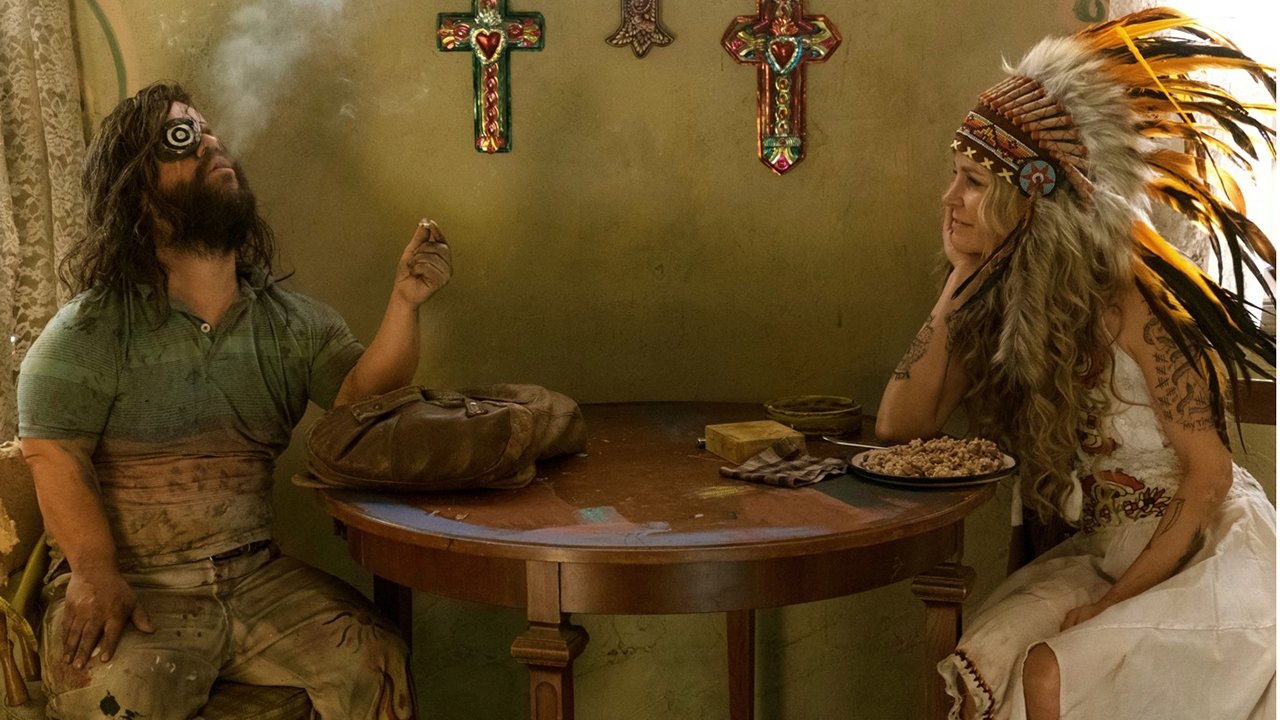
Foxy provides the third temperament required by the new group. His function is not simply to reproduce Spaulding's place in the original trio. Richard Brake plays him as relaxed enough to coexist with Otis without continuously competing for control, allowing the later sections to operate almost as a violent road movie about criminals who are unexpectedly comfortable in one another's company. Their scenes eating, drinking and wandering through Mexico are deliberately less urgent than much of The Devil's Rejects.

This relaxed quality separates 3 from Hell from the relentless movement of its predecessor. The Firefly characters are still sadistic killers, and the film repeatedly provides evidence of that fact, but Zombie appears increasingly interested in observing how they interact when they are not actively being hunted. The result sometimes resembles a grotesque hangout movie in which companionship exists alongside casual brutality.

Violence, Sympathy & Outlaw Mythology

The Devil's Rejects created discomfort by gradually using the cinematic language of doomed outlaw heroes for characters the audience had already watched commit atrocious acts. 3 from Hell continues that strategy with even fewer reservations. Otis, Baby and Foxy become the protagonists of the film not because their crimes are excused, but because virtually the entire narrative is experienced from within their movement through the world.

The home-invasion section prevents that perspective from becoming uncomplicated celebration. The escapees terrorize people who have no meaningful connection to the Firefly crimes beyond their relationship with the warden, demonstrating that imprisonment has not produced moral transformation. Their victims are useful objects within an escape plan, just as earlier victims were useful to Otis and Baby for entertainment or control. The characters' loyalty to one another therefore exists beside an almost complete absence of empathy for outsiders.

Once the story reaches Mexico, however, the narrative places the trio against another group of killers and increasingly borrows the structure of a western siege. Aquarius has a personal reason to pursue Otis, and the masked Black Satans become visually coded antagonists. This arrangement inevitably makes the Firefly group easier to read as conventional action protagonists even though nothing in their earlier behavior has changed.

That contradiction is fundamental to Zombie's treatment of the characters. His films do not rehabilitate them through hidden nobility; instead, they demonstrate how easily cinematic form can make violent people compelling once viewers are given enough time inside their relationships. 3 from Hell goes further than The Devil's Rejects in embracing that companionship, making the moral discomfort less confrontational but leaving the crimes themselves intact.

Music & the Changing Genre

Zeuss composed the original score, and the film's three-part structure required music capable of changing with its genre references. Zombie explained that the documentary opening demanded one type of sound while the Mexican section needed something approaching the expansive musical language associated with Ennio Morricone and Italian westerns. The score consequently moves between crime-film tension, atmospheric passages and western-inflected material rather than maintaining one continuous horror vocabulary.

Licensed songs again carry much of Zombie's period identity. The soundtrack incorporates Suzi Quatro, Slim Whitman, Terry Reid, James Gang, Iron Butterfly and other recordings whose styles range across rock, country and psychedelia. As in The Devil's Rejects, the selections frequently create an emotional environment warmer or more playful than the violence on screen. Music helps turn travel, drinking and criminal companionship into episodes of outlaw mythology.

The Mexican material is where soundtrack and genre transformation become most explicit. Zeuss was asked to move toward mariachi and Morricone-influenced sounds as the film entered its western phase, while the visual language simultaneously adopted coffins, gunfighters and masked enemies. Music therefore participates in the same progression as cinematography and production design: 3 from Hell gradually stops behaving like a prison horror movie and begins behaving like an exploitation western.

Release, Reception & the End of the Trilogy

Lionsgate and Saban Films launched 3 from Hell in the United States through an unusual three-night Fathom Events presentation on September 16-18, 2019. Nearly 900 cinemas were announced for the event, and the unrated version was paired with different bonus material each night: a Zombie introduction on the first night, a making-of programme on the second and a double bill with The Devil's Rejects on the third. The event format positioned the release primarily as an occasion for an established fan audience rather than a conventional wide theatrical launch.

The film performed strongly within that limited model. Box Office Mojo records $2,172,949 domestically and $2,295,825 worldwide across the markets it tracks. The first three American event days alone generated approximately $1.81 million. Those figures should be understood in relation to the unusual distribution pattern rather than compared directly with the standard theatrical rollout of The Devil's Rejects.

Critical reaction was mixed and considerably less enthusiastic than the later reputation of the previous film. Noel Murray in the Los Angeles Times argued that The Devil's Rejects had already provided a natural conclusion and regarded the third installment primarily as something for committed Zombie followers. Scout Tafoya, writing for RogerEbert.com, responded very differently, emphasizing the film's unexpectedly relaxed quality and the pleasure Zombie takes in allowing his monsters simply to spend time together.

Zombie himself has described the three Firefly films as important pieces of different stages of his life and has emphasized that he intentionally made each installment different as both the characters and performers aged. 3 from Hell is therefore less convincing as an attempt to surpass The Devil's Rejects than as an acknowledgment that its supposedly dead outlaws, their creator and the actors playing them had all changed during fourteen years away. The trilogy ends not by recreating the police barrage that once seemed definitive, but by allowing its remaining killers to disappear back into the road-movie mythology Zombie had gradually built around them.

Connections

Cast

View Full Cast & Crew →

Release & Distribution

Distributors (1)

  • Starz Entertainment US

Release History (12)

Release DateTerritoryRelease TypeFormatDistributorCertificationNotes
2019-09-15 Germany Premiere — — — Fantasy Filmfest
2019-09-16 Canada Physical — — R
2019-09-16 Ireland Digital — — 18
2019-09-16 United States Limited Theatrical — — R
2019-09-27 Germany Limited Theatrical — — 18
2019-10-14 United Kingdom Physical — — 18
2019-10-18 Russia Digital — — 18+
2019-10-25 Poland Digital — — 18
2019-10-31 Australia Premiere — — R 18+ Monster Fest
2020-04-26 Italy Digital — — — Prime Video
2020-09-15 France Physical — — 16
2020-10-30 Japan Digital — — R15+
The Evil Returns