Production and the Disputed Origins of the Story
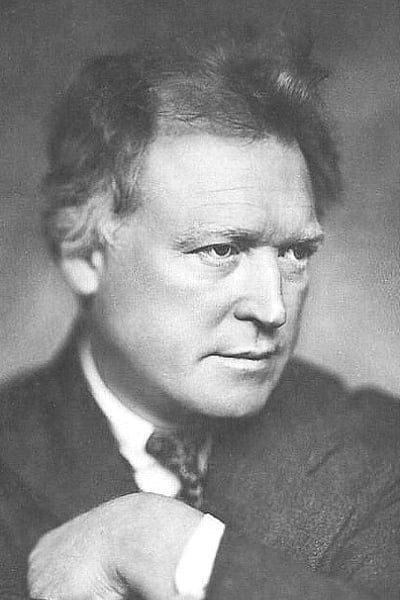
Janowitz and Mayer developed a scenario involving a fairground hypnotist, a seemingly passive murderer and a young man attempting to expose their connection. The film was made for Decla under producer Erich Pommer, with Rudolf Meinert involved in its production. Robert Wiene directed a project whose unusually stylized imagery depended upon the contributions of three artists: Hermann Warm, Walter Reimann and Walter Roehrig. The picture belongs to a specific moment in the rebuilding of German filmmaking after the war, when creative experimentation could also distinguish a domestic production in an increasingly competitive international market. Its visual conception should not be credited to a single author.
A famous account of the writing process came from Janowitz decades later. In his recollection, the original script attacked an authoritarian figure, while a new framing narrative supposedly neutralized that criticism by making the accuser mentally ill. Siegfried Kracauer adopted this explanation in his influential 1947 interpretation of German cinema. Subsequent manuscript research has complicated it. Film historian Nicholas Baer notes that Kracauer relied on a 1941 memoir rather than the original screenplay; scholarship examining surviving script material has challenged the notion that the writers supplied a completely unframed narrative. The exact sequence of creative decisions cannot responsibly be reconstructed from Janowitz's retrospective testimony alone.
What can be observed directly is that the released film retains two competing accounts of Caligari. A story of apparently criminal medical authority culminates in an institutional setting whose reliability remains difficult to determine. The choice to build that ambiguity around an elaborate painted world was both artistic and practical. In a 2020 centenary study, the BFI describes the commercial appeal of an Expressionist appearance already familiar in other German arts. The production's accomplishment was to bring those approaches together across an entire feature, without proving that every aspect of its design emerged from a single ideological program.
The Painted Town and Expressionist Design
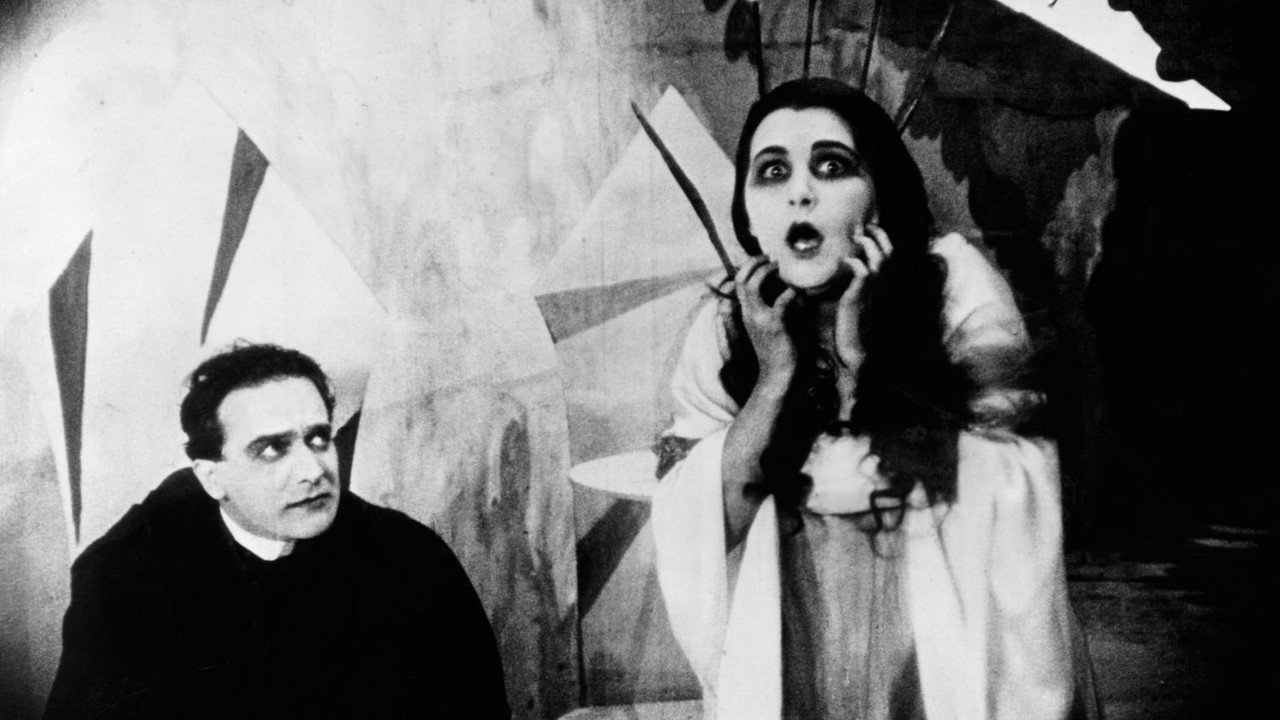
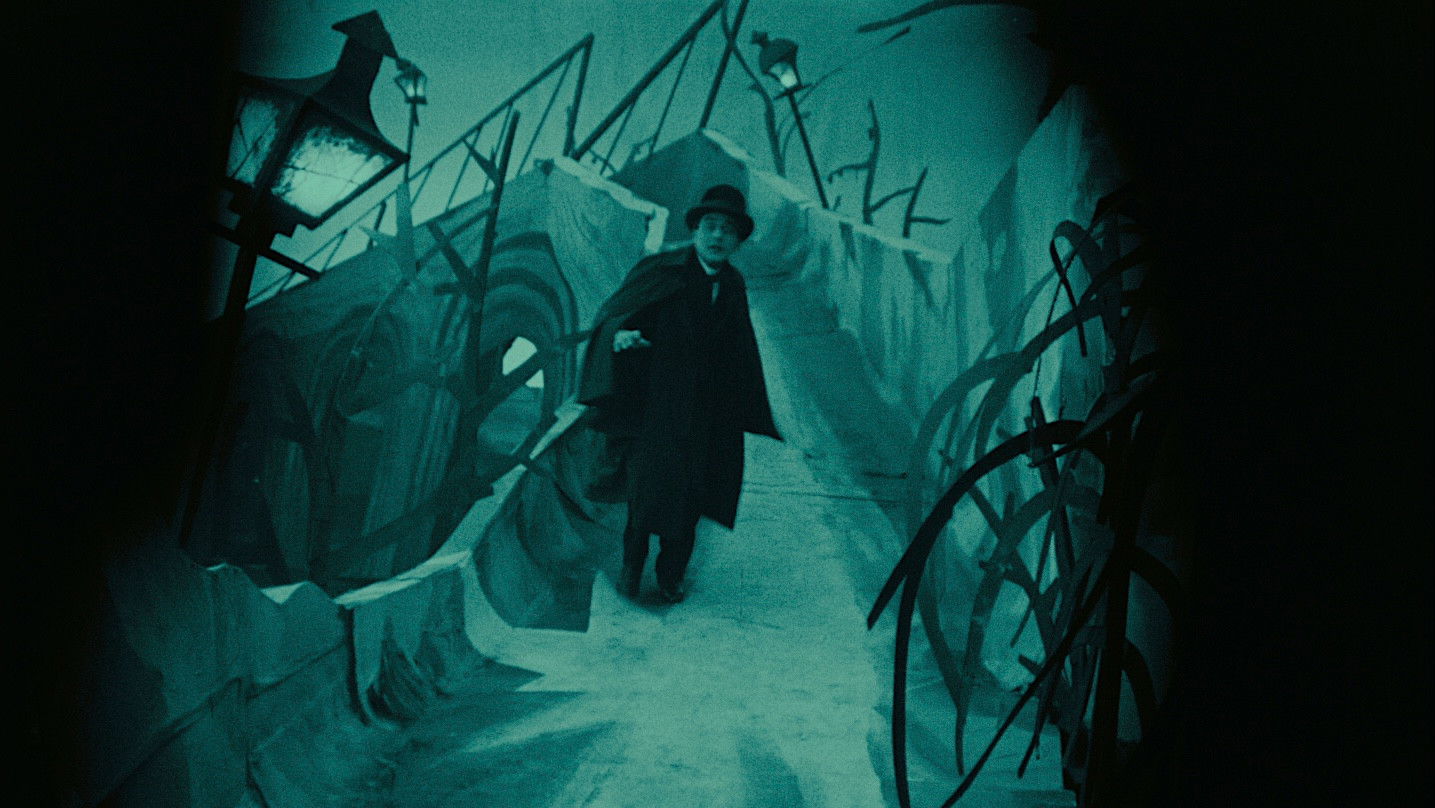
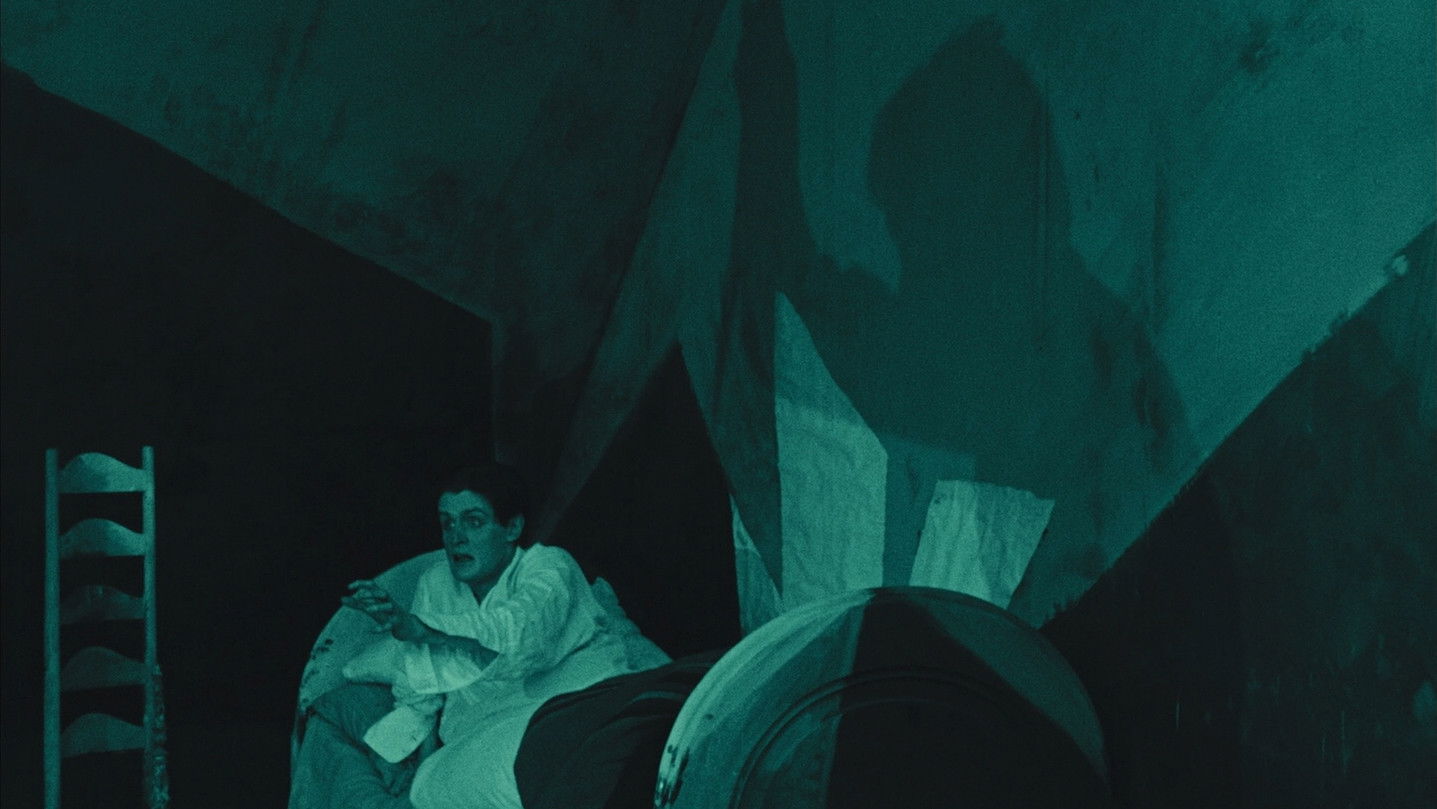
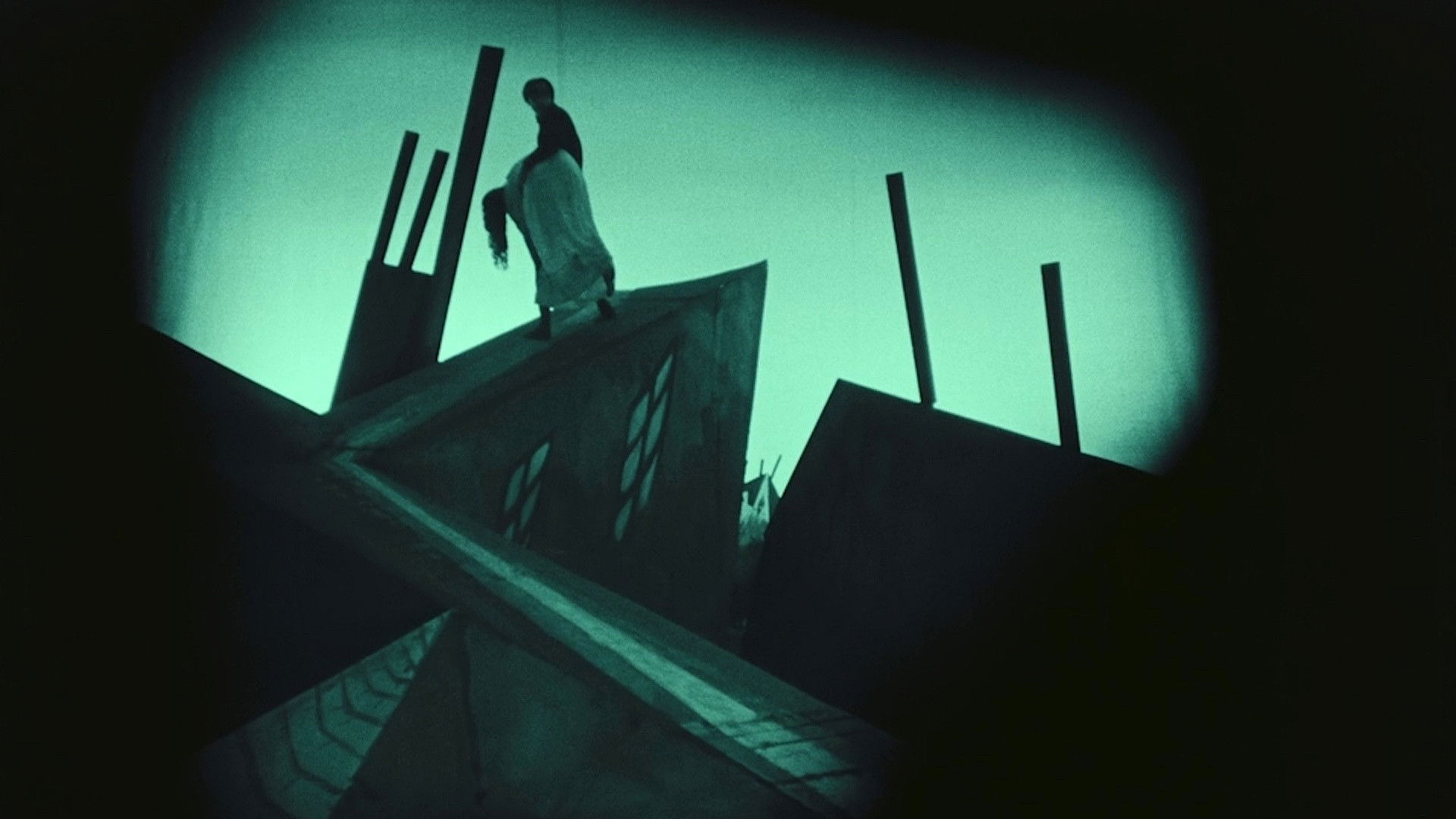
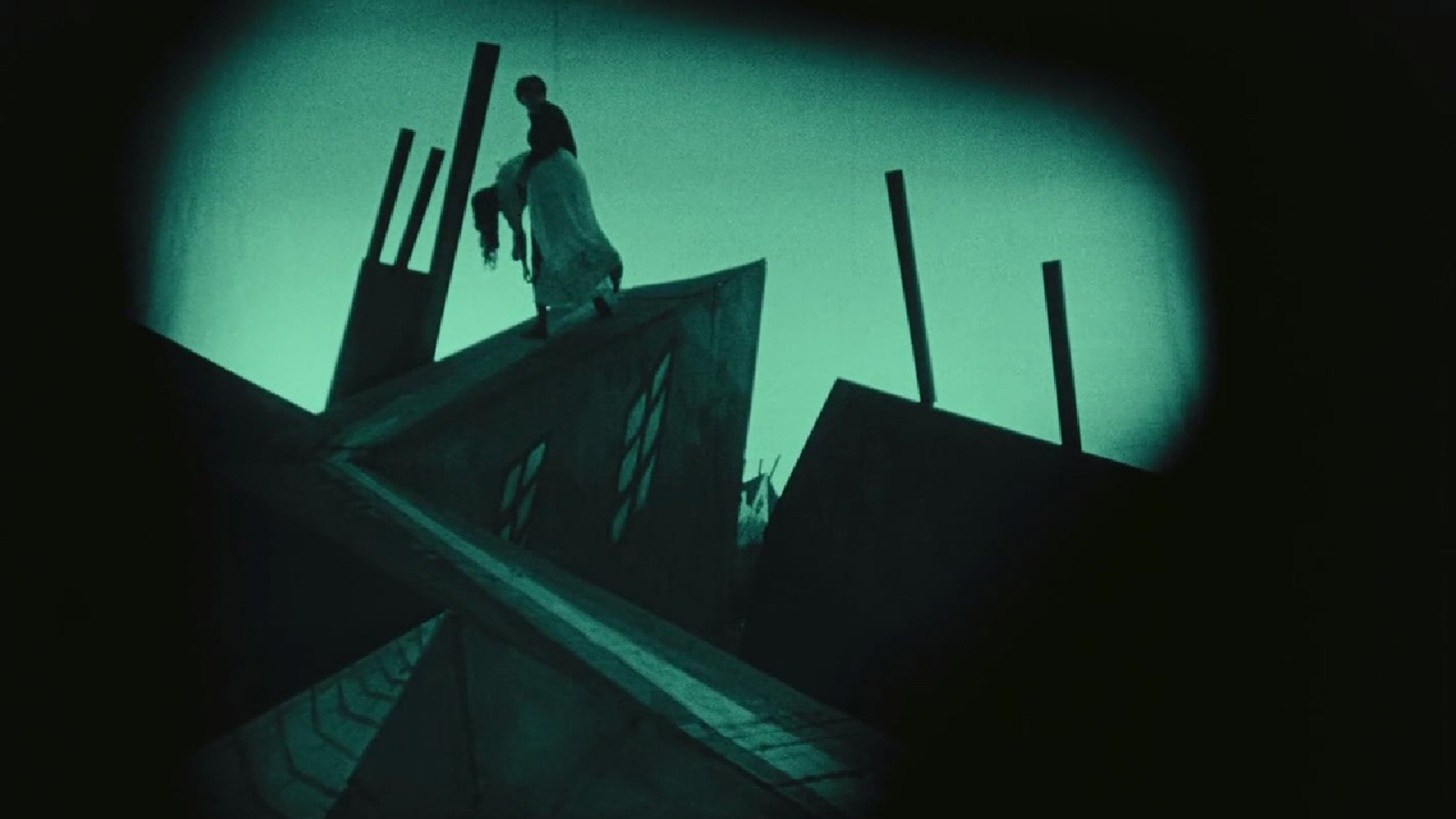
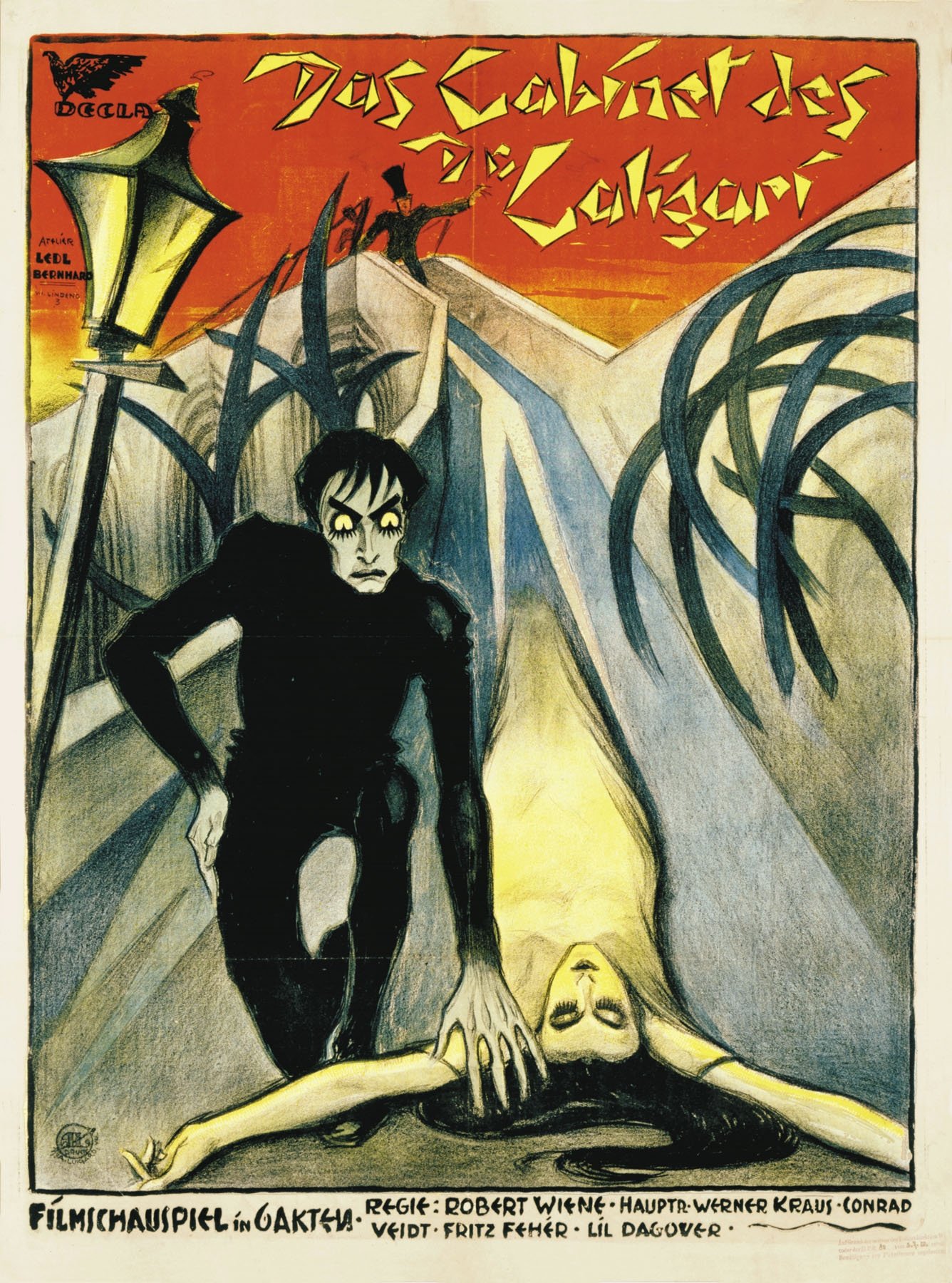
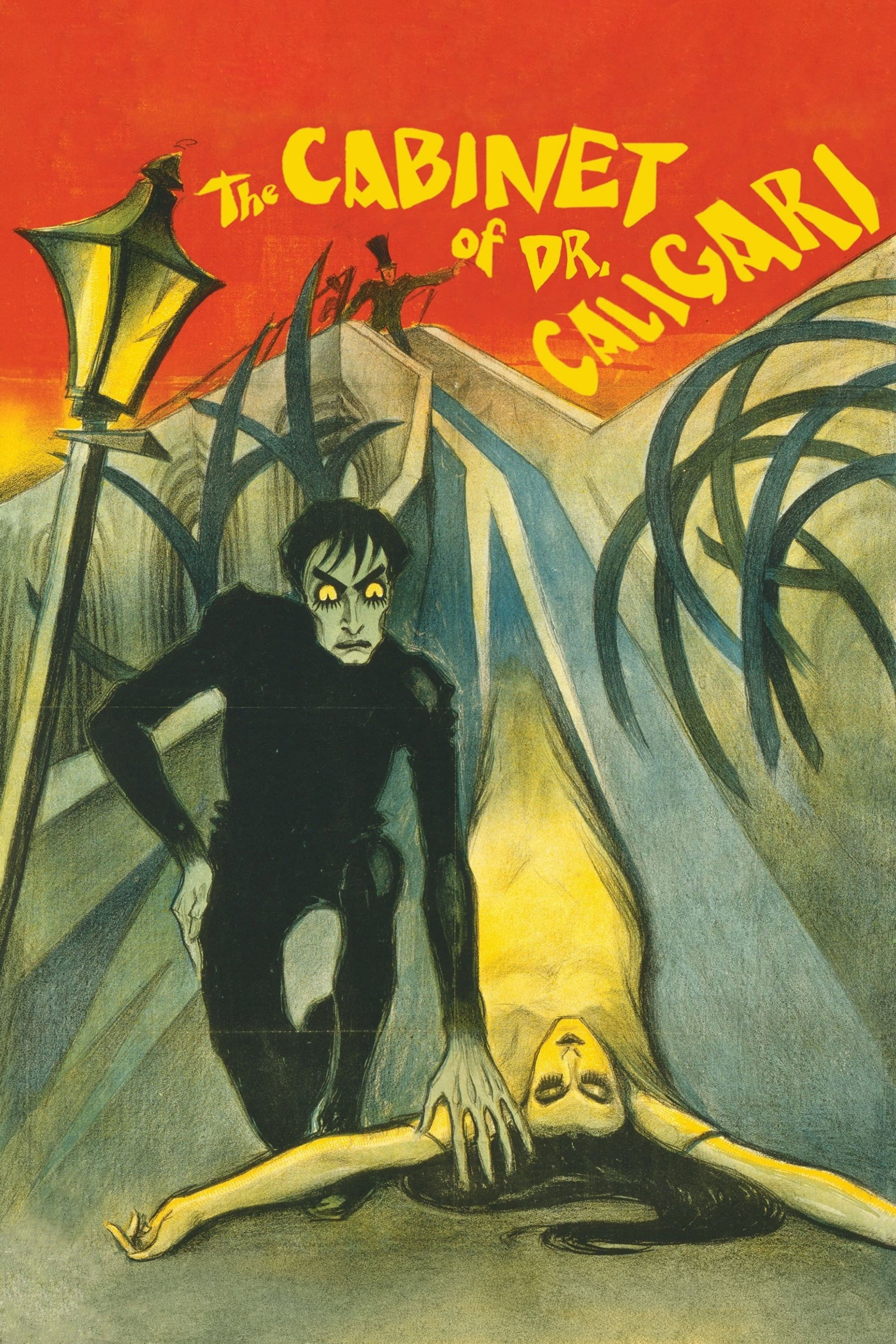
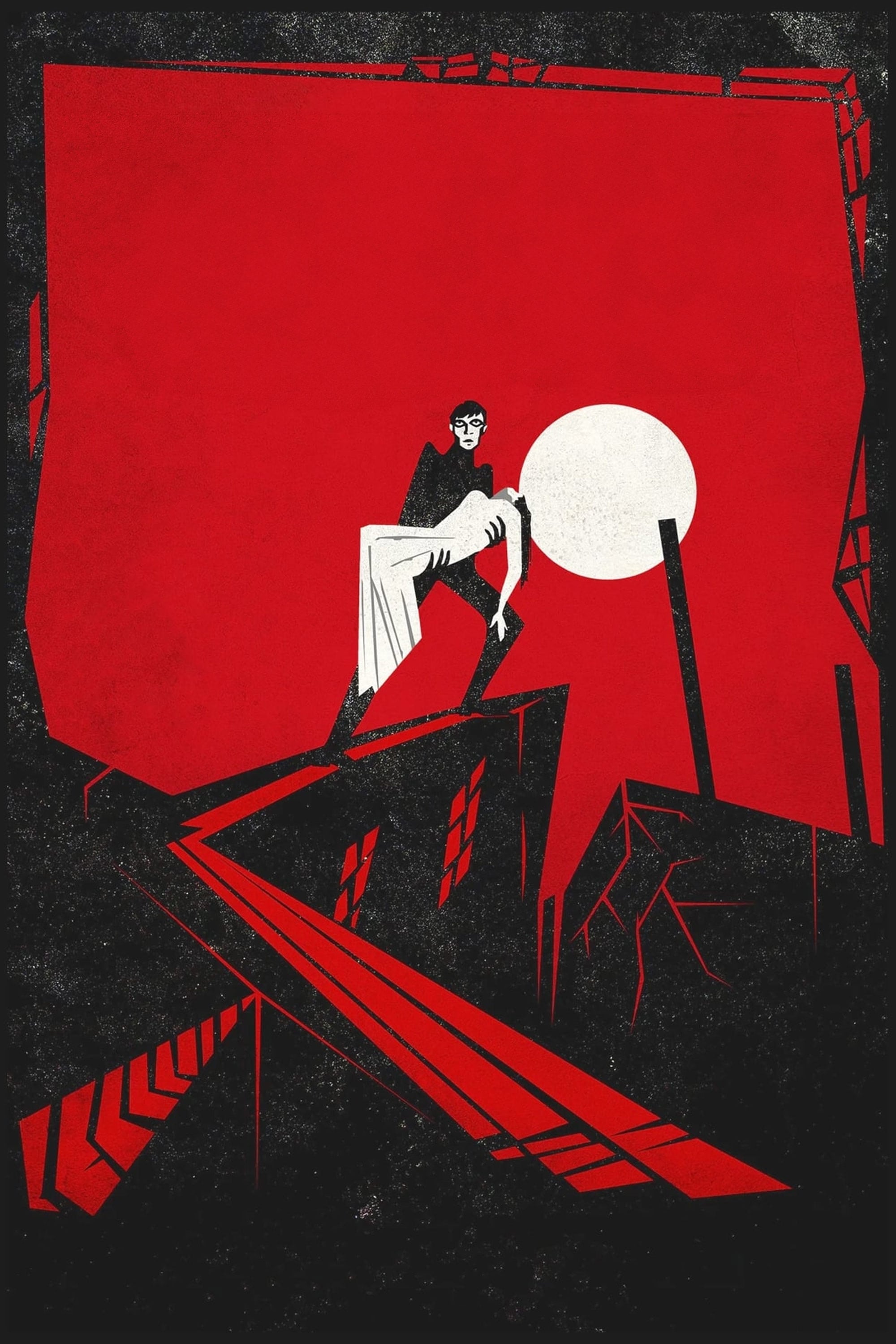
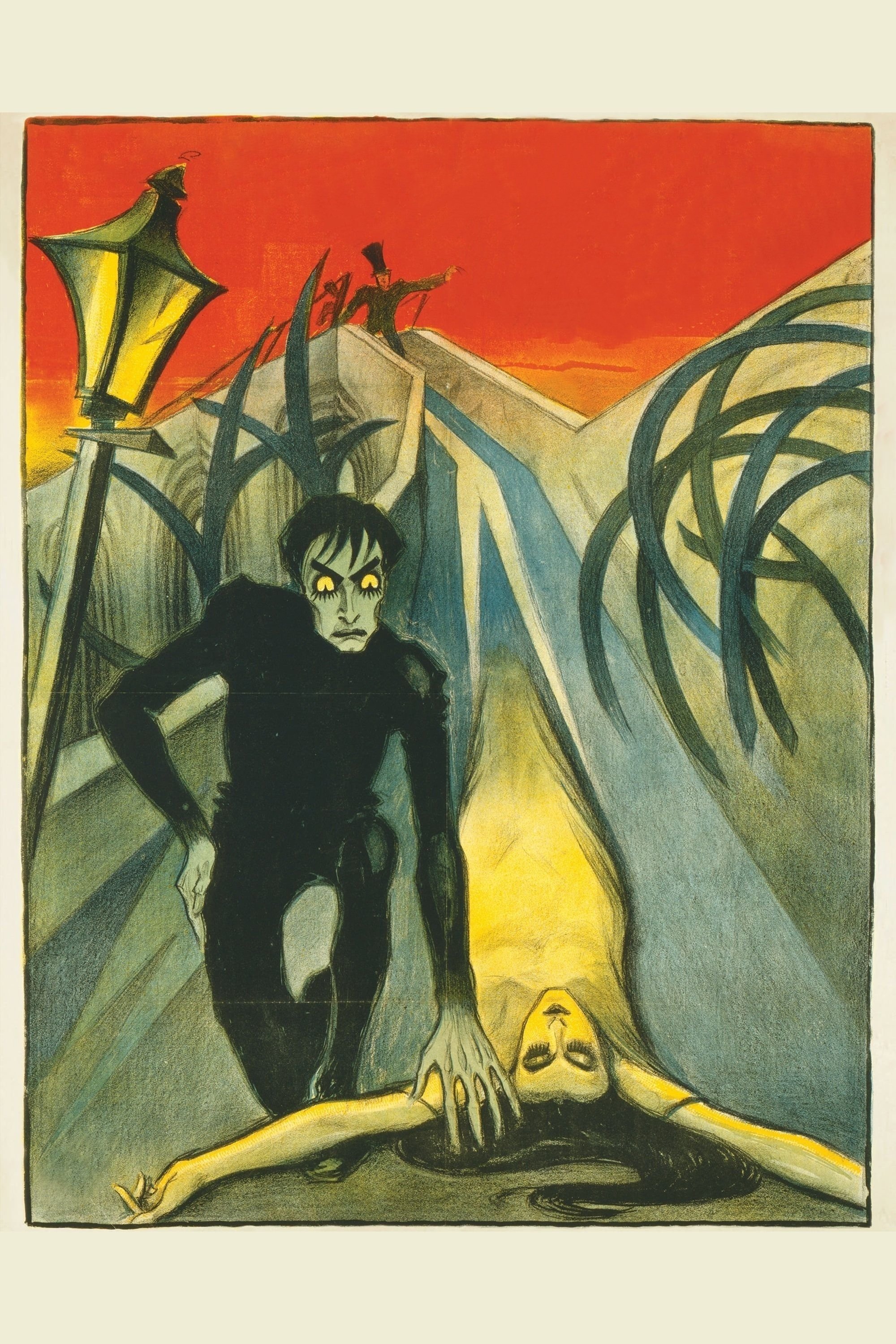
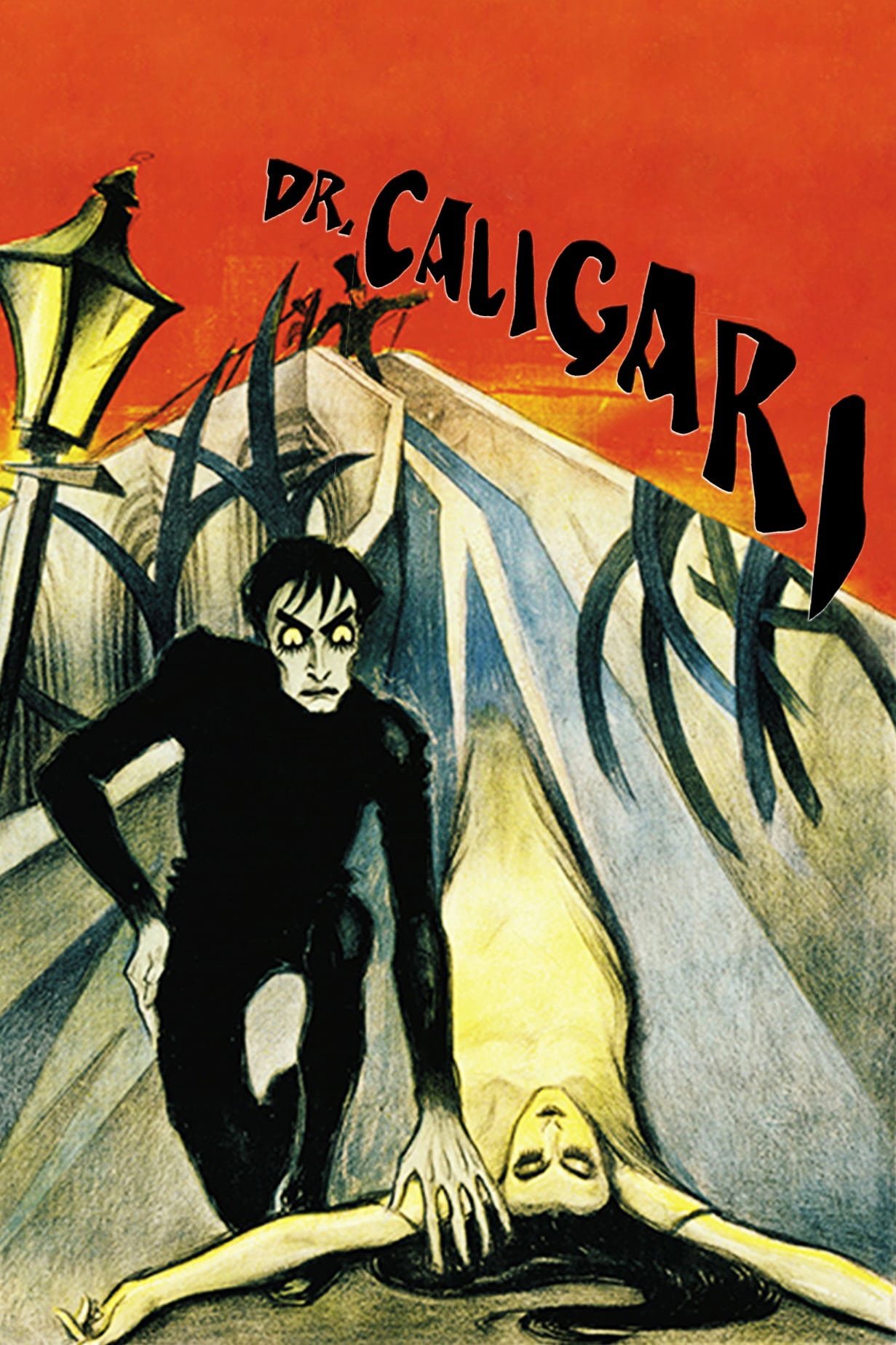
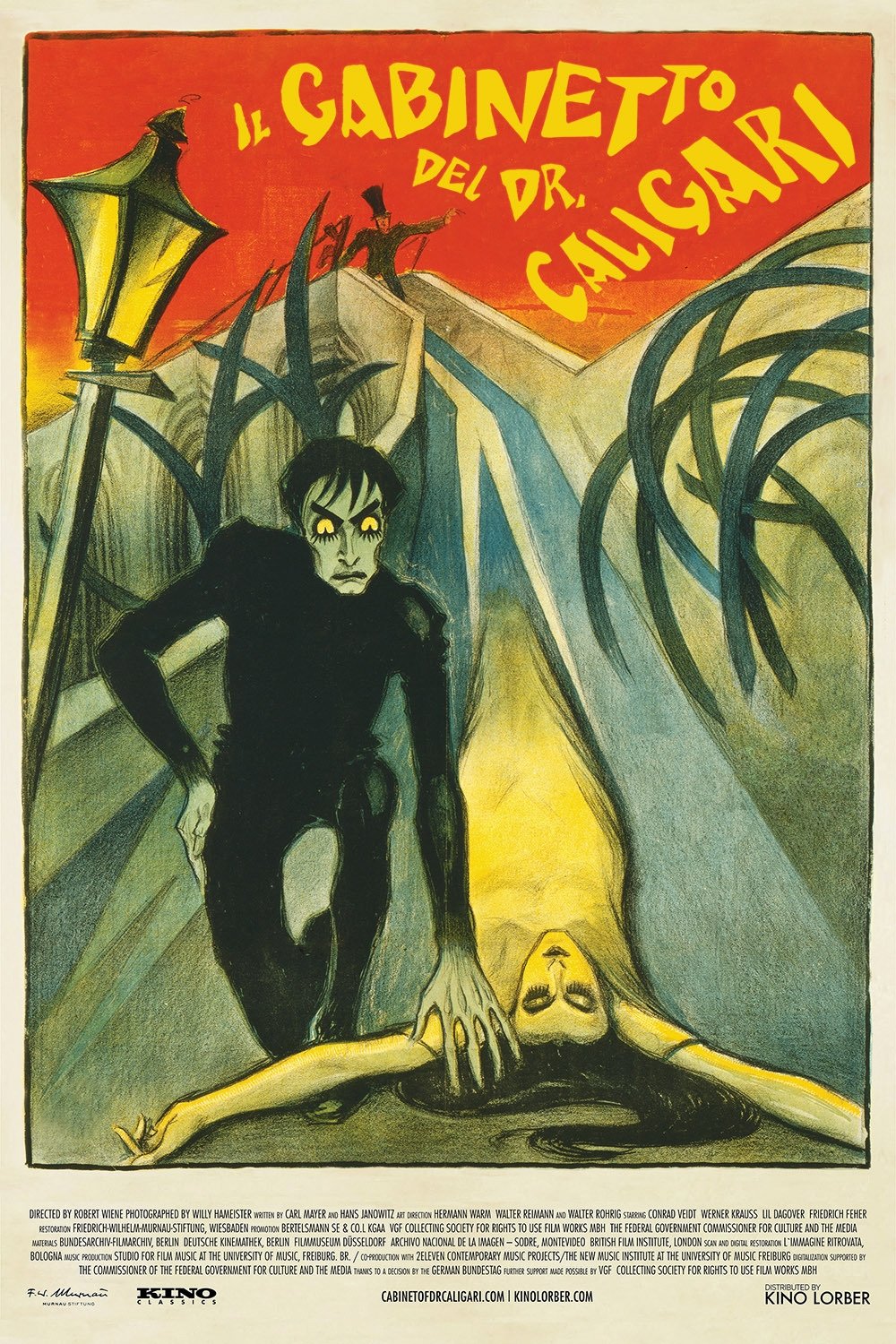
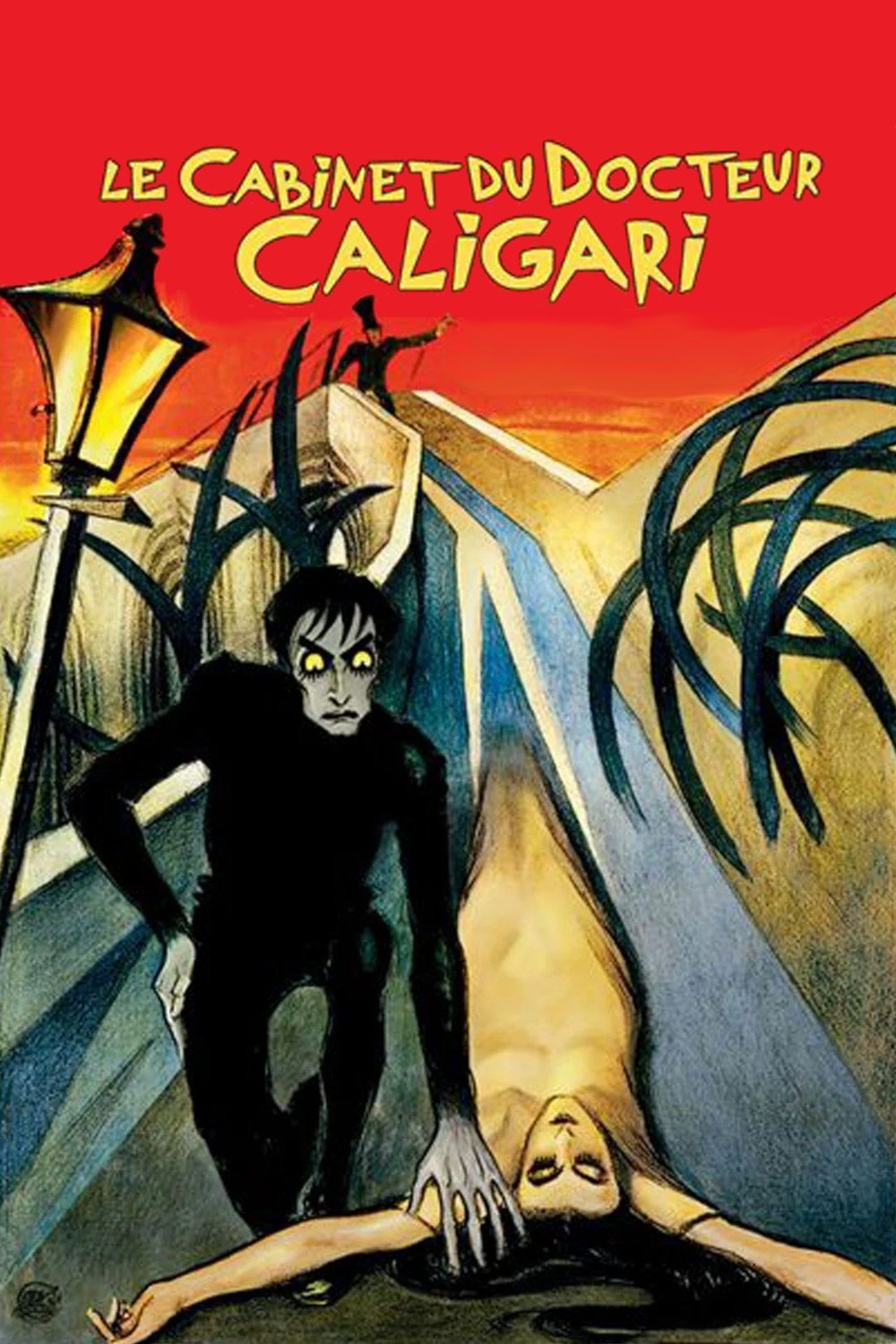
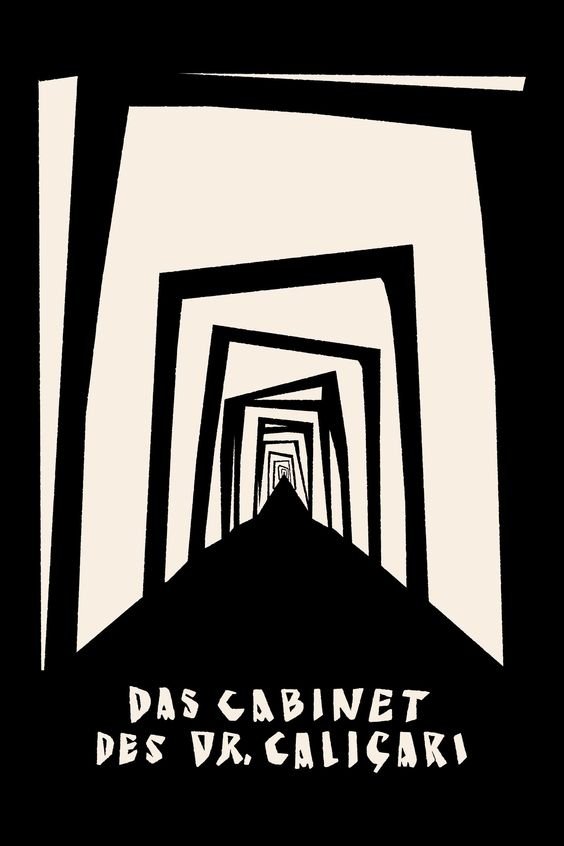
The film's streets are built from slanting facades, pointed roofs, compressed alleys and irregular windows. Much of the apparent illumination exists as painted markings within the sets: bright surfaces and dark slashes do not always correspond to a realistic light source. The result is spatial unease before any assault occurs. A town square can feel like a trap because paths converge at implausible angles, and a bedroom looks exposed despite its enclosing walls. The scenery rejects a neutral background in favor of shapes that press upon the actors, making architecture an active element of the horror.
The designers worked within the Expressionist vocabulary of contemporary painting and theater, but their method had a particularly cinematic application. A fixed camera position can make flat artwork and shallow scenery resemble a larger, coherent world; movement through that world then reveals the strain between depicted perspective and physical space. The BFI connects the film's success to its unusually comprehensive use of the style, while the Deutsche Kinemathek documents later reconstructions by Warm that demonstrate the original sets' construction. Such archival models are valuable records of design, though reconstructions made decades later should not be confused with intact scenery from the shoot.
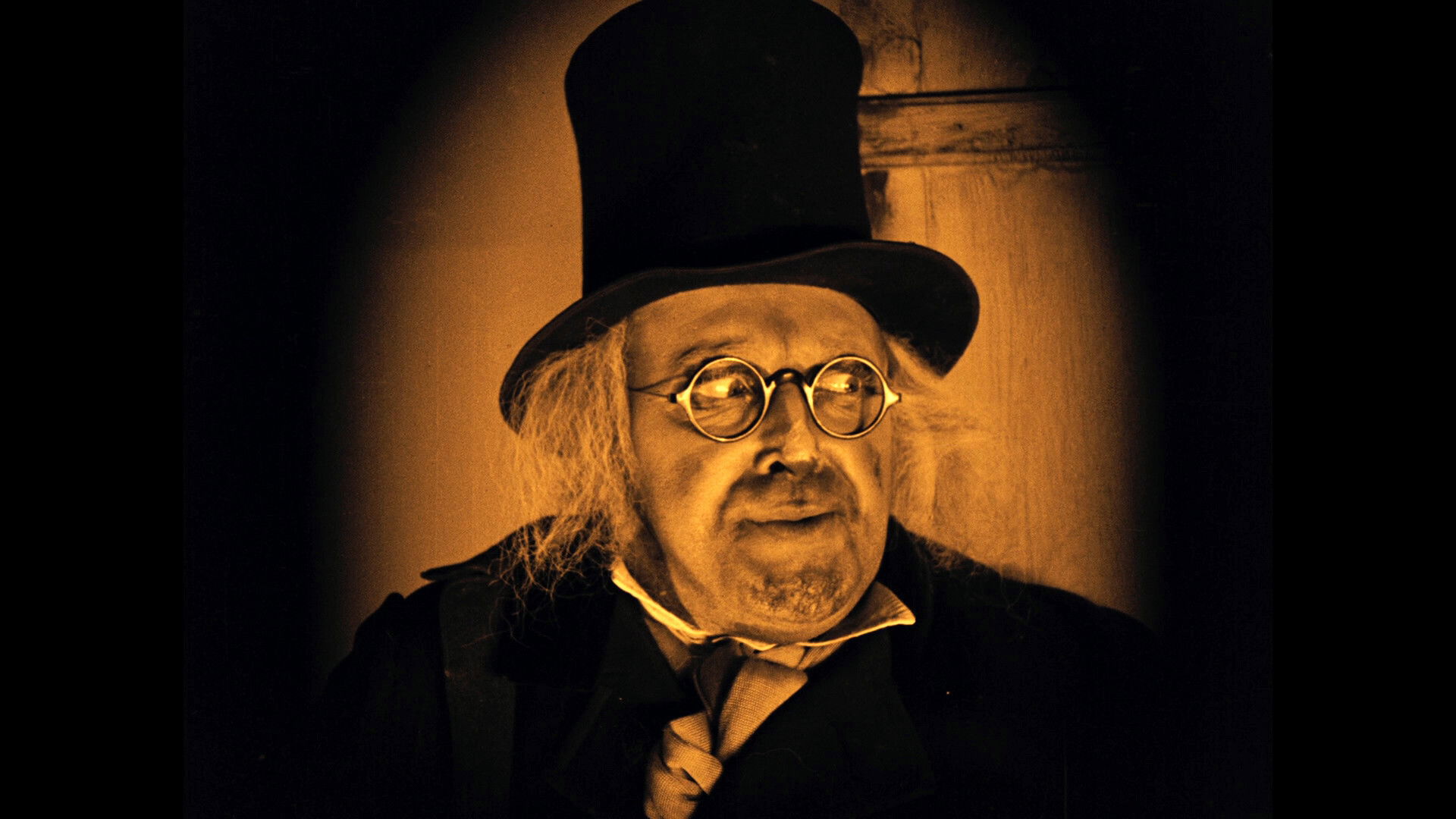
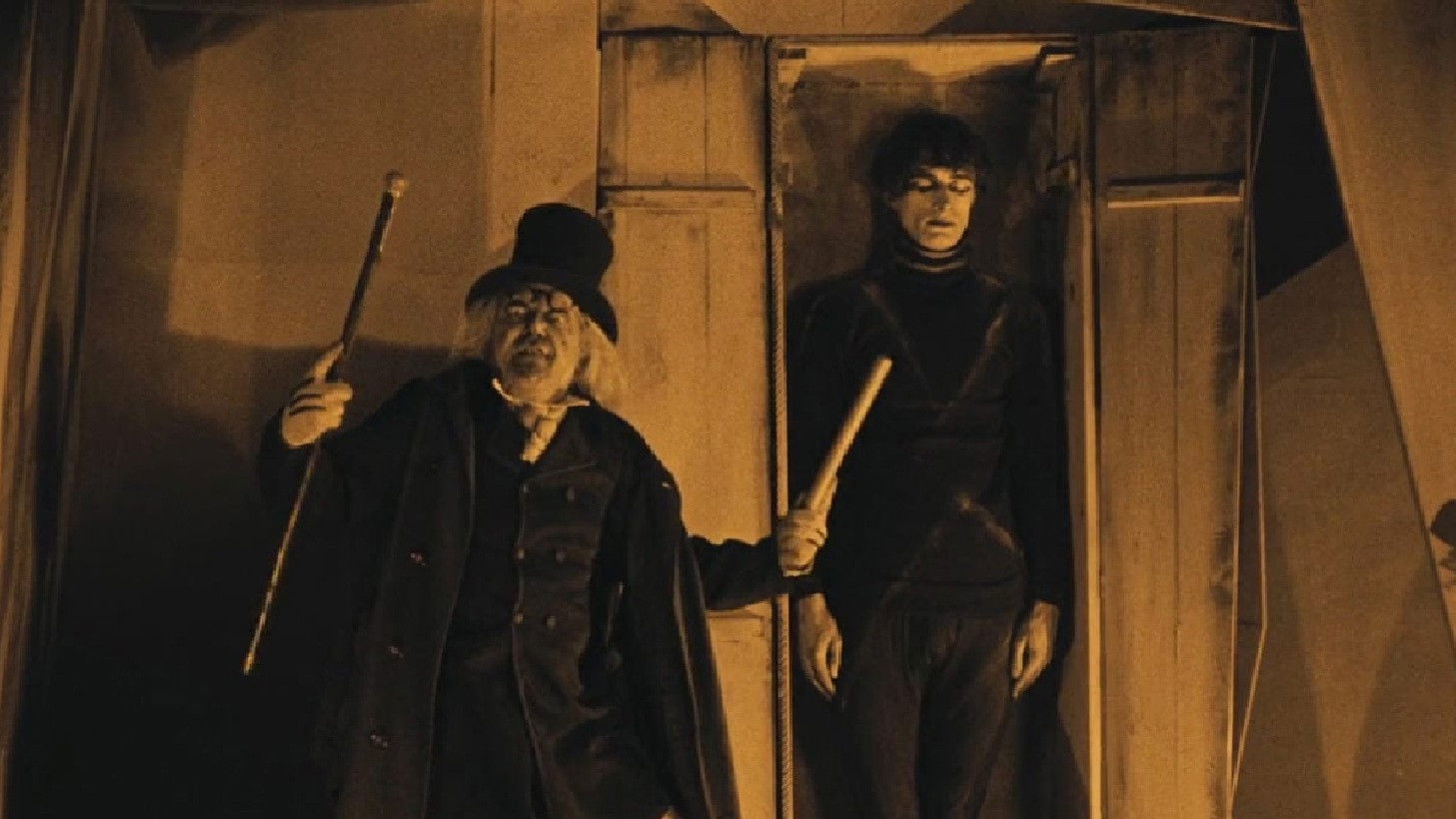
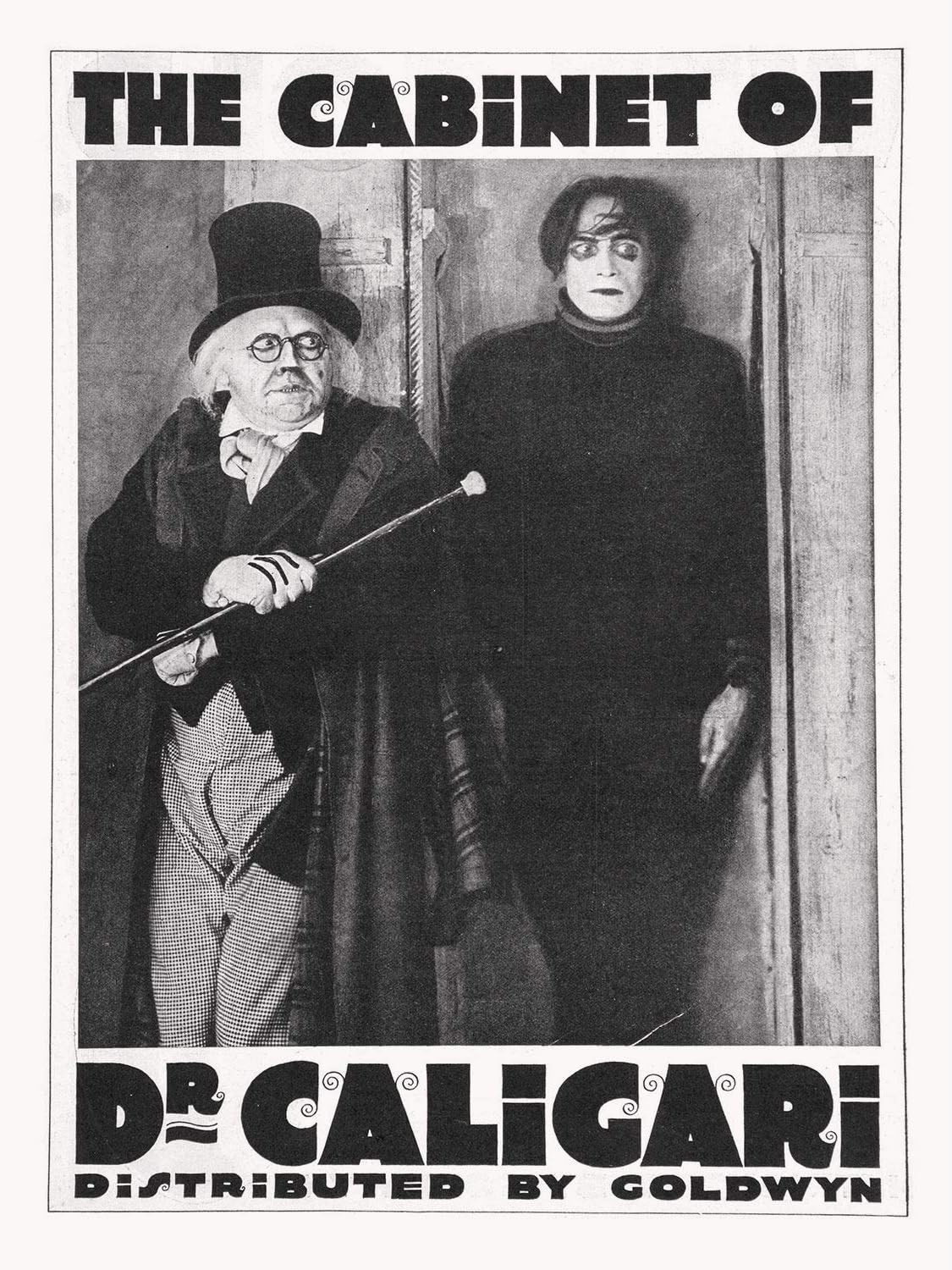
Wiene's compositions also align bodies with the surroundings. Caligari's costume and abrupt gestures suit the crowded corners of his booth, while Cesare's narrow silhouette echoes the aggressive verticals of the town. This close relationship between performer and set creates the sensation of an environment governed by the same disturbance as its inhabitants. Realism is not the standard by which these spaces should be measured. Their visual purpose is to destabilize orientation, anticipate the threat of manipulation and keep the viewer from locating a wholly reliable position outside the mystery.
Cesare, the Body and the Threat of Control
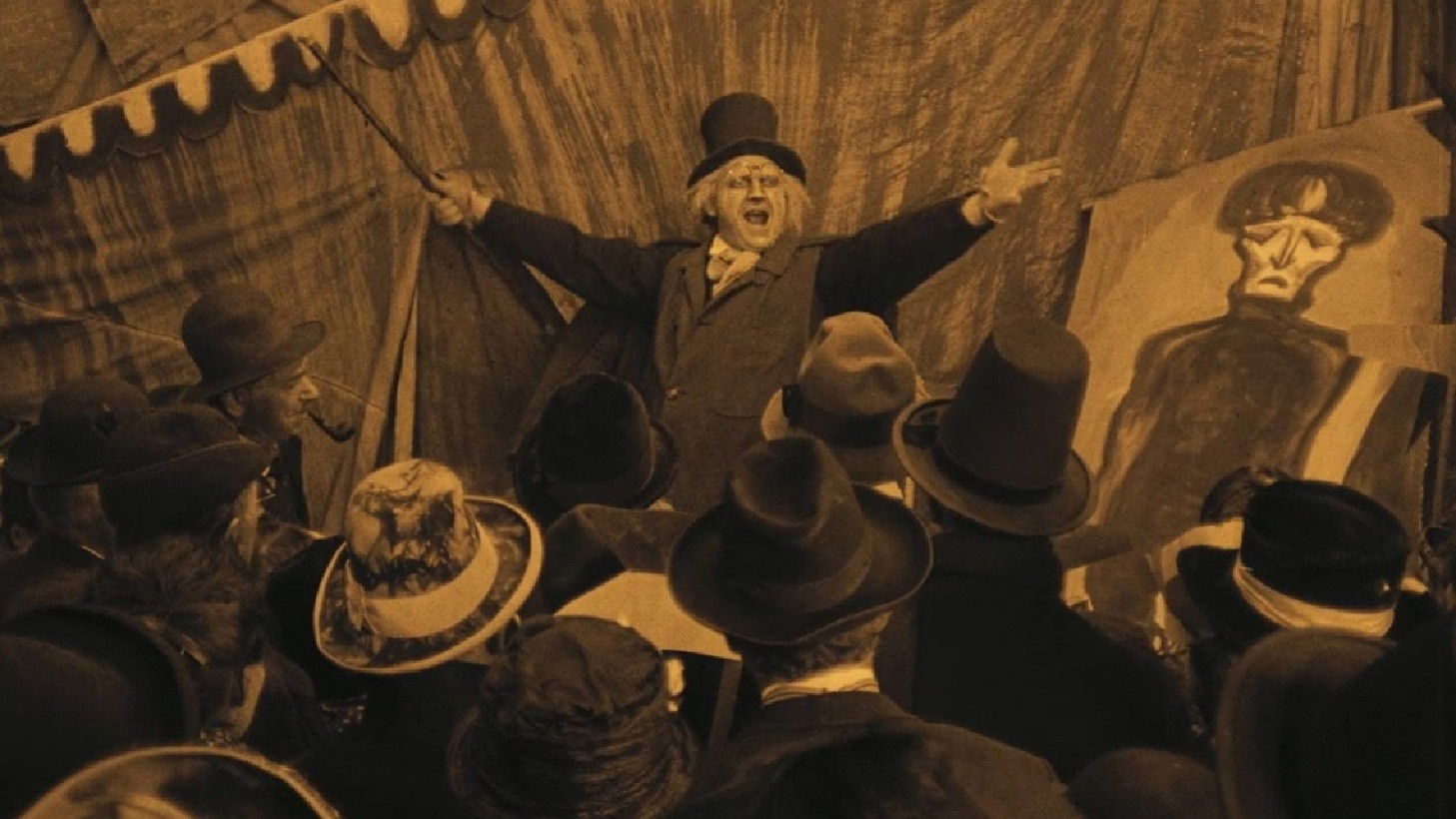
Cesare's arrival at the fairground converts a public attraction into a display of physical domination. Caligari presents him as a man who spends nearly all his life asleep but can be awakened to answer questions about the future. The spectacle suggests that the somnambulist's body belongs to its exhibitor. When violence follows, the uncertainty concerns who is responsible for the action: the person holding the weapon or the authority that commands him. The question had particular force for later commentators writing about Germany's experience of mass mobilization, although identifying Cesare with soldiers sent to war remains a historical interpretation, not a stated production fact.
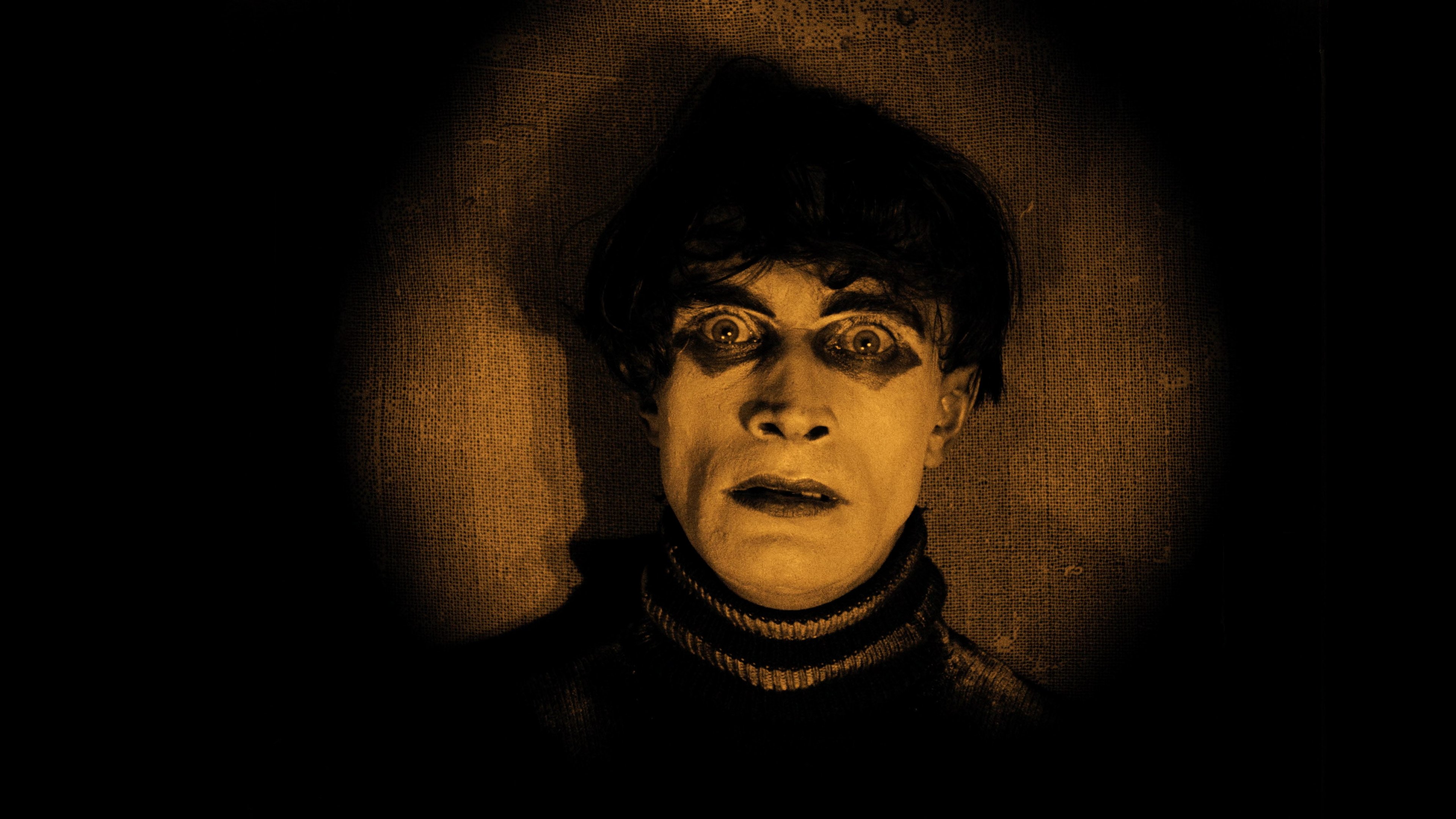
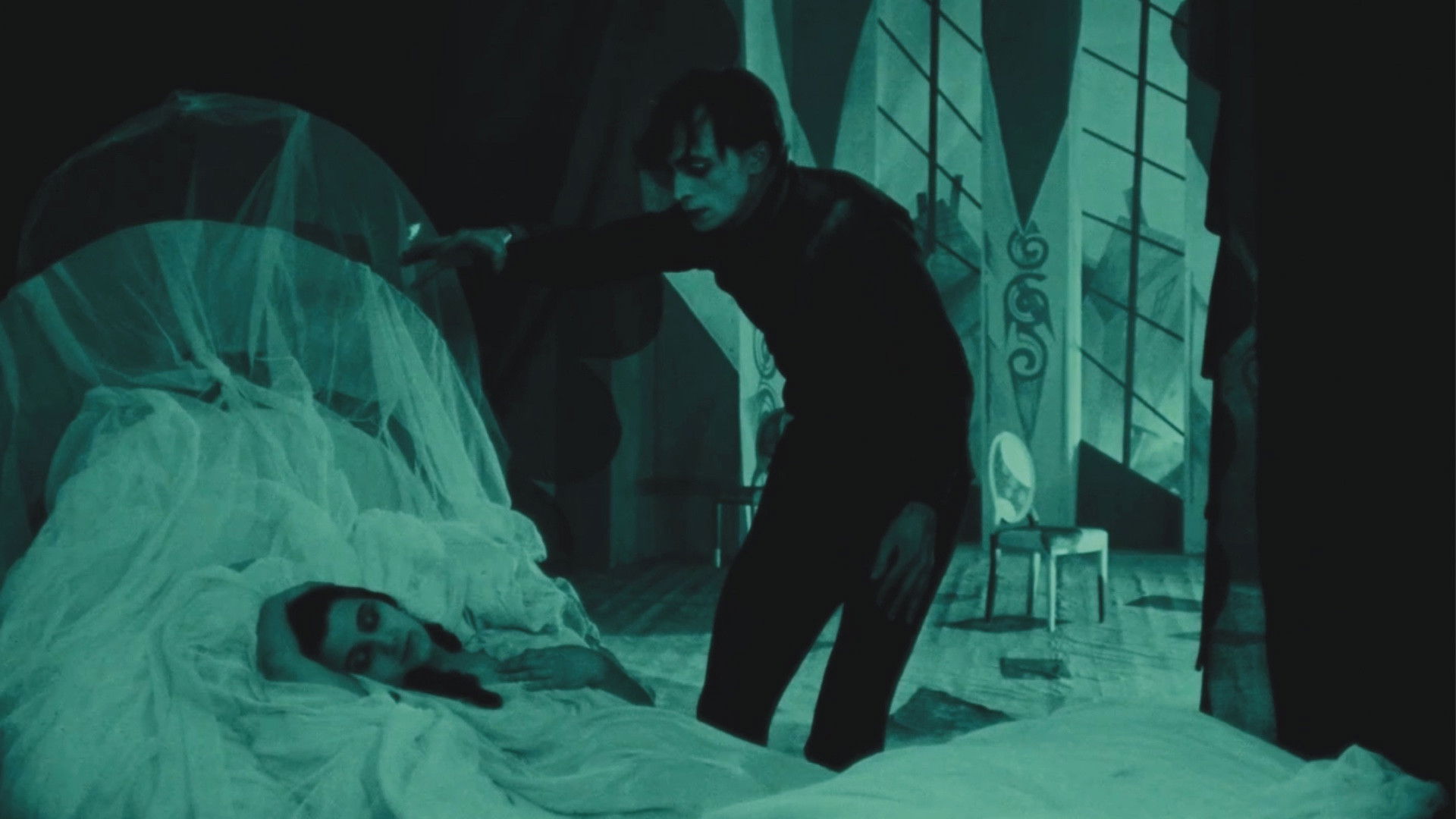
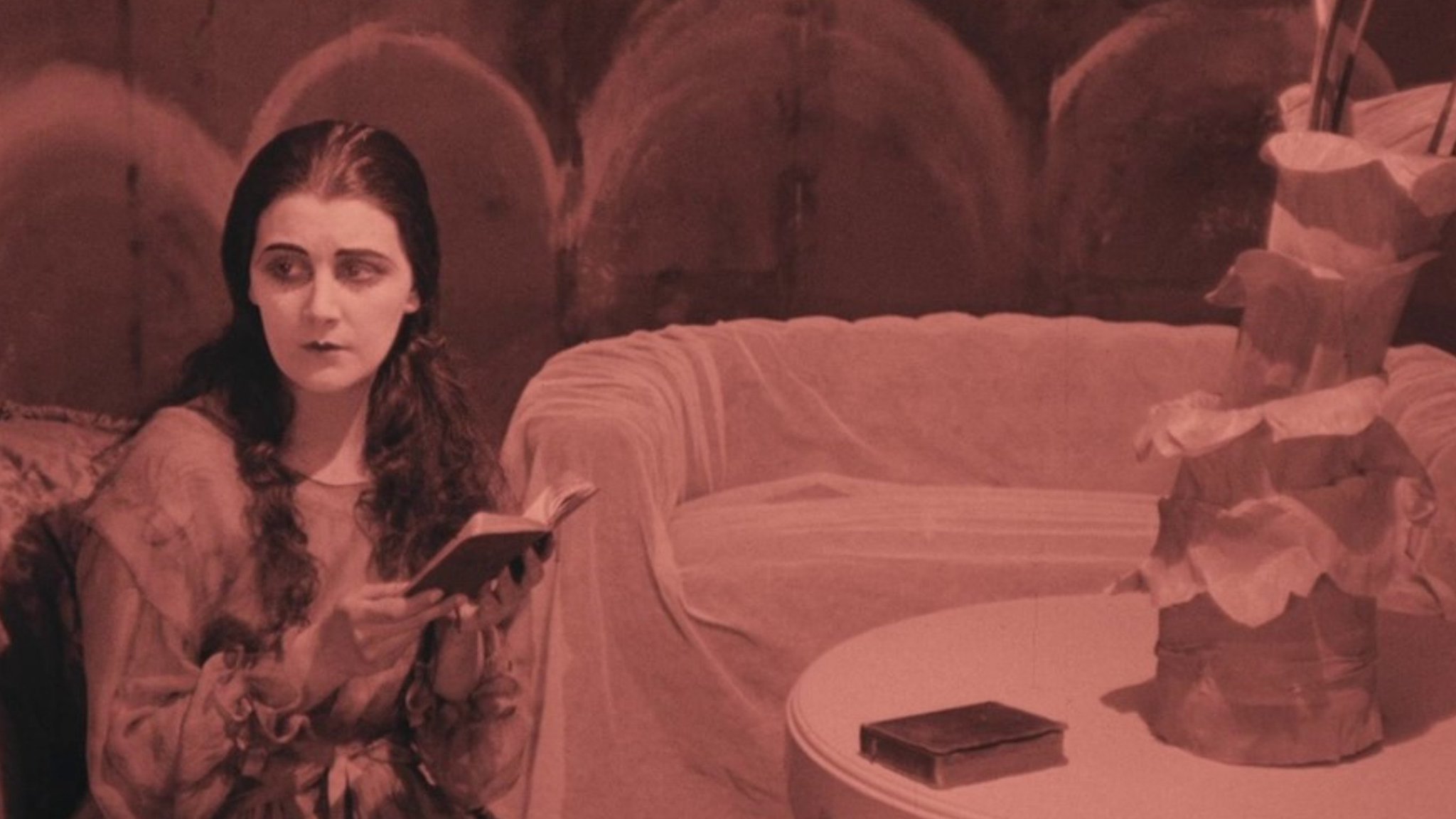
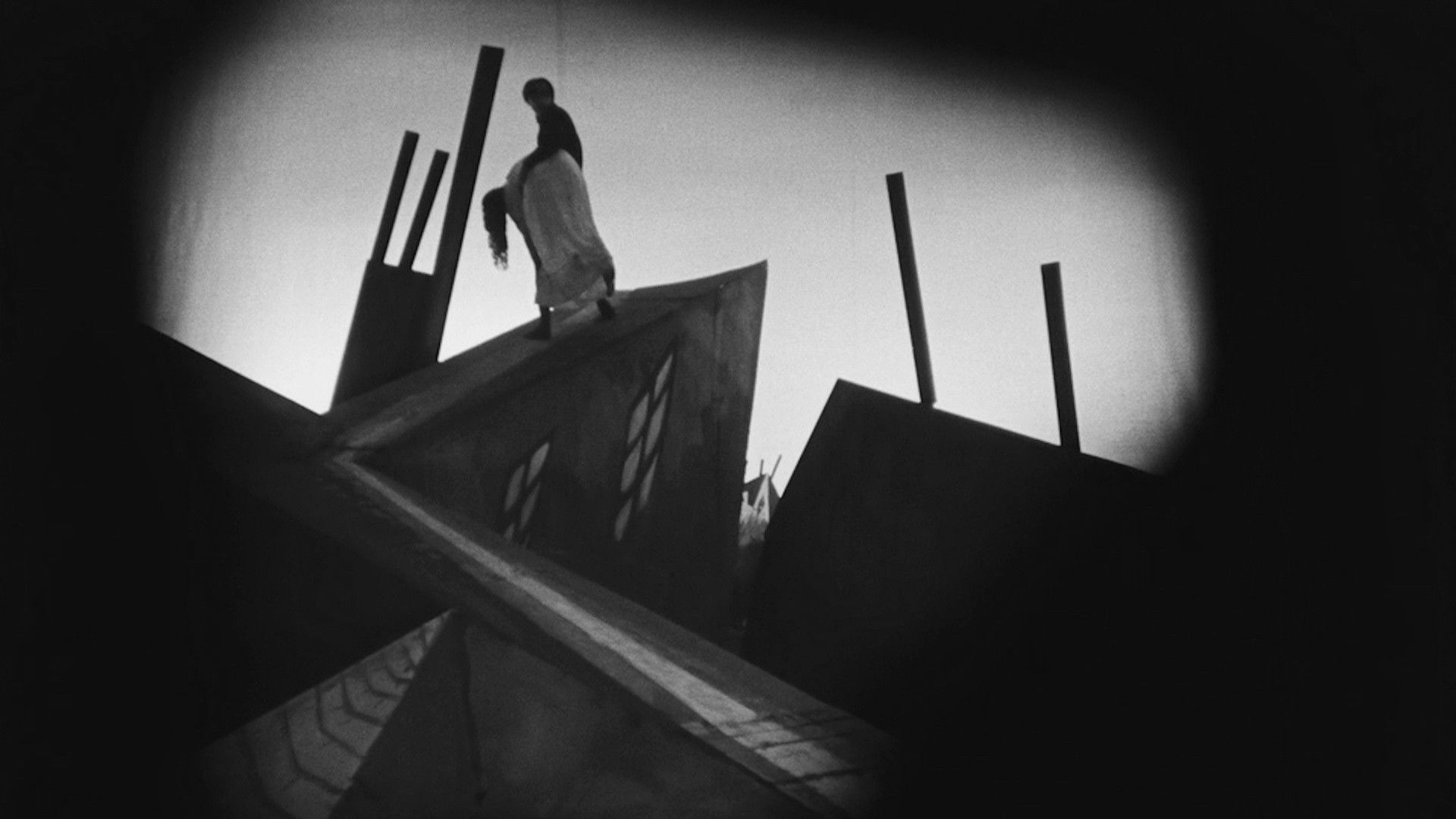
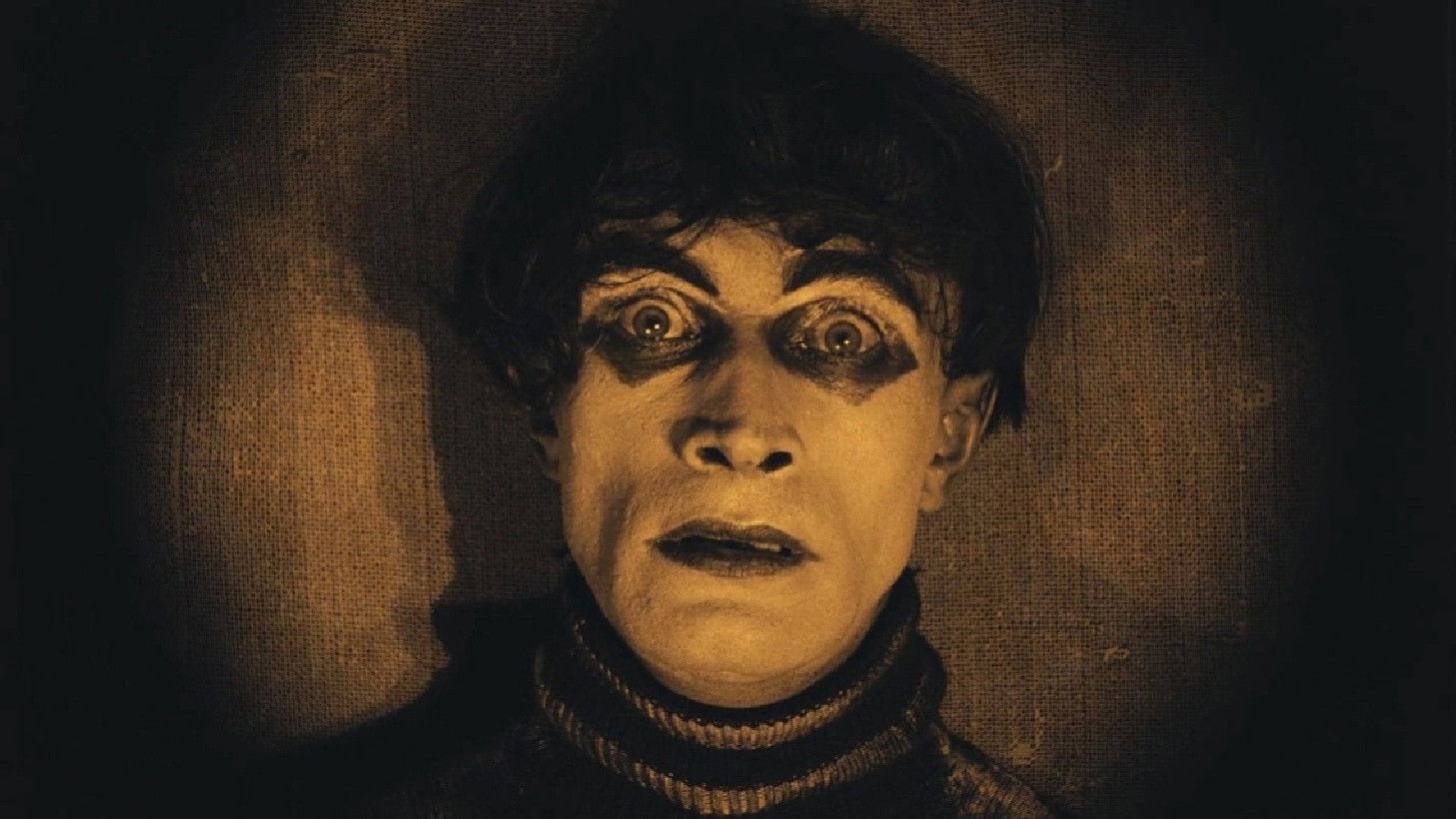
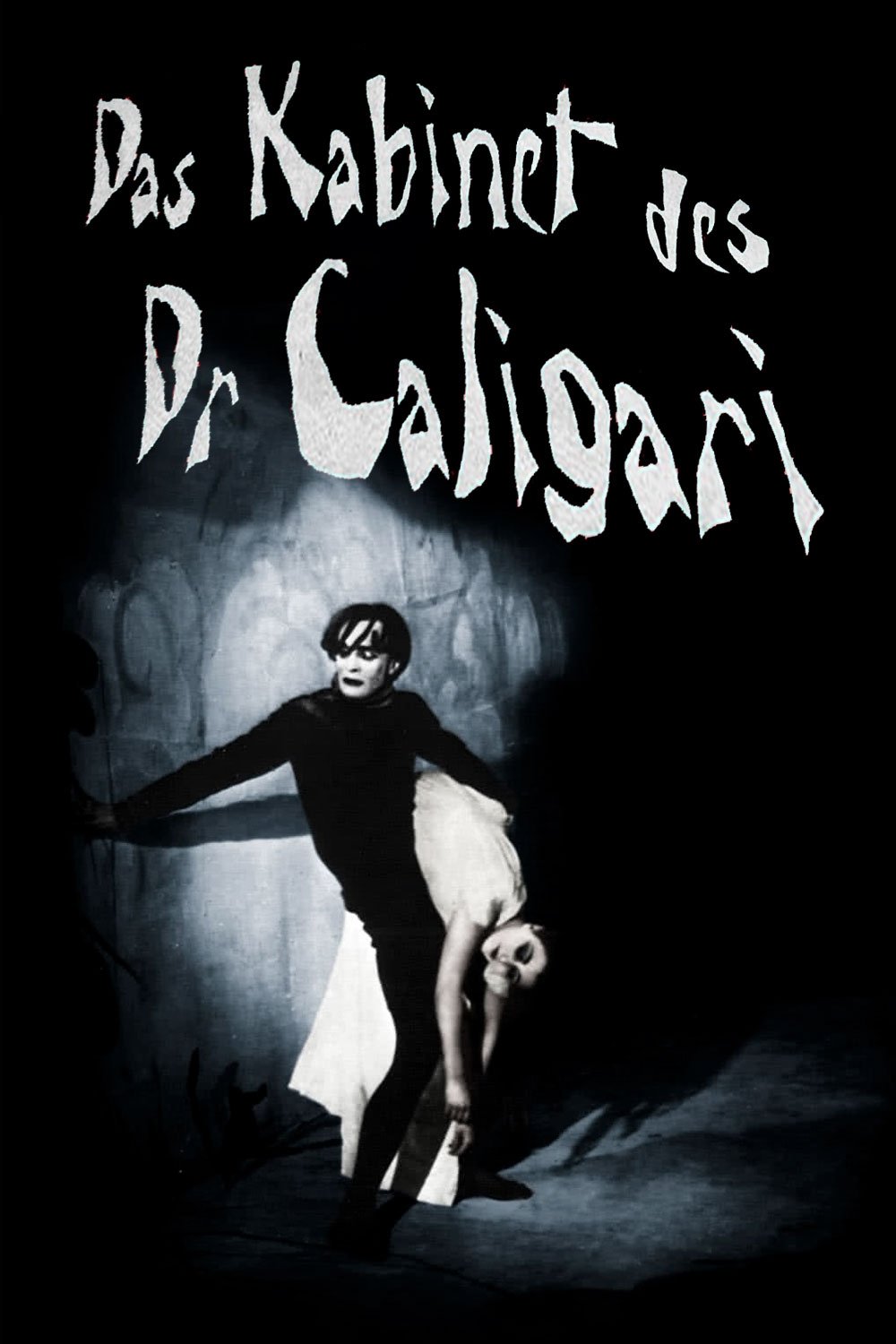
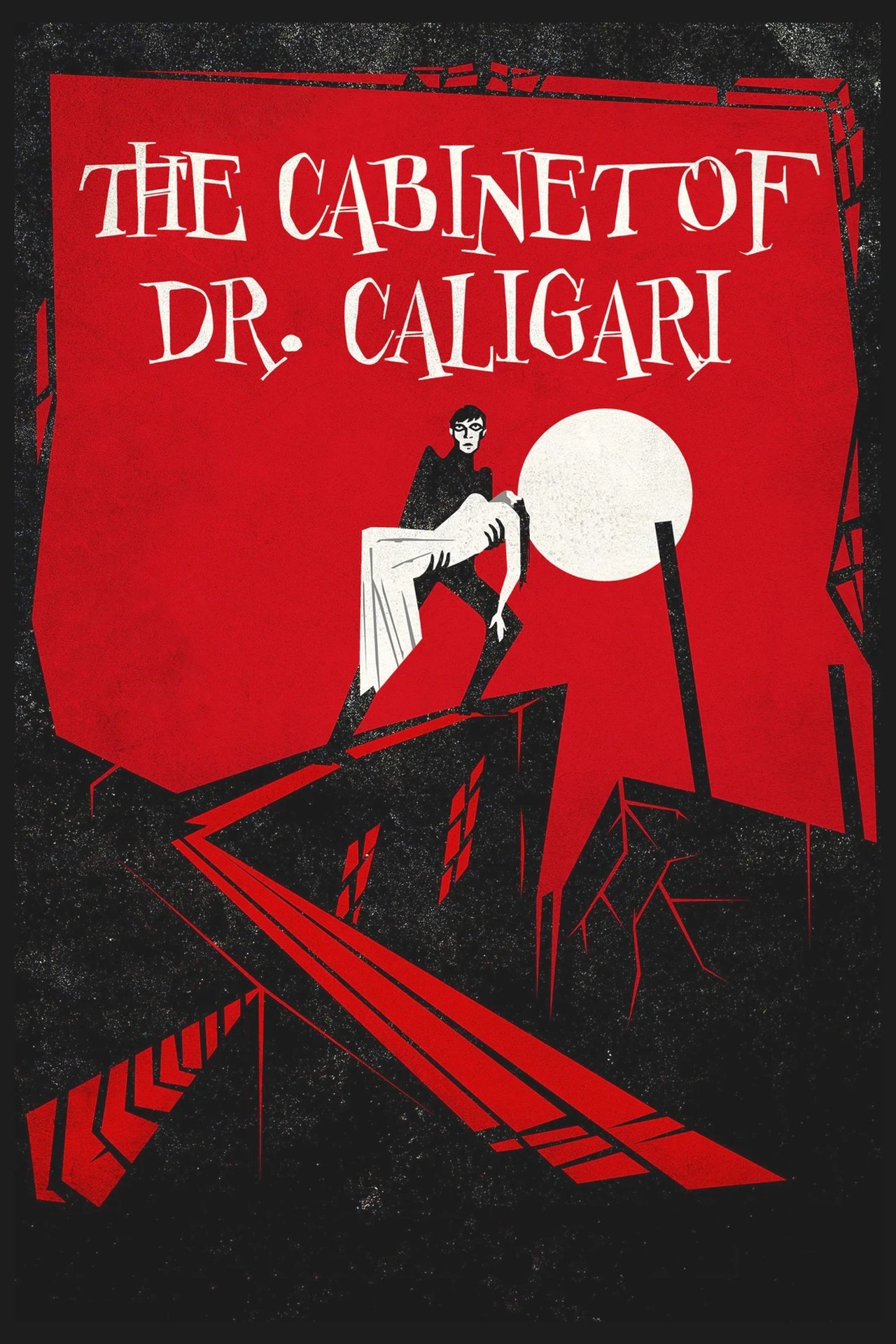
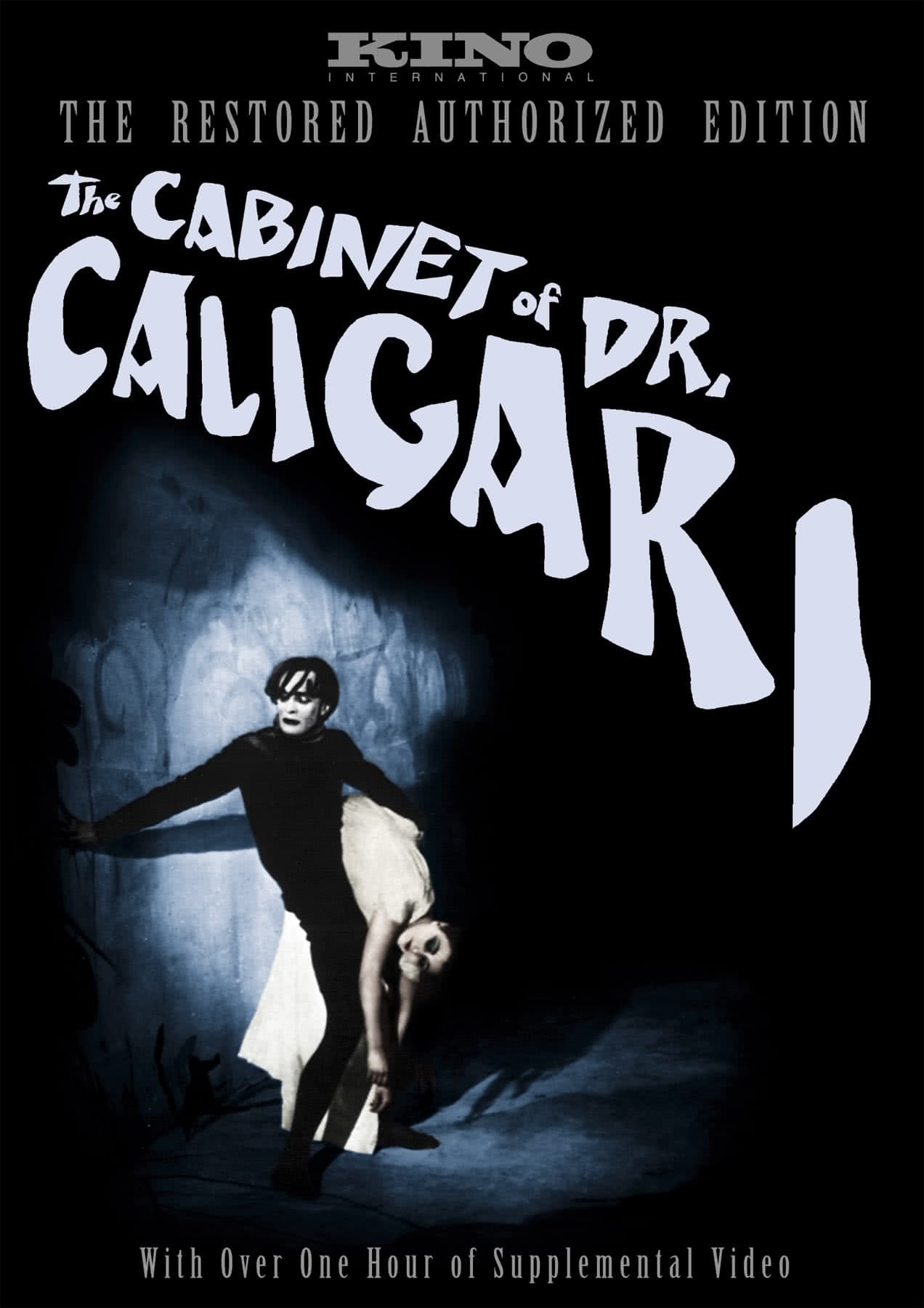
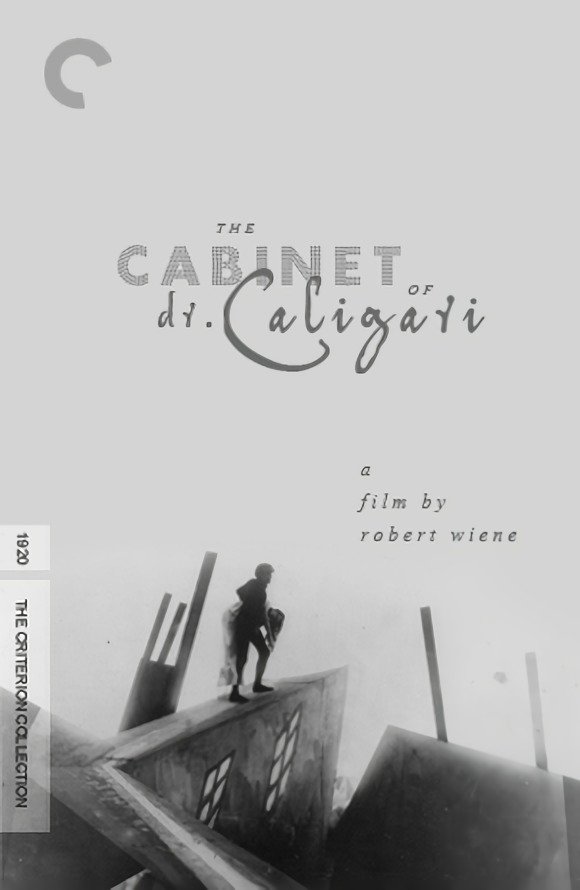
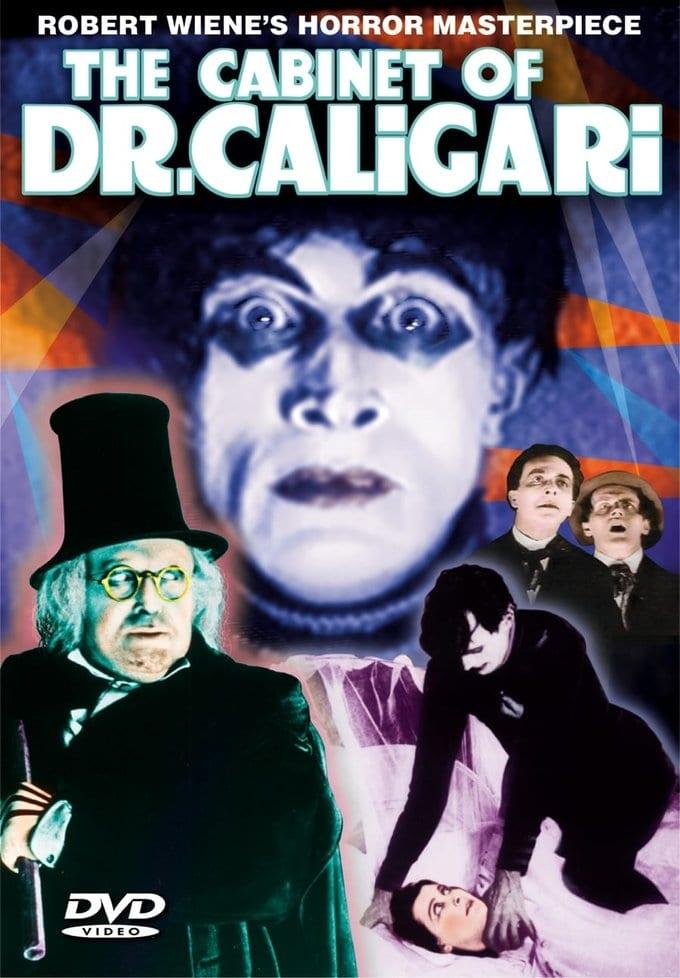
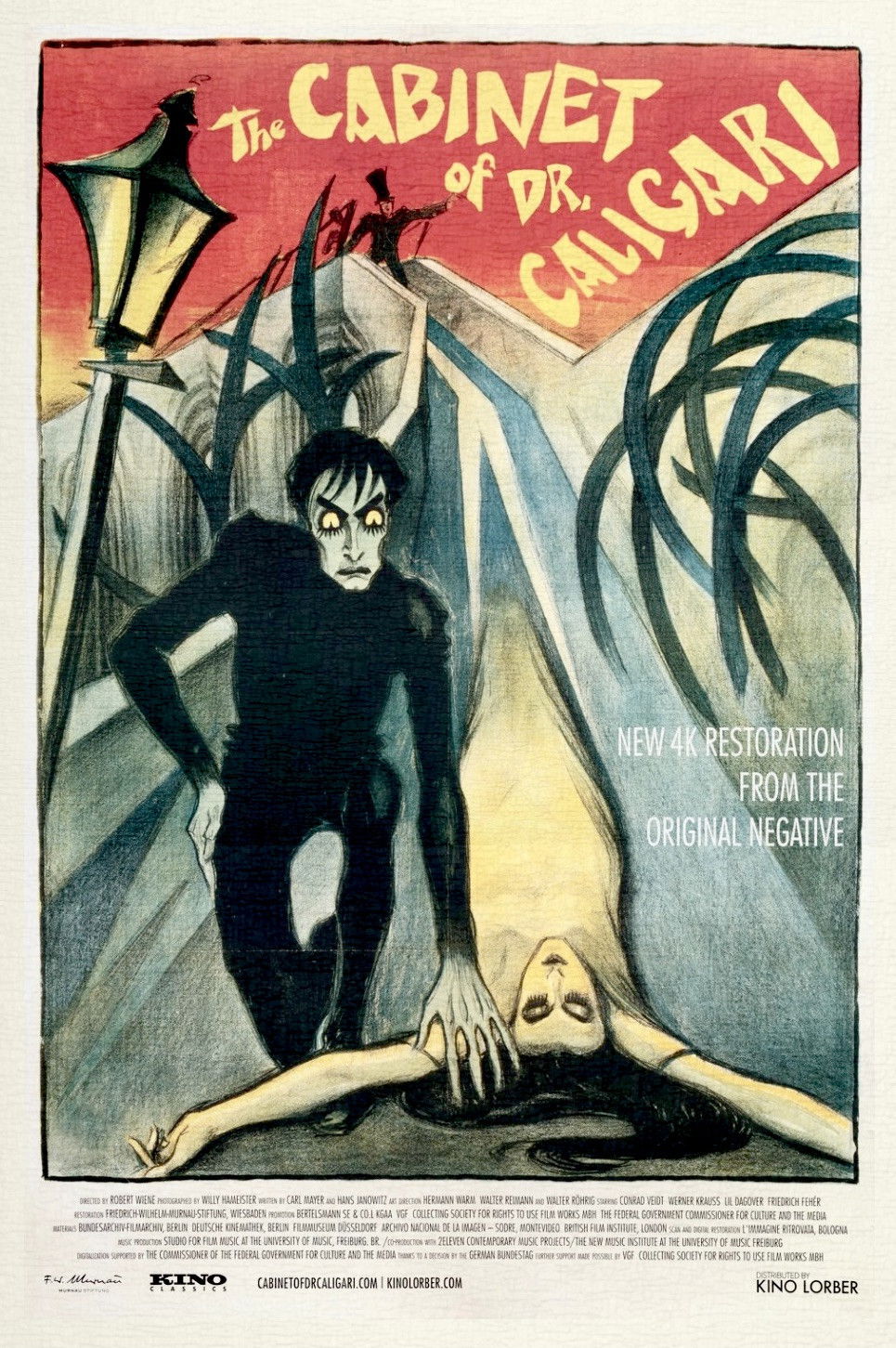
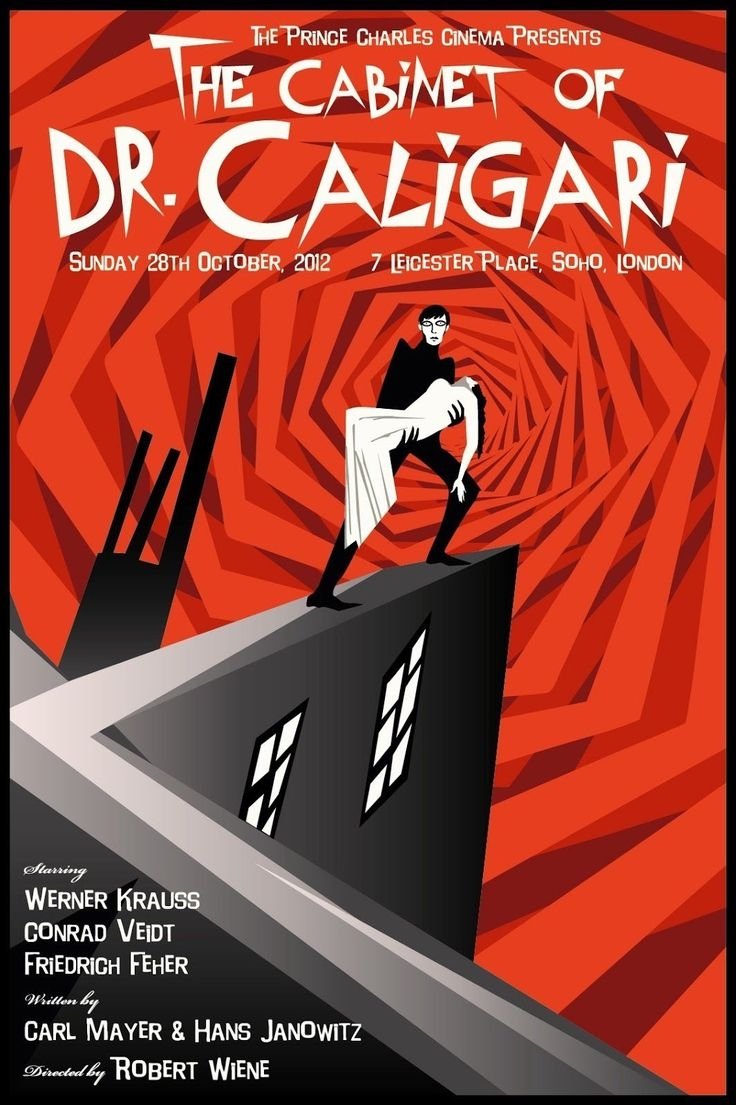
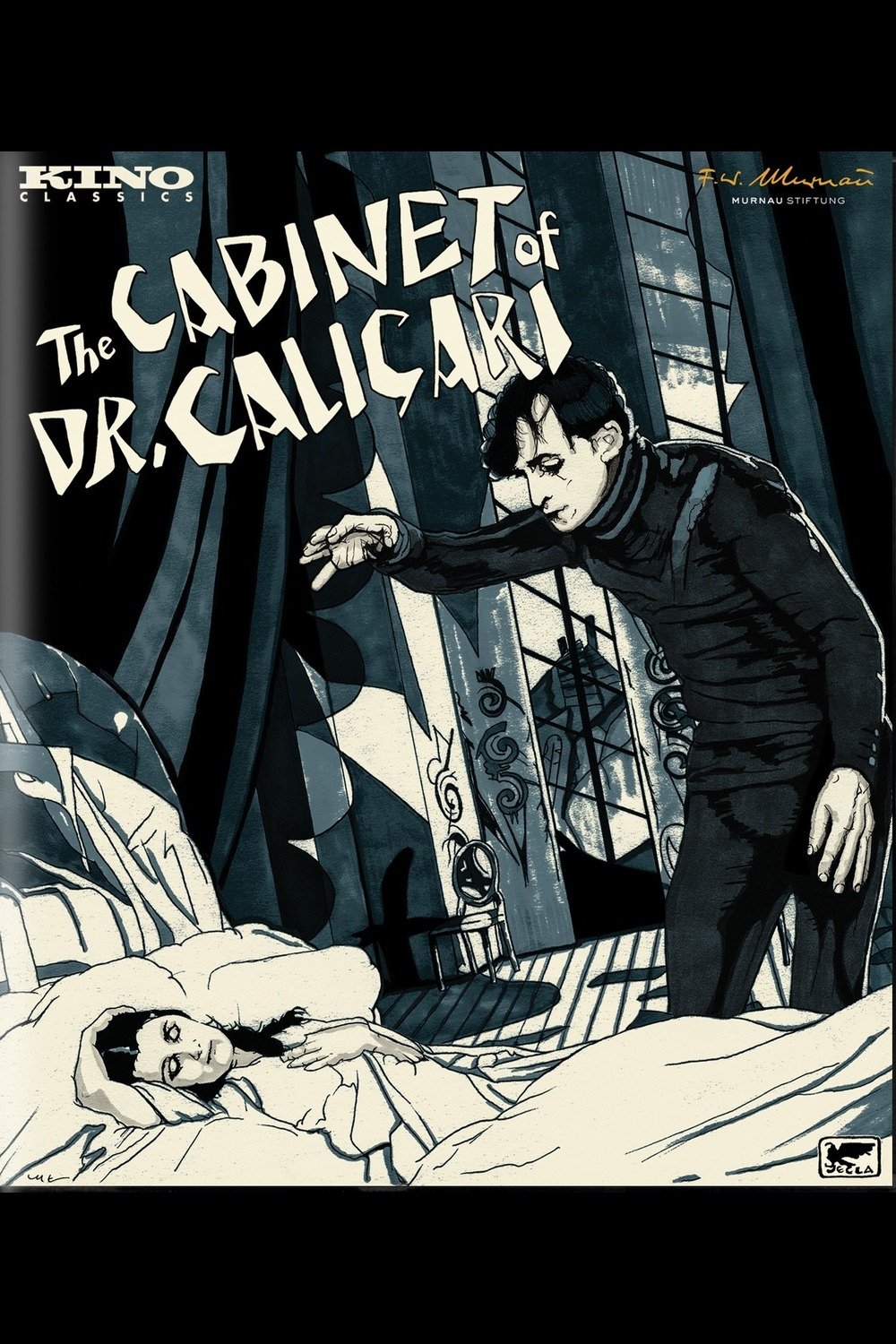
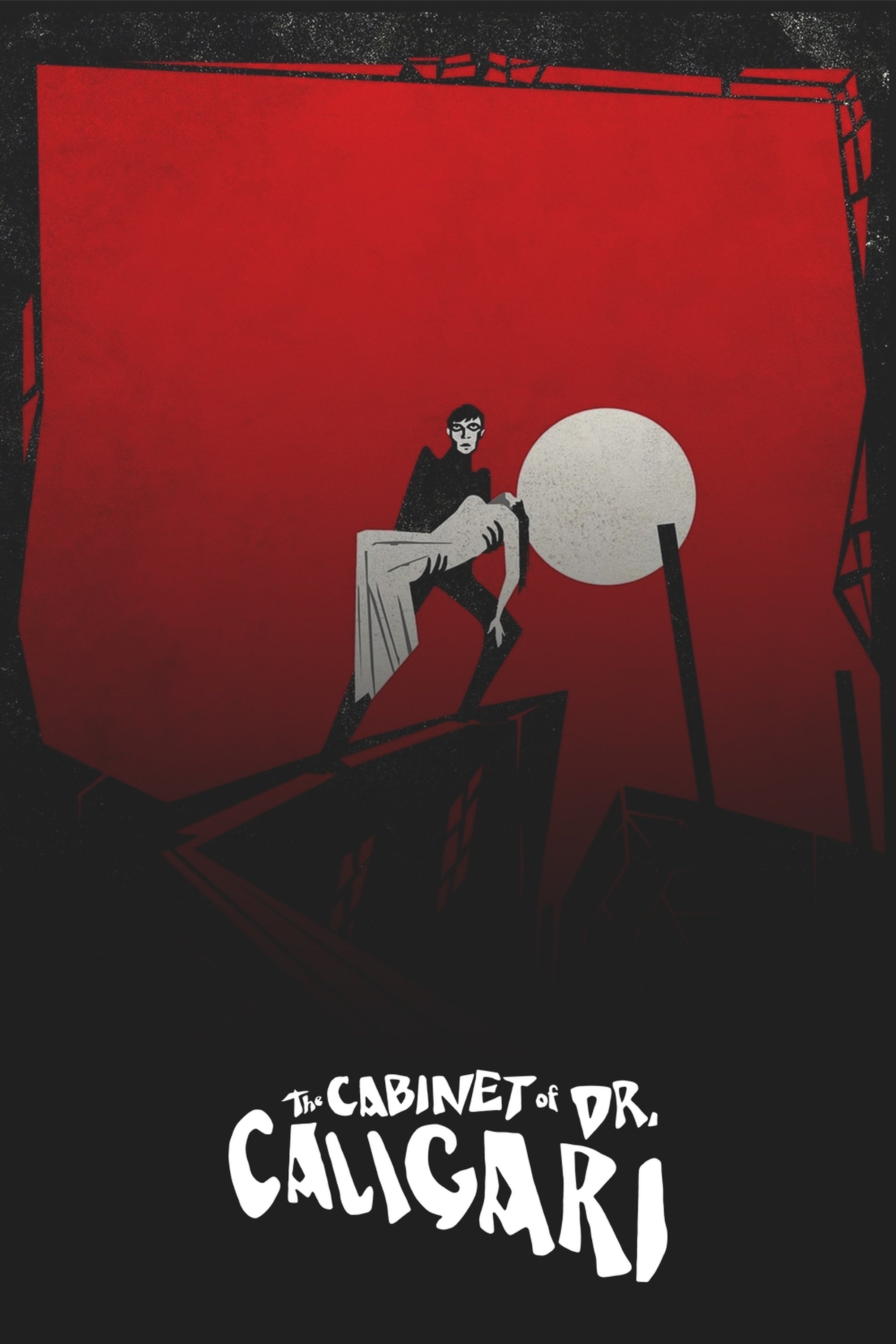
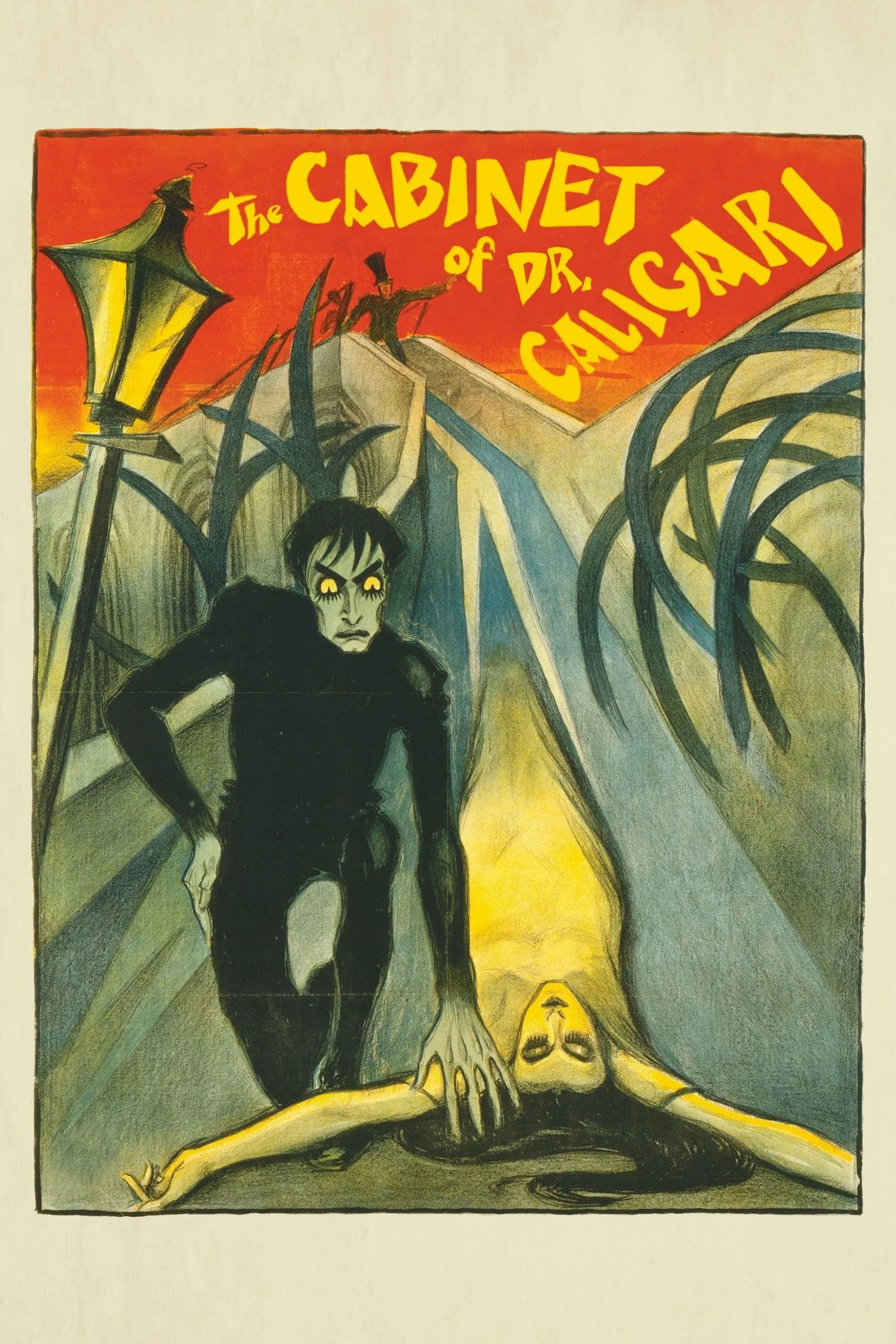
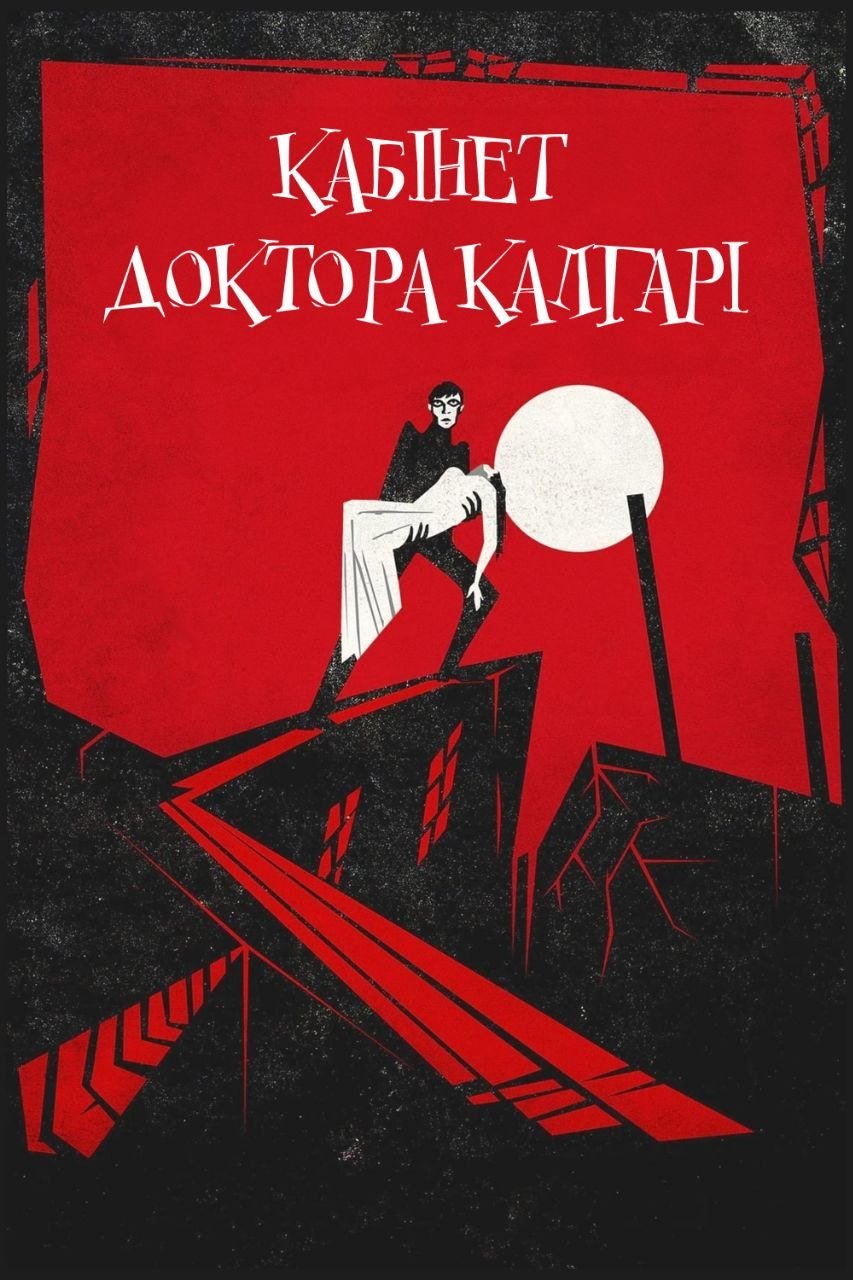
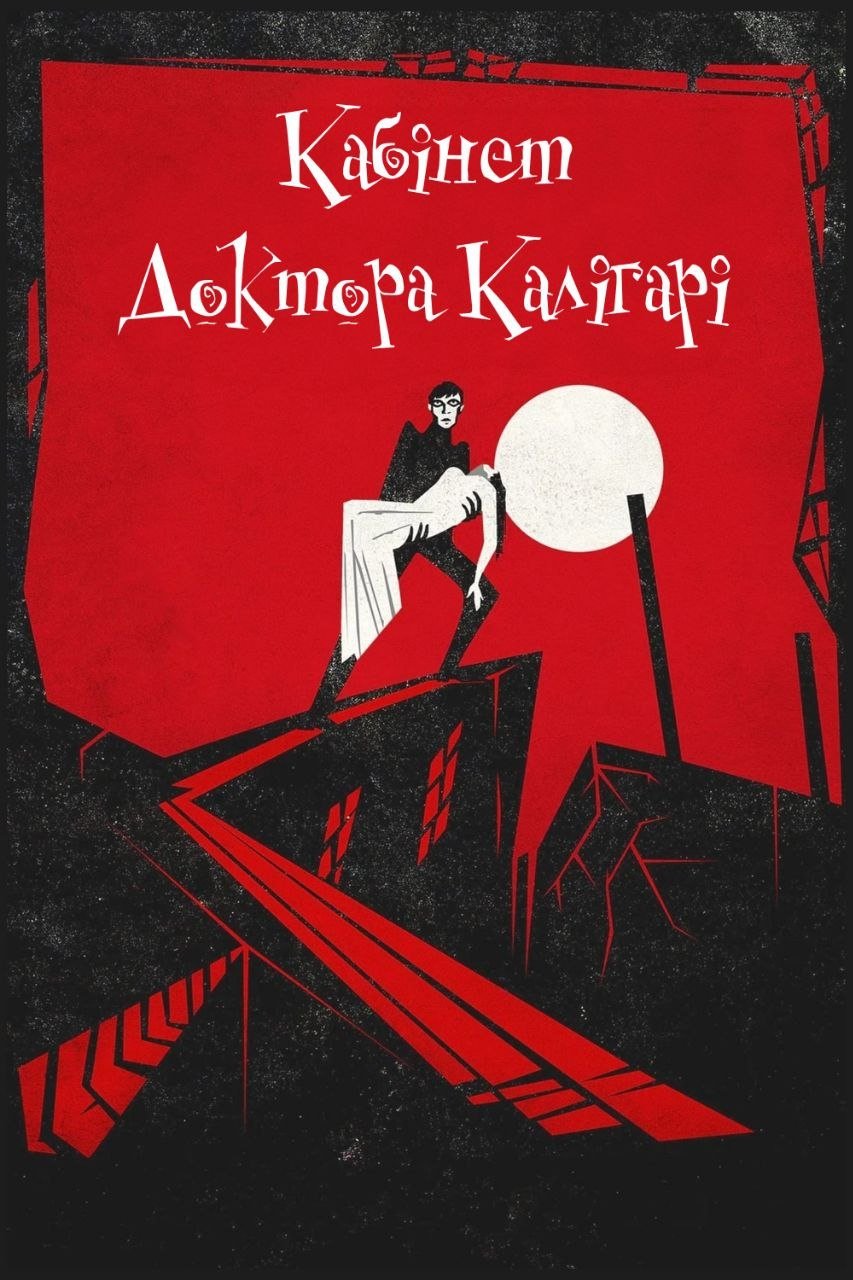
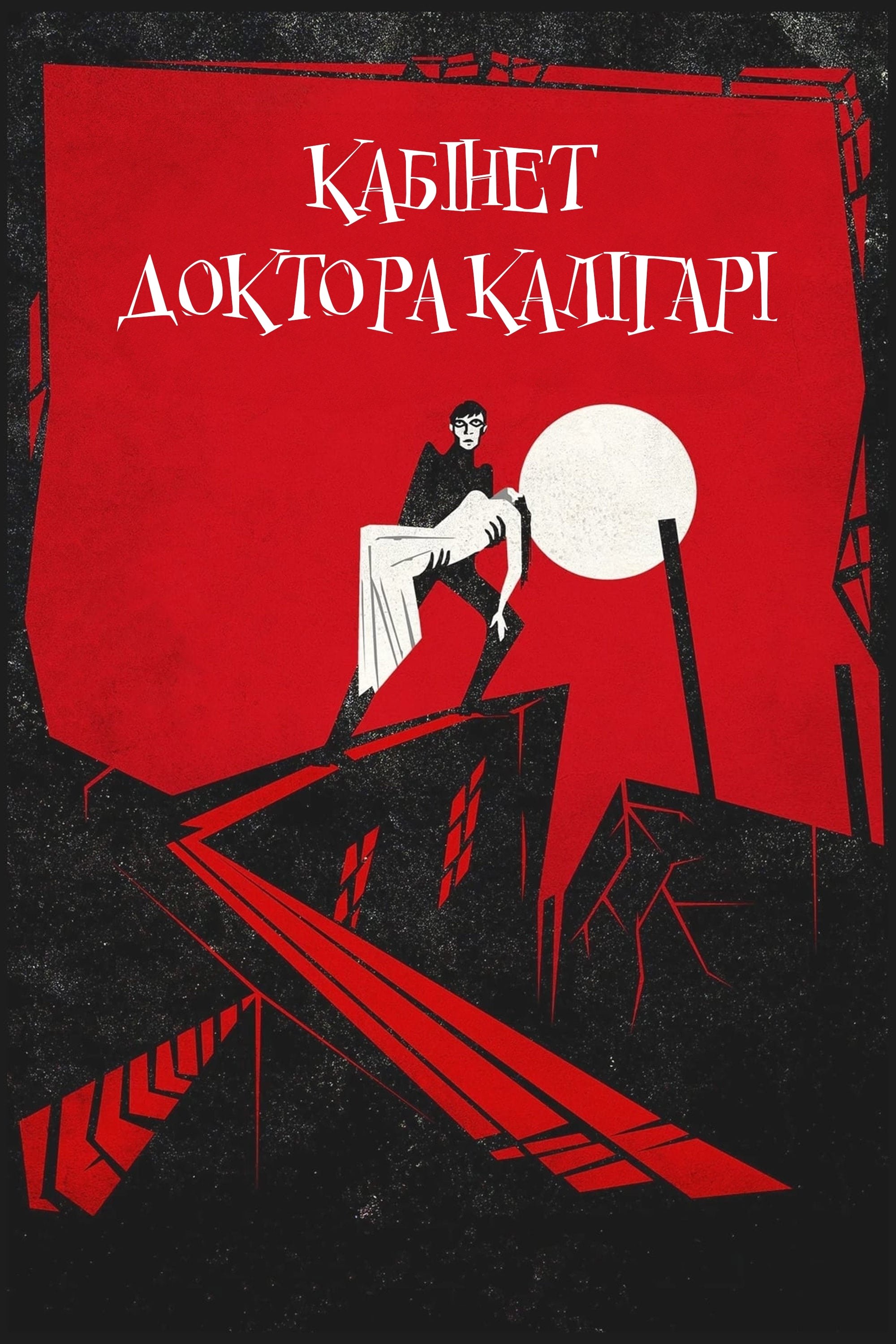
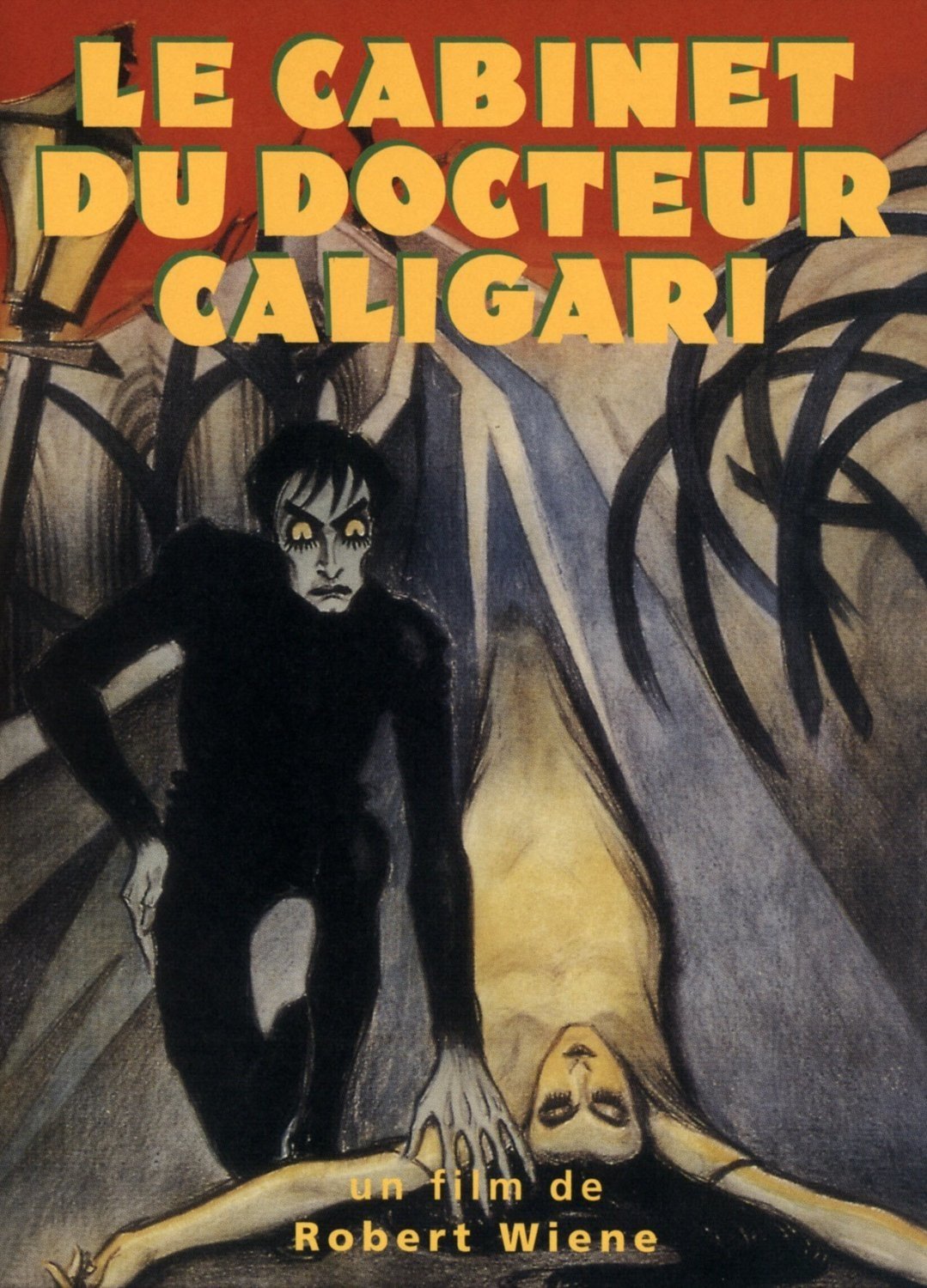
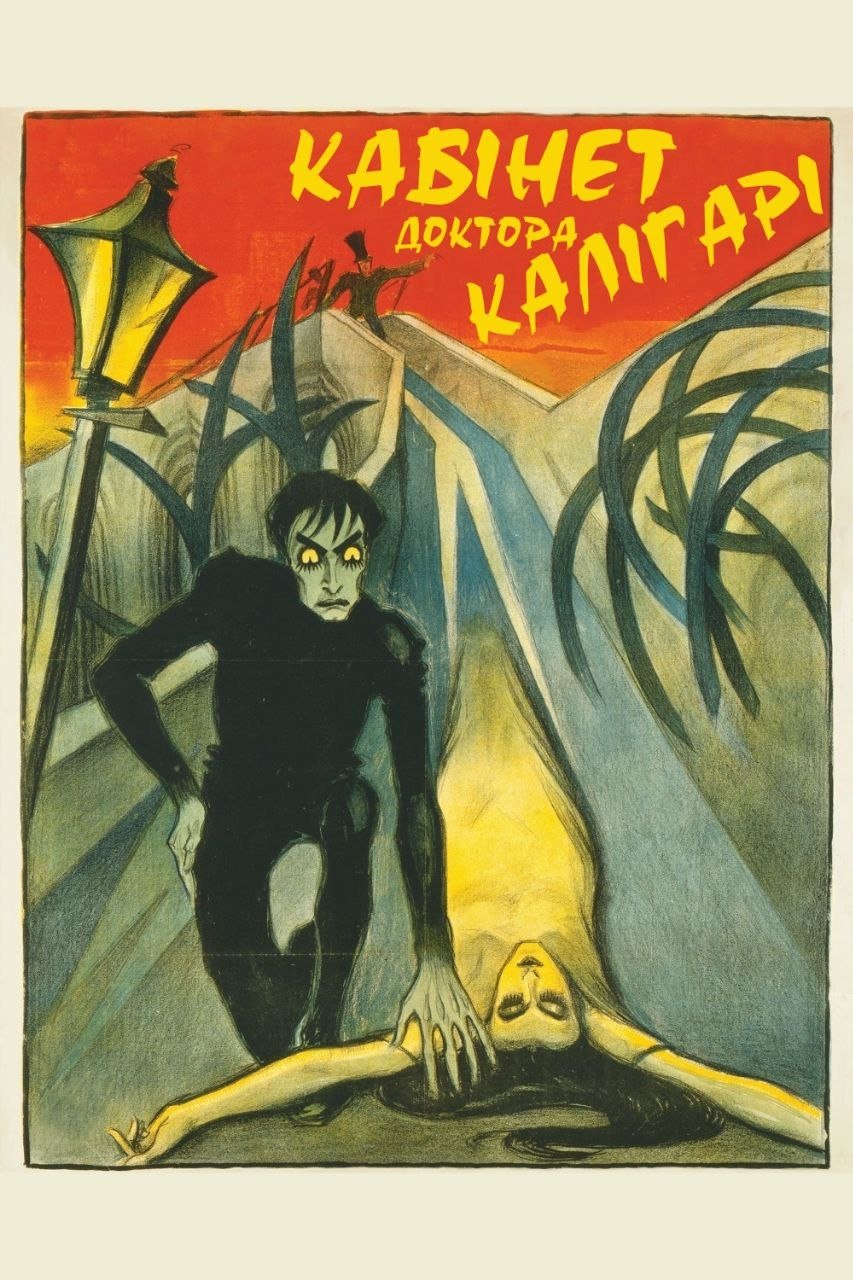
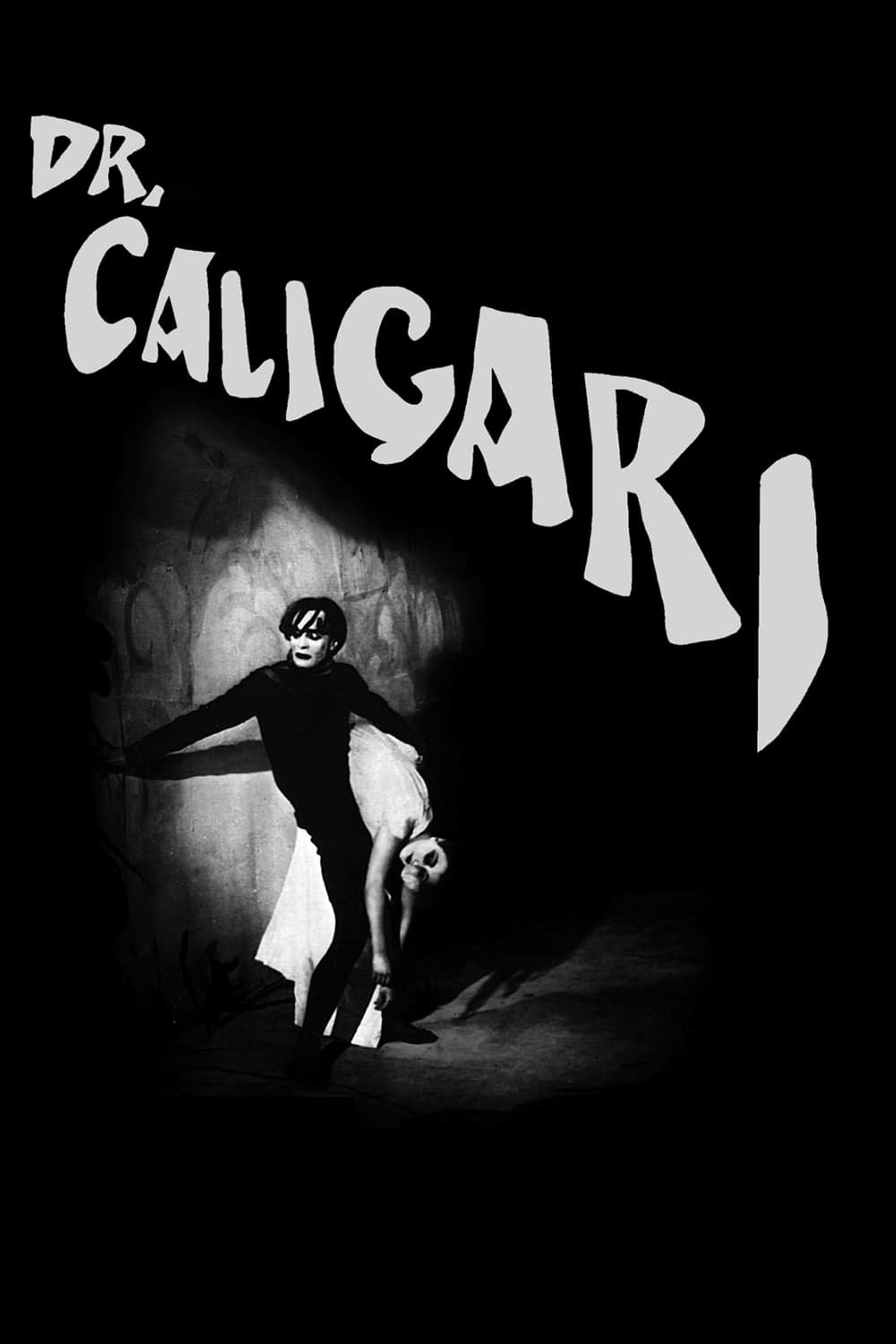
Conrad Veidt's performance uses extended limbs, rigid pauses and unsettling transitions from stillness to motion. His pallor and dark eye makeup make the face resemble a mask within a world of painted surfaces. A bedroom intrusion develops through the contrast between the vulnerable sleeper and the intruder's elongated shape. When Cesare carries Jane across roofs and angled passageways, the pursuit merges bodily exhaustion with the impossible dimensions of the scenery. The sequence is frightening because an apparently controlled instrument of murder begins to behave like a vulnerable human being, complicating the simple separation of monster and victim.
The film also establishes the horror of delegated violence. Caligari's authority appears to reach into another person's movements, allowing the commanding figure to remain apart from the immediate consequences. That idea extends beyond the identity of the murderer and into the act of watching. Fairground spectators arrive to see a body controlled for entertainment, then Franzis investigates a series of crimes by observing the same performer. The images do not supply a medical explanation of sleepwalking that should be treated as scientific evidence. Somnambulism functions here as a fantastical device for asking how much agency a body can retain under coercion.
The Frame Narrative and Competing Claims to Truth
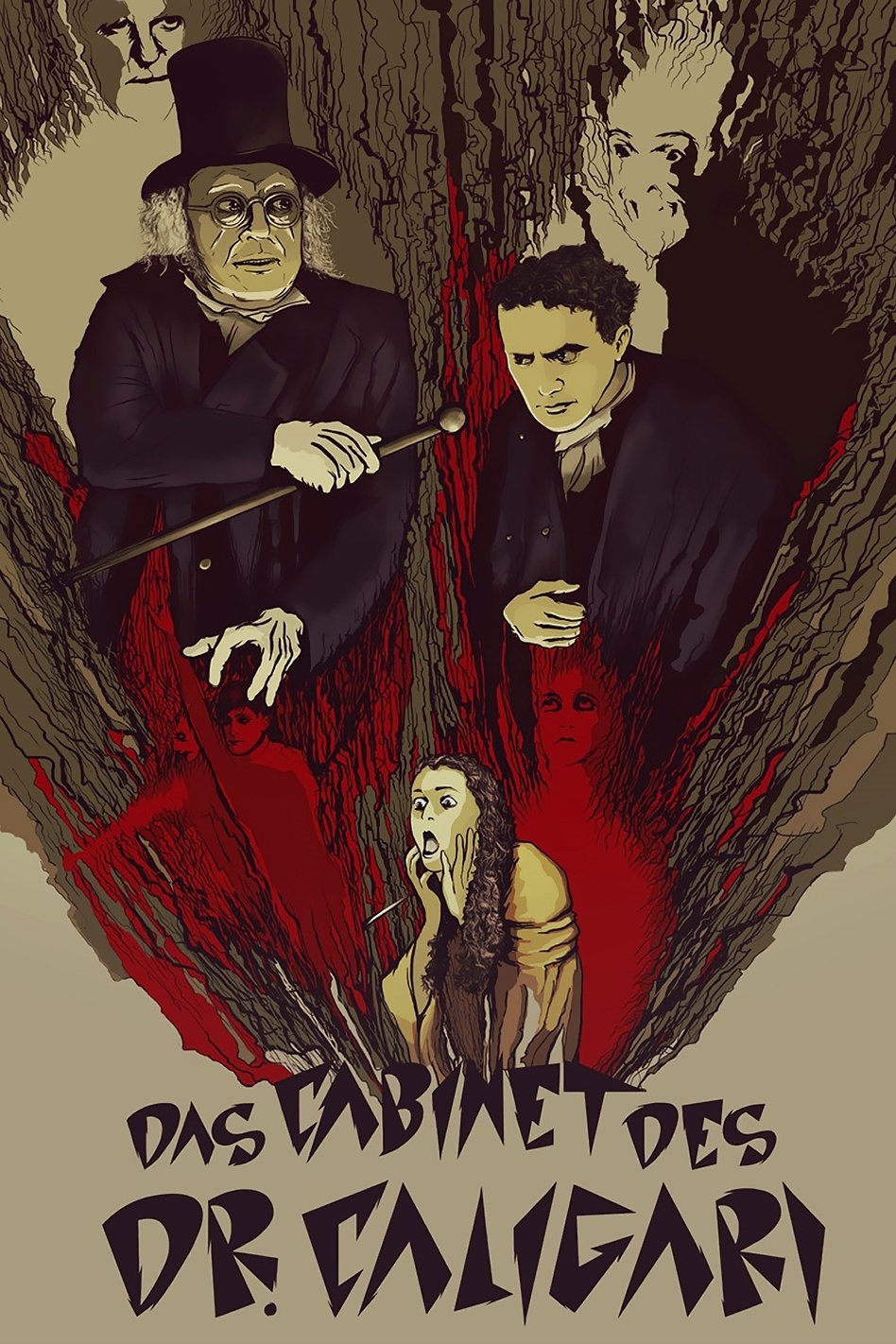
The final return to the psychiatric institution changes the standing of the preceding account. Franzis, who has presented himself as an investigator, is identified as a patient, and the authority he denounced appears as the institution's director. This reversal creates the possibility that the murders and conspiracy were produced by an unreliable narrator. Kracauer read the construction as a retreat from criticism of oppressive authority. That influential claim should be attributed to the critic, especially since the development history on which it depended has been contested by later manuscript scholarship and archival investigations.
The ending does not provide a comfortably external standpoint from which all uncertainty disappears. The asylum scenes retain much of the stylization seen within Franzis's recollection, and the director's final confidence that he can treat his patient may sound reassuring or threatening. BFI writer Alex Barrett notes that this continuity of visual design complicates a simple division between objective reality and delusion. Nicholas Baer's scholarly analysis develops the problem further: the narrative makes observation itself unstable, placing different witnesses and authorities in positions from which they claim to know what happened. These are critical interpretations supported by the film's form, not statements of the filmmakers' private intentions.
There is also a danger in reading the institutional ending as a reliable description of mental illness. Its treatment of confinement and diagnosis reflects early twentieth-century melodramatic conventions and the dramatic need for a final shift in perspective. The film's sustained uncertainty is more useful for horror history than any supposed clinical insight. It leaves the viewer dependent upon accounts that may be manipulated by people who possess social or medical authority. In that respect the framing device joins the hypnosis plot: both place control over another person's reality at the center of the terror.
The 1920 Premiere, Advertising and Contemporary Criticism
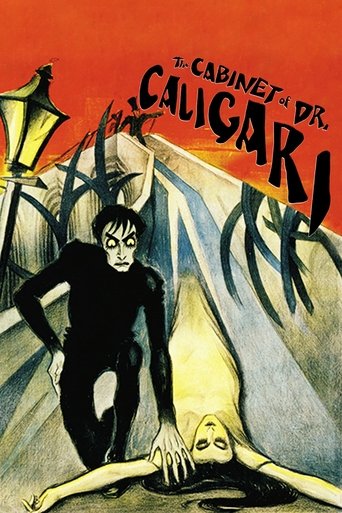
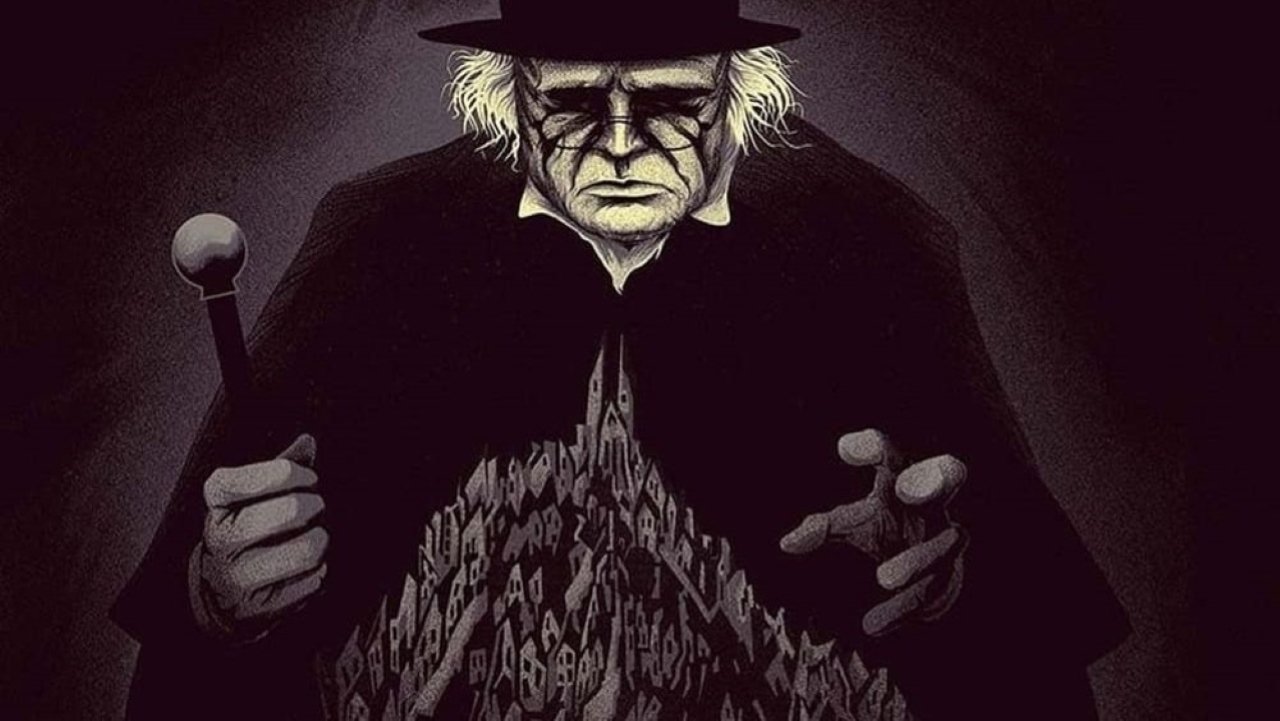
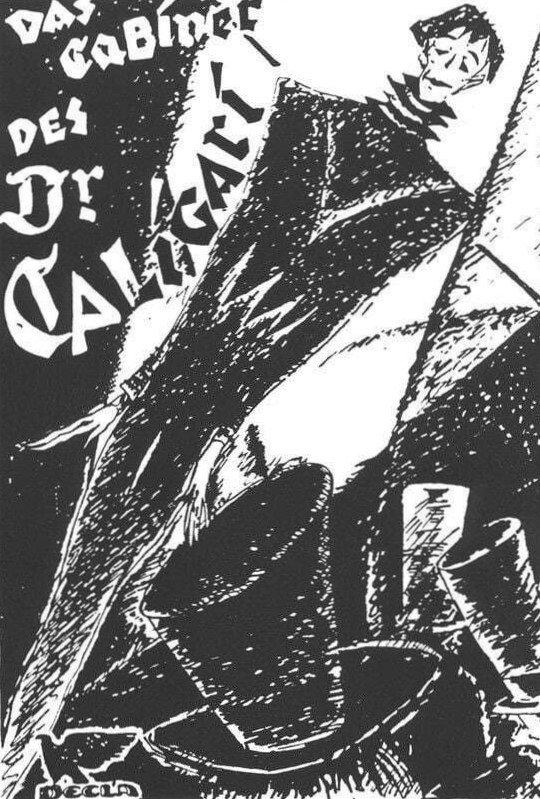
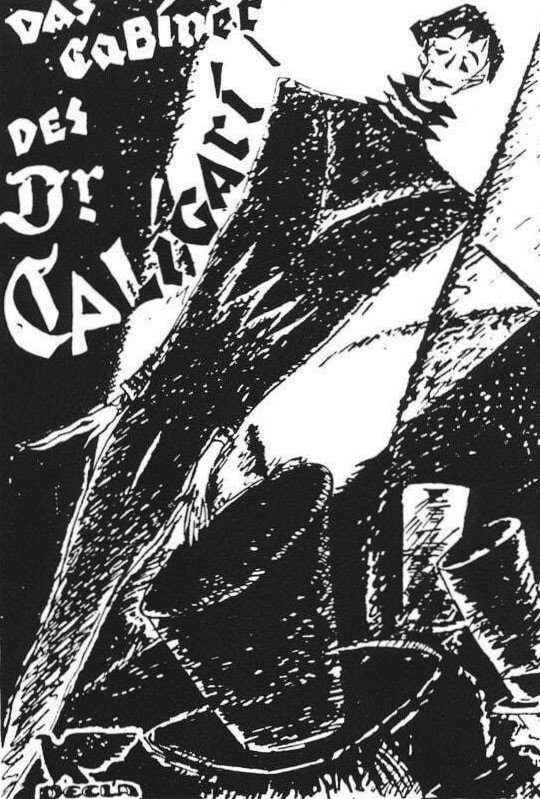
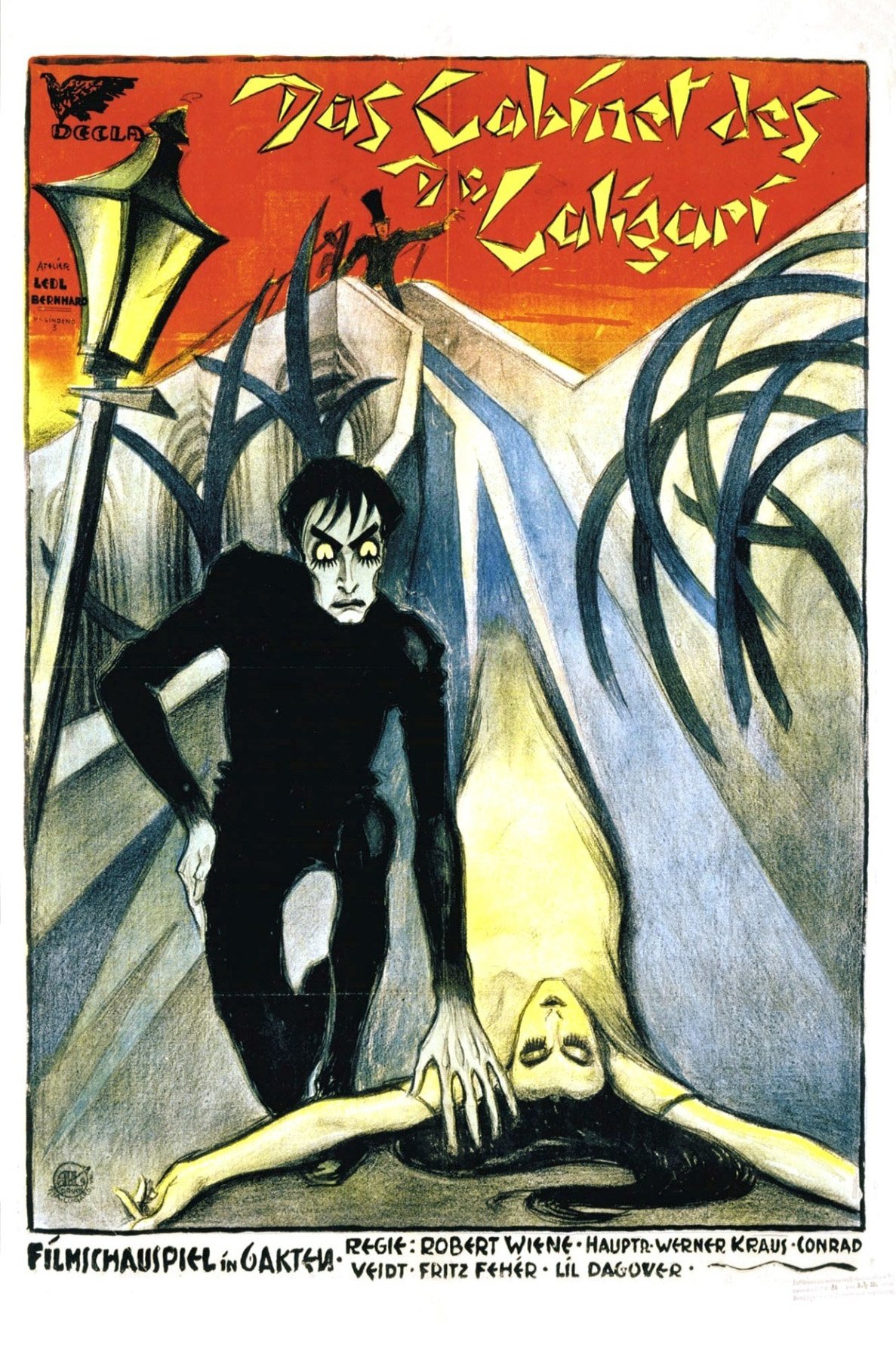
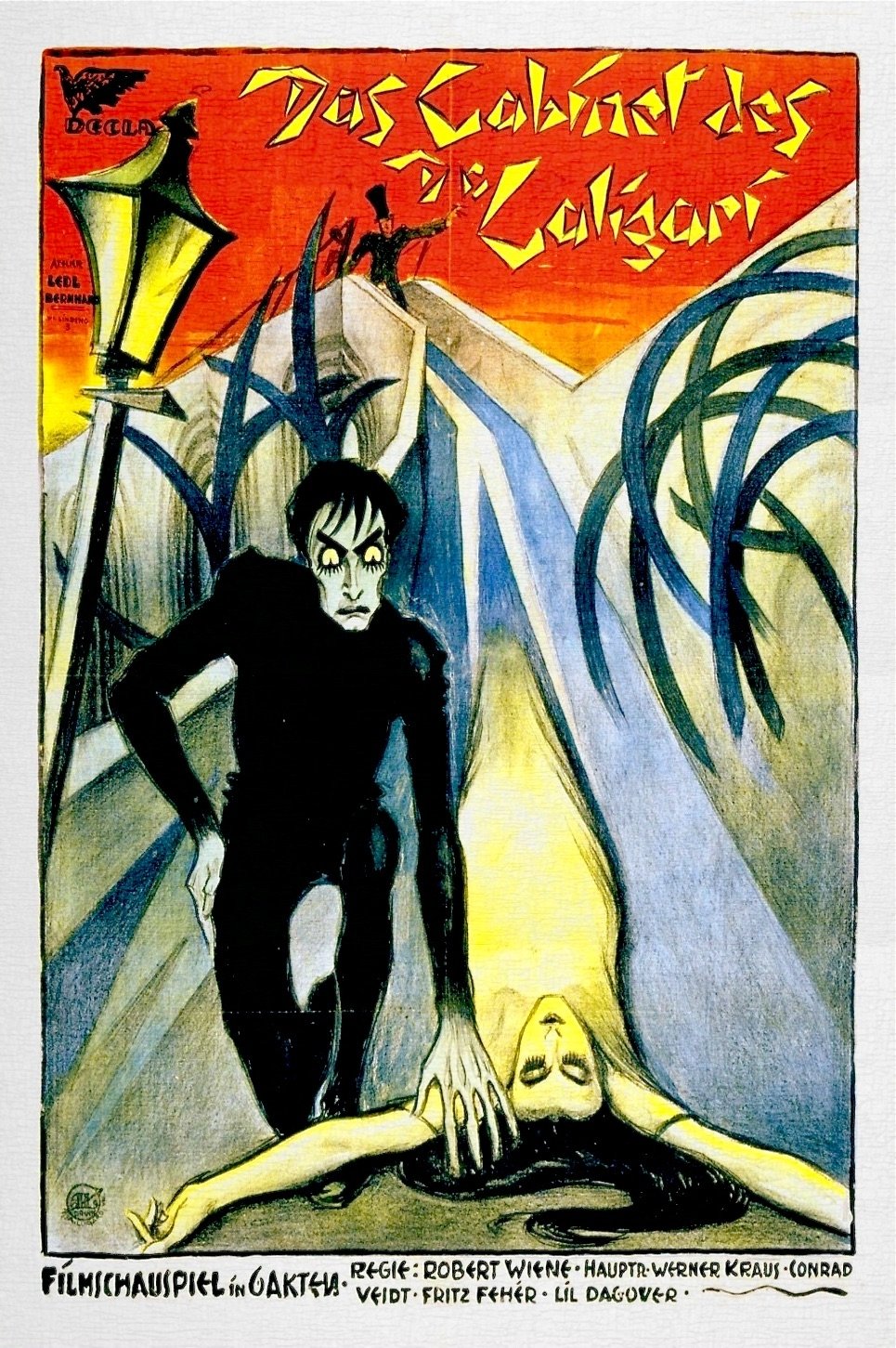
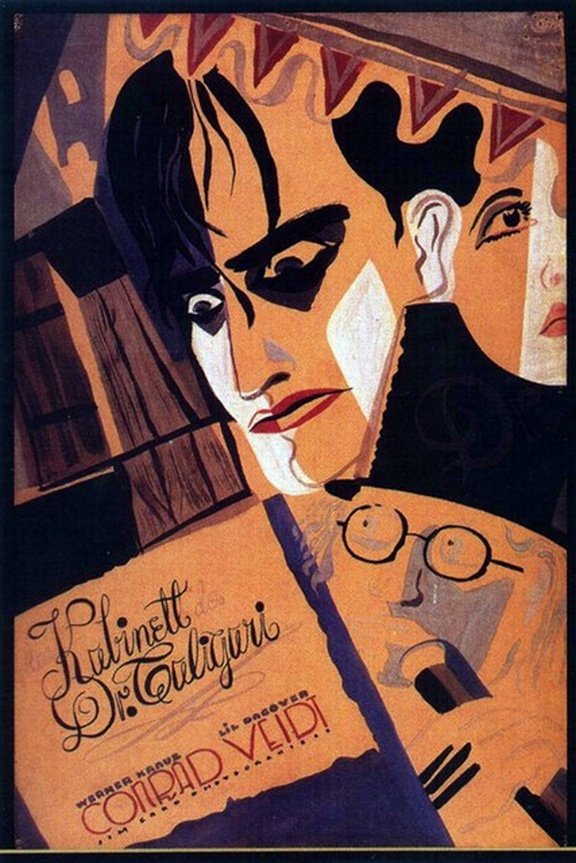
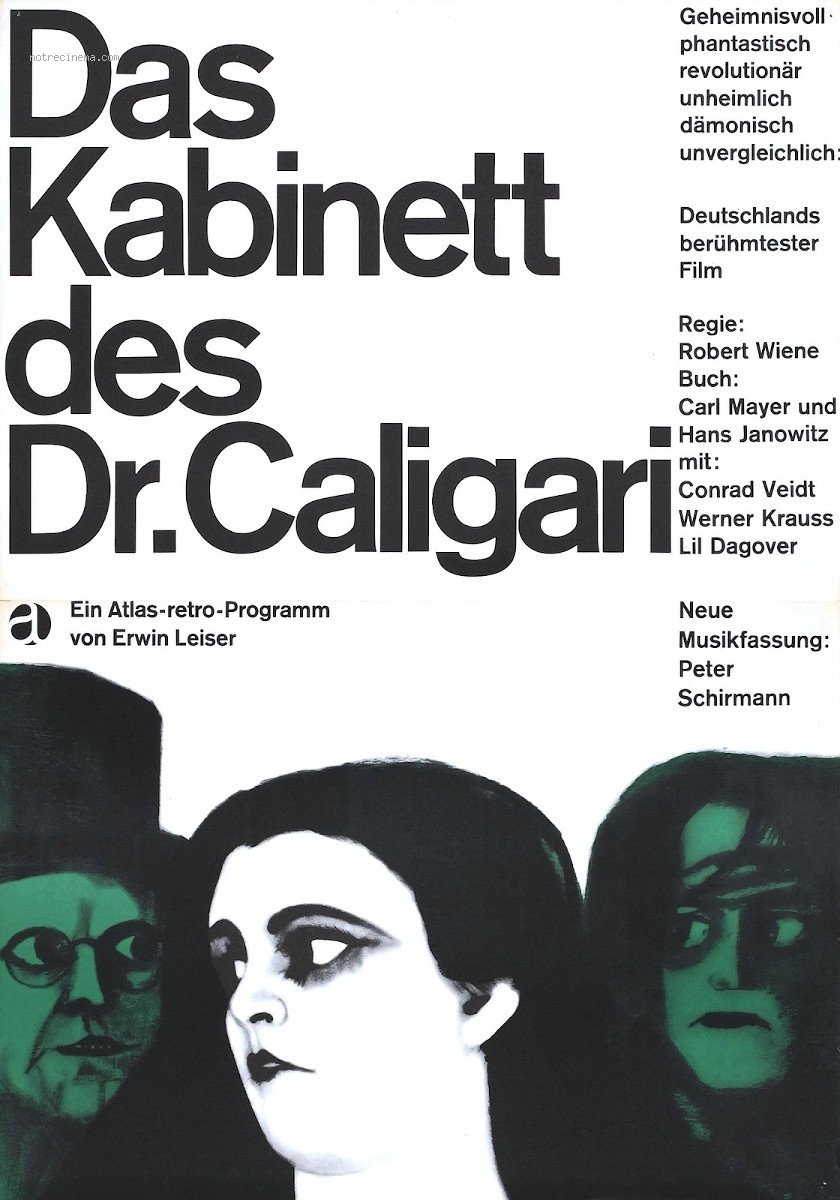
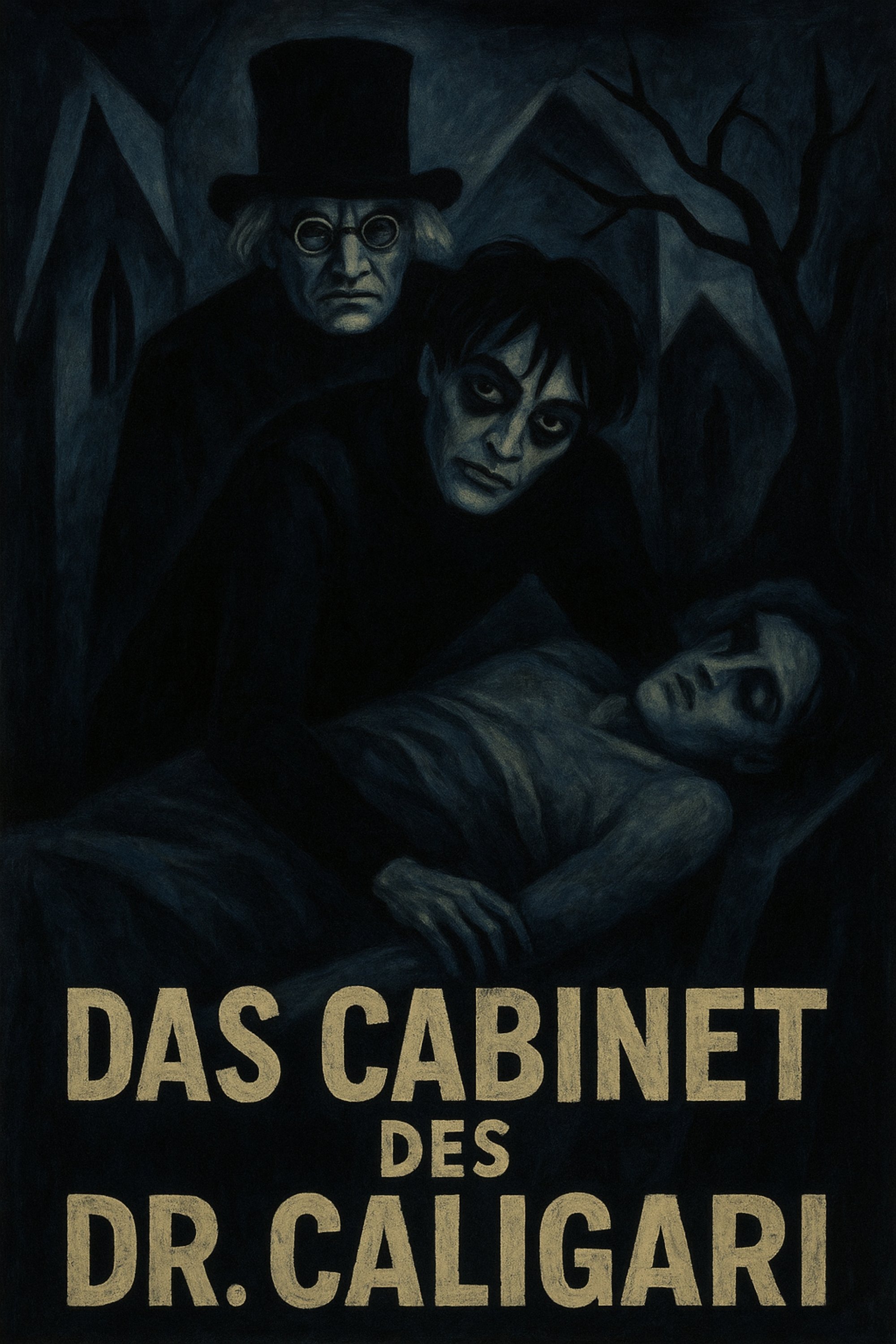
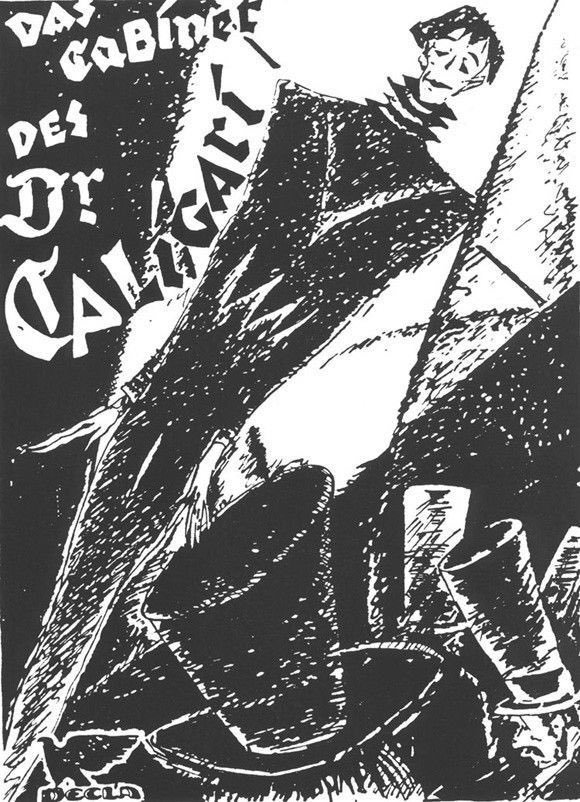
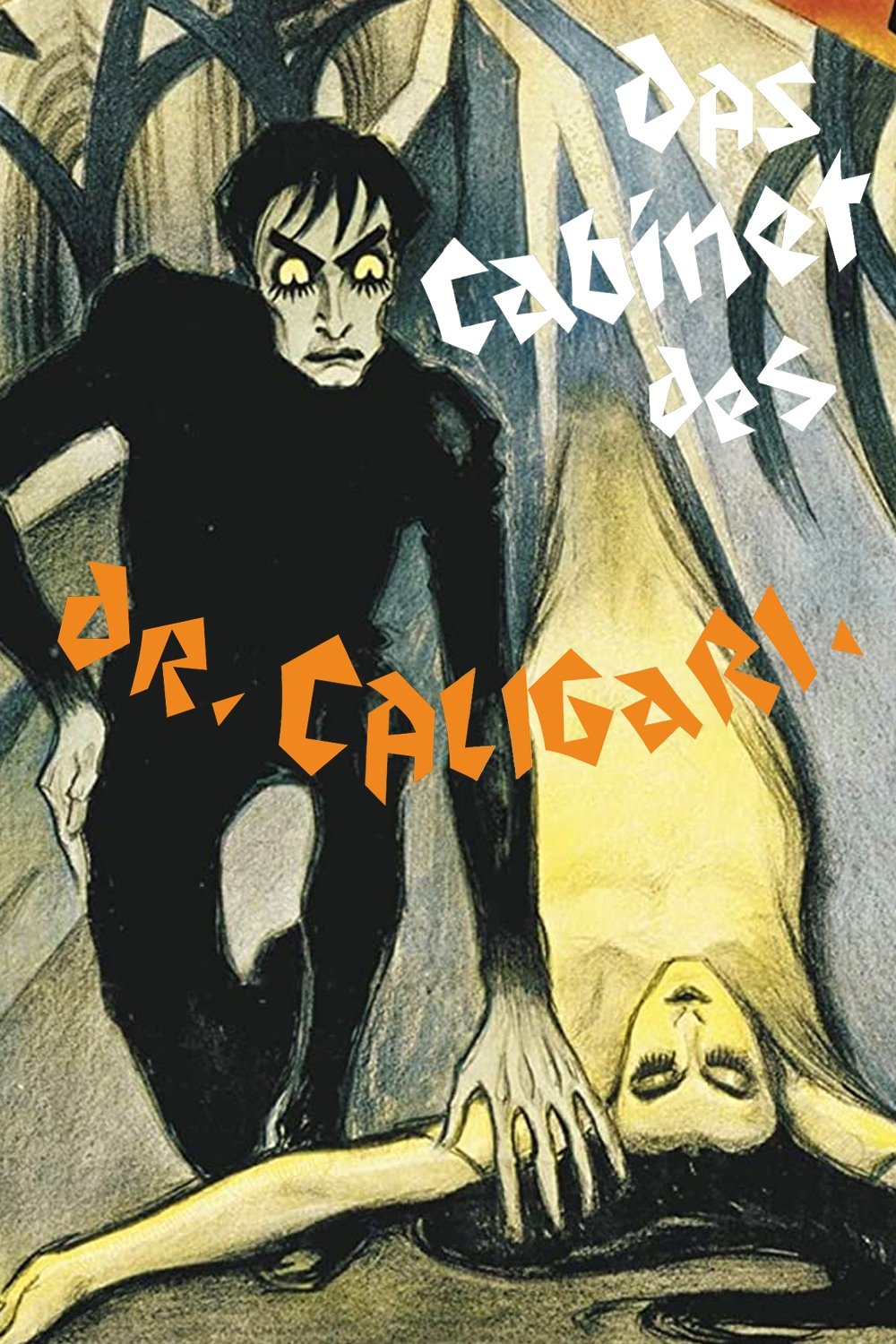
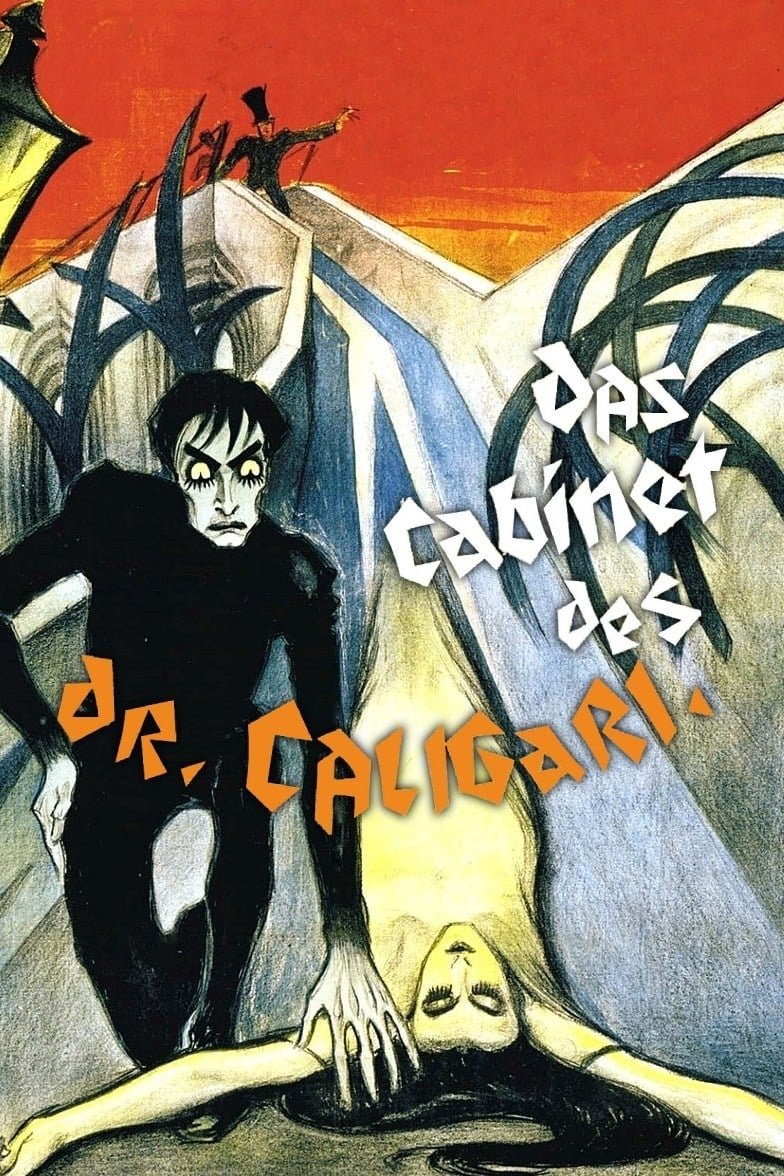
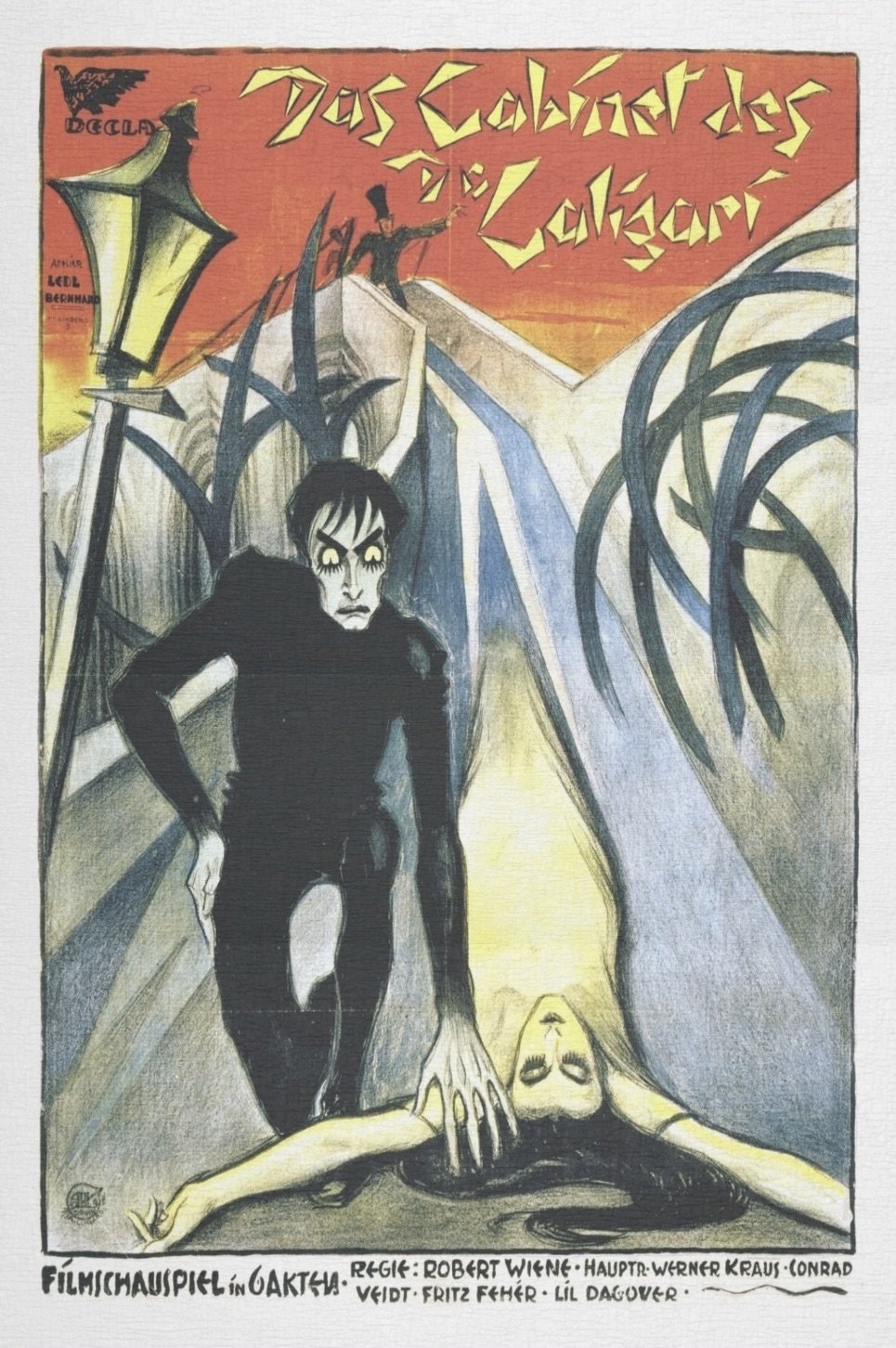
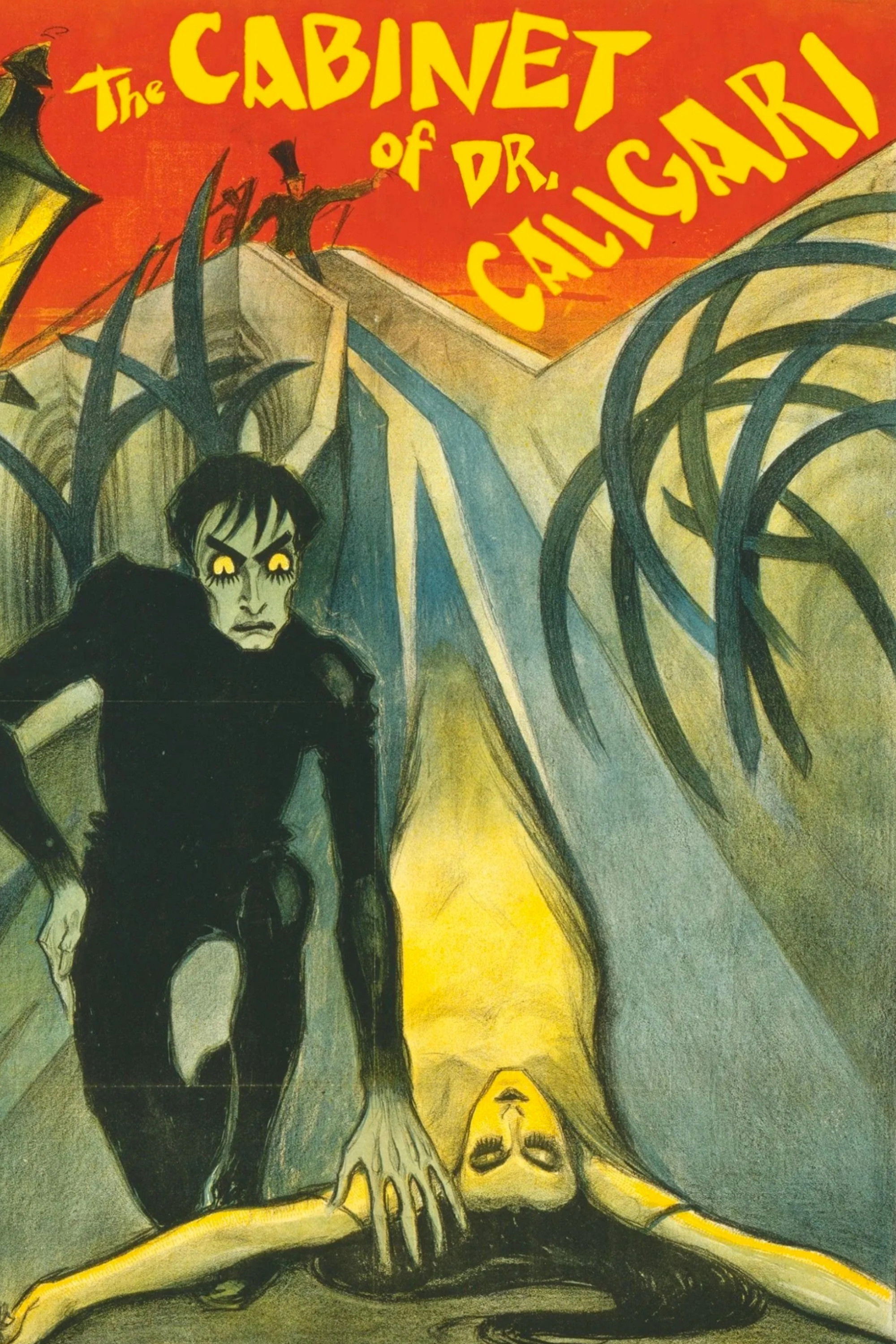
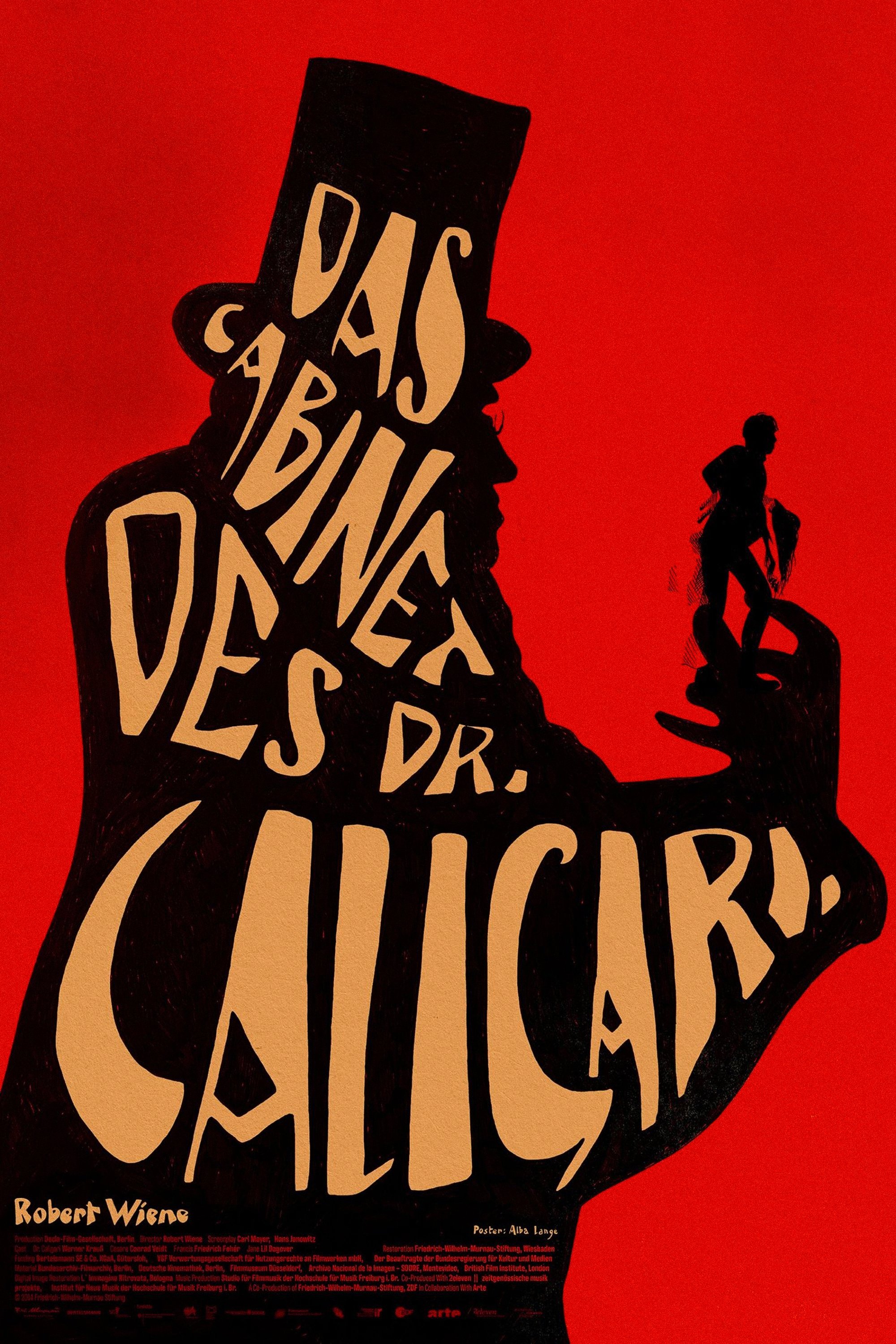
The film premiered at Berlin's Marmorhaus on February 26, 1920. Its promotion began before audiences could see the picture, using the command 'Du musst Caligari werden' as a mysterious public slogan. The Deutsche Kinemathek identifies Erich Ludwig Stahl and Otto Arpke as designers of the striking hand imagery used in advertising and records a separate swirling typographic motif. These campaigns made the title itself into a curiosity before the narrative could explain it. They also connected the film's unusual visual vocabulary to the materials through which a potential spectator first encountered the production.
Period reactions confirm that viewers did not need decades of later commentary to recognize the experiment. A review in Der Kinematograph dated March 3, 1920, preserved by filmportal.de, described the bizarre windows, twisted houses and eerie effectiveness of Veidt's appearance. The reviewer praised the threatening murder scenes and the performances while treating the distorted environments as expressions of a disordered mind. Another early interpretation could celebrate the filmmakers' painterly achievement on its own terms. These responses reveal enthusiasm for its techniques, but they also show how quickly viewers adopted a psychological explanation for a style that contemporary scholarship now treats as more ambiguous.
The film's visibility beyond Germany mattered because European cinema was reopening international pathways following the 1918 armistice. The BFI emphasizes that its identifiable national origin became an advantage at a time when German exports had faced obstacles in some markets. An exact worldwide box-office figure cannot be established from these sources and should not be inferred from later database listings. Its immediate impact is better documented by the surviving reviews, advertising and attention devoted to its experimental design. Those records support a strong account of its reception without manufacturing financial precision.
Silent-Film Accompaniment, Color and Restoration
Caligari is a silent film, but that description does not imply that its first audiences encountered it without music. Accompaniment could vary according to theater and performance. The Deutsche Kinemathek records that the original composition by Giuseppe Becce has been lost, although four related pieces survive in his Kinothek collection of piano music. Claims that one familiar modern soundtrack precisely reproduces the score heard at the premiere would therefore exceed the available evidence. Music belongs to the film's exhibition history, with changing interpretations providing new emotional rhythms for the same surviving visual material.
The circulating image has its own complicated history. In the restoration completed under the Friedrich-Wilhelm-Murnau-Stiftung's supervision, an original camera negative held by the Bundesarchiv-Filmarchiv served as the chief photographic source. That negative did not preserve the first act, which had to be supplemented from other prints. The work also reinstated surviving original intertitles from the Deutsche Kinemathek and historical tinting, allowing colors to distinguish passages that modern monochrome copies might present uniformly. The Kinemathek states that the digital version was mastered in 4K without further manipulative reconstruction of the image beyond the described restoration work.
The restored film received a major presentation at the Berlinale in February 2014. Its survival demonstrates why descriptions of a silent classic must distinguish the original photographed materials from the editions through which audiences encounter it today. Reconstructed color, intertitles and alternative accompaniment may change the force of a scene without altering its underlying story. The work by archivists also protects the graphic details that make the stylized sets comprehensible. In a film where painted texture and precise lettering contribute to the uncanny effect, preservation is essential to historical interpretation as well as visual appreciation.
Expressionism and the Development of Screen Horror
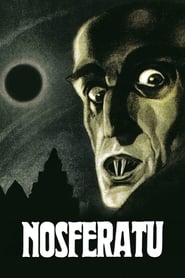
Wiene's film became an enduring reference for productions that turn environments into expressions of dread. The Deutsche Kinemathek links its stylized imagery to subsequent German fantastic cinema and to later Gothic filmmaking, while also identifying the influence of its harsh contrasts on film noir. Such connections do not mean that later directors copied an identical design. The valuable precedent is a flexible method: architectural distortion, contrasting surfaces and a human figure whose appearance belongs to the surrounding nightmare can generate anxiety before a story discloses the danger's source.
The historical importance of Cesare is equally specific. A silent, pale figure who seems to move according to another person's will offers an image of the human body as both threatening and endangered. That ambivalence remains central to many later narratives about controlled or transformed people. The framing narrative contributes another line of development by making the status of the supposed witness uncertain. Modern horror frequently uses unreliable testimony and contradictory realities, but any claim of direct influence on an individual production requires documentation of the connection. Caligari's broad stylistic reputation should not substitute for such evidence.
The film's position in horror history also needs proportion. Earlier moving pictures had already explored ghosts, Gothic spaces, trick effects and frightening creatures, so labeling it the sole origin of the genre erases existing traditions. Its achievement was the comprehensive organization of a feature around an unstable visual world, a coercive relationship and a narrative that denies viewers secure access to truth. Contemporary criticism established its artistic novelty, and archival scholarship has since refined the stories told about its making. These documented features explain its lasting place within the silent cinema and the history of psychological horror.