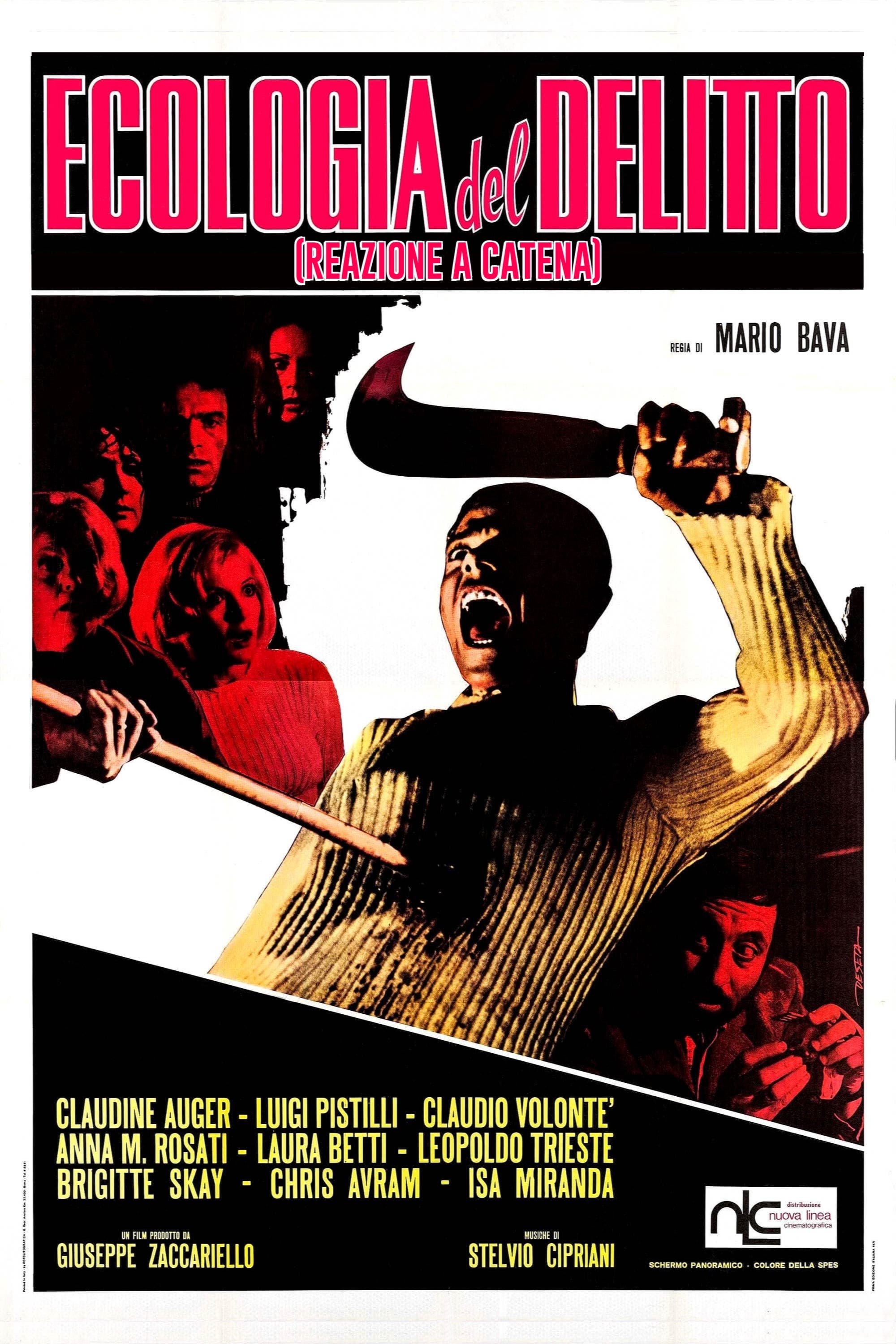
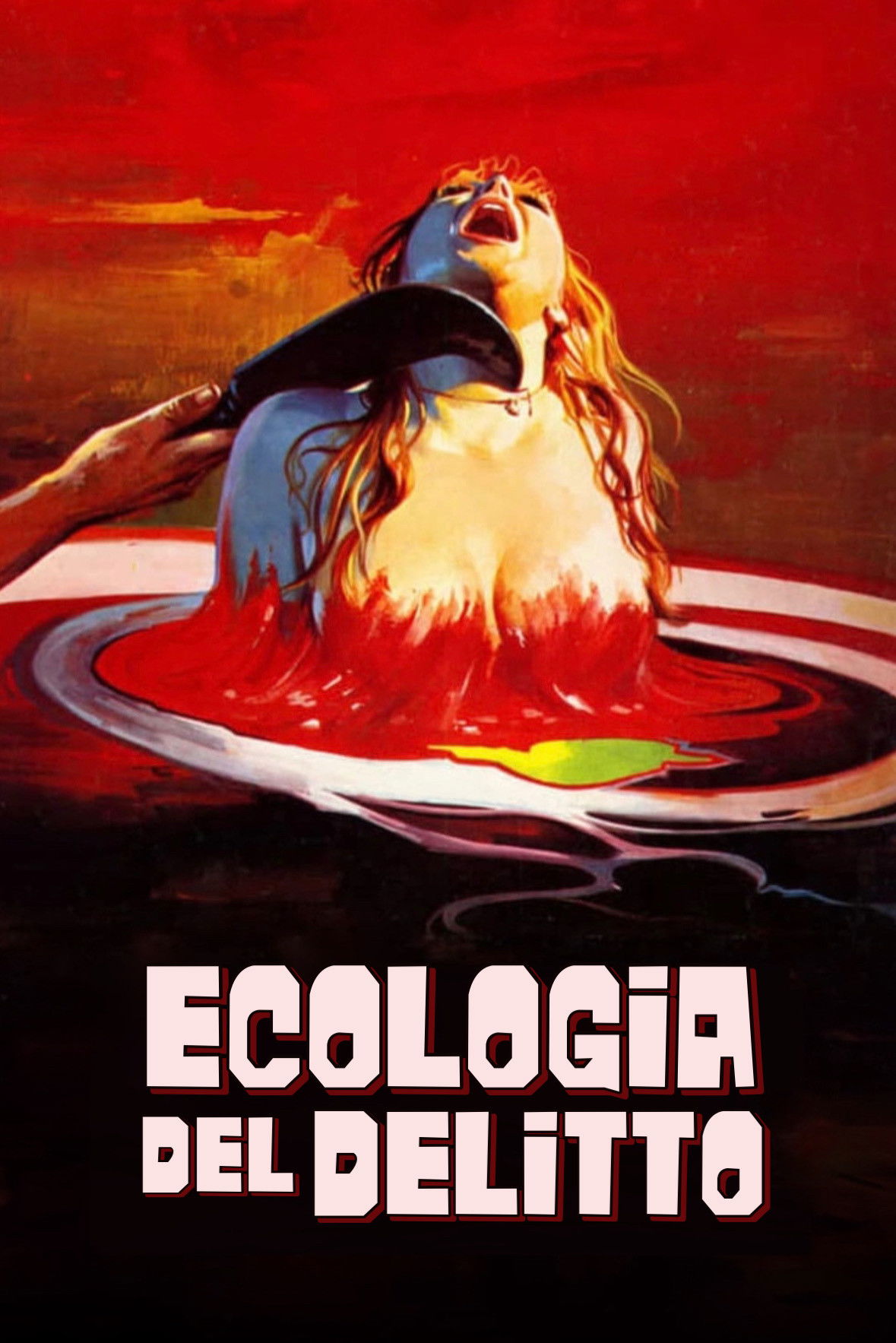
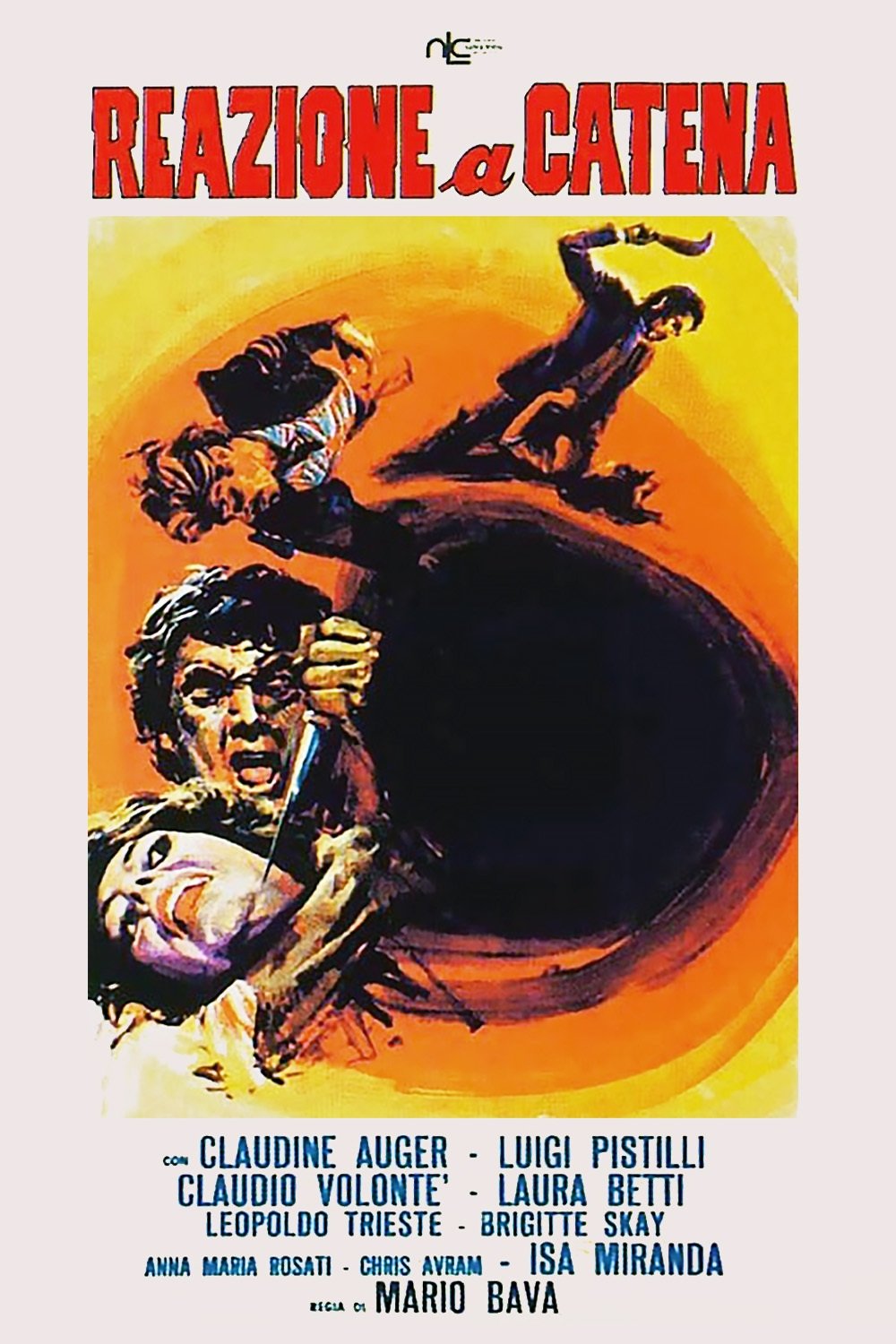
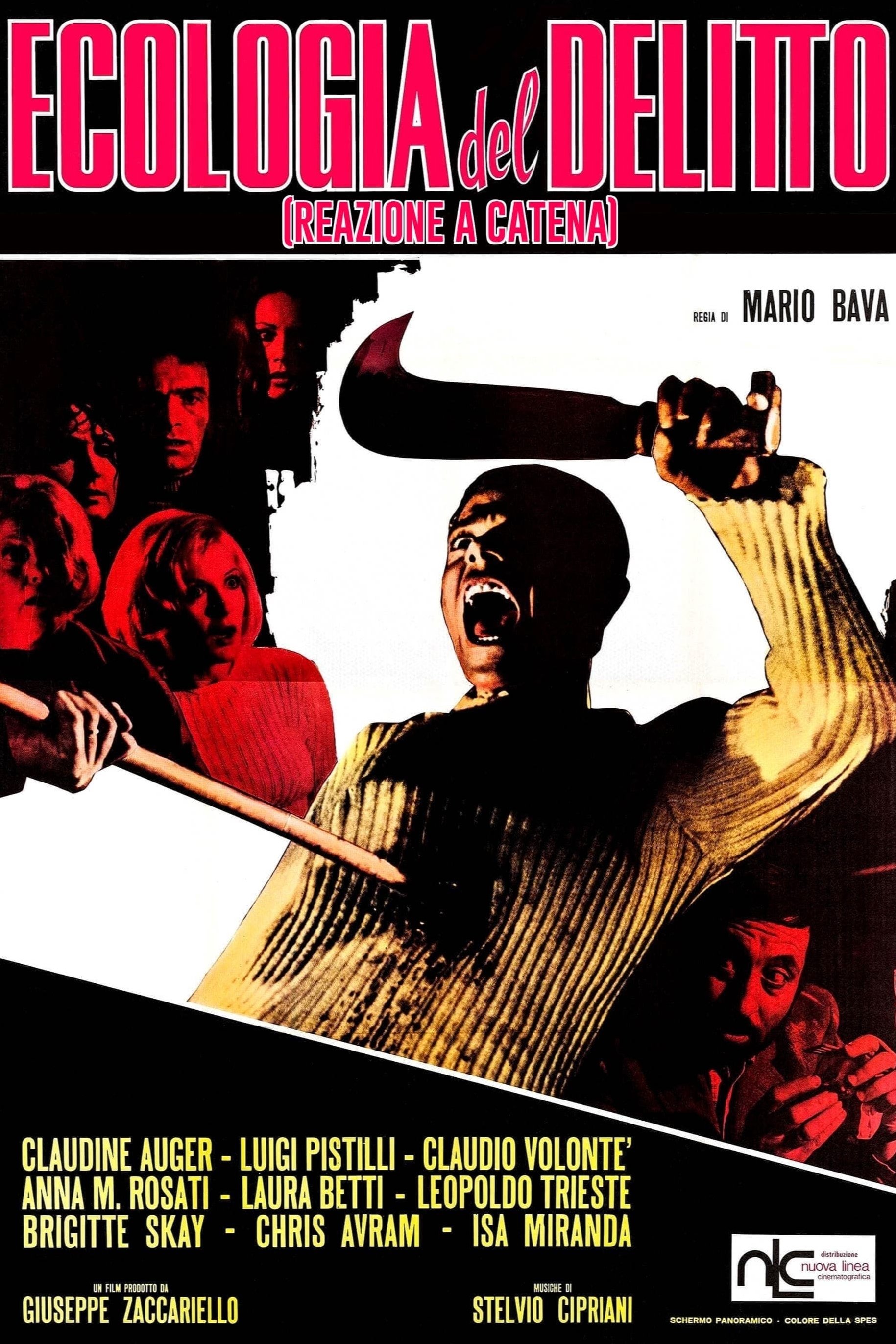
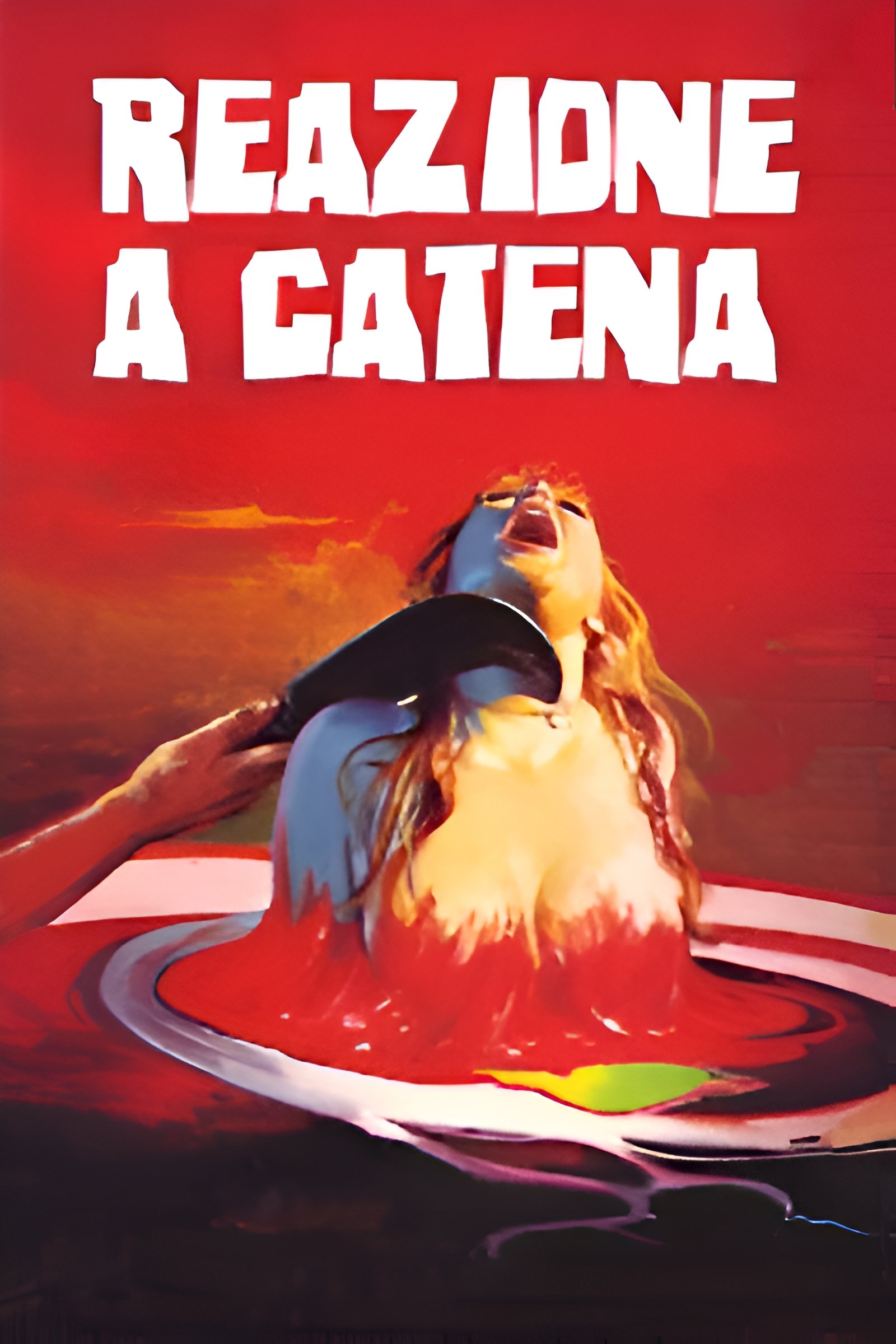
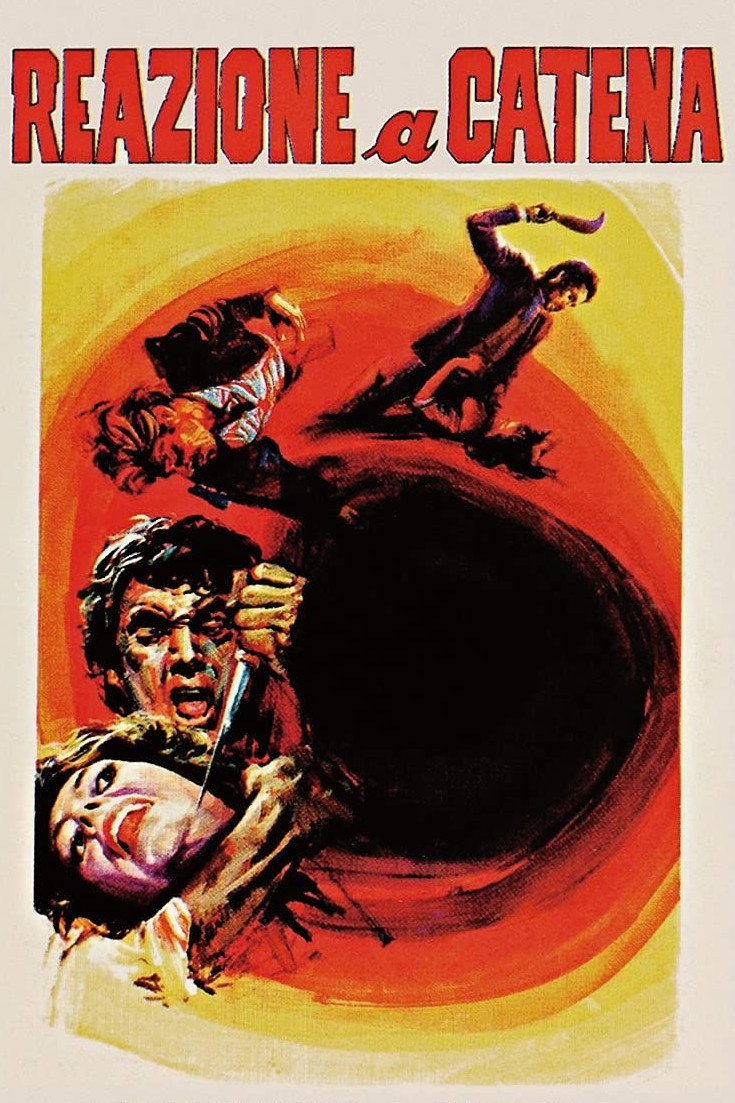
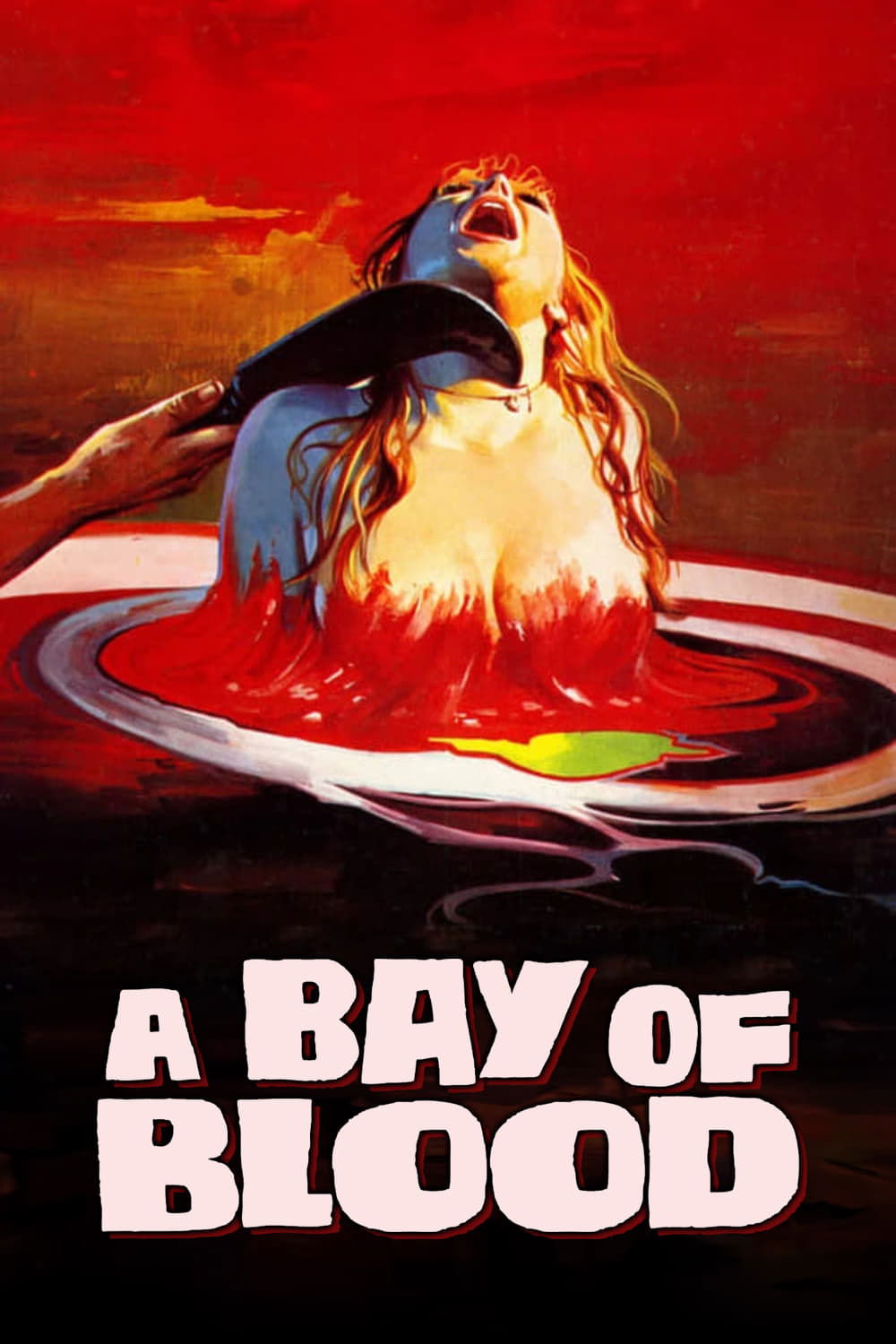
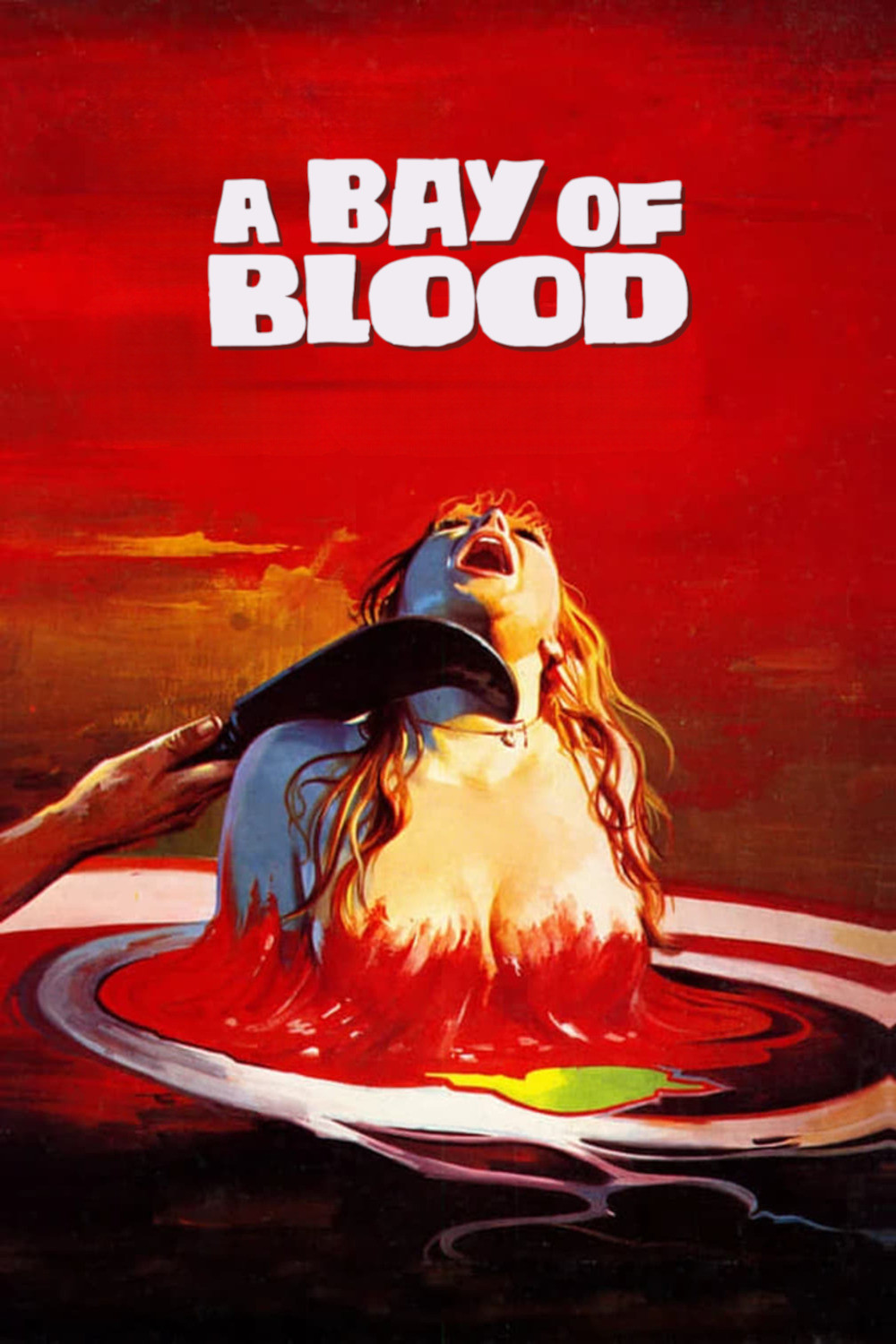
A Bay of Blood (1971)

IT
HORROR FILM Thriller
SUBGENRES SLASHER SPLATTER
UK censorship history DPP · Successful prosecutions
5.8/10 4 votes
Runtime
85 min
Release
September 8, 1971
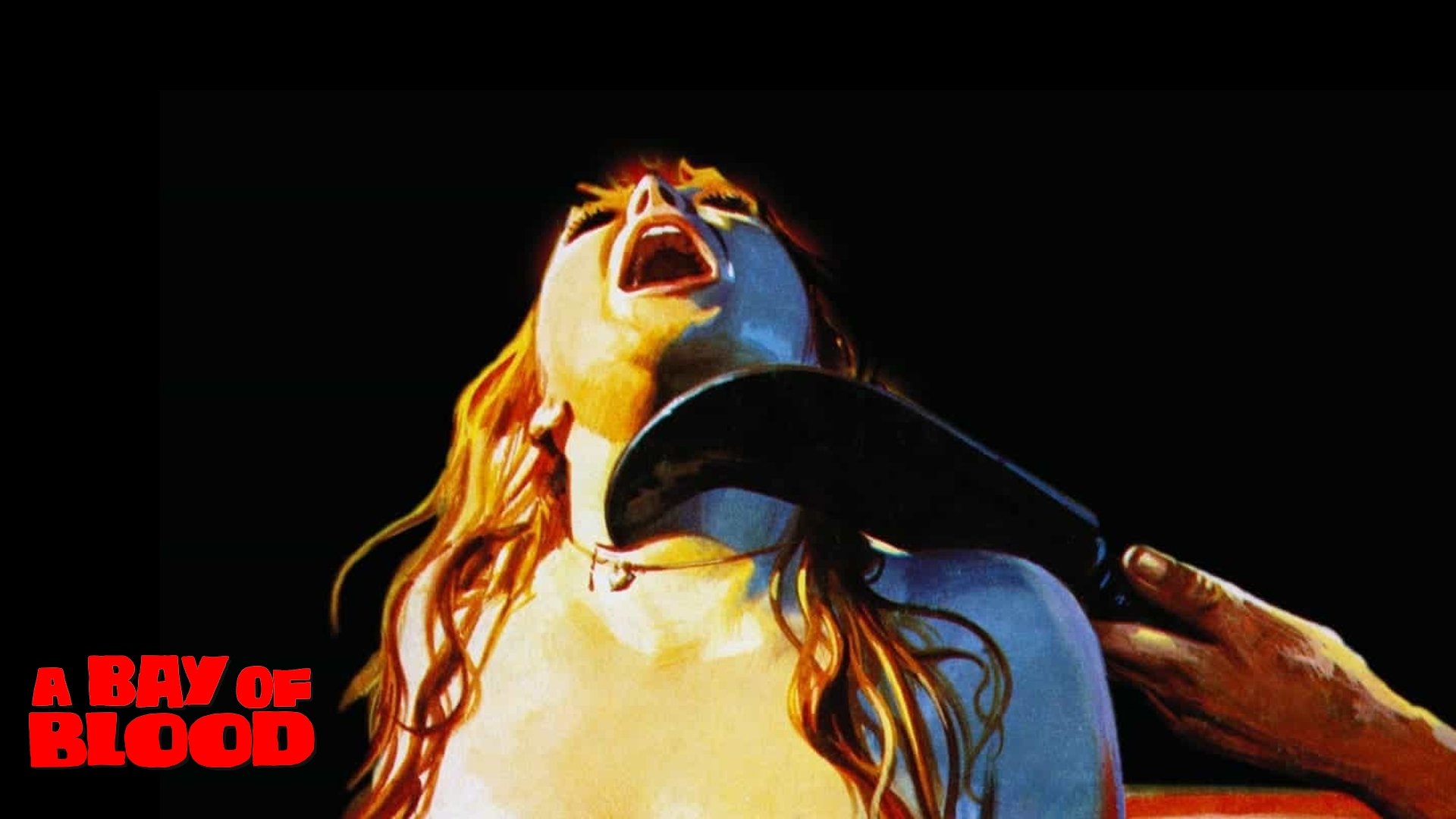
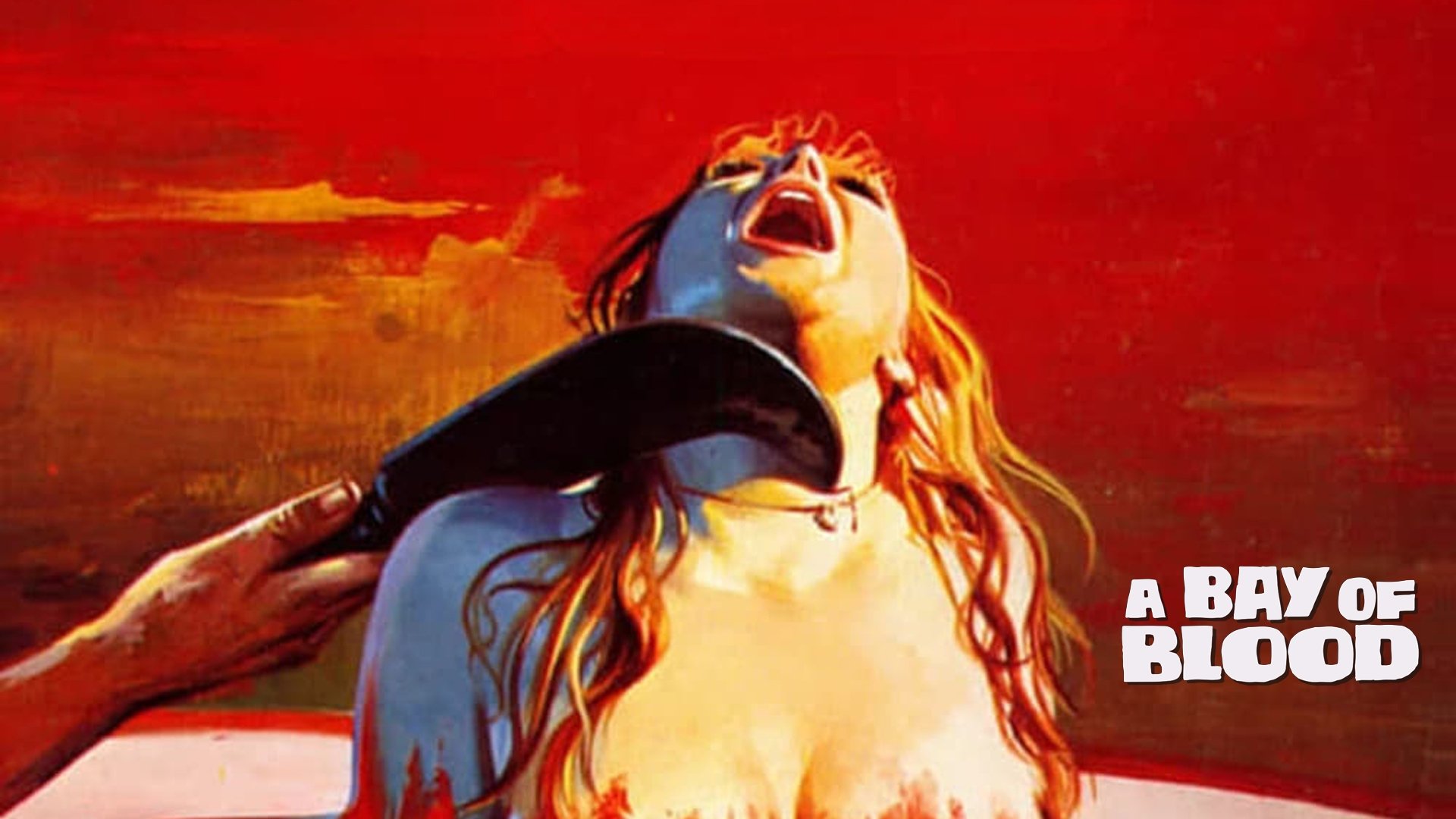
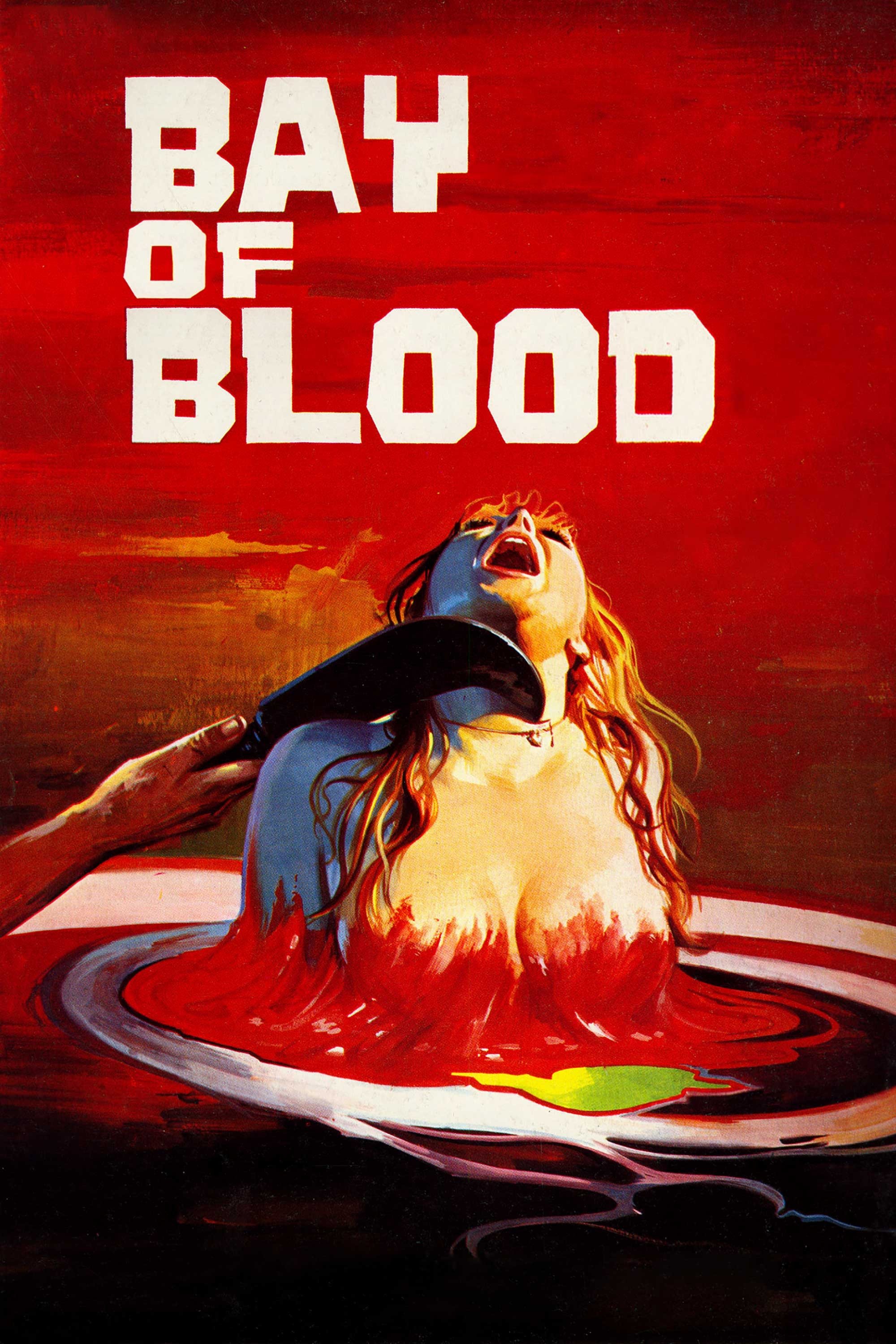
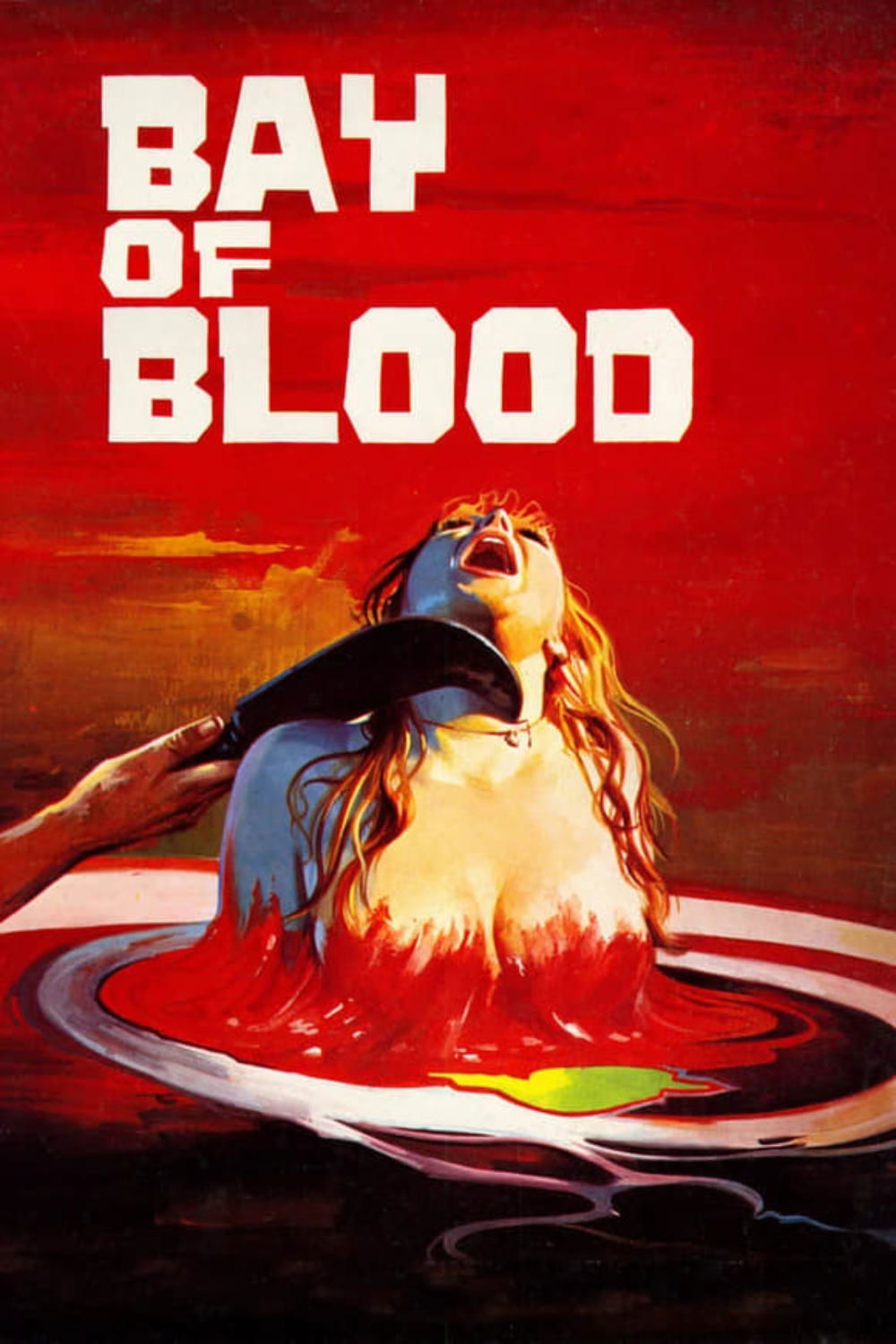
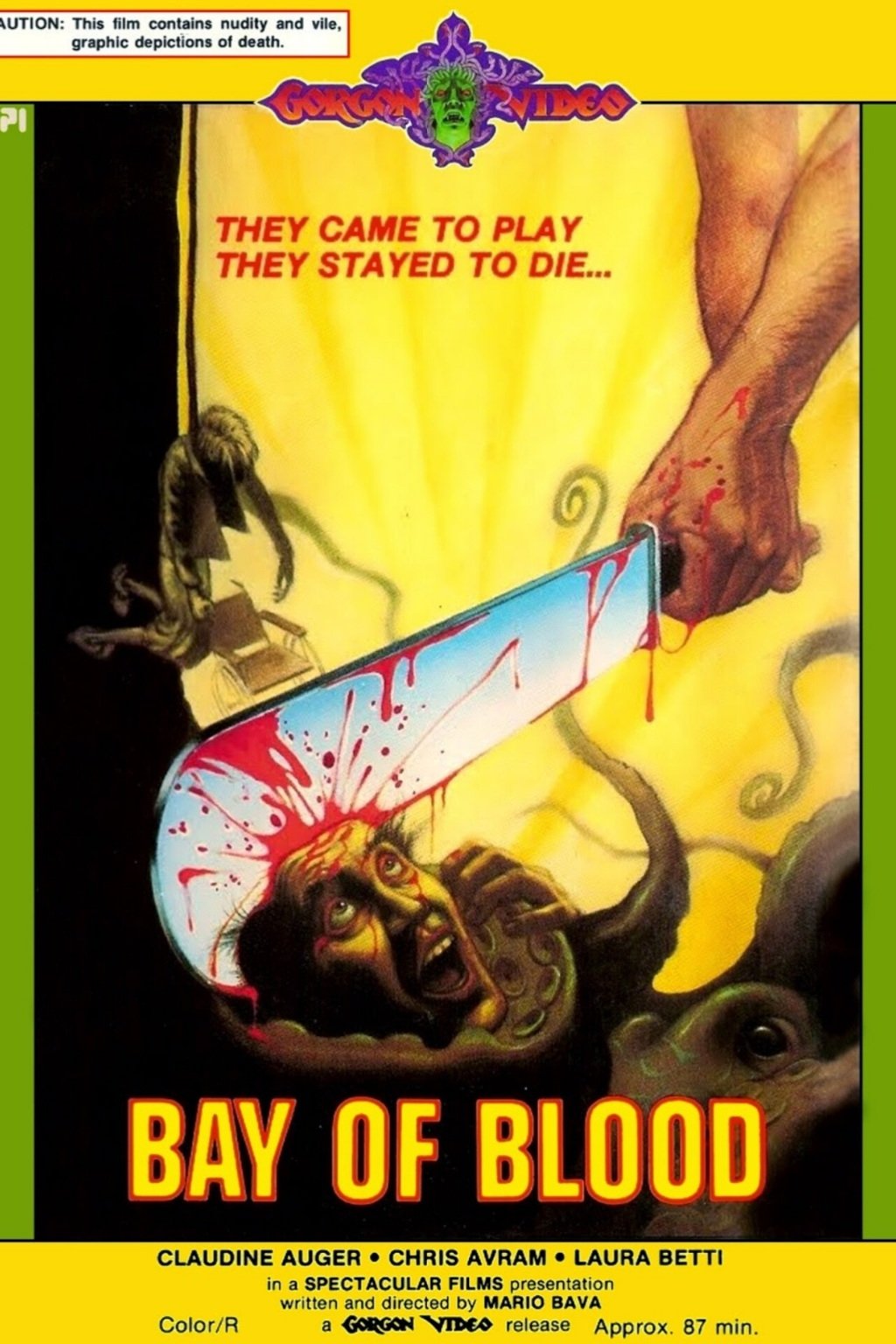
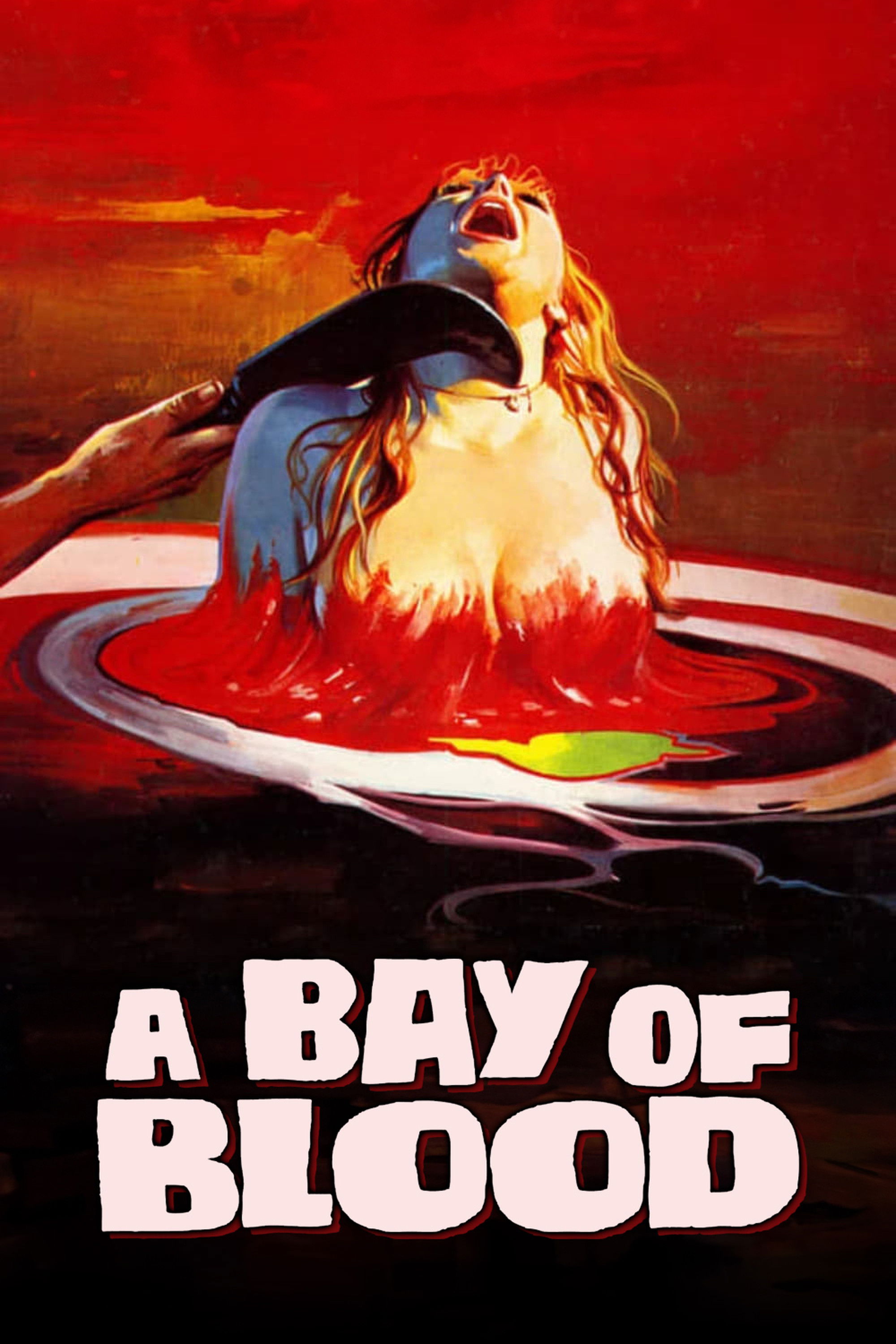
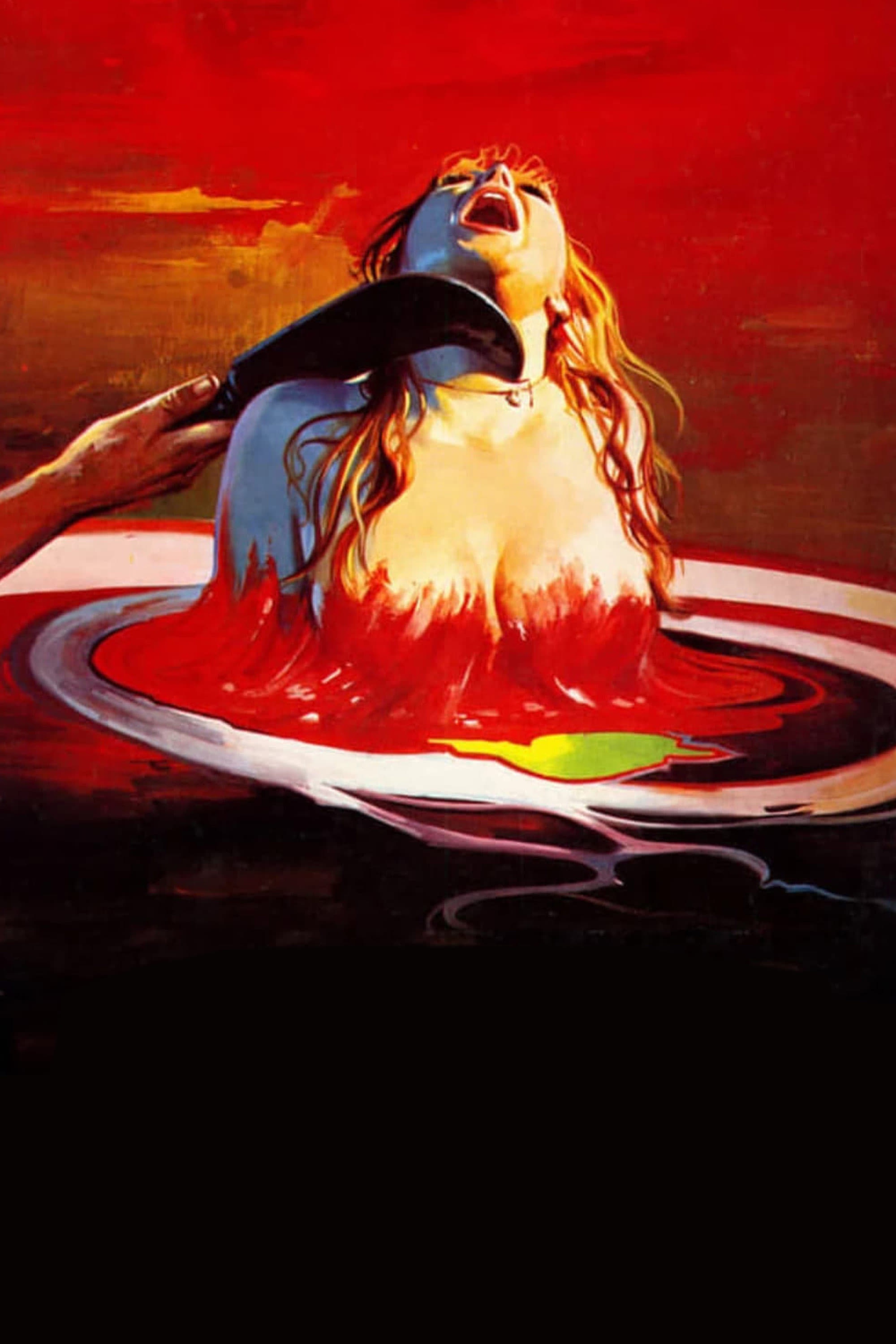
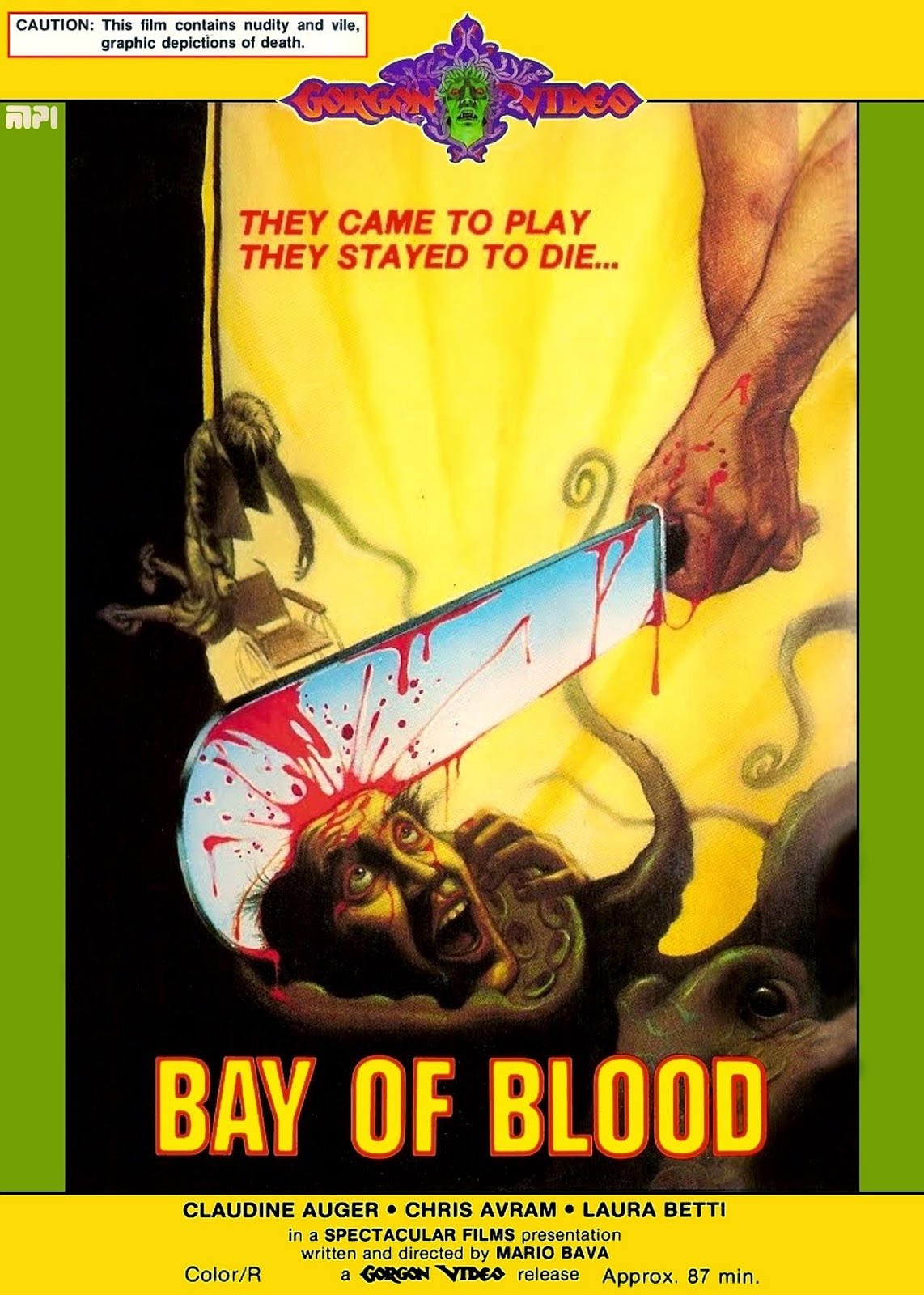
A Bay of Blood (1971) poster
Director
Production Company
Nuova Linea Cinematografica
Plot

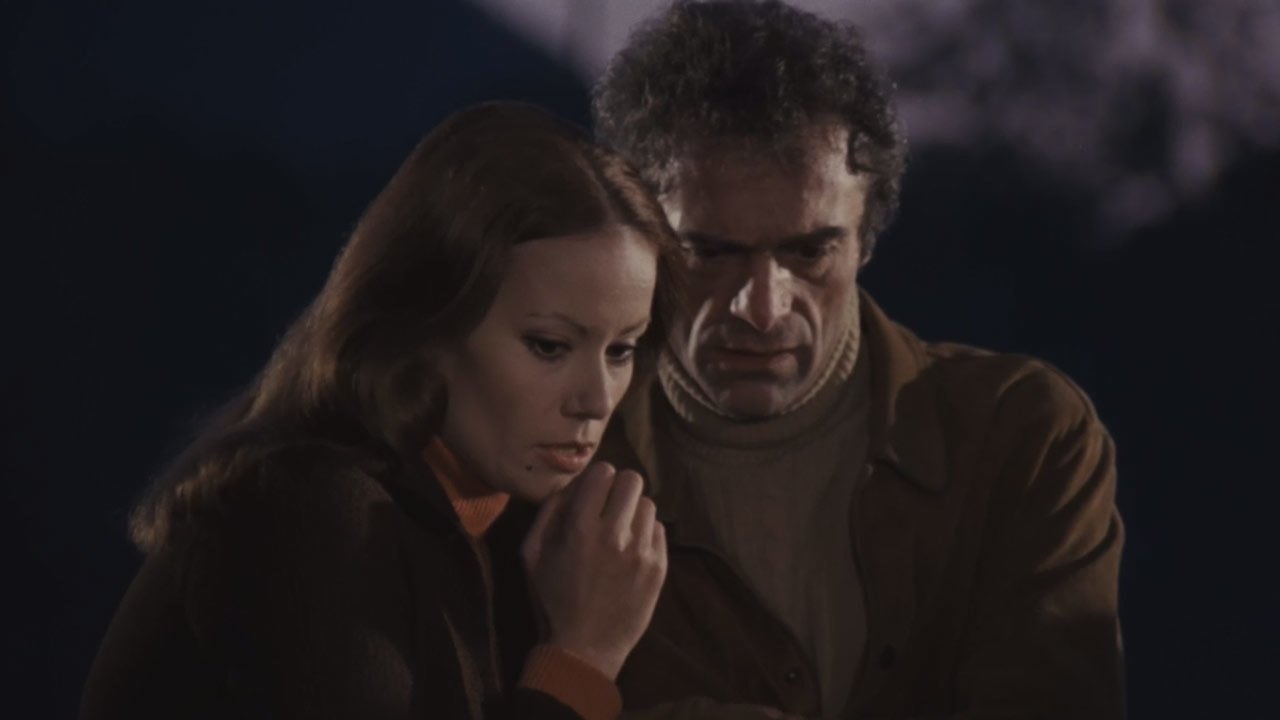
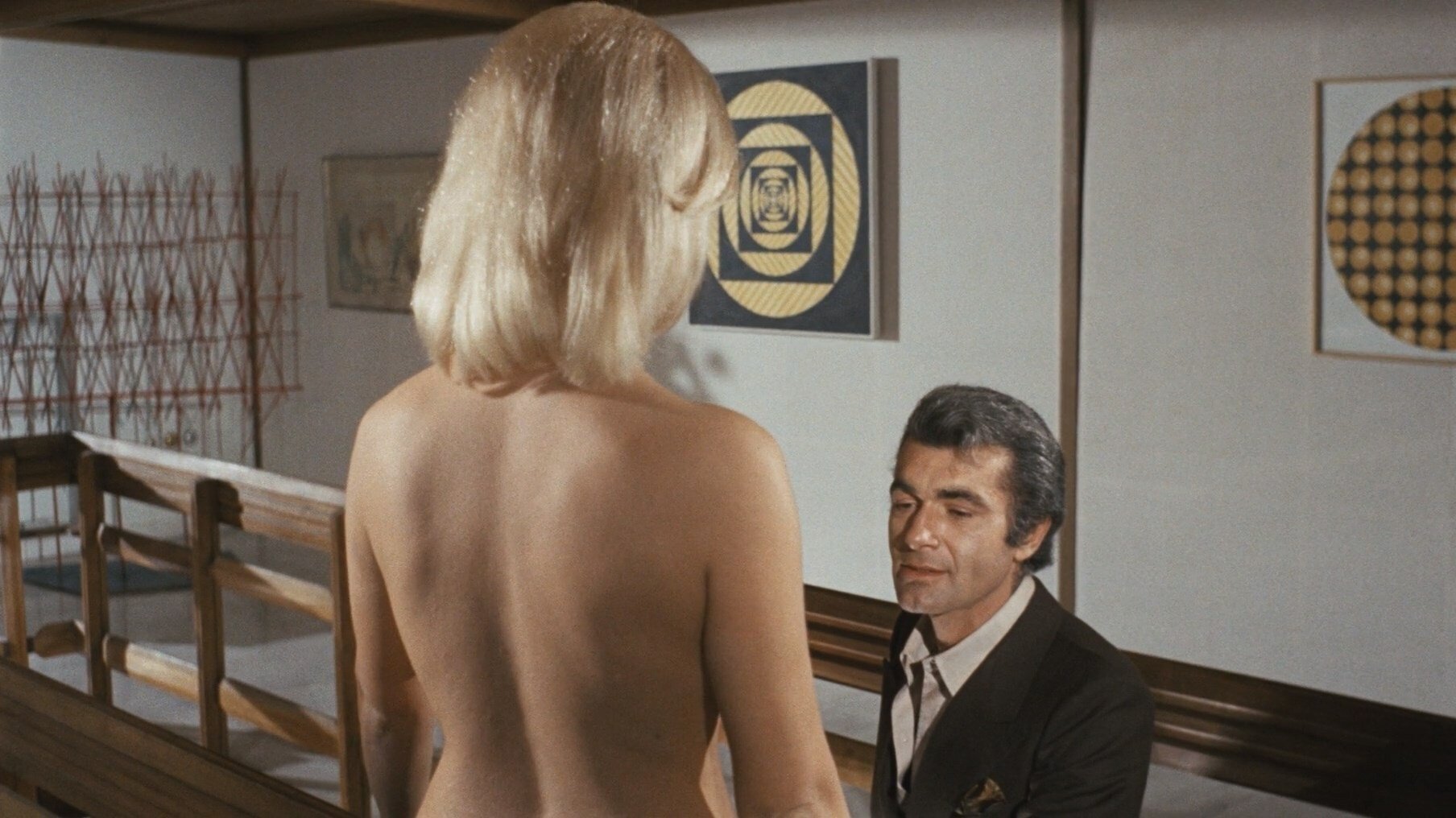
An elderly heiress is killed by her husband who wants control of her fortunes. What ensues is an all-out murder spree as relatives and friends attempt to reduce the inheritance playing field, complicated by some teenagers who decide to camp out in a dilapidated building on the estate.

Alternative Titles
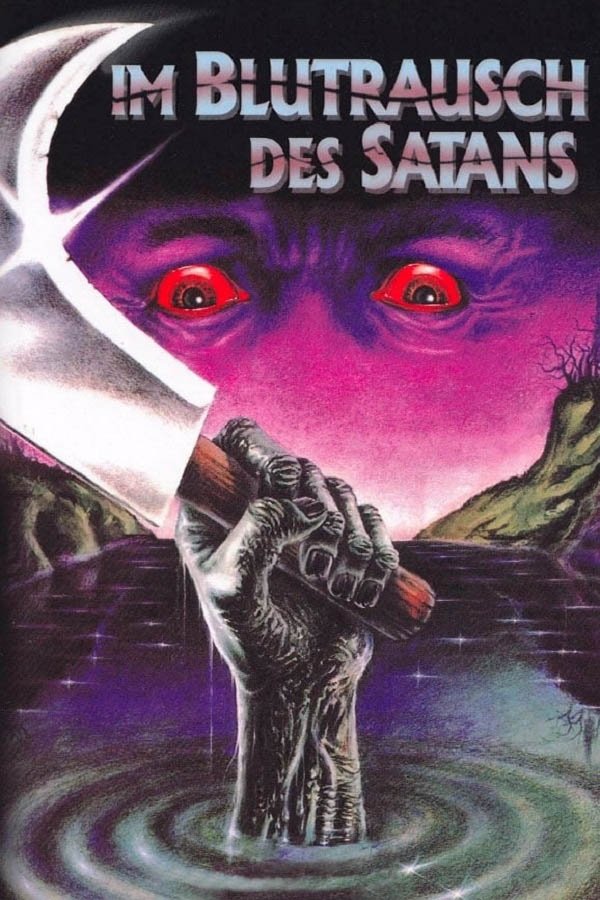
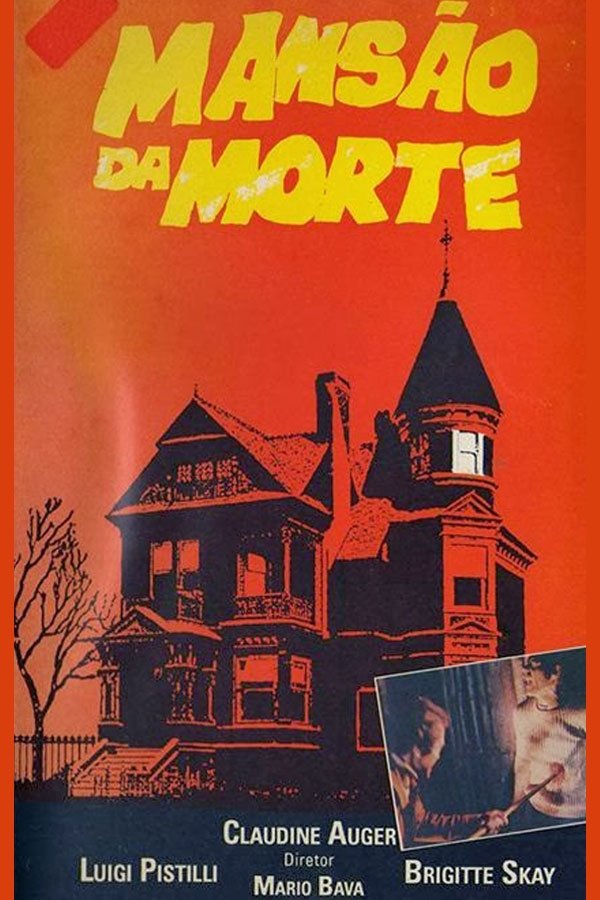
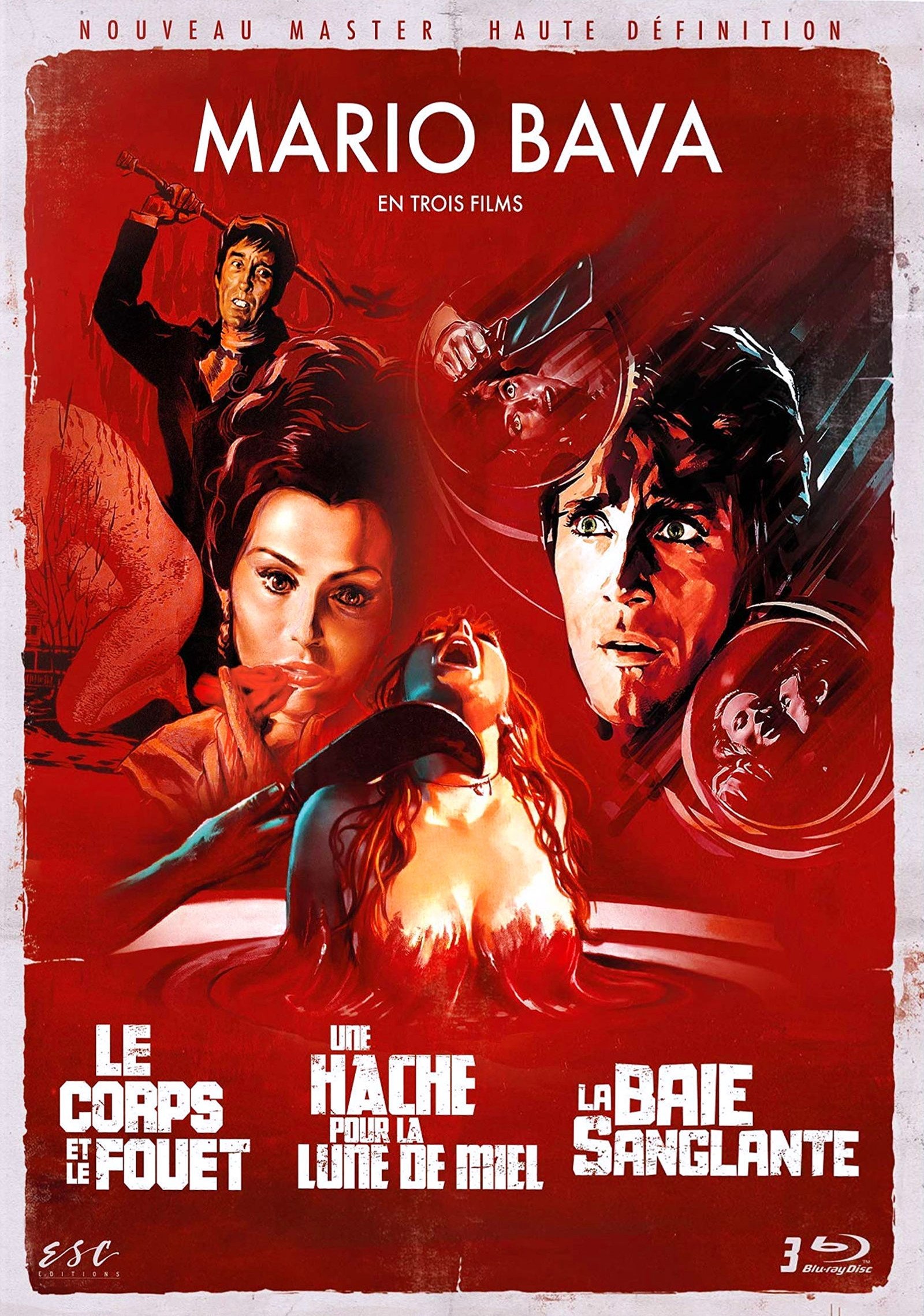
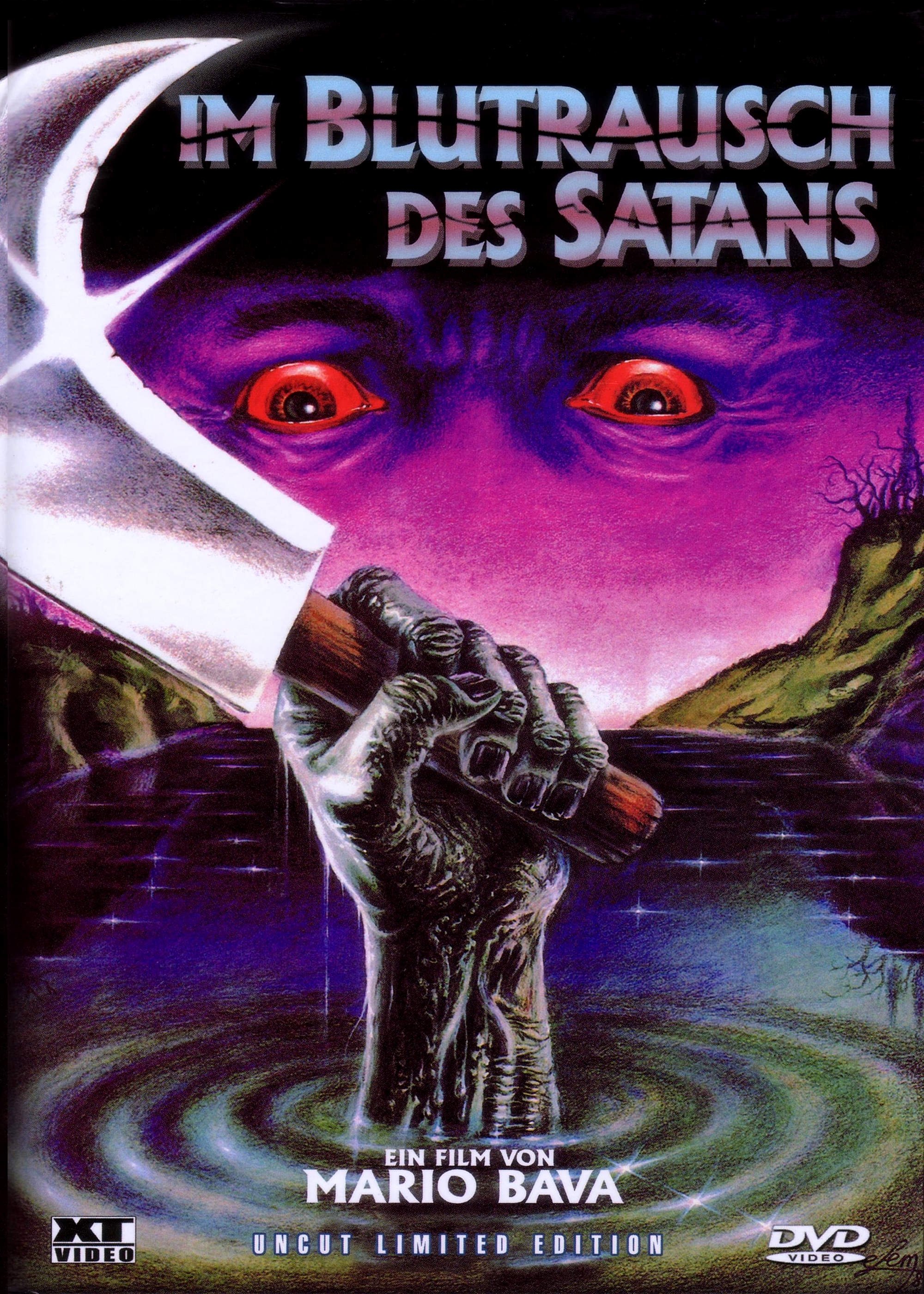
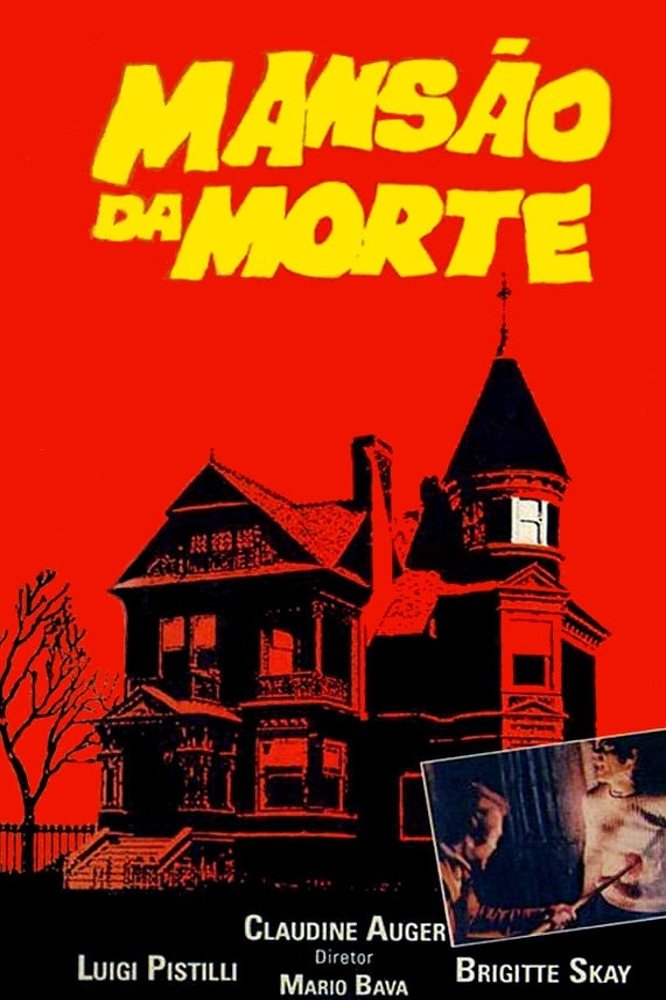
Кървавият залив (Bulgaria) — Bulgarian Banho de Sangue (Brazil) — reissue title Mansão da Morte (Brazil) — Portuguese O Sexo na Sua Forma Mais Violenta (Brazil) 血之海滩 (China) — Chinese Krvavá zátoka (Czechia) — Czech Zátoka krve (Czechia) Im Blutrausch des Satans (Germany) — German
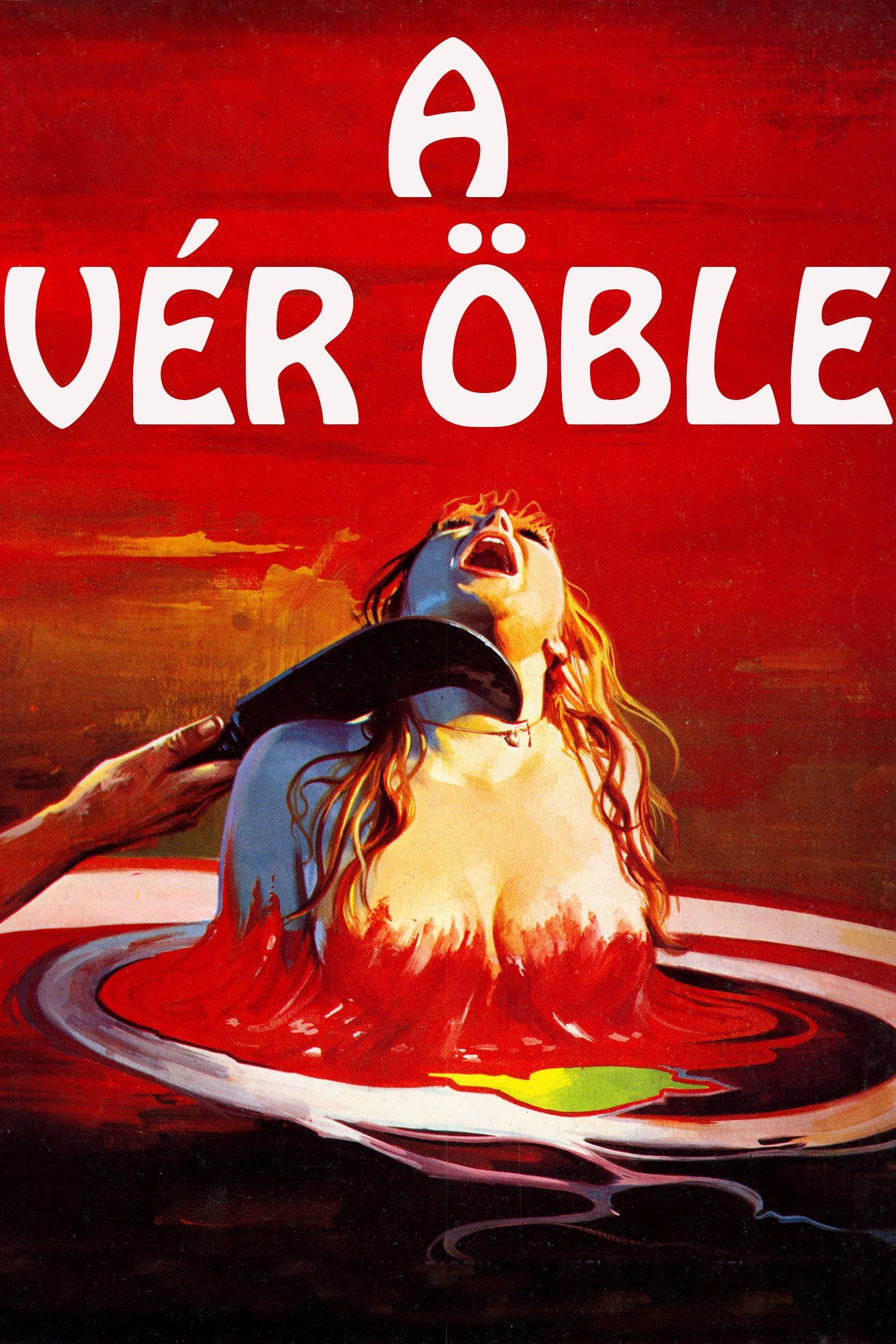
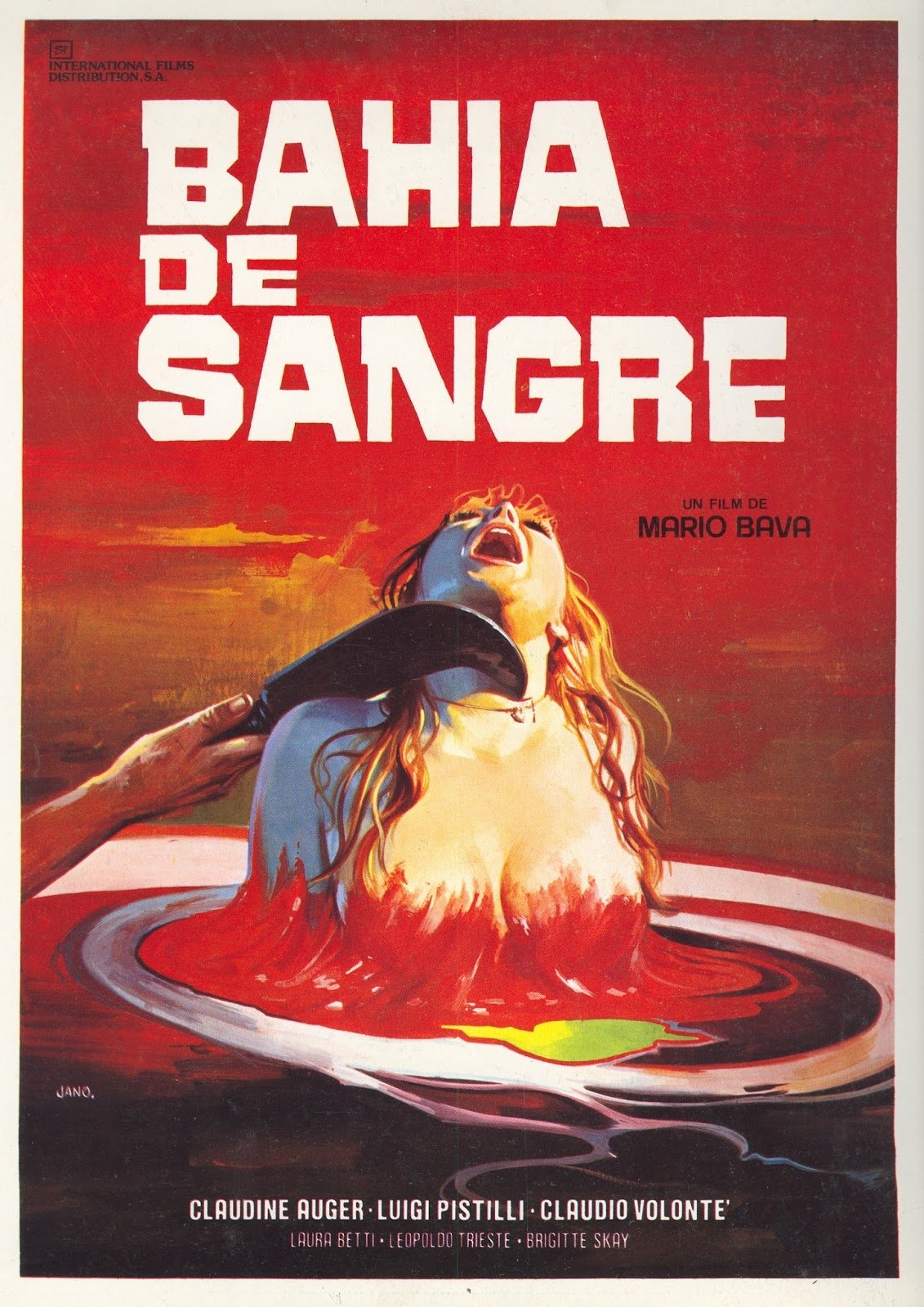
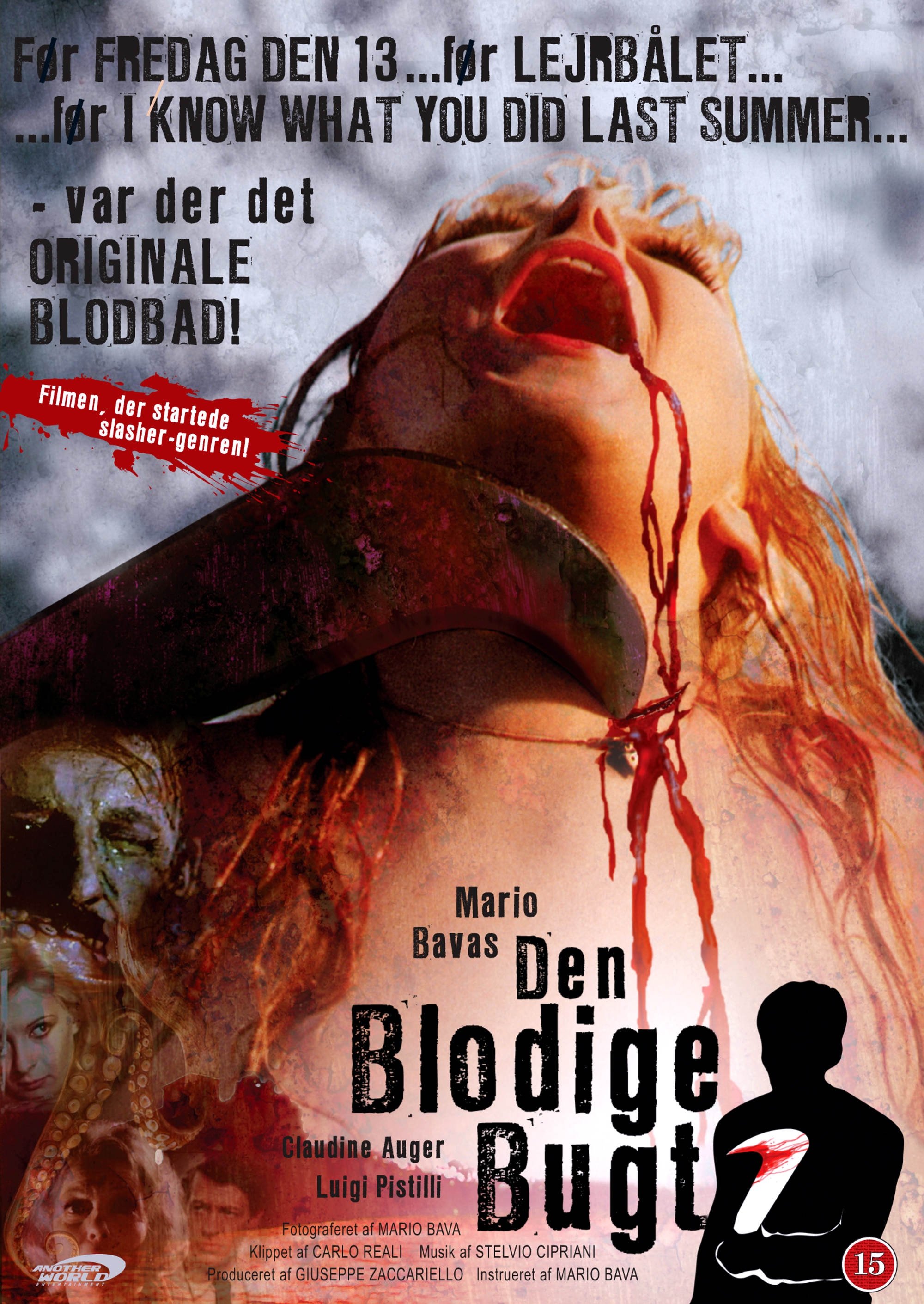
Show all 28 alternative titles Blodbugten (Denmark) — Danish Bahía de sangre (Spain) — Spanish La badia de la sang (Spain) — Catalan La Baie sanglante (France) — French Blood Bath (United Kingdom) — VHS title Σφαγή στο Ακρογιάλι της Ηδονής (Greece) — Greek A vér öble (Hungary) — Hungarian Reazione a catena (Italy) 血みどろの入江 (Japan) — Japanese 블러드 베이 (South Korea) — Korean Krwawy obóz (Poland) — Polish Baía Sangrenta (Portugal) — Portuguese Кровавый залив (Russia) — Russian Bay of Blood (Sweden) — Swedish Kanlı Körfez (Türkiye) — Turkish 血之海灘 (Taiwan) — Chinese Carnage (United States) Last House - Part 2 (United States) — Cinema Reissue Last House on the Left 2 (United States) Twitch of the Death Nerve (United States)

Trailers & Videos

4 videos

Film Guide & Analysis

Mario Bava's 1971 giallo landmark: its thirteen murders, Dardano Sacchetti's screenplay, Carlo Rambaldi's gore effects, innovative cinematography, slasher influence, censorship and restored versions.

A Bay of Blood (Ecologia del delitto, 1971), also released in Italy as Reazione a catena, is an Italian giallo horror film directed and photographed by Mario Bava. Its thirteen murders, unusually graphic practical effects and succession of competing killers make it a crucial precursor to the modern slasher film. Produced during the commercial expansion of Italian thrillers following Dario Argento's The Bird with the Crystal Plumage (1970), it radically reorganizes the conventions Bava had helped establish in The Girl Who Knew Too Much (1963) and Blood and Black Lace (1964). The film replaces the conventional search for an unidentified murderer with a succession of killings driven by property ownership, financial interests and mutually destructive relationships.

The production brought together screenwriter Dardano Sacchetti, producer Giuseppe Zaccariello, special-effects artist Carlo Rambaldi and composer Stelvio Cipriani. Its distinctive combination of natural landscapes, elaborate camera movements and explicit bodily violence reflects Bava's ability to create sophisticated visual effects under restricted production conditions. Originally circulated under several titles, including Twitch of the Death Nerve, Carnage and Blood Bath, the film subsequently became a point of reference for American slasher cinema, particularly Friday the 13th Part 2 (1981). Its censorship history and differing international editions have complicated the identification of the original presentation. A major restoration completed in 2025 has made three historical versions available for comparative study.

Development, Production and Screenplay

A Bay of Blood emerged during a period of rapid change in Italian commercial filmmaking. The success of Dario Argento's The Bird with the Crystal Plumage created new opportunities for thrillers built around murder, visual spectacle and psychologically unstable characters. Bava was already an established filmmaker whose work included Black Sunday (1960), Blood and Black Lace and Kill, Baby... Kill! (1966). His approach to the new project was nevertheless different from the investigative mysteries that characterized much of the emerging giallo cycle. Producer Giuseppe Zaccariello developed the film through Nuova Linea Cinematografica, working with Bava and several writers on a story involving an inheritance dispute surrounding a valuable bay.

The original subject, Così imparano a fare i cattivi, was associated with Dardano Sacchetti and Franco Barberi. Further screenplay work involved Bava, Zaccariello and Filippo Ottoni, while other contributors appear in historical production credits. Sacchetti later described his collaboration with Bava in an interview published in Rue Morgue. He recalled that the director was particularly interested in discussing the individual murder sequences. According to Sacchetti, he devised most of the thirteen killings, while Bava conceived the double impalement of a couple in bed. This testimony documents the collaborative development of the violence, although it should be understood as the screenwriter's retrospective account rather than an independently verified division of every creative decision.

The screenplay abandons the usual narrative arrangement in which a protagonist investigates a series of murders committed by one concealed antagonist. Characters instead pursue overlapping objectives and become victims of people who may themselves be killed. The underlying dispute concerns the ownership and potential development of the bay, giving the violence an economic motive that remains recognizable even as the succession of crimes becomes increasingly elaborate. The 2025 restoration dossier published by the Centro Sperimentale di Cinematografia identifies this narrative structure as a decisive departure from the conventional giallo. Rather than placing every murder in the service of a final revelation, the film makes successive acts of violence the organizing principle of the story.

Location Filming, Cinematography and Visual Style

The film was made under limited financial conditions, with Bava assuming responsibility for cinematography as well as direction. Principal location work took place around Sabaudia, where property associated with producer Zaccariello supplied an important part of the lakeside setting. The production had to create the impression of a much larger wooded environment than the available location actually provided. Laura Betti later recalled an episode in which Bava used small branches placed close to the camera to suggest dense vegetation. The technique became a source of amusement during filming because the illusion depended on precise positioning of the performers and the foreground objects.

The photography represents an important stylistic development within Bava's work. His earlier Gothic films frequently relied on carefully composed images, artificial lighting and elaborate studio environments. A Bay of Blood combines controlled interior compositions with more mobile camerawork, frequent zooms and abrupt changes in framing. Film historian Alberto Pezzotta, whose analysis is reproduced in the Centro Sperimentale di Cinematografia dossier, identifies Emiliano Varriano as a camera operator particularly skilled in handling the zoom. The image repeatedly changes scale or shifts attention between foreground and background. These techniques establish relationships among observation, concealment and violence while allowing the surrounding landscape to occupy a more active place in the composition.

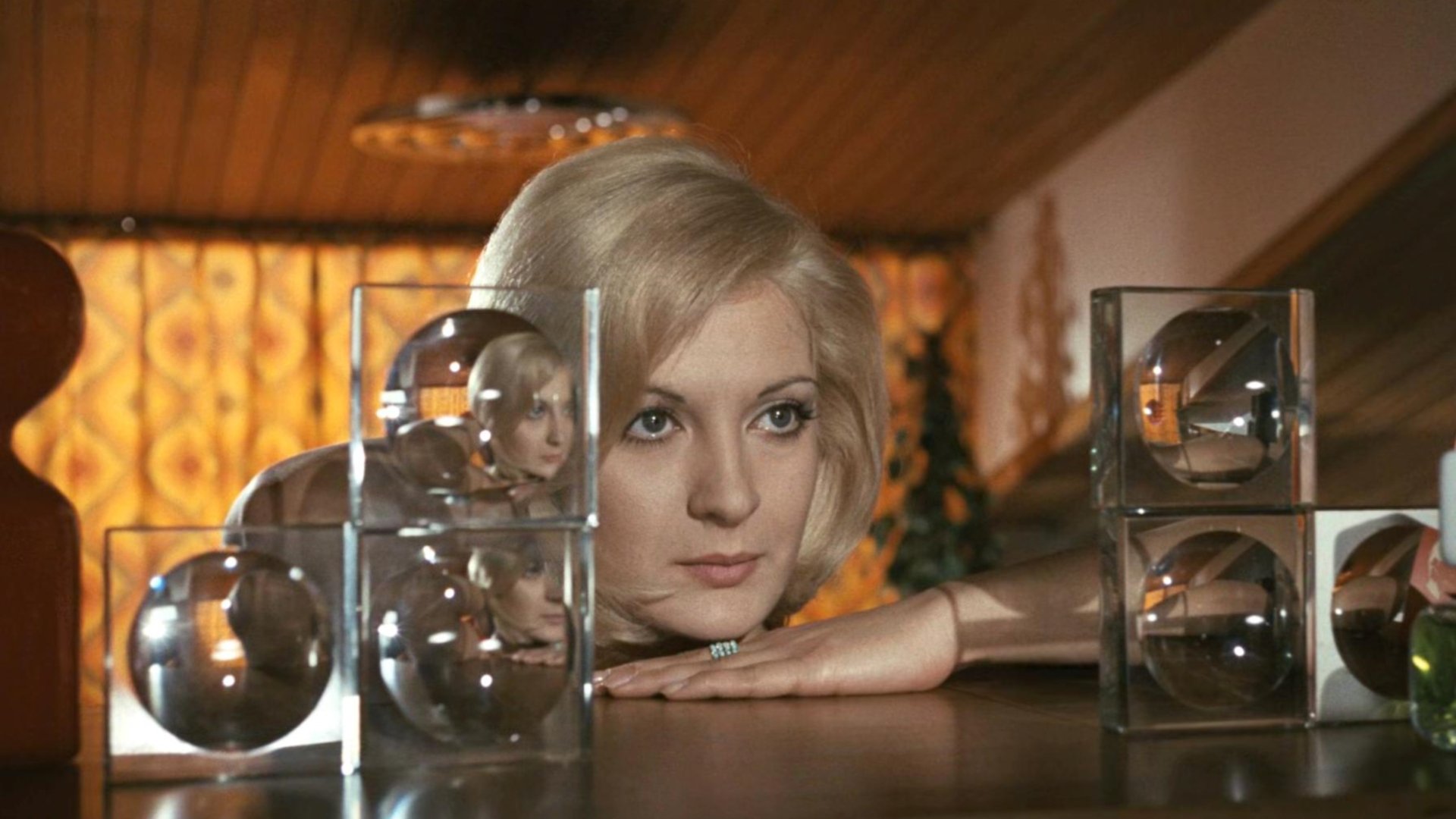
The film also makes unusually extensive use of deliberate defocusing. Characters, objects and natural details can become temporarily indistinct before the camera redirects attention toward a newly visible subject. Bava sometimes allows the movement of the image to precede the disclosure of information, creating uncertainty about whose perspective the audience is experiencing. The opening sequence provides an especially clear example of this interest in vision: an apparently abstract circular image is gradually revealed to be an eye. Such transitions connect the photographic method to the film's central concern with looking. Camera movement becomes an essential part of the horror rather than simply a means of recording action.

The Chain of Murders and the Ecology of Violence

The film's opening establishes its narrative principle through a rapid reversal. Countess Federica Donati, played by Isa Miranda, is murdered in what initially appears to be a conventional Gothic crime. The apparent murderer is then killed almost immediately, interrupting the expectation that the story will follow a single criminal. The subsequent dispute over the bay introduces several characters whose interests overlap and conflict. Renata and Alberto, played by Claudine Auger and Luigi Pistilli, become involved in the struggle alongside other figures connected to the property. The important dramatic development is the multiplication of potential murderers rather than the gradual identification of one hidden culprit.

This arrangement gives the film a particular relationship with its original title, Ecologia del delitto, meaning Ecology of Crime. The bay is treated as a territory whose inhabitants compete over possession, development and survival. Paolo Fossati, played by Leopoldo Trieste, studies insects and the surrounding environment, introducing a scientific vocabulary into a story dominated by human aggression. The film repeatedly juxtaposes the natural world with actions that make the human characters appear governed by similar struggles. Critics including Alberto Pezzotta and Simone Venturini have developed this relationship in studies reproduced by the Centro Sperimentale di Cinematografia. Their interpretations connect the structure of the killings with the film's presentation of social competition.

The arrival of young visitors adds another dimension to the narrative. Their presence introduces situations that would become familiar within later slasher films: sexual encounters, exploration of an isolated building and sudden attacks against characters who are unaware of the danger surrounding them. Their deaths interrupt the property dispute without producing a separate mystery. The screenplay ultimately extends its destructive logic to the family itself, ending with an unexpected act involving the children of the apparent survivors. This conclusion transforms the accumulated violence into a grim joke about imitation and inheritance. The interpretation of that ending as a critique of adult behavior is supported by the critical material preserved in the 2025 restoration dossier, although the film does not supply a single explicit explanation of its meaning.

Carlo Rambaldi and the Practical Gore Effects

Carlo Rambaldi's special makeup effects are among the most historically significant elements of A Bay of Blood. The film required thirteen murders involving different forms of physical injury, placing substantial demands on practical effects at a time before digital image manipulation. Rambaldi had already worked within Italian cinema and would later become internationally known through productions including Alien (1979) and E.T. the Extra-Terrestrial (1982). His contribution to Bava's film belongs to an earlier stage of effects filmmaking in which wounds, bodily damage and sudden violent impacts were produced through physical constructions photographed directly on set. The effects were especially important because the screenplay repeatedly makes the manner of death a major event.

Several sequences required the convincing representation of bladed weapons entering or damaging human bodies. Production histories describe the use of specially prepared body substitutes and practical mechanisms designed to produce visible blood during attacks. In the sequence involving a weapon striking a character's face, the effect depends on a prop constructed to fit the performer's profile and on carefully controlled camera positioning. Other attacks involve wounds to the neck and torso. These effects combine physical fabrication with framing and editing, allowing the camera to present apparent contact while concealing the construction necessary to perform the action safely. The surviving descriptions do not establish every material or mechanical process, and individual techniques should not be assigned without documentation.

The double impalement of a couple in bed became one of the film's most recognizable images. Sacchetti attributed its conception to Bava, distinguishing it from the other killings he recalled developing for the screenplay. The sequence connects sexual intimacy with sudden bodily destruction, a combination that later became a recurring feature of slasher cinema. The effects are important for their graphic intensity, but their historical significance also lies in their placement within an escalating succession of murders. Bava repeatedly changes the weapon, location and circumstances of the attack. The practical construction of each killing becomes part of the film's formal organization, demonstrating how specialized physical effects could shape the structure of an entire horror production.

Stelvio Cipriani, Performances and the Changing Giallo

Stelvio Cipriani composed the original score, continuing his work within Italian popular cinema and genre filmmaking. His music combines melodic passages with rhythmic material that supports the film's mixture of suspense, violence and dark humor. The score was subsequently issued in dedicated soundtrack editions and included in compilations devoted to Bava's films. Its musical identity is different from the predominantly orchestral menace associated with some earlier Gothic productions. The alternation between attractive melodies and more urgent passages complements the visual contrast between the natural beauty of the bay and the cruelty of its inhabitants. Published soundtrack documentation confirms the composer's contribution, although detailed accounts of the original recording sessions remain limited.

The ensemble includes performers from different areas of European cinema. Claudine Auger brought international recognition following her appearance in Thunderball (1965), while Luigi Pistilli had worked extensively in Italian genre productions. Laura Betti had previously collaborated with Bava on Hatchet for the Honeymoon (1970), and Leopoldo Trieste supplied a contrasting presence through the character of the entomologist. Claudio Camaso, also credited as Claudio Volonte, played Simone. The cast is organized around competing interests rather than a single heroic protagonist, allowing established screen personalities to appear in morally compromised roles. This approach reinforces the uncertainty concerning which characters will survive long enough to dominate the narrative.

Betti's recollections also provide evidence of Bava's distinctive working methods. In testimony reproduced by the Centro Sperimentale di Cinematografia, she described his ability to construct convincing visual environments with improvised materials and limited resources. Her account emphasizes the practical ingenuity of a director whose effects background influenced his treatment of both scenery and violence. The resulting film combines professional performers, inexpensive locations and technically elaborate murders without attempting the polished production scale of a major international thriller. Its importance within the giallo cycle comes partly from this combination of artisanal filmmaking and unusually aggressive experimentation with narrative expectations.

Distribution, British Censorship and Alternate Versions

The film received Italian censorship authorization on August 12, 1971, under the title Ecologia del delitto. The official Cinecensura archive documents the commission's concern with extensive bloody violence, macabre imagery, female nudity and erotic material. The film was permitted public exhibition with a restriction excluding viewers younger than eighteen. Italian release records identify September 8, 1971 as its initial theatrical date. In 1972 the authorities approved a change of title to Reazione a catena, provided that the previous title remained as a subtitle. These documents establish the distinction between the original release title and the later Italian reissue name, which are frequently treated as interchangeable in international filmographies.

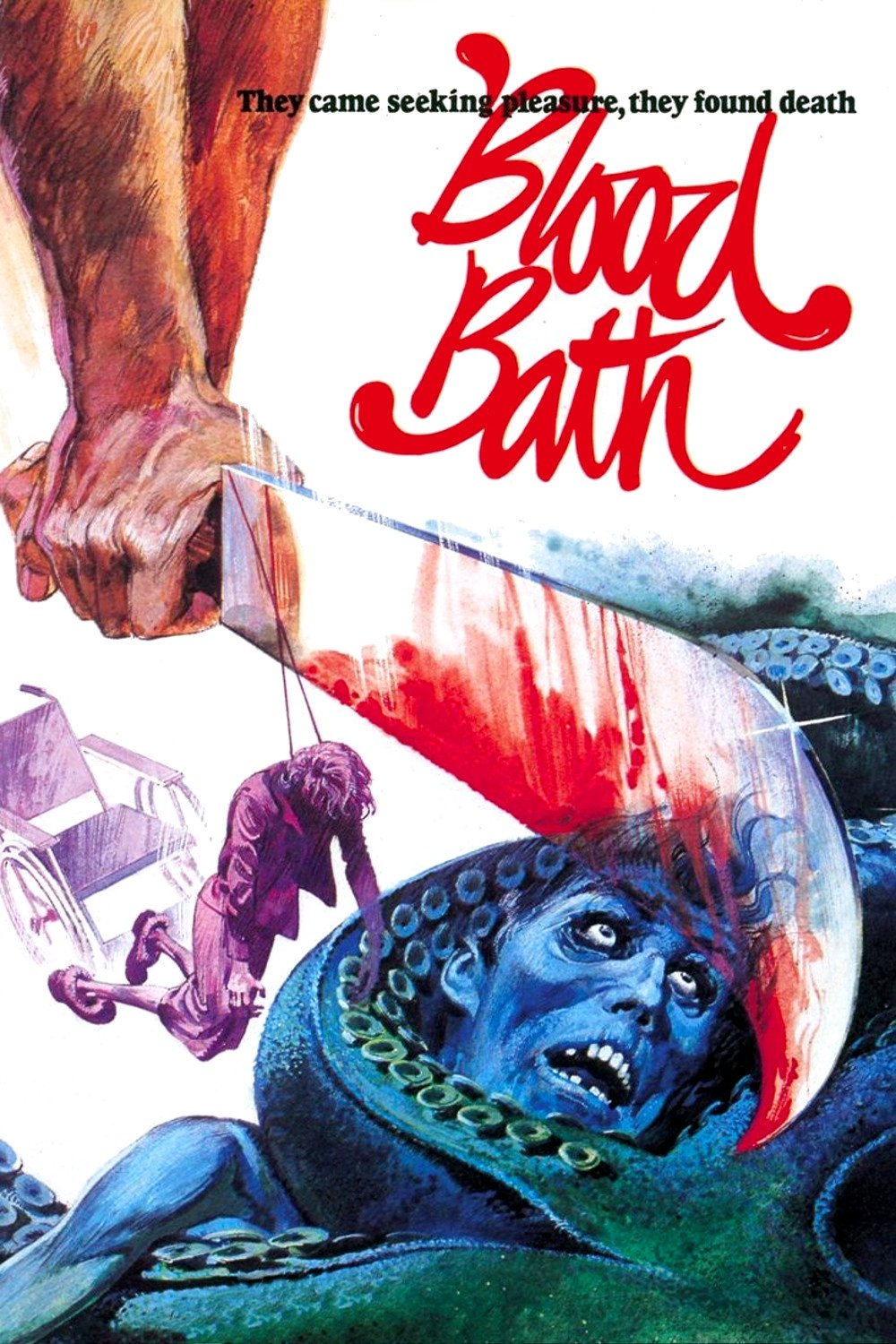
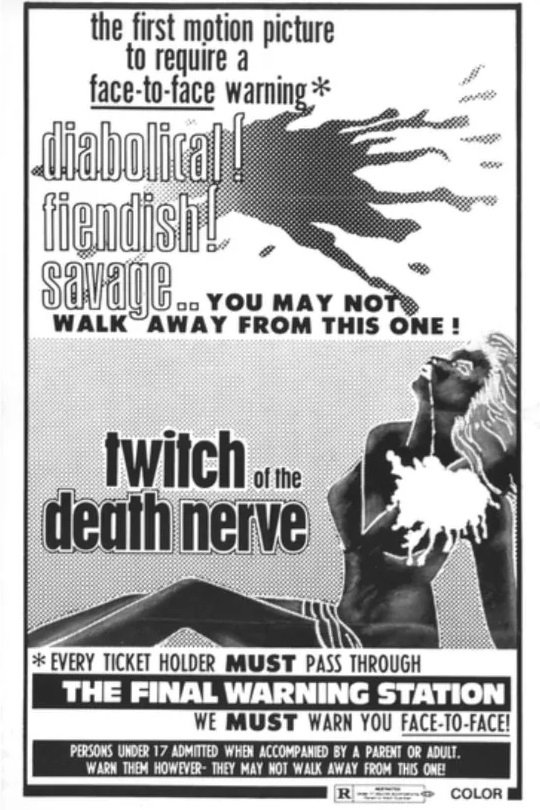
The international distribution history introduced additional titles, including Carnage, Twitch of the Death Nerve, Blood Bath and A Bay of Blood. American promotion placed considerable emphasis on the violence, while some later reissues attempted to associate the picture with successful horror properties through misleading titles. British censorship records document a particularly complicated history. A submission under the title A Bay of Blood was refused classification on April 6, 1972. A theatrical version released as Bloodbath was classified in January 1980, while the film subsequently circulated through home-video editions. The British Board of Film Classification records cuts required for the 1994 video release and their waiver for the 2010 Arrow edition.
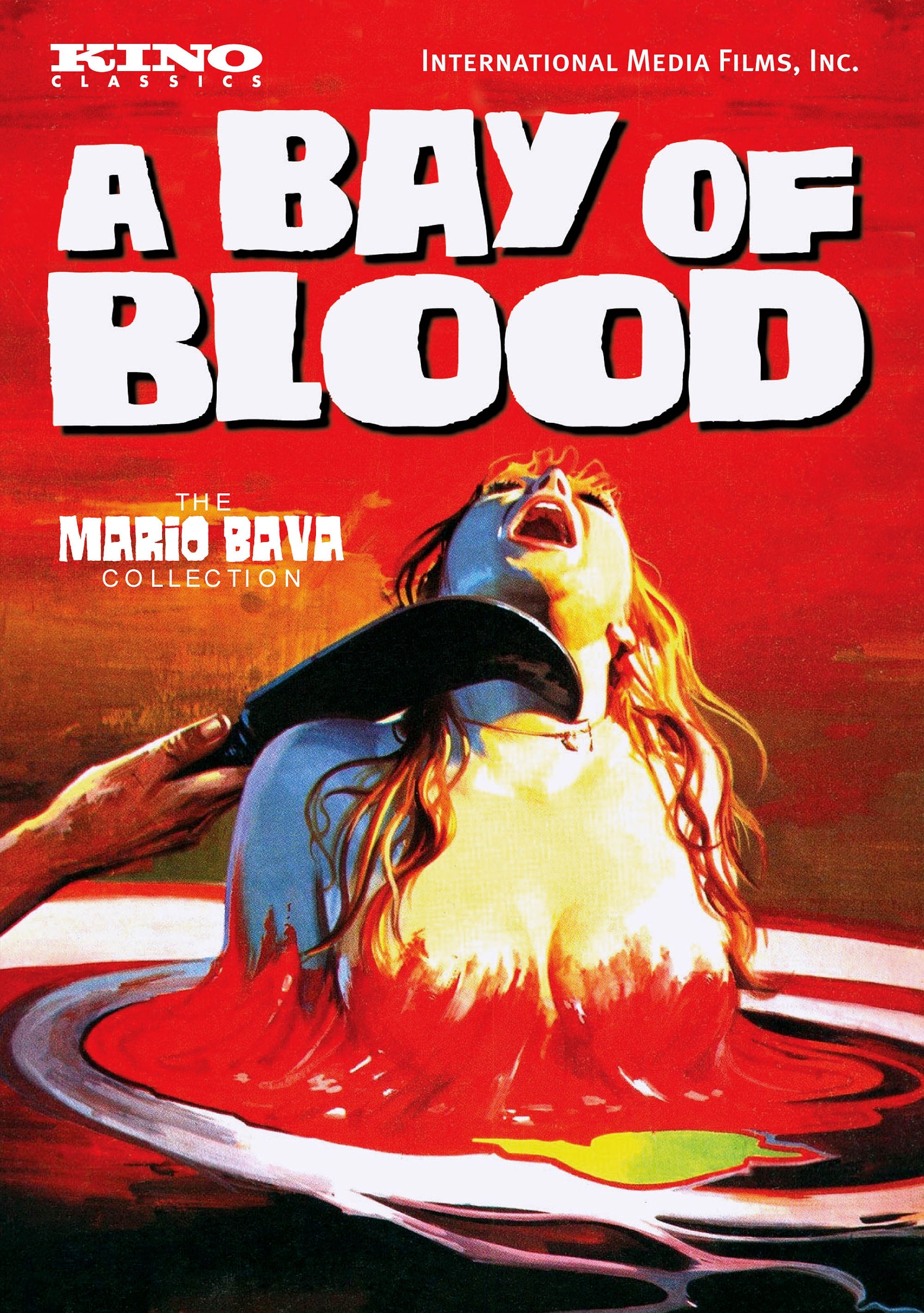
The modern restoration history makes the distinction between different presentations especially important. In 2025, Severin Films completed a 4K restoration using original negative materials supplemented where necessary by distribution elements, with support from the Centro Sperimentale di Cinematografia. The restoration premiered at the Locarno Film Festival in August 2025. Severin subsequently issued three versions: the English-language release, the original Italian presentation under the title Ecologia del delitto and the Italian reissue Reazione a catena. The distributor lists approximately 84 minutes for the English edition and 86 minutes for the Italian presentations. Differences among these versions concern their historical release identities, not simply the presence or absence of violent material. Published running times from older editions should therefore be interpreted cautiously.
Critical Reception and the Development of the Slasher

A Bay of Blood occupies a major position in the history of the slasher film, although it belongs to a cinematic tradition that existed before the American cycle became commercially established. Bava had already helped define the modern giallo through The Girl Who Knew Too Much and Blood and Black Lace. The 1971 production extends that tradition by increasing the number and graphic intensity of the killings while reducing the importance of a central detective. Its succession of violent set pieces anticipates a structure later associated with American horror films in which the progressive elimination of a group becomes the central source of suspense. The connection is one of formal development rather than proof that Bava independently invented every convention of the genre.

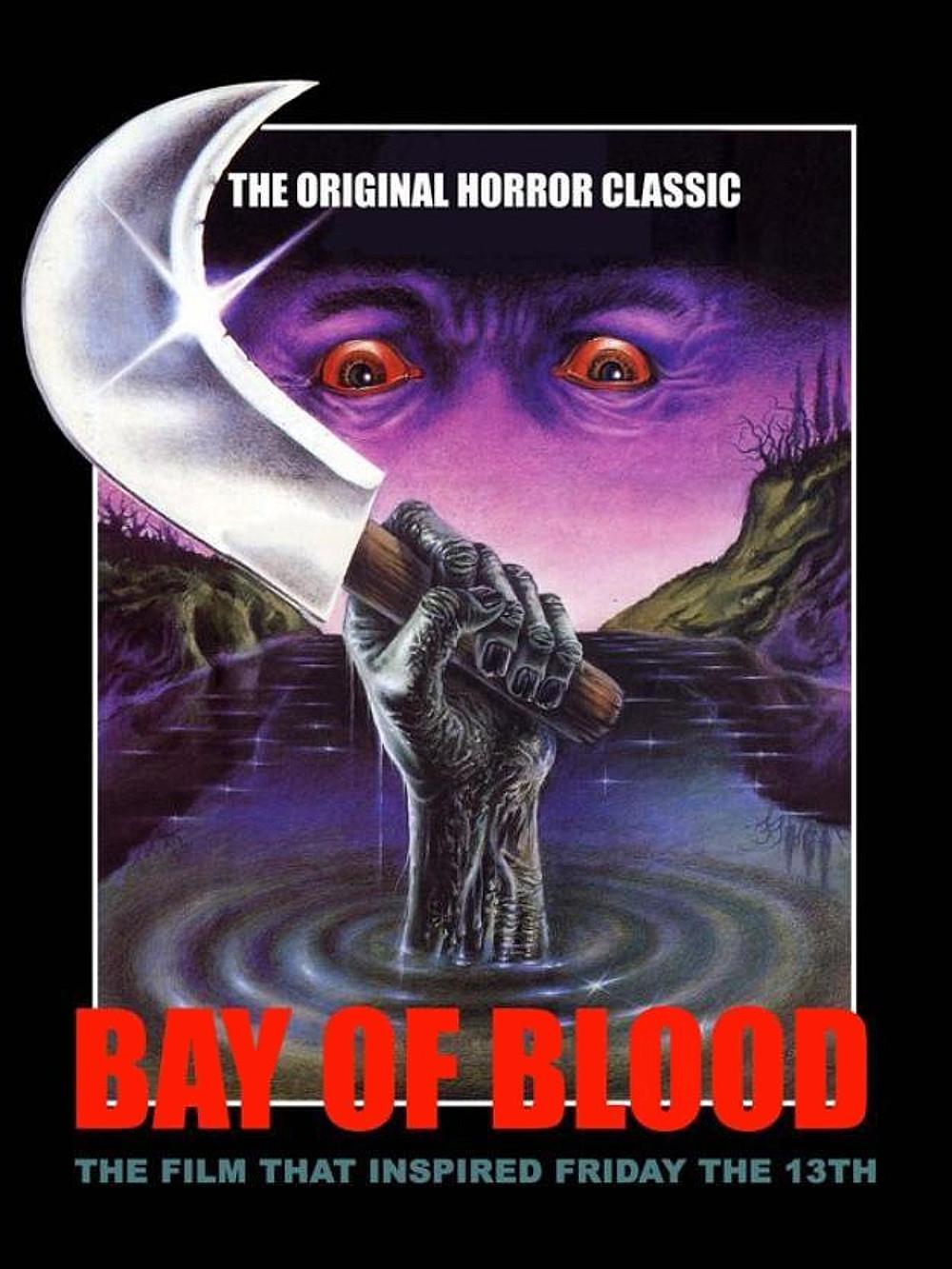
The film's relationship with Friday the 13th Part 2 (1981) is particularly recognizable. The later American production includes a double impalement of lovers that closely resembles Bava's earlier sequence, while the forest setting, youthful victims and concentration on graphic murders provide additional grounds for comparison. The relationship has been discussed extensively in horror criticism, but the visual resemblance should be distinguished from a documented claim about the precise creative decisions of every filmmaker involved. The British Film Institute identifies A Bay of Blood as an important step in the development of the American slasher, while later commentary has emphasized its contribution to the body-count structure that became commercially prominent during the 1980s.

Critical reassessment has also developed an understanding of the film beyond its immediate influence on later murder sequences. Writing for Slant Magazine in 2013, Wes Greene examined the relationship between its apparently simple construction and the recurring competition for possession of the bay. The Centro Sperimentale di Cinematografia's 2025 dossier gathers interpretations by Roberto Pisoni, Alberto Pezzotta, Simone Venturini and other historians who consider the film an unusually self-conscious development of Bava's earlier thrillers. These readings emphasize its unstable points of view, repeated violence and treatment of human behavior within a natural environment. The combination of direct influence on later horror filmmaking and continuing institutional preservation establishes its historical importance beyond its original exploitation marketing.

References

  1. Centro Sperimentale di Cinematografia Reazione a catena (Ecologia del delitto) - Quaderni dei restauri No. 9 (2025)

    Eighteen-page institutional dossier edited by Caterina Taricano, containing Roberto Pisoni's historical essay, original testimony from Mario Bava and Laura Betti, production documentation and extensive critical research compiled by Maria Coletti.

  2. Cinecensura Reazione a catena (Ecologia del delitto) - Archival Censorship Documents

    Official Italian cultural-heritage archive documenting the August 1971 classification, the restrictions imposed on the original theatrical presentation and the authorized 1972 change of Italian release title.

  3. Slant Magazine Review: Mario Bava's A Bay of Blood on Kino Lorber Blu-ray - Wes Greene

    Extended critical study of the film's narrative structure, relationship with earlier gialli, competing murderers, environmental themes, slasher influence, cinematography and Stelvio Cipriani's score.

Cast

View Full Cast & Crew →

Release & Distribution

Production Companies (1)

  • Nuova Linea Cinematografica

Release History (5)

Release DateTerritoryRelease TypeFormatDistributorCertificationNotes
1971-09-08 Italy Theatrical — — —
1971-12-14 Italy Theatrical — — — Milan
1972-05-03 United States Theatrical — — —
1973-03-22 France Theatrical — — 16
2013-02-28 Germany Physical — — 18
They came to play, they stayed to die.