I Eat Your Skin (1971)

US
Runtime
84 min
Release
May 5, 1971
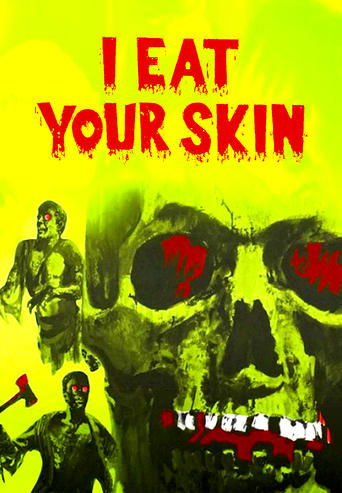
I Eat Your Skin (1971) poster
Director
Writer
Production Companies
Iselin-Tenney Productions Inc. , Cinemation Industries
Plot

A playboy adventure novelist joins his publisher on an expedition to Voodoo Island in the Caribbean, where a cancer researcher is being forced to turn the tribes-people into zombies.

Alternative Titles
噬汝之肤 (CN) — translation:zh Zombies (ES) — translation:es Il voodoo dei morti viventi (IT) — translation:it Woodoo Island (SE) Caribbean Adventure (US) — original script title Voodoo Blood Bath (US) — promotional title Zombie (US) Zombie Bloodbath (US) — alternative title

Trailers & Videos

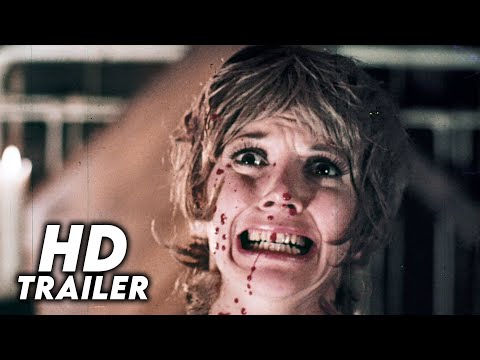
1 video

Film Guide

Shot in 1964 as Zombies and released years later under a sensational new title, Del Tenney's Florida-made horror film sits between old-style voodoo cinema and the post-Romero zombie era.

I Eat Your Skin is one of those horror films whose release history is almost more revealing than its plot. Written, produced and directed by Del Tenney, it was shot in 1964 under the title Zombies but did not reach American theaters until 1971. By then the genre had changed dramatically, and the film arrived under a new exploitation title as the second half of a double feature with David E. Durston's I Drink Your Blood. That gap left Tenney's picture stranded between two eras of horror: its voodoo-and-science conception of zombification belongs to an older tradition, while its eventual advertising tried to sell it to audiences accustomed to harsher material.

The film sends novelist Tom Harris to a Caribbean island where a scientist's experiments with snake venom have created blank-eyed human servants. Behind the adventure framework lies a mixture of voodoo imagery, mad-scientist plotting and exotic settings familiar from earlier zombie cinema. Seen in the context of its actual production date, its zombies are especially revealing. They are not flesh-eating corpses in the later Romero sense, but living people deprived of will and turned into instruments of control. The film's odd historical position comes from audiences encountering this older model only after Night of the Living Dead had transformed what the word zombie could mean on screen.

Production in Florida

The American Film Institute records that the picture was filmed in 1964 under the title Zombies and produced by Del Tenney Productions. Although the story takes place on a Caribbean island, much of the production was based in Florida, with Miami Beach among the documented locations. The opening credits thank the Hotel Fontainebleau and organizations connected with Dade County parks, evidence of the local infrastructure on which the production depended. Film historian Brian Albright has consequently discussed I Eat Your Skin within the tradition of regional American horror, films made outside the normal Hollywood production center and strongly shaped by available locations and crews.

Tenney later recalled a difficult shoot. In interviews cited by historians of regional and exploitation cinema, he said the production lasted about three weeks and that bad weather, illnesses and snakebites complicated work in Florida. He also described tensions surrounding the use of a union crew. Those recollections fit the rough physical character of the finished film, which uses beaches, vegetation, hotel spaces and swamplike terrain to construct its imaginary island. The local production conditions are therefore visible in the geography and texture of the film itself.

An Older Kind of Zombie

Because I Eat Your Skin was shot in 1964, its monsters belong to the pre-Romero screen tradition of zombification. The islanders are transformed through scientific experimentation combined with imagery associated with voodoo, and their horror comes from the islanders' loss of agency. They obey commands, attack when directed and function as human tools. The plot therefore links the zombie figure to domination, a pattern rooted in earlier American voodoo films, preceding the dominance of the contagious undead model after 1968.

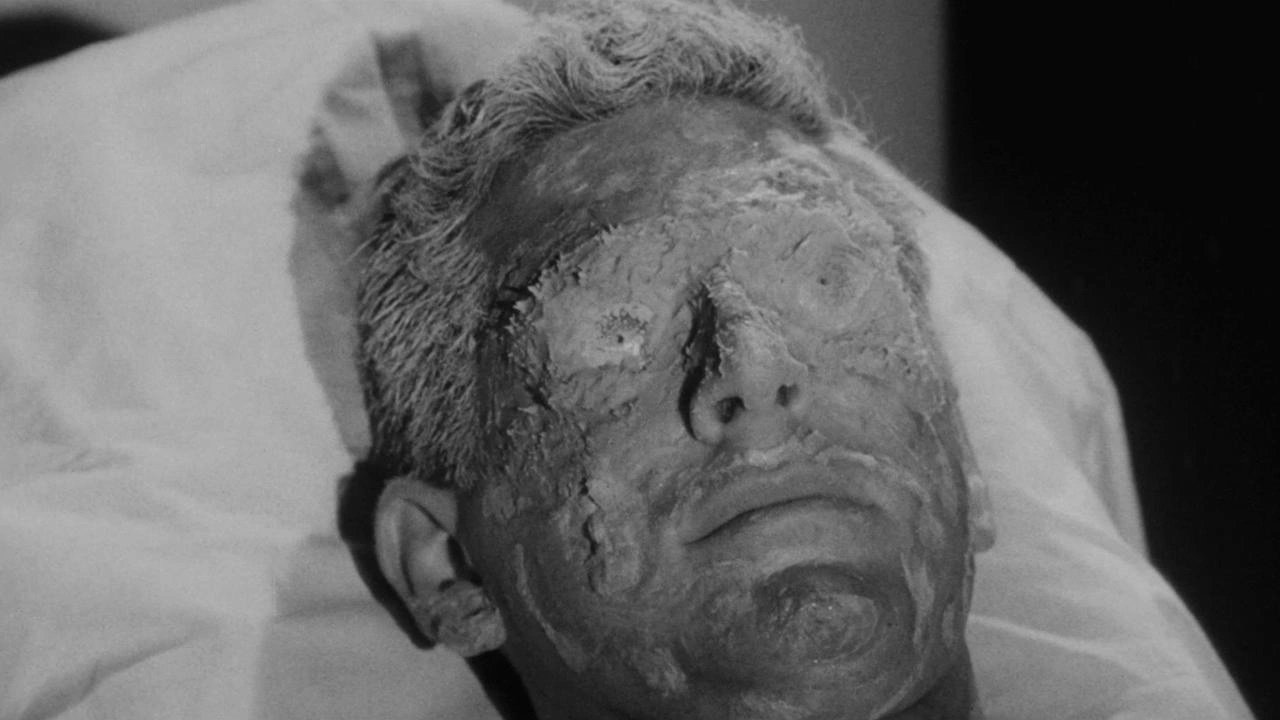
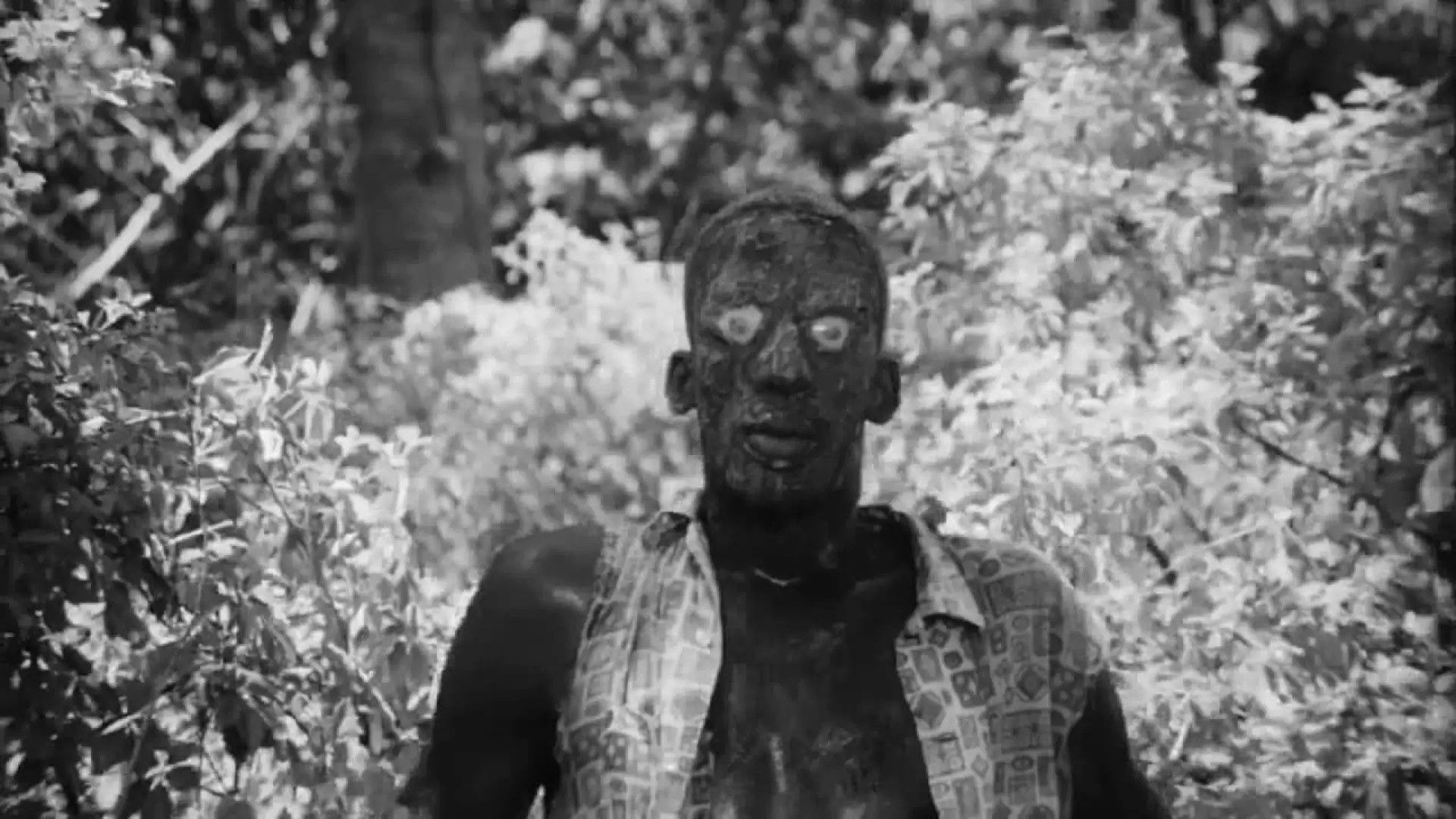
The makeup reinforces this conception in a blunt way. The transformed men are given pale, damaged faces and dramatically enlarged eyes, an appearance that made them immediately recognizable. Peter Dendle, writing about zombie cinema, singled out the crude facial treatment when discussing the film. Whatever its technical limitations, the design gives I Eat Your Skin a distinctive monster image. It also exposes how misleading the later title is: the film contains zombies, but it is not organized around flesh eating. The promise implied by I Eat Your Skin belongs far more to its 1971 advertising than to the horror Tenney filmed in 1964.

Years on the Shelf

Tenney originally expected Zombies to reach theaters much earlier. AFI notes that the film had been intended for a double bill with Frankenstein Meets the Space Monster, but that release did not materialize. The picture remained undistributed for years. Accounts by horror historians place its budget at roughly $120,000 and state that Tenney eventually sold it to distributor Jerry Gross for substantially less than its production cost. The delay was damaging: a low-budget black-and-white zombie film made in 1964 was entering a different marketplace when it finally surfaced in 1971.

The delay also created the film's central historical irony. Between production and release, George A. Romero's Night of the Living Dead had appeared in 1968 and altered American zombie imagery. I Eat Your Skin therefore reached audiences looking older than its official release date suggested, not because it was imitating an obsolete style but because it came from an earlier moment. Its mixture of adventure, exotic menace, voodoo ritual and mad science had been conceived before Romero's ghouls became the new reference point. The belated release turned a contemporary low-budget production into something resembling an artifact from the immediately preceding phase of the genre.

The Blood-Horror Double Feature

The film finally found its commercial identity when Jerry Gross and Cinemation Industries paired it with I Drink Your Blood. Gross retitled Tenney's Zombies as I Eat Your Skin, creating a matched pair of sensational titles even though the phrase does not describe the older film's story. The two pictures had been made separately and were not narratively connected. Their relationship was created through distribution and advertising, a classic exploitation strategy that revived a shelved feature through new packaging.

AFI dates the release to May 1971, while later databases preserve additional local dates from the rollout. What matters historically is the pairing itself. I Drink Your Blood offered contemporary violence, rabies infection and countercultural menace; I Eat Your Skin supplied an older black-and-white zombie adventure. The contrast was substantial, but the advertising collapsed them into a single promise of extreme horror. The title change permanently affected how Tenney's film would be remembered. A production conceived as Zombies became known through a phrase invented years later to match another movie, illustrating how exploitation distribution could reshape a film's identity long after shooting ended.

A Regional Horror Curiosity

I Eat Your Skin is more useful as a piece of horror history than as evidence of a major stylistic breakthrough. Its production connects it to the Florida exploitation scene, and second-unit director William Grefé would become one of the region's recognizable low-budget filmmakers. Its monsters preserve a voodoo-and-control conception of the zombie just before American horror shifted toward the flesh-eating undead. Its delayed release then exposed that older conception to a post-Romero audience under advertising that suggested something much more graphic.

That combination gives the film a peculiar afterlife. It can be read simultaneously as a 1964 regional production and a 1971 exploitation release, and both dates are necessary to understand it. Treating it only as a 1971 zombie film makes its style seem inexplicably old-fashioned; treating it only as a 1964 production ignores the double-feature marketing through which audiences actually encountered it. The gap between those identities is the most distinctive fact about I Eat Your Skin, a modest film whose place in horror history depends less on influence than on its unusual journey from independent Florida production to recycled drive-in attraction.

Cast

View Full Cast & Crew →

Release & Distribution

Production Companies (2)

  • Cinemation Industries US
  • Iselin-Tenney Productions Inc.

Distributors (1)

  • Cinemation Industries US

Release History (1)

Release DateTerritoryRelease TypeFormatDistributorCertificationNotes
1971-05-05 US theatrical — — R
A Carribean zombie nightmare