Maniac (1980)

US
HORROR FILM
8.3/10 3 votes
Runtime
88 min
Release
November 14, 1980
Budget
$350,000
Revenue
$10,000,000
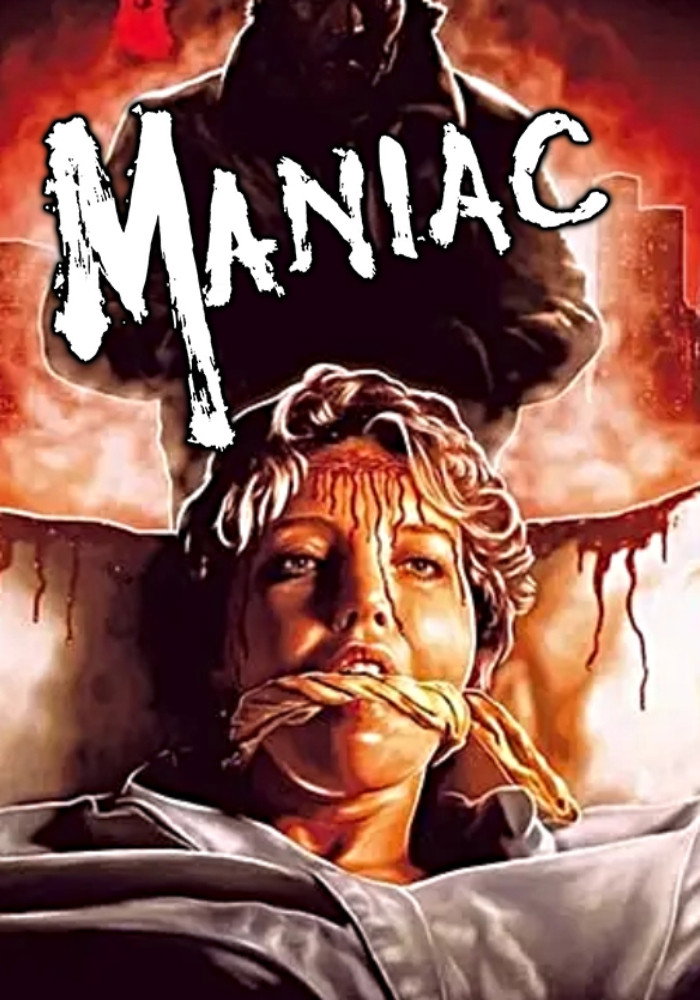
Maniac (1980) poster
Director
Production Companies
Magnum Motion Pictures Inc. , MPO Videotronics
Plot

A psychotic man, troubled by his childhood abuse, kills and mutilates young women and local models on the streets of New York City.

Alternative Titles
O Maníaco (Brazil) — Portuguese 疯子 (China) — Chinese Maniak (Czechia) — Czech Maniac: Kvindemorderen (Denmark) — Danish Maníac (Spain) — Catalan Maníaco (Spain) — Spanish Ο Μανιακός (Greece) — Greek 瘋子 (Hong Kong SAR China) — Chinese
Show all 20 alternative titles Elmebeteg (Hungary) — Hungarian マニアック (Japan) — Japanese 매니악 (South Korea) — Korean Maniaco (Mexico) — Spanish Maniak (Poland) — Polish Maníaco (Portugal) — Portuguese Маньяк (Russia) — Russian Manijak (Slovenia) — Slovenian ไอ้นรก...ถลกหนัง (Thailand) — Thai 瘋子 (Taiwan) — Chinese Маніяк (Ukraine) — Ukrainian Tên Điên Giết Người (Vietnam) — Vietnamese

Trailers & Videos

1 video

Film Guide & Analysis

Joe Spinell, William Lustig and Tom Savini turn nocturnal New York, obsessive isolation and brutally physical effects into one of early slasher cinema's most disturbing character studies.

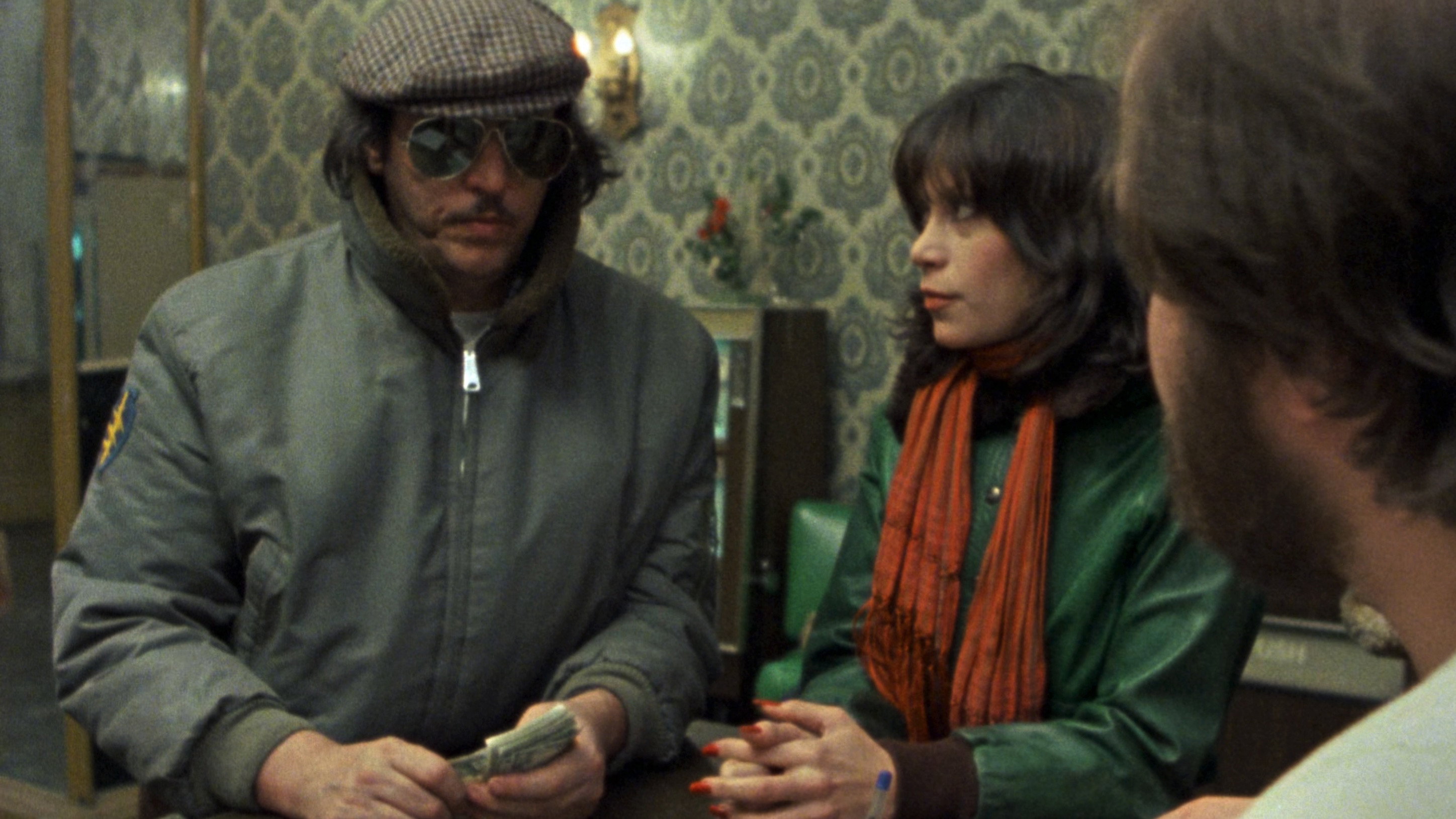
Maniac is a 1980 American horror film directed and produced by William Lustig, from a story by Joe Spinell and a screenplay credited to Spinell and C. A. Rosenberg. Spinell stars as Frank Zito, a profoundly disturbed New Yorker who murders women, removes some of their scalps and attaches them to mannequins kept inside his apartment. His compulsions coexist with periods of guilt, fear and apparent normality, particularly after he meets photographer Anna D'Antoni, played by Caroline Munro.

Maniac remains close to him from the beginning. The audience sees his apartment, hears his fragmented conversations with himself and follows him through a nocturnal New York that functions almost as an extension of his mental state. The film combines Spinell's unusually vulnerable performance with Robert Lindsay's location photography, Jay Chattaway's unsettling score and Tom Savini's graphic practical effects. Its violence generated protests, censorship battles and hostile criticism on release, but the same uncompromising qualities eventually helped establish it as one of the most distinctive American independent horror films produced during the early slasher era.

Joe Spinell, William Lustig & the Creation of Frank Zito

Maniac emerged from the collaboration between William Lustig and Joe Spinell. Lustig had learned filmmaking largely through practical experience in post-production, editing trailers and studying movies in detail before moving toward directing. Maniac became his first feature as a director. Spinell was already an established character actor whose credits included The Godfather, Rocky, Taxi Driver and The Godfather Part II. On Maniac he occupied an unusually central creative position: he devised the story, co-wrote the screenplay, served as executive producer and played the lead role.

Lustig later recalled that Spinell researched serial murderers of the 1970s while developing Frank. The resulting character is not presented as a direct portrait of one historical killer. Instead the film constructs an invented murderer whose behaviour incorporates stalking, sexualised violence, trophy taking, obsessive relationships with women and a distorted attachment to his dead mother. The decision to make Frank the protagonist radically changes the structure expected from a slasher film. There is no prolonged mystery about the murderer's identity and relatively little police investigation.

The narrative follows Frank between crimes, forcing the audience to remain in spaces that would normally belong only to the antagonist. Spinell's performance prevents that proximity from becoming straightforward identification. Frank can appear frightened, lonely and socially awkward, but those qualities never erase the deliberate cruelty of his attacks. After killing, he may cry, vomit or talk to himself as though horrified by his own behaviour. The cycle then begins again. His apartment gives physical form to that divided state.

Mannequins surround him as substitutes for people who cannot leave, resist or reject him. Clothing and scalps taken from victims transform them into grotesque preserved relationships. Frank can speak to these figures while avoiding the unpredictability of living intimacy. The character's encounter with Anna therefore creates a different kind of tension. She treats Frank with ordinary friendliness and gives him access to a social relationship that does not begin in violence. The possibility that he could function normally only makes his inability to stop killing more disturbing.
New York, 26 Days & Independent Production

Contemporary trade reporting preserved by the AFI records a production budget of approximately $1 million and a twenty-six-day shoot conducted entirely on location in New York City. The compressed schedule and extensive location work gave the film a physical relationship with the city that a studio production would have struggled to reproduce. The New York of Maniac is not presented through famous landmarks. Lustig concentrates on subways, anonymous streets, apartment interiors, parks, cheap rooms and nighttime traffic. The city becomes a network of spaces in which strangers can appear and disappear without attracting sustained attention. Robert Lindsay served as both director of photography and camera operator.

The film was photographed on 16mm and enlarged for 35mm theatrical exhibition, contributing to the grain and roughness associated with its original appearance. That texture is particularly effective during night sequences, where available urban light and deep shadow make the city appear simultaneously real and hostile. The production was also shaped by constant financial pressure. Caroline Munro later remembered that the filmmakers ran short of money and that she personally invested in the picture. Her involvement had begun unexpectedly. She was in New York for a Fangoria event when Spinell approached her after another actress was unavailable. Munro recalled being shown Halloween by Lustig so that he could demonstrate the level of tension he wanted.

She had previously worked with Spinell on Starcrash and agreed to remain in New York for Maniac, beginning work almost immediately. Her casting benefits the second half of the film because Anna comes from a noticeably different cinematic world from Frank. She is professionally successful, socially comfortable and capable of moving through New York without treating it as threatening. Their scenes together temporarily widen the film beyond Frank's enclosed existence. Production moved quickly enough that the filmmakers were already rushing in spring 1980 to prepare a version for Cannes. Trade reports recorded a special midnight screening scheduled there for May 10, months before the eventual American national release.

Frank Zito, Mannequins & a Killer Without a Mask

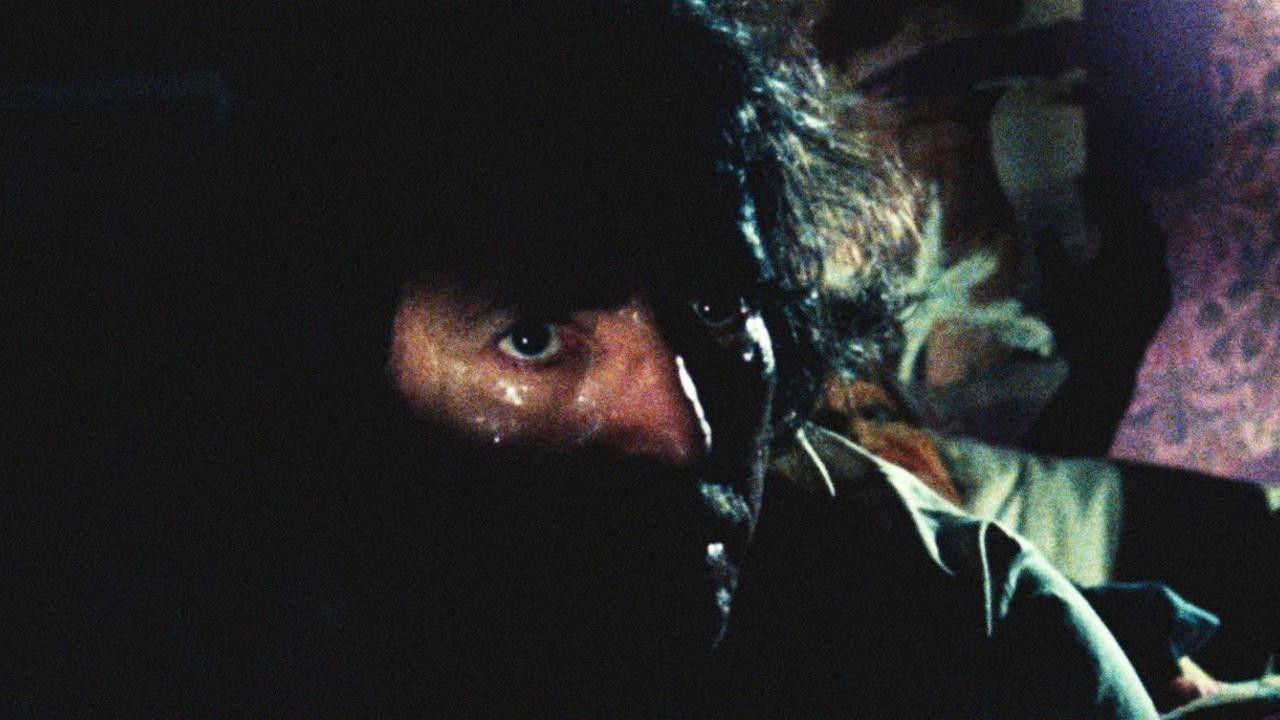
Unlike many killers who became icons during the early 1980s, Frank Zito possesses no supernatural ability, elaborate costume or concealing mask. The audience repeatedly sees Joe Spinell's face and is allowed to observe the physical and emotional aftermath of his murders. This creates a different form of horror from the impersonal threat associated with figures such as Michael Myers. Frank does not disappear when an attack ends. The film follows him home. Spinell uses his own physical presence against conventional ideas of the controlled cinematic serial killer. Frank sweats, mutters, cries and appears physically uncomfortable inside his own body. His violence can be calculated, but the man performing it rarely seems calm.

His conversations with himself suggest competing impulses rather than a coherent second personality that the film attempts to diagnose clinically. One voice may warn him to stop while another part of him continues preparing for murder. Maniac uses this fragmentation dramatically without offering a medical explanation that would reduce Frank's behaviour to a neat diagnosis. The mannequins are essential because they turn murder into an attempt at possession. Frank’s killings are followed by repeated returns to his private rituals and obsessions. He carries material from his victims back into his apartment and incorporates it into an artificial population over which he has absolute control. Photography also becomes significant through Anna.

She preserves people through images, while Frank preserves victims through mutilation and mannequins. Both create representations of bodies, but their methods could not be more different. That contrast gives their relationship more structure than a simple killer-meets-potential-victim plot. Anna's photographs belong to a social world in which images circulate and people remain autonomous. Frank's collection exists privately and converts people into objects that cannot answer him. The film never develops this into an explicit thesis through dialogue. Instead the two forms of image-making occupy the same story and become increasingly difficult to ignore as Frank moves between Anna's world and his apartment.

Tom Savini & the Practical Violence

Tom Savini's special makeup and effects became the film's most notorious technical contribution. Lustig contacted Dawn of the Dead producer Richard P. Rubinstein, who put him in touch with Savini while the effects artist was working on Friday the 13th in New Jersey. Savini later remembered developing effects with Lustig and Spinell under extremely practical conditions. Much of the work depended on straightforward materials such as mortician's wax, tubing, syringes, artificial blood and mechanically simple illusions rather than elaborate technology. The scalping sequences demonstrate the approach.

The effect has to perform two functions: show the initial violence convincingly and provide Frank with a physical trophy that can subsequently be attached to a mannequin. The makeup therefore remains narratively important after the immediate shock has ended. The film's most famous effect involves a couple attacked inside a parked car. Savini appears as the male victim and supplied a cast of his own head for the sequence. He later described filling the artificial head with assorted material before positioning it for destruction.

The shot was staged with multiple cameras because the effect could not simply be reset. Savini himself fired the shotgun used for the practical blast while a prosthetic double represented his character. The resulting explosion became one of the defining gore images of early-1980s American horror. Savini has described Maniac as exceptionally severe even by the standards of his own effects career. He also recalled rejecting some ideas that would have pushed the sexualised violence further than what appears in the completed film.

That distinction matters because the effects do not exist in a supernatural environment where mutilation can be distanced through fantasy. Frank's victims are ordinary people in contemporary New York, and Savini's work is photographed with a blunt physicality that makes the violence appear disturbingly immediate. The effects became inseparable from the film's controversy, but they also represent the practical-effects culture developing around American horror at precisely this moment. Savini moved from Dawn of the Dead and Friday the 13th into Maniac, helping establish an era in which makeup artists could become important creative identities in their own right.

Robert Lindsay, Jay Chattaway & an Unstable New York

The visual and sonic atmosphere prevents Maniac from becoming simply a collection of elaborate killings. Robert Lindsay's cinematography repeatedly returns the viewer to streets, subway stations and rooms whose realism contrasts with the extremity of Frank's behaviour. Night photography is particularly important. New York appears populated enough to feel real but empty enough for Frank to isolate his victims. The killer does not inhabit a remote rural landscape. He moves through one of the world's largest cities while remaining psychologically detached from nearly everyone around him. The 16mm photography reinforces that environment. Grain, limited light and rough urban textures prevent Frank's New York from becoming visually polished.

The film often feels closer to contemporary exploitation cinema and street-level crime movies than to the increasingly stylised studio horror of the following decade. Jay Chattaway composed the original score, with Peter Levin credited for electronic music realisation. Chattaway's music combines electronic textures with more traditional dramatic writing, providing an internal emotional layer to scenes in which Frank himself may reveal little coherent thought. The soundtrack also incorporates contemporary music associated with New York nightlife, including recordings by Don Armando's 2nd Avenue Rhumba Band. These pieces establish a social city existing outside Frank's apartment: clubs, couples and ordinary movement continue around him.

The contrast becomes particularly effective because Frank participates only superficially in that environment. He can drive through nightlife, approach strangers or enter social spaces, but he continually withdraws into the private system represented by his mannequins. Lustig's background in editing also contributes to the film's rhythm. Individual attacks may be staged with graphic explicitness, but the film repeatedly returns to quieter passages in which Spinell simply occupies rooms or travels through the city. This alternation prevents violence from becoming the only source of tension. The possibility of another attack remains present during apparently ordinary moments because the audience is never separated from the person who might commit it.

Unrated Distribution, Protests & Censorship

The film's release history demonstrates how difficult distributors expected its violence to be. Analysis Film Releasing Corporation handled the United States release but chose not to submit Maniac to the Motion Picture Association of America for normal classification. Contemporary reports cited by AFI state that the distributor expected an X rating because of the graphic violence. Since X was strongly associated in the public mind with sexually explicit films, Analysis instead adopted its own “For Adults Only” designation.

Lustig and Spinell publicly supported the idea that the American classification system should distinguish between extreme violence and explicit sexuality, suggesting separate categories such as X-V and X-S. The debate anticipated the continuing difficulty American horror distributors faced before the introduction of NC-17 a decade later. After its Cannes exposure and international sales, Maniac received its American national release on January 30, 1981. AFI records approximately $2.5 million in grosses by March 24 of that year. The film also encountered organised opposition.

In Los Angeles, approximately sixty women picketed the Hollywood Pacific Theatre on March 21, protesting its violence against women. Such demonstrations became part of the film's public identity and reinforced its reputation as one of the most controversial titles of the slasher boom. Lustig later argued that the advertising contributed heavily to accusations of misogyny. The notorious poster reduced the film to an image of a male killer holding a weapon and a female victim's scalp, presenting none of the disgust, guilt or psychological deterioration contained in Spinell's performance.

That does not eliminate the underlying controversy. The film repeatedly depicts women being stalked and murdered, sometimes in explicitly sexualised circumstances. The dispute concerns what the film is doing with those images, not whether they exist. British censorship proved particularly restrictive. The BBFC refused the film a cinema certificate in July 1981. A home-video submission in 1998 was also rejected. In 2002 the BBFC finally classified a shortened version at 18, requiring cuts to sexualised strangulation and knife violence. Only in December 2022 did the Board approve an uncut home-entertainment version, also rated 18.

Reassessment, Restoration & Legacy

The initial critical reputation of Maniac was dominated by its violence. For many reviewers, the practical effects, advertising campaign and proximity to Frank made it difficult to consider independently of the broader cultural argument surrounding slasher films and screen violence. Later assessments increasingly concentrated on Spinell. His performance distinguishes the film from more formulaic examples of the cycle because Frank is neither an anonymous mechanism for set-piece murders nor an invulnerable franchise monster. The collaboration also represented something unusually personal for Spinell.

He continued trying to develop another Maniac project and eventually worked with Buddy Giovinazzo on a short promotional film usually known as Maniac 2: Mr. Robbie. William Lustig was not interested in directing the proposed sequel, and the project remained unrealised when Spinell died in 1989. The original film nevertheless continued circulating internationally and became increasingly associated with the rough independent cinema of late-1970s and early-1980s New York. Lustig subsequently directed Vigilante and the Maniac Cop films while later becoming deeply involved in film restoration and distribution through Blue Underground. That connection ultimately benefited Maniac itself.

The original 16mm camera negative, long believed unavailable, was rediscovered and used for a new 4K 16-bit scan. The restoration reveals more detail in Lindsay's photography and Savini's effects while preserving the grain inherent to the original format. The film received another significant afterlife through the 2012 remake directed by Franck Khalfoun, written by Alexandre Aja and Grégory Levasseur and starring Elijah Wood as Frank. Lustig served as a producer. The remake adopted extensive first-person photography, finding a different formal method of trapping the audience beside the killer.

Yet the 1980 film remains difficult to imitate because so much of its identity depends on Joe Spinell himself. His physical presence, vulnerability and volatility turn Frank into something more uncomfortable than an efficient horror icon. Maniac is consequently most effective when understood not merely as an exceptionally violent slasher but as a character study produced with exploitation-film methods. Its notorious effects are real attractions, but they occur inside a film whose defining image may be Frank alone in his apartment, surrounded by artificial companions he has constructed from people he was incapable of knowing while they were alive.

Connections

Cast

View Full Cast & Crew →

Release & Distribution

Production Companies (2)

  • Magnum Motion Pictures Inc. US
  • MPO Videotronics

Release History (19)

Release DateTerritoryRelease TypeFormatDistributorCertificationNotes
1980-05-10 France Premiere — — — Cannes Film Festival
1980-11-14 Germany Theatrical — — 16 West Germany
1981-01-25 Denmark Theatrical — — —
1981-01-30 United States Premiere — — NR New York City
1981-03-06 United States Theatrical — — R Los Angeles; edited version released in some states
1981-10-30 Brazil Theatrical — — —
1981-11-01 Australia Theatrical — — RC
1982-01-04 Australia Physical — — R 18+
1982-03-10 France Theatrical — — 16
1982-07-31 Japan Theatrical — — R18+
1983-10-13 Portugal Theatrical — — M/18
1985-08-11 Japan Premiere — — — Splatter Movie Festival
2006-10-29 Finland Premiere — — — Night Visions Film Festival
2006-11-03 Finland Premiere — — — Iik!! Horror Film Festival
2010-06-12 United States Theatrical — — NR BAMcinemaFest, anniversary screening
2010-10-29 United States Theatrical — — NR Anniversary re-release
2013-09-07 France Premiere — — — L'Étrange Festival
2013-11-18 New Zealand Physical Blu-ray — R18 Blu-ray
2026-03-28 Finland Premiere — — — Night Visions Film Festival
I warned you not to go out tonight!