From a Fear of Clowns to Badoet
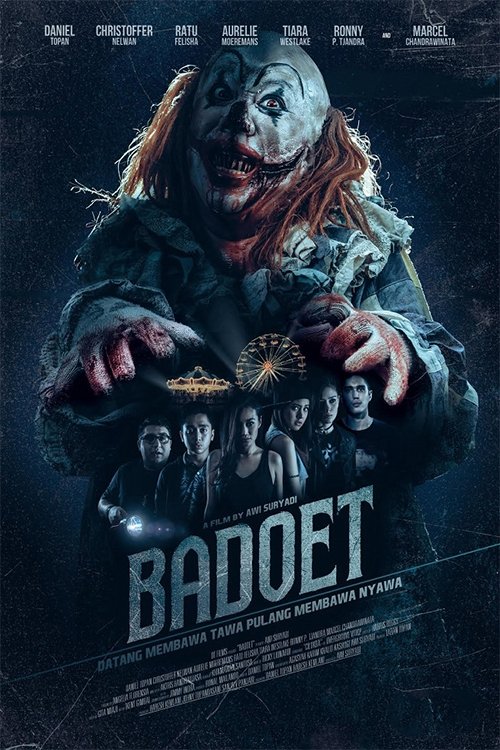
According to Daniel Topan, the basic idea emerged from his own fear of clowns. He discussed that fear with director Awi Suryadi while looking for a project that could function as straightforward horror rather than following the erotic tendencies associated with a number of Indonesian genre releases from the preceding years. That intention shaped the film's central image. Instead of relying on familiar local ghosts such as the pocong or kuntilanak, Badoet places a circus clown at the center of its supernatural mythology, giving the production a visual identity immediately distinct from many domestic ghost films of its period.
Suryadi directed from a screenplay credited to Agasyah Karim, Khalid Kashogi and Suryadi himself. Daniel Topan and Haresh Kemlani are credited as producers, with Jimmy Indra handling cinematography and Ikent Gimbal serving as production designer. The Indonesian Film Center records the production as a completed Indonesian-language feature released on 12 November 2015 with a 17+ classification. Although its premise could easily have supported a conventional slasher, the filmmakers instead constructed a supernatural investigation in which the clown is connected to ritual, possession and the possibility of escaping death.
Creating the Clown
Ronny P. Tjandra approached the role of the clown as more than a makeup effect. In interviews given around the film's release, he described changing his physical appearance, shaving a moustache he had kept for decades and experimenting with clown makeup himself before the production team had finalized the character's look. For roughly two weeks before shooting he practiced applying makeup at home and sent photographs of the results to Suryadi. He also constructed an extensive personal history for the character from information contained in the screenplay, imagining details of the clown's life and family that would never necessarily appear explicitly on screen.
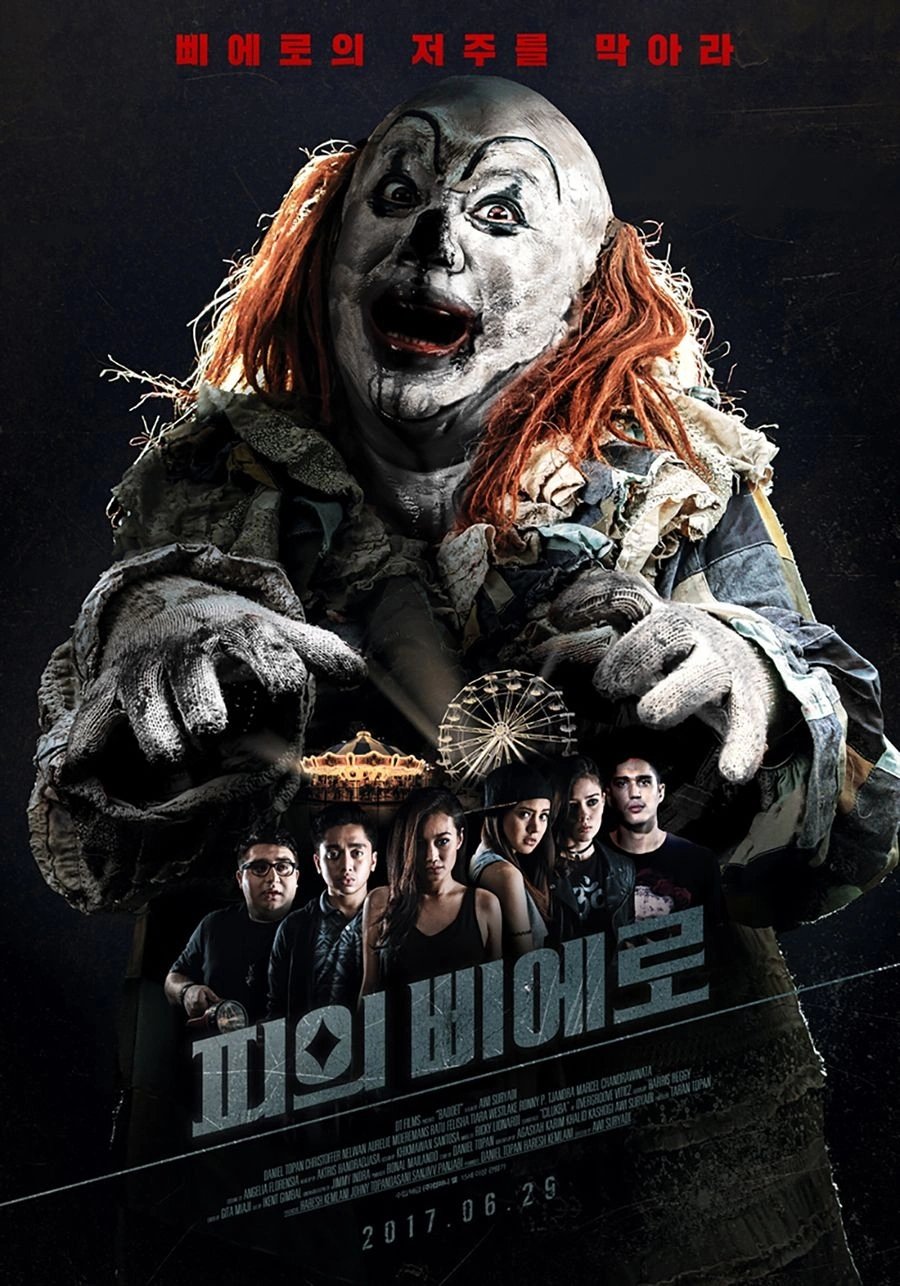
That preparation helped make the figure more unsettling than a generic masked antagonist. The makeup retains recognizably theatrical clown elements but exaggerates them into an unhealthy, almost corpse-like face, while Tjandra alternates between the controlled body language of an entertainer and the stillness of an apparition. The film repeatedly exploits the contradiction between those identities. Balloons, clown music and the visual language of children's entertainment become warnings rather than comforts. The resulting monster remains supernatural, but much of its effectiveness comes from how little the basic iconography has to be changed before amusement turns into threat.
Apartment Corridors, Silence and Anticipation
Contemporary Indonesian reviews repeatedly identified atmosphere as the film's principal strength. Much of Badoet takes place around a residential complex whose corridors, small rooms, laundry areas and communal spaces are photographed as places where something might be present just outside the frame. Suryadi frequently allows empty space to carry the tension. Long passageways and doorways become particularly useful because they provide depth within the frame and encourage the viewer to search the background before an apparition actually appears.
The strategy extends to the objects associated with the killings. A music box, balloons and children's drawings accumulate meaning through repetition, allowing the film to announce the clown without physically showing him. Several contemporary reviewers contrasted this approach with Indonesian horror that relied heavily on loud musical stings and constant ghost appearances. Badoet still employs conventional shocks, but it often delays them by establishing an uncomfortable environment first. Jimmy Indra's cinematography and the production design make the apartment complex particularly important in that respect: an ordinary communal living space gradually becomes part of the film's supernatural machinery.
Release and Place in Indonesian Horror
Badoet opened in Indonesia on 12 November 2015. FilmIndonesia records 64,351 theatrical admissions, a modest result that places the film far below the country's major commercial horror successes. Its significance therefore does not come from blockbuster performance. More revealing is the way the film was discussed at the time of release. Indonesian reviewers frequently treated it as evidence that locally produced horror could emphasize atmosphere and production craft without returning to the sexualized formulas that had become controversial during the previous period of the genre.
The film later circulated internationally under the English title Clown of the Dead, a title that can create a misleading expectation of zombie or undead-clown horror. Badoet is instead a supernatural ghost story organized around a murderous clown spirit and the investigation of its past. Its use of coulrophobia is not unique internationally, and the film arrived after decades of threatening clowns in Western horror, but its importance within its own context is more specific. By combining internationally recognizable clown imagery with an Indonesian supernatural narrative and urban residential setting, Suryadi produced a modest but distinctive entry in the country's mid-2010s attempt to rebuild theatrical horror around fear and atmosphere rather than exploitation alone.