Development and a Changing Screenplay
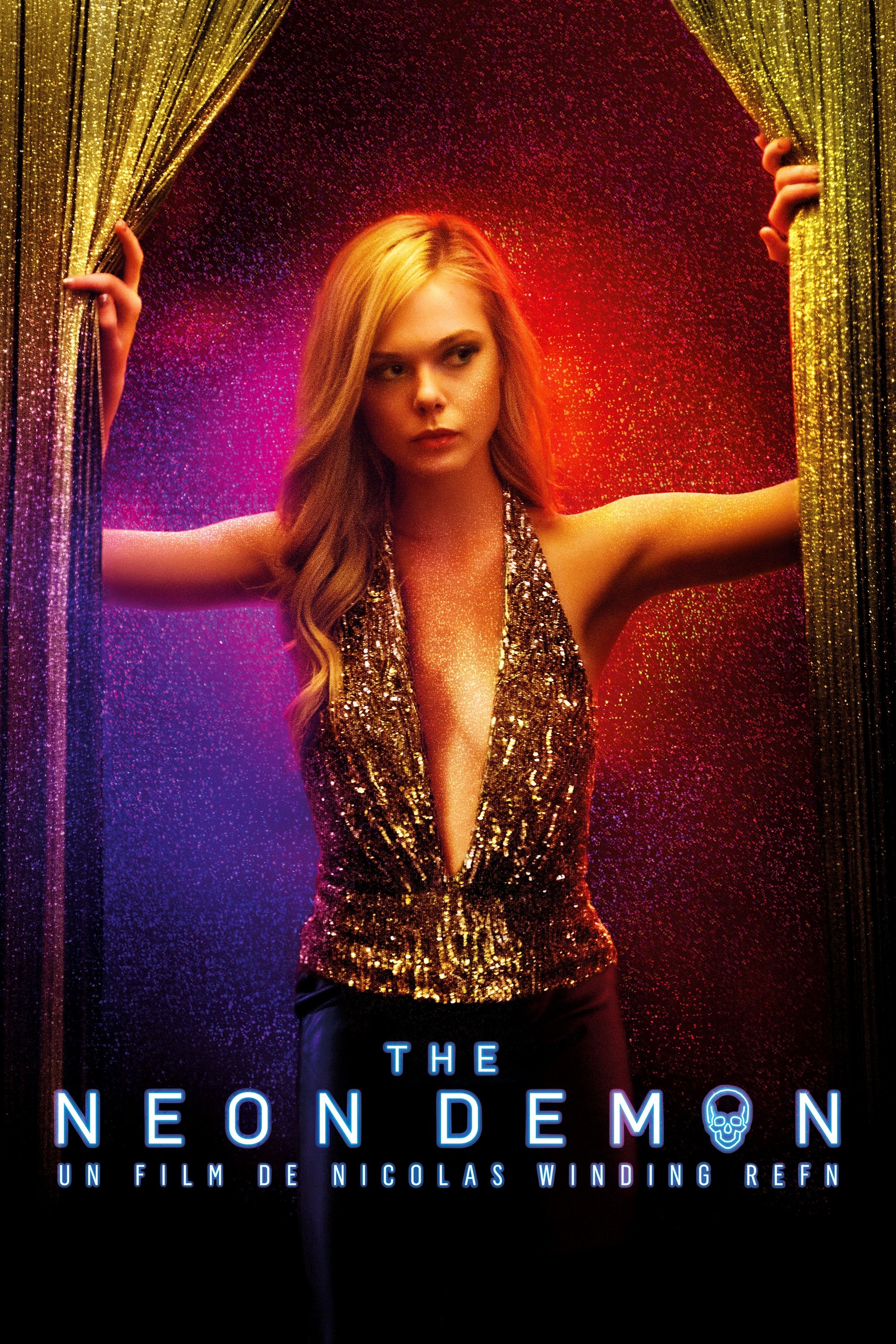
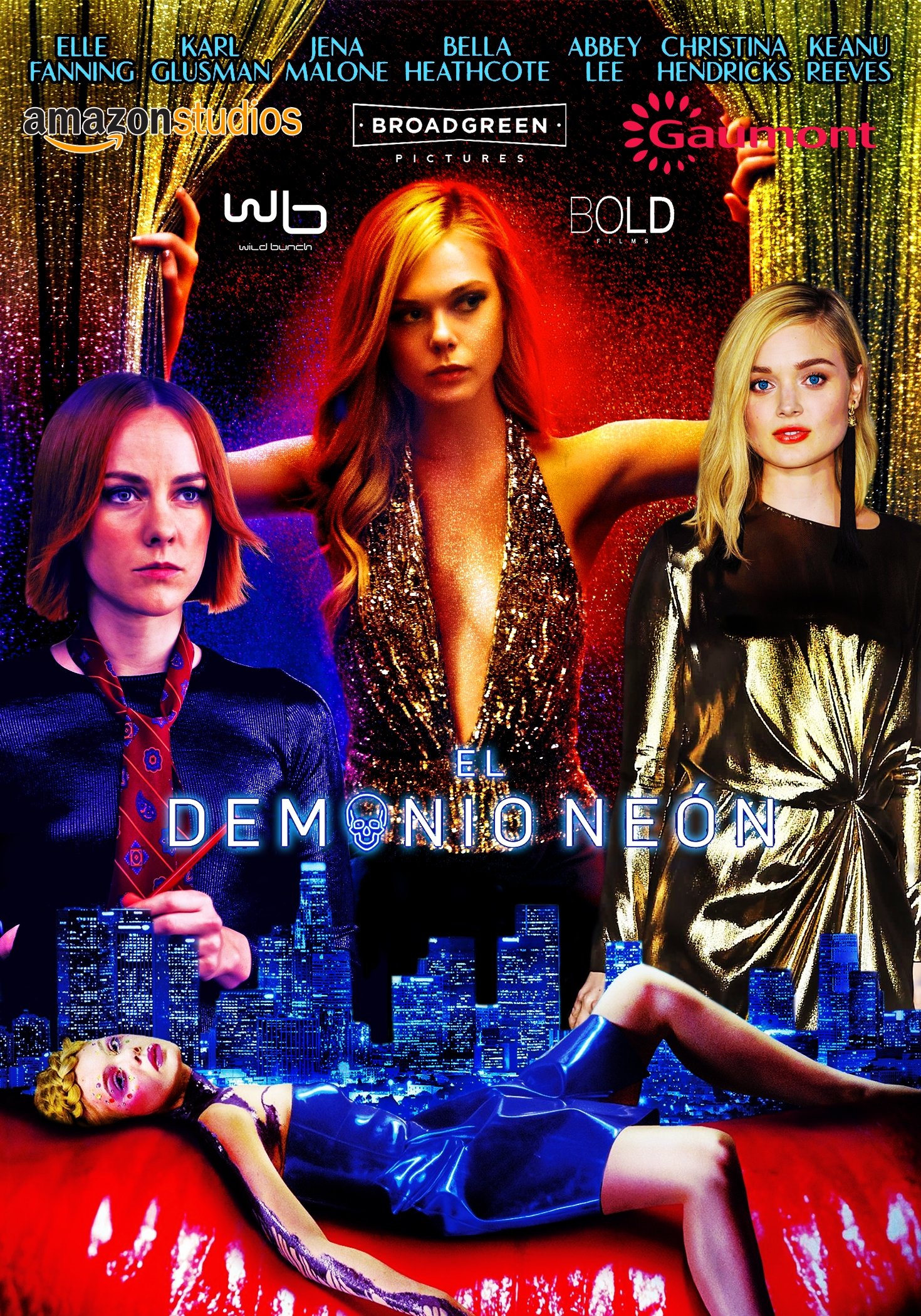
Refn had spent years considering a project about the cultural value assigned to youthful beauty. After films largely organized around violent male protagonists, he chose a story that placed young women at the center of the action. Mary Laws and Polly Stenham worked on the screenplay with him, while Elle Fanning became decisive to his understanding of Jesse. The director described the actress as a participant in developing the role, shaping details through discussion and experimentation. The premise could resemble a familiar newcomer-in-Hollywood drama, but its creative starting point was an obsession with the unequal value granted to different bodies. Fashion supplied a professional system through which that anxiety could become visible.
The production was unusually open to revision during filming. In an interview conducted on location, Refn and Fanning described discussing scenes over weekends, shortening dialogue and reconsidering details of the ending. The crew also returned to the opening scene while principal photography was still under way. Such testimony establishes an evolving working method; it should not be mistaken for evidence that several completed endings were filmed. Braier recalled that extensive conversations before shooting allowed the director and cinematographer to establish a shared approach to Los Angeles and the presentation of women. This collaboration explains the film's willingness to suspend conventional exposition: narrative information frequently arrives through bodies moving within precisely composed spaces.
Cinematography, Light and the Fashion Image
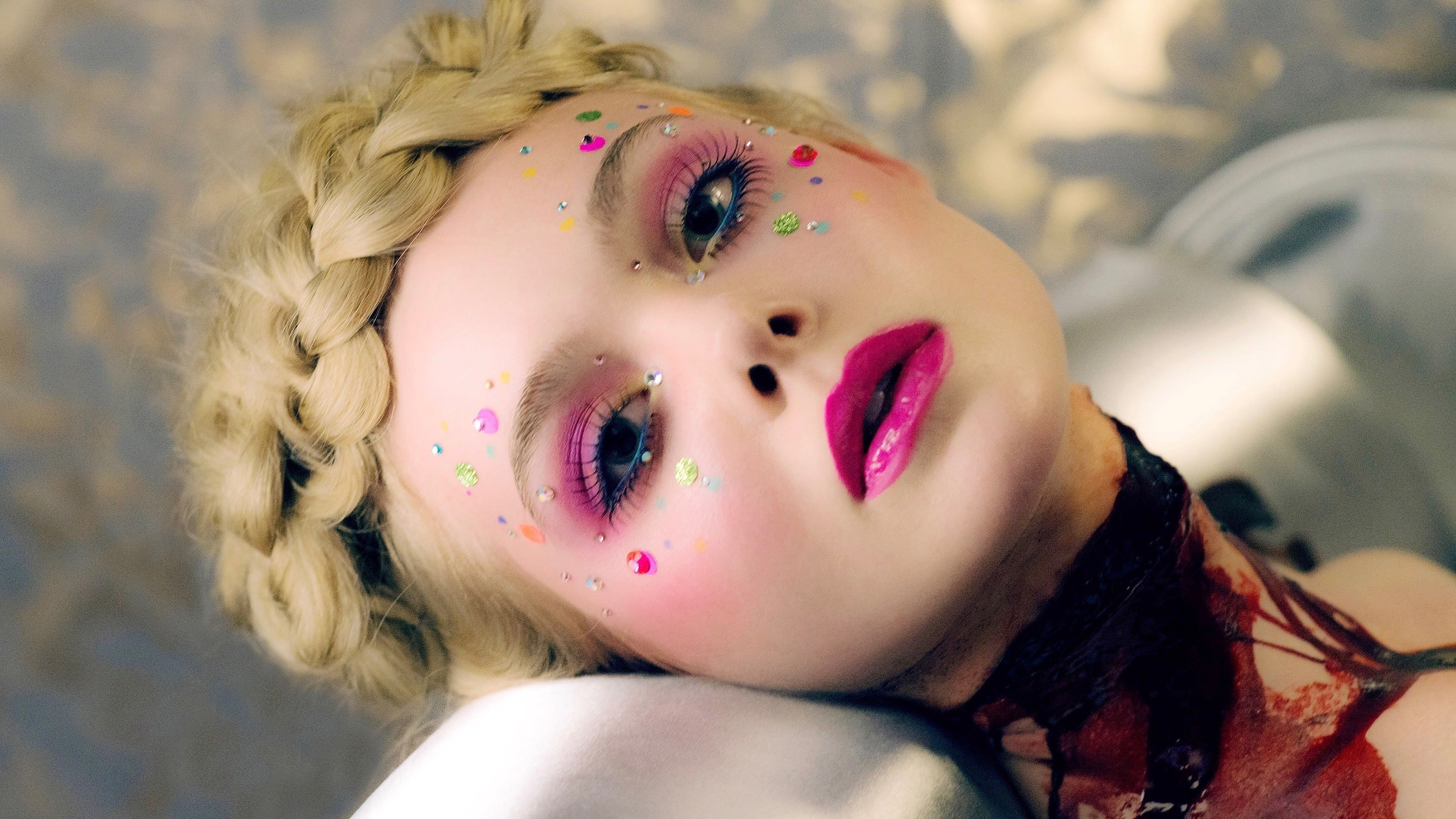
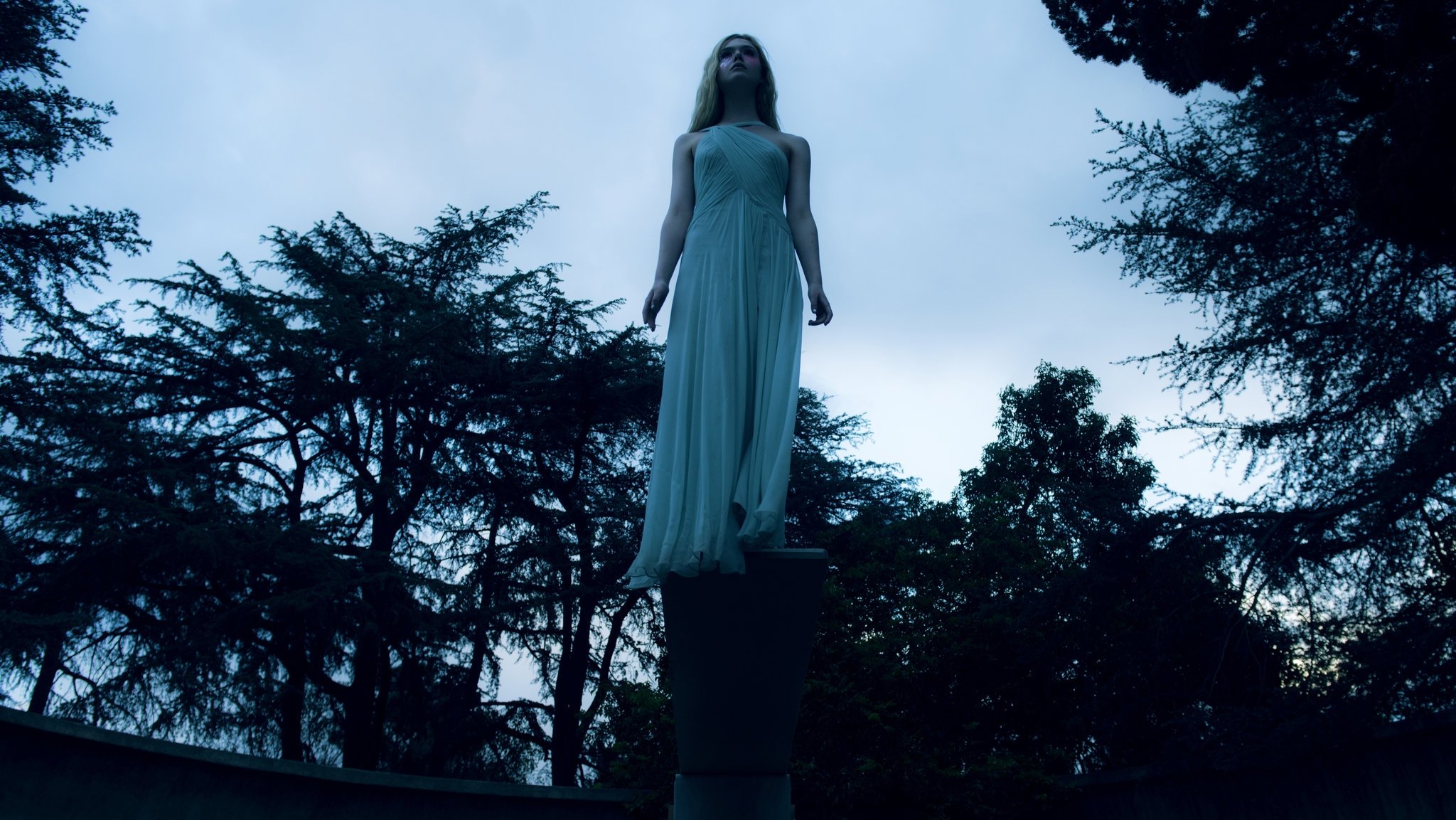
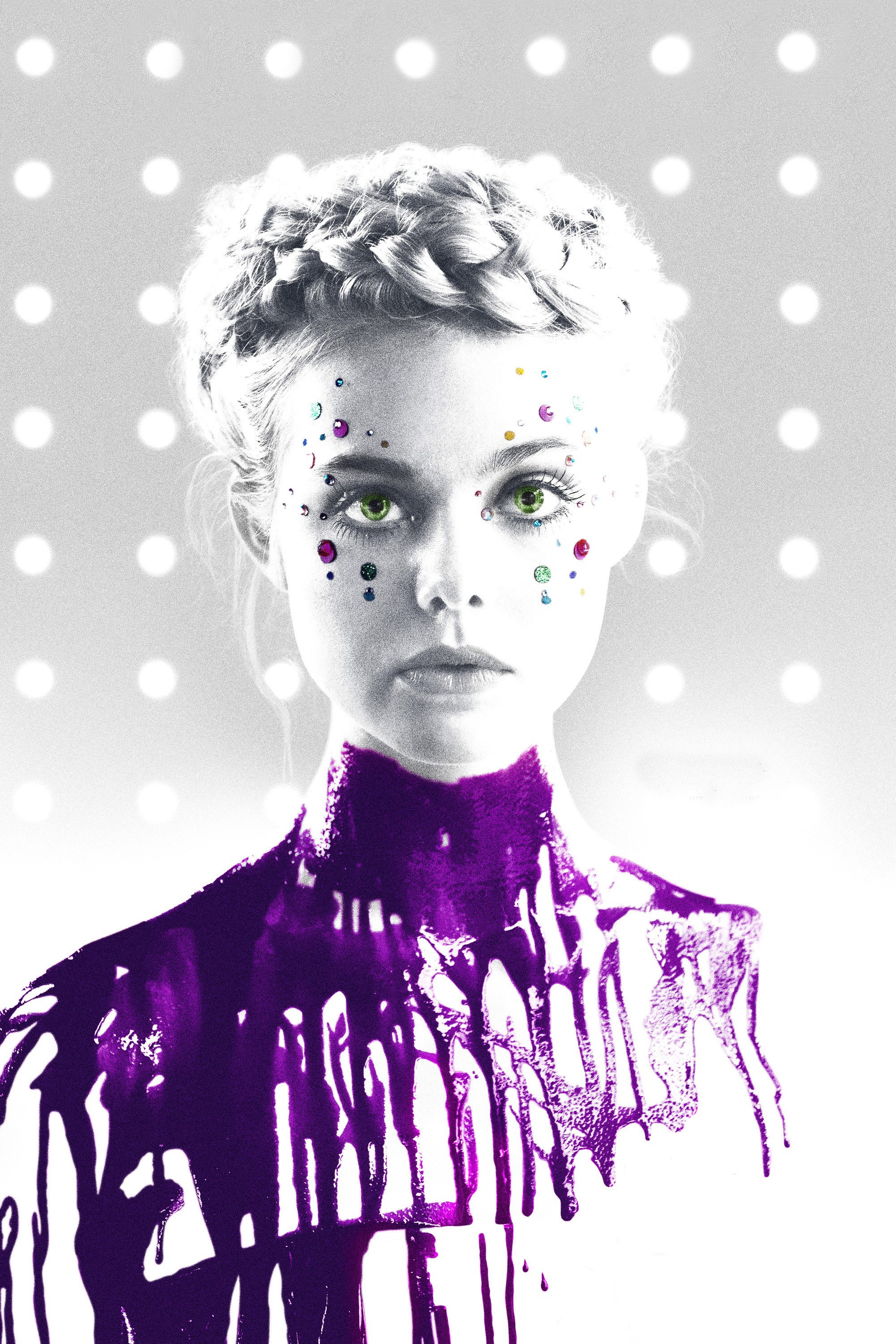
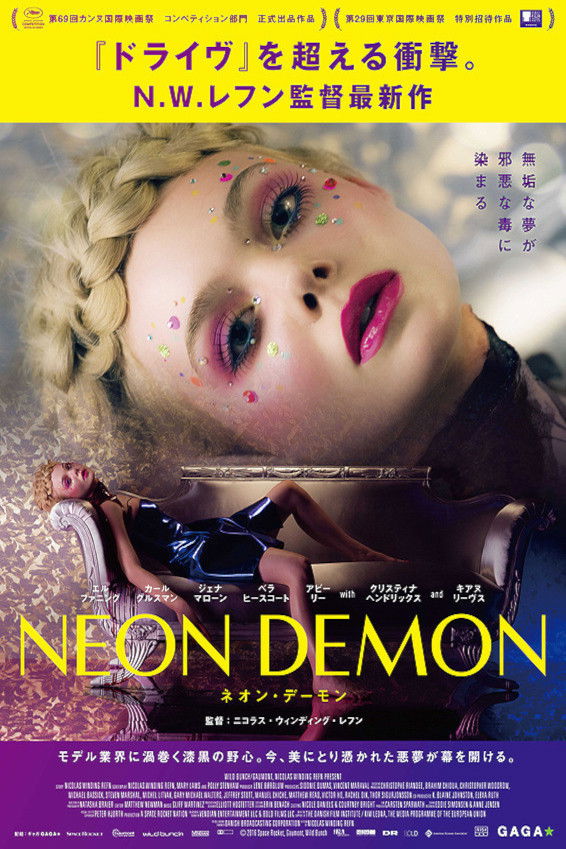
Braier and Refn pursued an image that would retain the softness of fashion photography while using digital capture. The production employed an Arri Alexa XT with anamorphic lenses, prominently JDC Cooke Xtal Express optics selected for their treatment of faces and their irregular flares. Braier sometimes introduced additional diffusion to counter the camera's clean digital rendering. The resulting photographs emphasize smooth skin and luminous surfaces while allowing the light around the actors to break into distortions. Refn generally preferred stable, carefully divided frames, keeping the actors within measured photographic arrangements. That restraint makes the characters appear displayed for inspection, as though each encounter were another test of their suitability to be seen.
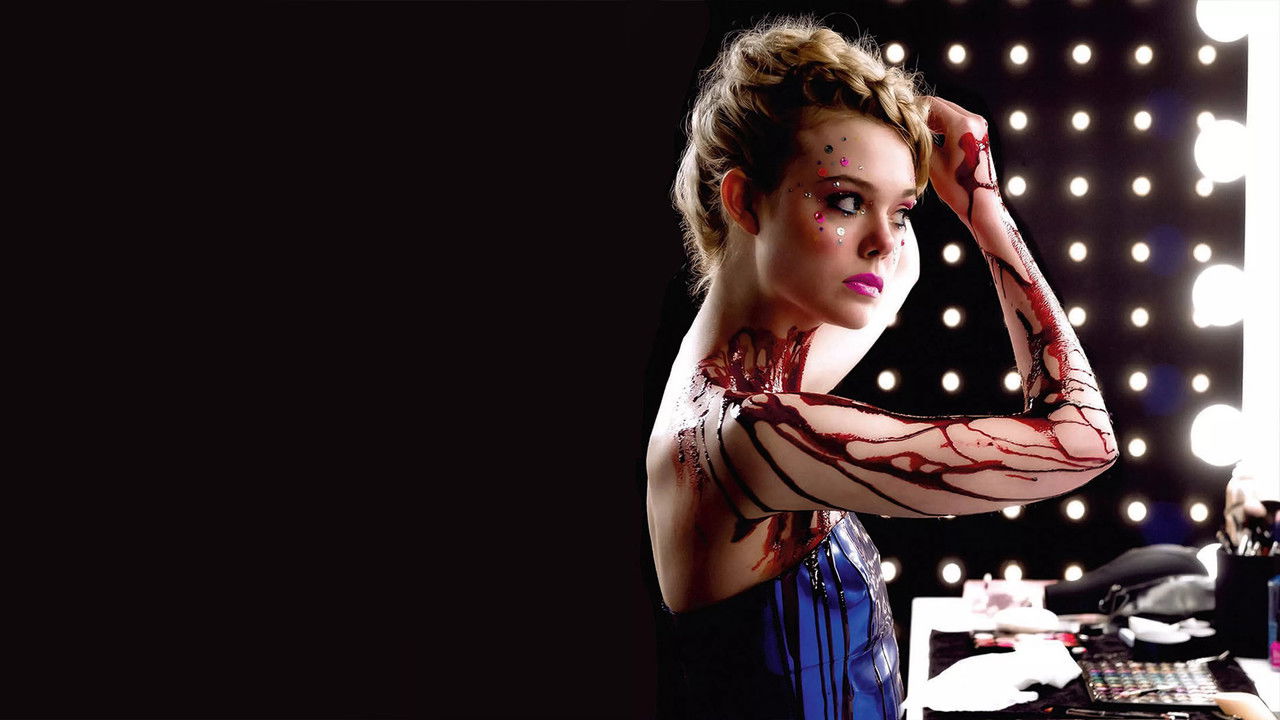
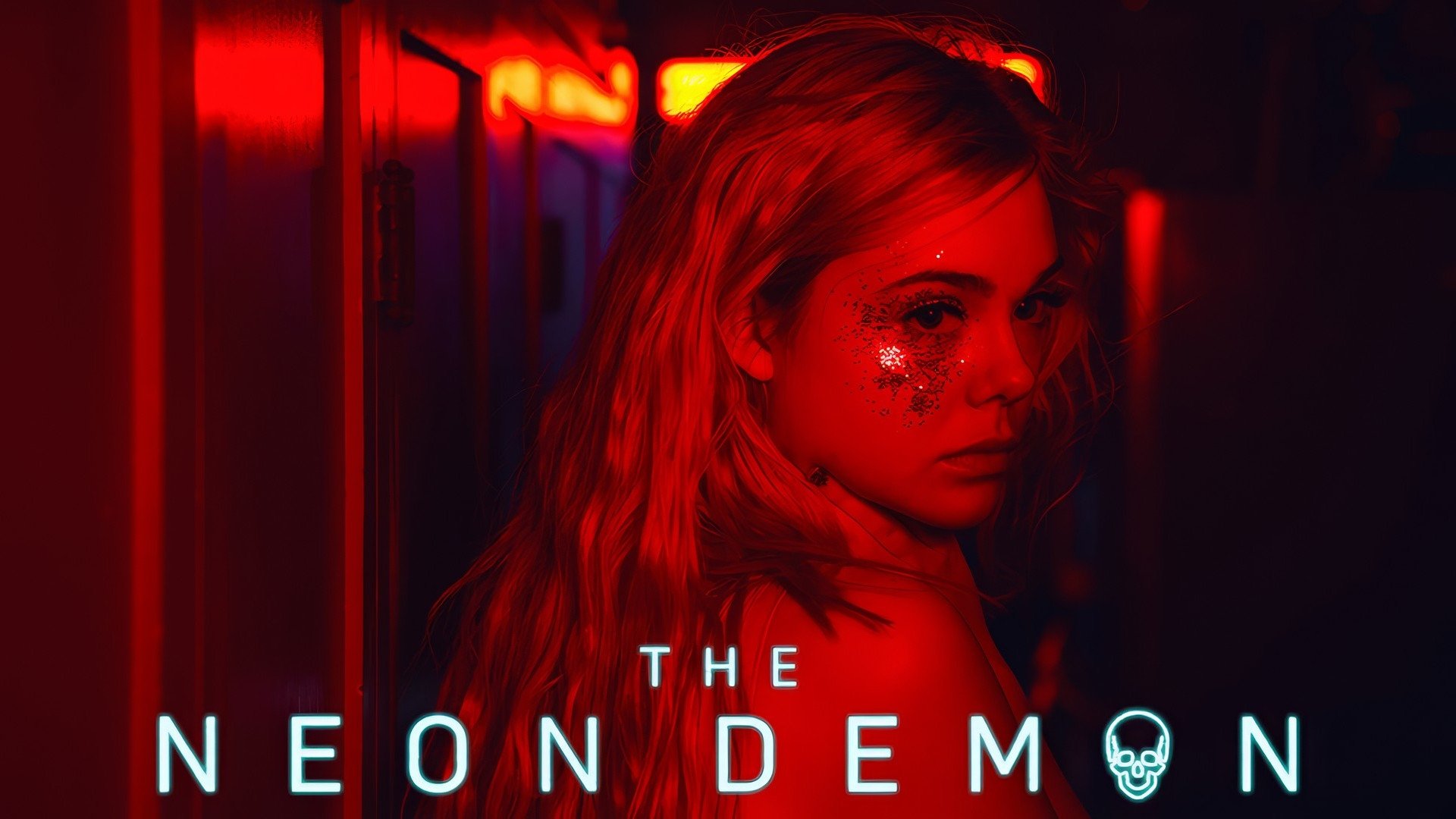
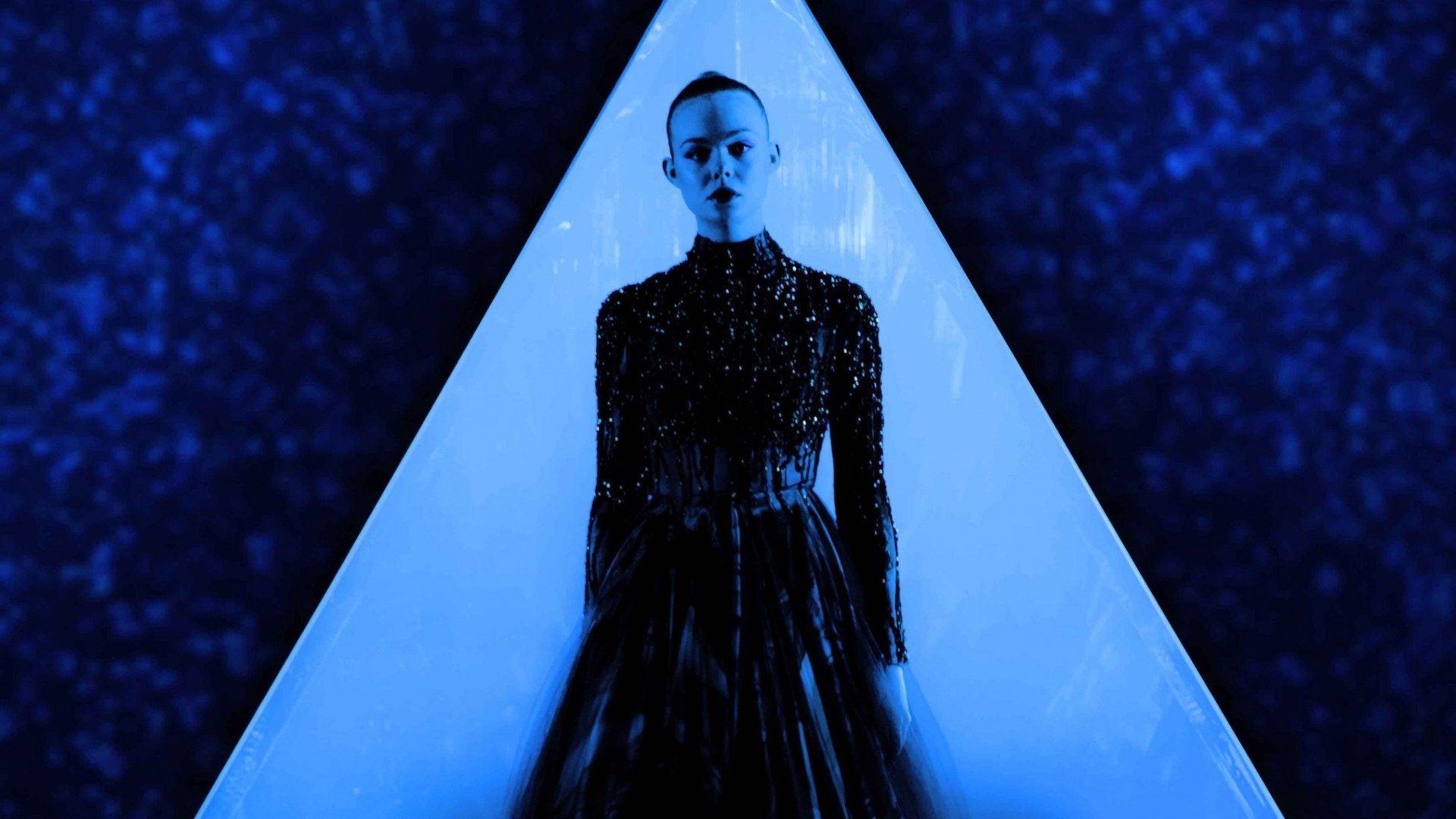
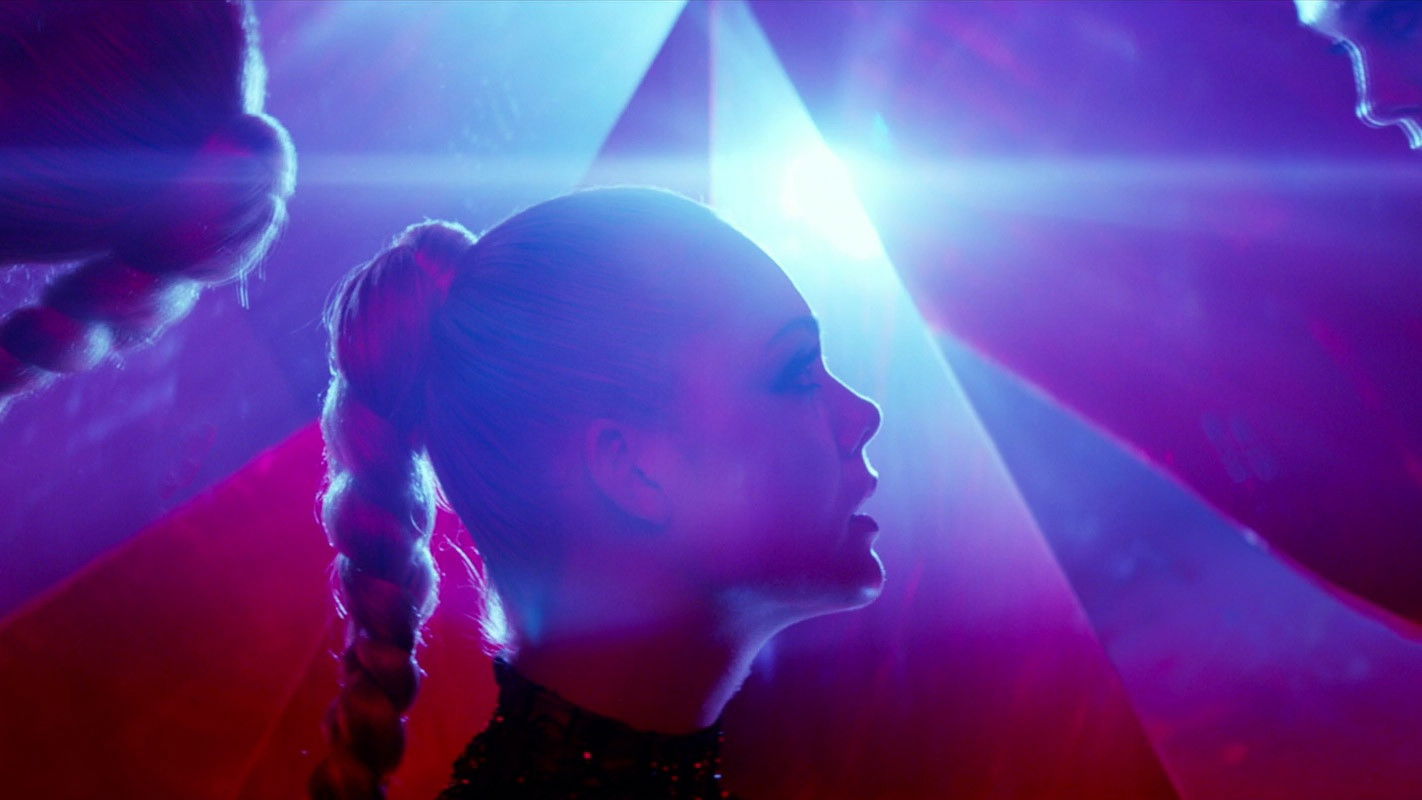
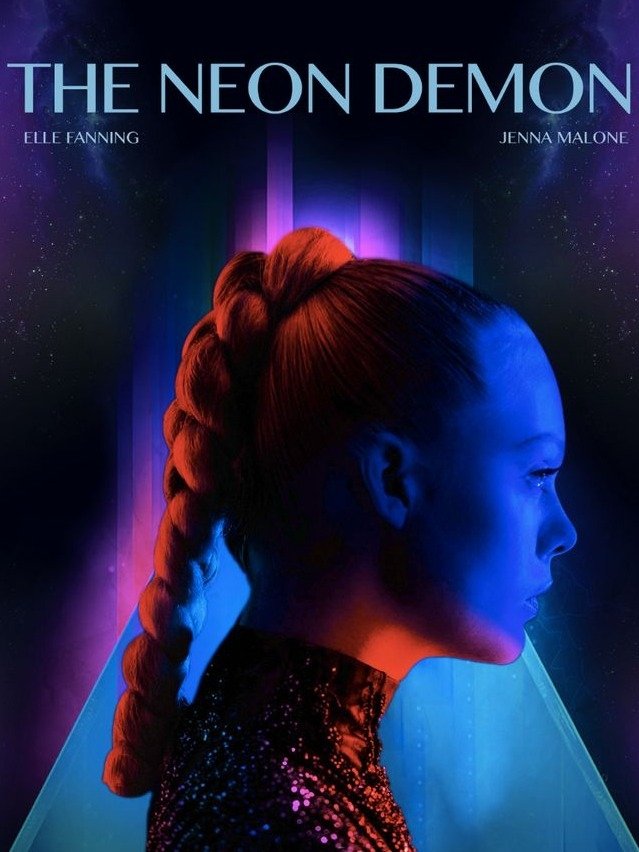
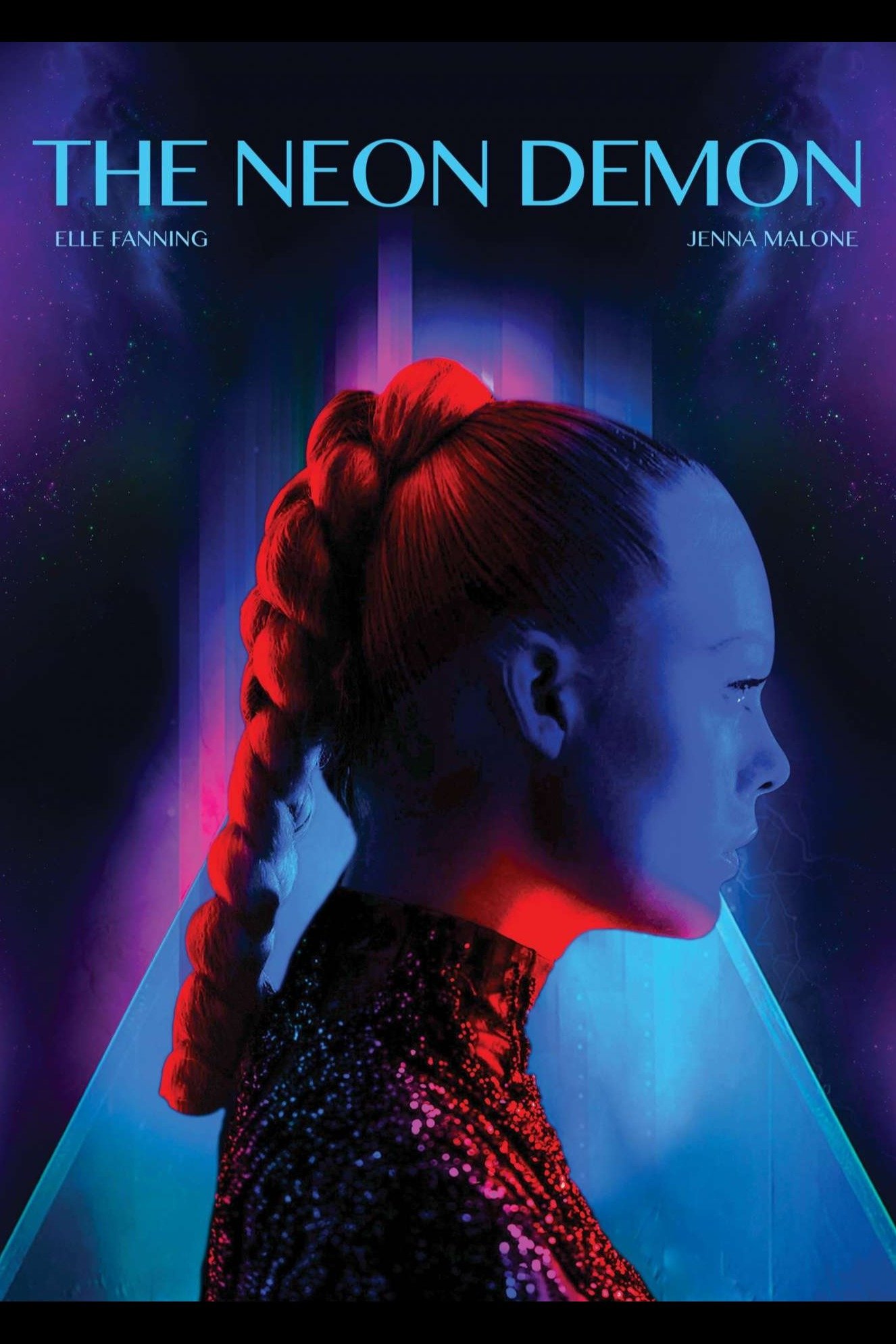
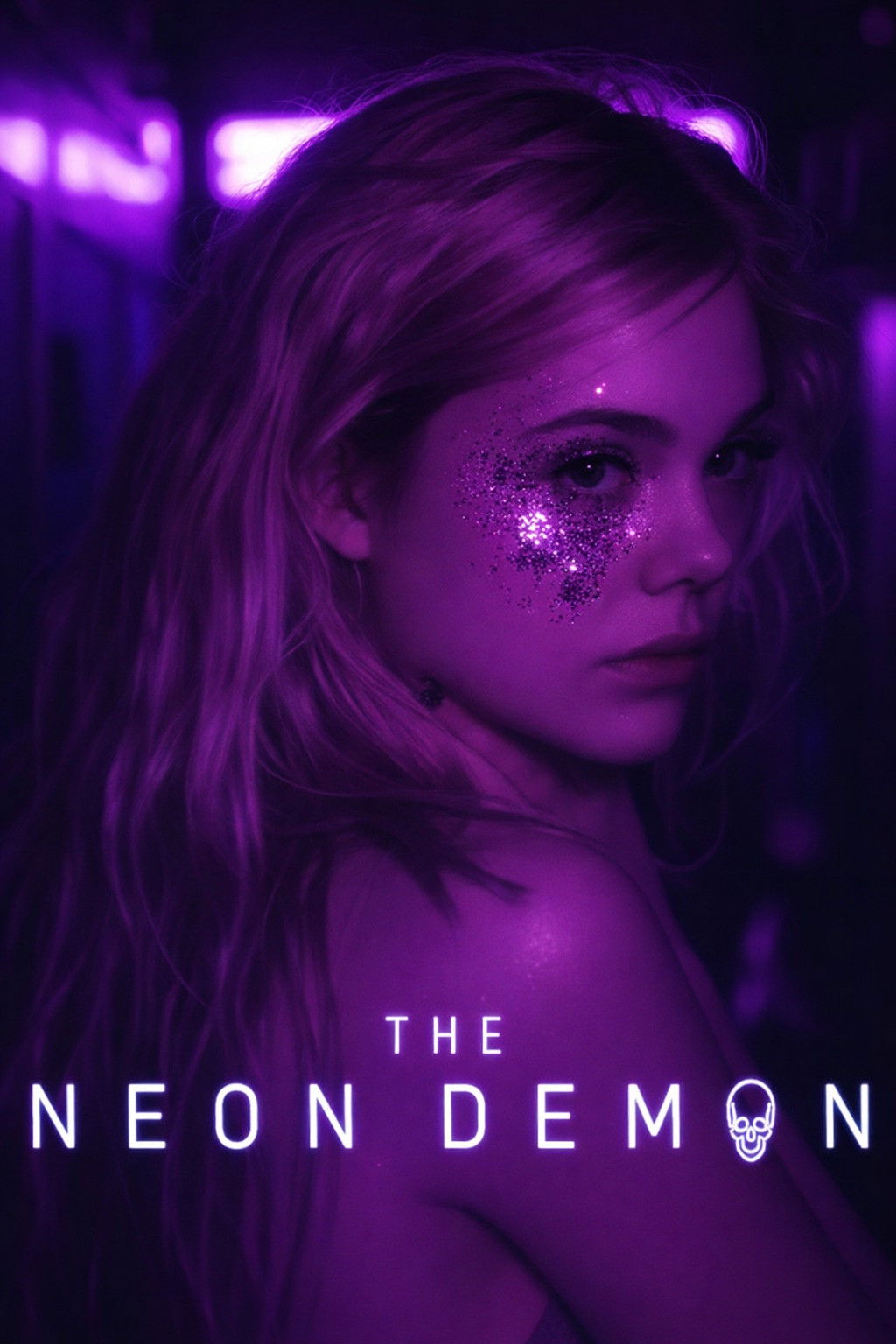
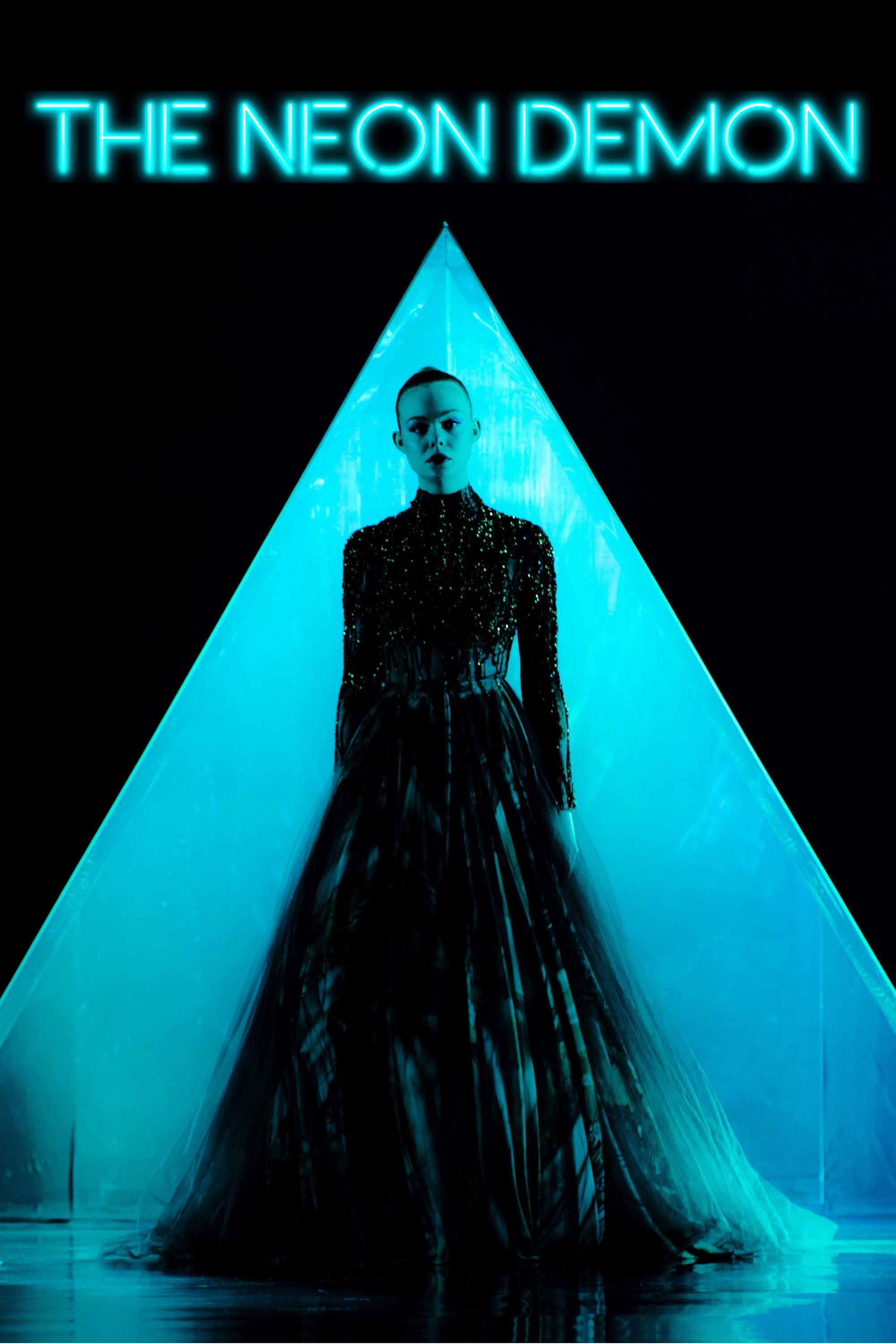
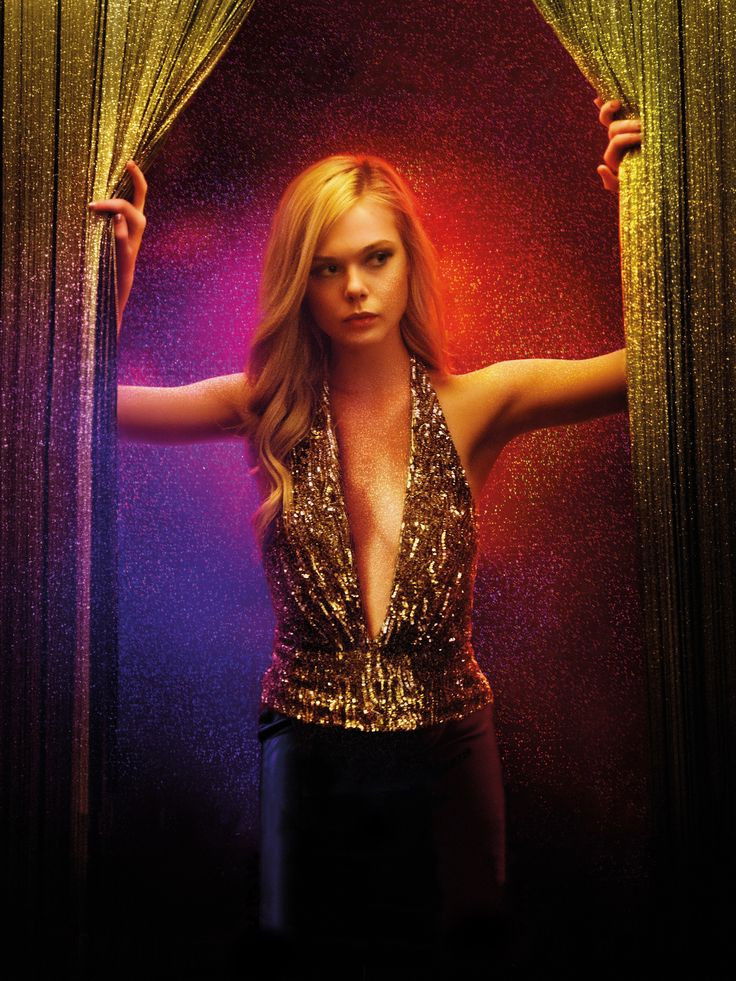
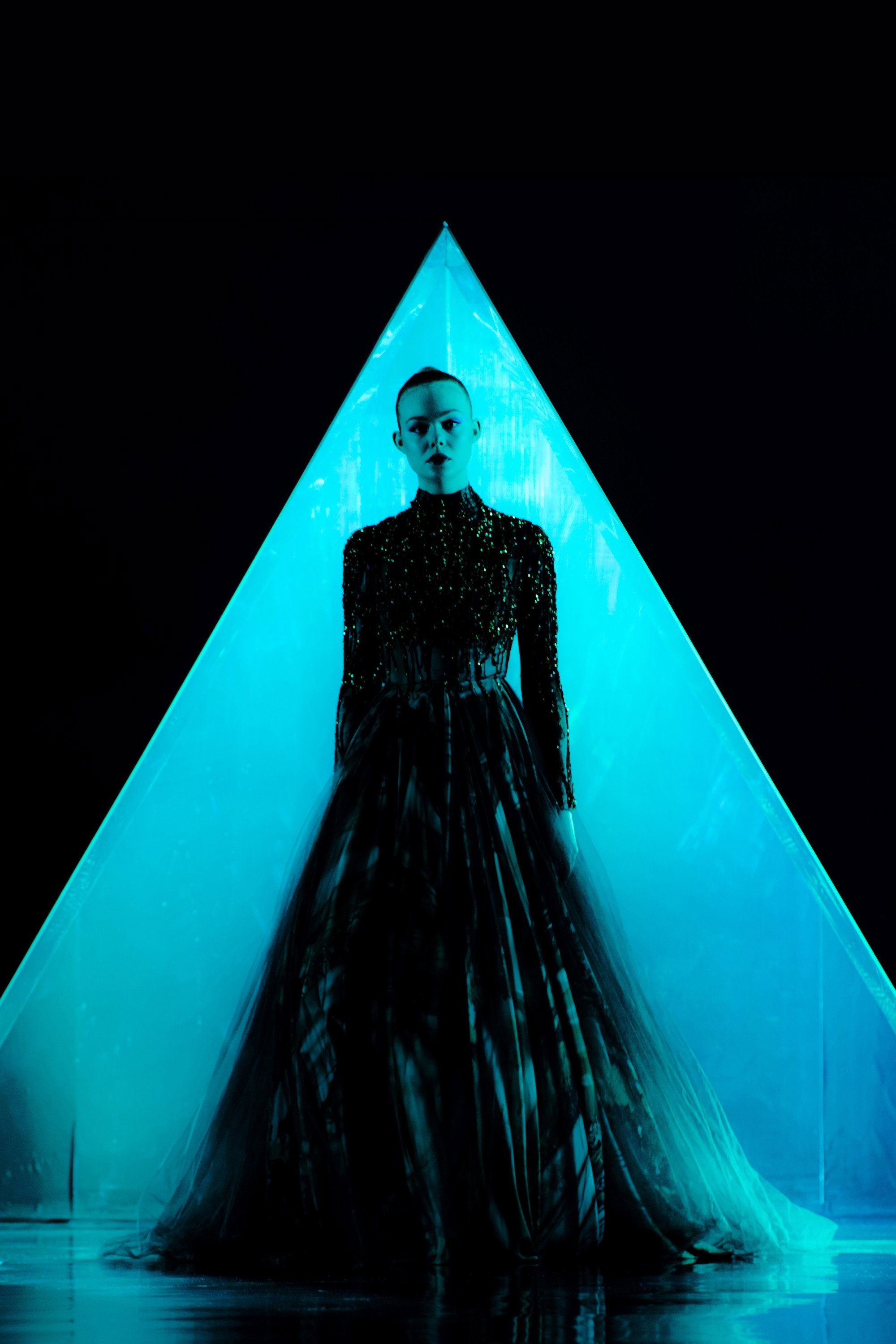
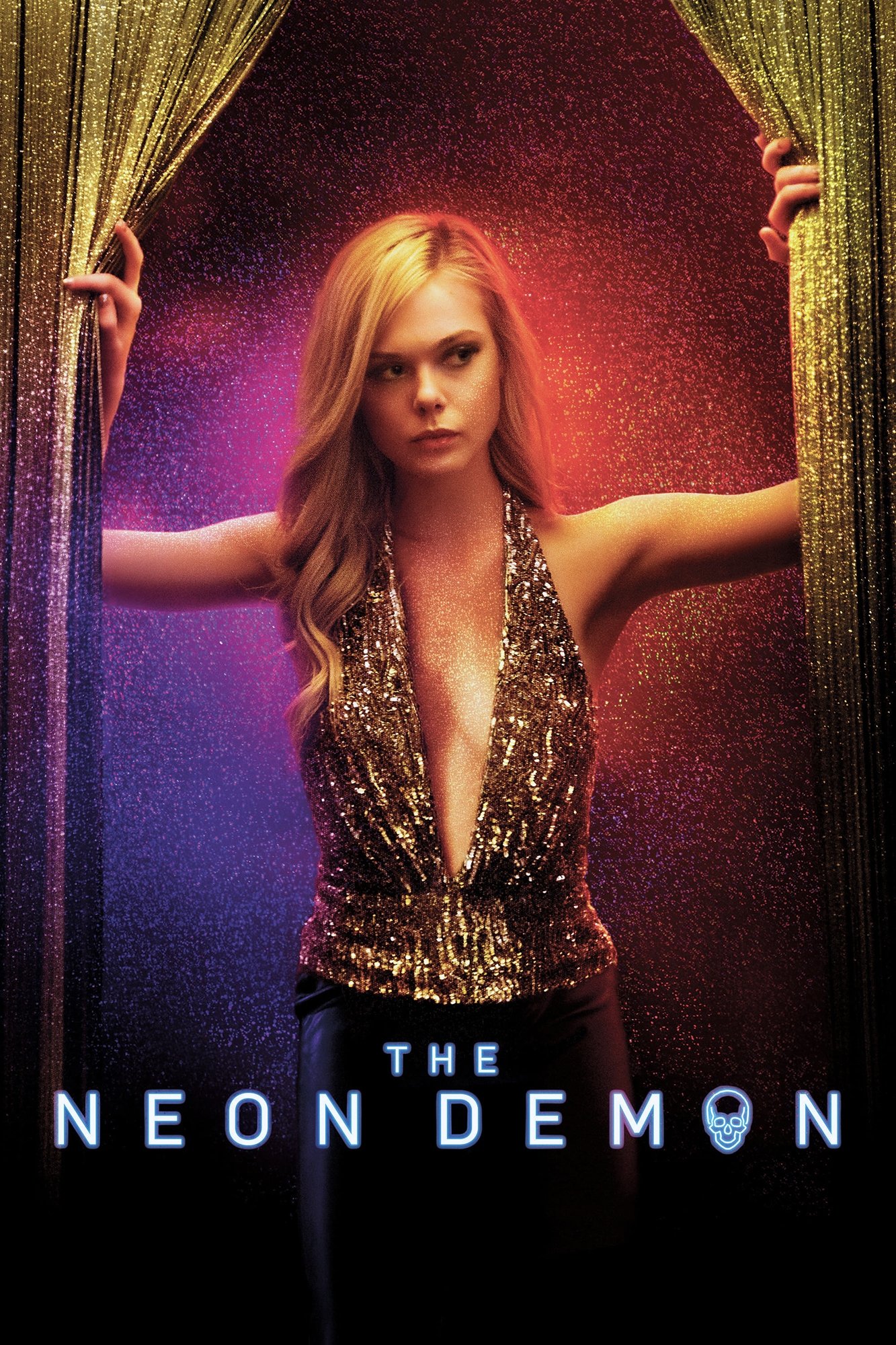
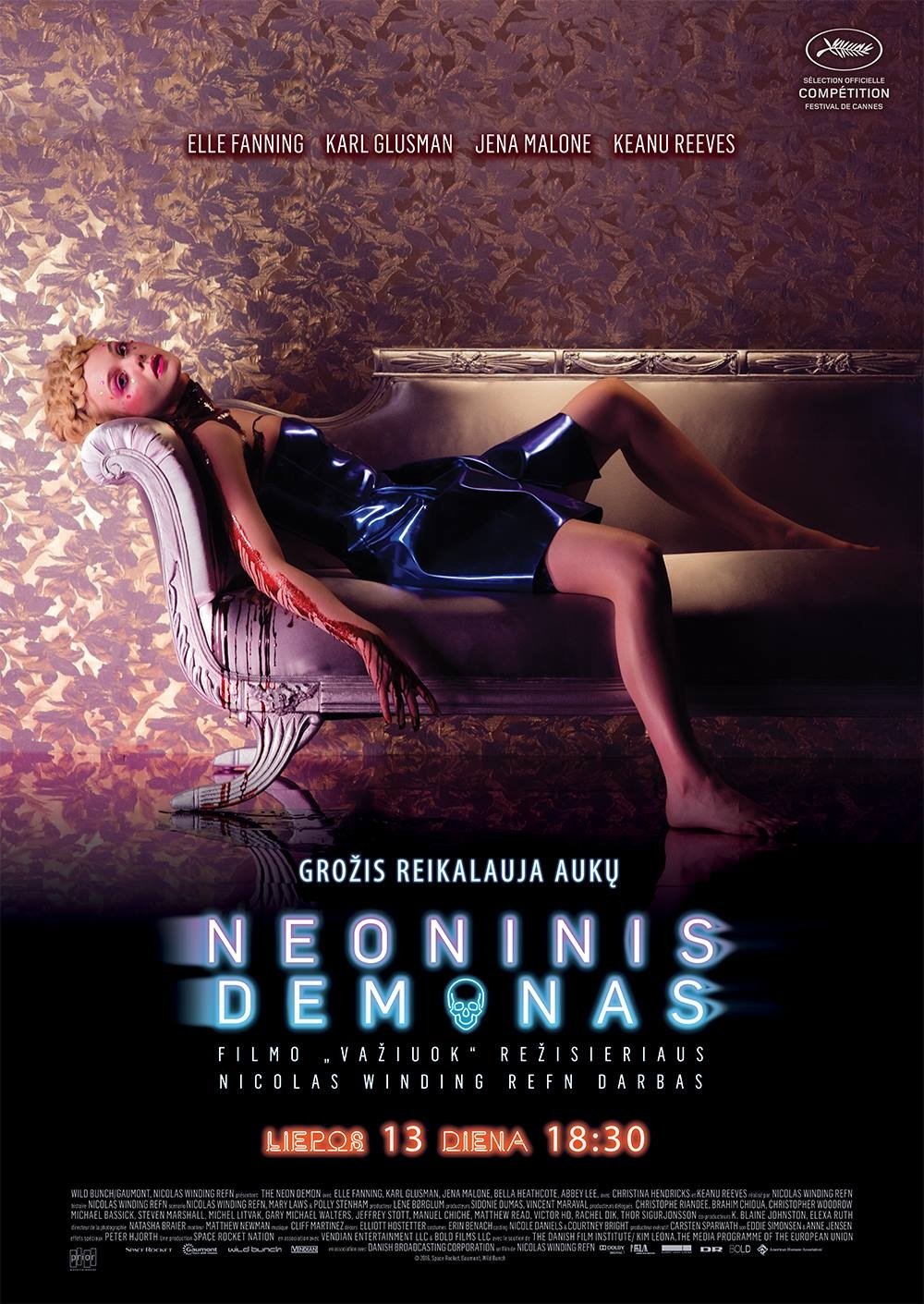
Color has a specified dramatic role within this design. Braier associated red with danger, especially in scenes involving Ruby, the makeup artist played by Jena Malone. Blue becomes central to Jesse's self-recognition during a fashion-show sequence that draws on the myth of Narcissus. Production designer Elliott Hostetter and Braier also acknowledged visual inspiration from light artist James Turrell and fashion photographer Guy Bourdin. These influences informed the geometry of sets and the tactile qualities of their surfaces. Lighting turns an ordinary commercial assignment into an event of apparent initiation, making it difficult to separate a fashion presentation from the promise of an occult transformation.
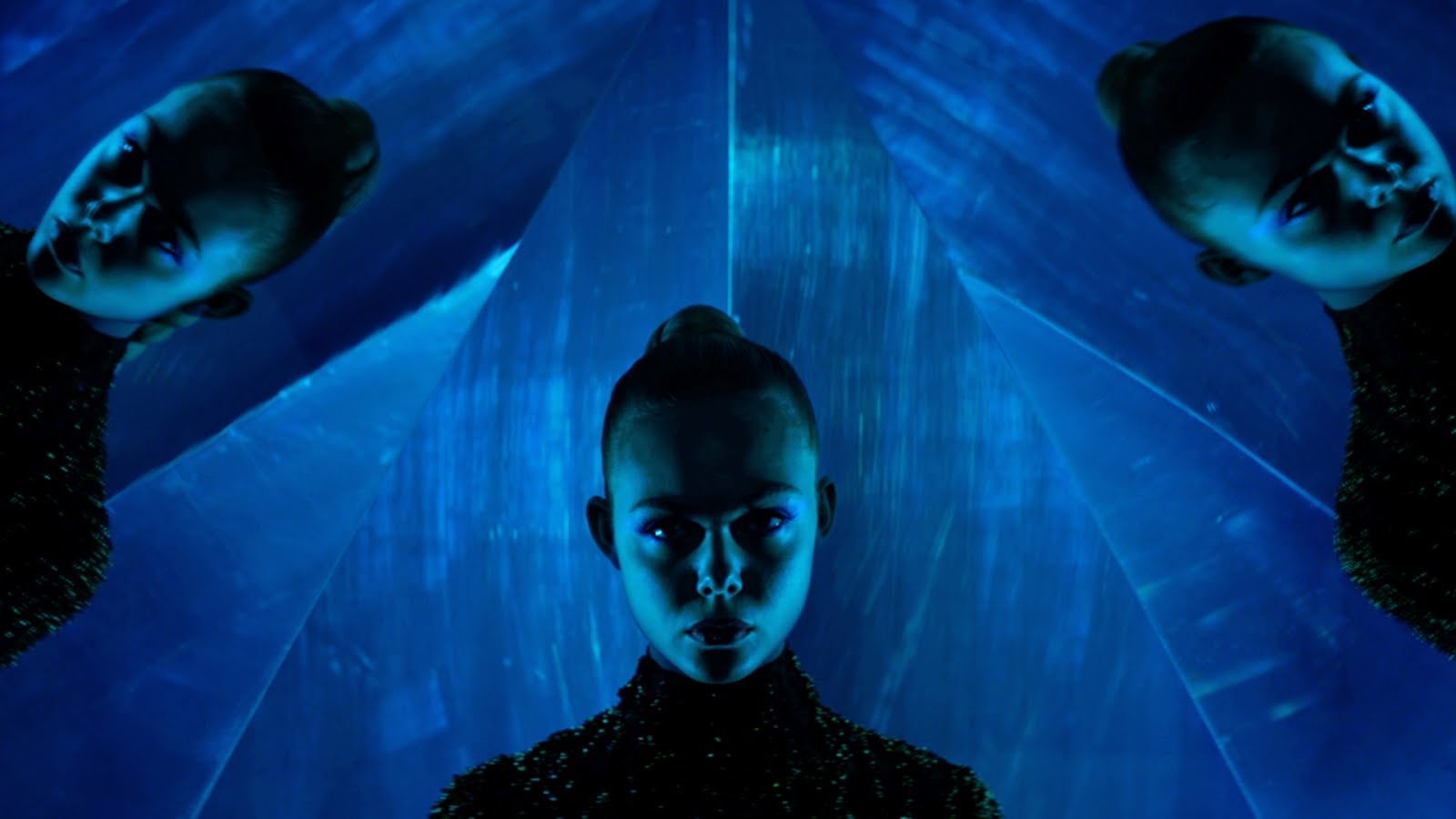
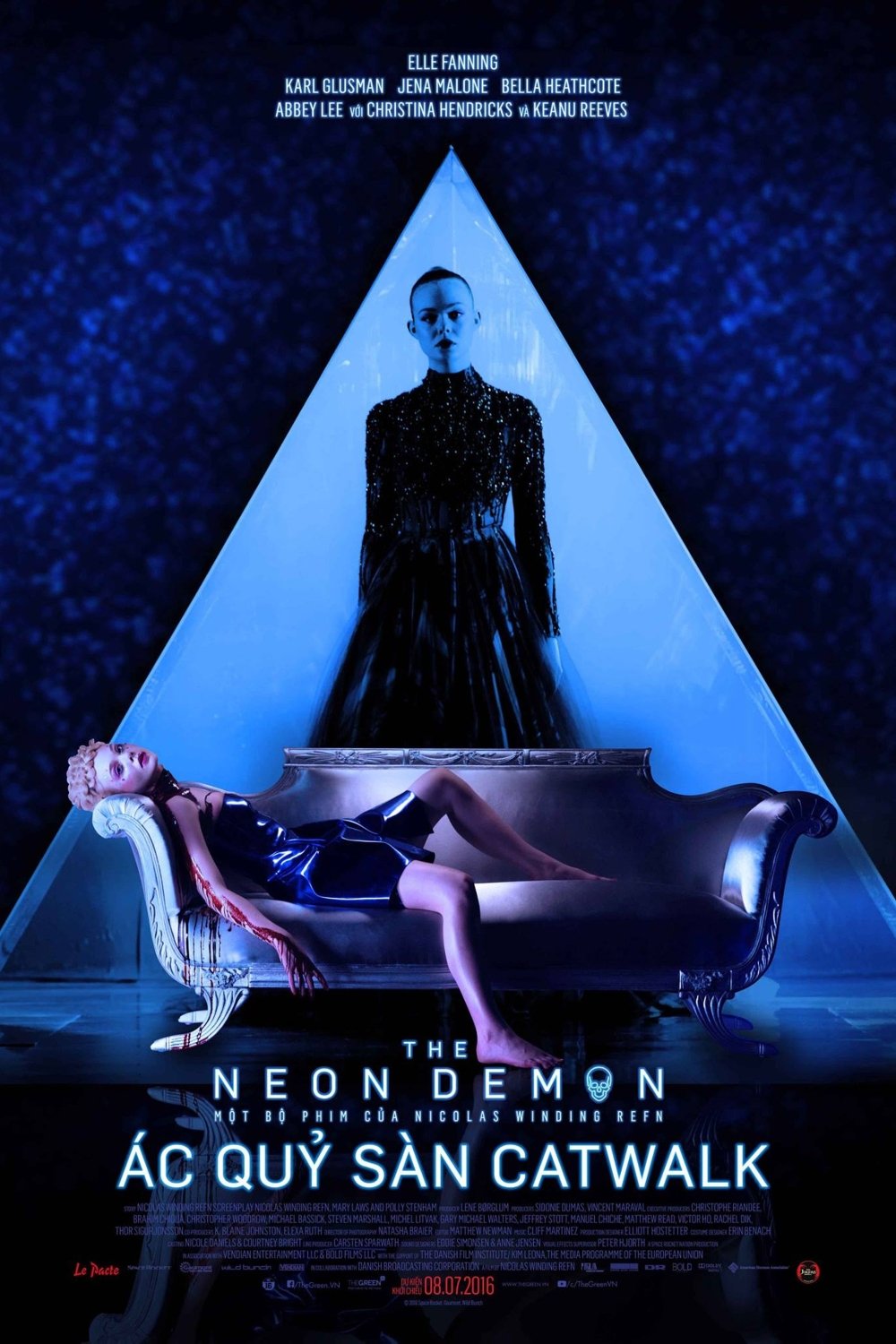
For the runway passage, the crew constructed a triangular arrangement of mirrors at a studio in Van Nuys. Reflections multiply Jesse's figure while rippling illumination suggests water without requiring a natural pool. Braier described the use of reflected light, moving fabrics and a treadmill to maintain the sequence's dreamlike continuity. As the image changes from blue to red, Jesse's discovery of her own desirability is represented as a perceptual break. The precise method matters because the scene creates its supernatural impression largely through physical staging, glass and controlled light. What might have been a routine catwalk becomes a private encounter with an image capable of changing the person who sees it.
Beauty, Rivalry and the Logic of Predation
Jesse enters the modeling business through photographers, agents and designers who quickly regard her youth as a scarce asset. Sarah and Gigi, older models played by Abbey Lee and Bella Heathcote, understand the threat posed by someone whose appearance seems effortlessly marketable. Their hostility gives the early encounters the structure of a workplace drama, but repeated remarks about age and physical perfection already suggest a more invasive form of competition. The film treats beauty as something evaluated by strangers, traded through professional relationships and believed to disappear with time. That viewpoint makes envy a material force within the story. Jesse initially seems vulnerable because she is inexperienced, although the attention she receives steadily changes her sense of herself.
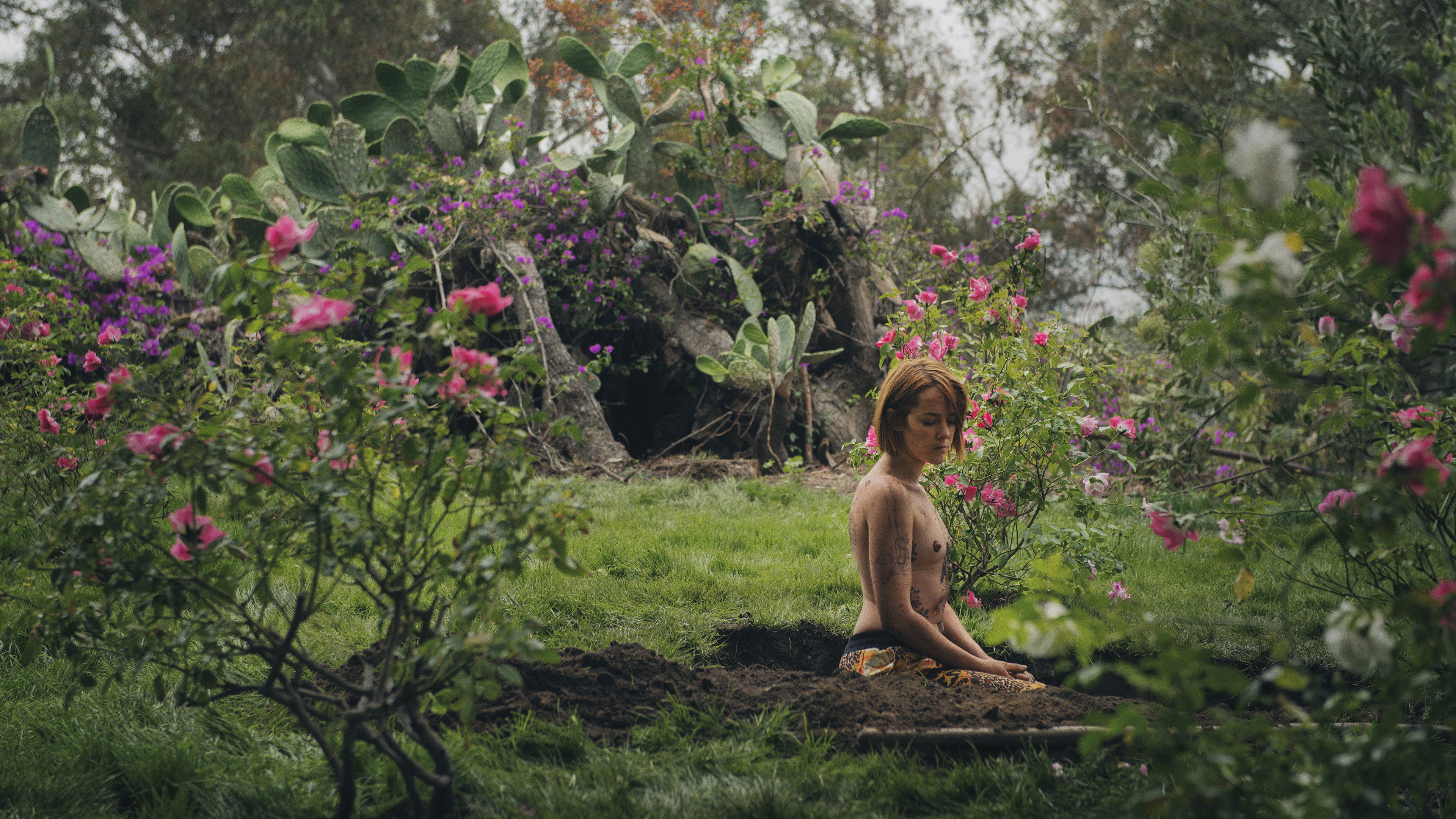
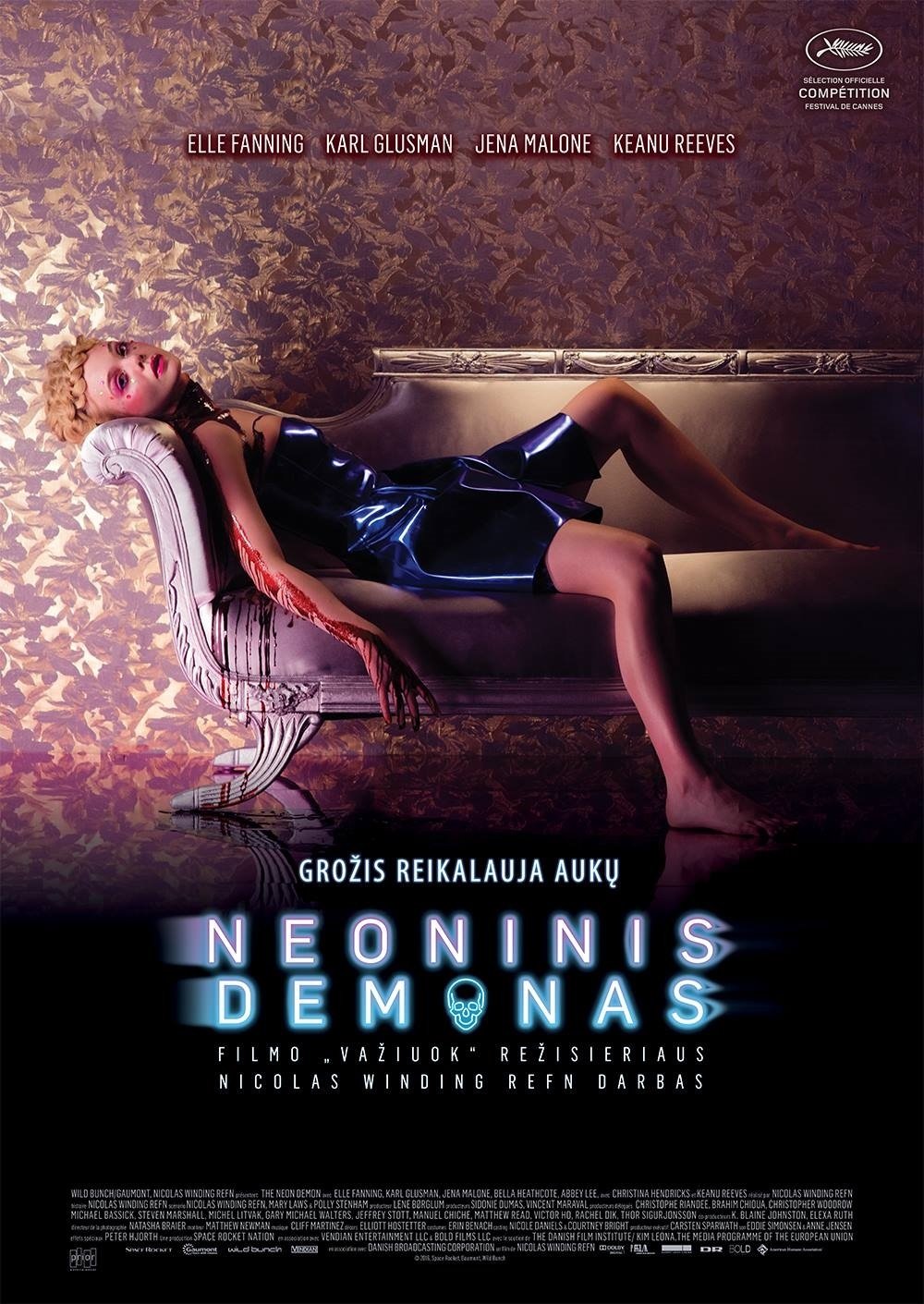
Ruby occupies a more disturbing position because her work involves direct contact with bodies and because she offers Jesse an apparently private refuge. Her professional identity as a makeup artist makes the boundary between care and manipulation uncertain. A later encounter in a mortuary places cosmetic treatment beside the handling of a corpse, bringing the industry's interest in flawless appearance into contact with death. The film's imagery of sexual violation and necrophilia belongs to its deliberate escalation of horror, yet these incidents also shift the viewer's understanding of Ruby's earlier gestures. The threat was present in an economy of looking and touching long before the narrative revealed its most extreme consequences.
Cannibalism and the Turn Toward Body Horror
The final movement makes the metaphor of consuming beauty literal. Jesse's rivals attempt to take into themselves the quality they believe she possesses, and the film presents that decision through cannibalism and the physical rejection of what has been swallowed. The film leaves the rules of that attempted transfer uncertain, without specifying a medical or supernatural mechanism. The grotesque outcome is therefore best understood as the culmination of the characters' obsession, with no clearly established system of magic. A body prized for its surface becomes the substance of an attempted exchange. Violence changes from an imagined danger in staged photographs to a physical act directed at the source of fascination.
The transition has recognizable horror precedents without constituting a direct remake of any single work. The saturated palette, threatened women, fetishized objects and carefully staged attacks recall elements associated with Italian giallo cinema. Its ultimate emphasis on ingestion and bodily corruption moves the film closer to body horror, while the arrangement of desire around Jesse retains the contours of a dark fairy tale. Refn also allows the possibility that the title refers to more than one person or force. That uncertainty suits a story in which the monster may be located in an individual, a group of competitors or the culture that teaches them to treat appearance as a consumable resource.
Cliff Martinez and the Architecture of Sound
Cliff Martinez entered discussions about the project before filming, continuing a collaboration with Refn established on Drive and Only God Forgives. He later explained that the director had placed Bernard Herrmann compositions against an early cut as temporary music. Martinez understood the emotional pressure of that choice while moving away from its orchestral sonority. His completed score relies primarily on electronic textures, including software emulations of vintage synthesizers such as the ARP 2600 and Roland Super Jupiter. The sounds suggest an older electronic vocabulary without attaching the action to a specific historical period. This approach reinforces the film's unstable mixture of contemporary celebrity culture and imagery recalling earlier European horror cinema.
The music also assumes structural responsibility during passages with minimal speech. Martinez described composing from the filmed material instead of following the screenplay chronologically, while Fanning recalled that the extended fashion-show performance allowed unusual freedom of movement. In the finished work, repeated electronic pulses and slowly changing harmonies sustain images long enough for pleasure to become unease. Some sequences invite attention to the rhythm of light and camera movement as intensely as to plot information. Martinez's contribution helps maintain continuity across the shift from seductive professional fantasy to explicit violence. Because the score is woven into that change of register, its role extends beyond signaling a frightening moment after it has already occurred.
Cannes Reception and Critical Context
The Neon Demon screened in competition at the 2016 Cannes Film Festival, where the audience response was conspicuously divided. Contemporary accounts described both booing and applause, an unusually public expression of the disagreements that would follow the film into theatrical release. Refn welcomed the polarized reaction, but that response should be distinguished from a general critical endorsement. Catherine Bray's review for Sight and Sound admired elements of casting and visual arrangement while questioning whether the elaborate surfaces gave the eventual cannibalistic horror sufficient force. Her assessment is valuable because it identifies a substantive objection to the picture: the apparent distance between immaculate images and the physical disgust that its subject might be expected to produce.
Other contemporary critics interpreted the same excess as integral to the project, emphasizing its confrontational imagery and the instability of its tone. The disagreement concerns the relationship between formal control and narrative provocation, encompassing the meaning of the violence and its carefully arranged presentation. Refn delays the most explicit violence while sustaining the expectation that something is wrong with the world Jesse enters. When the story finally crosses into extreme horror, the earlier visual motifs acquire a more literal significance. The film's importance lies in that sustained experiment with genre boundaries: it brings the techniques of fashion advertising into direct contact with cannibal imagery, making the spectacle of looking inseparable from the terror of being looked at.