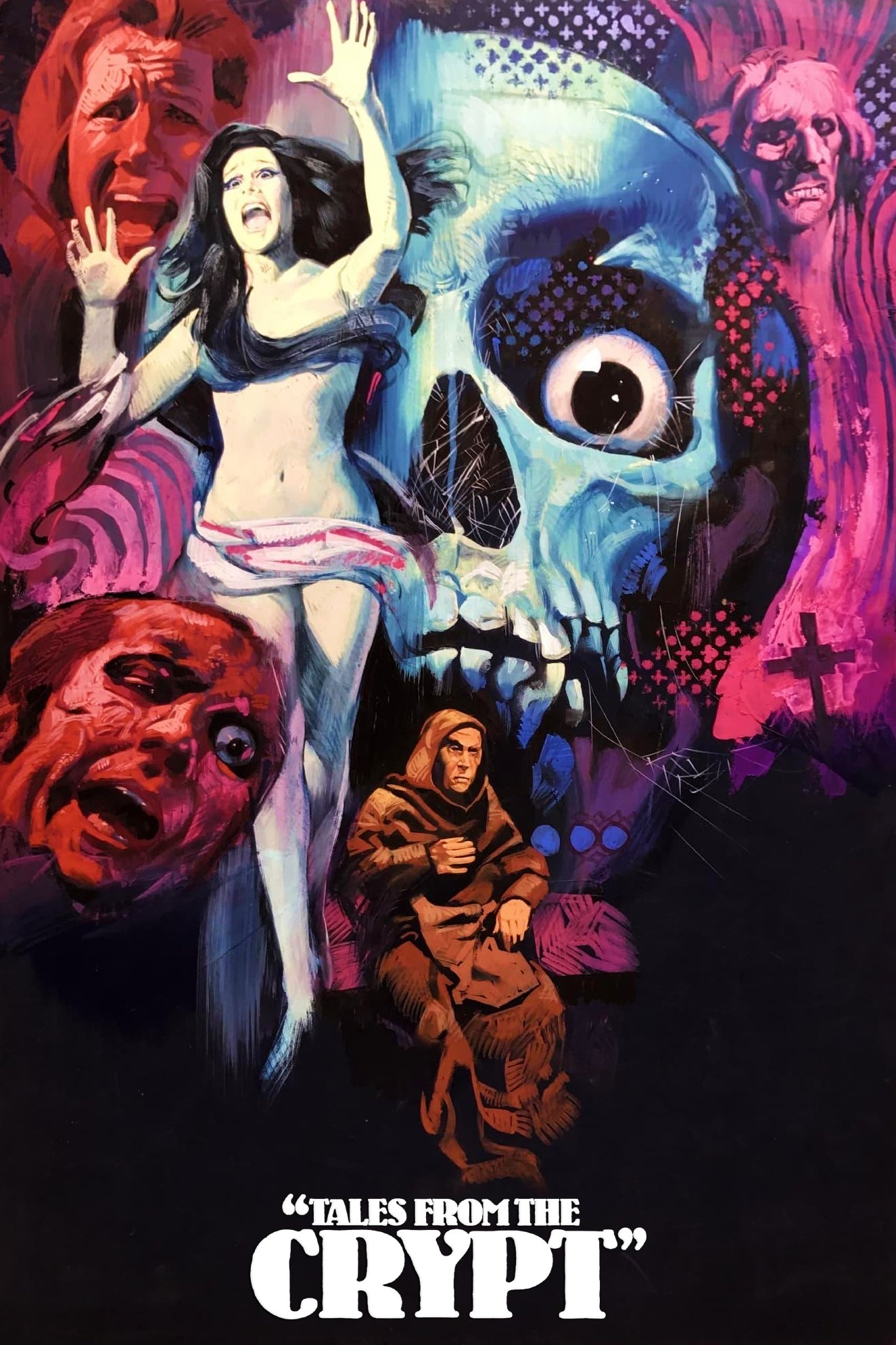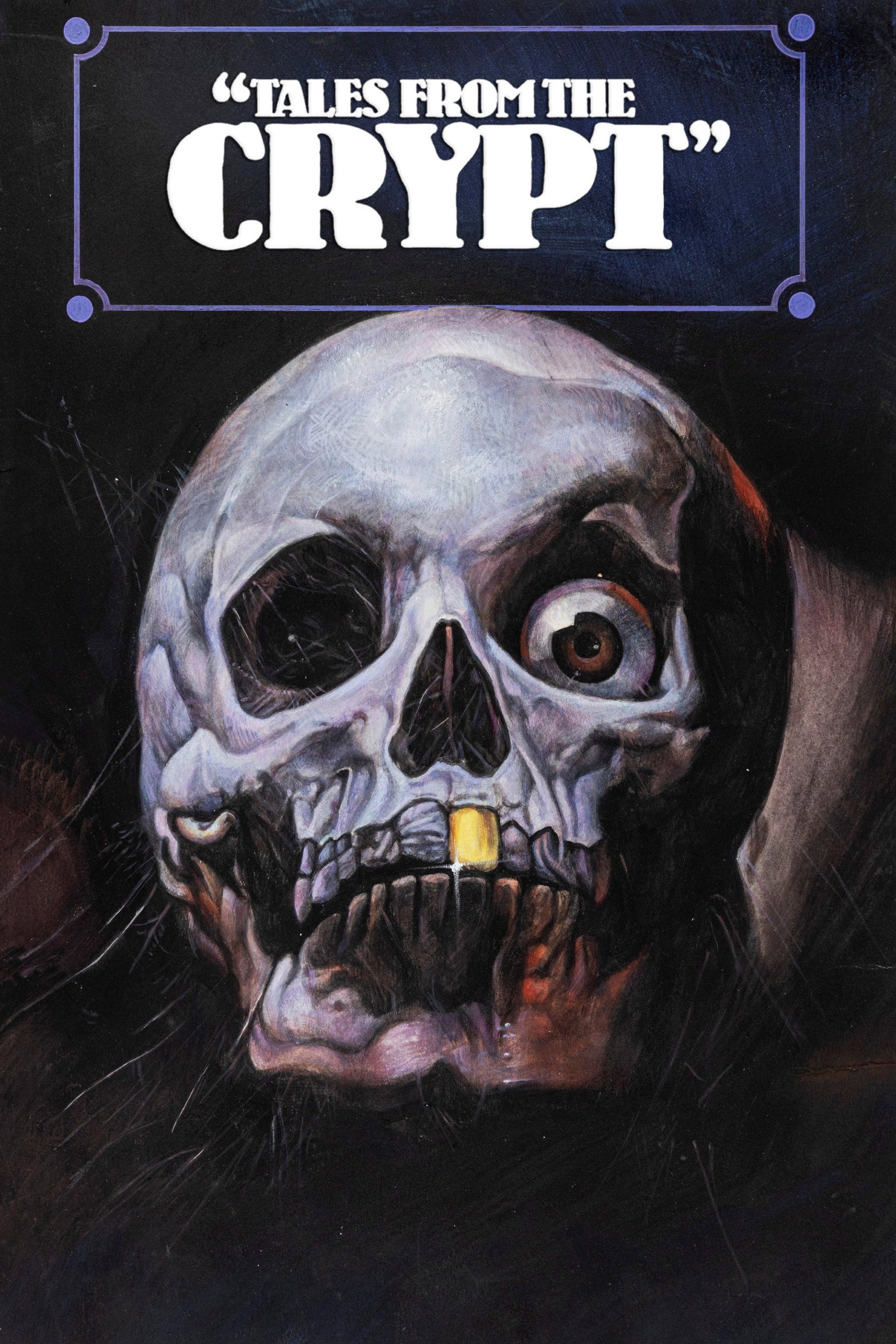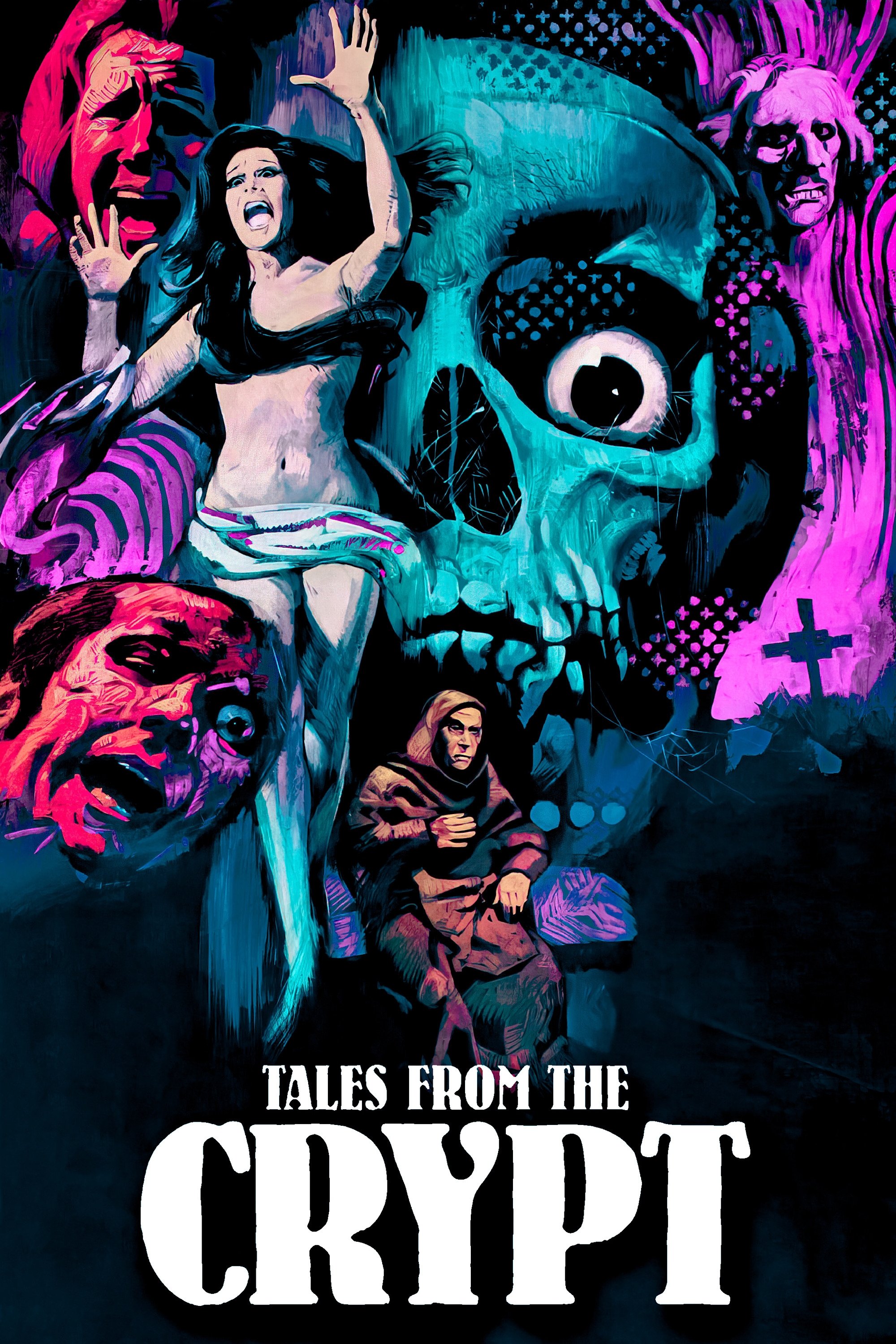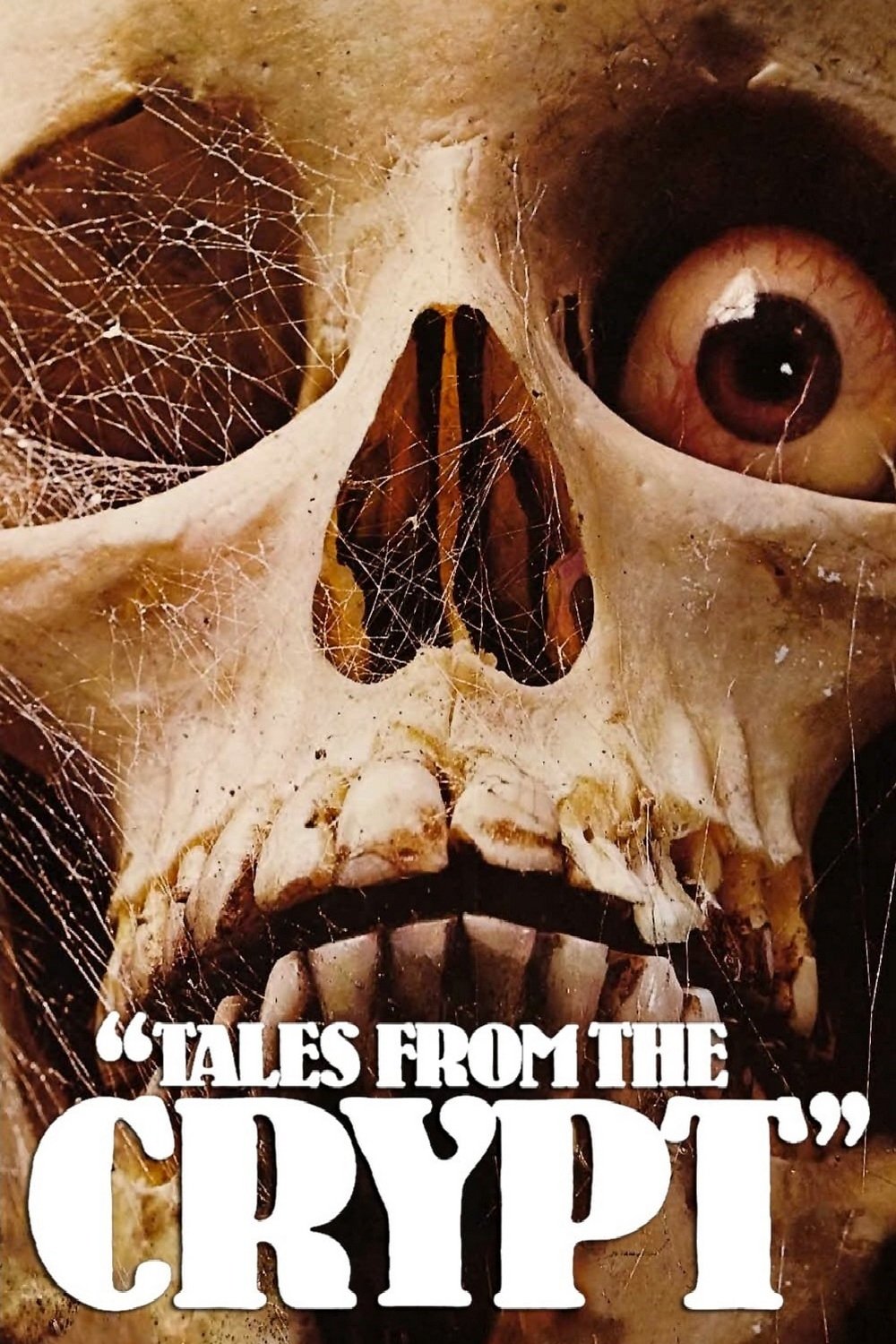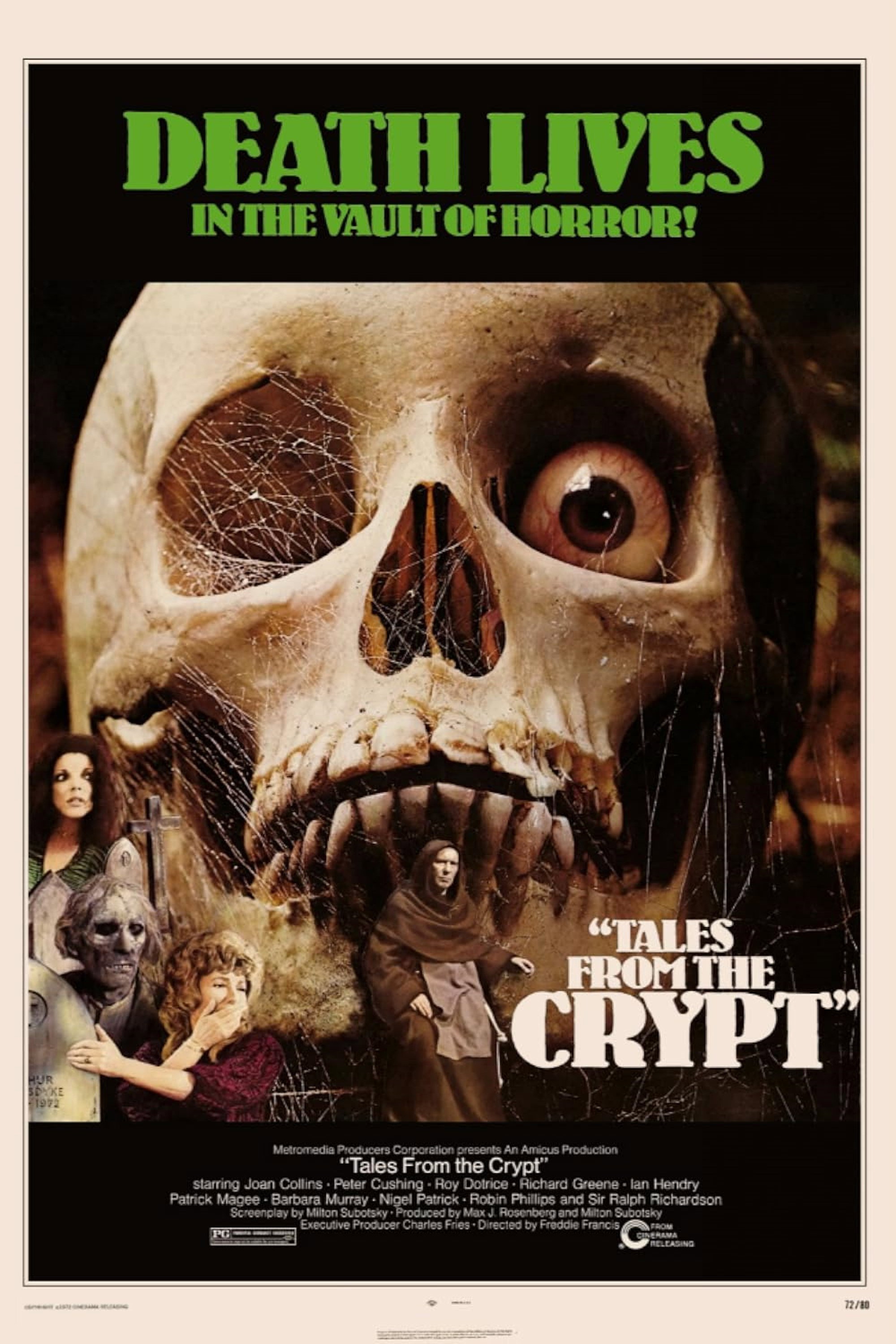
Tales from the Crypt (1972)

GB
HORROR FILM
Runtime
92 min
Release
March 9, 1972
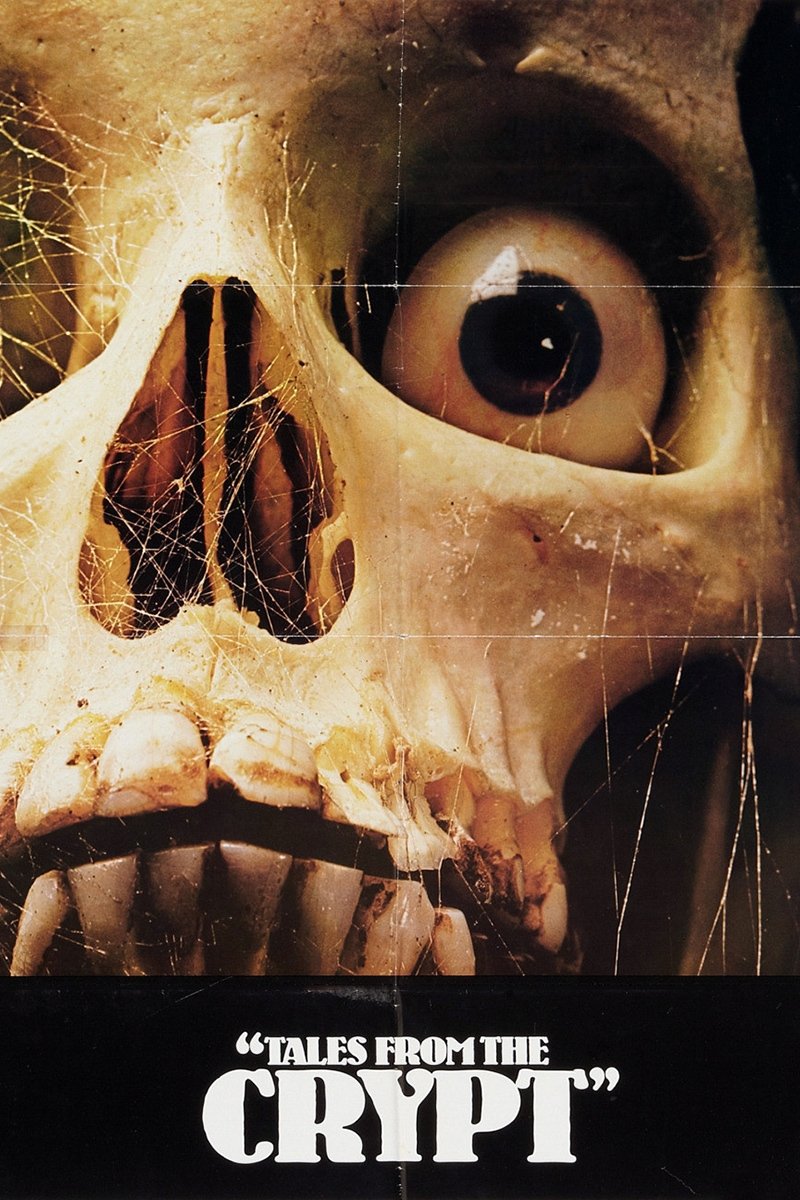
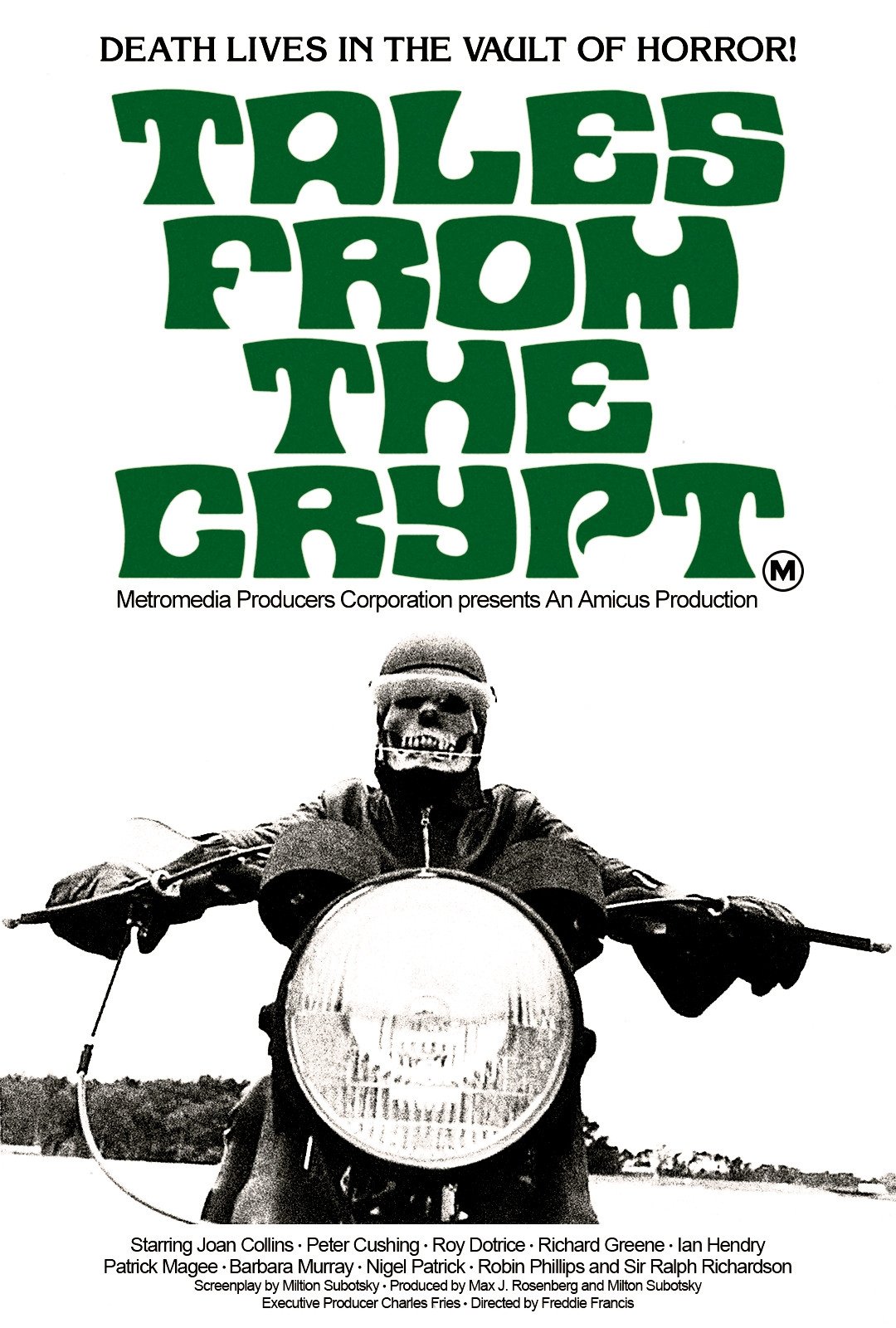
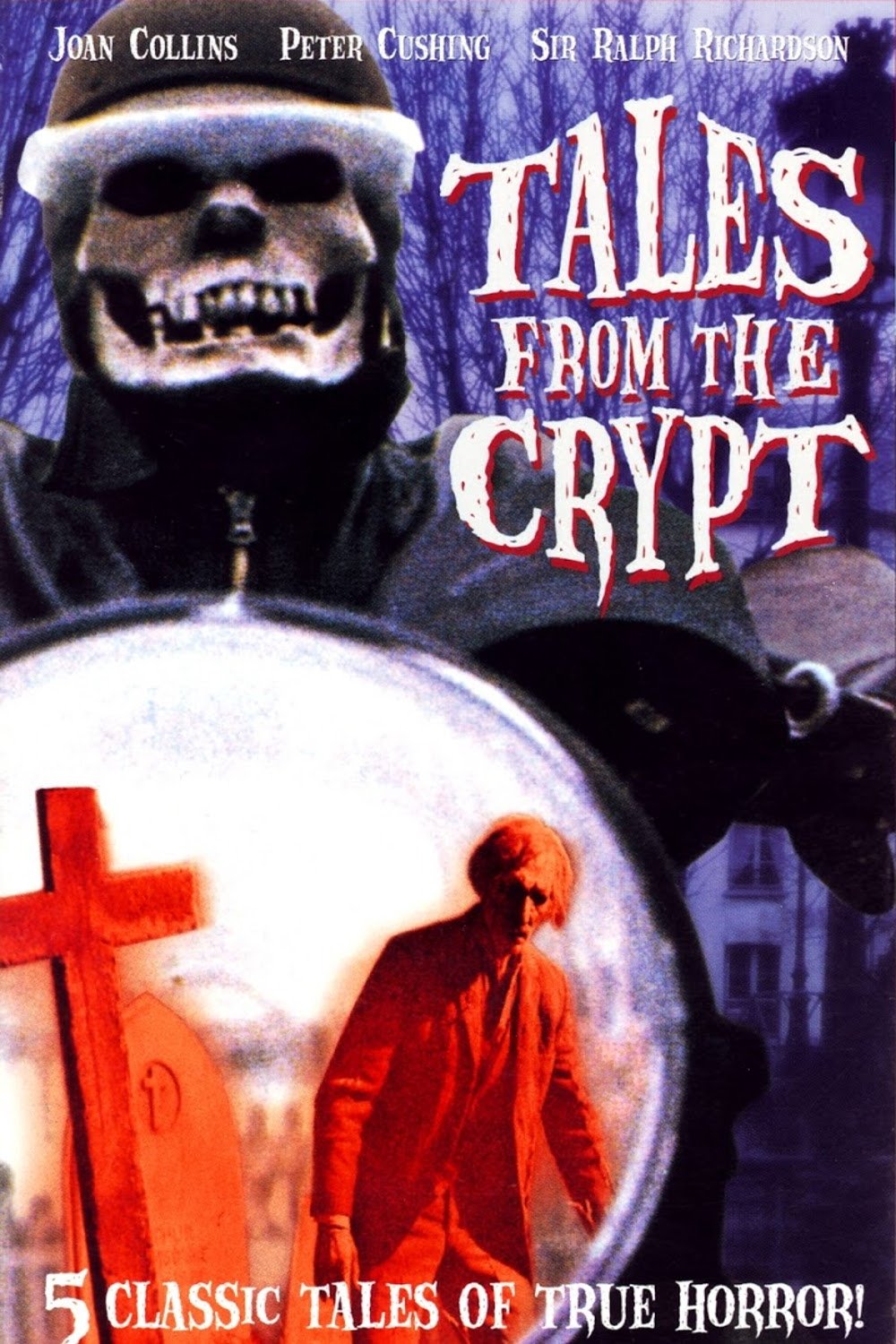
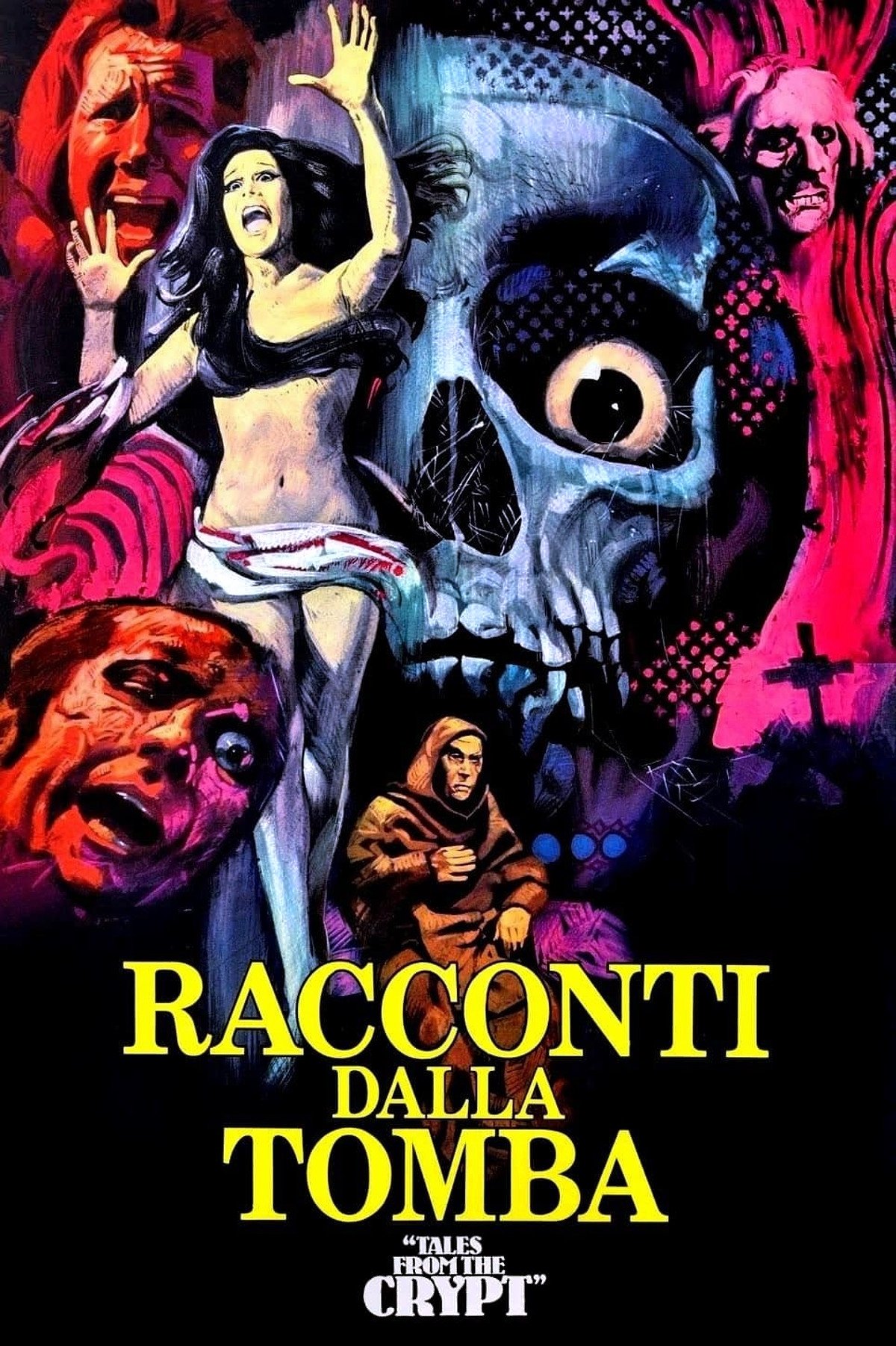
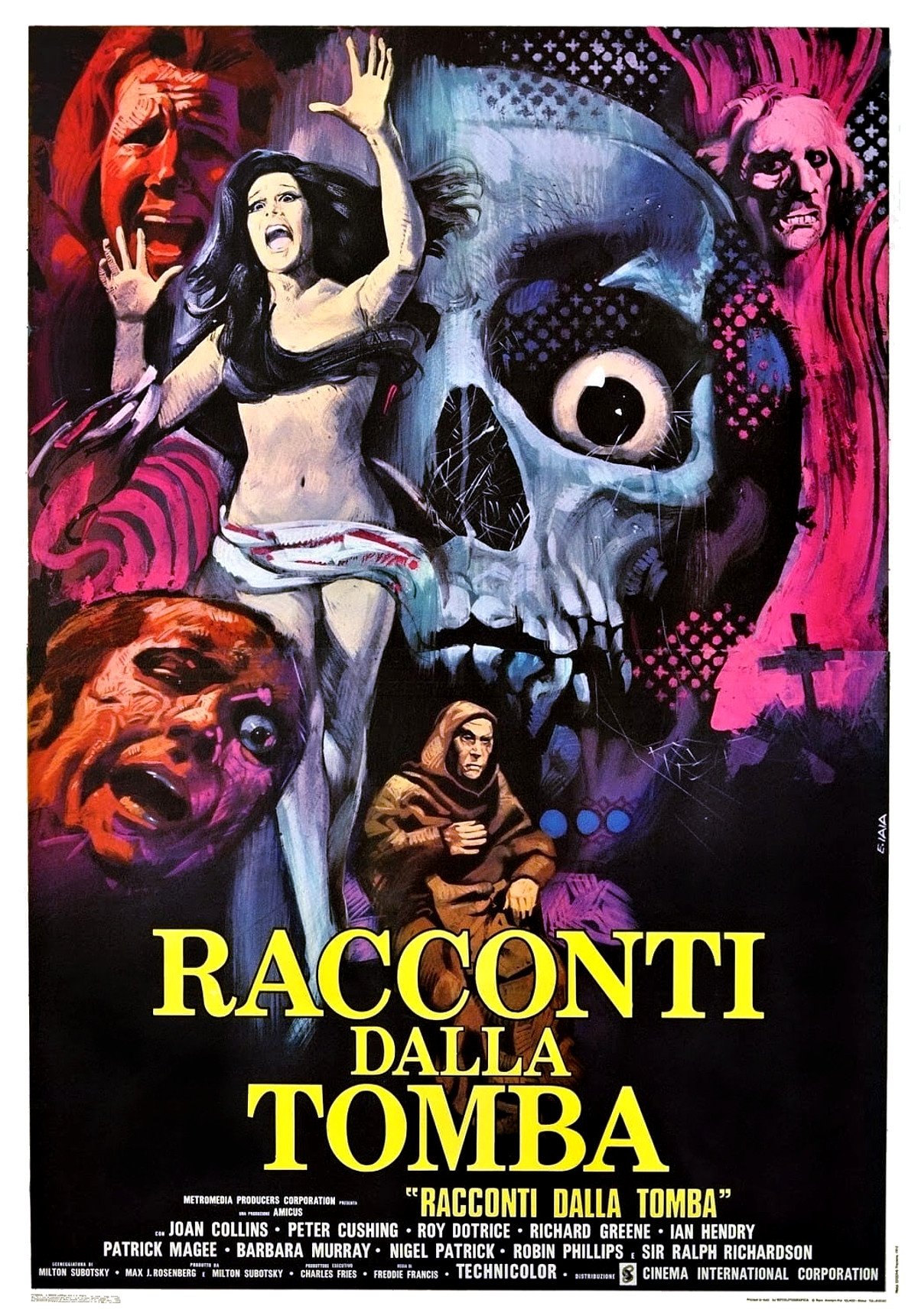
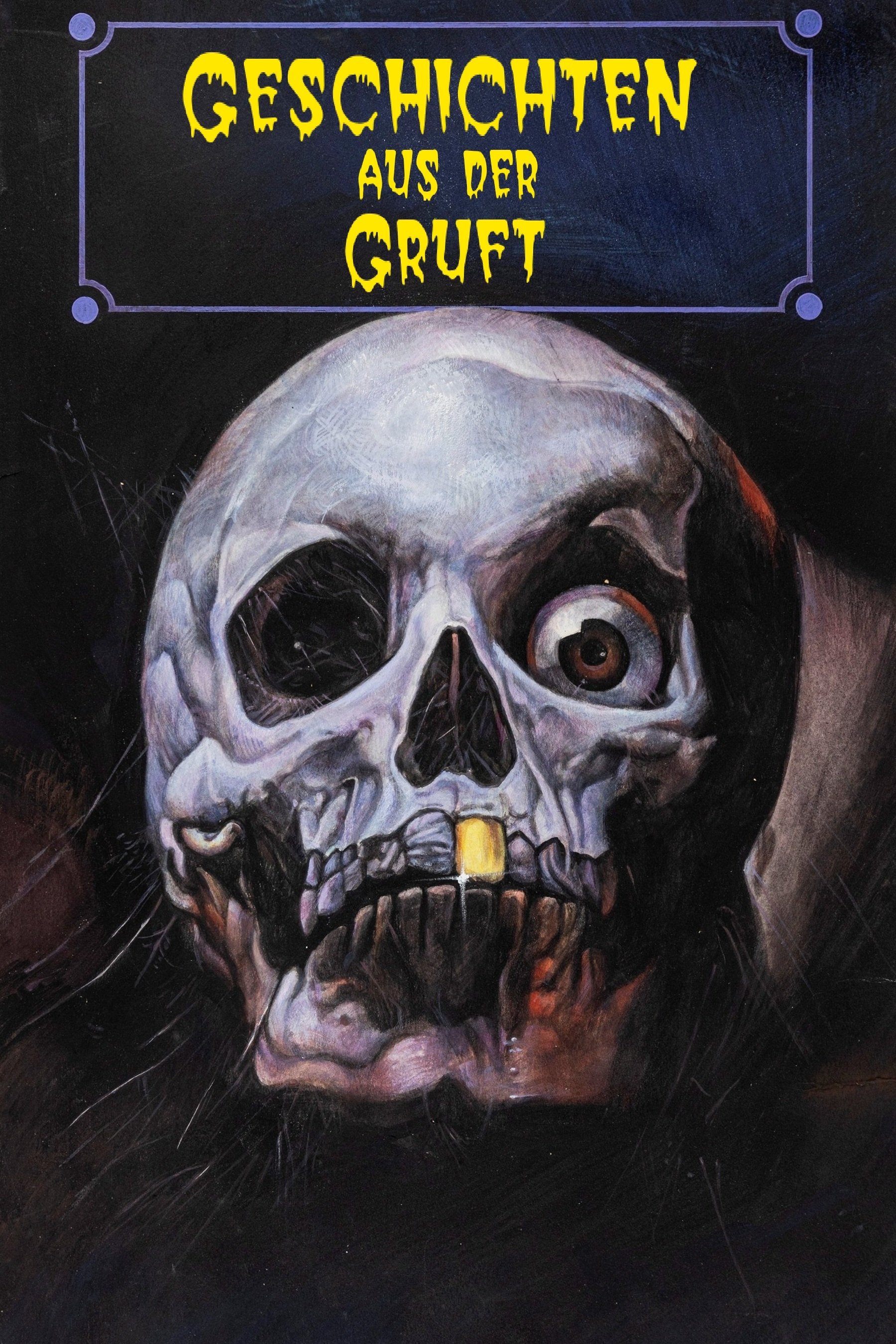
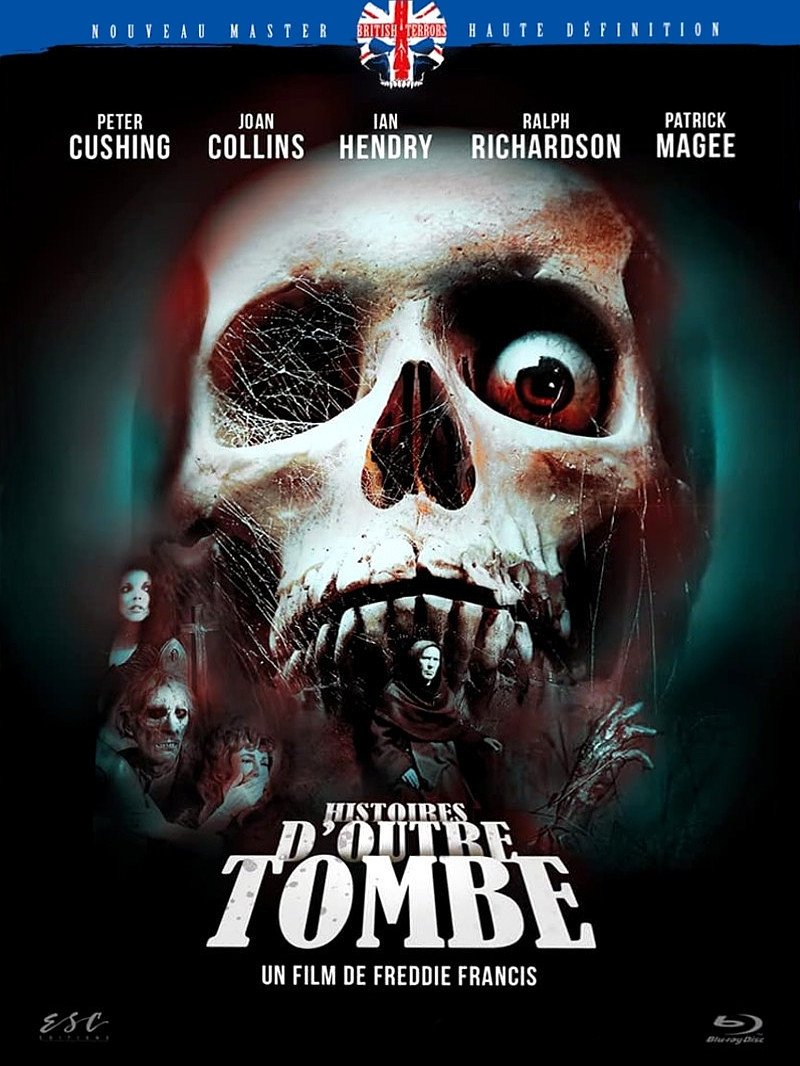
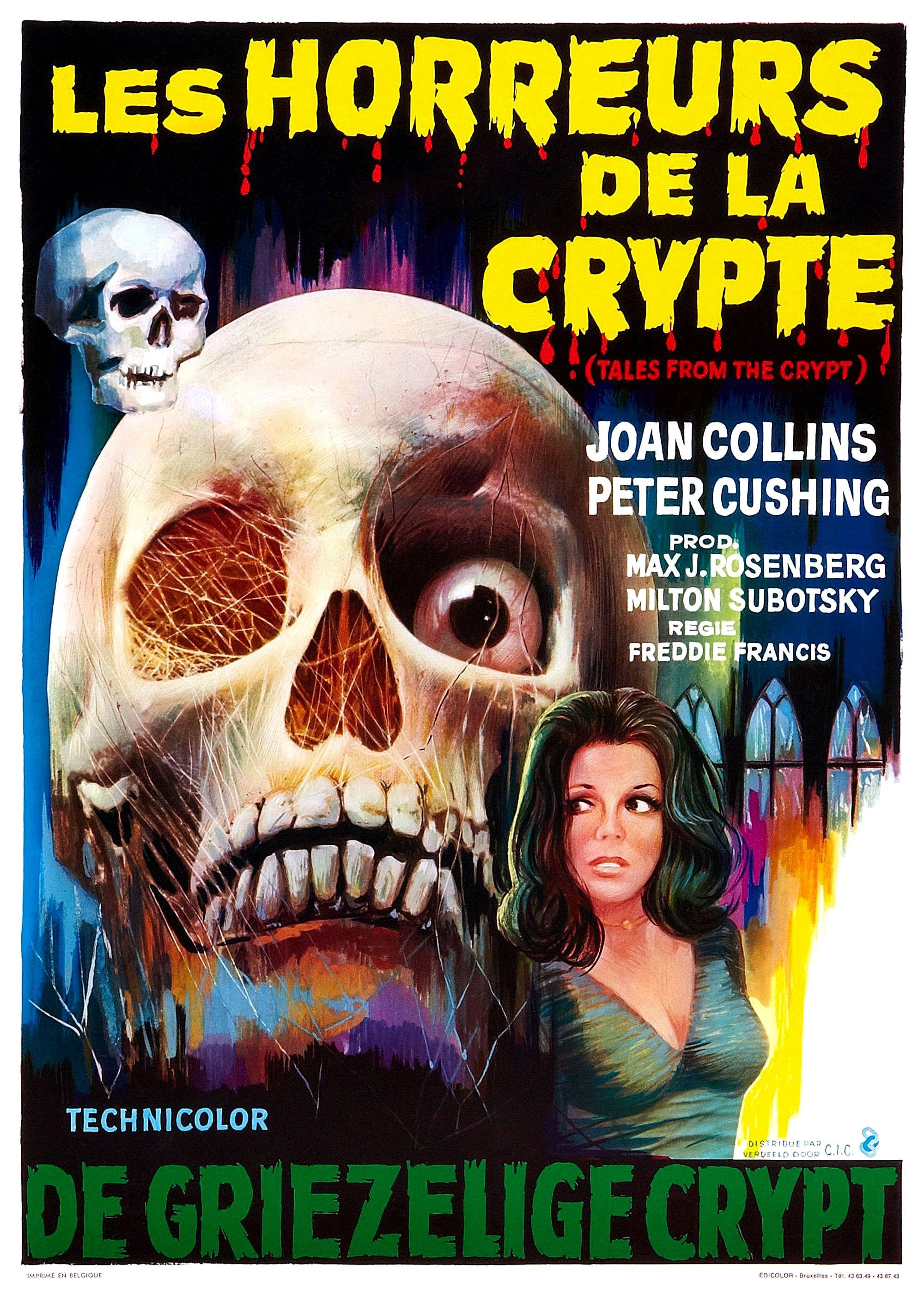
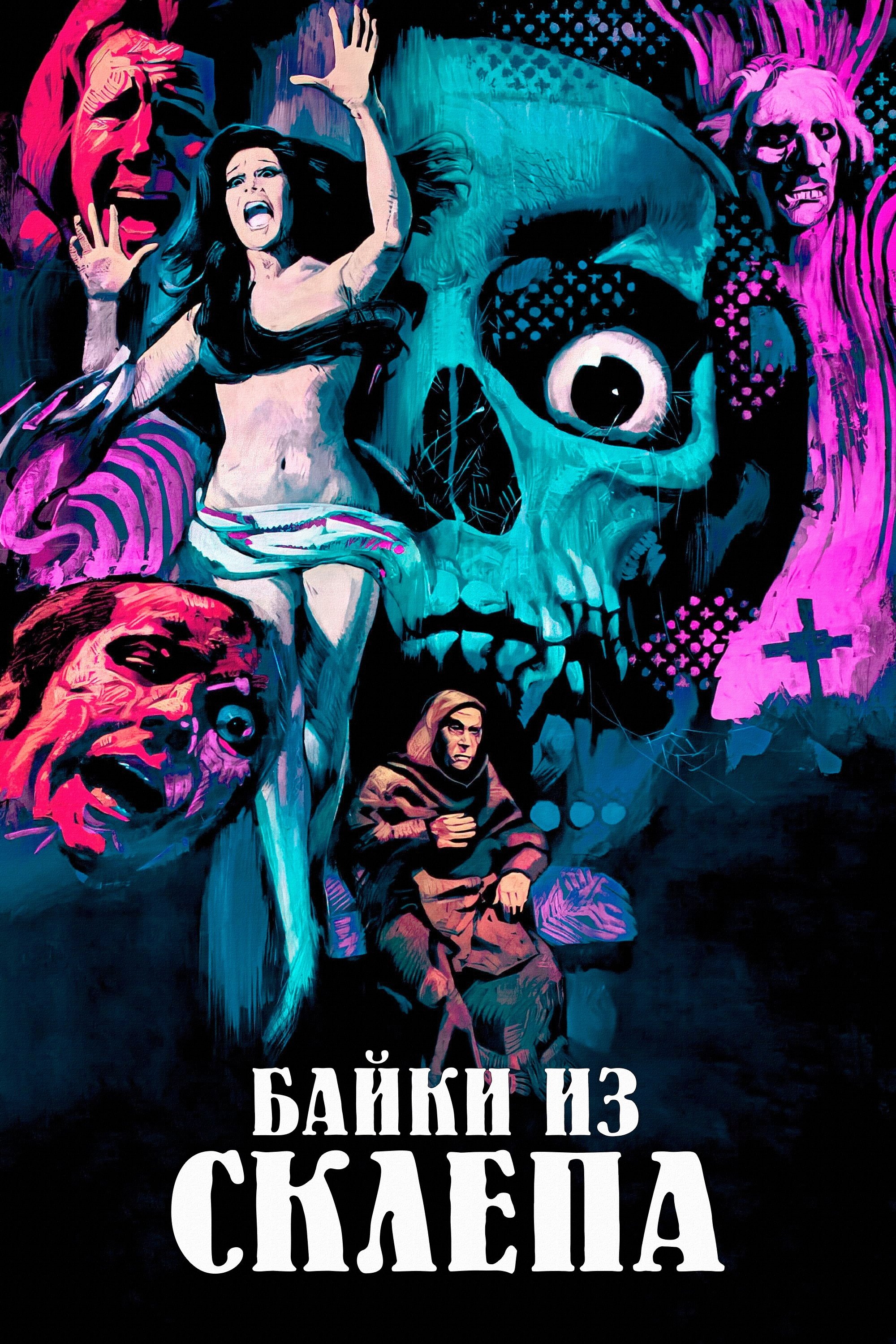
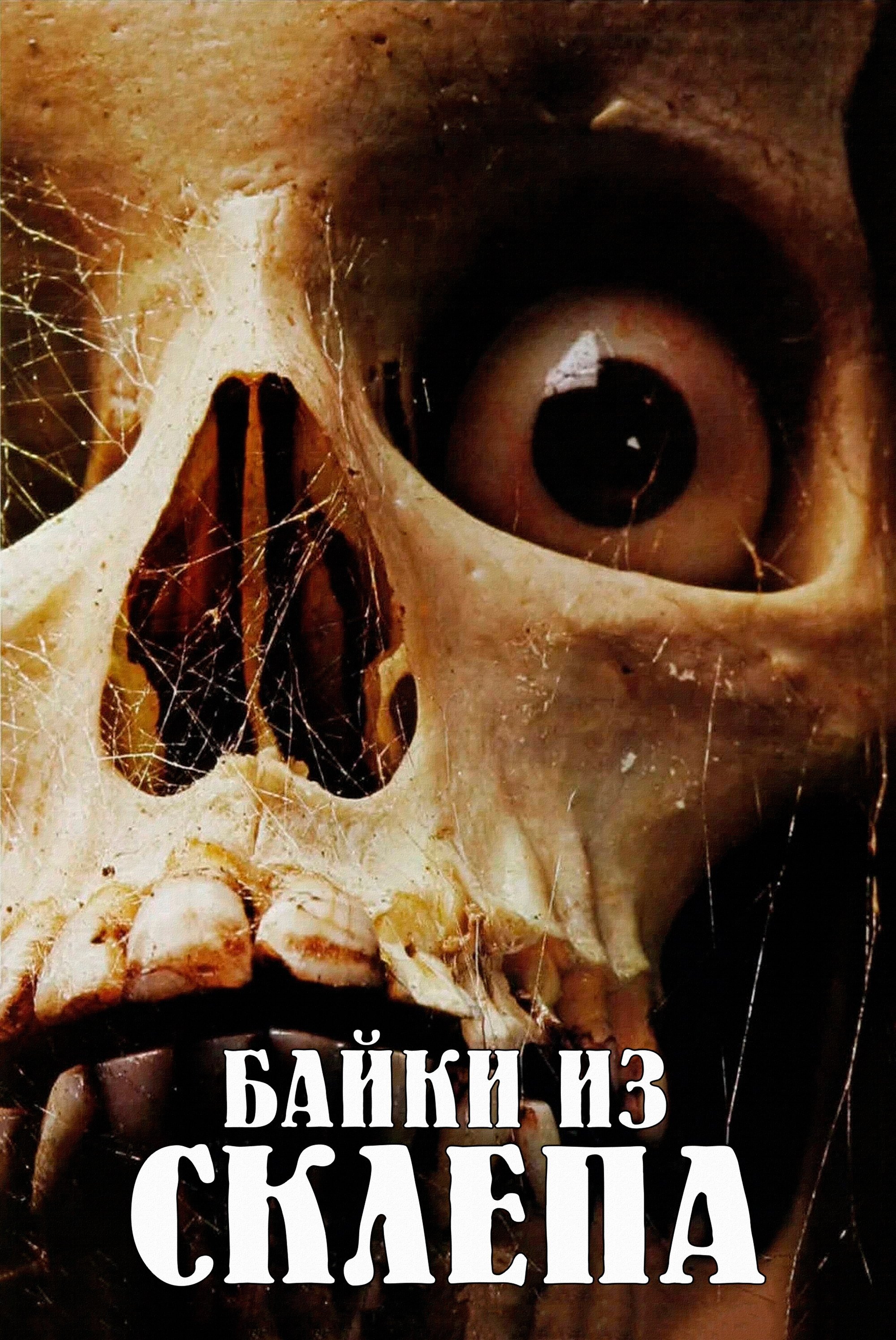
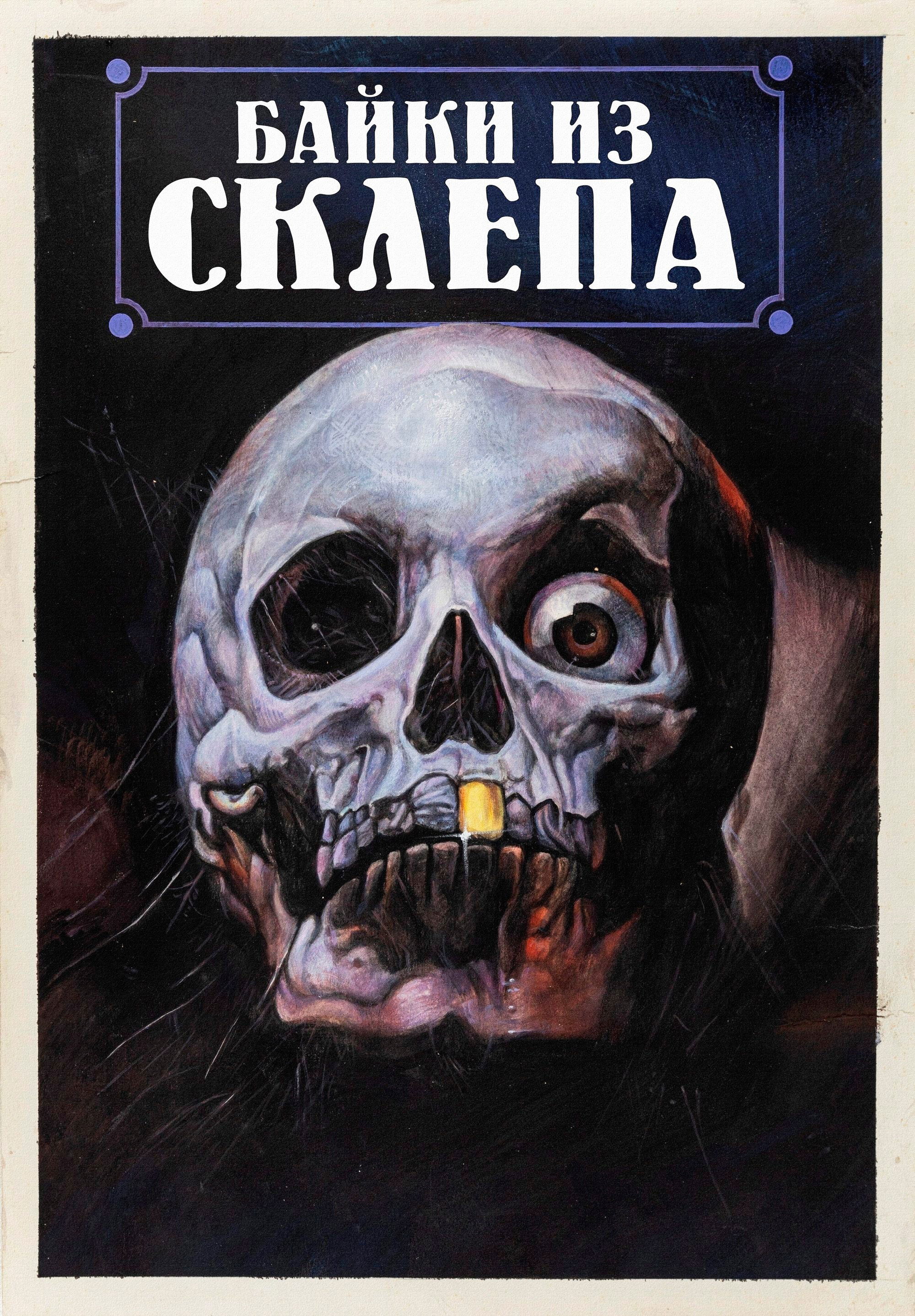
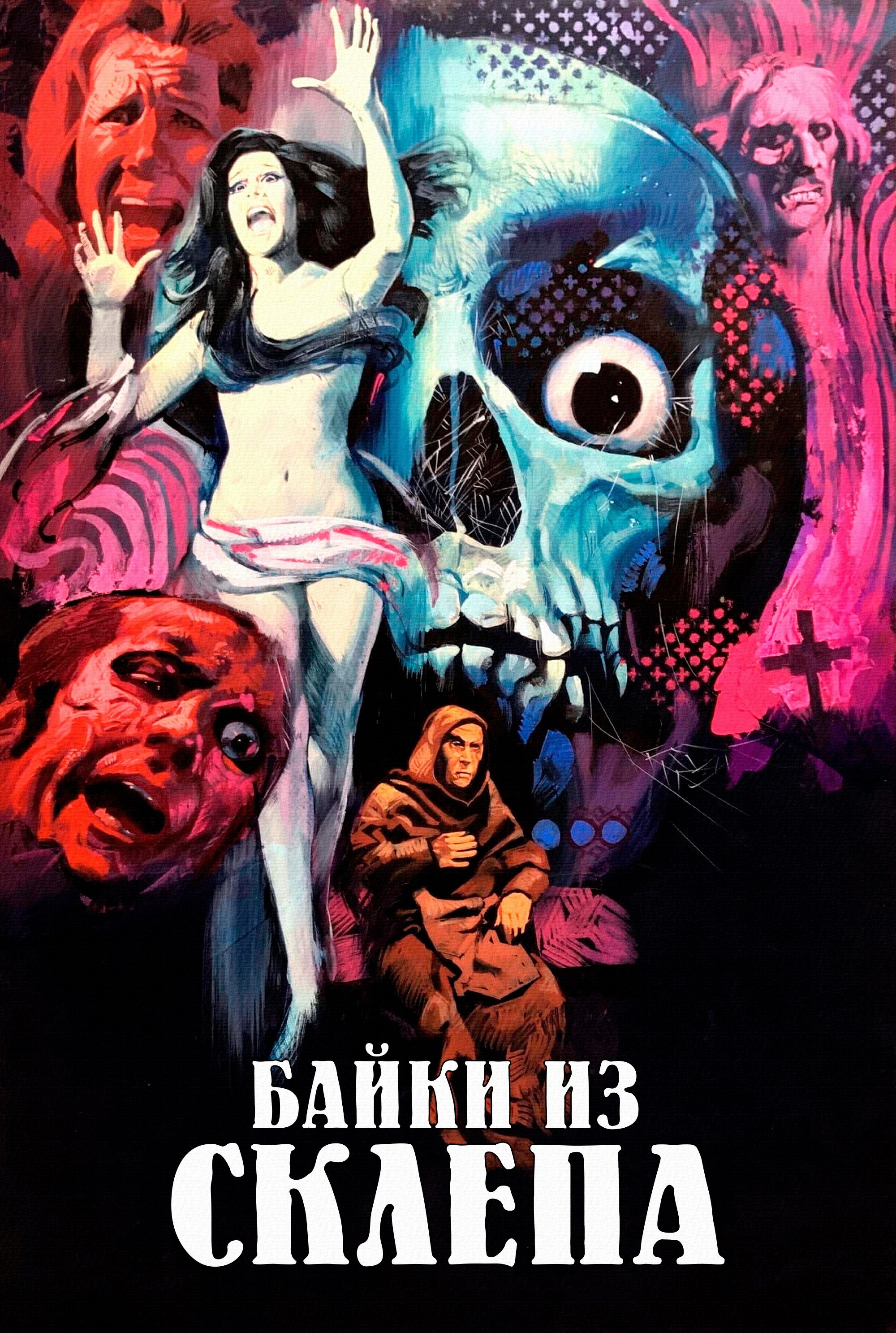
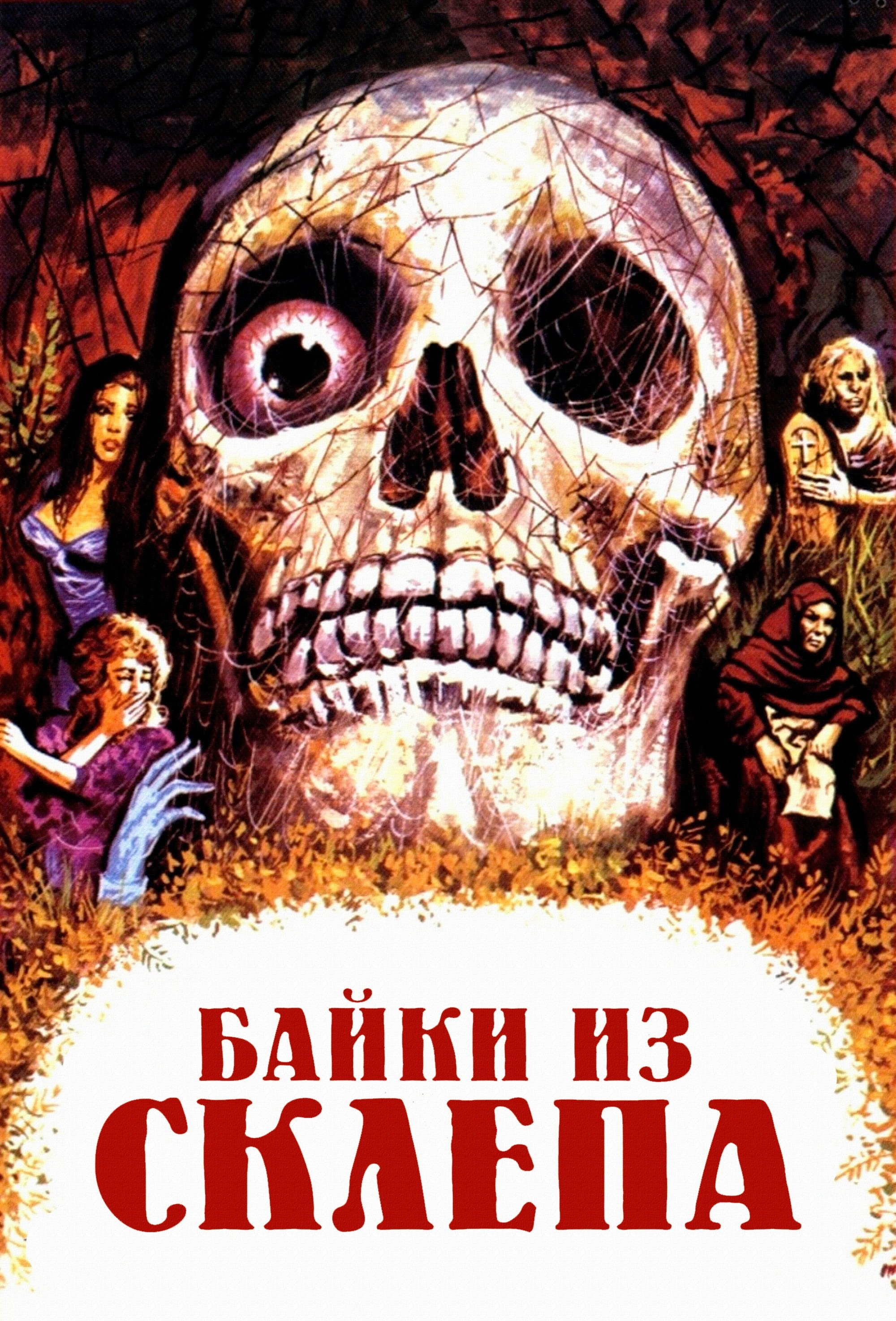
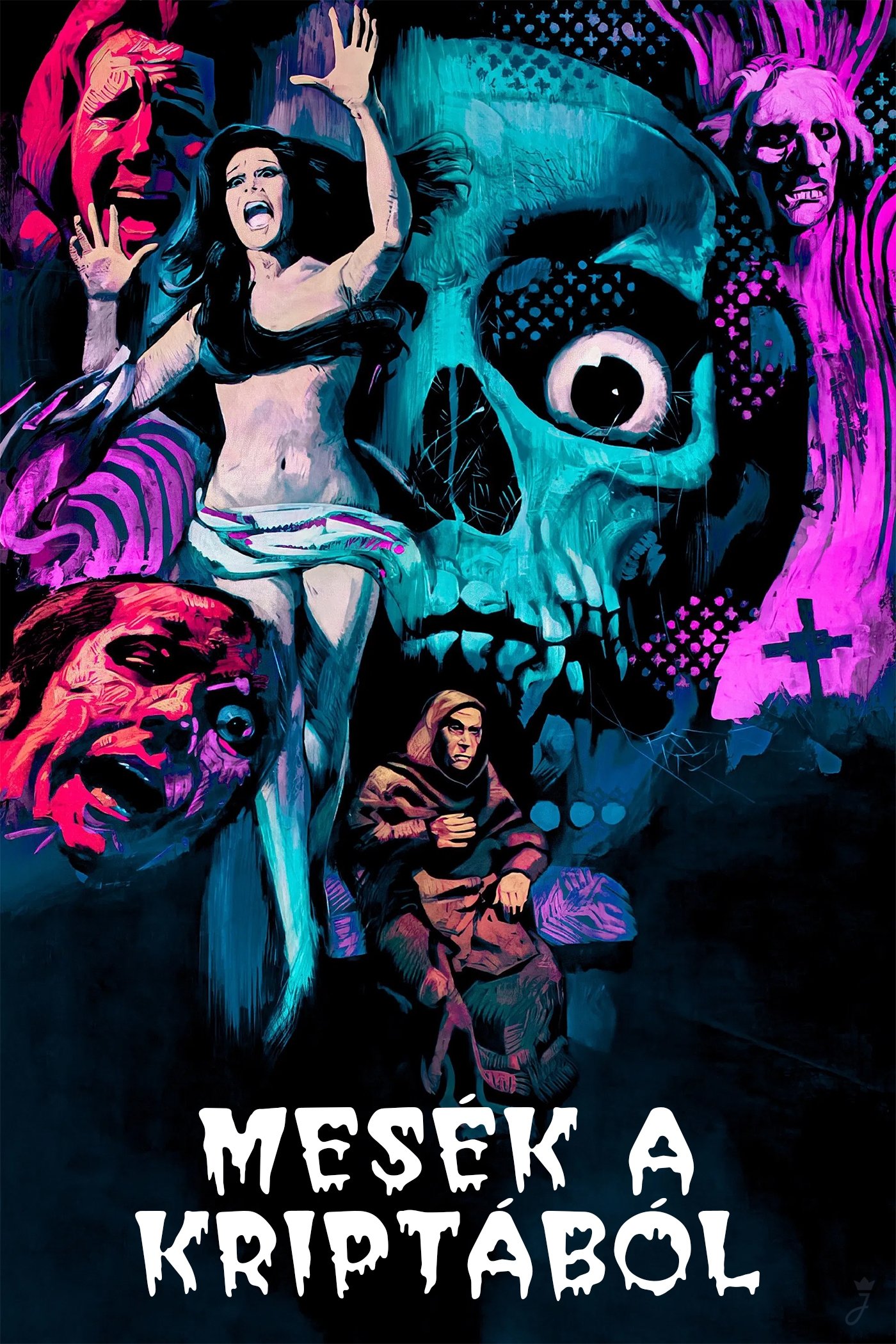
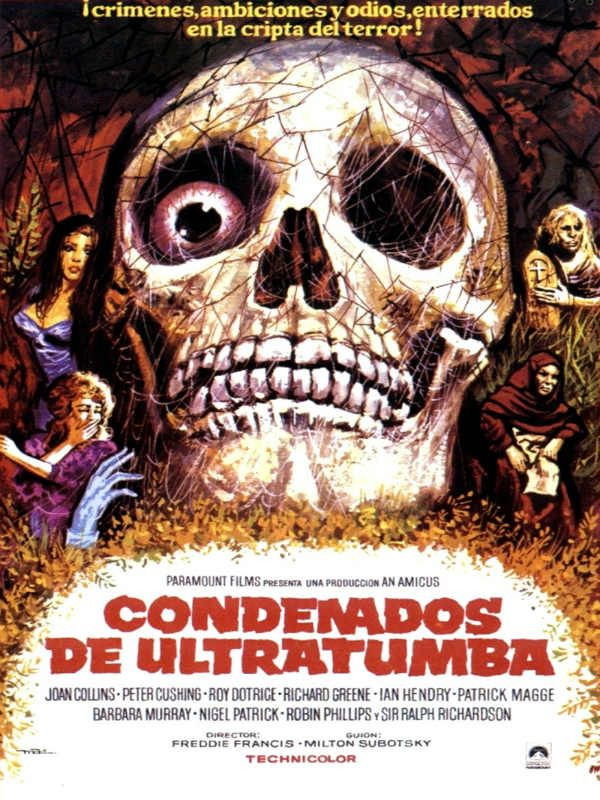
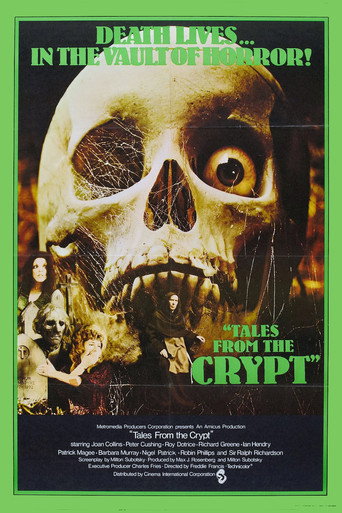
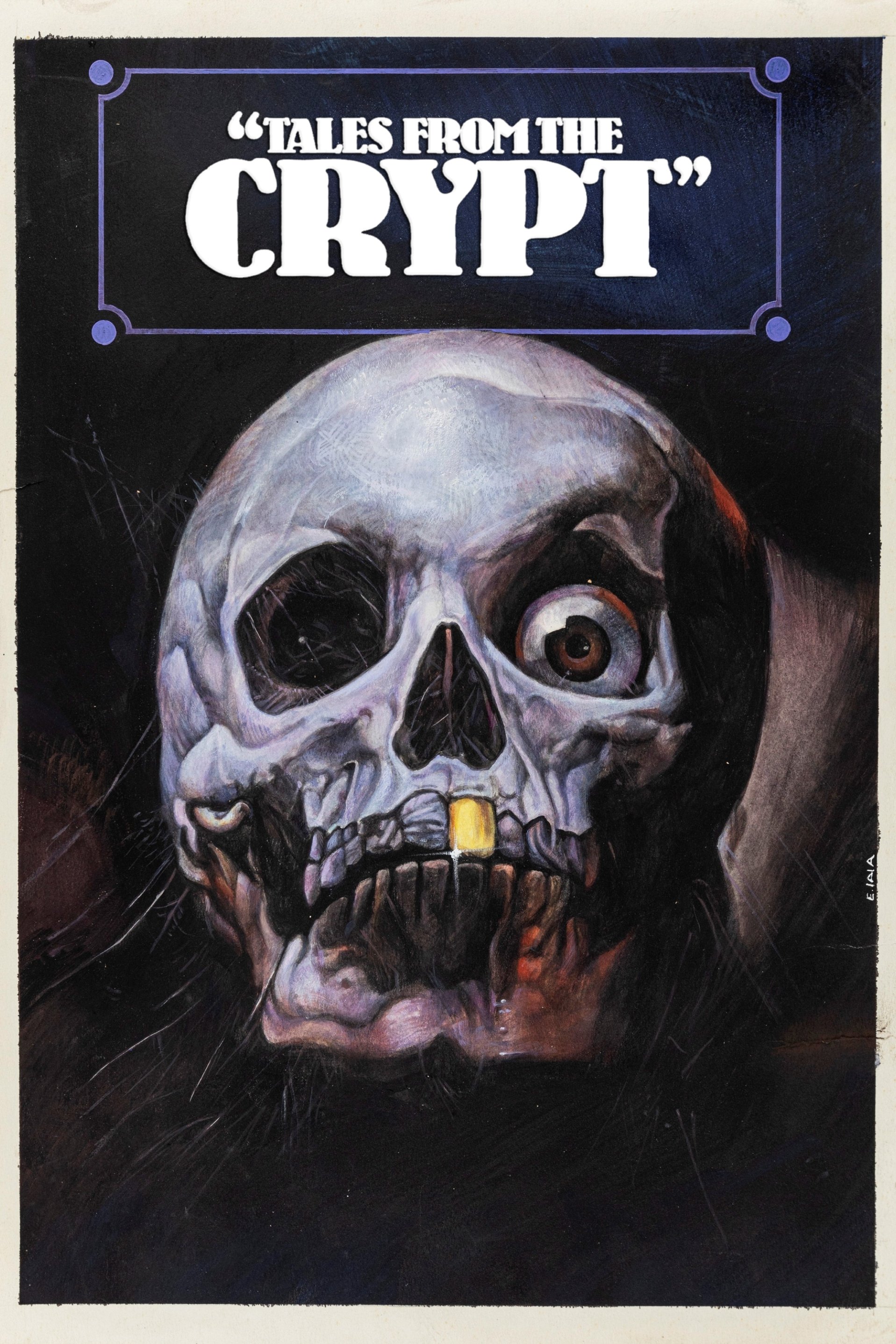
Tales from the Crypt (1972) poster
Director
Plot

Five people find themselves in a tomb. The Crypt keeper explains why they are there through a series of frightening stories. Based on the classic comic book.

Alternative Titles
Tales From The Crypt The Movie (Australia) Разкази от криптата (Bulgaria) — Bulgarian Contos do Além (Brazil) — Portuguese Tales from the Crypt 1 (Canada) 慑魄惊魂 (China) — Chinese Geschichten aus der Gruft (Germany) — German Skærsild (Denmark) — Danish Condenados de Ultratumba (Spain)
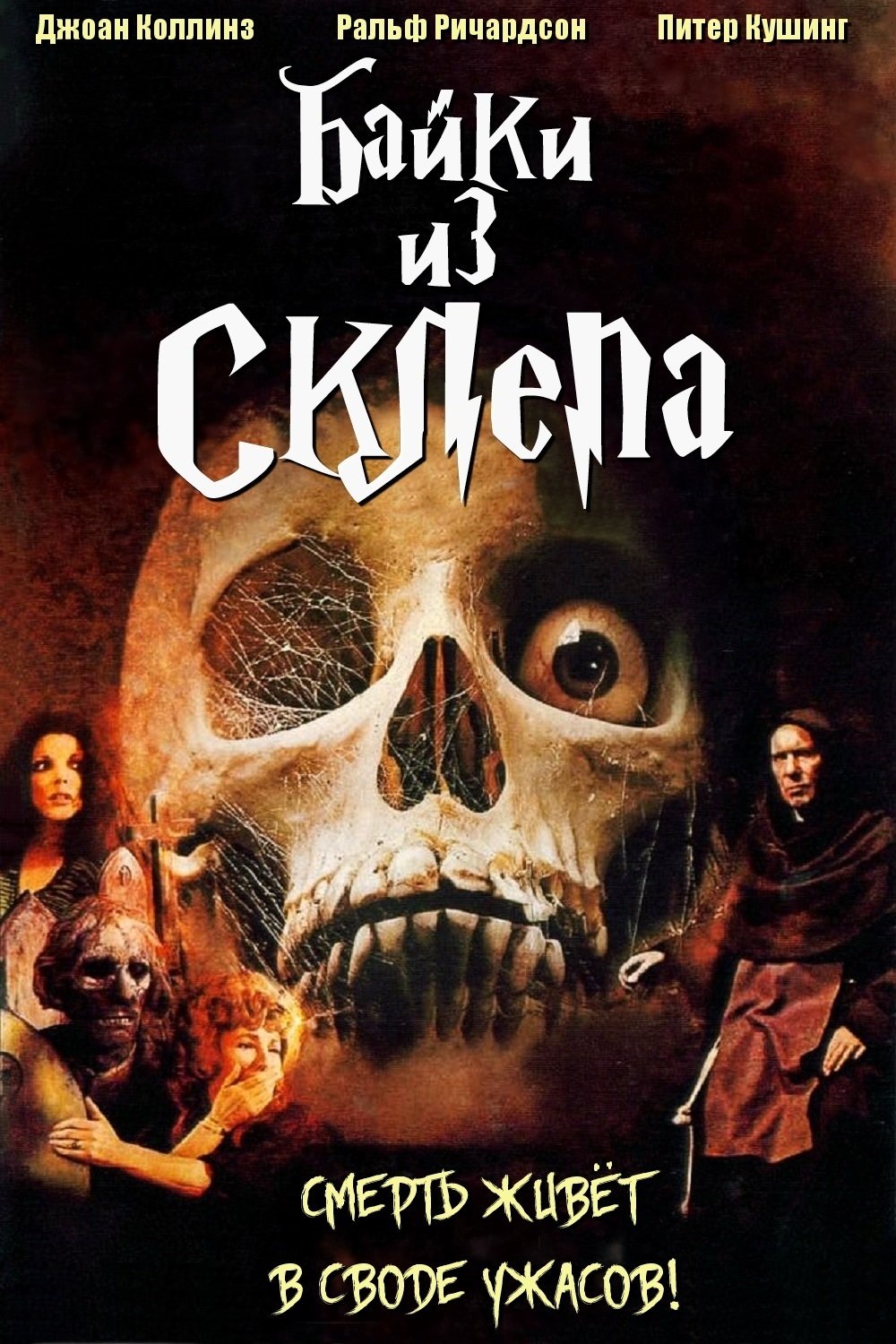
Show all 23 alternative titles Contes d'outre-tombe (France) Histoires d'outre-tombe (France) Les Horreurs de la Crypte (France) 懾魄驚魂 (Hong Kong SAR China) — Chinese Priče iz kripte (Croatia) — Croatian Mesék a kriptából (Hungary) — Hungarian Racconti dalla tomba (Italy) — Italian 魔界からの招待状 (Japan) 크리프트 스토리 (South Korea) — Korean Condenados de Ultratumba (Mexico) — Spanish Opowieści z krypty (Poland) — Polish Tales from the Crypt: A Cripta do Terror (Portugal) — Portuguese Povestiri din criptă (Romania) — Romanian Байки из склепа (Russia) — Russian Från andra sidan graven (Sweden) — Swedish

Trailers & Videos

1 video

Film Guide & Analysis

Freddie Francis’s Amicus horror anthology: EC Comics, the Crypt Keeper, Peter Cushing, five stories, Highgate Cemetery, British censorship and critical reception.

Freddie Francis’s Tales from the Crypt (1972) is a British-American anthology horror film in which five visitors become separated from a tour of an ancient cemetery and encounter a mysterious keeper who reveals the consequences of their actions. The five stories move from a Christmas Eve murder to a supernatural punishment for cruelty, an adulterer’s nightmare, a fatal series of wishes and a rebellion in a home for blind men. Ralph Richardson plays the Crypt Keeper with the composed authority of a judge, linking otherwise separate narratives through a shared interest in guilt and retribution. The characters are threatened as much by their own conduct as by the apparitions and violence they encounter.

Produced by Milton Subotsky and Max J. Rosenberg for Amicus, with American financing from Metromedia, the film adapts horror comics published by EC in the 1950s. Its source material extends beyond the magazine named in the title to The Vault of Horror and The Haunt of Fear. Francis and screenwriter Subotsky translate the comics’ brief, punitive stories into a feature with unusually strong performers, concentrated set pieces and vivid colour photography by Norman Warwick. Its reception and later influence are connected with the popularity of British portmanteau horror and the return of EC’s grimly ironic storytelling to the screen.

EC Comics and the Amicus Anthology Tradition

EC’s horror comics, published under William M. Gaines and associated with editor and writer Al Feldstein, specialized in compressed stories whose apparent villains often received punishments shaped by their own misconduct. Tales from the Crypt, The Vault of Horror and The Haunt of Fear shared that appetite for ironic endings, although their contents and individual artists differed. Public controversy over violent comics in the 1950s contributed to the introduction of the Comics Code and the disappearance of EC’s horror titles from newsstands.

Amicus Productions had already made anthology horror a regular part of its output. Beginning with Dr. Terror’s House of Horrors (1965), the company assembled separate tales around a central device and attracted established performers to parts that could be completed during relatively short shooting periods. The format had an older British precedent in Dead of Night (1945), but Amicus developed its own commercial identity through contemporary interiors, sudden violence and unexpected reversals.

Subotsky acquired screen rights to EC material and assembled the five episodes for the 1972 production. The film’s title can obscure the precise relationship to the original comic magazines: only Reflection of Death and Blind Alleys appeared in Tales from the Crypt itself. And All Through the House came from The Vault of Horror, while Poetic Justice and Wish You Were Here came from The Haunt of Fear. It belongs to a cycle of Amicus films rather than serving as a direct precursor episode of the much later HBO television series.

Screenplay, Shepperton Production and Highgate Cemetery

Milton Subotsky wrote the screenplay, while Freddie Francis directed the film after earlier collaborations with Amicus. The American Film Institute records filming from early September to mid-October 1971 at Shepperton Studios, with Max J. Rosenberg and Subotsky as producers and Charles Fries as executive producer. Norman Warwick was cinematographer, Tony Curtis art director and Teddy Darvas editor. Metromedia Producers Corporation participated in the production and Cinerama handled American distribution.

The framing scenes give the production a location of particular importance. At London’s Highgate Cemetery, the opening camera movement follows gravestones and the approach to the Circle of Lebanon, whose sunken family vaults surround an old cedar. BFI location research identifies the cemetery entrance on Swain’s Lane and the passage to those vaults. The real funerary architecture lends physical credibility to the fictional chamber in which the Crypt Keeper addresses the visitors.

The structure allows the individual episodes to vary in tone without changing the film’s fundamental terms. The first moves between Christmas decorations and murder, another uses a disorienting change in point of view, and the last transforms a place of institutional care into an improvised death trap. Francis’s experience as a cinematographer informs his attention to objects and the arrangement of characters within enclosed spaces. Its continuity comes instead from Richardson’s judgement and the growing recognition that the five visitors are connected by their moral circumstances.
The Crypt Keeper and the Logic of Retribution

The film begins as a tour of a cemetery whose visitors unexpectedly lose their way. Joanne Clayton, Carl Maitland, James Elliott, Ralph Jason and Major William Rogers are led into a chamber where the figure played by Richardson shows them the fates they have made possible. The visions are presented as episodes complete in themselves, but the concluding scenes change their status: the visitors are not simply receiving warnings that could be ignored or accepted. The chamber becomes a place of final judgment, turning the anthology’s repeated emphasis on punishment into the revelation that joins its five narratives.
Richardson’s Crypt Keeper is markedly different from the wisecracking, skeletal puppet later associated with the television franchise. He appears in dark clothing, speaking with solemnity and controlled disdain. The performance does not require him to frighten the visitors with physical aggression. Instead, his position in the chamber gives him knowledge that they lack and the authority to reveal it. Their individual stories unfold under that supervision, so even the more realistic incidents carry the implication of a larger order in which wrongdoing cannot remain hidden indefinitely.

The moral design is not consistently reassuring. An apparent punishment may fall on a guilty person, but the process can also impose suffering on bystanders or involve cruelty greater than the initial act. The comics’ appetite for grotesque proportionality gives Francis and Subotsky material that is sometimes comic and sometimes genuinely bleak. The frame asks viewers to take pleasure in a carefully arranged reversal while also recognizing the ugliness of the conduct that makes it possible.

And All Through the House and Reflection of Death

And All Through the House places Joanne Clayton, played by Joan Collins, inside a comfortable Christmas household. After murdering her husband, she discovers that an escaped killer dressed as Santa Claus is outside. Calling the police would expose her own crime, so an ordinary possibility of rescue becomes dangerous. The setting’s decorations and the child upstairs give the situation a seasonal intimacy that conflicts with the violence already committed. The suspense depends on Joanne having to guard against two threats at once: the stranger trying to enter and the evidence she has created inside her home.

The child’s trust makes the final development particularly cruel. What would usually be a reassuring seasonal visitor has become a danger, and the mother cannot publicly explain why the door must remain closed. Francis keeps the central predicament intelligible through domestic spaces and the killer’s approach, allowing the audience to anticipate the mistake Joanne fears. The tale’s humour is severe because the character’s practical ingenuity in concealing murder prevents her from using the most direct means of protection.

Reflection of Death follows Carl Maitland, played by Ian Hendry, as he attempts to abandon his wife and children for Susan Blake. A road accident interrupts the plan, and his subsequent experience is structured around an increasingly disturbing uncertainty about his own condition. Francis withholds information from both protagonist and audience, making the journey after the crash less a chase than a process of recognition. The eventual revelation relies on perspective: people encountered along the way react to something Carl cannot perceive about himself. The episode condenses fears of bodily damage and abandonment into a story whose final image rearranges the meaning of everything that preceded it.

Poetic Justice and Peter Cushing’s Performance

Poetic Justice supplies the anthology’s most sustained portrait of a victim before the supernatural punishment begins. Arthur Edward Grimsdyke, played by Peter Cushing, is a gentle widower who befriends children and keeps company with his dogs. His wealthy neighbours Edward Elliott and his son James regard him as undesirable and begin a campaign to drive him out. The harassment escalates through accusations and humiliations until Grimsdyke takes his own life. The story initially keeps its horror within human conduct: deliberate malice, carried out under cover of neighbourhood respectability, is enough to destroy someone who has harmed nobody.

Cushing brings exceptional tenderness to Grimsdyke, whose grief and social isolation are more important than any initial appearance of the supernatural. His wife Helen had died shortly before the film was made, a biographical circumstance discussed in subsequent accounts of his performance. The resemblance between the actor’s bereavement and the character’s mourning is significant, though it should not be used as an unsupported explanation for every acting choice. When he returns from the grave, the ensuing violence also exposes the tragic cost of the revenge pattern.

The macabre Valentine’s Day conclusion transforms the sentimental exchange of cards into a grotesque accounting of guilt. A heart becomes both an anatomical object and an instrument of poetic punishment, an image closely aligned with EC’s taste for literalizing familiar expressions. The closing shock is inseparable from the earlier scenes of bullying and loneliness. It demonstrates that the anthology is capable of grief as well as gleeful retaliation, while the perpetrators’ ordinary social position makes their cruelty recognizable outside the fantastic circumstances of the story.

Wish You Were Here and Blind Alleys

Wish You Were Here adapts the structure of a dangerous wish, openly acknowledging W. W. Jacobs’s The Monkey’s Paw. Ralph Jason, played by Richard Greene, faces financial ruin when his wife Enid, played by Barbara Murray, discovers that a statue promises three wishes. Her first request for money is answered through her husband’s death and an insurance payment. Trying to undo that consequence only introduces another complication: Ralph died from a heart attack before the accident that was assumed to have killed him. The episode proceeds through changes in language, exposing how a desperately worded command can have results that satisfy its exact terms while defeating its purpose.

The final wish restores Ralph to a state of consciousness that cannot be ended, though his body has already undergone embalming. The horror is no longer simply the return of a corpse. It becomes the inability to halt suffering after the terms of a supernatural bargain have been made irreversible. Roy Dotrice’s solicitor provides the rational warning that Enid does not follow in time. Francis gives a familiar fable a particularly bodily conclusion.

Blind Alleys shifts the setting to a home for blind men run by Major William Rogers, played by Nigel Patrick. Rogers deprives the residents of basic comforts and uses the institution for his own convenience. Patrick Magee’s George Carter helps organize their retaliation, culminating in a passage lined with dangerous blades and a dog waiting at the other end. The punishment forces Rogers to navigate a world suddenly made hostile by the people he has mistreated. Its effect derives from a reversal of power: those previously denied control over their surroundings determine the conditions of the superintendent’s movement. The final story closes the anthology with an especially direct expression of oppression answered by engineered vengeance.

Colour, Makeup, Editing and Musical Design

Norman Warwick’s Eastmancolor cinematography accommodates distinct visual registers within a single feature. Bright Christmas decorations surround a murder, shadowed roads shape a nocturnal revelation, and the cemetery frame introduces deeper Gothic textures. The individual tales frequently depend on the position of the camera relative to information that the characters cannot share. Reflection of Death is especially concerned with perspective and restricted knowledge, while Blind Alleys makes the dimensions of a constructed obstacle essential to understanding the danger.

Roy Ashton received the chief makeup credit. The film’s transformations and injuries are concentrated around a few decisive revelations, including Grimsdyke’s return and the bodily consequences of the wish made for Ralph Jason. Effects are often prepared through dialogue and reaction before their physical result becomes visible. This method allows the short stories to hold attention across shifts of location and cast. It also distinguishes the film from later versions of the property in which the host’s animated grotesquerie would be one of the most prominent recurring visual attractions. Here the major makeup shocks belong principally to the individual characters and their punishments.

Douglas Gamley composed and conducted the score, and the soundtrack also uses Bach’s Toccata and Fugue in D Minor, performed by Nicholas Kynaston according to production credits. Teddy Darvas edited the five episodes and their frame into one feature. The music and cutting have to make the narrative changes legible without suggesting that all five stories share a continuous time or location. Each new tale can change its pace, but the film preserves a rhythm of apparent security, mounting danger and irreversible recognition.

Release, Censorship, Critical Reception and Legacy

The American Film Institute documents a Los Angeles premiere on 14 March 1972 and an American release during March through Cinerama. The picture was rated PG in the United States. Its British theatrical submission was examined on 5 April 1972, when the British Board of Film Classification required cuts or alterations. The BBFC records later home-entertainment submissions with differing recorded durations, including one lasting approximately ninety-two minutes in 1988 and another lasting about eighty-eight and a half minutes in 2010. These variations cannot be translated directly into a precise list of missing scenes without comparing the versions and accounting for film-to-video presentation differences.

Roger Ebert’s contemporary review, published on 15 March 1972, approached the film through his familiarity with EC Comics. He identified the distinctive retaliatory logic of the source stories and considered the film’s colour design and performances part of its appeal. His account is useful because it shows that the adaptation was evaluated against living memories of the original comics, not merely as another British horror release. Later criticism has drawn particular attention to Cushing’s performance and to the contrast between the lighter, crueler stories and Poetic Justice, whose central suffering is difficult to enjoy as simple retribution.

Amicus followed the film with The Vault of Horror (1973), directed by Roy Ward Baker and likewise drawn from EC material. Tales from the Crypt subsequently supplied a title and recognizable brand for the HBO anthology that began in 1989, though that television series used a distinct Crypt Keeper and its own adaptations. The 1972 feature also belongs to a broader tradition of cinematic comic-book horror later revisited by filmmakers such as George A. Romero in Creepshow (1982). Its achievement is specific to the Amicus cycle: five short tales preserve EC’s punitive endings while drawing additional force from the performances, real London funerary architecture and the tension between tragedy and sardonic amusement.

References

  1. American Film Institute AFI Catalog — Tales from the Crypt (1972)

    Archival production and release history with original cast and crew, EC Comics source credit, 1971 filming schedule, US premiere, distribution and segment synopsis.

  2. British Film Institute Amicus at 60: In Search of Its Crypts, Wax Museums and Other Locations — Adam Scovell

    Research on the Amicus anthology tradition and the original Highgate Cemetery filming sites, including Swain’s Lane and the Circle of Lebanon.

  3. RogerEbert.com / Chicago Sun-Times Tales from the Crypt — Roger Ebert

    Contemporary 15 March 1972 review placing the film in the history of EC horror comics and discussing Ralph Richardson, Amicus and the anthology’s ironic punishments.

  4. British Board of Film Classification Tales from the Crypt

    Primary UK classification record establishing the altered April 1972 cinema submission and later home-video presentations with different running times.

  5. Detailed filmographic research recording the individual story casts, credited technical personnel, magazine origins, narrative content and subsequent circulation.

Connections

Cast

View Full Cast & Crew →

Release & Distribution

Release History (7)

Release DateTerritoryRelease TypeFormatDistributorCertificationNotes
1972-03-09 United States Theatrical — — PG
1972-09-11 Sweden Theatrical — — —
1972-10-01 United Kingdom Theatrical — — —
1973-01-18 Germany Theatrical — — —
1973-03-08 Portugal Theatrical — — M/16 Fantasporto - Festival Internacional de Cinema do Porto
1974-02-13 France Theatrical — — 12
1988-01-31 United Kingdom Physical VHS — 18 VHS
DEATH LIVES in the Vault of Horror!