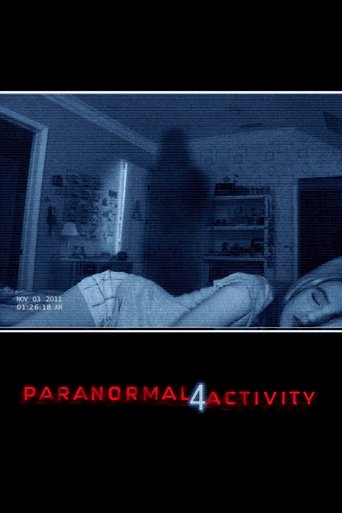
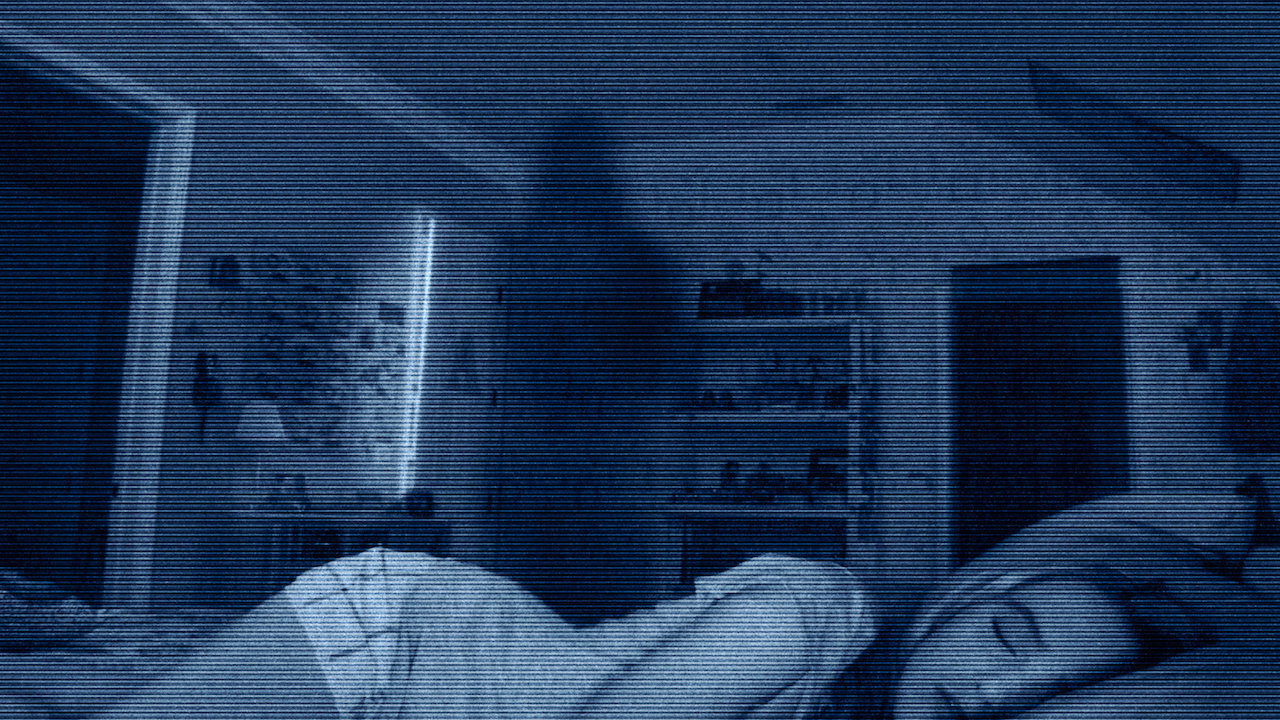
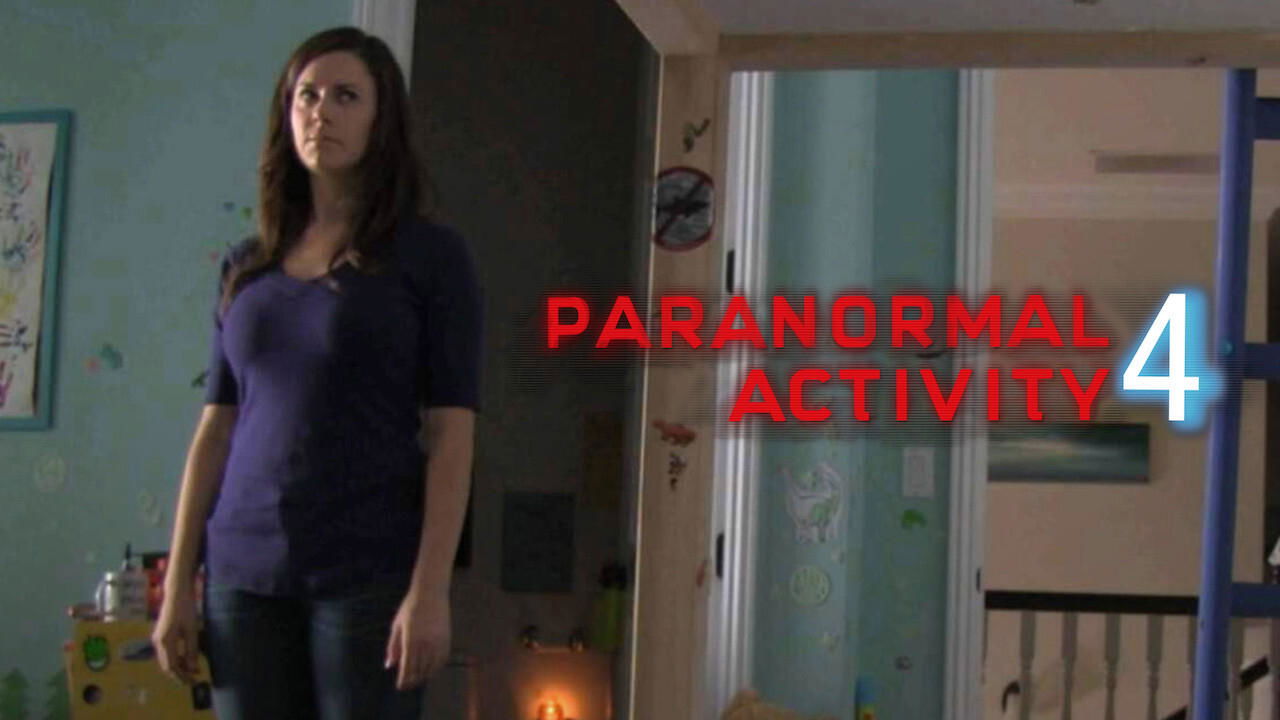
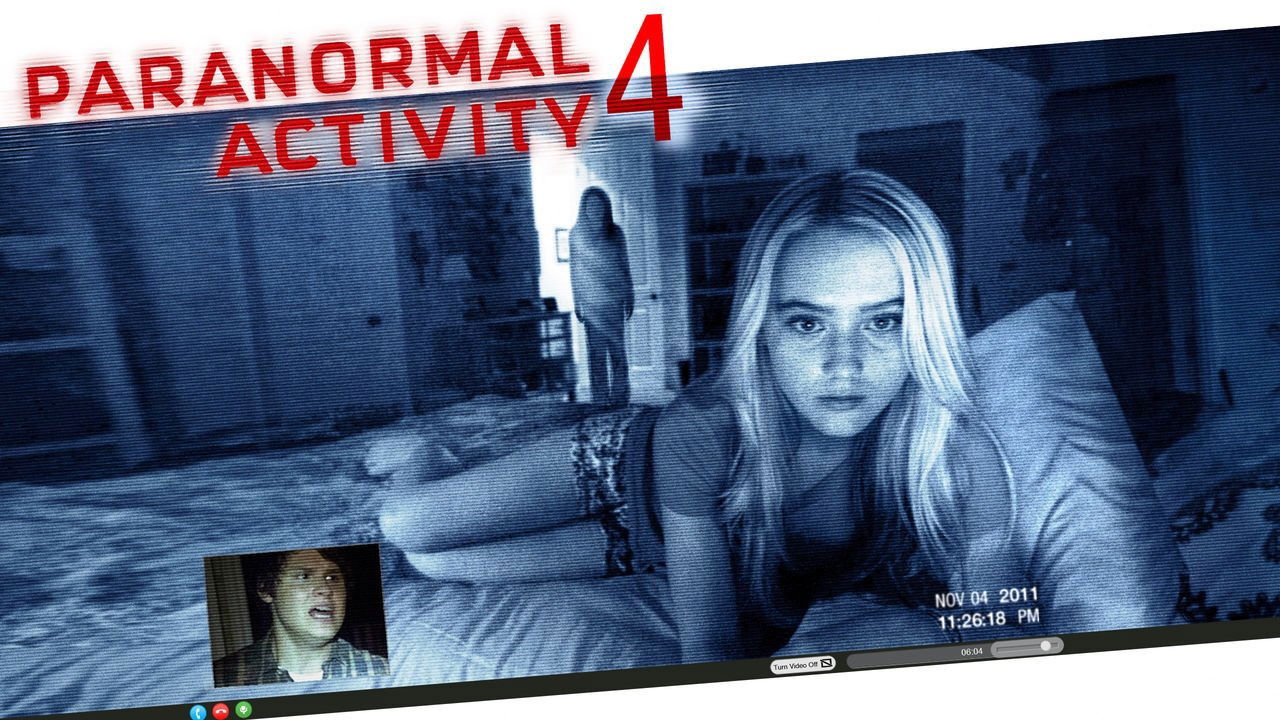
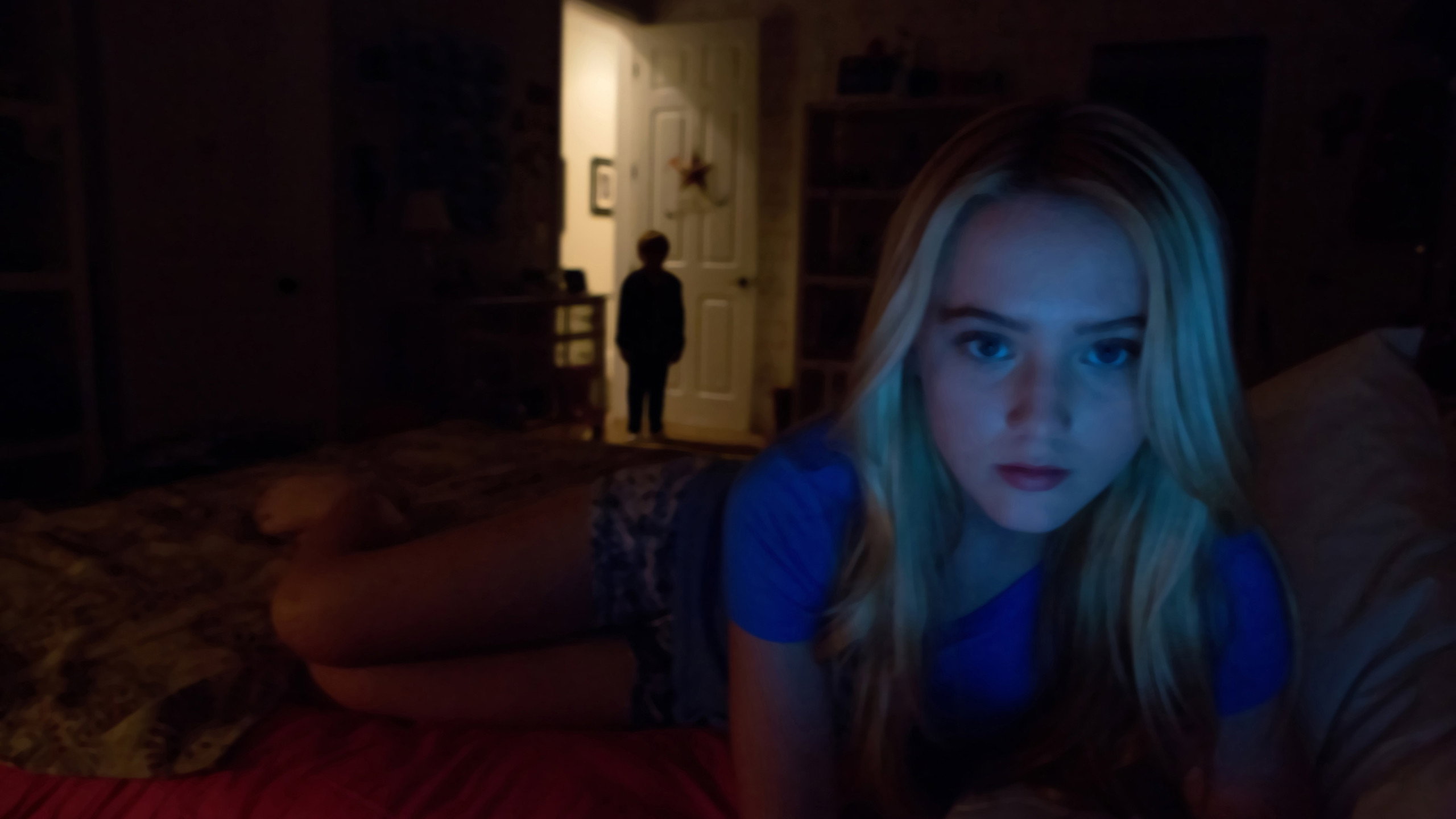
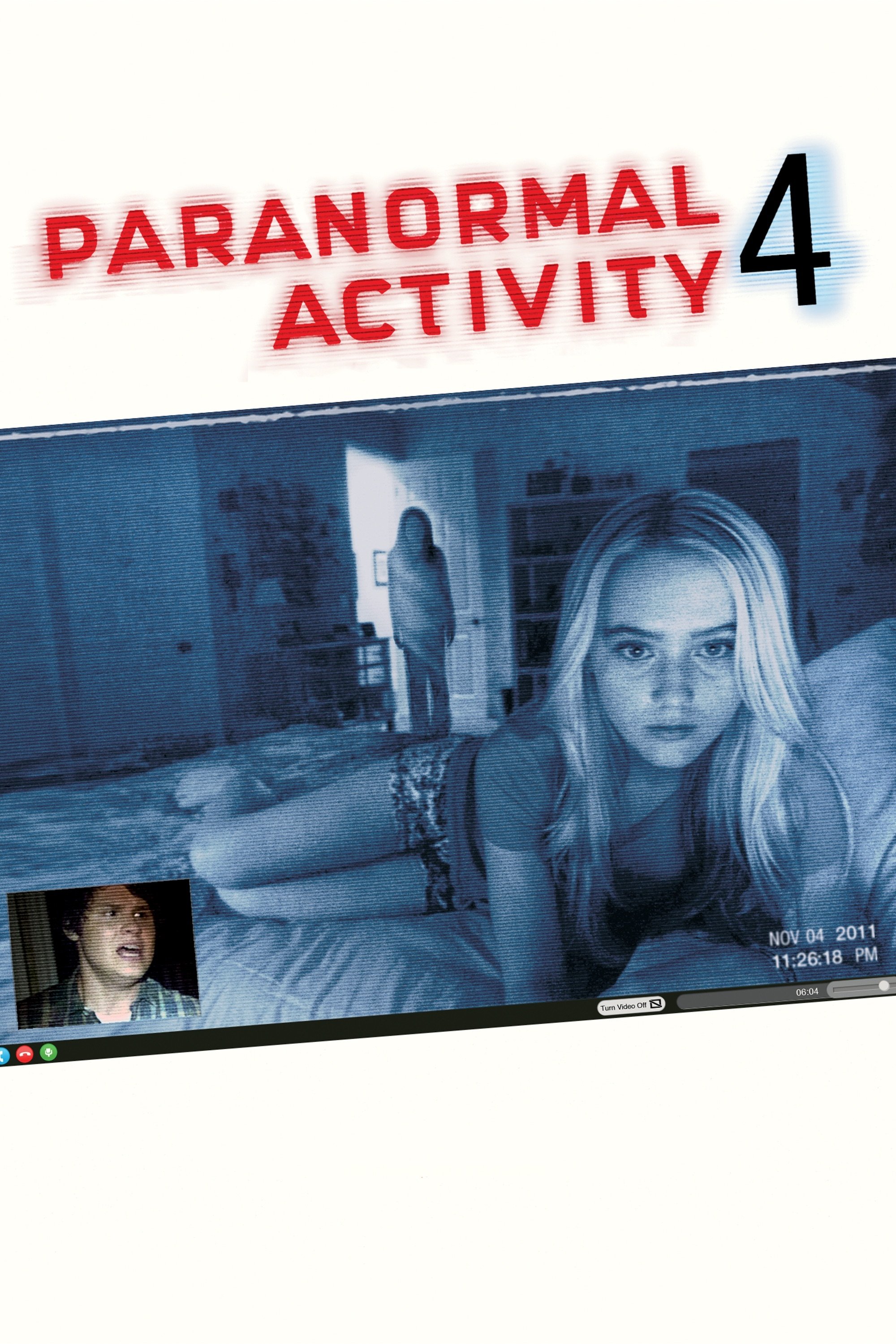
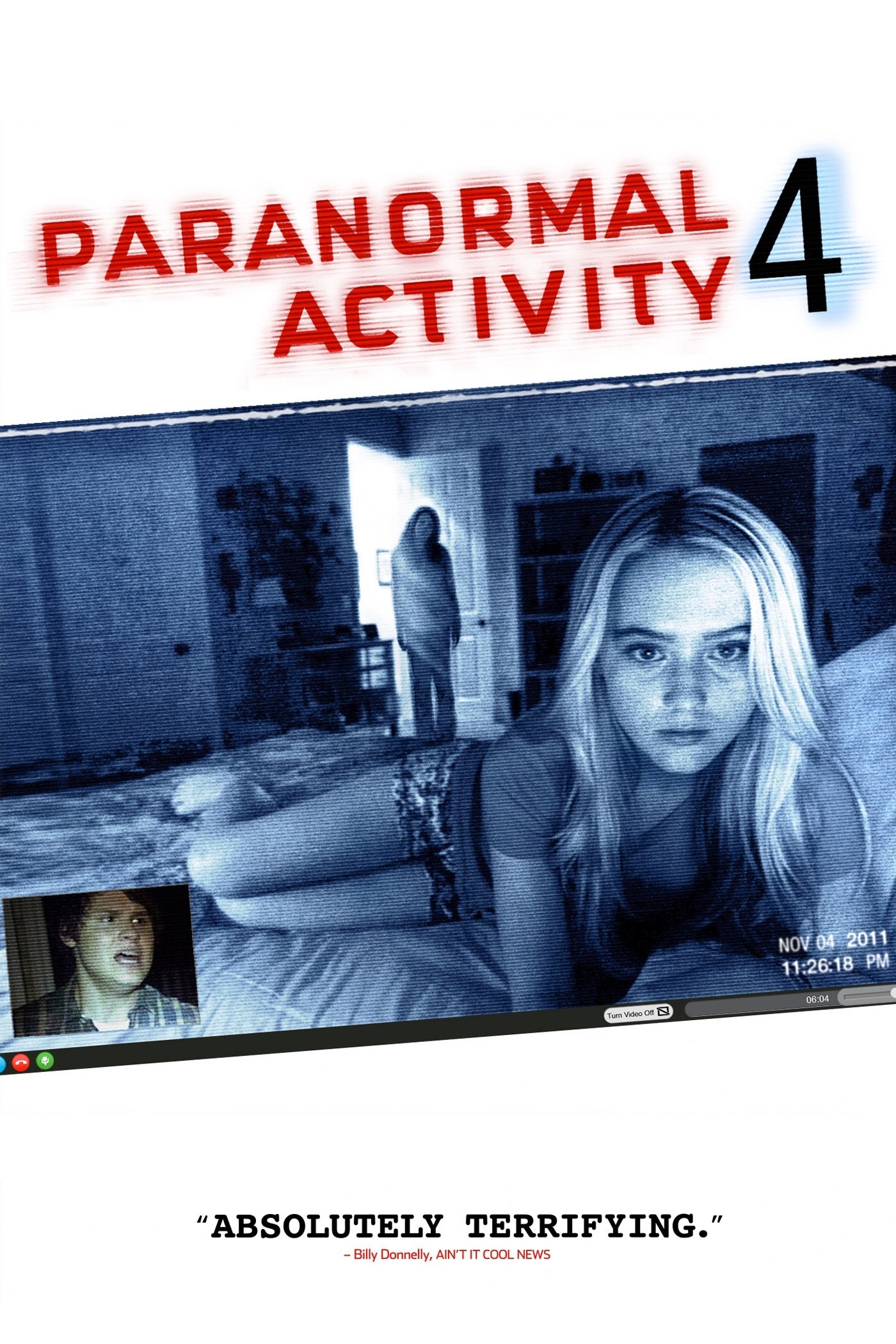
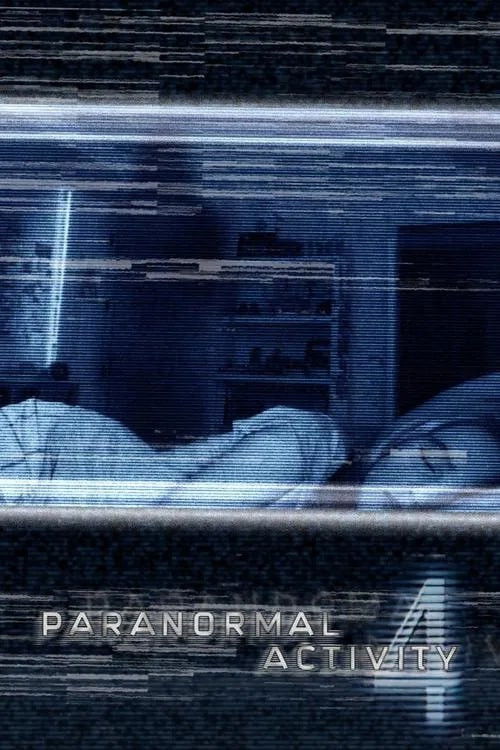
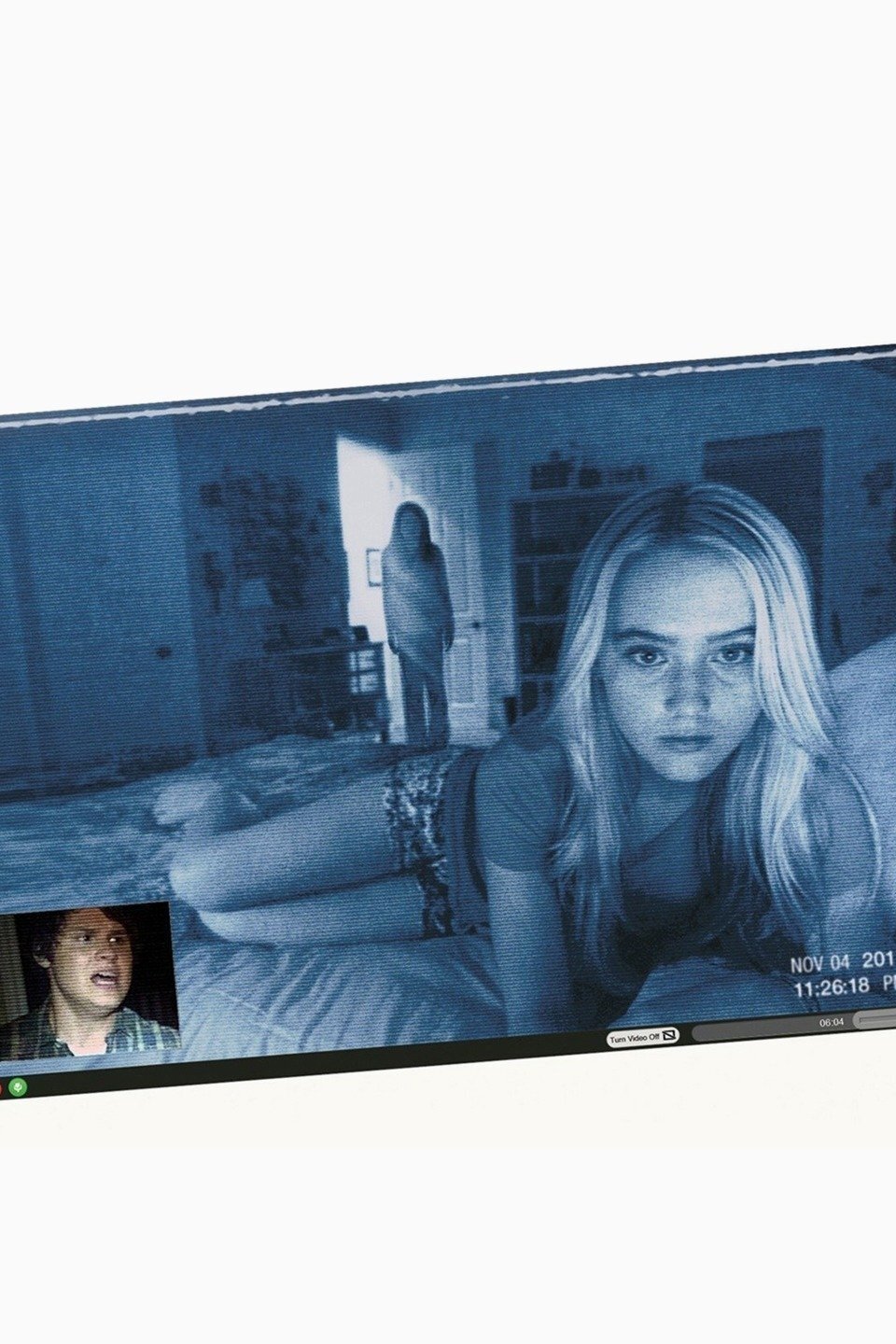
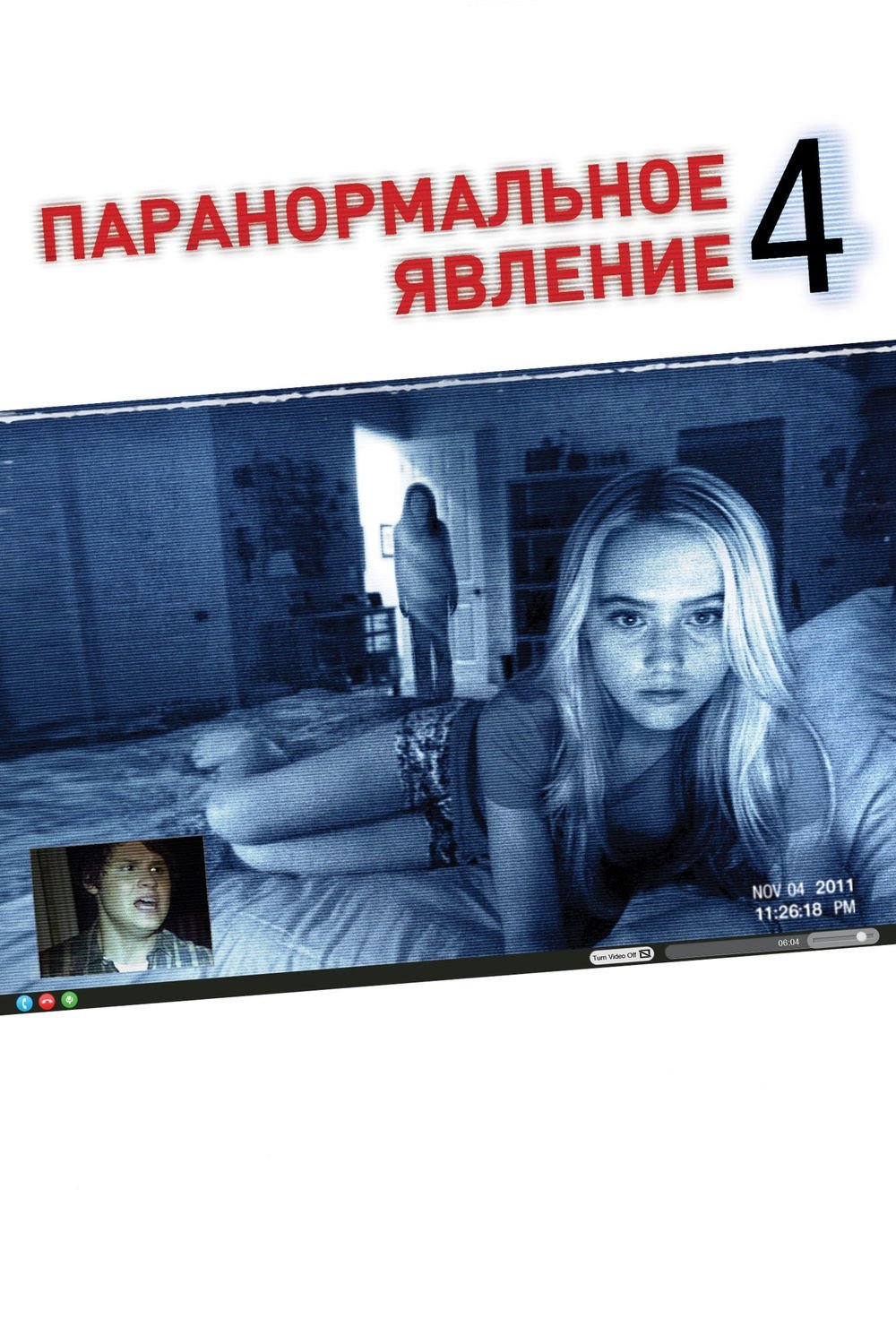
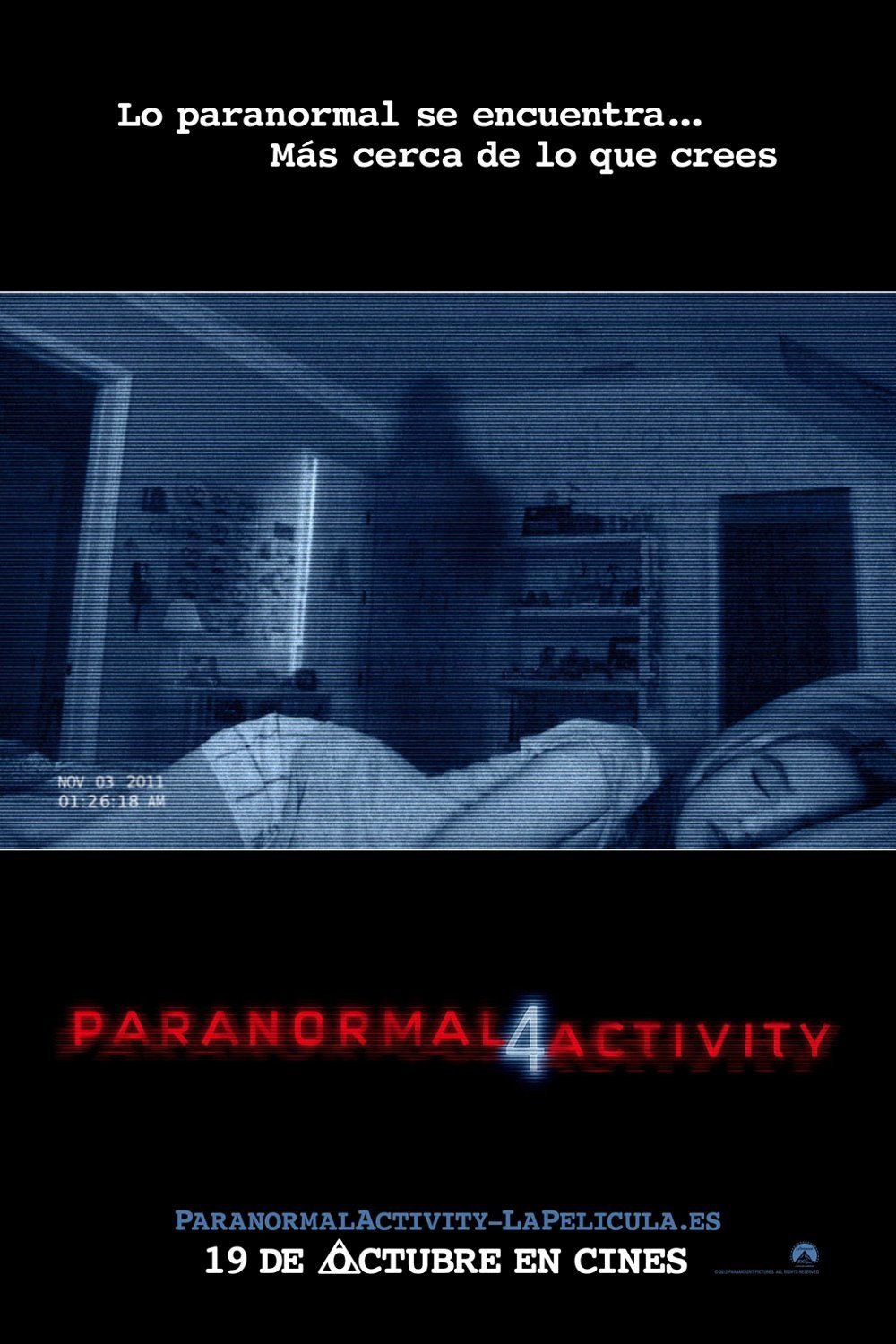
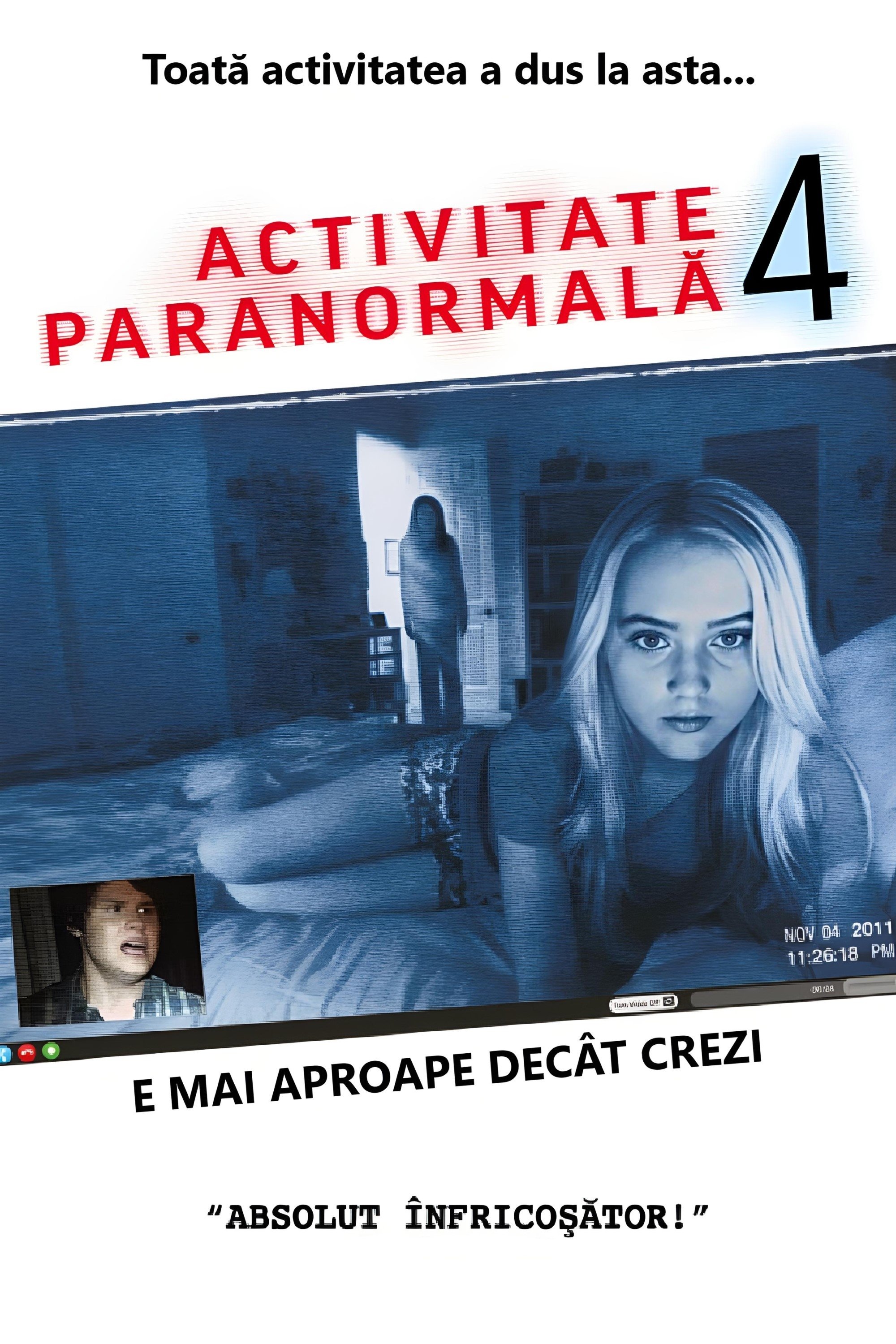
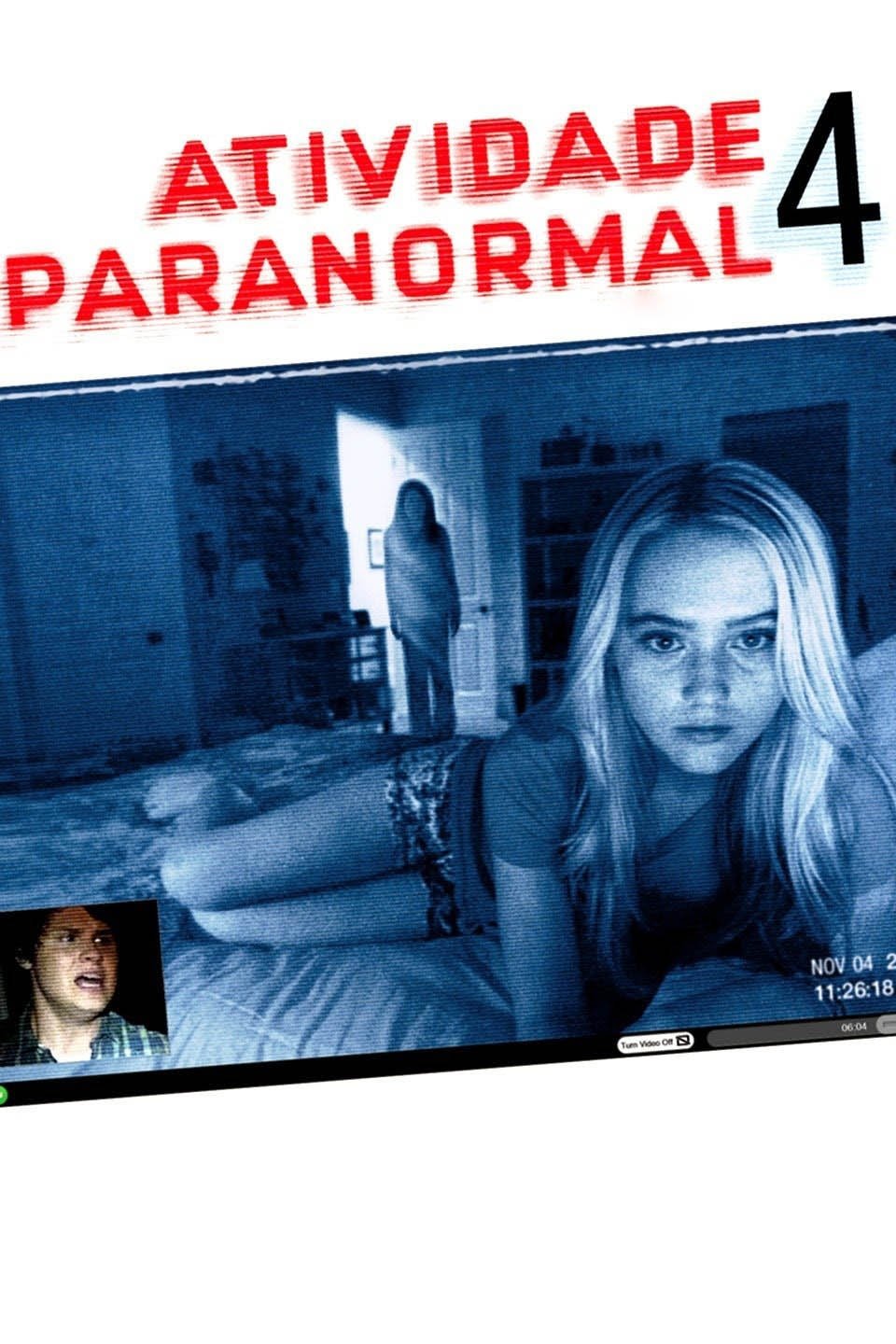
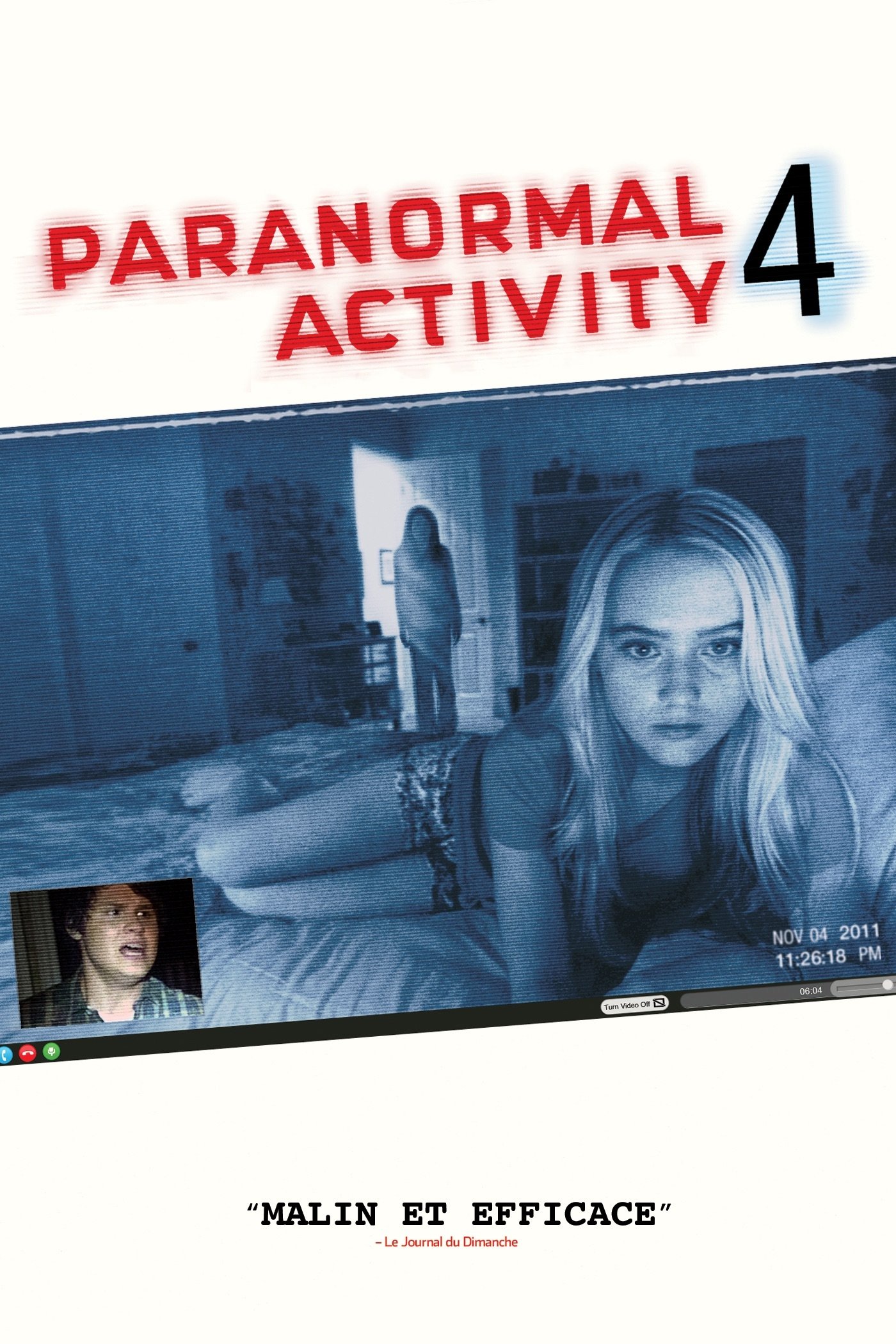
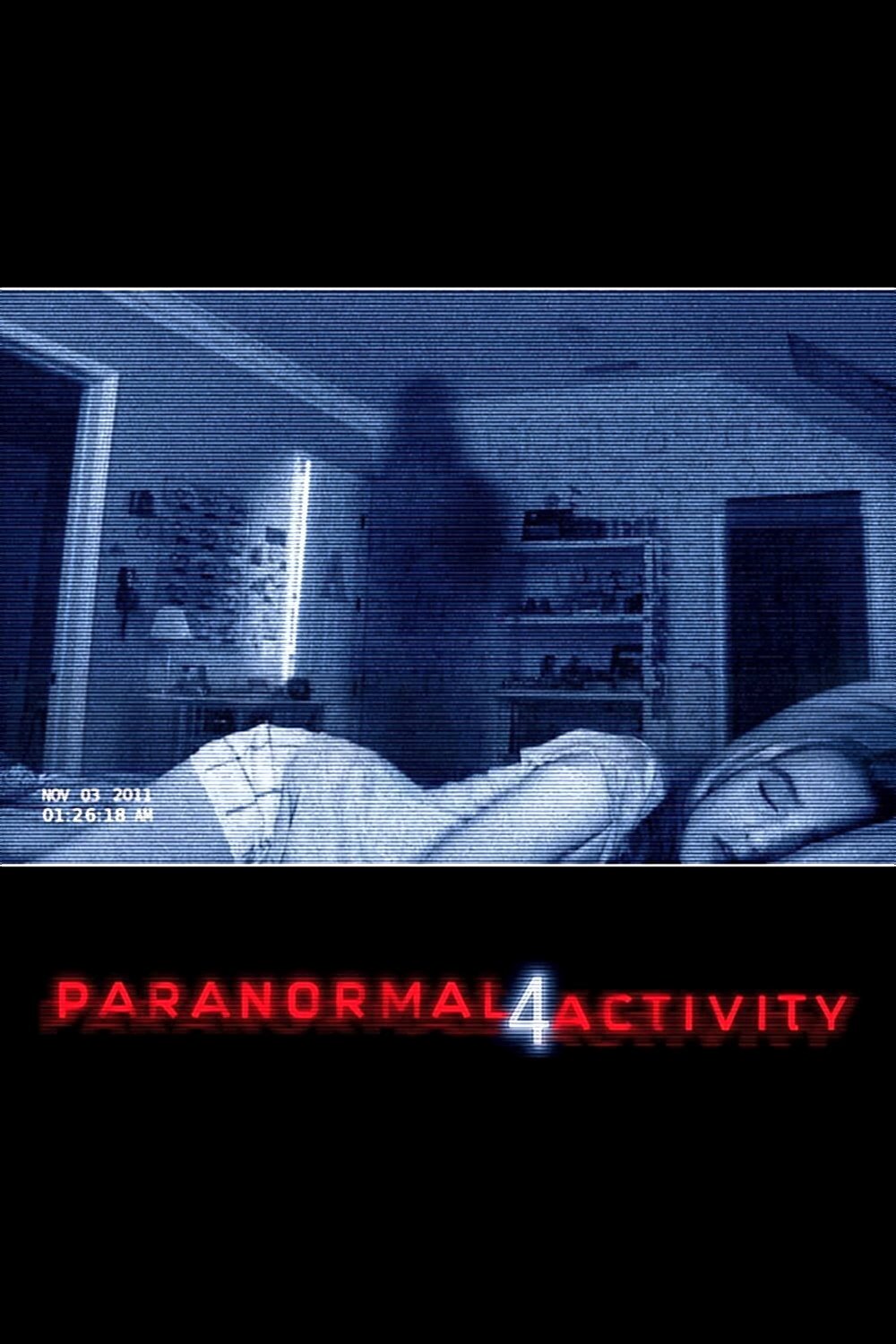
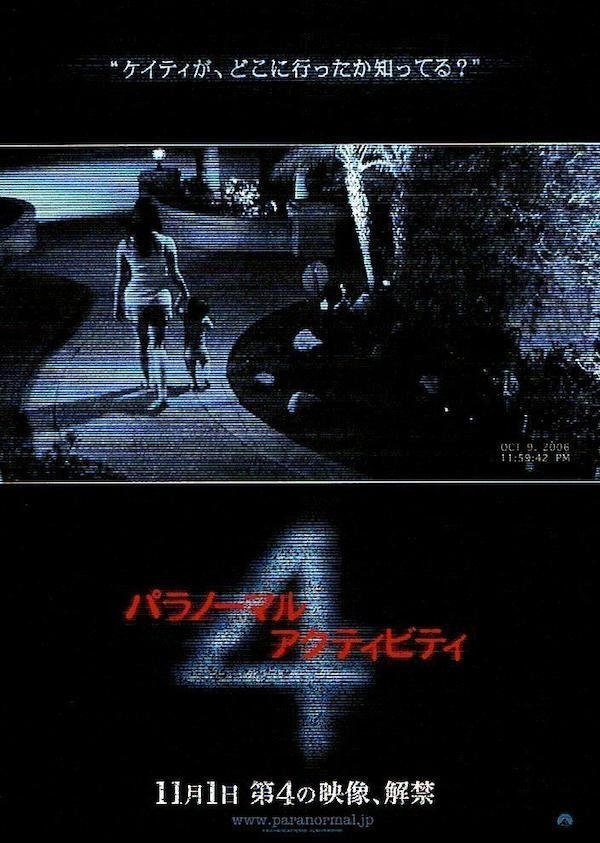
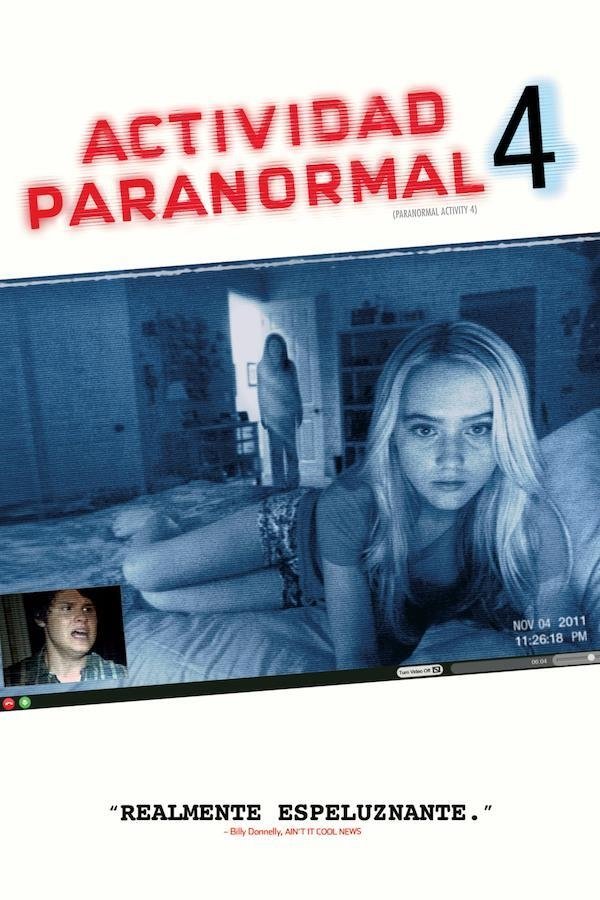
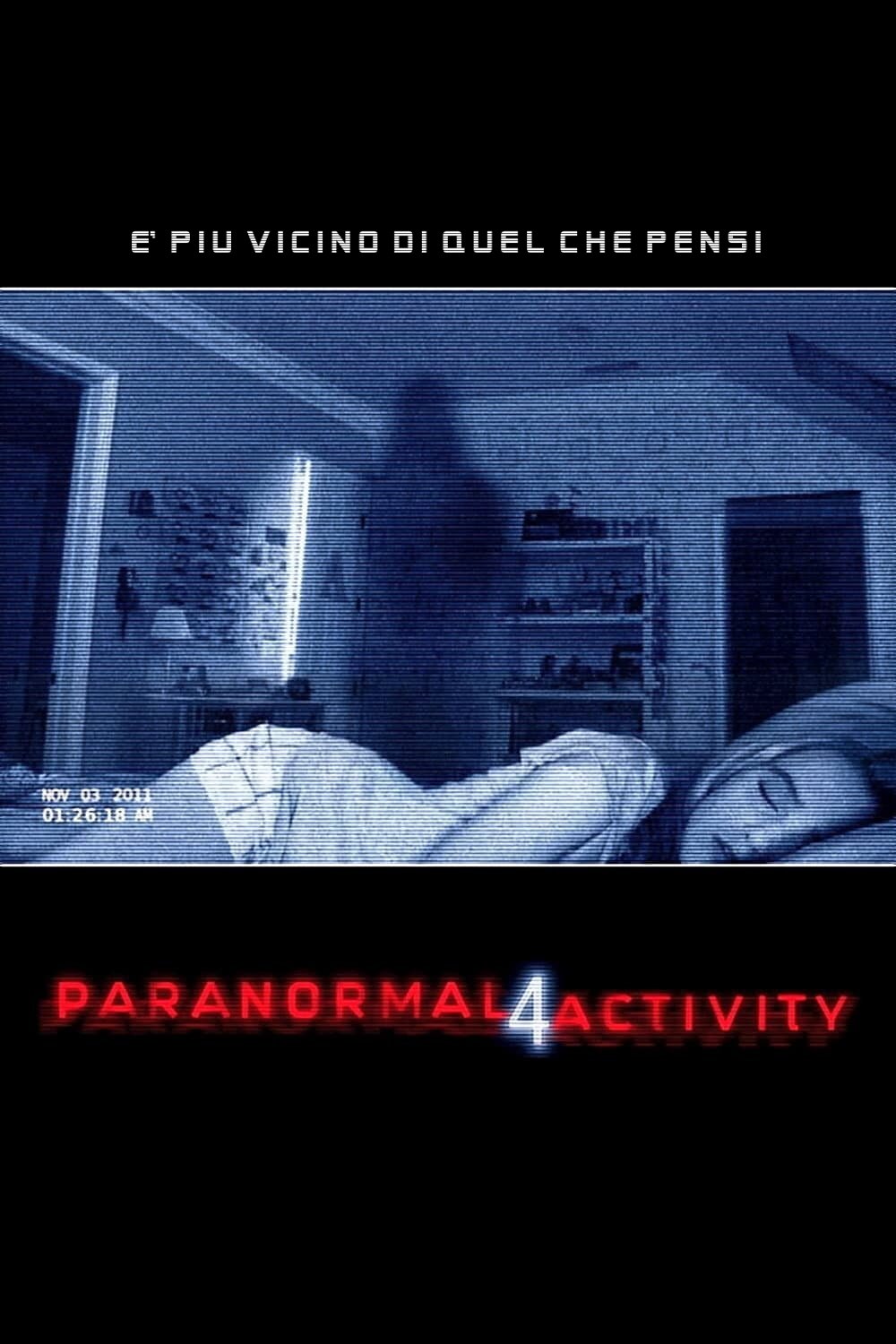
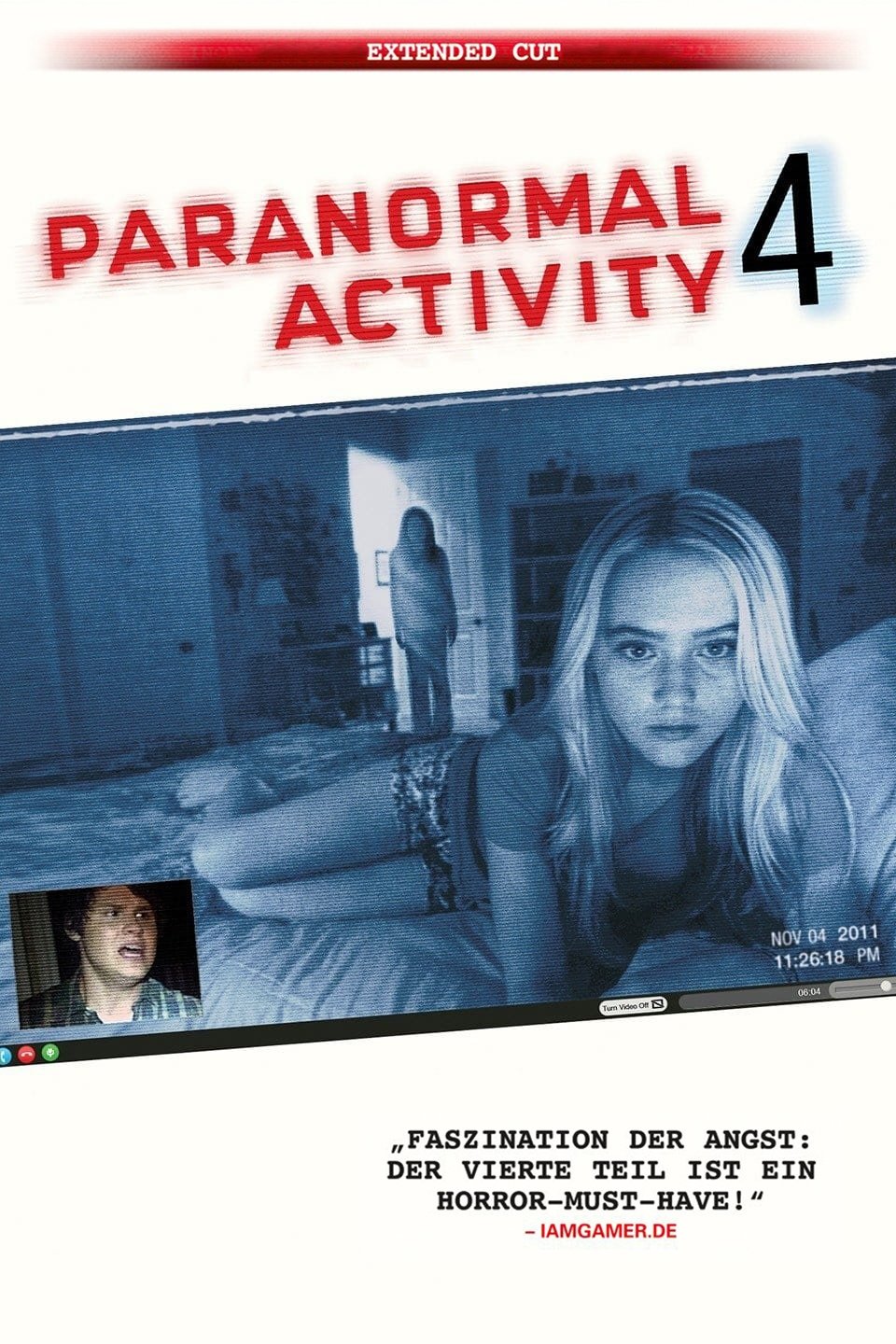
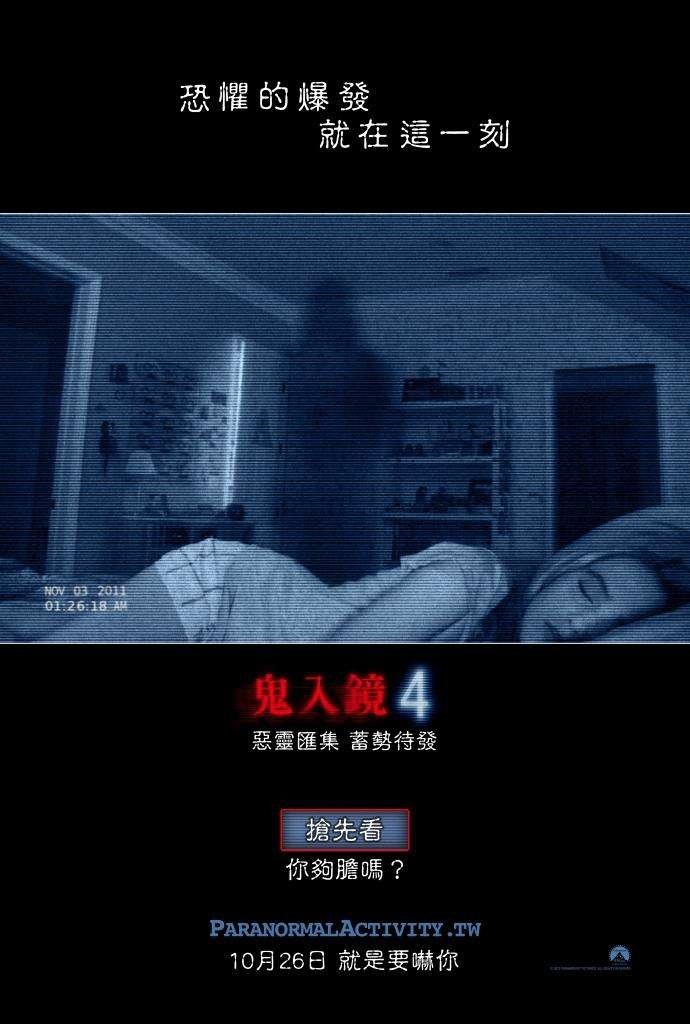
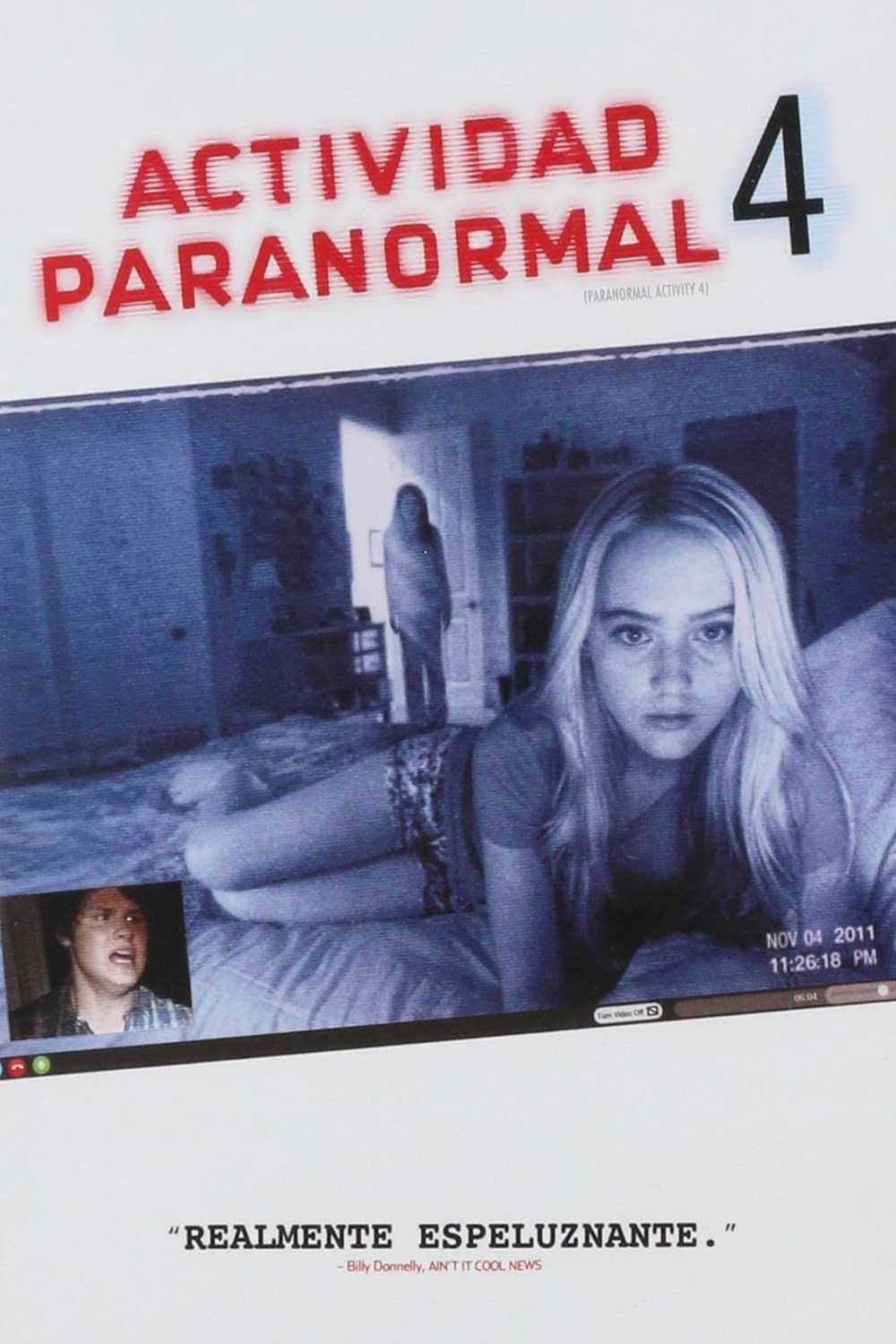
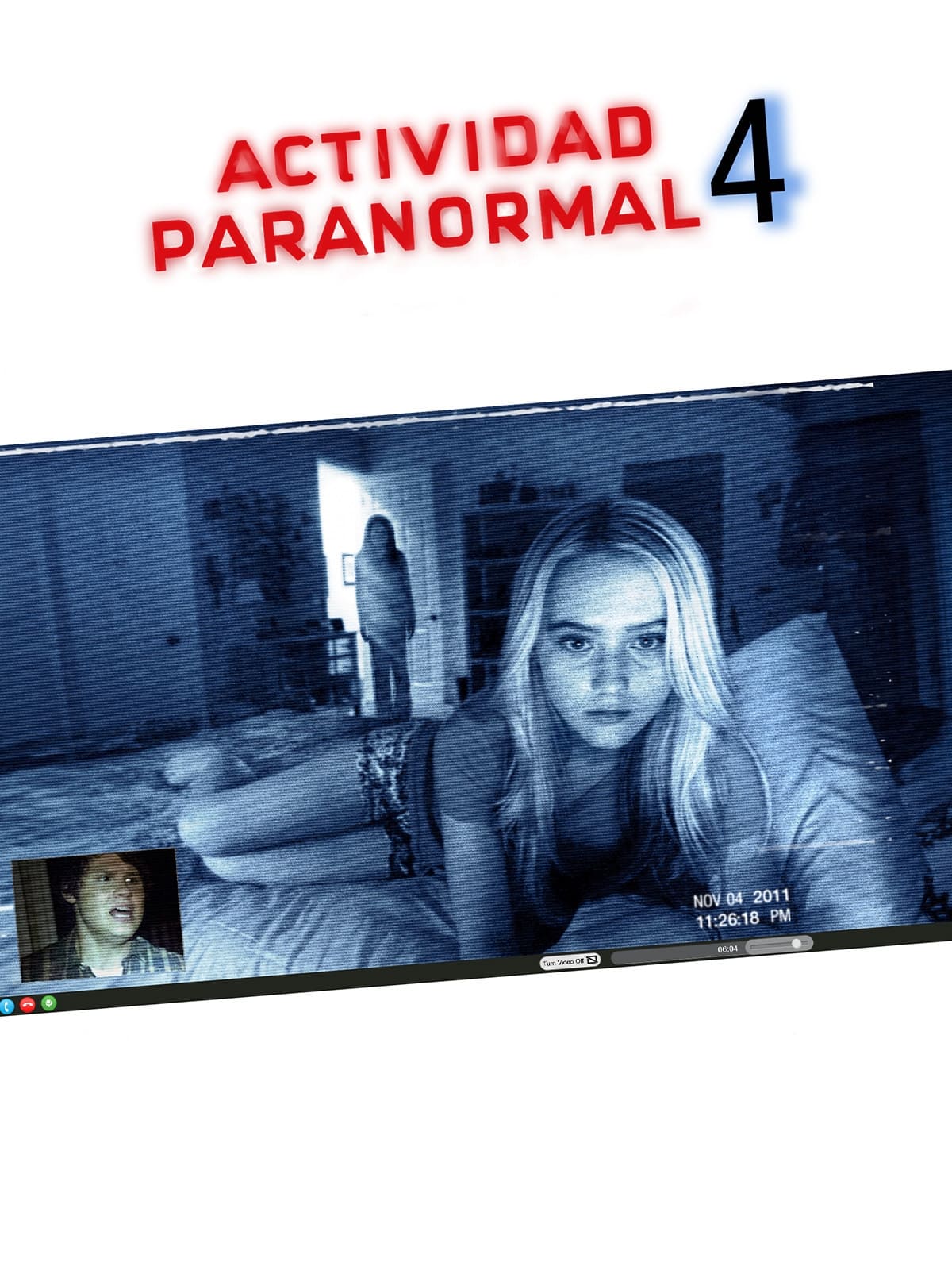
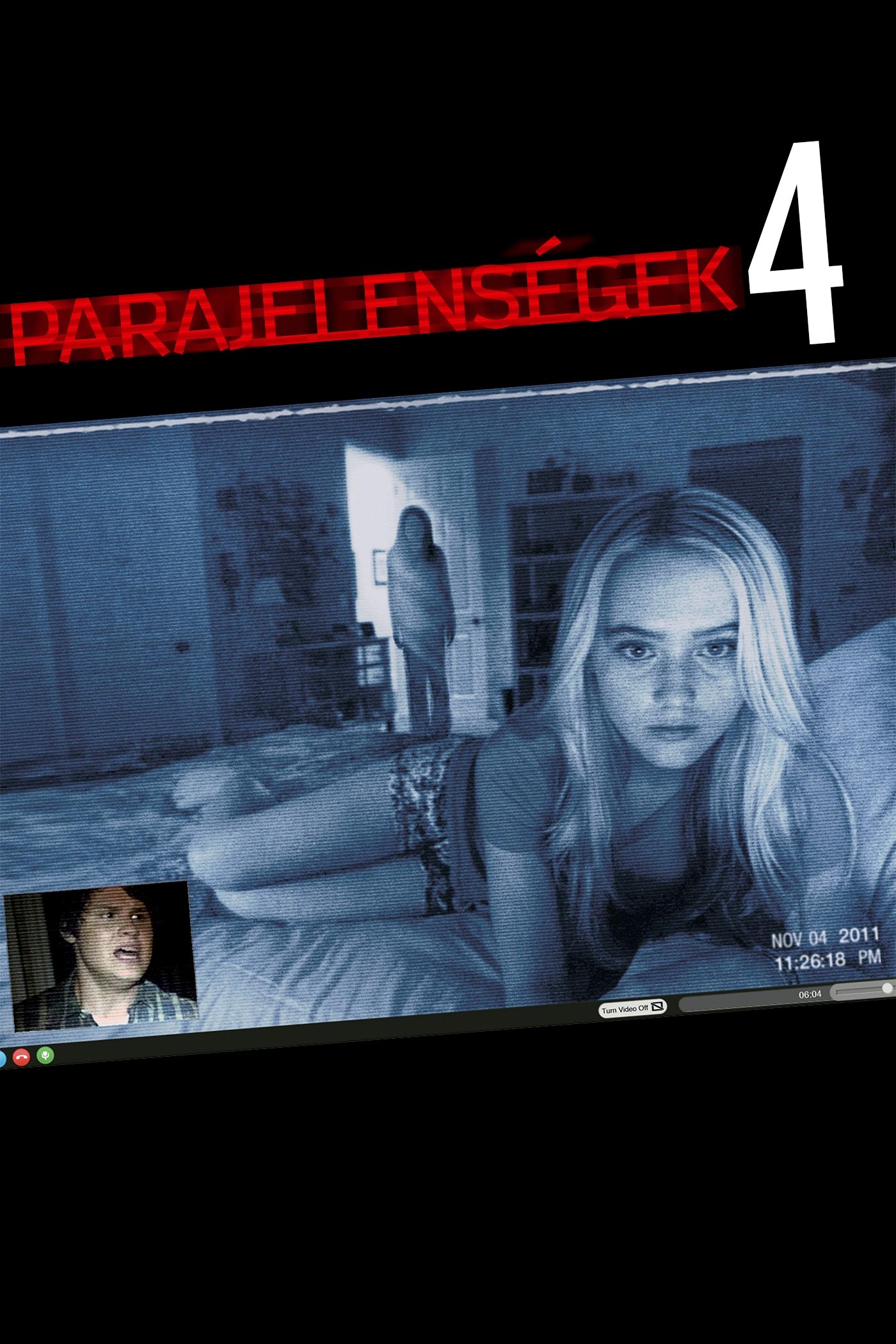
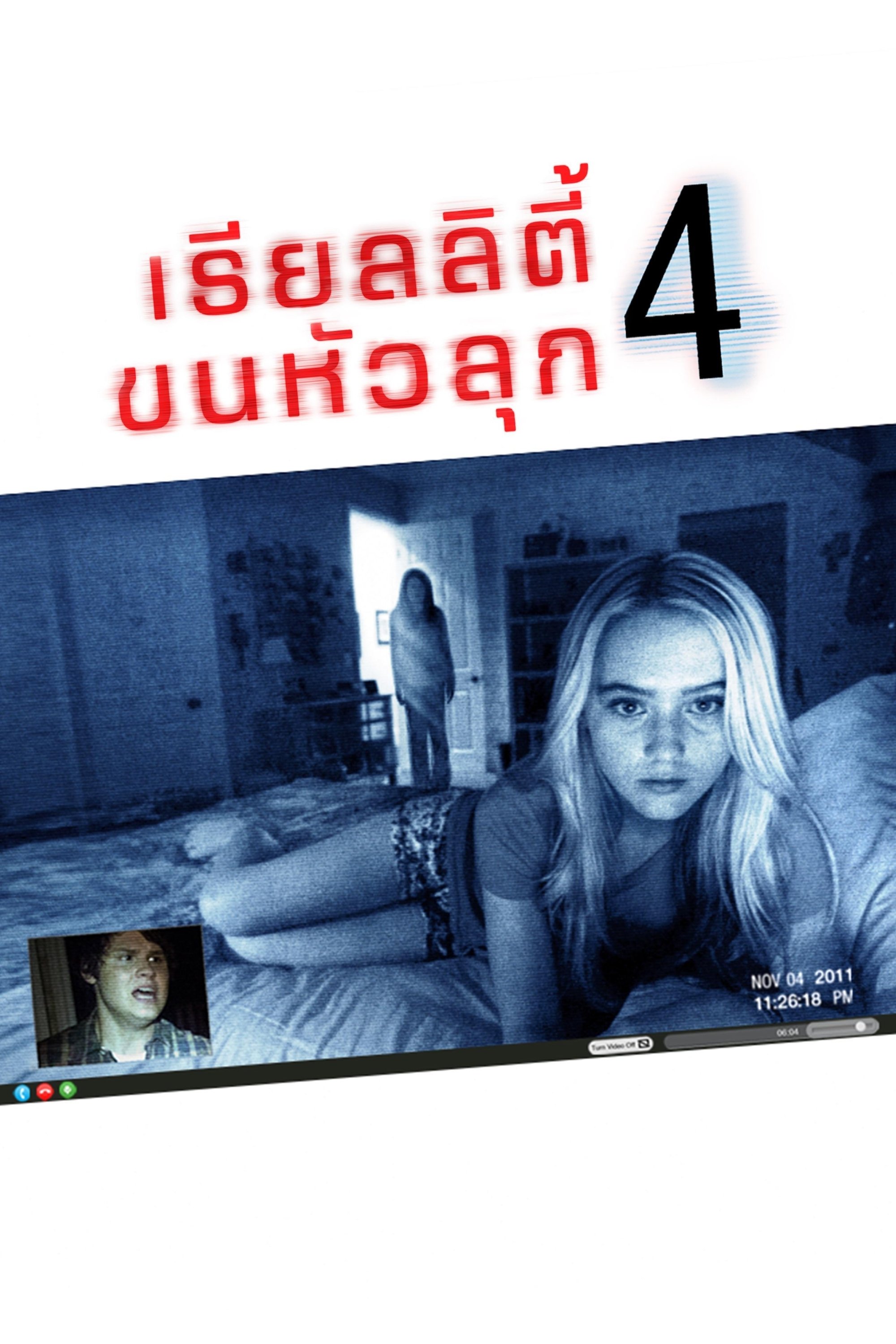
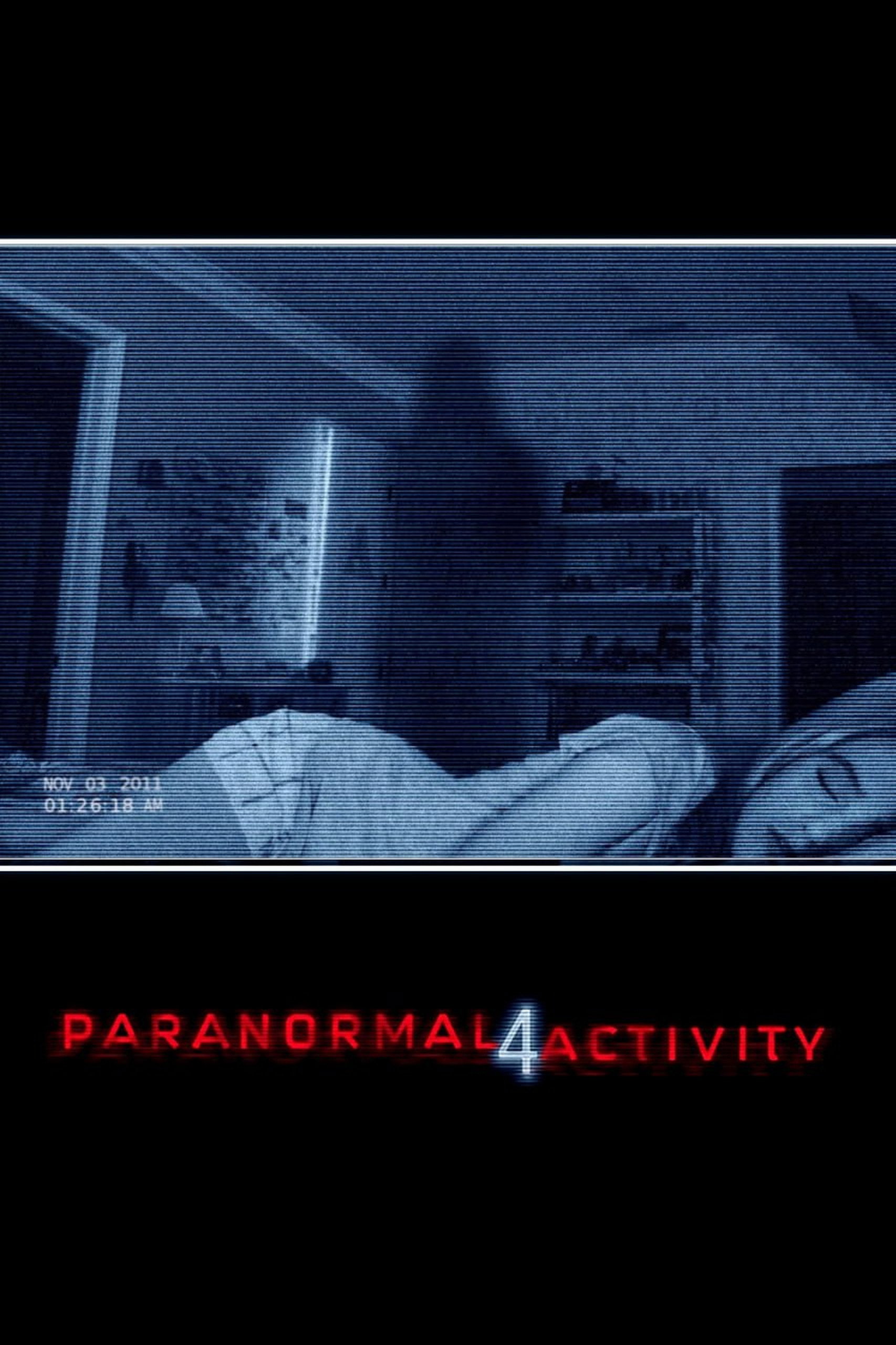
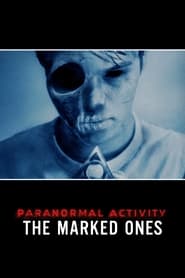
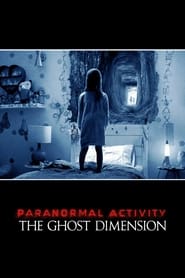
Five years after Katie and Hunter disappear, teenager Alex Nelson notices strange activity when Robbie, a young boy from the neighborhood, begins staying with her family. Alex and her boyfriend Ben use a laptop, mobile devices and an Xbox Kinect sensor to record disturbances in the house. Katie, Robbie's supposed mother who lives across the street from the Nelson family, becomes connected to the unfolding events, while Alex and her younger brother Wyatt are placed at risk. The recordings gradually reveal that the visitors and the family's past are linked to the continuing supernatural threat.
Joost and Schulman expand the haunting through Skype, domestic surveillance, Xbox Kinect imagery and a global audience-driven release campaign.
Paranormal Activity 4 (2012) brought the series back to its contemporary setting after the third film explored the childhood of Katie and Kristi. Henry Joost and Ariel Schulman returned as directors, carrying over their documentary instincts while shifting the recordings to a suburban household filled with laptops, phones and other domestic devices. Its supernatural threat is familiar, but the means of observing it reflect an everyday culture in which video chats and casually recorded personal footage had become commonplace. The film's central horror mechanism depends on an uneasy contradiction: the family's cameras preserve evidence of an intruder that the people living with those cameras cannot fully understand.
The fourth entry also occupies a revealing position in the franchise's commercial history. Released in October 2012, it arrived after three progressively visible successes had made the October opening of a new Paranormal Activity installment an annual event. Joost and Schulman sought to extend the series mythology while testing new visual devices inside the inherited found-footage framework. Contemporary critics responded to those efforts unevenly, and the American opening was markedly smaller than that of its immediate predecessor. The result offers a useful case study in how an inventive, inexpensive horror format behaves once it becomes an established studio franchise.
Development and Franchise Continuity
Joost and Schulman had already directed Paranormal Activity 3 (2011), a prequel concerned with the earlier lives of Katie and Kristi. The fourth film moves forward from the events of Paranormal Activity 2 (2010) and introduces another family, allowing the series to revisit an ordinary home while continuing the story of Katie and the missing child. In a contemporary interview, Schulman explained that the filmmakers wanted the connection between the new household and the established haunting to unfold as a central question. This meant that the film had two narrative obligations: it had to function as a new domestic nightmare and remain intelligible as a continuation of the franchise's accumulating mythology.
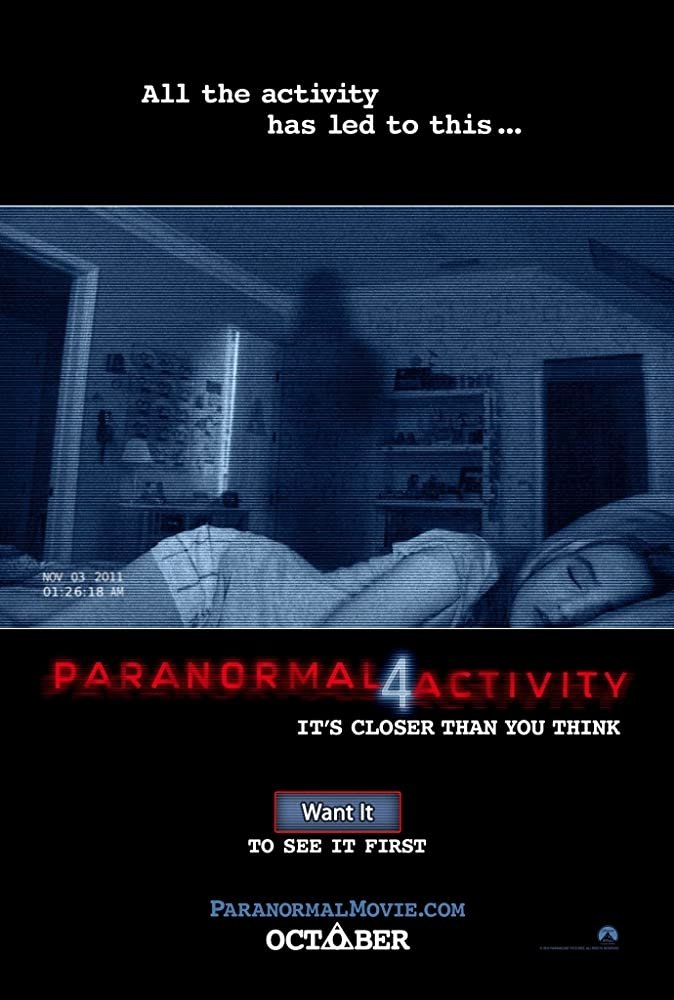
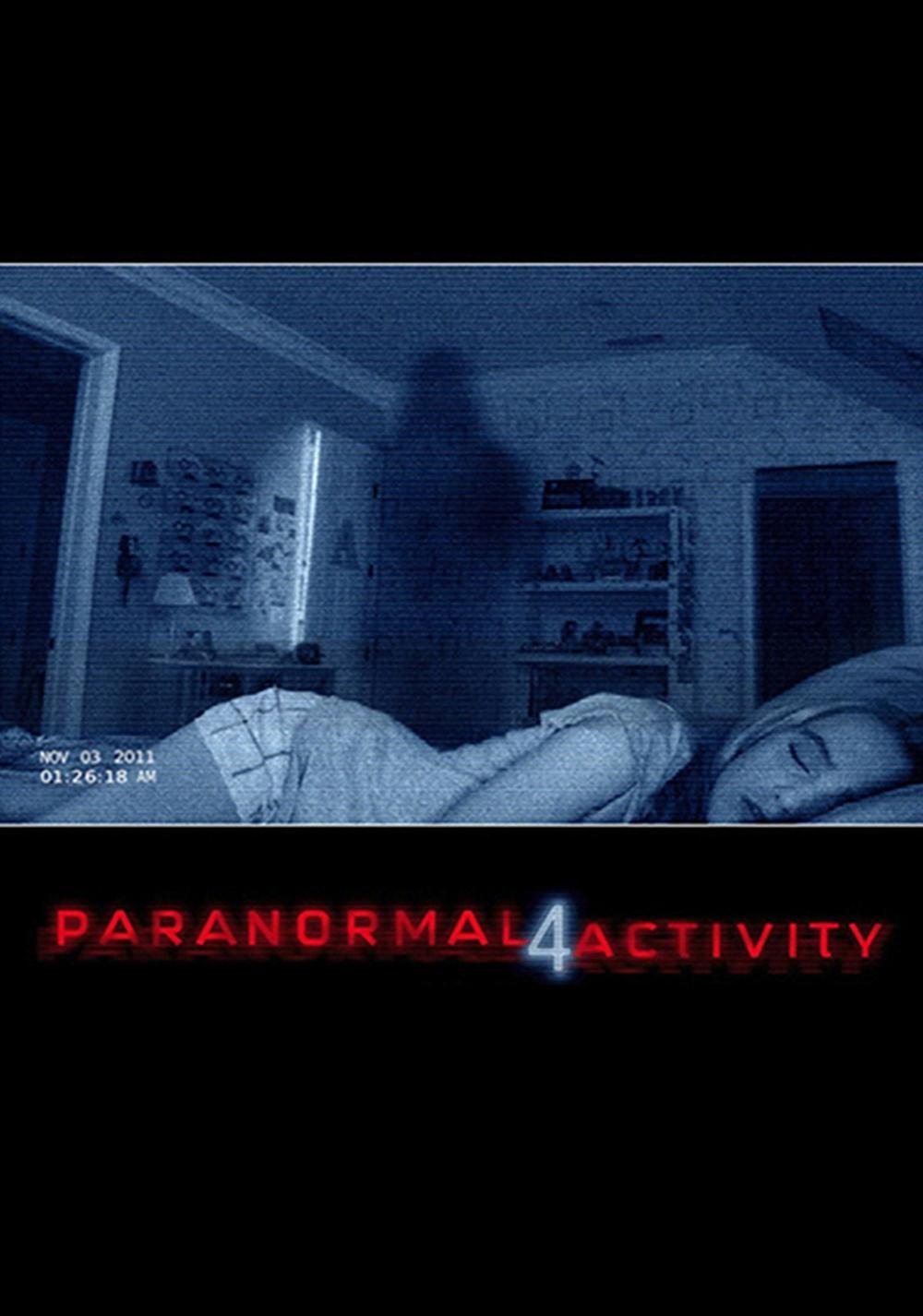
The directors described that mythology as something they tracked closely during development. Schulman compared their internal understanding of it to an encyclopedia, stressing that they needed to know the underlying events even when individual details were withheld from viewers. Joost said that they had considered how to expand the existing material without merely repeating the previous picture. Those statements reveal the filmmakers' stated intentions, though they do not establish that every continuity question was settled on screen. The film's 2011 setting also places it after the disappearances shown in the earlier installments, while the release date on the posters and in cinemas belongs to 2012.
Domestic Cameras and Visual Design
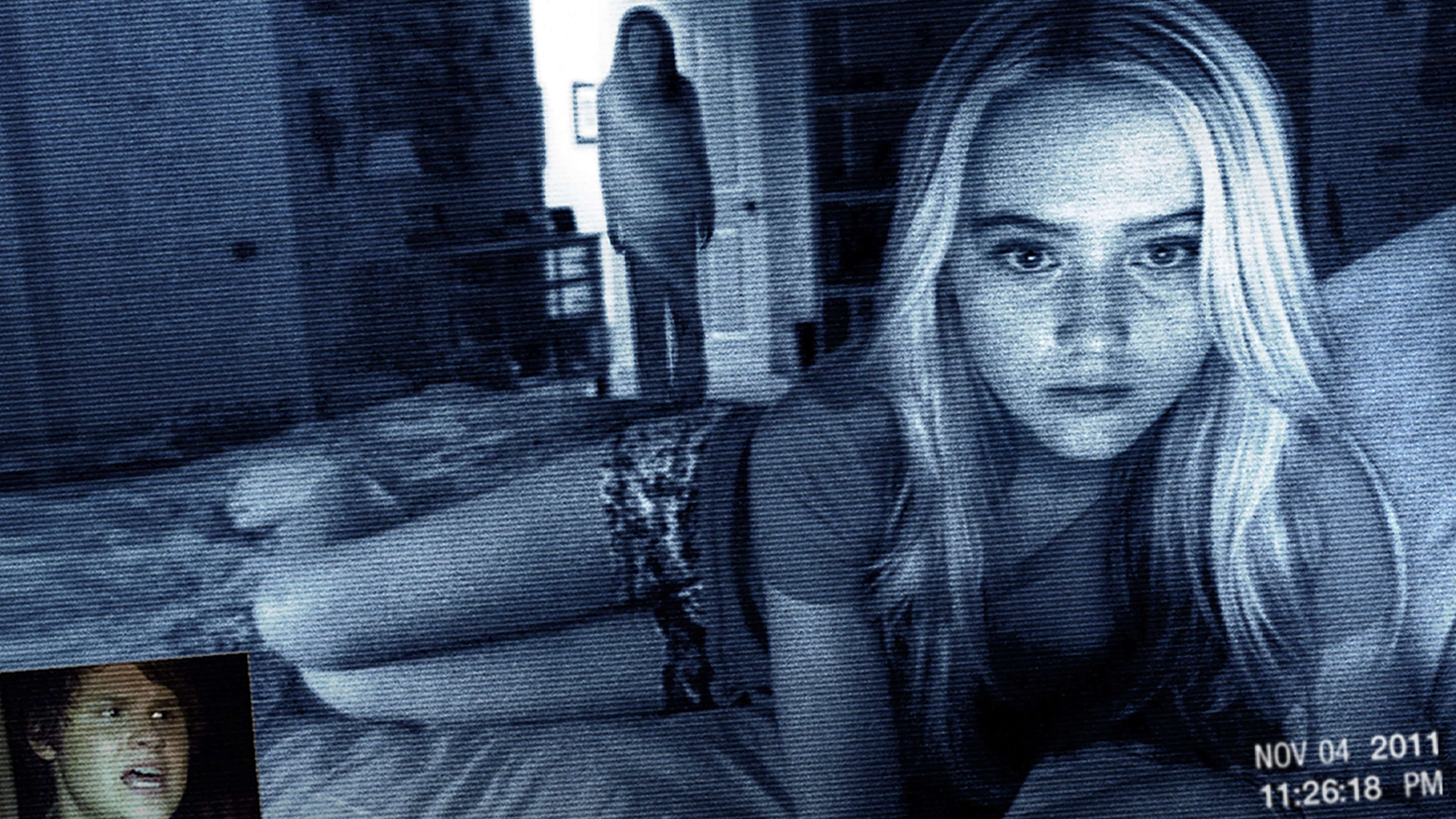
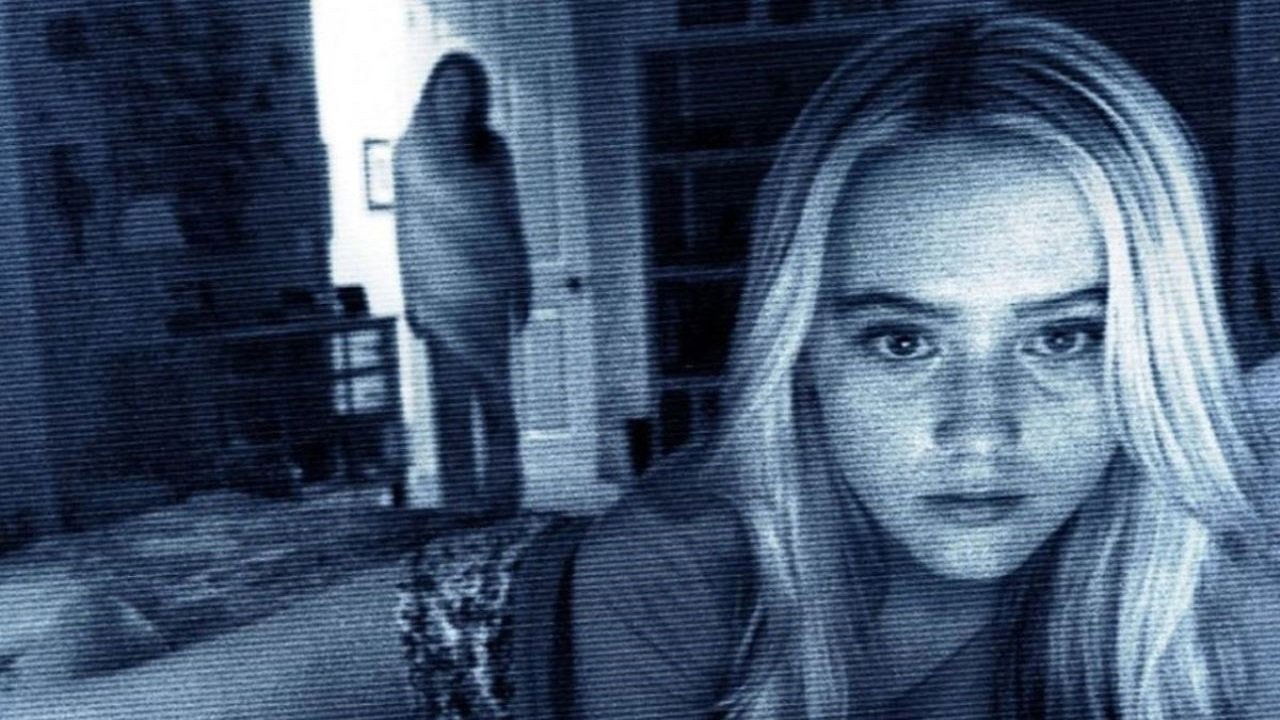
The series had built its identity around the deceptive neutrality of household recording devices. Paranormal Activity 4 updates that premise through a teenager who is comfortable with personal electronics and uses them to investigate disturbances at home. Webcam conversations turn the computer into a plausible fixed observer, while a collection of cameras broadens surveillance across domestic spaces. The frames invite viewers to examine rooms, doorways and background movement long before the characters recognize a possible danger. This arrangement makes waiting, often for an event that never arrives, part of the film's recurring structure.
In their October 2012 interview, Joost and Schulman explicitly named Skype, small cameras and the Xbox Kinect as examples of current technology they hoped audiences would recognize. The most distinctive visual variation uses the Kinect's projected infrared dots, which make the otherwise invisible volume of a darkened room appear measurable and patterned. When movement disrupts this arrangement, a familiar consumer device acquires an uncanny function. The device is more than a decorative product of its period: it changes what a recorded image can disclose. The film also reveals the limits of such novelty, because its suspense still relies on the careful alternation between prolonged observation and sudden physical disturbance.
Performance, Perspective and Suspense
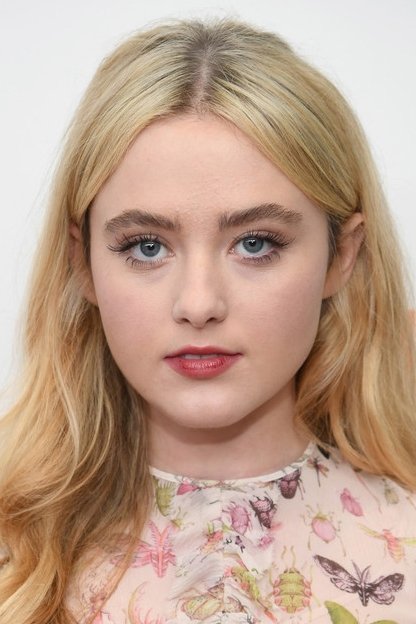
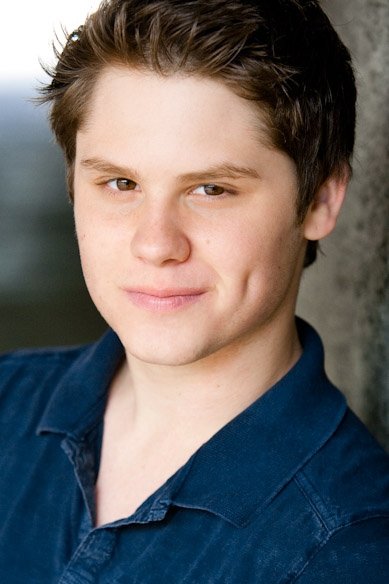
Kathryn Newton plays Alex, the teenager whose investigations provide much of the material through which the haunting is disclosed. Her position differs from that of the adults, who do not necessarily share her curiosity or her interpretation of the strange events. Matt Shively's Ben supplies a second perspective and helps motivate the use of video communication. The apparent ordinariness of their interactions serves the series' fiction of footage gathered during everyday life. Brady Allen's Robbie becomes an unsettling presence after entering the family home, while Katie Featherston returns as the figure connecting this story to the earlier films.
Joost and Schulman drew on their background in documentaries, particularly the observational techniques associated with their earlier film Catfish, when discussing how to make the recordings credible. Joost identified realism and a strongly defined point of view as crucial resources for found-footage horror. Schulman argued that withholding information requires audiences to search the image actively, and the fourth film frequently depends on that participation. Daylight scenes and casual conversations offer competing rhythms to the recurring nocturnal recordings. The central question is repeatedly where the threat might be hiding within a largely unaltered domestic environment, even though the family inhabits it without the viewer's privileged patience.
Supernatural Effects and the Recorded Image
Paranormal Activity 4 continues the series' preference for presenting impossible disturbances through cameras supposedly operating within the fictional world. Unexplained movement, the arrangement of household objects and abrupt changes in the space appear as incidents that have been caught rather than conventionally photographed for dramatic emphasis. Their effectiveness depends on an established baseline of ordinary rooms and everyday behaviors. A violent interruption has greater force after the film has spent time making the spectator anticipate motion in the same doorway or at the same edge of the frame.
The Kinect sequences make that principle especially legible. A grid of light points gives a bedroom a visible spatial texture; the possibility of another presence is expressed through the apparent alteration of this texture. The film offers a visual solution to the problem of how to show an unseen force without abandoning its home-video premise. Nevertheless, the technology should not be mistaken for documentation of a specific effects workflow. Available interviews establish the filmmakers' interest in incorporating the device, but do not establish the precise division between practical techniques and postproduction manipulation in each shot. Such technical claims require evidence that cannot be inferred from the finished images alone.
Release and the Want It Campaign
Paramount released Paranormal Activity 4 in the United States on October 19, 2012, within the Halloween exhibition period that had become closely associated with the series. Its marketing reused the franchise's practice of turning audience participation into publicity. On August 1, Paramount announced the Want It campaign, a Facebook application through which fans could vote for their city to receive an advance screening. The mechanism included a visible ranking of cities and encouraged participants to circulate their votes among friends. These details are documented in the distributor's contemporary announcement, which is evidence of the campaign's design rather than independent proof of its promotional effectiveness.
On October 11, Paramount named 25 winning cities across several continents, with screenings scheduled for October 16 ahead of the general release. The selection included cities in the Americas and Europe, reflecting an international campaign rather than a strictly American launch. This approach made distribution itself a participatory event: fans were asked to compete for access to a movie that would soon be widely available. It also echoed the original Paranormal Activity's relationship with word-of-mouth marketing, although the fourth film was being promoted as a recognized studio property rather than an obscure discovery. The contrast marks how far the franchise's commercial identity had changed in only a few years.
Box Office and Contemporary Critical Response
The American opening was commercially substantial but fell below the immediate predecessor's performance. Reporting on October 21, the Los Angeles Times contrasted the fourth film's estimated opening of about $30 million with the $52.6 million debut of Paranormal Activity 3. Its report also noted that the new film had missed expectations around a significantly larger opening. Opening-weekend estimates can change as final figures are tabulated; the contemporary comparison therefore matters more than a claim that any early estimate represents a definitive lifetime gross. The film still reached first place at the domestic box office that weekend, demonstrating that an increasingly familiar concept retained immediate theatrical appeal.
Critical discussion was more skeptical about the film's ability to develop the form. In his contemporary Screen International review, Tim Grierson acknowledged the unsettling possibilities of the infrared imagery and video chats while arguing that the overall formula had begun to show strain. Other commentators similarly focused on the balance between technical novelty and repeated jolts. Such reviews help establish the film's reception at release, separate from later reassessments by audiences or retrospective writers. The fourth entry thus registered two different pressures at once: box-office comparison with the franchise's unusually strong earlier installments and growing critical scrutiny of the rules that found footage had taught viewers to anticipate.
Place Within Found-Footage Horror
Paranormal Activity 4 belongs to the period when supernatural found footage was already a recognizable commercial cycle rather than a rare formal experiment. The film's use of consumer recording technologies is its clearest contribution to that conversation. Its cameras are woven into social routines: teenagers communicate through screens, families leave devices in familiar places, and the recording process can appear incidental to ordinary domestic behavior. That premise gives the horror an unusually direct connection to the habits of its intended contemporary audience. It also exposes a recurrent difficulty in the format, since the viewer must accept why people continue recording events that increasingly threaten them.
The film is best understood as a stage in the series' movement from a single-household mystery toward an interconnected supernatural storyline. Returning characters and concealed family relationships link Alex's experience to the mythology developed across the earlier films. Its mixed critical response and reduced opening relative to the third film make it a useful measure of franchise fatigue, but those indicators alone cannot establish a single cause for audience behavior. The lasting historical interest lies in the collision between two impulses: the search for new ways to make ordinary technology frightening and the demand that an annual sequel preserve the rituals audiences already associated with Paranormal Activity.
References
HeyUGuys — The HeyUGuys Interview - Ariel Schulman and Henry Joost talk Paranormal Activity 4
Contemporary interview on franchise chronology, documentary methods, consumer cameras, the Kinect and story development.
Paramount Pictures — Facebook Fans Decide Who Sees Paranormal Activity 4 First With Paramount Pictures Want It Facebook Campaign
Original August 2012 studio announcement detailing the application, city voting and promotional design.
Los Angeles Times — Fourth Paranormal is No. 1, but opens well below predecessors
Contemporary theatrical business report comparing the fourth film with earlier franchise openings.