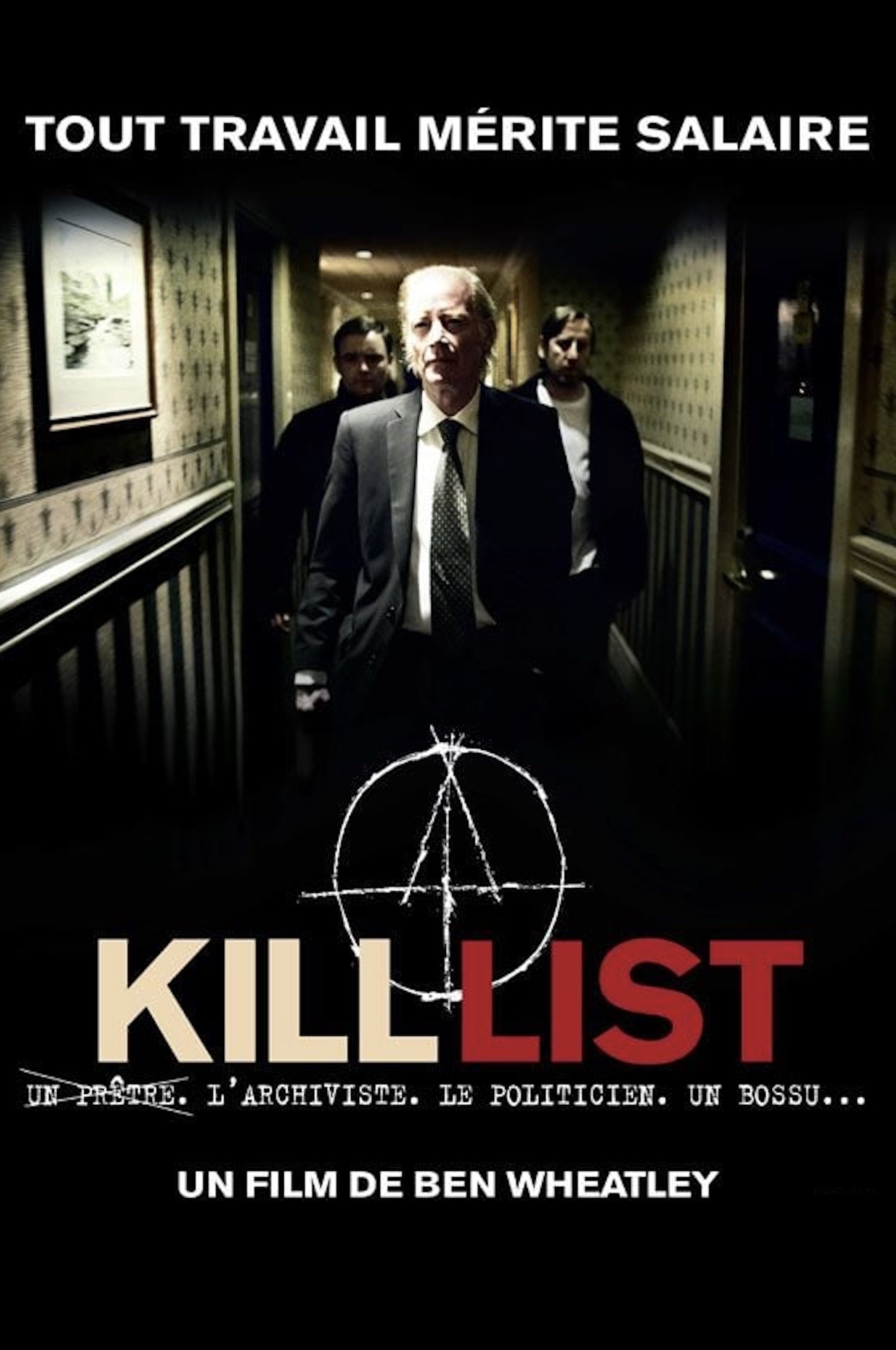
Kill List (2011)

GB
HORROR FILM Thriller Crime
SUBGENRES FOLK OCCULT
Runtime
95 min
Release
September 2, 2011
Budget
$500,000
Revenue
$450,275
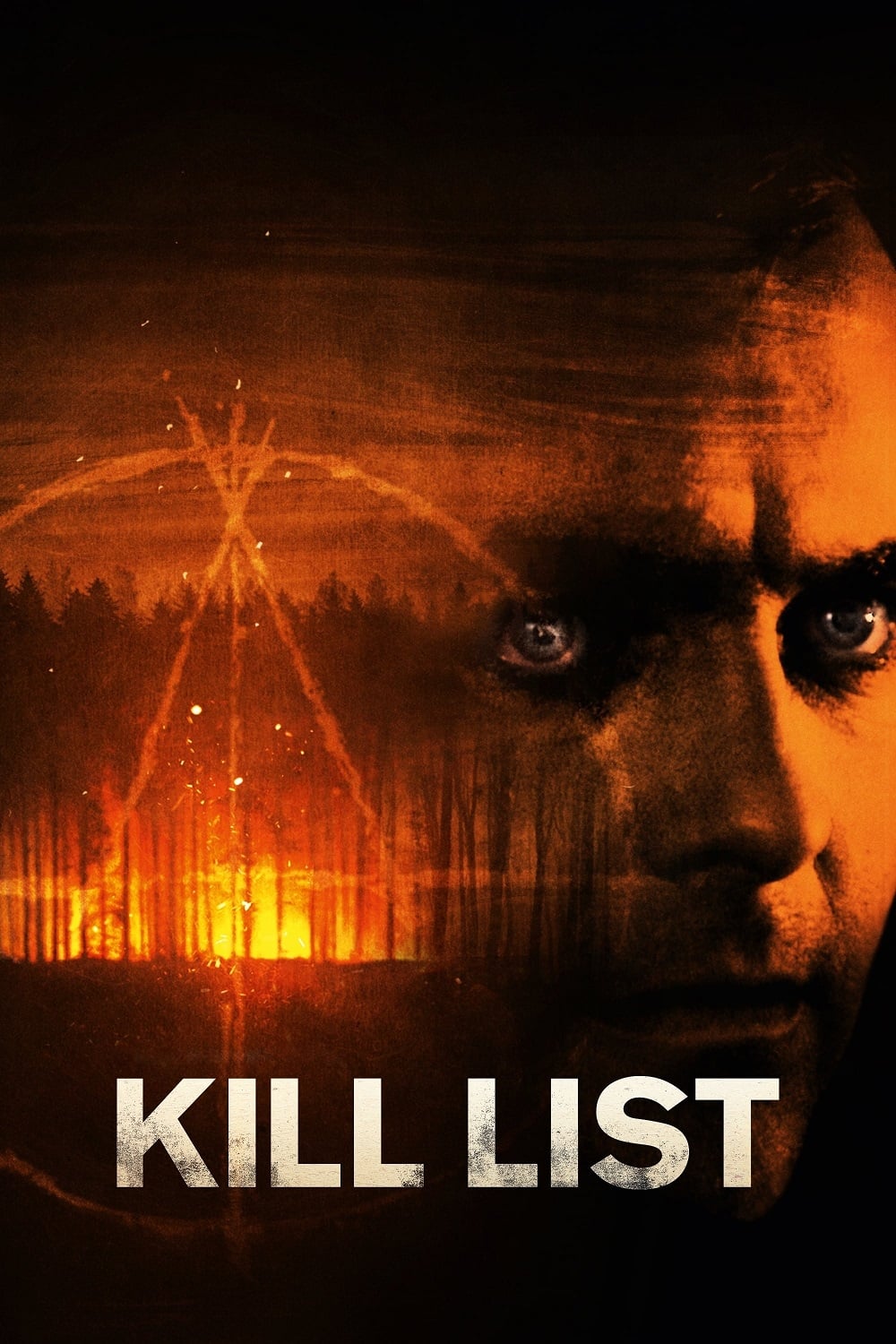
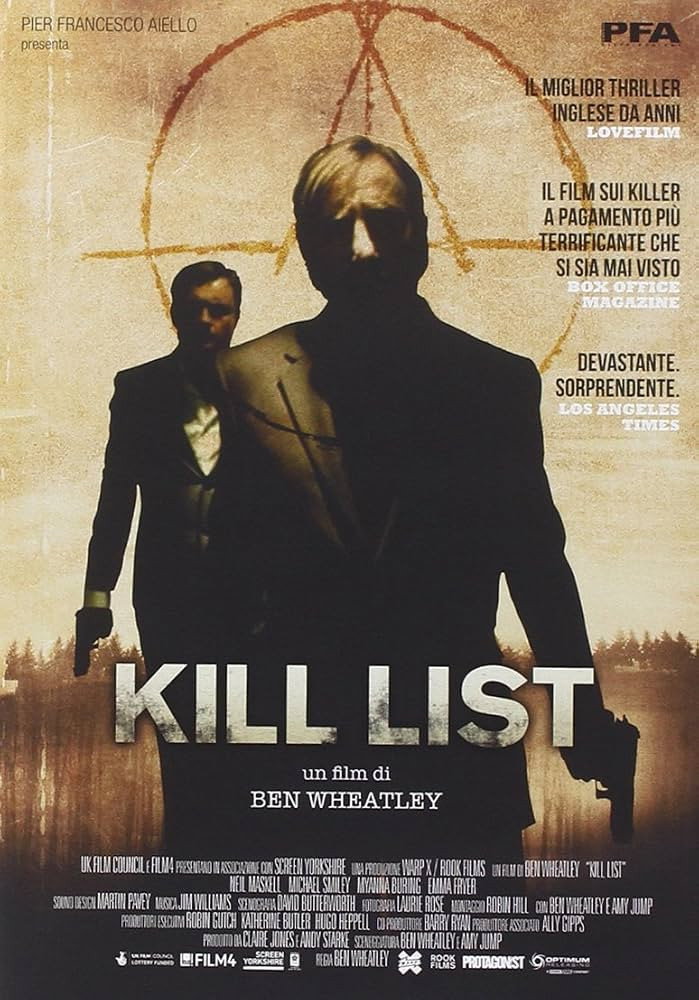
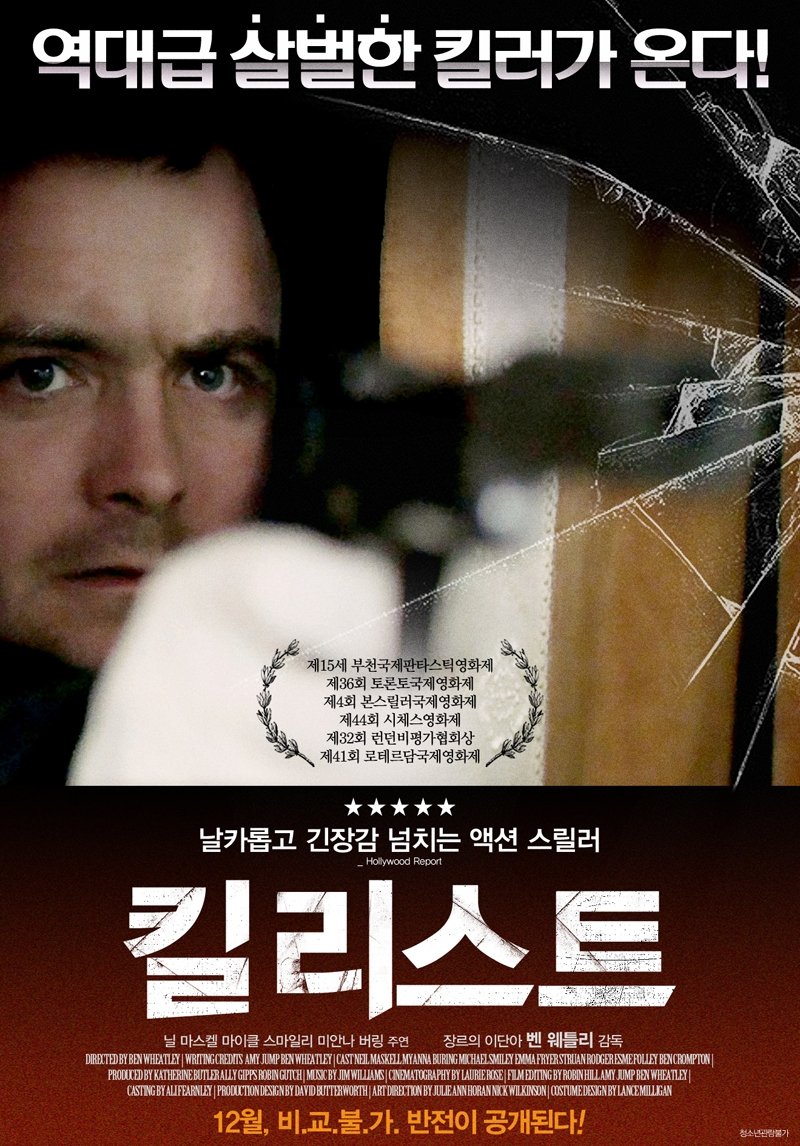
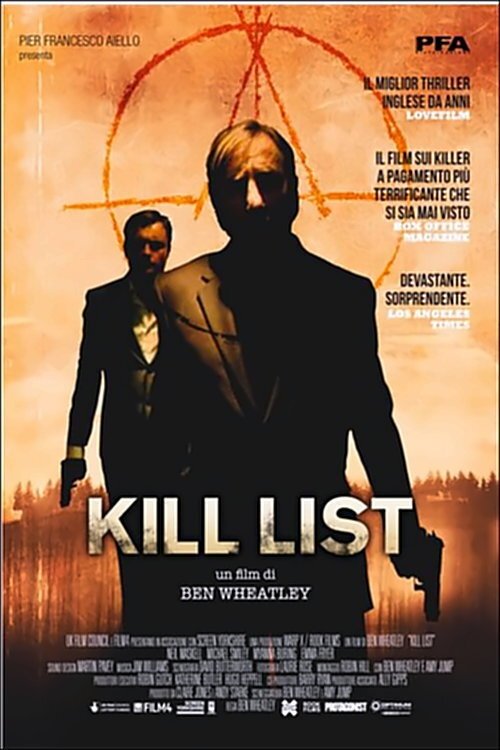
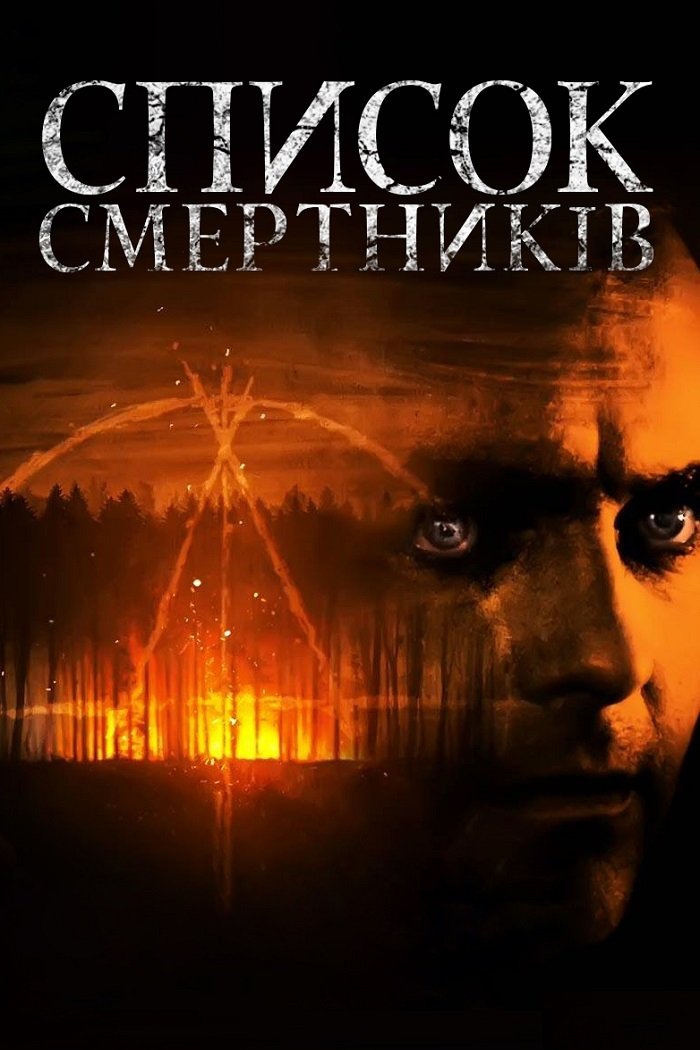
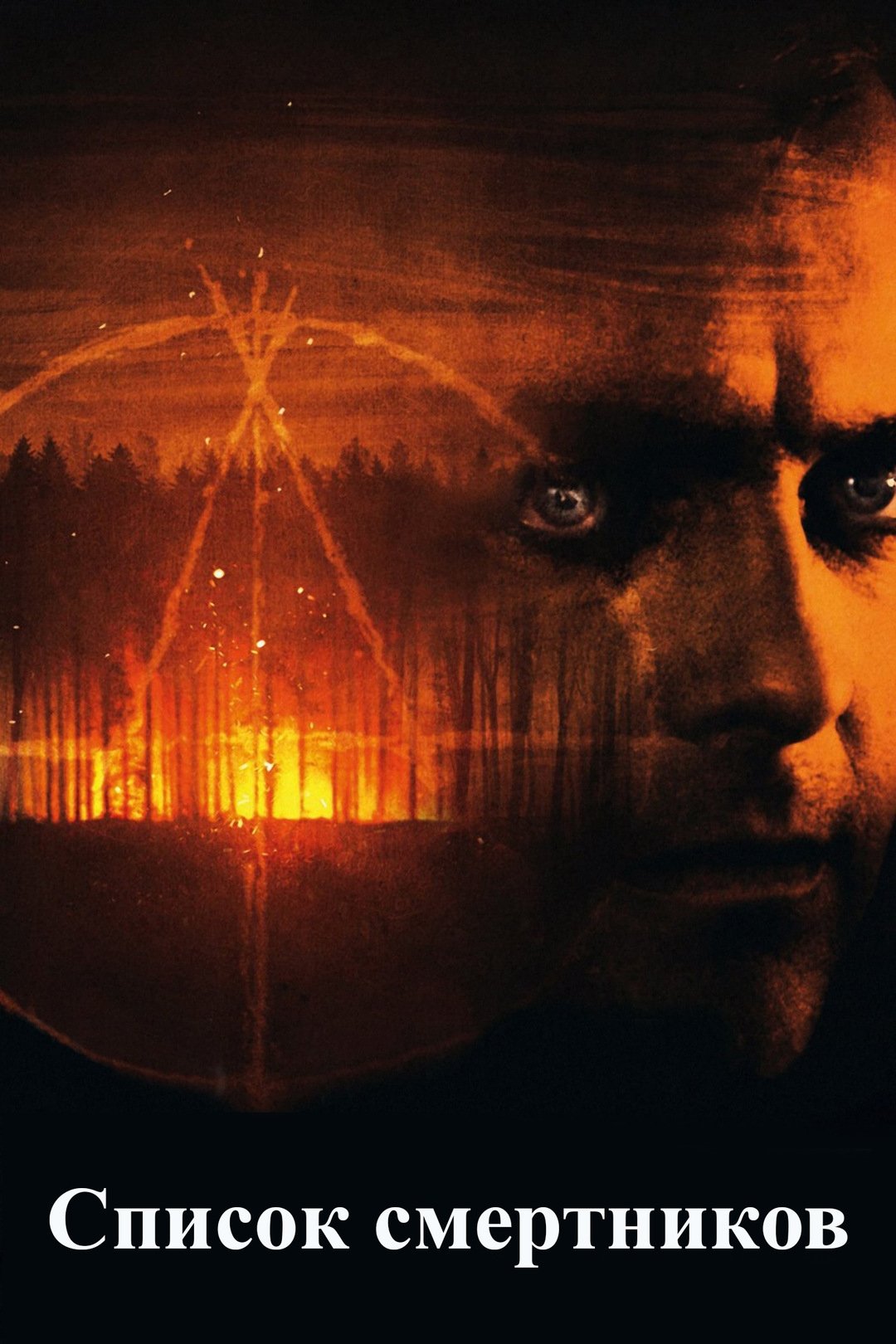
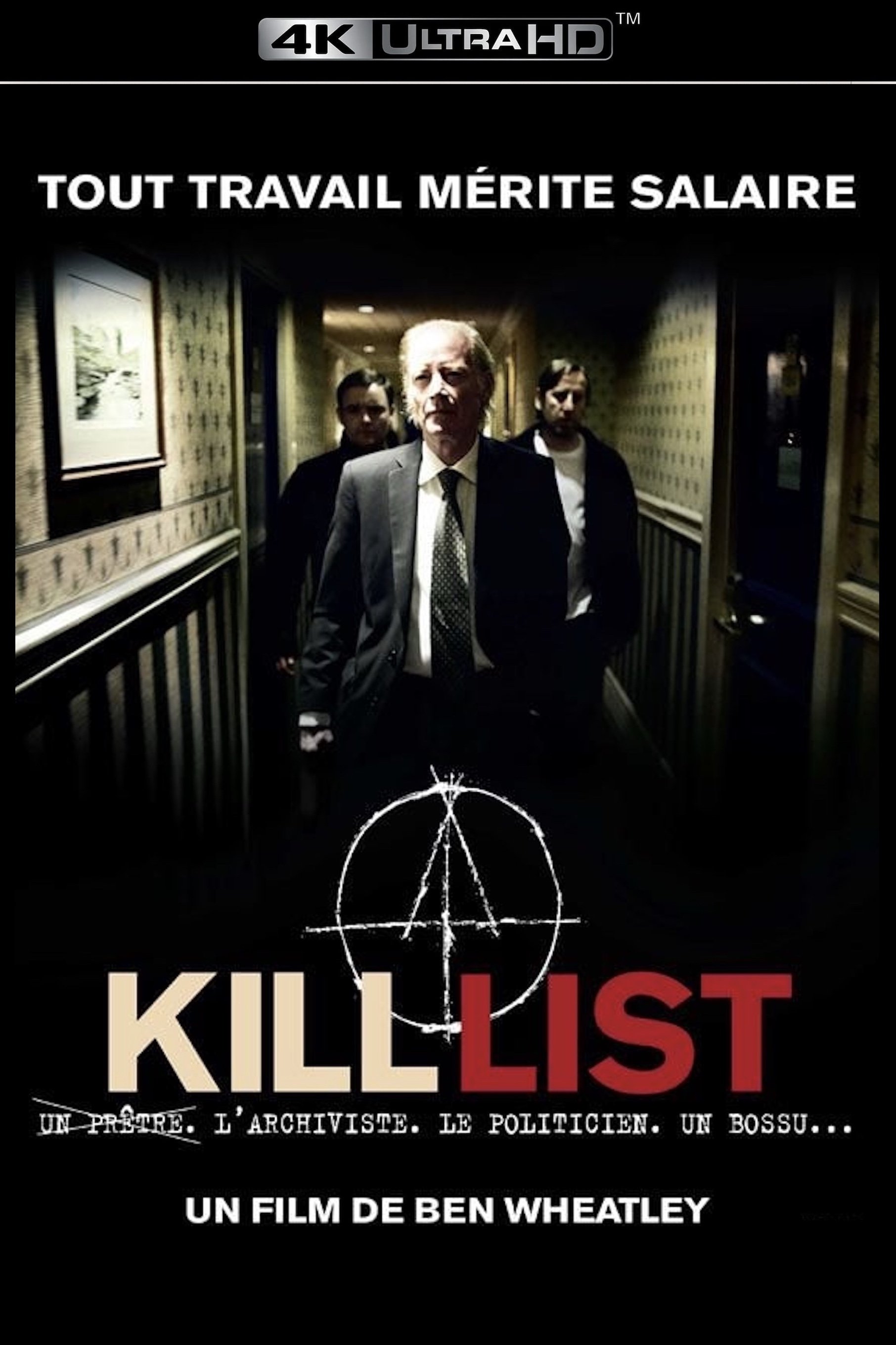
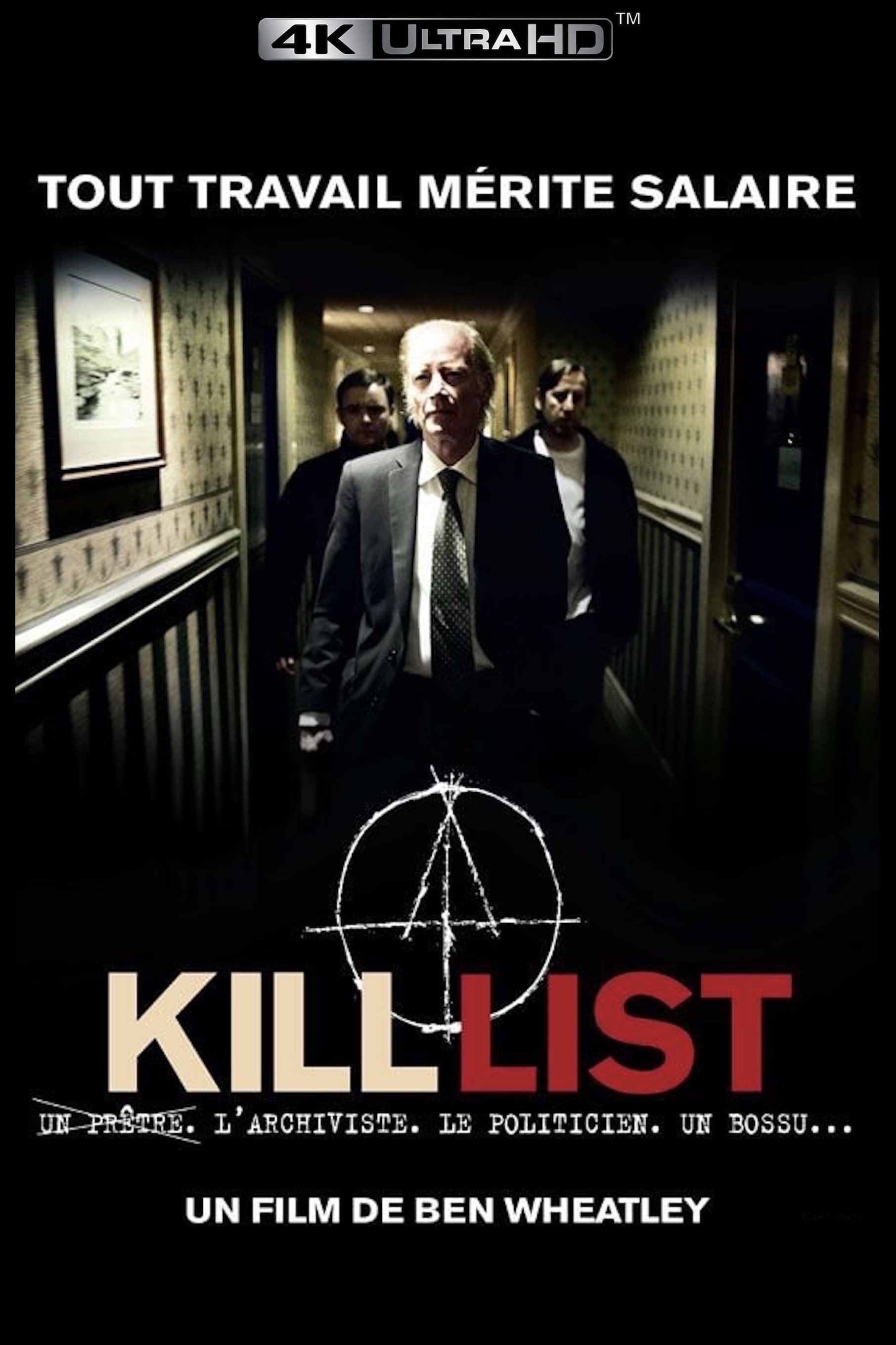
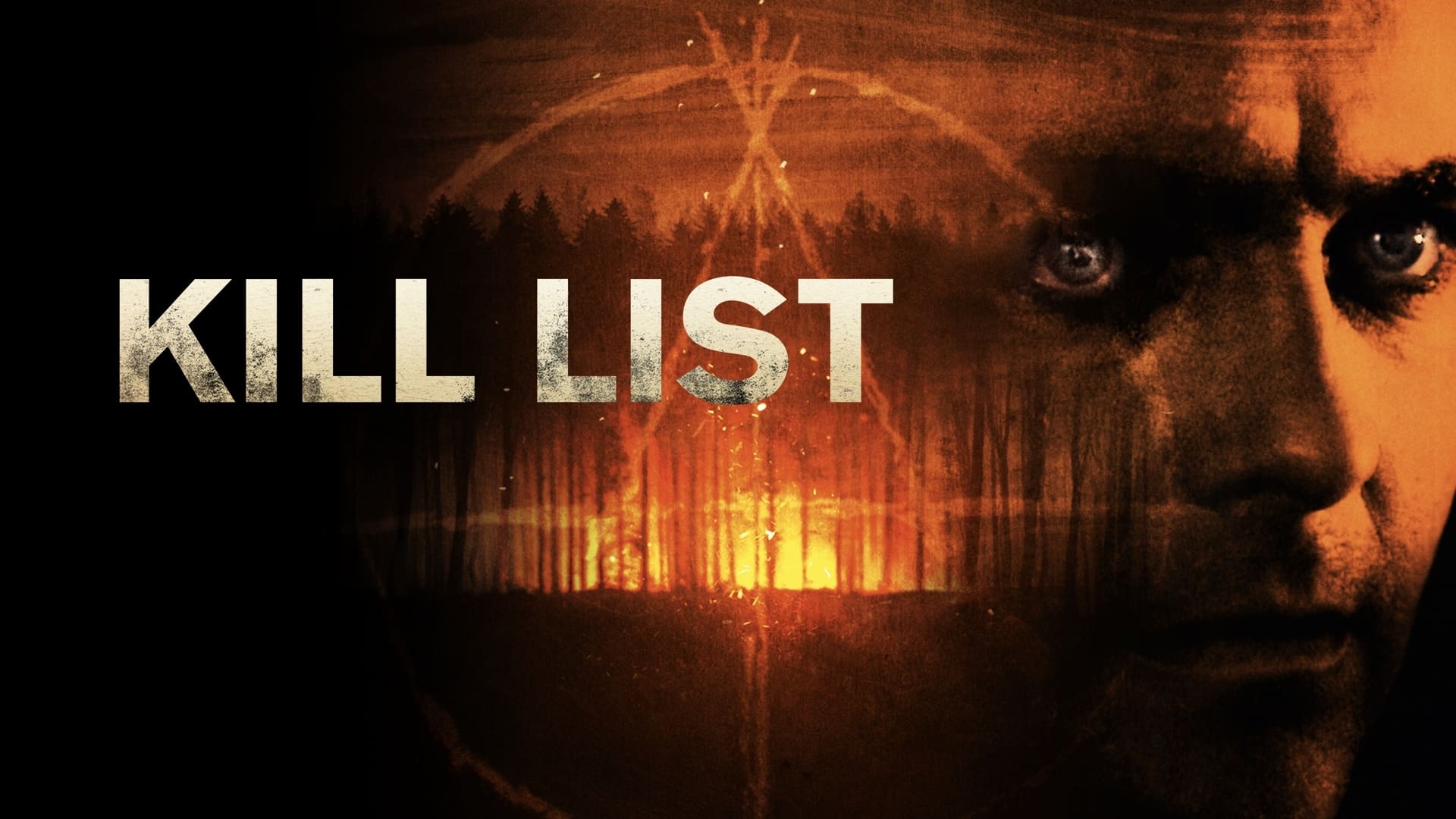
Kill List (2011) poster
Director
Production Companies
Warp X , Rook Films , Film4 Productions , UK Film Council , Protagonist Pictures , NonStop Entertainment , Madman Entertainment
Plot

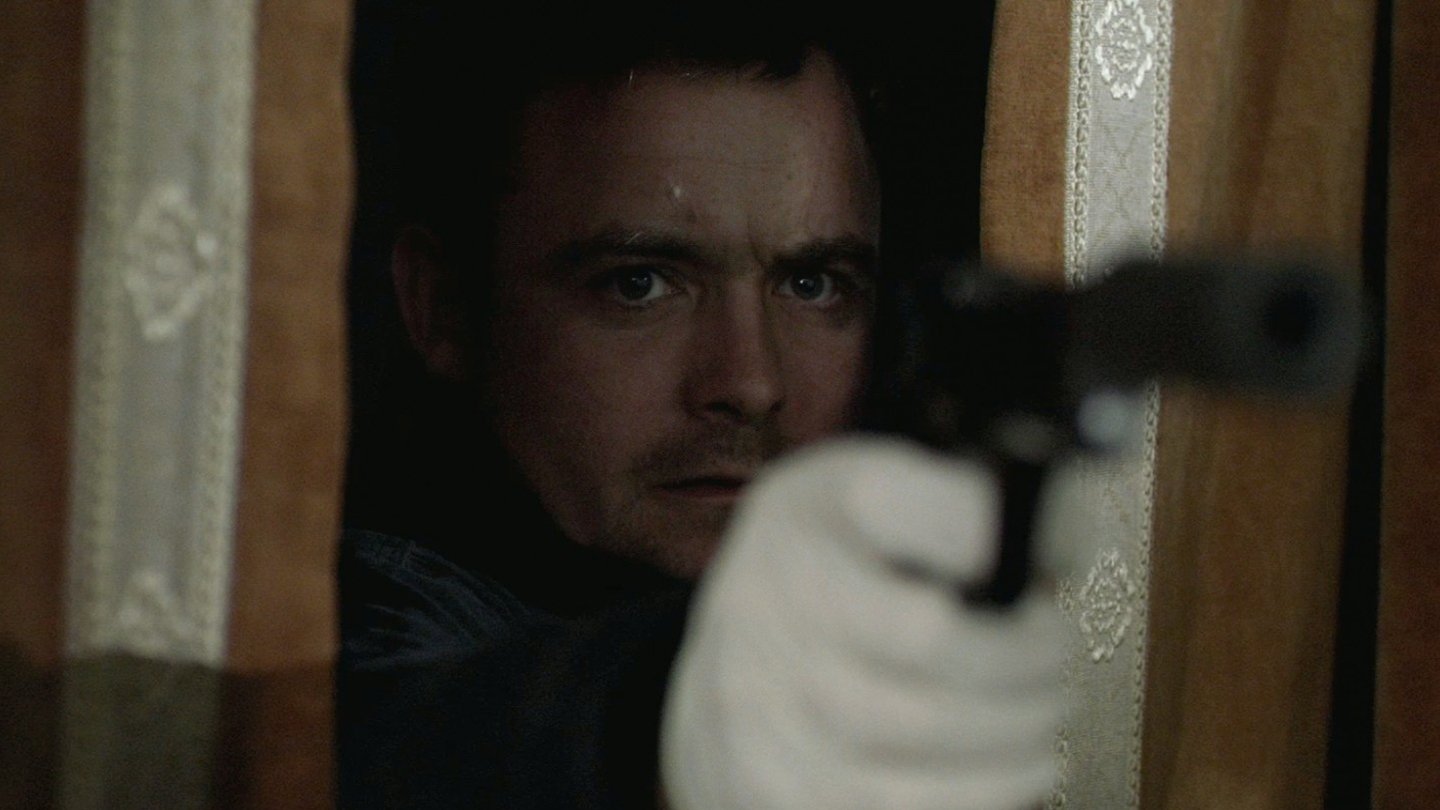
Nearly a year after a botched job, a hitman takes a new assignment with the promise of a big payoff for three killings. What starts off as an easy task soon unravels, sending the killer into the heart of darkness.

Alternative Titles
Lista de asesinatos (Argentina) Списък за елиминиране (Bulgaria) — Bulgarian La Liste à Tuer (Canada) — French title 杀戮名单 (China) — Chinese Seznam smrti (Czechia) Tapanimekiri (Estonia) 殺戮名單 (Hong Kong SAR China) — Chinese Halállista (Hungary)
Show all 18 alternative titles רשימת חיסול (Israel) — Hebrew キル・リスト (Japan) — Japanese 킬 리스트 (South Korea) — Korean Lista płatnych zleceń (Poland) — Polish Uma Lista a Abater (Portugal) — Portuguese Lista morții (Romania) — Romanian Список смертников (Russia) Ölüm Listesi (Türkiye) — Turkish Список смертників (Ukraine) — Ukrainian Danh Sách Tử Thần (Vietnam) — Vietnamese

Trailers & Videos

10 videos

Film Guide & Analysis

Ben Wheatley turns a contract-killing assignment into a ritual nightmare through brutal violence, domestic tension and British folk horror.

Kill List (2011) is a British horror film directed by Ben Wheatley and written with Amy Jump, following two former soldiers whose contract-killing work leads them into an organized occult conspiracy. Jay has spent eight months out of work after a disastrous assignment in Kiev. Pressure at home brings him back into partnership with Gal, who arranges a new job involving three named targets. The apparently familiar territory of suburban arguments, criminal negotiations and anonymous hotels becomes increasingly unstable as victims greet the assassins with gratitude and unrelated strangers display knowledge of their movements. Violence that first appears professional gradually becomes part of a ritual whose organizers understand Jay far better than he understands them.

Wheatley's second feature is significant within modern British horror for bringing domestic naturalism, conspiracy thriller and folk-horror imagery into a continuous narrative. The picture was made rapidly with a small crew, partially improvised dialogue, discontinuous editing and highly controlled sound. Its notorious hammer attack tests the audience's sympathy for the protagonists long before masked figures appear in the woods. Interviews with Wheatley establish the film's relationship to childhood nightmares, military violence and contemporary financial anxiety, although the ending was intentionally left open to interpretation. The final reversal uses Jay's family as the center of the horror, bringing the brutality of his occupation into the home it was supposed to sustain.

Conception and Low-Budget Production

Wheatley conceived Kill List after Down Terrace, his independently made feature about a criminal family. He and Jump wanted to develop a horror film and began by identifying images and situations that frightened them. In interviews given during the 2011 festival circuit, Wheatley singled out a recurring childhood nightmare in which he followed a group through woodland and became the object of pursuit. The threatening procession and forest chase were therefore present at an early stage of conception. He described building the characters and their ordinary circumstances around that destination, allowing familiar behavior to precede increasingly incomprehensible events.

The film was developed through Warp X and Rook Films, with producers including Claire Jones and Andrew Starke. Its scale demanded a compressed shoot. At Toronto in September 2011, Wheatley recalled approximately three weeks of six-day filming, with the family-house material completed in about four days and the tunnel attack handled in one. He also described three nights spent recording the climactic woodland material. These figures come from the director's retrospective interview, and should be understood as his account of the schedule. The tight production preserved time for actors to shape exchanges within scenes while requiring extensive decisions during the edit.

Wheatley had worked in television comedy, short-form production and commercials, experiences he treated as preparation for feature directing. That background did not lead him to regard the film as a playful genre exercise. In a contemporary Cinema Scope interview, he said that his goal was to make a horror picture grounded in recognizable people. The writing borrowed details from the actors' personalities, and scripted takes could alternate with paraphrased dialogue. The practical approach helps explain why the ominous premise initially arrives in a world of strained marriages, drink, awkward meals and uncertain employment.

Domestic Horror and Economic Pressure

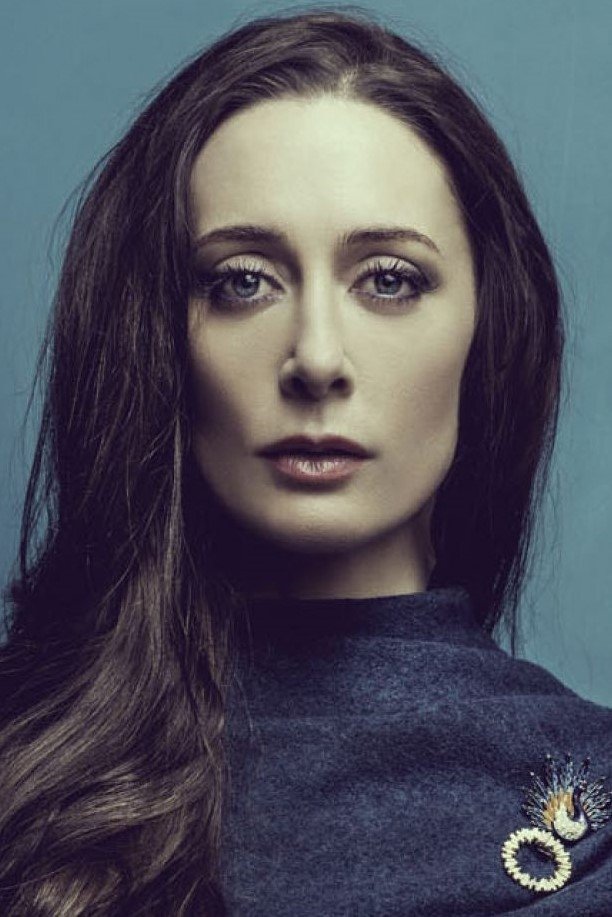
Jay's first sustained confrontation is with his wife Shel, played by MyAnna Buring. Their home appears comfortable, yet disputes over money and his refusal to work have worn away ordinary conversation. Their son Sam lives amid this tension, and Jay's sudden temper makes family life unpredictable even before an external threat emerges. Gal's dinner visit, accompanied by his new girlfriend Fiona, exposes the marriage to outsiders who can observe its weaknesses. The gathering contains flashes of humor, embarrassment and anger, with characters interrupting one another in ways that make a violent argument seem possible at any moment.
The setting grounds the later ritual in the consequences of Jay's existing decisions. Shel knows about his criminal livelihood and expects it to support the household. Gal appeals to the need for income when he brings another contract, making the murder business resemble a troubled small enterprise. Wheatley told The Guardian that he wanted to address the financial pressure of recession-era Britain alongside the moral uncertainty surrounding recent wars. The former soldiers have experience of organized killing, but neither their service nor their civilian employment gives them a stable framework for judging what they do.

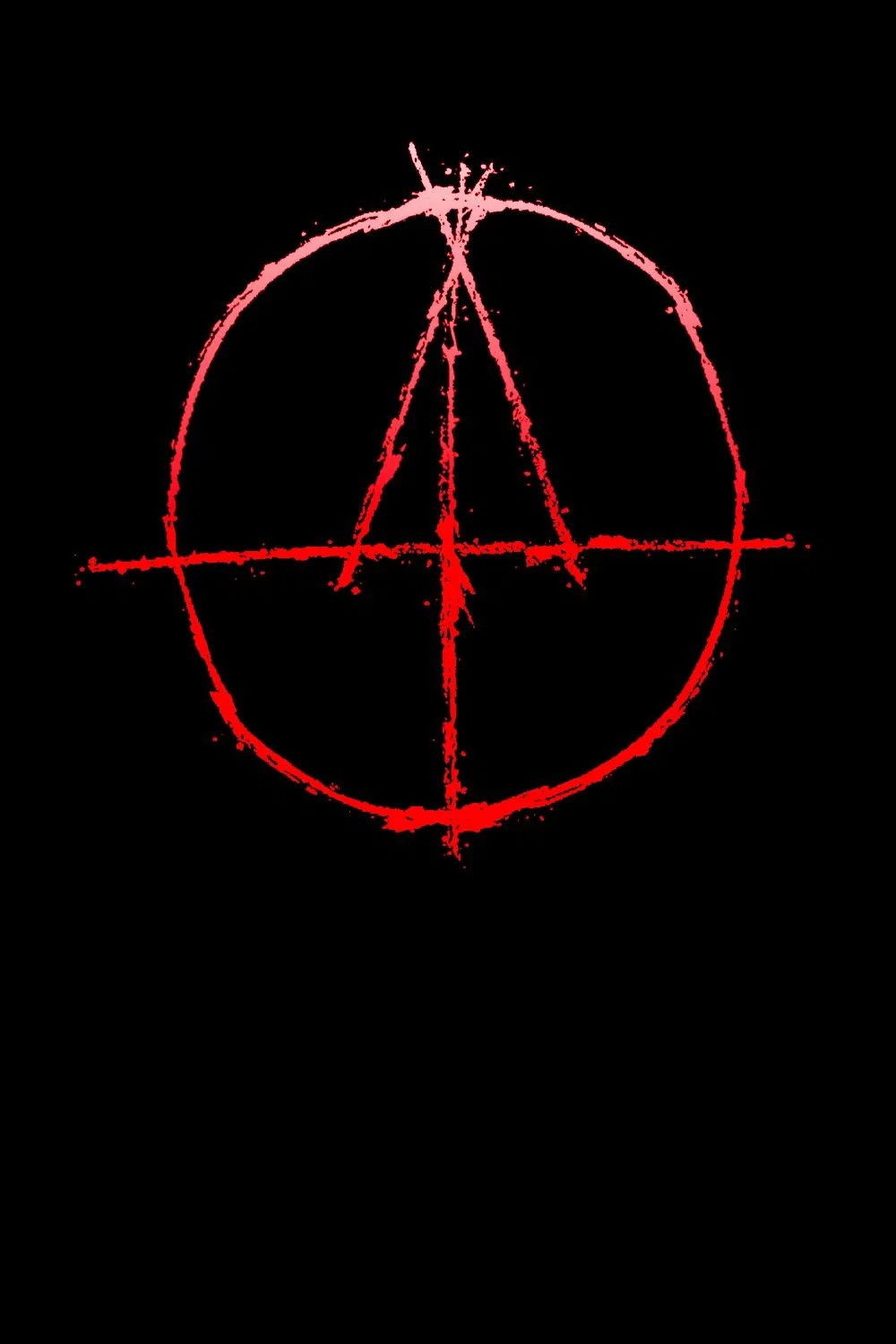
Fiona's apparently peripheral actions introduce a second form of surveillance. She removes a bathroom mirror and marks its reverse with a strange sign, an act neither explained to the family nor treated as a conventional burglary. Other troubling objects appear near the home as the narrative progresses. Their importance lies in the permeability of an environment Jay believes he can control. The house is already open to unknown intentions before the contract begins. The domestic scenes establish people with emotional and financial vulnerabilities that the organizers of the later events are able to exploit.

The Three Targets and the Conspiracy

The central commission is presented as a list with three names: the Priest, the Librarian and the MP. Jay and Gal meet a wealthy client who requires an agreement signed in blood, giving a familiar professional transaction an unmistakably ritualistic character. At first the men approach their targets using the routines of surveillance and execution. Yet the individuals they confront behave in unsettling ways, with expressions of thanks replacing the reactions expected from someone about to be killed. These encounters imply that the assassins' itinerary was prepared for purposes beyond eliminating inconvenient witnesses or political enemies.

The Librarian marks the point at which suspicion becomes moral revulsion. Evidence of his abuse of children provokes Jay into a ferocious hammer assault that exceeds the requirements of the contract. The target's apparent acceptance of punishment makes the scene harder to classify as a recognizable professional killing. Jay's disgust is understandable within the story, but the extended blows expose his readiness to destroy another person physically. Wheatley stated during an SXSW interview that this sequence occurs around the midpoint and deliberately shifts the audience's judgment of the protagonists. The horror of what the men encounter cannot absolve the horror of their response.

The third target draws the pair toward an affluent estate and a gathering in the nearby woods. Figures associated with authority, including religion and politics, appear on the list, but the conspiracy remains only partly legible. The men's employer and the people who accept death seem to occupy the same hidden network. Wheatley discussed the organization as a group with its own internal purpose while resisting the temptation to provide a detective's explanation of its rules. This leaves the murders open to different political and occult readings without making either an established account of every participant's intentions.

Violence and Moral Complicity

Kill List delivers some of its strongest shocks through the duration of violence. In the interrogation of the Librarian, the camera holds on Jay's repeated hammer blows long enough to make the action impossible to experience as a brief editorial punctuation mark. The injuries are physically explicit, but the ethical disturbance comes from the perpetrator's insistence on continuing. The scene begins with evidence that can provoke outrage in the spectator and proceeds into an assault that tests that emotional alignment. Jay's belief that he is administering deserved punishment becomes inseparable from the force of his own anger.

Other killings are swift and businesslike, creating an important contrast with the prolonged attack. Firearms, knives and improvised weapons acquire different meanings according to the place and manner of their use. The characters' military background gives their handling of violence a professional credibility, yet their decisions are often impulsive. In public statements, Wheatley connected this contradiction to the experience of conflict abroad and to the ease with which official force can be treated as legitimate. The film translates that question into the personal conduct of men who earn money by applying lethal power without public accountability.

The graphic content is never limited to a single attacker with a conventional slasher disguise. Threat also arrives from a client who can dictate terms, people who welcome their own deaths and a community apparently prepared to pursue the assassins without fear. Gradually the audience confronts a disturbing symmetry: men accustomed to hunting vulnerable targets become prey in an operation they cannot map. Their weapons remain effective against individual bodies, but force alone cannot break a plan built around their reactions. This reversal carries the violence into the film's final movement.
Folk Horror, the Procession and the Final Ritual

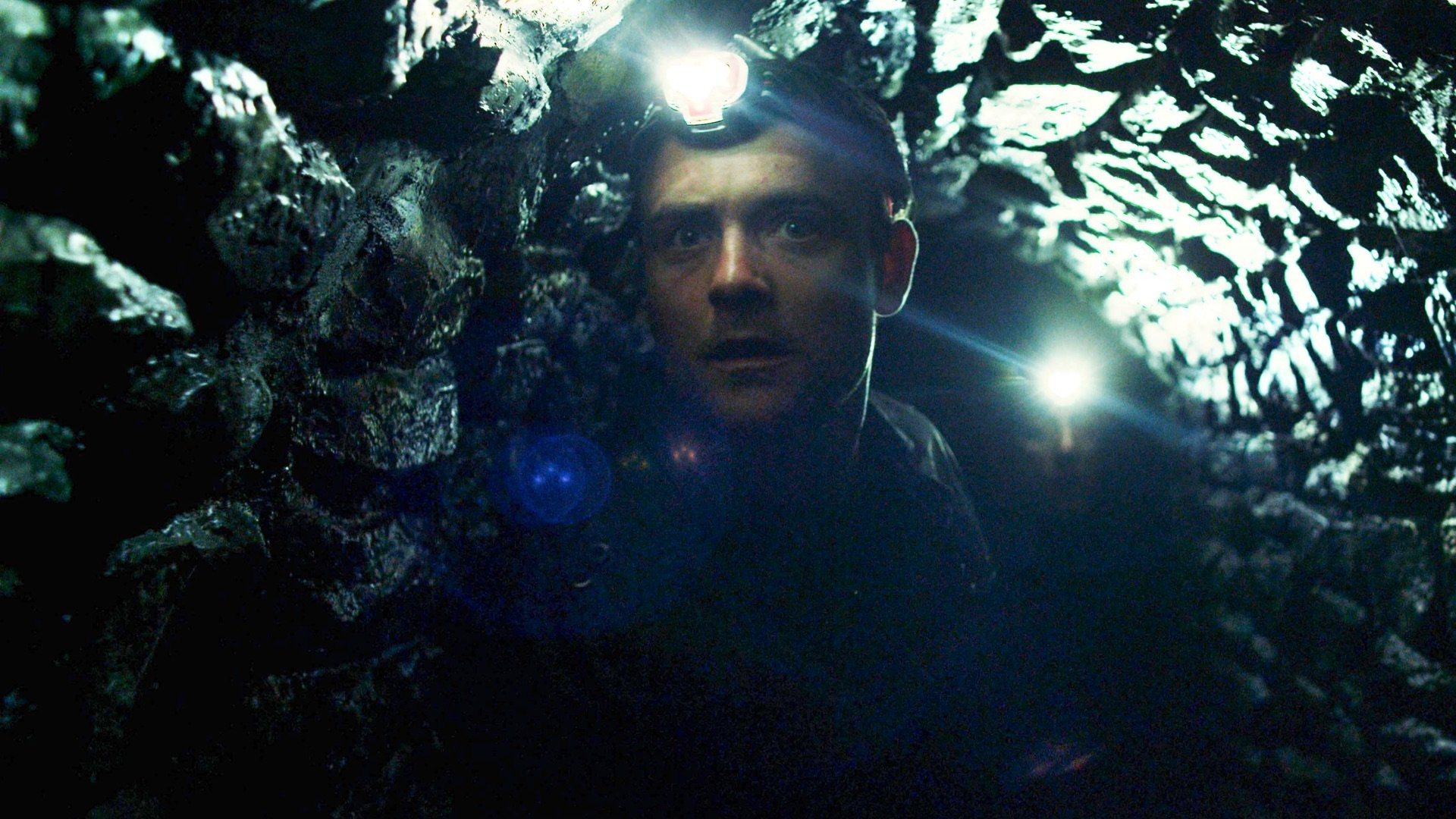
The woodland ceremony brings the occult structure into the open. Jay and Gal observe masked participants and a public act of sacrifice before their attempt to intervene produces an armed pursuit. The attackers move through darkness with a confidence that leaves the two former soldiers unable to predict where danger will appear. Underground passages turn the chase into a series of brief encounters illuminated by narrow beams of light. Gal is fatally wounded, and the partnership that has carried the middle portion of the film ends without solving the mystery. Jay returns to the refuge where Shel and Sam are staying, only to discover that the ceremony has followed him home.
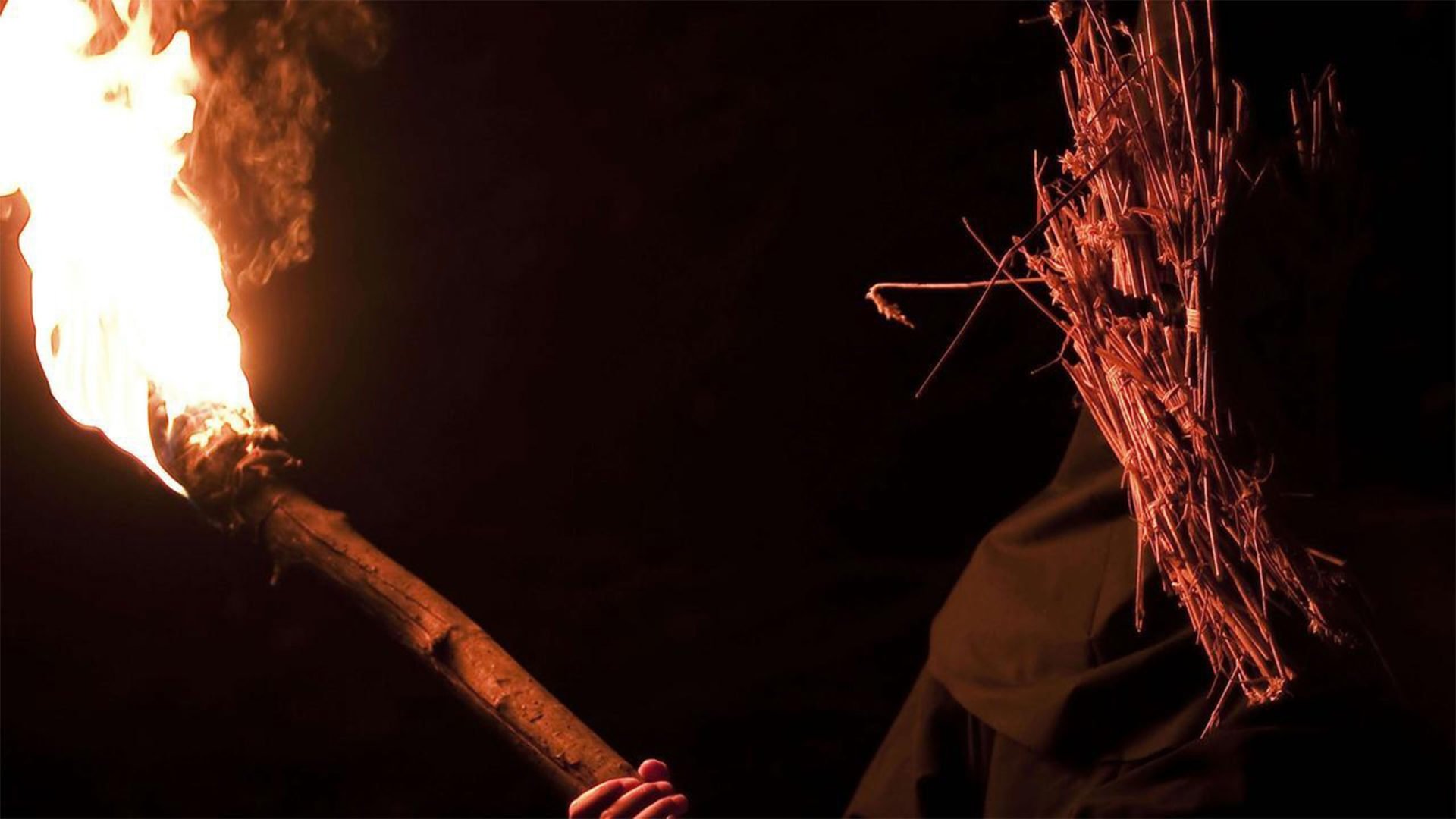
Wheatley acknowledged The Wicker Man as a significant reference, particularly his childhood memory of a climax that reveals the protagonist has been led into a trap. He also cited The Parallax View and Race with the Devil when explaining the film's narrative design. His invented congregation was not intended as a documentary representation of an existing faith. He described imagining an ancient religious structure whose rites had come to revolve around money. Torches, masks and the gathering's coordinated movements establish communal purpose, but no character supplies an authoritative history of the sect or an exhaustive account of its beliefs.

In the final confrontation, Jay attacks a masked hunchback and discovers that the person beneath the disguise is Shel, carrying Sam on her back. His victory in the knife fight becomes the destruction of his family, and the assembled group crowns him. This revelation completes the convergence of domestic vulnerability and the profession of killing. The ritual has engineered a situation in which a father who habitually relies on violence cannot recognize his own loved ones. Wheatley said he wanted the conclusion to remain interpretable, and the existence of an organized cult within the narrative does not settle whether every preceding omen was supernatural or how much of Jay's conduct was anticipated.

Performances, Photography and Editing

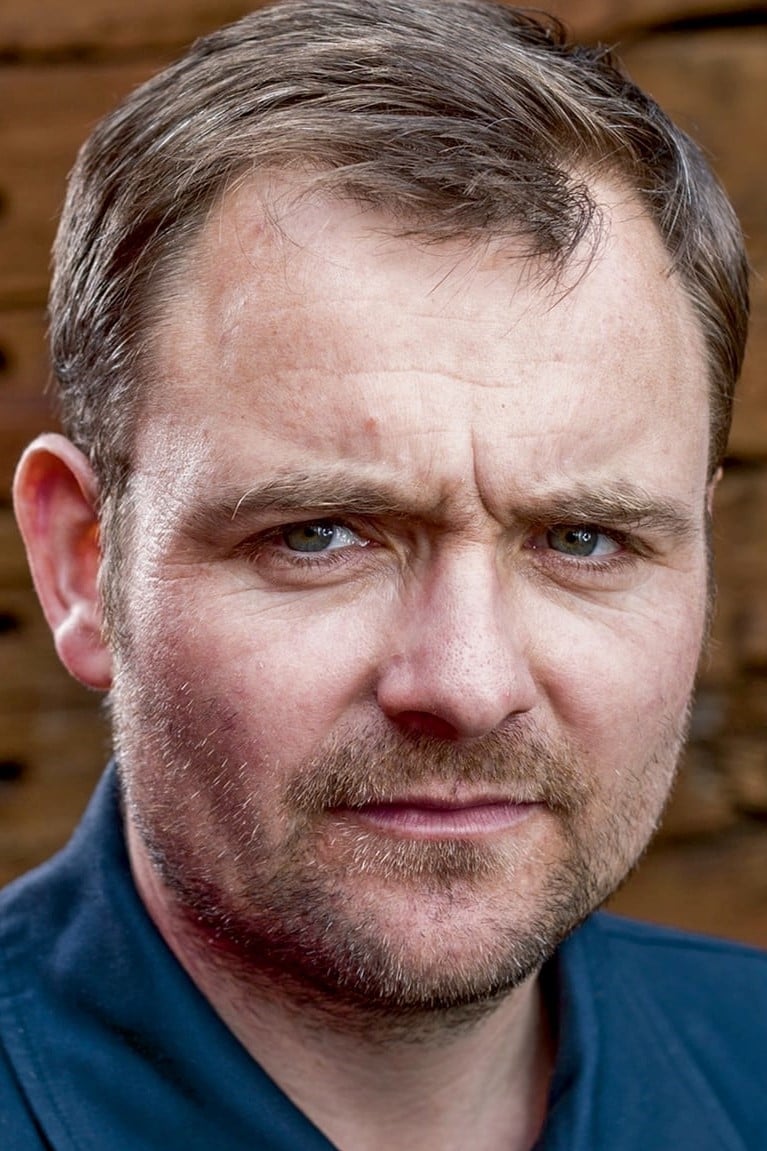
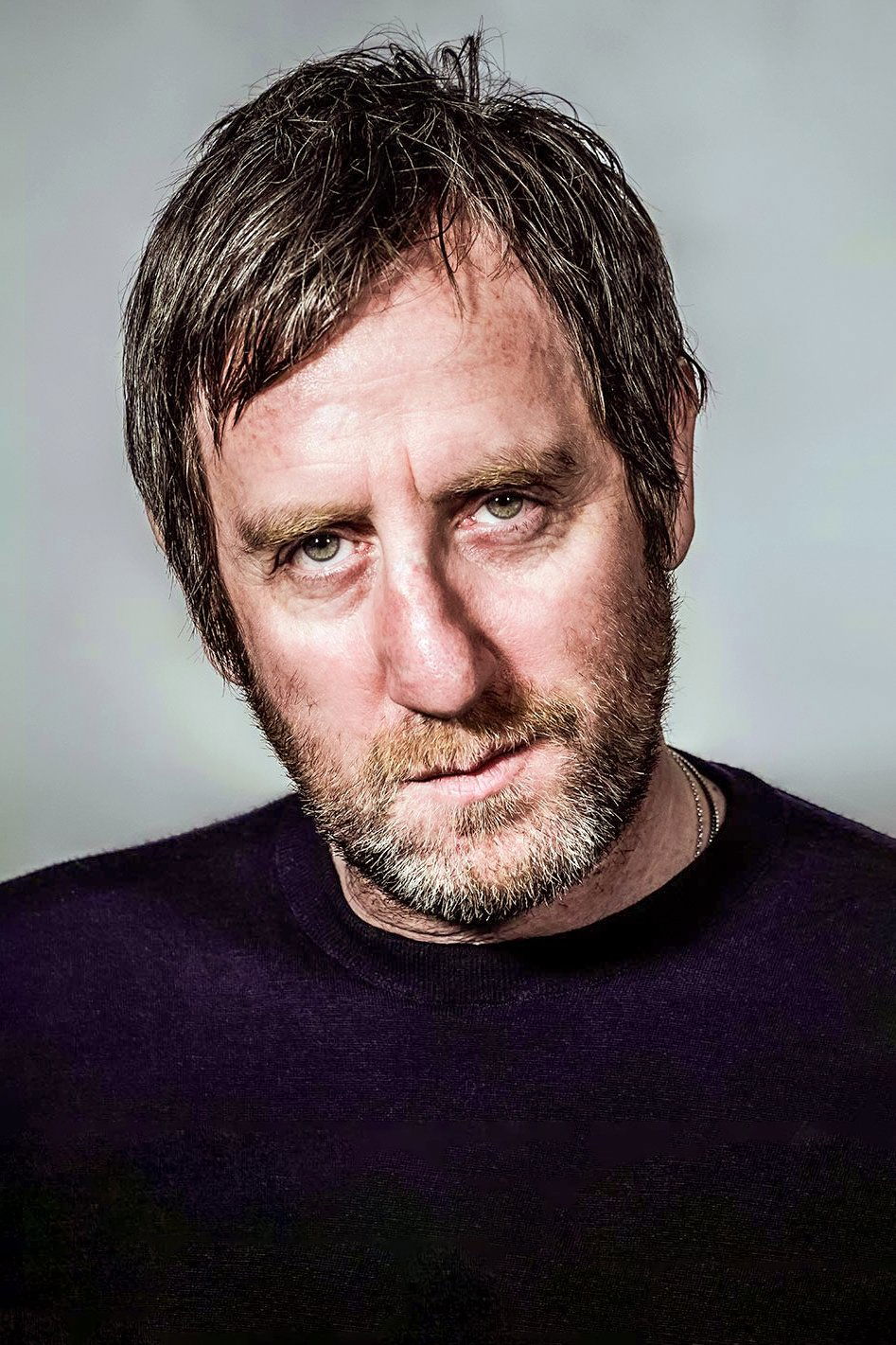
Neil Maskell gives Jay a volatile physical presence, moving rapidly from withdrawal to explosive aggression. Michael Smiley's Gal provides a different rhythm through dry humor and attempts to keep the business organized. MyAnna Buring plays Shel as a capable participant in the family's decisions, willing to challenge Jay and eventually defend their refuge. The exchanges between these characters were shaped through a mixture of scripted dialogue and controlled improvisation. Wheatley told interviewers that performers might return to the written scene after experimenting with their own wording, allowing the edit to select moments that sounded natural while preserving dramatic purpose.

Laurie Rose's cinematography sustains the impression of an accessible, everyday world even as the film becomes strange. Handheld movement, partial views and shallowly explained gestures leave the audience scanning ordinary backgrounds for possible threats. The opening house scenes can feel observational, while the later estate and tunnels deny stable visual orientation. There is no sudden substitution of polished fantasy photography for a social drama. The same camera language becomes more hostile as unfamiliar figures occupy the landscapes. This continuity is important to a film whose horror grows inside the visual habits established at the start.

Wheatley and editor Robin Hill worked with Jump on the structure in post-production. Speaking to Adam Nayman, the director described editing as a final draft of the screenplay and explained how early jump cuts created permission for increasingly abrupt transitions. Jump's involvement in the cutting was also acknowledged in The Guardian's contemporary profile. The technique makes a pause, a wave or an unexpected change of angle disturb scenes that contain no visible threat. The result is a film in which everyday exchanges never become completely settled, preparing viewers for later events without disclosing the precise direction of the story.

Sound Design, Classification and Reception

Jim Williams composed the score, developing textures that intensify uncertainty without always announcing a conventional jump scare. Wheatley told IndieLondon that the filmmakers experimented in the edit with material inspired by Morton Feldman, slowed dramatically to create provisional soundscapes for Williams to develop. He also described vocal music drawn from an old-language text and a layered effects track that included processed animal and underwater sounds. In the tunnels, those artificial voices and noises make it difficult to separate an approaching human body from an environmental threat. The soundtrack supplies much of the sequence's disorientation even before the pursuit reaches the frame.

Kill List appeared on the festival circuit in 2011, including SXSW, before its United Kingdom release on 2 September. The BBFC classified the theatrical version on 14 July 2011, recording a duration of 95 minutes and 28 seconds and warning of very strong bloody violence. Its public records also list a physical-media submission that November at 91 minutes and 30 seconds. The shorter home-video time should not automatically be described as evidence of censorship: different transfer rates can affect listed durations. No cuts are indicated on those public BBFC entries. The violence was a prominent feature of contemporary discussion, especially the hammer assault and the final sacrificial scenes.

British critics recognized the film's unusual movement between realism and occult terror. Philip French discussed its relationship to The Wicker Man in The Observer, while Adam Nayman examined its violence and fractured editing in Cinema Scope. The British Film Institute later placed it among notable late-night films, citing a blend of psychological suspense and folk-horror traditions. These assessments document a developing critical identity, not universal agreement about the ending. Its enduring contribution is the way a recognizable domestic and working life is drawn into a ritual designed to convert a violent professional into the perpetrator of his own deepest fear.

References

  1. Cinema Scope Hammer Horror: Ben Wheatley's Kill List

    Adam Nayman provides an extended formal study and a substantial interview with Wheatley on improvisation, jump cuts, military violence, the invented cult and the final ritual.

  2. The Guardian Kill List: It's a War Film, It's a Horror Film, It's Complicated

    Damon Wise interviews Wheatley about the script, financial pressure, military experience, the occult emblem and the deliberately unresolved ending.

  3. Bloody Disgusting SXSW 2011: Interview with Kill List Director Ben Wheatley

    Original discussion with Wheatley and Michael Smiley about the shift from realism to horror, improvisation, the central hammer scene and imagined ritual traditions.

  4. IndieLondon Kill List: Ben Wheatley Interview

    In-depth original conversation on childhood dreams, the finale, the film's war context, practical gore, Jim Williams's score and the layered sound design.

  5. British Board of Film Classification Kill List: Classification History

    Official British cinema and physical-media records documenting the 2011 classification dates, runtimes and detailed warnings for graphic violence.

Cast

View Full Cast & Crew →

Release & Distribution

Production Companies (7)

  • Film4 Productions GB
  • Madman Entertainment AU
  • NonStop Entertainment SE
  • Protagonist Pictures GB
  • Rook Films GB
  • UK Film Council GB
  • Warp X GB

Release History (36)

Release DateTerritoryRelease TypeFormatDistributorCertificationNotes
2011-03-12 United States Premiere — — NR South by Southwest Film Festival
2011-08-20 Finland Premiere — — K-18 Espoo Film Festival
2011-08-28 United Kingdom Premiere — — — Frightfest
2011-09-02 United Kingdom Theatrical — — 18
2011-09-02 Ireland Theatrical — — 18
2011-09-03 France Premiere — — — L'Étrange Festival
2011-09-16 Finland Premiere — — K-18 Helsinki International Film Festival
2011-09-17 Canada Premiere — — 18A Toronto International Film Festival
2011-09-17 France Premiere — — — Strasbourg European Fantastic Film Festival
2011-09-29 Canada Premiere — — — Vancouver International Film Festival
2011-10-29 Greece Premiere — — — Panorama of European Cinema
2011-11-11 Argentina Premiere — — 18 Mar del Plata Film Festival
2011-11-11 Sweden Premiere — — 15 Stockholm International Film Festival
2011-12-25 Denmark Theatrical — — 15
2011-12-26 United Arab Emirates Physical DVD — — DVD
2011-12-26 Brazil Physical DVD — — DVD
2011-12-26 Philippines Physical DVD — — DVD
2012-01-04 United States Digital — — NR
2012-01-11 Australia Physical DVD — R 18+ DVD
2012-01-27 Netherlands Premiere — — 18 International Film Festival Rotterdam
2012-02-03 United States Theatrical — — NR (limited)
2012-03-08 Portugal Theatrical — — M/18
2012-03-31 France Premiere — — — Beaune Film Festival
2012-04-06 Germany Physical DVD — 18 DVD
2012-04-07 France Premiere — — — Lyon Festival Hallucinations Collectives
2012-04-18 Sweden Physical DVD — 15 DVD
2012-04-20 United States Premiere — — — Wisconsin Film Festival
2012-06-02 Japan Physical DVD — R18+ DVD
2012-07-11 France Theatrical — — 16
2012-08-04 Switzerland Premiere — — 18 Locarno Film Festival
2012-09-14 Hungary TV — — —
2012-12-05 Israel Physical Blu-ray — — Blu-Ray
2013-01-07 Netherlands Physical DVD, Blu-ray — 16 DVD and Blu-ray
2013-01-09 Belgium Theatrical — — 18
2014-01-21 Italy TV — — —
2015-11-12 South Korea Theatrical — — 18
Who’s next?