Embodiment of Evil (2008)

BR
HORROR FILM Thriller
Runtime
94 min
Release
August 8, 2008
Embodiment of Evil (2008) poster
Production Companies
Gullane Entretenimento , Olhos de cão
Plot

After approximately four decades confined to a psychiatric institution, the undertaker Zé do Caixão is released into contemporary São Paulo. He resumes his pursuit of a woman capable of bearing the child he believes will preserve his bloodline, gathering followers and attracting the attention of people determined to stop him. Memories of his earlier crimes and disturbing apparitions accompany his return. As the city confronts the violence associated with his name, the aging Coffin Joe struggles to complete the ambition that has defined his life.

Alternative Titles
恶魔化身 (China) — Chinese 惡魔化身 (Hong Kong SAR China) — Chinese 악의 화신 (South Korea) — Korean Реинкарнация демона (Russia) — Russian

Trailers & Videos

2 videos

Film Guide & Analysis

José Mojica Marins completes the Coffin Joe trilogy after four decades, joining practical horror spectacle to the modern violence and religious anxieties of São Paulo.

Embodiment of Evil (Encarnação do Demônio, 2008) concludes the Coffin Joe trilogy that José Mojica Marins began with At Midnight I'll Take Your Soul (1964) and continued in This Night I'll Possess Your Corpse (1967). Its central figure, the undertaker Josefel Zanatas, emerges after four decades of imprisonment without abandoning his plan to father a child who will perpetuate his blood. Returning to São Paulo, he encounters followers, enemies and apparitions from his earlier crimes. The persistence of that objective gives the film continuity with the black-and-white productions, while its urban locations and graphic violence place the undertaker in a markedly different cinematic environment.

The return was also an event in Brazilian film production. Marins had tried for decades to complete the story, and the eventual collaboration with screenwriter Dennison Ramalho and producers associated with Olhos de Cao and Gullane brought a larger crew to a filmmaker identified with resourceful independent methods. The result joins theatrical horror imagery to the visual and social conditions of contemporary São Paulo. Its historical value includes the circumstances of this unusually delayed sequel, the renewed debate around the representation of violence, and the way a familiar antagonist was made to confront a country transformed since the 1960s.

Four Decades Between Script and Screen

Marins had intended to continue the Coffin Joe story almost immediately after his 1967 film. In interviews published around the eventual release, he recalled plans dating to 1966 or 1967, repeated attempts to secure financing and the collapse of prospective arrangements when producers died. These recollections help account for the length of the delay, but they should be read as the director's personal history rather than as a complete record of every abandoned contract. The military dictatorship and the censorship that had already altered the ending of the 1967 sequel formed another part of his explanation for why the project could not be realized in its original period.

The revival followed a meeting with Dennison Ramalho and producer Paulo Sacramento at the beginning of the 2000s. Marins described an initially skeptical response to yet another proposal, followed by work on a script that could actually be financed. Ramalho represented a younger generation of Brazilian horror filmmakers familiar with the earlier Coffin Joe films. The production was eventually mounted with Gullane Filmes, bringing Marins into contact with a significantly larger professional team. A December 2006 interview in Folha reported forty days of shooting ending on December 20 and contrasted a crew of about seventy with the much smaller units employed on Marins's older films.

That increase in resources did not make the production straightforward. Actor Jece Valadao died during filming, an event reported by Folha and later recalled by Marins. The director also described the practical difficulty of supervising elaborate scenes involving living animals and actors unfamiliar with his working methods. These events are more useful to the film's production history than the legend of a cursed undertaking. They show a filmmaker trying to realize an old project with new collaborators, contemporary regulations and expectations that differed substantially from those of his earliest productions.

Rewriting Coffin Joe for a Changed Brazil

Coffin Joe enters the film as a survivor of his own mythology. The opening places his release from confinement within a modern institutional setting before he returns to the search that structured the first two films. He continues to speak of a superior woman and an heir capable of extending his bloodline. Age has not produced repentance, and the narrative gives him adherents who treat his ideas as a form of liberation. Yet his declared independence from morality still depends upon coercion and the reduction of other people to instruments of his personal project. The contradiction, present in the earlier films, becomes more visible as his followers actively help carry out his demands.

Marins and Ramalho did not agree on every aspect of the character. In a 2008 interview for Revista Zingu!, Marins said he rejected proposals that would have granted Coffin Joe overt superpowers. He wanted the undertaker to remain a human figure whose influence came from persistence and the force of his personality. The interview is a valuable statement of creative intention, although it presents the disagreement from Marins's side. The film's heightened apparitions and stylized scenes are therefore better understood as part of its horror language than as proof that the protagonist has become an ordinary comic-book supernatural hero.

The story also reconnects with the censorship history of the second film. Its visions and memories return to the traumatic events around the earlier conclusion, including the problem of Joe's confrontation with religious belief. Rather than simply pretending that forty years have not passed, Embodiment of Evil makes the passage of time a narrative condition. The character's old crimes have generated people and institutions determined to confront him. His insistence on eternal reproduction consequently collides with a history that he cannot control, even when his own followers accept his account of himself.

São Paulo and the Horror of the City

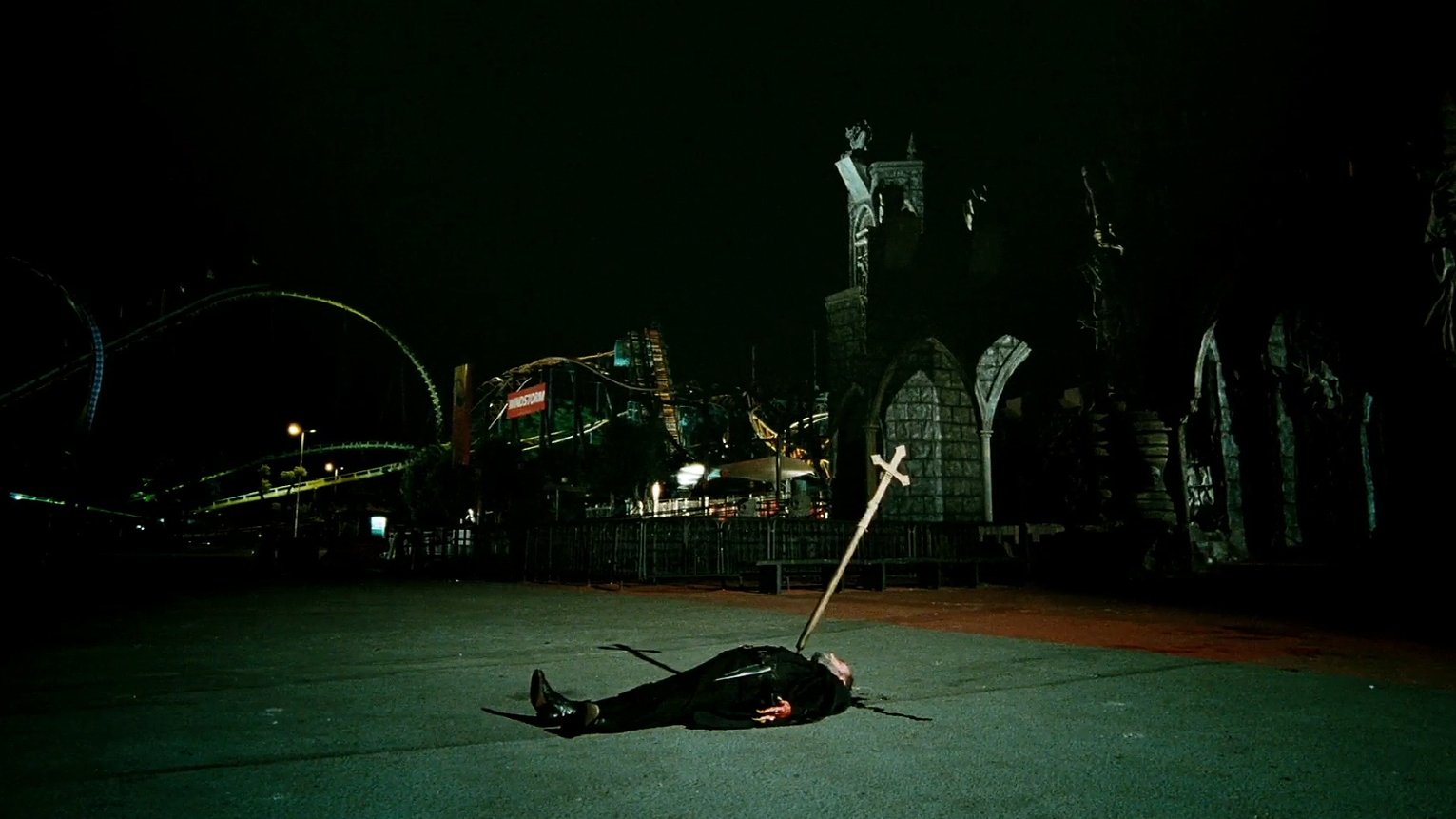
The modern city is more than a location for an old villain's return. Coffin Joe moves through a São Paulo marked by overcrowded neighborhoods, armed policing and the proximity of organized violence. His underground retreat provides a place for the congregation that forms around him, while the streets outside carry threats that do not originate with his supernatural visions. This shifts the trilogy away from the relatively contained social world of the first films. The police, criminal networks and followers have competing claims over the same urban spaces, creating a setting in which Coffin Joe is one source of terror among several.

A 2025 study by Brazilian film scholar Laura Loguercio Cánepa places Embodiment of Evil in conversation with contemporary debates over urban violence. Her analysis also treats the production as part of a larger mobilization of artists, critics and fans around Brazilian horror cinema. This is an interpretive framework, not evidence that every image was conceived as a direct reference to a particular political event. It helps explain why the third installment cannot be evaluated entirely as an exercise in reviving the visual habits of the 1960s. The move into the contemporary metropolis broadens the series' account of cruelty beyond an individual antagonist's private rituals.

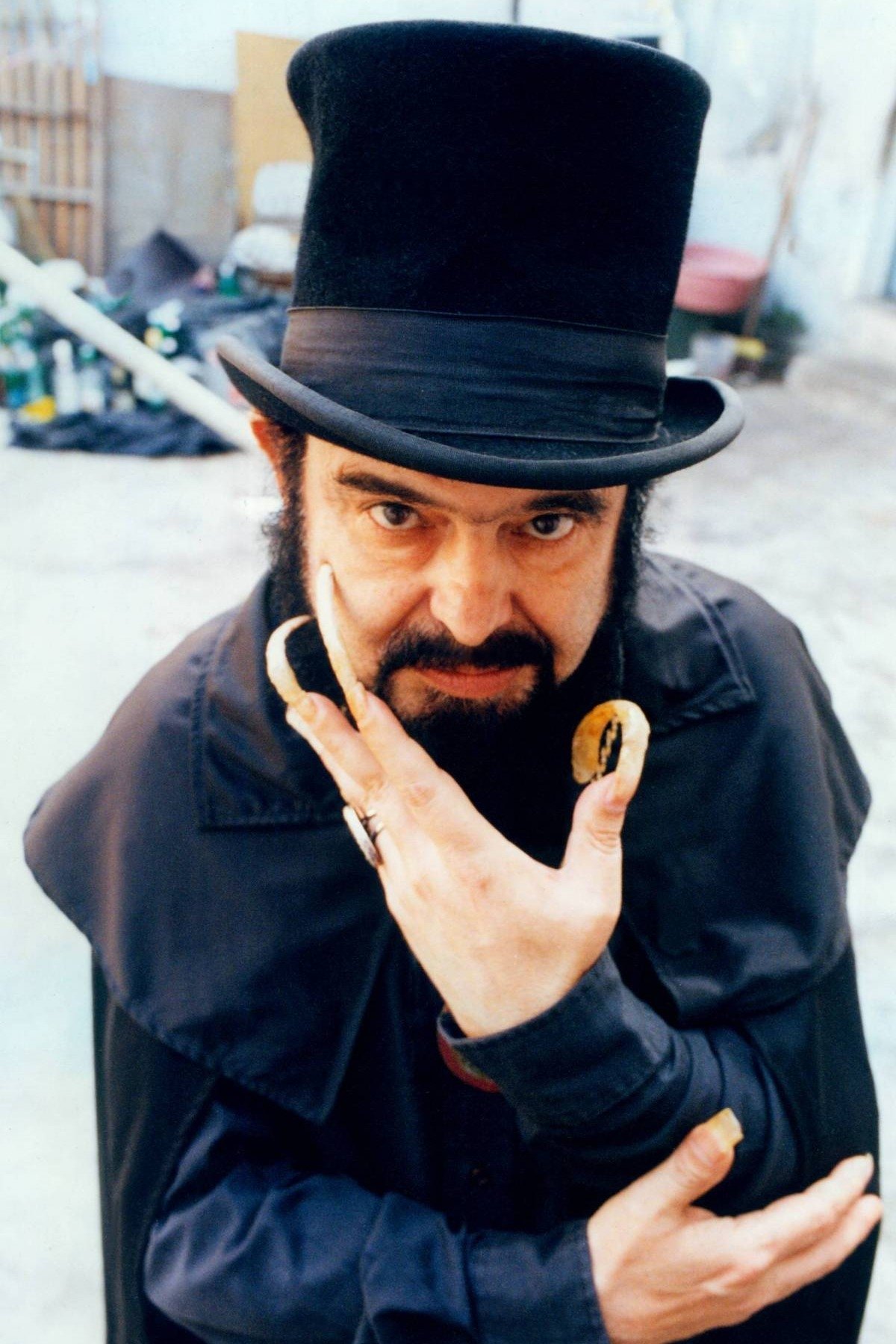
The new social environment does not erase the theatrical nature of the character. Coffin Joe remains visually conspicuous, with his dark costume, nails and commanding gestures making him seem out of step with the spaces he enters. His followers, by contrast, belong unmistakably to the film's present. The mismatch creates a specific dramatic tension: a figure identified with an earlier form of Brazilian genre filmmaking becomes the center of a modern group organized around his old beliefs. The filmmakers use that tension to connect a long-delayed sequel to the country in which it was finally produced.

Color, Design and the Return of the Supernatural

The change from the largely monochrome earlier films to sustained color photography alters the trilogy's visual balance. Cinematographer José Roberto Eliezer and production designer Cassio Amarante helped establish spaces of intense color and physical density. The underground headquarters, crowded rituals and visions of punishment can be difficult to separate from ordinary environments because the film does not reserve extravagance for a single descent into Hell. In the 1967 sequel, the sudden appearance of color made the infernal episode a rupture; here heightened visual design accompanies Coffin Joe from much earlier in the narrative.

Memories of former victims periodically interrupt his movements through the city. The apparitions give the new film a dialogue with episodes from the first two entries while subjecting the undertaker to consequences he would prefer to deny. In these passages, shifts of lighting and staging make the present unstable. Bodies and faces emerge from spaces already saturated with theatrical detail. The result extends the series' fascination with religious punishment, yet its contemporary visual vocabulary changes the rhythm of those confrontations. The viewer repeatedly moves between physical environments and images that might be interpreted as haunting, guilt or supernatural retribution.

Contemporary reviewers differed in their judgments of this enlarged style. A 2008 ScreenAnarchy review by Fernando Verissimo praised the color photography, editing and production design while emphasizing the film's excessive violence. Those observations are useful evidence of contemporary critical reception rather than proof that every formal choice succeeded. Compared with the older features, the 2008 production has more technical flexibility, but Marins still depends heavily on the recognizability of his own performance. His close-ups, gestures and unwavering stare remain central to the movement between realistic settings and grotesque visions.

Practical Effects, Animals and the Labor of Shock

Embodiment of Evil builds many of its shocks around prosthetic injury, staged mutilation and the presence of living creatures. Kapel Furman's effects work was singled out in a contemporary ScreenAnarchy review for retaining the artisanal quality associated with the earlier films. The picture repeatedly confronts performers with animals and manufactured body parts in spaces arranged to sustain audience attention. These images cannot be explained by merely listing the punishments shown on screen. Their impact depends on timing, bodily proximity and the relationship between a convincing material object and the actor responding to it.

Marins repeatedly insisted in interviews that he wanted handmade effects. In Revista Zingu! he described a blood-rain scene as physically exhausting, recalling heavy costume materials and substantial quantities of stage blood. In a separate Folha interview, he spoke about working with live spiders and cockroaches and about the need for animal-handling documentation that his 1960s shoots had not required. These accounts document the kind of physical work he wanted the images to display. Exact figures offered in recollection, including the quantity of blood, should be treated as claims by a participant rather than independently measured production statistics.

The presence of actual animals does not imply that the simulated injuries depicted elsewhere are real. The film's violence is a constructed performance involving makeup, props, editing and controlled action. Nor does the director's preference for practical work establish the total absence of digital finishing. The historically significant distinction is that the shock is organized around photographed physical material at a time when computer-generated effects were increasingly common. This approach preserves continuity with Marins's early methods while reflecting a production capable of planning far larger and more complex sequences.

Religion, Memory and Moral Conflict

Coffin Joe's atheistic declarations have always been entangled with the religious world he attacks. In the original films, his rejection of conventional belief produces curses, visions and encounters in which the possibility of supernatural judgment becomes impossible to ignore. Embodiment of Evil repeats the underlying dispute without merely reconstructing the climax of the 1967 sequel. The undertaker is surrounded by people who understand his acts through grief and vengeance, while the bodies of earlier victims return as disturbing reminders. Those images make history visible in a series whose protagonist refuses to recognize any moral law above his own desire.

His pursuit of an heir adds a different form of contradiction. A man who claims to be superior to inherited custom remains dependent upon a reproductive ideal that treats women as carriers of his own future. The film subjects women to trials and violence, but it also depicts the failure of Joe's plan to isolate reproduction from the relationships and histories of the people he harms. The effect can be discussed as a critical reading of the character's ideology; it should not be confused with an explicit endorsement of that ideology by the director or the film. The conflict is most forceful when the imagery itself undermines the certainty of Joe's speeches.

The return of the supernatural also distinguishes the final chapter from a purely realistic serial-killer picture. Joe's world contains rituals, ghosts and visions that exceed the literal claims of his followers. Their function is partly narrative, connecting the completed trilogy across a long interval, and partly aesthetic, allowing the film's extravagant staging to challenge the authority of the central figure. This combination of provocation and religious imagery has been a durable element of Marins's horror. Here it is revisited after decades in which both Brazil and the visual conventions of the genre had changed.

Release, Reception and Historical Position

Embodiment of Evil was screened at the Paulinia film festival in July 2008 before its Brazilian theatrical opening on August 8. A contemporary Folha de S.Paulo report recorded the screening, the director's remarks about earlier failed attempts to make the film and the audience's visibly divided response. The film subsequently circulated through international genre festivals and reached other territories. These stages should be distinguished from one another: a festival presentation, a domestic theatrical opening and later international exhibition are not a single release event. The available sources do not support treating partial admissions figures or publicity estimates as a comprehensive measure of global revenue.

The new film was unusually explicit for a work associated with a director already notorious for his earlier horror. Marins described the production as the realization of a long-standing ambition, while contemporary reviewers registered both its grotesque excess and its unexpectedly elaborate craft. Verissimo's account for ScreenAnarchy particularly emphasized the precision of the images and the effectiveness of the practical work. Other viewers found the mixture of heightened performance and graphic violence more difficult to accept. The distinction between acclaim for Marins's historical role and approval of the 2008 film is important: celebrations of the filmmaker's return do not by themselves establish uniform critical enthusiasm for the result.

Its later significance rests on more than the elapsed time between installments. The film gave the original creator an opportunity to direct the conclusion of his own central horror mythology, while collaborators from a younger Brazilian generation helped move that mythology into a more commercially organized production environment. Cánepa's later scholarship identifies the project as a point of convergence for people working to expand the place of horror within Brazilian cinema. That account provides a grounded way to discuss the film's legacy without claiming that one release single-handedly established a national genre. Embodiment of Evil remains a meeting point between handmade transgression, industry change and the cultural history of Coffin Joe.

References

  1. Revista Zingu!Entrevista com José Mojica Marins - Parte 2: Encarnação do Demônio

    Gabriel Carneiro, Raphael Carneiro and Stefanie Gaspar interview Marins on decades of failed production plans, collaboration with Dennison Ramalho and the practical effects shoot.

  2. Folha de S.PauloZé do Caixão finaliza trilogia de A Meia-Noite Levarei Sua Alma

    Ivan Finotti reports directly from the December 2006 production, with Marins discussing the expanded crew, animal sequences, and conditions of the shoot.

  3. Folha de S.PauloZé do Caixão aterroriza Paulinia com Encarnação do Demônio

    Silvana Arantes documents the July 2008 festival screening, the production history recounted by Marins and the initial public response.

  4. ScreenAnarchyEMBODIMENT OF EVIL Review

    Fernando Verissimo reviews an early 2008 screening, assessing the visual design, cinematography, practical effects and urban setting.

Connections

Cast

View Full Cast & Crew →

Release & Distribution

Production Companies (2)

  • Gullane Entretenimento BR
  • Olhos de cão

Distributors (1)

  • 20th Century Studios US

Release History (4)

Release DateTerritoryRelease TypeFormatDistributorCertificationNotes
2008-08-08 Brazil Theatrical — — 18
2008-08-08 Germany Theatrical — — 18
2008-08-08 United States Theatrical — — NC-17
2023-06-08 South Korea Digital — — 19
The return of the master of horror