Let the Right One In (2008)

SE
HORROR FILM Drama
6.3/10 4 votes
Runtime
115 min
Release
January 26, 2008
Budget
$4,000,000
Revenue
$10,785,801
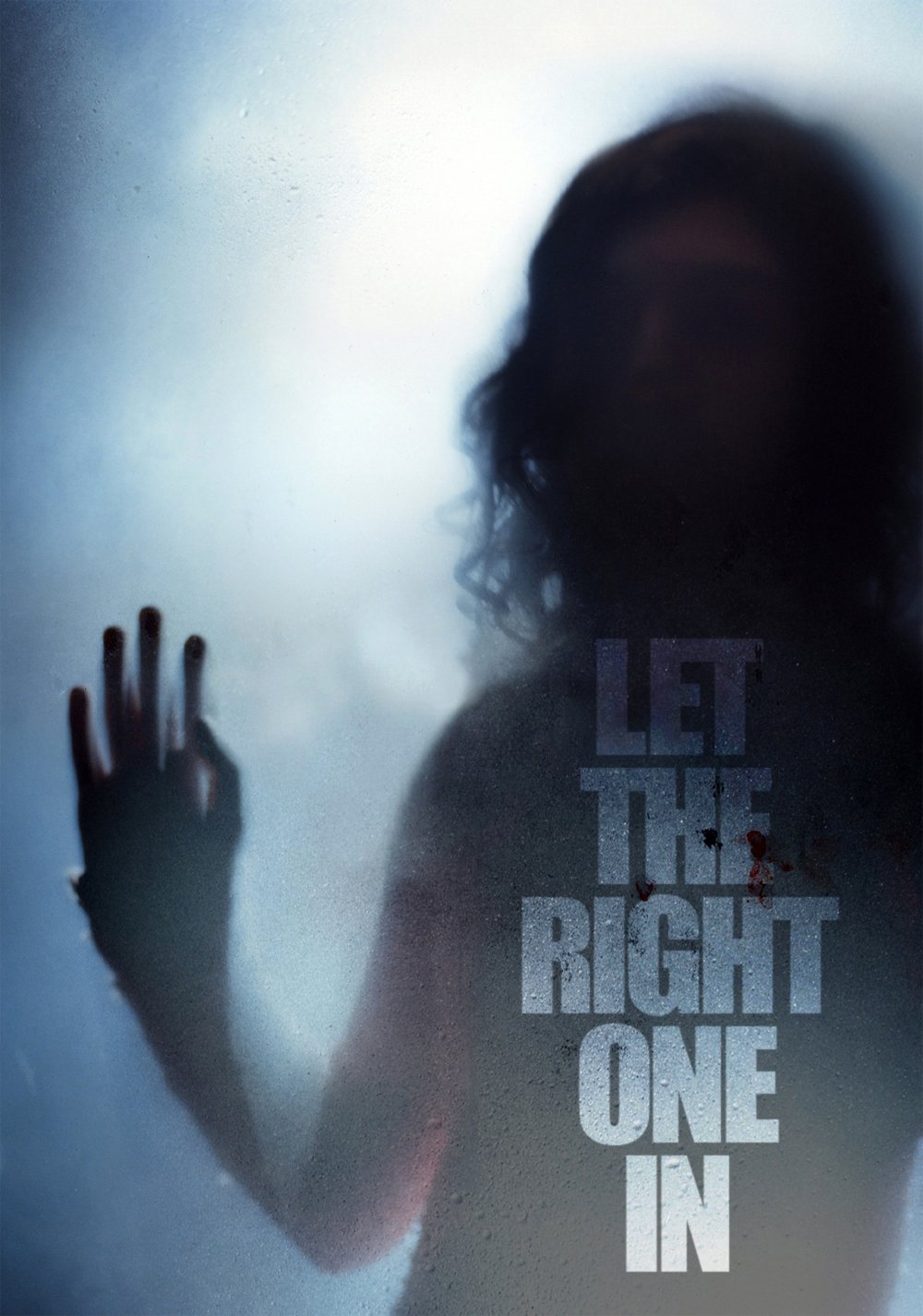
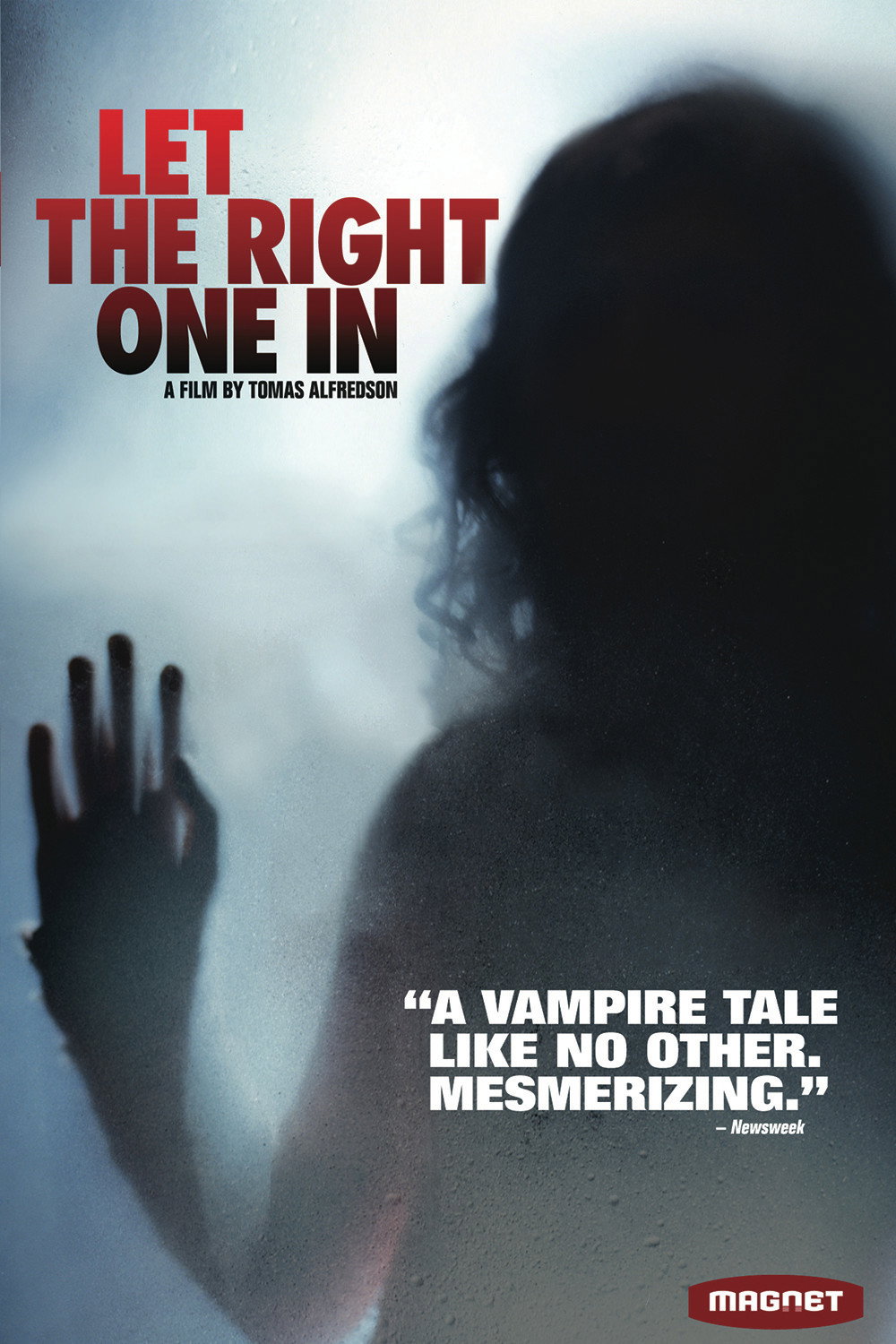
Let the Right One In (2008) poster
Director
Production Companies
EFTI , Bavaria Film International , Sandrew Metronome Sverige , Filmpool Nord , Sveriges Television , WAG , Fido Film , Chimney Sweden
Plot

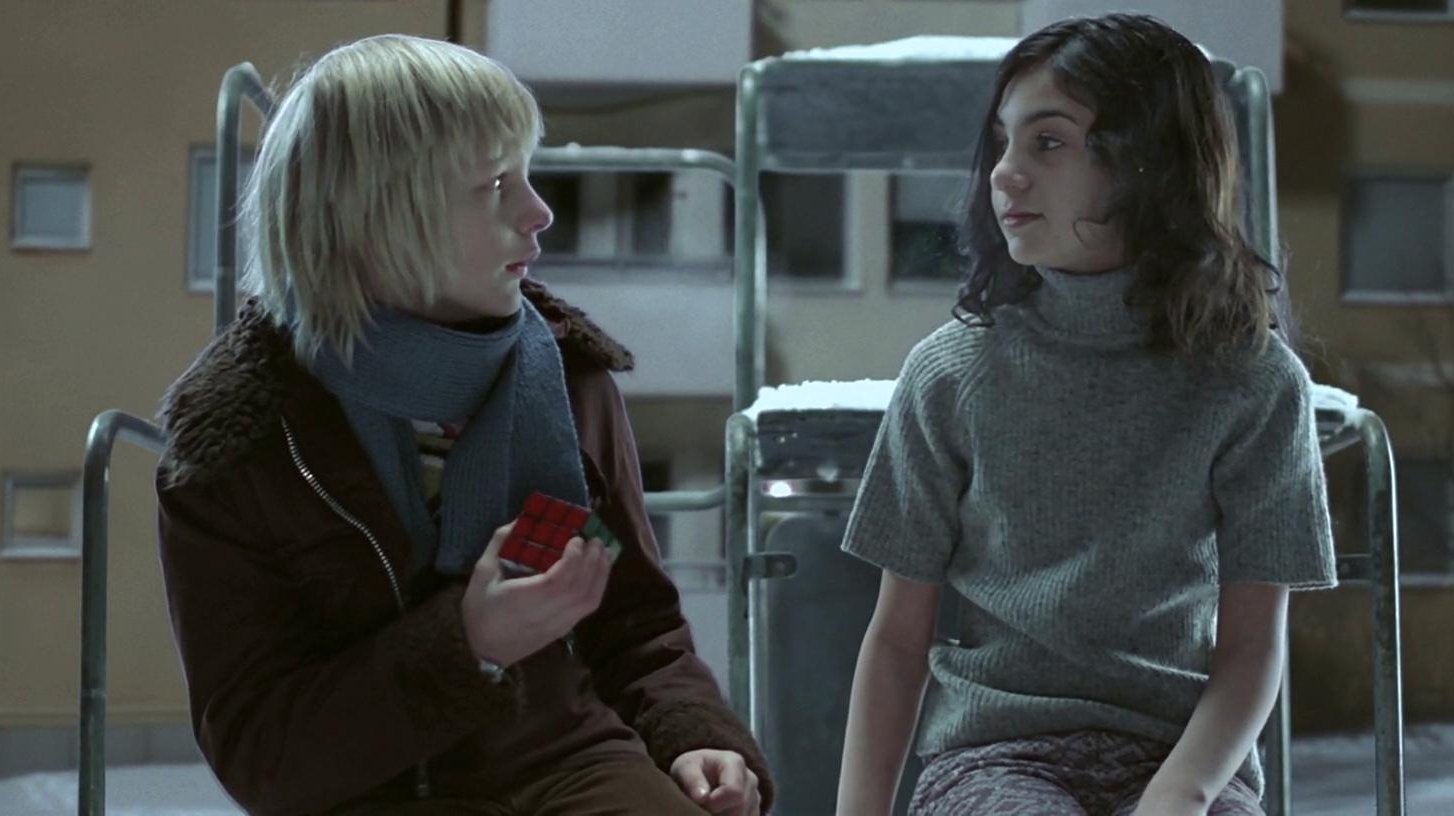
Set in 1982 in the suburb of Blackeberg, Stockholm, twelve-year-old Oskar is a lonely outsider, bullied at school by his classmates; at home, Oskar dreams of revenge against a trio of bullies. He befriends his twelve-year-old, next-door neighbor Eli, who only appears at night in the snow-covered playground outside their building.

Alternative Titles
Покани ме да вляза (Bulgaria) — Bulgarian Deixa Ela Entrar (Brazil) 生人勿进 (China) — Chinese 血色入侵 (China) Ať vejde ten pravý (Czechia) — Czech So finster die Nacht (Germany) — German Lad den rette komme ind (Denmark) — Danish Lase sisse see õige (Estonia) — alternative title
Show all 35 alternative titles Luba sisse see õige (Estonia) Deixa’m entrar (Spain) — Catalan Déjame entrar (Spain) Utzidazu sartzen (Spain) — Basque Ystävät hämärän jälkeen (Finland) — Finnish Morse (France) Άσε Το Κακό Να Μπει (Greece) — Greek 血色童話 (Hong Kong SAR China) — Chinese Neka uđe onaj pravi (Croatia) — Croatian Engedj be! (Hungary) — Hungarian תן לאדם הנכון להיכנס (Israel) — Hebrew Lasciami entrare (Italy) — Italian ぼくのエリ 200歳の少女 (Japan) — Japanese 렛 미 인 (South Korea) — Korean Ielaid īsto! (Latvia) — Latvian Criatura de la noche (Mexico) — Spanish La den rette komme inn (Norway) Pozwól mi wejść (Poland) — Polish Deixa-me Entrar (Portugal) — Portuguese Legături de sânge (Romania) — Romanian Впусти меня (Russia) — Russian Nech vojde ten pravý (Slovakia) — Slovak แวมไพร์ รัตติกาลรัก (Thailand) — Thai Gir Kanıma (Türkiye) — Turkish 血色入侵 (Taiwan) — Chinese Впусти мене (Ukraine) — Ukrainian Mời Đúng Khách Vào Nhà (Vietnam) — Vietnamese

Trailers & Videos

4 videos

Film Guide & Analysis

Tomas Alfredson’s 2008 Swedish vampire horror adapts John Ajvide Lindqvist’s novel into a haunting portrait of childhood isolation, predatory survival and unexpected attachment, distinguished by Hoyte van Hoytema’s winter photography and Johan Söderqvist’s score.

Let the Right One In (Låt den rätte komma in, 2008) is a Swedish supernatural horror film directed by Tomas Alfredson from a screenplay by John Ajvide Lindqvist, adapted from his 2004 novel of the same name. Set in the Stockholm suburb of Blackeberg during the winter of 1982, it follows Oskar, a twelve-year-old boy subjected to persistent bullying, and Eli, a mysterious child who moves into his apartment building with an older companion. Their developing relationship gradually reveals that Eli is a vampire whose survival depends upon human blood. The film explores the intersection of childhood isolation, emotional attachment and predatory violence within an otherwise recognizable suburban environment.

Produced by John Nordling and Carl Molinder for EFTI, Let the Right One In was photographed by Hoyte van Hoytema and edited by Dino Jonsäter. Its distinctive visual treatment combines snow-covered landscapes, carefully organized compositions and extended periods of silence. The supernatural violence is presented through a combination of physical effects, digital imagery and offscreen action, while Johan Söderqvist’s score emphasizes the relationship between the two protagonists. First exhibited at international festivals in early 2008 and released theatrically in Sweden that October, the film received major critical recognition and became an influential contribution to contemporary vampire cinema.

Literary Origins & Adaptation

The film originated in John Ajvide Lindqvist’s debut novel Låt den rätte komma in, published in Sweden in 2004. Its narrative drew substantially upon the author’s memories of childhood in Blackeberg, a Stockholm suburb developed during the postwar expansion of Swedish housing. Lindqvist incorporated experiences of bullying and social isolation into a story about a boy whose relationship with a vampire gradually changes his understanding of friendship and violence. The novel places extraordinary events within a detailed account of everyday suburban life, including troubled families, alcoholism and the limited protection available to vulnerable children.

The adaptation was developed by Swedish production company EFTI, with John Nordling and Carl Molinder serving as producers. Tomas Alfredson became involved after reading the novel and responding particularly strongly to its depiction of Oskar. In a 2008 interview with ScreenAnarchy, he explained that his own difficult school experiences made the treatment of bullying especially meaningful. His interest in the project was therefore initially connected to the protagonist’s emotional circumstances. Alfredson had relatively little familiarity with vampire cinema and relied upon Lindqvist’s understanding of the genre’s mythology while developing the film.

Lindqvist wrote the screenplay himself, significantly condensing the novel’s numerous characters and parallel narratives. The adaptation concentrates upon Oskar and Eli, reducing the extensive histories of supporting figures. The older companion Håkan is particularly affected by these changes. His sexual interest in children, explicitly established in the book, remains largely outside the film’s narrative. Alfredson explained that such a difficult subject would require more extensive exploration than the adaptation could accommodate without overwhelming the central relationship. The film also withholds much of Eli’s history, preserving uncertainty about the character’s origins and the nature of the relationship with Håkan.
Oskar, Bullying & Childhood Isolation

Oskar lives with his mother in an apartment complex in Blackeberg, where the snow-covered courtyards and playgrounds appear almost deserted. His parents are separated, and his relationship with his father provides only intermittent relief from the difficulties of school. Classmates repeatedly humiliate him, subjecting him to threats and physical abuse. He responds by collecting newspaper reports about violent crimes and rehearsing imaginary acts of revenge with a knife. These private rituals reveal anger that he cannot express directly toward his tormentors. His apparent passivity conceals an increasingly developed fascination with retaliatory violence.

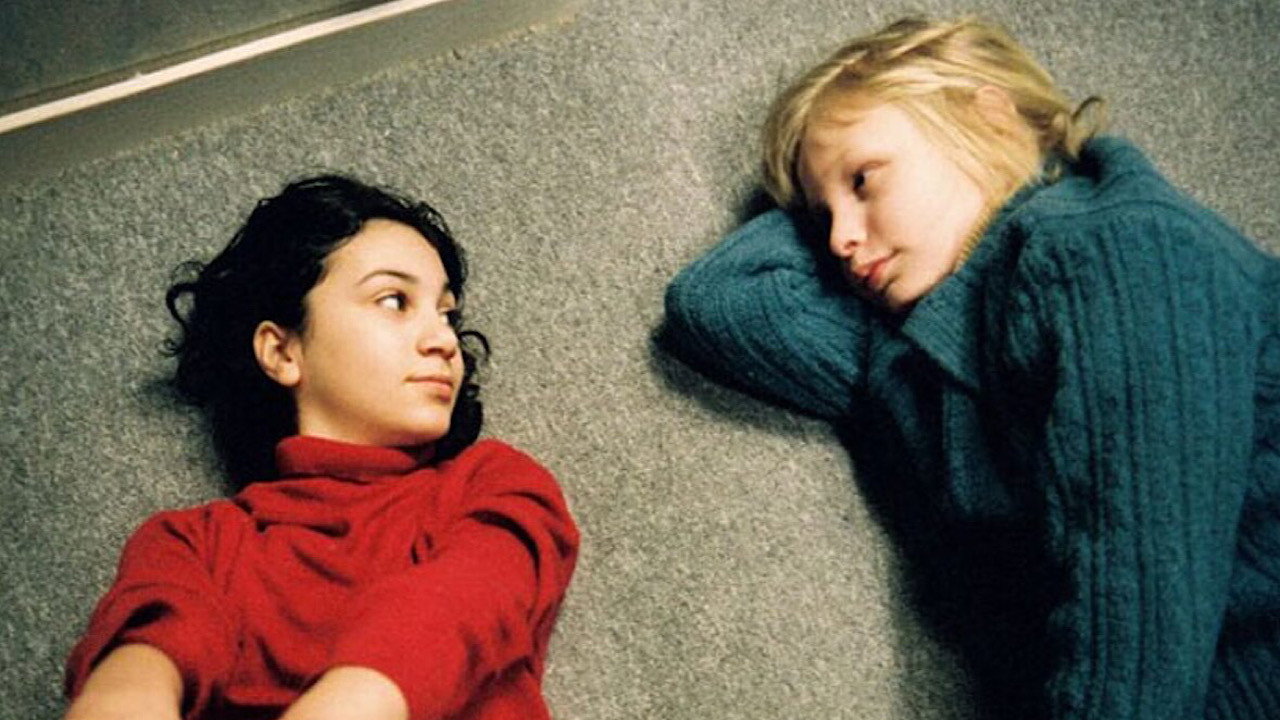
Eli appears one evening in the playground outside Oskar’s building. Although apparently the same age, the newcomer behaves differently from other children, remains outside in inadequate winter clothing and initially discourages further contact. Their relationship develops through repeated nighttime meetings, during which they exchange questions, share small possessions and gradually learn to communicate through the wall separating their apartments. The interactions have a tentative quality consistent with two socially isolated individuals discovering a form of companionship. Eli’s unusual behavior remains disturbing, but Oskar becomes increasingly willing to accept explanations that would ordinarily seem impossible.

The friendship also changes Oskar’s response to bullying. Eli encourages him to resist his attackers, and he eventually injures one of them during an encounter at a frozen lake. The incident demonstrates that the relationship is capable of strengthening his confidence while also bringing violence into his own behavior. Alfredson avoids presenting this development as a simple moral victory. The boy’s growing willingness to fight exists alongside his awareness that Eli survives through killing. Their connection repeatedly forces questions about the boundary between self-defense, retaliation and the willingness to overlook another person’s destructive actions.

Eli, Vampirism & Identity

Eli’s nature is revealed gradually through the activities of Håkan, the older man who accompanies the vampire to Blackeberg. He attempts to obtain human blood by murdering victims and collecting it in containers, but his efforts are increasingly unsuccessful. His practical responsibilities establish the disturbing relationship between Eli’s continued existence and violence committed by another person. When an attempted attack fails and threatens to expose him, Håkan disfigures himself with acid to prevent identification. His subsequent hospitalization leads to another encounter with Eli, who feeds upon him after he allows the vampire to approach his window.

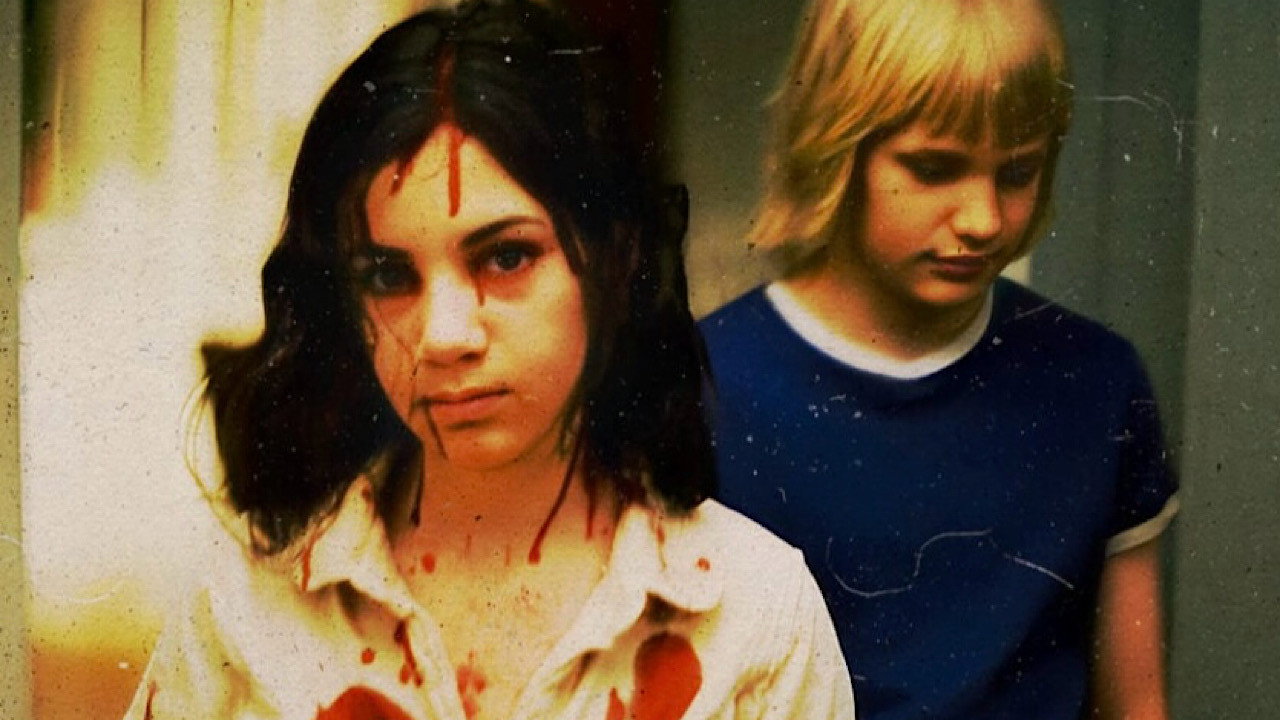
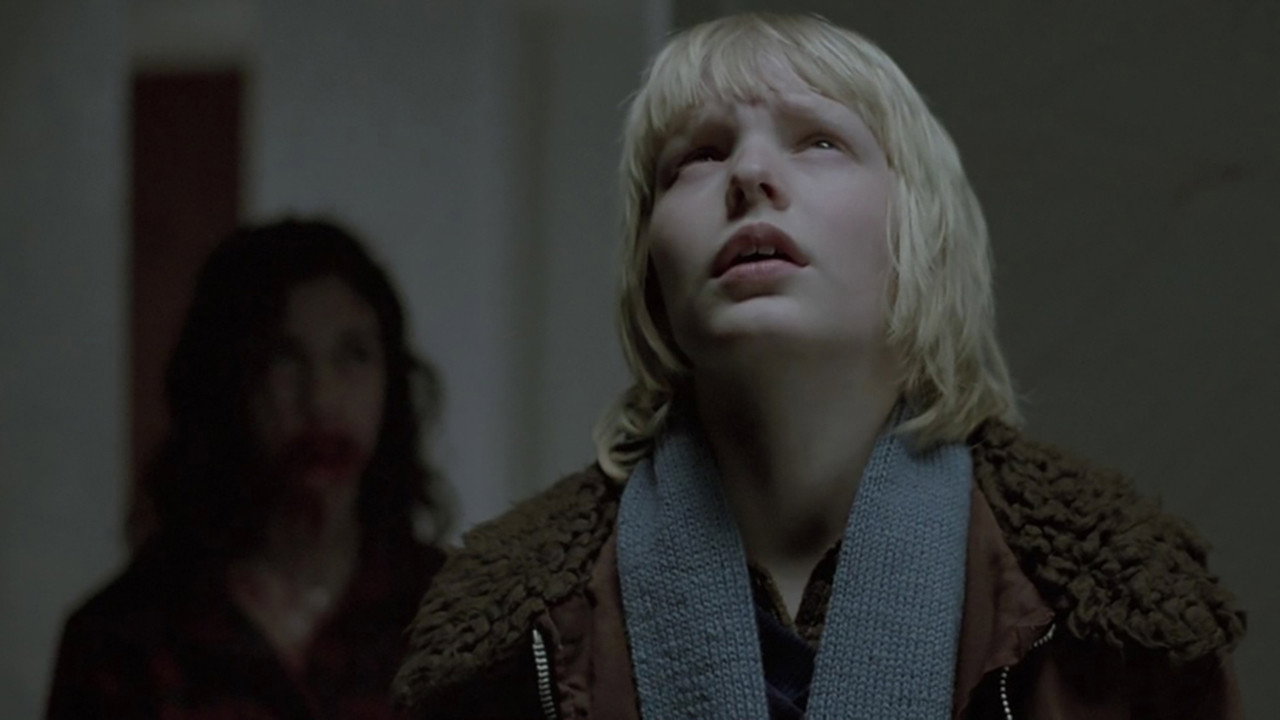
The film treats vampirism as a condition involving physical dependence and vulnerability. Eli requires blood to survive, cannot safely endure sunlight and must be invited before entering another person’s home. The familiar invitation rule becomes particularly important when Oskar questions whether it possesses any real force. Eli deliberately enters without permission and begins bleeding from the face and body, forcing Oskar to recognize the immediate consequences of refusing consent. The sequence transforms an established convention of vampire fiction into an intimate confrontation between two characters whose trust has not yet become secure.

Eli also possesses a history that exceeds the apparent age of the body. The film suggests an existence spanning centuries while withholding much of the explanation supplied by the novel. A brief visual detail and dialogue concerning whether Eli is a girl complicate ordinary assumptions about the character’s identity. Alfredson described Eli as androgynous and chose to avoid the extensive historical flashbacks that would have explained the circumstances more directly. The relationship with Oskar therefore develops around the experience of affection for someone whose identity cannot be understood through conventional categories. The vampire’s history remains a source of both vulnerability and danger.

Production, Cinematography & Winter Landscapes

The story is set in Blackeberg, but much of the winter photography was undertaken in Luleå, in northern Sweden. Alfredson explained that the production needed reliable snow, prolonged darkness and a sufficiently cold environment to establish the visual character of the suburban landscape. Production designer Eva Norén constructed and arranged important elements of the playground where Oskar and Eli meet. The climbing structure was designed to function within the widescreen compositions developed by cinematographer Hoyte van Hoytema. The repeated encounters in this location establish a recognizable spatial relationship between the children, their apartment building and the surrounding residential environment.

Van Hoytema photographed the film on 35mm, creating images in which pale winter light contrasts with dark interiors and the subdued colors of suburban architecture. In an interview at the Neuchâtel International Fantastic Film Festival, Alfredson recalled that their visual discussions included the study of Renaissance painting, particularly the treatment of delicate light. The compositions frequently place characters within substantial areas of apparently empty space. Windows, walls and doorways separate individuals who remain physically close but emotionally isolated. This arrangement gives architectural boundaries an importance extending beyond their ordinary function as elements of the setting.

The film’s restrained camera movement allows changes within a frame to become more significant. Horror frequently occurs at a distance or beyond the immediate field of observation, requiring the audience to infer what has happened from sound and subsequent consequences. Alfredson also developed the film through extensive storyboarding with Magnus Jonasson before working with editor Dino Jonsäter. Their preparation helped establish the deliberate rhythm of scenes in which the camera observes ordinary activity before a violent event interrupts it. The method produces a consistent visual relationship between the children’s quiet encounters and the increasingly disturbing incidents occurring elsewhere in the suburb.

Vampire Horror & Visual Effects

The supernatural effects were developed to remain subordinate to the apparent realism of the setting. Alfredson deliberately avoided extensive publicity showing how the more fantastic scenes had been constructed, arguing that technical explanations could weaken the effect of the narrative. Although the film often appears to rely upon straightforward practical staging, the director acknowledged that digital visual effects were used extensively by the standards of Swedish production at the time. Their integration was intended to make the supernatural events appear physically credible within ordinary locations. The finished film combines performance, makeup, visual compositing and carefully controlled framing according to the requirements of individual sequences.

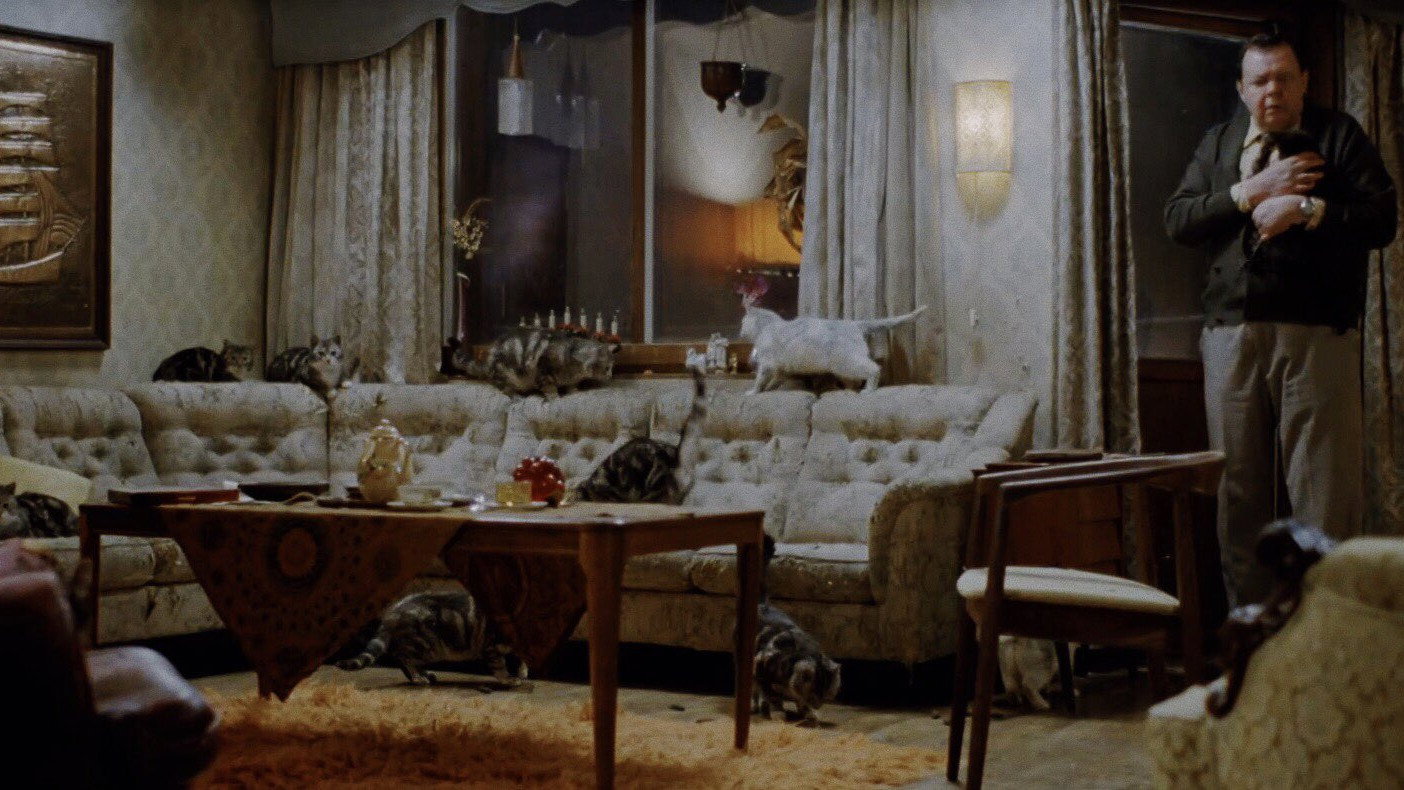
The attacks include moments of abrupt bodily violence whose impact depends upon their contrast with the surrounding stillness. Håkan’s failed attempts to obtain blood expose the practical brutality required by Eli’s existence, while the death of Jocke introduces the vampire as a direct predator. Other incidents develop the biological consequences of vampirism. Virginia survives an attack but becomes increasingly vulnerable to sunlight, eventually dying when her body catches fire in a hospital room. A confrontation involving domestic cats provides a different form of supernatural disturbance, transforming apparently familiar animals into a collective physical threat.

The climactic swimming-pool sequence required particularly elaborate preparation. Oskar is held underwater by older boys determined to punish him, leaving the audience’s viewpoint restricted to his submerged position. Sounds and movements above the surface indicate a violent intervention whose complete action remains concealed. Severed limbs and other physical evidence eventually enter the water before Eli retrieves him. Alfredson identified the sequence as the most technically demanding passage of the production, recalling that its realization required hundreds of hours of work. The decision to maintain Oskar’s underwater perspective makes the attack disturbing through its aftermath rather than through a conventional display of continuous combat.

Music, Sound & Vocal Performance

Johan Söderqvist composed the original score, approaching the film through the emotional relationship between Oskar and Eli. The composer explained in the notes accompanying the 2008 soundtrack release that the music needed to contain both darkness and melodic beauty. Its central themes support the characters’ tentative attachment without eliminating the threat created by Eli’s need for blood. The score was performed by the Slovak National Symphony Orchestra and incorporates unusual instrumental textures. Söderqvist experimented with a bass waterphone, recording and processing its sounds to create a distinctive sonic atmosphere associated with the film’s cold environments and supernatural disturbances.

The musical treatment reflects Alfredson’s preference for allowing silence to carry considerable dramatic weight. In his interview with Cineuropa, the director explained that the filmmakers wanted to emphasize the romantic aspects of the story rather than use music continuously to signal approaching danger. The score therefore operates alongside long passages in which ordinary environmental sounds become unusually prominent. The absence of extensive dialogue also allows small vocal and physical details to communicate the characters’ emotional states. This approach connects the soundtrack to the film’s visual concentration upon restricted gestures and apparently insignificant changes in behavior.

Per Sundström supervised the sound design, with important contributions from Jonas Jansson and Patrik Strömdahl. Alfredson described an effort to bring the soundscape extremely close to the children, emphasizing breathing, swallowing, clothing movement and other bodily details. Animal sounds and recorded physical actions contributed to the construction of the vampire attacks. Lina Leandersson’s spoken dialogue was also replaced during post-production by a performance from Elif Ceylan, whose lower voice gave Eli a more androgynous vocal identity. The resulting combination of intimate human sounds and unsettling supernatural textures became a major element of the film’s atmosphere. The sound team subsequently received a Swedish Film Institute award for its work.

Festival Reception, Distribution & Legacy

Let the Right One In received festival exposure during the opening months of 2008, including appearances at Rotterdam and Göteborg. At the Göteborg International Film Festival it won the Nordic Film Prize, while Hoyte van Hoytema received the Kodak Nordic Vision Award for cinematography. The film subsequently attracted further attention at the Tribeca Film Festival, where it won the Founders Award for Best Narrative Feature. The international festival response helped establish its reputation before the wider theatrical release. Swedish and limited American distribution began on 24 October 2008, followed by additional European engagements during 2009.

The film received major recognition in Sweden at the Guldbagge Awards announced in January 2009. Alfredson won Best Director, Lindqvist received Best Screenplay and van Hoytema won Best Cinematography. Eva Norén also received a Best Achievement award for production design, while Per Sundström and his sound team were recognized for their contributions. These awards documented the importance of the film’s audiovisual construction as well as its adaptation and direction. Its international circulation introduced a substantial audience to a Swedish-language vampire story that relied upon regional specificity and restrained dramatic methods.

The film’s home-video history introduced a separate controversy concerning translation. Early American DVD and Blu-ray editions distributed by Magnet Releasing used English subtitles that differed from those accompanying the theatrical version. Viewers and critics objected that the revised translation simplified dialogue and altered important nuances. The distributor subsequently announced that later pressings would restore the theatrical subtitles, although replacement discs were not automatically supplied to existing purchasers. The disagreement highlighted the importance of translation to the reception of a film in which comparatively brief exchanges carry considerable emotional significance.

The success of the Swedish production also encouraged an English-language adaptation, Let Me In (2010), written and directed by Matt Reeves. The American film relocated the story to New Mexico and reinterpreted the central relationship through a different cultural environment. It should be distinguished from Alfredson’s film rather than treated as another version of the same footage or narrative presentation. The original remains an important contribution to modern vampire horror because it establishes supernatural violence within an unusually detailed account of childhood vulnerability. Its final image of Oskar travelling with Eli offers the possibility of companionship while leaving unresolved the future responsibilities and dangers associated with the vampire’s survival.

References

  1. ScreenAnarchy NIFFF 2008 — Let the Right One In Interview

    Original July 2008 interview with Tomas Alfredson discussing the literary adaptation, bullying, casting and visual design, Luleå locations, storyboarding, digital effects, the swimming-pool sequence and the detailed construction of the soundscape.

  2. Cineuropa Tomas Alfredson — Romantic and Terrifying Adolescent Vampires

    Camillo De Marco’s December 2008 interview with the director examining the film’s 1982 setting, its relationship to Lindqvist’s novel, the reduction of supporting narratives, vampire mythology, Swedish social environments and the musical approach.

  3. International Film Festival Rotterdam Let the Right One In — IFFR 2008

    Official festival programme documentation confirming the Swedish production, 35mm presentation, screenplay, principal cast, Hoyte van Hoytema’s cinematography, Eva Norén’s production design, Dino Jonsäter’s editing and Per Sundström’s sound design.

  4. Swedish Film Institute 2008 Guldbagge Award Winners

    Official January 2009 awards record documenting wins for Tomas Alfredson, John Ajvide Lindqvist and Hoyte van Hoytema, together with special achievement awards for production designer Eva Norén and the sound team led by Per Sundström.

  5. MovieScore Media Let the Right One In — Johan Söderqvist

    Original soundtrack release documentation containing a direct statement from Johan Söderqvist concerning the score’s melodic approach, contrasting emotional qualities and use of the bass waterphone, alongside the November 2008 release details.

Cast

View Full Cast & Crew →

Release & Distribution

Production Companies (8)

  • Bavaria Film International DE
  • Chimney Sweden SE
  • EFTI SE
  • Fido Film
  • Filmpool Nord SE
  • Sandrew Metronome Sverige SE
  • Sveriges Television SE
  • WAG

Distributors (1)

  • Sandrew Metronome SE

Release History (26)

Release DateTerritoryRelease TypeFormatDistributorCertificationNotes
2008-01-26 Sweden Premiere — — 15 Göteborg International Film Festival
2008-08-01 Australia Premiere — — MA15+ Melbourne International Film Festival
2008-08-24 United Kingdom Premiere — — — FrightFest
2008-10-01 Canada Premiere — — R Edmonton International Film Festival
2008-10-24 Netherlands Limited Theatrical — — 16
2008-10-24 Sweden Theatrical — — 15
2008-10-24 United States Theatrical — — R
2008-10-31 Poland Theatrical — — —
2008-11-13 South Korea Theatrical — — 15
2008-11-28 Estonia Premiere — — — Tallinn Black Nights Film Festival
2008-11-28 Finland Theatrical — — K-15
2008-12-22 Germany Theatrical — — 16
2008-12-25 Denmark Theatrical — — 15
2009-01-09 Italy Theatrical — — VM14
2009-02-04 France Theatrical — — 12
2009-03-19 Greece Theatrical — — —
2009-03-20 Estonia Theatrical — — —
2009-04-02 Switzerland Digital — — 16
2009-04-10 United Kingdom Theatrical — — —
2009-05-29 Portugal Theatrical — — M/16
2009-07-02 Hungary Theatrical — — 16
2009-11-08 Hungary Physical DVD — 16 DVD
2009-11-12 Czechia Theatrical — — 12
2010-05-06 Hong Kong SAR China Theatrical — — —
2010-07-10 Japan Theatrical — — —
2026-01-22 Germany Theatrical — — — Re-release

Awards & Festivals

7 entries
YearFestival / AwardEntrySectionCategoryResultPremiere
2009European Film AwardsawardEuropean Film Award for Best Filmnominated
2009European Film AwardsawardEuropean Film Award for Best Composernominated
2009European Film AwardsawardEuropean Film Award – People's Choice Award for Best European Filmnominated
2008Dragon AwardsawardDragon Award Best Nordic Filmwon
—Guldbagge Award for Best Cinematographyawardwon
—Guldbagge Award for Best Directorawardwon
—Guldbagge Award for Best Screenplayawardwon
Eli is 12 years old. She's been 12 for over 200 years, and she just moved in next door.