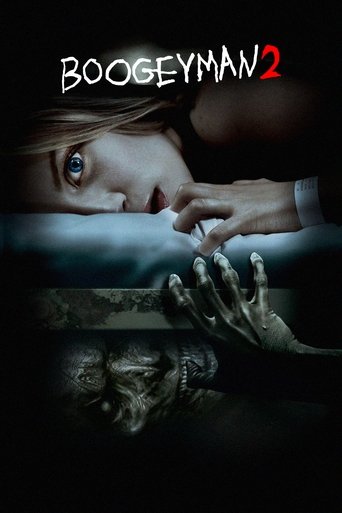
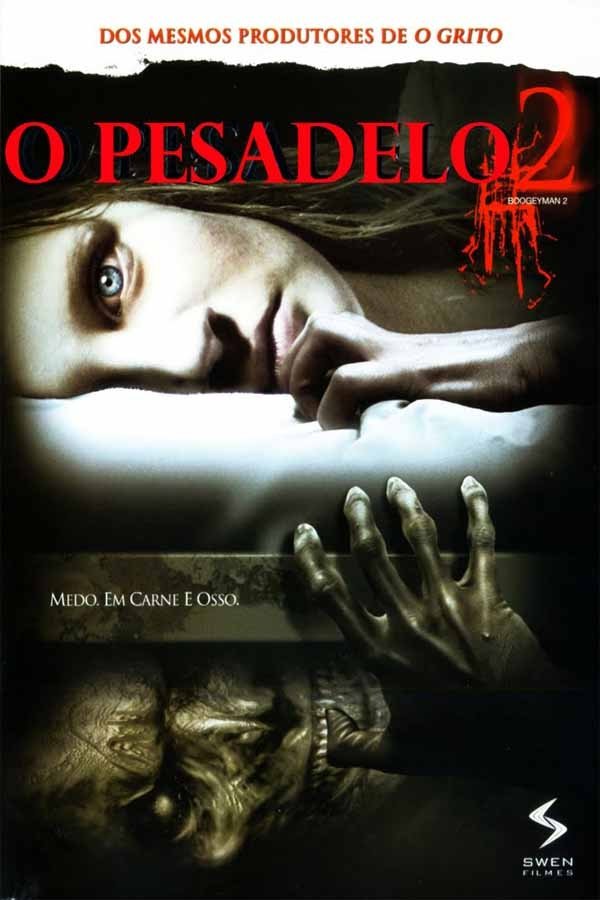
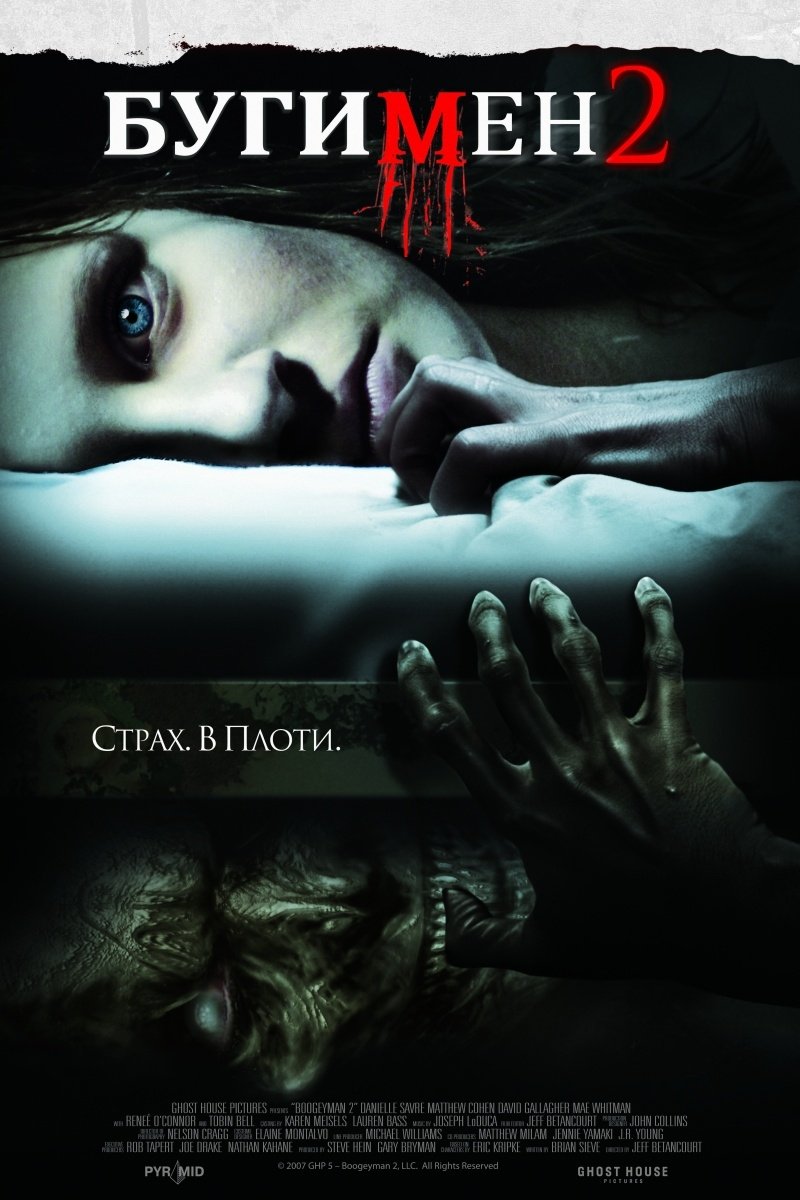
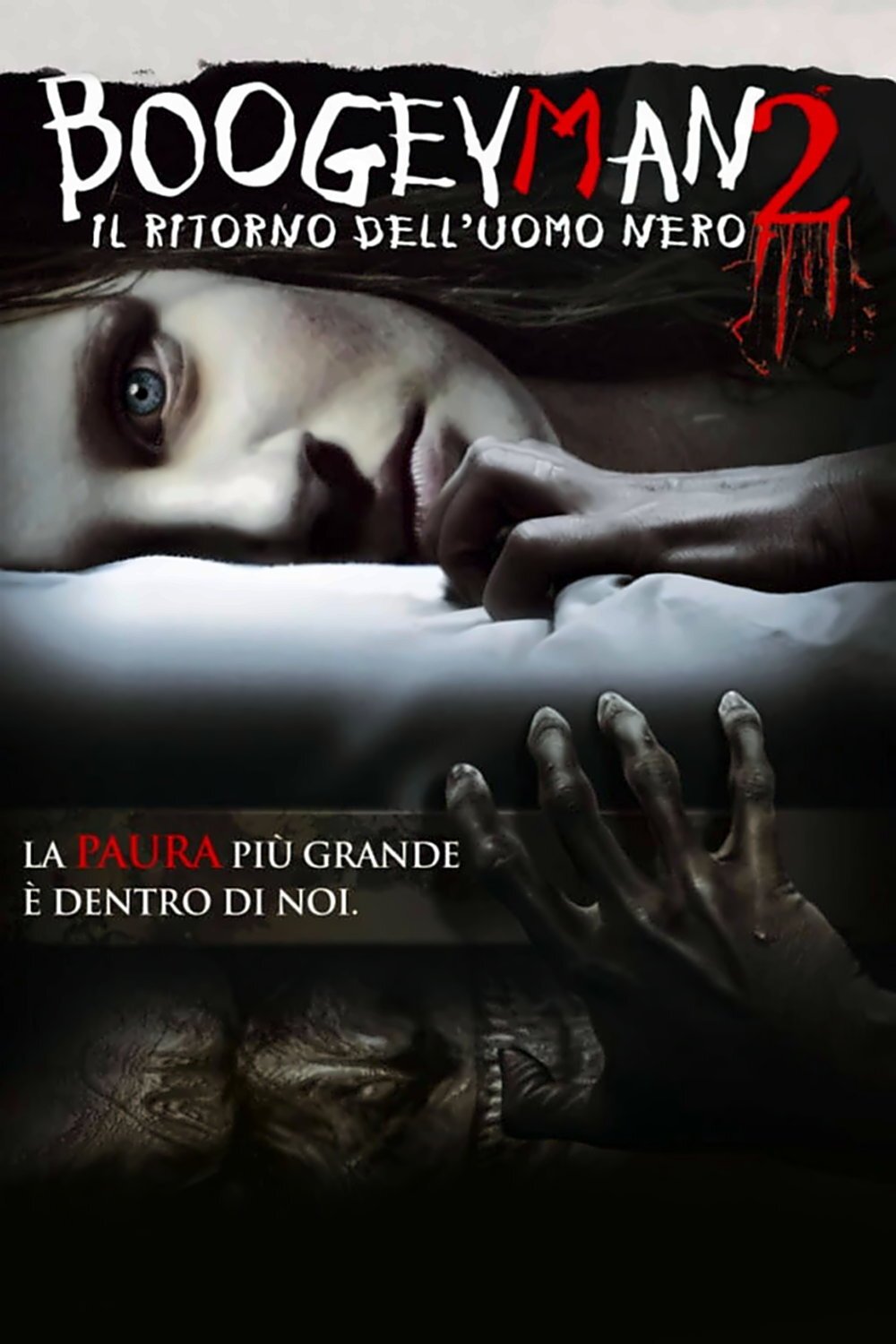
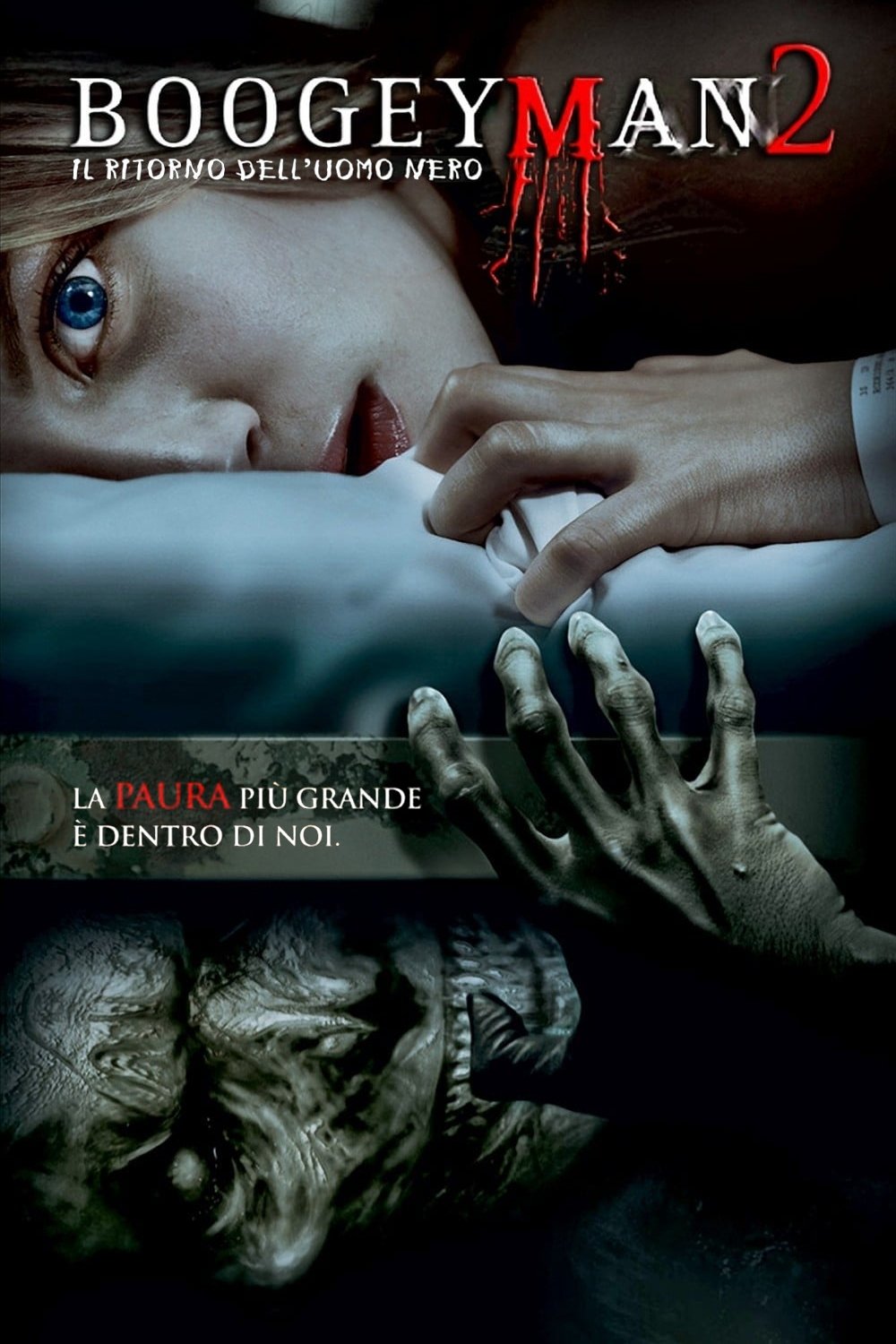
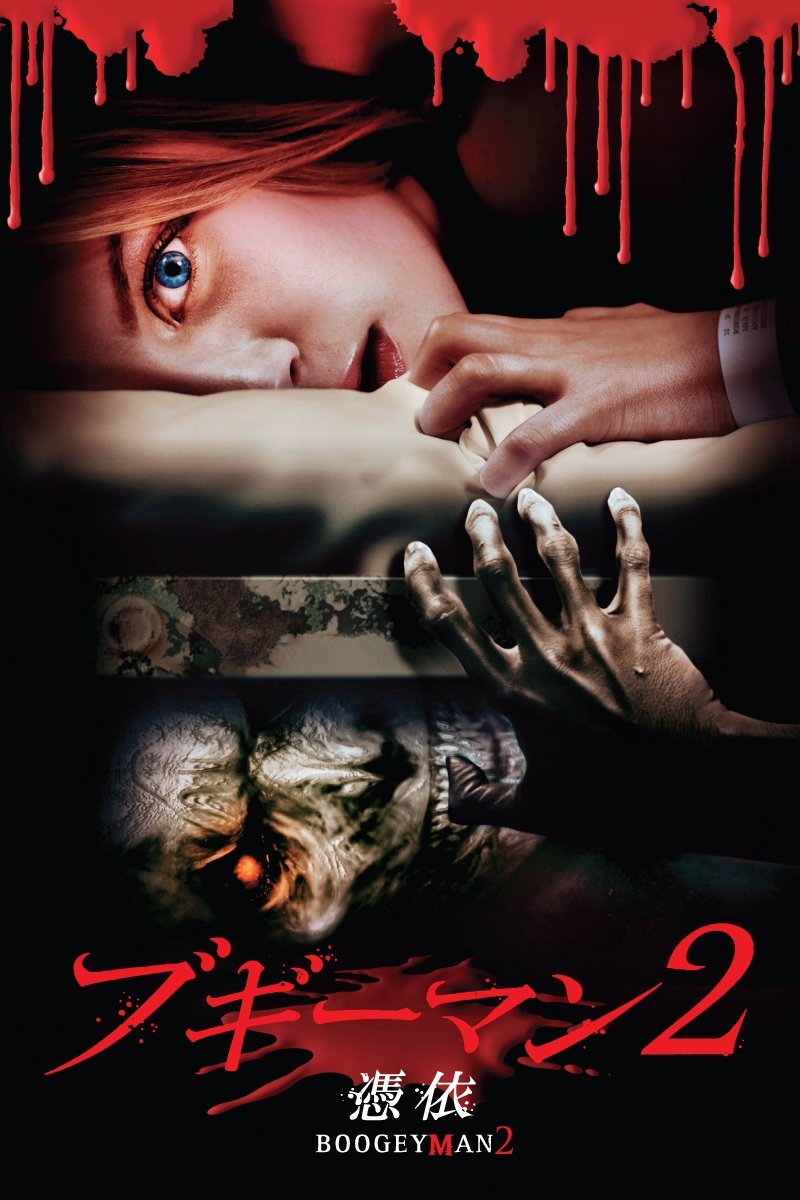
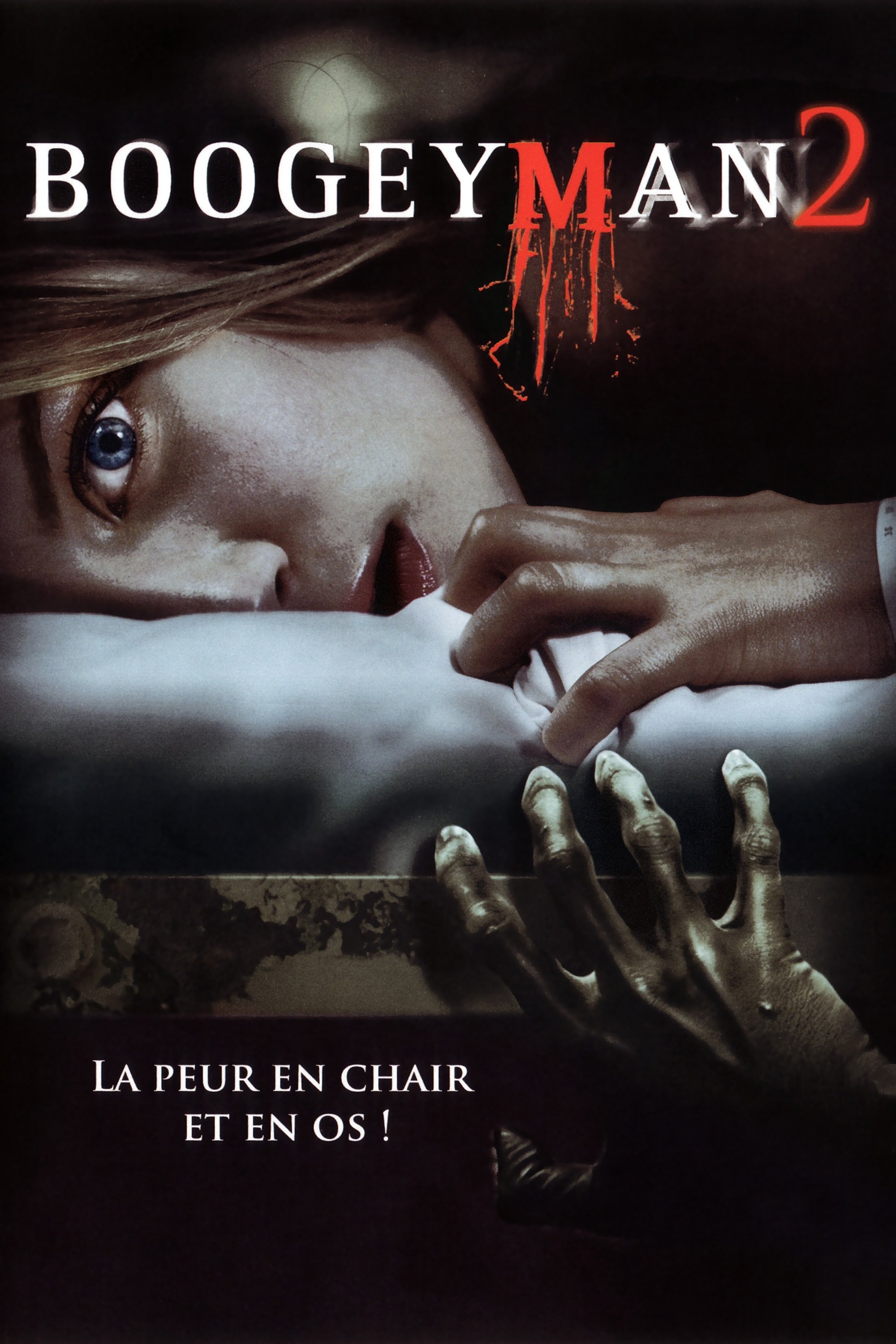
A young woman attempts to cure her phobia of the boogeyman by checking herself into a mental health facility, only to realize too little too late that she is now helplessly trapped with her own greatest fear.
Alternative Titles
El hombre de la bolsa 2 (Argentina) O Pesadelo 2 (Brazil) — Portuguese恶灵空间2 (China) — ChineseBoogeyman 2 - Wenn die Nacht Dein Feind wird (Germany) Efialtis 2 (Greece) 夜半鬼開門 2 (Hong Kong SAR China) — Chinese夜半鬼開門2 (Hong Kong SAR China) בוגימן 2 (Israel) — HebrewShow all 21 alternative titlesBoogeyman 2 - Il ritorno dell'uomo nero (Italy) — Italianブギーマン2 憑依 (Japan) — Japanese부기맨 2 (South Korea) — KoreanBaubas 2 (Lithuania) Boogeyman II - El nombre del miedo (Mexico) Boogeyman - O Regresso (Portugal) O Pesadelo 2 (Portugal) — PortugueseБугимен 2 (Russia) — Russianปลุกตำนานสัมผัสสยอง 2 (Thailand) — ThaiKarabasan 2 (Türkiye) 惡靈空間2 (Taiwan) — ChineseTerror en la oscuridad 2 (Venezuela) Ông Kẹ 2 (Vietnam) — Vietnamese
Jeff Betancourt’s 2007 sequel reinterprets the Boogeyman through a psychiatric-institution slasher, emphasizing phobia-based murders and practical prosthetic effects.
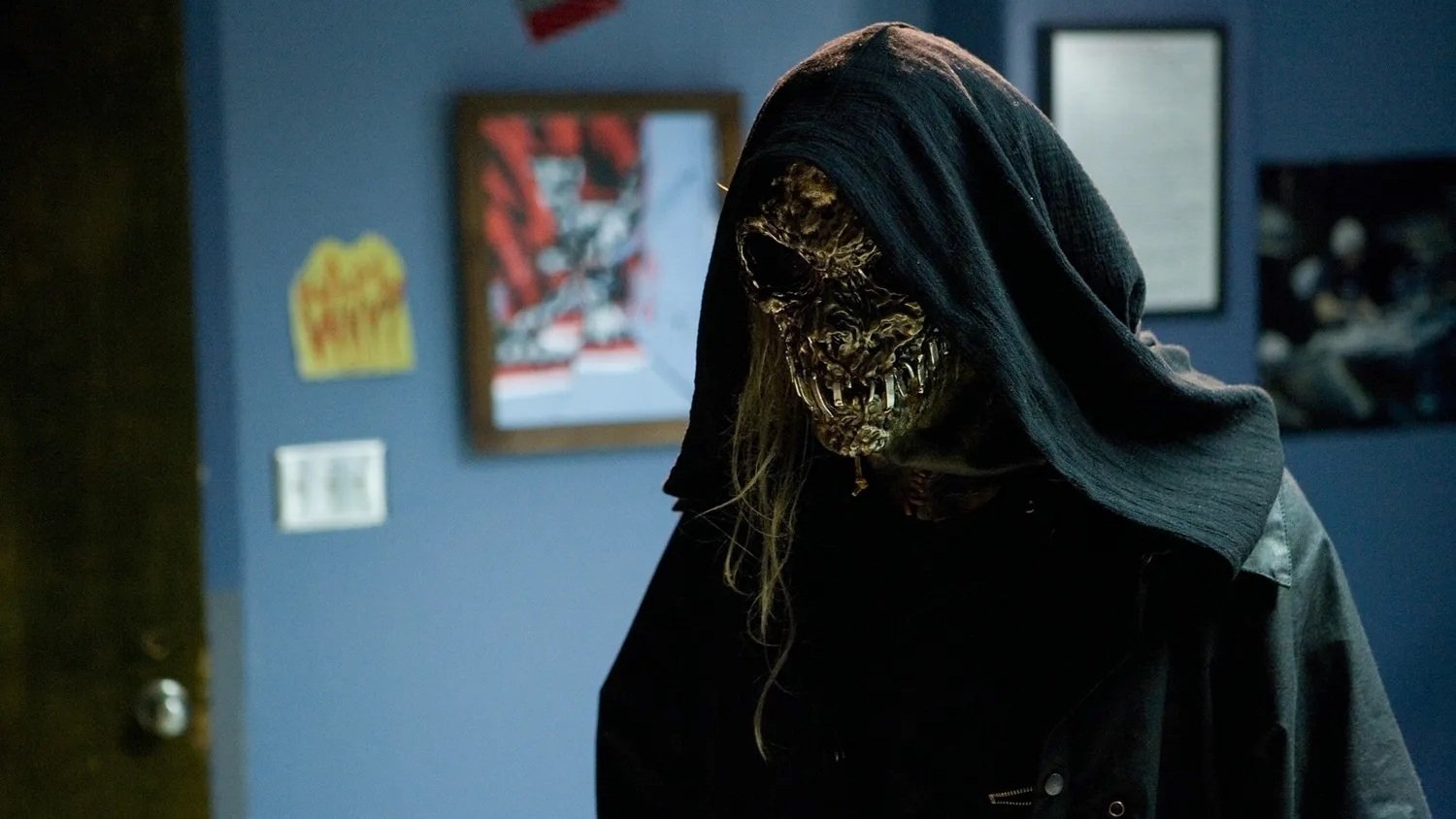
Boogeyman 2 (2007) is an American horror sequel directed by Jeff Betancourt from a screenplay by Brian Sieve. Produced for Ghost House Pictures, it follows Laura Porter, a young woman who voluntarily enters a psychiatric facility to confront the childhood terror associated with the murder of her parents. When patients begin dying in circumstances connected to their individual fears, the institution becomes the setting for a succession of killings. The film substantially changes the approach of Boogeyman (2005), replacing much of its supernatural mythology with the mechanisms of a masked-killer thriller.
The production marked the feature-directing debut of Betancourt, previously an editor on several American horror films. Its practical makeup effects were constructed by Quantum Creation FX, while the screenplay organized the murders around the patients' psychological vulnerabilities. After a screening at the Los Angeles Screamfest festival in October 2007, the film reached the American home-video market through Sony Pictures Home Entertainment on 8 January 2008. Contemporary reviews generally questioned its characterization and suspense while recognizing the greater prominence of physical violence compared with the first installment.
Development & Directorial Debut
Ghost House Pictures developed Boogeyman 2 following the commercial success of Stephen Kay's Boogeyman (2005). Jeff Betancourt was announced as director in October 2006, having established his career as an editor on productions including The Grudge (2004), The Exorcism of Emily Rose (2005) and The Grudge 2 (2006). Brian Sieve wrote the screenplay. In a 2009 interview with Joe Shearer, Betancourt explained that he was attracted to the possibility of exploring a different interpretation of the Boogeyman. He considered the supernatural story of the original film sufficiently resolved and regarded the folklore surrounding the figure as flexible enough to support another approach.
Betancourt approached the project as an opportunity to direct after years of shaping other filmmakers' material in the editing room. He described the transition as an extension of his work as a storyteller, while acknowledging that directing required greater involvement with actors, photography and production design. Tobin Bell contributed ideas about his character, Dr. Mitchell Allen, during discussions with the director. Betancourt recalled being initially intimidated by Bell's association with the Saw franchise but found him an enthusiastic collaborator. The production's relatively restricted resources also influenced the director's priorities: he emphasized suspense, location and practical solutions over the spectacle of a computer-generated monster.
Psychological Horror & Slasher Structure
The opening establishes Laura and Henry Porter as survivors of a childhood attack in which their parents were murdered by a hooded intruder. Years later, Henry has made progress through psychiatric treatment, while Laura remains convinced that the Boogeyman represents a continuing threat. She enters the facility previously attended by her brother, hoping to confront the fear that has shaped her adult life. The patients around her struggle with different anxieties and compulsive behaviors, providing the killer with information that can be turned against them. Their conditions become elements of the murder scenarios as the institution progressively loses its apparent security.
The narrative uses the familiar childhood monster as a means of organizing a human murder mystery. Rather than reproduce the supernatural mechanics of the first film, the attacker manipulates particular fears through confinement, darkness and bodily injury. This structure shifts attention from the existence of an unknowable creature to the question of who possesses detailed knowledge of the patients. Contemporary reviewers recognized the change: Tristan Sinns, writing for Dread Central in November 2007, compared the film's investigation and successive revelations to the conventions of the giallo. The clinical environment is treated as a fictional slasher setting, with its therapeutic activities serving the progression of the mystery rather than a realistic account of psychiatric treatment.
Location & Visual Approach
Betancourt identified John Carpenter and Ridley Scott among the filmmakers whose atmospheric approach influenced his visual ambitions. In a 2008 interview published by MYmovies, he specifically discussed Halloween (1978) and The Thing (1982) as examples of horror built around lighting, environment and carefully developed suspense. The limited production resources encouraged the filmmakers to concentrate the action within a single principal location. Betancourt recalled discovering an abandoned medical facility that provided the environment he wanted, with existing corridors and treatment areas capable of supporting the story's escalating isolation.
The hospital setting allows the film to organize pursuit through darkened passages, medical rooms and spaces that become inaccessible as the violence progresses. The director also described using disturbing childhood imagery, including skeletal figures and dead birds, when developing the film's threatening atmosphere. Such details were intended to connect the visual design with the protagonist's fears. Betancourt's background in editing remained important to his approach: he regarded the selection and arrangement of shots as essential to controlling suspense. The completed film alternates between extended passages of anticipation and abrupt physical attacks, although contemporary critics disagreed about whether the pacing successfully sustained tension.
Practical Makeup & Gore Effects
Quantum Creation FX supplied the production's principal prosthetic makeup effects. The company's own project archive documents a two-month construction schedule involving ten artisans and technicians. Its work included severed heads, puppets, prosthetic appliances and specialized gore effects. These practical constructions supported a series of deaths associated with the patients' particular vulnerabilities, giving the sequel a substantially more physical presentation of violence than its predecessor. The effects were therefore connected to the screenplay's organizing premise rather than conceived as unrelated demonstrations of injury.
The DVD supplement Bringing Fear to Life: Makeup Effects from Storyboard to Screen documented aspects of the effects process through production photographs, storyboards and footage of completed sequences. Its presentation provides evidence of the planning involved in translating the scripted injuries into physical appliances. Betancourt discussed his preference for using technical ingenuity instead of relying on a large computer-generated creature. The finished production nevertheless should not be characterized as entirely free of digital work without a documented effects breakdown. Its identifiable technical emphasis lies in the fabricated prosthetics, mechanical props and blood effects prepared by the makeup team.
Release & Contemporary Reception
Boogeyman 2 screened at the Los Angeles Screamfest festival in October 2007. Its principal American commercial release followed on 8 January 2008, when Sony Pictures Home Entertainment issued an unrated DVD. The edition included two audio commentaries: one featuring Betancourt and Sieve, and another with Tobin Bell, Danielle Savre and producers Gary Bryman and Steve Hein. The makeup-effects supplement provided additional documentation of the practical work. The distinction between the 2007 festival screening and the 2008 American home-video release is important because the film is described with both years in different release contexts.
Ryan Turek reviewed the film for ComingSoon following its Screamfest presentation. He regarded the greater amount of gore as an improvement over the original but criticized the characters, narrative logic and prolonged suspense sequences. Tristan Sinns similarly questioned the plausibility of the hospital setting and found that the patients were defined too narrowly by their conditions. Both responses recognized the sequel's movement toward conventional slasher material. The film subsequently remained part of the Boogeyman franchise, which continued with Boogeyman 3 (2008). Its principal distinction within the series is the replacement of the first film's supernatural threat with a murder mystery organized around personal fears.
Original 2008 interview with Jeff Betancourt discussing his visual influences, the abandoned clinic, production limitations, childhood fears and collaboration with Tobin Bell.
Film Yap — An Interview with Director Jeff Betancort
Joe Shearer's original 2009 interview examining the director's transition from editing, his interpretation of the Boogeyman, practical filmmaking and the production experience.
First-party effects documentation confirming the two-month fabrication schedule, ten technicians and production of prosthetics, puppets, severed heads and gore effects.
Ryan Turek's contemporary October 2007 Screamfest review documenting the early screening, January 2008 DVD release, slasher structure and critical response.