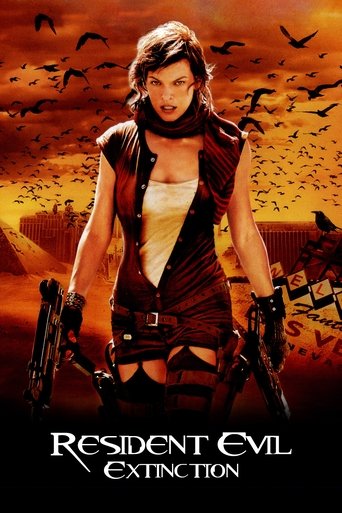
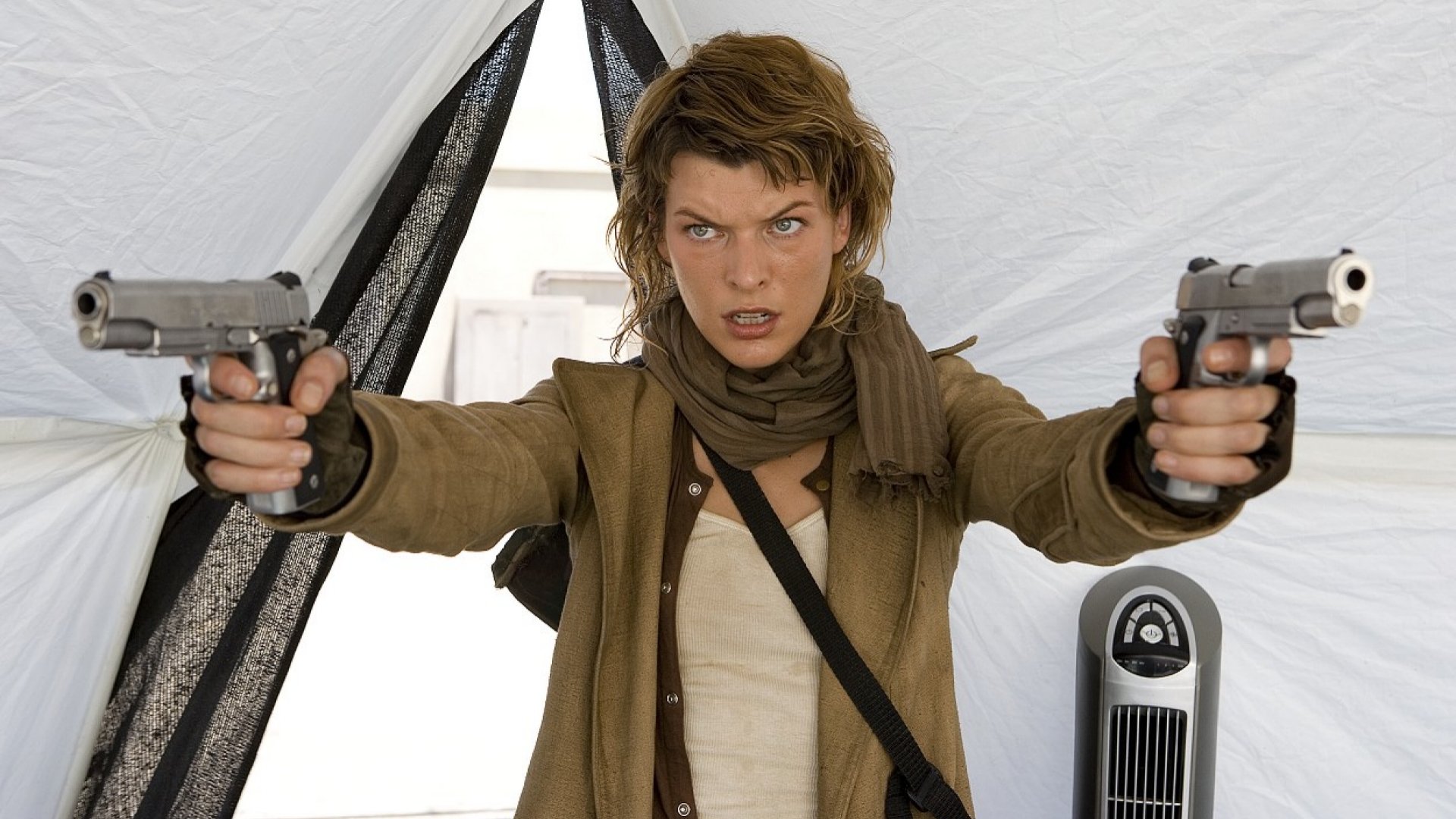
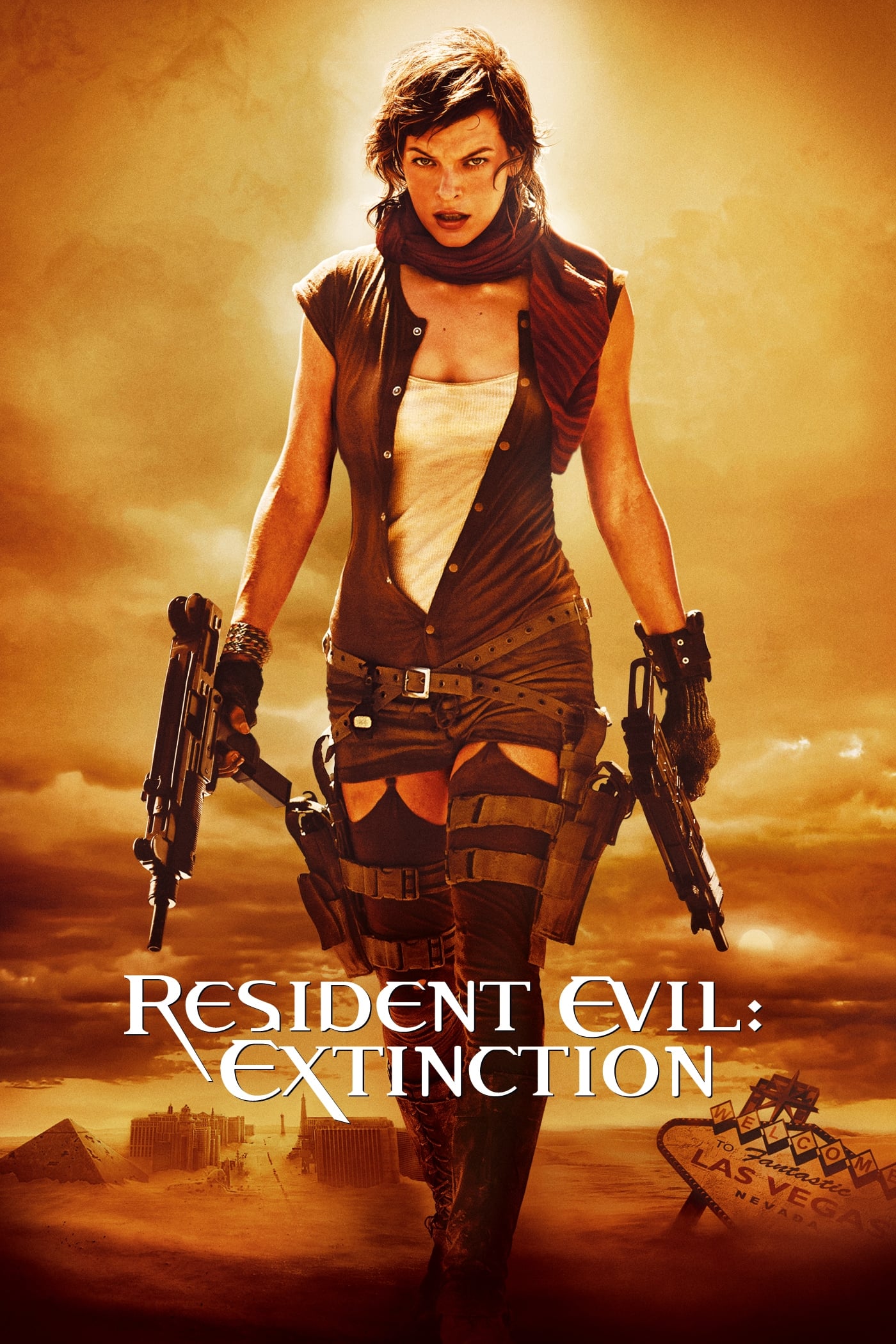
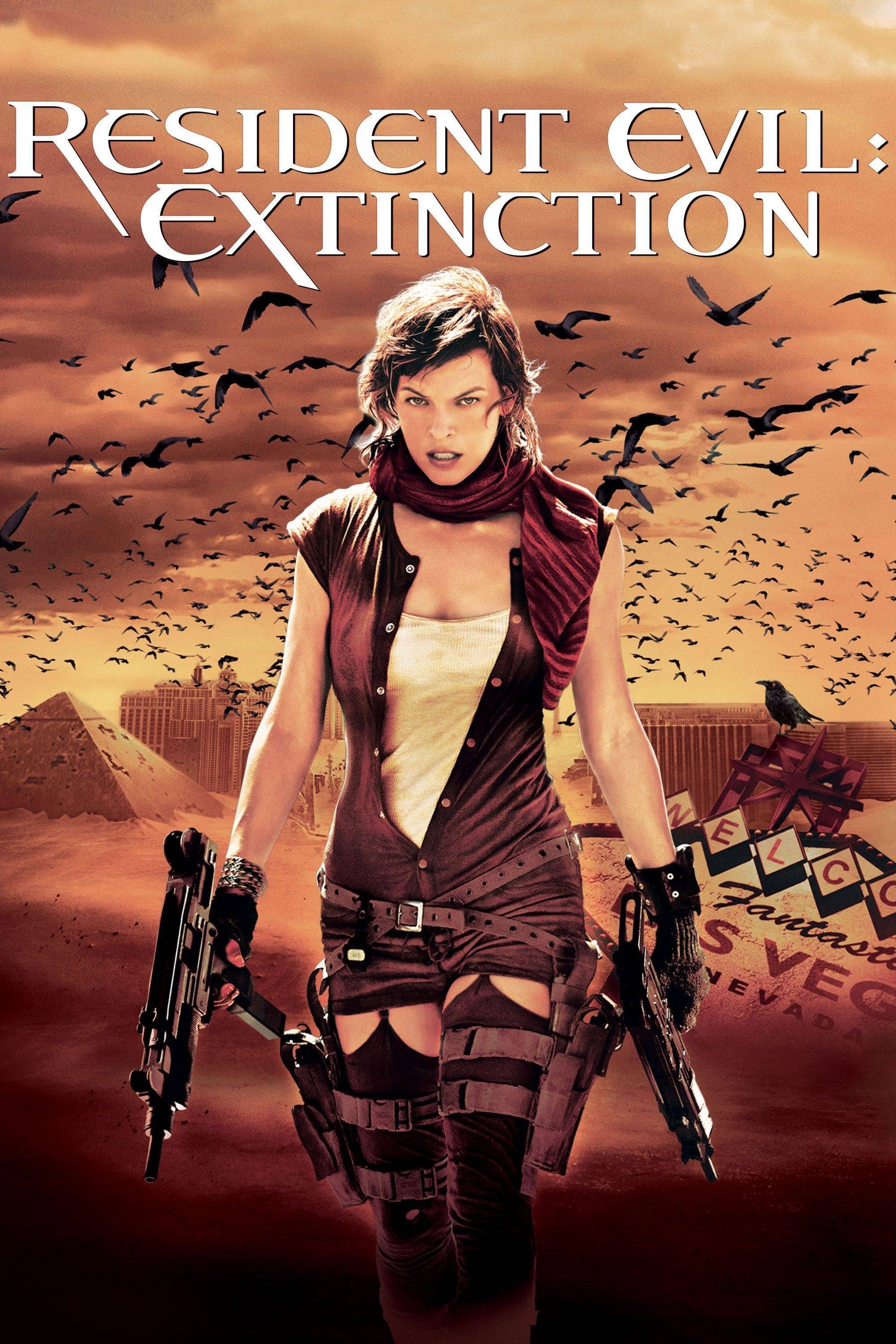
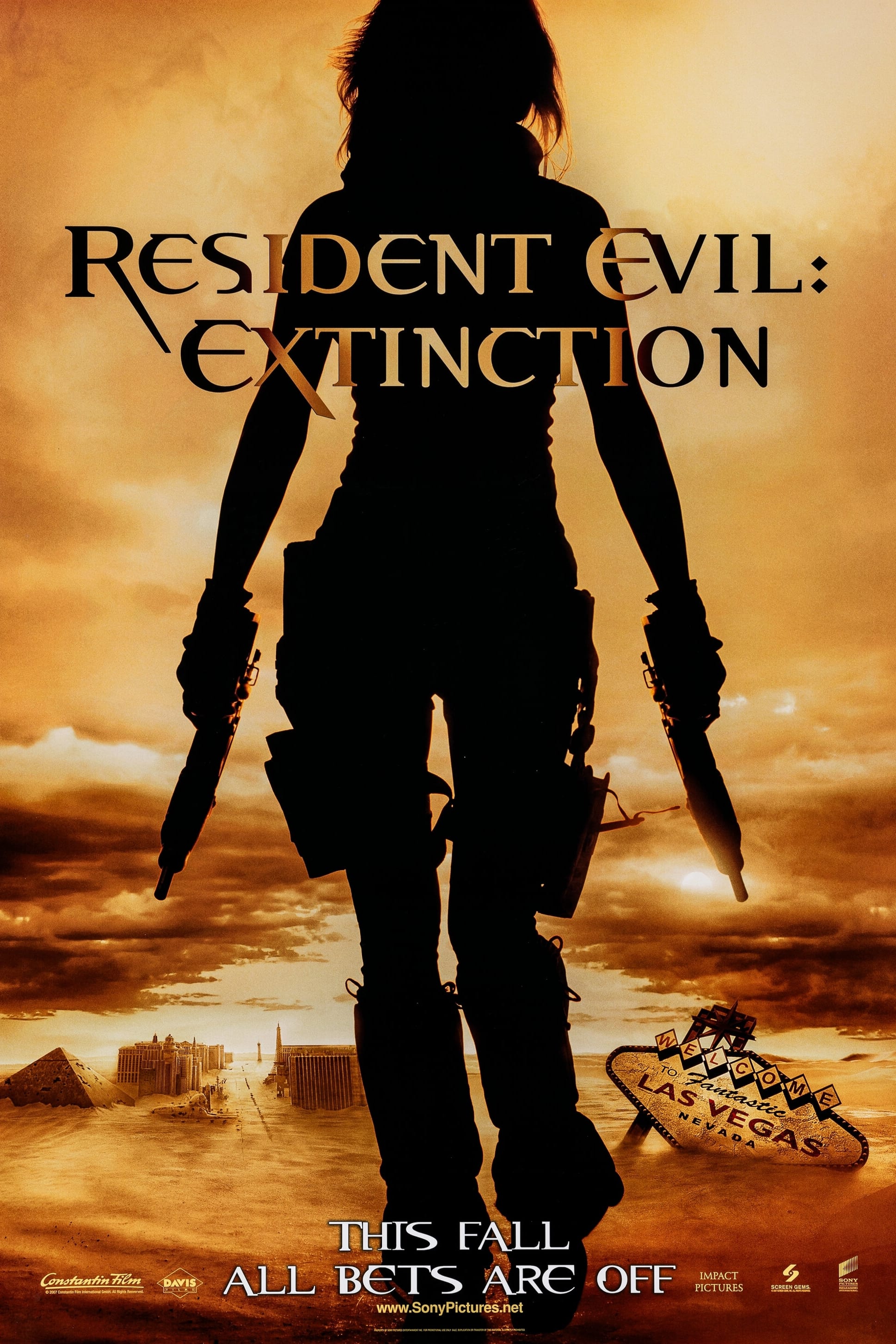
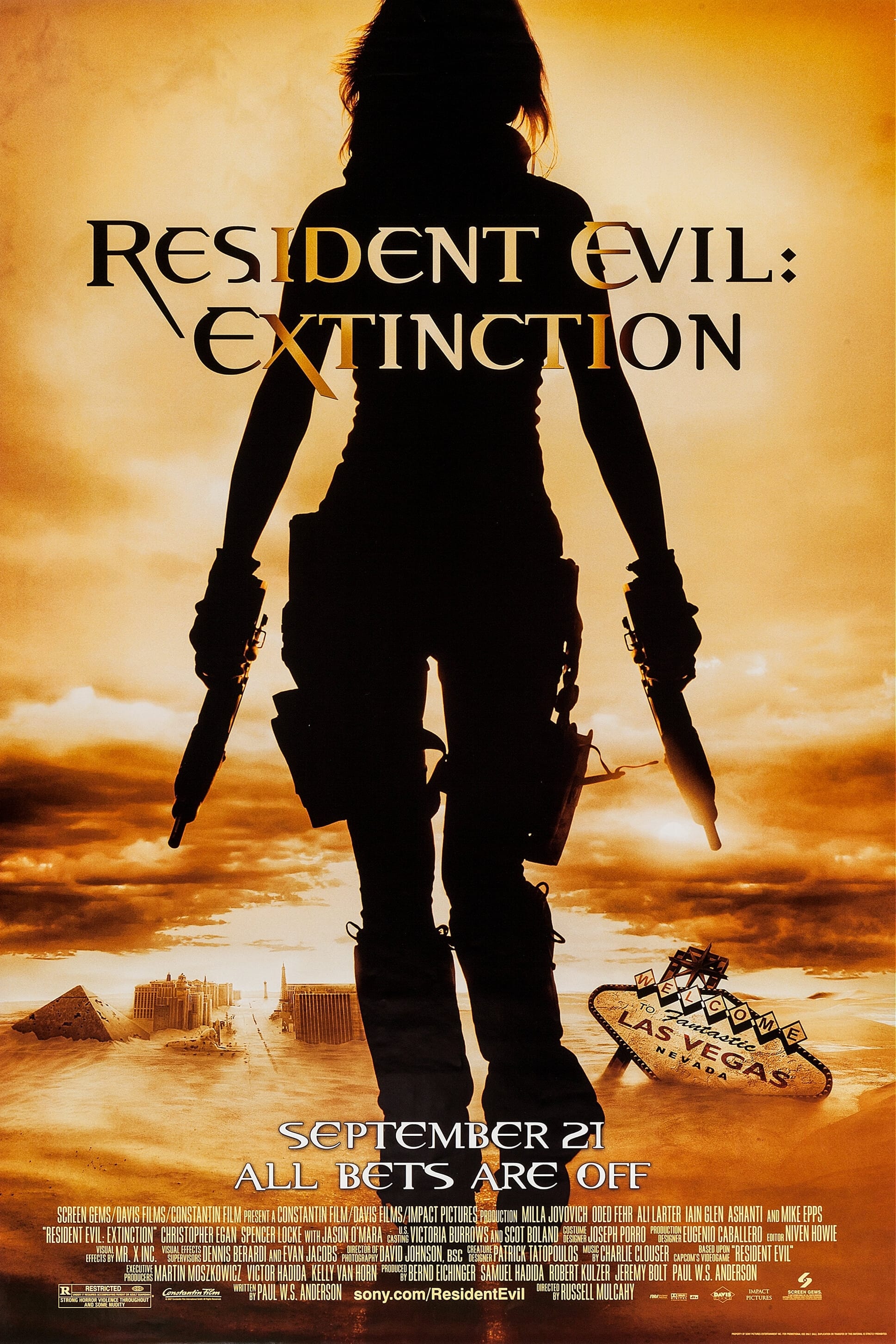
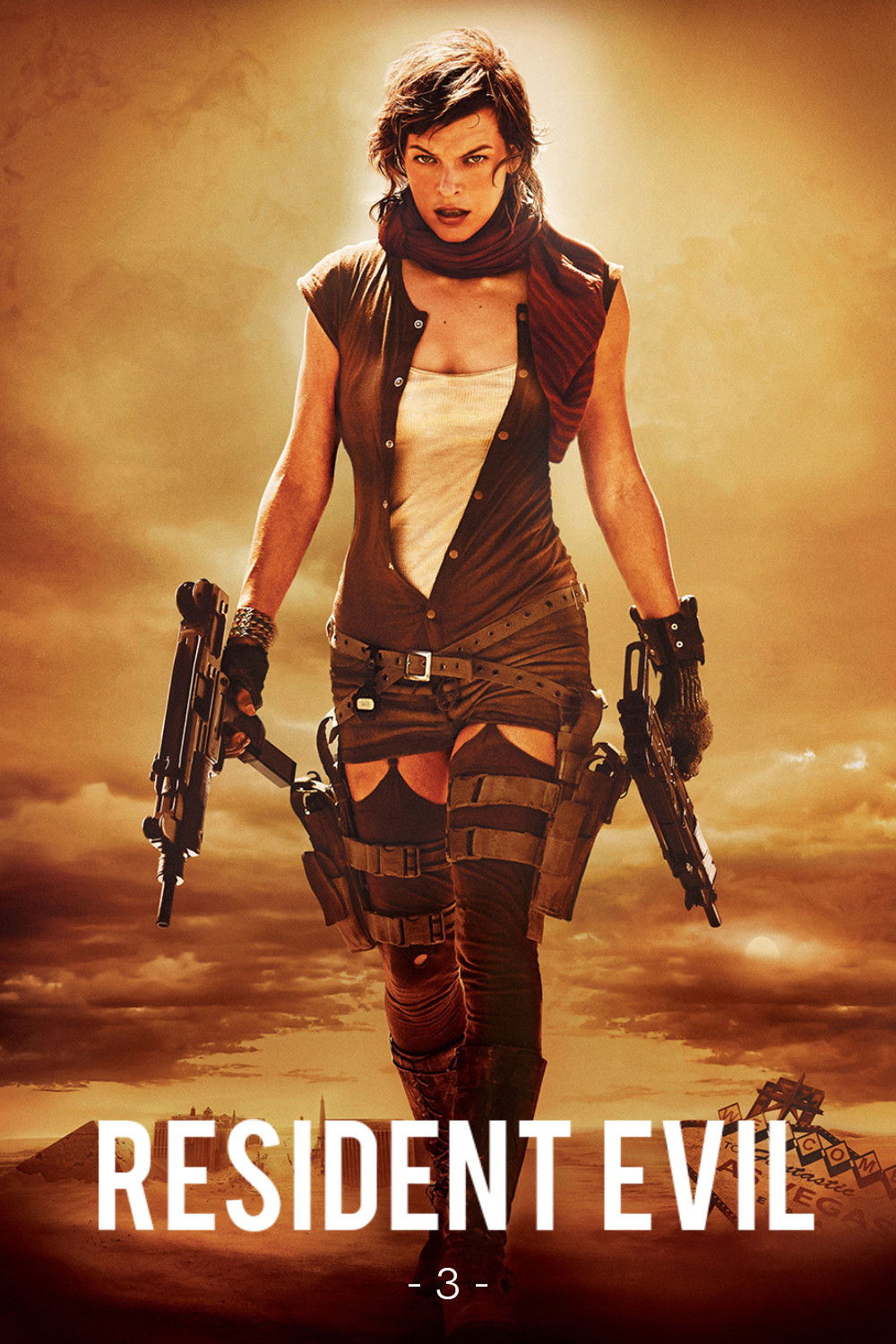
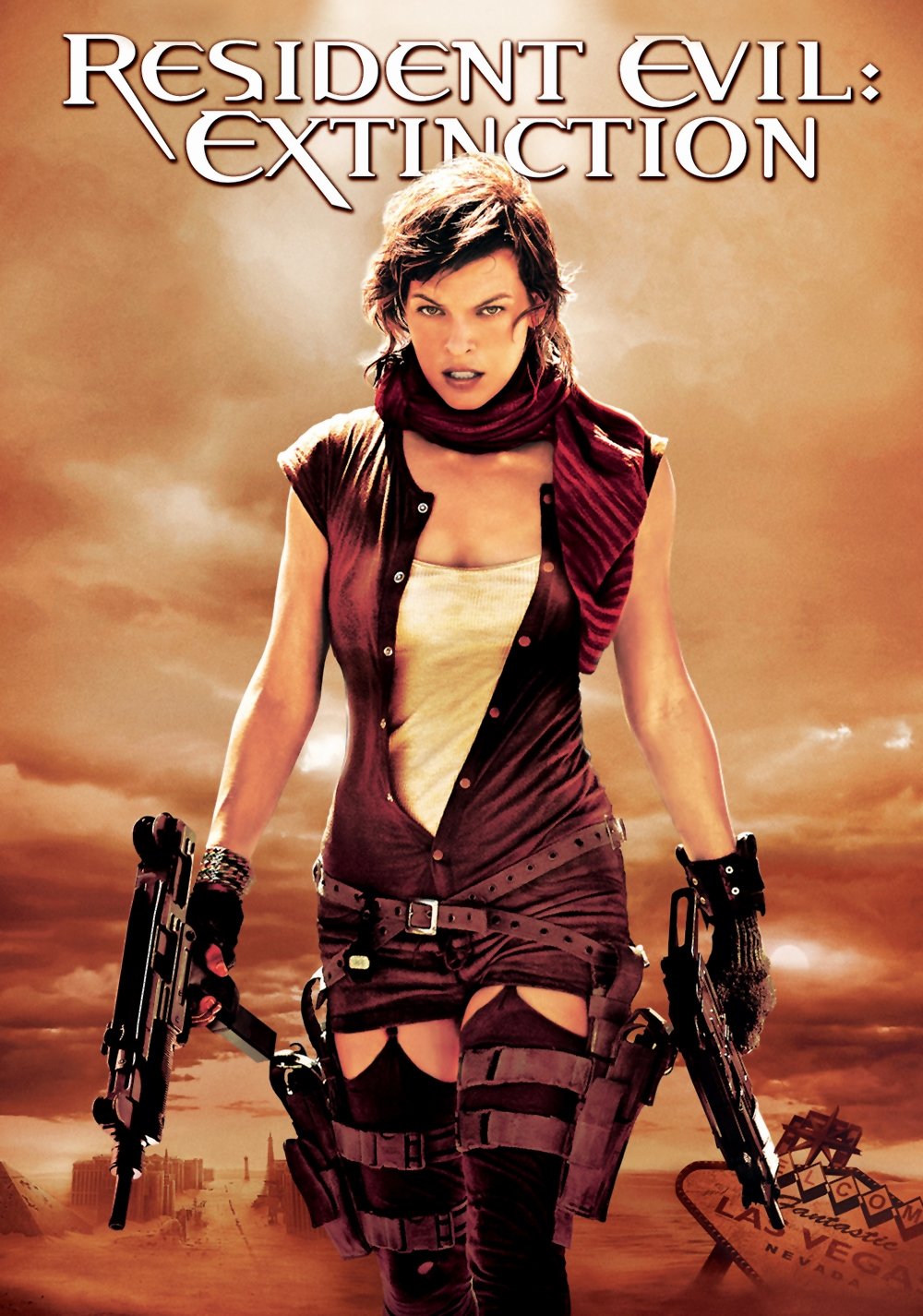
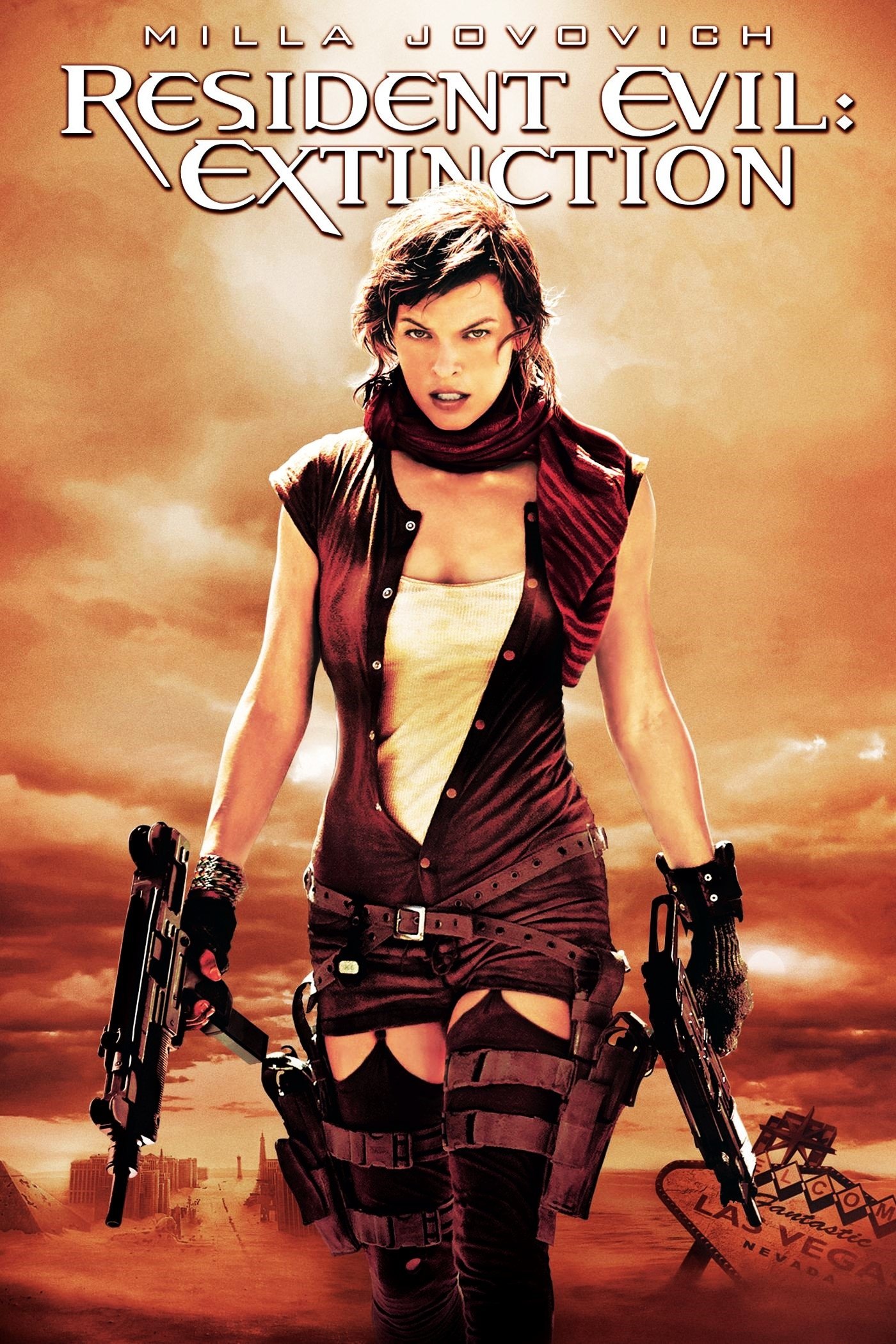
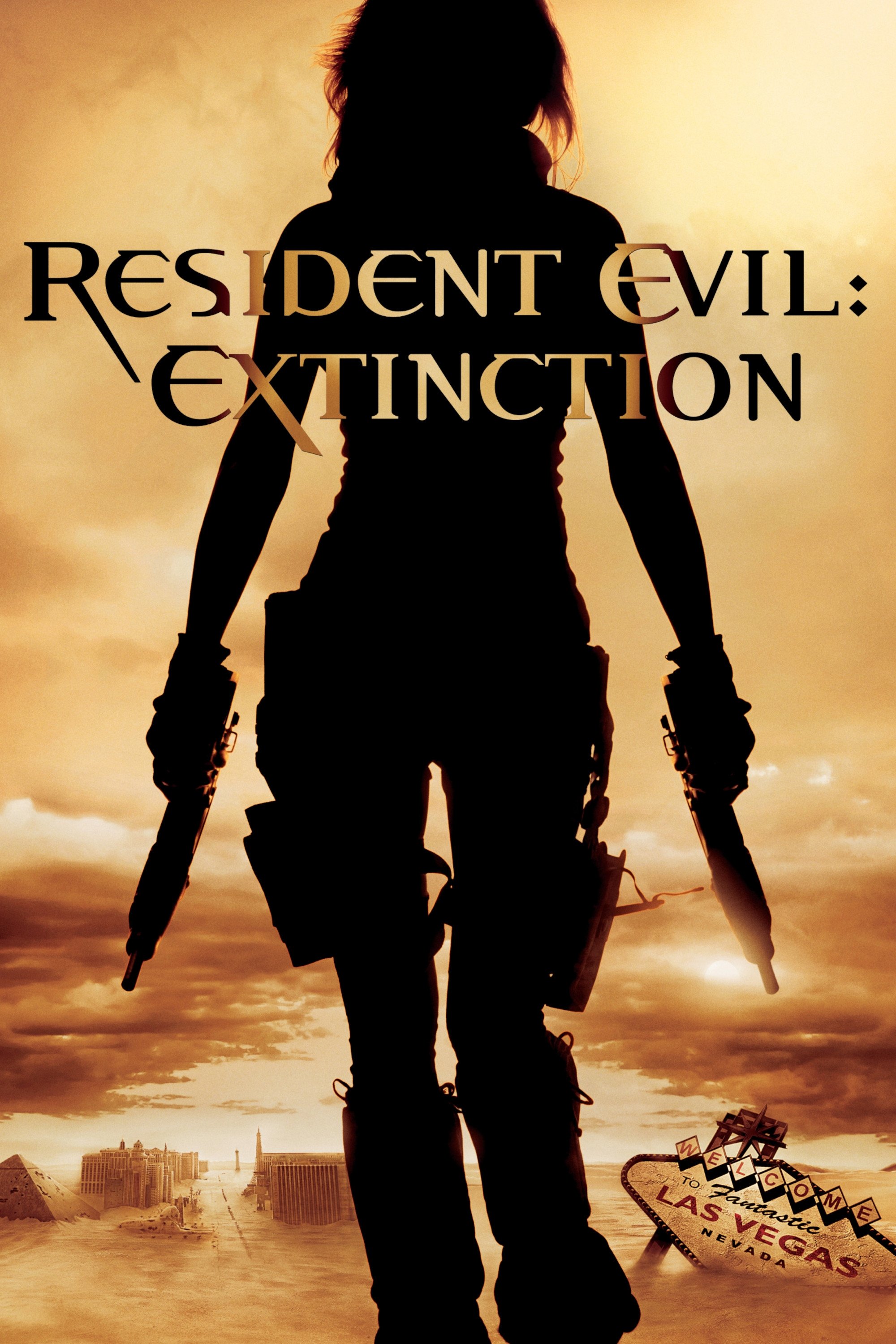
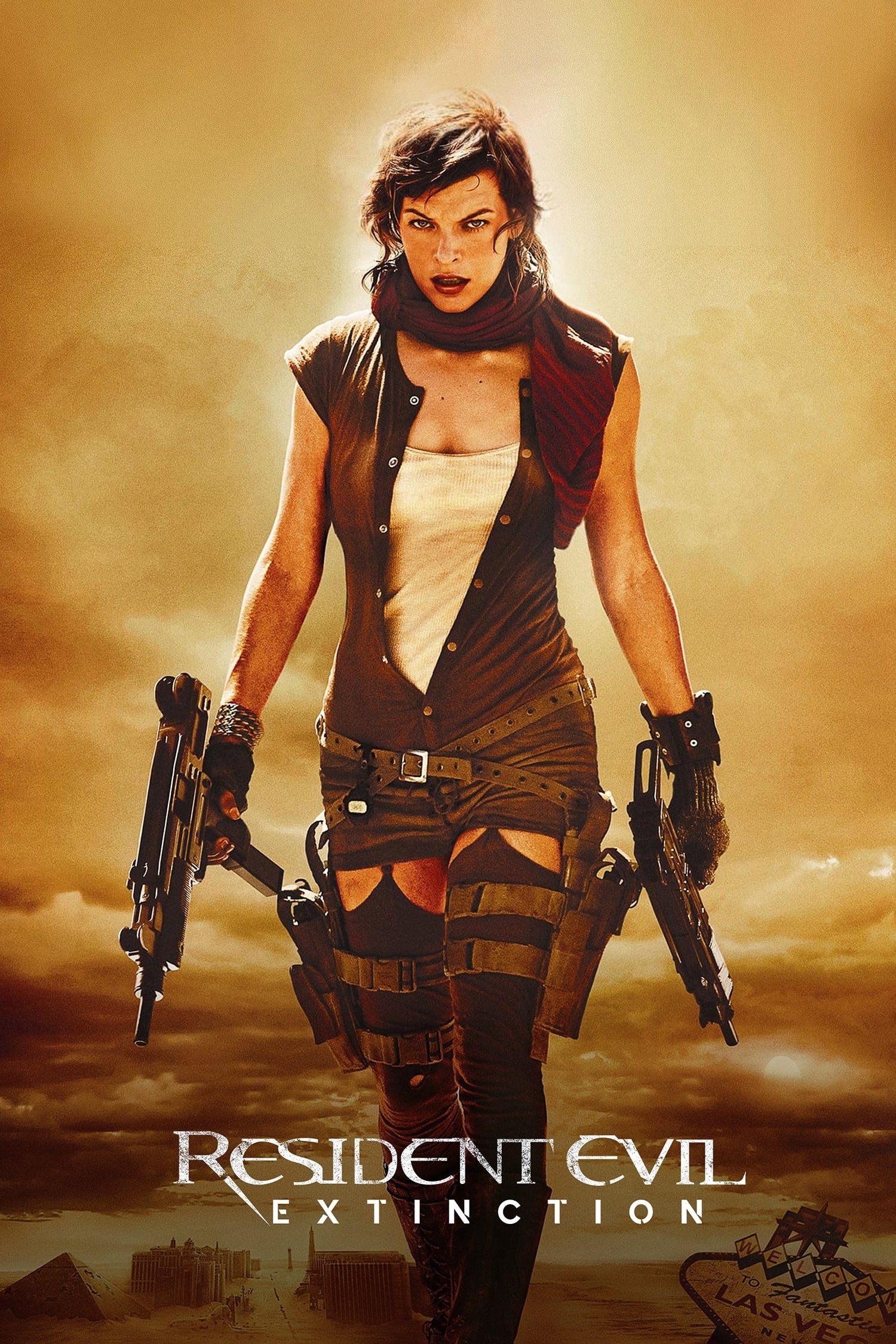
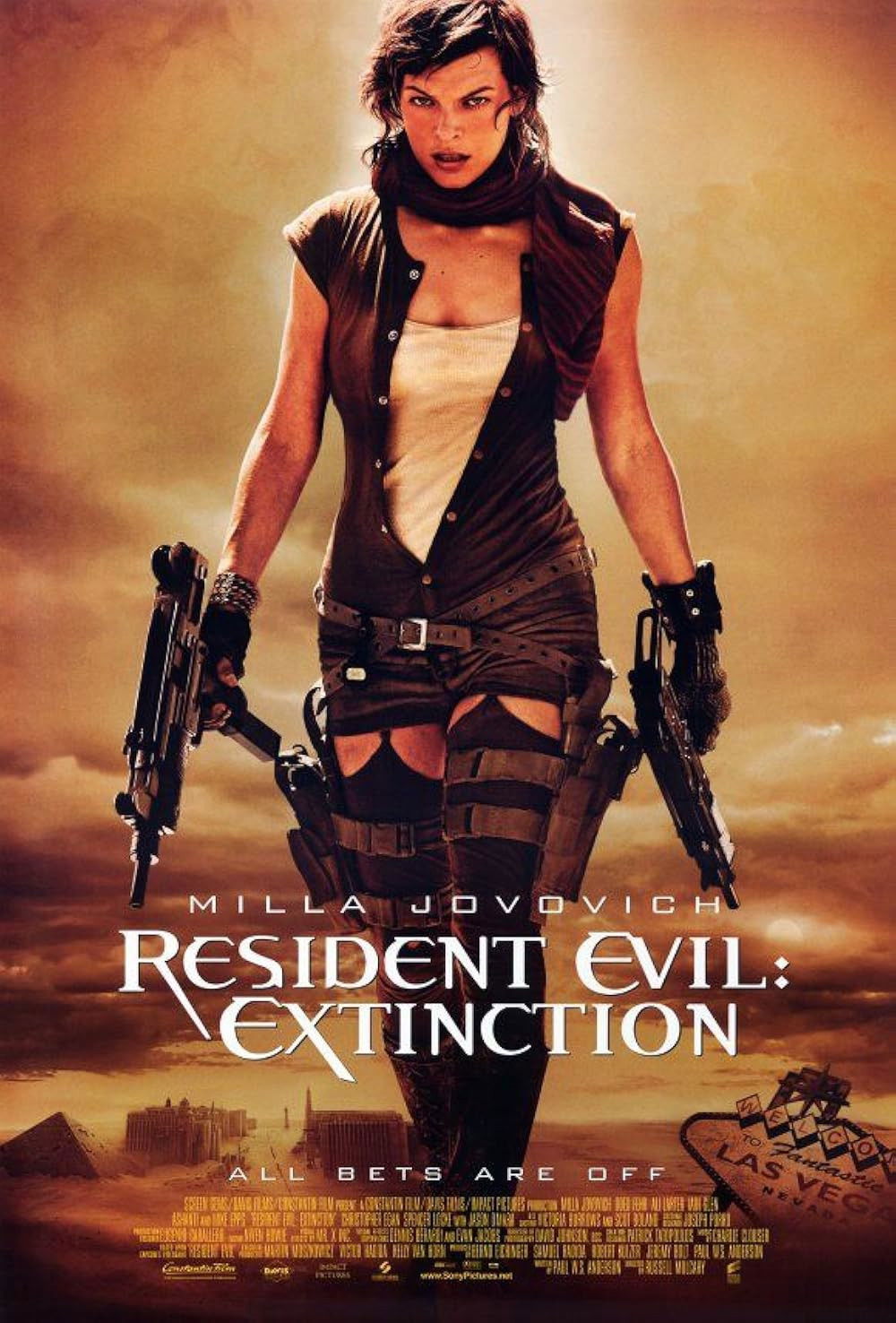
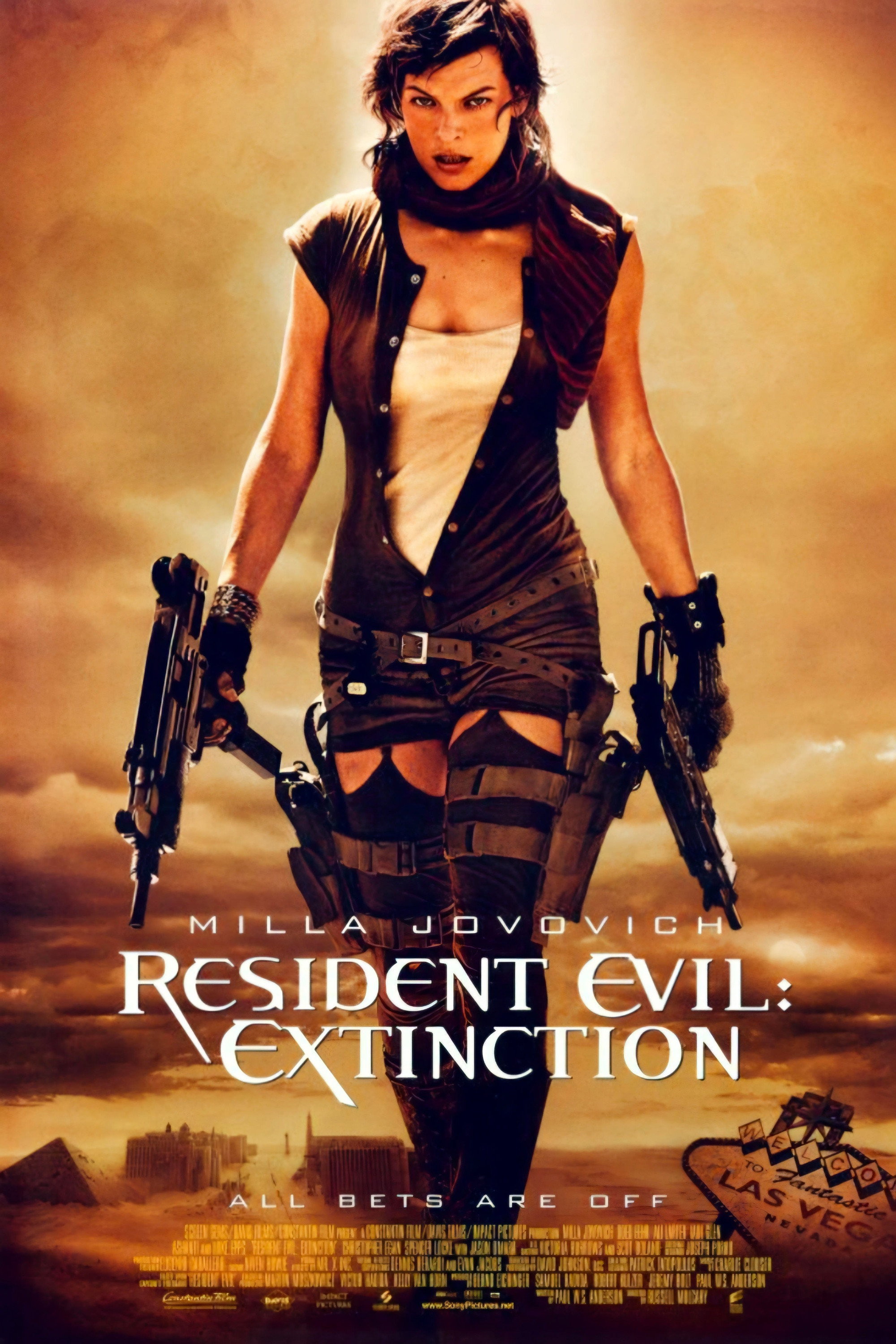
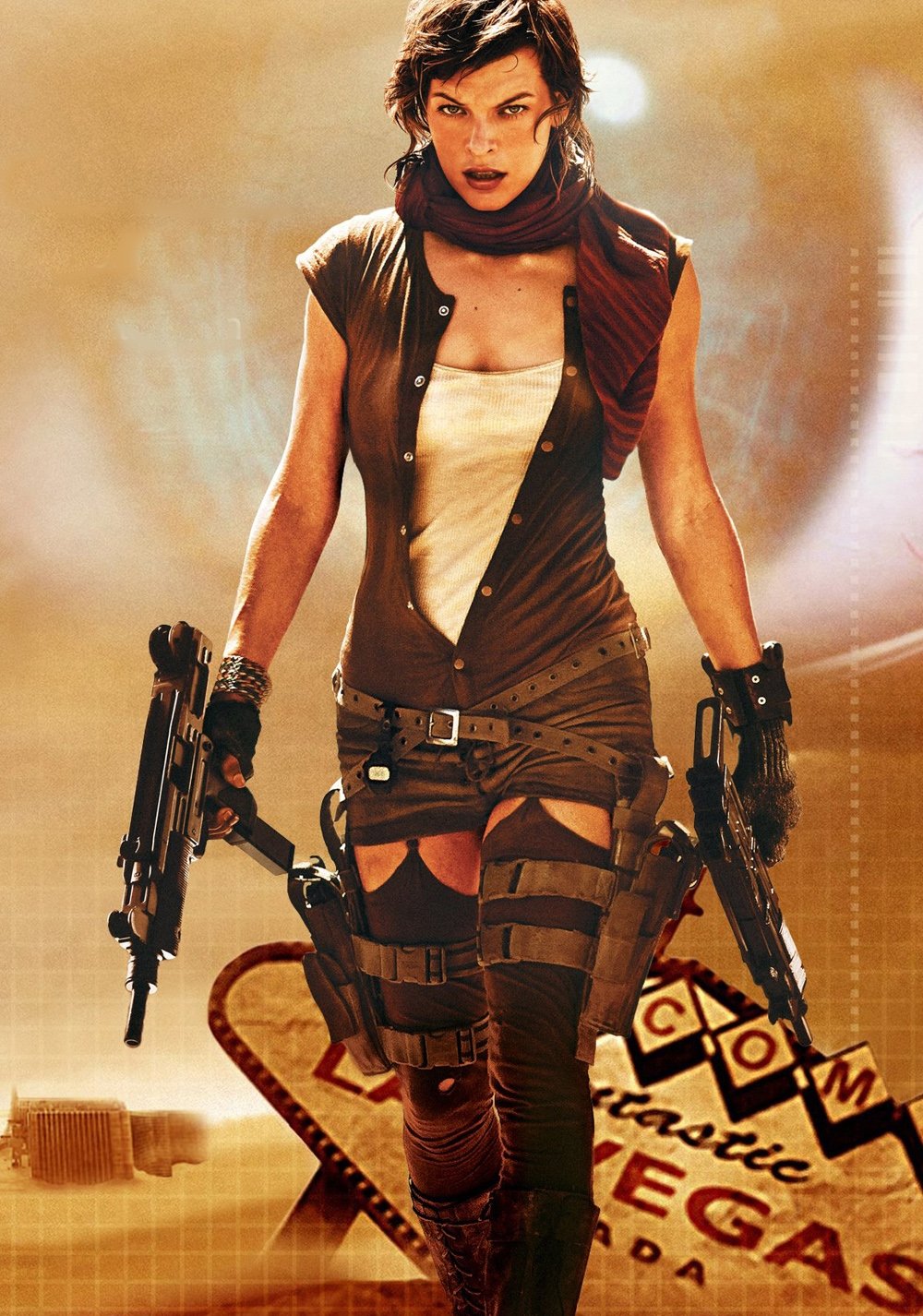
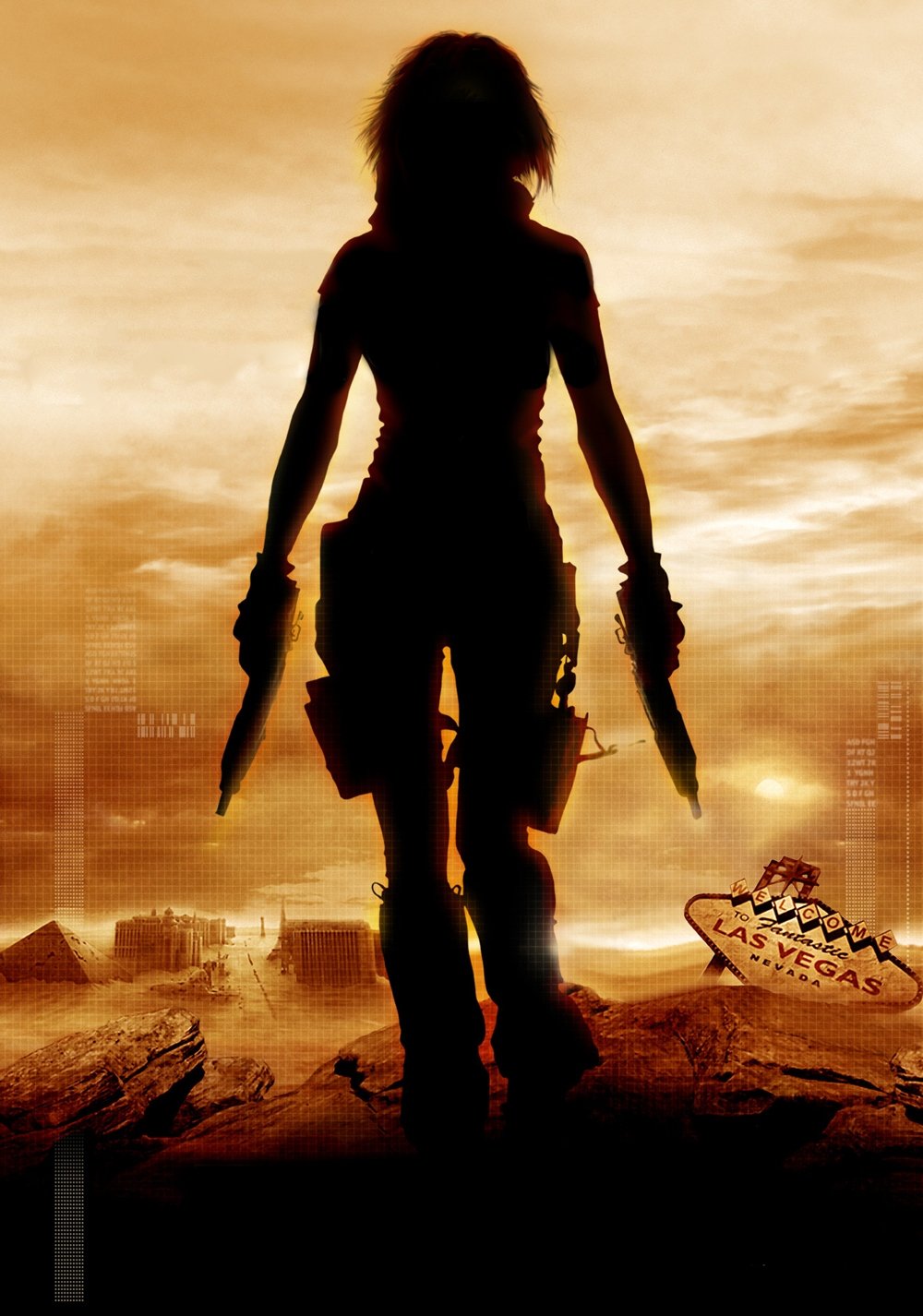
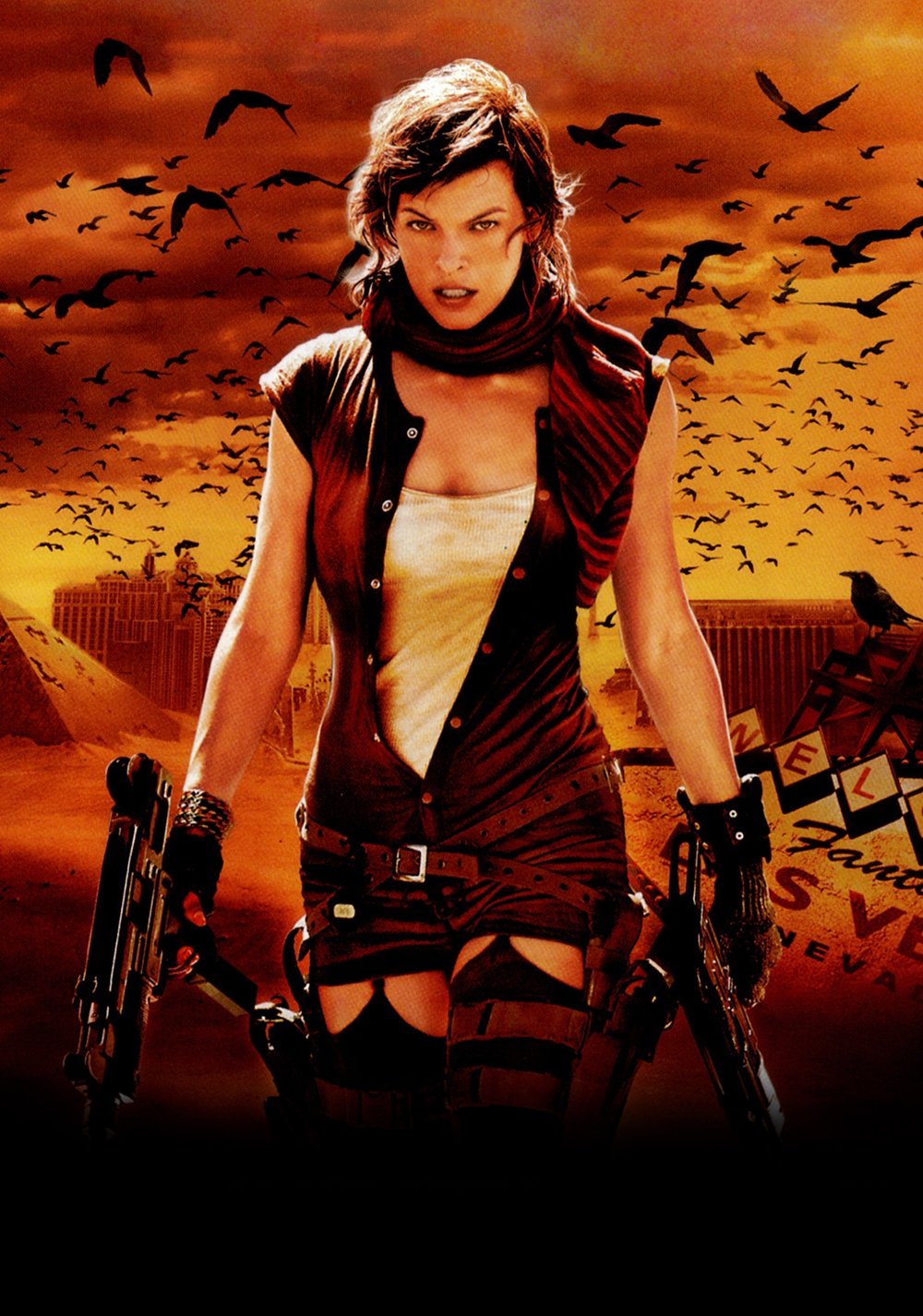
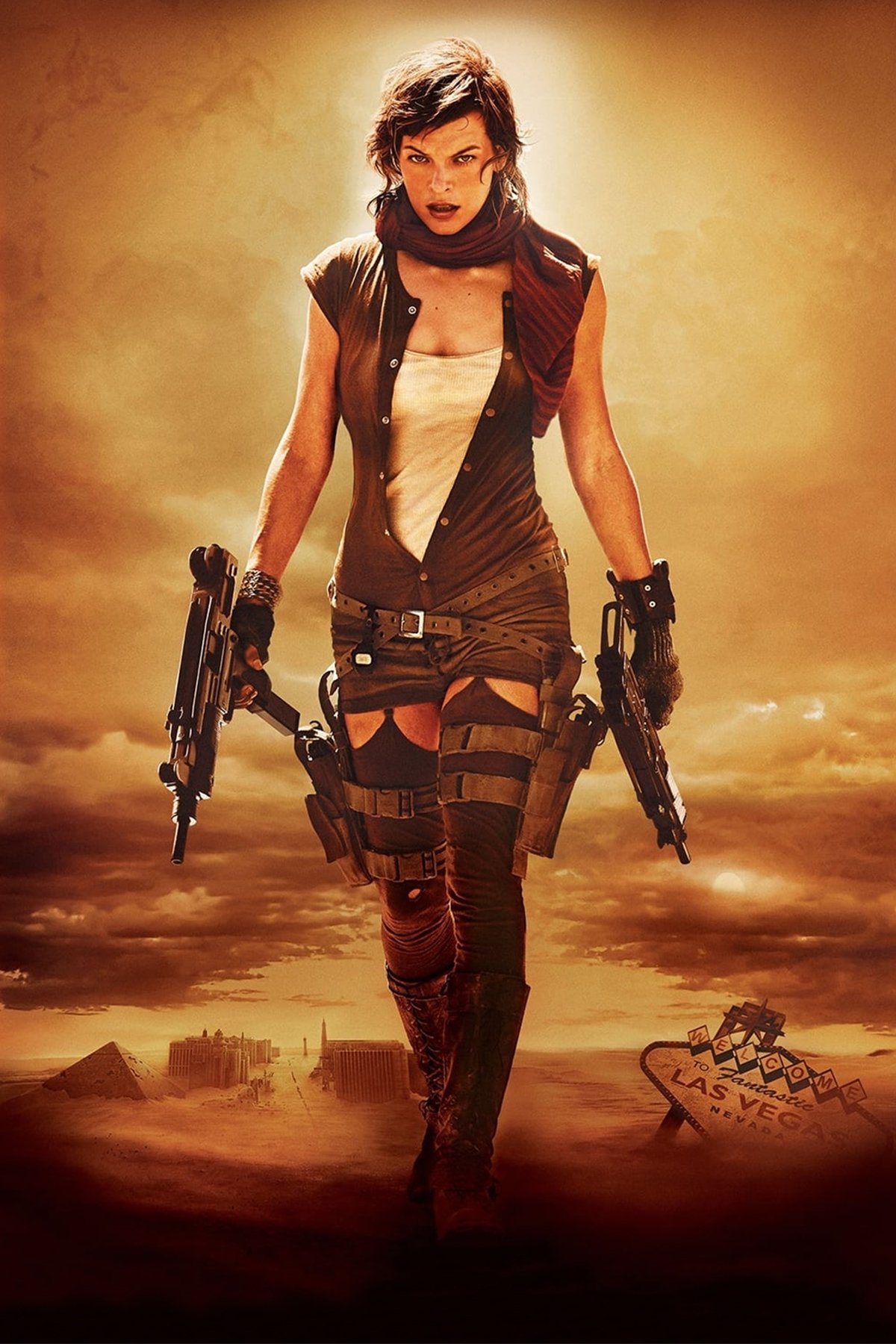
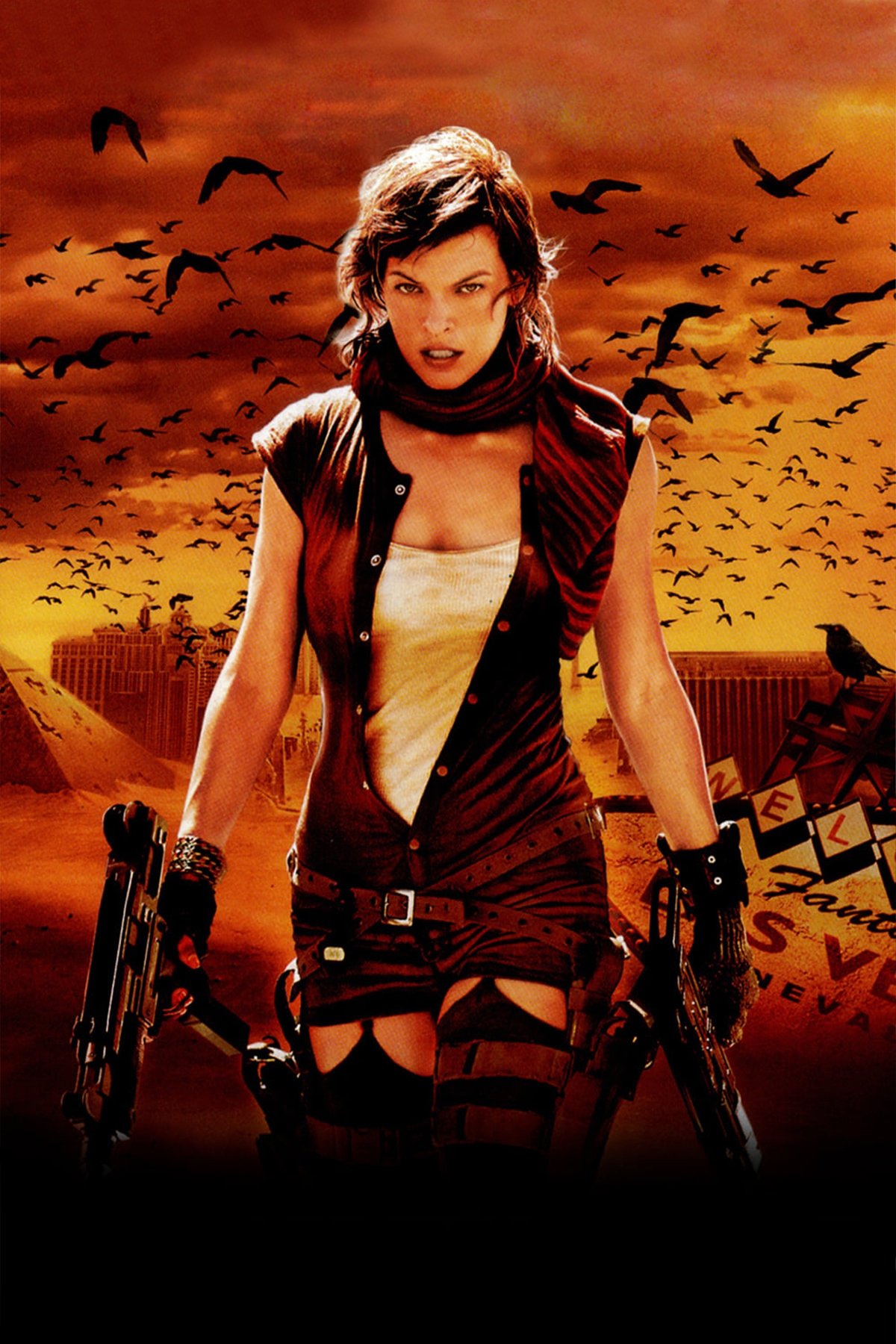
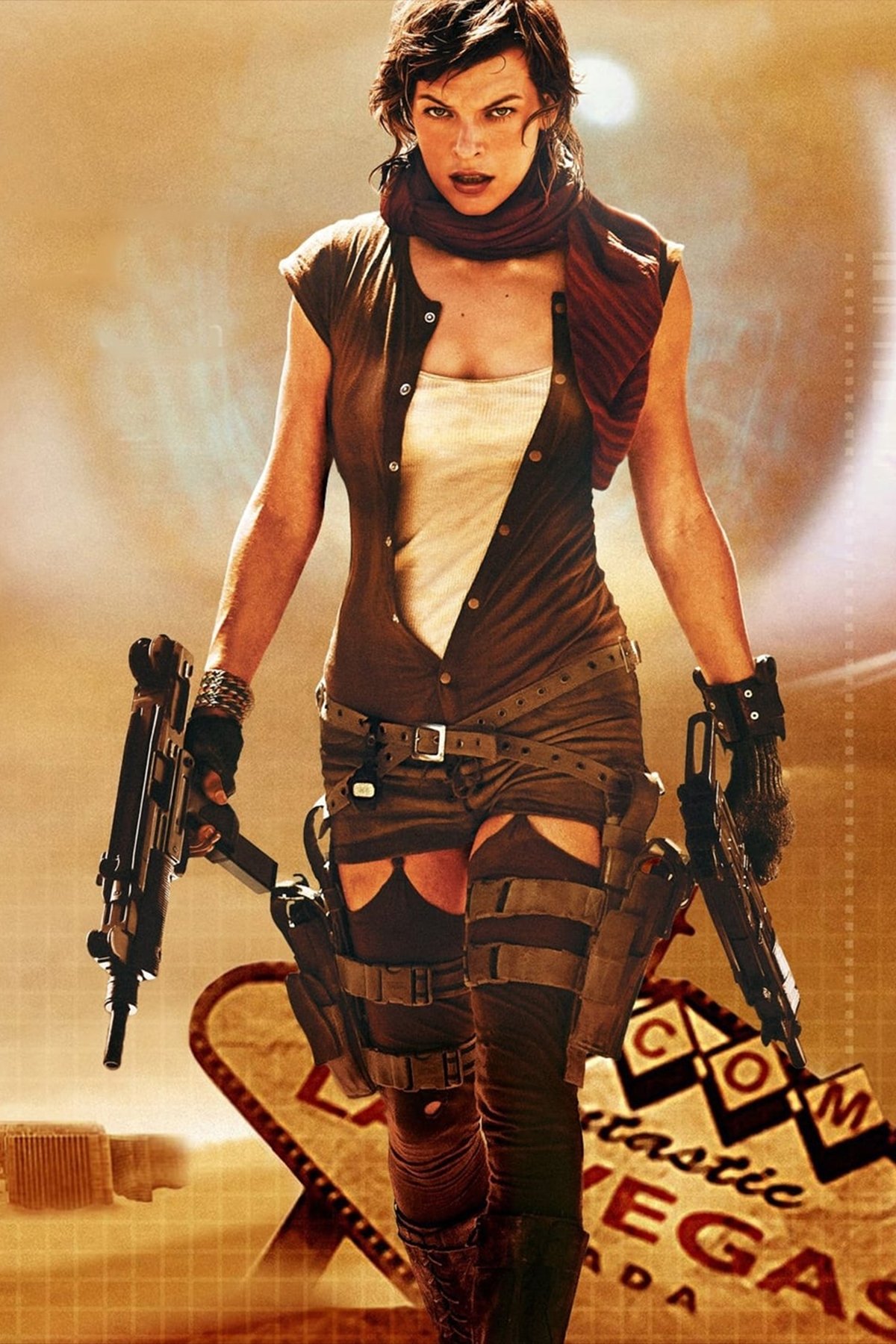
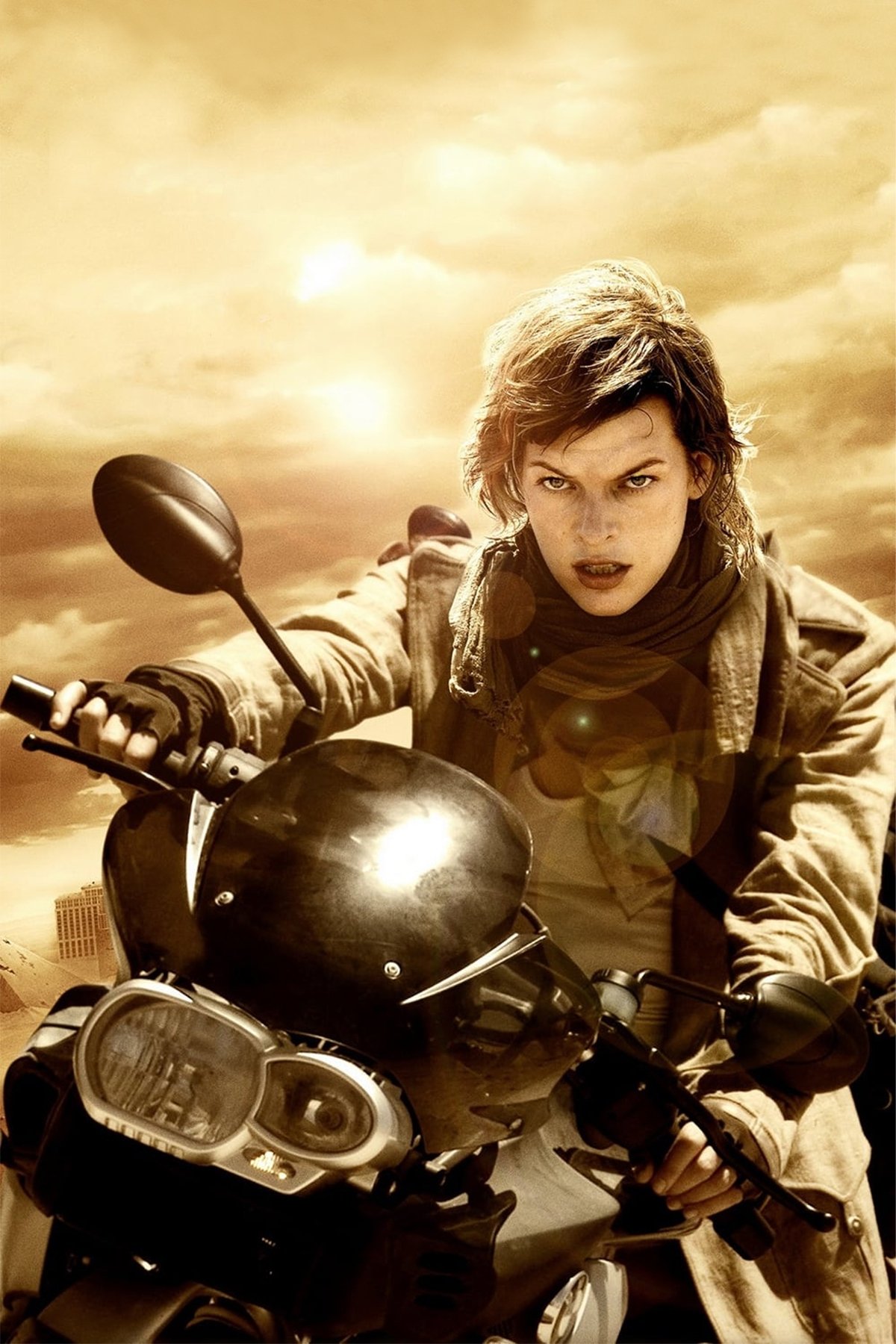
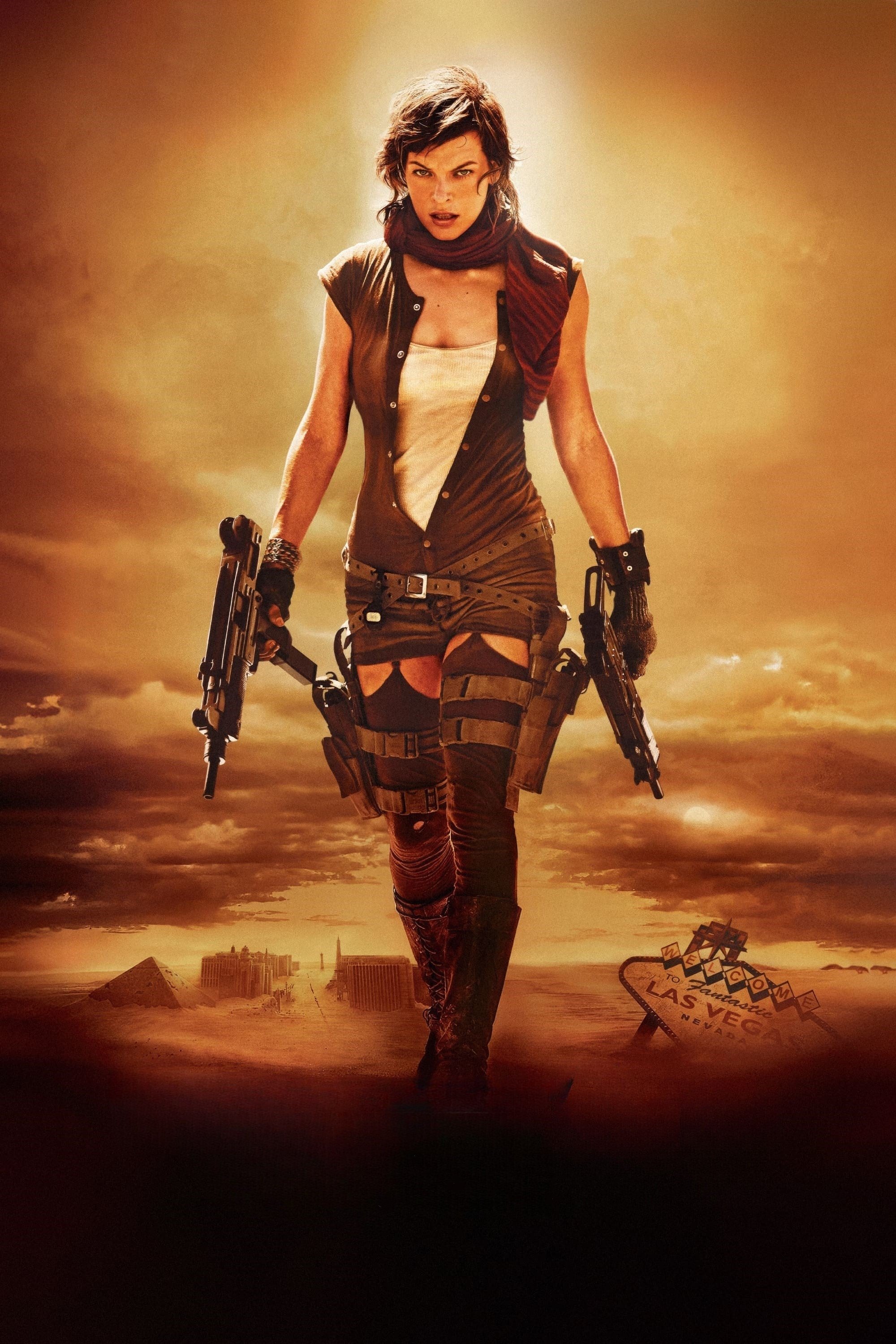
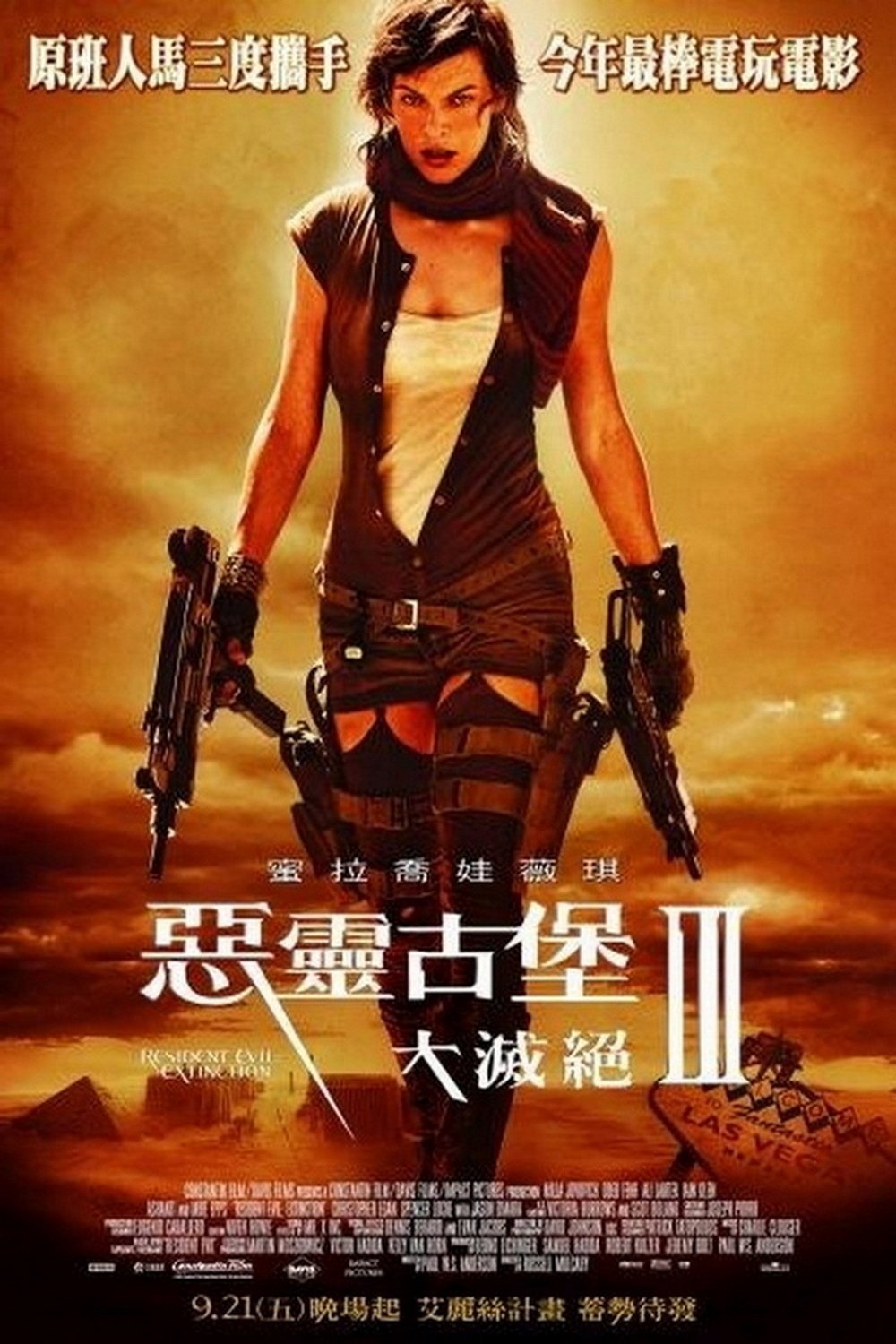
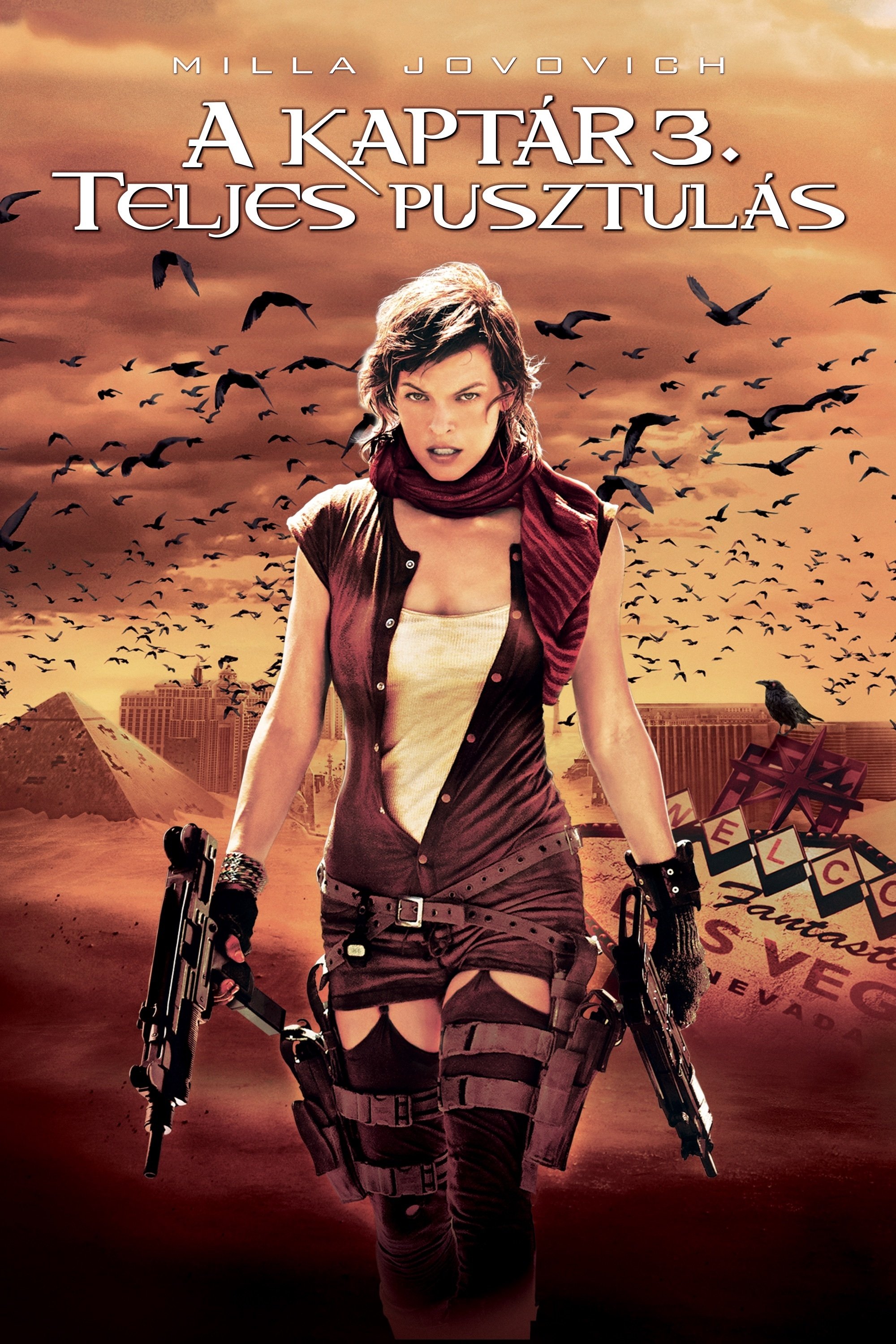
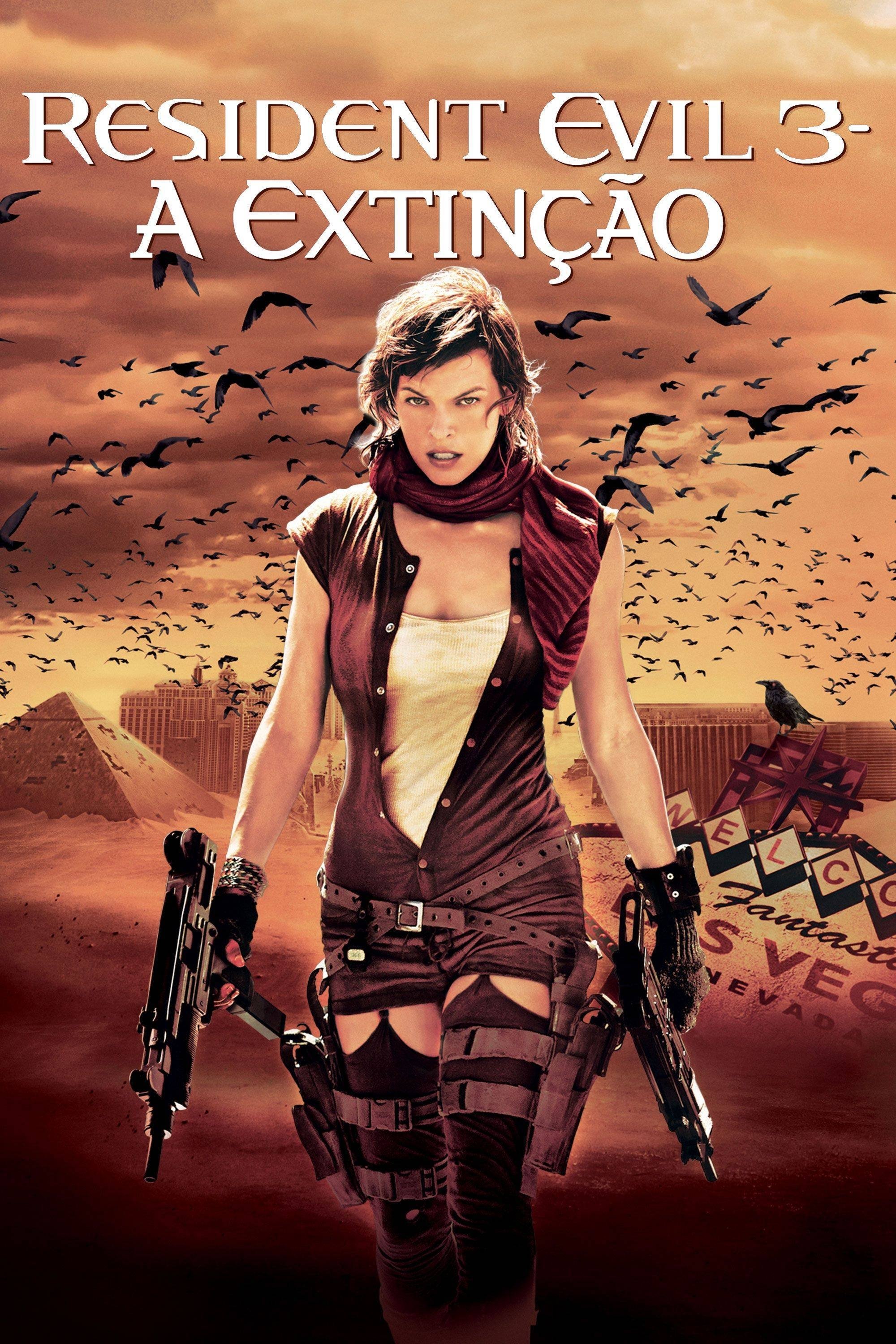
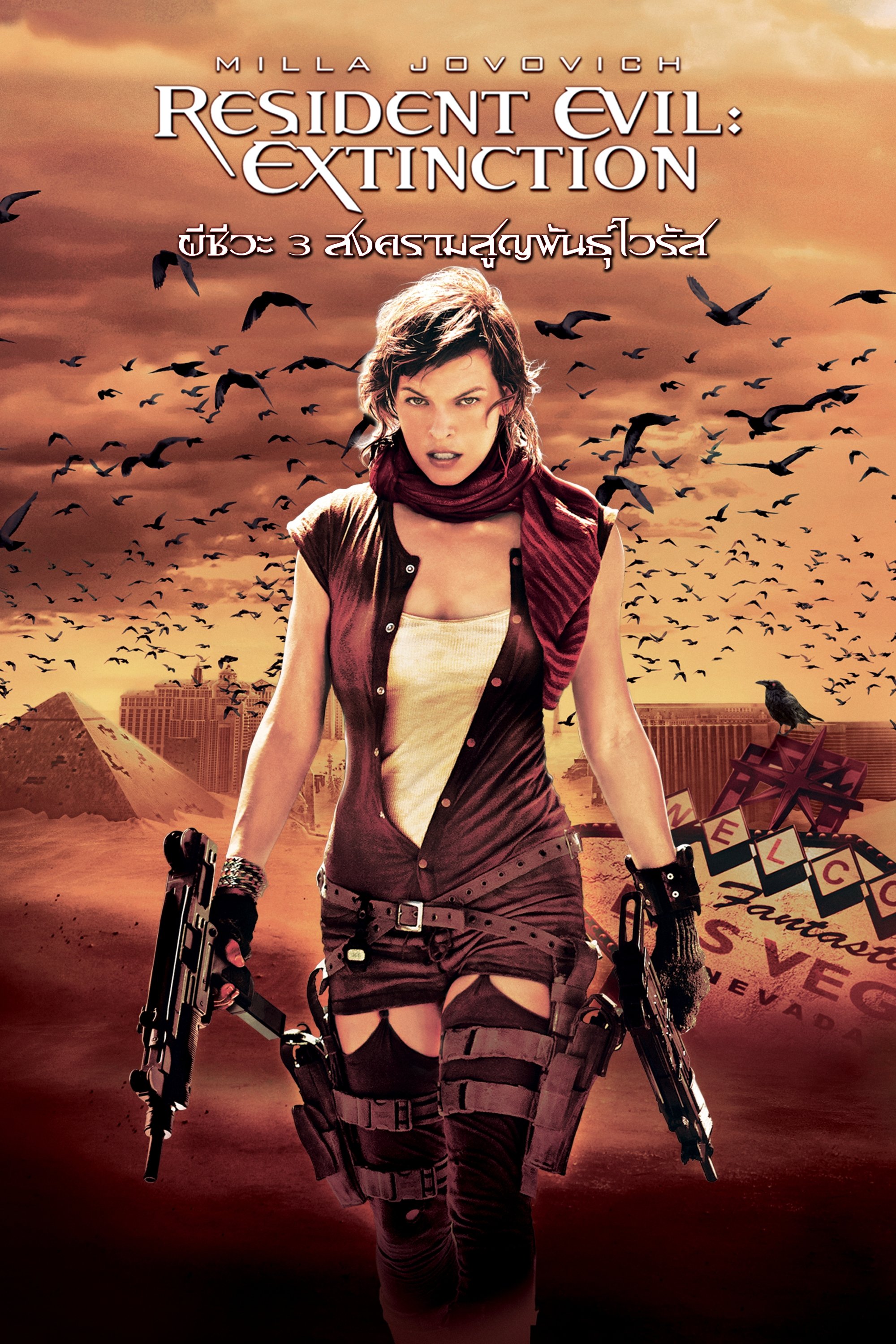
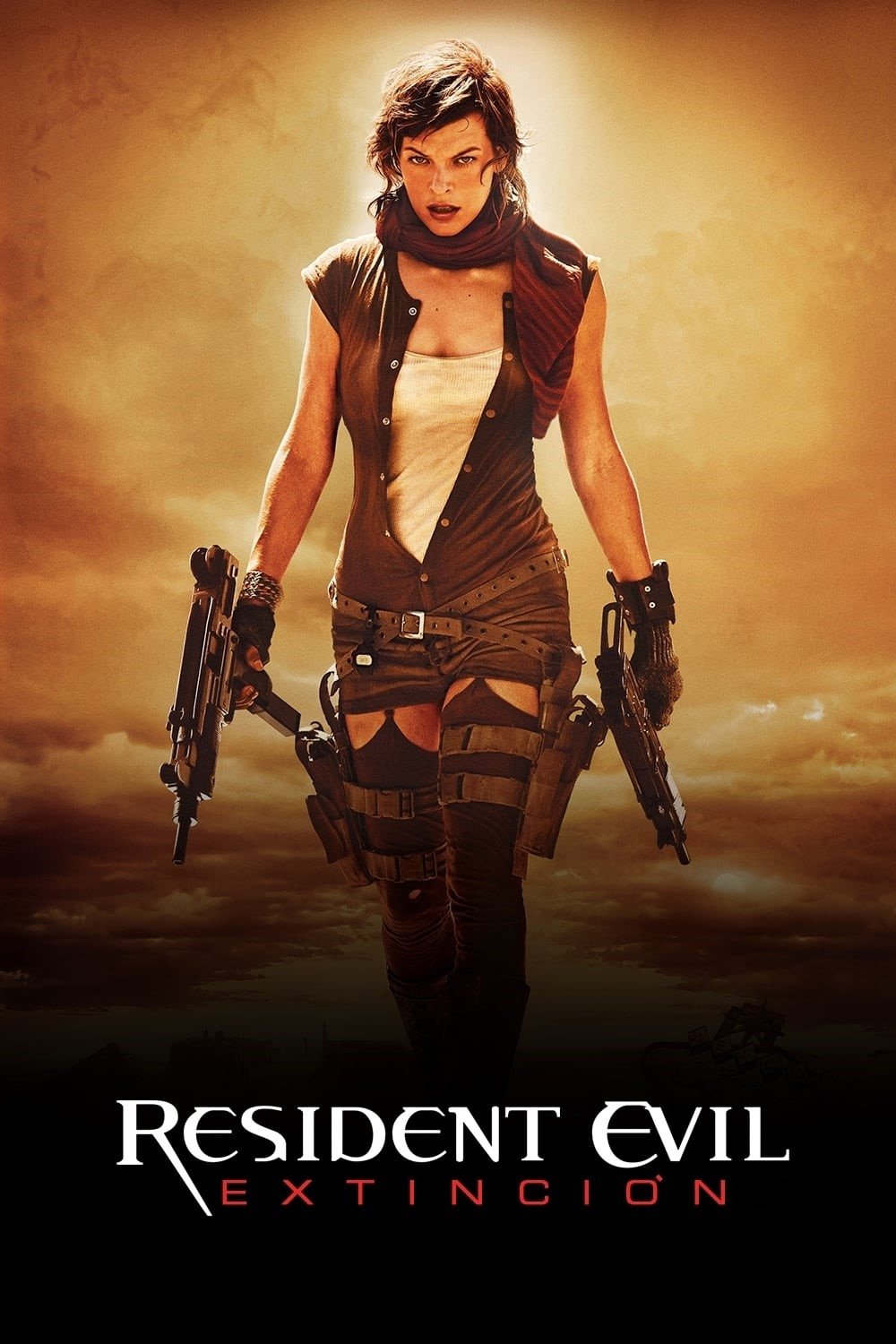
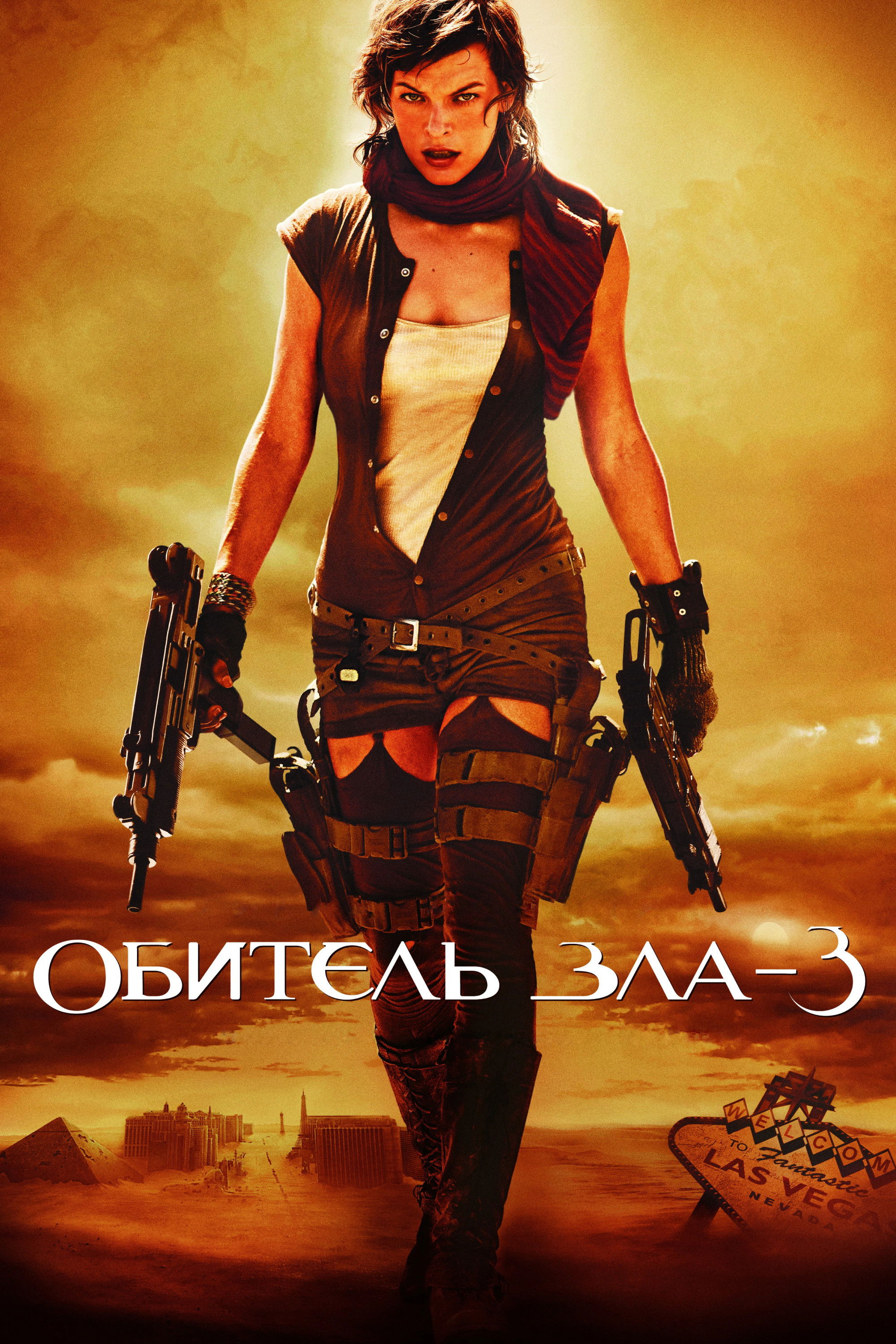
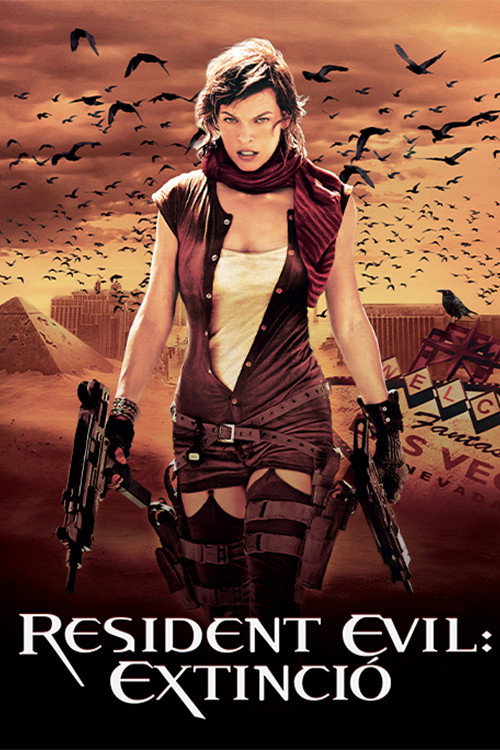
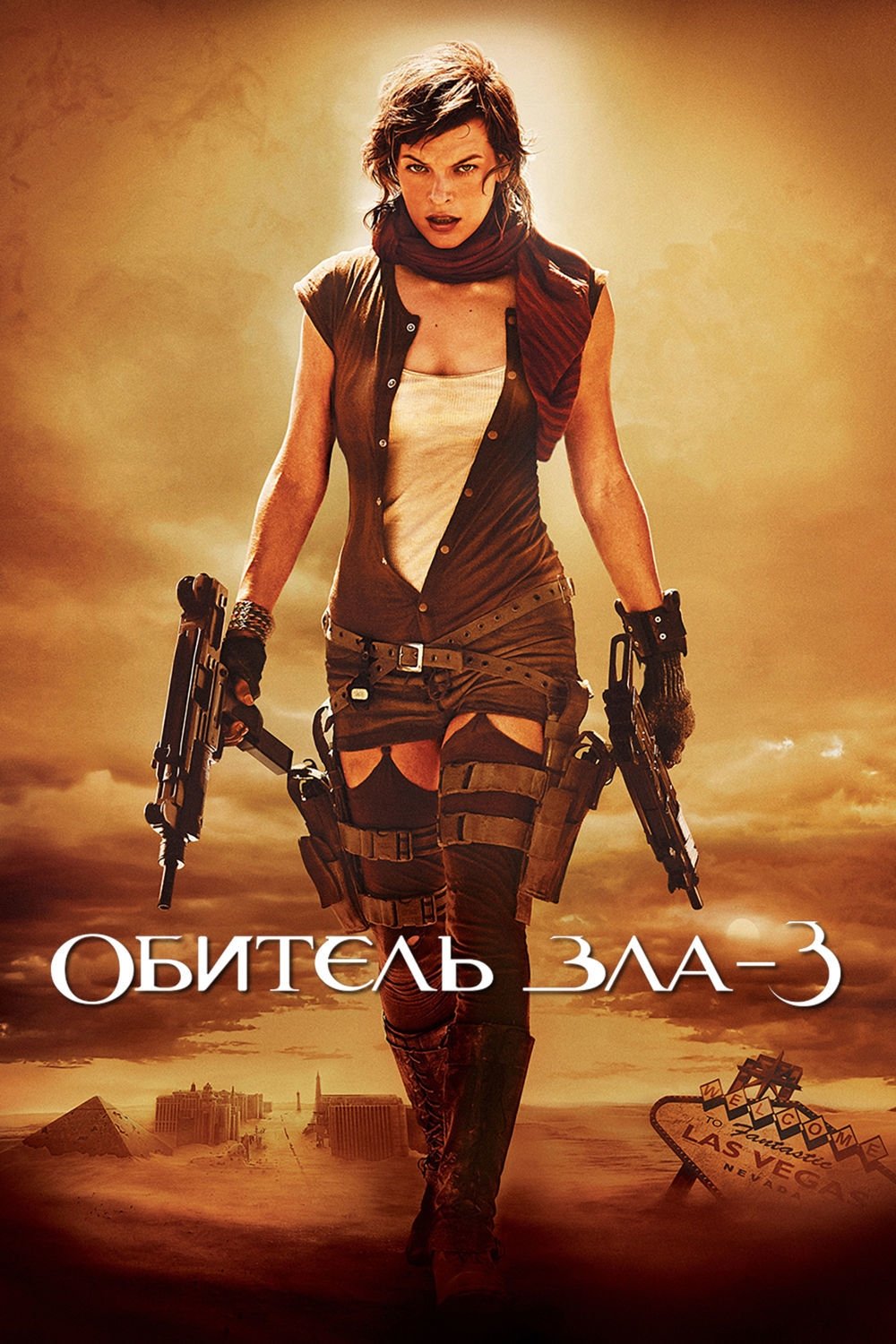
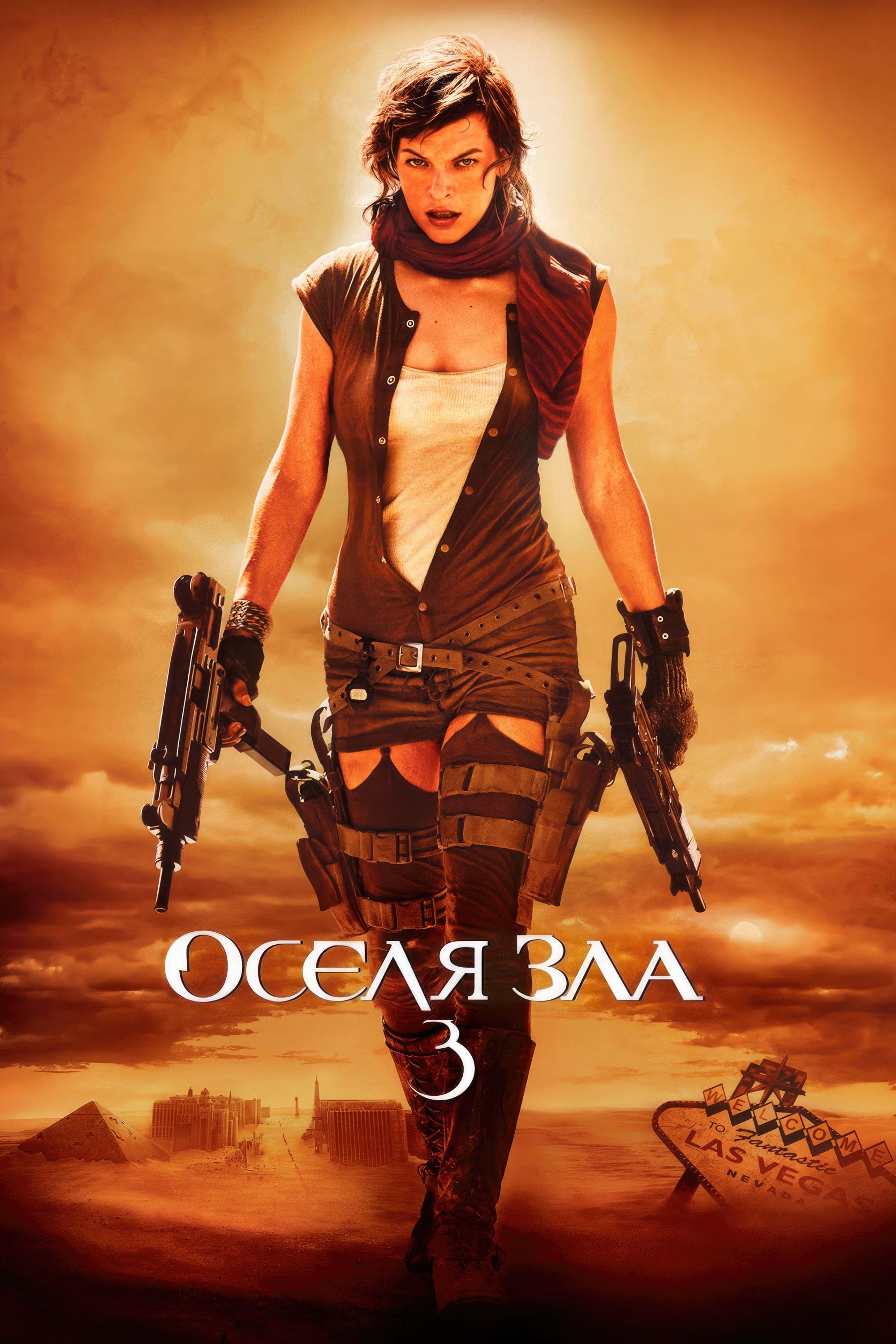
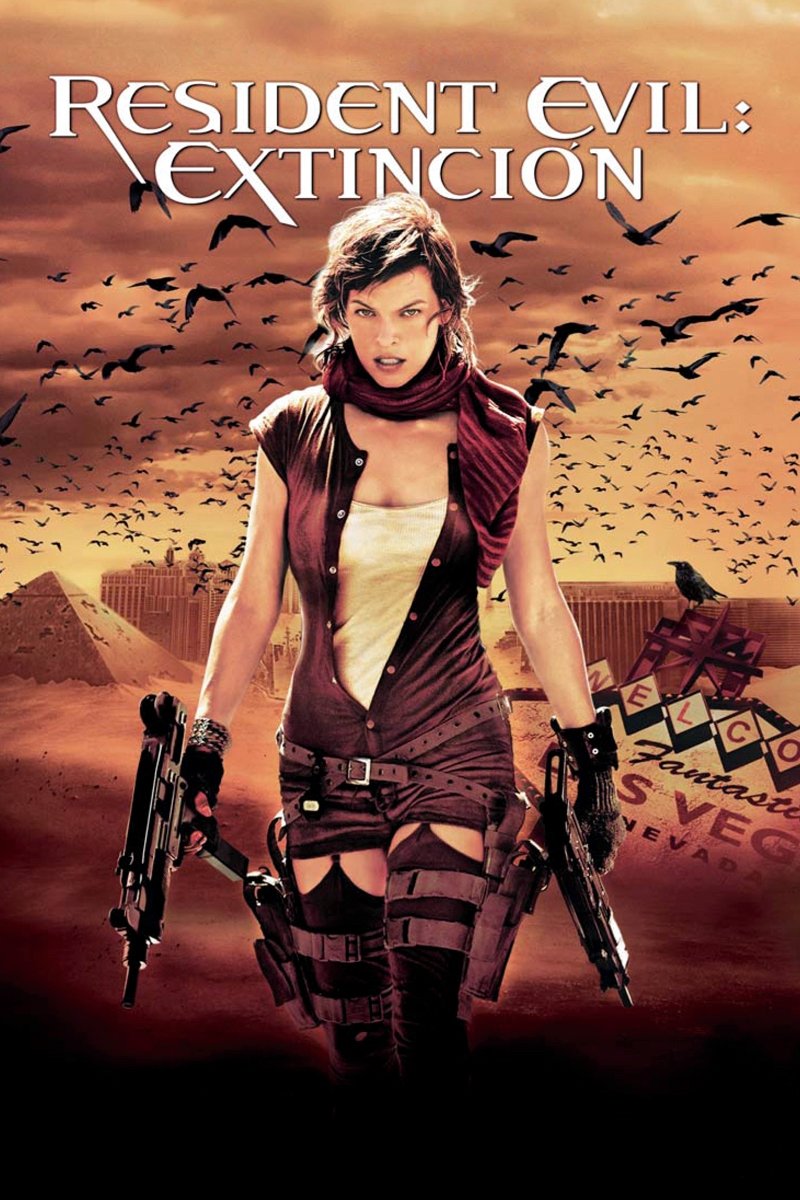
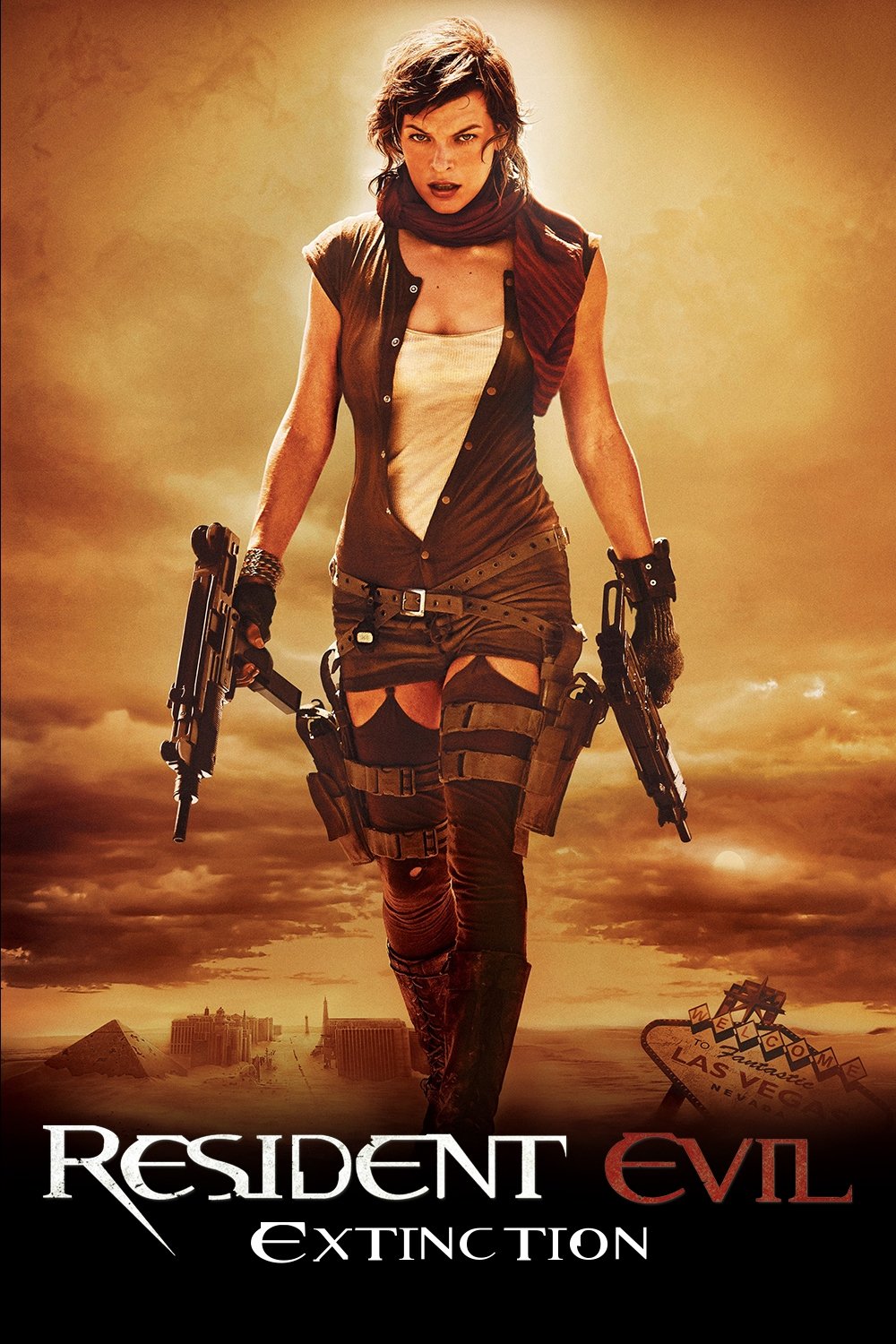
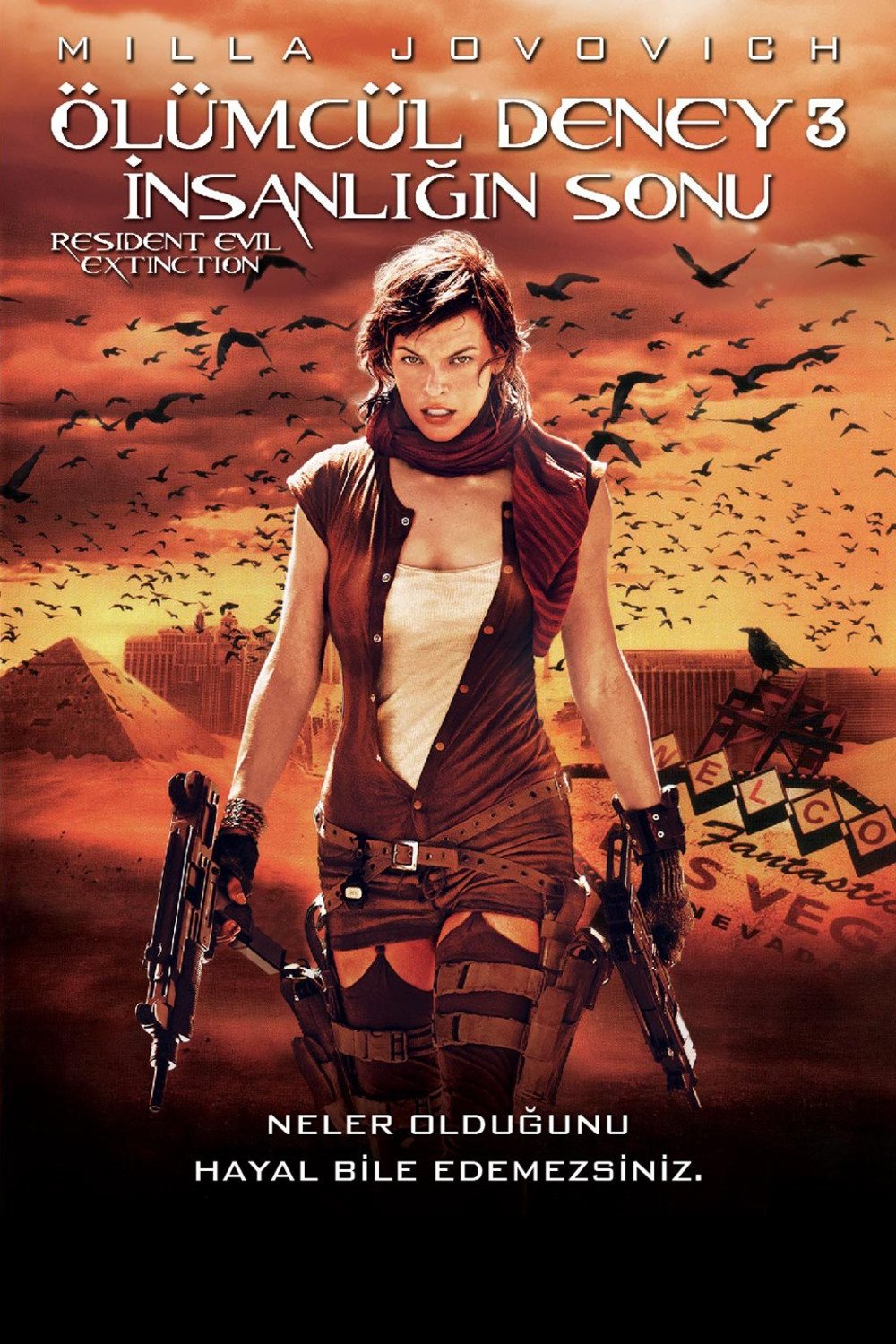
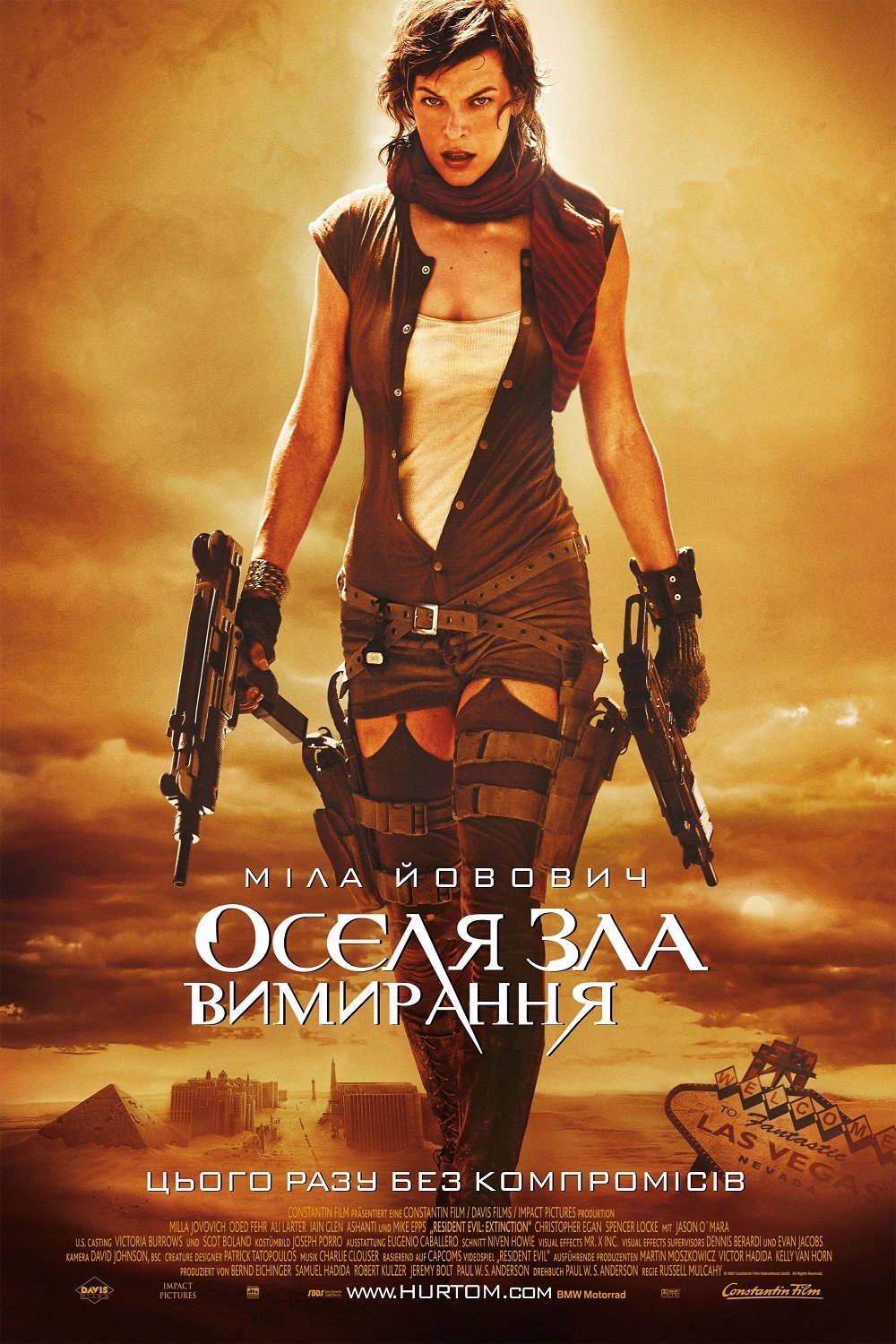
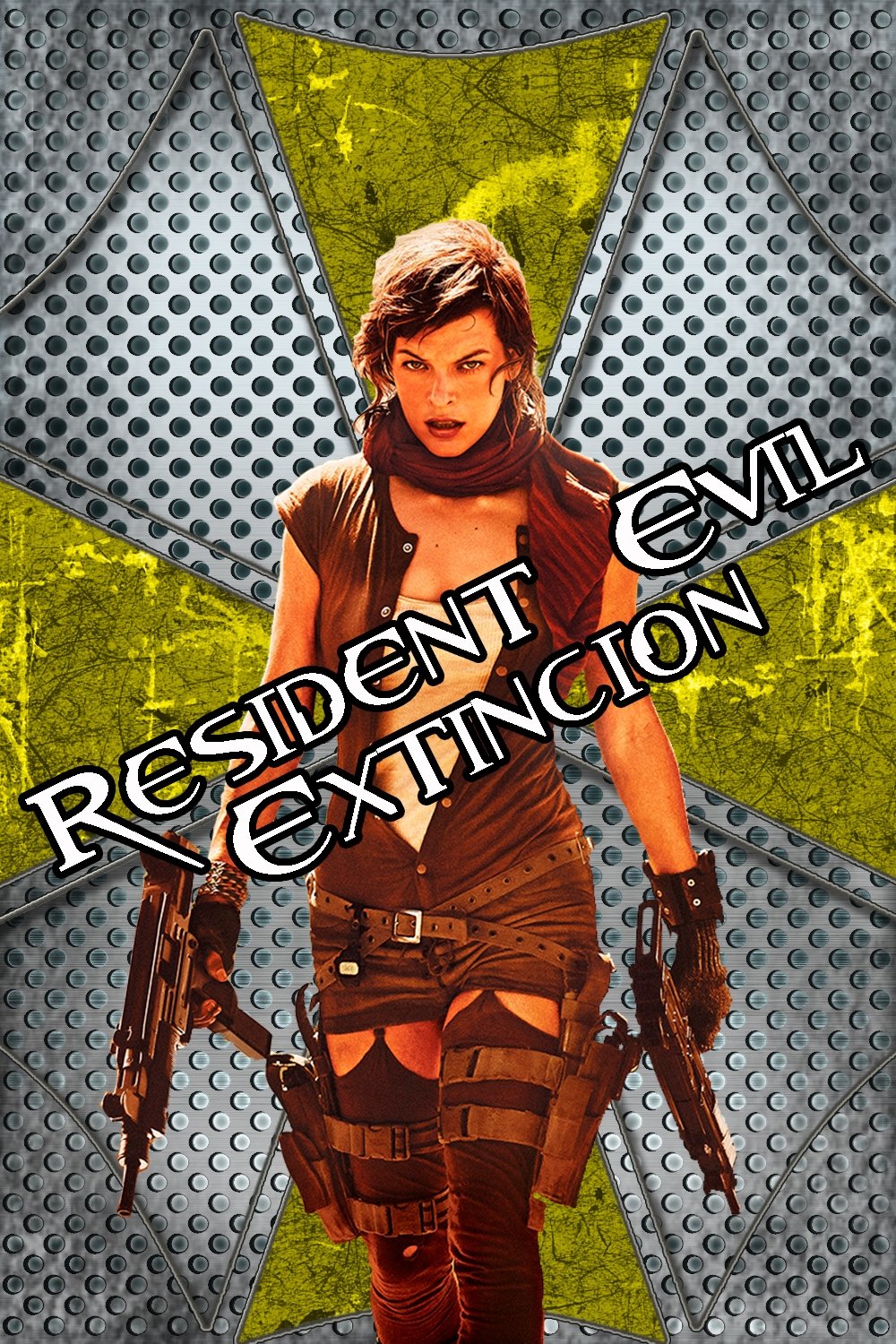
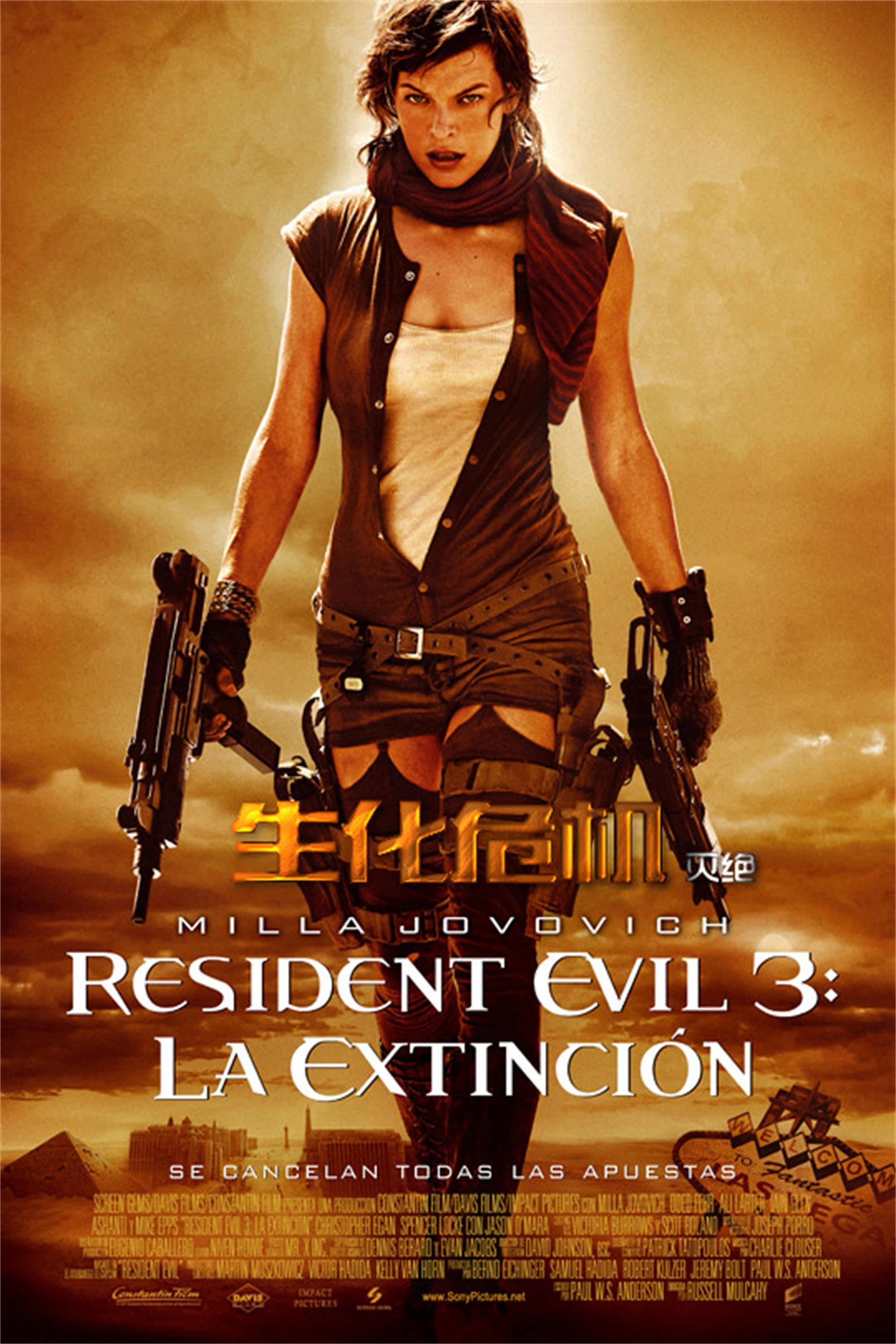
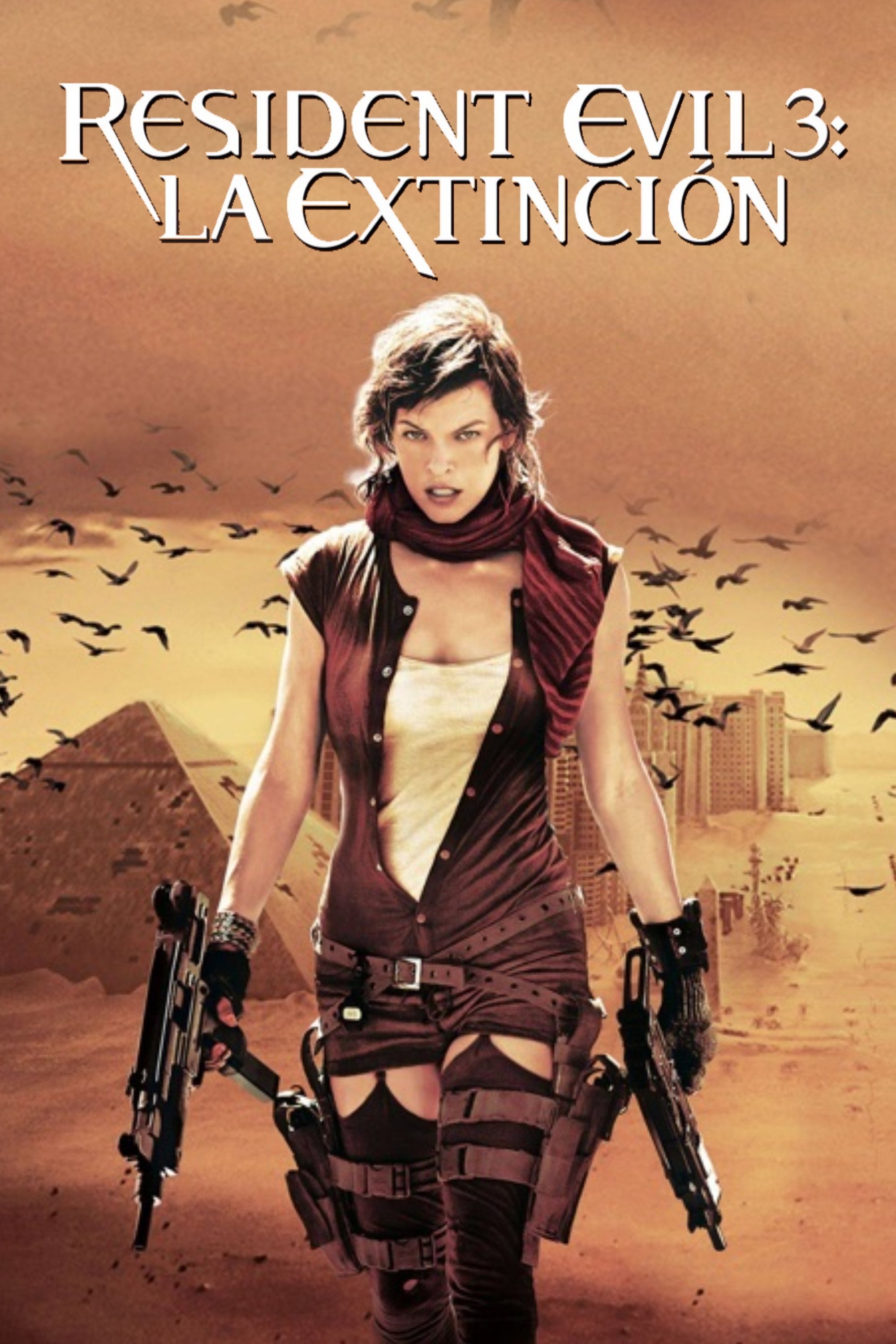
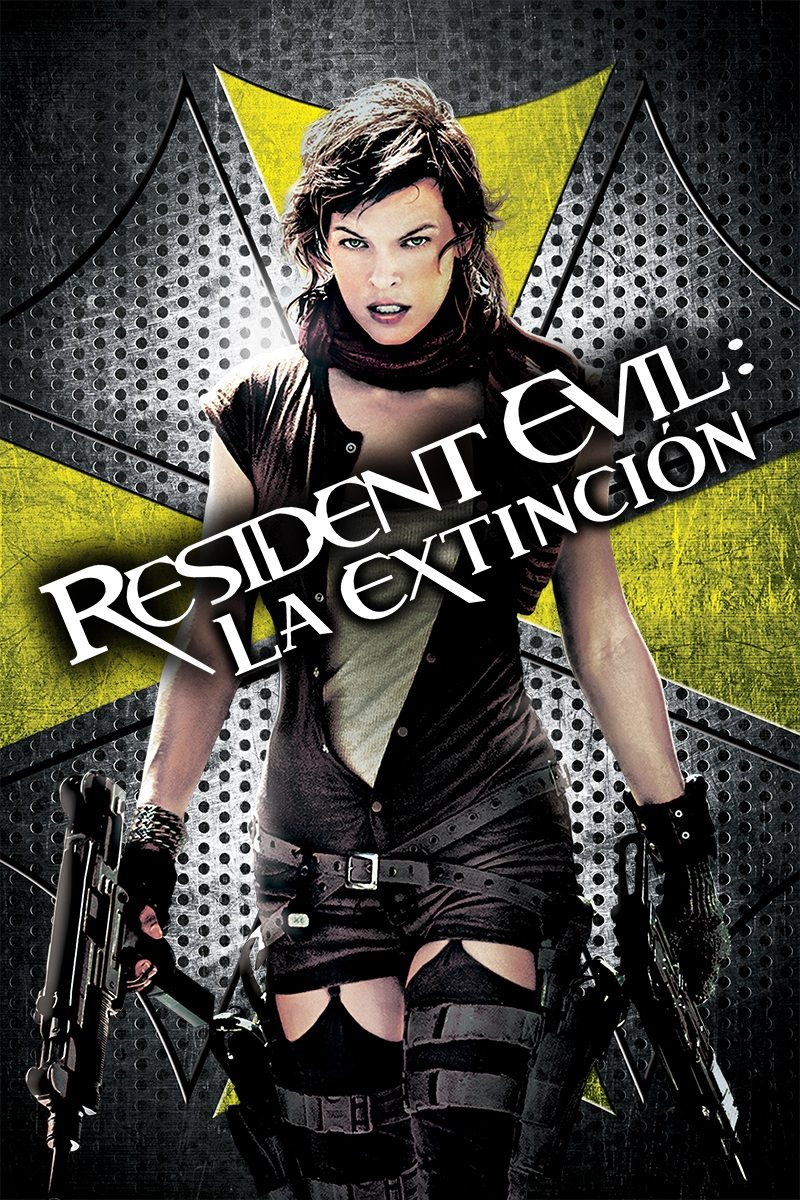
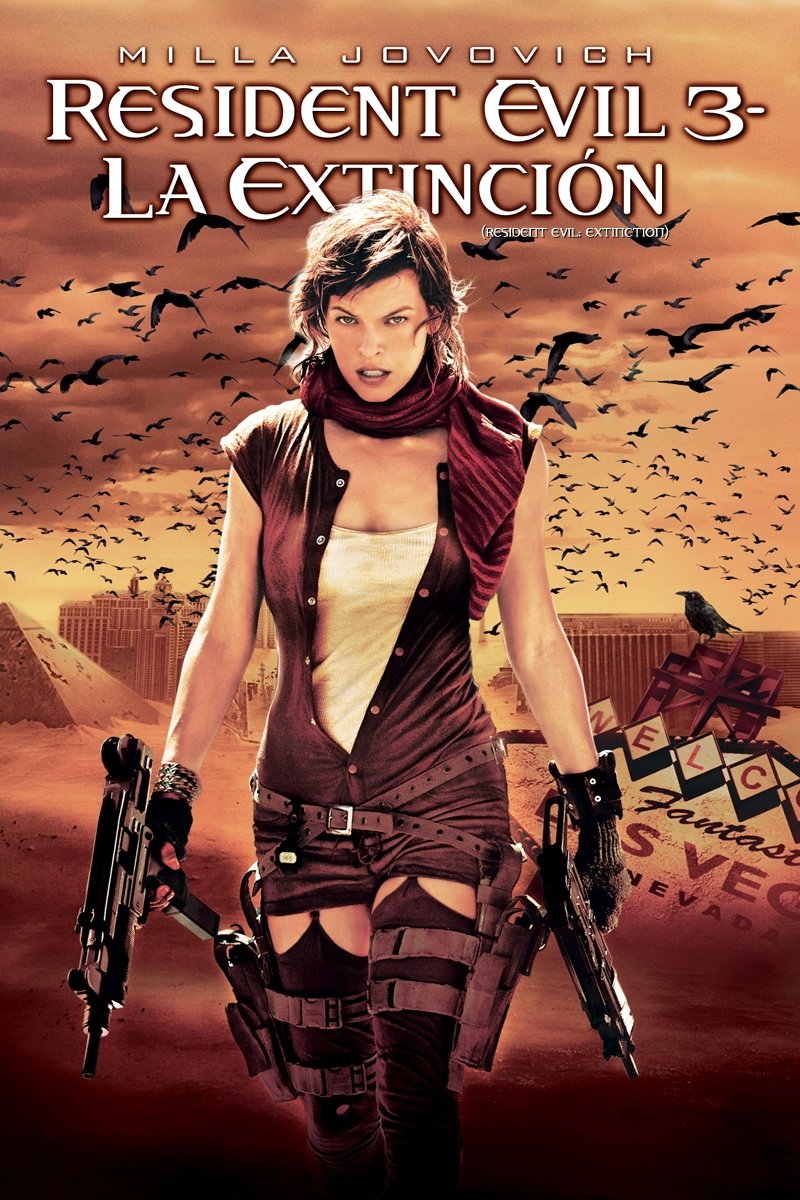
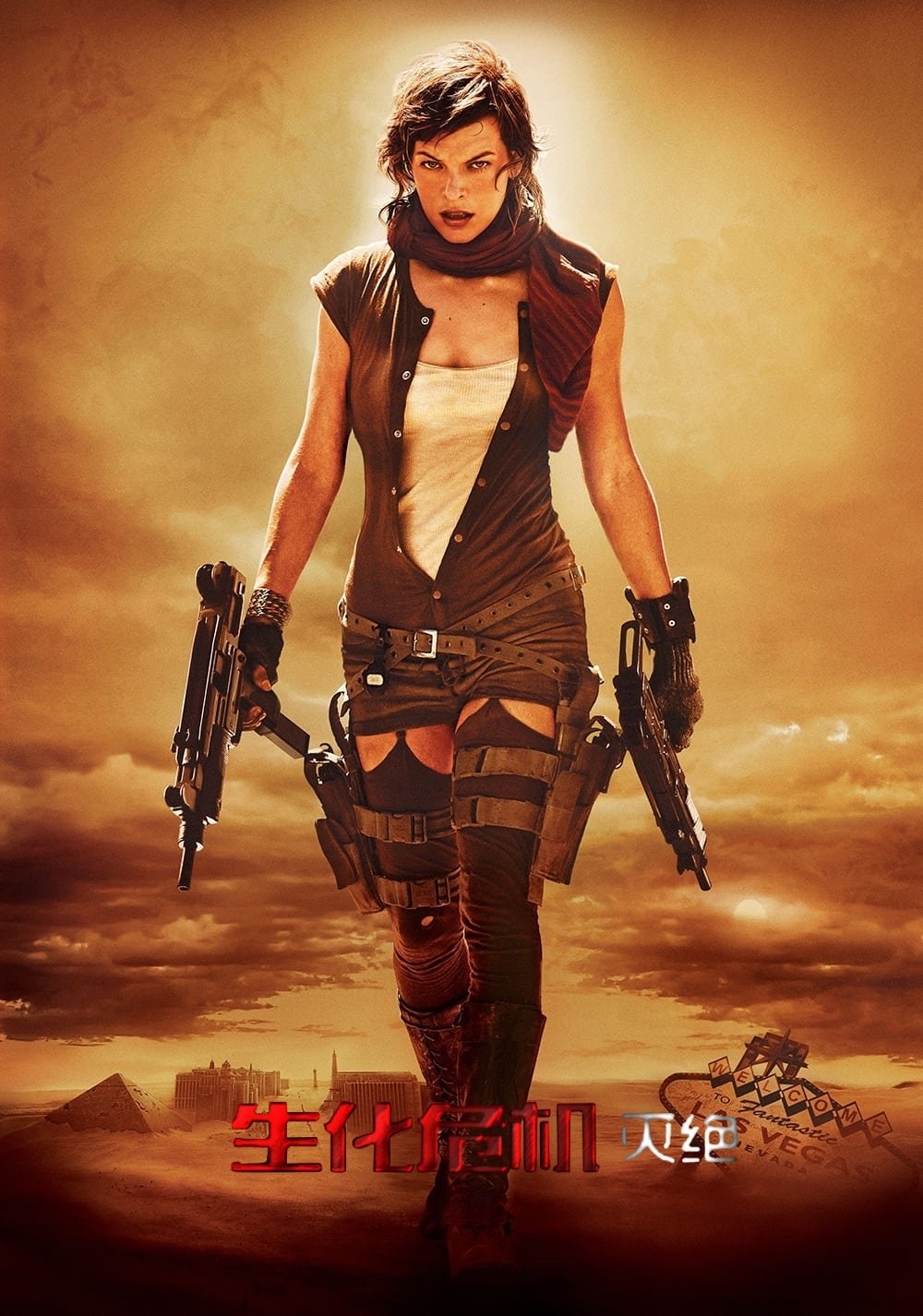
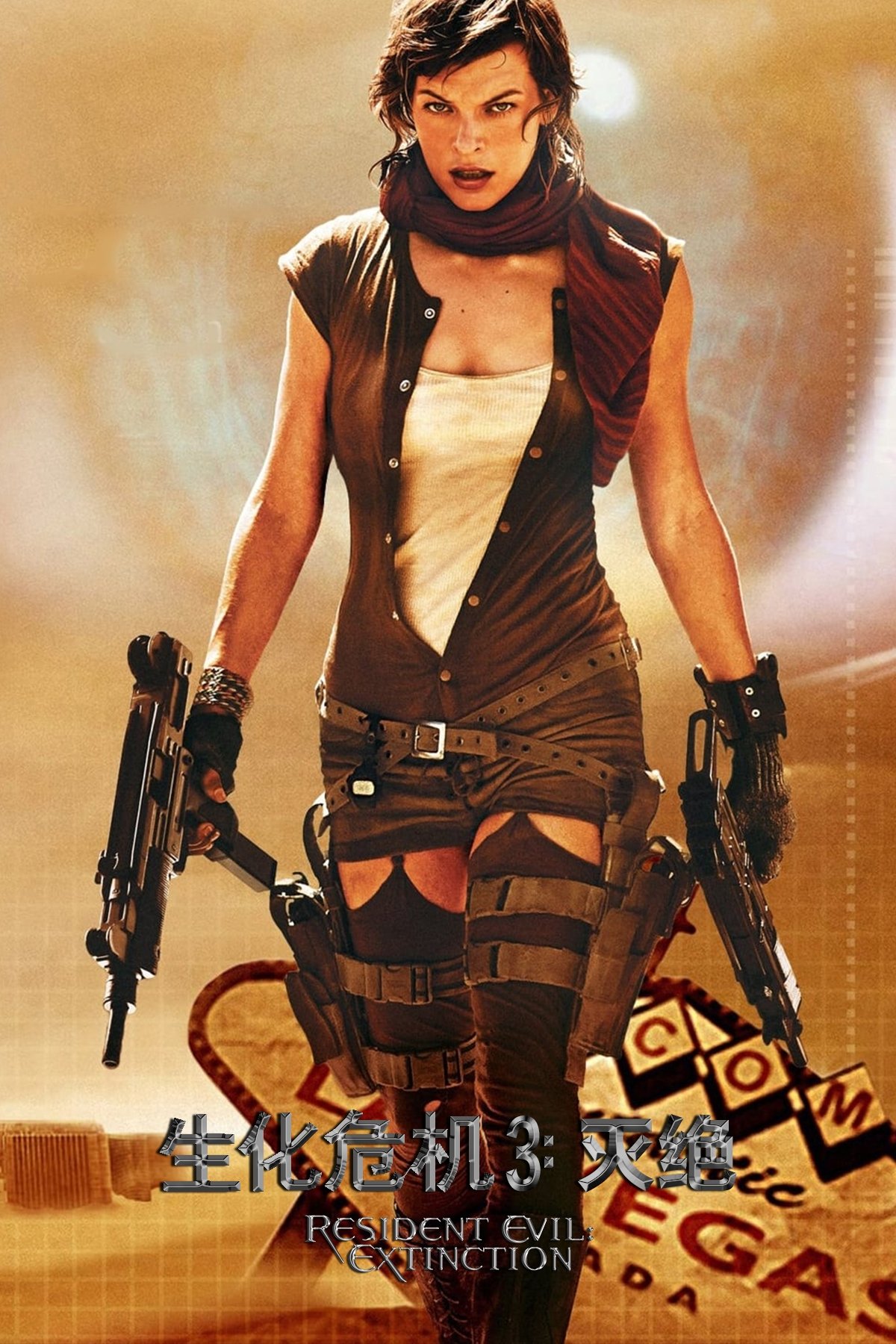
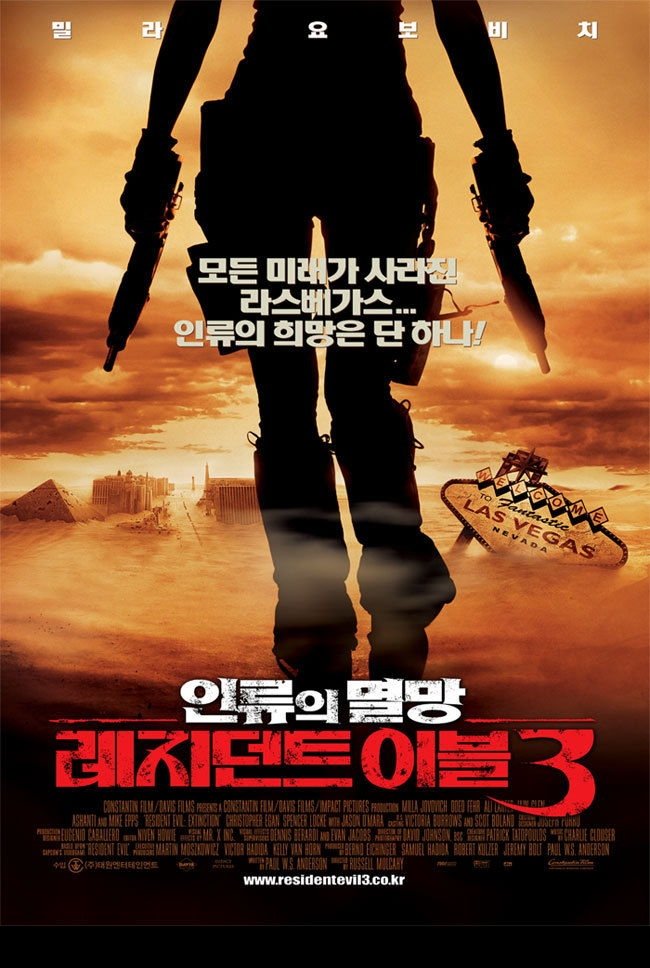
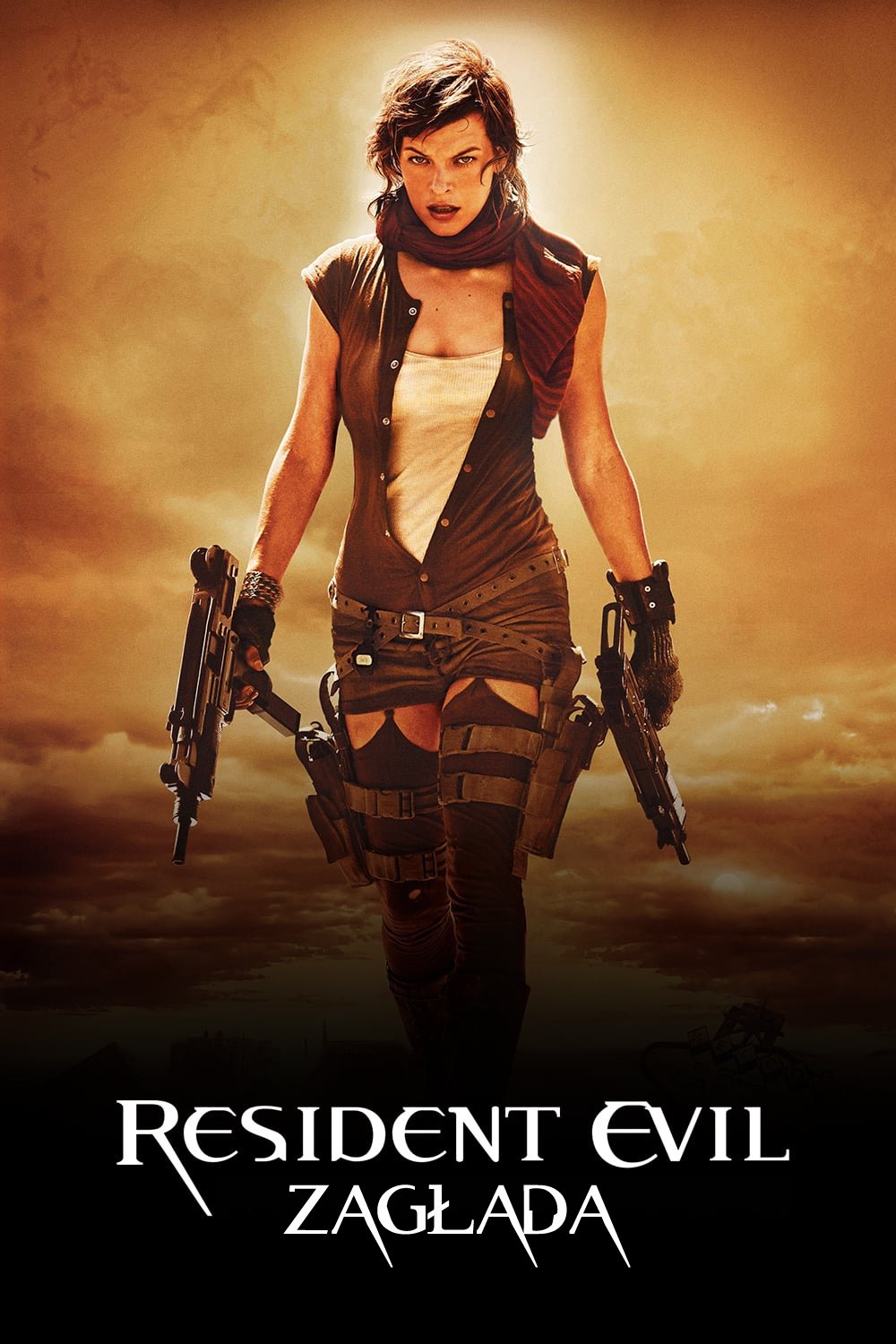
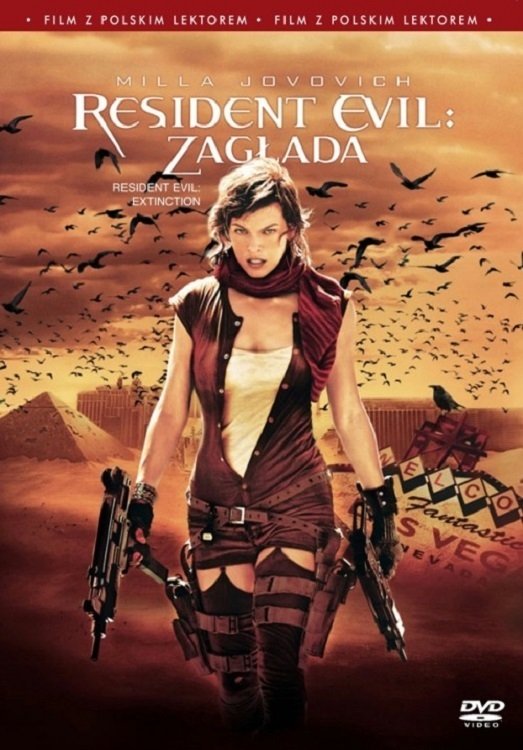
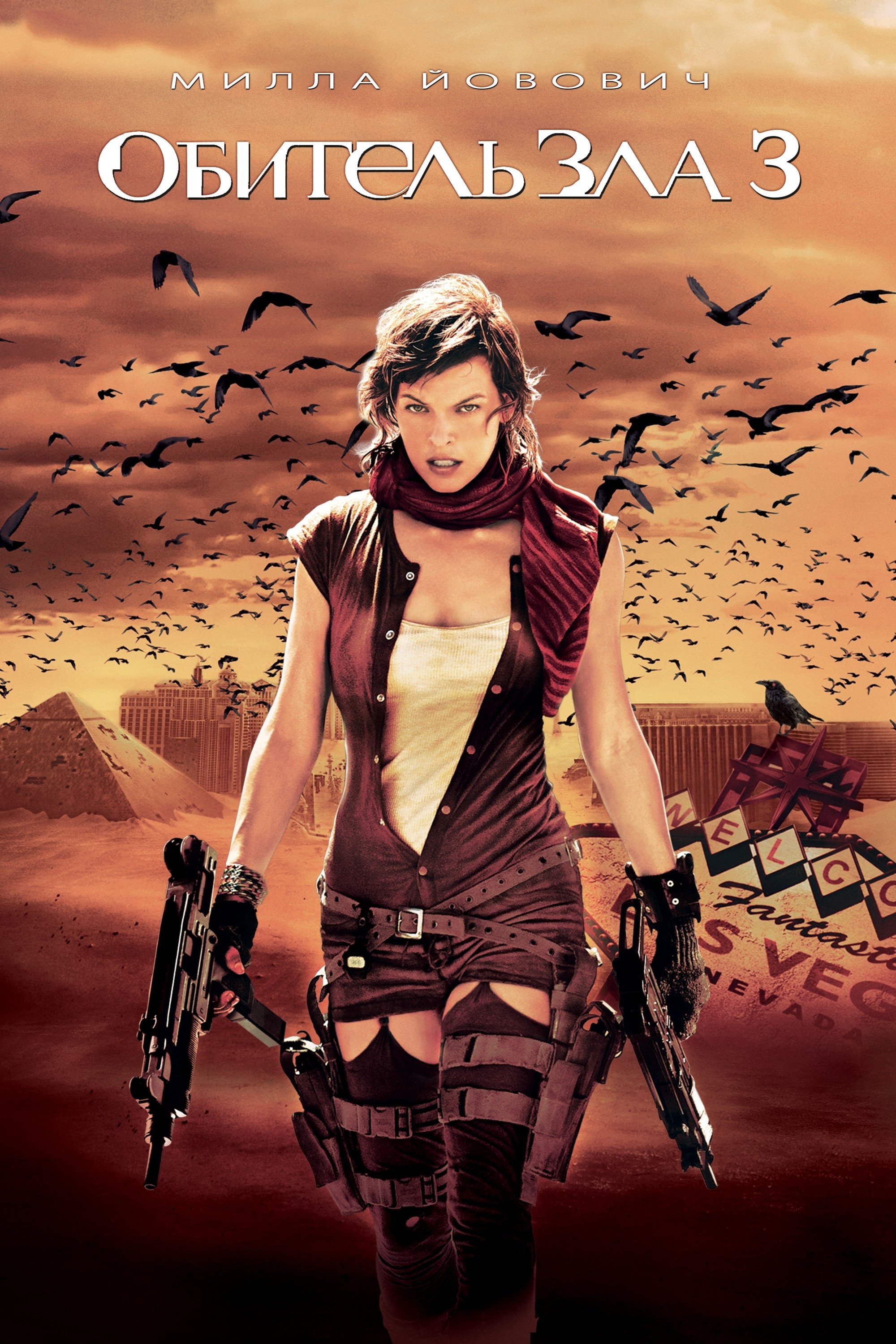
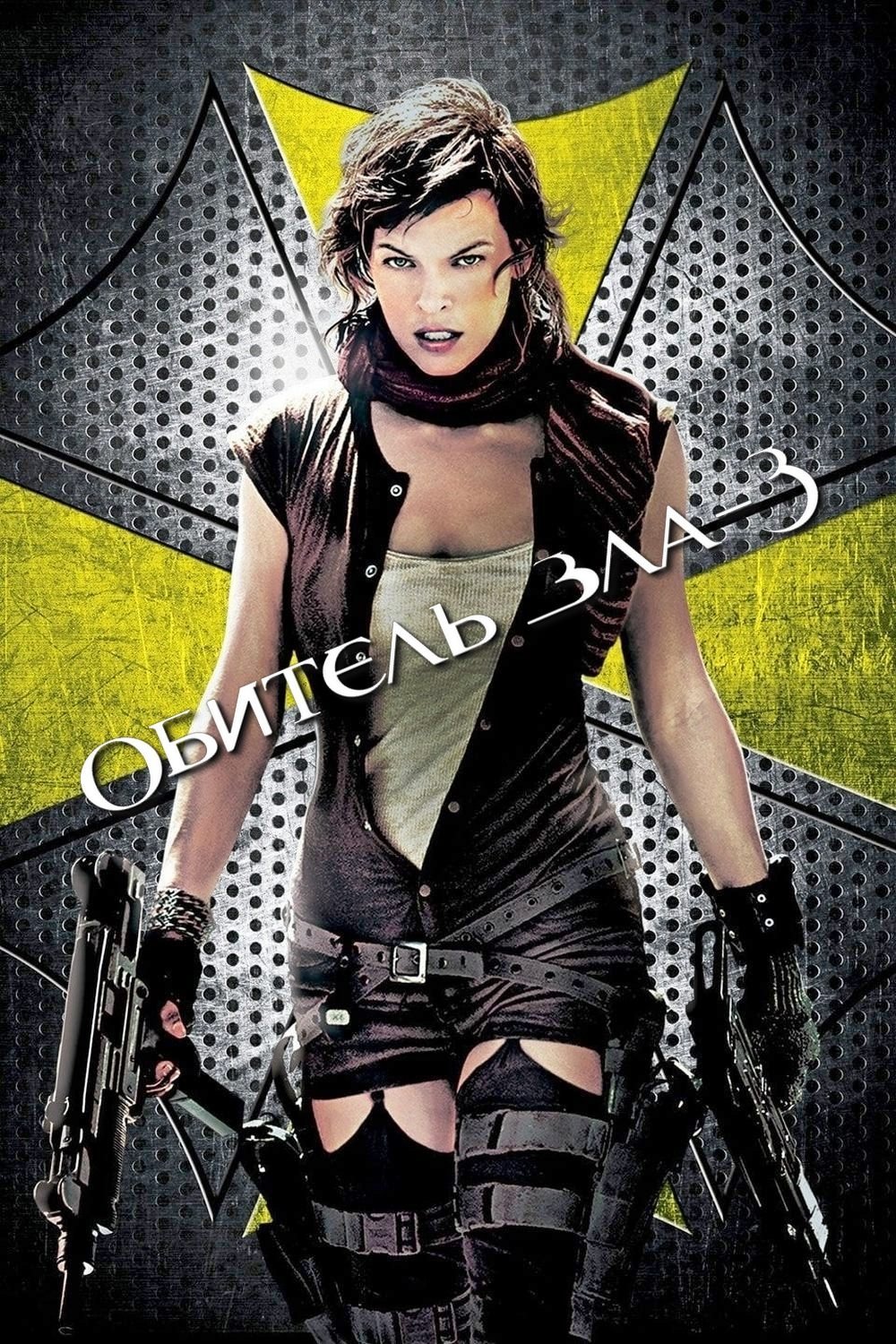
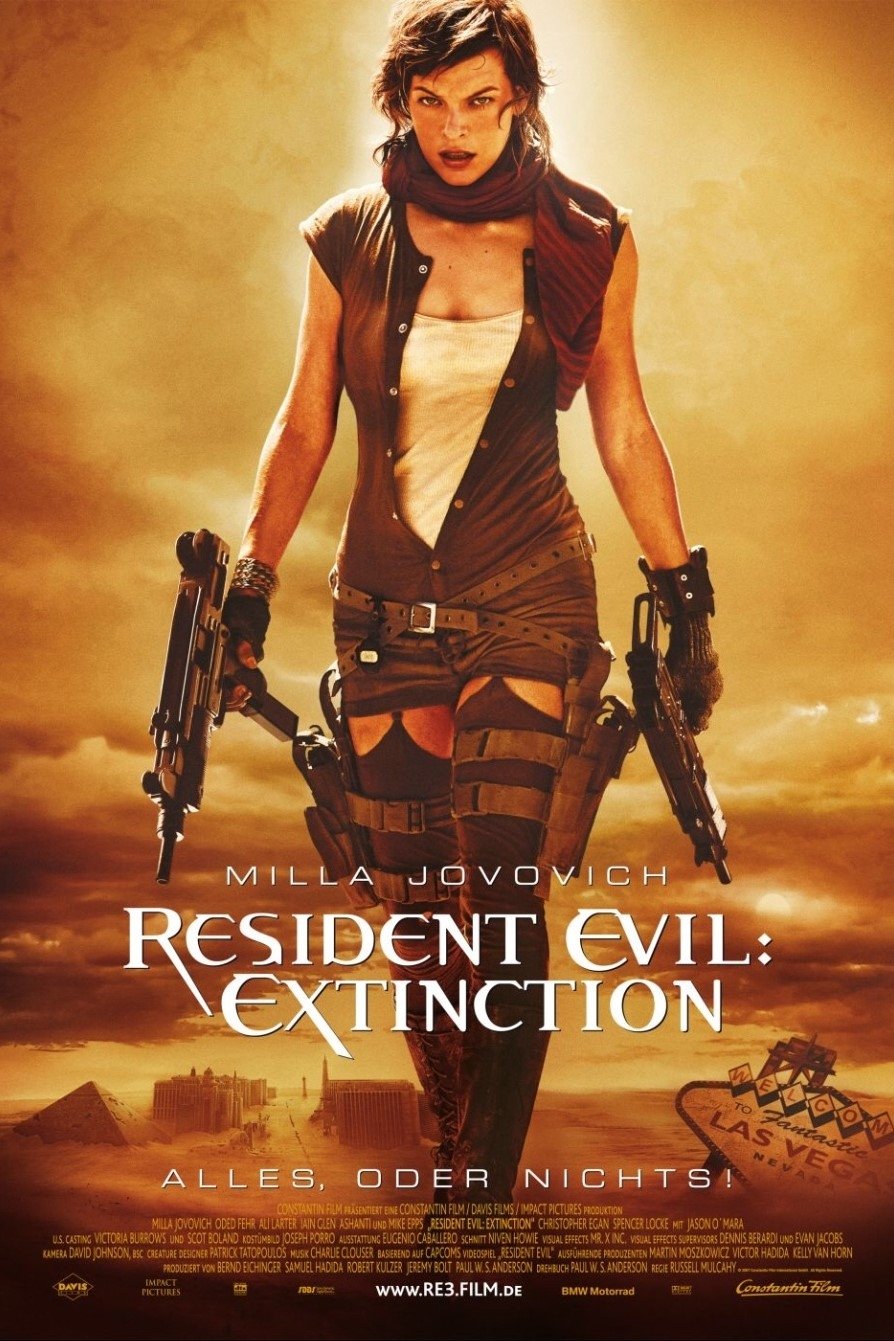
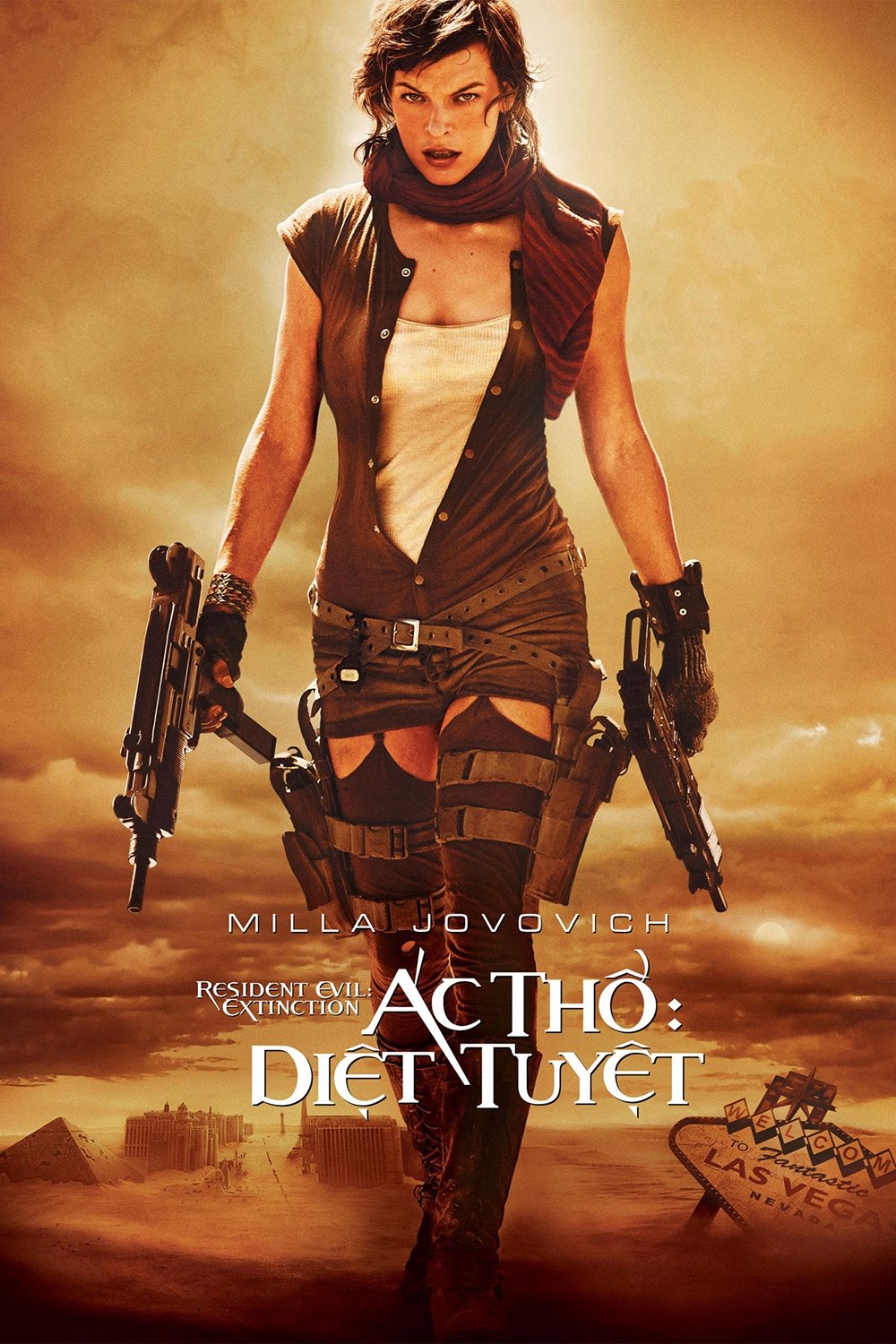
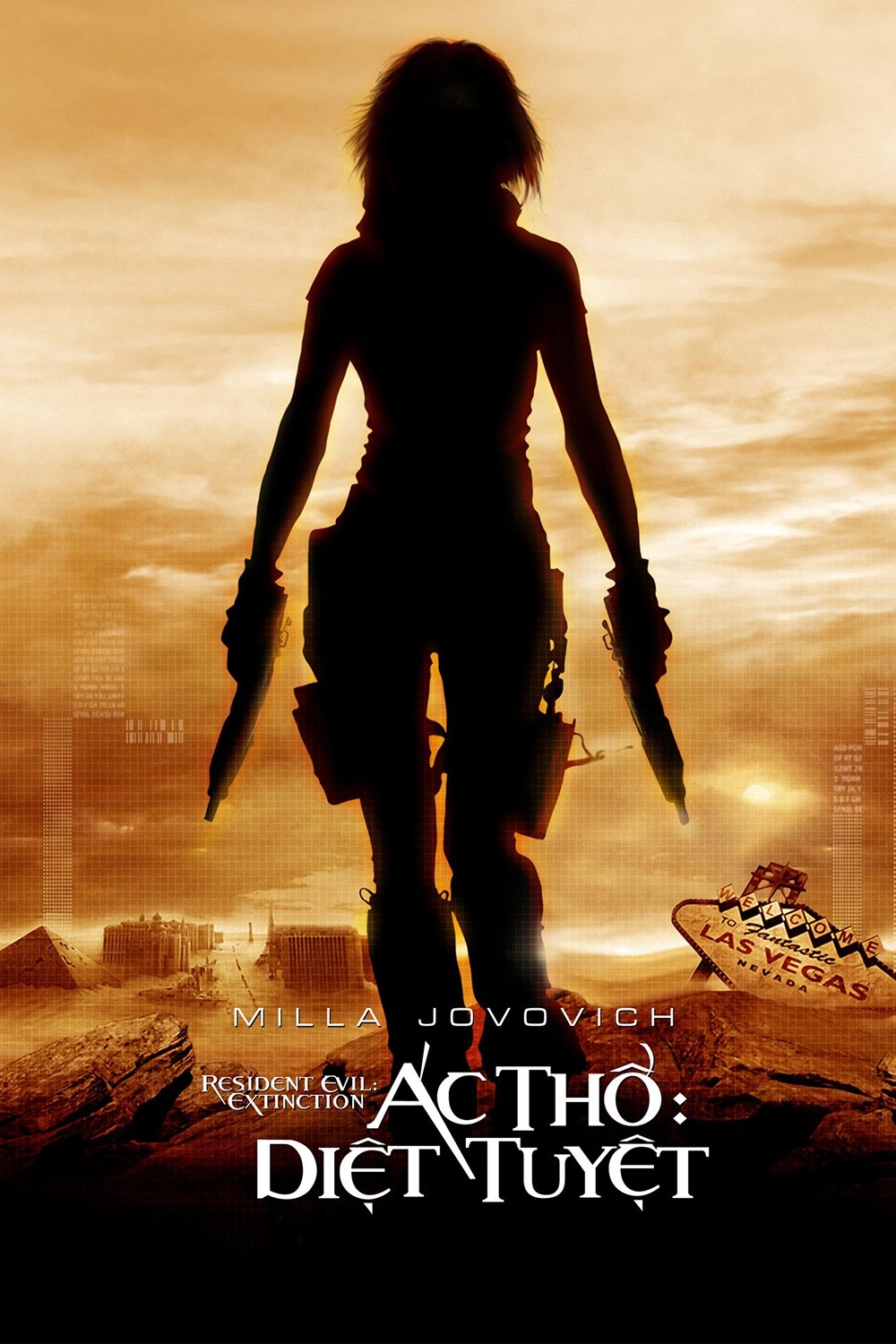
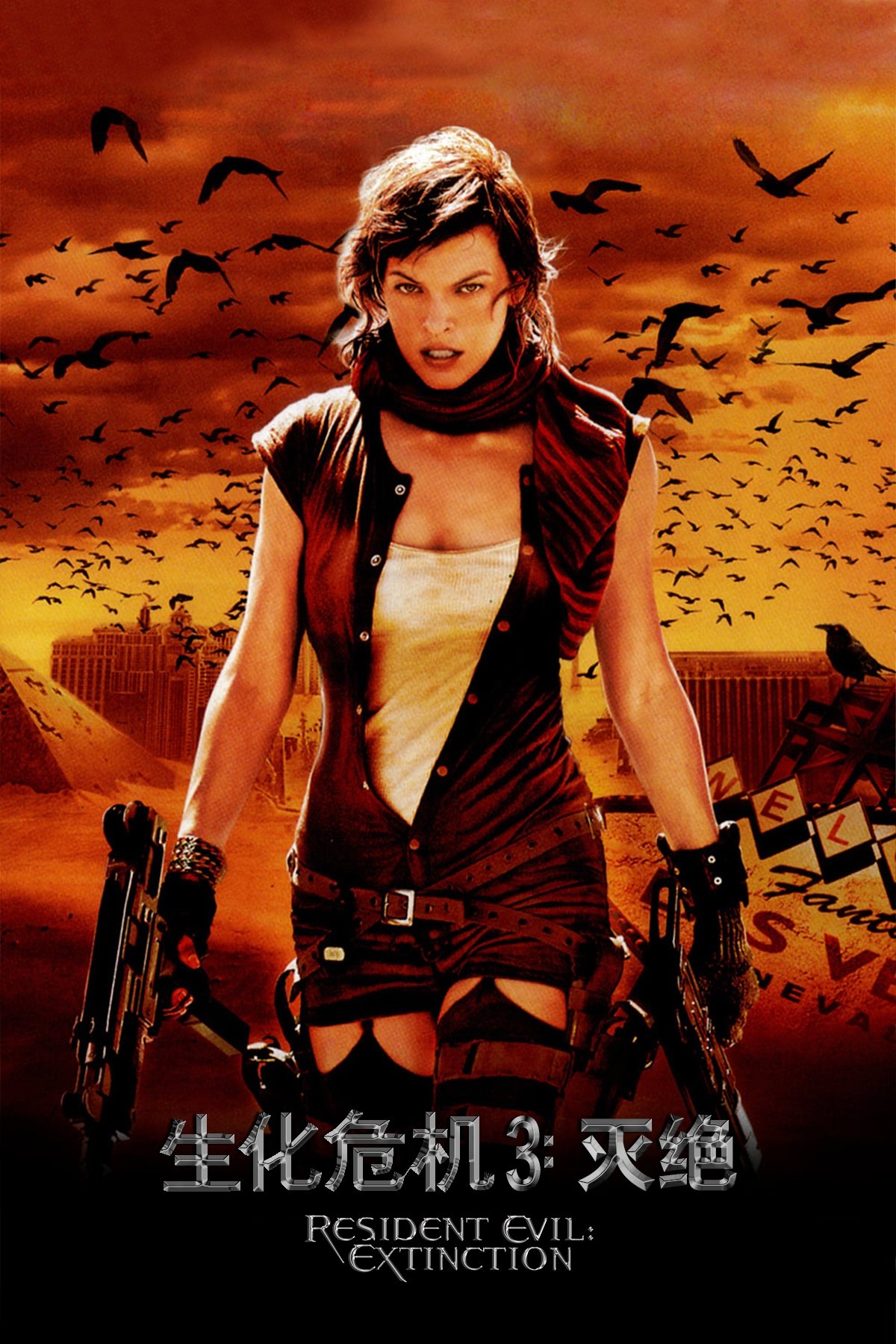
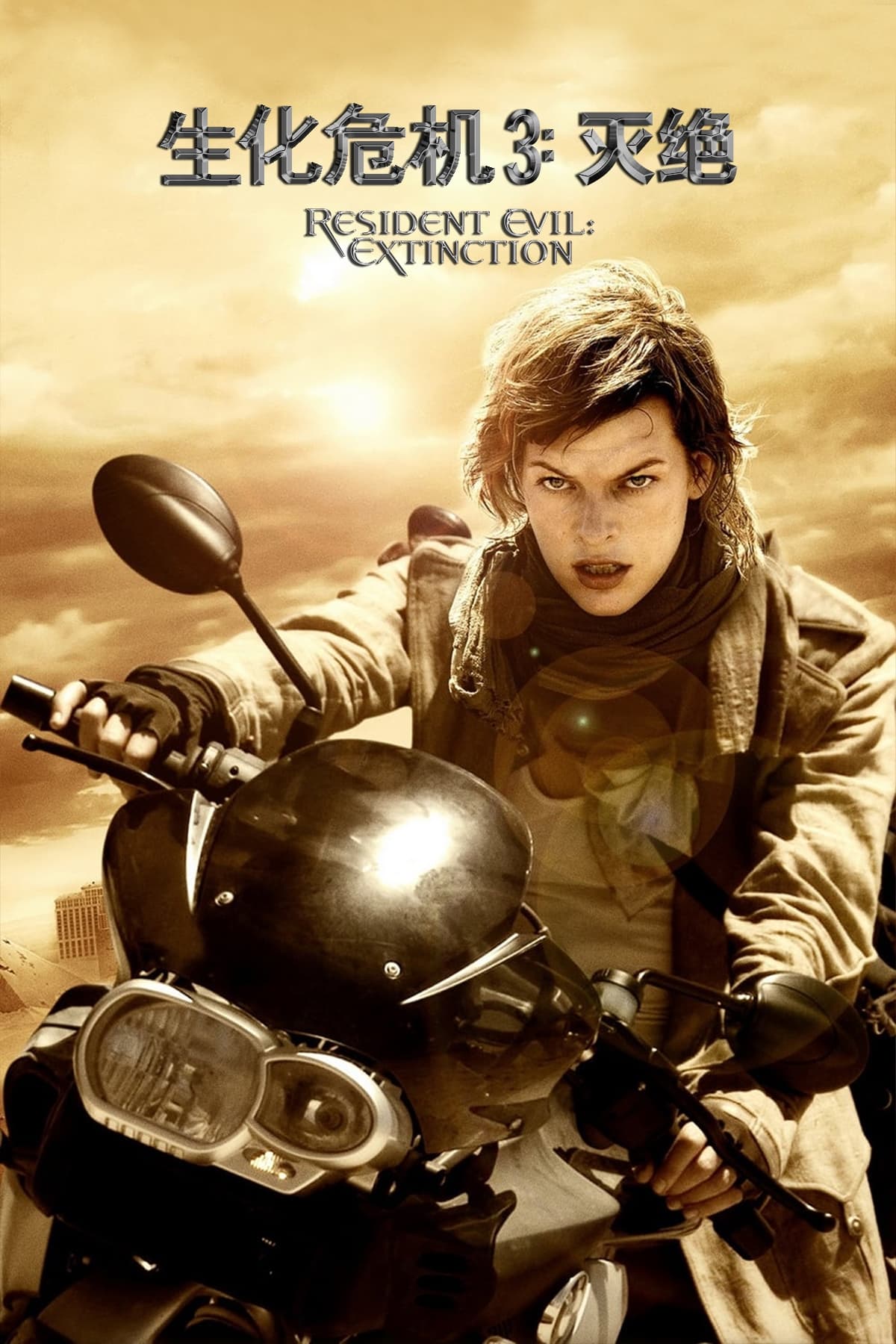
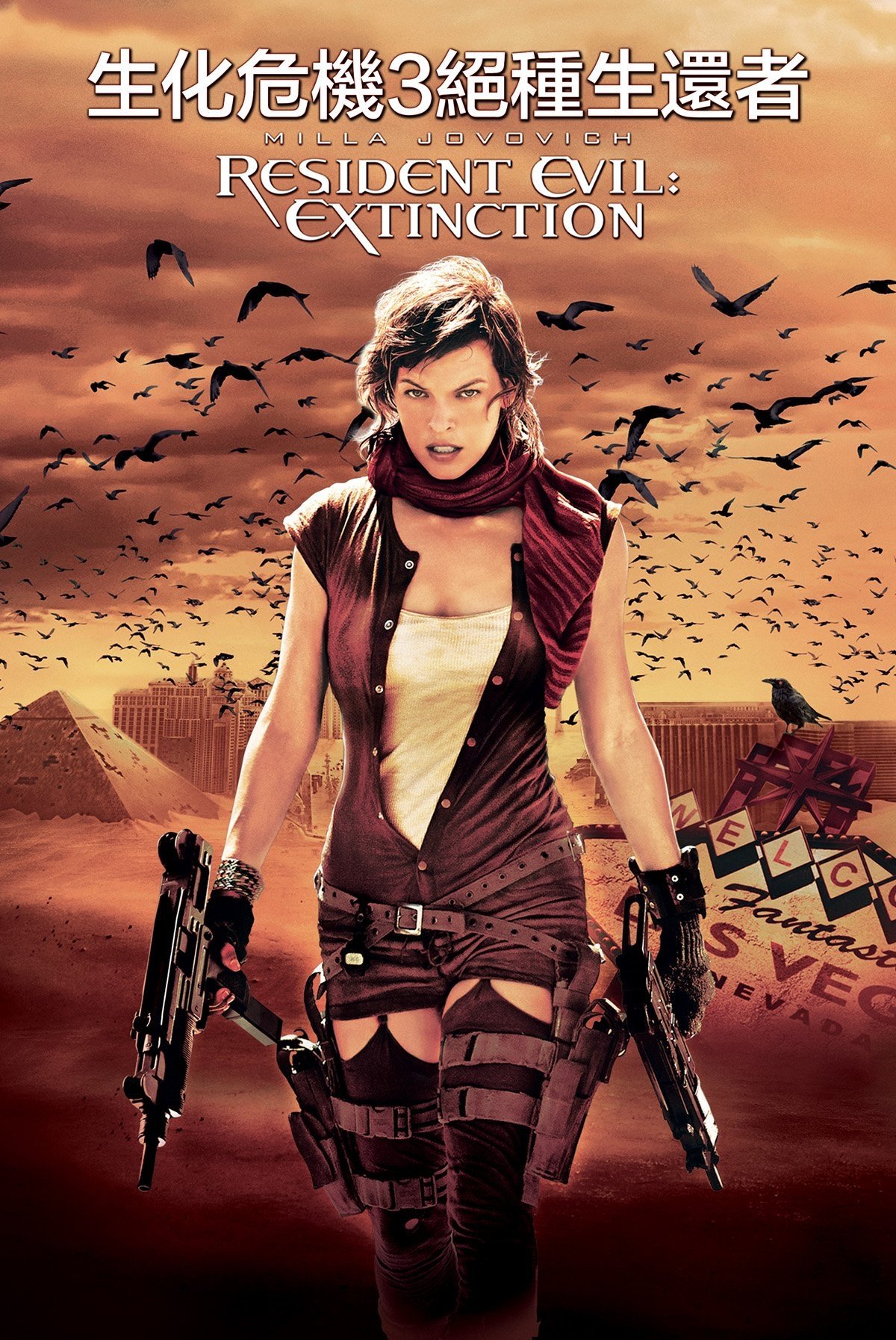
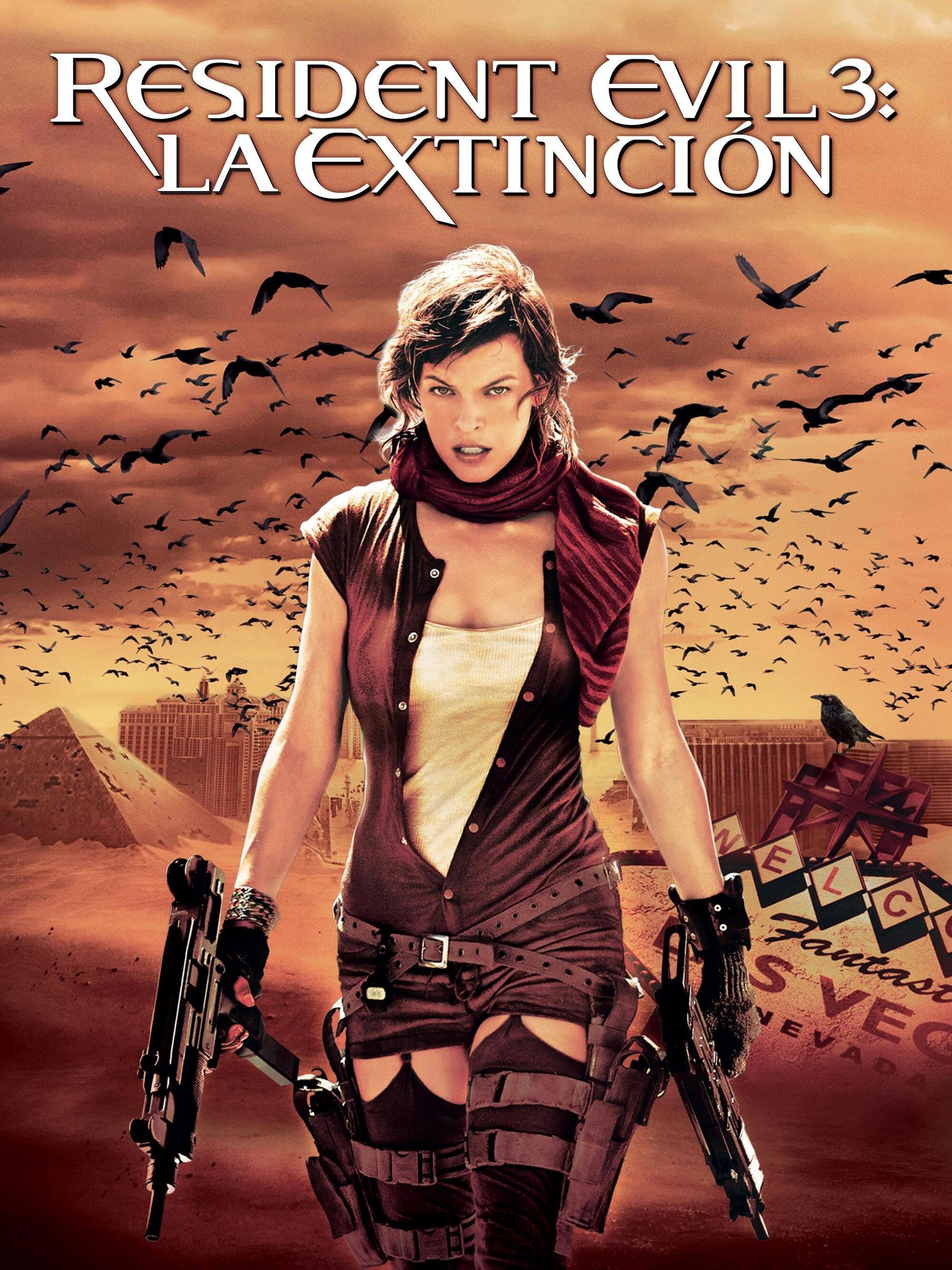
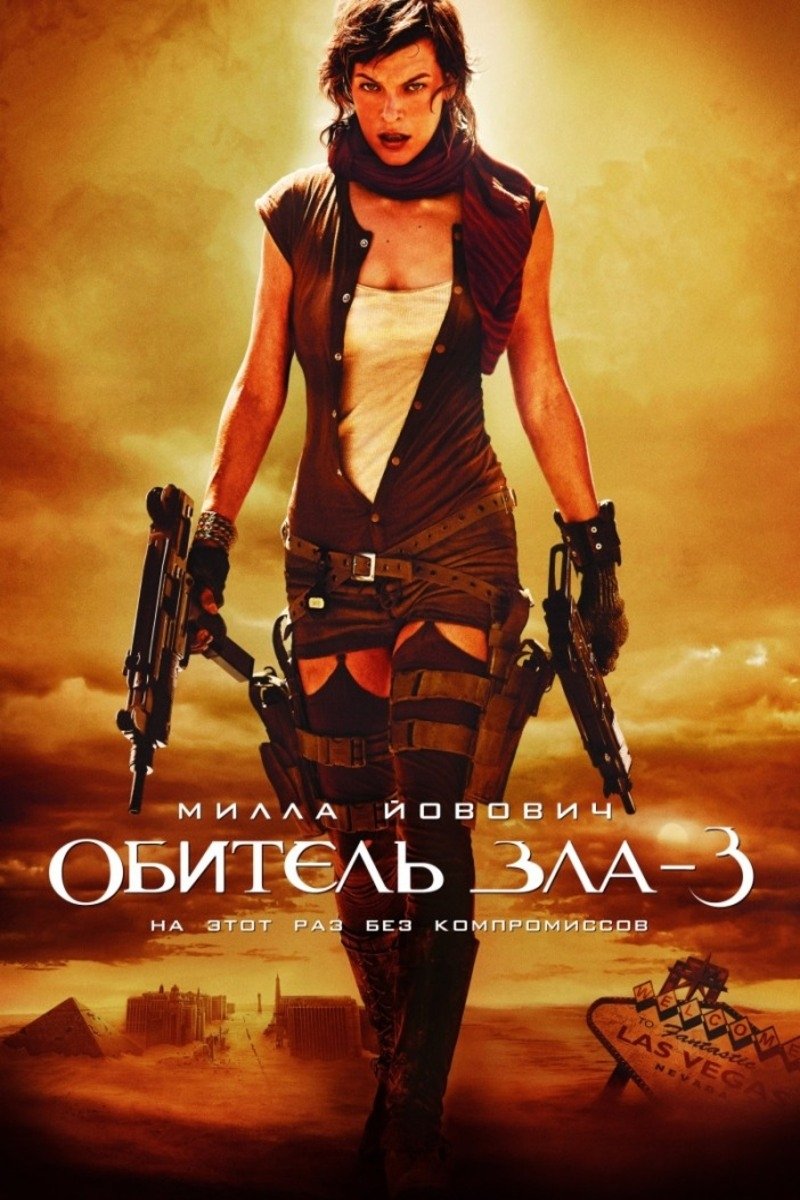
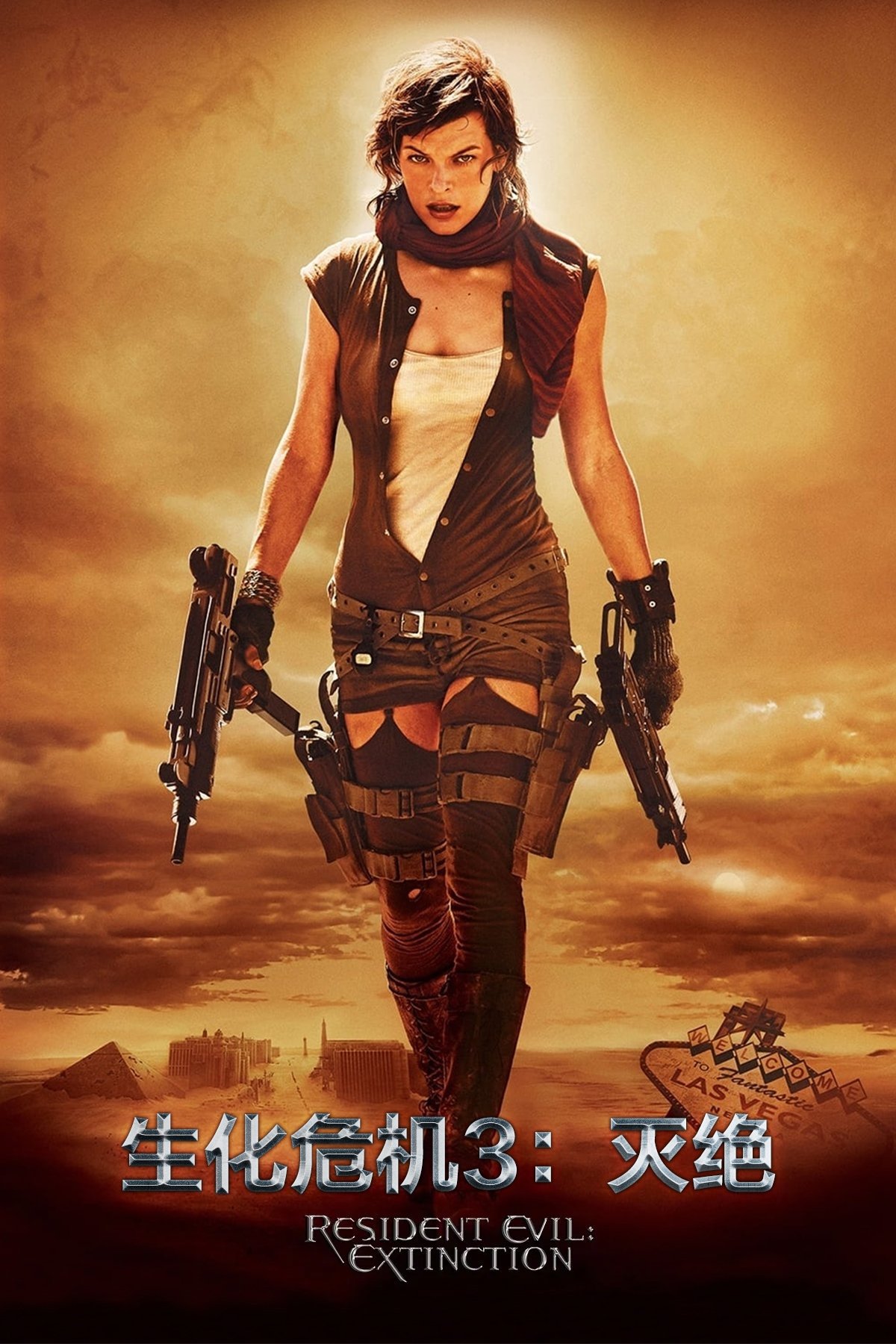
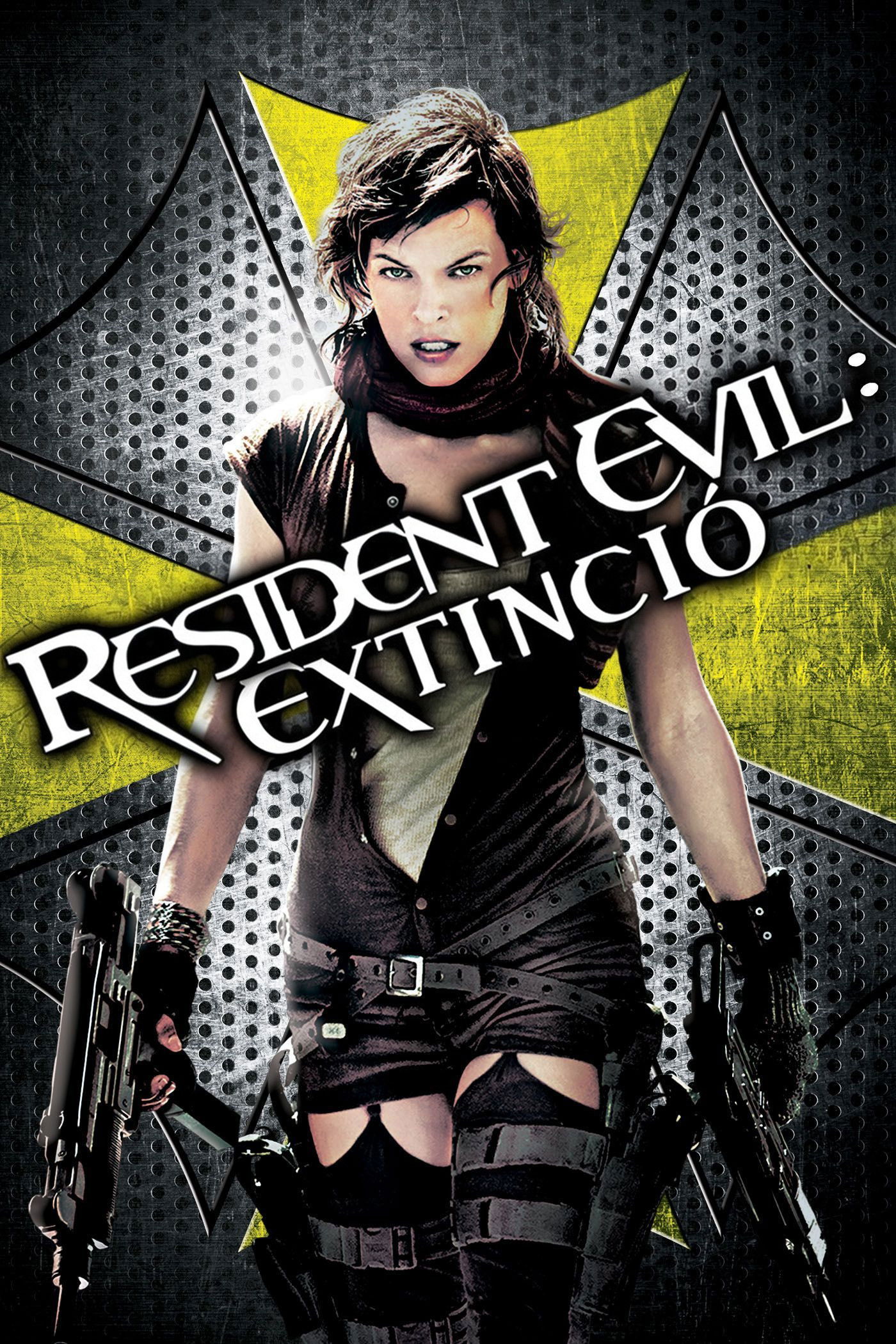
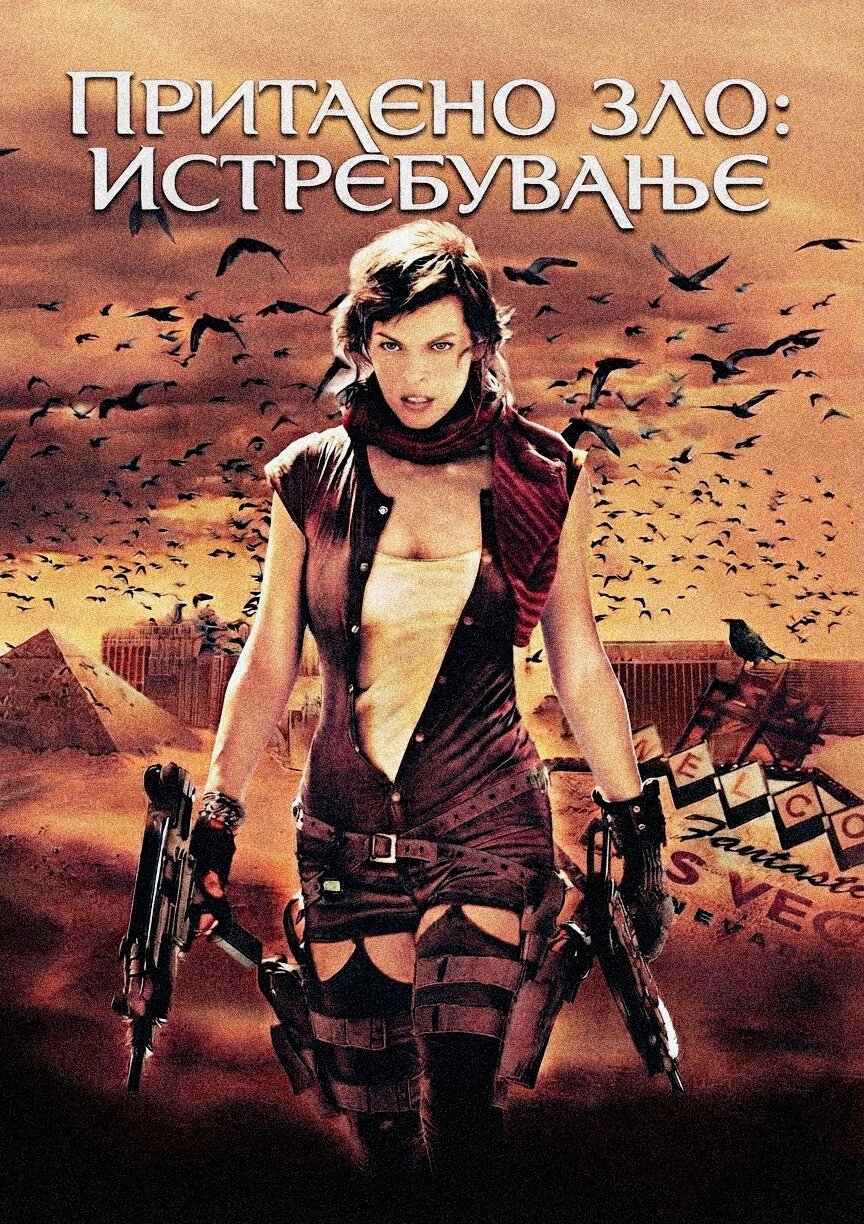
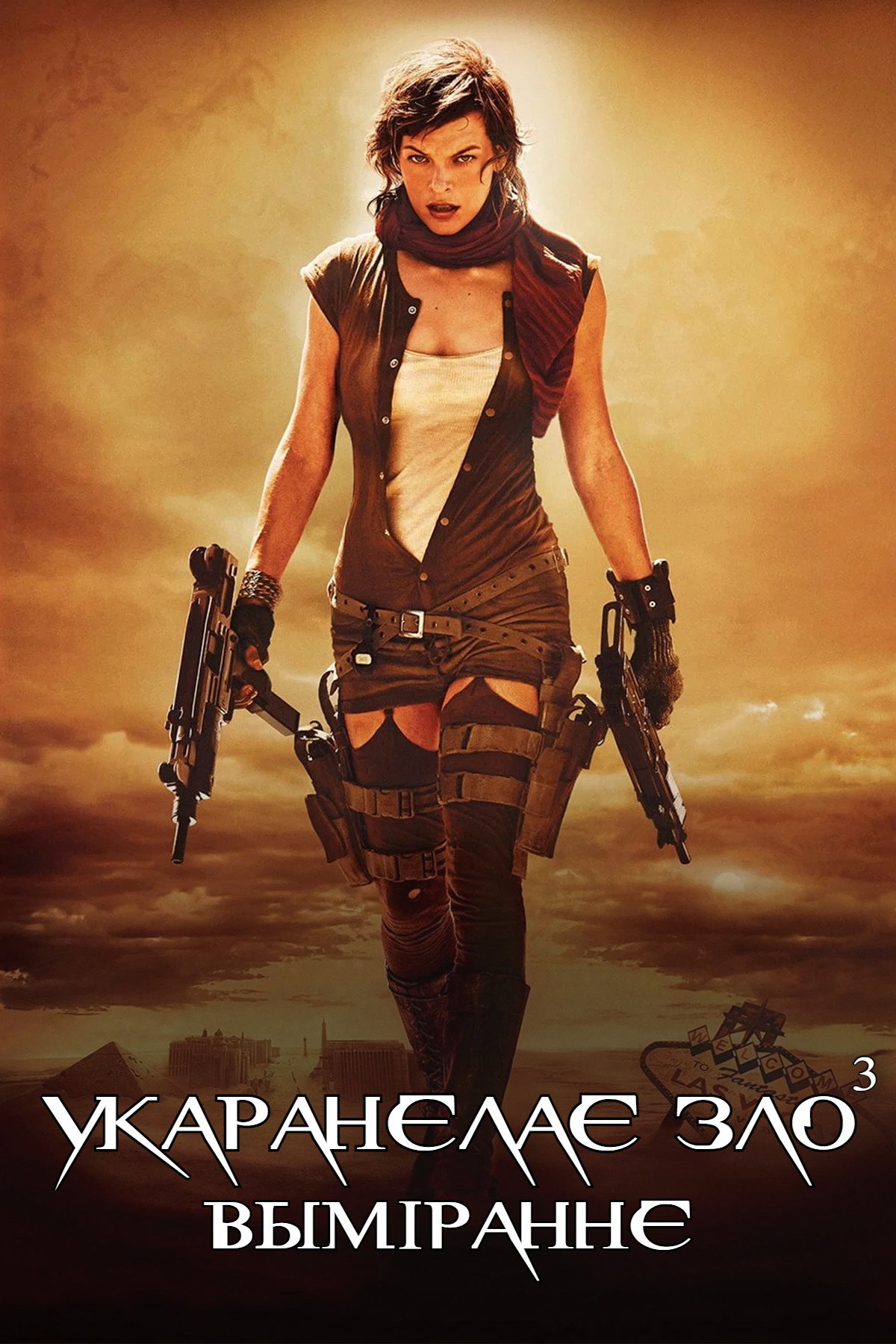
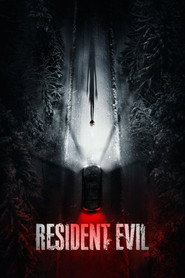
Years after the infection devastated Raccoon City, much of the world has become a desert of abandoned settlements and infected populations. Claire Redfield leads a convoy of survivors across the American Southwest, searching for fuel and a safer destination. Alice travels alone, aware that Umbrella continues to track her unusual abilities. Their paths converge as the convoy considers a journey to Alaska, where radio transmissions suggest an uninfected refuge. A research operation pursuing Alice's altered biology threatens the group's escape and exposes the extent of Umbrella's continuing experiments.
A desert-set zombie sequel defined by extreme Mexican location work, physical makeup, Claire Redfield and Alice's increasingly experimental biology.
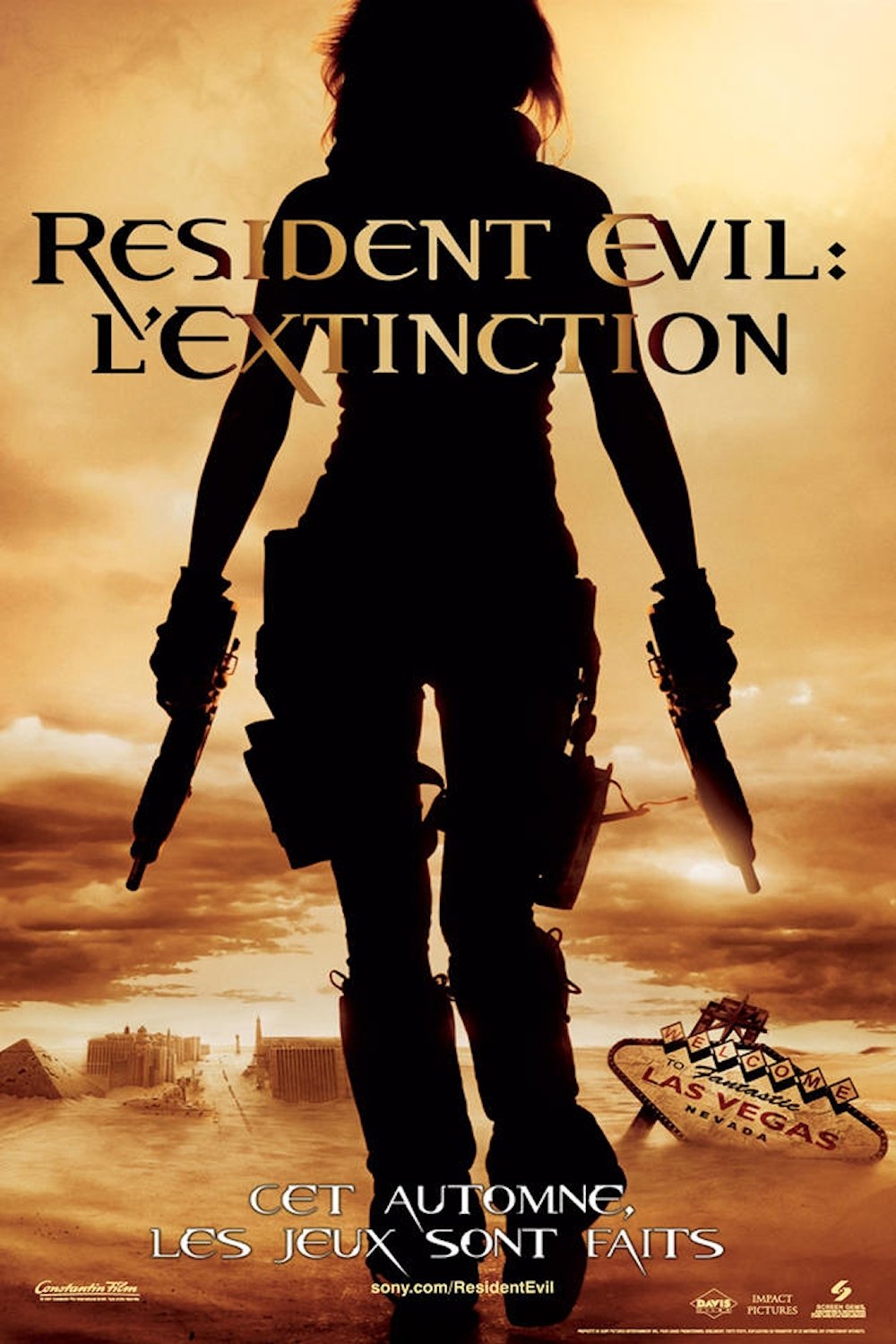
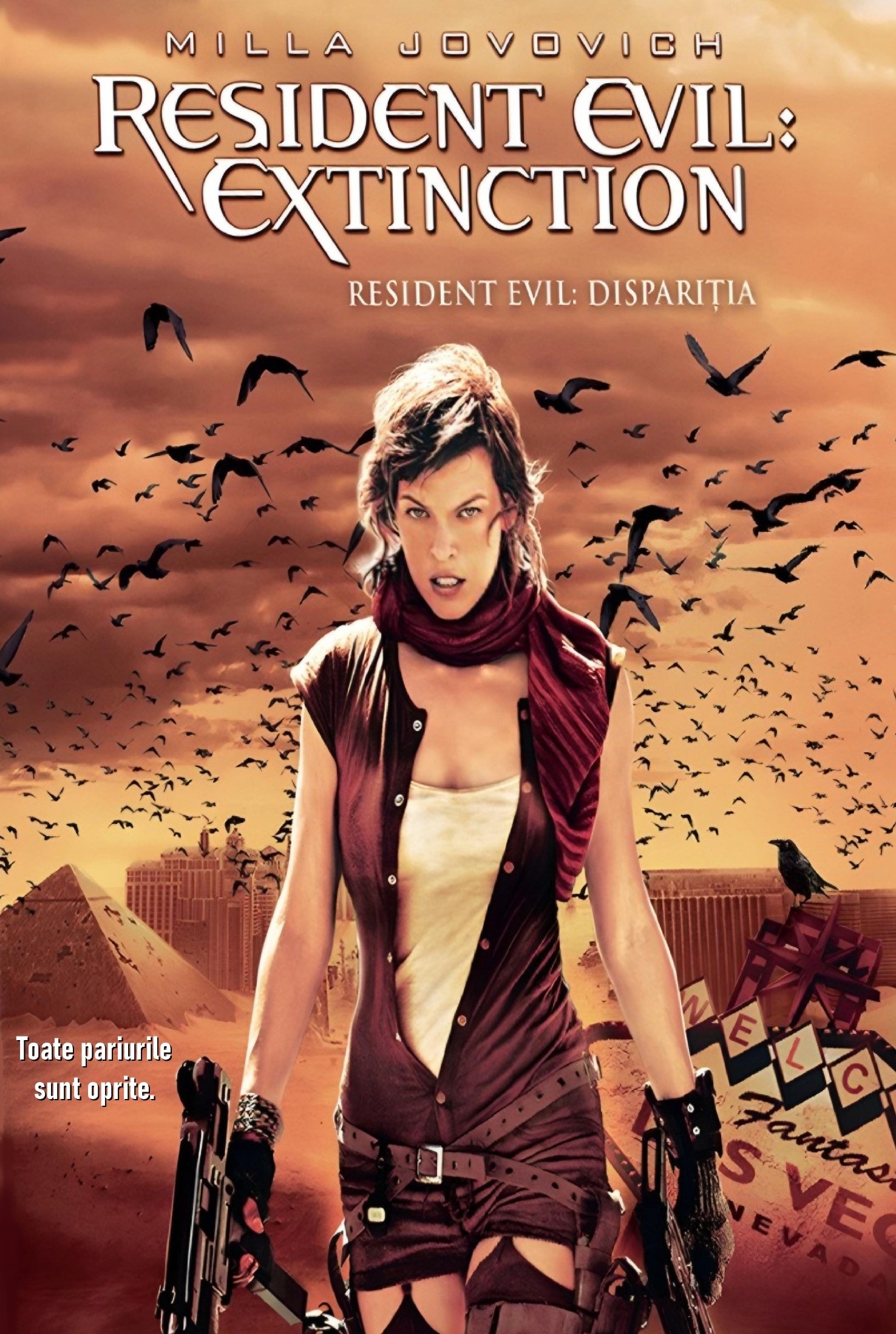
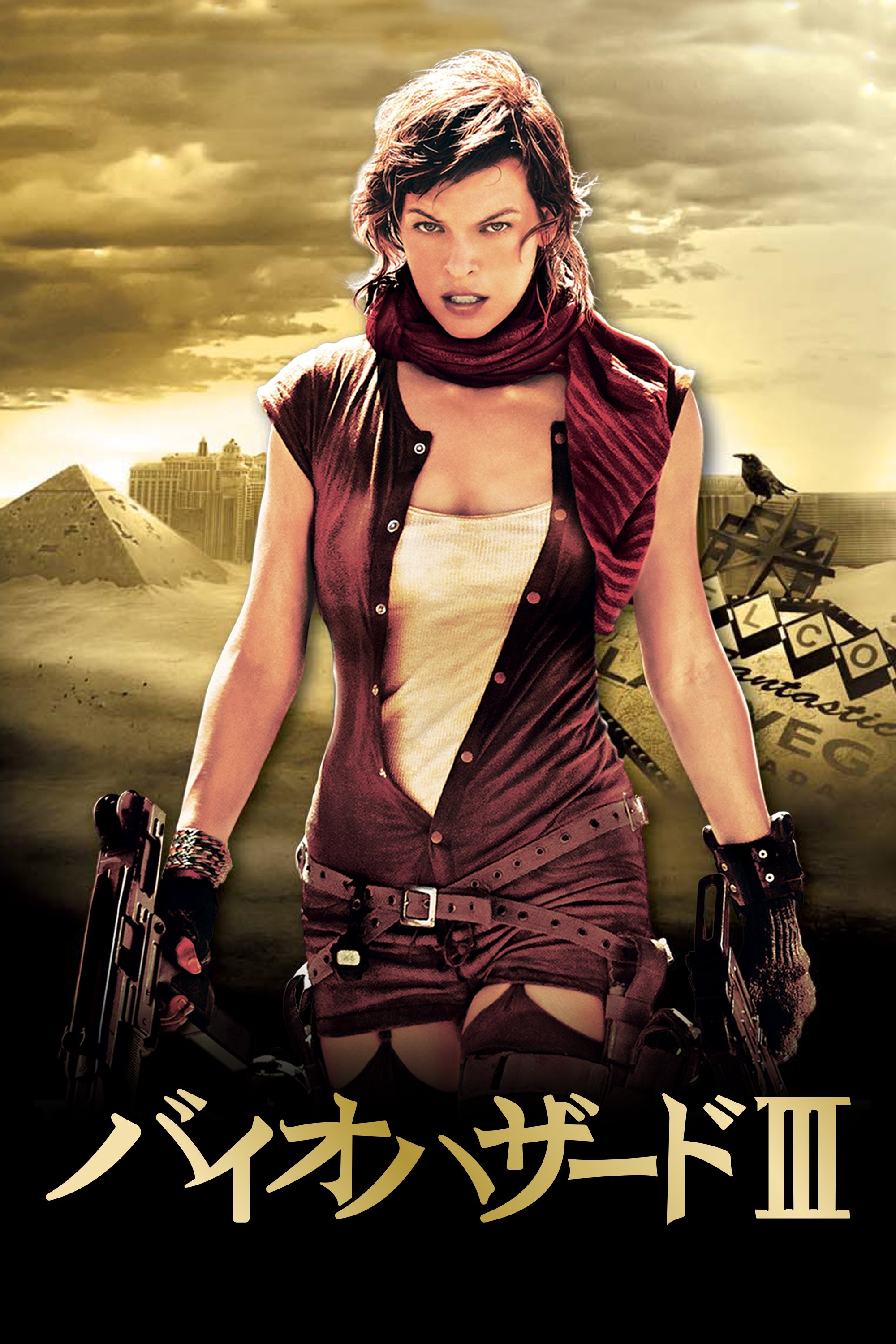
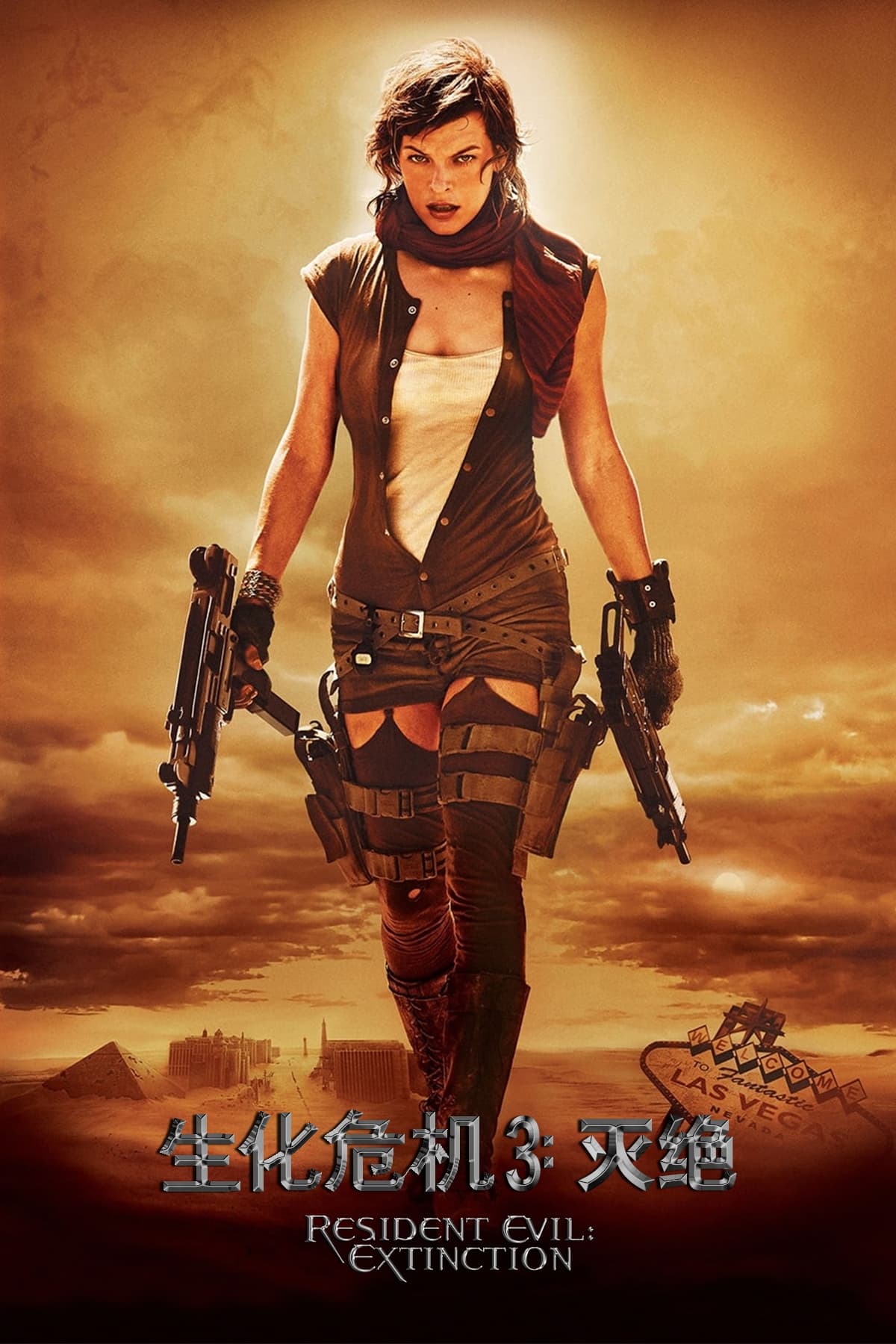
Resident Evil: Extinction (2007) moves the screen series from contaminated facilities and a quarantined city into an environment where the epidemic has already transformed the wider world. The desert surrounding a ruined Las Vegas replaces the corridors and streets of the first two installments, while mobile survivor convoys organize their lives around dwindling fuel, food and security. Written by Paul W. S. Anderson and directed by Russell Mulcahy, the third live-action film extends the series' identity as action horror while drawing on a different post-apocalyptic tradition. The transition matters because the zombies now occupy broad, sunlit spaces in which hiding a creature through darkness or tight editing is more difficult.
Alice remains the link to the previous films, but the arrival of Claire Redfield supplies another direct connection to Capcom's games. The film also adds clone experiments and a new version of the Tyrant, expanding Umbrella's laboratories into a threat that persists beneath the apparent collapse of civilization. Location reports and interviews from the Mexican production reveal how the desert affected photography, prosthetic design and stunt work. These practical decisions help explain the sequel's distinctive surfaces and its increasingly spectacular treatment of biological horror.
From Urban Outbreak to Desert Apocalypse
Anderson's screenplay assumes that the attempt to contain the Raccoon City outbreak has failed. Alice travels separately from a caravan of survivors led by Claire, and their eventual meeting connects an individual pursued by Umbrella to a community whose immediate problems are transport and survival. Instead of treating infection as a localized incident, Extinction makes it the condition of an altered world. The dry landscape and empty roads reduce the possibility of finding shelter, even when the characters have briefly escaped the infected. The convoy structure also introduces ordinary logistical pressures that are less prominent in the first two films, notably the need for supplies and secure stopping places.
In reporting on Anderson's remarks at the 2006 Hollywood and Games Summit, Nintendo Life described his emphasis on a Road Warrior-style convoy and on the unusual spectacle of a world nearly emptied by the T-virus. This connection to vehicular post-apocalyptic action is visible in the film's armored trucks and roadside encounters. At the same time, Alice's progressively exceptional abilities draw the narrative further away from the vulnerability associated with early survival-horror games. The tension between a group exposed to bites and ambushes and a protagonist capable of extraordinary feats becomes one of the film's defining contrasts. The abandoned Las Vegas landmarks give this change an especially recognizable visual setting.
Mexican Locations and the Demands of Heat
Principal desert work took place around Mexicali, Mexico, with additional filming at Estudios Churubusco in Mexico City. Reporters visiting the set in 2006 saw convoy interiors photographed against blue screen after the crew returned from open desert locations. The production combined genuine exterior conditions with soundstage work intended to preserve continuity between moving vehicles and the landscape beyond their windows. This division allowed the filmmakers to retain the appearance of an exposed expedition without requiring every intimate exchange between characters to take place in the heat. The setting therefore became both the film's chief atmospheric resource and a substantial practical complication.
In a later oral history published by Inverse, producer Jeremy Bolt recalled arriving early to find marks left by rattlesnakes in the sand and described crew members assigned to remove the animals. Milla Jovovich remembered extreme temperatures and said Mulcahy had collapsed from dehydration. These statements are personal recollections of a difficult shoot, not standardized meteorological measurements. Contemporary set reporting independently confirms that intense desert heat was a central concern. The conditions were especially significant for performers wearing zombie appliances and for action scenes requiring repeated physical movement. The production's harsh location work gives the outdoor scenes a material quality that would have been harder to reproduce exclusively on a stage.
Undead Makeup and the Problem of Daylight
Makeup artist Richard Redlefsen discussed the appearance of the undead with visiting journalists during production. The initial concept emphasized victims dried into husks by the desert, with sunken eye sockets and substantial facial appliances. According to his contemporary account, this design obscured actors' expressions and proved unsatisfactory when photographed. The team removed some of the more intrusive pieces, including effects around the eyes and nose, in order to preserve recognizable faces. Bright daylight created another problem: textures that could suggest decay in shadow became much easier to inspect. Redlefsen described compensating with heavier overpainting, a useful illustration of how lighting conditions can determine the design of a horror creature.
The film's infected also vary in behavior and appearance. Umbrella's experiments produce more aggressive zombies, while Dr. Isaacs develops into a version of the Tyrant. These changes give the encounters a structure of escalating biological threats, even though the roadside undead remain the most direct expression of mass infection. The film includes a large attack by infected crows, extending the disease's imagery beyond human bodies. Its bird sequence mixes an ordinary animal recognizable to viewers with abnormal collective behavior and effects-heavy action. In contrast, scenes involving recognizable zombie performers rely strongly on makeup and choreography. These two strategies make the film an example of physical creature effects working beside digital spectacle, with each suited to a different kind of threat.
Alice, Claire Redfield and the Games
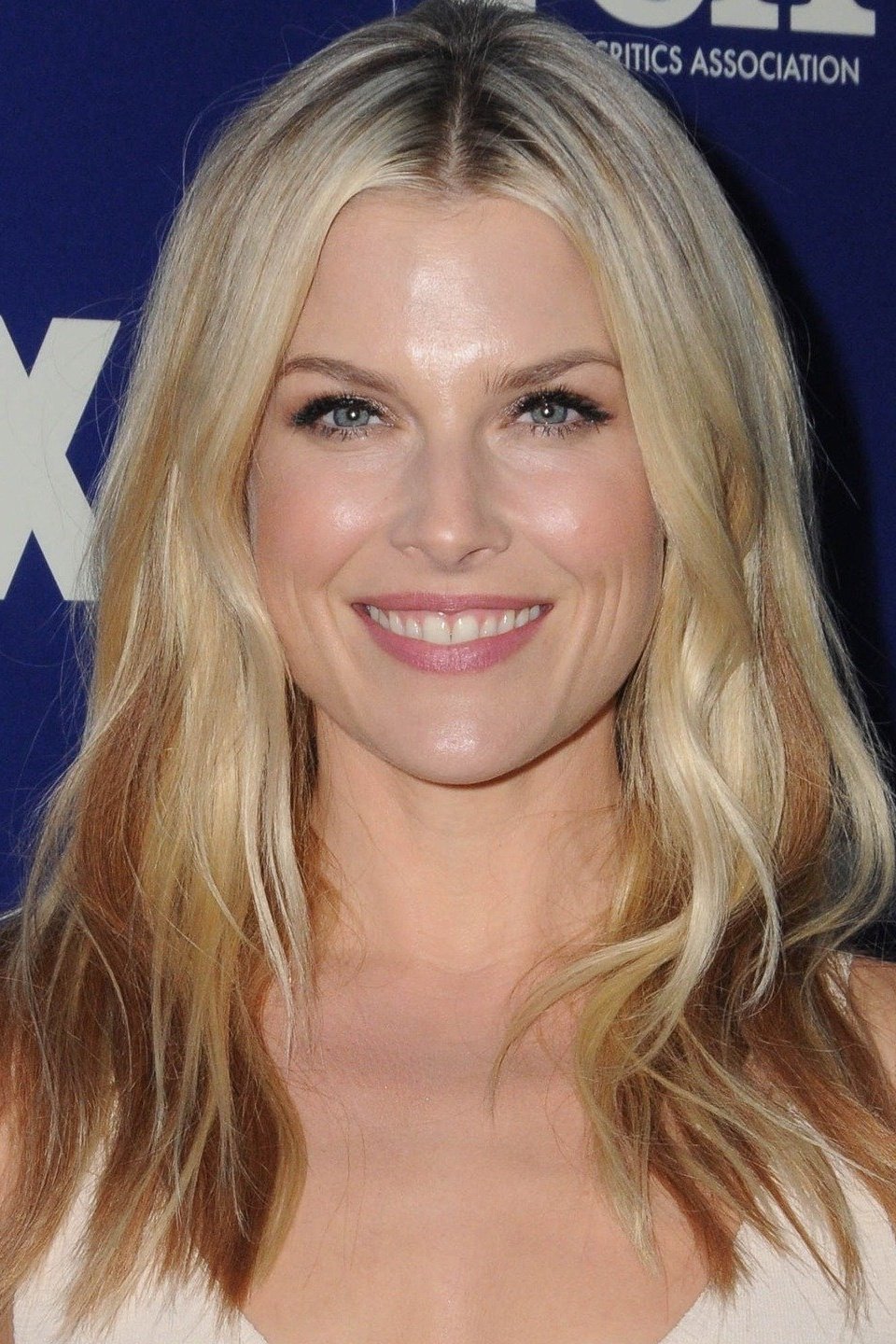
Claire Redfield, portrayed by Ali Larter, introduces an established Capcom character into a film universe already centered on the invented protagonist Alice. Claire's role as a caravan leader gives her a recognizable survival function while leaving substantial room for Alice's supernatural physical development. The arrangement differs from simply adapting a single game's story. It combines selected game identities and monsters with the film series' continuing Umbrella conspiracy. In a 2017 oral history, Larter recalled her interest in joining a female-led action franchise, a statement that explains her attraction to the project but does not establish the intentions of the producers as a whole.
The narrative also turns Alice's identity into a problem of replication. Umbrella's clone experiments repeat her body inside a controlled laboratory, while her journeys through the desert present her as an apparently independent survivor. This juxtaposition allows the film to connect the visible catastrophe to the continuing industrial manipulation of living organisms. Claire's caravan, whose members face injury and limited resources, makes the contrast more apparent. The final movement into Umbrella's subterranean research facility briefly restores the architectural confinement of the earlier films. Its presence beneath the desert suggests that the corporation's power has survived the collapse of the society it helped destroy, and that the threat can continue beyond this installment.
Release, Reception and Franchise Direction
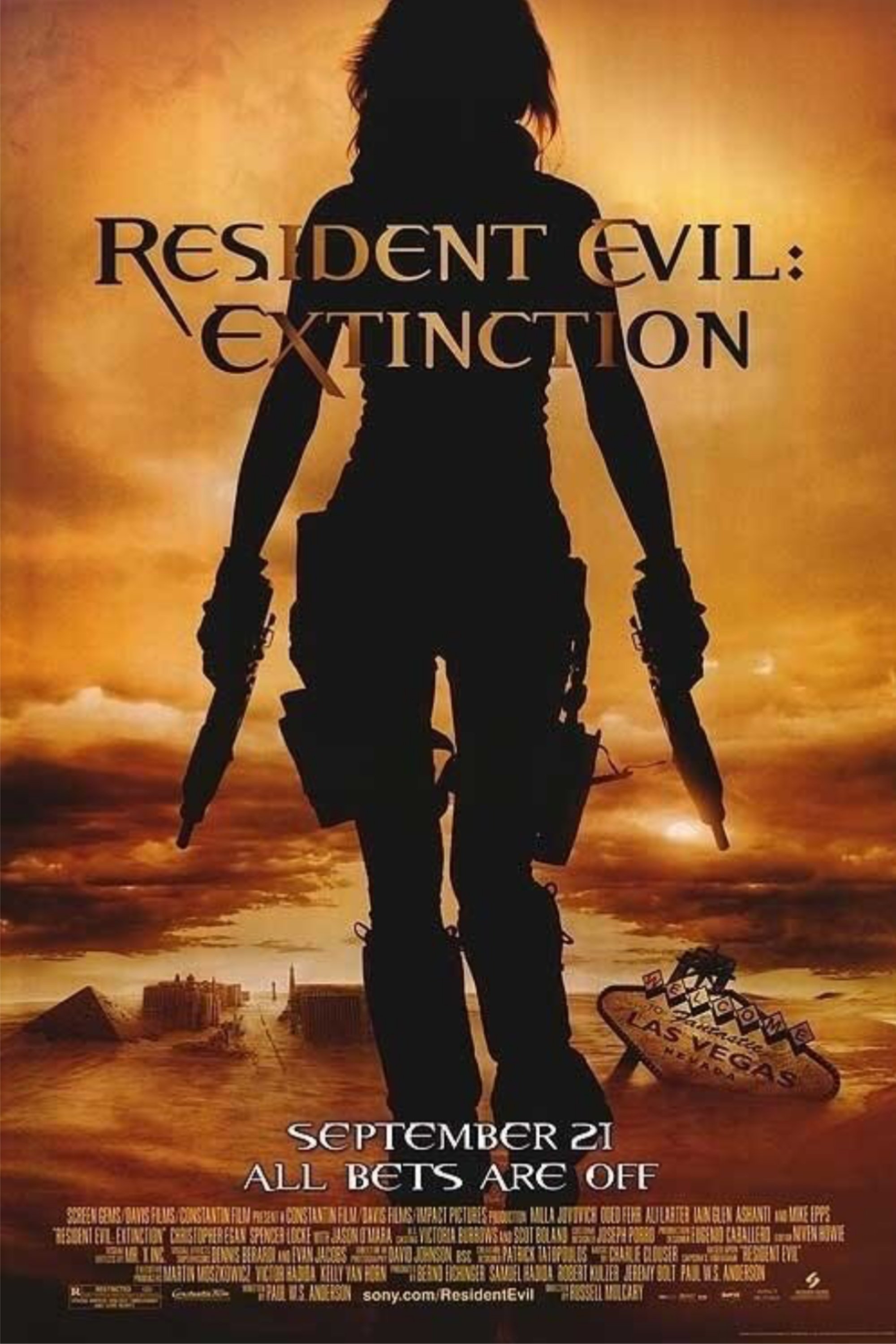
Resident Evil: Extinction reached United States theaters on September 21, 2007. Its distribution was staggered internationally: Spain's Institute of Cinematography and Audiovisual Arts records a release on October 31, 2007, with a local theatrical classification for viewers aged eighteen and over and a registered running time of 95 minutes. This official territory-specific record is preferable to assuming one release date or certification applied everywhere. The film's placement in the series was also changing in public discussion. Contemporary reporting sometimes described it as a potential concluding installment, while its cloning narrative and unresolved corporate threat plainly allowed another film to follow.
The critical response was mixed to negative in several major outlets, with reviewers disputing whether the increasing scale made the horror more compelling. Contemporary critical summaries preserve a recurring comparison with Mad Max and George A. Romero's zombie cinema, reflecting the film's movement into landscape and roaming survival. Such comparisons identify recognizable traditions rather than demonstrating direct borrowing in every scene. In retrospect, Extinction occupies a transitional position: it completes the movement from enclosed outbreaks to a devastated planet and increases Alice's capacity for combat. Its desert setting, prosthetic difficulties and location work are more distinctive production achievements than any claim that the film permanently changed zombie cinema.