Neo Art & Logic
, Miramax
, Castel Film
, Dimension Films
Plot
A group of friends who share an obsession with the online horror game Hellworld receive invitations to a private event at a secluded mansion. The party's mysterious host welcomes them into an elaborate environment filled with references to the Cenobites and the Lament Configuration. As the guests become separated, disturbing events begin to blur the boundaries between the game, their fears and an apparent supernatural threat. Their history with the game and a tragedy involving another player make the invitation more personal than it first appears.
Alternative Titles
Хелрейзър: Адски свят (Bulgaria) — BulgarianHellraiser: O Mundo do Inferno (Brazil) Hellraiser : Hellworld (Canada) — French养鬼吃人8:地狱世界 (China) — ChineseHellraiser: Pekelný svět (Czechia) — CzechHellraiser VIII: Hellworld (Germany) — GermanHellraiser 8: Hellworld (Spain) Hellraiser VIII - Hellworld (Spain) — SpanishShow all 27 alternative titlesHellraiser : Hellworld (France) — alternative title猛鬼追魂 8:地獄世界 (Hong Kong SAR China) — ChineseHellraiser - Hellworld (Hungary) — HungarianHellraiser 8. (Hungary) नरक के खिलाड़ी (India) — Hindiヘルレイザー ヘルワールド (Japan) — Japanese헬레이저: 헬월드 (South Korea) — KoreanHellraiser VIII: Hellworld (Mexico) — SpanishHellraiser VIII: Hellworld (Poland) — PolishHellraiser 8 - O Mundo do Inferno (Portugal) — PortugueseВосставший из ада 8: Адский мир (Russia) — RussianВосставший из ада 8: Мир ада (Russia) Hellraiser VIII Mundo del Infierno (El Salvador) บิดเปิดผี 8 (Thailand) — Thai養鬼吃人8 (Taiwan) — ChineseПовсталий з пекла 8: Пекельний світ (Ukraine) — UkrainianHellraiser 8 (United States) Hellraiser VIII: Hellworld (United States) Hellraiser: Hellworld VIII (United States)
An online horror game leads to an elaborate nightmare in Rick Bota's Romanian-produced sequel, the final Hellraiser film featuring Doug Bradley as Pinhead.
Hellraiser: Hellworld (2005) recasts the eighth installment of the franchise as a game-themed mystery in which a group of young enthusiasts encounters the imagery of the Cenobites outside the screen. Rick Bota's film follows survivors of a friendship damaged by a death associated with an online Hellraiser game. An invitation to a gathering at Leviathan House brings the puzzle box and Pinhead into a setting organized around fandom and deception. Its internet premise belongs to the period's fascination with virtual communities, although most of the actual horror takes place in rooms and corridors rather than inside a digital environment.
The film was produced in Romania alongside Hellraiser: Deader and reached American home video in September 2005, well after photography. It is also Doug Bradley's final feature appearance as Pinhead. Contemporary testimony from the performer and effects artist Gary J. Tunnicliffe documents a compressed production, while criticism published at the time questioned the treatment of Barker's established mythology. These accounts illuminate the franchise's direct-to-video period without implying a broader cultural influence.
Development Alongside Deader
Following Hellraiser: Hellseeker, Rick Bota directed Deader and Hellworld for Dimension Films. In an interview published in 2004 and preserved by the Clive Barker archive, Doug Bradley recalled shooting the two latter pictures between October and Christmas 2002. He praised his working relationship with Bota, who allowed him to offer suggestions for Pinhead's dialogue. This establishes their close production relationship and supplies a date more reliable than conflicting later recollections. Bradley also remembered that the seventh installment was further along in post-production when he returned to record dialogue.
Tunnicliffe, interviewed retrospectively in 2018, described the script for Hellworld as insufficiently developed while Deader was being filmed. He remembered discussions in a Bucharest hotel about the internet-game concept and identified Joel Soisson as the source of the story. That is a participant's recollection, not proof that a completed unrelated screenplay was converted after the fact. The published credits identify Carl V. Dupre as screenwriter. Tunnicliffe's dissatisfaction with the speed of development helps explain his later criticism of the result, while Bradley's contemporary remarks demonstrate that production personnel did not all describe their experiences in the same terms.
The Online Game and the Party Structure
The premise places a Hellraiser-themed game within the world of the film, allowing characters to recognize the Lament Configuration and speak of Cenobites as fictional figures. Adam's death has fractured the friendships among Chelsea, Jake, Mike, Derrick and Allison. An invitation to Leviathan House draws them back together under the supervision of an enigmatic host, played by Lance Henriksen. The party makes references to the game material: costumes, props and entertainment turn a private mythology into a social attraction. Its participants initially interpret the threats as another extension of a pastime they already know.
The narrative uses the distinction between knowing a horror franchise and confronting apparent violence as its organizing uncertainty. Chelsea's isolation becomes increasingly physical as familiar rooms lead to locked spaces and encounters whose timing cannot be trusted. The online activity is chiefly a device that links the guests and gives their host access to their expectations. This limits the importance of the technology as horror technique: the screenplay does not offer a sustained exploration of computer systems or virtual reality. Its main structure is closer to a confined-house thriller, with strangers and former friends separated inside a building controlled by someone else.
Visual Spaces and Practical Horror
The gathering shifts from brightly lit party areas into dark bedrooms, corridors, attics and basement-like spaces. A 2005 AVForums review noted the contrast between neon color, gloomy interiors and bloody effects, assessing the image as unusually detailed for a direct-to-video production. These are observations about the finished picture, not evidence of a particular lighting rig or lens package. The architecture matters because its rooms allow Chelsea and the other guests to lose sight of one another. Where the original Hellraiser confined much of its terror to a house with hidden supernatural activity, Leviathan House makes the franchise's imagery into the theme of a public gathering before narrowing the action into individual ordeals.
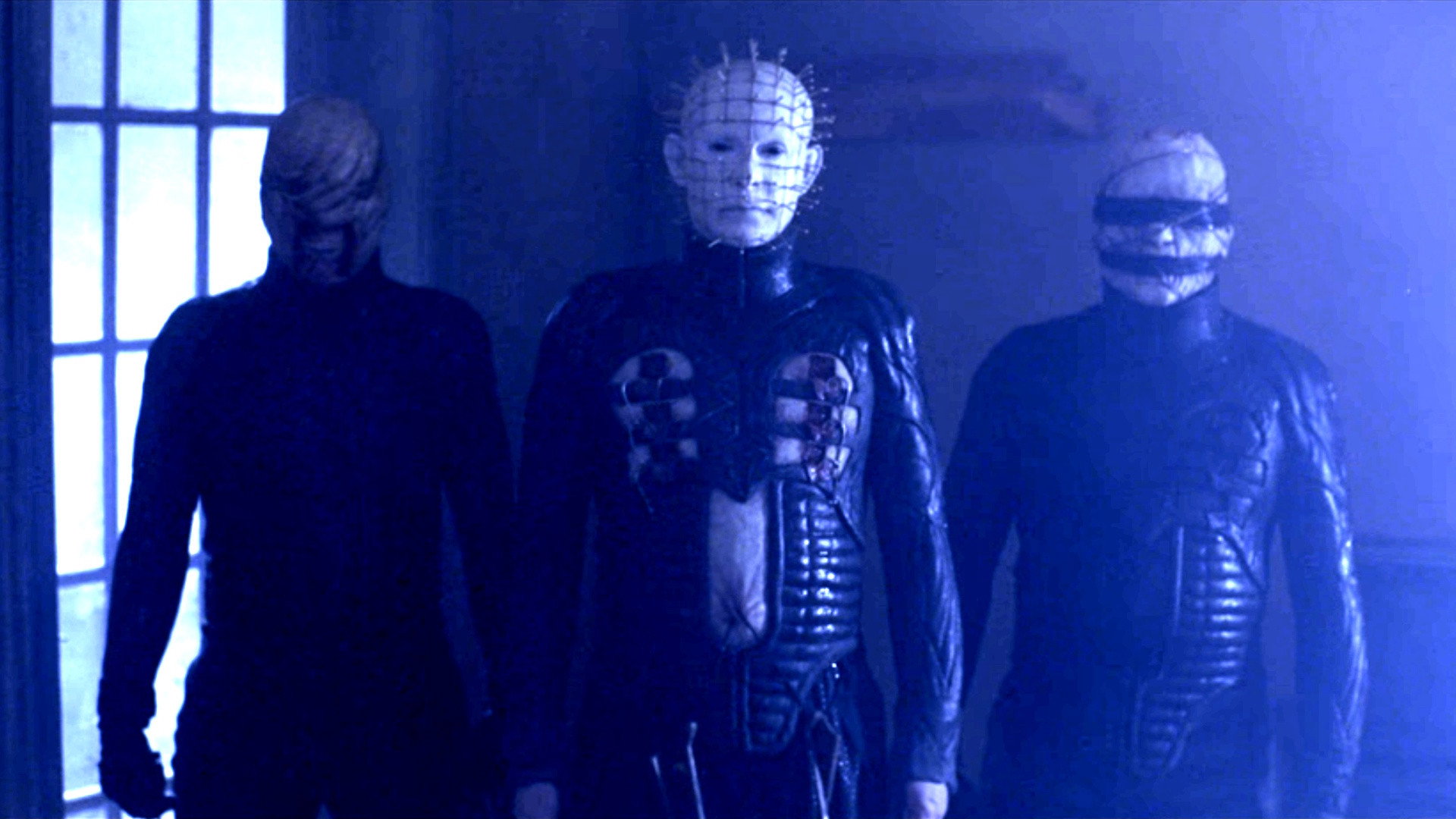
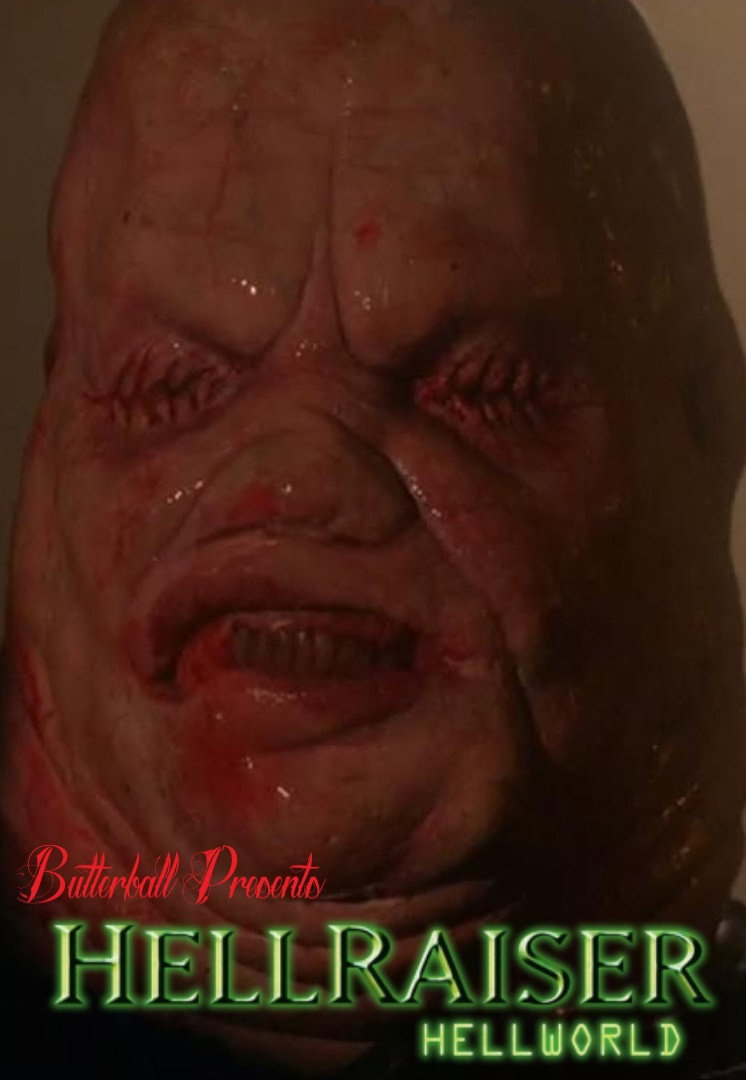
Gary J. Tunnicliffe was involved in the makeup-effects work and discussed the production's gore, hooks and returning Cenobite designs in a Fangoria interview archived on Barker's website. His account specifically mentioned Chatterer and an homage to the female Cenobite. Their reappearance recalls earlier installments without establishing undocumented fabrication methods. In the released work, prosthetic threats and the suggestion of bodily mutilation are intercut with the characters' disorientation. The most distinctive horror device remains their inability to determine whether the sights confronting them are genuine.
Pinhead and the Logic of the Nightmare
Pinhead's familiar costume functions as a promise of continuity even though the story's center belongs to the host and the invited players. Bradley's performance and the reappearance of Chatterer provide recognizable iconography within a narrative that ultimately asks viewers to reconsider the status of much of its violence. This distinction separates Hellworld from the first film's emphasis on dangerous desire and the consequences of opening the box. The game initially appears to reduce that object to a fictional symbol. The later suggestion that supernatural forces can still exist creates a division between human manipulation and the actual threat represented by the Cenobites.
The shift did not persuade every contemporary critic. Writing in Film Freak Central in October 2005, Walter Chaw argued that the franchise's original treatment of suffering and forbidden pleasure had been displaced by ordinary party-horror situations. His judgment was explicitly negative, but it identifies a precise change of emphasis rather than supplying a production fact. Tunnicliffe similarly expressed retrospective regret about the game's premise and the rushed writing process. Neither opinion should be treated as a verified account of Clive Barker's reaction; the official archive provides no substantive comment from Barker on this particular installment.
Home Video Release and Contemporary Assessment
Hellworld was issued on United States DVD on September 6, 2005, rather than receiving the kind of national theatrical launch associated with the first four features. Bradley had already expressed frustration in 2004 that the Romanian productions were remaining unreleased long after his work was finished; he did not claim to know why the schedule kept changing. The American disc included a short behind-the-scenes featurette, Ticket to Hellworld, and a commentary featuring Bota, Soisson, Tunnicliffe and executive producer Nick Phillips. AVForums reported that the commentary addressed the long interval between production and release, furnishing useful testimony about the home-video context in which the film finally appeared.
The reception visible in contemporary specialist reviews was divided in degree, though neither source treated the film as a major achievement. AVForums found the presentation serviceable and praised the clarity of the image while criticizing the soundtrack's use of music. Film Freak Central was considerably harsher, faulting the emphasis on fashionable young characters and the removal of the Cenobites from their earlier conceptual framework. These responses describe the 2005 release rather than any later cult reputation. Hellworld occupies a specific position in franchise history as the last Bradley-led installment before Hellraiser: Revelations (2011) changed the actor portraying Pinhead. Its surviving documentation supports that distinction without inflating its critical standing.
Archived first-person remarks from Doug Bradley, Gary J. Tunnicliffe and Rick Bota about the 2002 filming period, practical-effects plans and delayed distribution.
ScreenGeek — Interview: Hellraiser: Judgment's Gary J. Tunnicliffe and Paul T. Taylor
Martin Lis's extensive 2018 original interview recording Tunnicliffe's memories of the back-to-back Romanian productions, rushed screenplay development and his assessment of Hellworld.
September 2005 contemporary review describing the dark and neon-lit photography, home-video soundtrack, behind-the-scenes featurette and crew commentary.
Film Freak Central — Hellraiser: Hellworld (2005); The Boogeyman (1980)/Return of the Boogeyman (1984); The Fallen Ones (2005) - DVDs
Walter Chaw's October 2005 original criticism of the game's role, party-horror construction and distance from the series' earlier treatment of pleasure and suffering.