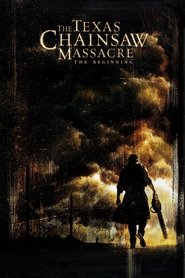
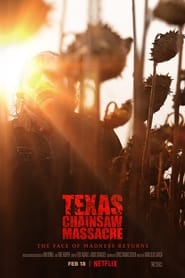
The Texas Chainsaw Massacre (2003)

US
6.0/10 3 votes
Runtime
98 min
Release
October 17, 2003
Budget
$9,500,000
Revenue
$107,385,515
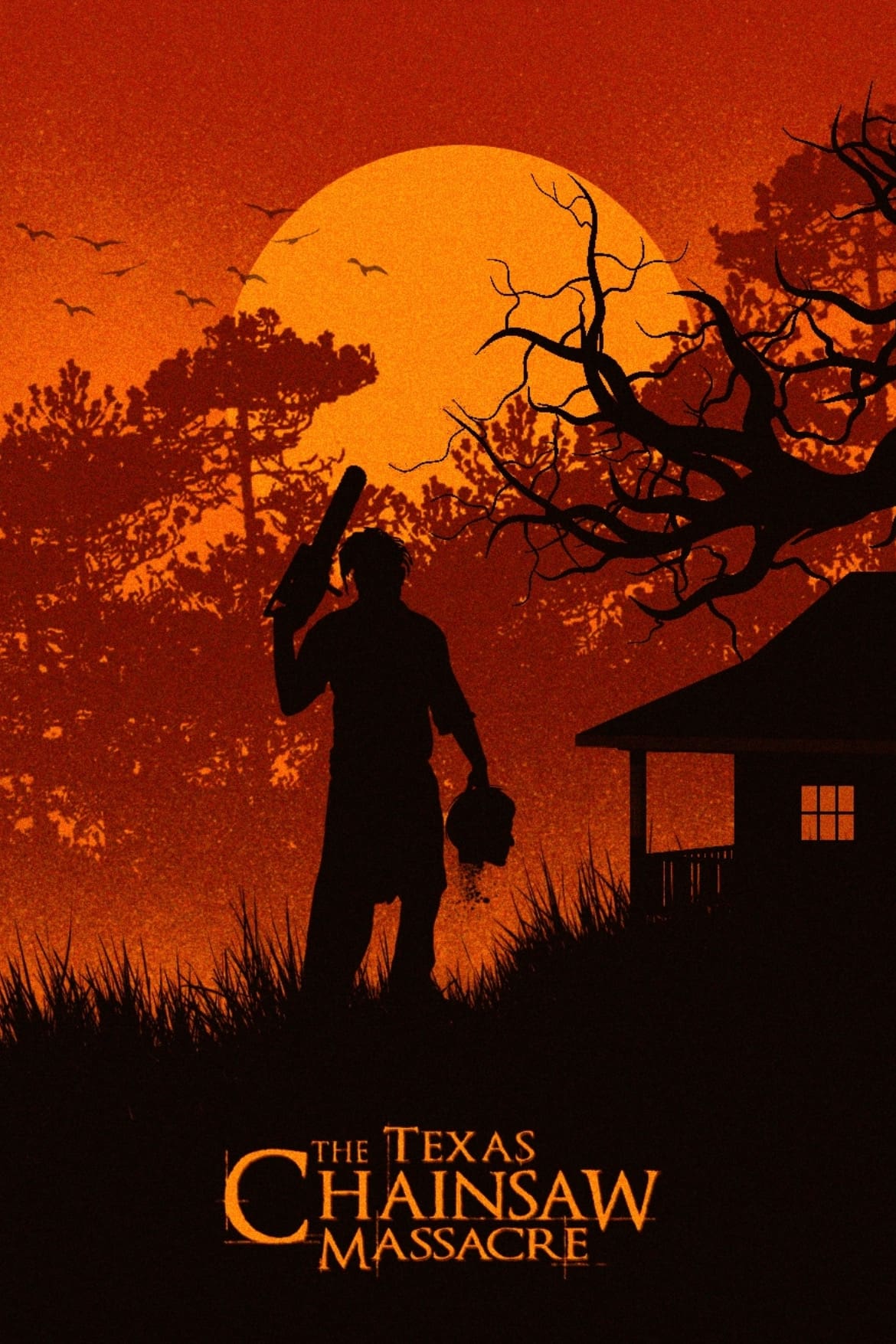
The Texas Chainsaw Massacre (2003) poster
Director
Production Companies
Next Entertainment , Platinum Dunes , Radar Pictures , New Line Cinema , Focus Features
Plot

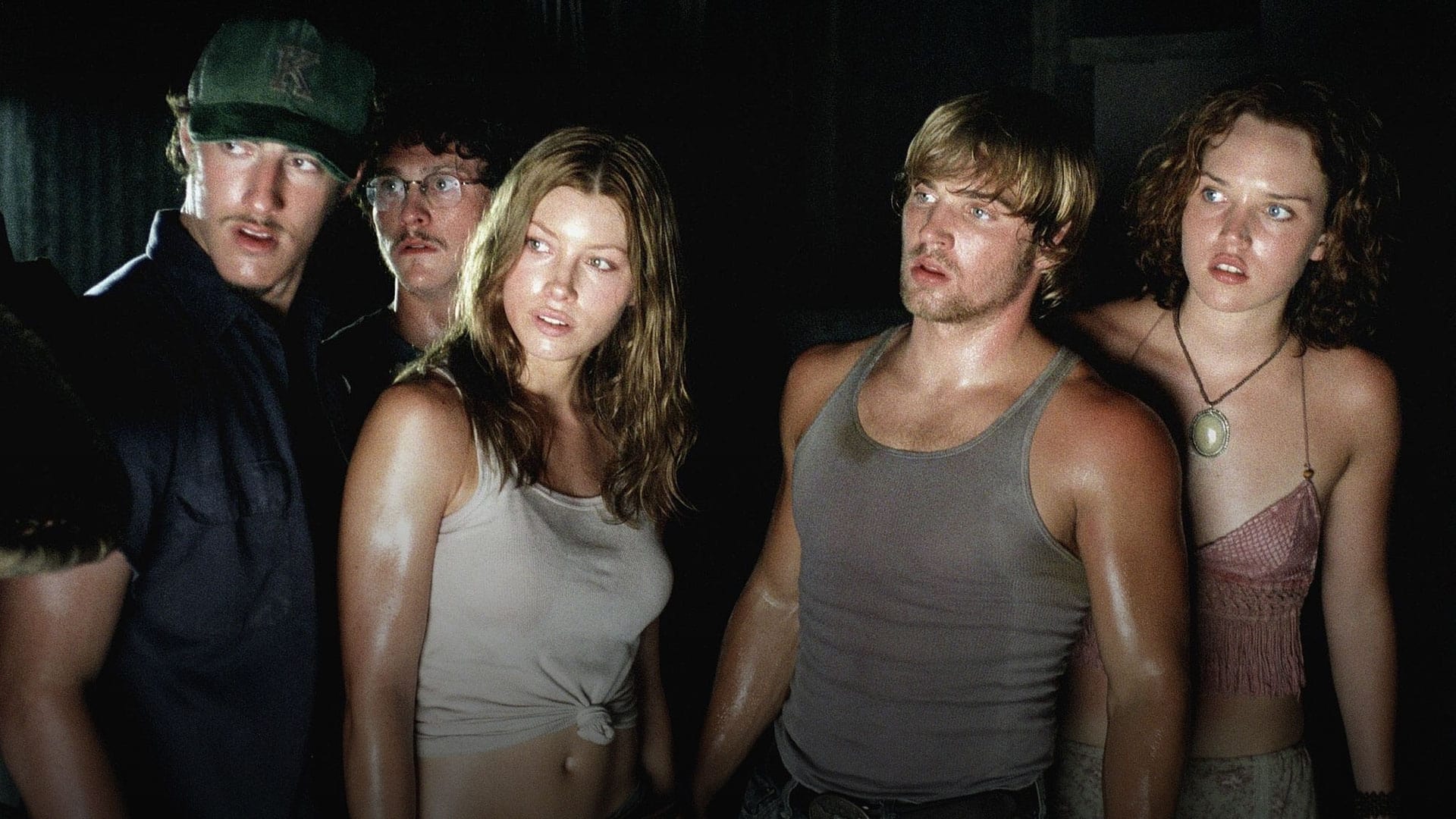
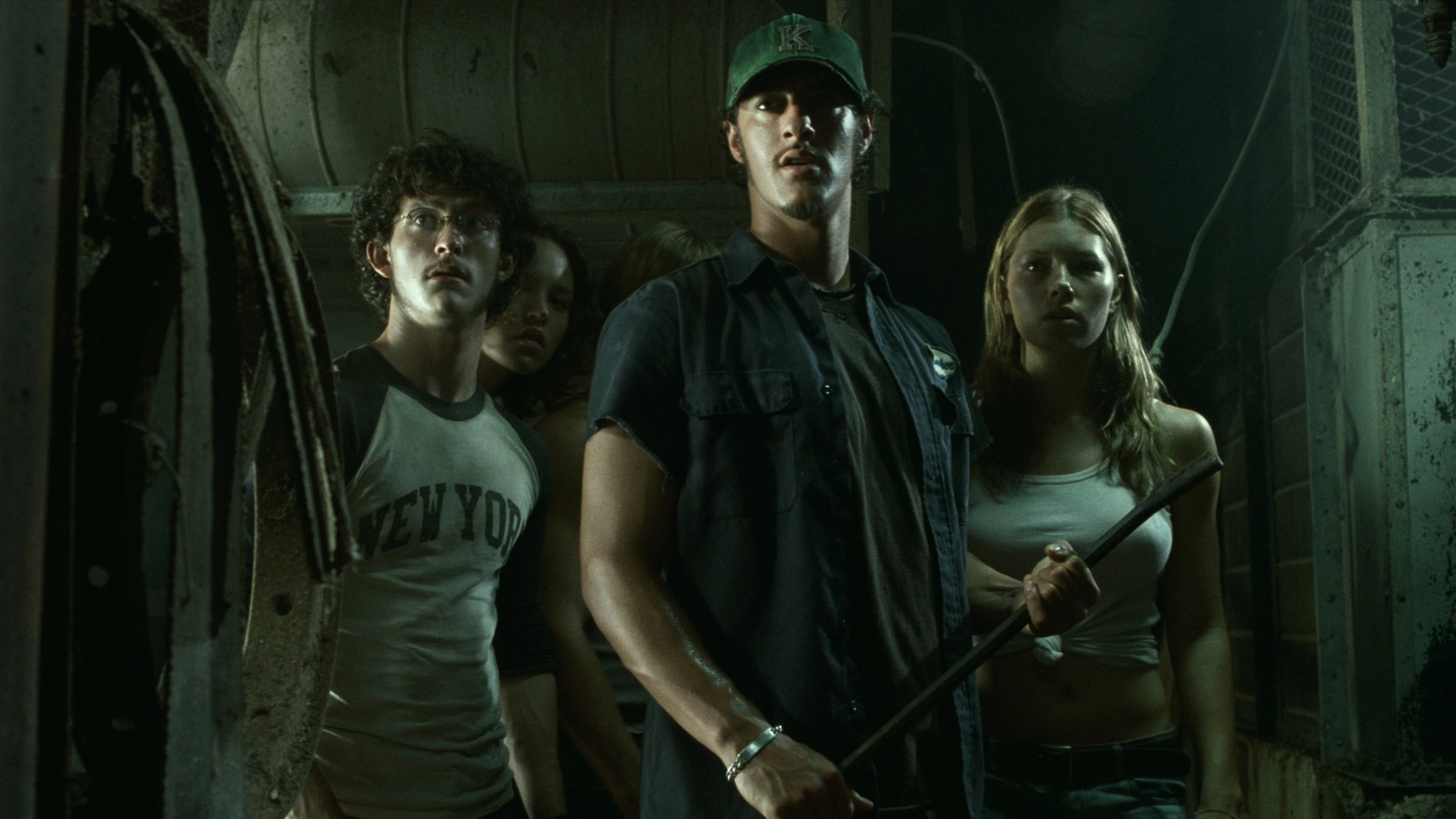
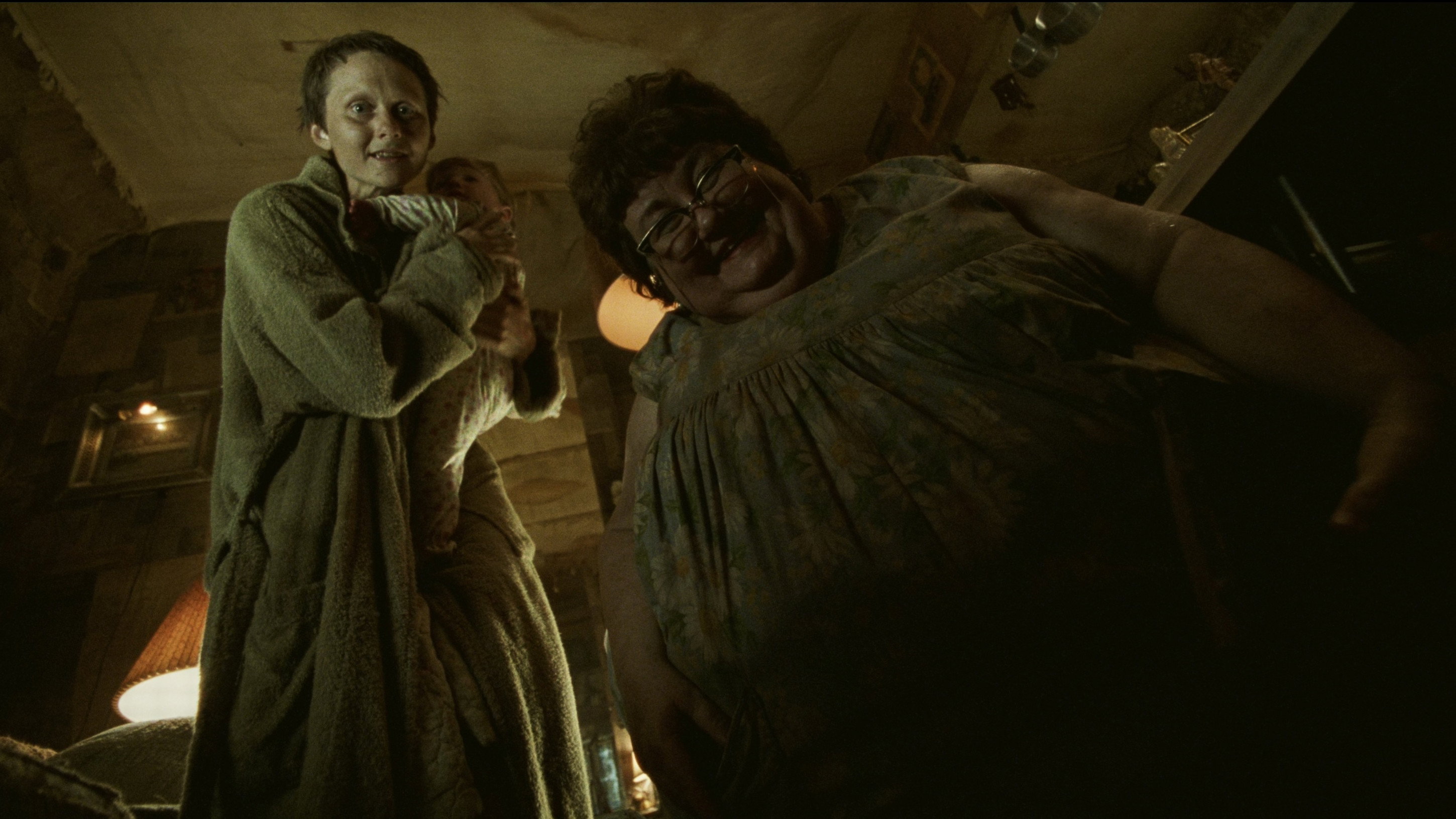
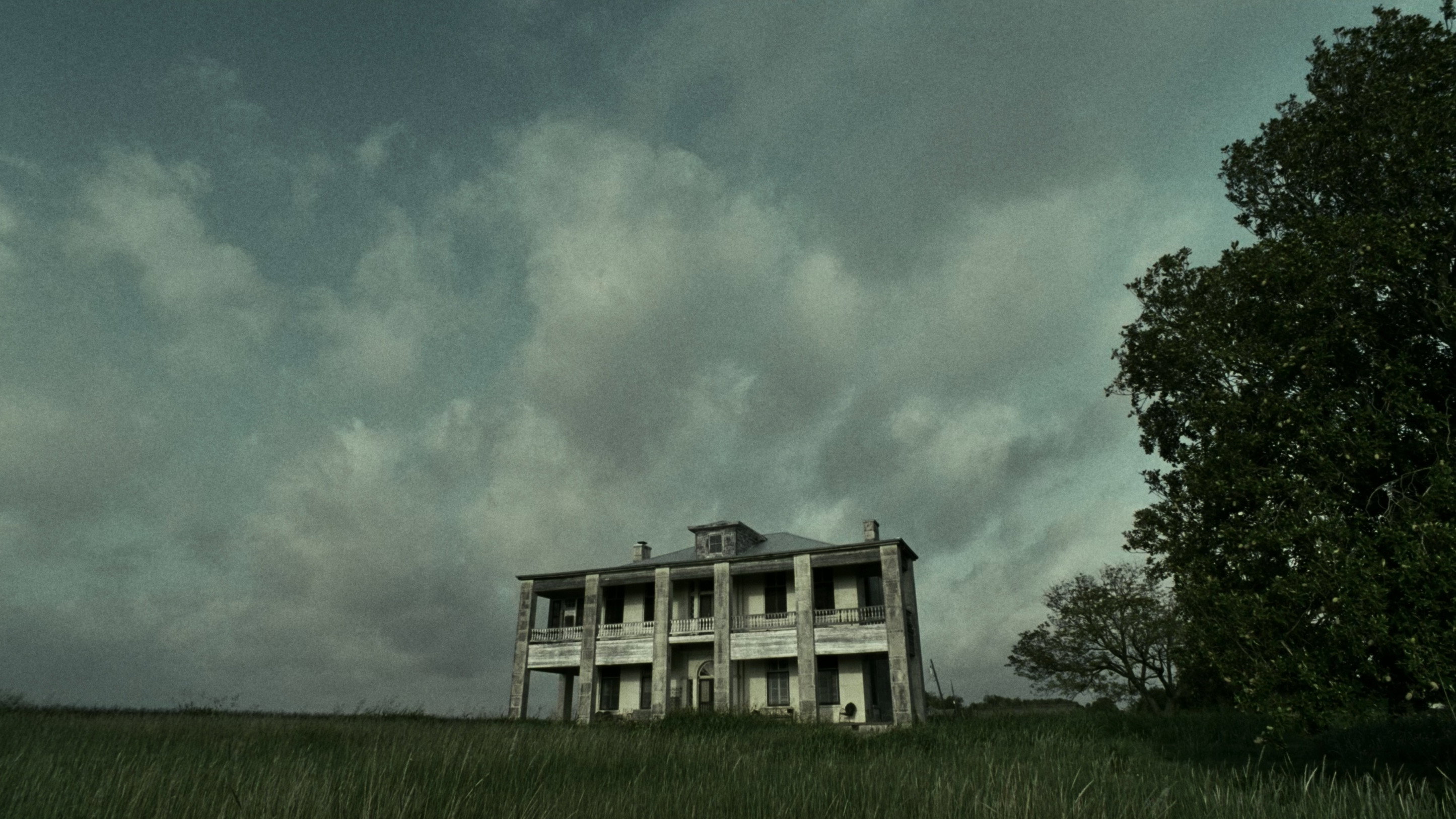
Erin and four friends are driving through Texas when a traumatic roadside encounter interrupts their trip. Seeking assistance, they become entangled with the Hewitt family and a local lawman whose authority proves deeply unreliable. Erin discovers that a large masked man known as Leatherface is hunting people around the family's rural property. The travelers must navigate unfamiliar roads, locked buildings and a hostile household as their attempts to escape repeatedly fail. This 2003 remake establishes a separate version of the story, with Thomas Hewitt replacing the original film's Leatherface.

Alternative Titles
La masacre de Texas (Argentina) Michael Bay's Texas Chainsaw Massacre (Austria) — German Teksasko klane (Bulgaria) Тексаско клане (Bulgaria) — Bulgarian O Massacre da Serra Elétrica (Brazil) — Portuguese Massacre à la tronçonneuse (Canada) — French 德州电锯杀人狂 (China) Texaský masakr motorovou pilou (Czechia) — Czech
Show all 49 alternative titles Michael Bay's Texas Chainsaw Massacre (Germany) — German Motorsavsmassakren (Denmark) — Danish Texase mootorsaemõrvad (Estonia) — Estonian La matanza de Texas (Spain) — Spanish Texasin moottorisahamurhat (Finland) Massacre à la tronçonneuse (France) — French ტეხასური ჟლეტა ხერხით (Georgia) — Georgian O shizofrenis dolofonos me to prioni (Greece) Ο Σχιζοφρενής Δολοφόνος με το Πριόνι (Greece) — Greek 德州電鋸殺人狂 (Hong Kong SAR China) — Chinese Teksaški masakr motornom pilom (Croatia) — Croatian A texasi láncfűrészes (Hungary) — Hungarian Pembantaian Gergaji Mesin Texas (Indonesia) המנסרים מטקסס (Israel) — Hebrew Non aprite quella porta (Italy) — Italian Tekisasu chênsô (Japan) Texas Chainsaw (Japan) テキサス・チェーンソー (Japan) — Japanese 텍사스 전기톱 연쇄살인사건 (South Korea) — Korean Kruvinosios skerdynės Teksase (Lithuania) — Lithuanian La masacre de Texas (Mexico) — Spanish La masacre en Texas (Mexico) Motorsagmassakren (Norway) — Norwegian Teksańska masakra piłą mechaniczną (Poland) — Polish Massacre no Texas (Portugal) — Portuguese Masacrul din Texas (Romania) — Romanian Teksaški masakr motornom testerom (Serbia) Тексашки масакр моторном тестером (Serbia) — Serbian Tekhasskaya reznya benzopiloy (Russia) Техасская резня бензопилой (Russia) — Russian مجزرة منشار تكساس (Saudi Arabia) — Arabic The Texas Chainsaw Massacre - Motorsågsmassakern (Sweden) — Swedish Teksaški pokol z motorko (Slovenia) — Slovenian Texaský masaker motorovou pílou (Slovakia) — Slovak ล่อมาชำแหละ (Thailand) — Thai Teksas Katliamı (Türkiye) — Turkish 德州電鋸殺人狂 (Taiwan) Техаська різанина бензопилою (Ukraine) — Ukrainian Michael Bay's Texas Chainsaw Massacre (United States) La masacre de Texas (Venezuela) Tử Thần Vùng Texas (Vietnam) — Vietnamese

Trailers & Videos

10 videos

Film Guide

Marcus Nispel and cinematographer Daniel Pearl rebuild a 1970s horror landmark through controlled imagery, brutal pursuit and a new Hewitt family mythology.

The Texas Chainsaw Massacre (2003) occupies a conspicuous place in the transition from the self-aware American teen horror of the late 1990s to the harsher studio-produced remakes of the following decade. Marcus Nispel's feature debut returned to Tobe Hooper's 1974 independent classic with a substantial production apparatus and a visual language shaped by contemporary commercials and music videos. The narrative retains a journey through rural Texas and a household devoted to killing outsiders, but it changes the victims, the family's identity and the way the audience is introduced to danger. Those revisions make the picture useful for studying how an established horror property was reconstructed for a different generation.

The film's distinctive character emerges from its combination of elaborate camerawork, physically punishing pursuits and a more explicit explanation for Leatherface's place within his family. Jessica Biel's Erin becomes the principal survivor, pursued through settings that extend well beyond the isolated house. Daniel Pearl, the cinematographer of the original, returned to photograph the remake while deliberately rejecting a recreation of his earlier images. This unusual continuity behind the camera sharpens the comparison between the two works. The 2003 version's commercial success subsequently encouraged Platinum Dunes and other producers to revisit older genre properties, although its reception revealed deep disagreement about what such a remake could accomplish.

Platinum Dunes and the Remake Project

The project emerged from Platinum Dunes, the production company associated with Michael Bay, as a new version of a recognizable horror property. Nispel had made his name directing commercials and music videos rather than features, and the assignment placed a major genre title with a director experienced in visually designed short productions. Scott Kosar wrote the screenplay. Nispel later recalled being attracted to an early draft and preserving much of its central structure while reconsidering specific set pieces and the ending. His account is useful because it distinguishes adjustments made during development from a claim that every narrative change originated with the director.

The original film's opening assertion of authenticity survives in transformed form. Nispel uses simulated investigative footage and a police-record framework to give the massacre the appearance of a documented case. This device should be understood as storytelling and publicity, since the Hewitt murders are fictional. Hooper's film drew on elements associated with real murderer Ed Gein, but neither feature dramatizes a verified Texas chainsaw crime. The remake's documentary pose instead establishes a severe tone before the main group encounters the family. It promises an account assembled from evidence, then places that purported certainty under pressure through extended scenes of helplessness and confusion.
Rewriting the Household and the Survivors

The screenplay changes the travelers' route into catastrophe. Erin and her companions pick up a deeply distressed young woman, whose suicide inside their van leaves them seeking assistance from local authorities. That event makes the decision to enter unfamiliar territory feel like the consequence of a specific emergency. The apparent sheriff, Hoyt, then becomes a means by which the household exercises power beyond its own property. R. Lee Ermey gives this figure an aggressive authority that changes the structure of suspense: those who should provide protection can instead isolate the young travelers. The film's rural setting becomes an organized trap whose reach exceeds Leatherface's immediate physical presence.

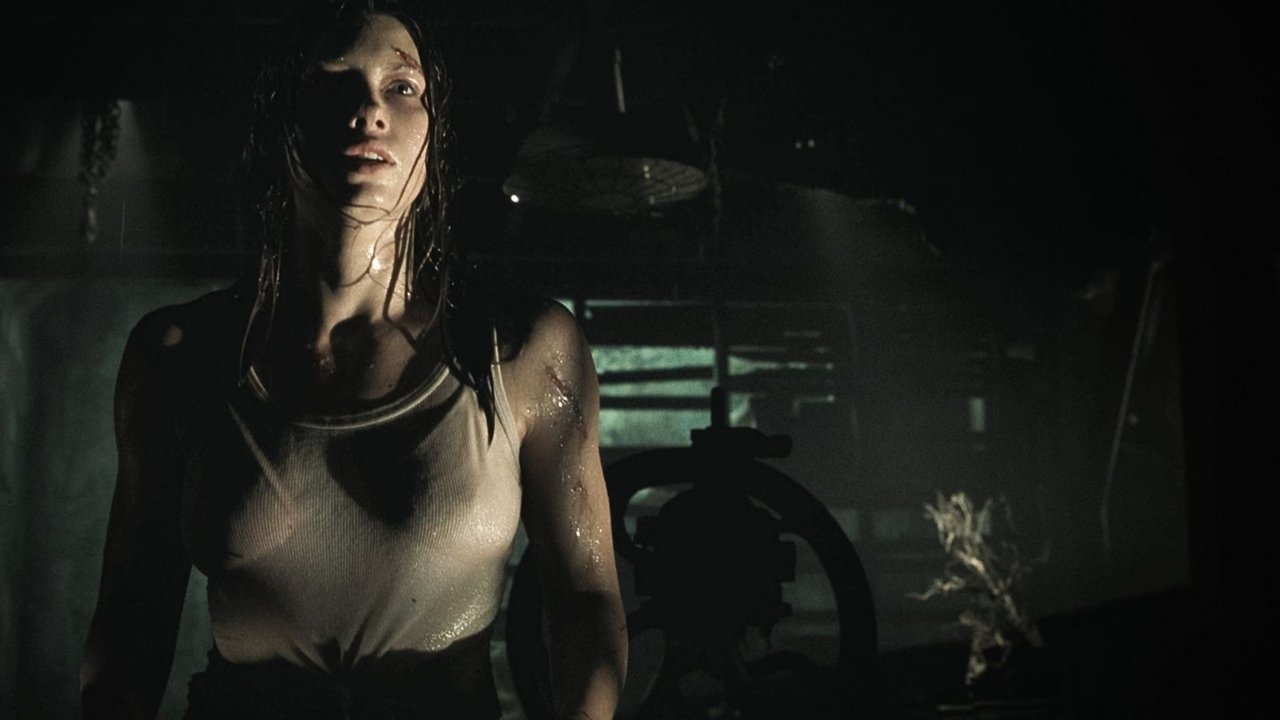
The murderous clan is now the Hewitt family, and Andrew Bryniarski's Leatherface is identified within this continuity as Thomas Hewitt. His name and family circumstances belong to Nispel's interpretation, not to every installment in the franchise. The director described wanting a psychological basis for the household's loyalty to a son with a disfigured face, turning family protection into a rationale for collective cruelty. This explanation differs from the deliberately unstable identities and social behavior of Hooper's killers. Erin's efforts to escape also take on a more sustained action-oriented shape, including attempts to save other captives and a child. The remake gives its surviving protagonist more opportunities for direct intervention while retaining the frightening imbalance of power.

Daniel Pearl and the New Visual Language

Pearl's return offers unusually concrete evidence of what the remake changed. In an American Cinematographer interview, he explained that the director sought a sickly, contaminated color impression. Pearl consequently investigated laboratory methods and chose a bleach-bypass process, which deepens blacks and suppresses parts of the color range. The resulting image has a controlled, dense quality distinct from the earlier film's more accidental-looking texture. The difference reflects more than a larger budget: it expresses a deliberate effort to create an oppressive world whose visual organization remains legible even as the characters become overwhelmed by it. Darkness and desaturation are part of a planned photographic treatment.

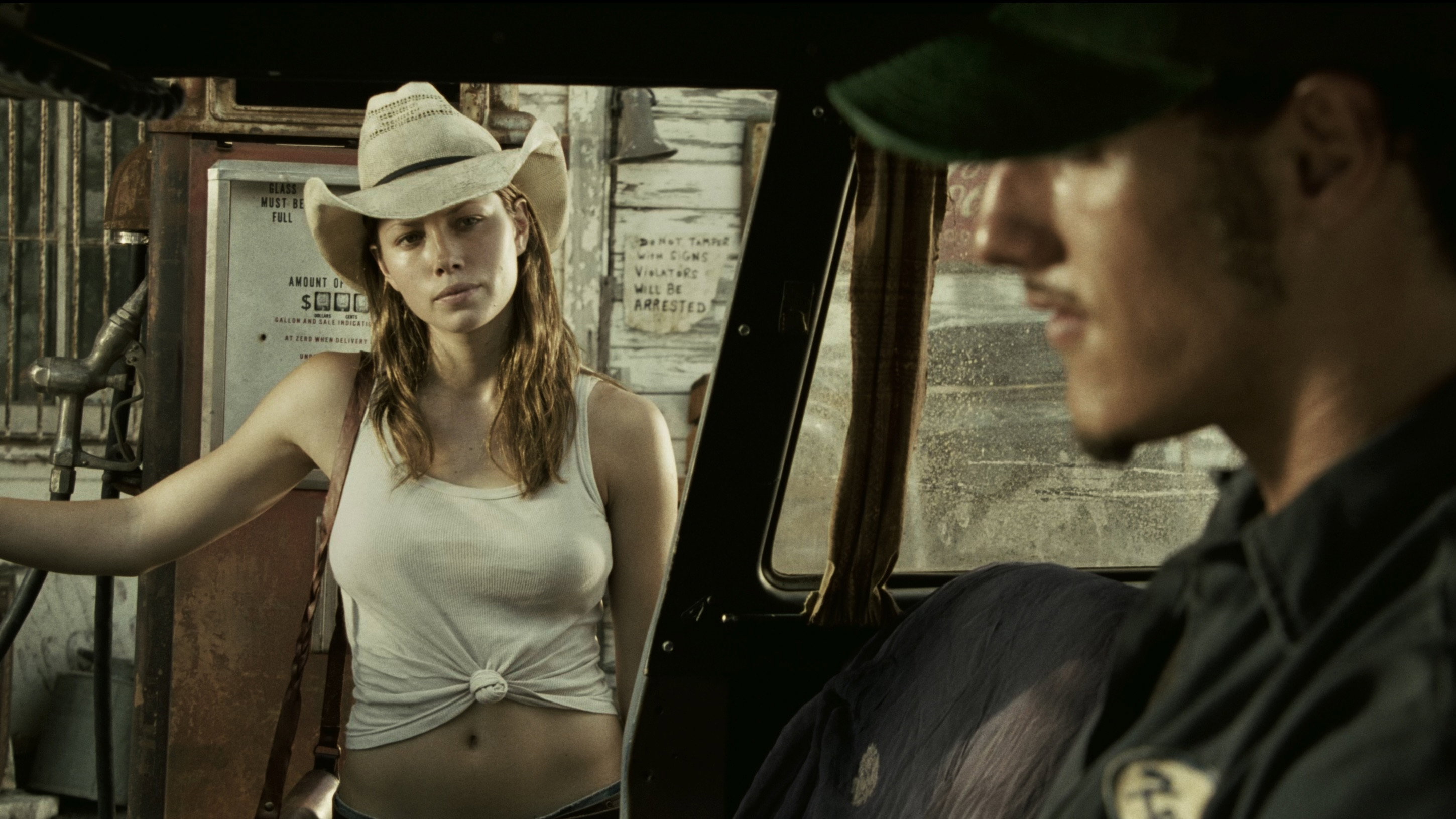
The opening van scenes illustrate how additional resources could alter a familiar narrative situation. On the original production, Pearl often exposed for the interior and accepted washed-out views through the windows. For the 2003 film he brought substantial exterior-balanced lighting equipment to the vehicle, allowing interior faces and the landscape beyond them to remain visible together. The technique makes the company of travelers feel carefully staged inside a mobile enclosure. Nispel also encouraged dynamic handheld work, a method consistent with his commercial background but deployed here to follow fear through crowded spaces. Such movement gives the chase scenes immediate physical energy without making them appear to have been recorded accidentally.

The sequence following the hitchhiker's death contains the picture's most conspicuous camera construction. Nispel and Pearl planned a move that retreats through the van, appears to pass through the wound in the young woman's head and continues out of the rear window. Pearl described using a probe lens, specially prepared prop elements and a crane, while digital effects completed parts of the vehicle afterward. The shot has an intentionally demonstrative quality, making a moment of violence the occasion for a seemingly impossible point of view. It answers the celebrated low tracking movement toward the farmhouse in Hooper's film with a different kind of technical display, demonstrating how the remake treats camera virtuosity as an attraction in its own right.

Leatherface, Bodily Violence and Pursuit

Andrew Bryniarski's imposing performance makes Leatherface a physically relentless pursuer, but his presence is prepared by a network of people who misdirect the visitors. The mask now belongs to an explanation involving disfigurement and a family that excuses its member's violence. Nispel discussed this in a release-period interview as a question about how relatives might protect someone whose appearance has attracted ridicule. That rationale is the filmmaker's interpretation of the character and should not be mistaken for a factual psychological account of violent behavior. Within the story it supplies continuity between the clan's secrecy and the bodily concealment of its most visible killer.

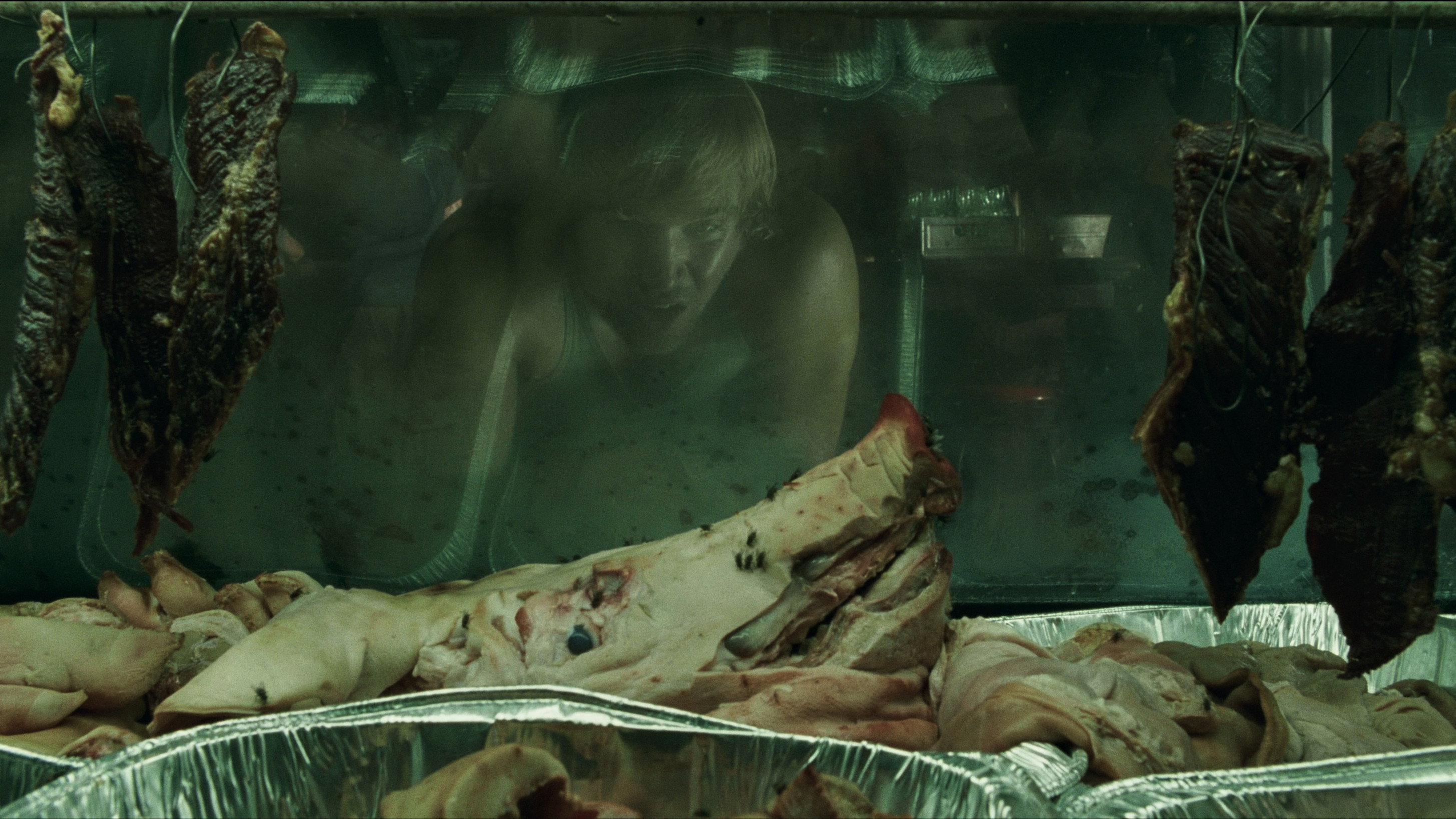
Injury occupies more screen time and receives more explicit emphasis than in the 1974 picture, whose reputation has often overstated its visible gore. The remake makes confinement and torture persistent sources of suspense: Andy's suspension from a hook, victims kept alive inside the property and Erin's passage through the slaughterhouse turn bodies into objects controlled by the family. Nispel recalled that the actors experienced real physical discomfort during some complicated setups, especially the hook sequence. His testimony concerns demanding performance conditions, rather than proof that the injuries depicted were genuine. The staging favors prolonged distress and close physical involvement, a choice that helps explain why contemporary critics sharply disagreed about the value of the film's greater brutality.

Family Authority and Gender Politics

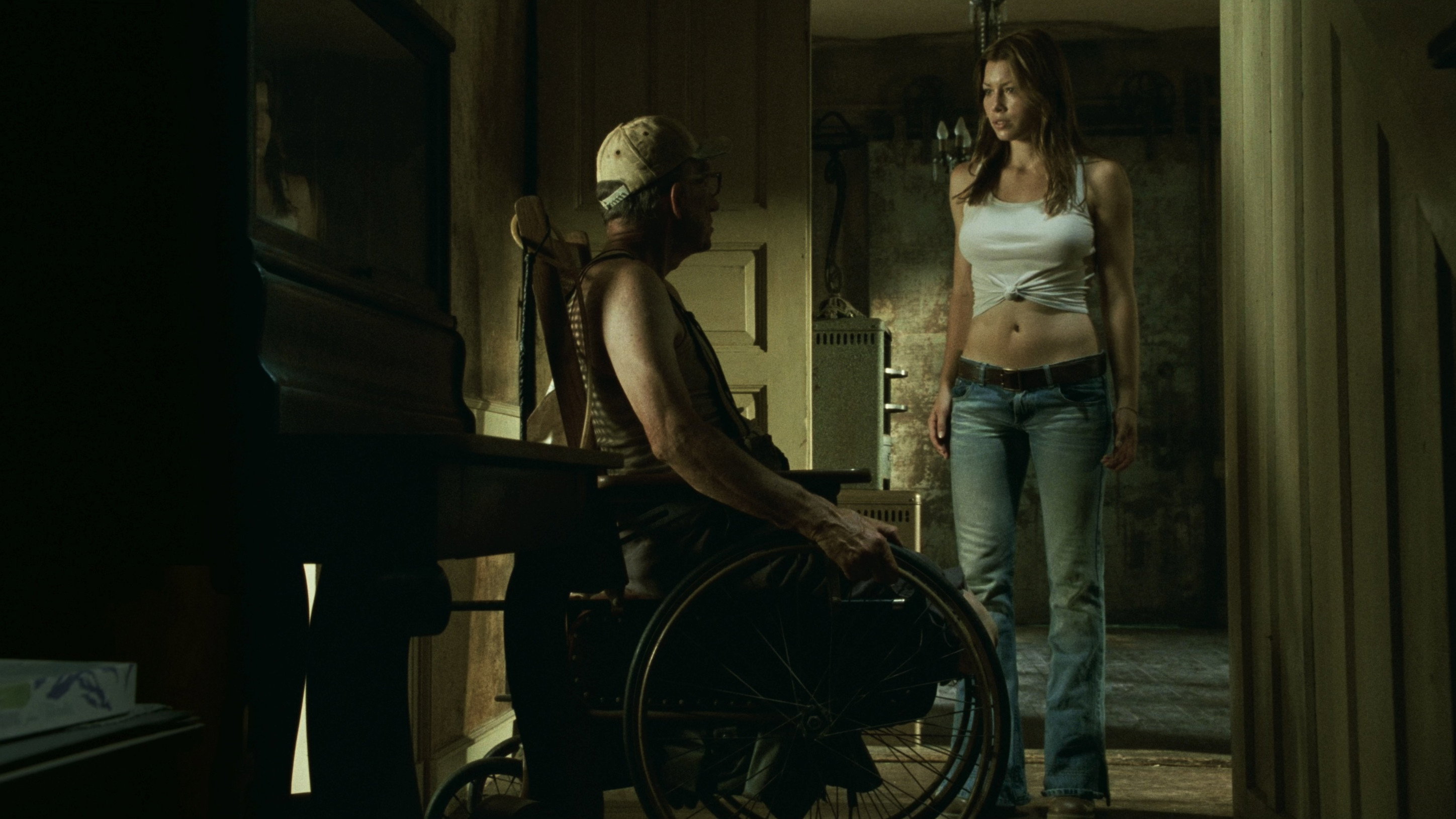
The Hewitt household offers a different image of family organization from Hooper's chaotic domestic grotesque. Its apparent sheriff can intimidate strangers using an official role, while other relatives help move victims between roadside spaces and the family property. The group sustains itself through shared coercion and presents its actions as loyalty to Thomas. This pattern places institutional authority and domestic authority on the same side of the threat. For viewers, the horror is intensified by the repeated discovery that established procedures for obtaining help have been appropriated by the killers. The film's violence follows from a social structure within the fiction, even when individual attacks seem impulsive.

The treatment of women has also prompted scholarly disagreement. In a 2012 article for Horror Studies, Andrew Slade argued that Nispel's remake replaces the original's progressive examination of gender and family with a more reactionary vision. That is an identified critical interpretation, rather than an objective account of the filmmakers' intentions. The narrative certainly brings Erin's resourcefulness into conflict with an environment that continually punishes vulnerable outsiders. Her escape involves tactical decisions and direct resistance, yet the threats directed at her body remain central to the spectacle. Considering both features together makes it possible to examine whether the remake's more forceful survivor offsets its intensified emphasis on female suffering.

Release, Critical Response and Remake Legacy

New Line Cinema released the film widely in US theaters on October 17, 2003. The Texas State Historical Association records a production budget of approximately $9.5 million and worldwide theatrical earnings above $107 million. These figures describe reported budget and box-office gross, not net profit after marketing and distribution costs. The result was nonetheless substantial enough to support a return to the same continuity in The Texas Chainsaw Massacre: The Beginning (2006), which explores the Hewitt family before the events of the remake. Nispel's feature was classified R in the United States for strong horror violence and gore, language and drug content, confirming the more explicitly adult commercial positioning of the new version.

Critical response was contentious from the outset. Roger Ebert's October 2003 review condemned the remake's brutality and argued that its technical polish could not replace the original's sense of creative necessity. Other critics and later commentators found the deliberately unpleasant atmosphere and elaborate photography more effective, while acknowledging the greater dependence on prolonged physical violence. These arguments concern identifiable differences in staging rather than a simple division between viewers who accept gore and those who reject it. The picture's production methods are unusually visible, especially in its complex camera movements, and opinions about that visibility help explain its divided reputation. Its commercial outcome cannot by itself settle those aesthetic disagreements.

The larger legacy is industrial and stylistic. The remake became an early flagship for Platinum Dunes and helped demonstrate the commercial value of reviving older horror properties for contemporary multiplex audiences. Darren Mooney's twentieth-anniversary analysis situates its release between the waning cycle of self-referential teen slashers and the wave of remakes that followed, including renewed versions of Dawn of the Dead and The Amityville Horror. That account describes a broader movement rather than proving that one film single-handedly created it. Nispel's feature remains especially significant because it recast a famously rough independent work through precision cinematography, explicit physical suffering and a newly organized cannibal family. Its place in horror history is inseparable from the debate those choices continue to provoke.

References

  1. American Cinematographer Twice The Horror: The Texas Chain Saw Massacre

    Daniel Pearl explains the bleach-bypass photography, van lighting and intricate effects-assisted camera movement used in the 2003 remake.

  2. Ain't It Cool News Mr. Beaks Interviews Marcus Nispel, TEXAS CHAINSAW Remake Director!!

    A detailed 2003 interview documents the director's choices about the Hewitt household, Leatherface, visual approach and changes to Scott Kosar's script.

  3. University of Dayton Remake as Erasure in The Texas Chainsaw Massacre

    The institutional landing page for Andrew Slade's peer-reviewed Horror Studies article comparing gender and family politics across the two films.

  4. Texas State Historical Association The Texas Chainsaw Massacre (Franchise)

    The Handbook of Texas details the 2003 remake's production context, commercial performance and relationship to its 2006 prequel.

  5. The Escapist The Texas Chainsaw Massacre Ushered In an Era of Horror Remakes 20 Years Ago

    Darren Mooney places the 2003 release in the shift from self-aware teen slashers toward the studio remake cycle.

Connections

Cast

View Full Cast & Crew →

Release & Distribution

Production Companies (5)

  • Focus Features US
  • New Line Cinema US
  • Next Entertainment US
  • Platinum Dunes US
  • Radar Pictures US

Distributors (1)

  • New Line Cinema US

Release History (52)

Release DateTerritoryRelease TypeFormatDistributorCertificationNotes
2003-10-15 United States Premiere — — — Hollywood, California
2003-10-17 Canada Theatrical — — 18A
2003-10-17 United States Theatrical — — R
2003-10-31 United Kingdom Theatrical — — 18
2003-10-31 Ireland Theatrical — — 18
2003-11-14 Iceland Theatrical — — 16
2003-11-20 Australia Theatrical — — MA 15+
2003-11-21 Denmark Theatrical — — —
2003-11-28 Italy Theatrical — — —
2003-12-12 Taiwan Theatrical — — 18+
2004-01-01 Austria Theatrical — — 18
2004-01-01 Germany Theatrical — — 18
2004-01-09 Finland Theatrical — — K-18
2004-01-14 Bahrain Theatrical — — —
2004-01-16 Sweden Theatrical — — 15
2004-01-21 Belgium Theatrical — — —
2004-01-21 France Theatrical — — 16
2004-01-22 Netherlands Theatrical — — 16
2004-01-22 New Zealand Theatrical — — R18
2004-01-29 Czechia Theatrical — — 15+
2004-01-30 Greece Theatrical — — —
2004-02-04 Philippines Theatrical — — R-18
2004-02-13 Norway Theatrical — — 18
2004-02-19 Hungary Theatrical — — 18
2004-03-04 Georgia Theatrical — — —
2004-03-12 Kazakhstan Theatrical — — —
2004-03-19 Estonia Theatrical — — —
2004-03-20 Japan Theatrical — — R-15
2004-03-25 Portugal Theatrical — — M/18
2004-03-26 Lithuania Theatrical — — N-16
2004-03-26 Thailand Theatrical — — —
2004-04-30 South Africa Theatrical — — —
2004-05-05 Egypt Theatrical — — —
2004-05-21 Spain Theatrical — — 18
2004-10-07 France Physical DVD — 16 DVD
2004-10-22 Poland Theatrical — — 16
2004-12-16 Netherlands Physical DVD — 16 DVD
2005-02-25 Brazil Theatrical — — 18
2005-04-01 Mexico Theatrical — — C
2005-06-16 South Korea Theatrical — — 19
2005-06-23 Argentina Theatrical — — 16
2005-09-09 Uruguay Theatrical — — —
2005-09-16 Venezuela Theatrical — — —
2006-06-23 Türkiye Theatrical — — 18+
2006-10-28 Netherlands TV — — 16 Veronica
2012-01-05 France Digital — — 16 VOD
2012-05-03 Israel Physical Blu-ray — — Blu-Ray
2013-07-03 France Physical Blu-ray — 16 Blu-Ray
2013-10-15 Singapore Physical Blu-ray — M18 Blu-Ray
2014-11-17 Indonesia Physical Blu-ray — — Blu-Ray
2014-11-17 India Physical Blu-ray — A Blu-Ray
2018-08-21 United Arab Emirates Physical Blu-ray — — Blu-Ray
What you know about fear... doesn't even come close.