28 Days Later (2002)

GB
SUBGENRES ZOMBIE
8.3/10 6 votes
Runtime
113 min
Release
October 31, 2002
Budget
$8,000,000
Revenue
$82,784,517
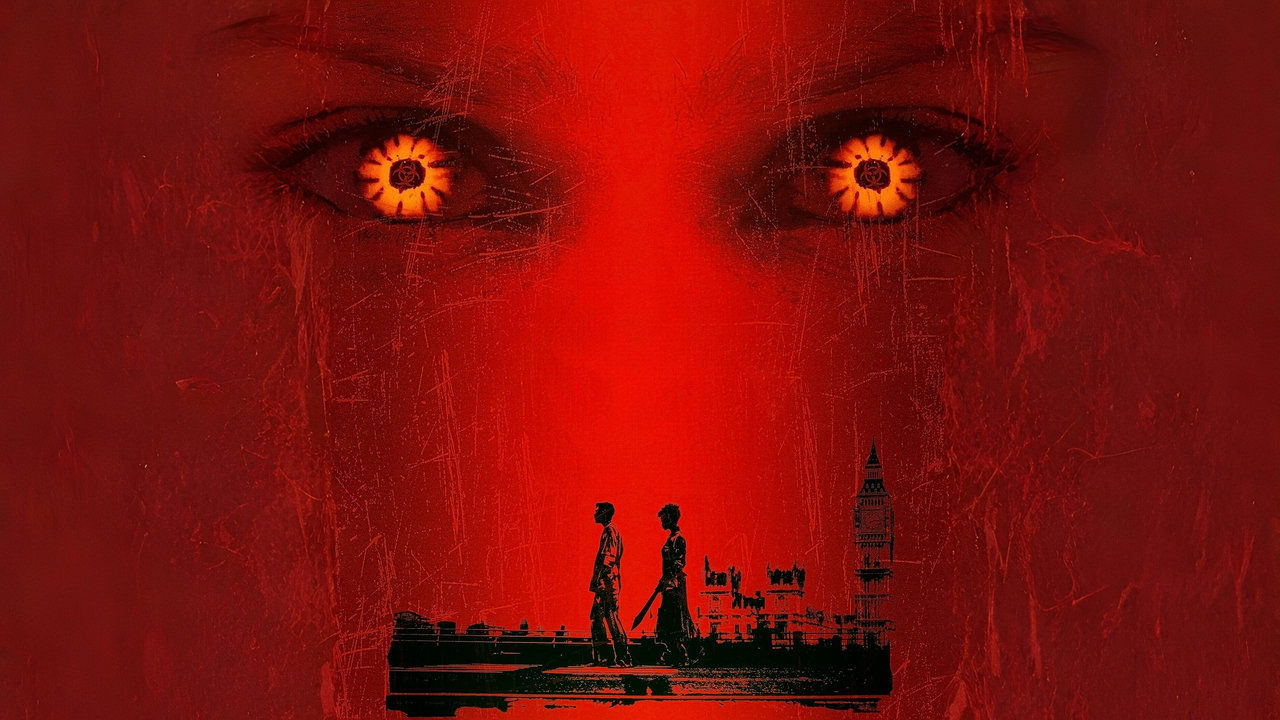
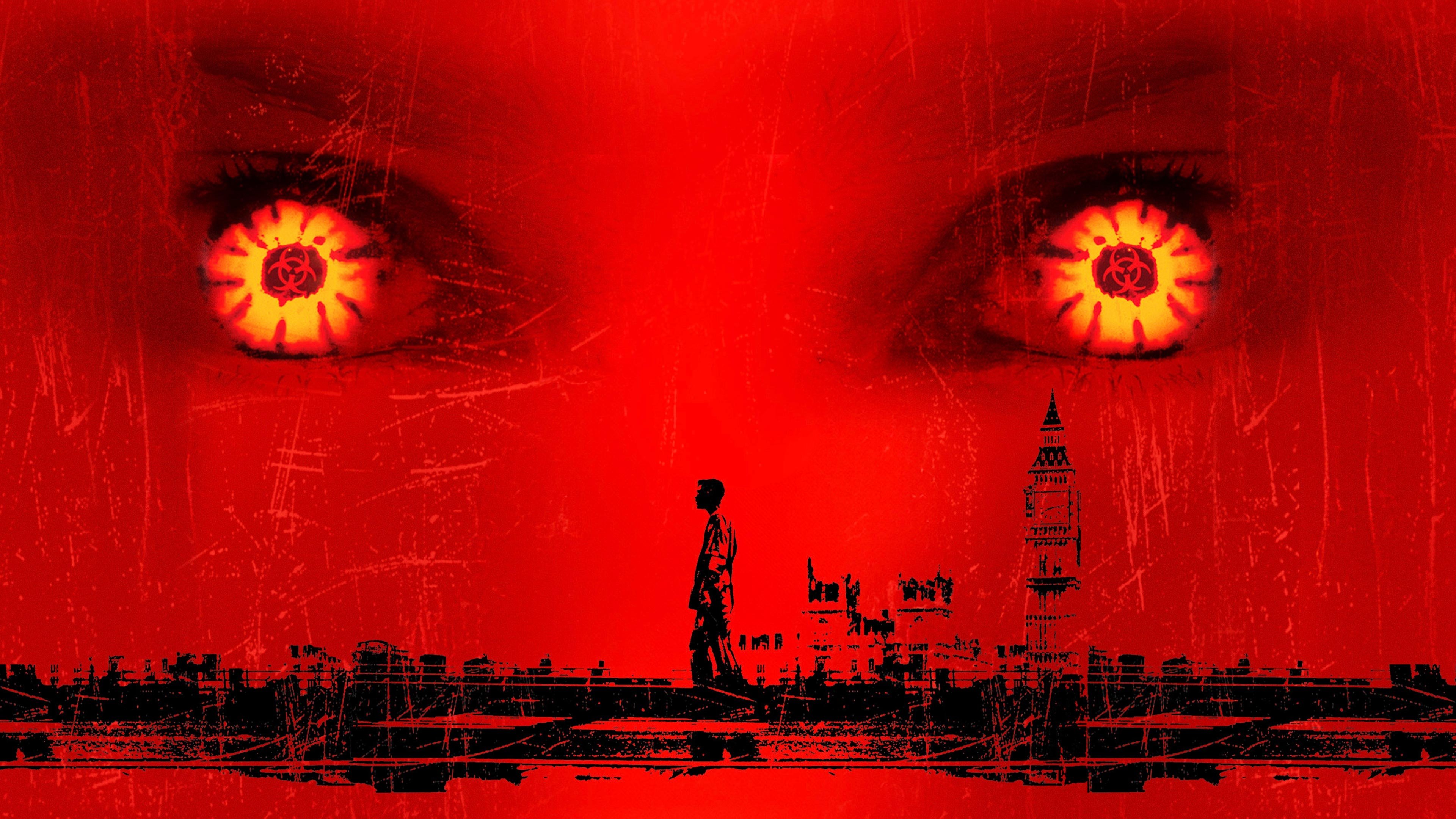
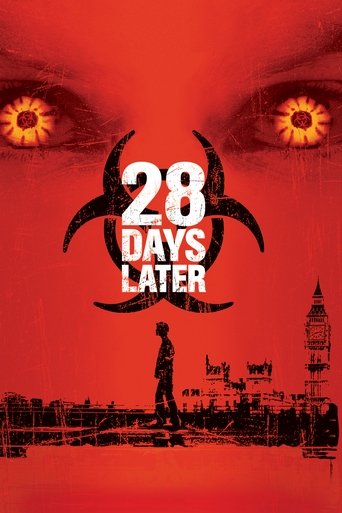
28 Days Later (2002) poster
Director
Production Company
DNA Films
Plot

After animal-rights activists release infected chimpanzees from a British research laboratory, the rapidly transmitted Rage virus devastates the country. Bicycle courier Jim wakes from a coma in a deserted London, unaware of the catastrophe. He joins Selena and other survivors in a search for safety, travelling through a landscape where the infected attack within seconds and the remaining uninfected face hunger, isolation and mistrust. A military radio broadcast offers the prospect of protection, but the group's journey reveals that armed authority may pose its own deadly threat.

Alternative Titles
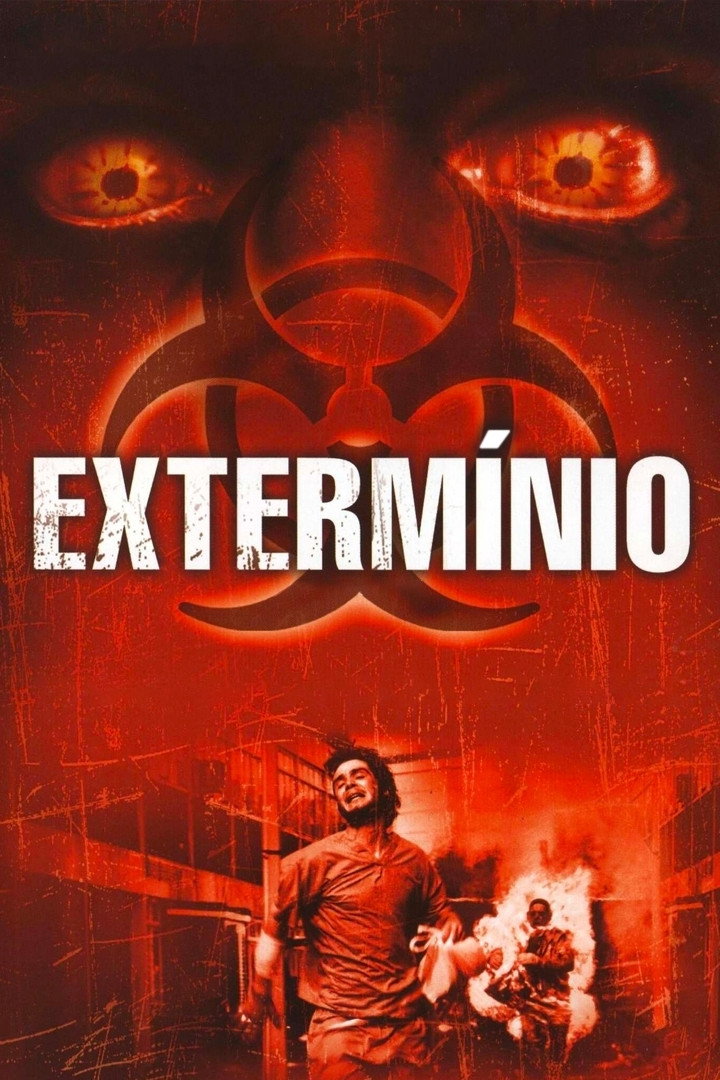
28 Tage später (Austria) 28 Gün Sonra (Azerbaijan) 28 дни по-късно (Bulgaria) — Bulgarian Extermínio (Brazil) — Portuguese Extermínio: Os Dias Estão Contados (Brazil) 28 jours plus tard (Canada) — French 惊变28天 (China) — Chinese 28 dní poté (Czechia)
Show all 49 alternative titles 28 Tage später (Germany) 28 dage senere (Denmark) — Danish 28 päeva hiljem (Estonia) — Estonian 28 días después (Spain) — Spanish 28 dies després (Spain) — Catalan 28 päivää myöhemmin (Finland) 28 Jours plus tard (France) — French 28 დღის შემდეგ (Georgia) — Georgian 28 Μέρες μετά (Greece) — Greek 28 日後 (Hong Kong SAR China) — Chinese 28日後 (Hong Kong SAR China) 28 dana kasnije (Croatia) — Croatian 28 nappal később (Hungary) — Hungarian 28 יום אחרי (Israel) — Hebrew ۲۸ روز بعد (Iran) — Persian 28 giorni dopo (Italy) 28日後... (Japan) — Japanese 28일 후 (South Korea) — Korean 28일 후... (South Korea) 28 жылдан кейін (Kazakhstan) — казахский 28 dienos po (Lithuania) — Lithuanian 28 dienas vēlāk (Latvia) — Latvian Devastación: 28 días después (Mexico) — title audio Exterminio (Mexico) 28 dager senere (Norway) 28 dni później (Poland) — Polish 28 Dias Depois (Portugal) — Portuguese După 28 de zile (Romania) — Romanian 28 дана касније (Serbia) — Serbian 28 дней спустя (Russia) — Russian 28 يوما لاحقا (Saudi Arabia) 28 dagar senare (Sweden) — Swedish 28 dni pozneje (Slovenia) — Slovenian O 28 dní... (Slovakia) — Slovak 28 วันให้หลัง เชื้อเขมือบคน (Thailand) 28 Gün Sonra (Türkiye) — Turkish 28天毀滅倒數 (Taiwan) — Chinese 28 днів по тому (Ukraine) — Ukrainian 28 days later... (United States) — Screen Title 28 kundan so‘ng (Uzbekistan) 28 Ngày Sau (Vietnam) — Vietnamese

Trailers & Videos

9 videos

Film Guide & Analysis

Danny Boyle and Alex Garland reshape epidemic horror through deserted London, portable digital filmmaking and a stark conflict between contagion and authority.

Danny Boyle's 28 Days Later (2002) helped reconfigure the screen language of epidemic horror at a moment when digital filmmaking was becoming a practical alternative to conventional production. Written by Alex Garland, the film follows a bicycle courier who wakes from a coma to discover an apparently abandoned London. Its premise makes national catastrophe immediate and physical: streets ordinarily crowded with commuters have become empty, while the few people still moving through them may attack with startling speed. The infected are living humans suffering the effects of a fictional rage virus, a distinction that matters to the film's urgent treatment of contagion and bodily vulnerability.

The film joined the apocalyptic concerns of British science fiction with the violent inheritance of the zombie film. Its influence is inseparable from Anthony Dod Mantle's deliberately abrasive digital photography, the near-silent spectacle of central London and a final movement that asks what civilization's survivors might become under military authority. Released in Britain in 2002 and in the United States in 2003, it became both a successful genre production and a reference point for subsequent outbreak narratives. Its historical significance emerges from these specific formal and industrial choices, not from a claim that fast-moving infected originated here.

Development and the British Apocalypse

Alex Garland developed the screenplay after his novel The Beach had been adapted for the screen by Boyle. In a 2003 conversation with Kim Newman for Filmmaker, Garland recalled beginning the project as a speculative first draft and showing it to Boyle early. Boyle described being immediately attracted to the combination of an infectious psychological condition and the image of London emptied of people. The virus operates as a narrative mechanism that strips normal social structures away within a few weeks, allowing an intimate survival story to unfold inside a national disaster. That design also avoided spending most of the running time on scientific explanations of the outbreak.

The film draws on a long British tradition of catastrophe fiction, including stories in which ordinary communities confront the sudden disappearance of familiar institutions. Its characters travel through a recognizably contemporary England whose infrastructure remains physically present but socially useless. That combination is central to the horror: petrol stations, churches, houses and motorways retain traces of everyday life even after their protective routines have collapsed. Boyle and Garland also work within the cinematic tradition associated with George A. Romero, especially the tendency to turn a threat outside a refuge into a test of the politics and behavior of those inside it.

Producer Andrew Macdonald later recalled a difficult shoot whose circumstances changed dramatically between its early city locations and the rain-soaked countryside. The production's restricted resources shaped its method, but the results are not simply an exercise in doing more with less. The story is arranged around spaces where population absence could be made visible, sudden moments of close-contact violence and a small ensemble whose decisions carry the burden of the narrative. The threat remains understandable without an elaborate mythology, which lets the film move between public catastrophe and private mistrust.

Digital Cinematography and the Empty City

Cinematographer Anthony Dod Mantle used Canon XL1 digital video cameras for much of the production, exploiting their modest size and mobility. American Cinematographer's technical account describes the use of adapted Canon lenses, filtration and deliberate underexposure to control the limited latitude and characteristic depth of field of the DV format. Images of bright exteriors could be especially difficult for the cameras. These constraints are evident in the picture's harsh highlights, coarse texture and unusually direct rendering of movement. The resulting visual character was a considered aesthetic decision as well as a consequence of available equipment.

The empty London sequences depended on a production strategy that could work quickly in streets normally packed with traffic. Rather than creating a seamless illusion of a depopulated capital through expansive digital reconstruction, the film uses carefully selected views, early access and the mobility of its camera system. The pedestrian's ordinary progress becomes unnerving because the city offers no human response. Familiar landmarks stop functioning as reassurance. The scale of the urban environment overwhelms Jim, yet the visual texture is closer to recorded news footage than to an elaborate studio disaster spectacle.

Dod Mantle had previously explored video-based image-making in independent cinema, and the decision carried through into the film's rapidly escalating attacks. Handheld observation, abrupt shifts in movement and exposure changes make encounters feel difficult to master visually. In the countryside, the same method turns fields and roadways into unstable refuges. The format's low-resolution appearance is particularly consequential when compared with later high-definition digital filmmaking: the image retains a visible sense of early-2000s technology that is integral to how this particular apocalypse is imagined.

Infection, Violence and the Human Body

The rage virus turns ordinary people into immediate physical threats. The infected move rapidly, and an exchange of bodily fluid can make a wound or splash a mortal danger to everyone nearby. These mechanics give the film its compressed rhythm. Suspense often depends on whether someone can recognize exposure quickly enough to react, not on uncovering the supernatural nature of the attackers. The distinction between an infected person and a traditional reanimated corpse is also narratively important: the condition belongs to a world of disease, laboratory experimentation and social panic, however fictional its biological specifics remain.

Violence erupts against extended passages of silence. In the deserted streets and quiet interiors the audience is made to search spaces for small signs of life; attacks then arrive with little opportunity to establish distance. The infected's speed intensifies the vulnerability of bodies already exhausted by travel, hunger and shock. The film achieves part of its horror through the contrast between a mundane environment and a sudden inability to inhabit it safely. It is equally concerned with the emotional costs of constant vigilance, especially as the survivors become less willing to trust the next person they encounter.

The arrival at a fortified military position redirects the threat from uncontrolled contagion to organized coercion. The soldiers have weapons, shelter and a hierarchy, yet these resources do not guarantee safety for the civilians who arrive seeking help. Garland's screenplay uses that shift to explore how an apparent restoration of order can reproduce violence. This movement also connects the film with the political tradition of post-apocalyptic horror, in which the breakdown of state protection exposes the assumptions of those who believe they are entitled to rebuild it on their own terms.

Performance and Moral Conflict

Cillian Murphy plays Jim as someone forced to learn the rules of a shattered world after the disaster has already occurred. His lack of knowledge gives the audience a practical entry point into the landscape, but his reactions eventually become more unstable. Naomie Harris's Selena initially embodies a survival ethic shaped by immediate loss; her behavior reflects the cost of making difficult decisions before personal attachments can develop. The film's emotional movement is carried by the changes in these two characters, whose growing dependence on other people complicates their earliest assumptions about staying alive.

Brendan Gleeson's Frank and Megan Burns's Hannah introduce a family relationship that briefly creates the possibility of mutual care. Their presence changes the road journey from simple escape to a search for a future that could still have recognizable human bonds. When the story moves to the soldiers' refuge, Christopher Eccleston's Major Henry West gives the promise of security a frightening ideological certainty. The military location is an especially effective reversal because its organization initially appears to solve the problems that have dominated the earlier journey. Instead, its rules reveal a threat of a different kind.

Music, Editing and Suspense

John Murphy's music contributes to the film's movement between reflective isolation and mounting aggression. The use of repeating musical figures can extend a sequence's sense of inevitability while the images become more frantic. One of the picture's most recognizable sonic strategies is the deliberate space it leaves around Jim's first exploration of London. With ordinary city noise diminished or absent, distant signals and isolated sounds acquire unusual weight. The soundtrack therefore establishes the changed environment before every danger becomes visible.

The editing controls a pronounced alternation between duration and shock. Boyle allows viewers to absorb the geography of an empty street or room, then fractures that spatial certainty during an attack. The switch between melancholy observation and abrupt force makes the audience aware of how much apparent calm depends on the next interruption. It also supports the narrative's larger movement from exposure in open public space to confinement within spaces that claim to provide safety. Music and editing are fundamental to that progression, although broad claims about specific recording techniques require stronger evidence than ordinary soundtrack credits provide.

Release, Contemporary Reception and Alternate Endings

28 Days Later opened theatrically in Britain in November 2002 and reached American cinemas in June 2003. The different release windows matter when comparing reviews and accounts of its commercial performance: British responses belong to the earlier phase, while the American opening followed a period in which the film's reputation was already forming. Mark Kermode's contemporary Sight and Sound review identified its low-cost digital method as a major strength and placed the film within traditions of British science-fiction catastrophe and screen horror. That response illustrates how the filmmaking strategy was recognized at the time, independently of the film's later influence.

The film's ending also has a documented production history. Inverse's oral history recounts the pressure of completing the production with limited remaining resources and discusses the filmmakers' work on the conclusion. Alternate endings subsequently became part of the film's public history, making it especially important to separate the theatrical narrative from other versions shown or circulated later. A variant conclusion should not be treated as the film's definitive original ending merely because it appears among supplementary materials. The theatrical ending's emphasis on fragile hope remains a distinctive counterweight to the violence that precedes it.

Legacy and the Modern Outbreak Film

The film became a widely cited landmark in twenty-first-century outbreak horror, especially for its forceful infected antagonists and its use of recognizable public places emptied by disaster. Its success did not create the idea of fast monsters, nor did it invent the political zombie film. Its contribution was to combine an aggressively contemporary infection scenario with the social concerns of earlier apocalyptic cinema and a visual vocabulary built from portable digital equipment. That combination made catastrophic change feel immediate rather than remote, even when the narrative moved into familiar survival-film territory.

The later continuation 28 Weeks Later extended the fictional outbreak world in 2007, while 28 Years Later returned Boyle and Garland to the series decades after the original production. Anthony Dod Mantle has revisited the choices behind the first film when discussing that later work, underlining how decisively the Canon XL1 material shaped its identity. In retrospect, the opening London sequence remains one of the most specific images of the period's horror cinema. The film's historical place rests equally on what follows: a story in which the infected are terrifying, but the apparent recovery of collective authority may endanger the survivors in new ways.

References

  1. Filmmaker Magazine The Diseased World

    Kim Newman interviews Danny Boyle and Alex Garland about the script, its influences and digital production.

  2. American Cinematographer 28 Days Later: All the Rage

    Technical production account documenting Anthony Dod Mantle's Canon XL1 cameras, lens adapters and exposure choices.

  3. Inverse The Oral History Of 28 Days Later, Danny Boyle's Genre-Redefining Masterpiece

    Extended interviews with Boyle, Garland, Andrew Macdonald and other participants about development and the difficult production.

  4. BFI Sight and Sound A Piece of Punk-Rock Movie-Making: 28 Days Later Reviewed in 2002

    Mark Kermode's contemporary assessment of the film, its style and relationship to British catastrophe fiction.

  5. Filmmaker Magazine Release the Beastgrip: DP Anthony Dod Mantle on 28 Years Later

    First-person retrospective on the original Canon XL1 photography and its relationship to the later production.

Connections

Cast

View Full Cast & Crew →

Release & Distribution

Production Companies (1)

  • DNA Films GB

Distributors (1)

  • Searchlight Pictures US

Release History (83)

Release DateTerritoryRelease TypeFormatDistributorCertificationNotes
2002-10-16 United Kingdom Premiere — — — London, England
2002-10-31 Australia Theatrical — — MA 15+
2002-11-01 United Kingdom Theatrical — — 18
2002-11-01 Ireland Theatrical — — 18
2002-12-06 Cameroon Theatrical — — —
2003-01-30 France Premiere — — — Gerardmer Film Festival
2003-01-31 Greece Theatrical — — K-16
2003-02-13 Lithuania Theatrical — — N-18
2003-02-14 Belgium Premiere — — — Brussels International Fantastic Film Festival
2003-02-14 Sweden Theatrical — — 15
2003-02-27 Hungary Theatrical — — —
2003-02-28 Denmark Theatrical — — 15
2003-02-28 Finland Theatrical — — K-18
2003-02-28 Norway Theatrical — — 18
2003-03-06 Serbia Premiere — — — Belgrade Film Festival
2003-03-21 Portugal Theatrical — — M/18
2003-04-11 Estonia Theatrical — — —
2003-04-12 Netherlands Premiere — — — Fantastic Film Festival
2003-04-13 Iceland Premiere — — — 101 Film Festival
2003-04-16 Belgium Theatrical — — —
2003-04-25 Bulgaria Theatrical — — D
2003-04-25 South Africa Theatrical — — —
2003-05-07 United States Premiere — — — Tribeca Film Festival
2003-05-19 United Kingdom Physical DVD — 18 DVD
2003-05-28 Czechia Premiere — — — Zlín Film Festival
2003-05-28 France Theatrical — — 16
2003-05-28 Netherlands Theatrical — — 16
2003-05-29 Czechia Theatrical — — 12+
2003-05-29 Slovakia Theatrical — — 15
2003-05-30 Poland Theatrical — — 18
2003-06-04 Sweden Physical VHS, DVD — 15 DVD / VHS
2003-06-05 Germany Theatrical — — 18
2003-06-06 Austria Theatrical — — 14
2003-06-13 Italy Theatrical — — VM14
2003-06-27 Canada Theatrical — — 18A
2003-06-27 United States Theatrical — — R
2003-07-02 Philippines Theatrical — — R-18
2003-07-11 Türkiye Theatrical — — 18+
2003-07-17 Switzerland Theatrical — — 16
2003-07-18 Spain Theatrical — — 18
2003-08-15 Mexico Theatrical — — C
2003-08-21 Peru Theatrical — — 14
2003-08-22 Iceland Theatrical — — 16
2003-08-23 Japan Theatrical — — R-15
2003-08-29 Brazil Theatrical — — 16
2003-09-05 Panama Theatrical — — —
2003-09-11 Israel Theatrical — — —
2003-09-18 South Korea Theatrical — — 19
2003-09-28 Singapore Theatrical — — M18
2003-10-09 New Zealand Theatrical — — R16
2003-10-16 Argentina Theatrical — — 16
2003-10-24 Taiwan Theatrical — — R-12
2004-01-29 Russia Theatrical — — 16+
2004-02-25 Spain Physical DVD — 18 DVD
2004-02-27 Kazakhstan Theatrical — — —
2004-02-28 Indonesia Theatrical — — —
2007-10-09 United Kingdom Physical Blu-ray — 18 Blu-ray
2008-02-23 Netherlands TV — — 16 RTL 5
2008-12-16 United Arab Emirates Physical Blu-ray — — Blu-ray
2010-10-27 Netherlands Physical Blu-ray — 16 Blu-ray
2010-12-08 Sweden Physical Blu-ray — 15 Blu-ray
2011-06-10 Netherlands Physical DVD — 16 DVD
2014-03-21 India Digital — — A
2015-05-06 Spain Physical Blu-ray — 18 Blu-ray
2021-02-23 France Digital — — 16 Disney+
2024-12-17 American Samoa Digital — — —
2024-12-18 Guam Digital — — —
2024-12-18 Northern Mariana Islands Digital — — —
2024-12-18 Puerto Rico Digital — — R
2024-12-18 United States Digital — — R
2024-12-18 U.S. Virgin Islands Digital — — R
2025-01-21 United Kingdom Digital — — 15
2025-05-02 United Kingdom Theatrical — — 15 Re-release
2025-05-12 United Kingdom Digital — — 15
2025-05-21 Germany Theatrical — — — re-release
2025-05-21 Mexico Limited Theatrical — — — re-release
2025-05-21 Puerto Rico Theatrical — — R
2025-05-21 United States Limited Theatrical — — R
2025-05-21 U.S. Virgin Islands Theatrical — — R
2026-01-14 France Digital — — — Prime Video
2026-08-31 Finland Physical Blu-ray — K-16 4k blu-ray
2026-09-01 United States Physical 4K UHD — R 4K UHD
2026-10-31 United Kingdom Physical 4K UHD — — 4k Ultra HD Blu-ray

Awards & Festivals

3 entries
YearFestival / AwardEntrySectionCategoryResultPremiere
2003European Film Award - People's Choice Award for Best Directorawardnominated
2003European Film AwardsawardEuropean Film Award for Best Cinematographerwon
2003European Film AwardsawardEuropean Film Award for Best Cinematographernominated
The days are numbered.