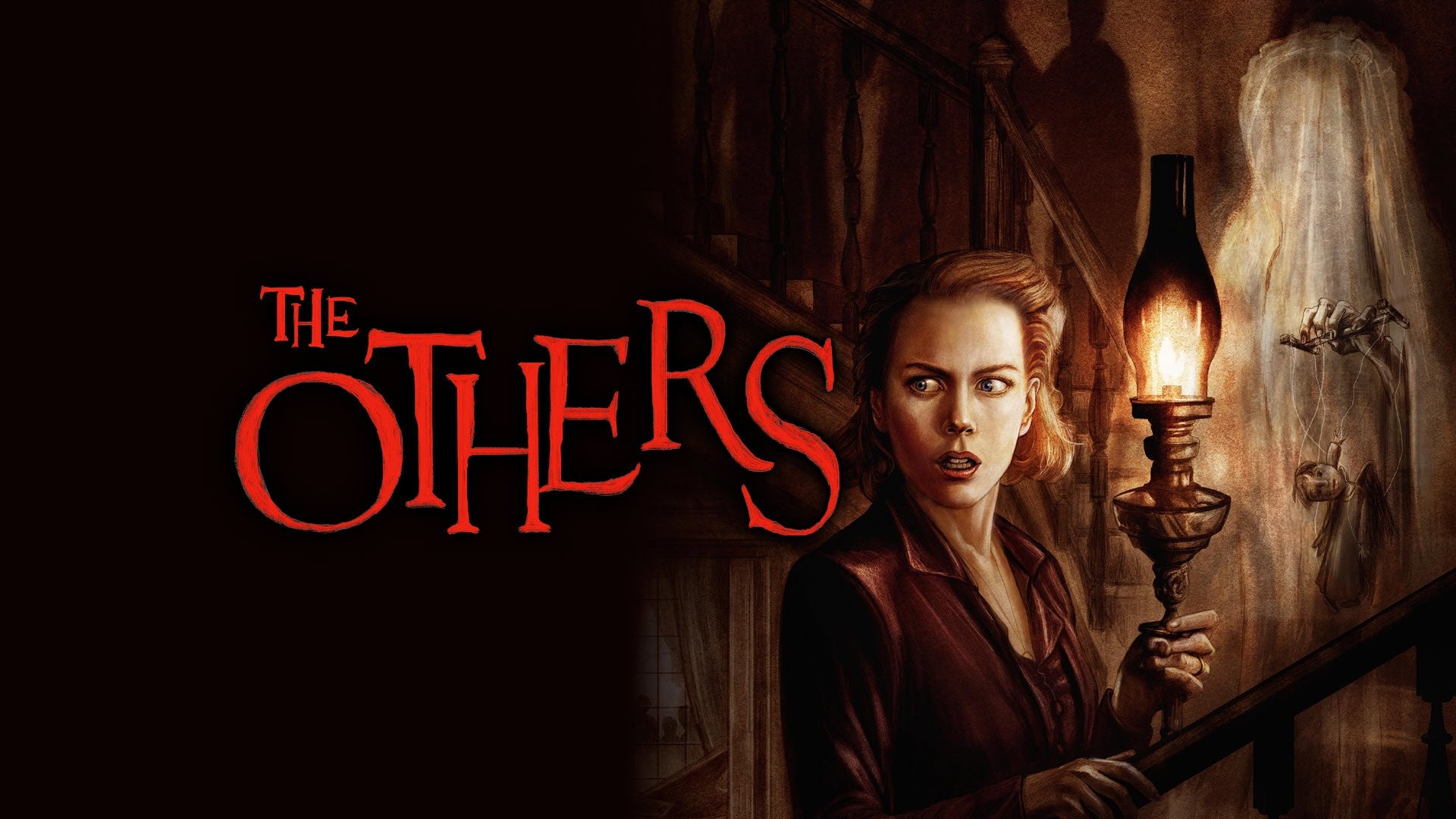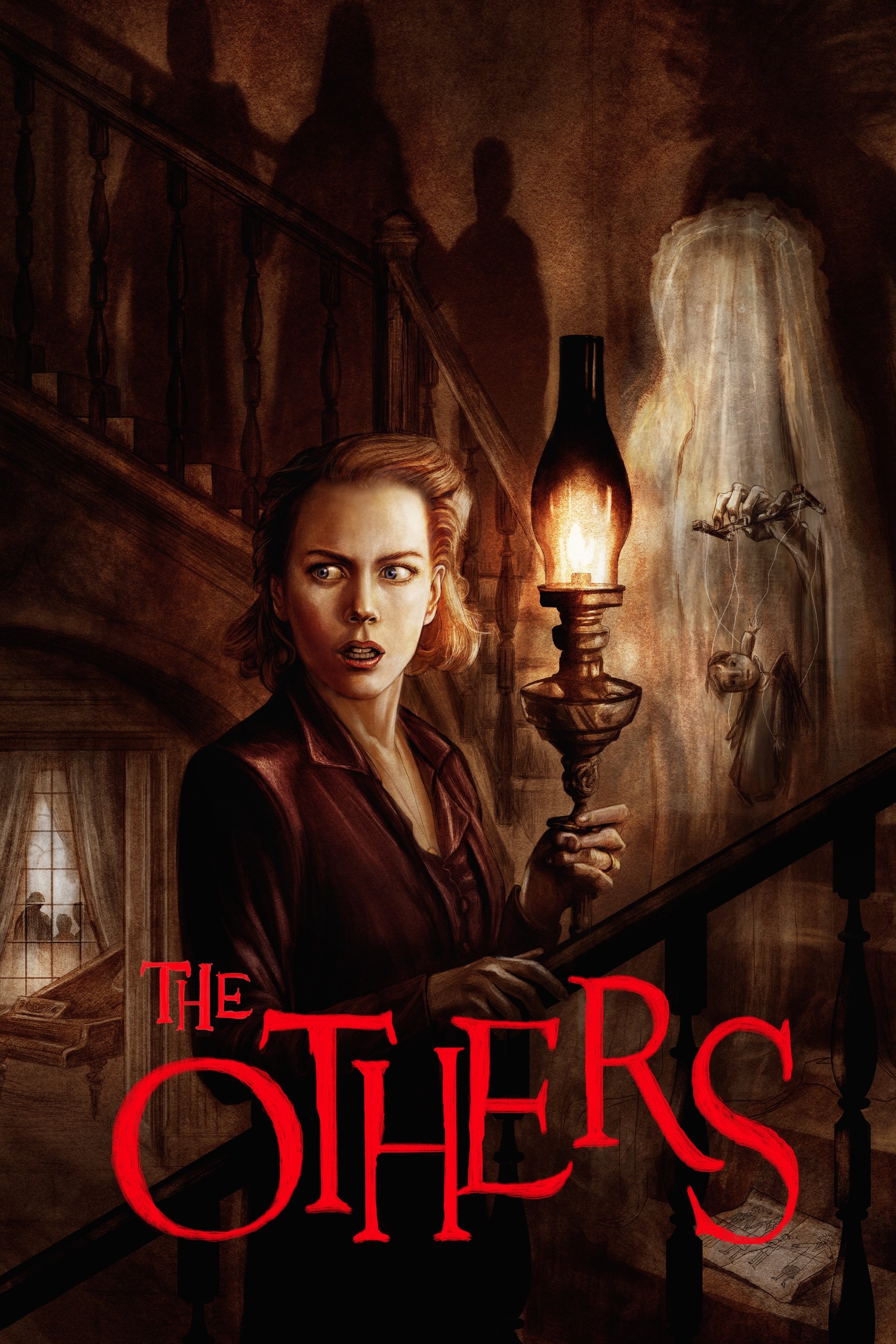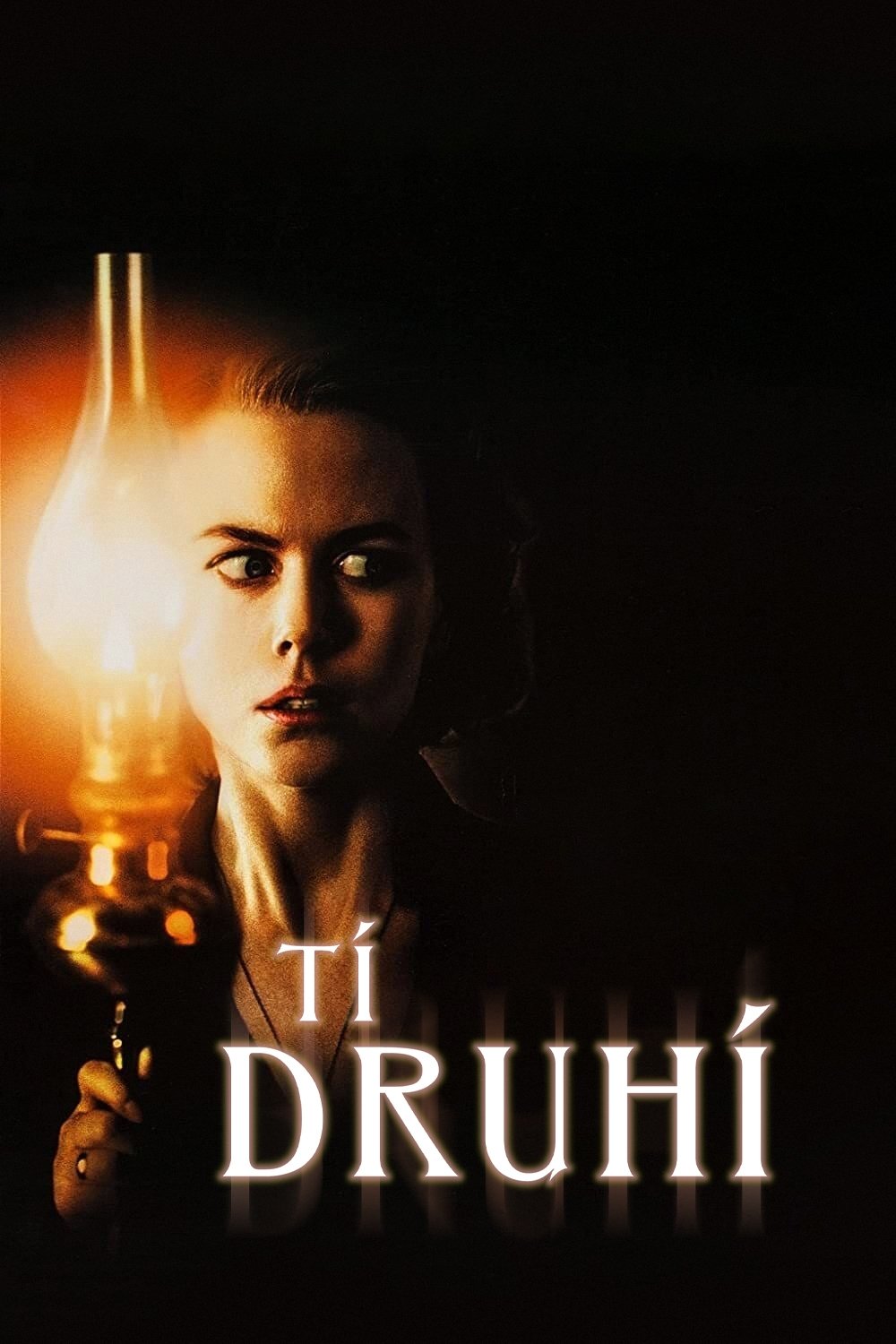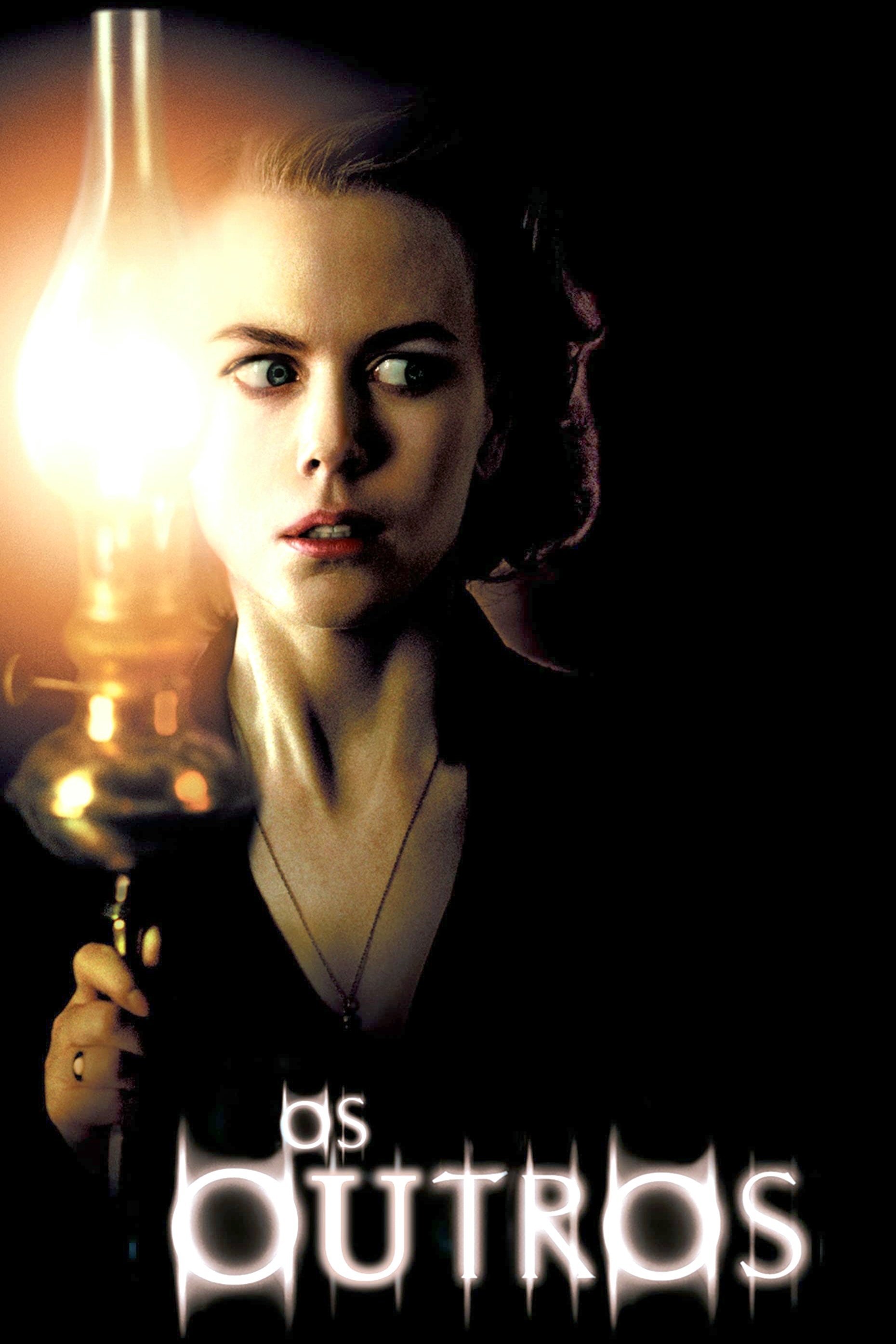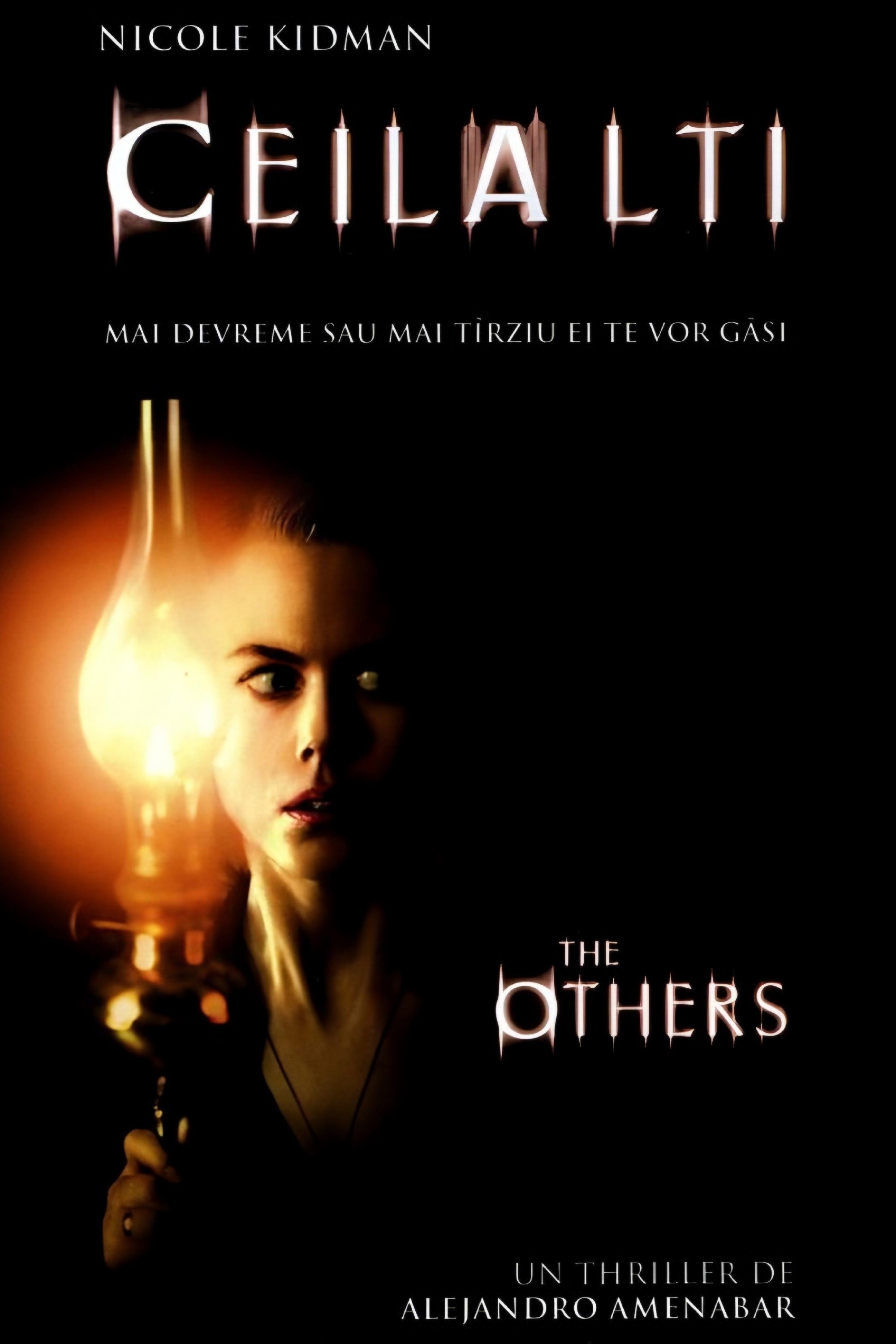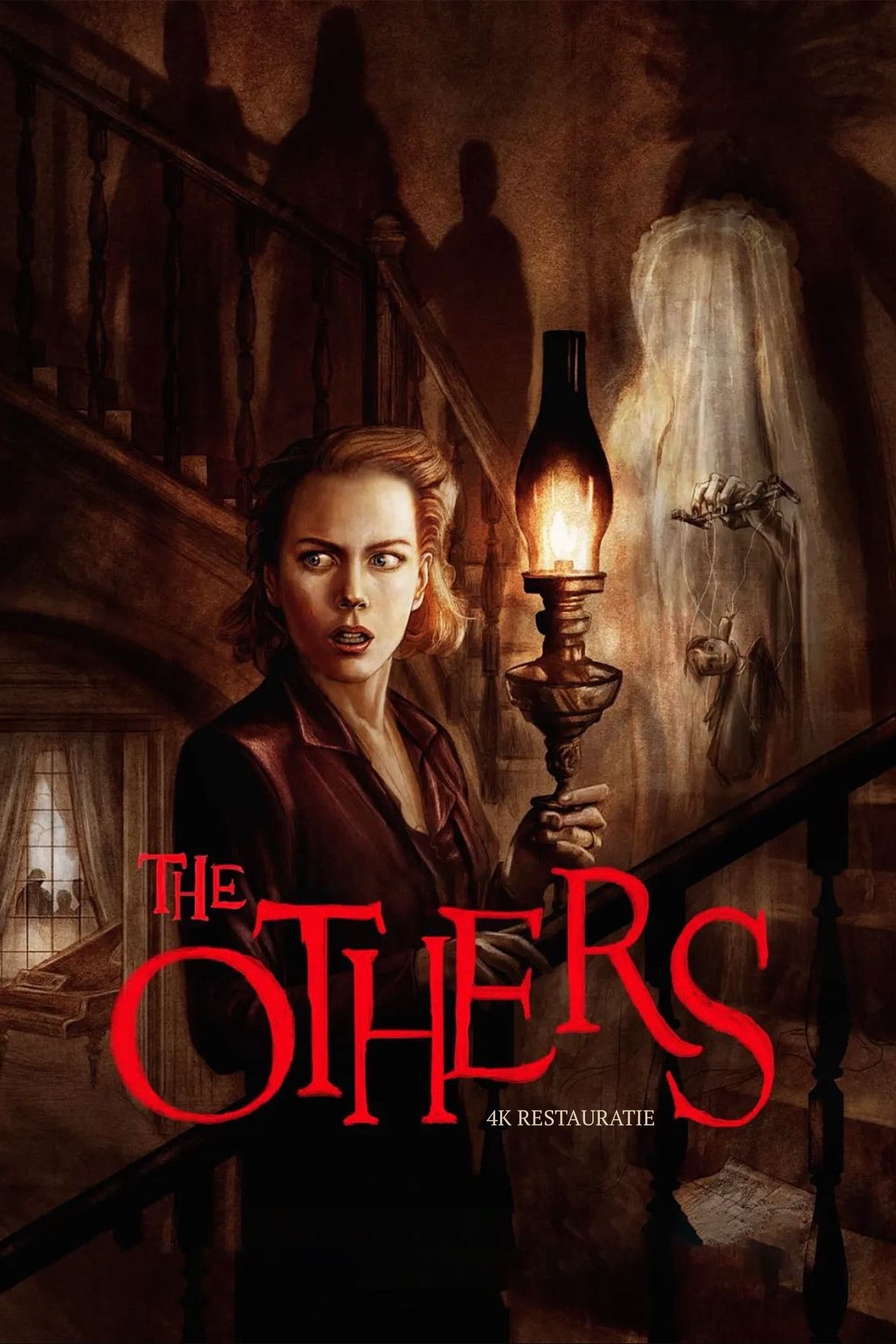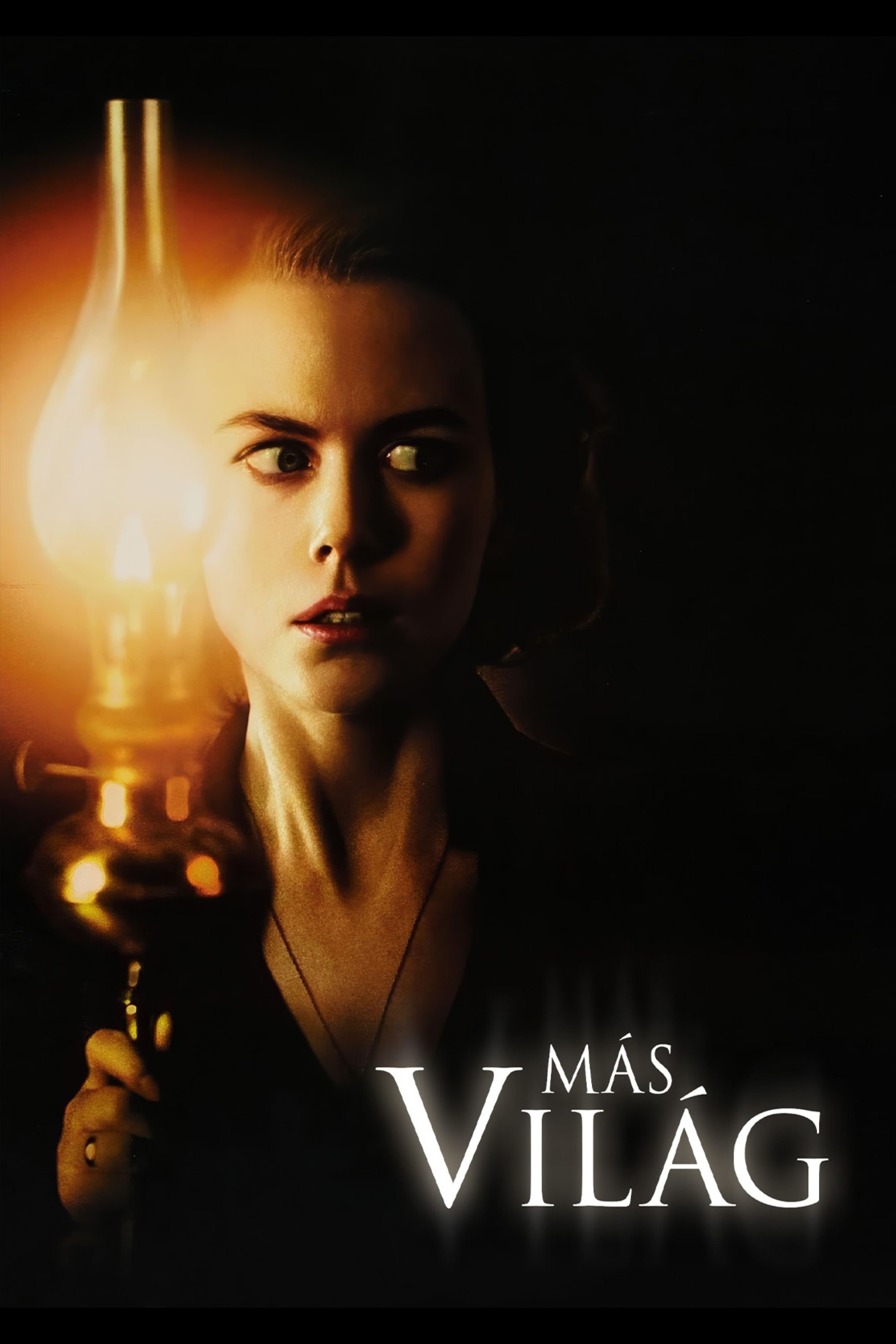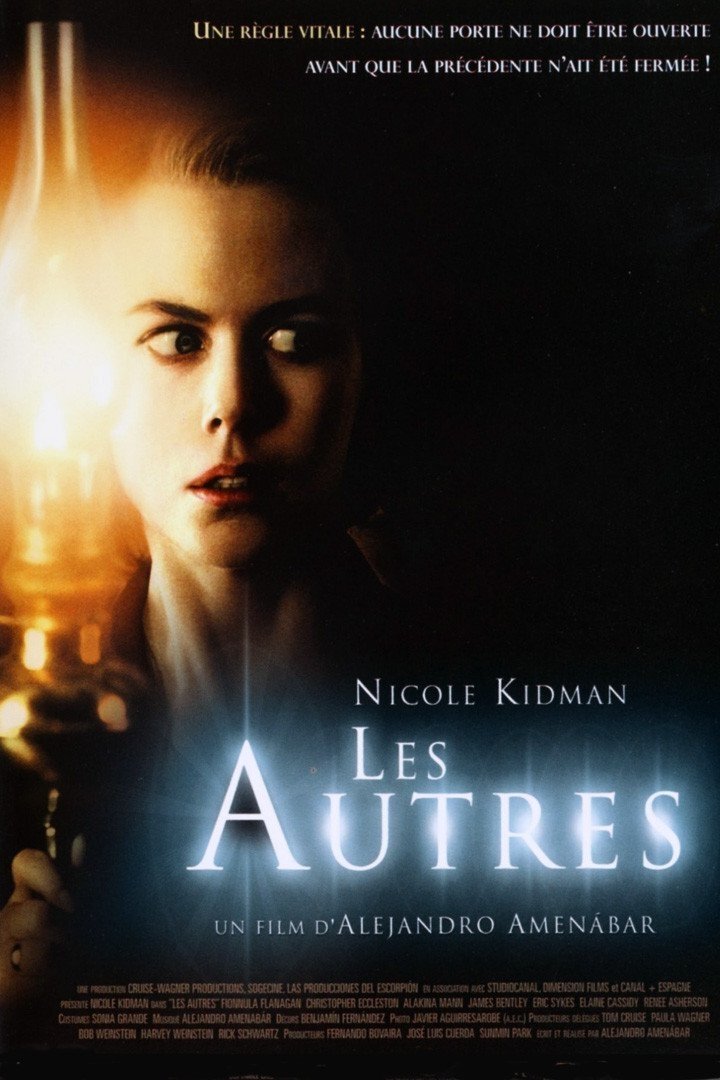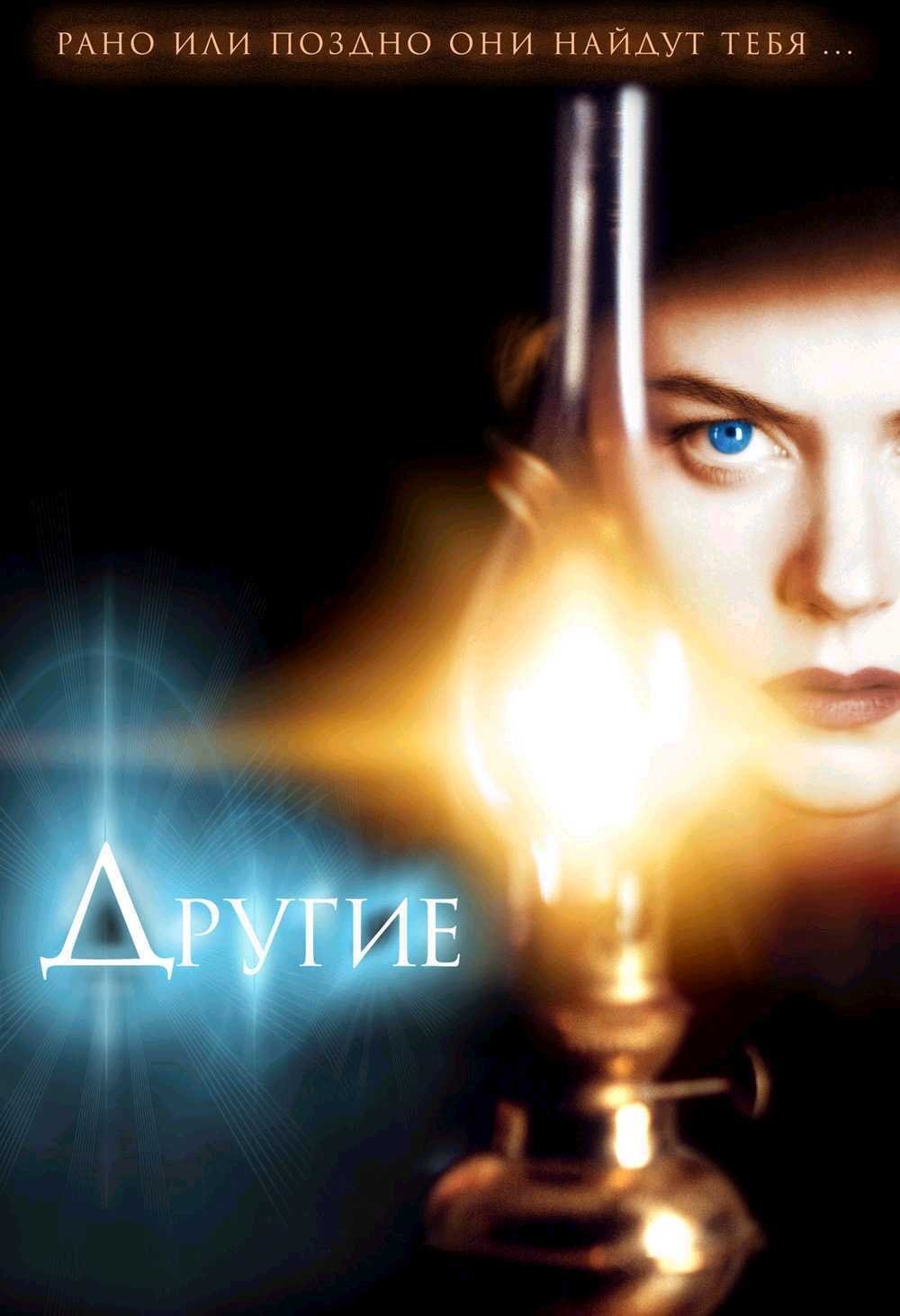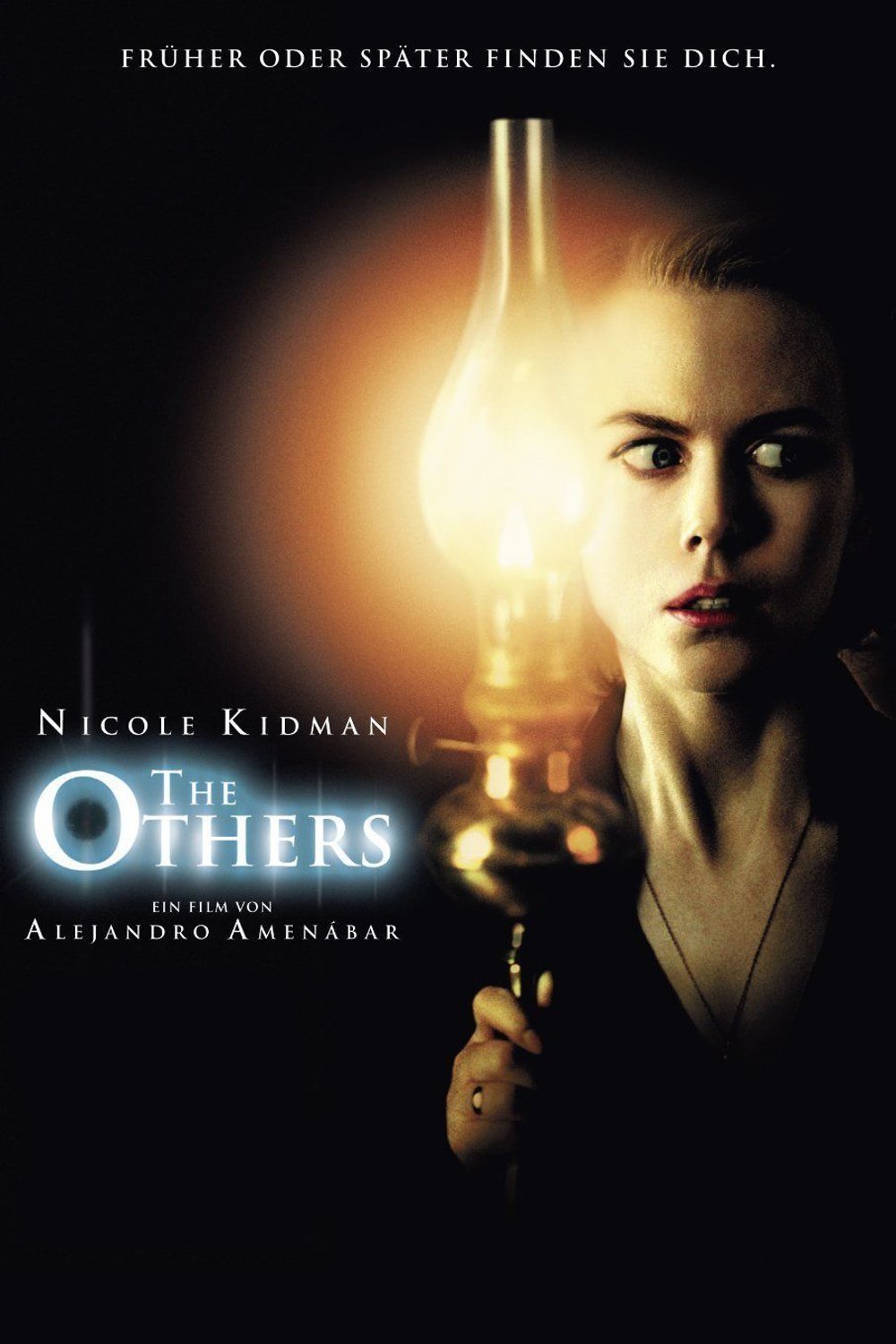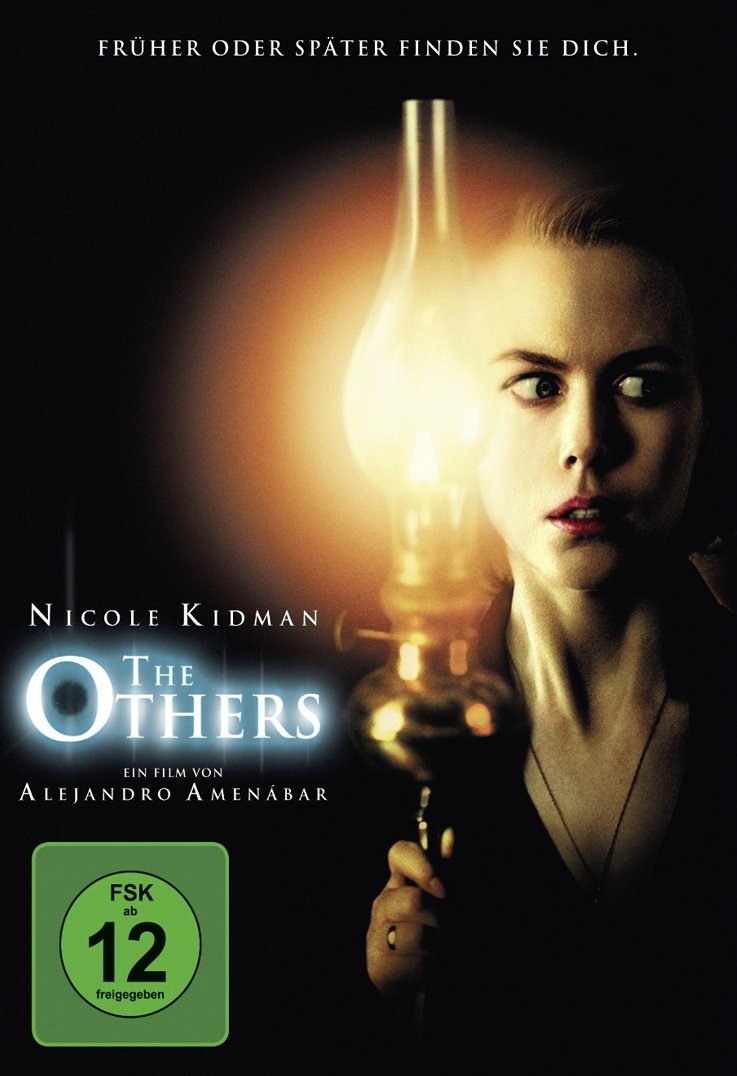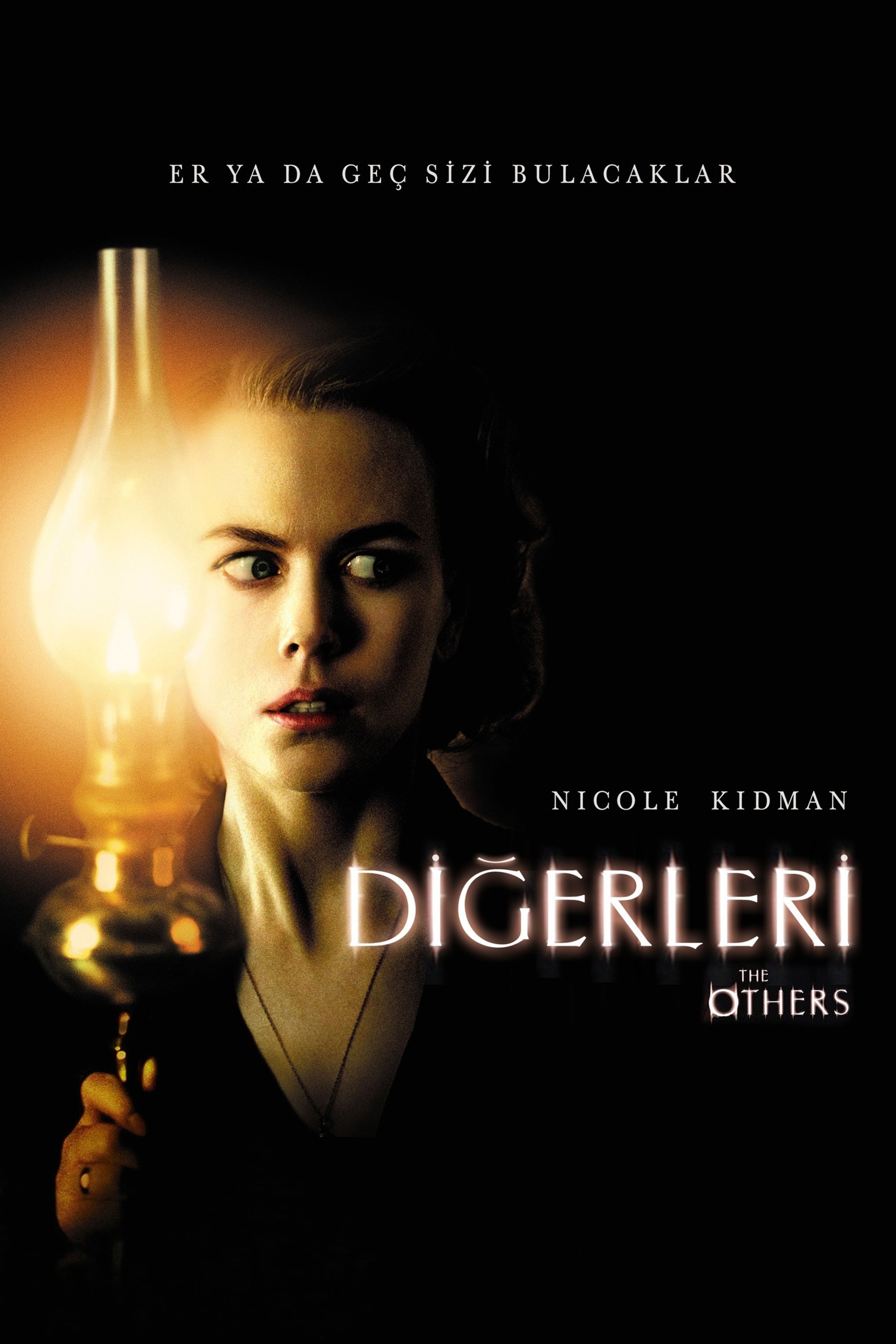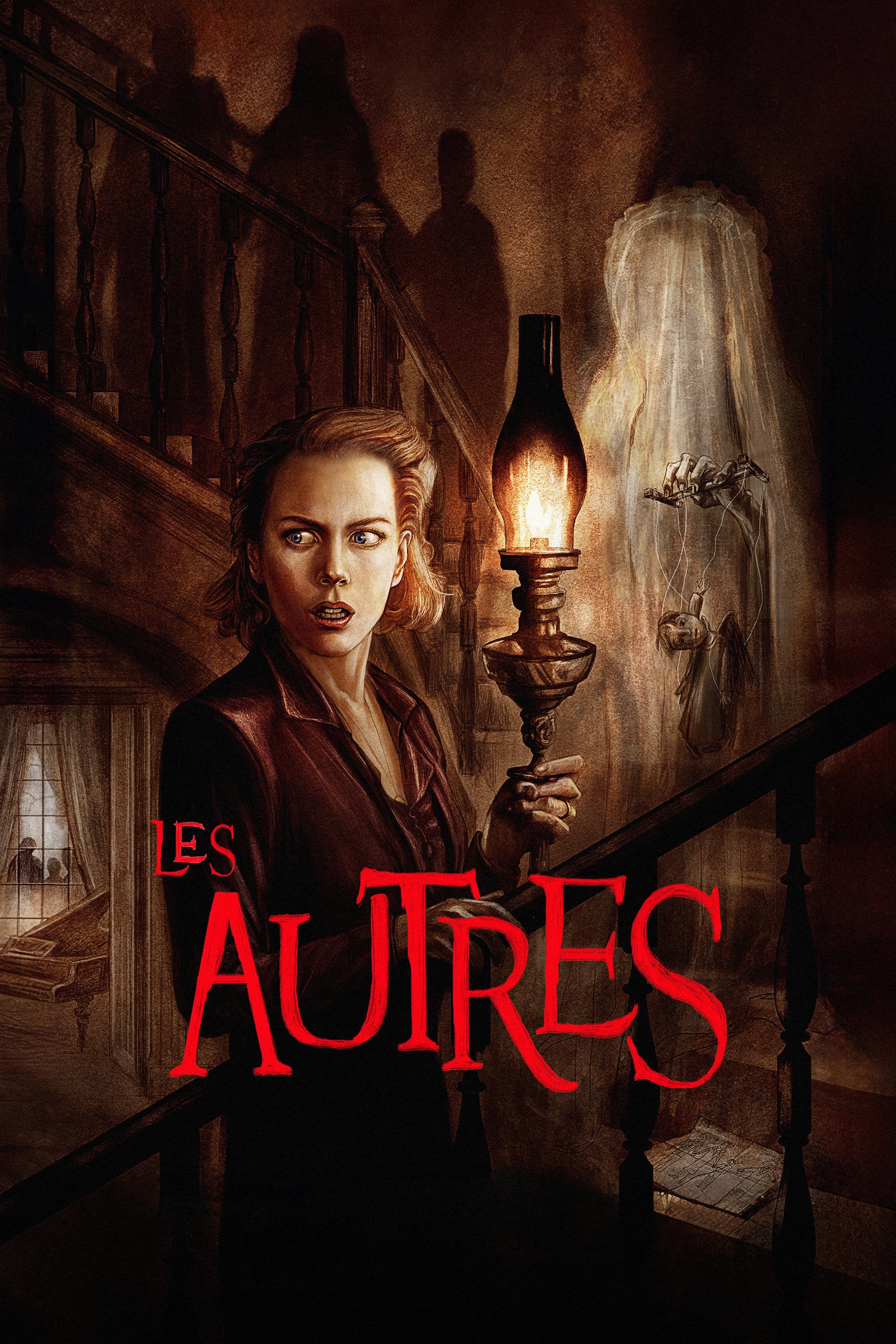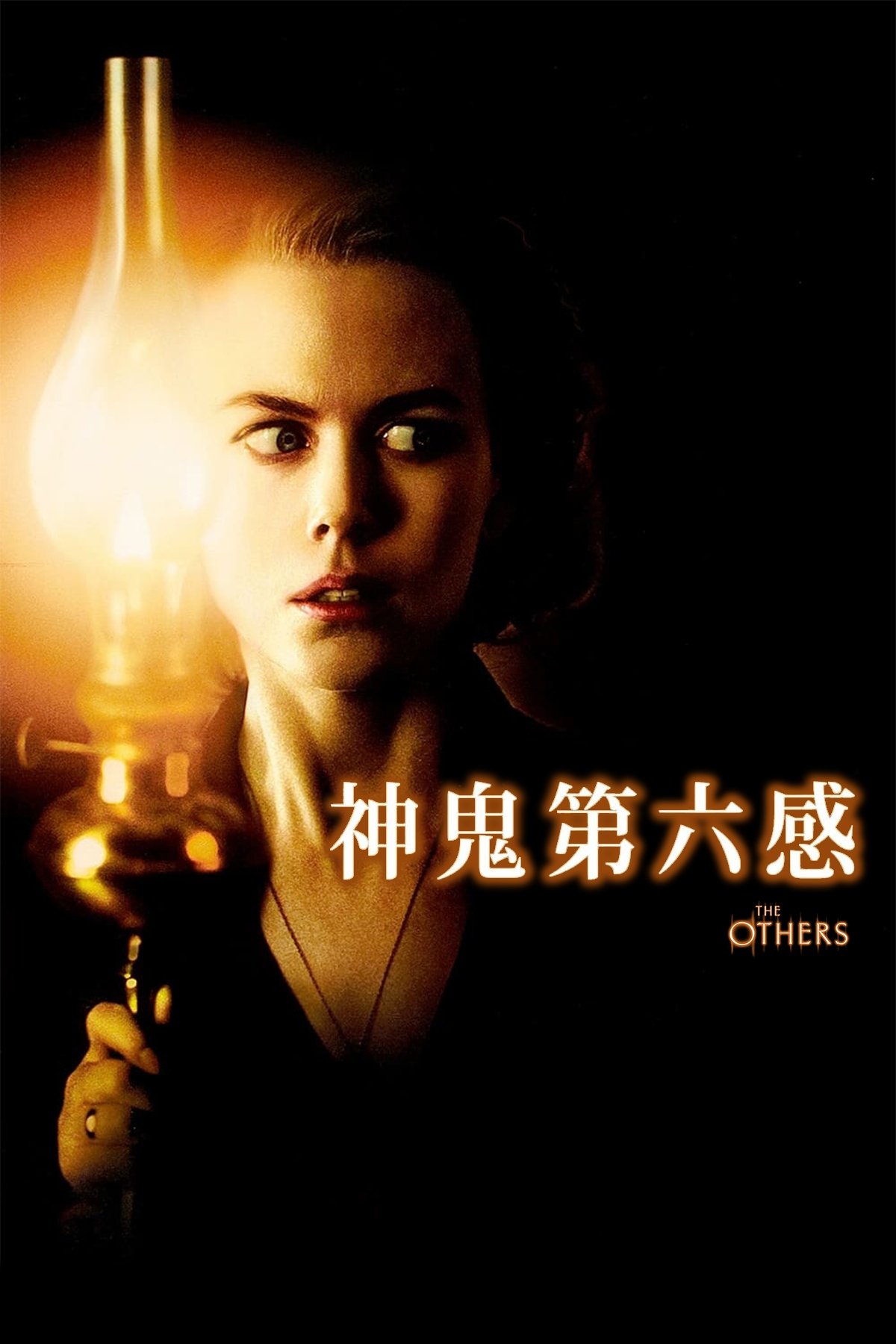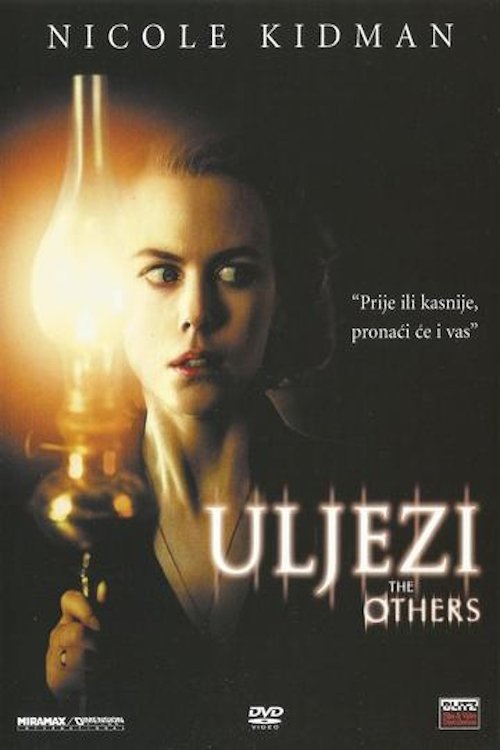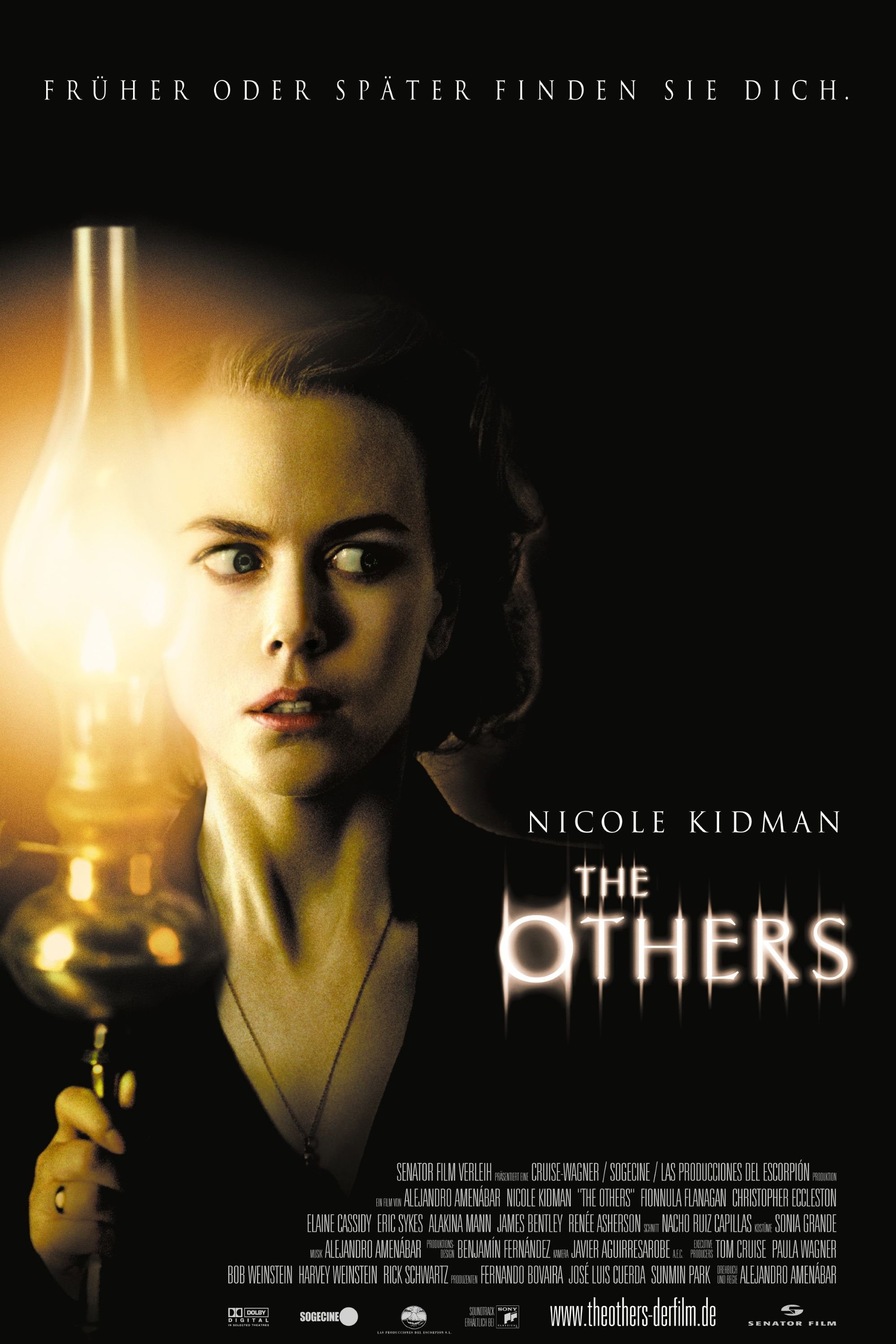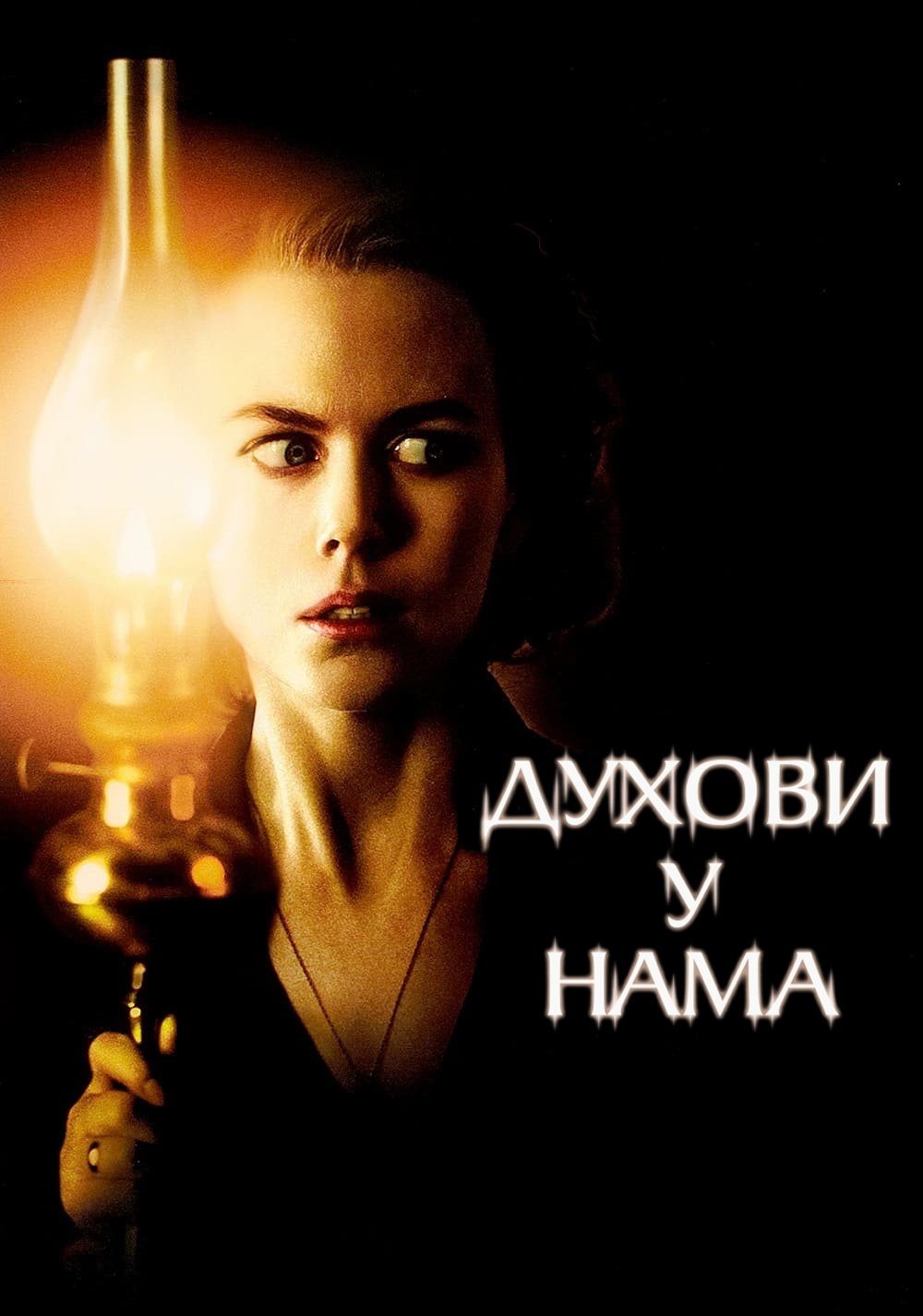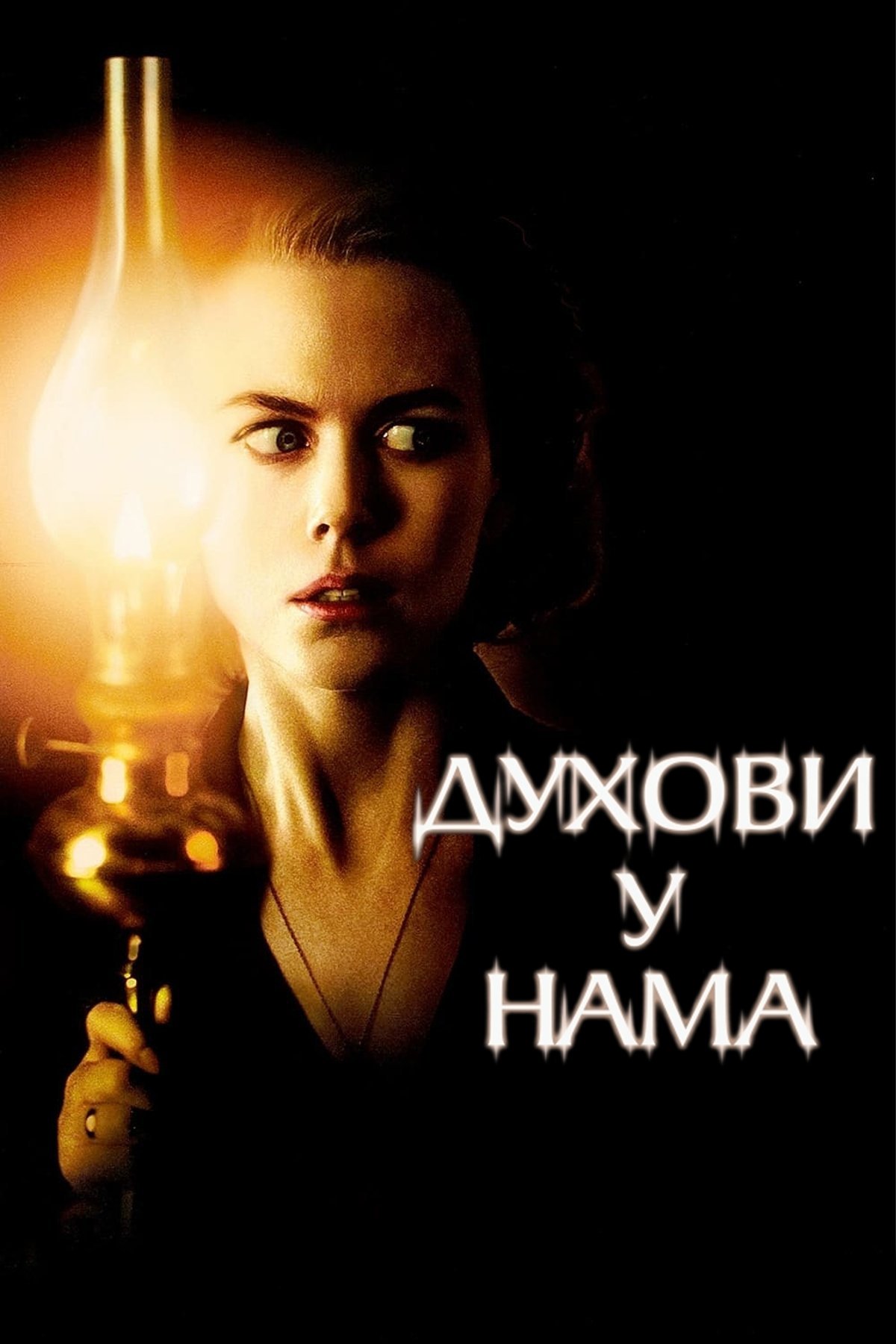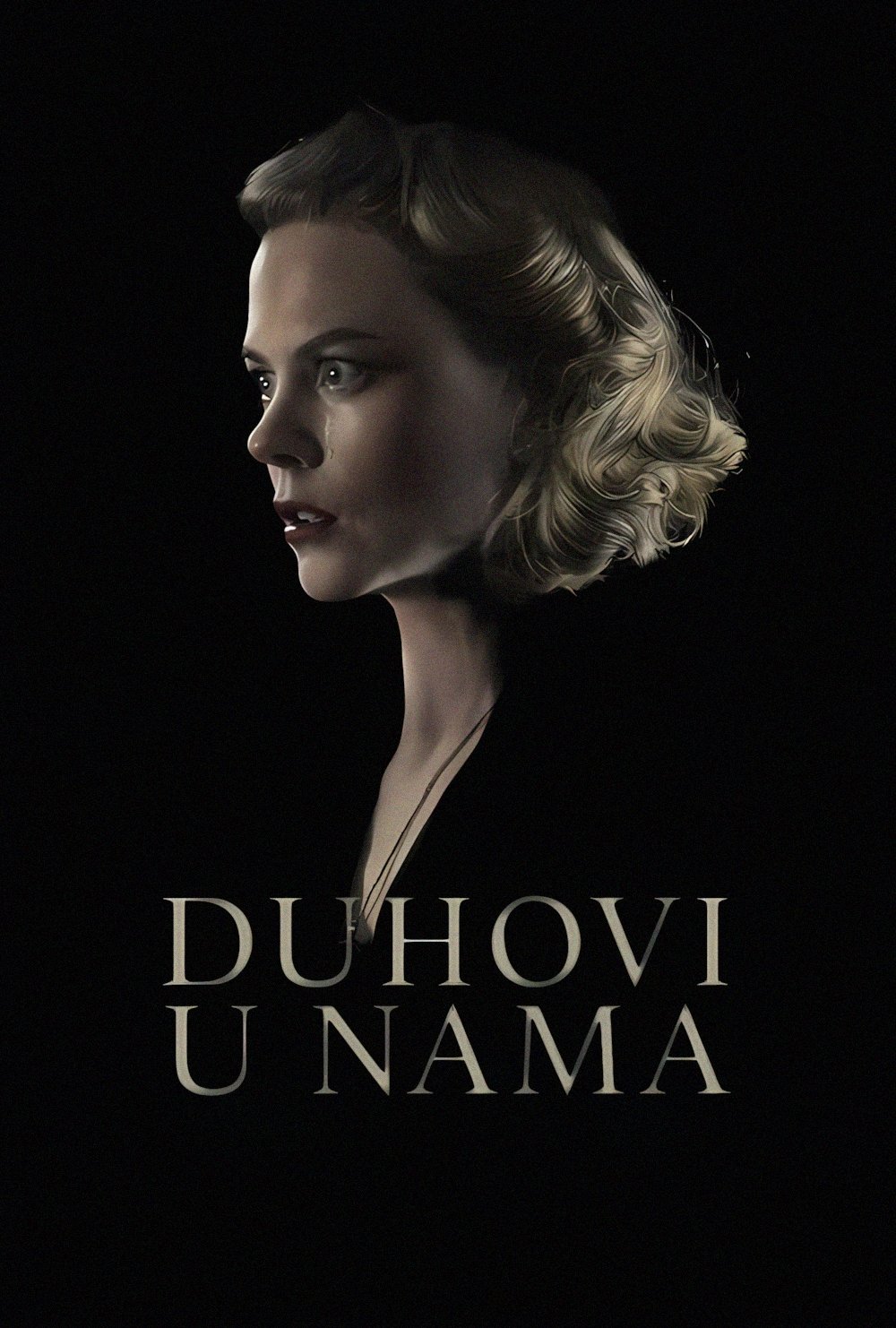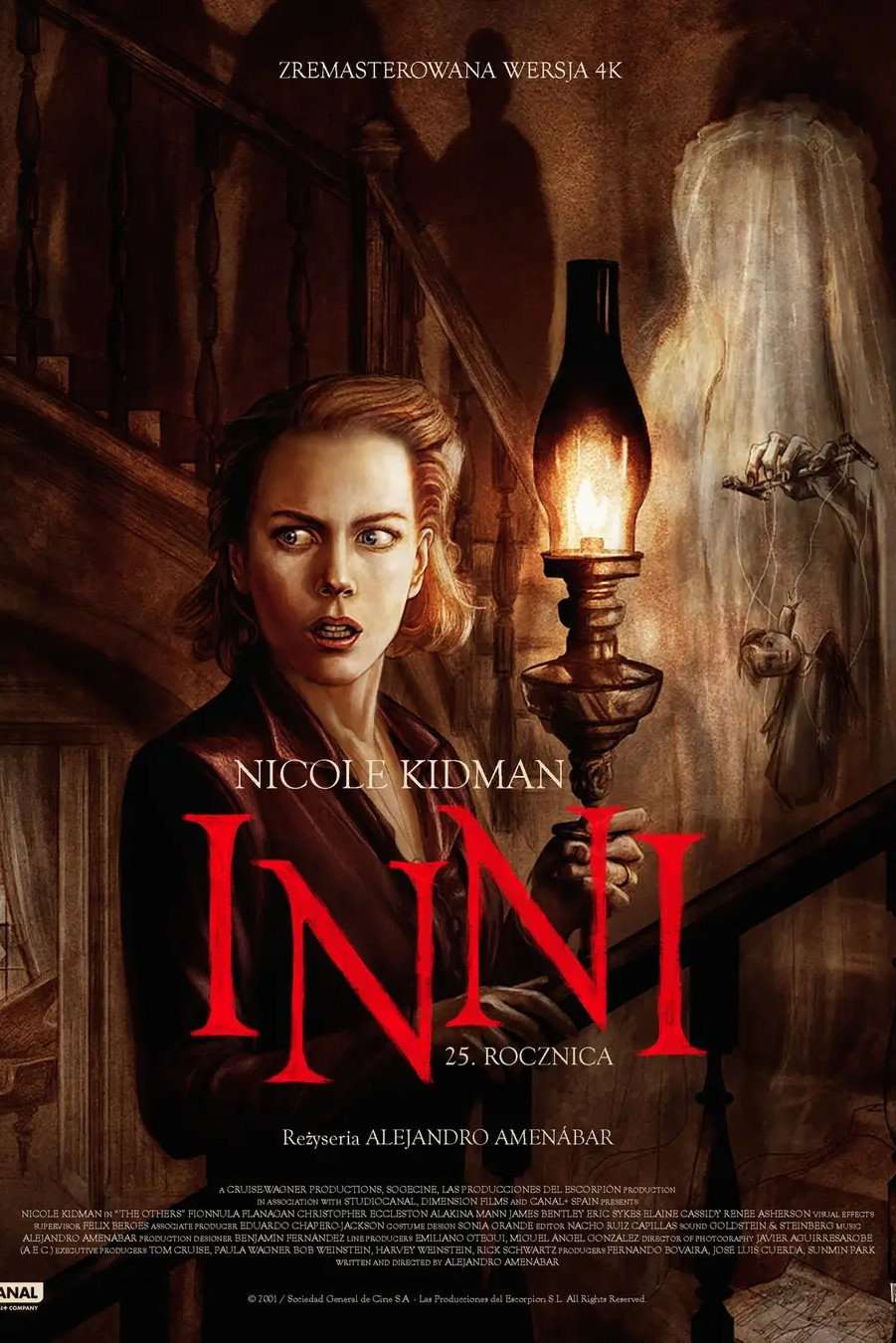
The Others (2001)

US
HORROR FILM Mystery Thriller Drama
SUBGENRES GHOST HAUNTED HOUSES
5.1/10 7 votes
Runtime
101 min
Release
August 2, 2001
Budget
$17,000,000
Revenue
$210,002,906
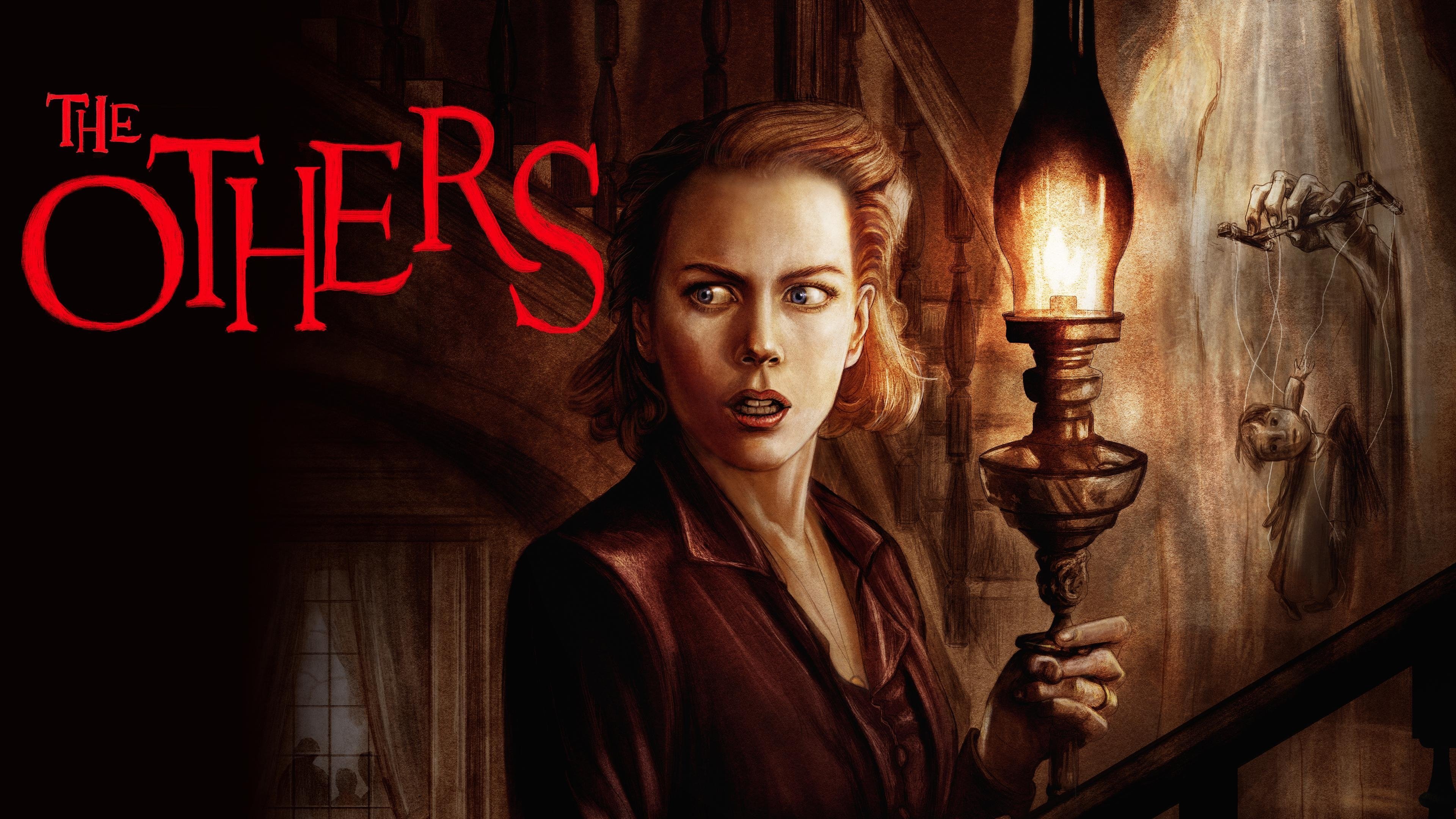
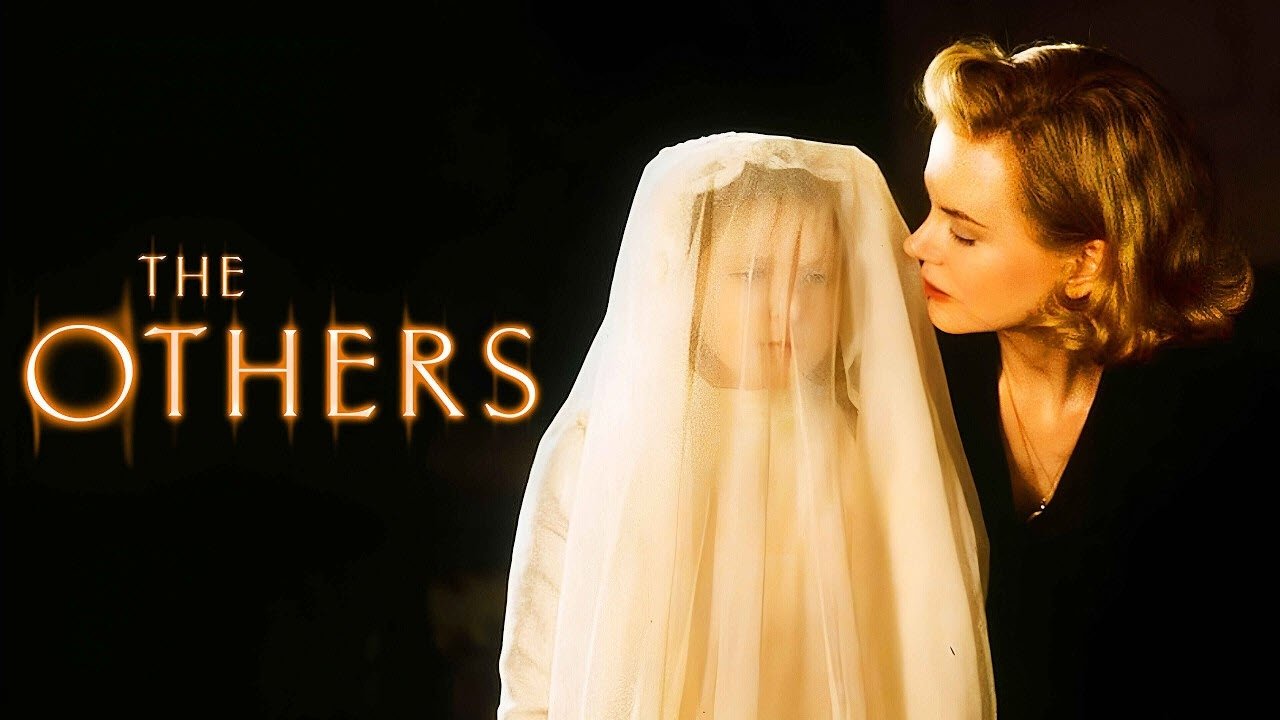
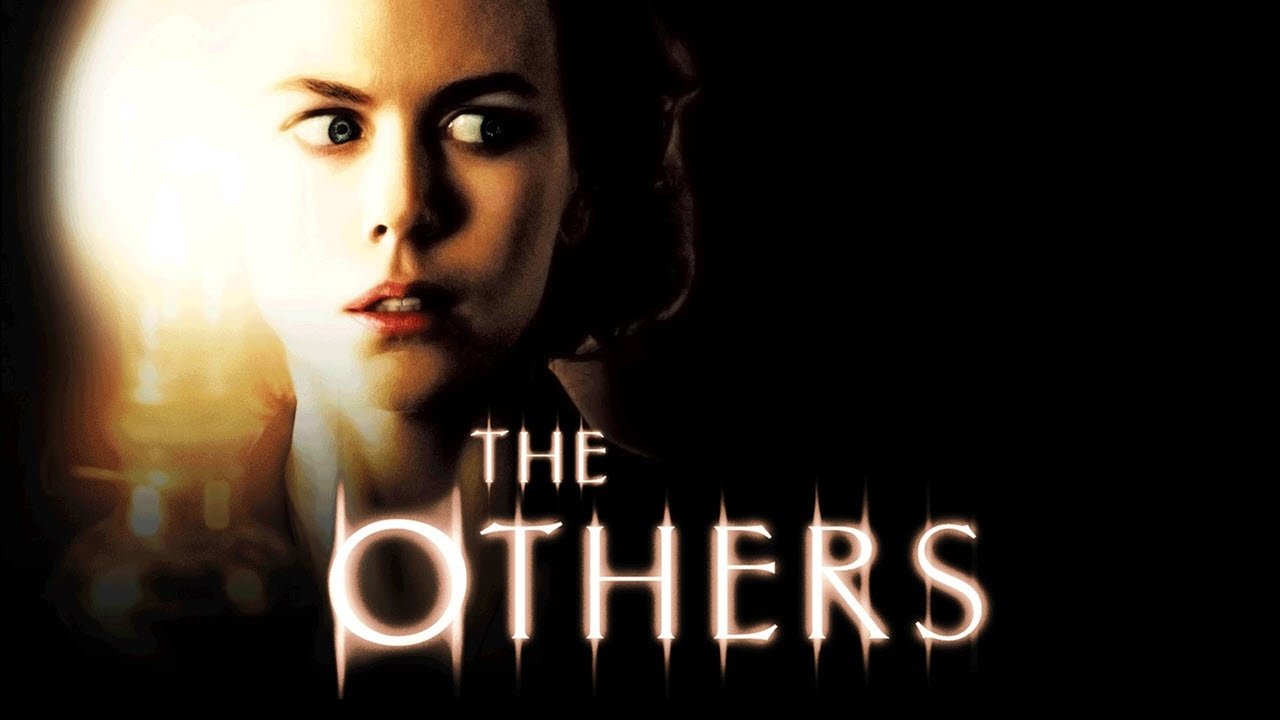
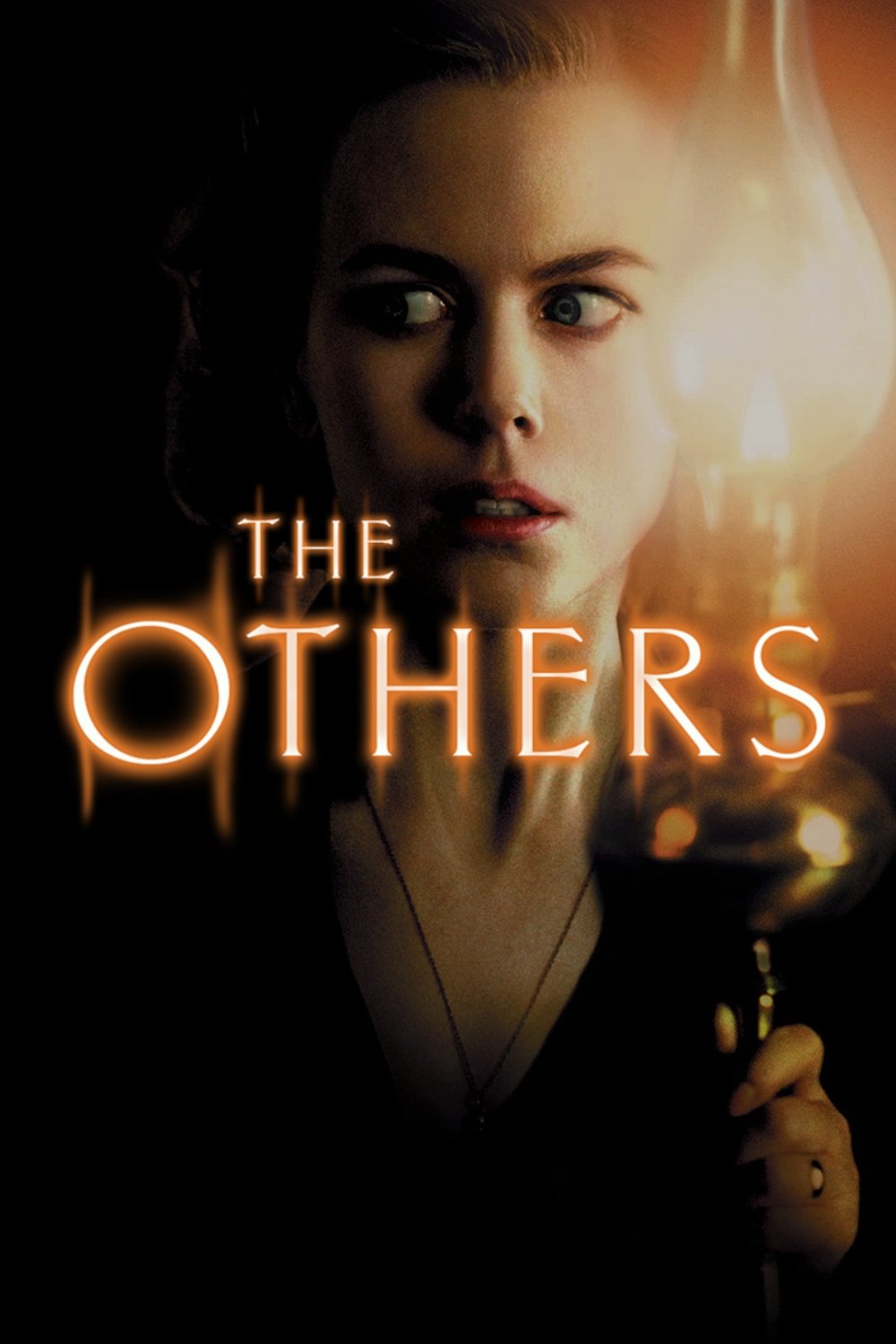
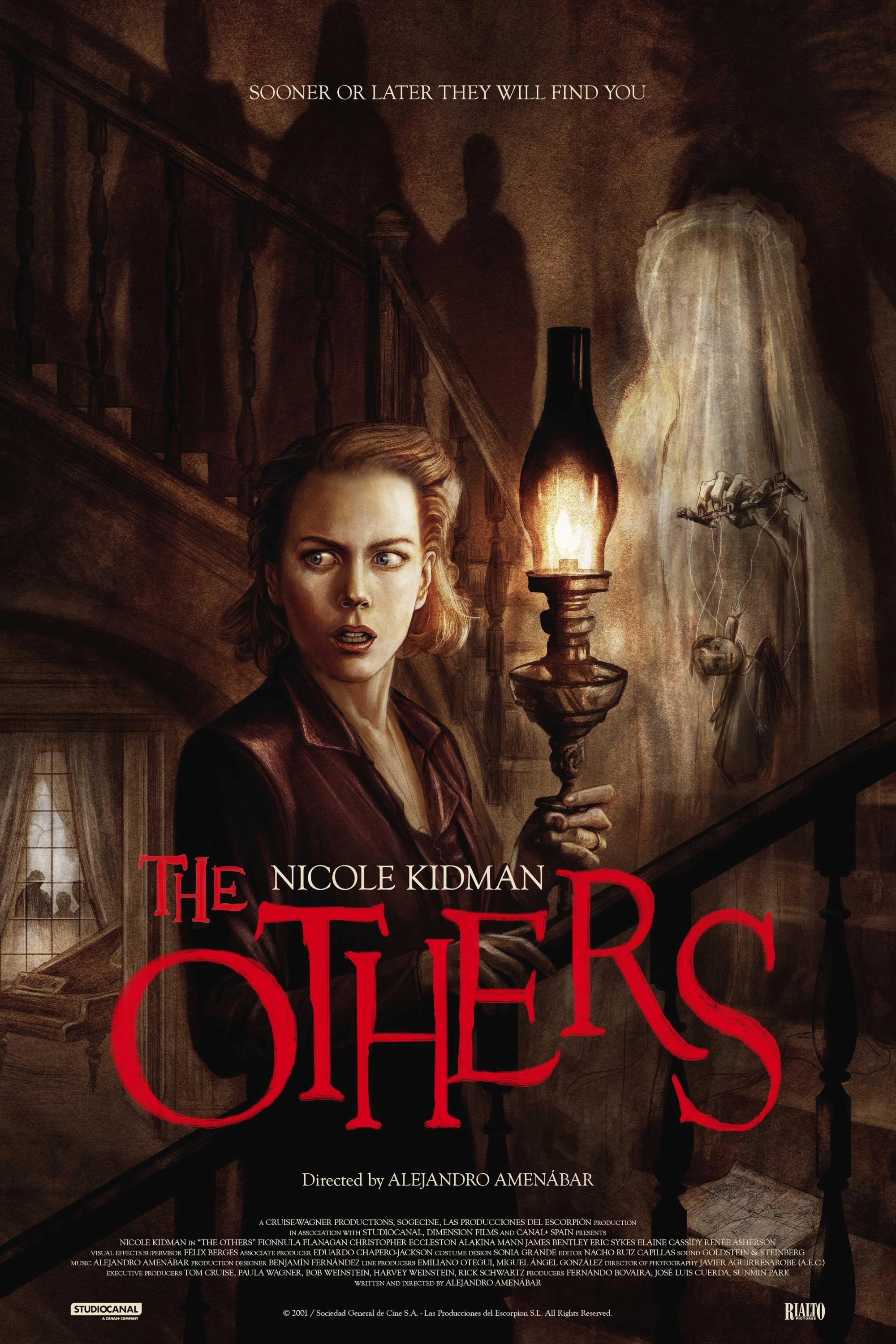
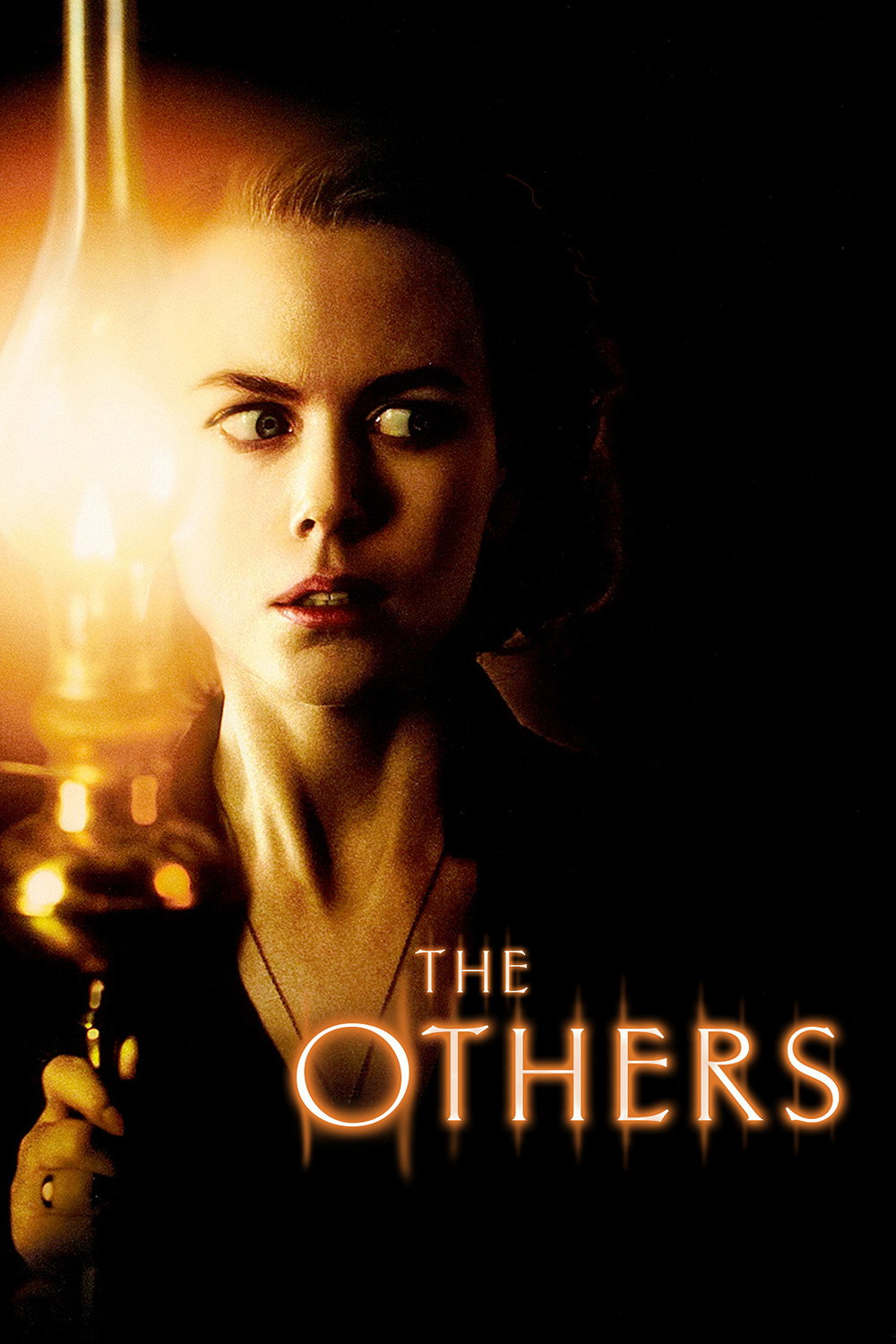
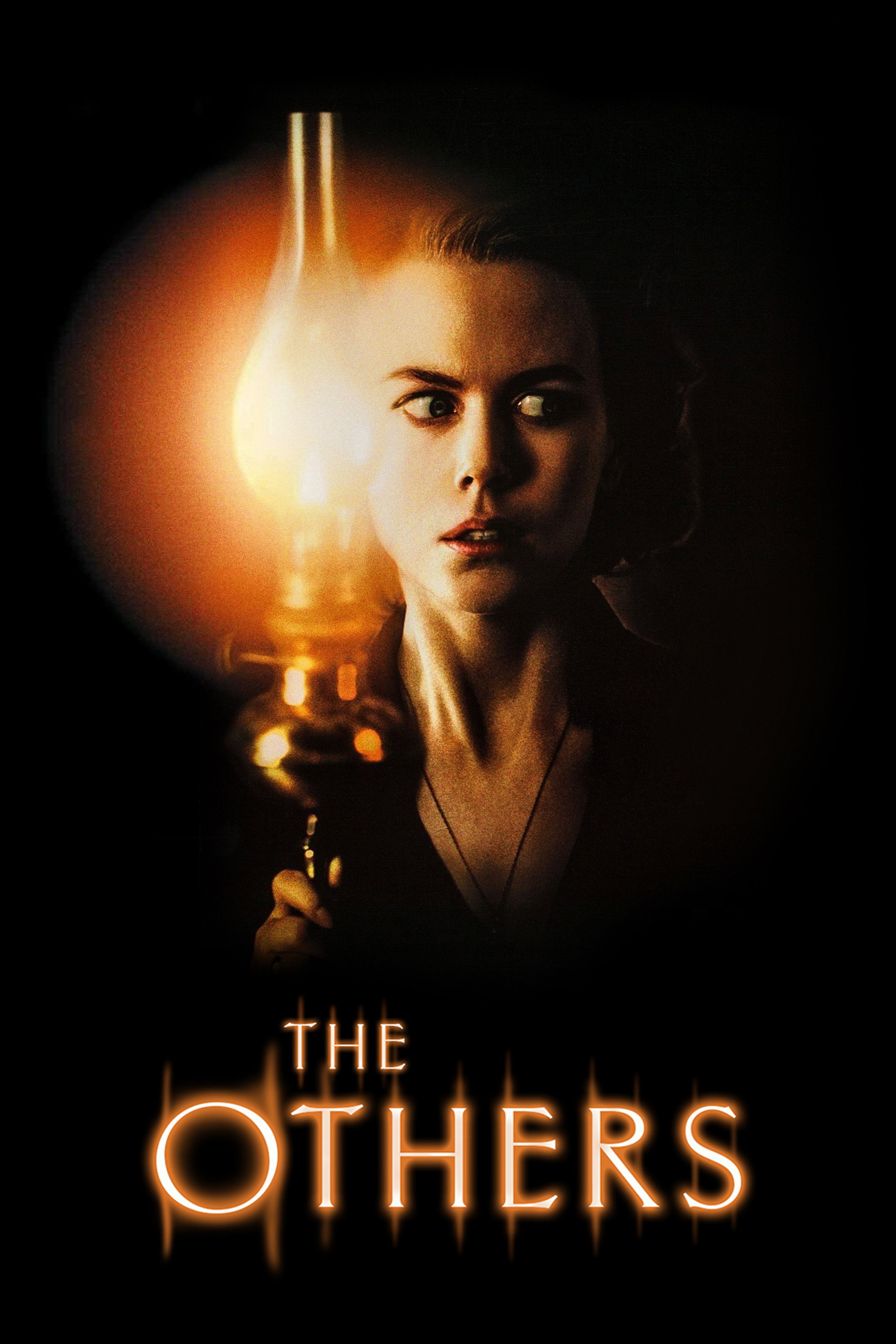
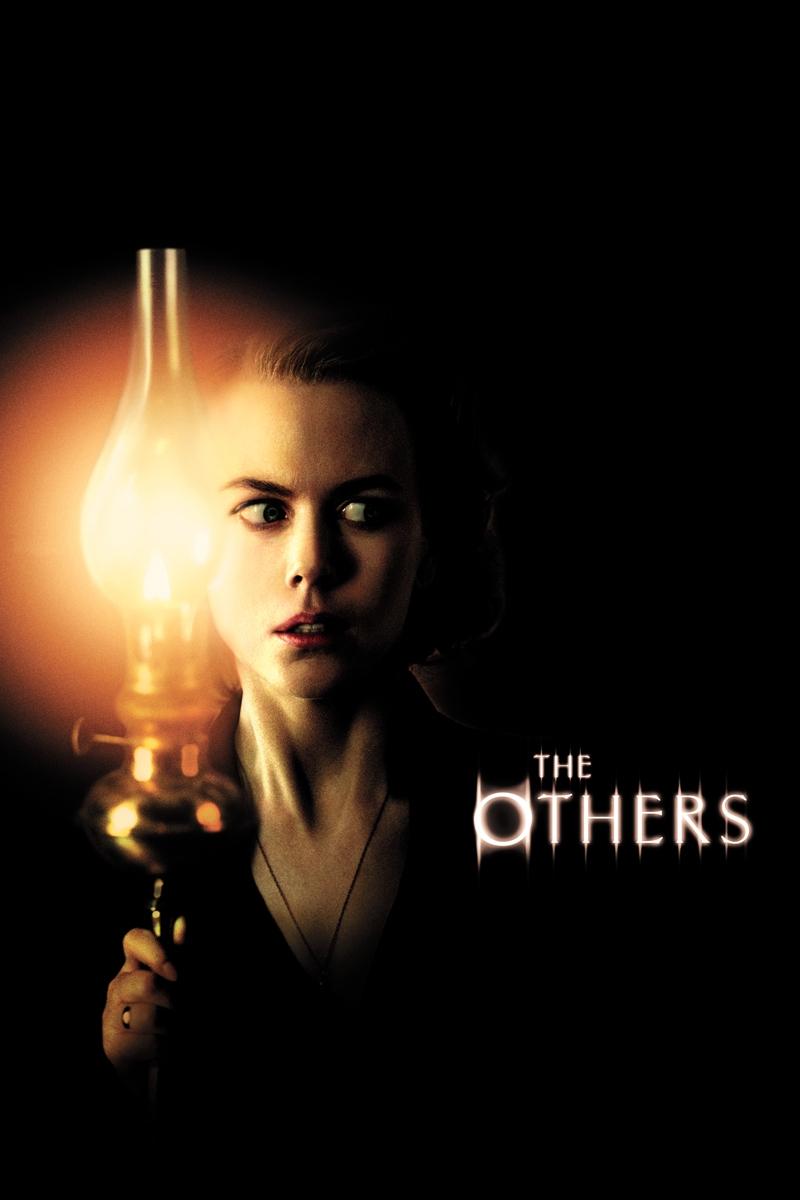
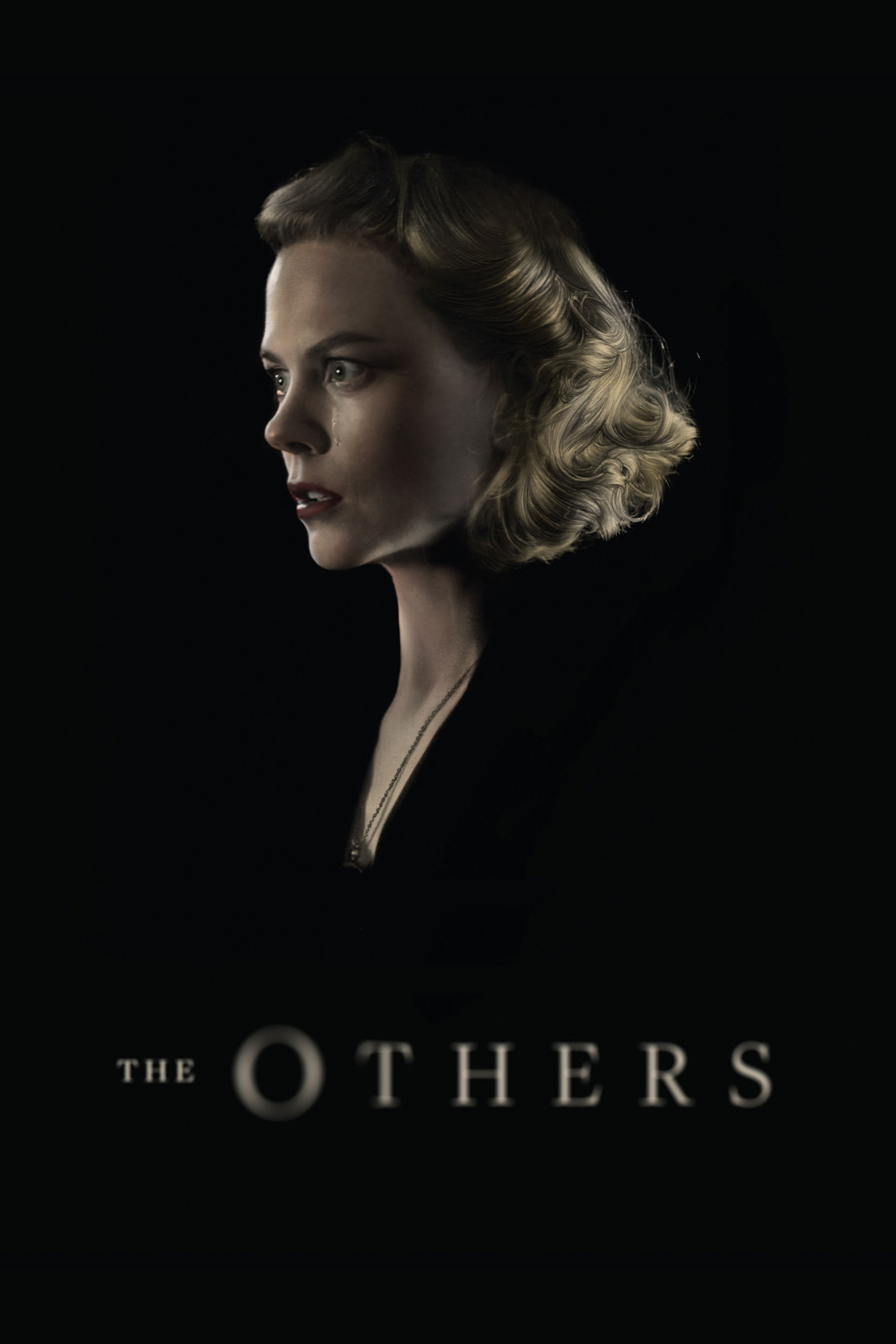
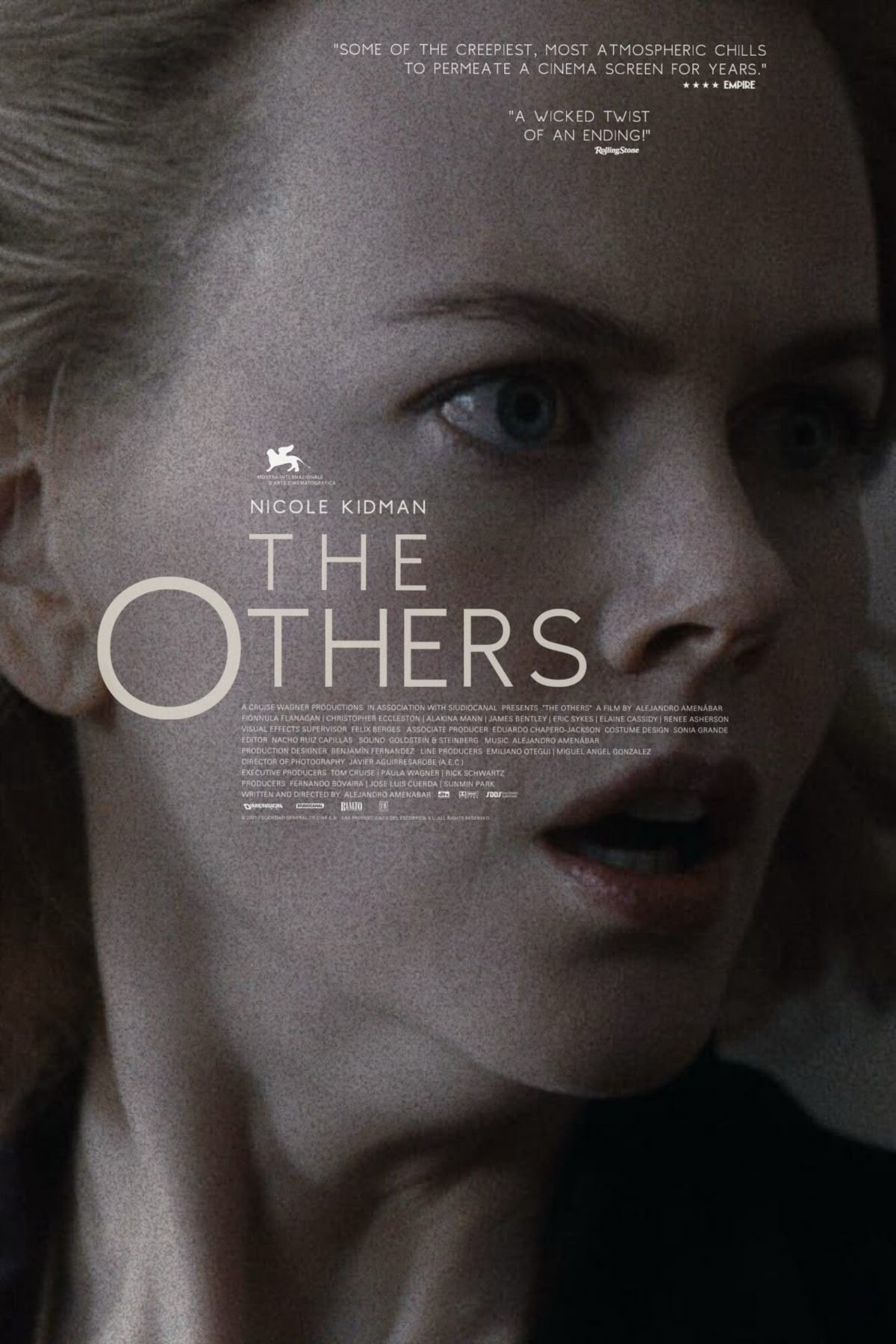
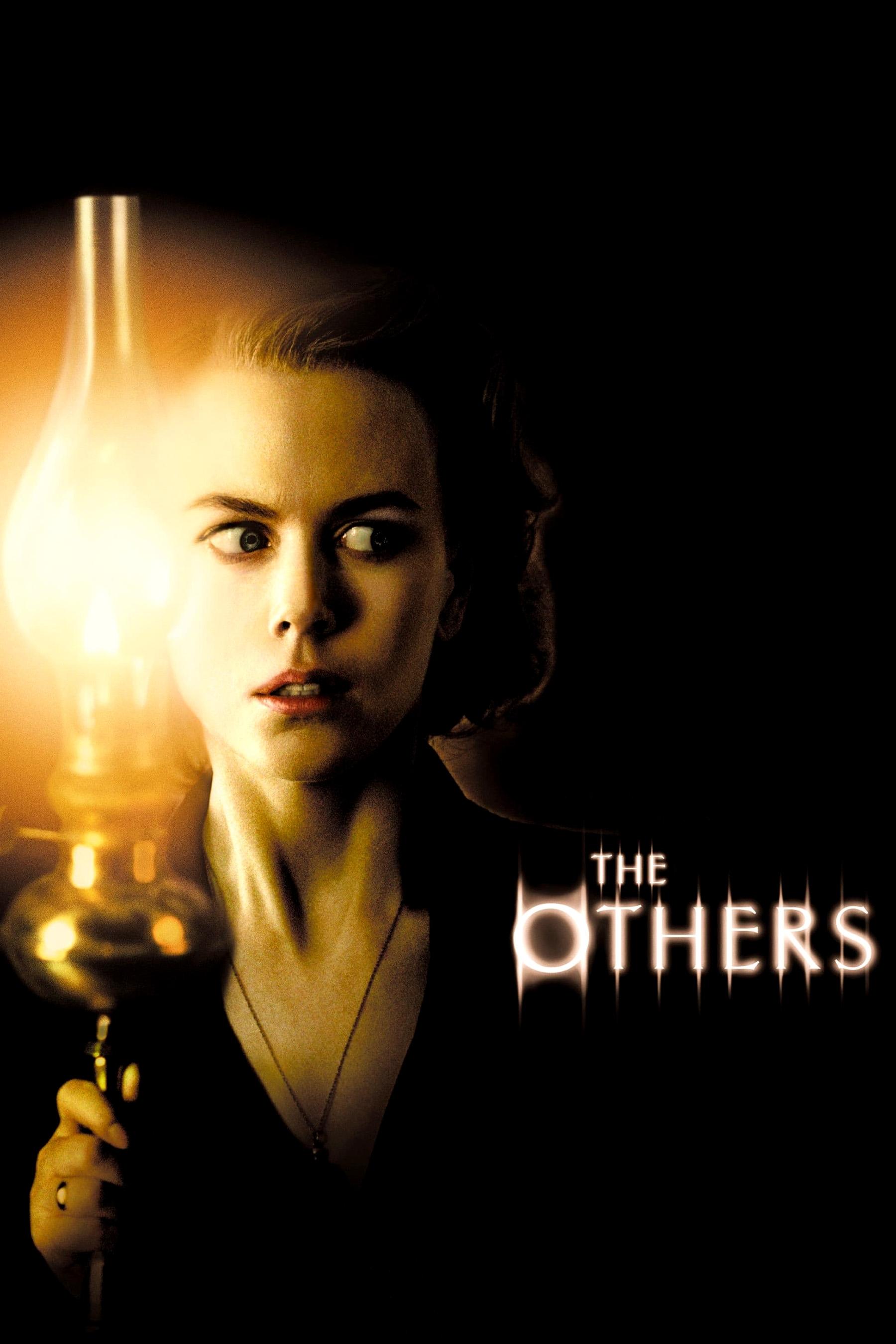
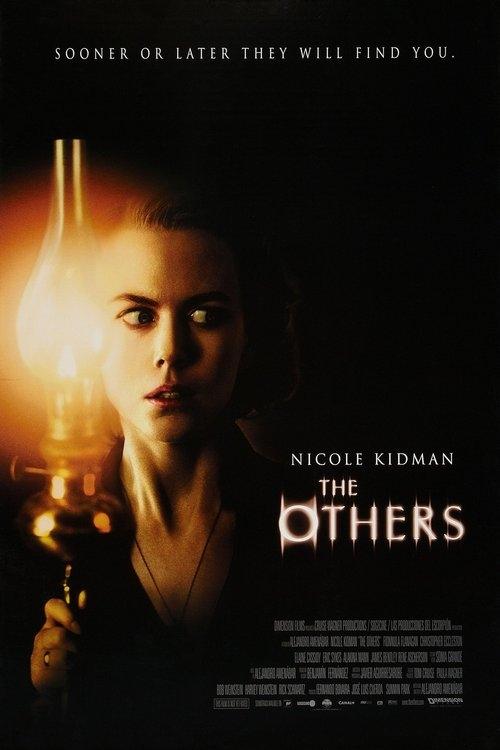
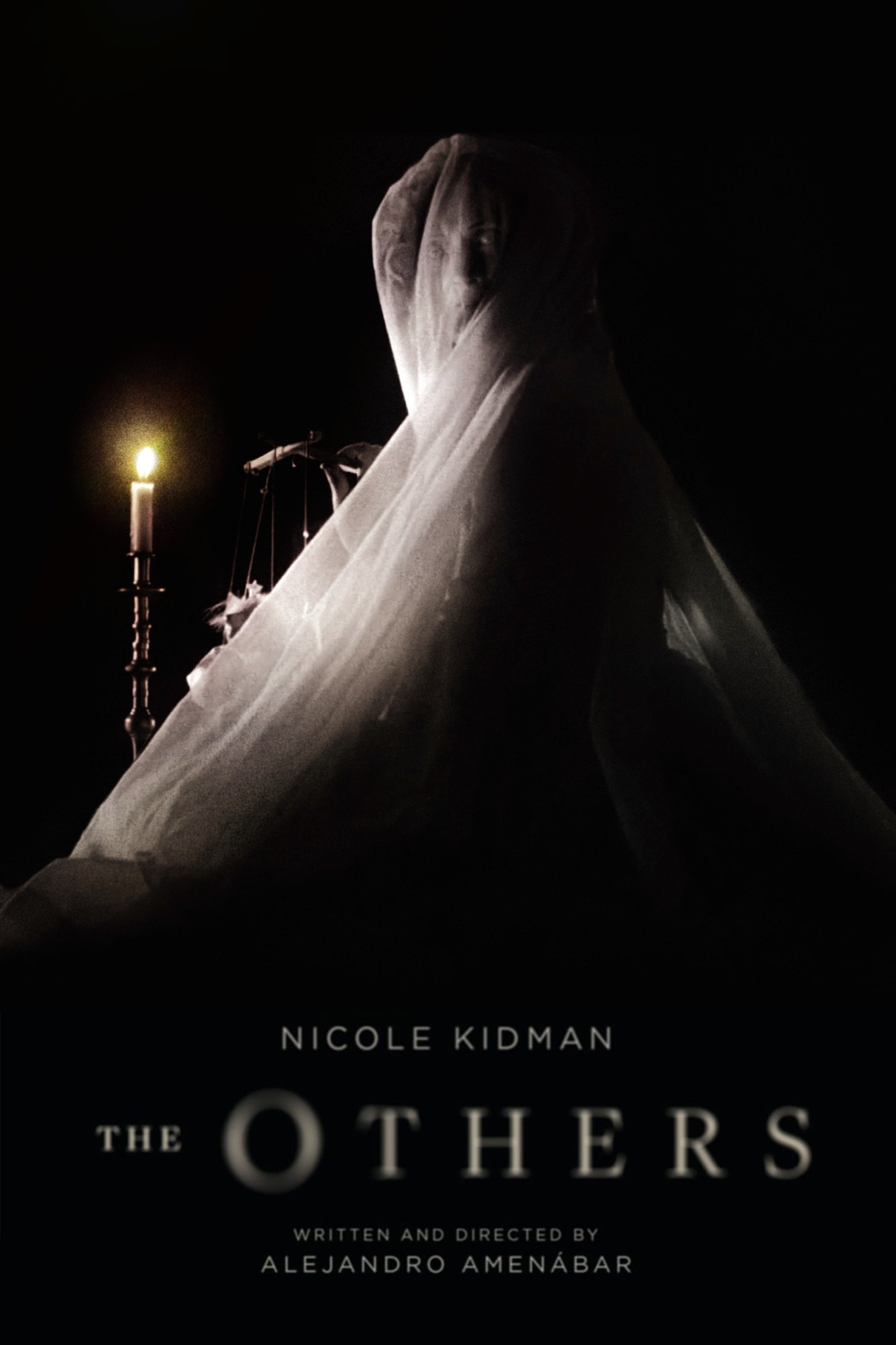
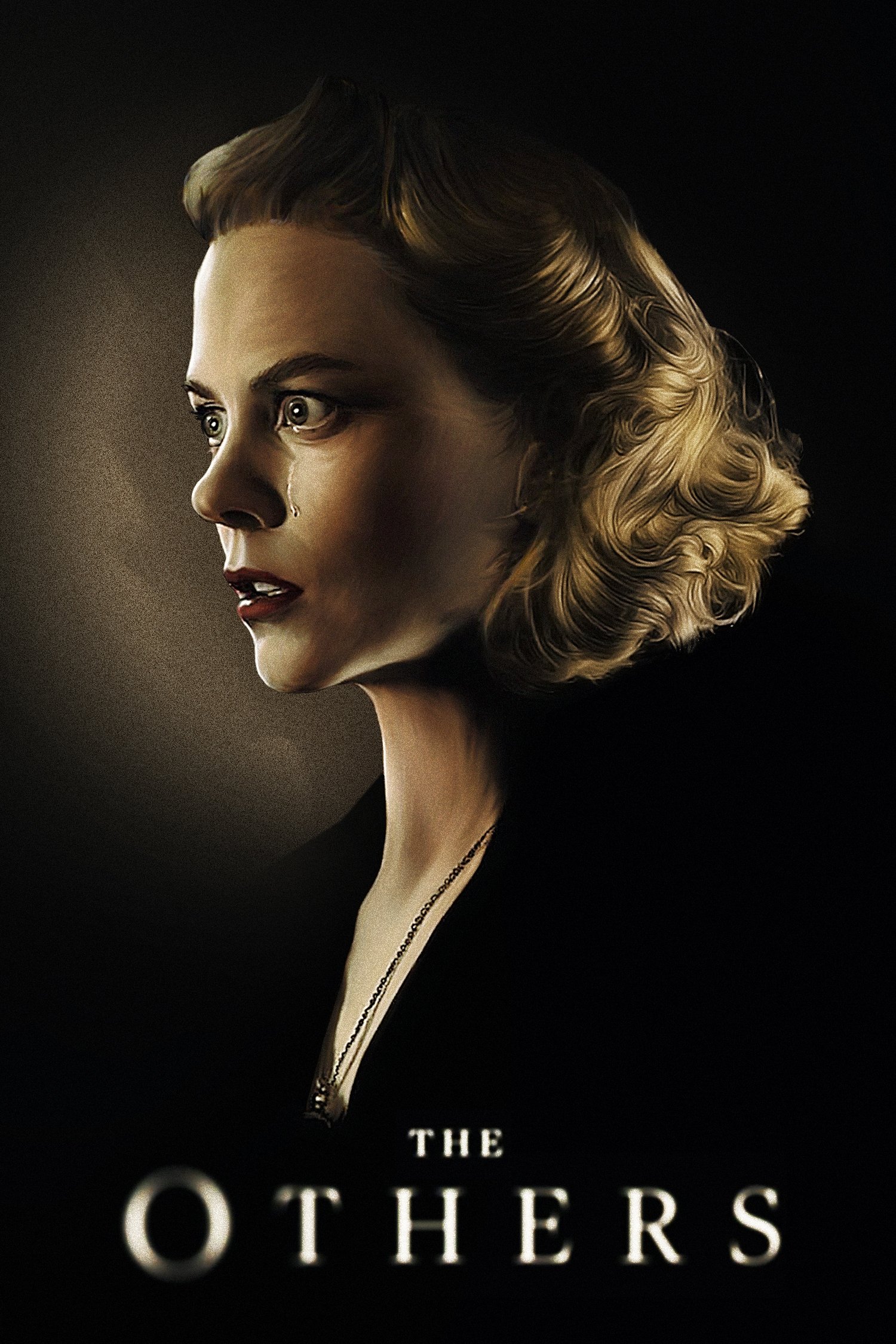
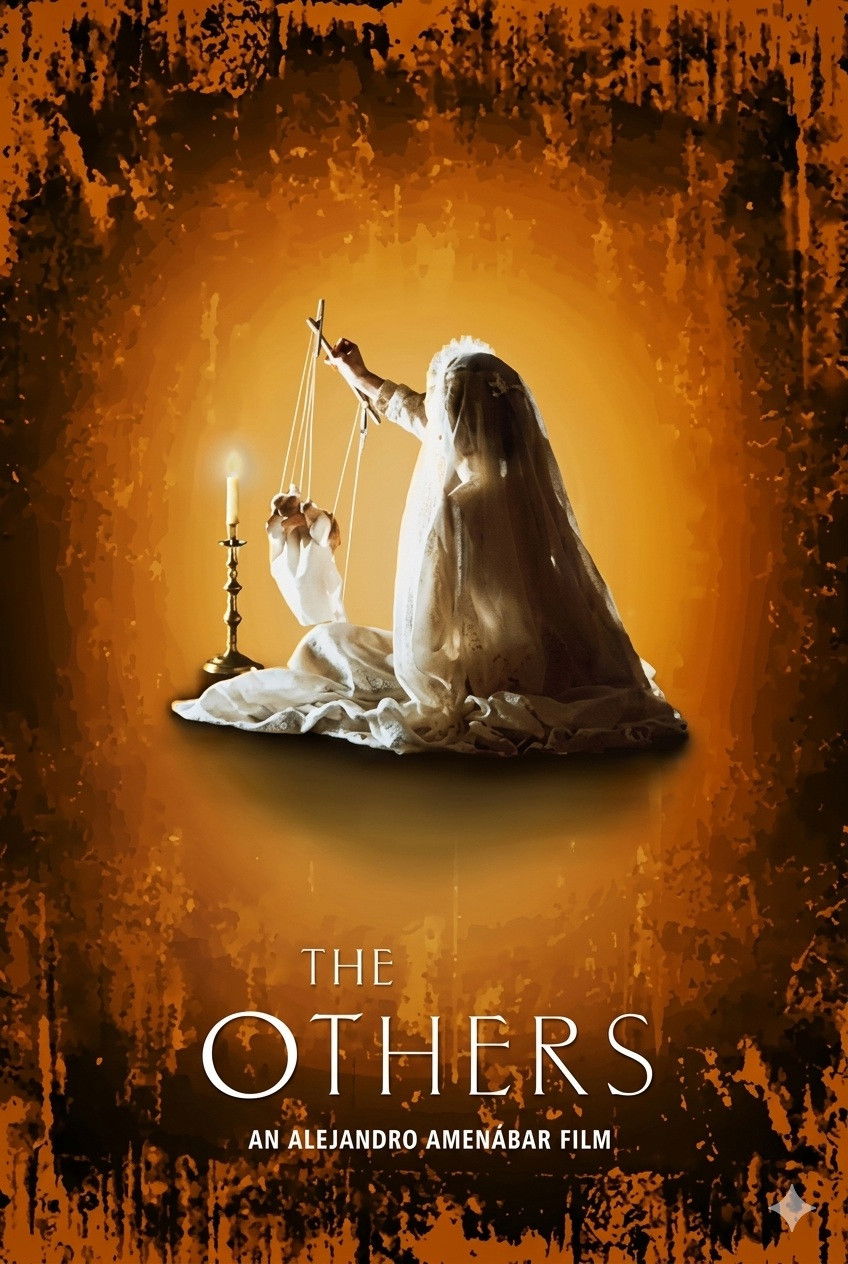
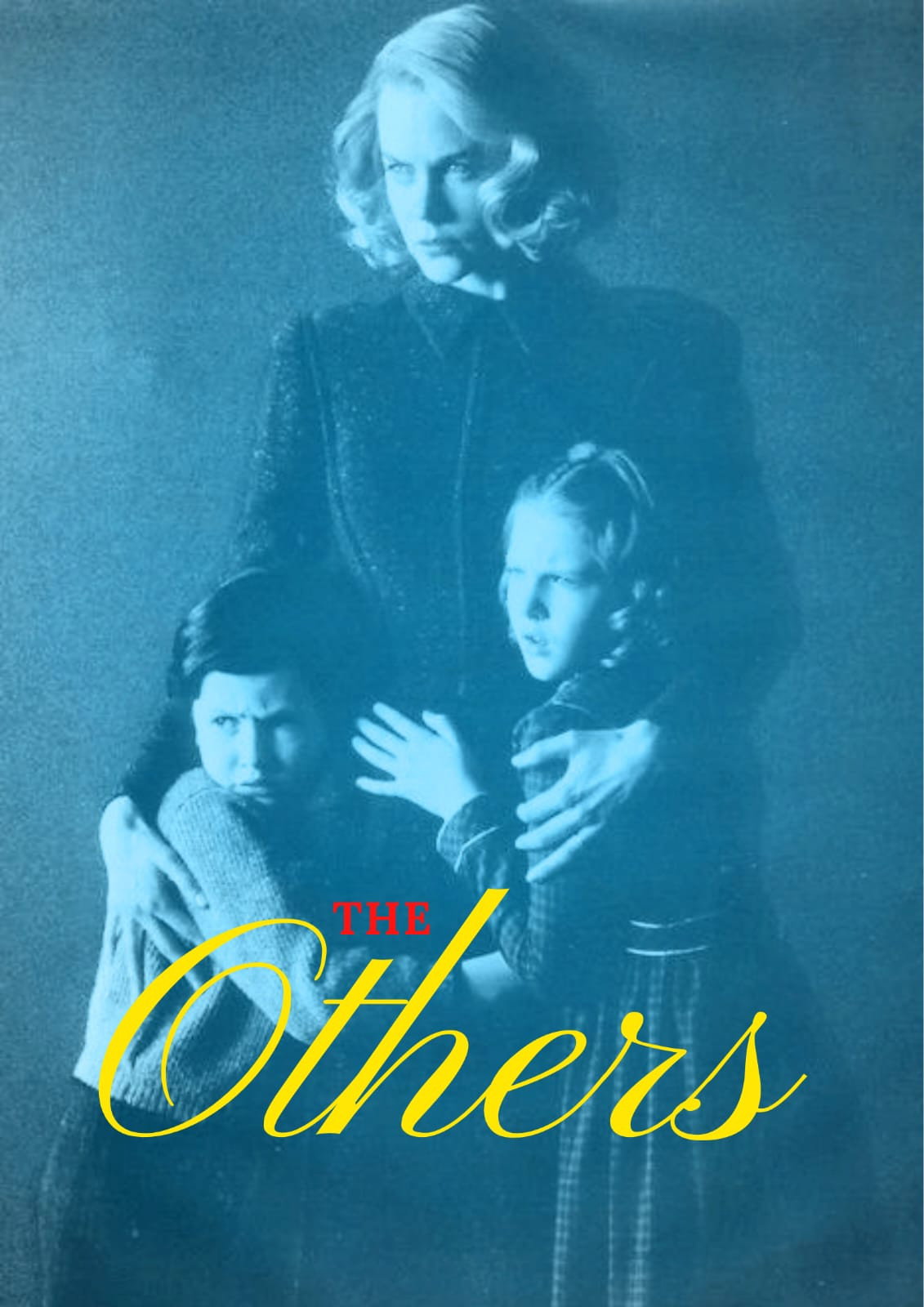
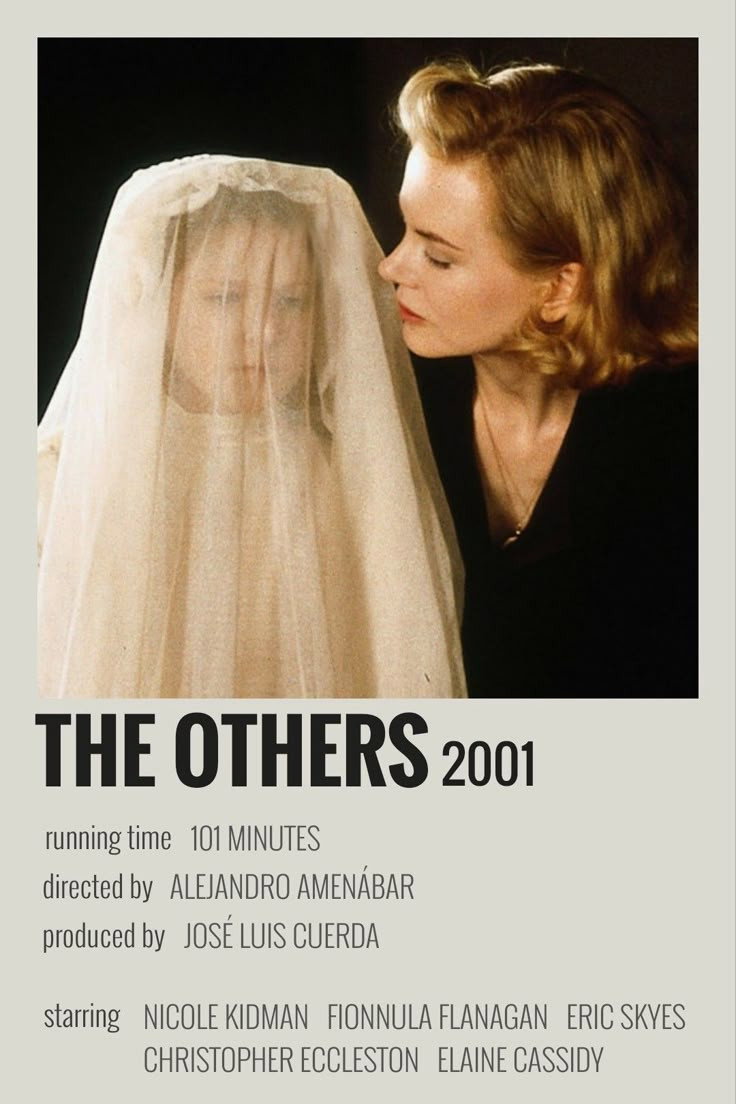
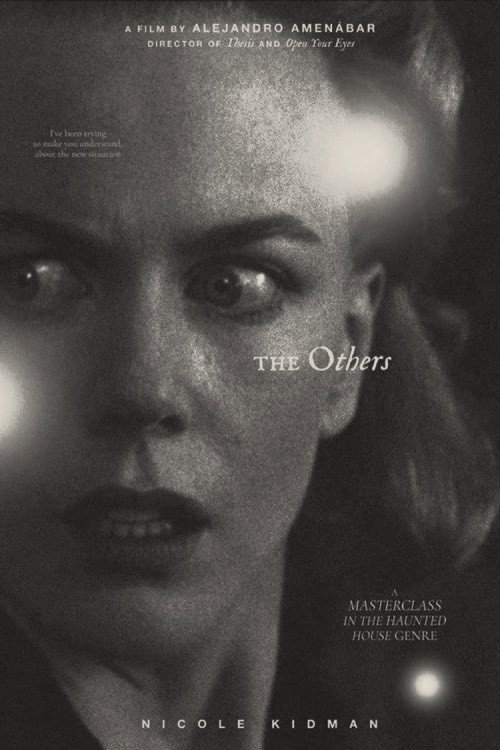
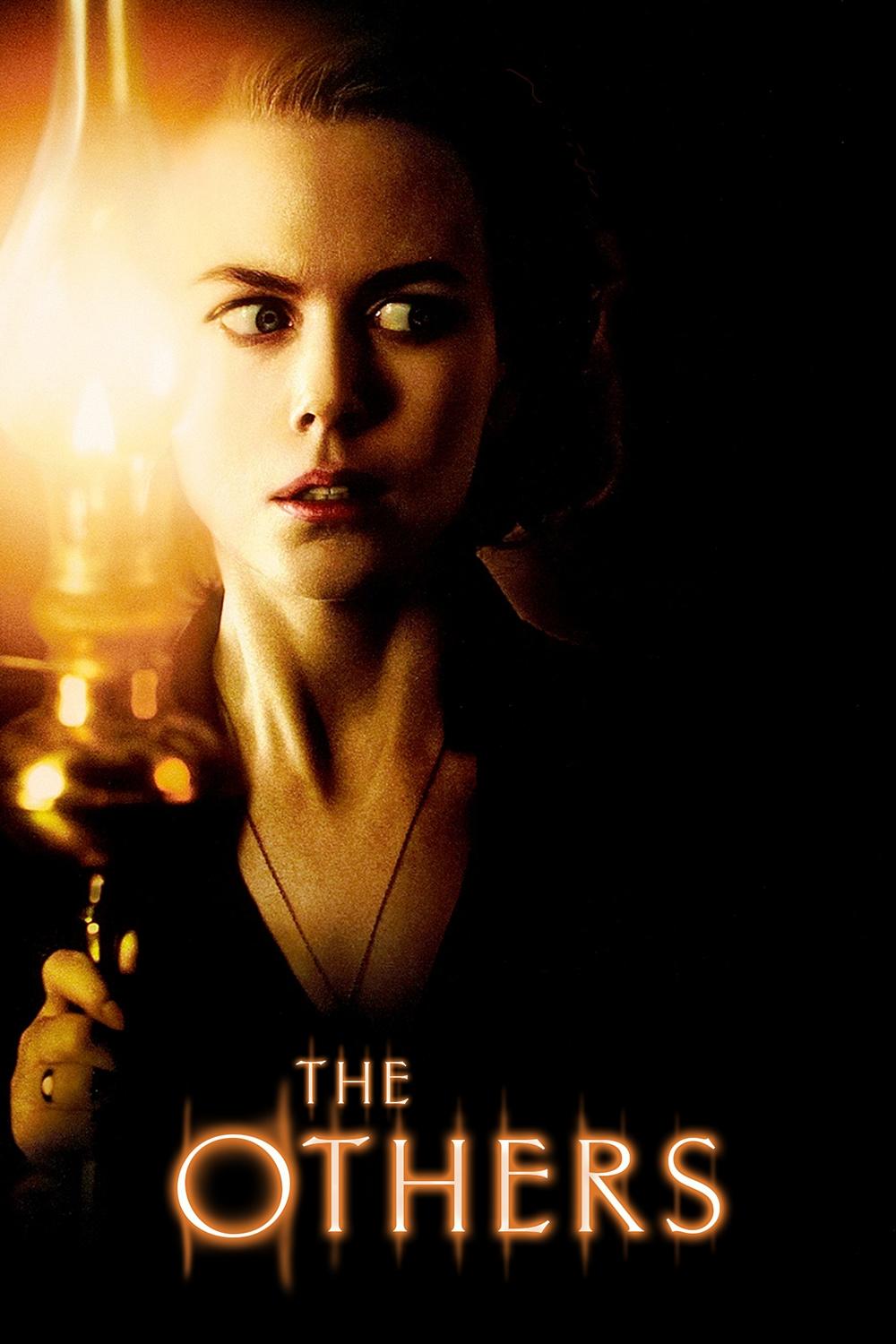
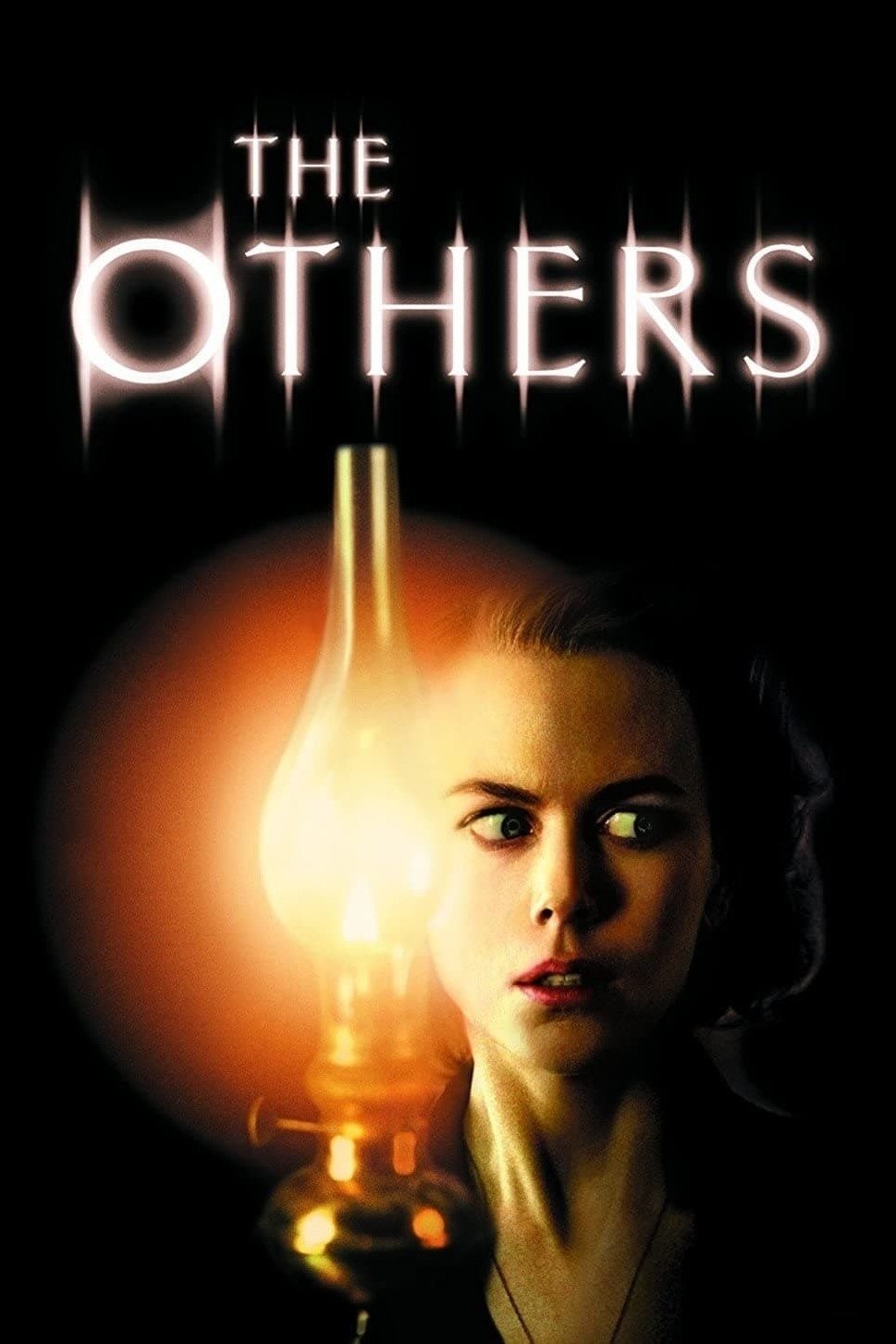
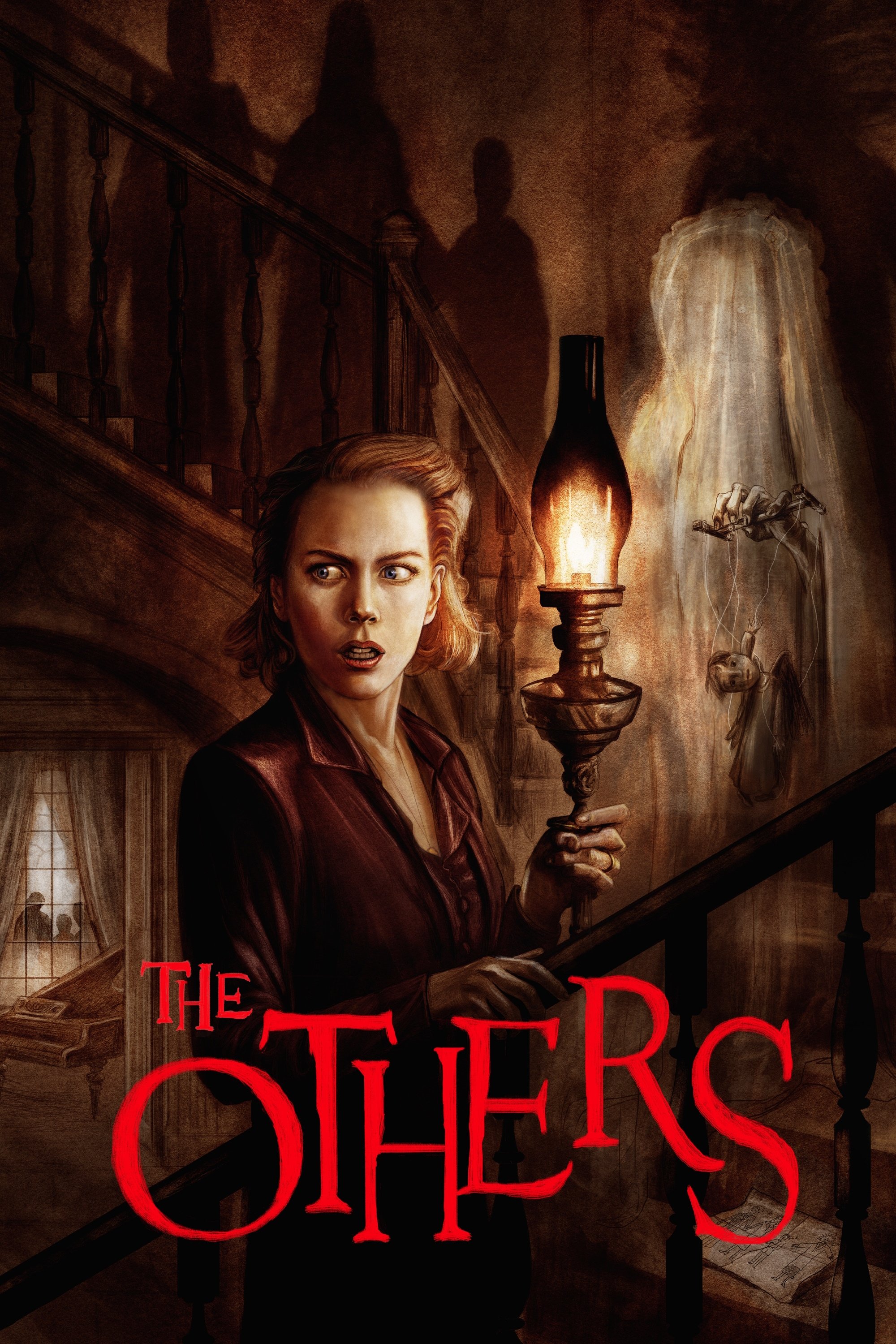
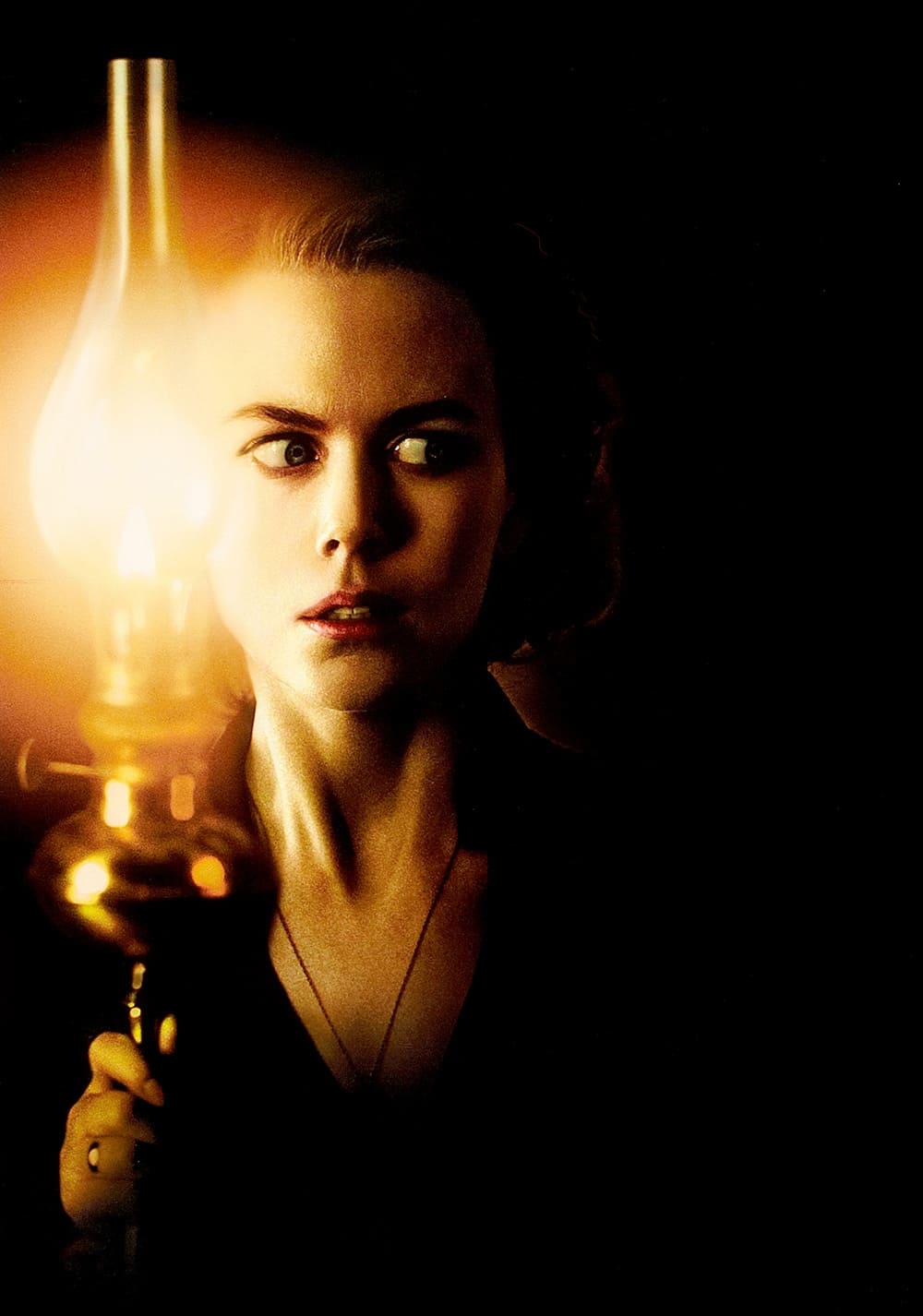
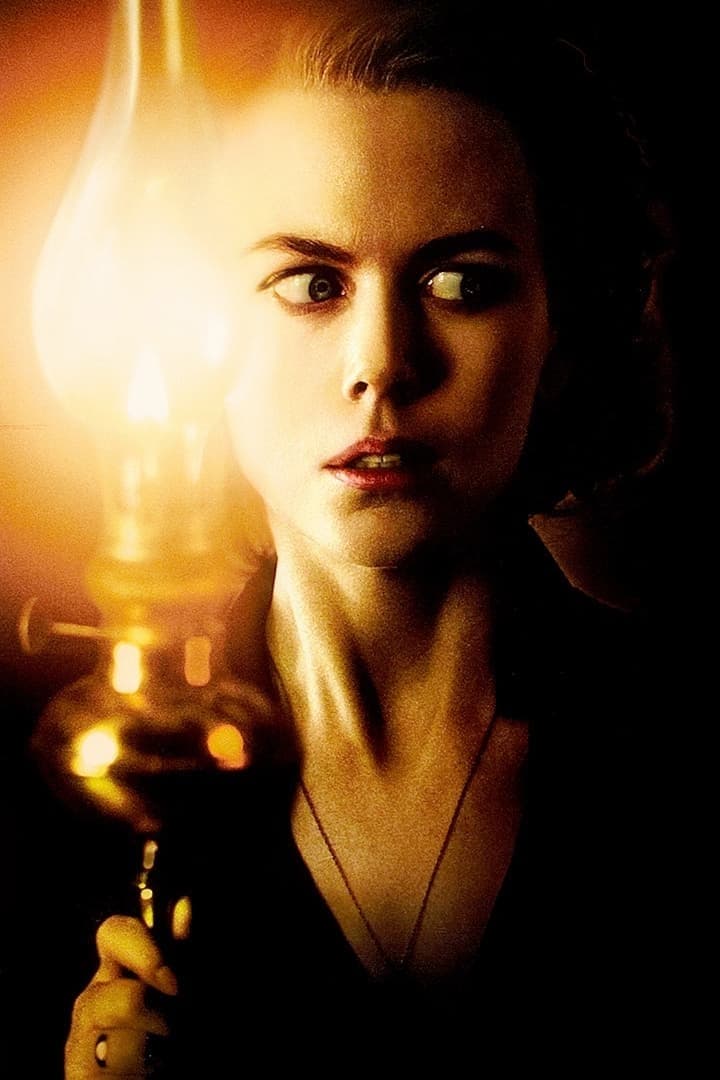
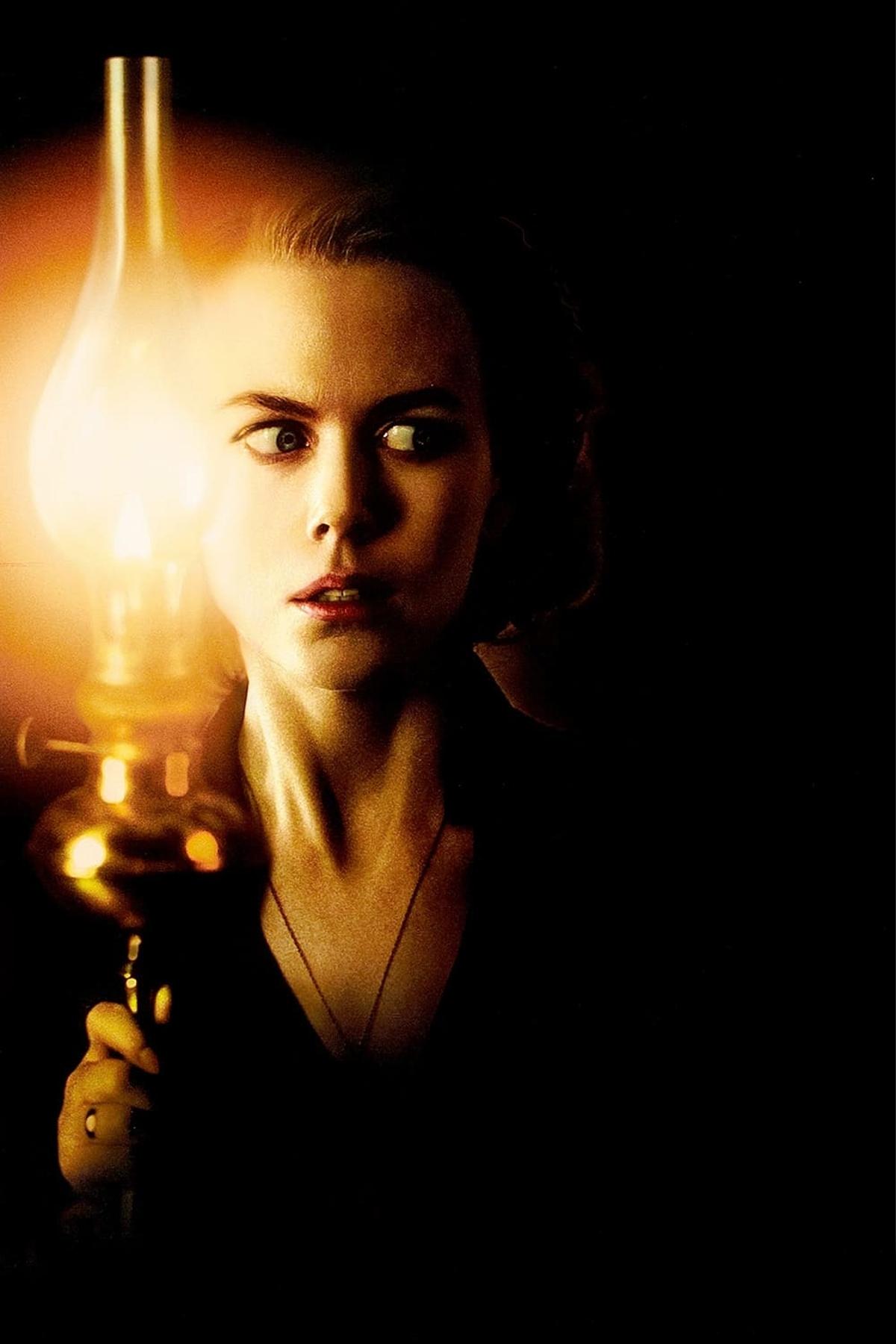
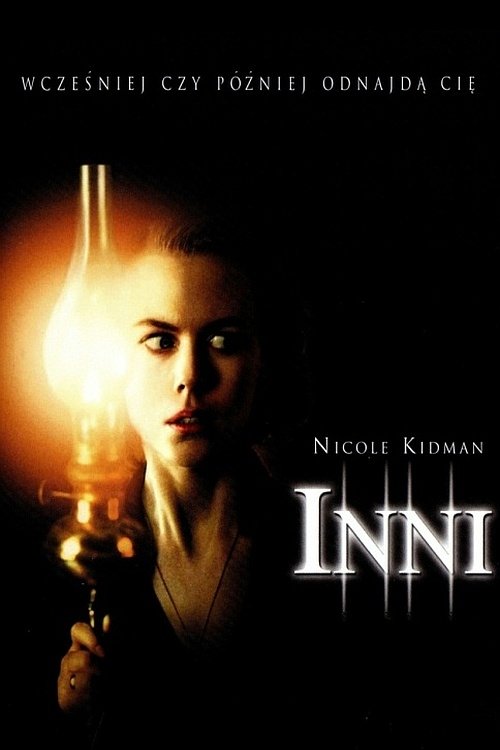
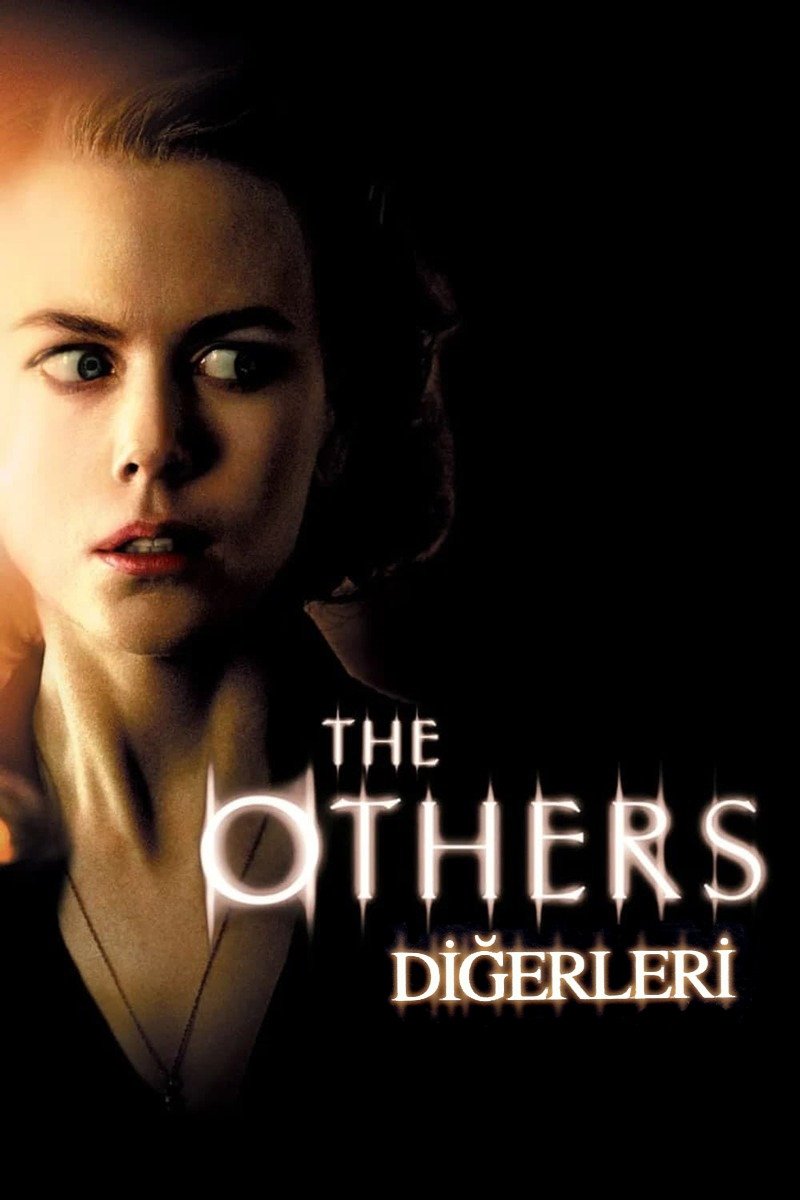
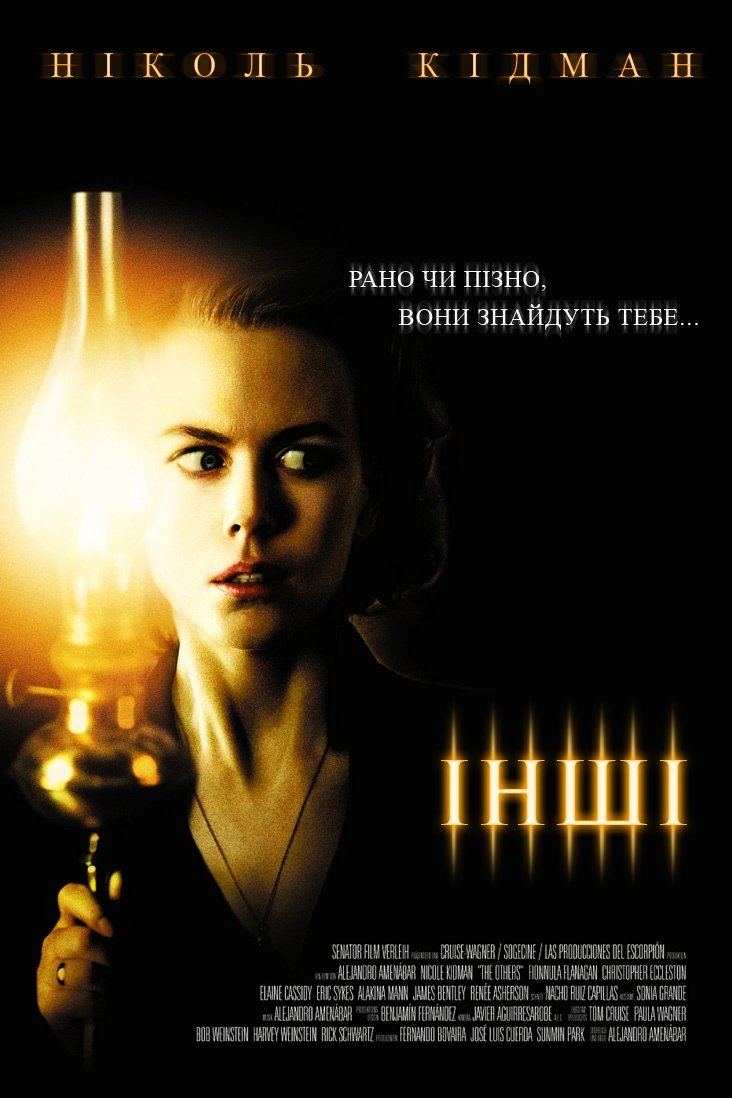
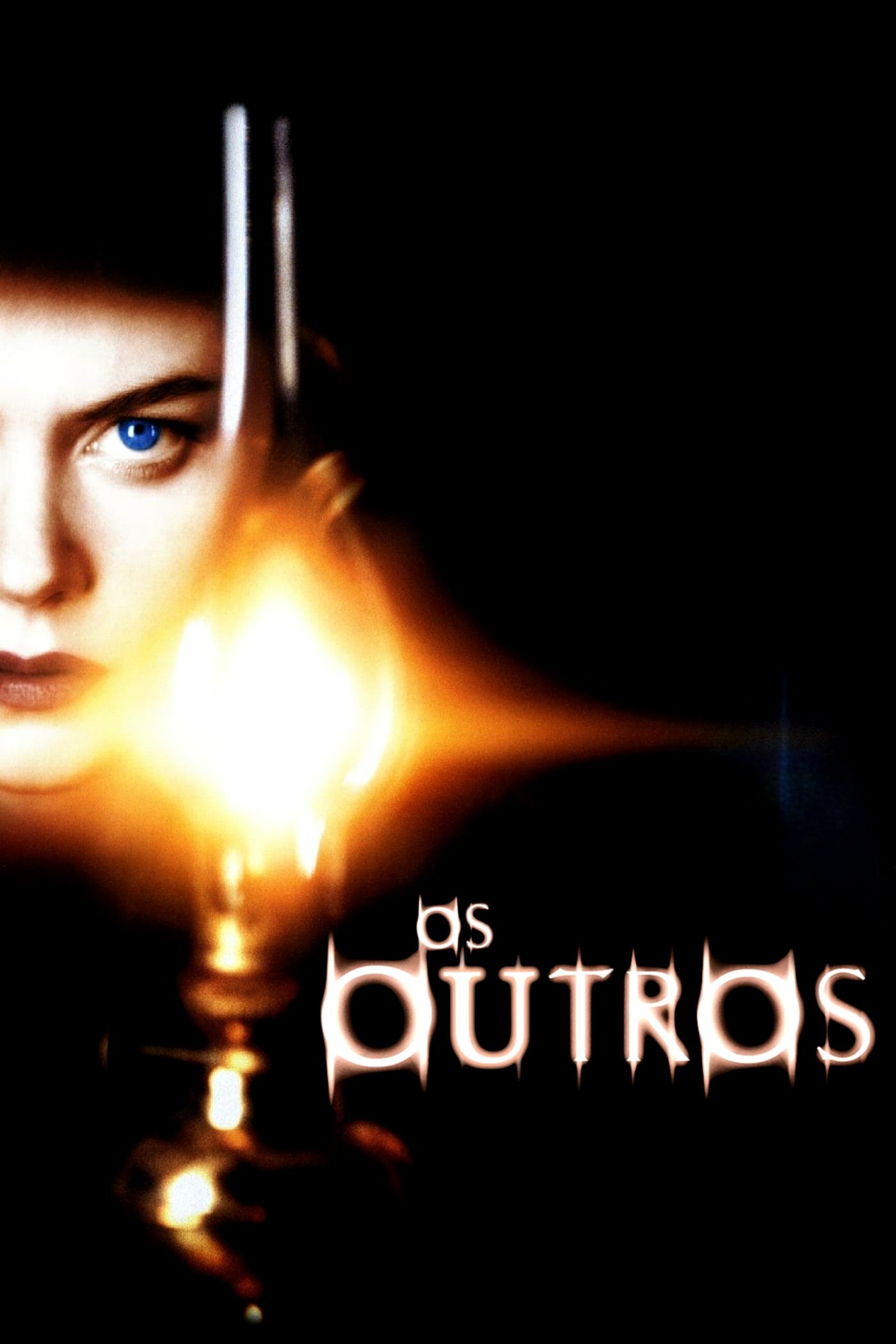
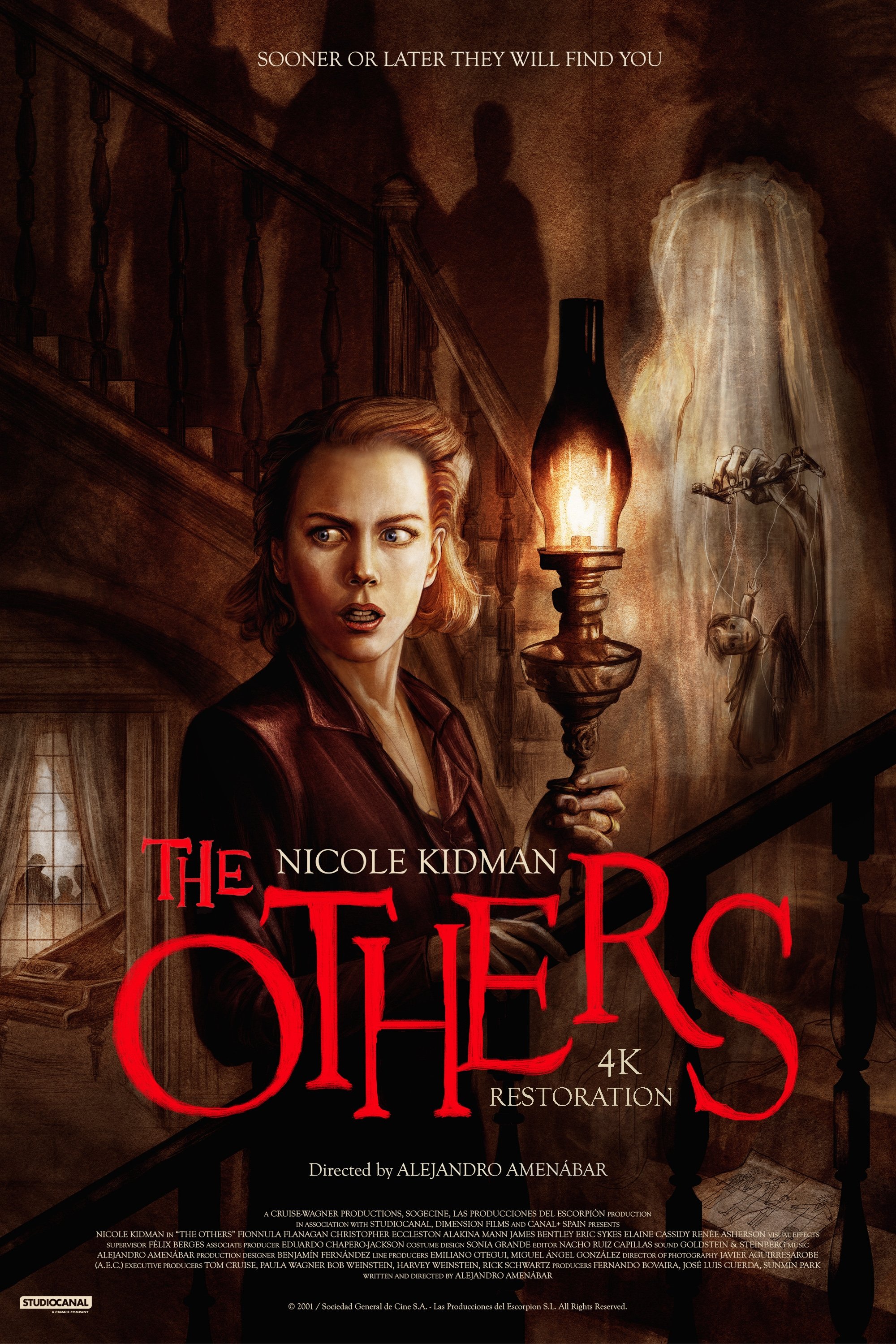
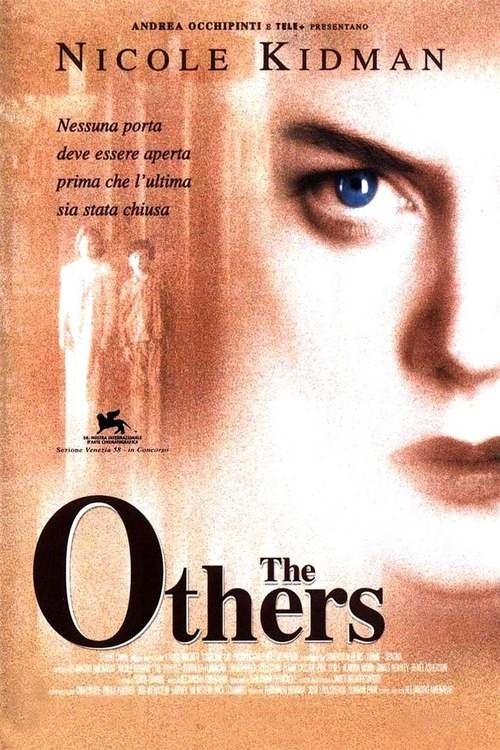
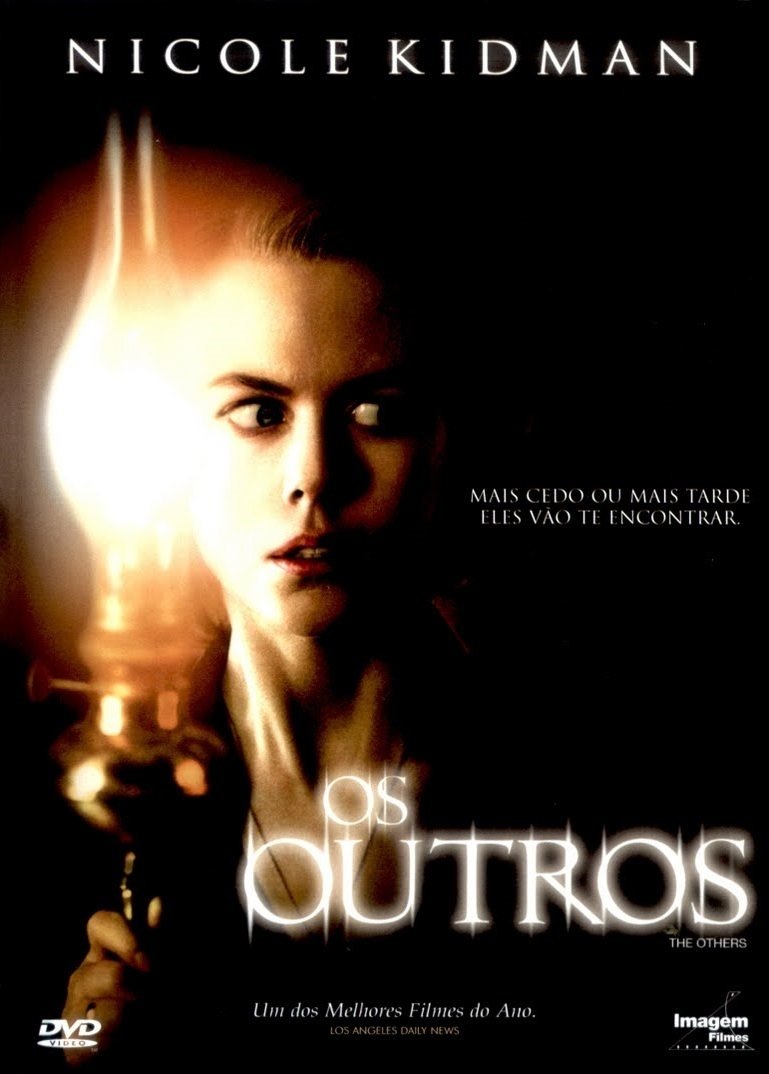
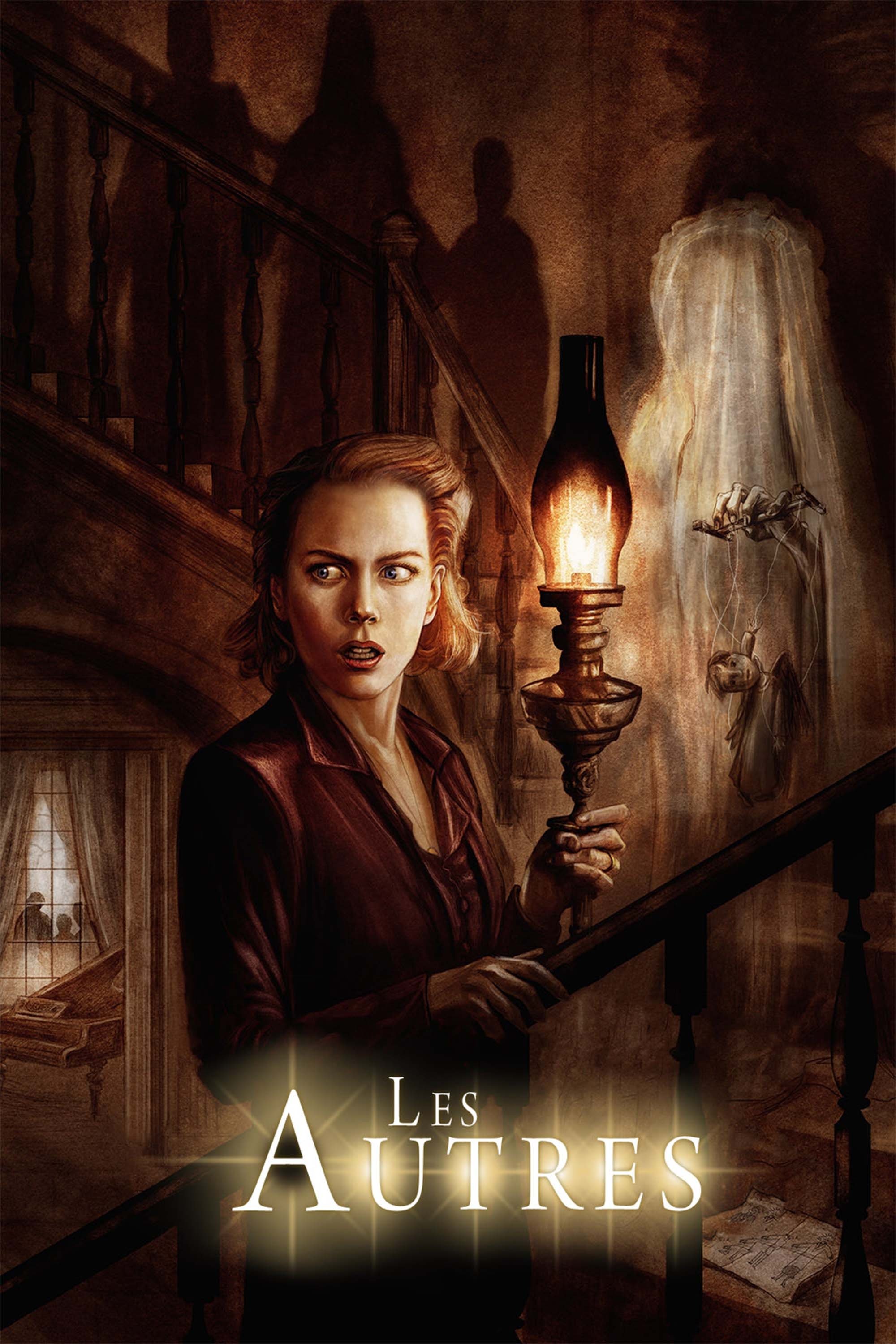
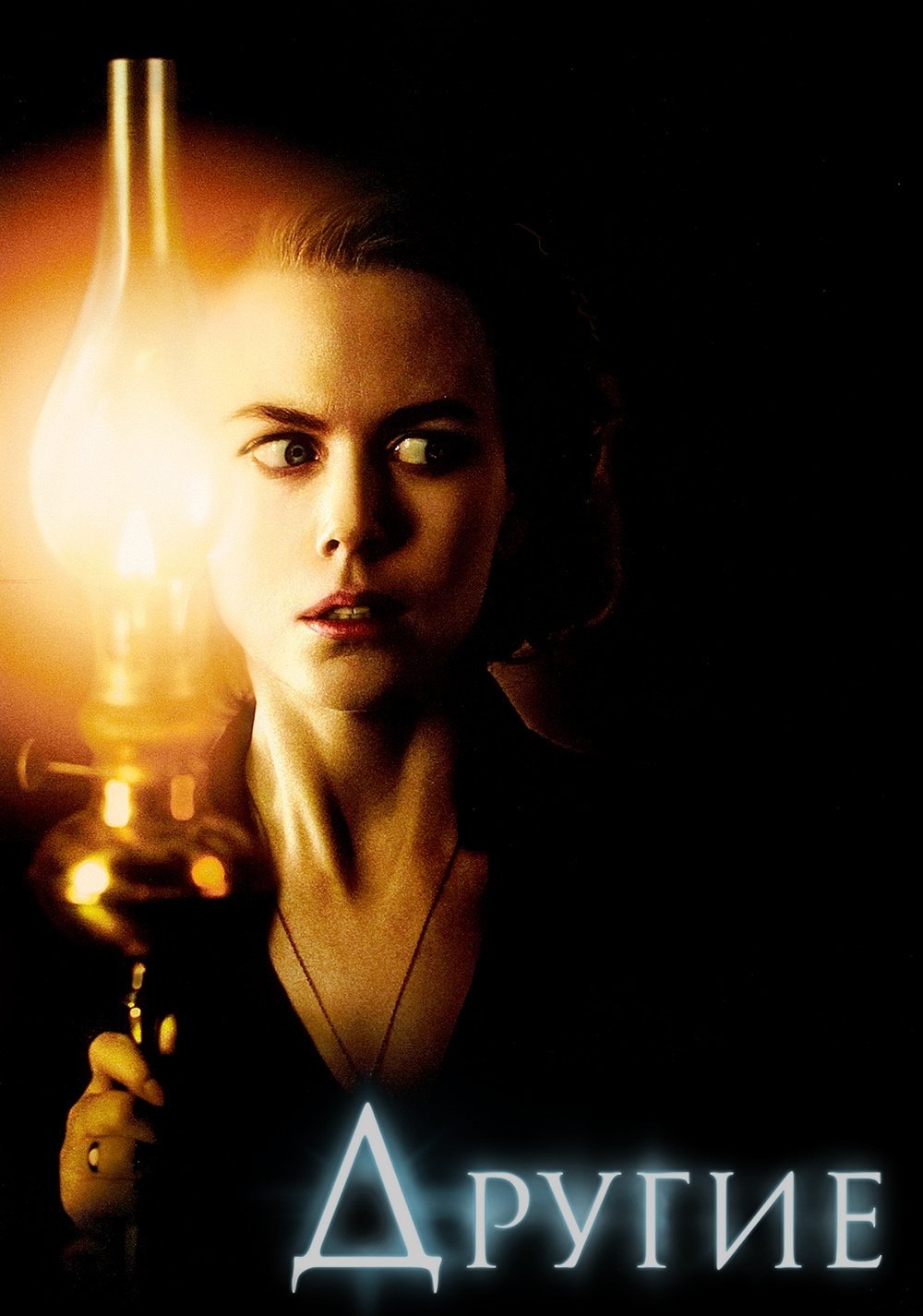
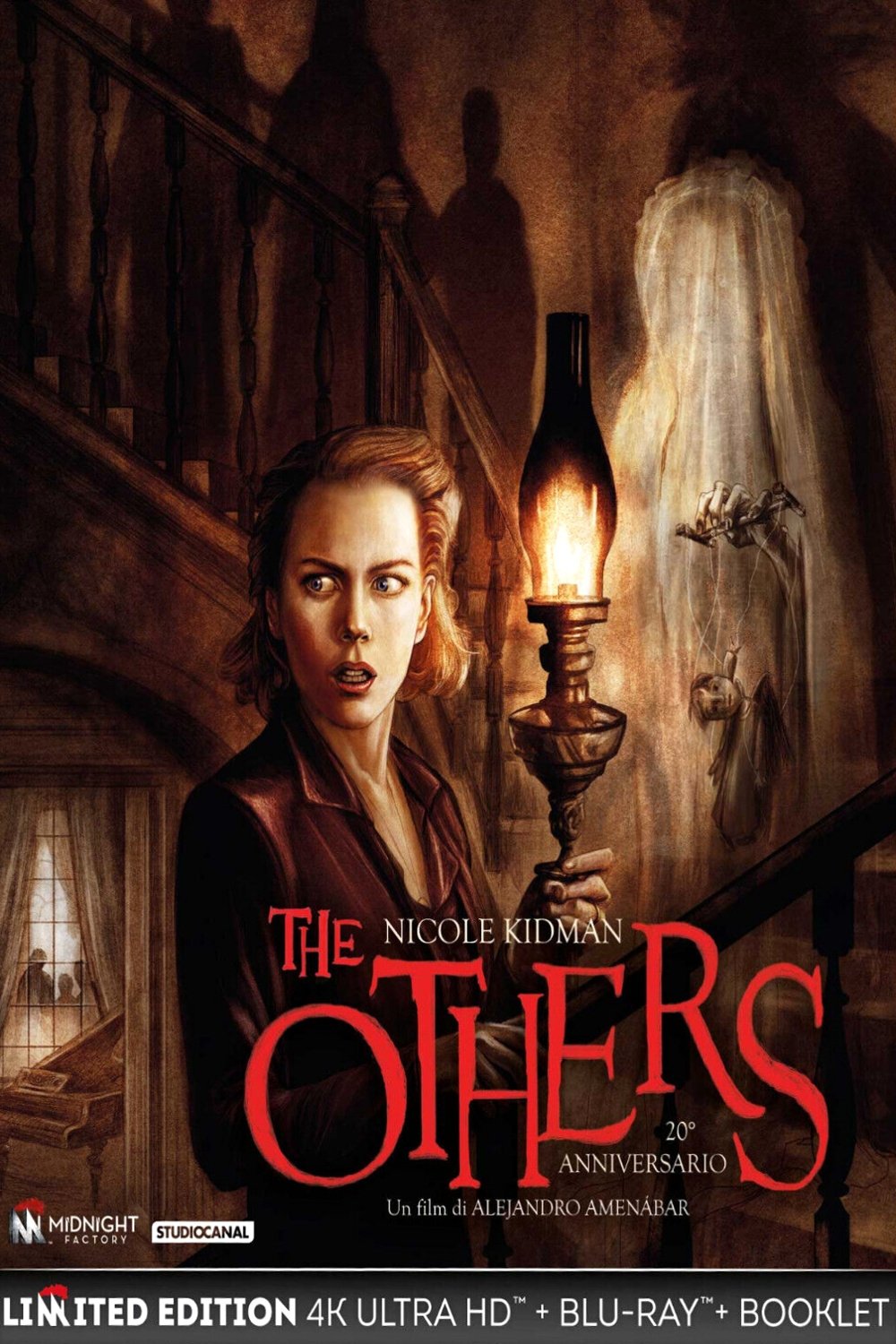
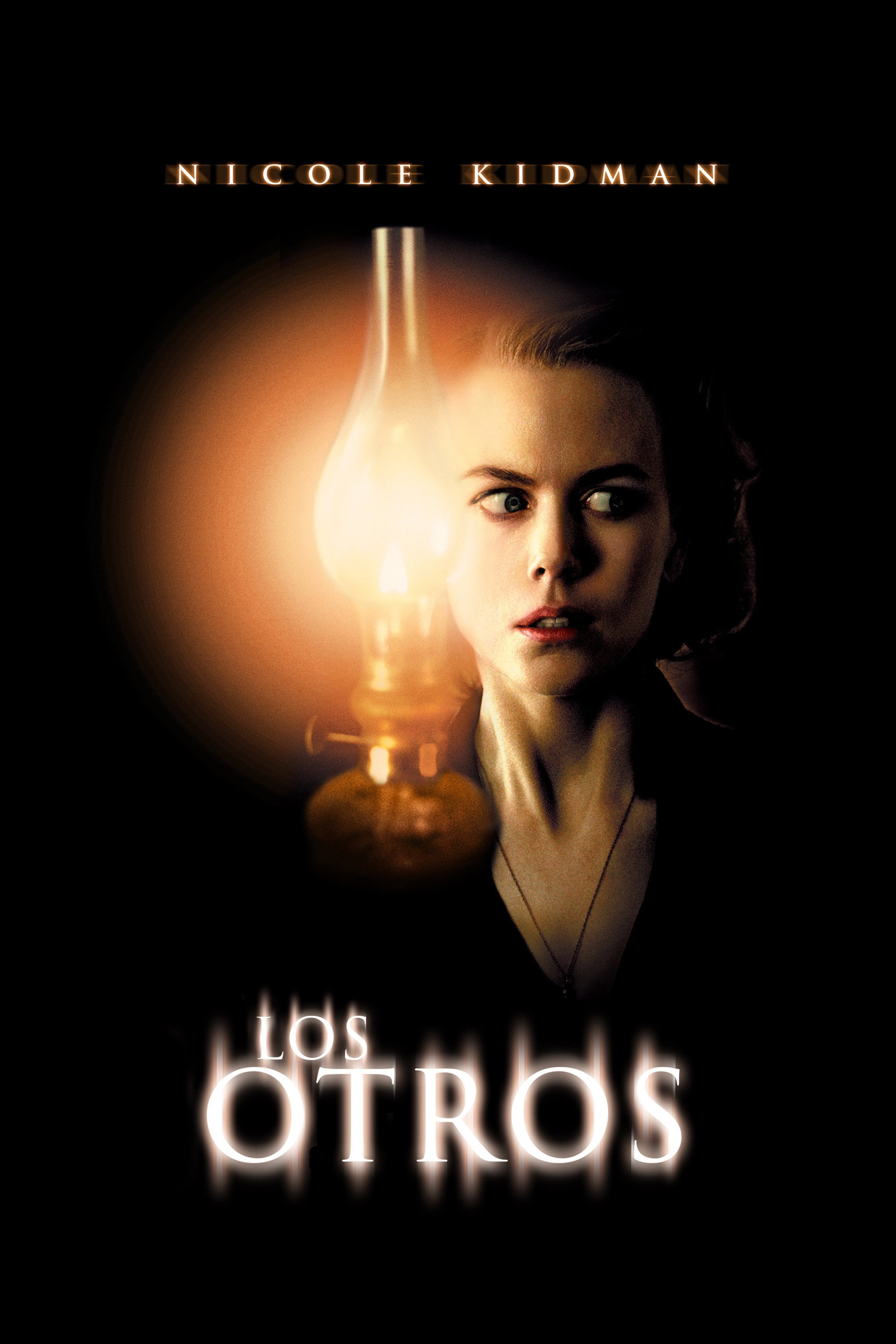
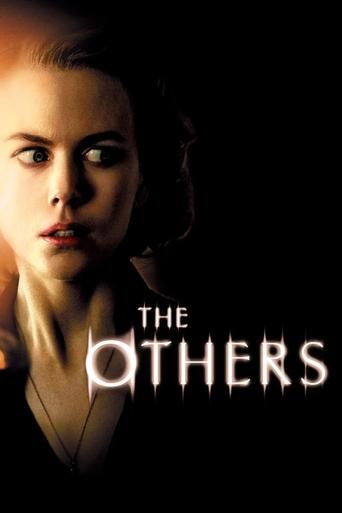
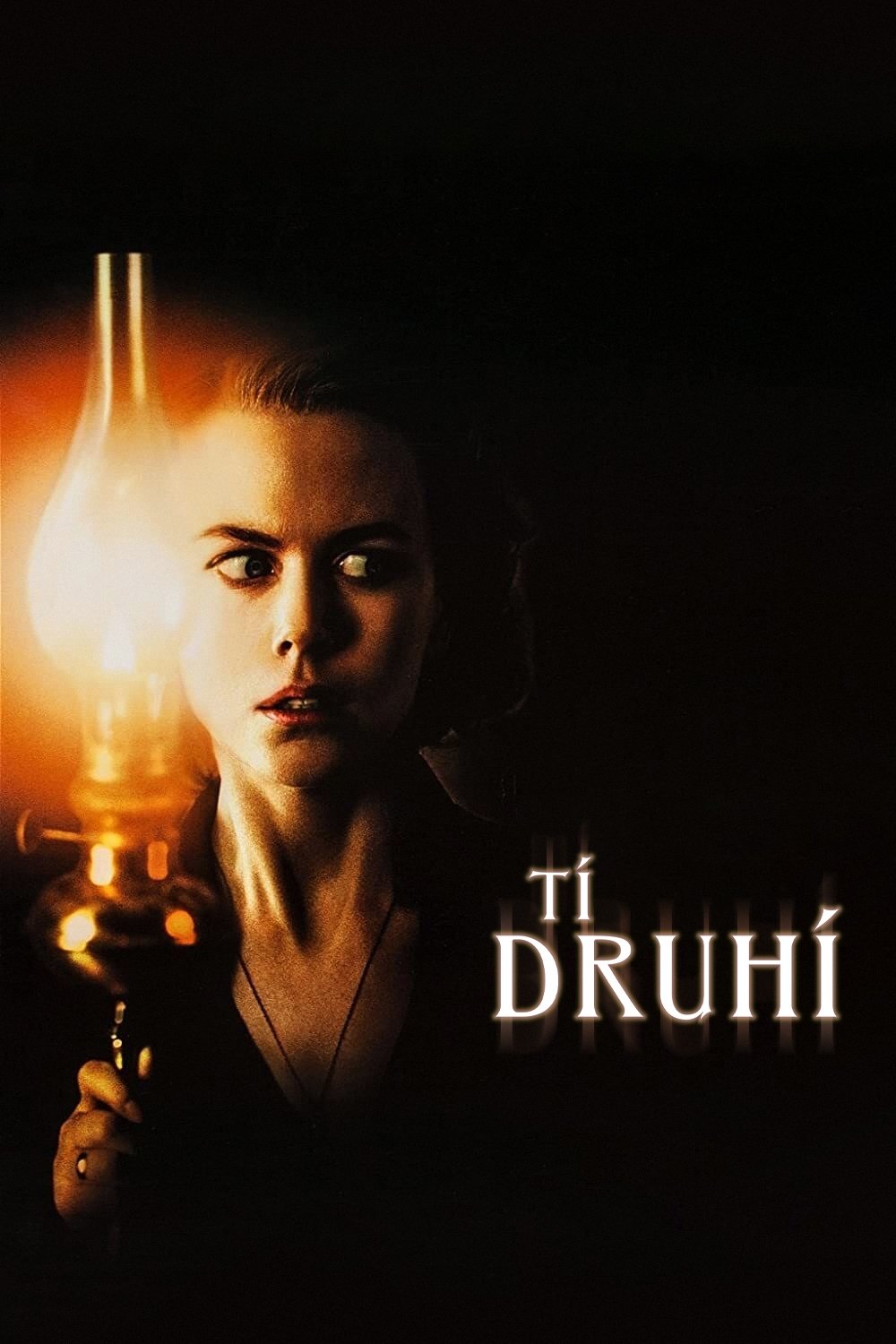
The Others (2001) poster
Production Companies
Cruise/Wagner Productions , Sogecine , Las Producciones del Escorpión
Plot

Grace is a religious woman who lives in an old house kept dark because her two children, Anne and Nicholas, have a rare sensitivity to light. When the family begins to suspect the house is haunted, Grace fights to protect her children at any cost in the face of strange events and disturbing visions.

Alternative Titles
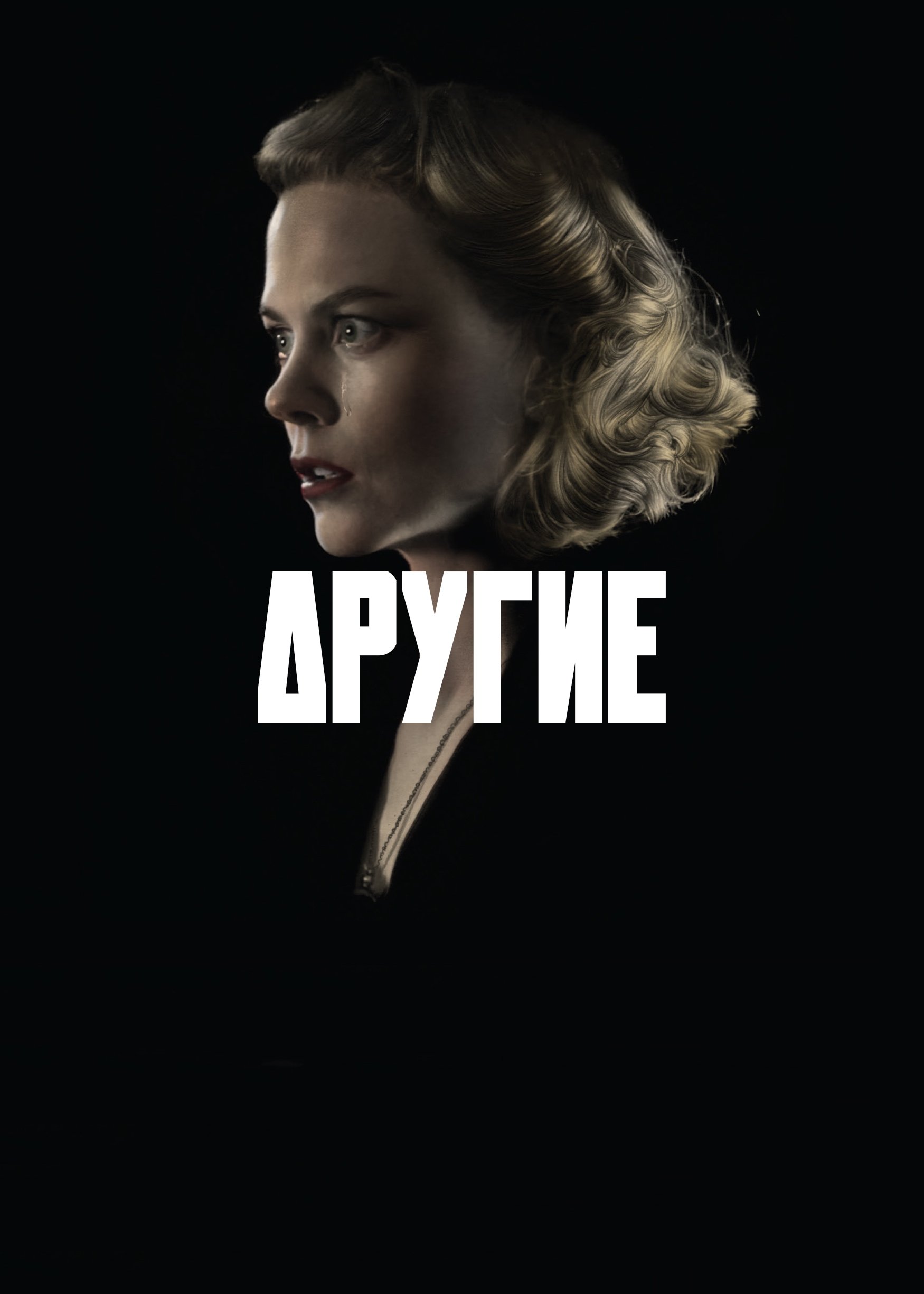
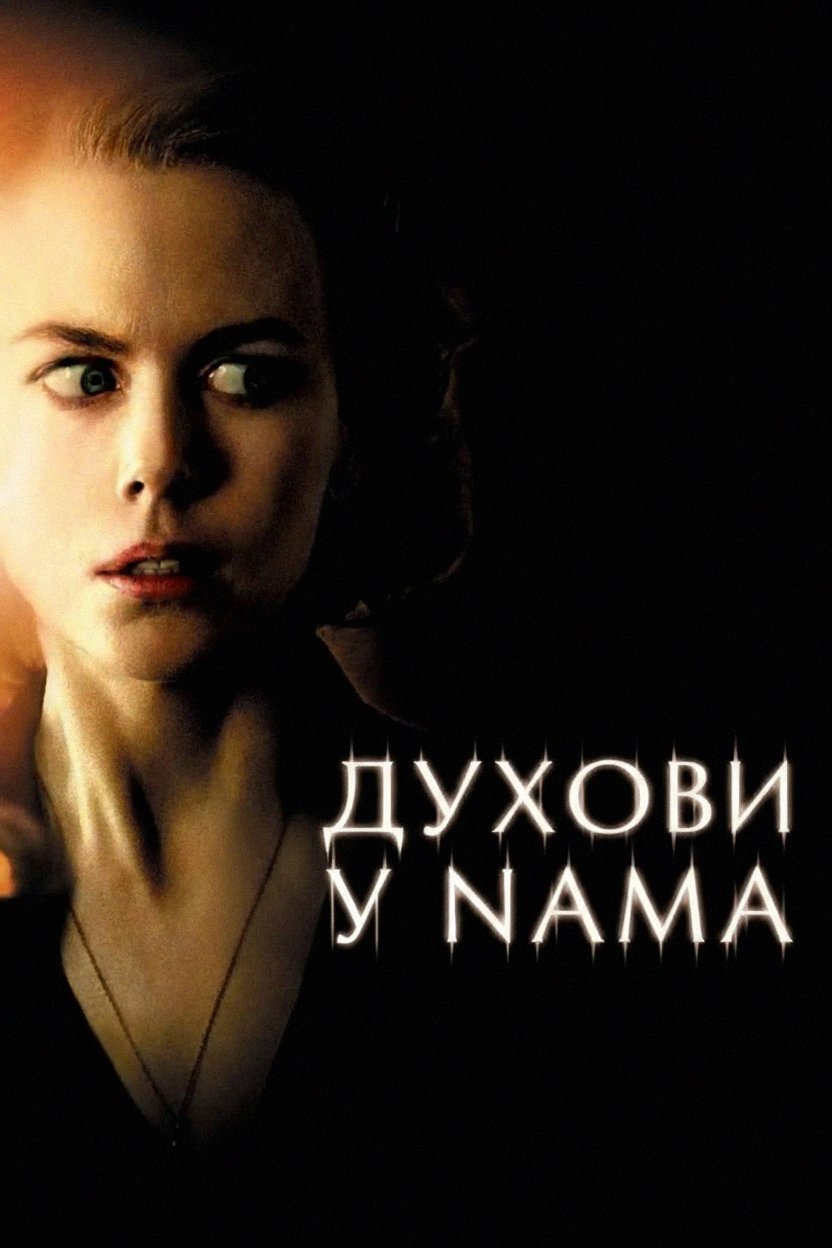
Başqaları (Azerbaijan) Nevidljivi (Bosnia & Herzegovina) Drugite (Bulgaria) Другите (Bulgaria) — Bulgarian Os Outros (Brazil) — Portuguese Nevidljivi (Bahamas) — Bosnian Les autres (Canada) — French 小岛惊魂 (China)
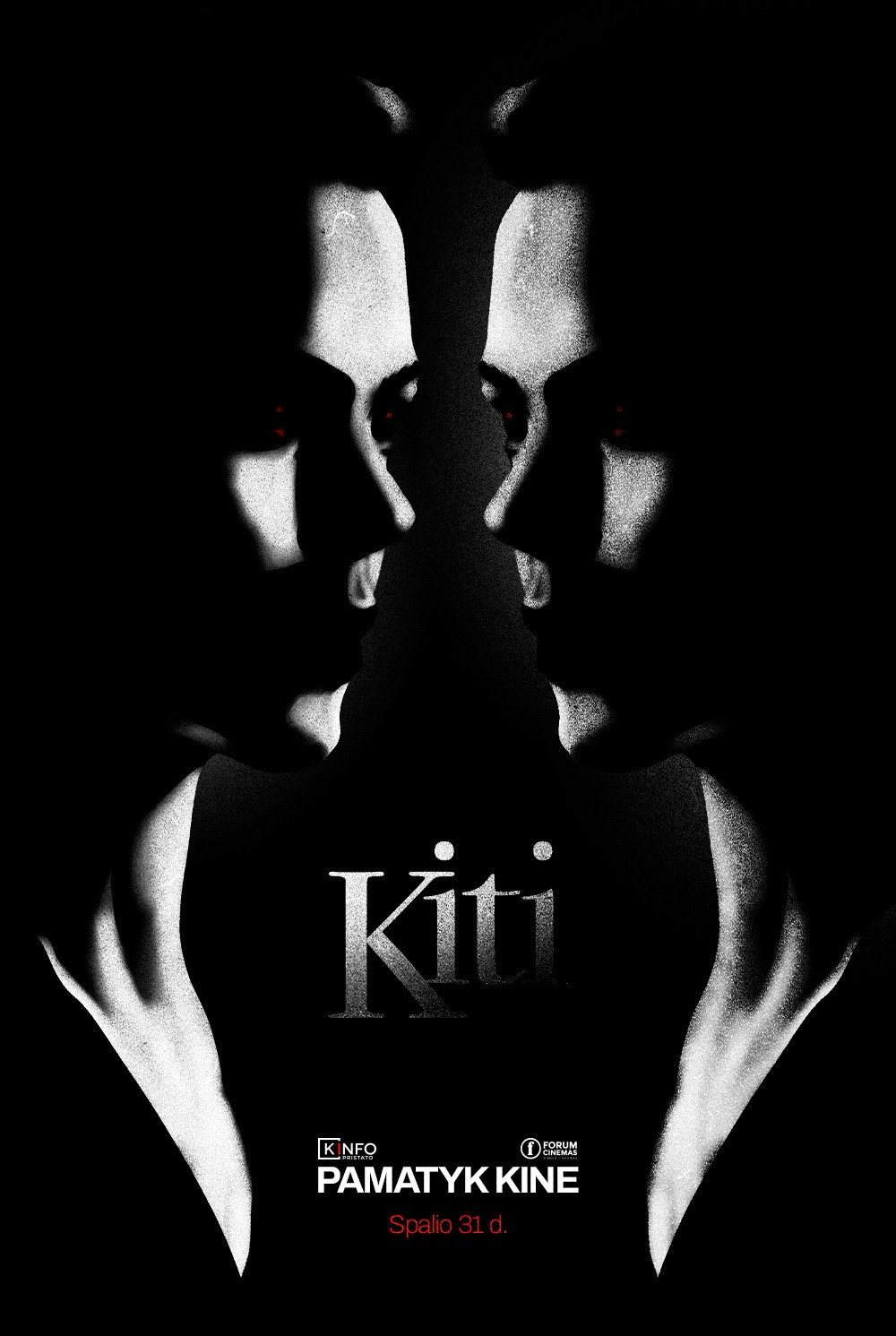
Show all 39 alternative titles Ti druzí (Czechia) — Czech Teised (Estonia) — Estonian Los otros (Spain) Les Autres (France) — French სხვები (Georgia) — Georgian Oi álloi (Greece) Οι Άλλοι (Greece) — Greek 不速之嚇 (Hong Kong SAR China) — Chinese Nevidljivi (Croatia) Uljezi (Croatia) — Croatian Más világ (Hungary) — Hungarian Ha-Aherim (Israel) האחרים (Israel) — Hebrew دیگران (Iran) — Persian アザーズ (Japan) 디 아더스 (South Korea) — Korean Kiti (Lithuania) Citi (Latvia) — Latvian Los otros (Mexico) — Spanish Inni (Poland) Os Outros (Portugal) — Portuguese Ceilalți (Romania) — Romanian Духови у нама (Serbia) Другие (Russia) Vsiljivci (Slovenia) — Slovenian Tí druhí (Slovakia) — Slovak คฤหาสน์หลอน ซ่อนผวา (Thailand) — Thai Diğerleri (Türkiye) — Turkish 神鬼第六感 (Taiwan) — Chinese Інші (Ukraine) Ngôi Nhà Toàn Ma (Vietnam) — Vietnamese

Trailers & Videos

2 videos

Film Guide & Analysis

Alejandro Amenábar’s 2001 Gothic horror film explores grief, religious belief and supernatural perception through Nicole Kidman’s performance, restrained cinematography and an influential haunted-house mystery.

The Others (2001) is a supernatural Gothic horror film written, directed and scored by Alejandro Amenábar. Set on the island of Jersey in 1945, it follows Grace Stewart, a devoutly religious mother living with her two children in an isolated mansion while awaiting news of her husband’s return from the Second World War. Because the children are believed to suffer from a dangerous sensitivity to sunlight, Grace maintains a strict system of locked doors and covered windows. The arrival of three servants coincides with unexplained disturbances that challenge her understanding of the house and its inhabitants.

The film marked Amenábar’s first English-language feature following Thesis (1996) and Open Your Eyes (1997). Produced principally through Spanish companies with international participation, it revived the atmosphere of classical haunted-house cinema through carefully controlled photography, an unusually restrained use of sound and a narrative constructed around the limits of its protagonist’s knowledge. Nicole Kidman’s performance provides the emotional center, while Javier Aguirresarobe’s cinematography transforms darkness into an essential component of the story. A substantial international commercial success, The Others received eight Goya Awards and became an important example of early twenty-first-century psychological ghost cinema.

Development & Screenplay

The Others developed during Amenábar’s emergence as one of the most internationally visible Spanish filmmakers of his generation. His first feature, Thesis, explored the circulation of violent images, while Open Your Eyes investigated identity and the reliability of personal experience. The international attention attracted by the latter brought him into contact with Tom Cruise and Paula Wagner, whose company was developing its American remake, Vanilla Sky (2001). Cruise and Wagner subsequently became involved with The Others as executive producers. Their participation contributed to the English-language production without changing the authorship of Amenábar’s original screenplay.

In an interview published by Nitrate Online in October 2001, Amenábar explained that he wanted to move away from the complicated chronology of Open Your Eyes. He deliberately sought a more linear story concentrated upon a small number of characters and a single principal environment. The director associated the project with the illustrated mystery books he had encountered during childhood, particularly editions published during the 1930s and 1940s. He wanted to recover their atmosphere of uncertainty through cinema, using a contained narrative in which apparently ordinary details gradually acquire threatening meanings.

The screenplay was initially written in Spanish, and Amenábar considered placing the story in South America. The decision to make the film in English eventually led him to the Channel Islands during the aftermath of the Second World War. The historical setting supplied the absence of the father and the isolation necessary for Grace’s household. Amenábar also associated the German occupation of the islands with a broader atmosphere of guilt, although he did not construct the film as a detailed historical account of wartime collaboration. His principal concern remained the family’s relationship to death and the uncertainty surrounding religious explanations of the afterlife.
Narrative, Perception & the Haunting

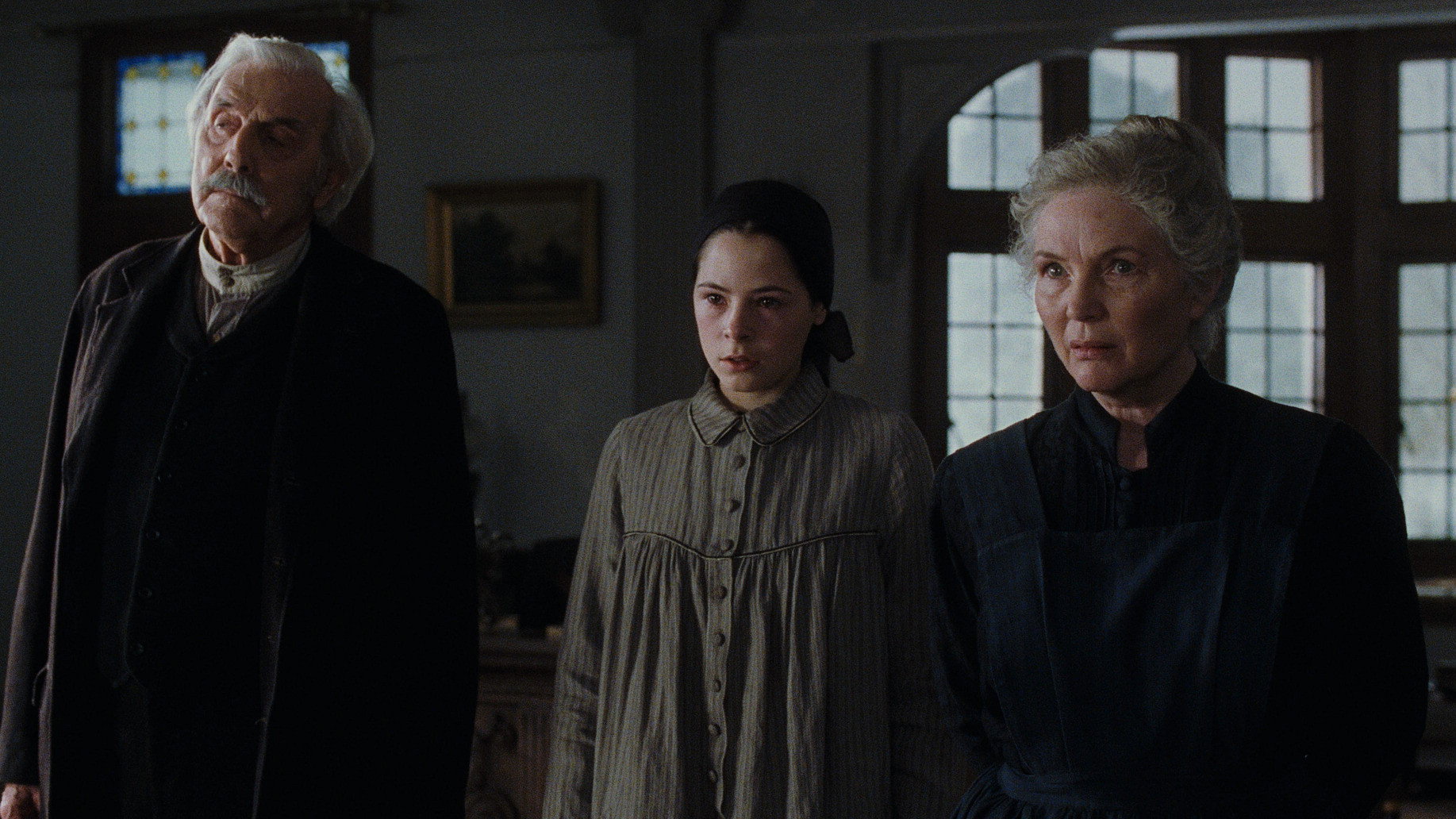
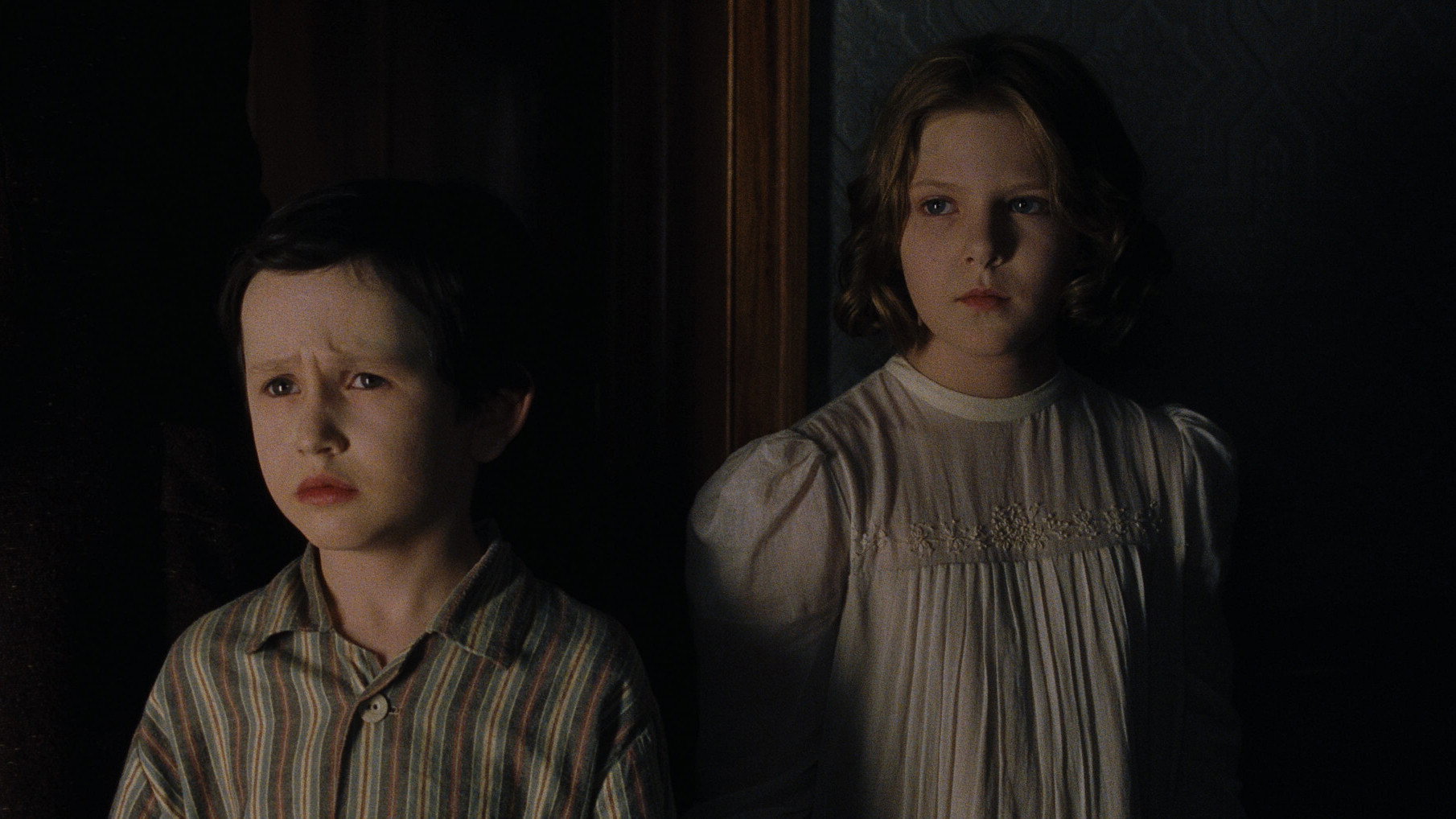
The story is organized almost entirely around Grace Stewart’s experience. She supervises the education of Anne and Nicholas while maintaining elaborate precautions against light entering their rooms. Every passage between spaces requires the closing of one door before another can be opened. This routine gives the mansion a series of internal boundaries whose violation threatens the children’s supposed safety. The unexplained disappearance of the previous household staff makes Grace dependent upon three unfamiliar servants: Mrs. Bertha Mills, Mr. Edmund Tuttle and Lydia, a young woman who does not speak.

Grace initially treats the disturbances as practical problems caused by the servants or by her children’s behavior. Anne repeatedly insists that unfamiliar people occupy the house, but her mother regards these claims as imagination or disobedience. Sounds from empty rooms, changing positions of objects and the unexplained opening of curtains gradually undermine those explanations. The narrative restricts what the audience can establish independently of Grace. Even when other characters appear to understand the situation, their knowledge remains inaccessible because the story follows the assumptions of its increasingly frightened protagonist.

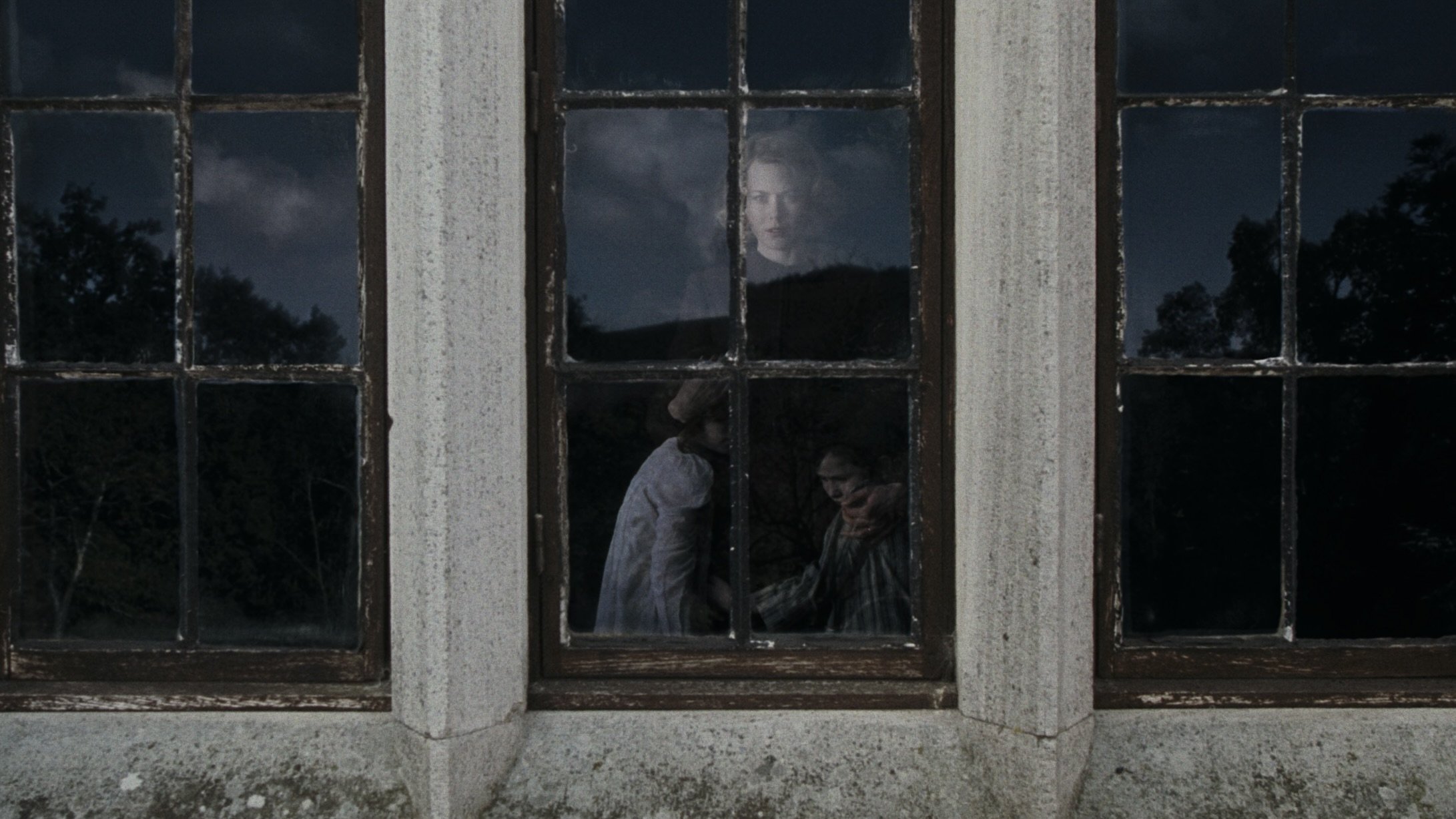
Amenábar explained that he developed the screenplay with its ending already in mind, arranging the preceding events so that they could acquire another meaning after the revelation. The final disclosure establishes that Grace and her children are themselves dead, while the supposedly supernatural intruders belong to the living family attempting to occupy the house. Grace must also confront her responsibility for killing her children before taking her own life. The reversal changes the audience’s understanding of the household without invalidating the disturbances previously witnessed. The servants’ knowledge, Anne’s perceptions and the apparent movement of unseen occupants become part of a coherent supernatural situation when viewed from the opposite perspective.

Cinematography & Gothic Visual Style

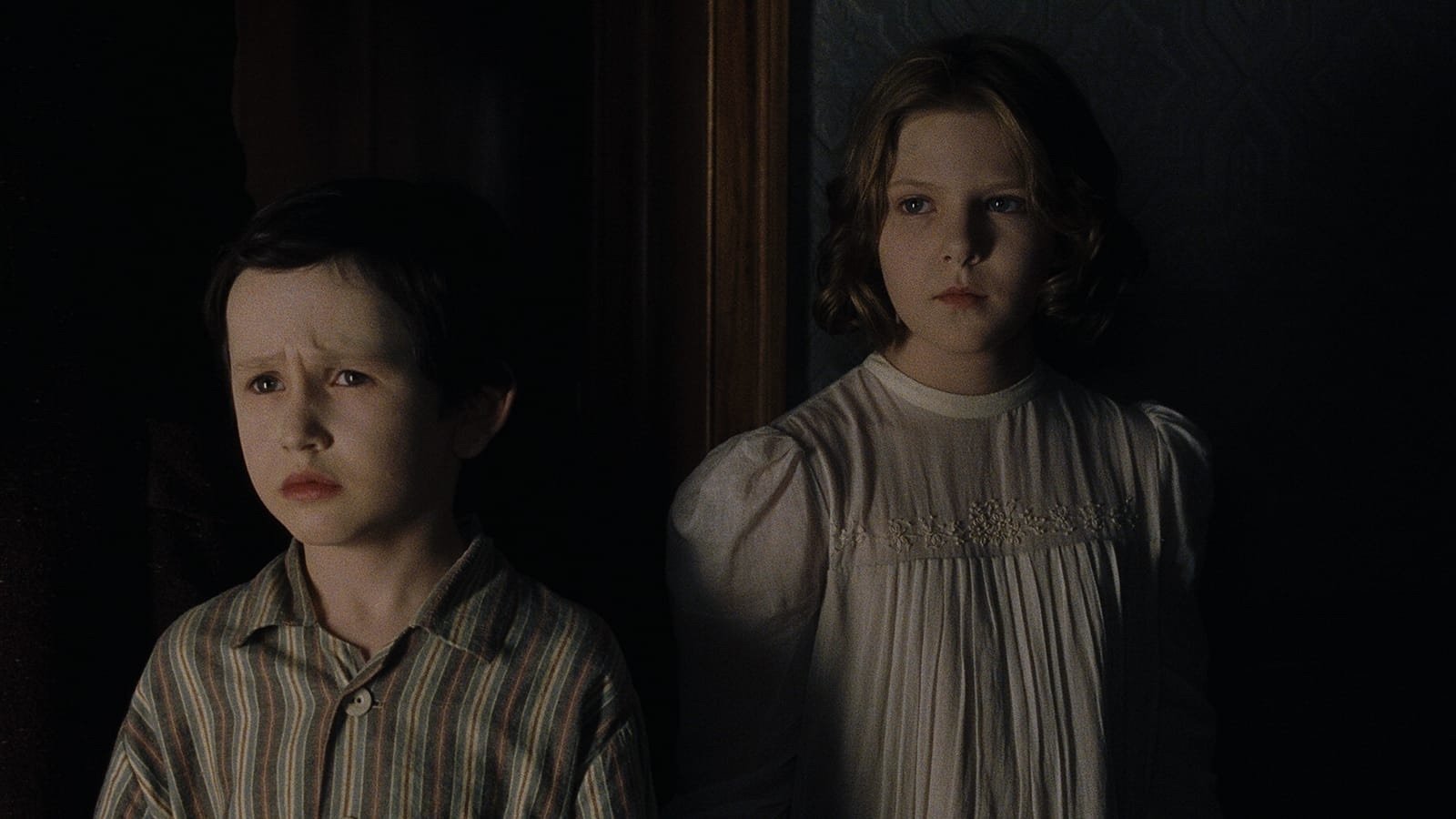
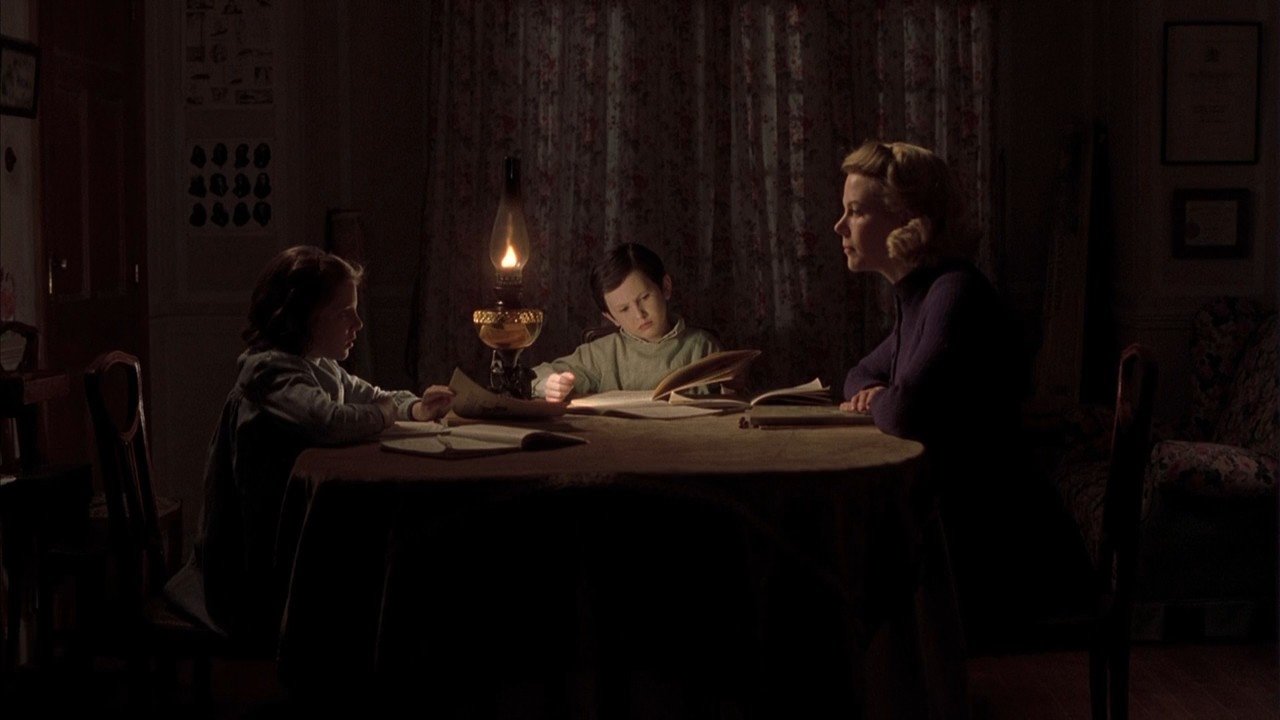
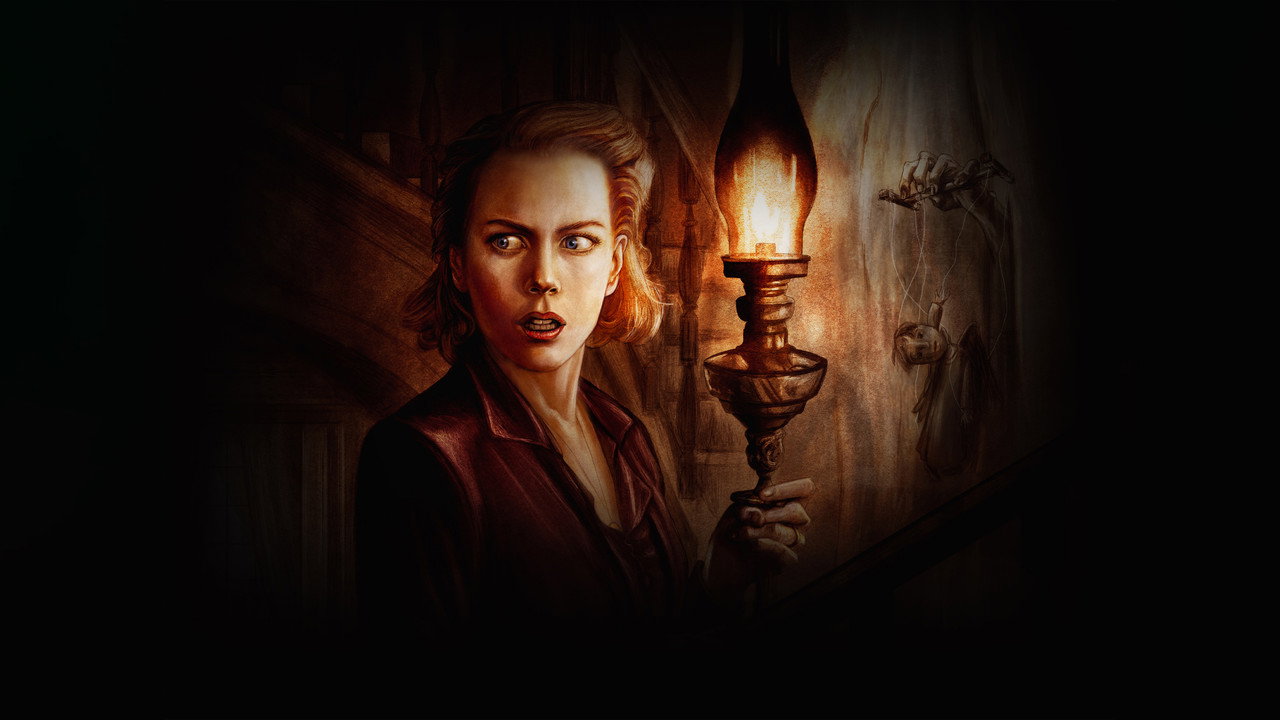
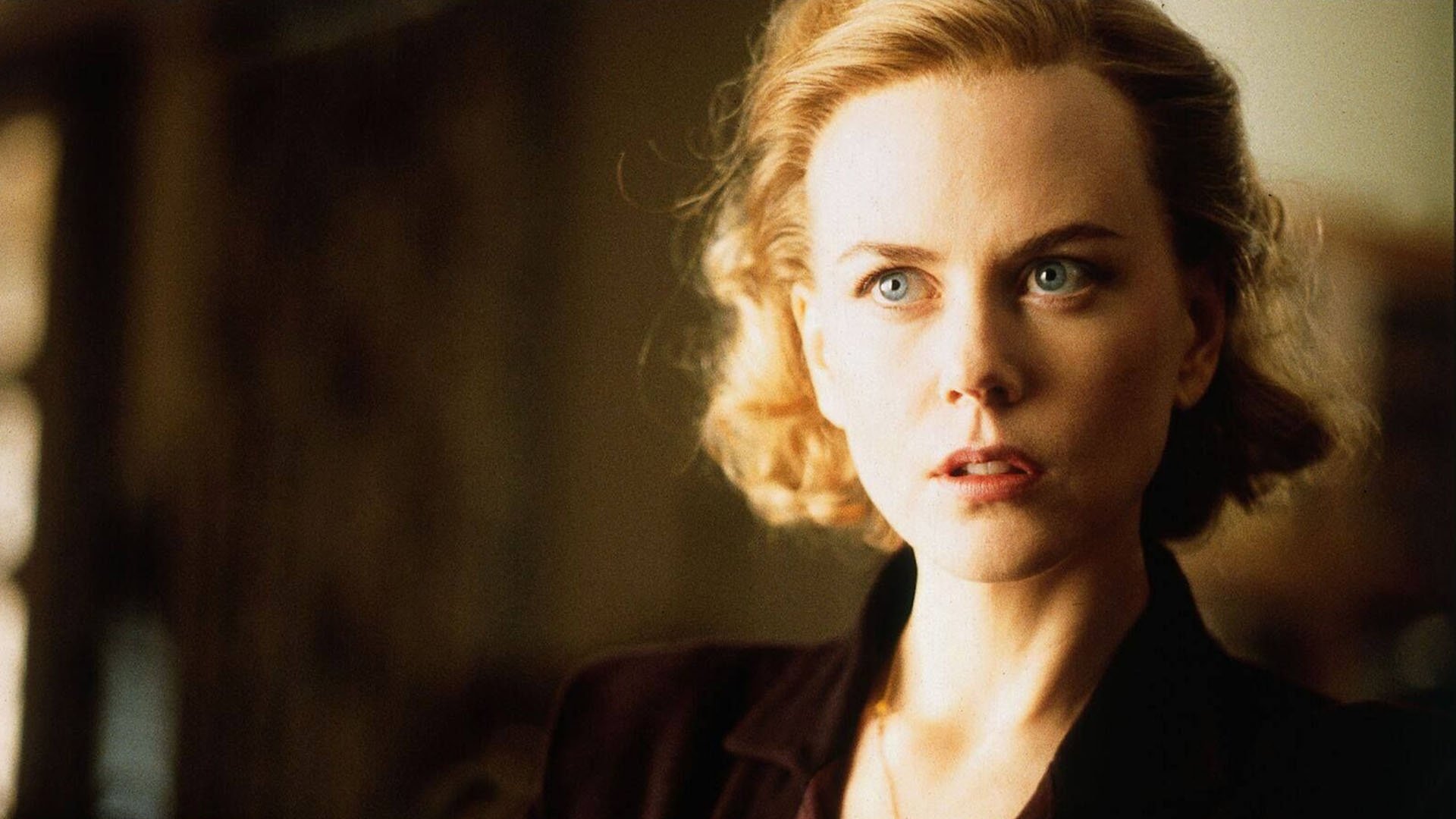
The mansion’s relationship to light is central to the film’s visual construction. Grace’s belief that sunlight threatens her children requires the continuous use of heavy curtains, candles and darkened rooms. Her precautions create an environment in which the occupants cannot easily distinguish ordinary movement from supernatural disturbance. Cinematographer Javier Aguirresarobe used this restriction to organize the image around narrow areas of illumination and large regions of darkness. Faces frequently emerge from low light while backgrounds remain difficult to examine. The audience is compelled to search the same uncertain spaces that Grace attempts to control.
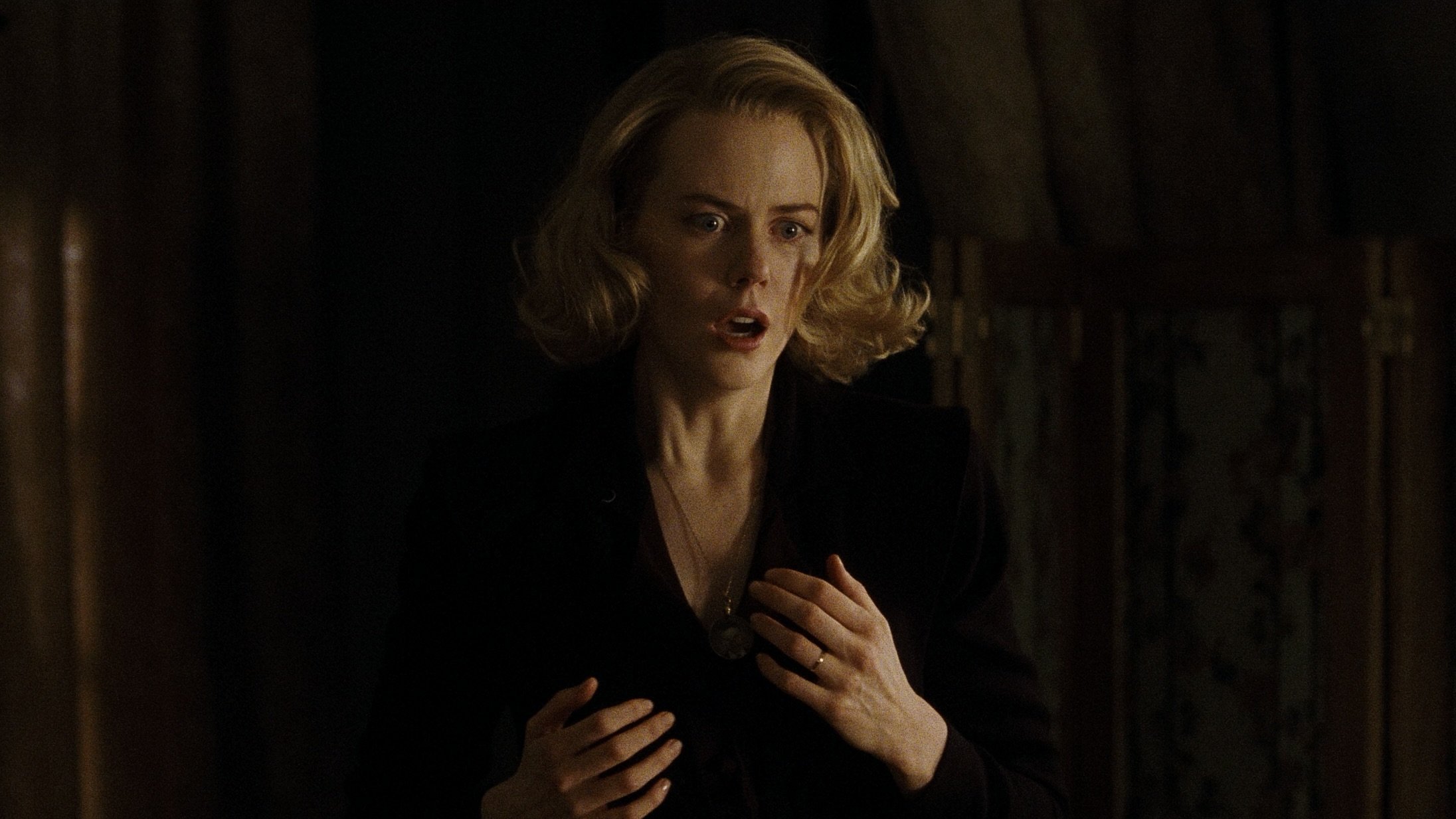
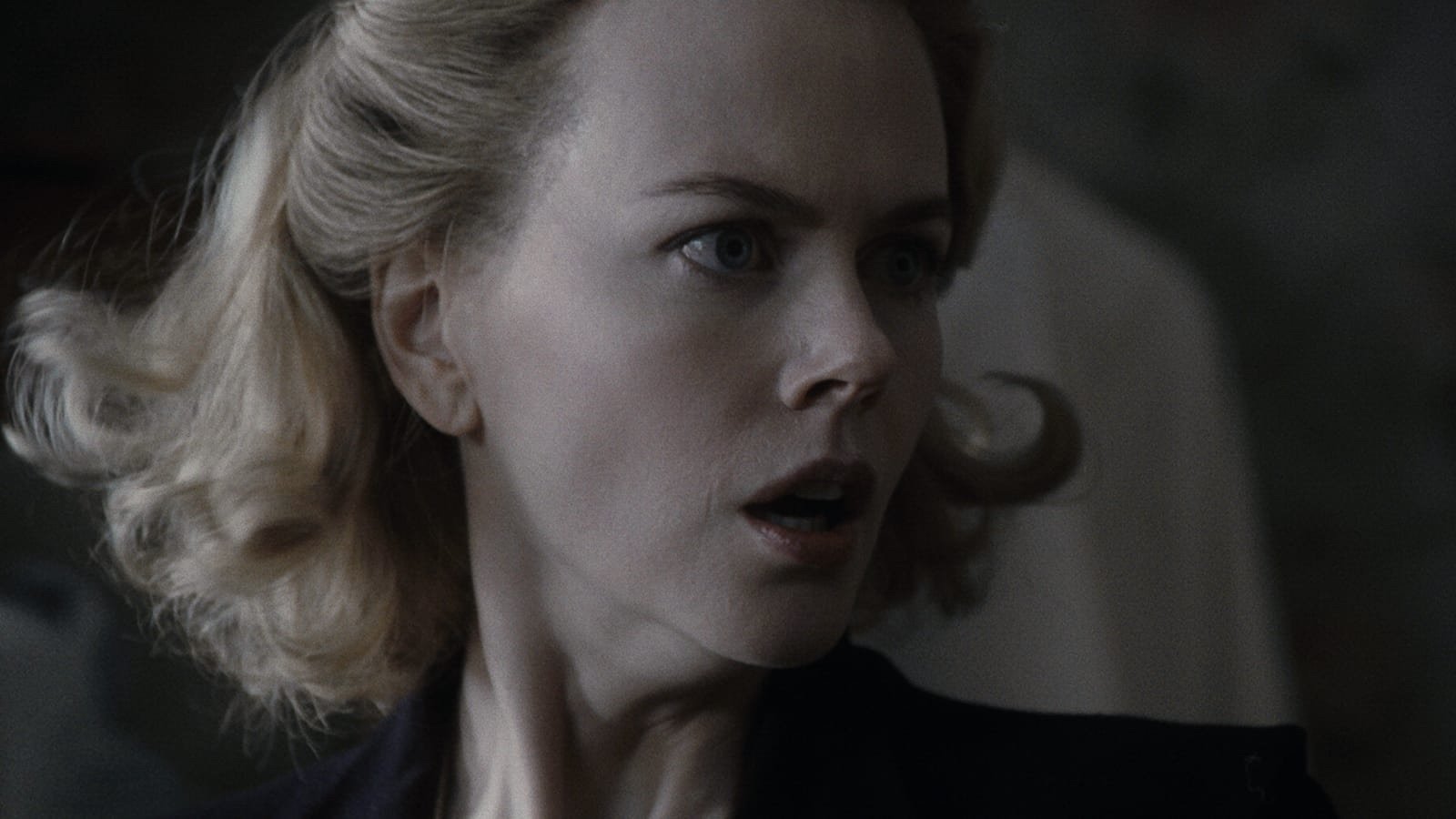
Amenábar discussed his collaboration with Aguirresarobe in a July 2001 interview with SPLICEDwire. The director described their concentration on Nicole Kidman’s eyes and the ability of facial expression to communicate terror without elaborate special effects. This attention to performance shaped the photography of Grace’s encounters with the servants and children. The camera often preserves enough distance to establish the architectural space before drawing attention to a reaction. The movement between a visible face and a partially concealed environment makes the uncertainty of what lies beyond the frame particularly important.

The film was photographed in color on 35mm, with an original aspect ratio of 1.85:1. Its visual treatment draws upon the conventions of classical Gothic cinema while preserving a recognizable domestic environment. Contemporary Sight and Sound critic Nick James compared the film’s atmosphere with Jack Clayton’s The Innocents (1961), particularly its large house and uncertain relationship between children and supernatural presences. The comparison concerns the construction of psychological horror rather than a direct adaptation of Henry James’s The Turn of the Screw. Amenábar’s film develops a different relationship between the protagonist’s convictions and the reality she is unwilling to acknowledge.

Production, Locations & Design

Principal photography began on 31 July 2000 in Madrid. Contemporary reporting by Europa Press documents nine weeks of interior work at El Álamo studios, where a large set representing the Victorian mansion was constructed. Exterior photography subsequently took place at Palacio de los Hornillos in Las Fraguas, Cantabria, an English-style residence dating from the late nineteenth century. The production used the building and its surrounding grounds to provide the isolated setting associated with the fictional island of Jersey. The combination of constructed interiors and an existing historic residence allowed the filmmakers to control the house’s internal geography while preserving a convincing exterior.

The exterior work continued during October and November 2000. Europa Press reported that Kidman’s injury caused delays during this stage of production. Her work concluded on 15 November, and the remaining photography at Los Hornillos was completed shortly afterward. The report described approximately twelve weeks of filming across the studio and exterior locations. The production involved Spanish technical departments alongside an international English-speaking cast, reflecting the collaboration between the Spanish companies Sogecine and Las Producciones del Escorpión and their foreign partners.

Production designer Benjamín Fernández developed the mansion’s imposing interiors, while costume designer Sonia Grande provided clothing consistent with the period and the characters’ social circumstances. The rooms contain substantial furniture and architectural details without losing the clarity needed for suspense. Corridors, doors and stairways repeatedly determine whether Grace can locate the apparent intruders. Their practical arrangement also becomes essential to scenes involving the removal of curtains and the possibility of unexpected light entering a room. The house consequently functions as a carefully organized environment whose rules are progressively challenged by events beyond Grace’s control.

Performances & Characterization

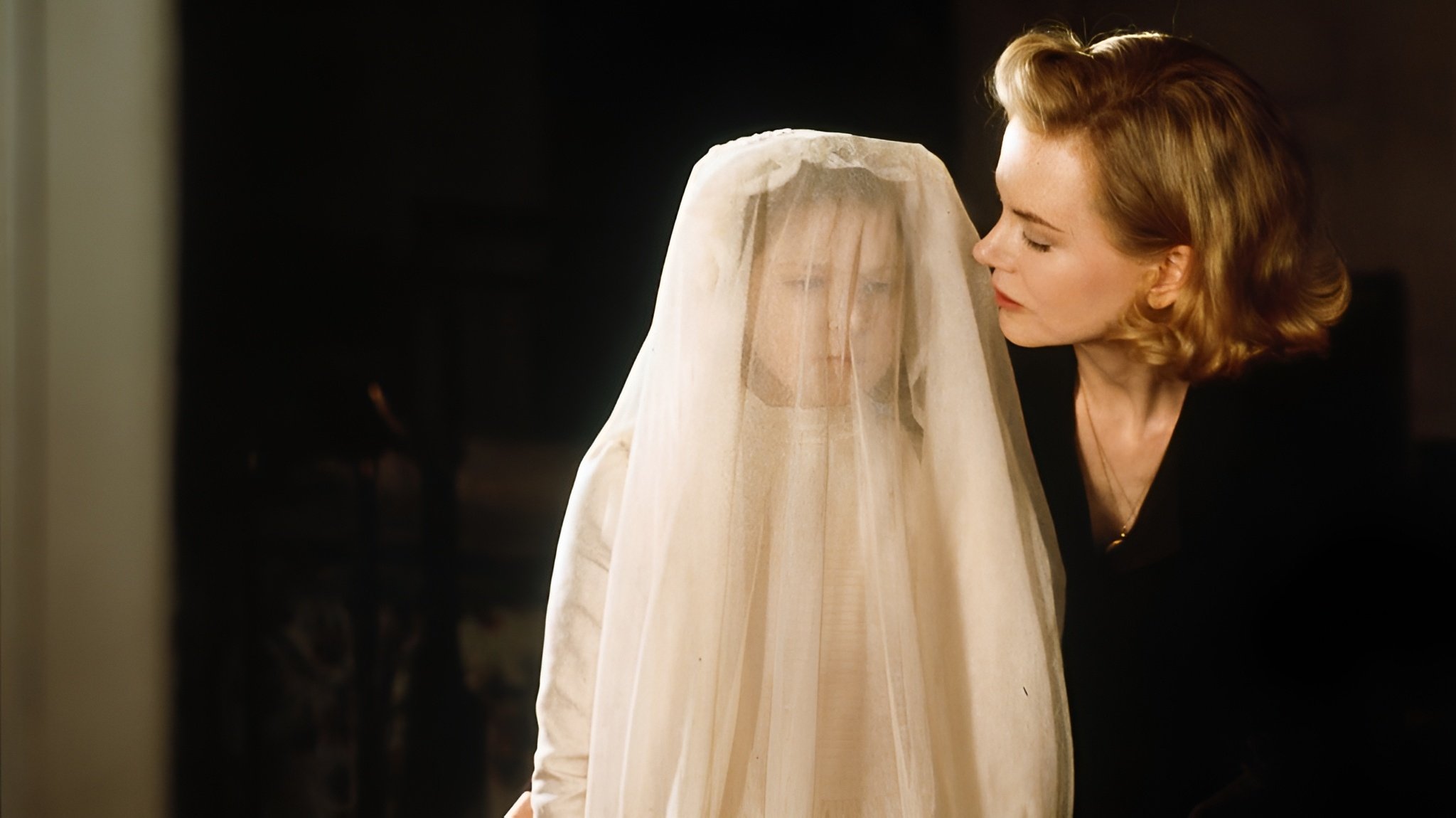
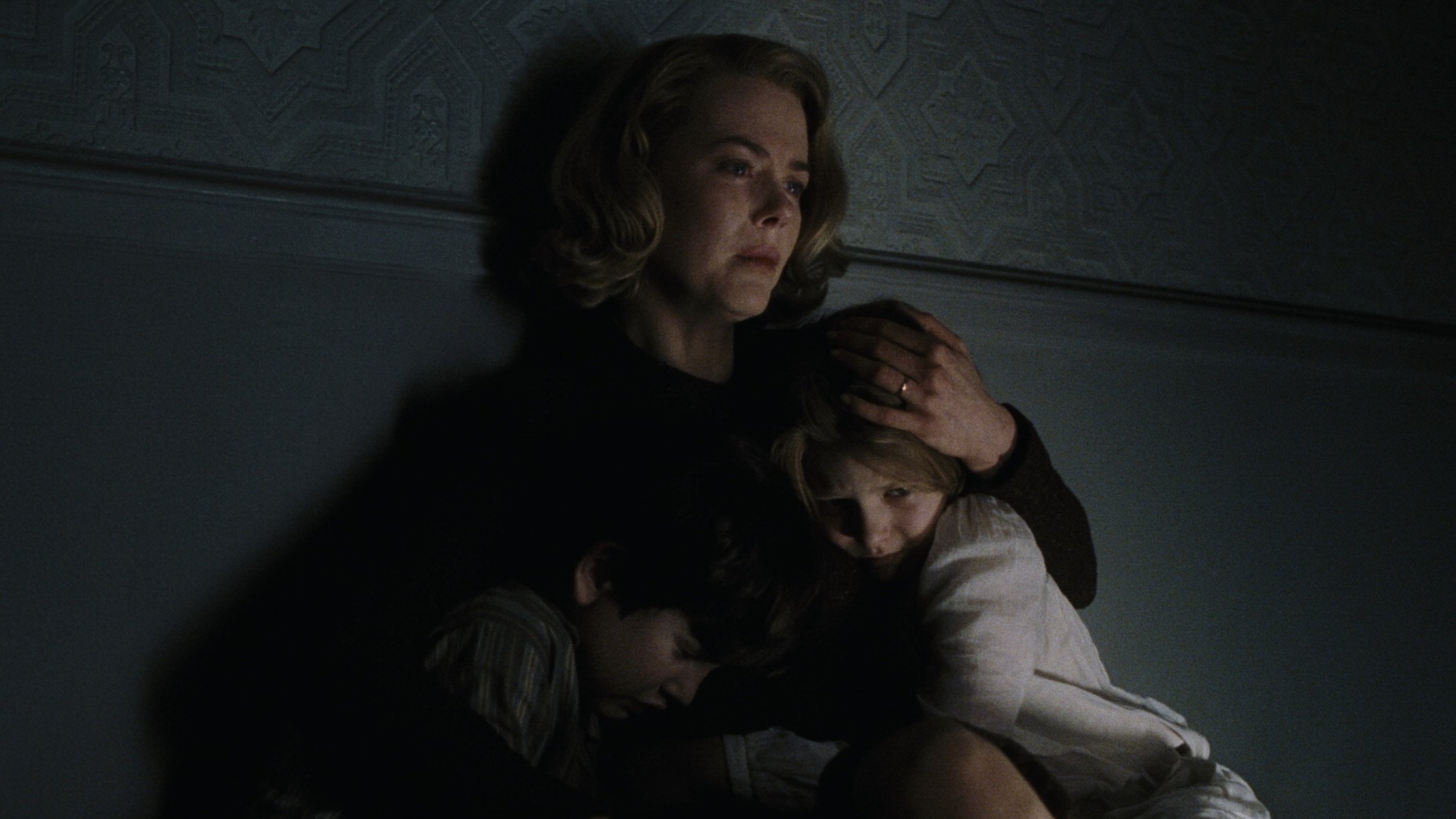
Nicole Kidman portrays Grace as a woman whose determination to protect her children has developed into strict control over their daily lives. Her authority is expressed through repeated instructions, religious lessons and the expectation that the children obey without questioning her explanations. Yet her composure becomes increasingly fragile as the disturbances intensify. Amenábar credited Kidman with adding psychological complexity to the character and described her face as the film’s most important means of communicating fear. Her performance frequently moves between restraint and sudden emotional collapse, making the audience aware of a disturbance that cannot be explained solely by the supposed haunting.

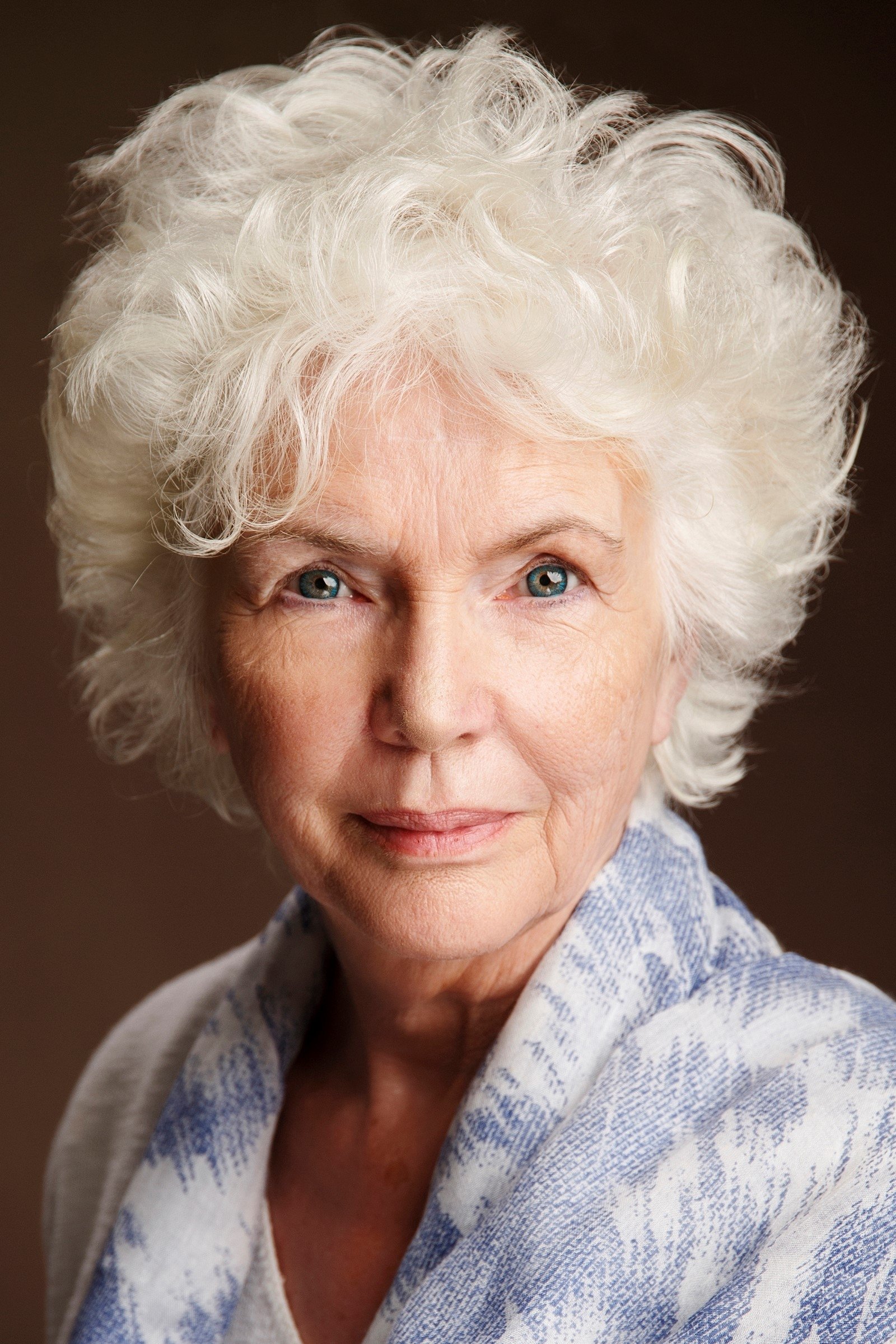
Alakina Mann and James Bentley portray Anne and Nicholas with contrasting responses to their confinement. Anne is more willing to challenge her mother’s explanations, while Nicholas often reacts with greater fear. Their exchanges gradually reveal that the children may possess information inaccessible to Grace. Fionnula Flanagan gives Mrs. Mills an outwardly reassuring presence, although her responses suggest an understanding of the house that she does not immediately disclose. Eric Sykes and Elaine Cassidy contribute to the unsettling composure of the household staff. In his contemporary Sight and Sound review, Nick James identified the supporting performances as an important part of the film’s ability to sustain a Gothic atmosphere without allowing the characters to become merely decorative figures.

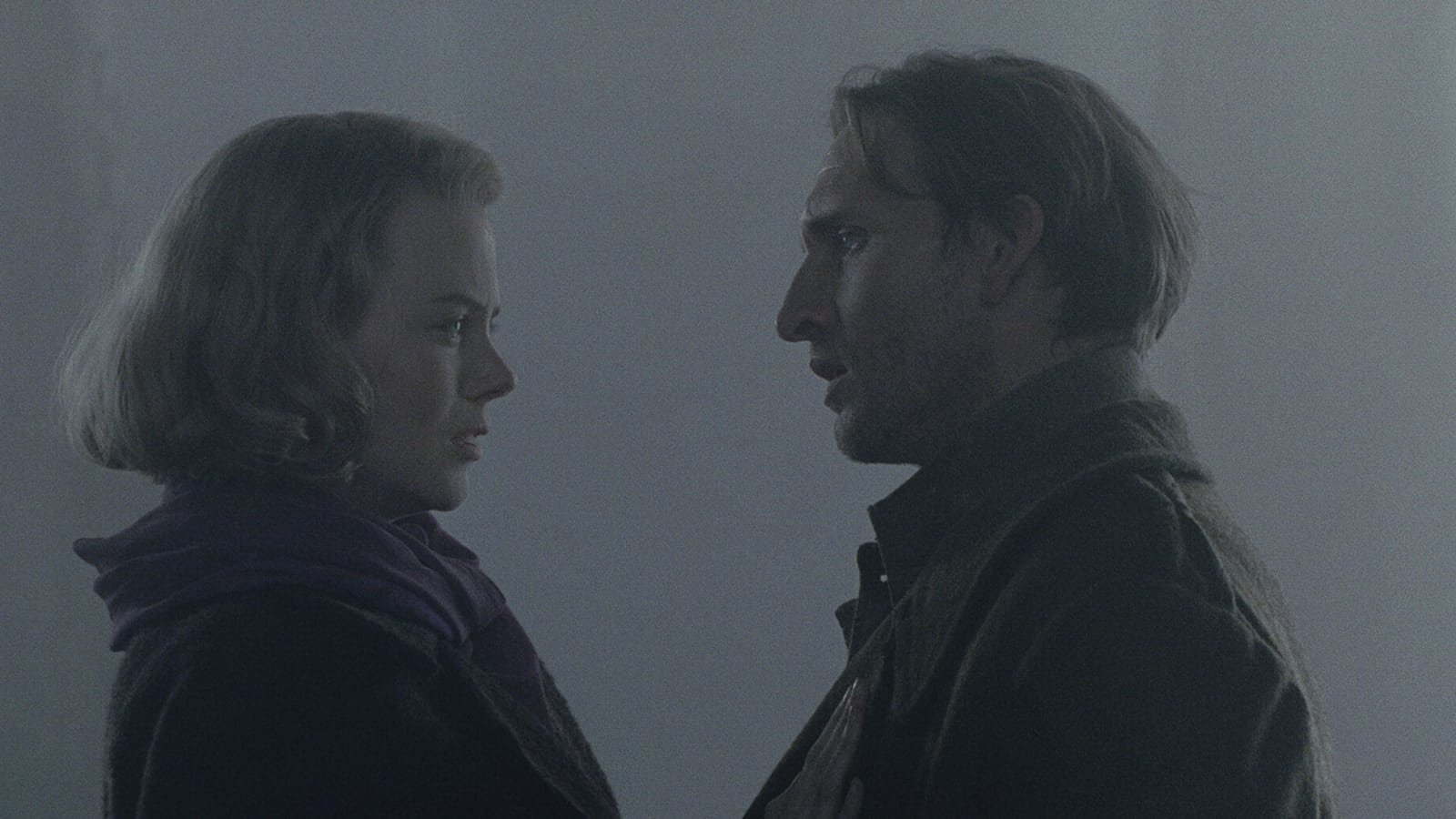
The return of Grace’s husband Charles, played by Christopher Eccleston, introduces another expression of wartime trauma. His emotional distance and inability to remain with the family reinforce the uncertainty surrounding the household’s relationship with the outside world. Grace interprets his appearance through her existing expectations, but the encounter provides little practical reassurance. The film presents his presence as part of the supernatural reality gradually emerging around her. It also connects the private tragedy within the mansion to the broader historical circumstances established by the Second World War.

Music, Sound & Silence

Amenábar composed the original score, continuing a practice established on his earlier features. In the SPLICEDwire interview conducted in July 2001, he explained that he preferred to supervise the music personally because he regarded composition as another aspect of direction. His approach was shaped by childhood listening to film soundtracks, particularly the work of John Williams and Bernard Herrmann. The music for The Others was conceived around two related dramatic functions: sustaining the threatening atmosphere and communicating the emotional circumstances of Grace and her children. Amenábar identified the passages concerned with the family’s suffering as those of which he was most proud.

The director stated that the film contained approximately an hour of music, although he deliberately kept much of it at a low level. He also removed passages when he believed that musical emphasis reduced the effectiveness of a scene. This restraint allowed silence to become one of the soundtrack’s principal resources. In contemporary interviews, Amenábar repeatedly criticized the reliance upon excessive volume and sudden sonic shocks in modern horror. He wanted the audience to become attentive to small changes within the environment rather than anticipate every frightening event through an obvious musical cue.

The sound design makes domestic activity potentially threatening. Footsteps, doors, movement in adjoining rooms and the disappearance of expected noises acquire significance because the house is normally so quiet. Isabel Díaz Cassou’s sound design received particular praise from Nick James in Sight and Sound, who identified it as an essential part of the production’s unsettling effect. The relationship between sound and restricted visibility is especially important when Grace attempts to locate inhabitants whose presence cannot be confirmed by sight. The soundtrack therefore participates directly in the uncertainty governing the narrative, allowing apparently ordinary noises to suggest activity beyond the protagonist’s knowledge.

Release, Reception & Restoration

The Others opened theatrically in the United States on 10 August 2001 through Miramax, with a PG-13 classification. Its original American opening weekend generated approximately $14.09 million from 1,678 theaters. The film subsequently expanded its distribution and accumulated approximately $96.52 million domestically during its original engagement. International receipts brought the worldwide theatrical total for that release to approximately $209.95 million, according to historical Box Office Mojo records. These figures exclude subsequent theatrical reissues and represent commercial receipts rather than the amount returned directly to the producers.

The Spanish theatrical release followed on 7 September 2001, with an Italian opening on 14 September and a British release in November. Contemporary critical reception was strongly favorable among reviewers who valued its restrained use of familiar Gothic material. Writing in Sight and Sound in November 2001, Nick James praised the organization of the haunted-house environment and the control exercised over the narrative’s revelations. His review gave particular attention to Kidman’s performance, Aguirresarobe’s cinematography and the sound design. The film’s relationship with older ghost stories was central to its reception, although its commercial success also occurred during a period of renewed mainstream interest in supernatural thrillers following The Sixth Sense (1999).

At the sixteenth Goya Awards ceremony in 2002, The Others received eight prizes, including Best Film, Best Director and Best Original Screenplay for Amenábar. Additional awards recognized the cinematography of Javier Aguirresarobe, editing by Nacho Ruiz Capillas, production management, art direction and sound. The results were particularly significant for a Spanish-led production performed in English and distributed internationally. The film subsequently remained prominent in discussions of modern Gothic horror, especially for its reliance on restricted perception and its reversal of the usual relationship between the living and the dead.

A new 4K restoration was released in 2023, approved by Amenábar and issued internationally through StudioCanal and the Criterion Collection. The restoration returned to the original 35mm camera negative and preserved the film’s 1.85:1 presentation. New interviews and production supplements accompanied the restored editions, providing additional documentation of the photography, soundtrack and construction of the mansion. Its continuing availability in restored form has allowed renewed attention to the relationship between the image’s darkness and the carefully organized soundscape. Those technical qualities remain essential to understanding the film’s particular approach to supernatural horror.

References

  1. Nitrate Online The Others — Interview with Alejandro Amenábar

    Original October 2001 interview by Cynthia Fuchs examining the screenplay, wartime setting, religious beliefs, narrative perspective and deliberate restraint in supernatural horror.

  2. SPLICEDwire From the Eyes to The Others — Alejandro Amenábar Interview

    Direct July 2001 interview by Rob Blackwelder documenting the cinematography, work with Nicole Kidman, construction of suspense, musical composition and use of silence.

  3. British Film Institute — Sight and Sound It Earns Every Hair It Stiffens: Alejandro Amenábar’s The Others

    Nick James’s original November 2001 critical analysis, republished in August 2026, examining the Gothic tradition, Kidman’s performance, Javier Aguirresarobe’s photography and sound design.

  4. Europa Press Alejandro Amenábar finaliza el rodaje de Los Otros en el Palacio de Los Hornillos de Las Fraguas

    Contemporary November 2000 production reporting documenting the Madrid studio work, Cantabrian exteriors, filming schedule and participation of Spanish production companies.

  5. Academia de Cine — Premios Goya XVI Edición de los Premios Goya — Premios 2002

    Official Spanish Film Academy archive confirming the film’s awards for Best Film, Direction, Original Screenplay, Cinematography, Editing, Production Management, Art Direction and Sound.

Cast

View Full Cast & Crew →

Release & Distribution

Production Companies (3)

  • Cruise/Wagner Productions US
  • Las Producciones del Escorpión ES
  • Sogecine ES

Distributors (1)

  • Lucky Red Distribuzione IT

Release History (69)

Release DateTerritoryRelease TypeFormatDistributorCertificationNotes
2001-08-02 Portugal Theatrical — — M/16
2001-08-02 United States Premiere — — PG-13
2001-08-10 United States Theatrical — — PG-13
2001-09-01 Italy Premiere — — — Venice Film Festival
2001-09-06 Spain Theatrical — — 12
2001-09-07 Spain Theatrical — — 12
2001-09-14 Switzerland Theatrical — — 14
2001-09-14 Italy Theatrical — — VM14
2001-09-15 Netherlands Premiere — — 12 Film by the Sea Film Festival
2001-09-28 Brazil Premiere — — — Rio de Janeiro International Film Festival
2001-10-04 Argentina Theatrical — — 13
2001-10-19 Taiwan Theatrical — — —
2001-10-19 Uruguay Theatrical — — —
2001-10-25 Hong Kong SAR China Theatrical — — IIB
2001-10-27 Brazil Premiere — — 12
2001-10-31 United Kingdom Theatrical — — 12
2001-10-31 Venezuela Theatrical — — —
2001-11-01 Brazil Theatrical — — 12
2001-11-02 Ireland Theatrical — — 15
2001-11-02 Iceland Theatrical — — 12
2001-11-02 Mexico Theatrical — — B
2001-11-04 Japan Premiere — — G Tokyo International Film Festival
2001-11-08 Australia Theatrical — — M
2001-11-09 Colombia Theatrical — — —
2001-11-29 Netherlands Theatrical — — 12
2001-11-29 Peru Theatrical — — 14
2001-12-14 Greece Theatrical — — —
2001-12-20 Singapore Theatrical — — PG
2001-12-26 Switzerland Theatrical — — 14
2001-12-26 France Theatrical — — 12
2001-12-26 Russia Theatrical — — 16+
2001-12-27 Israel Theatrical — — —
2001-12-28 Türkiye Theatrical — — —
2002-01-03 Malaysia Theatrical — — U
2002-01-04 Poland Theatrical — — 16
2002-01-10 Switzerland Theatrical — — 14
2002-01-10 Germany Theatrical — — 12
2002-01-10 South Korea Theatrical — — 12
2002-01-11 Austria Theatrical — — —
2002-01-11 South Africa Theatrical — — —
2002-01-16 Belgium Theatrical — — —
2002-01-16 Egypt Theatrical — — —
2002-01-18 Estonia Theatrical — — —
2002-01-23 Philippines Limited Theatrical — — —
2002-01-24 Czechia Premiere — — 15+ Febio Film Festival
2002-01-24 Philippines Theatrical — — — Manila
2002-02-07 Serbia Premiere — — — Belgrade Film Festival
2002-02-08 Lithuania Theatrical — — N-16
2002-02-15 Sweden Theatrical — — 15
2002-02-20 Philippines Theatrical — — — Davao
2002-02-22 Norway Theatrical — — 15
2002-03-01 Cyprus Theatrical — — —
2002-03-07 Czechia Theatrical — — 12+
2002-03-14 Hungary Theatrical — — 16
2002-03-15 Finland Theatrical — — —
2002-04-16 Kuwait Theatrical — — —
2002-04-27 Japan Theatrical — — G
2002-05-31 Denmark Theatrical — — —
2002-08-22 Germany Physical DVD — 12 DvD
2003-04-27 Kazakhstan Premiere — — — Spanish Film Week
2004-10-29 Netherlands TV — — 12 Yorin
2011-05-27 Netherlands Physical DVD — 12 DVD
2022-10-06 Ukraine Theatrical — — —
2023-10-26 Netherlands Theatrical — — 16
2025-12-11 Russia Theatrical — — 18+
2026-04-16 China Premiere — — — Beijing International Film Festival
2026-10-19 Argentina Premiere — — —
2026-10-22 Argentina Theatrical — — +13 Reestreno 25° Aniversario
2026-10-29 Argentina Limited Theatrical — — +13 Reestreno

Awards & Festivals

11 entries
YearFestival / AwardEntrySectionCategoryResultPremiere
2002Goya Award for Best Art Directionawardwon
2002Goya Award for Best Art Directionawardnominated
2002Goya Award for Best Editingawardwon
2002Goya Award for Best Soundawardwon
2002Goya Award for Best Soundawardnominated
2002Goya Award for Best Special Effectsawardnominated
2002Goya AwardsawardGoya Award for Best Filmwon
2002Goya AwardsawardGoya Award for Best Production Supervisionwon
2002Goya AwardsawardGoya Award for Best Production Supervisionnominated
2002Ignotus AwardsawardIgnotus Award for Best Audiovisual Productionwon
2001European Film AwardsawardEuropean Film Award for Best Filmnominated
Sooner or later they’ll find you.