Crystal Lake Entertainment
, Sean S. Cunningham Films
Plot
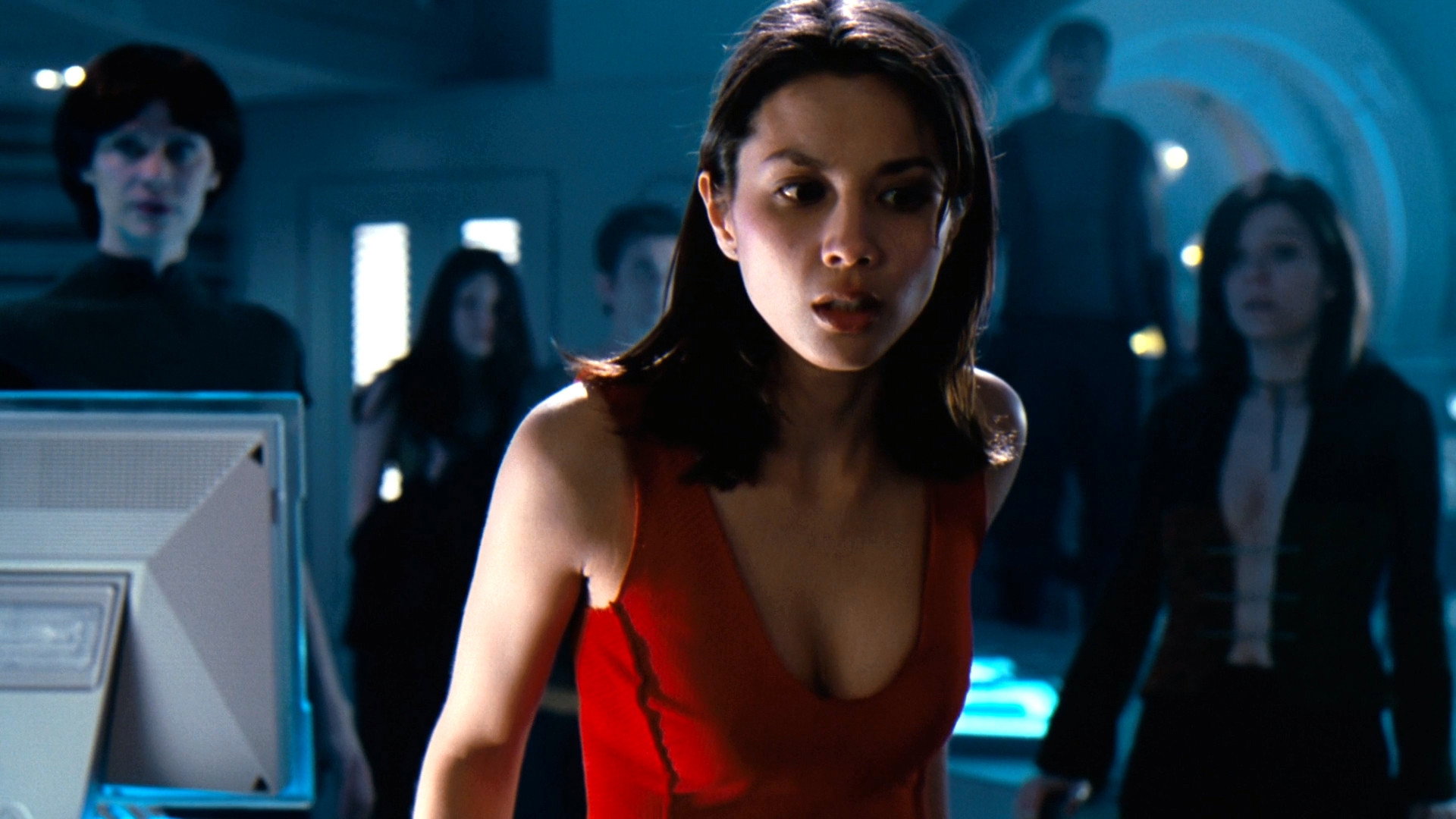
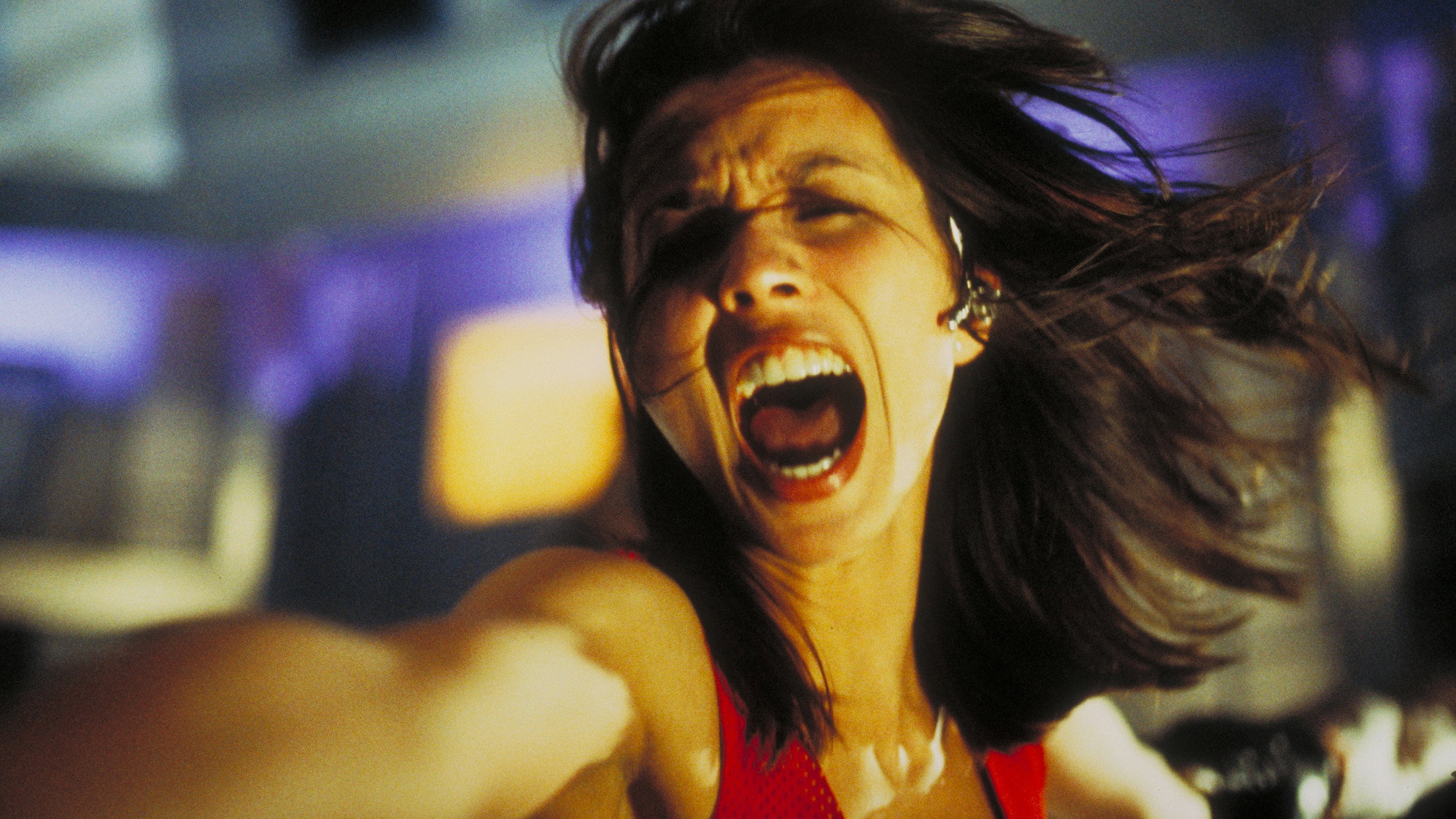
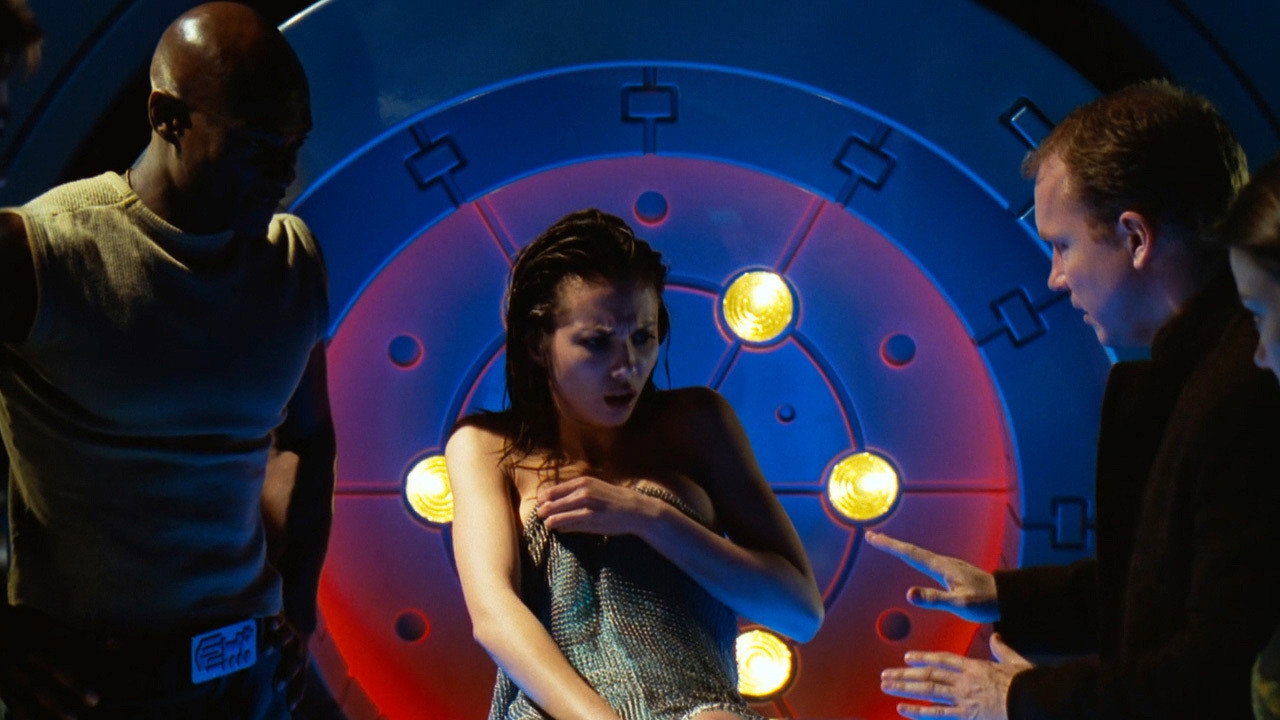
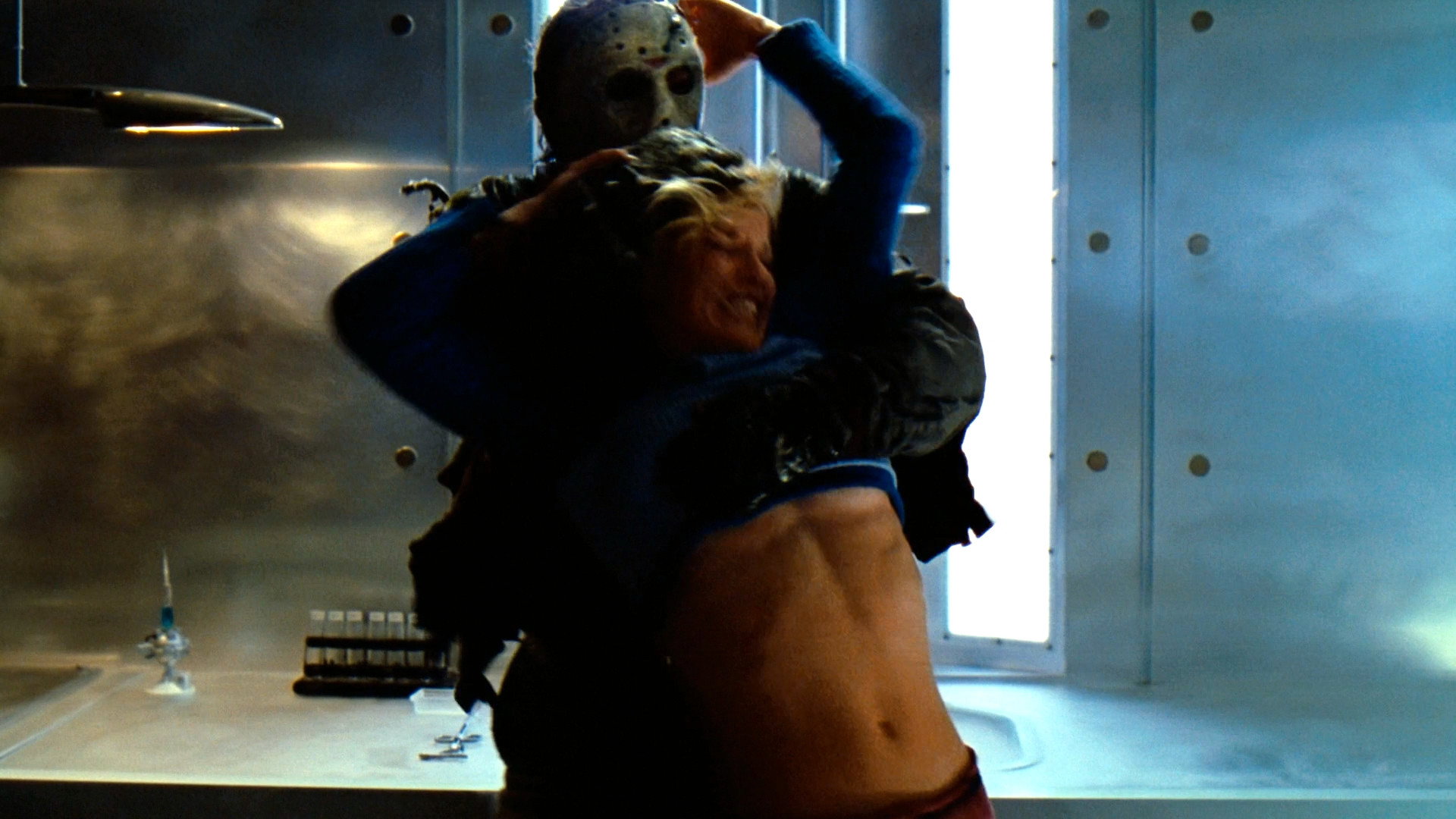
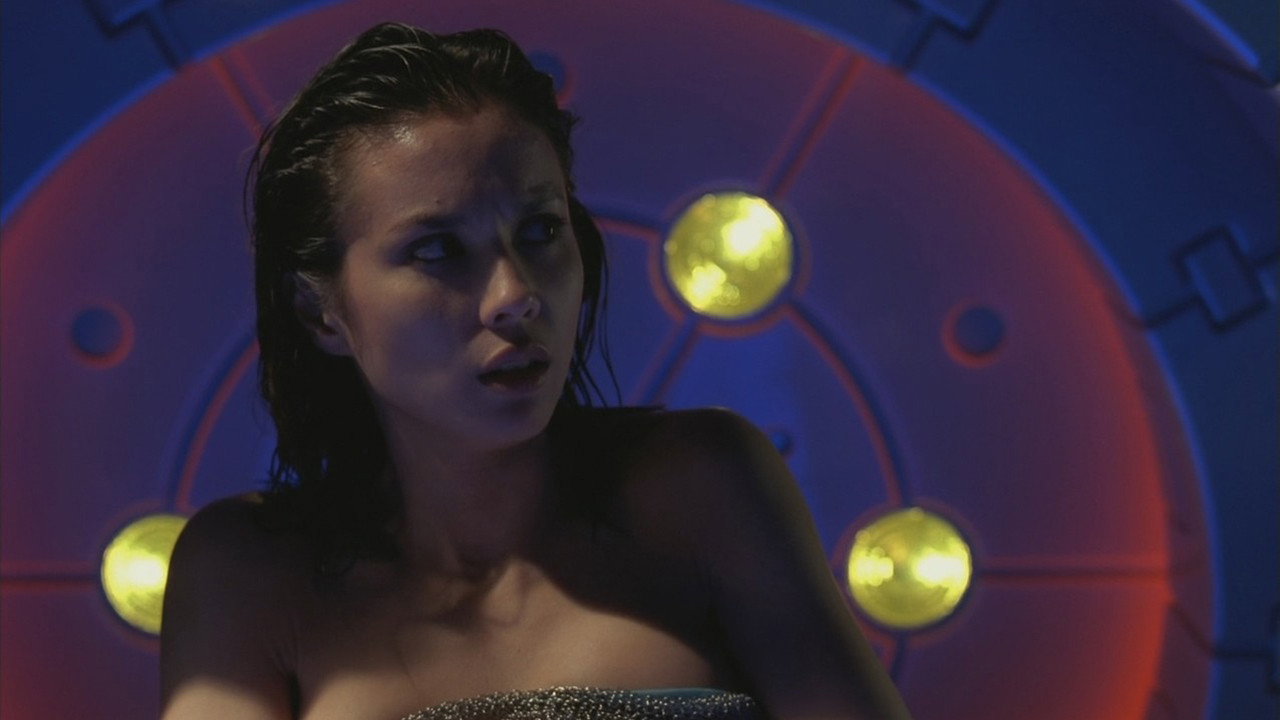
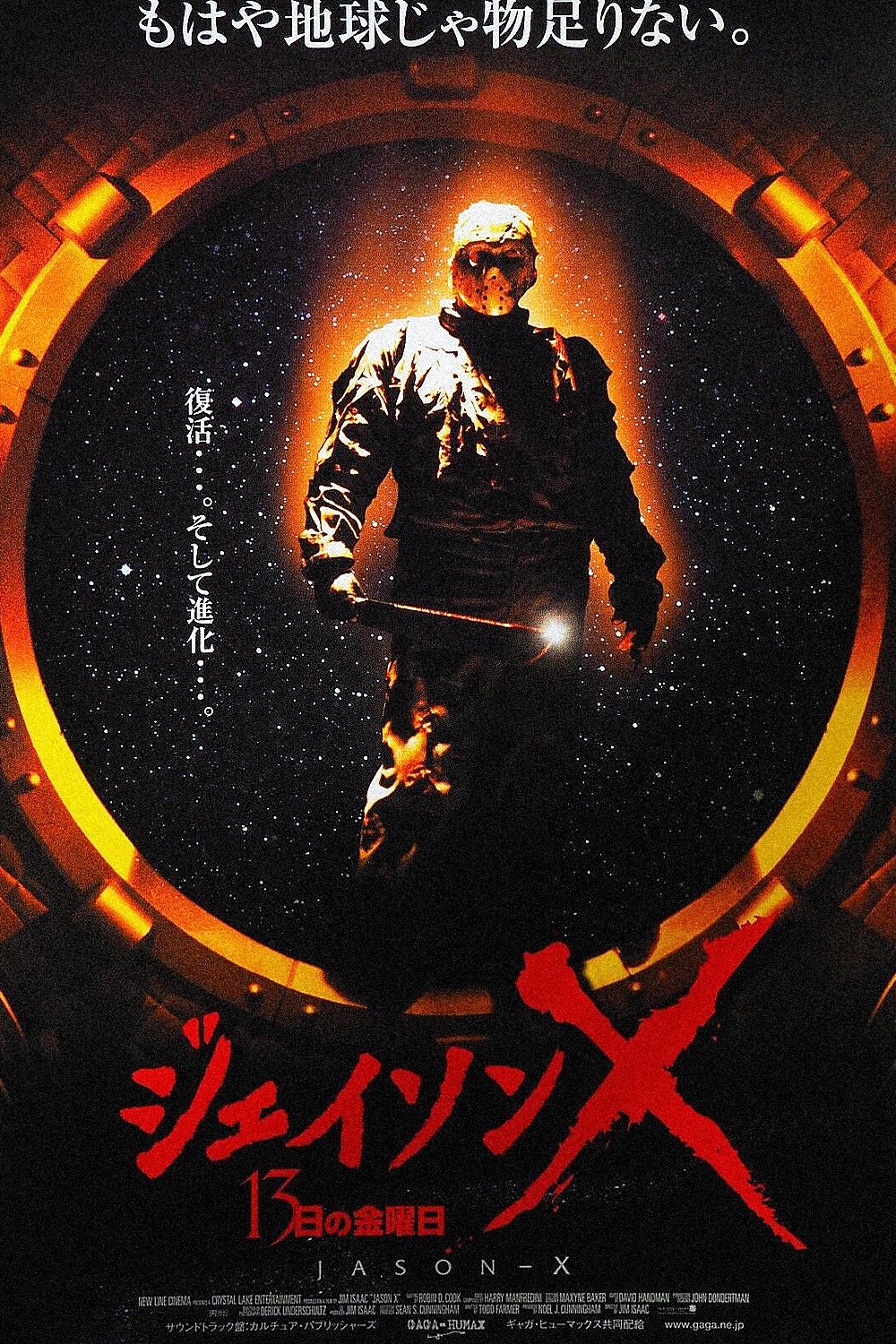
At a research facility on Earth, scientist Rowan LaFontaine traps Jason Voorhees in a cryogenic chamber, but Jason damages the equipment during his attack, causing both of them to be frozen. Centuries later, a team of students and researchers discovers their frozen bodies and transports them aboard a spacecraft. Rowan awakens to find that humanity has largely abandoned Earth, while Jason soon resumes killing among the crew. With little room to escape, the survivors must confront the familiar murderer in an unfamiliar technological environment, where the ship's systems offer both new defenses and new dangers.
Alternative Titles
Martes 13 Parte 10: Jason X (Argentina) Ceyson X (Azerbaijan) — AzerbaijaniДжейсън Х (Bulgaria) — Bulgarian十三号星期五10:杰森在太空 (China) — Chinese太凶杀人狂 (China) Freitag der 13. - Jason X (Germany) Freitag der 13. Teil 10 - Jason X (Germany) Viernes 13 parte 10 - Jason X (Spain) Show all 41 alternative titlesVendredi 13, chapitre 10 : Jason X (France) Friday the 13th: Jason X (United Kingdom) — alternative titleΠαρασκευή και 13 Νο 10 - Τζέισον 10 (Greece) 太兇殺人狂 (Hong Kong SAR China) — ChineseJason 2000 (Hungary) — alternative titlePéntek 13. - 10. rész: Jason 2000 (Hungary) — alternative titlePéntek 13. - Jason X (Hungary) — announced titlePéntek 13. - X rész: Jason X (Hungary) — alternative titlePentek 13. - X. rész (Hungary) — alternative titleג'ייסון X (Israel) — Hebrewजेसन X (India) — HindiJason X: Morte Violenta (Italy) ジェイソンX 13日の金曜日 (Japan) — Japanese제이슨 X (South Korea) — KoreanViernes 13 parte 10 (Mexico) Viernes 13 Parte 10: Jason X - Al Espacio (Mexico) — SpanishViernes 13 parte X (Mexico) Friday the 13th Part 10 (Netherlands) Friday the 13th Part X (Netherlands) Piątek trzynastego 10: Jason X (Poland) — PolishДжейсон X (Russia) Джейсон Х (Russia) — RussianJason X Maldad Suprema (El Salvador) เจสัน โหดพันธุ์ใหม่ ศุกร์ 13 X (Thailand) — Thai星際公敵 (Taiwan) — ChineseДжейсон Ікс (Ukraine) — UkrainianFriday the 13th Part 10 - Jason X (United States) Friday the 13th Part 10: Jason X (United States) — Working TitleFriday the 13th Part X - Jason X (United States) Friday the 13th Part X Jason X (United States) Friday the Thirteen X: Jason X (United States) — Android TVJason 2000: Friday the 13th Part X (United States) Jason X: Friday the 13th Part 10 (United States)
The space-bound Friday the 13th sequel: Todd Farmer's screenplay, James Isaac's effects-led production, Uber Jason and the 2002 critical response.
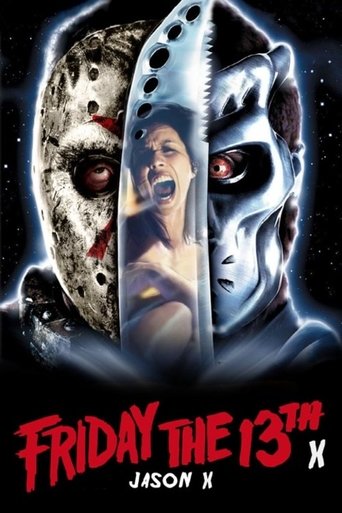
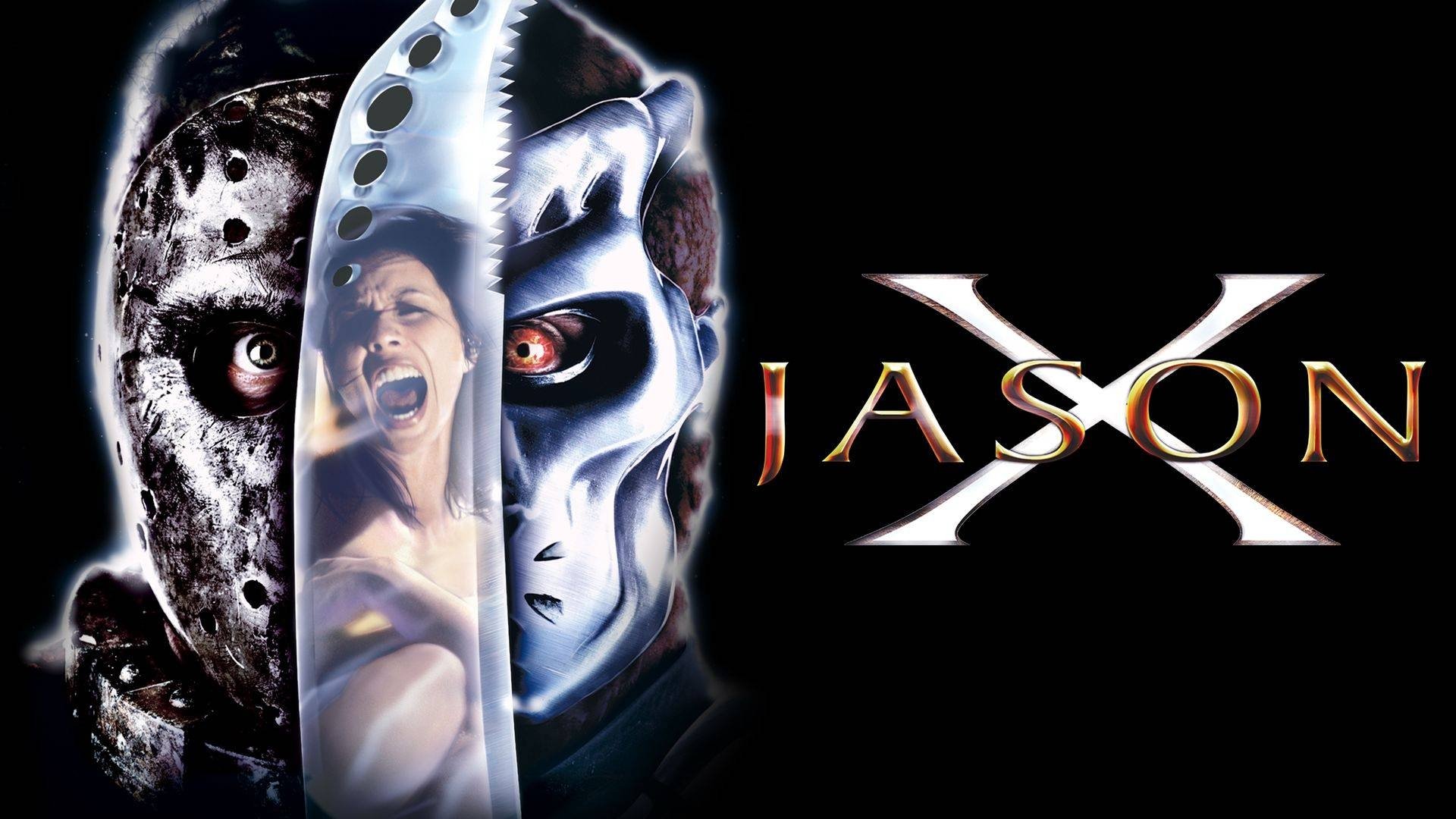
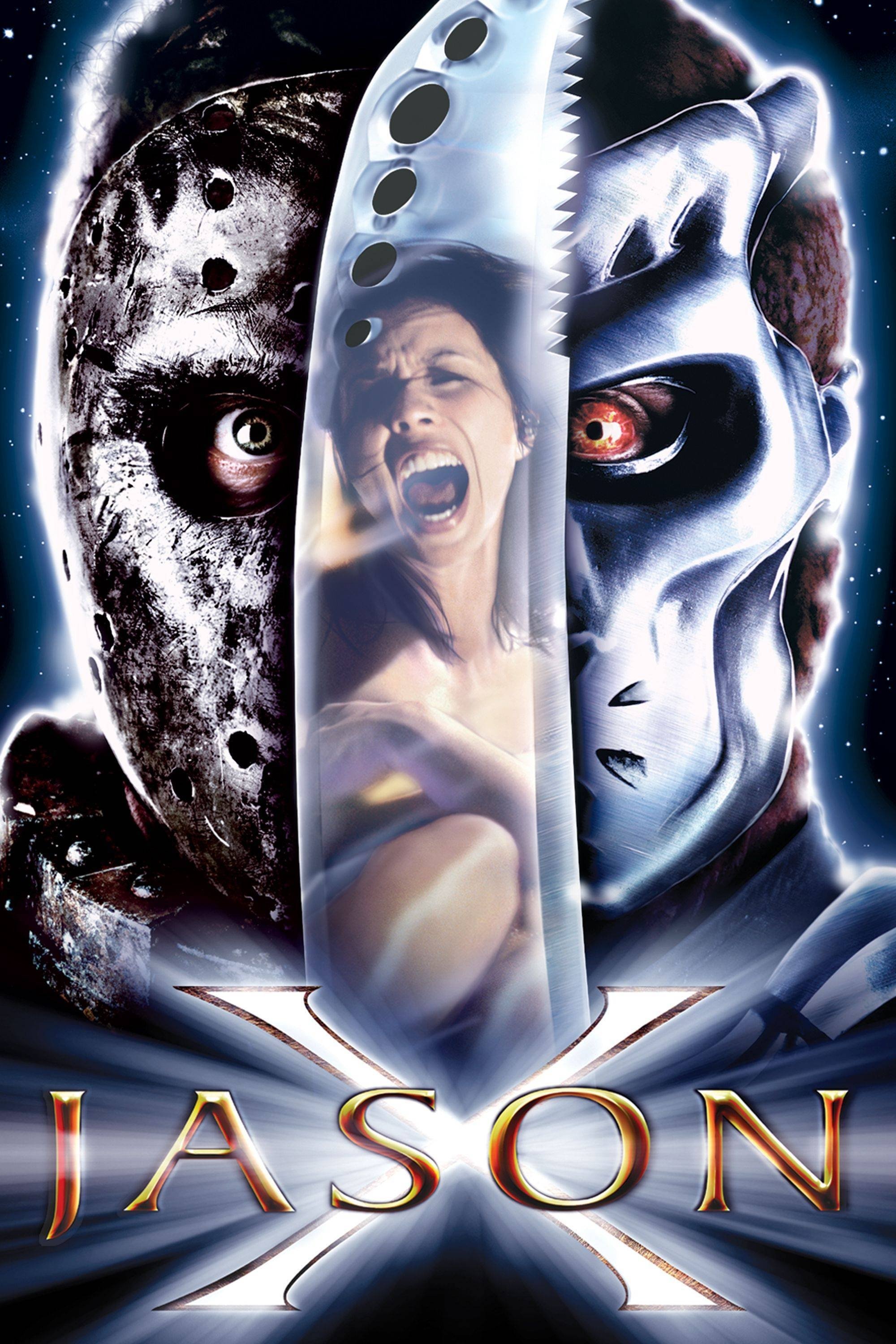
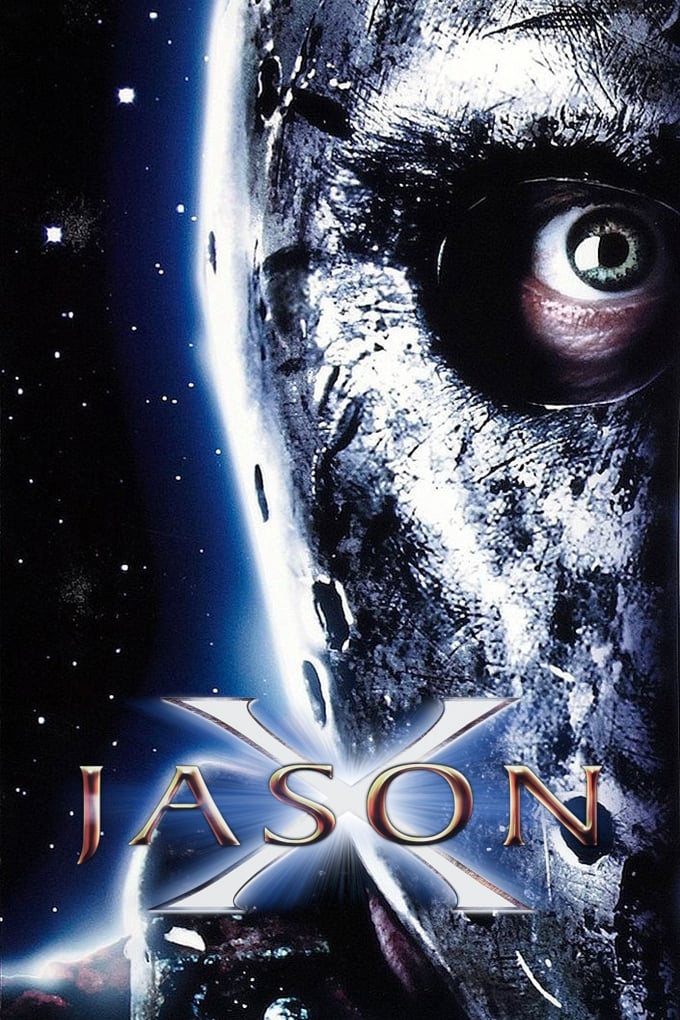
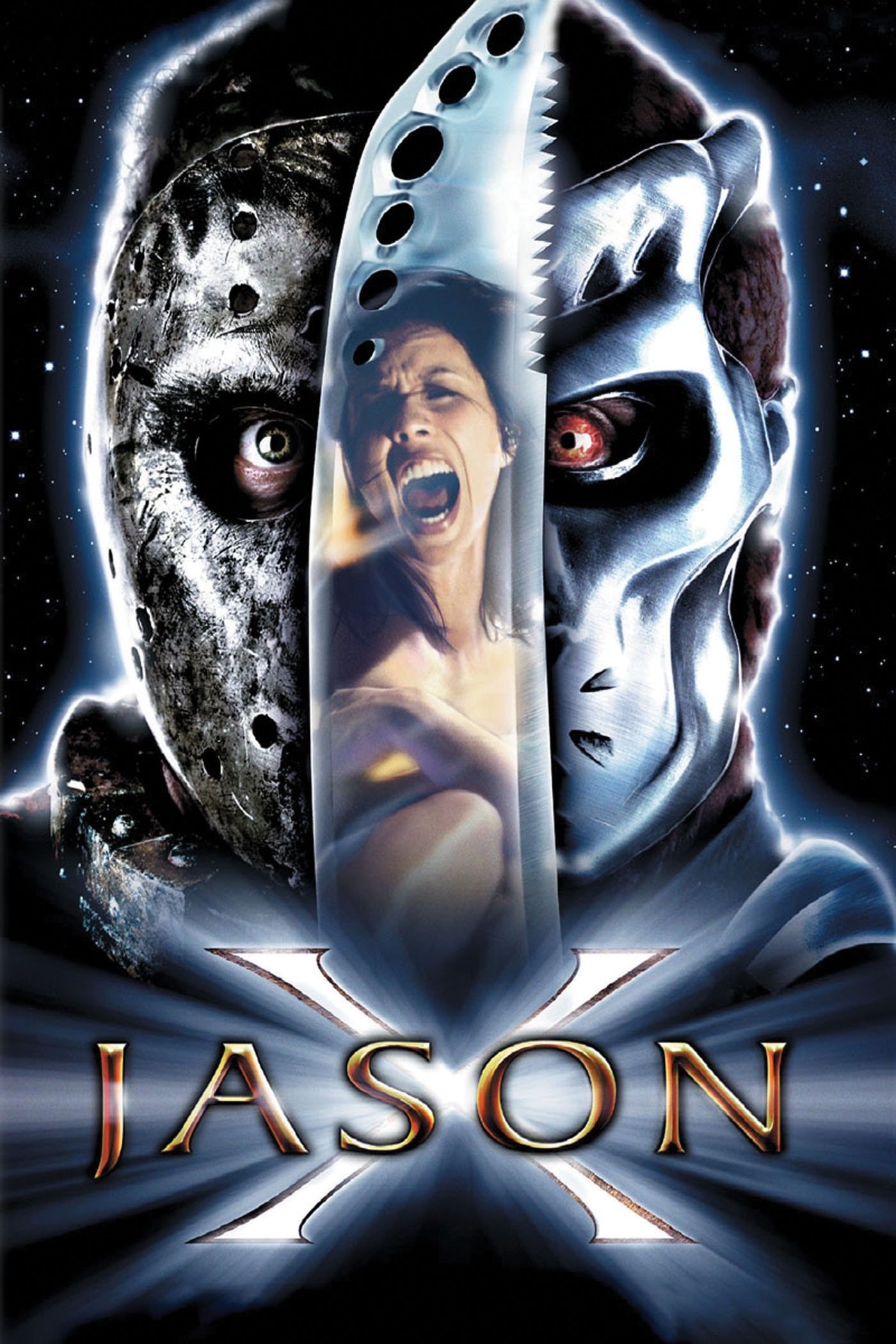
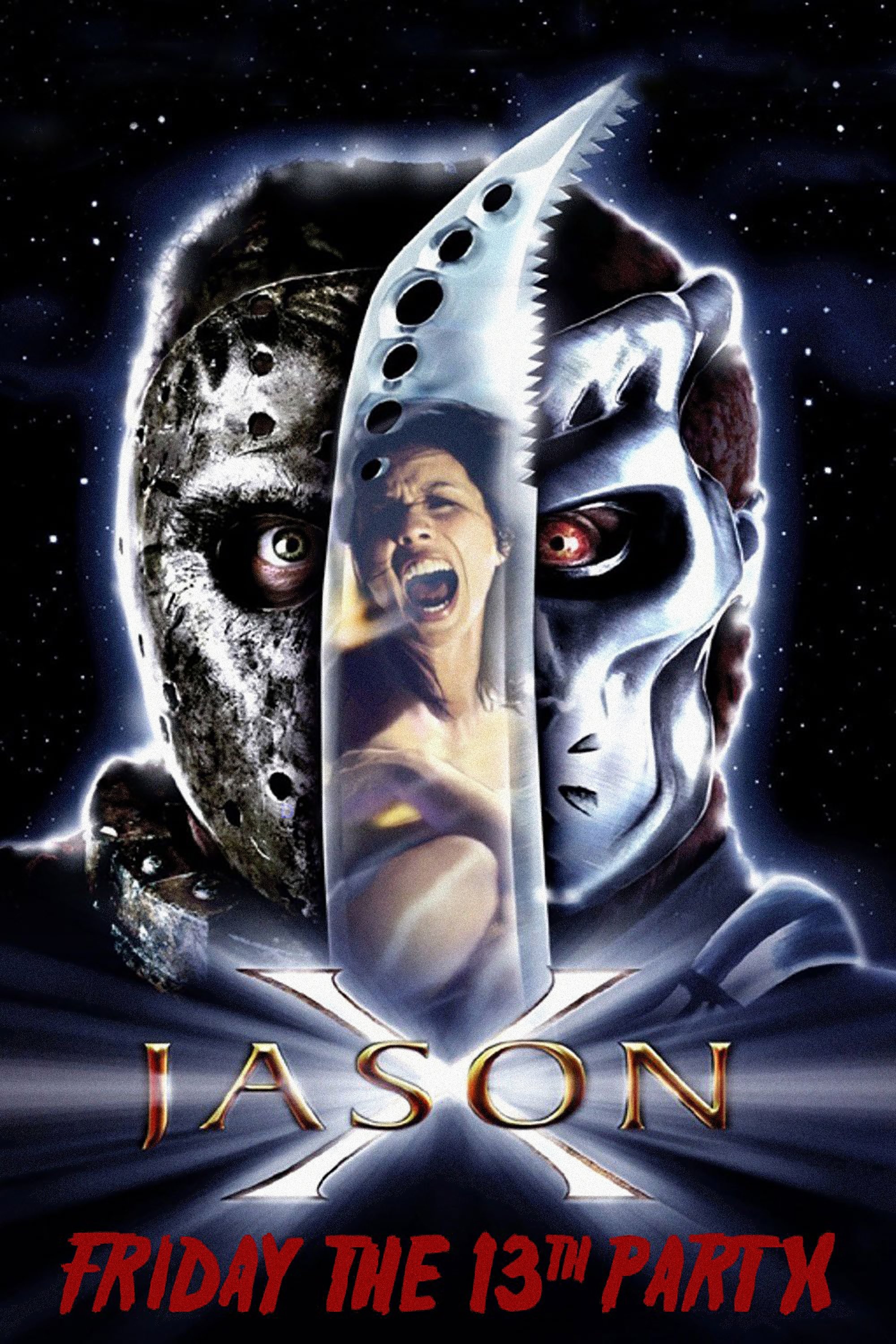
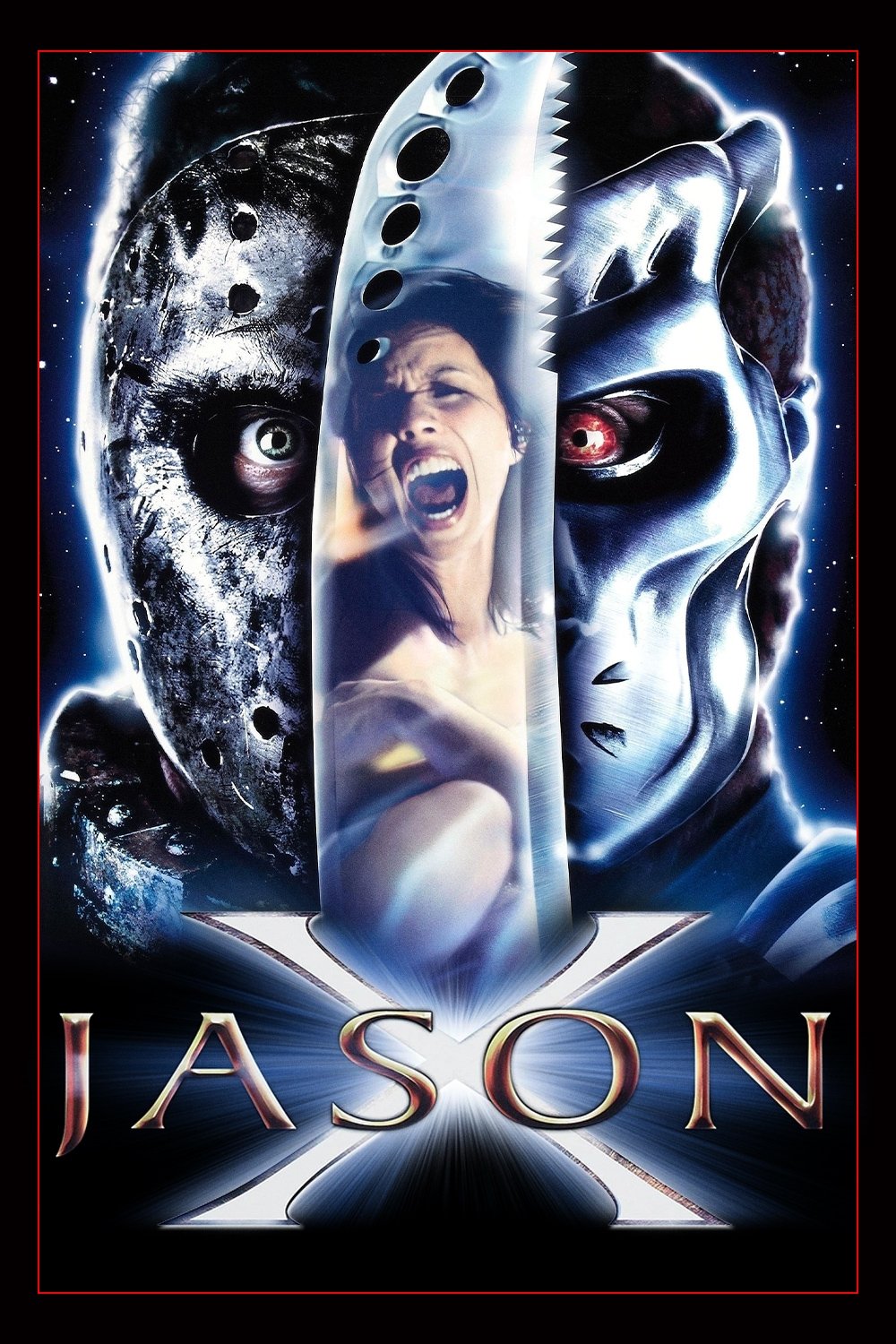
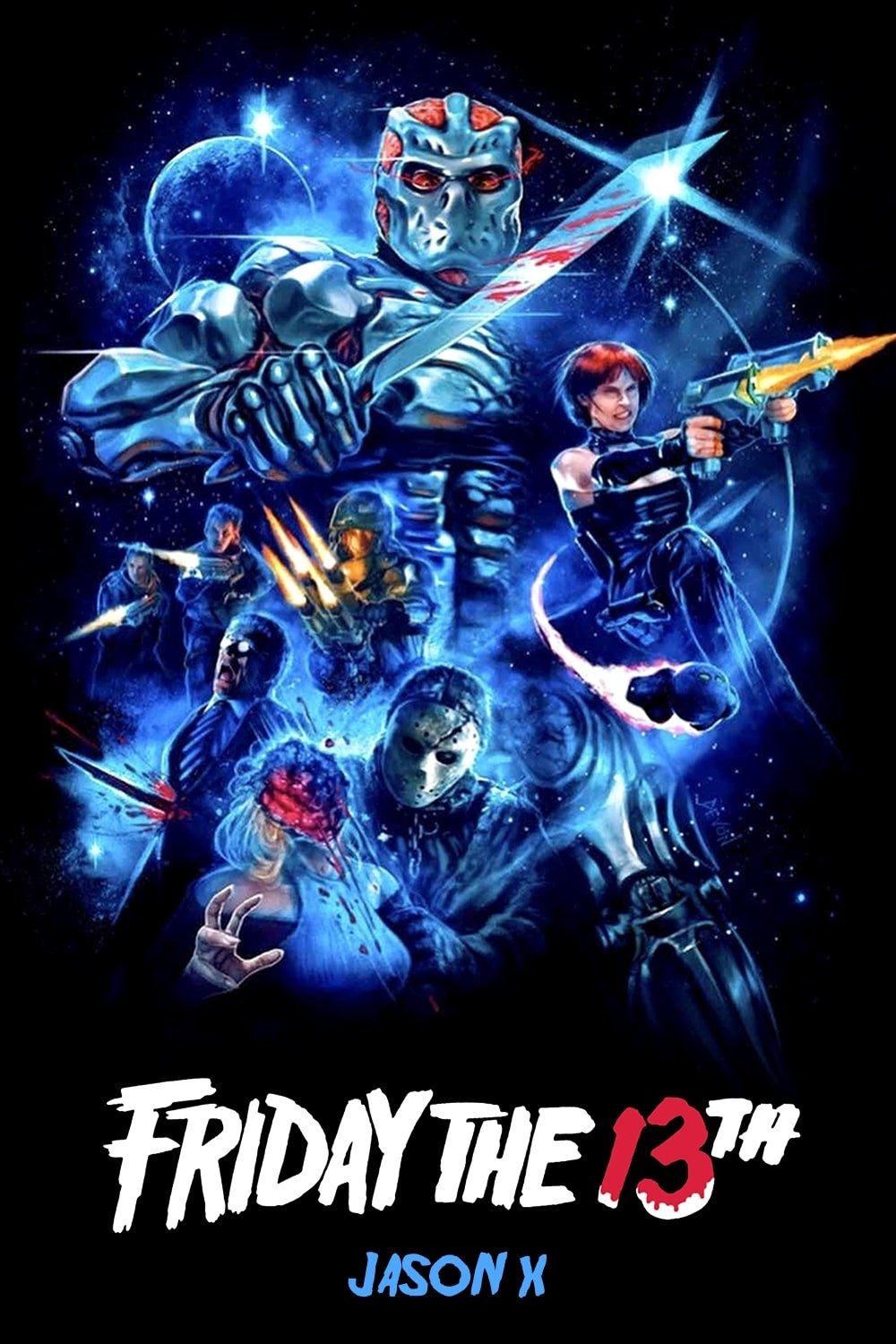
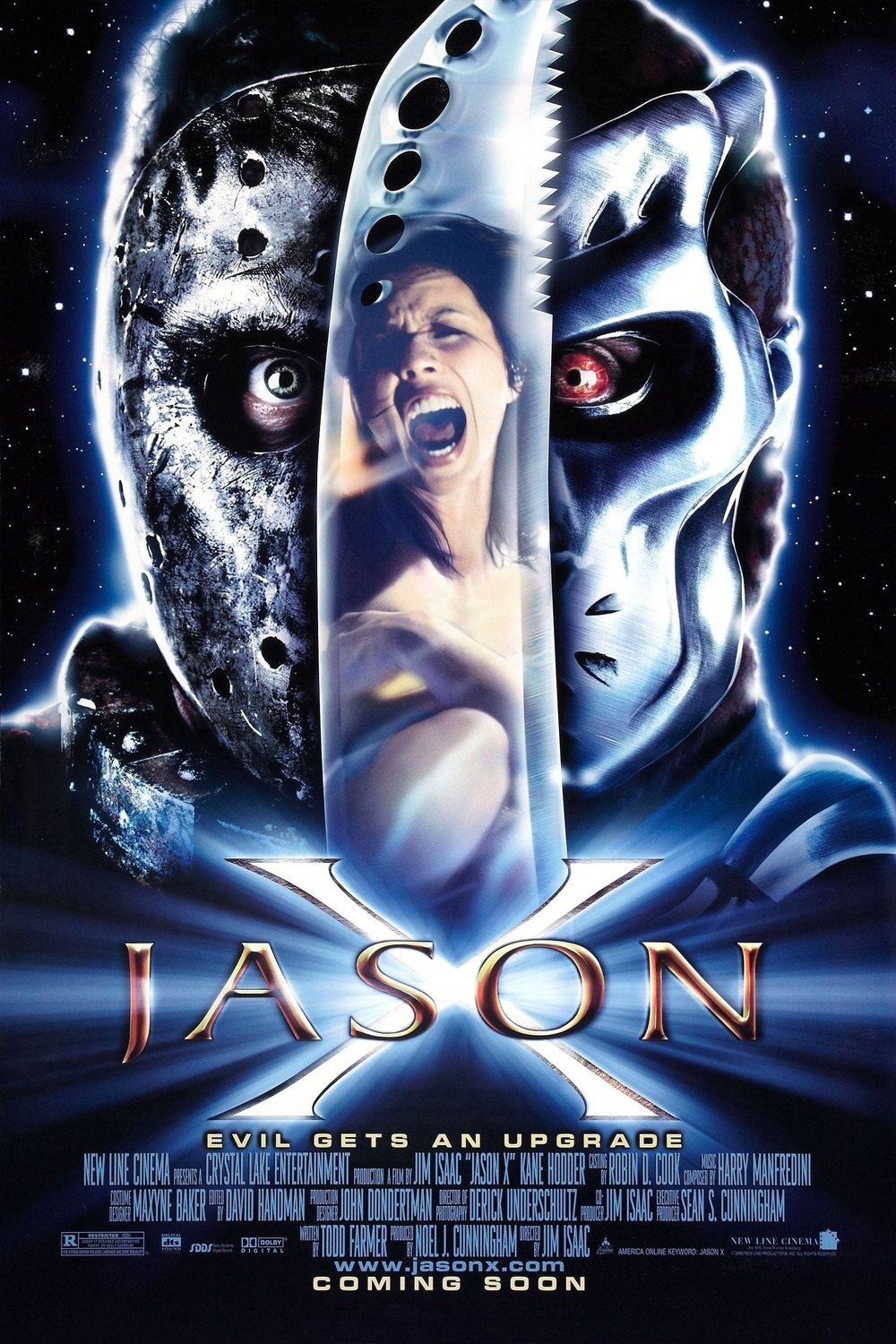
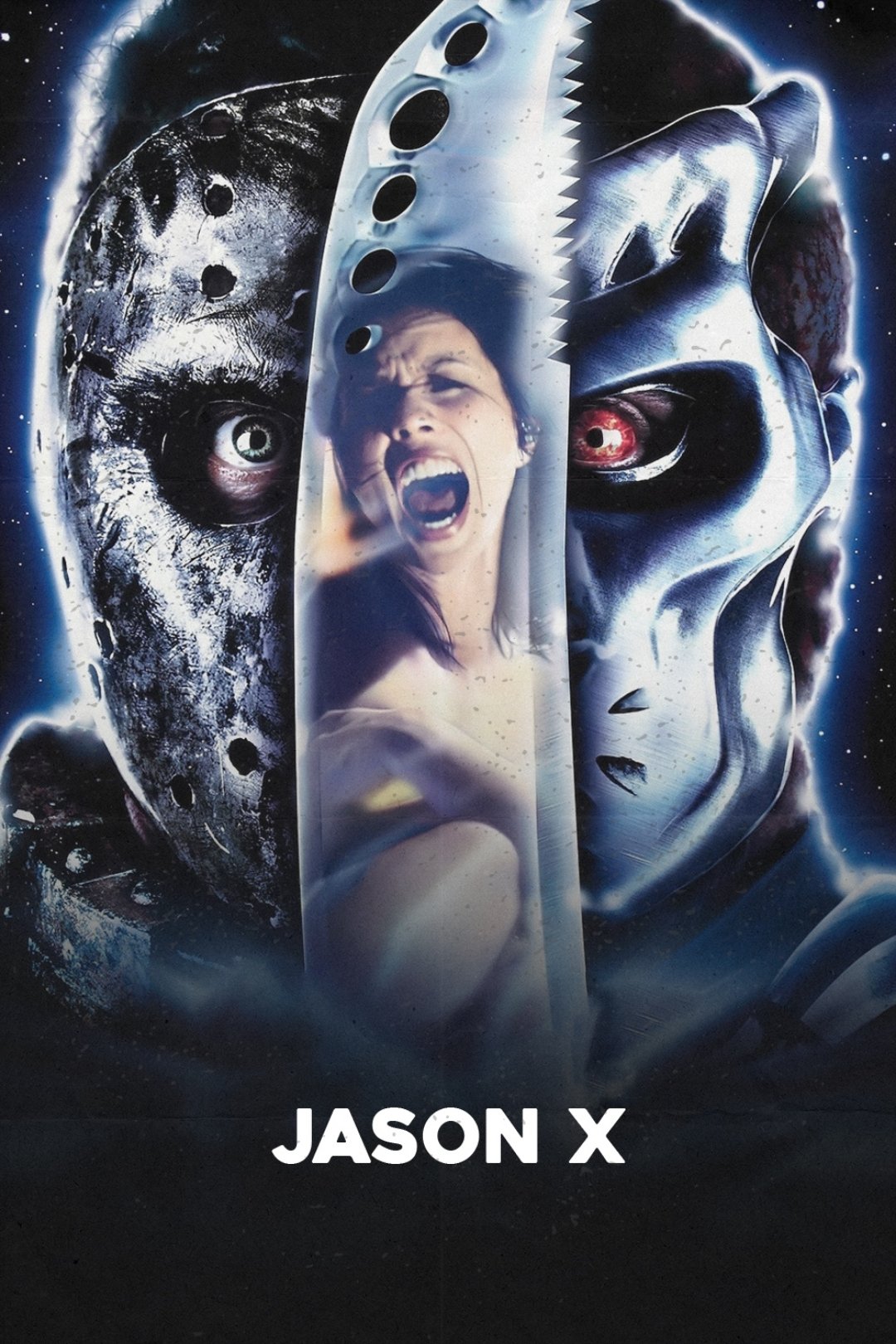
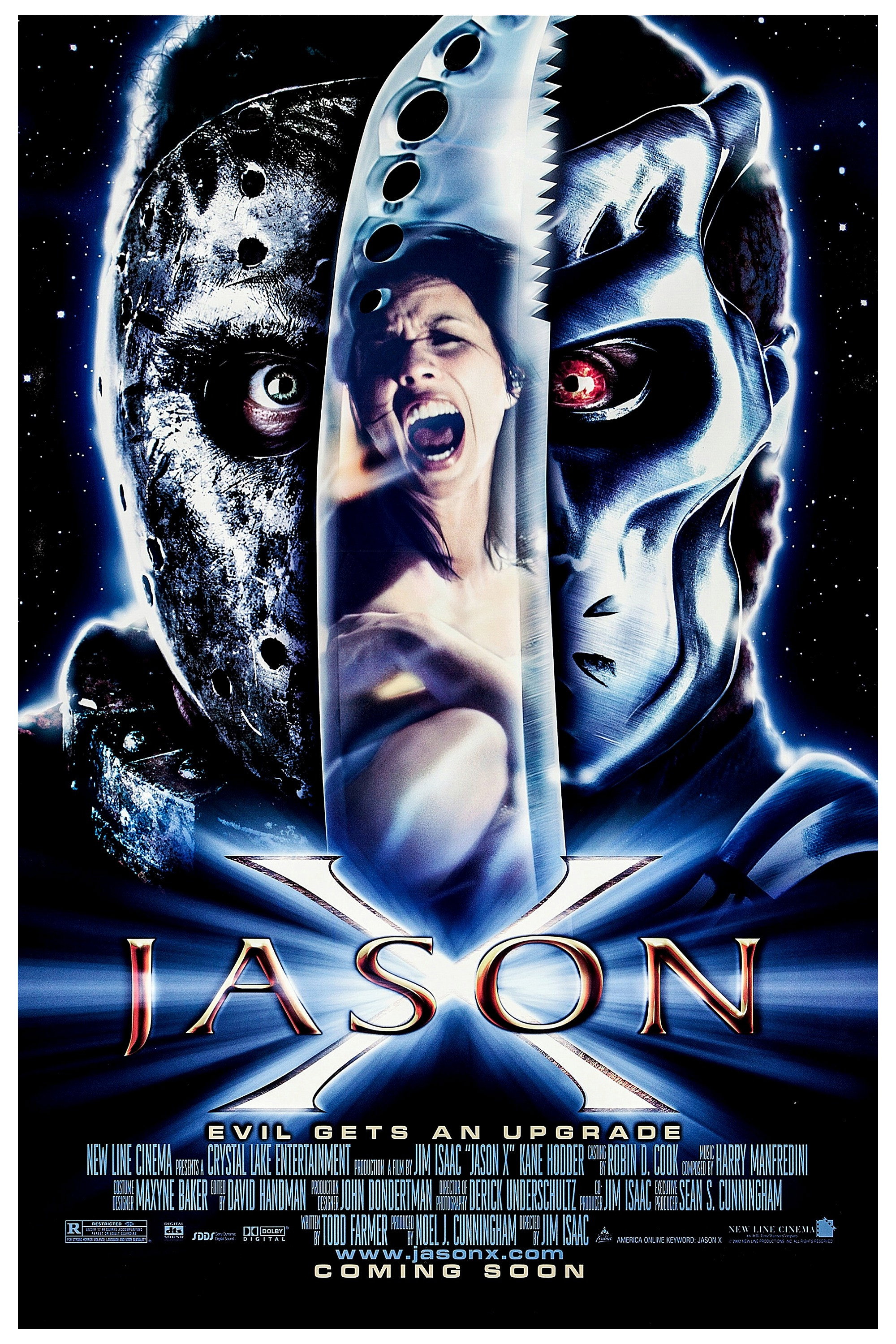
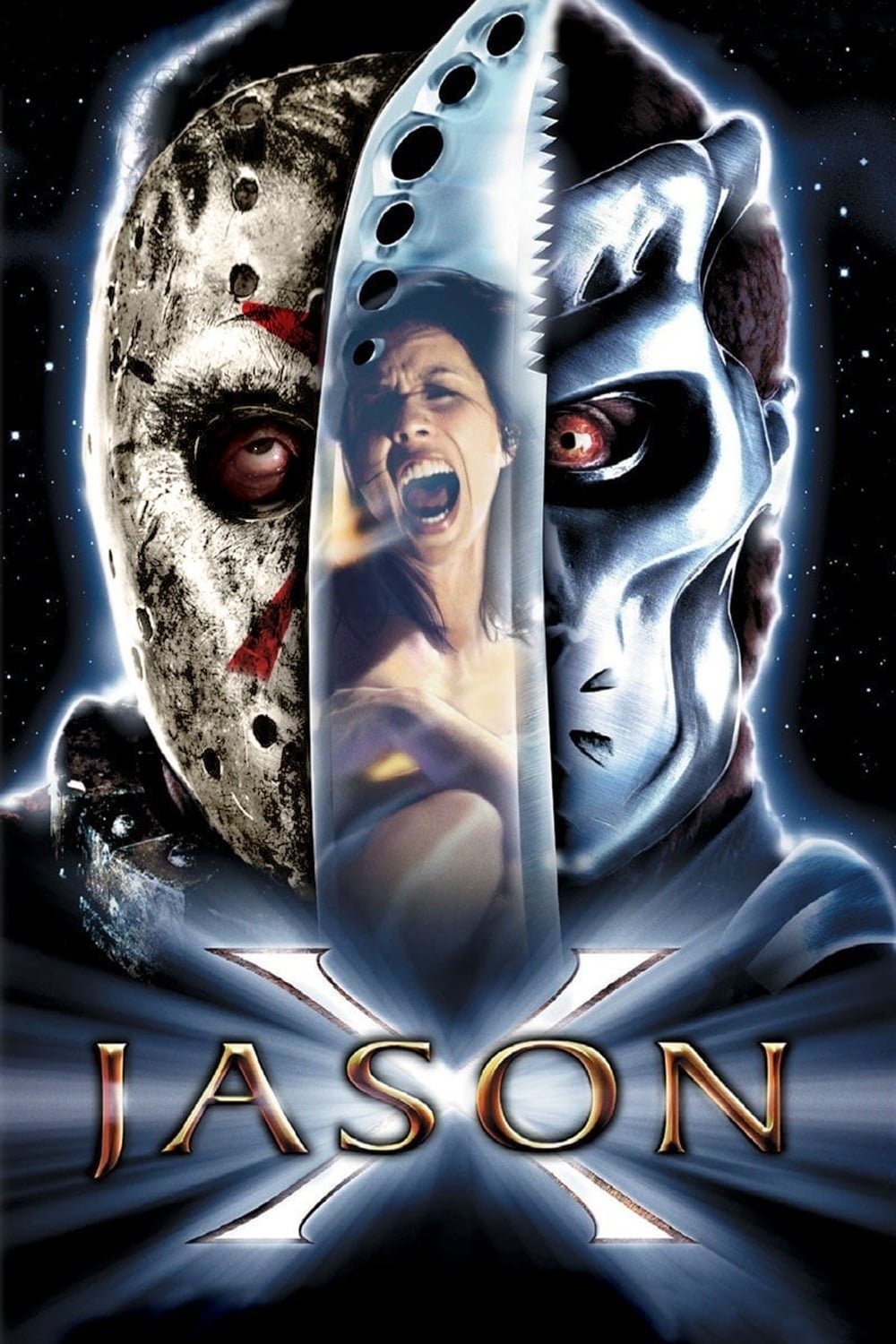
Jason X (2001) relocates the Friday the 13th series from its familiar wooded landscapes to a future of deserted planets and artificial environments. Conceived while Freddy vs. Jason remained stalled, the tenth feature puts Jason Voorhees aboard a spacecraft, where the habits of the American slasher encounter the corridors and technology of science-fiction horror. The change of setting alters the apparatus surrounding the murders without discarding their central attraction: a physically imposing killer who survives each attempt to destroy him. Its mixture of bodily destruction, futuristic spectacle and open comedy marks a distinctive experiment in the franchise's later history.
The picture was directed by James Isaac, whose previous work in creature and makeup effects proved important to its production methods. Filming around Toronto brought together technicians associated with David Cronenberg and a cast led by Kane Hodder in his fourth portrayal of Jason. The project also used digital image manipulation on a scale unfamiliar to the earlier sequels, culminating in the redesigned figure commonly called Uber Jason. Contemporary critics frequently objected to the thin characterizations and variable suspense. Subsequent interviews, however, provide a detailed account of why the filmmakers pursued this peculiar combination and how its most conspicuous images were constructed.
Development and the Move into Science Fiction
Sean S. Cunningham's efforts to arrange Freddy vs. Jason had continued for years without producing a completed film. Screenwriter Todd Farmer later recalled that this delay prompted Cunningham to explore another Jason project with Isaac and producer Noel Cunningham. A setting several centuries in the future offered a useful separation from the unfinished crossover: events on a remote spacecraft would create few immediate obligations for the two franchises' shared chronology. Farmer initially imagined an expansive futuristic city with affinities to Blade Runner, but the cost of constructing such a world encouraged a contained premise. He turned toward the functional interiors and isolated group dynamics of Alien as a practical storytelling model.
Farmer's recollections also show how negotiations and production demands reshaped the original concept. The armed personnel aboard the vessel derive partly from his interest in Aliens, while the self-conscious jokes emerged as the project moved toward a more playful tone. A proposed defense involving robotic spiders was abandoned, according to the writer, after objections from New Line. He also credited Noel Cunningham with proposing the liquid-nitrogen murder that became a signature moment. These accounts describe a collaboration in which imaginative possibilities were repeatedly tested against the resources available for a film combining spacecraft construction with graphic horror.
Toronto Production and Performances
The filmmakers built the future primarily on soundstages near Toronto, including space at a former military airfield. Isaac recruited artists he already knew through effects work, an approach that connected the sequel with the technical community around Cronenberg's productions. Although promotional accounts stressed the film's unusually ambitious scale, the assembled interiors still had to supply nearly all of its recognizable geography. Kane Hodder recalled that the longer schedule gave performers greater time to work through individual scenes than some earlier installments had allowed. His account is a retrospective judgment, valuable for understanding working conditions without converting memories of shooting duration into audited production records.
Hodder regarded continuity of physical behavior as essential even when the surroundings became fantastic. In a later interview he explained how deliberate head turns and chest movements could signal threat through a mask that allowed little facial expression. Farmer also recalled the actor's insistence that Jason should not be shown awkwardly getting up after being knocked down, a practical rule designed to preserve the character's inhuman bearing. Isaac's association with Cronenberg brought the Canadian filmmaker into the opening sequence as Dr. Wimmer. Farmer remembered Cronenberg revising some of his own dialogue, illustrating how this brief appearance grew out of existing professional relationships.
Spaceship Design and Digital Photography
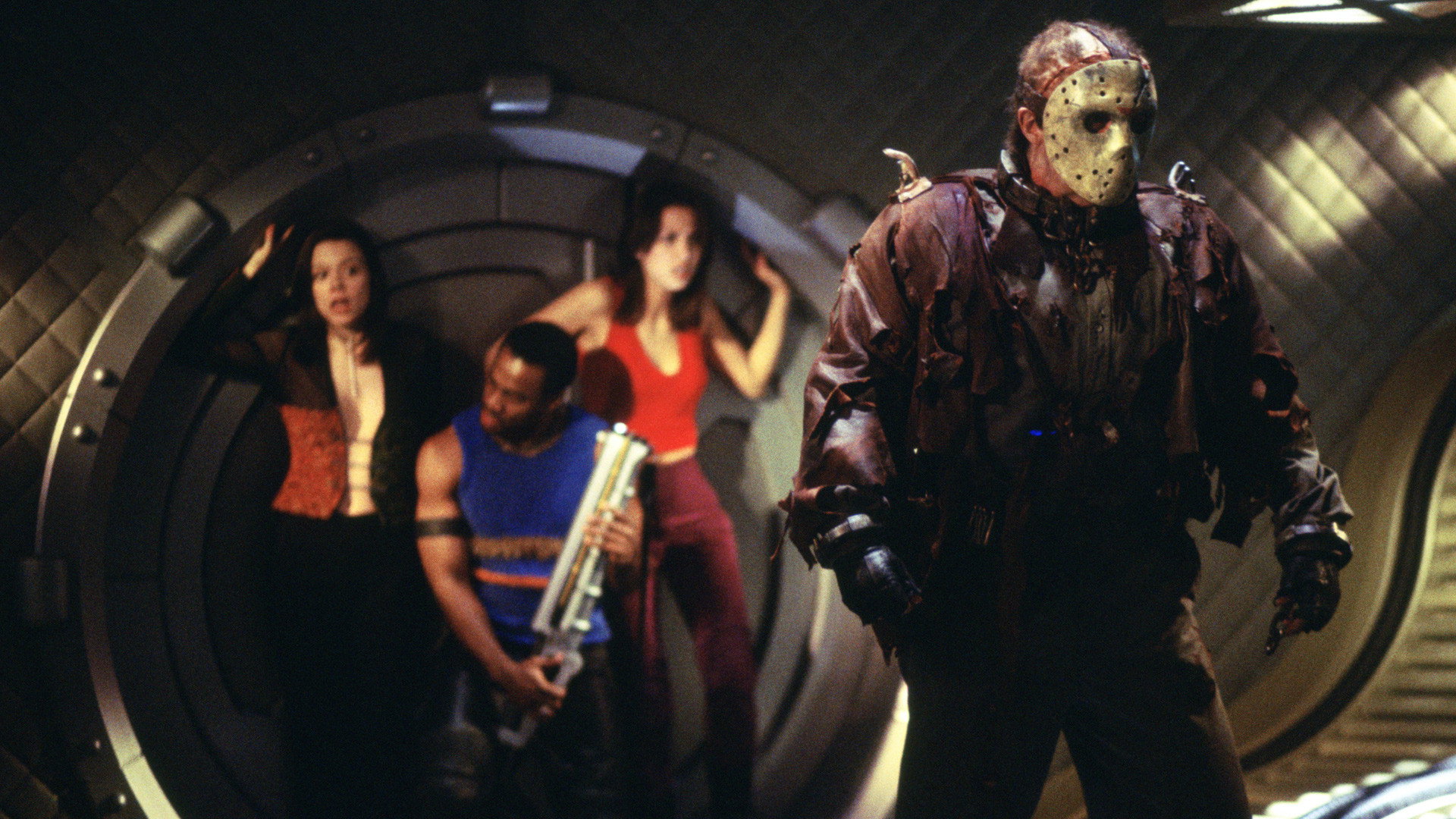
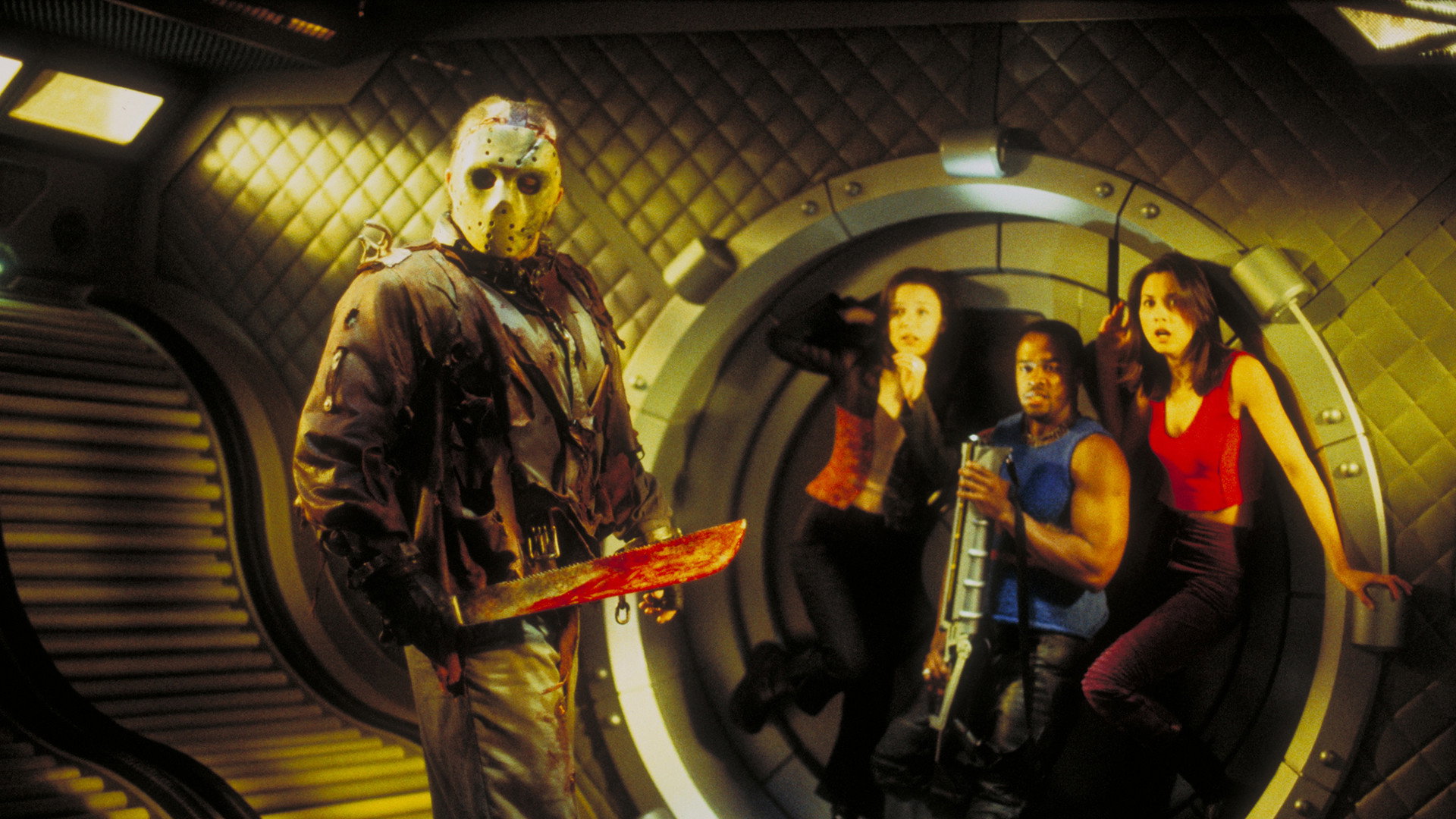
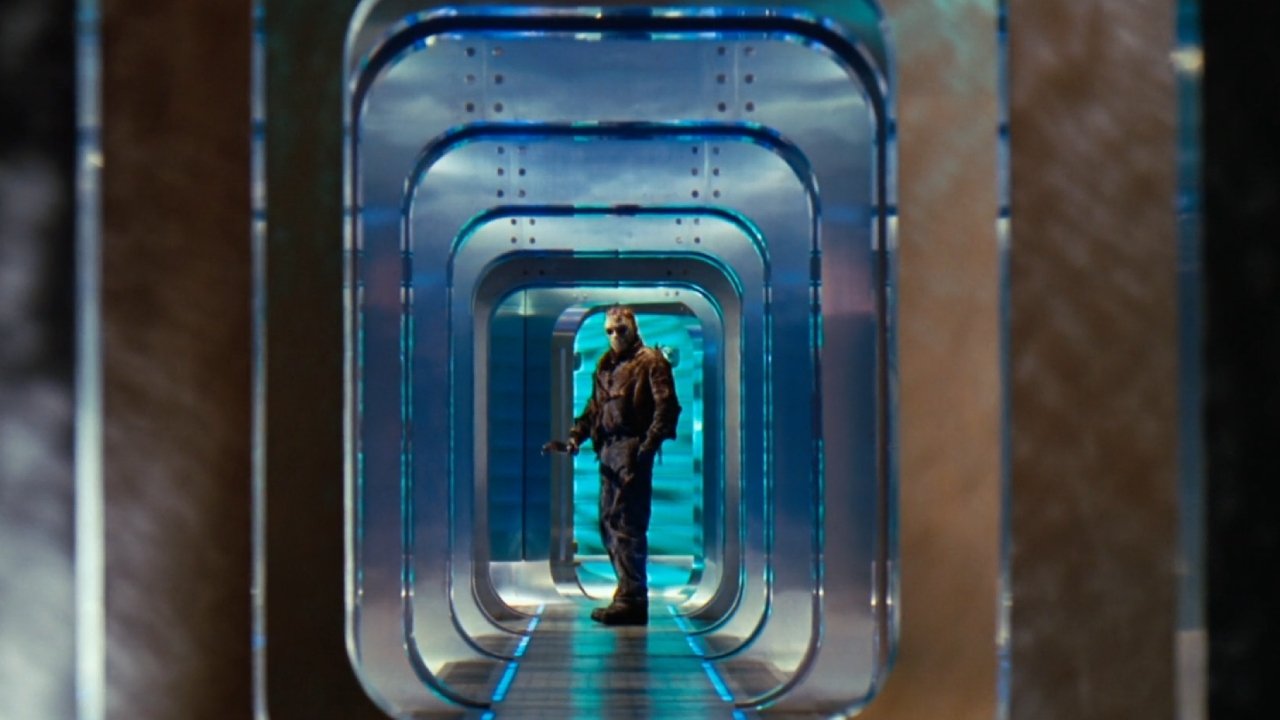
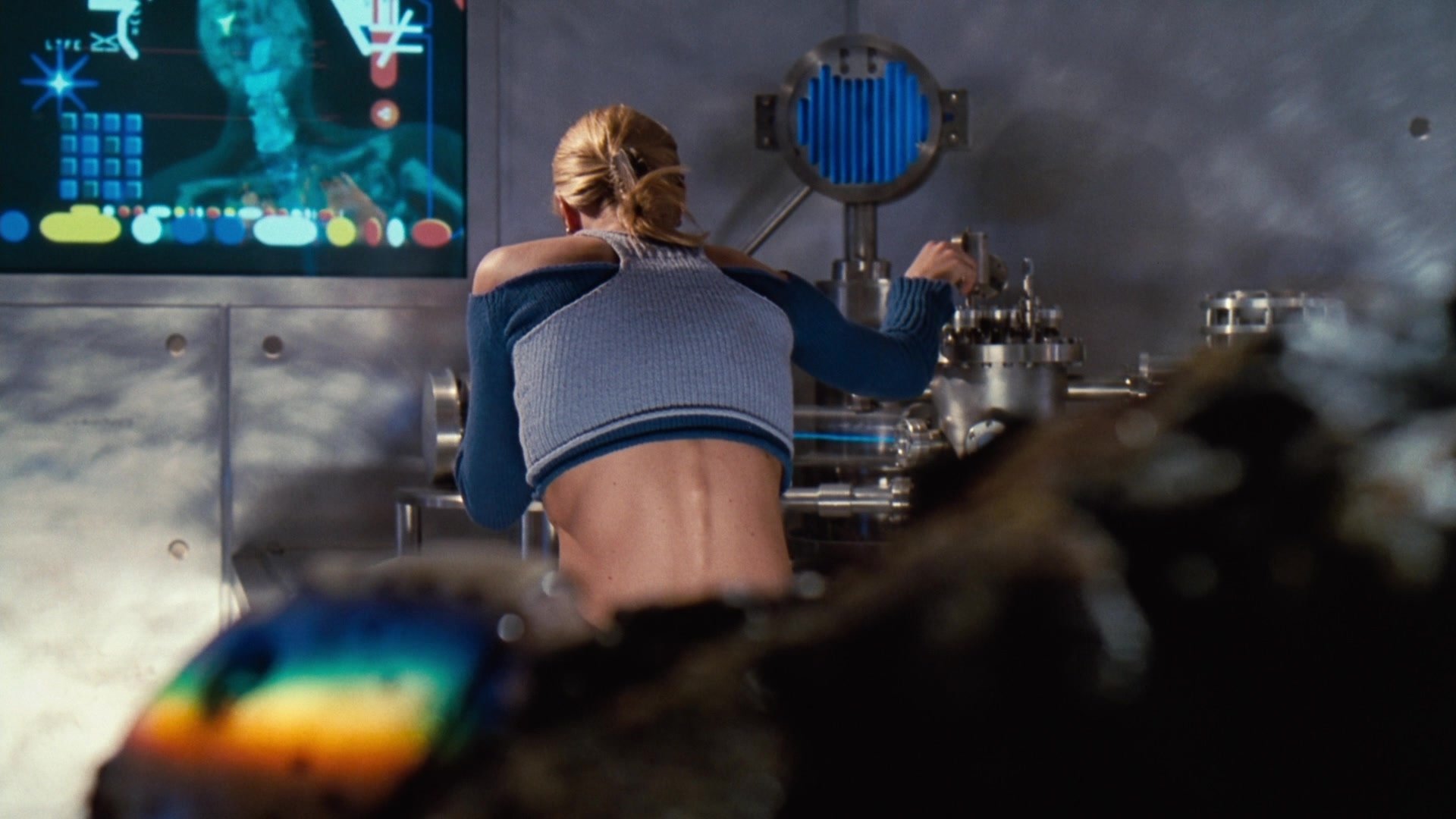
The vessel replaces the lakeside pursuit with passages, sealed rooms and mechanical thresholds that can delay escape or conceal an approaching figure. This architecture gives Jason a different kind of territory: corridors break lines of sight while electronic doors and communications systems promise control that the crew cannot maintain. Farmer later described a noticeable difference between his darker imagined world and the comparatively colorful production design he encountered on set. That difference is visible in the finished picture's combination of brightly equipped interiors and shadowed industrial spaces. The resulting visual identity draws heavily on recognizable science-fiction conventions while retaining the close-quarters geography required by a stalking narrative.
The production's technical account describes a 35 mm photographic shoot followed by transfer to high-definition digital imagery for postproduction, before the completed work returned to film for theatrical projection. Isaac viewed this process as an opportunity to adjust tonal relationships throughout the picture. Dennis Berardi of Toronto effects company Toybox described work that could extend from color treatment to compositing spaceships, computer-generated elements and simulated environments. He estimated roughly two hundred effects shots during production, an expectation that should not be mistaken for a verified final count. Digital tools expanded what the filmmakers could put around Jason, even as many attacks depended on actors and physical constructions inside the sets.
Practical Violence and the Creation of Uber Jason
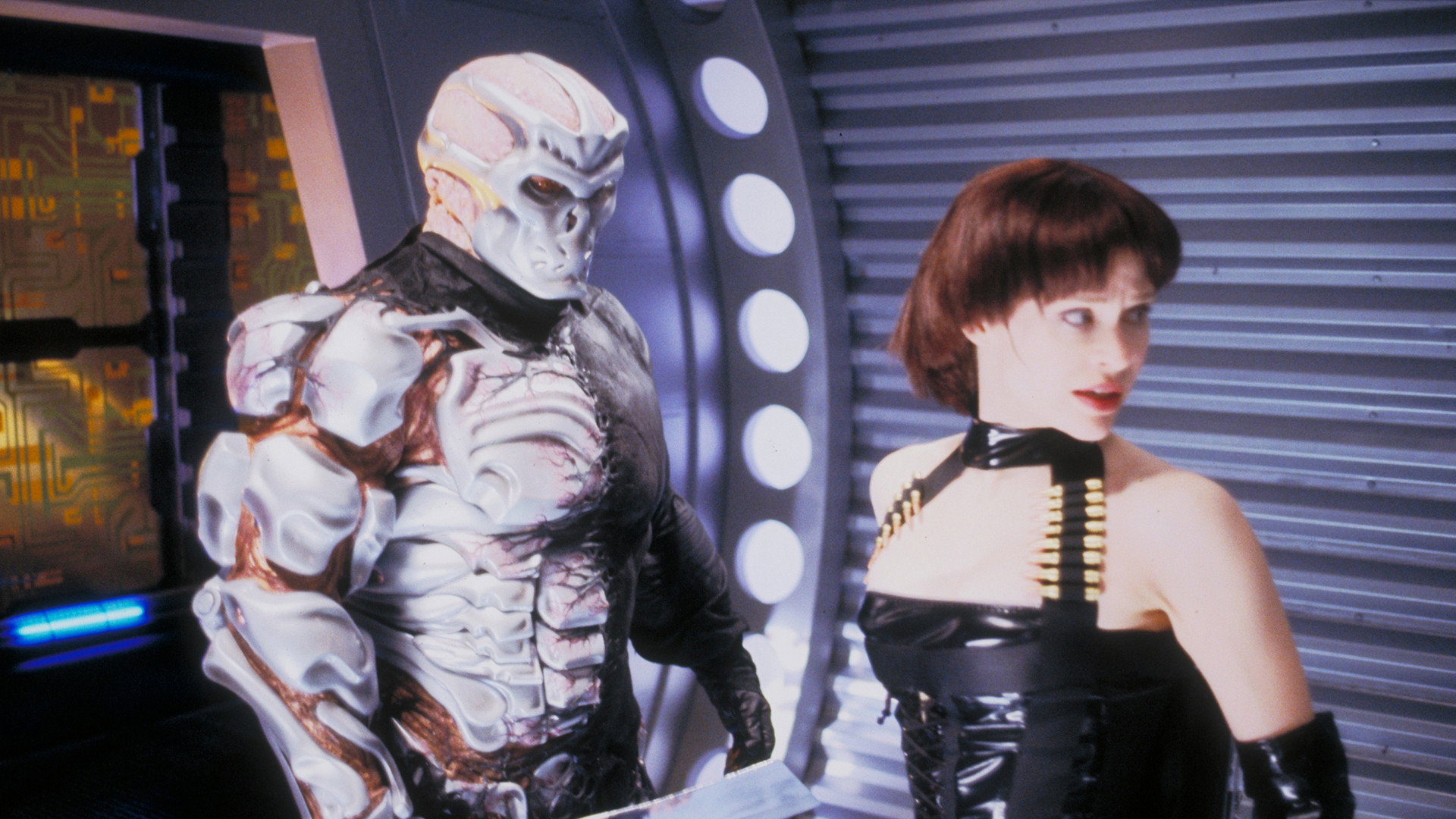
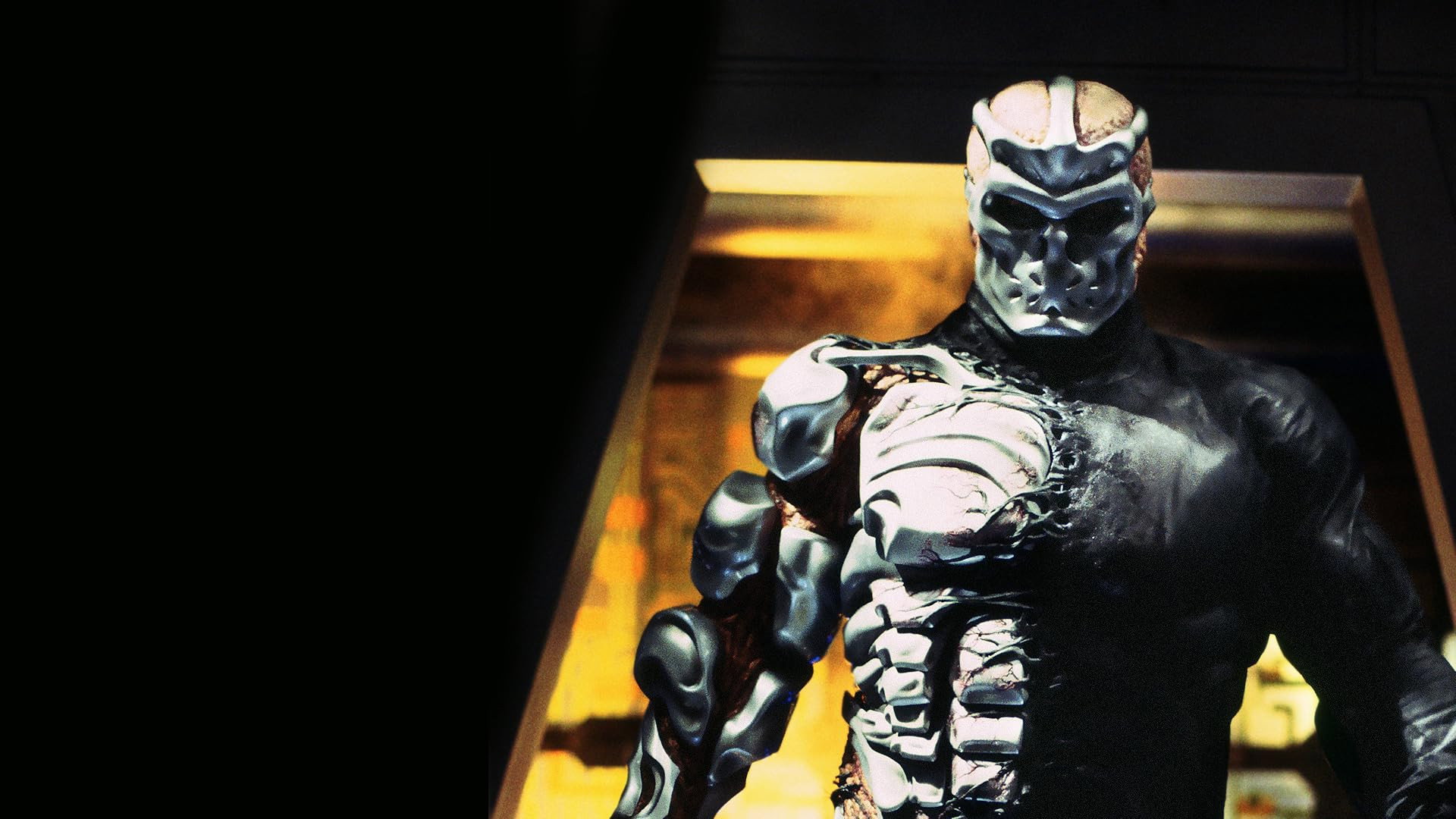
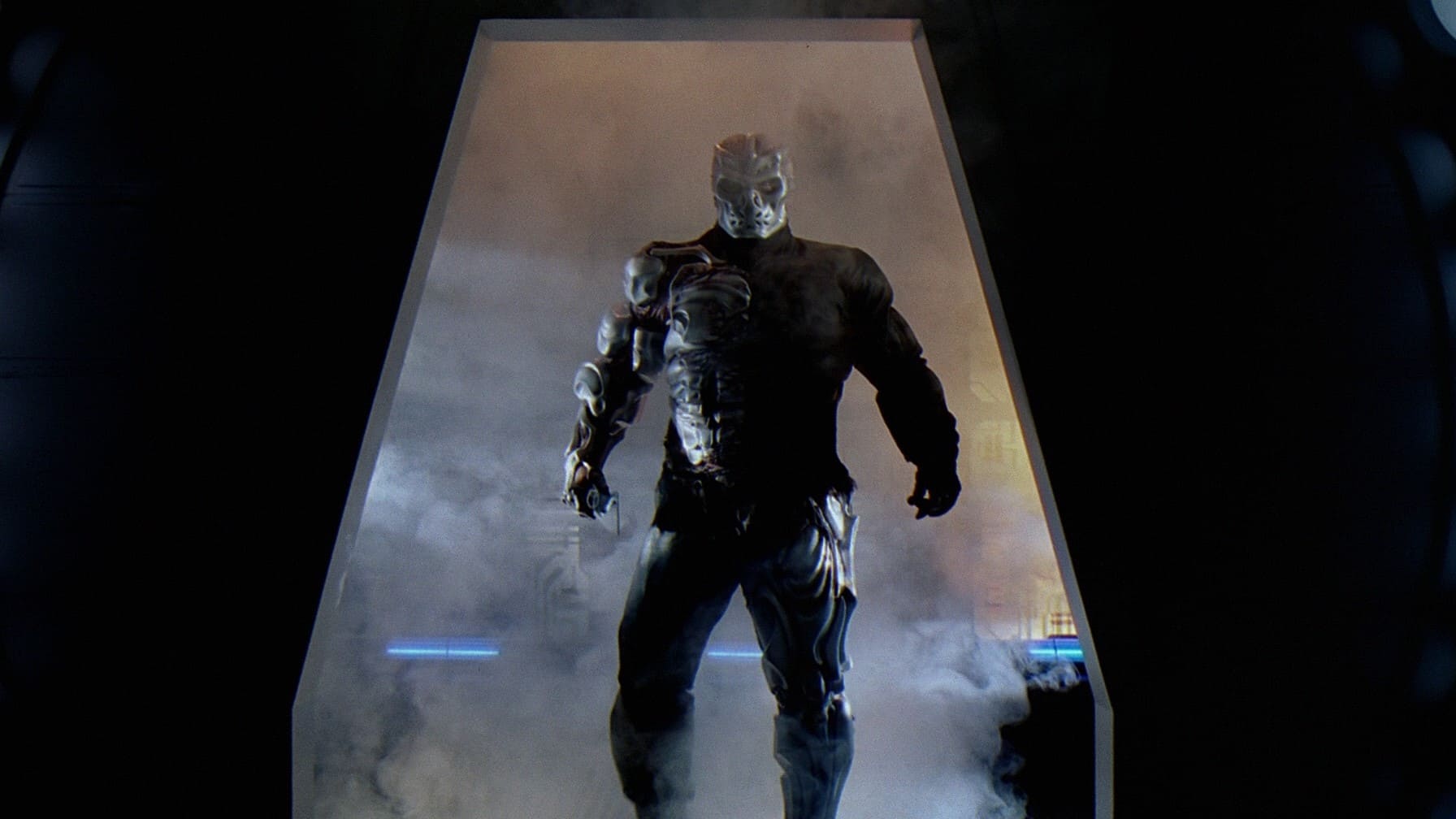
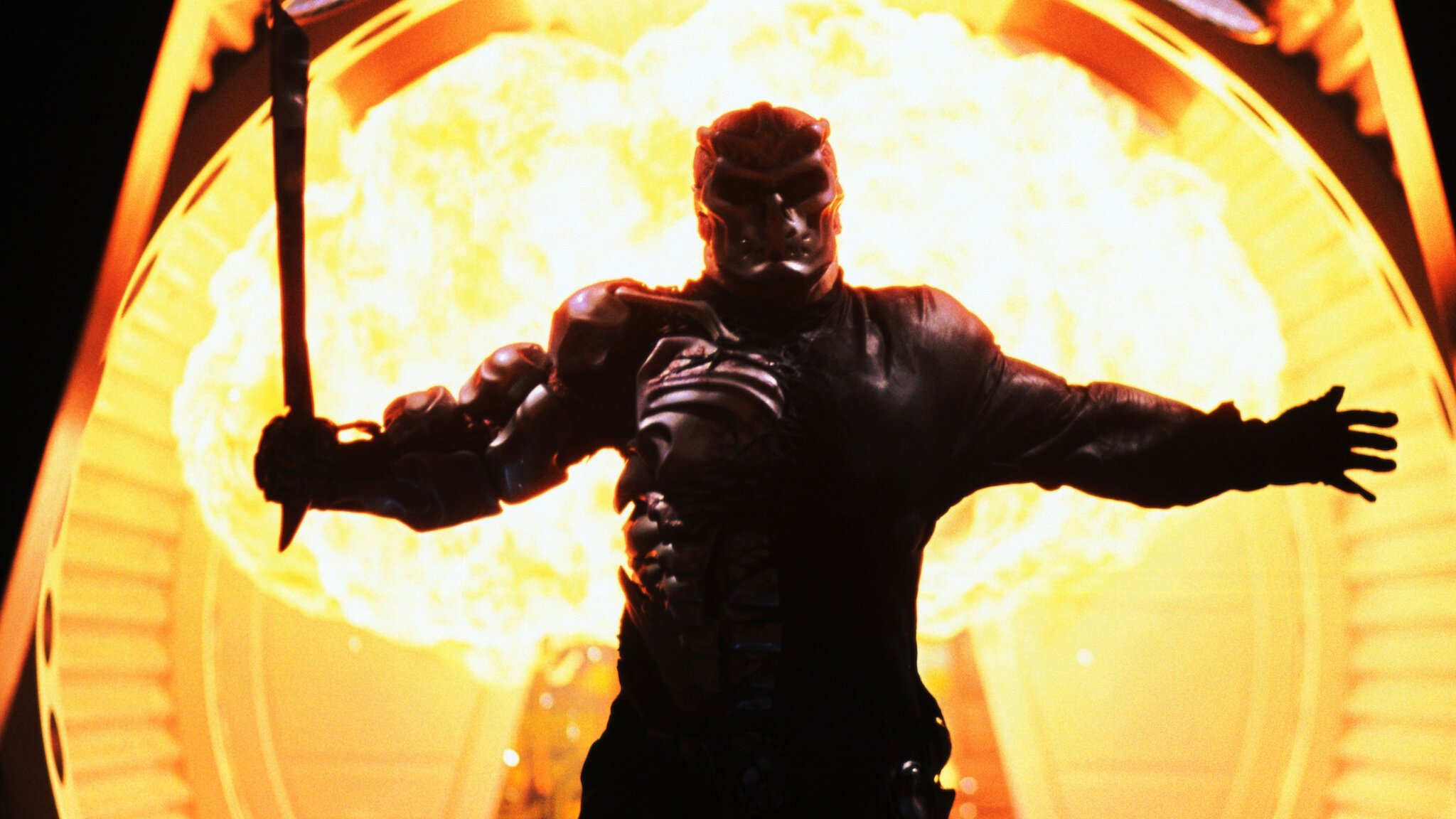
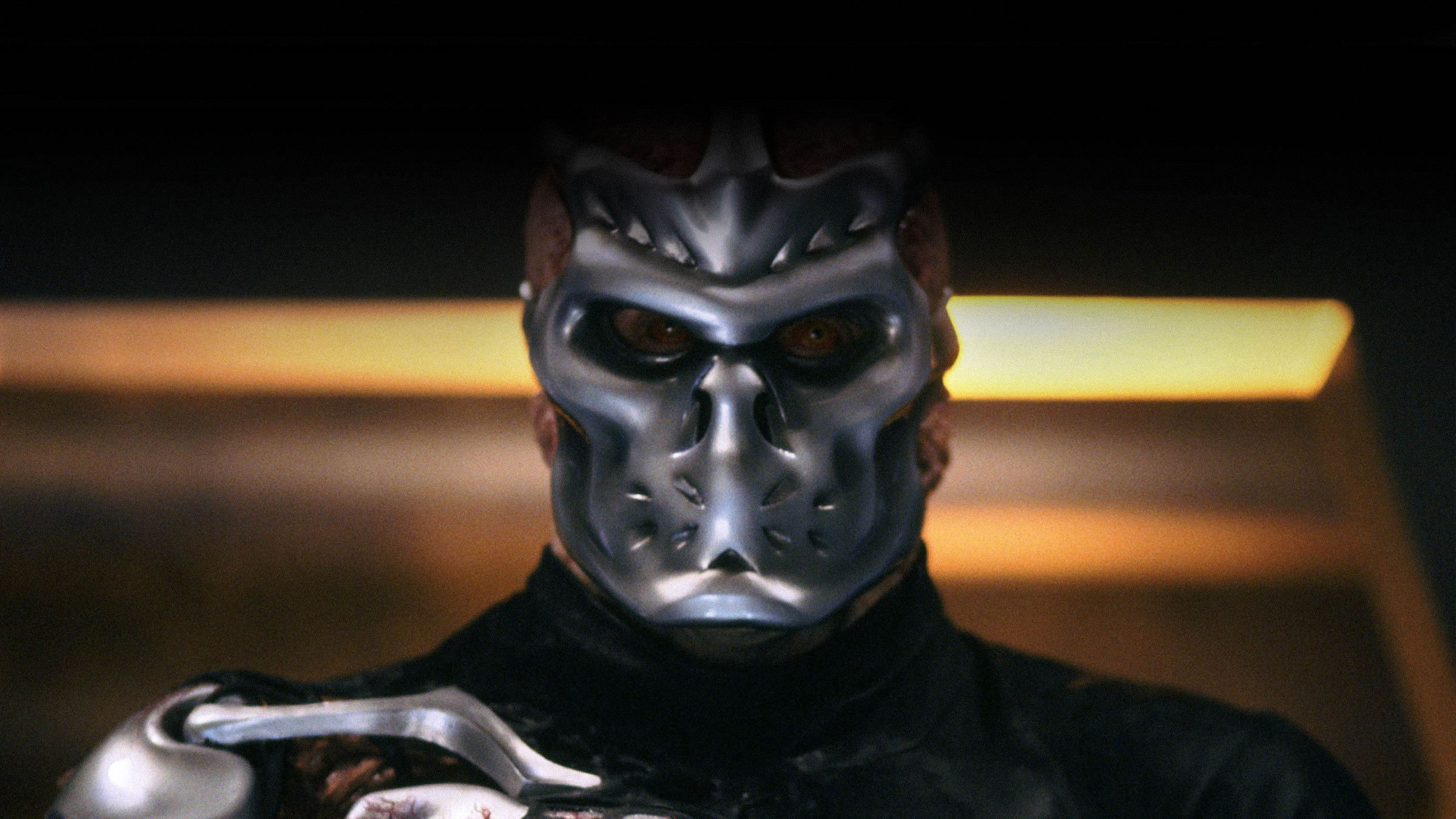
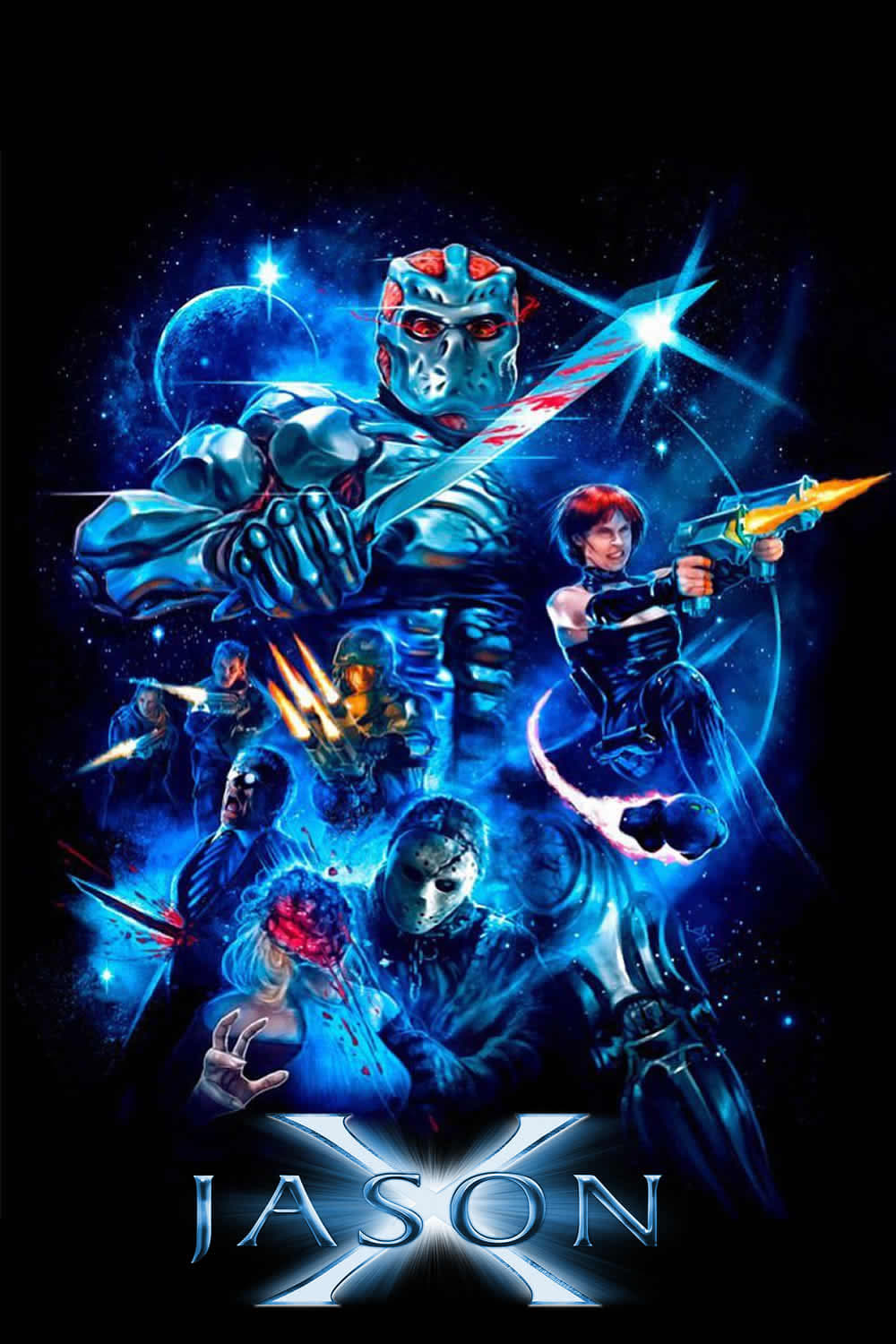
Isaac's experience with creature fabrication became especially relevant to the redesigned killer. Makeup supervisor Stephan Dupuis discussed shaping the transformed Jason with streamlined, architectural contours, while also adjusting the earlier appearance toward a more decayed and gothic figure. The eventual armored body reflects the story's medical machinery: after devastating damage, a regeneration system reconstructs Jason with a substantially altered surface. Farmer remembered having imagined a less polished fusion of metal and flesh, making the finished design an example of how different creative departments could interpret the same narrative requirement. The makeover changes his silhouette while retaining the visual function of the hockey mask as an immediately legible emblem.
The killing methods exploit both new technology and traditional staged injury. A particularly elaborate attack places a victim's face in liquid nitrogen and then shatters it against a hard surface. Farmer later stressed that the result was created as a physical effect, despite its science-fiction premise. Its force comes from a clear chain of action, anticipation and a grotesque payoff that can be understood in one glance. Elsewhere the film incorporates injuries, mechanical hazards and simulated damage on a larger scale. These devices show how the franchise's familiar interest in inventive deaths could be adapted to unfamiliar surroundings without requiring the violence itself to become abstract.
Slasher Conventions, Technology and Self-Parody
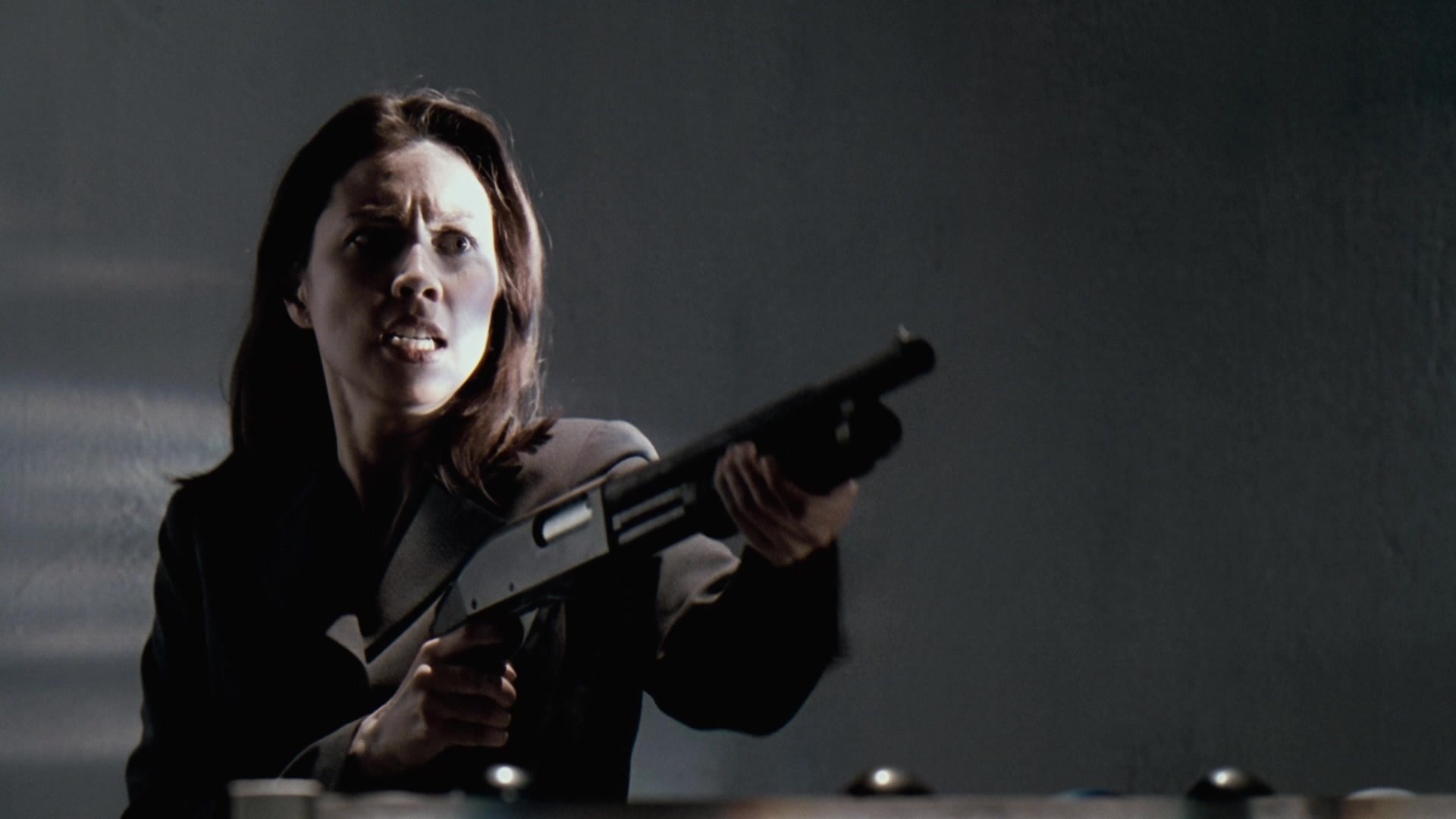
Moving Jason into the year 2455 creates a recurring contrast between supposedly advanced systems and a threat that remains stubbornly primitive. Weapons, surveillance, military training and sophisticated equipment fail to guarantee safety. An android named Kay-Em 14 briefly reverses that imbalance, turning the killer into the target of a technologically superior opponent before the narrative restores his advantage. The film uses that reversal to test the monster's durability and to prepare his mechanical rebirth. As a critical interpretation, the sequence suggests that each upgrade to the environment must eventually be matched by an escalation of Jason himself, because ordinary human defenses have long ceased to contain him.
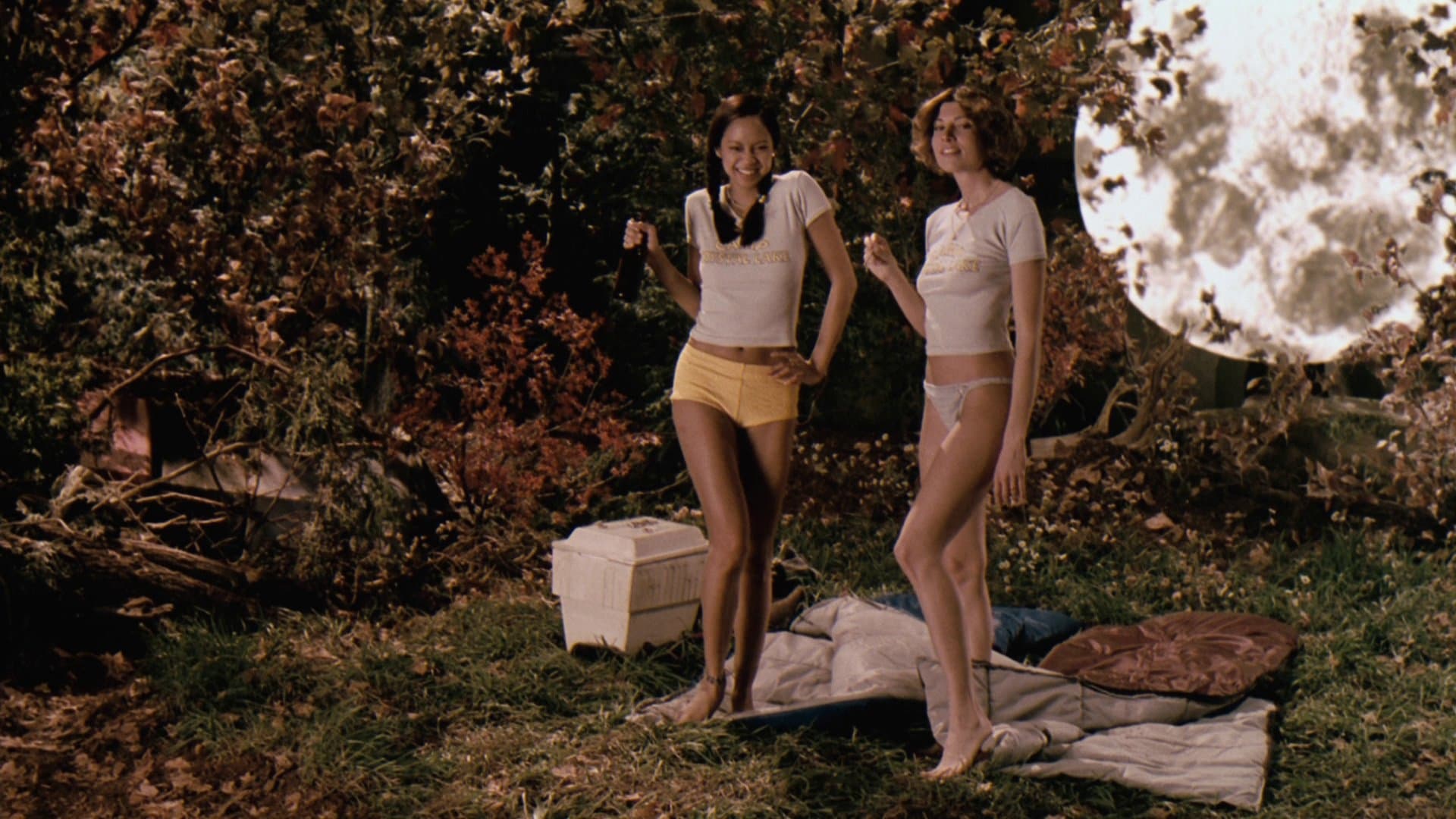
Comedy is just as central to this rearrangement. Farmer acknowledged importing more overtly self-aware dialogue than he first intended, in part because the genre had changed after Scream. A virtual recreation of Camp Crystal Lake goes further: stereotypical campers offer sex and drugs to distract the attacker, replaying the series' familiar moral shorthand as an obvious construction. Farmer explained that this scene also answered a request to include nudity, while letting the film mock that expectation. The self-reference does not abandon the slasher template. It makes the audience's knowledge of the template part of the scene's mechanism, changing the relationship between the familiar murderer and the spectacle built around him.
Release, Contemporary Criticism and Later Reassessment
Jason X circulated in some territories during 2001 before opening in the United States on April 26, 2002. The American Film Institute records a 93-minute, R-rated theatrical release handled by New Line. Contemporary reporting presented the feature as an attempt to reenergize a long-running property while the proposed Freddy crossover was still unfinished. Publicly reported production costs vary between sources, so a precise budget is less reliable than the documented investment in elaborate sets and visual effects. A later interview with Farmer described disappointing box-office returns and his frustration that promotional materials revealed the armored transformation, intended by the writer as a late surprise.
Michael Gingold's review for Fangoria, originally published in April 2002, argued that the futuristic premise offered more potential than the screenplay used; he faulted the lack of compelling people to follow and the weak suspense. The review nonetheless identified individual effects and moments of satire as points of interest. That contemporary response contrasts with later interviews in which Farmer and Hodder spoke affectionately about the production, without establishing a universal change in critical opinion. Jason X remains historically identifiable for its direct attempt to combine an entrenched slasher persona with space-based action, extensive digital postproduction and deliberately visible franchise humor. It also became Hodder's final theatrical appearance as Jason before the character was recast for Freddy vs. Jason.
References
The A.V. Club — Jason X at 20: Remembering That Time When Friday the 13th's Slasher Went to Deep Space
Todd Gilchrist interviews screenwriter Todd Farmer in depth about the space concept, writing changes, effects ideas, comedy, unused scenes and release disappointments.
Detailed contemporary production testimony from James Isaac, Noel Cunningham, Kane Hodder, Stephan Dupuis and the digital effects team on Toronto soundstages and the HD workflow.
Contemporary reporting based on interviews with Sean Cunningham, James Isaac and Kane Hodder about franchise planning, the expanded production and the effects team.
Original extended Kane Hodder interview on masked performance, the Jason X filming schedule, practical makeup and his departure before Freddy vs. Jason.
Michael Gingold's original April 2002 review, documenting period criticism of the futuristic premise, characterization, graphic set pieces and technological presentation.