Production & the Beginning of Guinea Pig
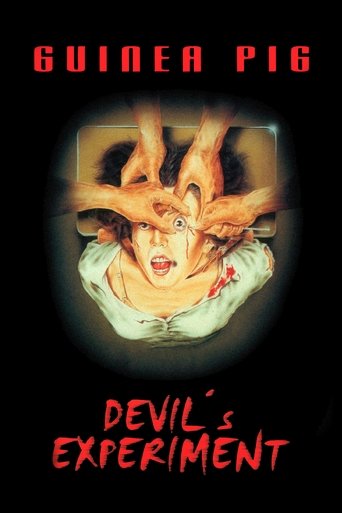
Devil's Experiment was conceived as the opening instalment of a series built around extreme physical horror. Ogura wrote and directed the film, while Sai Enterprise was associated with its production. The project was organized around a simple conceptual premise: to present escalating cruelty as though someone had recorded it for private or experimental purposes.
That economy shaped virtually every aspect of the finished film. The performers are not developed as dramatic characters and the locations provide little contextual information. The absence of conventional characterization allows the film to concentrate almost entirely on the interaction between aggressors, victim and camera. Even the title treats the victim as experimental material rather than as an individual, reinforcing the dehumanizing structure built into the premise.
The format also gave the series room to change rapidly after its first instalment. Later Guinea Pig productions would introduce more elaborate special effects, grotesque fantasy, black comedy and conventional storytelling, but Devil's Experiment establishes the original concept in its starkest form. Its importance within the cycle lies precisely in that simplicity: before the series diversified, it began as an attempt to make fabricated violence resemble an anonymous piece of disturbing recorded evidence.
Pseudo-Snuff Form & the Illusion of Documentation
The film announces its strategy immediately. Introductory text claims that a videotape titled Guinea Pig had been obtained and that the recording documented an experiment involving the limits of tolerable pain and the deterioration of human sensation. The text presents the identities of both victim and perpetrators as unresolved. Instead of introducing a fictional world, the film therefore asks the viewer to encounter the footage as an object supposedly discovered after the event.
The structure strengthens that deception. The abuse is divided into a sequence of separately identified stages rather than organized into conventional dramatic scenes. Each new stage functions like another entry in an experiment, removing much of the narrative suspense normally associated with horror. The question is not where the characters will go next or whether the victim can escape, but how far the process will be allowed to continue.
Camera style and editing contribute to the same effect. The imagery frequently has the functional quality of documentation rather than the polished composition associated with theatrical horror. There is little interest in establishing an attractive visual world. The repetition of actions, prolonged observation and restricted environment instead create the impression that the recording exists primarily as evidence of what was done.
Academic discussion of the film has focused on this unstable relationship between fabrication and apparent authenticity. Jay McRoy has examined how its construction blurs distinctions between fiction and perceived reality while simultaneously containing enough technical control to reveal that the violence is manufactured. That contradiction is central to Devil's Experiment: its effectiveness depends not on genuinely convincing the viewer that a murder occurred, but on reducing the familiar protective distance between horror effects and documentary images.
Practical Effects & the Body
The film's most important technical work lies in the construction of bodily damage. Practical effects are used to simulate injuries severe enough to support the pseudo-documentary premise, and the camera frequently remains close to the body rather than hiding the effect behind rapid cutting. Because there is so little plot, the credibility of these physical illusions carries much of the film.
The escalation is carefully structured. Early abuse can be performed largely through acting, framing and controlled physical contact, allowing the film to establish a baseline of apparently ordinary violence before effects become increasingly important. Later material requires prosthetic work and other practical techniques to create injuries that could not be performed safely. The transition from believable physical assault to overt body damage occurs gradually enough that the fictional effects inherit some of the discomfort generated by the earlier, simpler sequences.
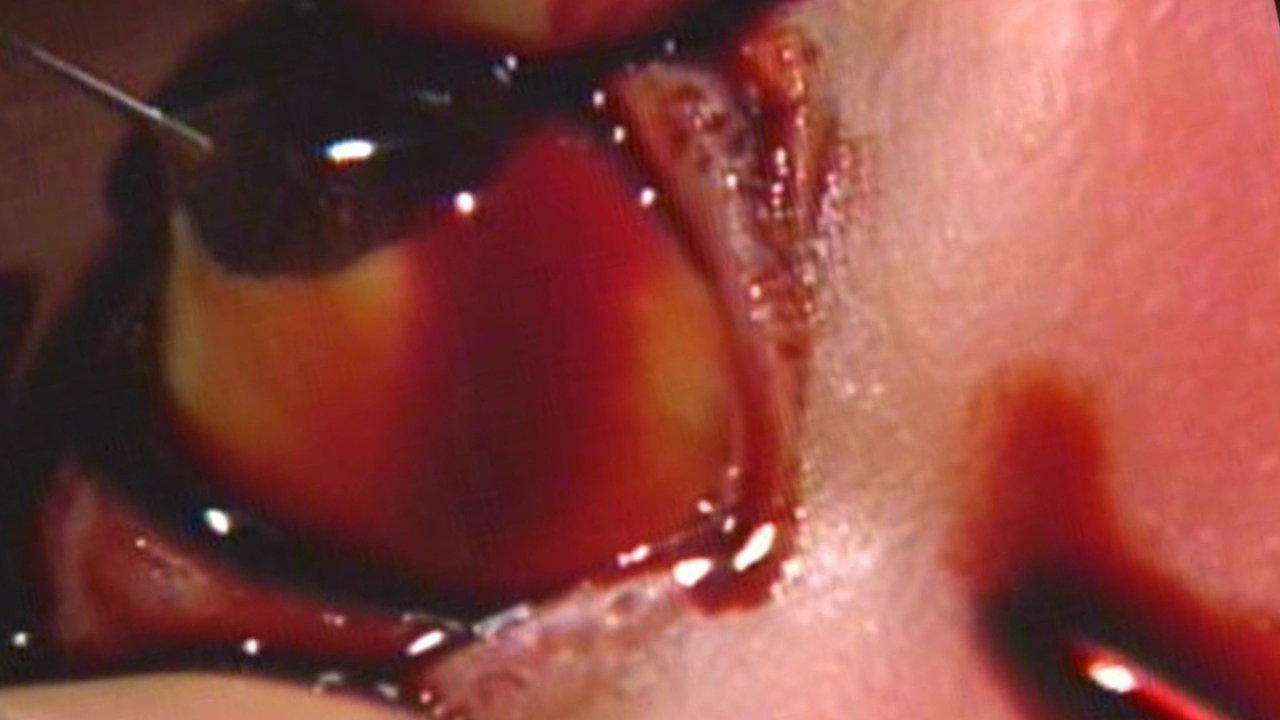
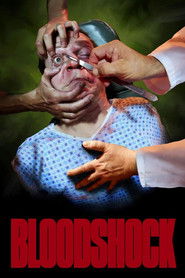
The eye sequence became the film's most widely recognized image because it pushes that strategy toward an extreme close-up. The film makes the viewer examine the simulated effect. The point is not anatomical realism in a medical sense but the refusal of the usual visual escape route. The camera remains interested in the moment at which a fake body part must temporarily be accepted as the performer's body.
A 1986 Making of Guinea Pig production later exposed the filmmaking methods used across the early entries in the series, including effects work that helped demonstrate their artificial nature. Its existence is significant because the original films had deliberately withheld precisely this kind of reassurance. Behind-the-scenes footage restored the distinction between performer, prosthetic and finished image that Devil's Experiment had tried to collapse.
Direct-to-Video Horror & the Series
The form of Devil's Experiment was closely suited to the video market. Its short running time, restricted locations and pseudo-private-recording concept did not require the scale expected of a theatrical feature. VHS also gave fabricated documentary material a different texture from traditional cinema: an anonymous tape viewed at home could resemble the medium through which private, illicit or poorly documented material might actually circulate.
The Guinea Pig series quickly expanded beyond the exact structure of the first film. Flower of Flesh and Blood continued the emphasis on graphic bodily destruction but developed a more elaborate visual concept, while subsequent instalments incorporated supernatural horror, grotesque comedy and increasingly conventional narrative frameworks. The title Guinea Pig consequently became broader than the pseudo-snuff premise with which the cycle began.
This distinction is important when discussing the controversies attached to the series. One of the most repeated stories surrounding Guinea Pig involves an American viewer believing that one of the films depicted a genuine killing and contacting authorities. That incident concerned Flower of Flesh and Blood, not Devil's Experiment. The first film's historical position should therefore be separated from anecdotes belonging specifically to its sequel.
What Devil's Experiment unquestionably established was the series' fascination with the body as the primary site of horror. Plot, psychology and supernatural explanation could all be reduced or removed as long as physical transformation remained convincing enough to sustain the image. Later entries altered the formula, but the first film defined the extreme baseline from which those variations developed.
Home Video, Reassessment & Legacy
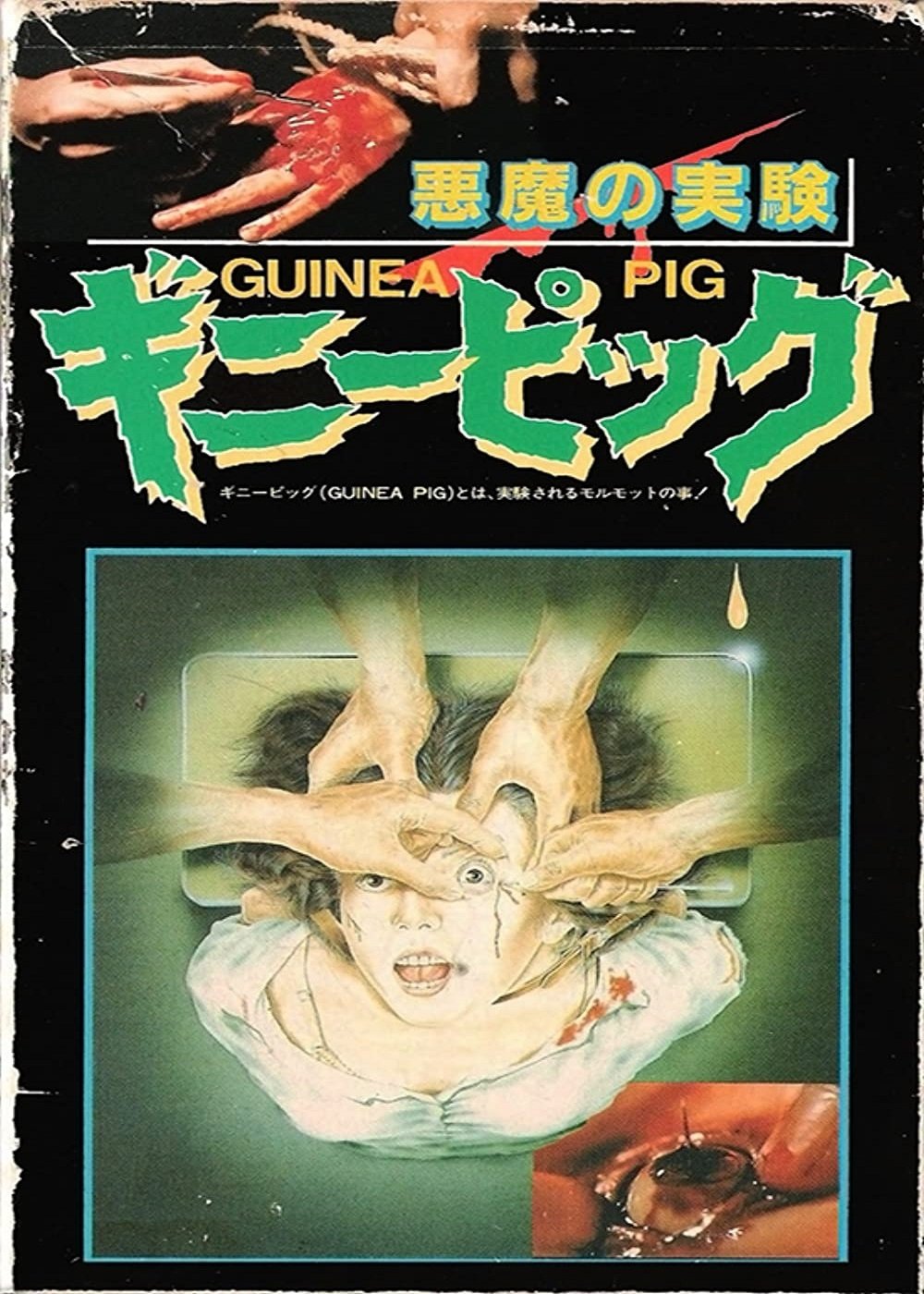
The film remained primarily an underground home-video object rather than a conventional international theatrical release. This mode of circulation contributed to its reputation: for viewers encountering copies without much contextual information, the limited credits, anonymous performers and documentary framing could seem substantially stranger than a normally packaged feature film.
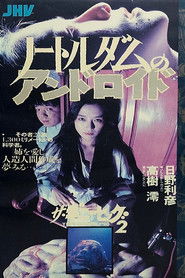
Its international availability increased in the early 2000s when Unearthed Films released Devil's Experiment in North America as a DVD double feature with Android of Notre Dame. The release appeared on June 21, 2002 as the first numbered title in the company's catalogue. Unearthed subsequently issued the wider Guinea Pig collection, helping move material previously associated with specialist tape trading into more formal cult home-video distribution.
The series eventually became important enough to inspire Unearthed's separate American Guinea Pig productions, beginning decades after Ogura's original. That later use of the name demonstrates the durability of the central concept: Guinea Pig had become shorthand within extreme horror for films organized around sustained physical suffering, practical gore and deliberate confrontation with the limits of acceptable screen violence.
Devil's Experiment itself remains more formally austere than many of the films that followed it. It offers little characterization, almost no conventional story and none of the elaborate mythology associated with later Japanese horror cycles. Its historical interest instead lies in the precision of its central experiment. By presenting fabricated violence using the visual language of an anonymous recording, the film turns the uncertainty surrounding the image into part of the horror itself. That approach gave the first Guinea Pig an identity that survived far beyond its brief running time and established a reference point for later pseudo-snuff and extreme cinema.