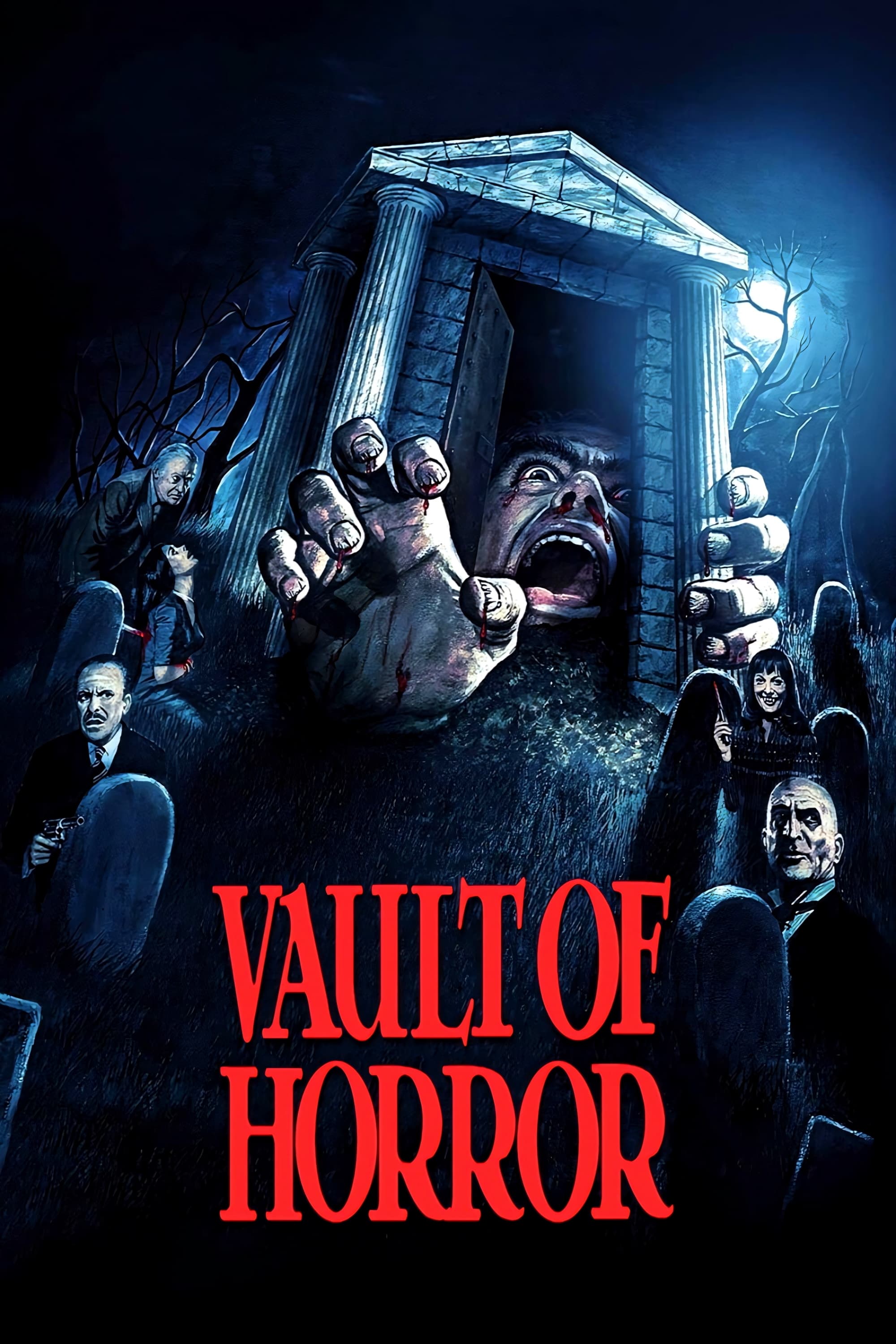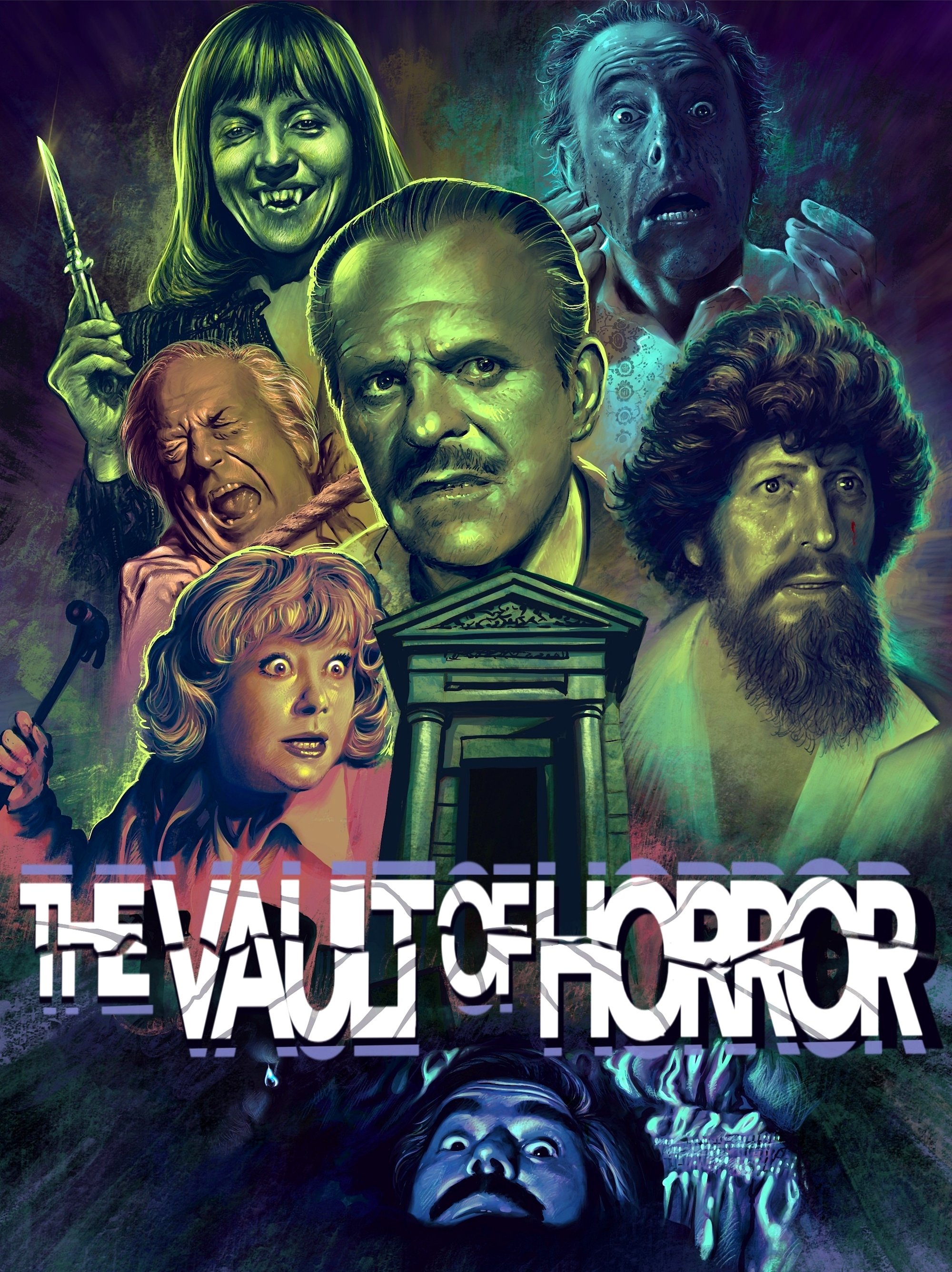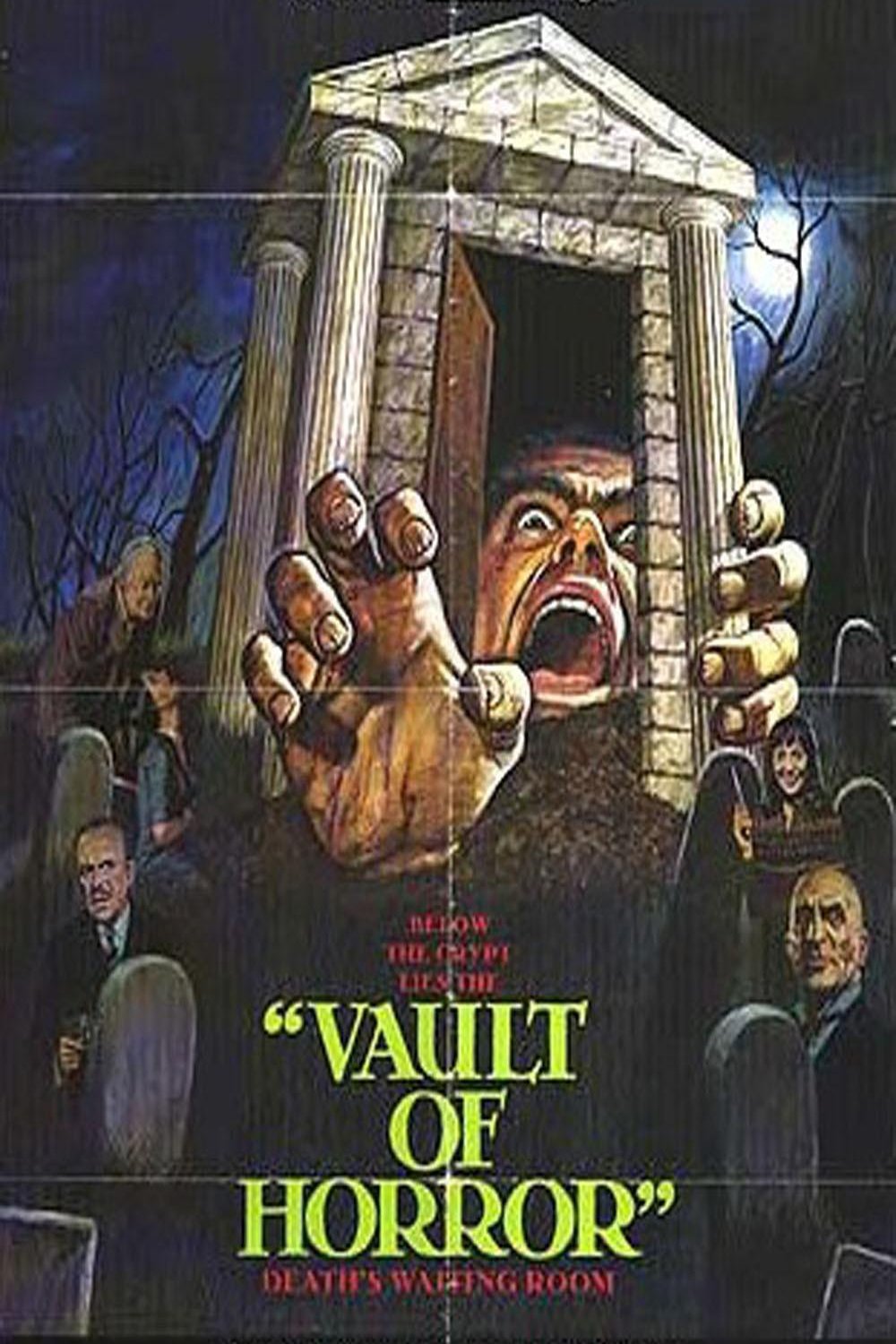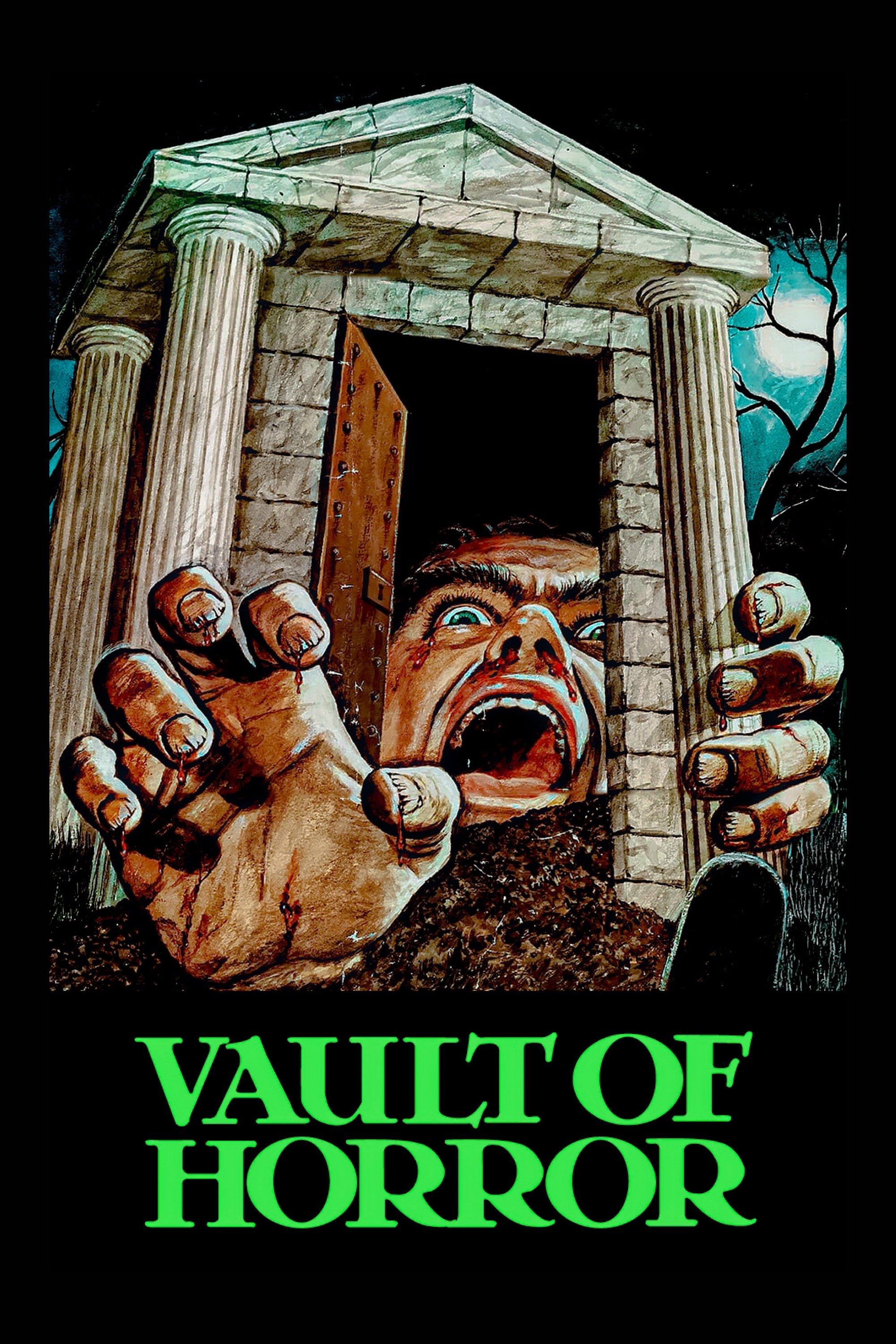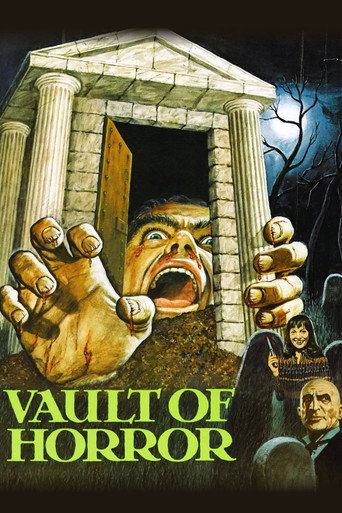
The Vault of Horror (1973)

US
Runtime
83 min
Release
March 16, 1973
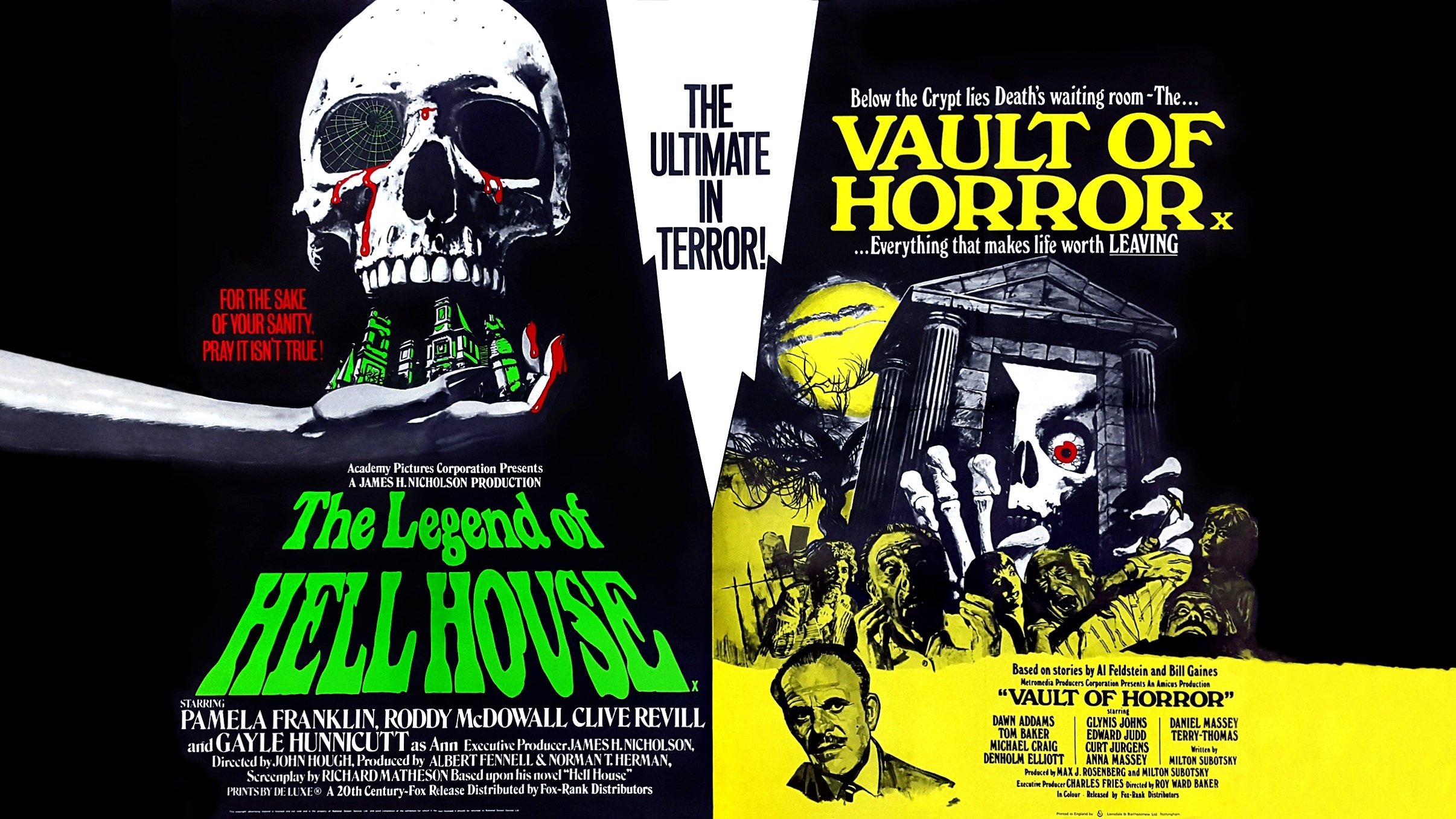
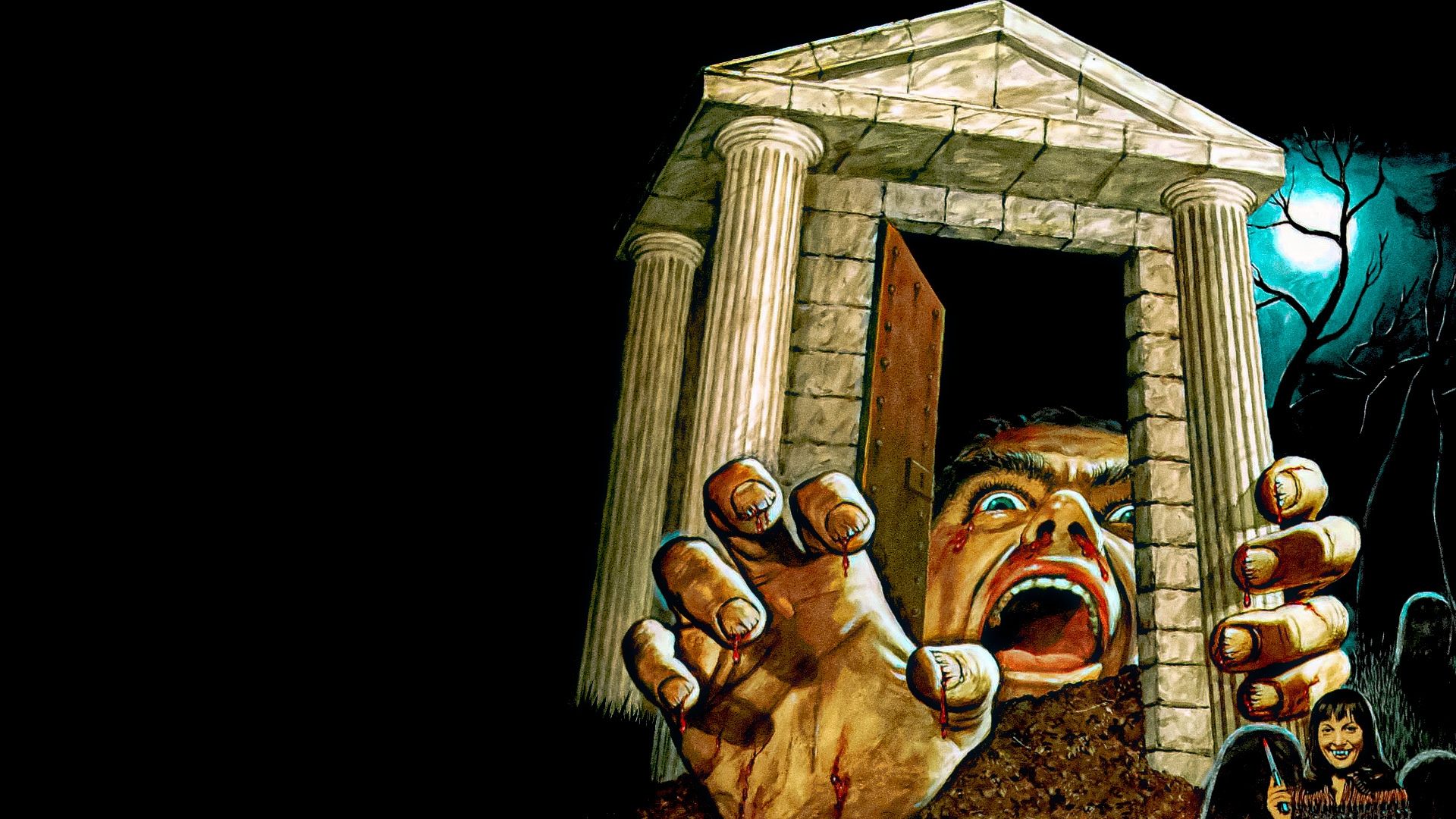
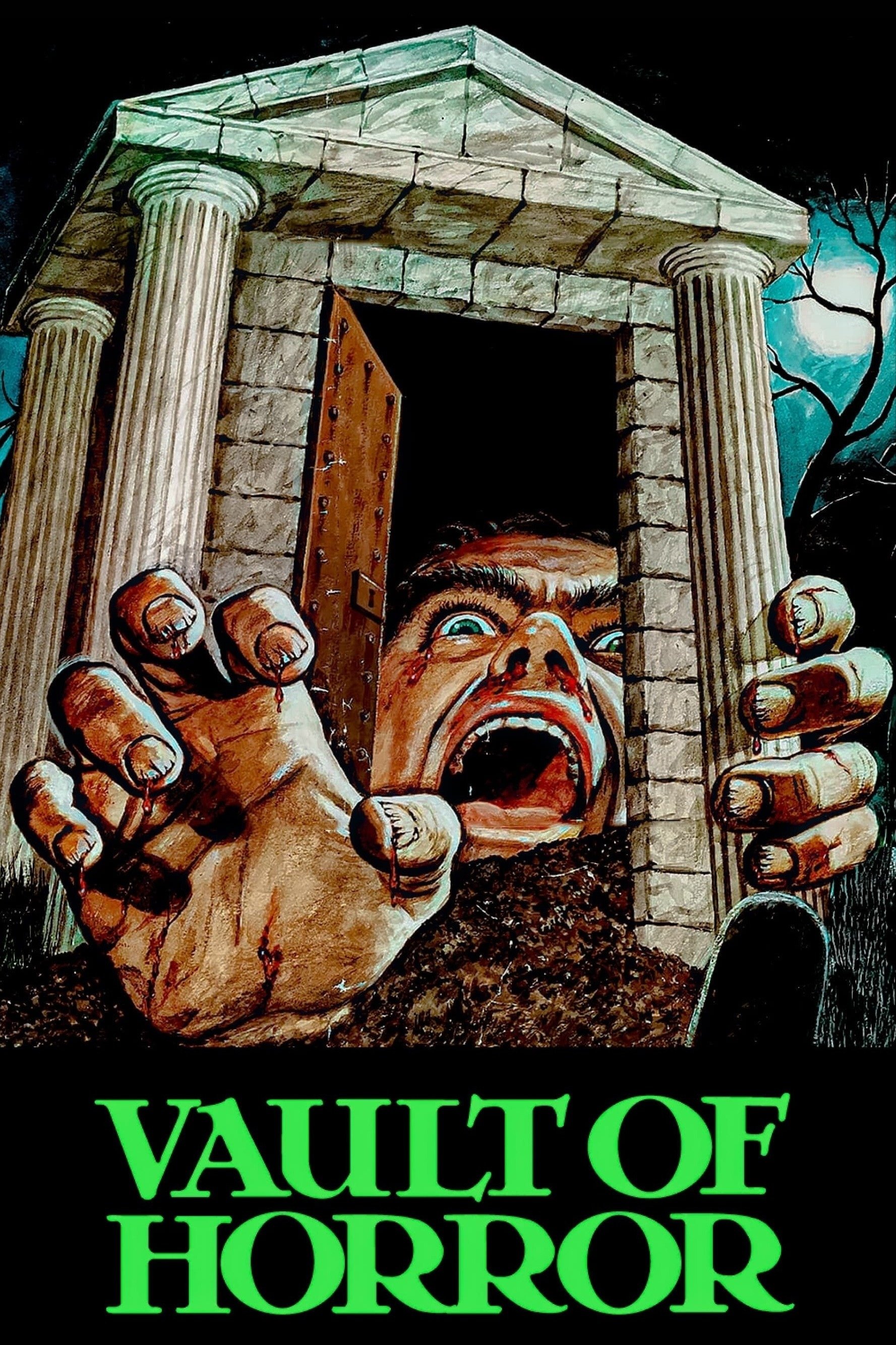
The Vault of Horror (1973) poster
Director
Production Companies
Amicus Productions , Metromedia Producers Corporation
Plot

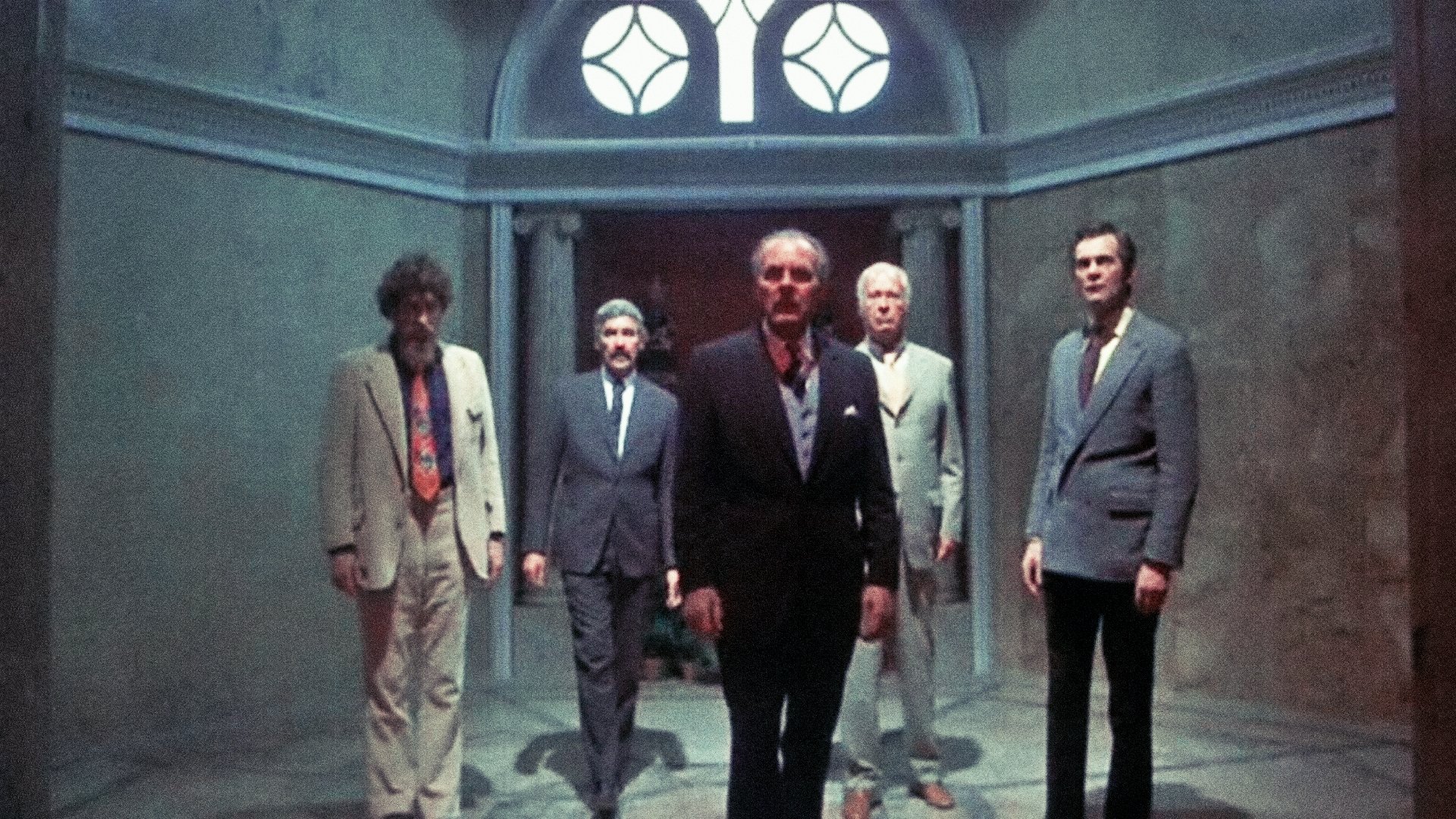
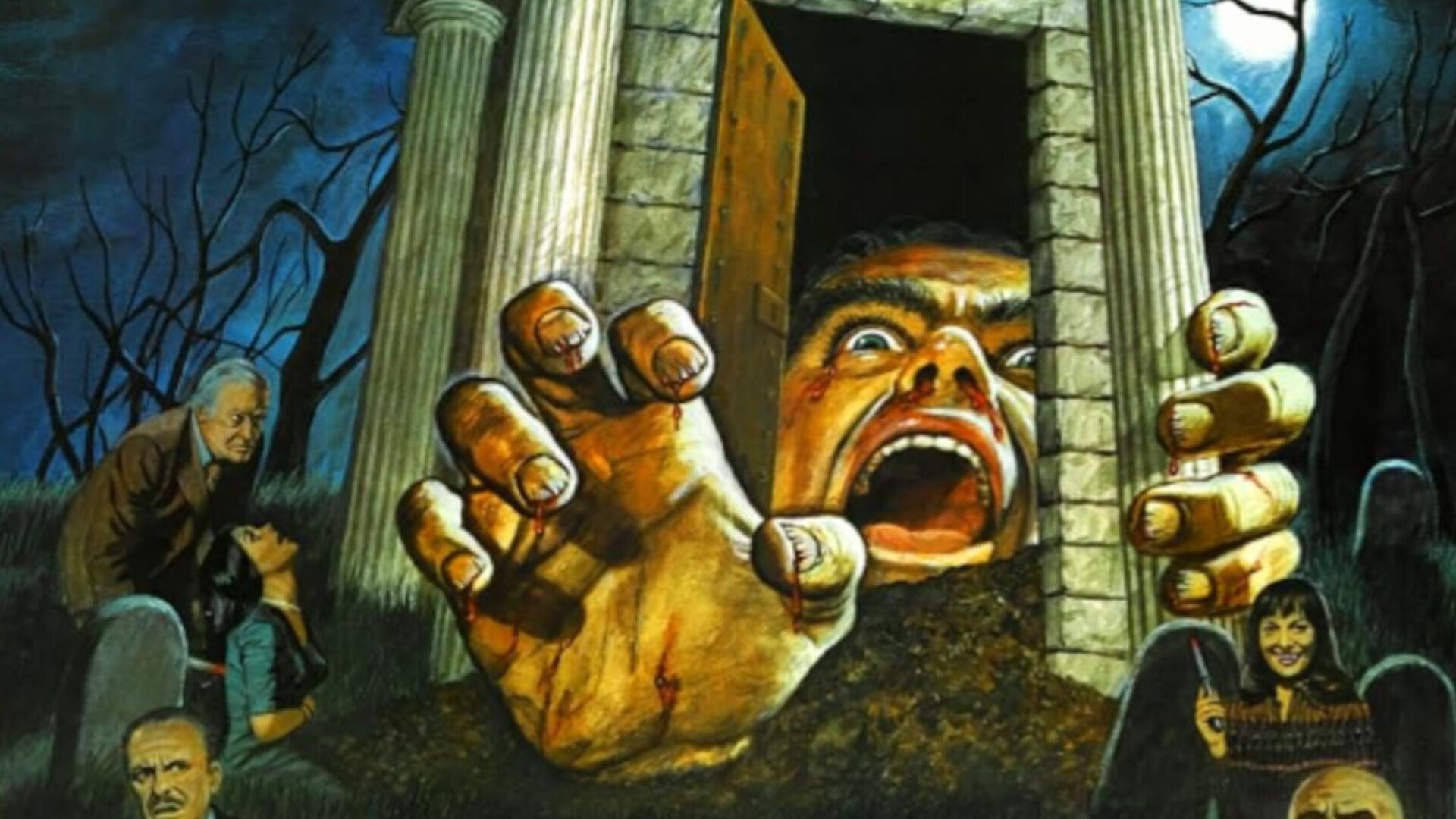
The sequel to Tales from the Crypt. Five strangers trapped in a basement vault converse about their recurring nightmares. Their stories include vampires, bodily dismemberment, east Indian mysticism, an insurance scam, and an artist who kills by painting his victims' deaths.

Alternative Titles
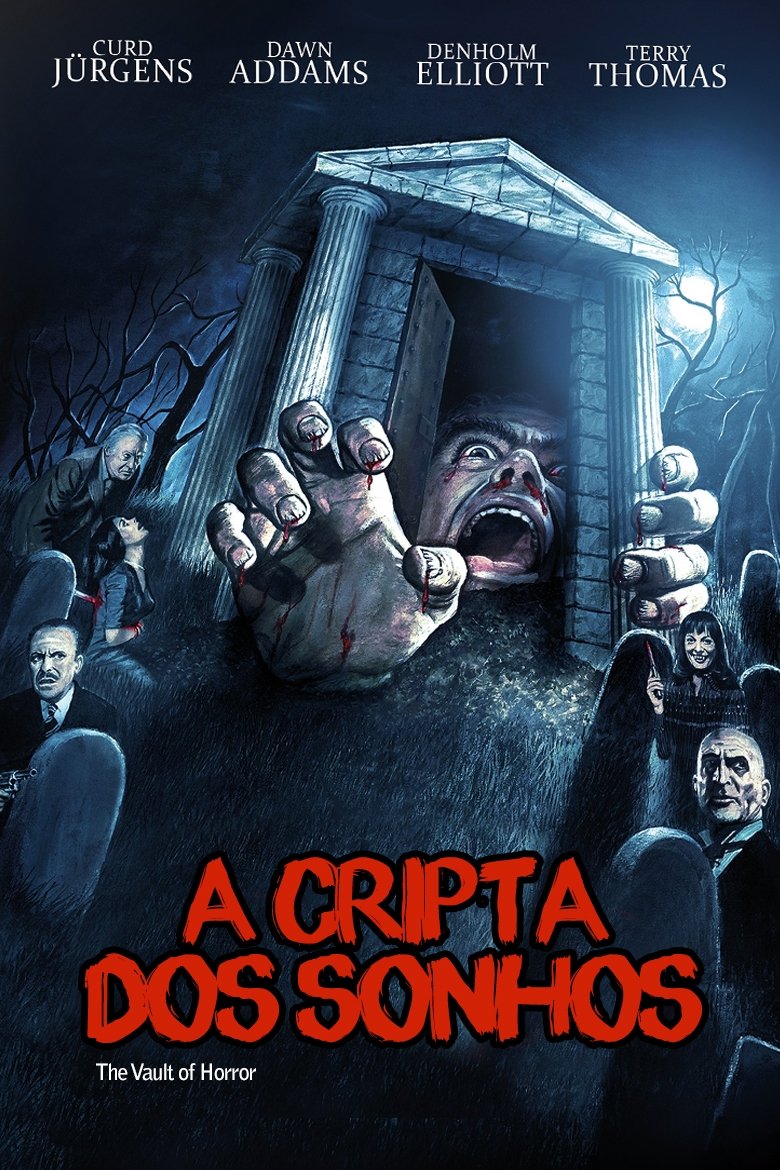
La bobeda del terror (Argentina) Tales From The Crypt - The Vault Of Horror (Australia) Разкази от криптата: Сводът на ужаса (Bulgaria) — Bulgarian A Cripta dos Sonhos (Brazil) — Portuguese Tales from the Crypt 2 - The Vault of Horror (Canada) 恐惧之巅 (China) — Chinese In der Schlinge des Teufels (Germany) — German La bóveda de los horrores (Spain) — Spanish
Show all 20 alternative titles Ääniä haudasta (Finland) Le caveau de la terreur (France) Further Tales from the Crypt (United Kingdom) Tales from the Crypt, Part II (United Kingdom) La bóveda del terror (Mexico) — Spanish Tales from the Crypt 2: A Sala dos Pesadelos (Portugal) — Portuguese Байки из склепа: Склеп ужаса (Russia) Склеп ужаса (Russia) — Russian Röster från andra sidan graven (Sweden) — Swedish Skräckens valv (Sweden) Korku Mahzeni (Türkiye) — Turkish Tales From the Crypt II (United States)

Trailers & Videos

3 videos

The Vault of Horror (1973) Film Guide

Roy Ward Baker’s Amicus EC Comics anthology: five stories, the Millbank Tower frame, Daniel and Anna Massey, Tom Baker, practical effects, censored versions and reception.

Roy Ward Baker’s The Vault of Horror (1973) is a British-American anthology horror film in which five strangers descend in a lift to a windowless room beneath a modern London office block. Unable to return upstairs, they begin describing recurring nightmares that involve murder, supernatural vengeance and fatal reversals. The stories concern a man hunting his sister for an inheritance, a marriage destroyed by obsessive orderliness, magicians who steal a seemingly impossible trick, a premature-burial fraud and an artist who uses enchanted portraits to punish his exploiters. Their confinement gives the separate episodes a common question: why should these particular men have been brought together to tell such stories?

Produced by Milton Subotsky and Max J. Rosenberg for Amicus, with Metromedia participation, the film followed the company’s Tales from the Crypt (1972) and again adapted material associated with EC horror comics. Milton Subotsky wrote the screenplay, Roy Ward Baker directed, and an ensemble including Daniel and Anna Massey, Terry-Thomas, Glynis Johns, Curd Jürgens and Tom Baker performed the five tales. Its history is complicated by later American reissues that replaced brief violent images with freeze frames. The film’s particular interest lies in its combination of modern urban settings, harsh comic reversals and a framing device that turns the act of storytelling into an eternal punishment.

EC Comics, Amicus and a Second Anthology

Amicus had developed the multi-story horror feature into a recognizable part of its production identity through Dr. Terror’s House of Horrors (1965), Torture Garden (1967) and other collections of supernatural or macabre incidents. Their format made it possible to place several established actors in substantial roles without requiring all of them on set for an entire feature. The success of Tales from the Crypt encouraged Subotsky and Rosenberg to return to the material published by William M. Gaines’s EC Comics during the early 1950s. The new film was conceived as a companion to that earlier release, not as a continuation of the Crypt Keeper’s specific fictional encounter.

The screen credits acknowledge stories associated with Al Feldstein and Bill Gaines and identify the magazines The Vault of Horror and Tales from the Crypt. The original publishing history is wider than the heading suggests. The Neat Job derives from a story in Shock SuspenStories, while Bargain in Death and This Trick’ll Kill You appeared in Tales from the Crypt. Subotsky’s adaptation retained EC’s interest in people undone by greed, cruelty or an attempt to obtain an undeserved advantage. The comic stories’ compact arrangements of cause and punishment suited an anthology of episodes lasting a fraction of the feature’s running time. Their illustrated origins should not, however, be confused with shots transferred directly from a comic page: cast, setting and pacing were developed for cinema.

The title passed through working variants including Further Tales from the Crypt and Tales from the Crypt, Part III, according to the American Film Institute. Its relationship with the 1972 picture is principally one of producers, source material and narrative method. Freddie Francis, director of the first film, was replaced by Roy Ward Baker, who had already made Asylum (1972) for Amicus.

Twickenham, Millbank Tower and the Underground Frame

The film was made at Twickenham Studios in London, with additional city exteriors. Detailed research in EOFFTV, drawing on contemporary trade notices, places the start of photography on 3 October 1972 after an earlier projected September date. Subotsky and Rosenberg had expected to use their more familiar Shepperton facilities, but demand for studio space led them to the smaller Twickenham complex. Denys Coop photographed the film in Eastmancolor, with Tony Curtis responsible for art direction and Oswald Hafenrichter for editing.
The outside of the office building is identifiable as Millbank Tower beside the Thames. The British Film Institute’s 2022 location study documents its use and places the film’s modern architecture within Amicus’s broader taste for postwar British surroundings. Five men enter an ordinary passenger lift, only to find that it has carried them below its expected destination. They emerge into a comfortable room furnished like a private club, with chairs and drinks but no apparent exit. A small change in a familiar building has placed the characters outside everyday rules.

The men describe their dreams one by one, giving the picture a structure similar to stories exchanged during an evening’s gathering. Unlike the cemetery encounter in Tales from the Crypt, no separate host such as Ralph Richardson’s Crypt Keeper presides over them. The film itself withholds the reason for their assembly until the closing movement, when the status of the supposed dreams changes. The frame then acquires a cruel logic: these are histories the speakers cannot simply put behind them.

Midnight Mess and The Neat Job: Domestic Crimes

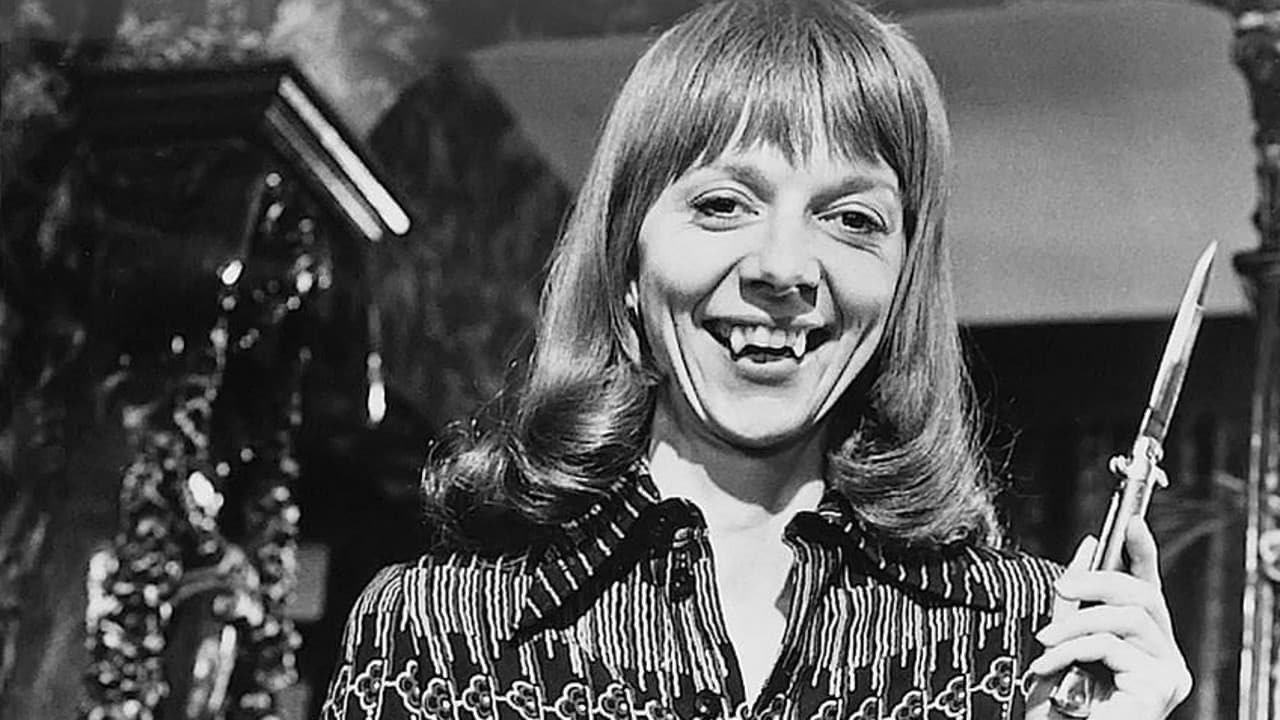
Midnight Mess follows Harold Rogers, played by Daniel Massey, as he seeks out his sister Donna, portrayed by the actor’s real-life sister Anna Massey. Harold believes the death of their father has left Donna an inheritance that he wants for himself. The town where he finds her is oddly quiet after dark; residents behave as though the coming night entails a rule he has not understood. Harold murders Donna and expects to leave with the money. Instead, the local restaurant becomes the setting for a grotesque reversal involving diners whose preferred drink is blood. The sequence joins the recognizable motive of inheritance murder to a vampire community established through small clues before its nature is revealed.

Its final image is among those most affected by later video versions. In fuller presentations Harold is suspended while a waiter draws blood from him; some shorter copies replace the movement with a still frame, changing the rhythm of the revenge. The revelation of the other diners turns a familiar restaurant service into a kind of organized extraction, making the murderer a source of nourishment for a community that operates under its own nocturnal customs.

The Neat Job treats a marriage as another system of control. Terry-Thomas plays Arthur Critchit, a man whose insistence that every household object occupy its appointed place makes life increasingly intolerable for his new wife Eleanor, played by Glynis Johns. What begins as a domestic comedy of minor errors becomes an account of constant criticism and fear. The story’s final violence literalizes his demand for neatness in a cruel arrangement of human remains. The episode’s horror comes from extending a familiar household tyranny to its most grotesque possible conclusion.

This Trick’ll Kill You and Bargain in Death

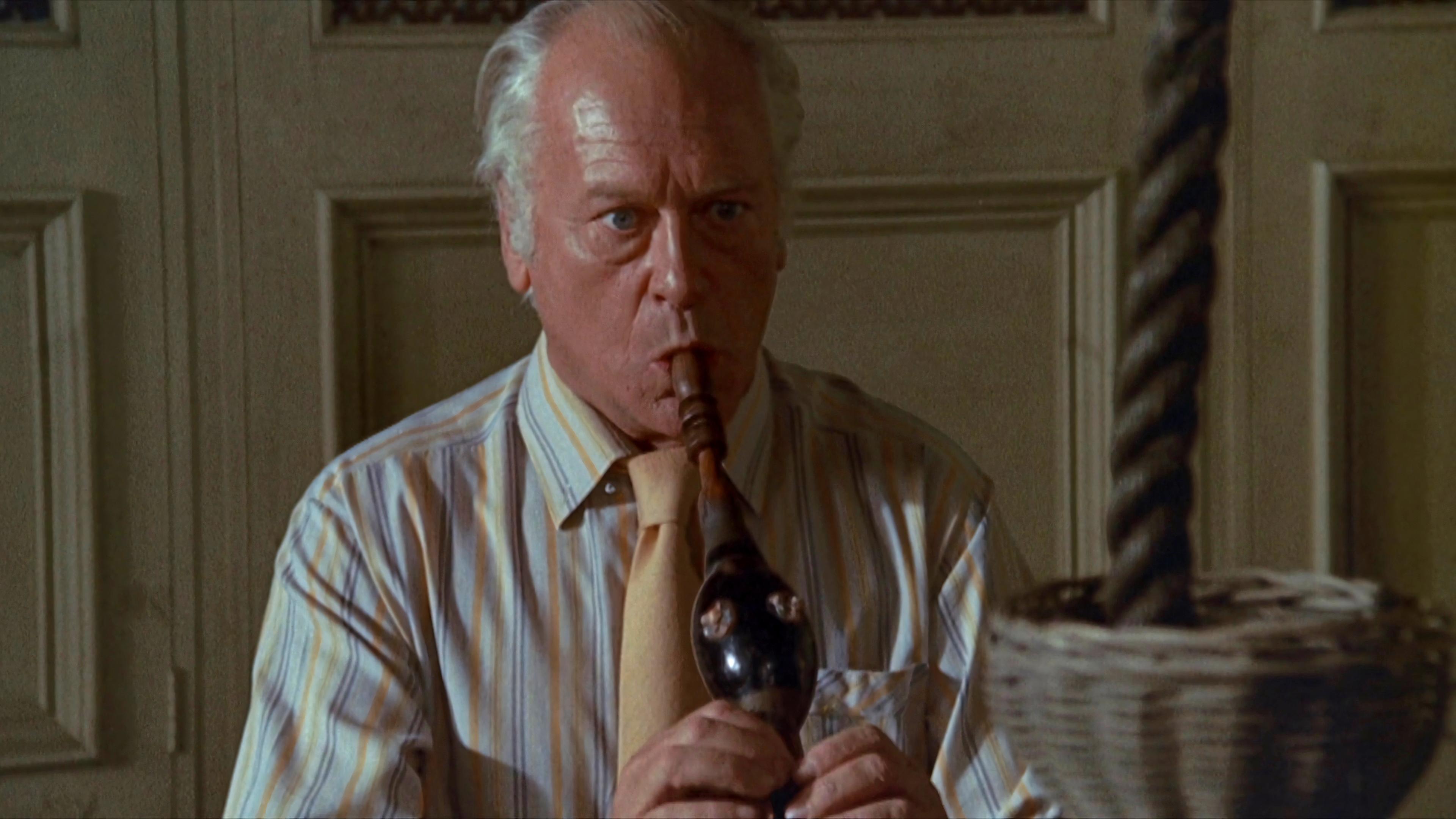
This Trick’ll Kill You follows Sebastian, a stage magician played by Curd Jürgens, and his wife Inez, portrayed by Dawn Addams, as they search India for an extraordinary act to exploit. They watch a young performer whose rope appears to rise by itself and allow her to climb beyond ordinary sight. Sebastian assumes that the marvel must have a secret technique he can purchase or steal. When the performer refuses to surrender it, the couple use violence in an effort to obtain the trick. The ensuing revenge depends on the difference between stage illusion and a rope that genuinely possesses impossible powers.

The story draws on a long Western fascination with the supposed Indian rope trick, turning an exoticized entertainment into a supernatural weapon. Its representation of India is a British horror fantasy shaped by inherited associations between foreign places and secret powers; it should not be treated as a reliable account of Indian religious or performance traditions. His greed makes him unable to recognize the danger of what he has witnessed until it is too late.

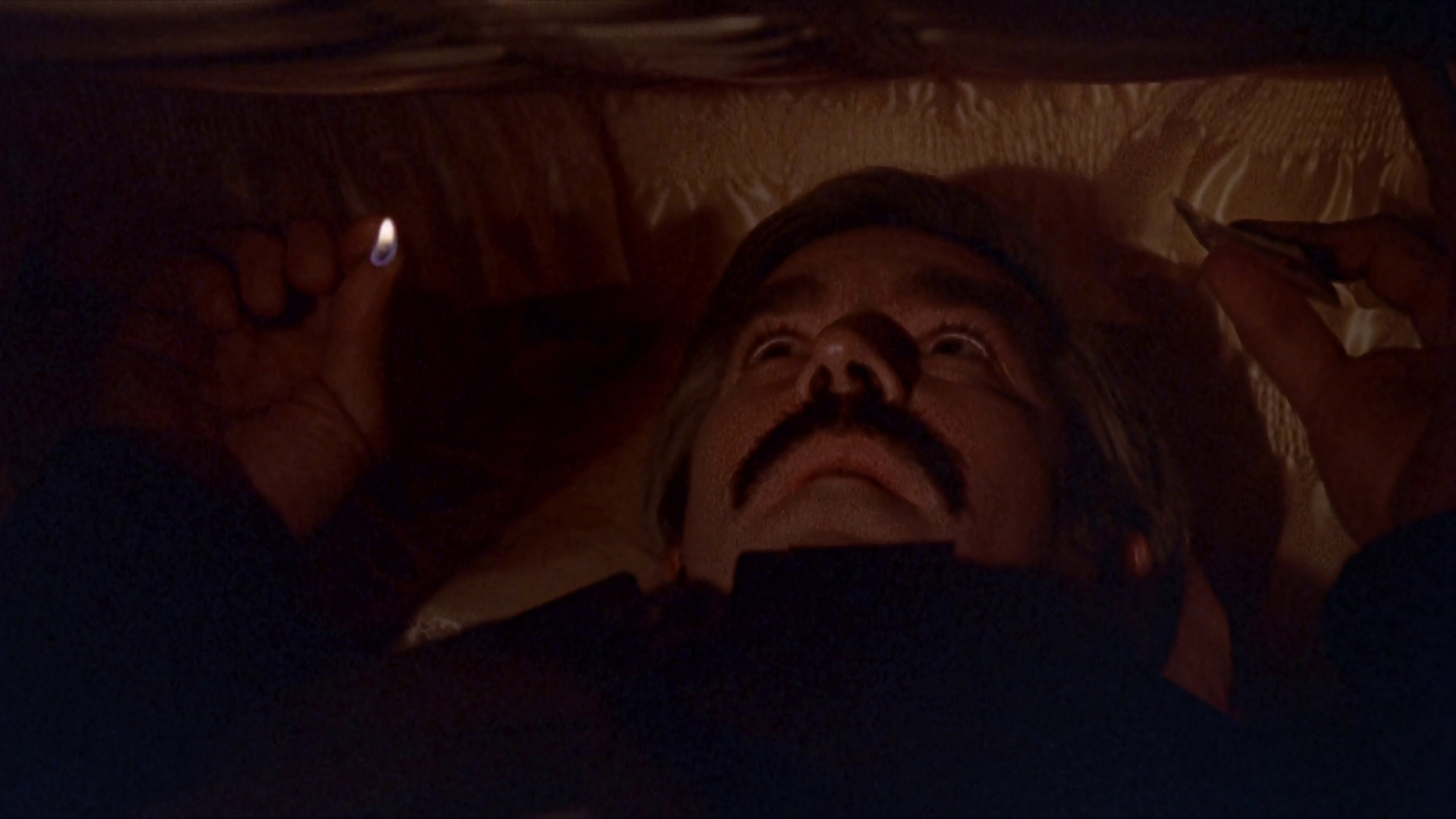
Bargain in Death abandons magic for a fraudulent insurance arrangement. Maitland, played by Michael Craig, agrees to take a drug that will make him appear dead, planning to emerge from his grave and collect a share of the proceeds with his associate Alex, played by Edward Judd. The associate’s betrayal places Maitland in a situation from which his plan offers no assured escape. Two medical students seeking a corpse for anatomical study introduce another danger, so that grave robbery and the fear of premature burial collide in one sequence. The story’s coincidences are part of its punitive design: a man who profits from staging his death encounters people prepared to treat his apparently lifeless body as an object for other purposes.

Drawn and Quartered: The Artist’s Revenge

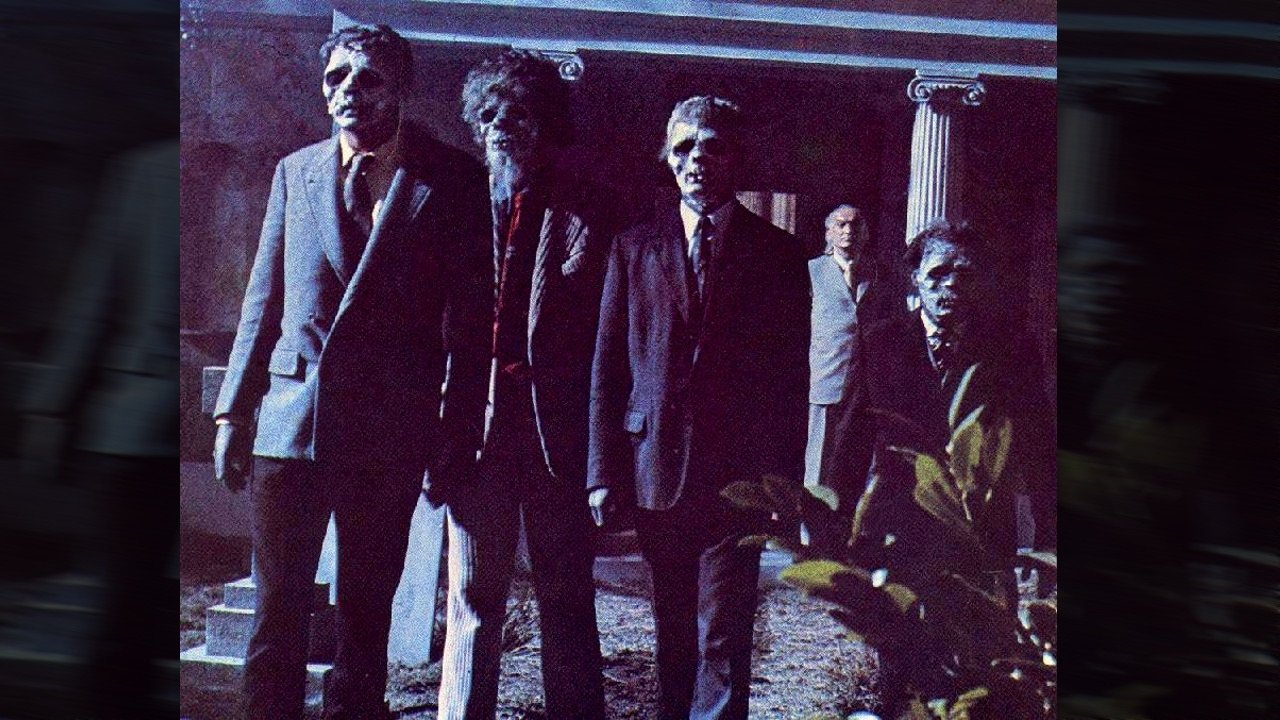
The final story centres on Moore, an artist played by Tom Baker, who discovers that the dealers handling his work have profited at his expense. Denholm Elliott appears as Diltant, with Terence Alexander as another figure in the art business. Moore’s anger at the exploitation of his talent leads him to seek supernatural assistance during a stay in Haiti. He discovers that altering an image can inflict comparable harm upon the person represented. Portraiture, which had promised reputation and financial recognition, becomes a direct instrument of revenge.

The successive attacks develop from a clear visual rule. Damage to a painted feature produces injury to its living counterpart, allowing the audience to understand the peril before each victim can do so. The narrative makes the image materially powerful, rather than using it only to disclose a crime. Its cruelty is also inseparable from commerce: Moore feels deprived of the value of his work, then claims a more frightening kind of ownership over the bodies of those he blames.

As in the earlier episodes, the power acquired through violence proves dangerous to its owner. The artist’s self-portrait creates a vulnerability that the satisfaction of revenge cannot remove. Baker can stage the punishment through a series of recognizable acts involving ordinary art materials, giving the finale a grisly simplicity. Its lasting visual interest lies in the way artistic representation becomes a means of bodily injury, drawing a line from the film’s comic-book origins to its final images of dismemberment and destruction.

Performance, Colour and the Balance of Horror and Comedy

The anthology’s varied cast is its most consistent asset. Daniel and Anna Massey had seldom appeared together in a film, making their confrontation in Midnight Mess notable beyond the plot. Terry-Thomas brings an immediately recognizable comic authority to Critchit, but the script gradually makes his fussiness into an instrument of humiliation. Glynis Johns gives the wife’s desperate efforts a physical and vocal progression that prepares the grotesque climax. Curd Jürgens’s certainty as a professional conjurer contrasts with his ignorance of the magic he wishes to seize, while Tom Baker’s artist remains both injured by exploitation and eager to inflict suffering in return.

Denys Coop’s colour photography allows the episodes to inhabit different social spaces without abandoning the film’s contemporary look. A restaurant and suburban house, a street performance and an artist’s workplace each become sites of hidden danger. Tony Curtis’s art direction gives the lift’s apparently luxurious lower room the air of an ordinary gentlemen’s club, even though its purpose is supernatural. The effect is especially strong when routine objects are given an unexpected use, as with food service, domestic storage, a coil of rope or a painted canvas.

Many victims are themselves responsible for a murder, an abuse of power or a commercial deception. The reversals can therefore invite laughter at a situation that would otherwise be horrifying. They are not always morally reassuring, since the punishment may involve a degree of cruelty far exceeding the original wrongdoing. Baker’s method largely leaves the actor and the situation to carry the joke before introducing a short, emphatic shock. That balance places the film in the EC tradition while explaining why some contemporary reviewers found the combination of comedy and cruelty uneven.

Makeup, Music and the Problem of Altered Prints

Roy Ashton was credited as chief makeup artist, while Douglas Gamley composed and conducted the music. Editing by Oswald Hafenrichter holds together five different stories and the frame without turning them into a continuous drama. The most disturbing effects are reserved for decisive moments: a blood-drawing apparatus, the aftermath of a hammer attack, the consequence of an impossible rope and injuries produced through manipulated paintings. The effects are short but essential to the film’s comic logic, in which an act described or anticipated must finally acquire an unmistakably physical result.

The subsequent circulation of The Vault of Horror has made its presentation unusually complicated. The March 1973 American release carried an R rating, but a later PG-rated reissue under the title Tales from the Crypt Part II removed brief images of violence. Versions derived from the shorter material replaced portions of the vampire and hammer sequences with frozen frames and omitted or abbreviated graphic material in Drawn and Quartered. The still images preserve a sense of what had occurred while visibly disrupting the timing of the scenes. They demonstrate how a censorship or distribution alteration can change the effect of a punch line without removing the entire episode.

The BBFC records a British cinema examination on 26 April 1973 and separate video submissions in 1988, 1993, 2009 and 2016, with differing durations. Published accounts disagree about which specific early British prints contained which cuts, so those entries should not be treated as a shot-by-shot censorship list. Scream Factory’s 2014 Blu-ray used a BFI high-definition transfer of a fuller print alongside a shorter master, making direct comparison possible. Reviews of the release distinguish widescreen and open-matte presentations as well. These formats differ in framing and source material, not necessarily in the narrative events included in every scene.

1973 Reception, Home-Video Recovery and Historical Position

The American Film Institute records the New York opening on 16 March 1973. EOFFTV cites contemporary trade reports showing encouraging initial takings at a small number of American theatres; those venue figures are not evidence of a definitive worldwide gross. The original R classification and the later PG reissue should be listed as distinct events in the distribution history. The film’s alternate titles also create opportunities for confusion with the earlier Tales from the Crypt, but they refer to a separate 1973 feature rather than an alternate version of Freddie Francis’s film.

Contemporary criticism was divided. A review in Daily Variety, excerpted in EOFFTV’s archival research, found the famous cast more effective than some of the predictable story reversals. A 1973 Cinefantastique response judged the Amicus formula increasingly repetitive and objected to its stylized interiors and effects. Later BFI criticism has been more appreciative of Baker’s work, singling out the vampire episode and the final story with Tom Baker as particularly enjoyable.

The film remains a significant part of the British horror anthology cycle because it makes the EC comics’ punishment structure visible through contemporary interiors, recognizable stars and sharply defined visual jokes. It also has a specific place in preservation history: the recovery of a more complete master exposed the limitations of the frequently circulated American PG material and permitted renewed study of its makeup effects and editing. Amicus subsequently continued its anthology approach in From Beyond the Grave (1974), while the EC properties gained a different screen identity through the later HBO series Tales from the Crypt. The 1973 film is best understood as a distinct Amicus adaptation, closely related to its predecessor in production history but organized around its own frame and five new tales.

References

  1. American Film Institute AFI Catalog — The Vault of Horror (1973)

    Institutional production and release record based on contemporary trade reporting, documenting Twickenham production, the separate EC sequel, cast, crew, working titles and US premiere.

  2. British Film Institute Amicus at 60: In Search of Its Crypts, Wax Museums and Other Locations — Adam Scovell

    Historical location research identifying Millbank Tower in London as the building used for the modern lift-and-vault frame, and explaining the studio’s anthology tradition.

  3. Filmography and production research citing 1972–1973 trade journals, with exact departmental credits, original release reports, accounts of versions and period criticism.

  4. Primary UK classification record distinguishing the 1973 cinema submission from 1988, 1993, 2009 and 2016 home-entertainment entries and their recorded running times.

  5. DVD Exotica How Scream Factory Salvaged The Vault of Horror

    Comparative review documenting the 2014 Blu-ray’s BFI-derived uncut master, shorter US master, freeze-frame alterations, distinct framing options and preservation concerns.

Connections

Cast

View Full Cast & Crew →

Release & Distribution

Production Companies (2)

  • Amicus Productions GB
  • Metromedia Producers Corporation US

Distributors (1)

  • 20th Century Studios US

Release History (2)

Release DateTerritoryRelease TypeFormatDistributorCertificationNotes
1973-03-16 United States Theatrical — — R
1974-02-05 Portugal Theatrical — — M/16 Cineclube do Porto
Everything that makes life worth leaving!