Perversions of Science (1997)

HORROR SERIES Sci-Fi & Fantasy
Runtime
30 min
Release
June 7, 1997
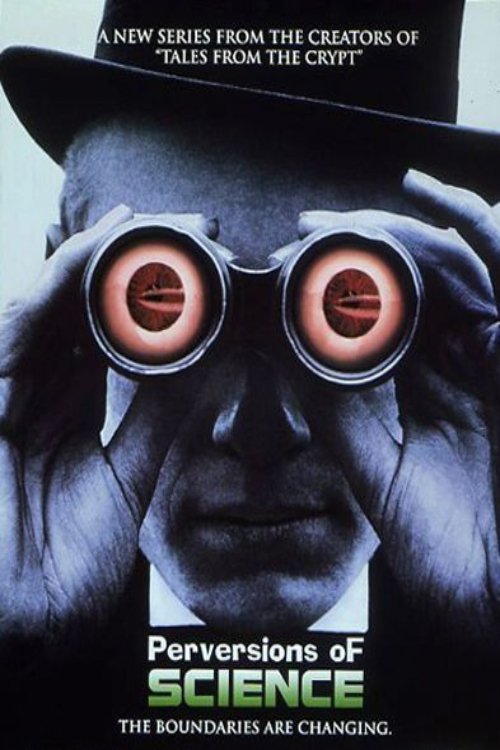
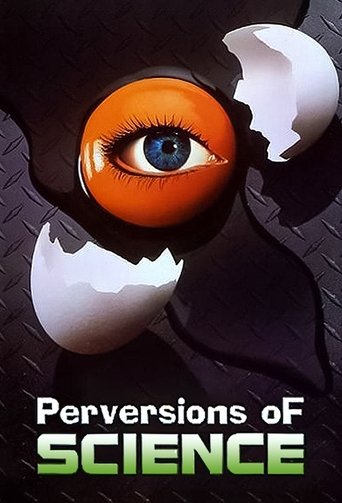
Perversions of Science (1997) poster
Plot

Perversions of Science is a science fiction/horror television series that ran on the cable channel HBO for one season in 1997. It is a spin-off of popular horror series Tales from the Crypt also shown on HBO, and its episodes are based on EC's Weird Science comic book series. The format of Perversions of Science is very similar to Tales From The Crypt, the show was introduced by a sexualized female robot named Chrome and then an individual episode would start. After the episode was complete, Chrome would conclude Perversions of Science. Most episodes focused on a part of science fiction such as alien invasion or space/time travel. The show featured a mix of established talent and young up-and-comers. "Panic", for instance, starred a young Jason Lee and Jamie Kennedy opposite Harvey Korman. As of 2011 the series has not been released on DVD in the US. However in 2001 it was released in Japan by Pioneer Entertainment where it has since gone out of print subsequently becoming sought after by collectors.

Alternative Titles
变态科学 (China) — Chinese Expériences interdites (France) — French 變態科學 (Hong Kong SAR China) — Chinese
TV SERIES

Seasons & Episodes

Explore episode plots and credits without leaving this series page.

1 seasons · 10 episodes
Season 1 (10 episodes)
Season Cast & Crew

Cast

Maureen Teefy
Maureen Teefy Chrome (voice)

Crew

Joel Silver Producer
Richard Donner Executive Producer
David Giler Executive Producer
Walter Hill Executive Producer
Danny Elfman Theme Song Performance
Robert Zemeckis Executive Producer
Joel Silver Executive Producer
Still from Dream of Doom / Anatomy Lesson / Boxed In
01.01 Dream of Doom / Anatomy Lesson / Boxed In

A 40 year old married, but childless, professor cannot wake from his dreams. Each time he wakes up, he finds himself in another dream.

Still from The Exile
01.02 The Exile

A scientist who kills people in his experiments is arrested and tried. When rehabilitation fails, he is sentenced to be "exiled".

Still from Given the Heir
01.03 Given the Heir

A woman re-shapes her body to perfection. She then participates in an experiment where she is sent ten years into the past where she meets a man obsessed with perfection.

Still from Planely Possible
01.04 Planely Possible

A grieving widow volunteers to be the subject of an experiment where he will be sent to another plane of existence where his wife may still be alive.

Still from Panic
01.05 Panic

A number of people at a Halloween costume party try to deal with the panic caused by the Orson Wells Mercury Theater production of War of the Worlds.

Still from Snap Ending
01.06 Snap Ending

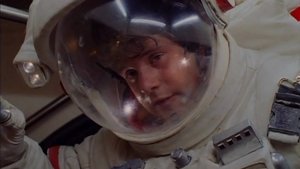
The mixed gender crew of a spaceship have trouble controlling their anxieties when they are sent to study a new planet.

Still from Ultimate Weapon
01.07 Ultimate Weapon

Aliens from outer space assume human form in order to mate with a native earthperson.

Still from The People's Choice
01.08 The People's Choice

A suburban family gets caught between groups of warring robots. When one of their robots is damaged every night, a robot repairman suggests that they buy a new one: a red, white, and blue patriot.

Still from Ultimate Weapon
01.09 Ultimate Weapon

Aliens from outer space assume human form in order to mate with a native earthperson.

Still from The People's Choice
01.10 The People's Choice

A suburban family gets caught between groups of warring robots. When one of their robots is damaged every night, a robot repairman suggests that they buy a new one: a red, white, and blue patriot.

Trailers & Videos

1 video

Film Guide & Analysis

HBO’s EC Comics science-fiction horror anthology: Chrome, the Crypt production team, ten episodes, dream terror, alien encounters, robot satire and Japanese home-video history.

Perversions of Science (1997) is an American science-fiction and horror anthology made for HBO as a companion to Tales from the Crypt. Its ten self-contained stories replace that series’ graveyard punishments with nightmares about experimental science, bodily alteration, alien encounters, artificial intelligence and the instability of perceived reality. Each instalment is presented by Chrome, a computer-generated female robot whose sexual jokes provide a deliberately provocative counterpart to the Crypt Keeper’s macabre wordplay.

Developed within the production circle behind Tales from the Crypt and adapted principally from EC Comics’ science-fiction publications, the programme debuted on 7 June 1997 and ended on 23 July after one season. Its mixture of pulp satire, psychological horror and broad sexual comedy never secured the longevity of its predecessor. The series remains notable for its unusual range of filmmakers, its deliberately synthetic host and the difficulty of accessing the complete run through later official releases.

EC Comics and the Move from Horror to Science Fiction

The series grew from the same EC Comics licensing and production environment that had sustained HBO’s Tales from the Crypt between 1989 and 1996. Its source material came mainly from the publisher’s science-fiction line, including Weird Science, Weird Fantasy and Incredible Science Fiction, rather than from the horror magazines that supplied many Crypt stories. William M. Gaines and editor Al Feldstein had used those titles during the 1950s to publish unsettling accounts of technological progress, aliens, social prejudice and the unintended effects of human wishes.

The television adaptation retained EC’s preference for compact reversals but changed the kind of threat that produced them. A traveller might cross into another reality; an experiment could turn its investigator into a prisoner; an apparently useful machine could acquire intentions of its own. These stories could overlap with horror without adopting the Crypt Keeper’s emphasis on corpses, vengeance and murder. The anthology also used material outside EC’s catalogue: Boxed In derived from a Chris Miller story published in National Lampoon, a distinction that prevents the claim that every episode was a direct EC adaptation.

Many of the executive producers had worked on Tales from the Crypt, including Richard Donner, David Giler, Walter Hill, Joel Silver and Robert Zemeckis. Gilbert Adler was the series producer and also directed an episode. Their involvement established a visible continuity of personnel, but Perversions of Science was an independent television series, not a continuation of Crypt’s characters or a collection of unaired episodes from its seventh season.

Chrome, the Animated Host and the Television Frame

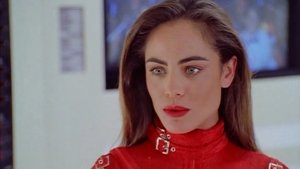
The show replaced the Crypt Keeper puppet with Chrome, an animated humanoid robot voiced by Maureen Teefy. She introduces each story as a playback and concludes with jokes built around sexuality and technological metaphors. The figure’s polished, idealized metal body was intentionally unlike the decayed and physically textured host of Tales from the Crypt. Production credits identify Japanese artist Hajime Sorayama with Chrome’s design, while the finished presentation relies on computer-generated imagery rather than a live-action performer in a costume.

Danny Elfman supplied the series theme, accompanying an elaborate opening that moves through abstract machinery and impossible spaces before arriving at the host. Daniel Kurland’s retrospective study for Bloody Disgusting identifies the Möbius-like title imagery and Chrome’s sexual innuendo as central elements of the show’s attempt to reproduce the earlier anthology’s recognizability. The frame also presents an uncomfortable contradiction: a series capable of questioning artificial bodies and manufactured identities repeatedly turns its own female-shaped artificial intelligence into a sexualized attraction. This belongs to the programme’s presentation and should be distinguished from the more varied concerns of the individual stories.

The HBO Broadcast and Its Changing Creative Teams

HBO launched the series on Saturday, 7 June 1997, with a ninety-minute programme combining Dream of Doom, Anatomy Lesson and Boxed In. The Los Angeles Times announced that the remaining half-hour stories would air on Wednesdays at 11 p.m., beginning on 11 June. The first night’s combined presentation has sometimes produced misleading episode listings that merge three separate tales into one. In the original run there were ten individual stories, ending with The People’s Choice on 23 July, although they were broadcast on eight separate dates.

Walter Hill directed Dream of Doom, Gilbert Adler handled Anatomy Lesson and William Shatner directed Boxed In, in which he also appeared. Later episodes were directed by William Malone, Ramón Menéndez, Russell Mulcahy, Tobe Hooper, Sean Astin and Dean Lopata. Writers included David S. Goyer, David J. Schow, Mark Verheiden, Peter Atkins, Andrew Kevin Walker and Scott Nimerfro. Those assignments gave the anthology a mixture of filmmakers associated with action, horror and speculative television rather than a consistent directing style. The short running time demanded that each team establish unfamiliar characters and a governing fantasy within minutes.

The range is visible in the opening programme itself. Hill’s dream story depends on uncertainty of viewpoint, Adler’s entry turns violent urges into a mystery about identity, and Shatner’s spaceship comedy uses futuristic devices as a pretext for sexual farce. It also makes the programme difficult to judge as one continuous narrative: the effectiveness of an individual concept can be largely independent of its neighbours.

Dreams, Experiments and Psychological Terror

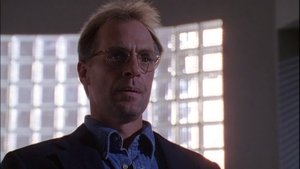
Dream of Doom stars Keith Carradine as Arthur Bristol, a university professor whose attempts to wake up lead into further dreams. Written for television by David S. Goyer from a Harry Harrison story and directed by Hill, the episode uses repeated apparent awakenings to remove the reliable boundary between experience and imagination. The Torino Film Festival later programmed it in a Walter Hill retrospective, describing the professor’s inability to distinguish the waking world from images created by his subconscious.

Anatomy Lesson, directed by Adler from a screenplay by Kevin Rock, follows a young man whose homicidal impulses are interrupted by the recurring appearance of a bearded stranger. Jeremy London plays the young man, with Jeff Fahey as the mysterious figure. The story transfers the question of hidden danger from an external monster to the protagonist’s own identity. The Exile, written by David J. Schow and directed by William Malone, makes scientific experimentation a form of criminal violence. Its cast includes Jeffrey Combs, Ron Perlman and David Warner, while the narrative subjects a scientist to an unfamiliar system of punishment. Both episodes use speculative machinery to intensify recognizably human acts rather than offering neutral celebrations of scientific discovery.

Altered Bodies, Desire and Parallel Worlds

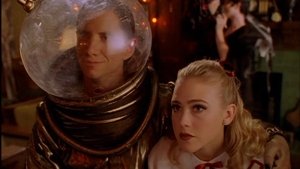
Boxed In makes sexual frustration the basis of a space-travel farce. William Shatner plays an admiral whose daughter is the object of a pilot’s promise of fidelity, while a female android offers a seemingly convenient alternative. The episode stands apart from the darker stories because its central technology is used for an elaborate joke about temptation and control. Given the Heir, written by Mark Verheiden and directed by Ramón Menéndez, introduces a woman whose body is reshaped to meet an ideal of perfection before she participates in an experiment involving a journey into the past. The promise of bodily improvement becomes entangled with the expectations placed upon appearance and attraction.

Planely Possible, written by Peter Atkins and directed by Russell Mulcahy, follows a bereaved man seeking a reality in which the woman he lost may still be alive. George Newbern and Elizabeth Berkley appear in a story where alternative dimensions offer a seductive answer to grief. Its disturbing element is the uncertainty surrounding what might be preserved when someone attempts to exchange one reality for another. Each apparent solution carries risks the characters cannot fully calculate.

Alien Visitors, Halloween Panic and Domestic Machines

Panic, directed by Tobe Hooper from a script by Andrew Kevin Walker, takes place amid the public anxiety surrounding the 1938 broadcast of The War of the Worlds. Jason Lee and Jamie Kennedy appear in a Halloween-night story whose visitors and mistaken assumptions give the historical radio event a new science-fiction explanation. Chris Sarandon and Harvey Korman are also in the cast. The premise uses the fear generated by a supposed alien invasion to complicate the relationship between costume, reality and belief. In a later Bloody Disgusting retrospective, Daniel Kurland singled it out as one of the anthology’s most effective entries, a critical judgment rather than a measure of contemporary audience response.

Snap Ending, directed by Sean Astin, follows a spacecraft crew confronted with unfamiliar biological life and the resulting disturbance of their assumptions about sex and reproduction. Ultimate Weapon, directed by Dean Lopata, develops a related concern through extraterrestrial visitors who adopt human forms in order to reproduce.

The People’s Choice, directed by Mulcahy, ends the series in a suburban home where competing domestic robots offer increasingly political versions of service. Its red, white and blue patriotic machine converts consumer choice into a satirical account of ideological persuasion. The household setting is important: machines presented as convenient servants become vehicles for conflict that their owners do not control. Across these episodes, alien invasion and automated labour are treated less as distant scientific forecasts than as opportunities to distort recognizable behaviour in homes, parties and workplaces.

Reception, Japanese DVDs and the Series’ Afterlife

The anthology ended after its ten-episode season, and HBO did not commission another run. Contemporary scheduling reports establish that it received a promoted Saturday launch before moving to late Wednesday broadcasts; they do not establish a definitive cause for cancellation. Retrospective commentators have disagreed about the reasons for its disappearance, suggesting uneven scripts, the tone of its sexual humour or the difficulty of matching Tales from the Crypt’s established identity. Kurland’s 2016 review is more sympathetic to individual episodes than to the whole, while later genre retrospectives describe an anthology whose stronger stories were obscured by its brevity and inconsistent approach.

The subsequent release history has contributed to that obscurity. The programme did receive an official Japanese DVD edition in March 2001, issued across separate volumes; distributor catalogue information preserves the release date, regional format and episode selections. The first disc, for example, is listed as a Region 2 NTSC DVD with Japanese subtitles and English sound. This documented release corrects the broad claim that the series was never issued on DVD anywhere. Widely available American home-video editions have remained elusive, making the series harder to revisit than its HBO predecessor.

Perversions of Science occupies a small but identifiable position in television horror history. It reused the EC anthology structure after the end of a successful horror franchise, placed a computer-generated character at the centre of its framing identity and gathered filmmakers whose later reputations often overshadowed the programme itself. Its distinctive achievement is not a uniform theory of science but the range of disturbing situations it obtained from technological promises. The series shows how the traditions of pulp horror and speculative satire could overlap within a short-lived late-night cable anthology.

References

  1. Los Angeles TimesConcert, Comedy, Sci-Fi Series on Tap — Susan King

    Contemporary 5 June 1997 scheduling notice documenting the three-story HBO premiere and subsequent Wednesday broadcast slot.

  2. Torino Film FestivalPerversions of Science — Dream of Doom

    Institutional retrospective film entry identifying Walter Hill’s episode, its central dream premise, the EC Comics origins and the programme’s directors and host.

  3. Bloody DisgustingThat Time When Tales From the Crypt Had an Unsuccessful Sci-Fi Spinoff Hosted by a Sexy Robot! — Daniel Kurland

    Detailed 2016 critical retrospective covering production continuity, Chrome, the different episode stories, performers, creative credits and reception.

  4. Scholarly history of the source publisher’s science-fiction line, Weird Science and Weird Fantasy, their authors, social satire and eventual end under Comics Code pressures.

Cast

View Full Cast & Crew →