Houseful Motion Pictures Production
, Harekrishna Mediatech
Plot
After her father's suicide, Meghna gets led by one obsession - vengeance. The trail ends at her estranged mother's doorstep, sparking a bloody rampage.
A supernatural revenge story in the 1920 series, directed by Krishna Bhatt and filmed using Unreal Engine virtual production.
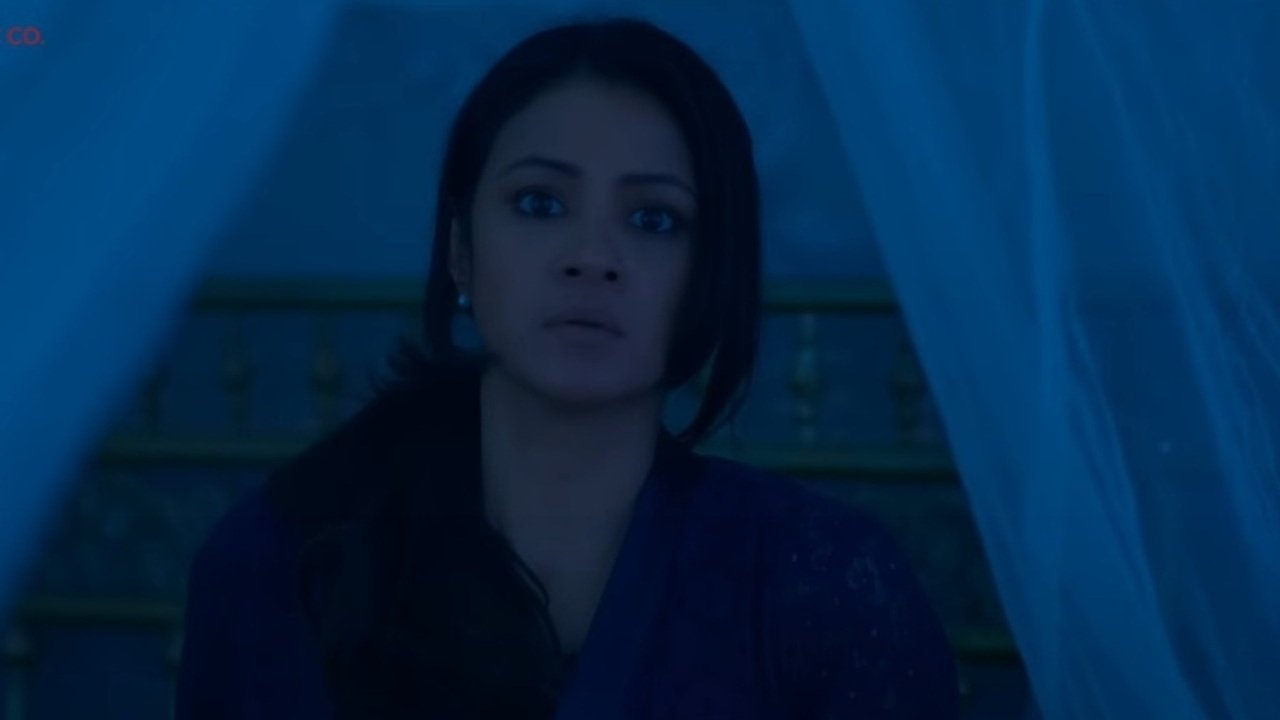
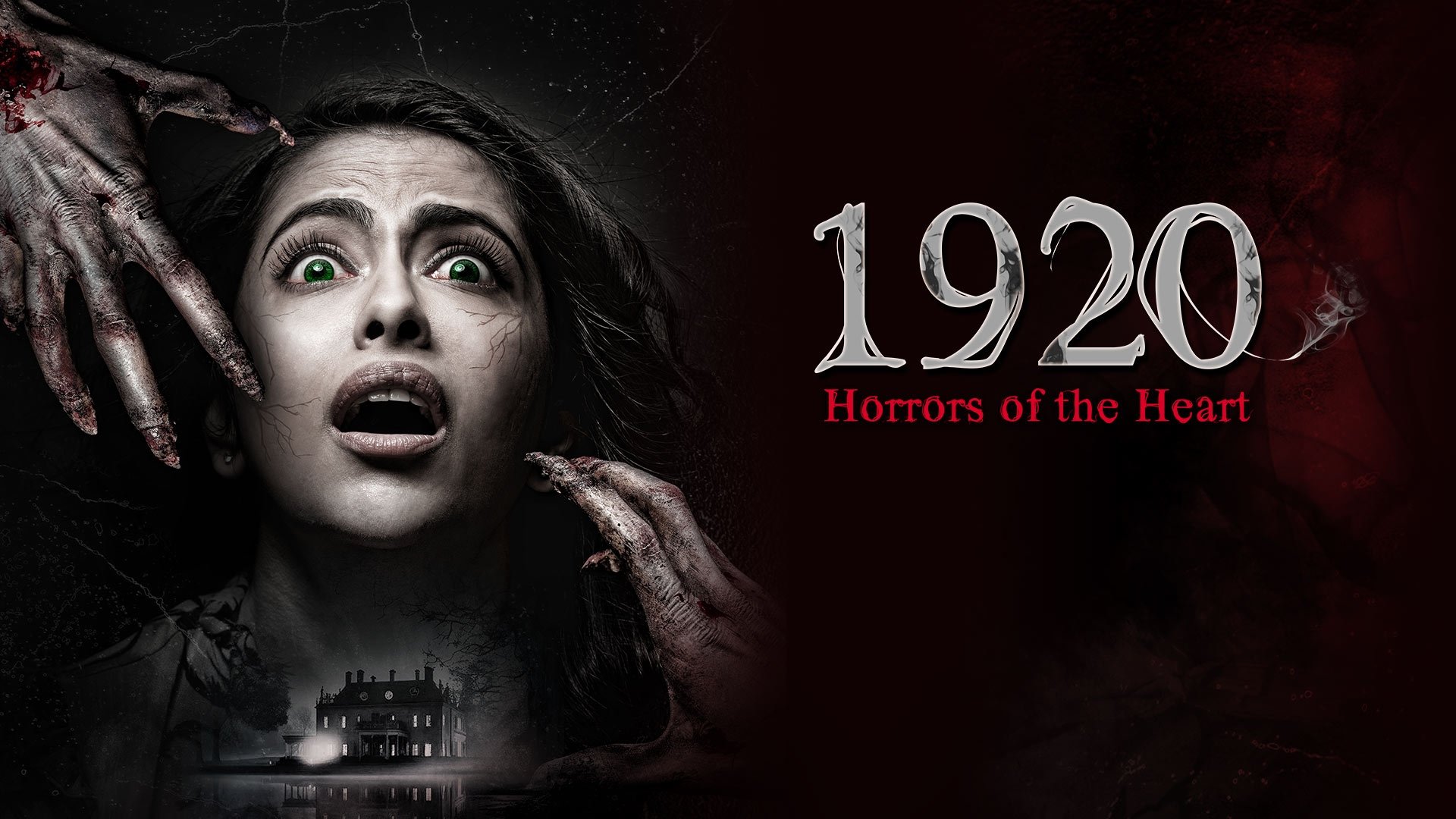
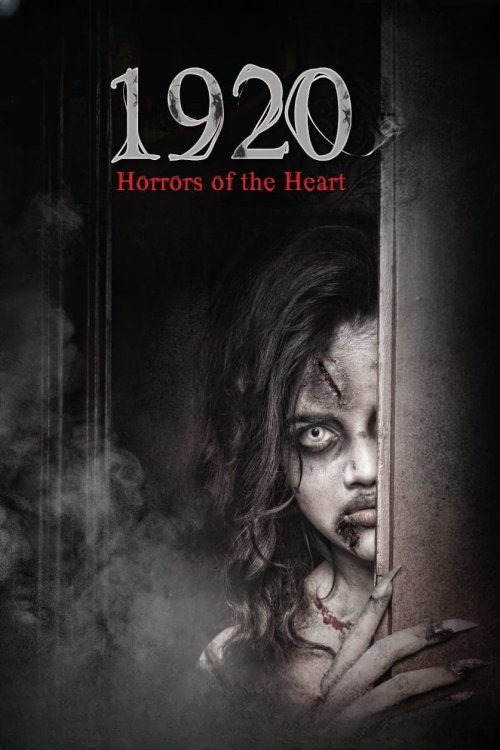
1920: Horrors of the Heart (2023) is a Hindi-language supernatural horror film directed by Krishna Bhatt and produced by Vikram Bhatt. It extends the 1920 series through an independent story of family grievance and occult revenge. After her father Dheeraj dies by suicide, Meghna discovers his accusations against her estranged mother, Radhika. She enters Radhika’s new household intending to punish her, and the assistance she seeks from her father’s spirit brings danger to people who were not involved in their earlier conflict. The threat grows through manifestations of possession and supernatural violence inside a family residence.
The film marks Krishna Bhatt’s feature-directing debut and uses a production method unusual enough to have been discussed publicly by its producer: virtual environments created with Unreal Engine. Its creative emphasis on a daughter’s remorse and a fractured family was described by the director in interviews before release. This combination of domestic melodrama and familiar possession imagery places it within the continuing identity of the 1920 films without requiring the characters or events of the earlier entries to return.
Development and the 1920 Series
The project was announced in April 2022 as another entry in the series established by Vikram Bhatt’s 1920 (2008). Bhatt took the producer’s role, with Mahesh Bhatt involved in the screenplay and Krishna Bhatt directing her first feature. Krishna had worked on her father’s productions before assuming responsibility for the film. Speaking to The Indian Express in June 2023, she recalled that watching the making of the original 1920 had helped persuade her to become a filmmaker. Returning to the same title family therefore carried a particular professional significance, alongside the expectation that her work would be measured against her father’s horror films.
The screenplay was developed in a writing environment in which Krishna participated directly. She described Mahesh Bhatt asking her to narrate the story as she understood it before filming began, so that her own interpretation could guide the execution. She also identified the emotional consequences of a mistaken decision as the distinguishing element of this installment. Meghna’s search for vengeance initiates the supernatural violence, but her changing understanding of her parents’ history becomes the source of a different conflict: whether she can prevent further harm once she realizes the danger of her choices.
Virtual Production and the Gothic Setting
Virtual production was central to the film’s making. At the VAM Summit in March 2023, Vikram Bhatt described teaching himself Unreal Engine after becoming interested in the technology during the COVID-19 period. He studied tools for building environments, arranging light and working with digital assets. Rather than transporting a production between numerous locations, he wanted to create the necessary surroundings while filming on a studio floor. In the summit report, he said that Horrors of the Heart had been shot entirely with virtual production. That claim is a first-hand description of the production method, not evidence that all physical sets or performers were replaced by computer imagery.
Avika Gor’s recollection supplies an actor’s perspective on the process. In an interview with The Tribune, she identified working with Unreal Engine as the most difficult aspect of the shoot and described screens surrounding a real set or location. Such a setup means the performer acts within a physical space while digital scenery supplies parts of the surrounding world. This is especially relevant to a period horror film whose enclosed residence, gloomy rooms and apparent isolation carry much of the atmosphere. The documented innovation lies in how the environment was photographed, rather than in an unprecedented monster design or a new form of supernatural storytelling.
Revenge, Ghosts and Possession
The story begins with an apparent explanation for a death: Dheeraj’s diary blames his former wife for his despair. Meghna accepts the accusation and directs her anger toward Radhika, who is now living with Shantanu and their daughter Aditi. Communication with her dead father encourages her to treat a supernatural presence as an ally. The resulting haunting turns a family home into a place where the safety of its inhabitants depends upon events concealed from them. The film’s underlying tension concerns the reliability of a grievance carried across death, and the willingness of a bereaved daughter to act before she has understood the history of the people she intends to punish.
The horror imagery belongs to an established possession tradition: threatening apparitions, objects moving without visible agency, bodies thrown by unseen forces and the distorted behavior of a possessed child. The British Board of Film Classification recorded episodes of stabbing and other bloody violence, along with suicide-related material and references to domestic abuse. These details establish that the film’s family conflict has consequences beyond an ordinary ghostly visitation. Its spectral revenge plot also brings concealed mistreatment into the foreground, so that the characters’ understanding of guilt can change as more information emerges. That change was central to Krishna Bhatt’s own explanation of the screenplay.
Release, Classification and Contemporary Reception
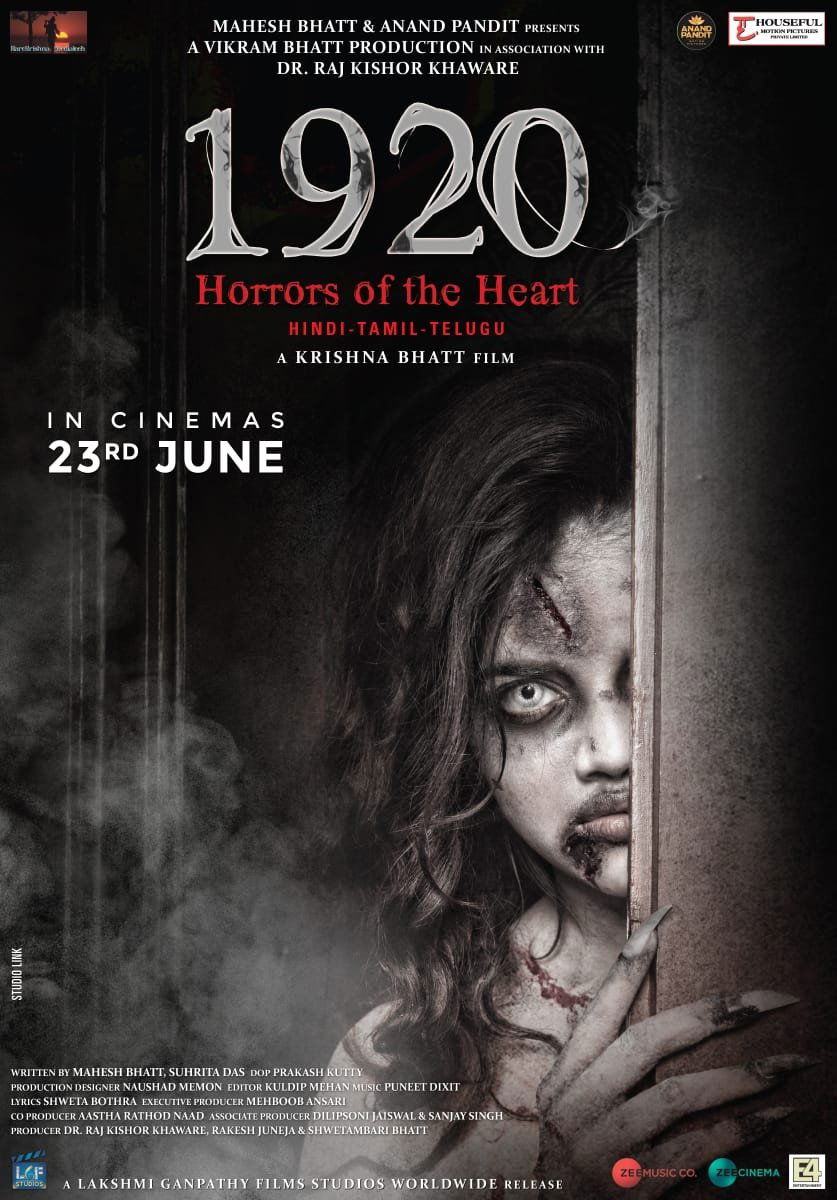
1920: Horrors of the Heart opened in Indian cinemas on June 23, 2023. The British Board of Film Classification had examined a 122-minute, 43-second theatrical version on June 21, recording strong horror, gory images and violence. The BBFC listing identifies the United Kingdom distributor as 2G Entertainments. These records document a specific classified version and its content; they do not establish that every market received an identical print. The Indian release continued the 1920 label as a recognizable horror brand while presenting a new set of characters and a separate family tragedy.
Contemporary trade criticism was guarded. Film Information’s June 23 review considered the screenplay confused, particularly in its handling of the supernatural antagonist and Meghna’s motivations, while crediting some horror sequences with delivering effective shocks. It also assessed Krishna Bhatt’s direction more favorably than the story and noted Prakash Kutty’s cinematography, the action sequences and the use of background music. The review anticipated an uneven theatrical opening and argued that the franchise name was a major commercial attraction. Those observations document one release-period response rather than a settled verdict about the film’s later reputation. The available reporting supports a focused account of its production choices and reception, without attributing an influence on the wider genre that has not been demonstrated.
References
The Indian Express — Krishna Bhatt on Lessons from Mahesh Bhatt, Comparison with Dad Vikram Bhatt’s 1920
June 2023 first-hand interview on the writing process, directorial debut, connection to the original film and the revenge story’s emotional focus.
AnimationXpress — VAM 2023: Vikram Bhatt Reveals How He Learnt Virtual Production and Used It for 1920: The Horrors of the Heart
Report on Vikram Bhatt’s VAM Summit presentation describing Unreal Engine training, studio-based production and the decision to shoot virtually.
The Tribune — Avika Gor, Who Is Debuting in Bollywood as a Lead with 1920: Horrors of the Heart, Talks About Her Film
June 2023 performer interview describing the technical demands of Unreal Engine and the screens used around the physical set.