Video Horror and Production Context
The Japanese title bears a part-two designation, which differs from the part-five label widely used in English-language circulation. Such variations matter in a series assembled for the video market and subsequently encountered through international editions. The film was an original-video production, and its status within the cycle is clearer when viewed through that distribution context than through an assumed theatrical release. Contemporary Japanese credits identify Kuramoto as director and associate the project with producer Satoru Ogura, whose name recurs in the history of the series. The original-video identity remains central to understanding its modest scale and its emphasis on concentrated scenes of bodily transformation.
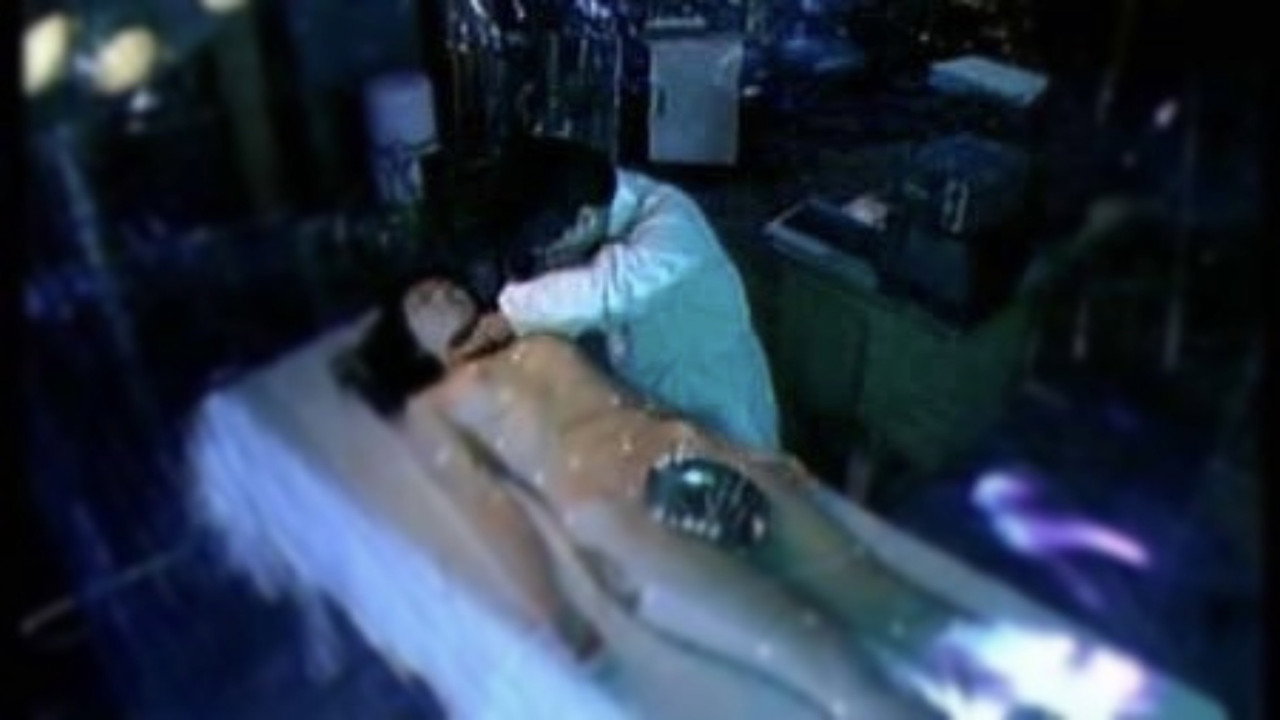
Kuramoto's contribution is most apparent in the decision to organize the material around a single enclosed workplace. A laboratory becomes the place where the protagonist can attempt to control sickness through repeated intervention, and where the violence can be shown as a series of procedures. The restricted setting lends continuity to scenes that might otherwise function as independent effects displays. The emphasis on apparatus, specimens and the consequences of failure also places this installment near a long tradition of cinematic mad scientists. The familiar Frankenstein pattern gains a more sordid setting as medical work becomes inseparable from a clandestine trade in human remains.
Medical Horror and the Family Premise
Dr. Karazawa's attempts to save his sister give the film a recognizably tragic starting point. His research uses bodies as replaceable material, and the involvement of a man supplying corpses makes the laboratory dependent on an openly exploitative transaction. As that arrangement breaks down, scientific ambition becomes indistinguishable from punishment. The plot follows the progression from desperate treatment to an escalating willingness to violate other people. These developments preserve a clear narrative thread through the graphic episodes, which earlier installments sometimes presented with far less connective tissue.
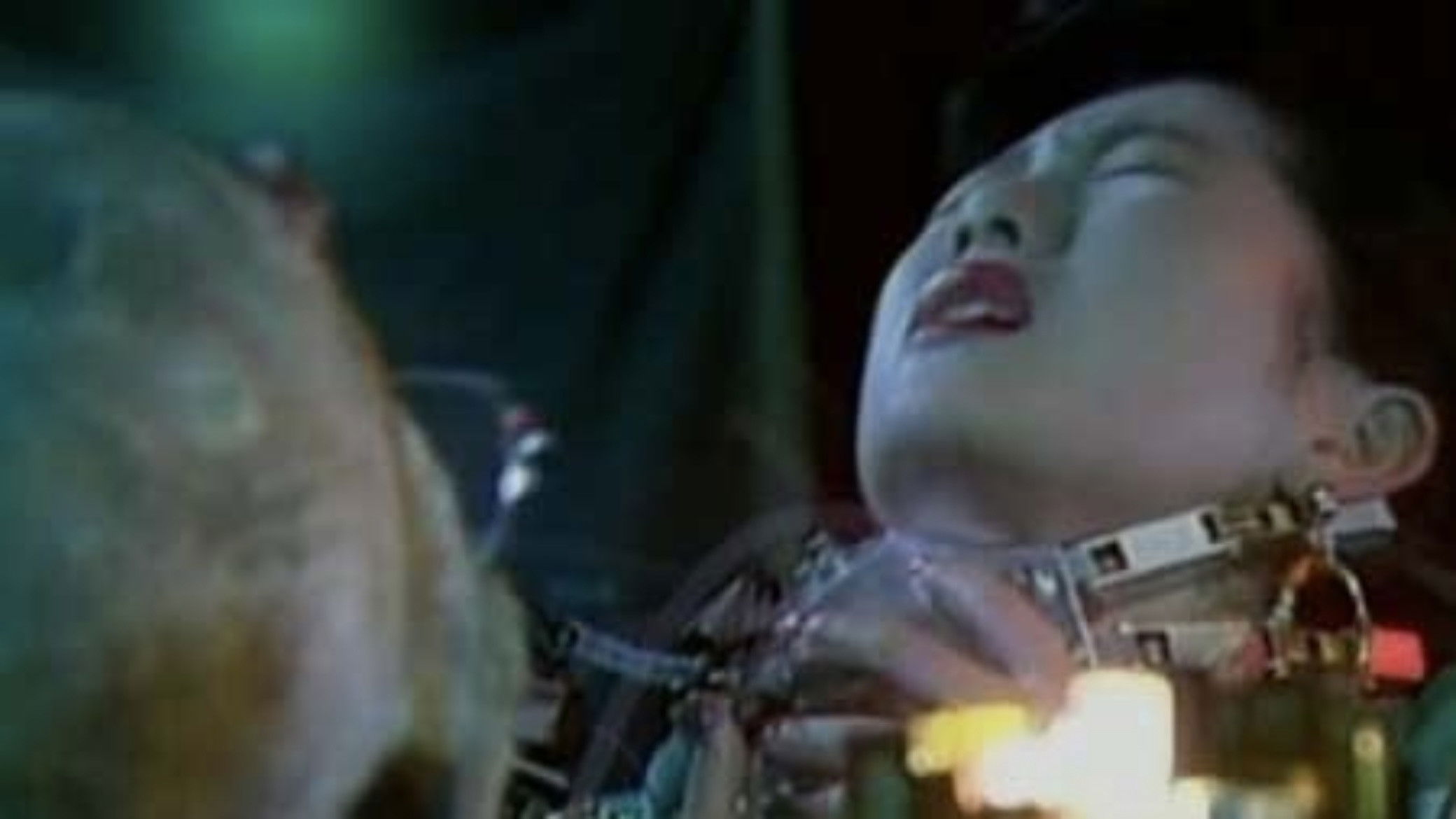
The android of the title emerges from this attempt to overcome the limits of living flesh. Mechanical components, dismembered anatomy and the notion of a head kept functioning after bodily destruction shift the film into speculative body horror. The imagery can be read alongside the artificial-life tradition of Re-Animator and The Brain That Wouldn't Die, although such comparisons describe visible similarities and do not establish intentional borrowing. The sister's illness, meanwhile, exposes the contradiction at the center of Karazawa's work: a project purportedly devoted to saving one life becomes a system for treating other lives as expendable.
Prosthetic Gore and Visual Construction
The film's strongest connection with the Guinea Pig identity remains its concentration on fabricated bodily damage. Surgical close-ups, exposed tissue and detached body parts receive enough screen time for the viewer to inspect the illusion. Scenes involving eyes, internal organs and a severed head push the scientific premise toward grotesque physical spectacle. These sequences are presented as staged effects within a fictional story. The combination of visible physical props and sustained close framing gives the picture its specific texture, especially when the camera stays with the consequences of each failed intervention.
Kuramoto organizes these moments around the laboratory and its routines: the laboratory setting repeatedly frames the body as an object for examination, while the succession of experiments supplies a rhythm of preparation, apparent intervention and aftermath. The effects are judged unevenly in later reviews, especially when synthetic surfaces become conspicuous. Other moments retain their force through duration and tight framing. This unevenness helps explain why discussion of the film often concentrates on individual physical set pieces even when the surrounding drama receives a mixed response.
Home Video Circulation and Critical Response
The film entered overseas discussion principally through specialist horror-video circulation. In a September 2002 DVD Talk review, J. Doyle Wallis examined an edition pairing Kuramoto's film with Devil's Experiment. That pairing placed Kuramoto's story-driven entry next to an early installment built around the pretense of unmediated cruelty. A later Dread Central assessment of a Guinea Pig box set similarly treated Android as one part of a larger, stylistically uneven cycle. These notices document the way international audiences encountered the title as a component of an extreme-horror collection, often after the series had already acquired notoriety.
The critical record shows disagreement over the value of its narrative ambitions. Corin Savage's 2017 review regards the return to a somber tone and the sustained plot as productive changes, while noting weaknesses in some effects. Earlier English-language notices were less convinced by the mixture of story and shock. These are evaluations made after the original Japanese video period and should not be mistaken for contemporary domestic reception. Academic work on Guinea Pig has also examined the anthology's broader gender politics and the representation of vulnerable bodies. Such readings open a further question about whose bodies bear the costs of the protagonist's project, a concern that extends beyond the movie's immediate shock effects.