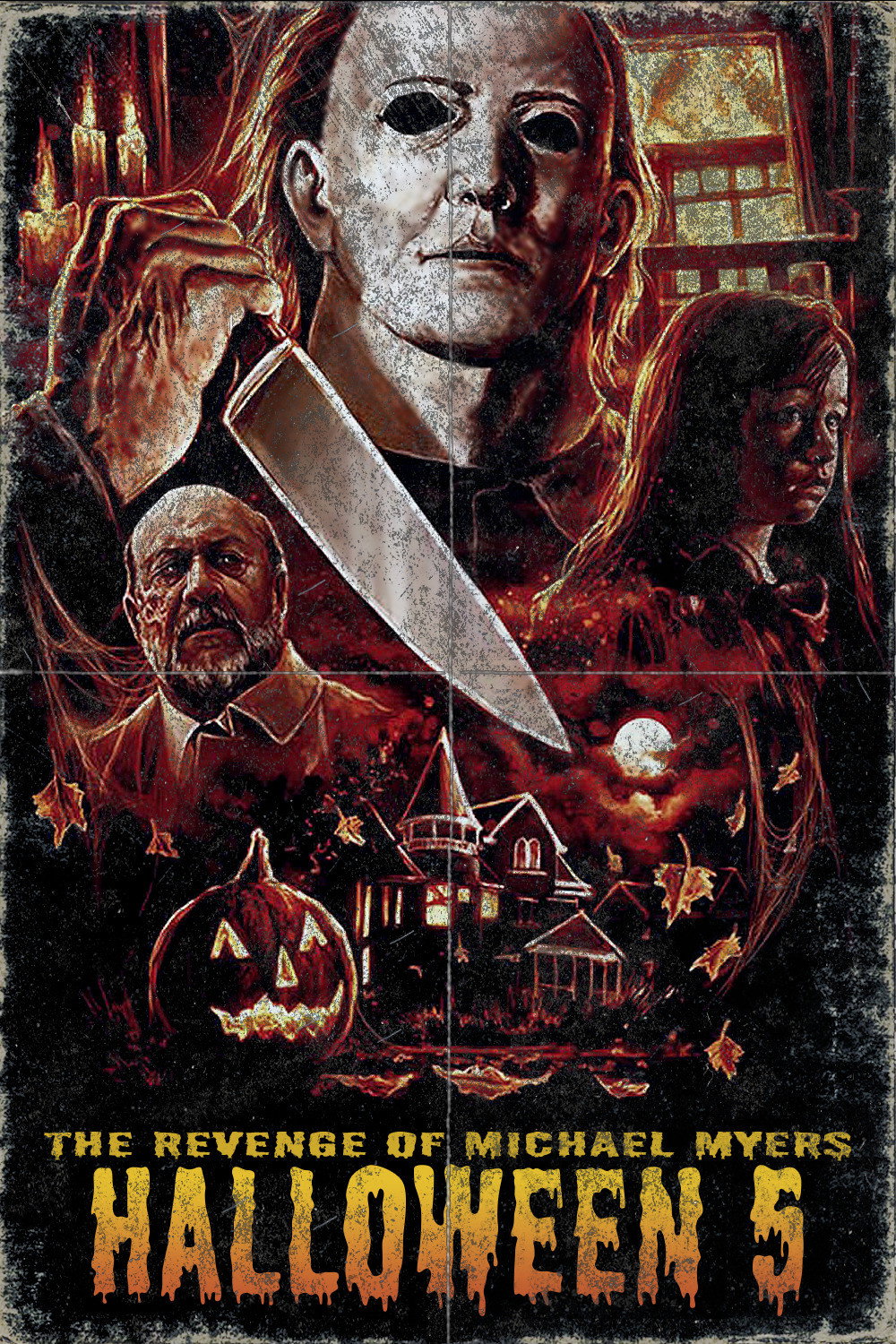
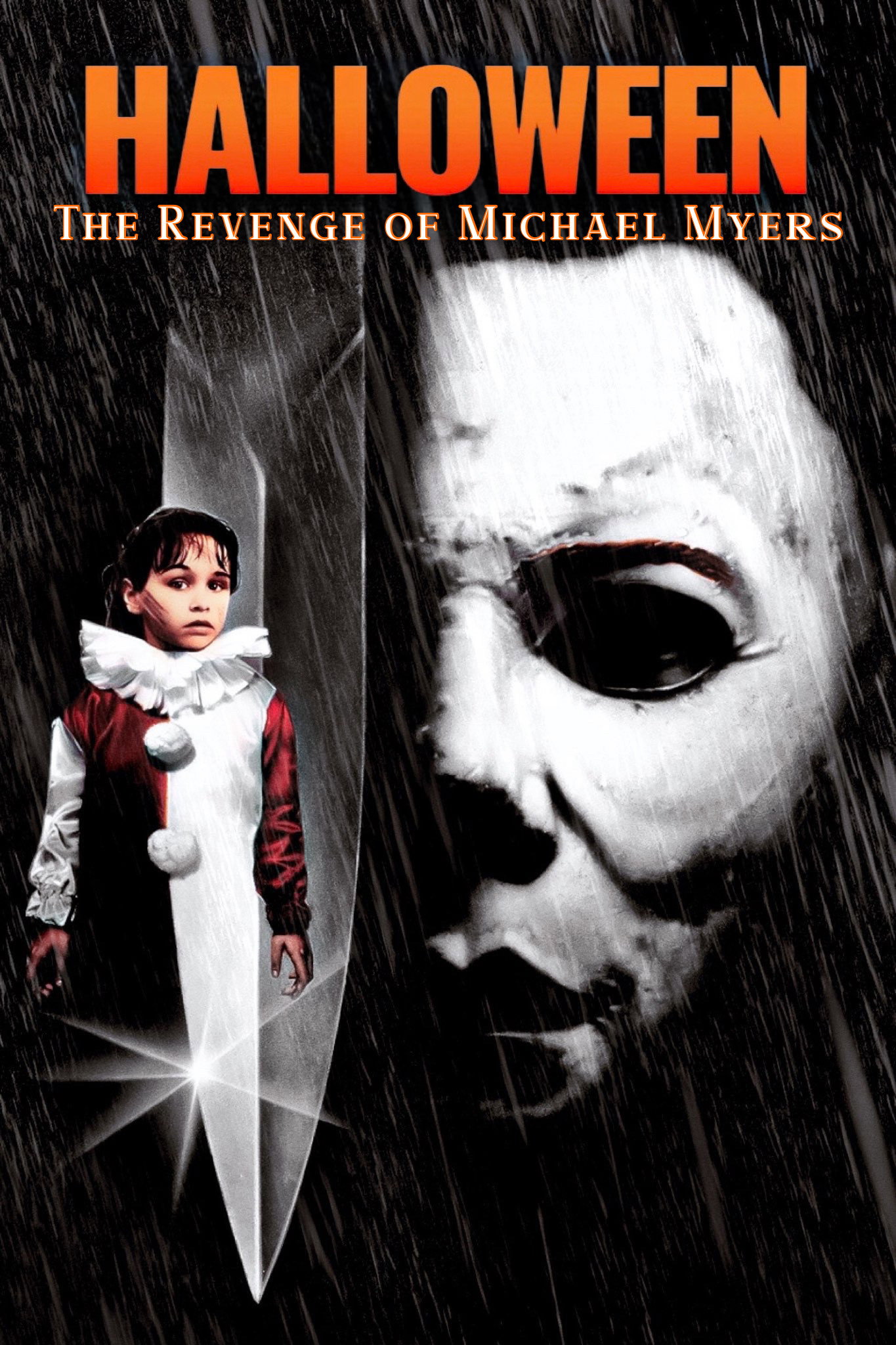
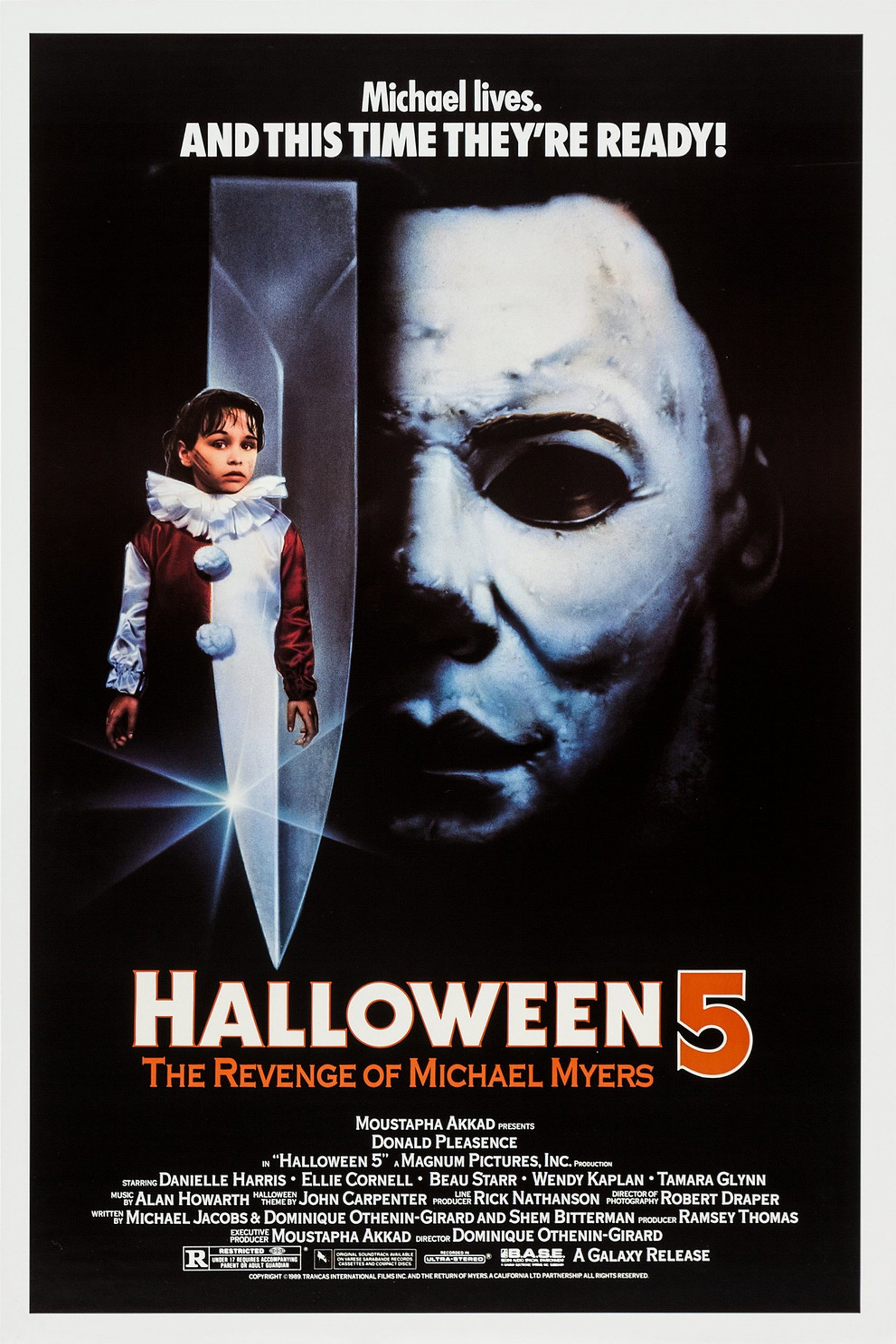
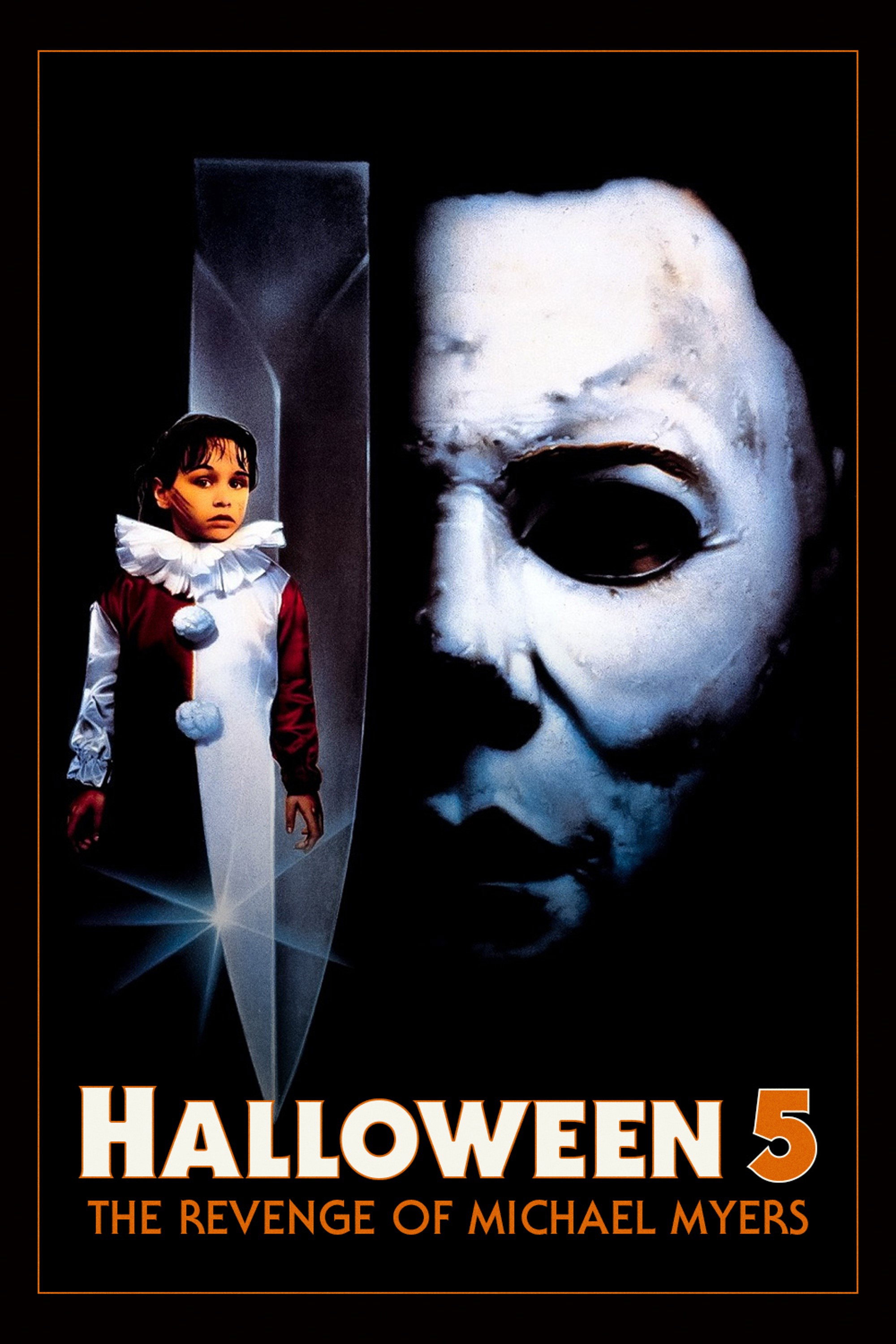
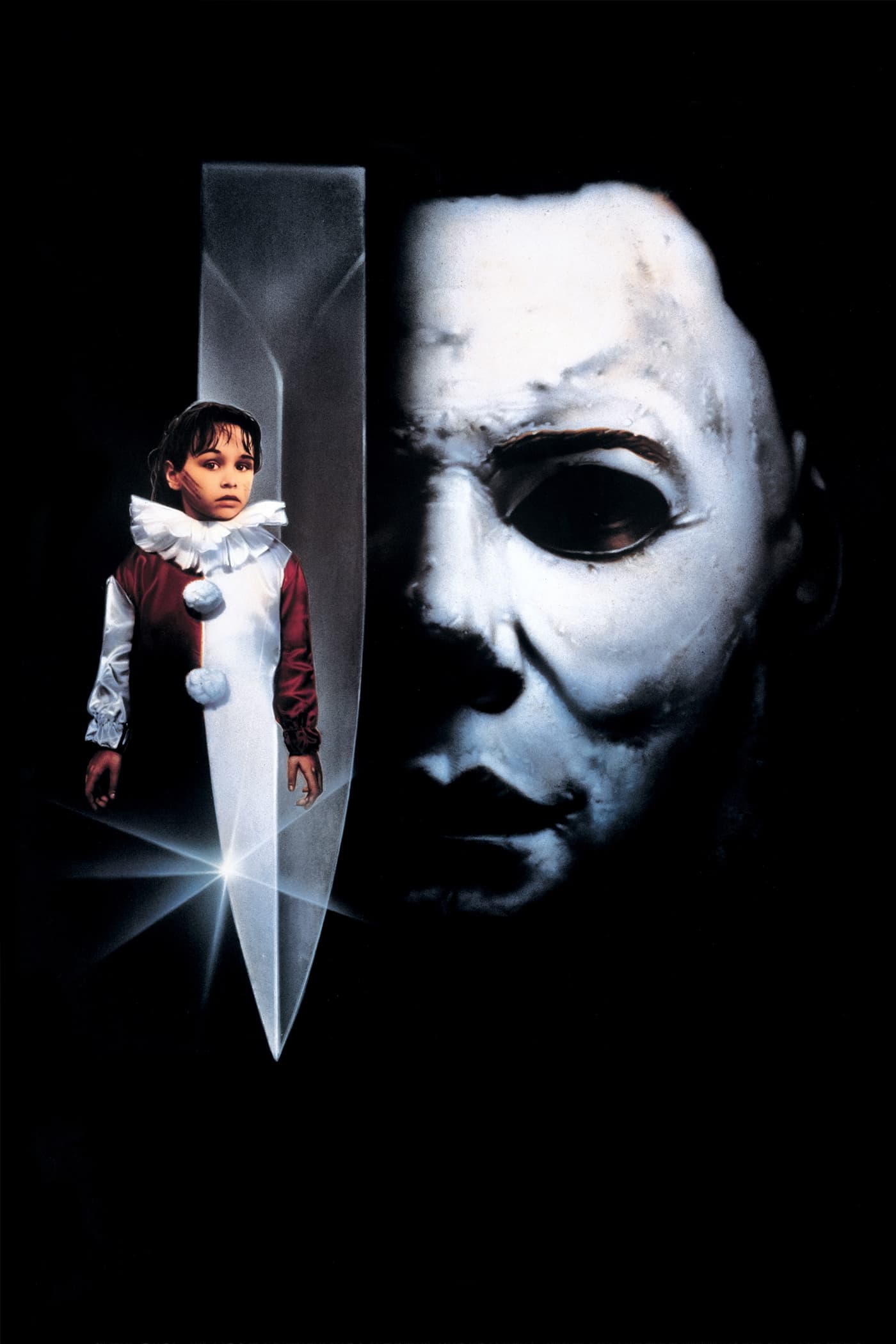
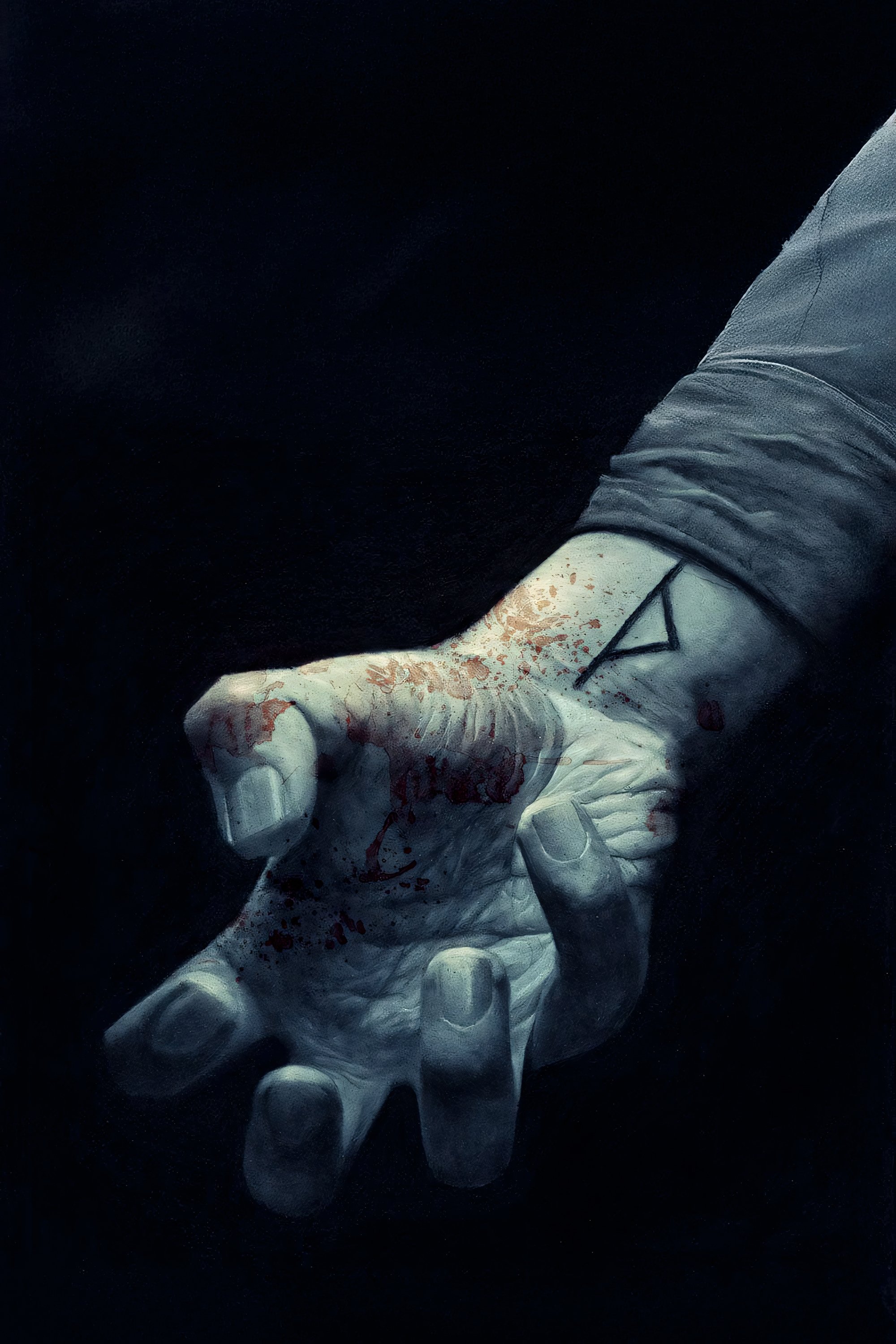
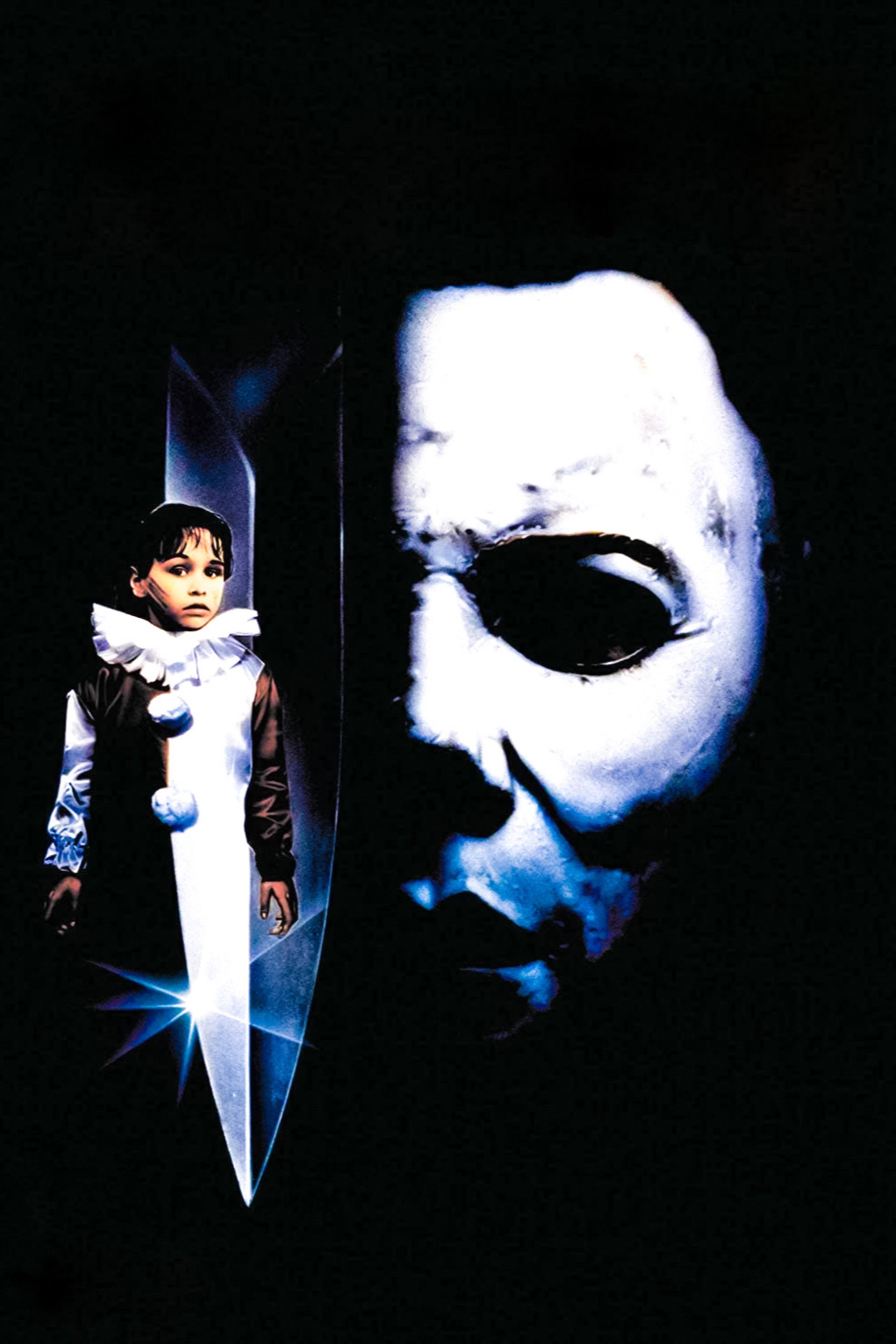
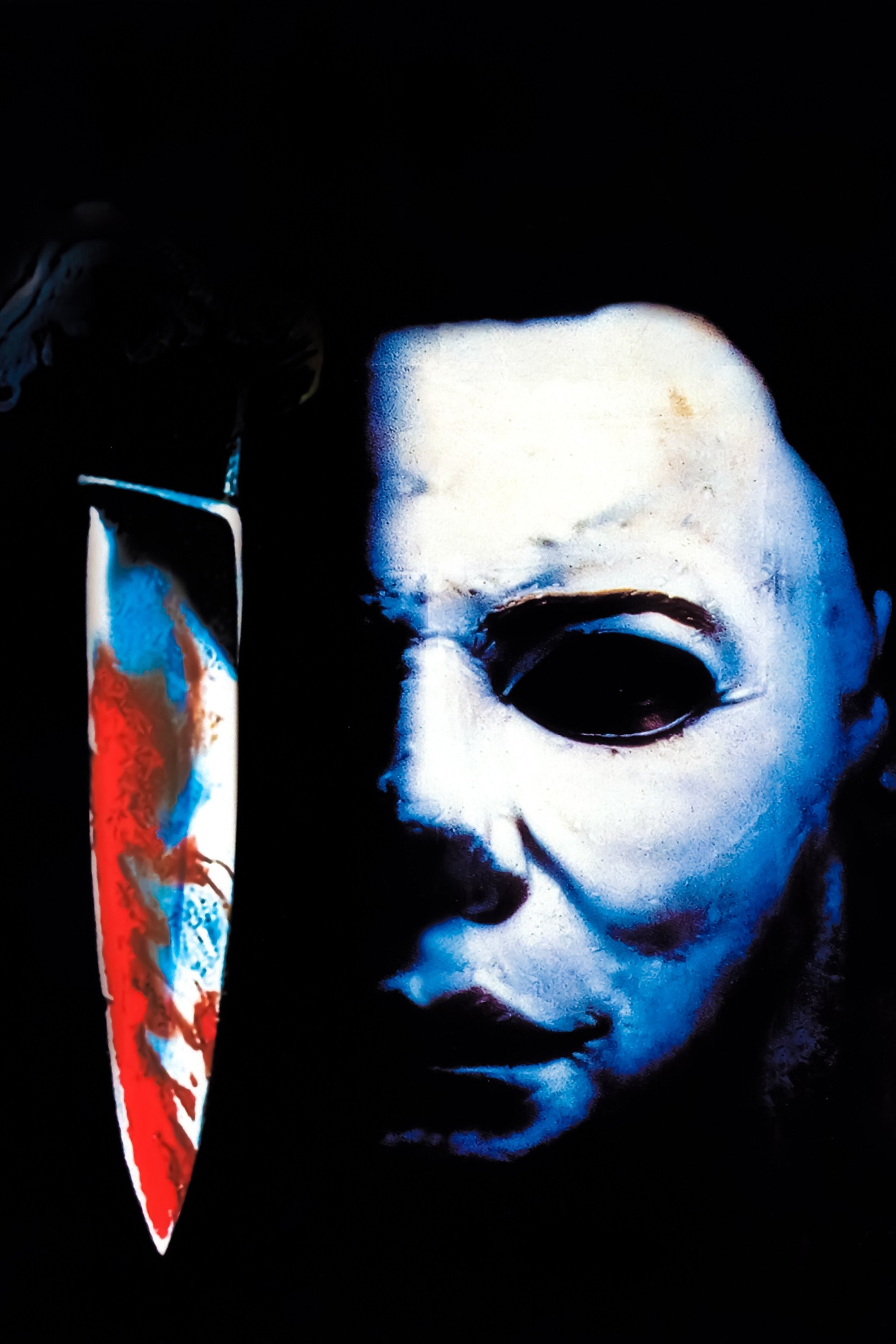
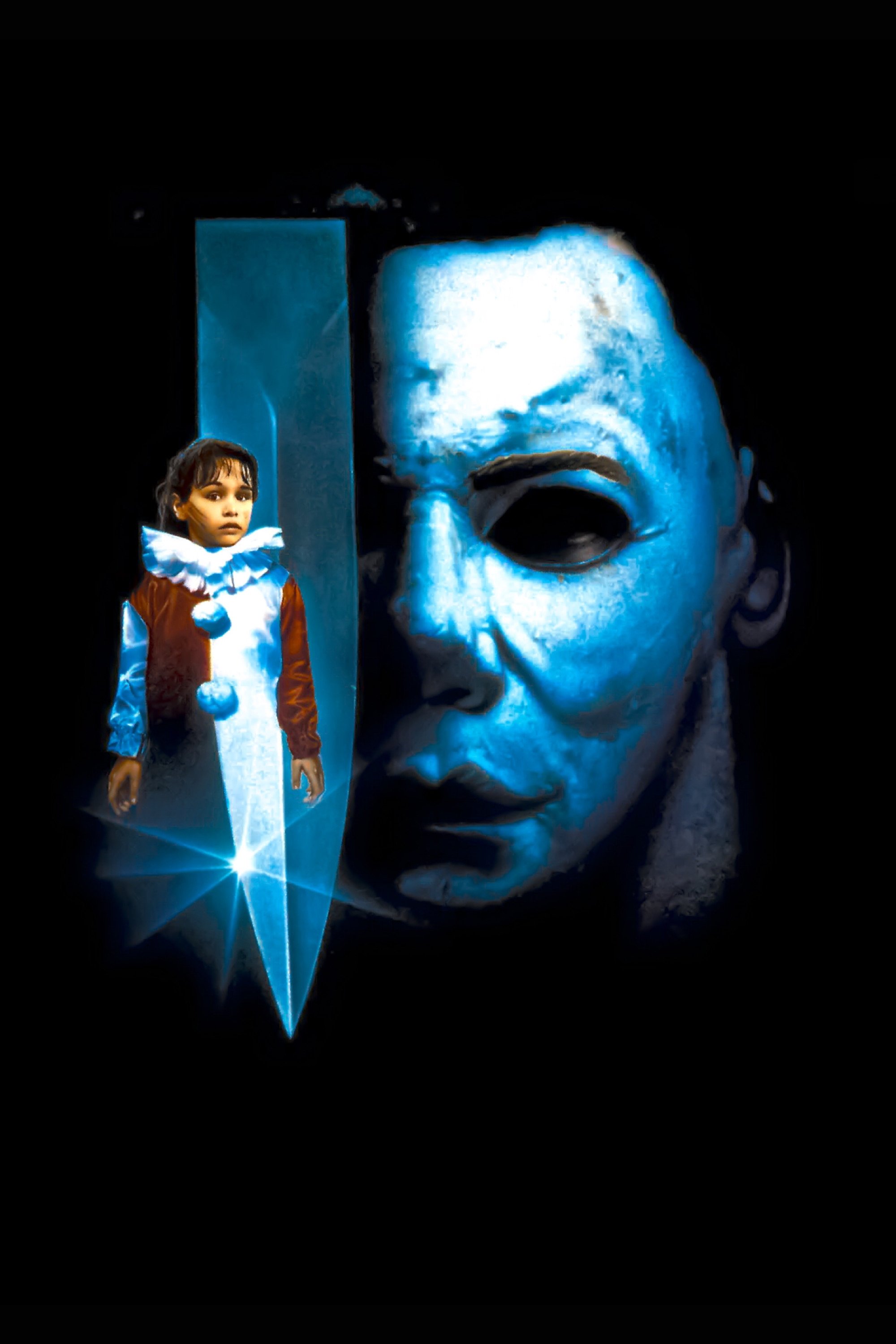
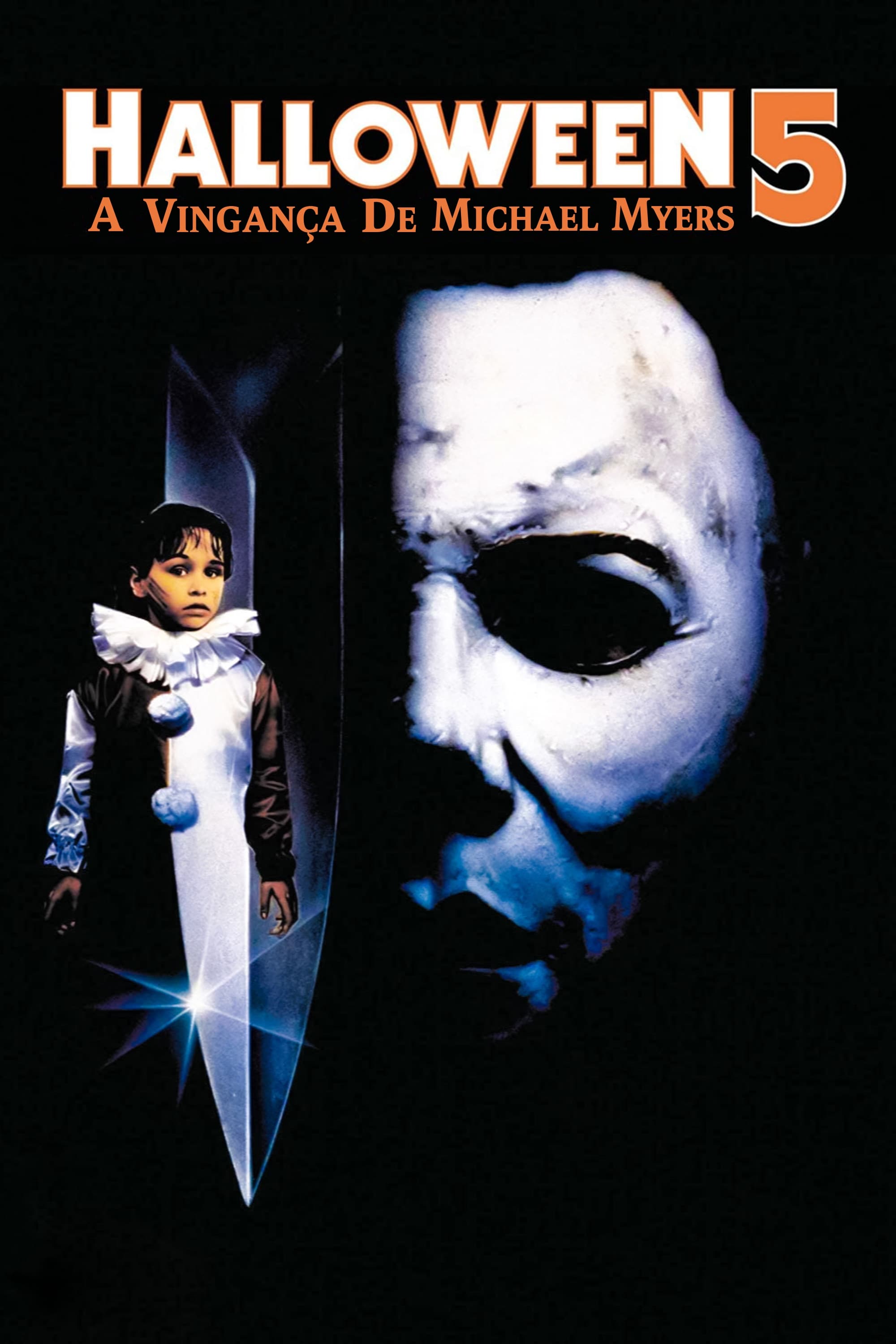
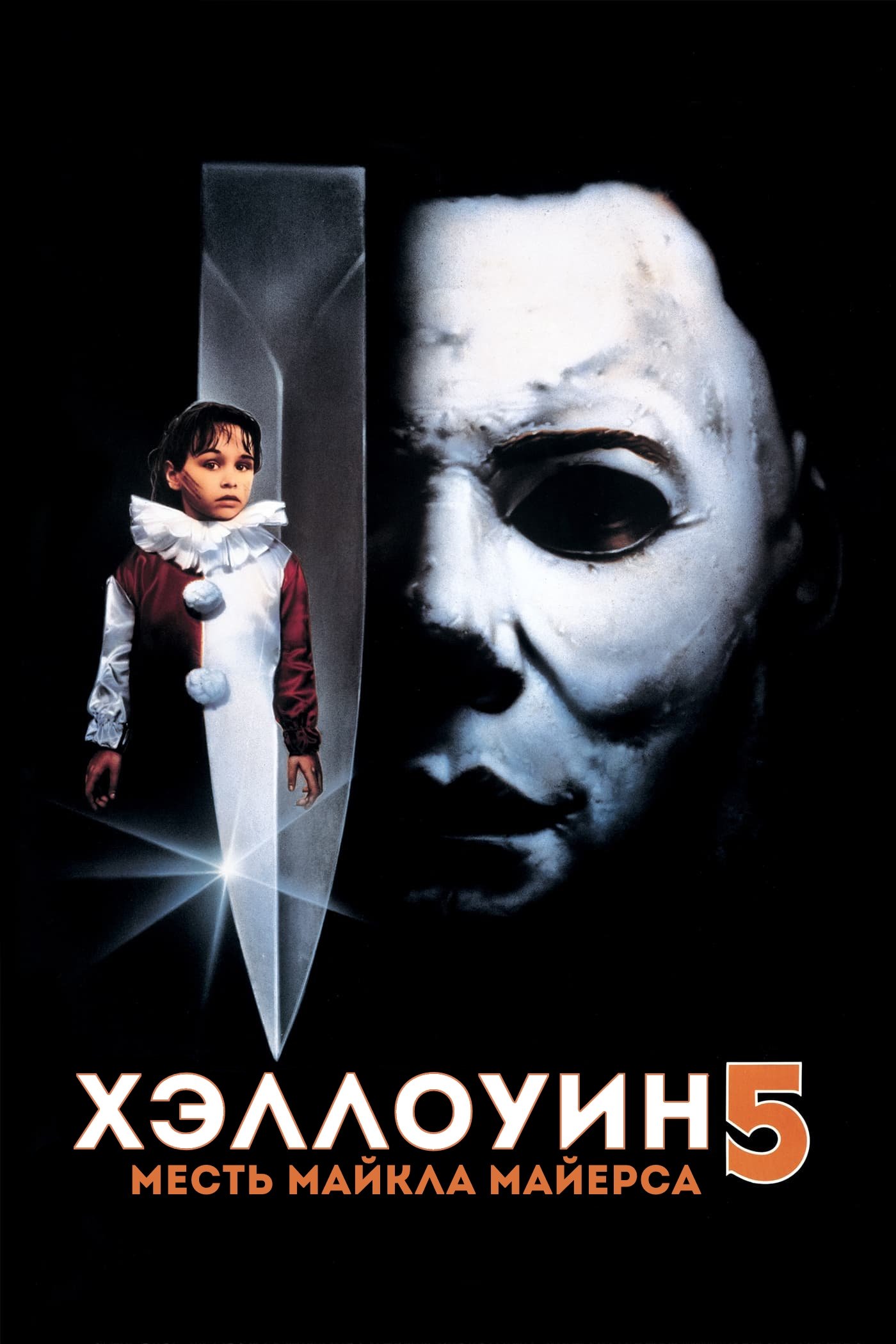
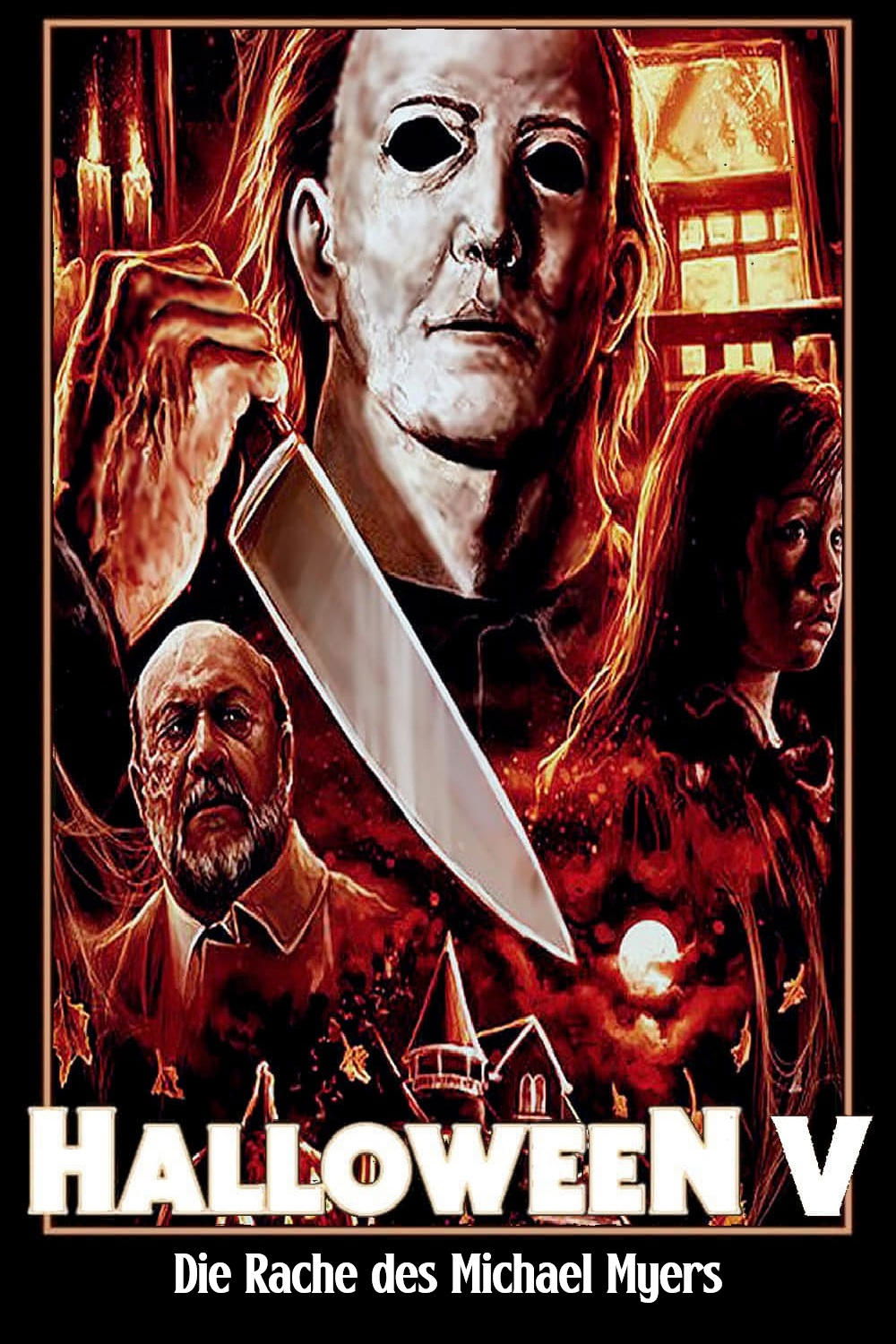
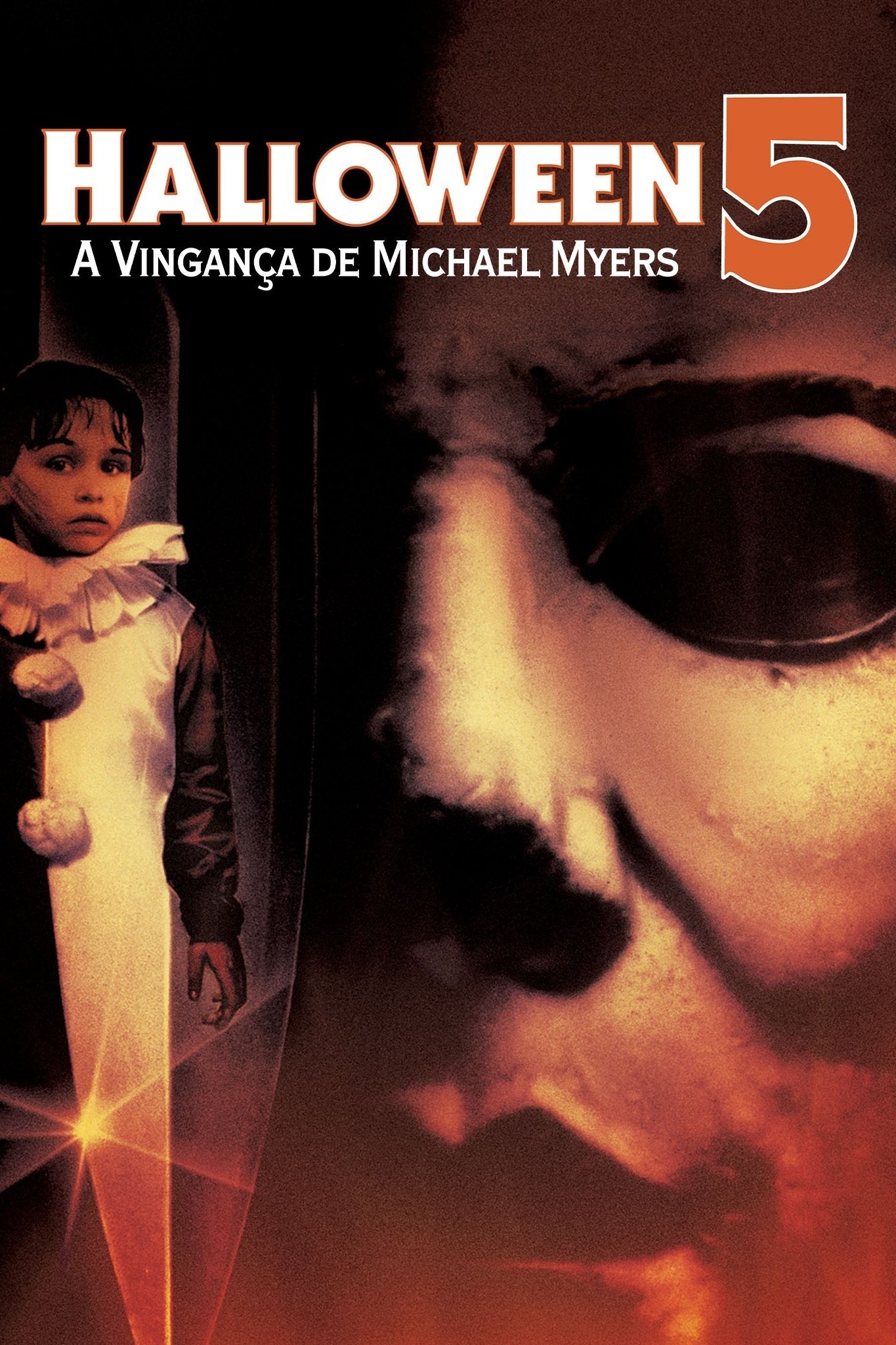
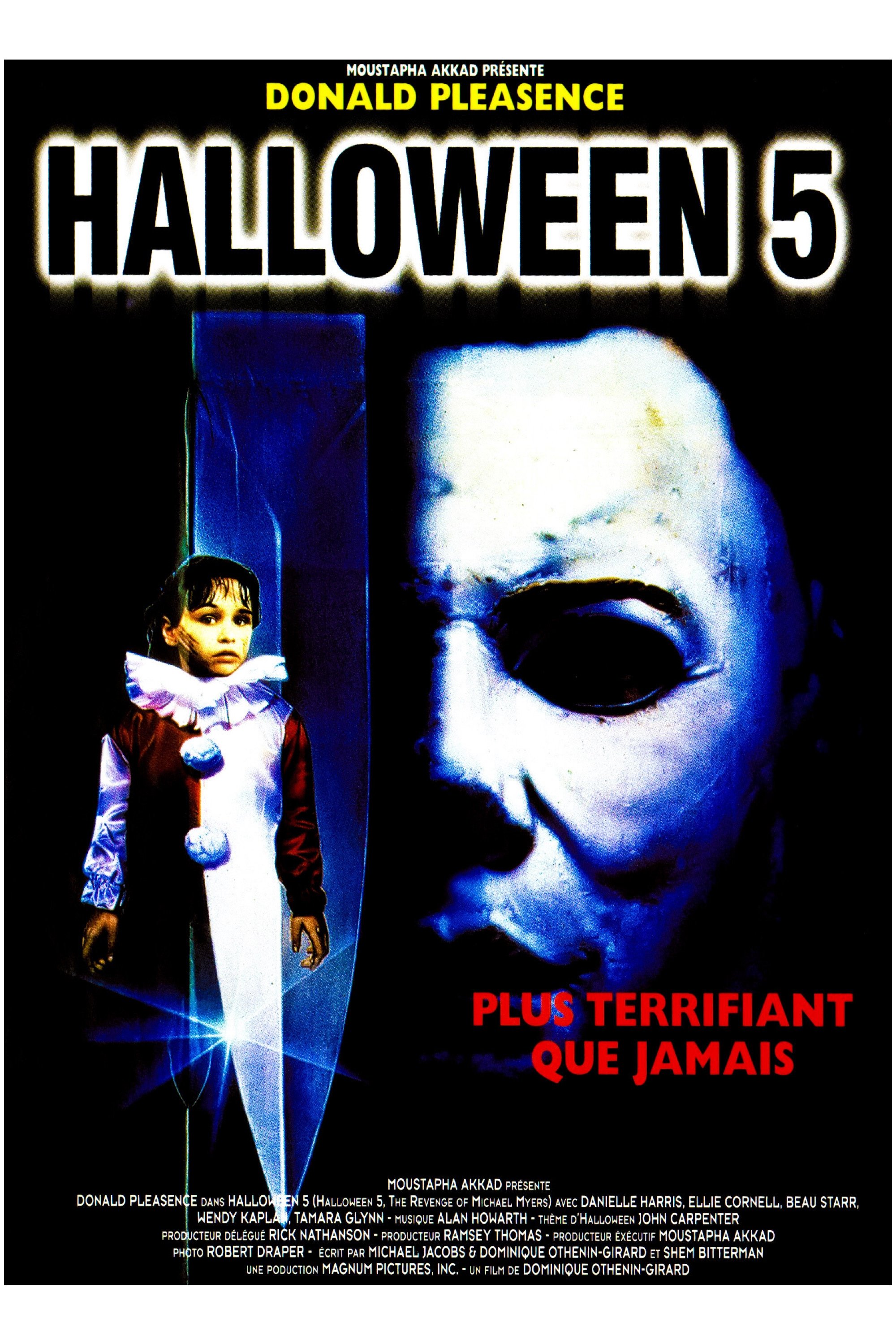
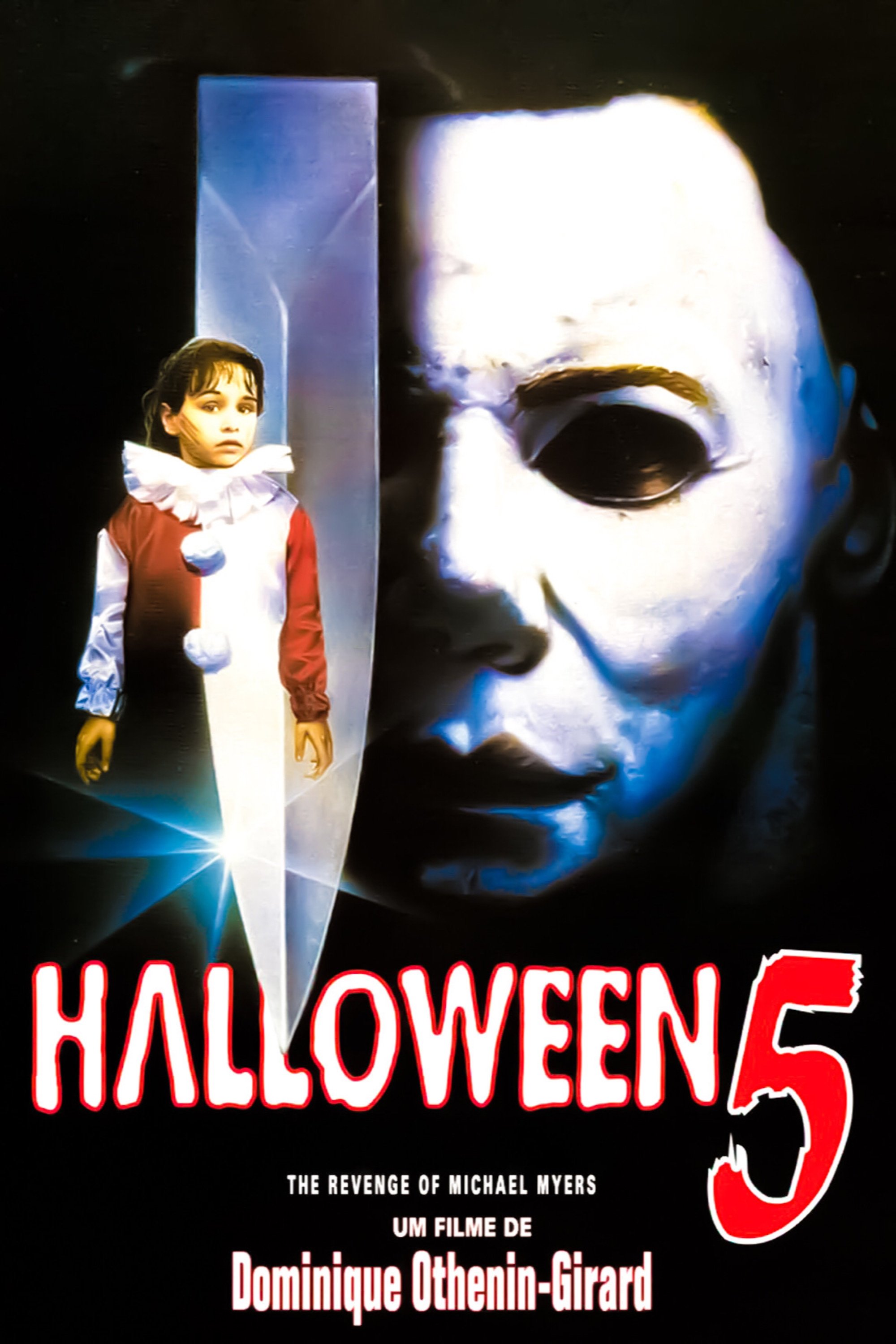
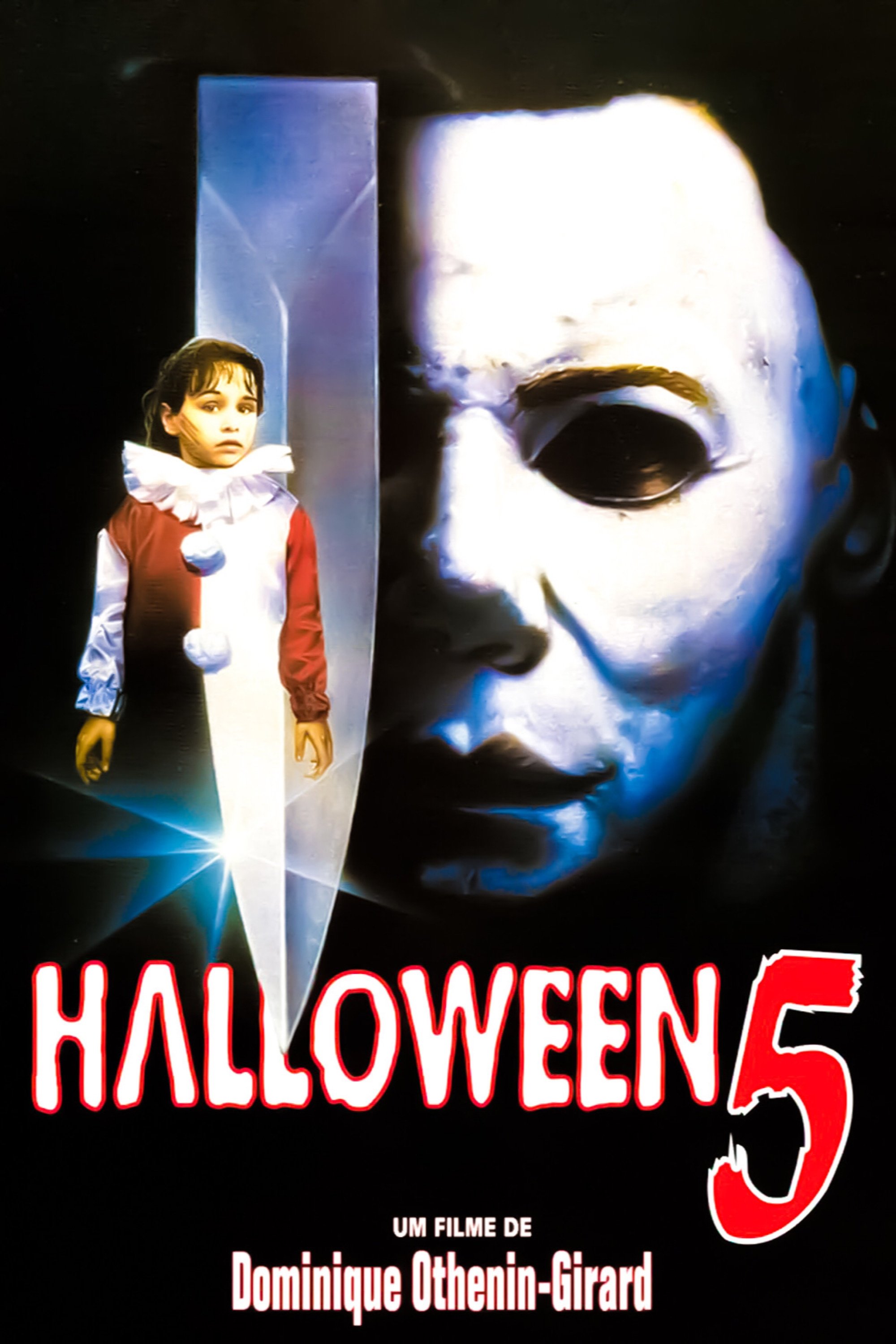
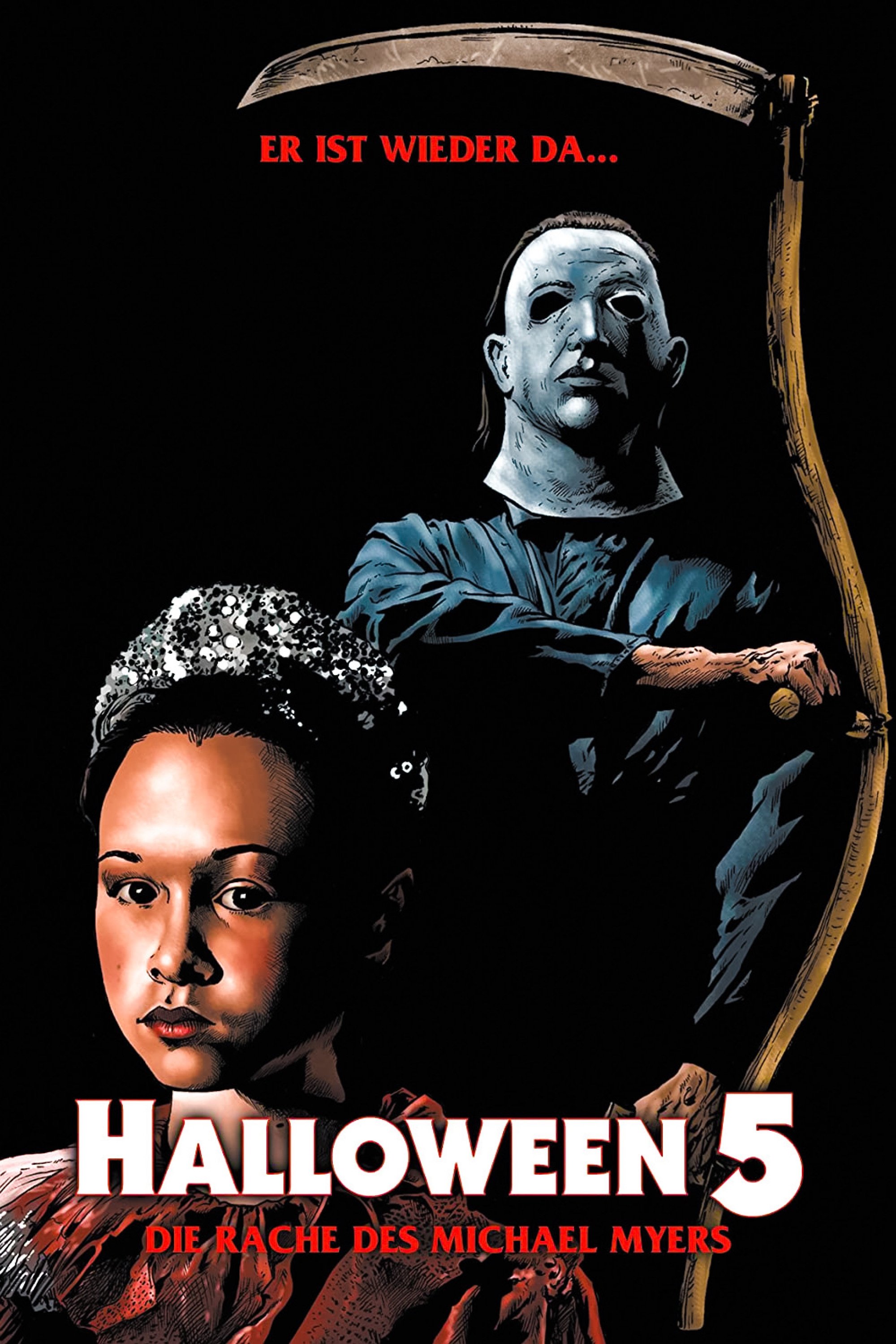
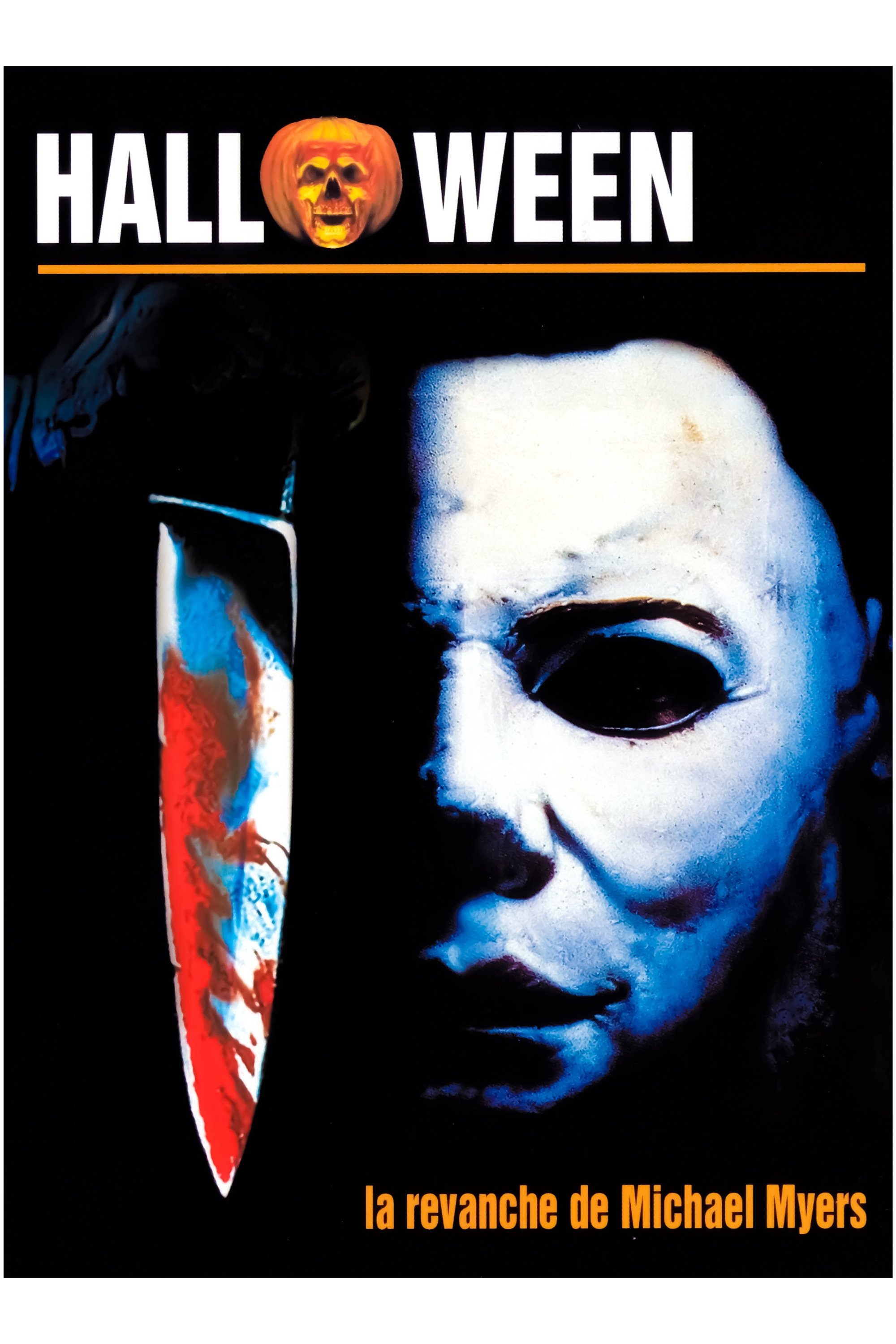
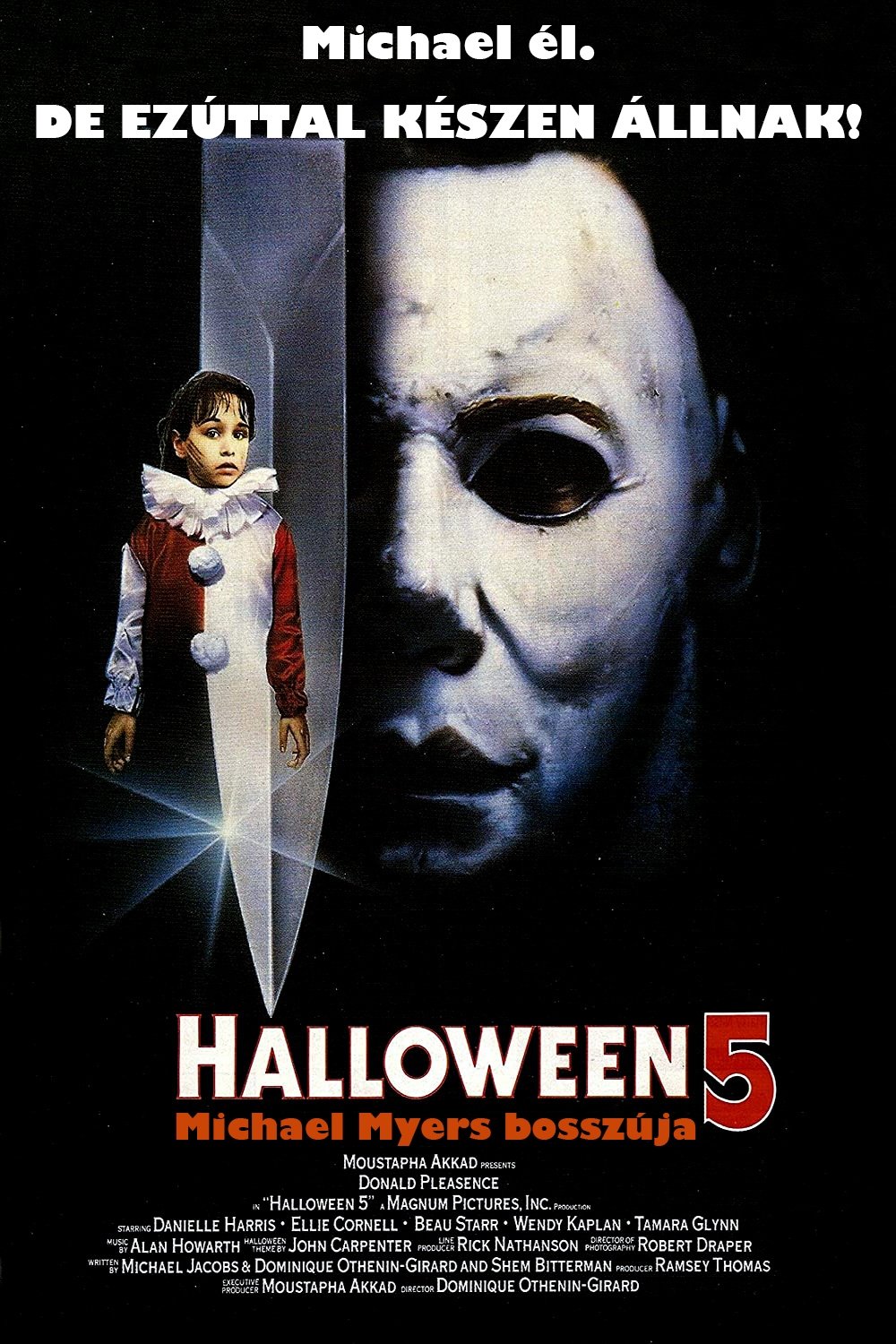
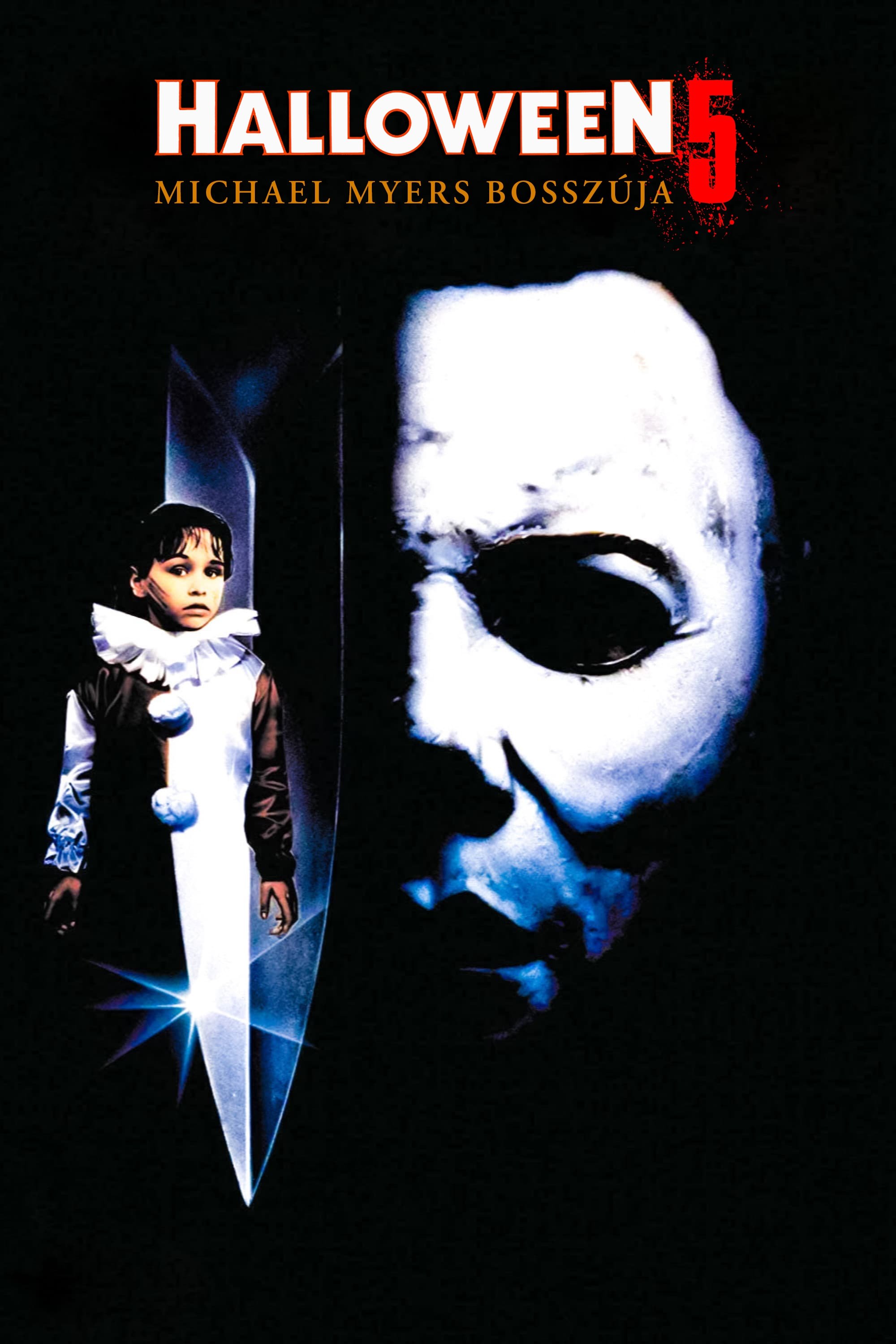
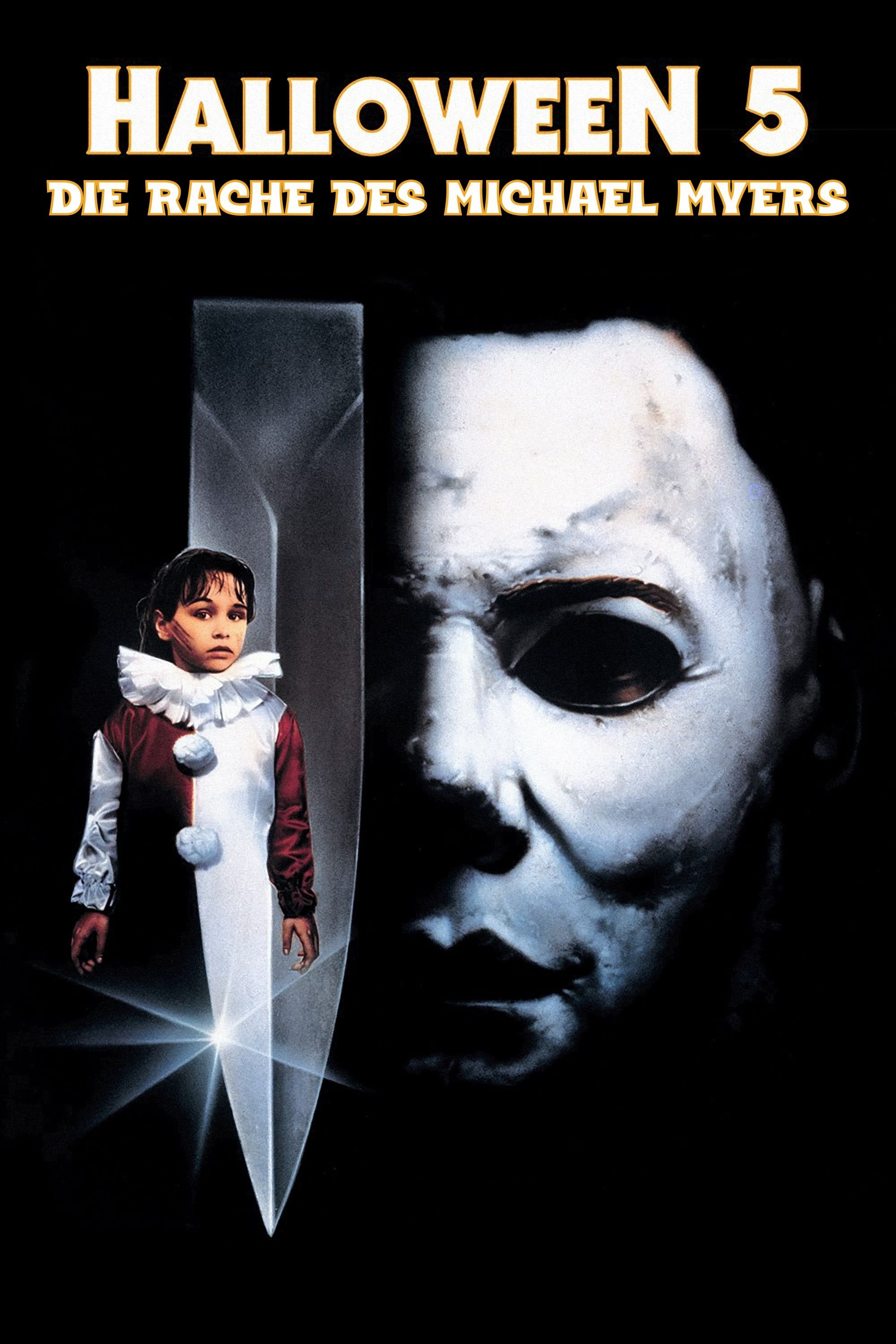
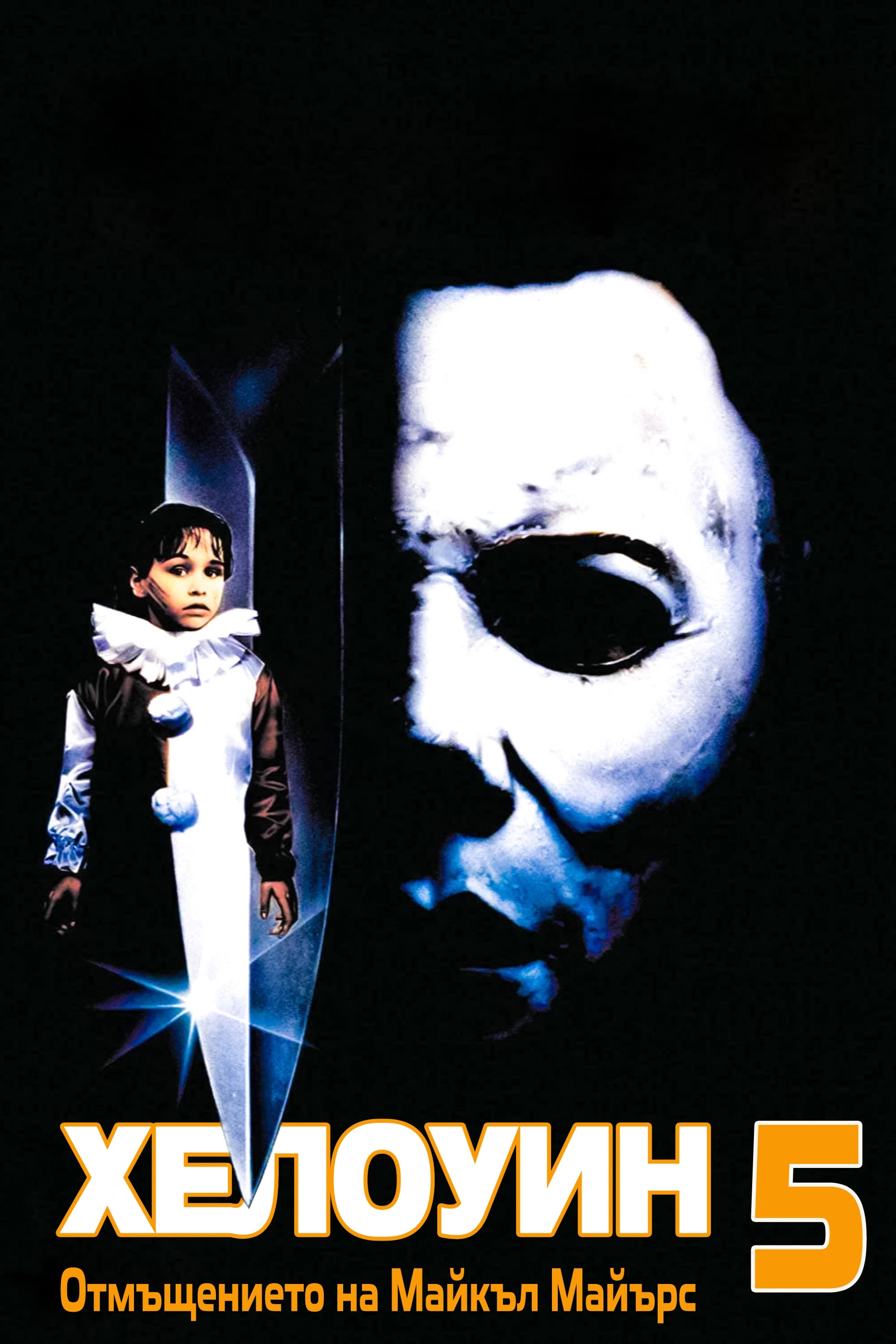
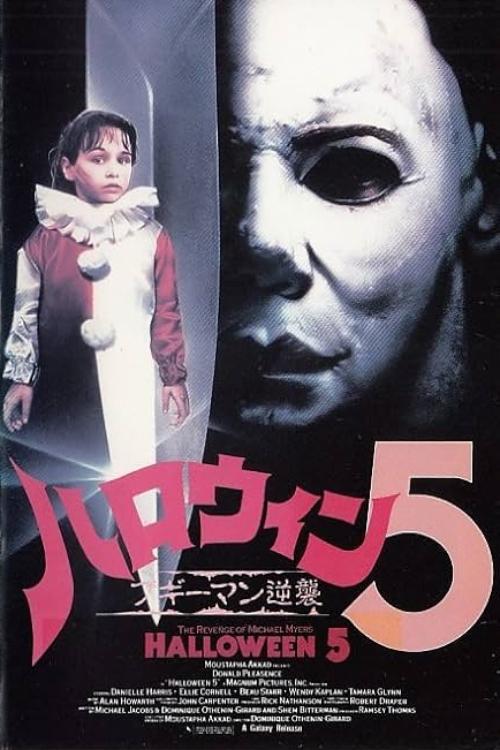
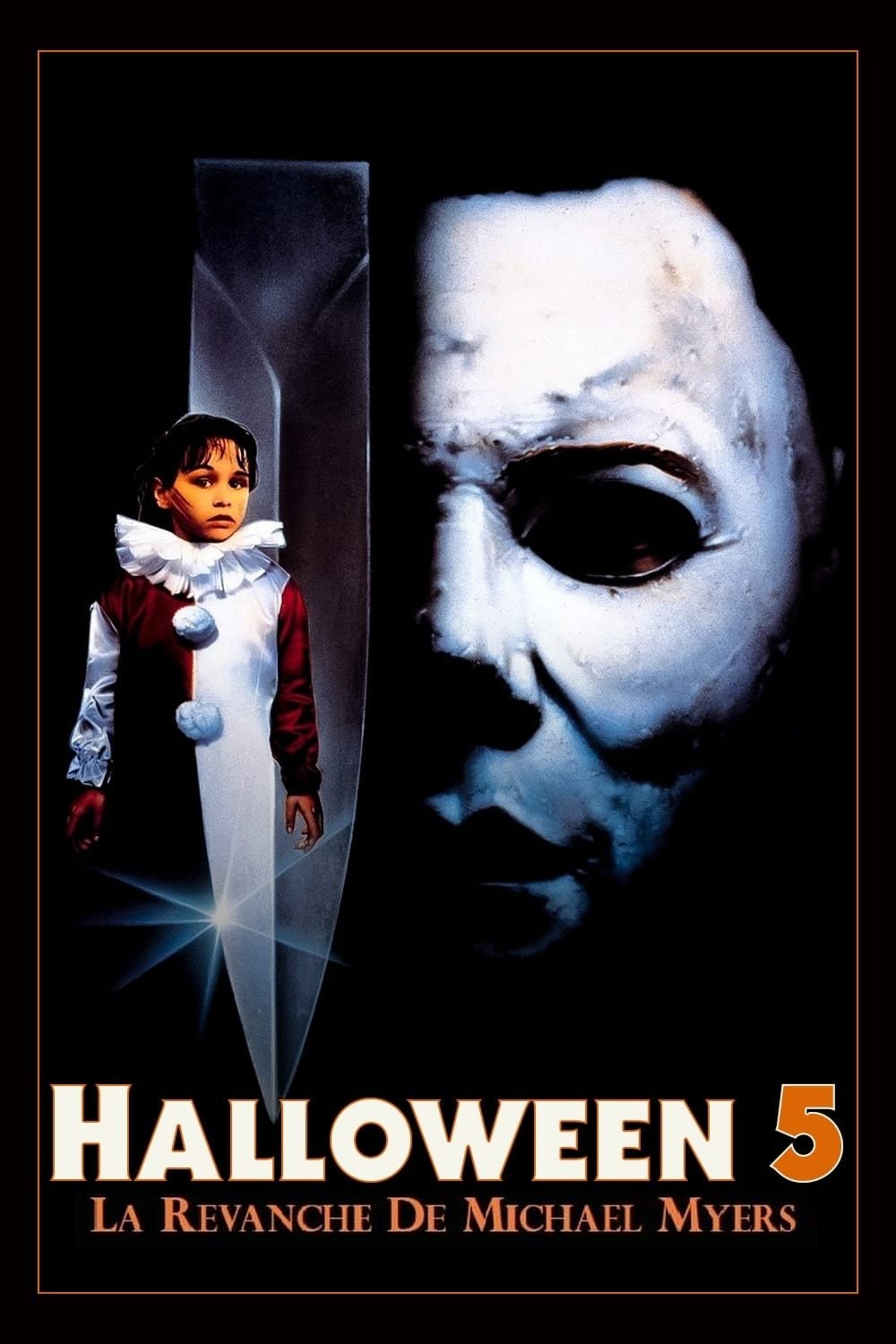
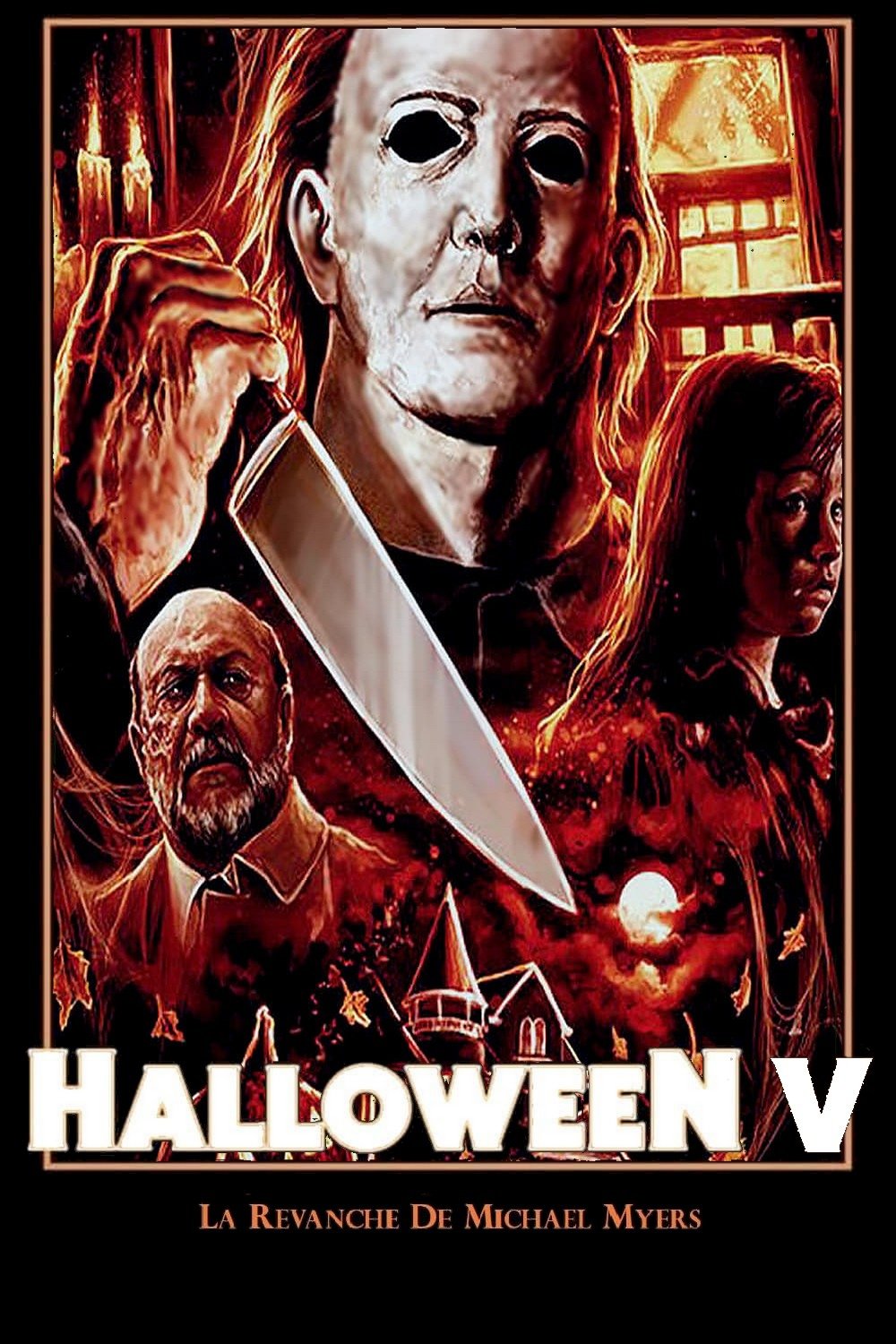
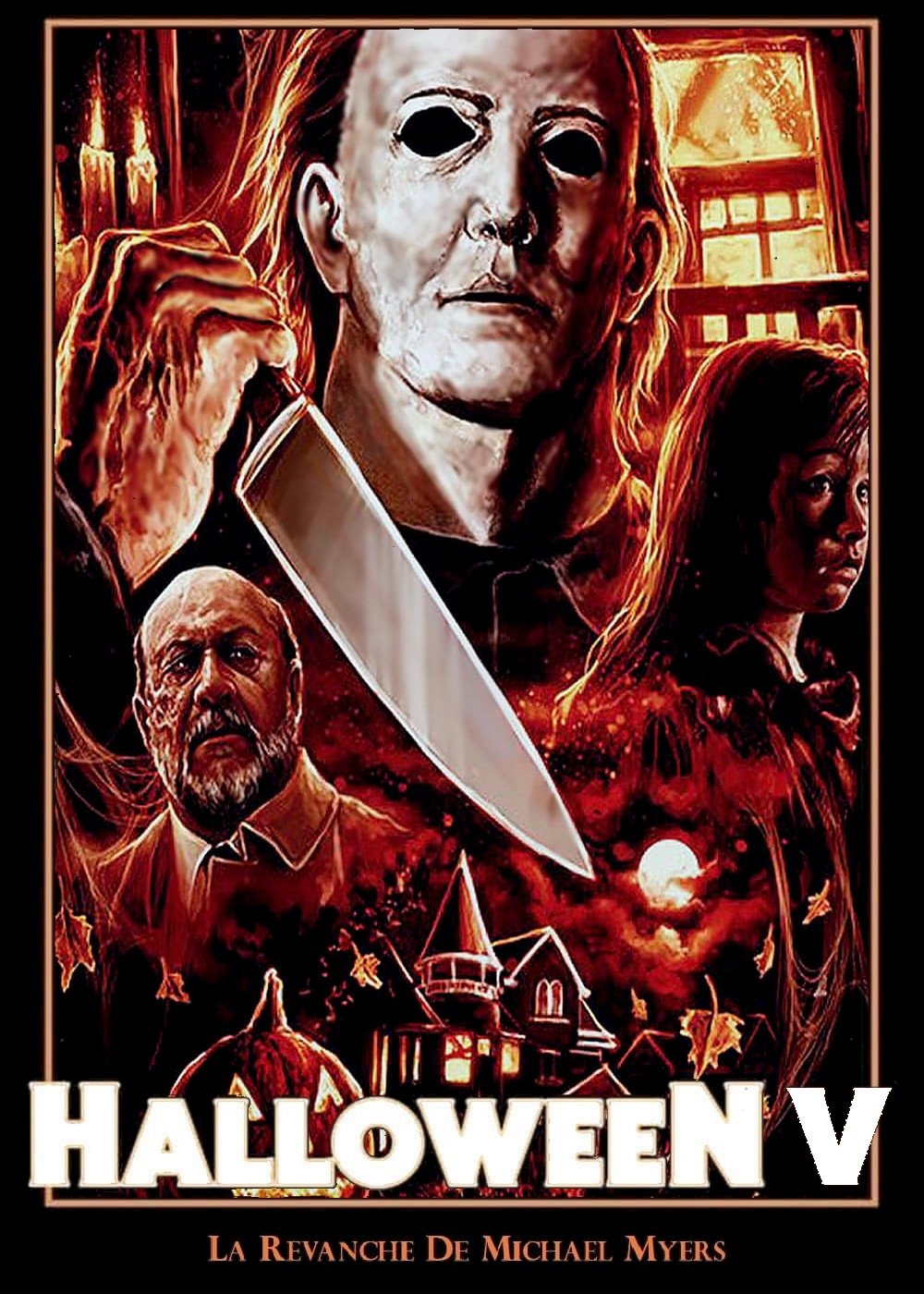
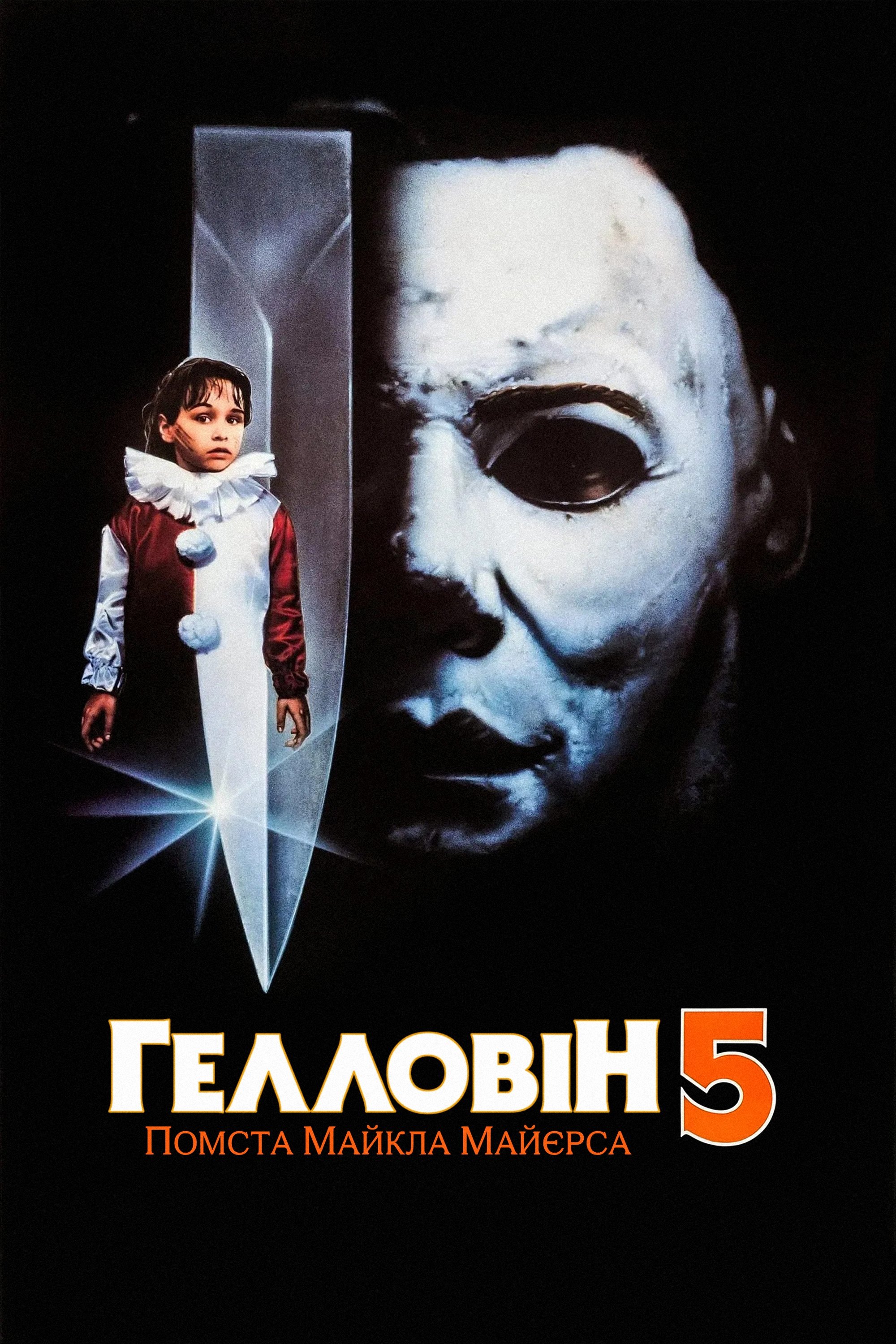
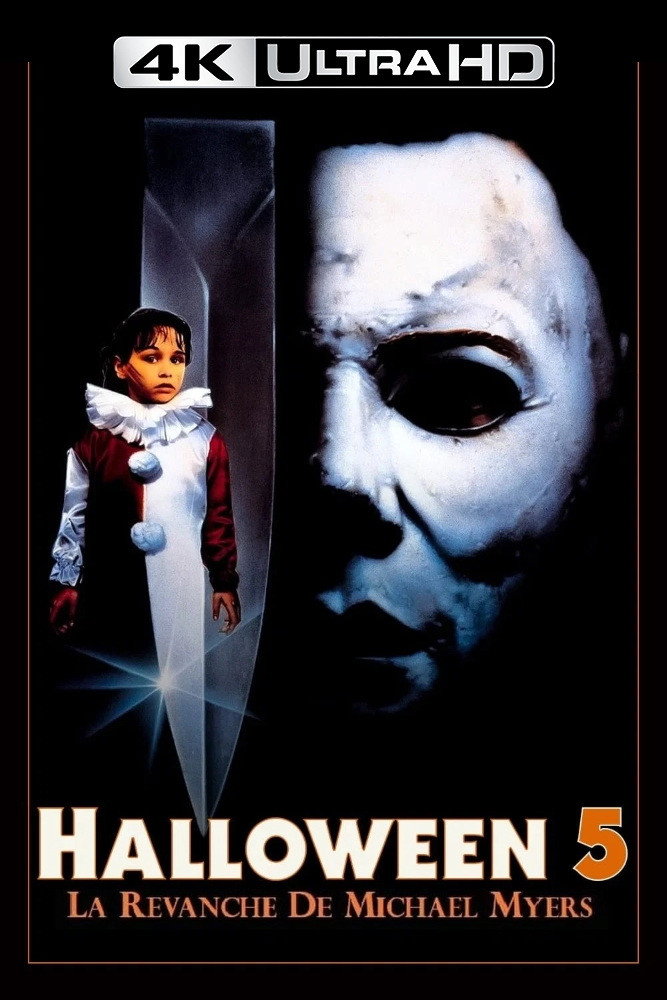
Magnum Pictures
, Trancas International Films
, Galaxy International Releasing
Plot
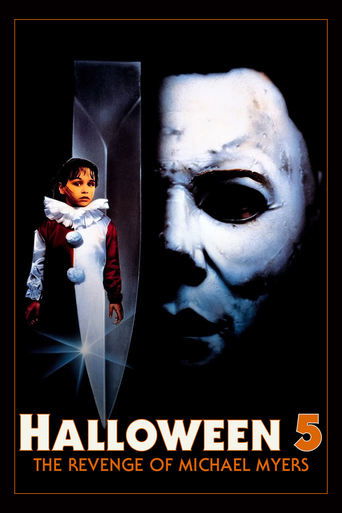
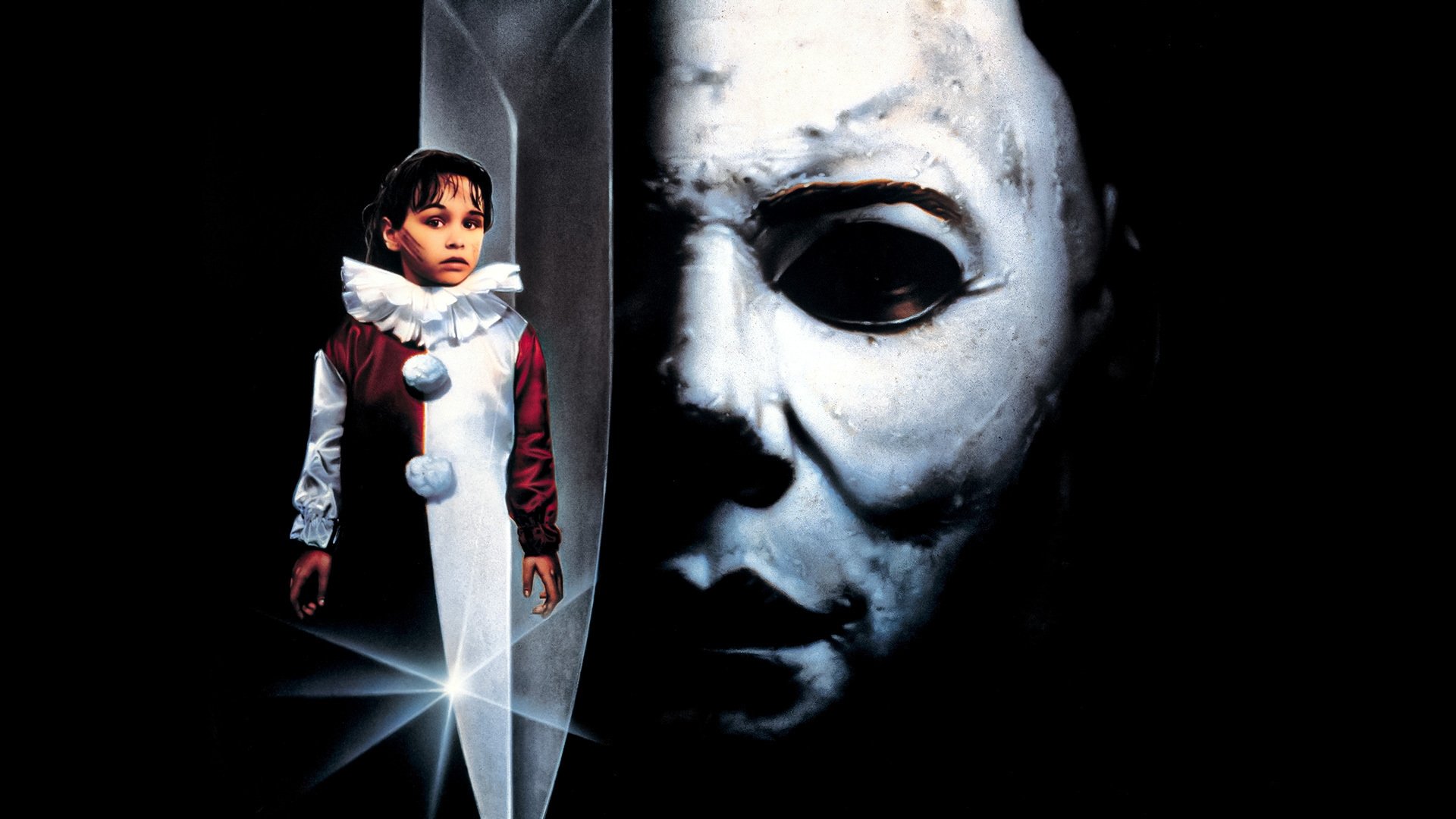
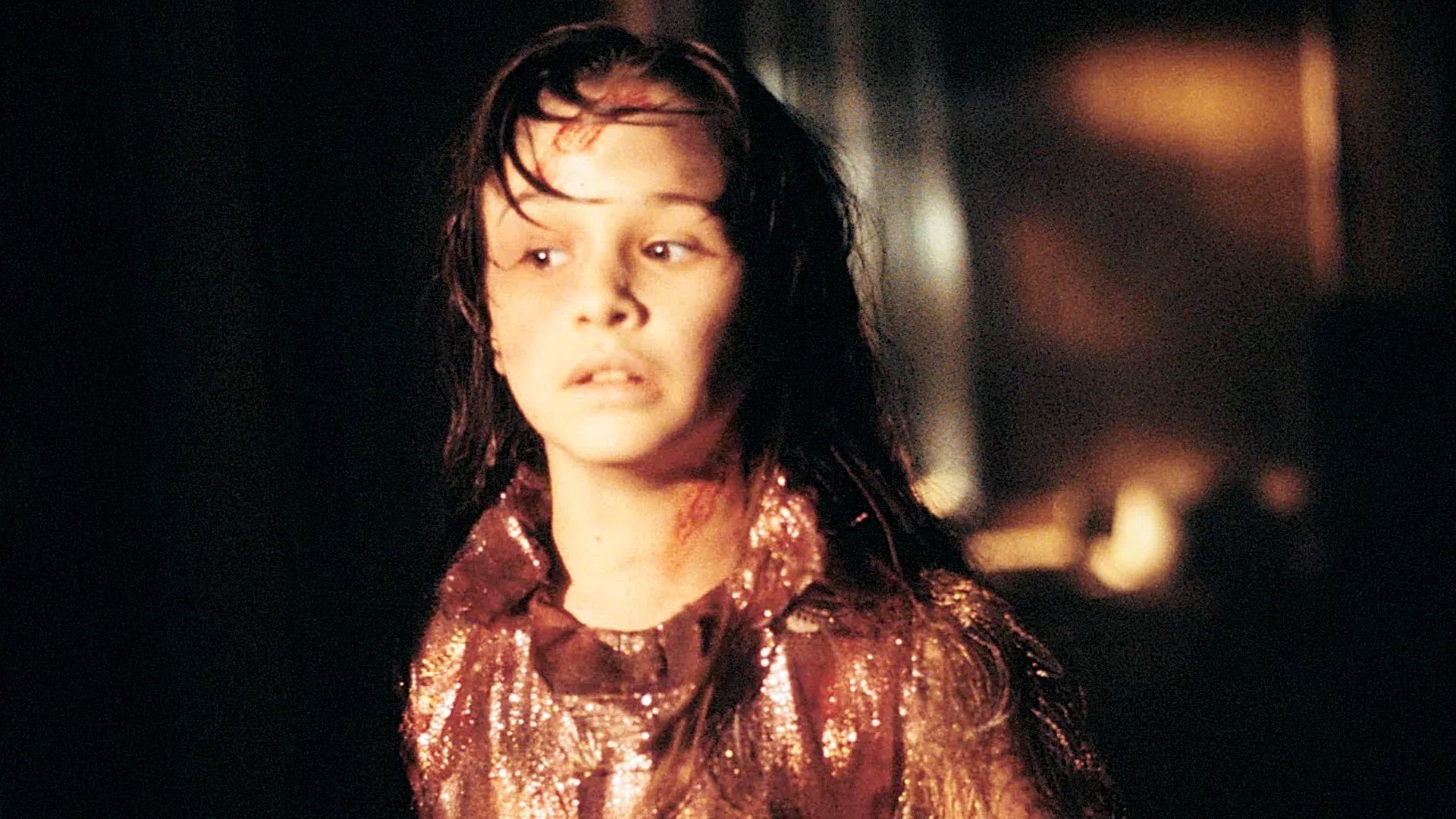
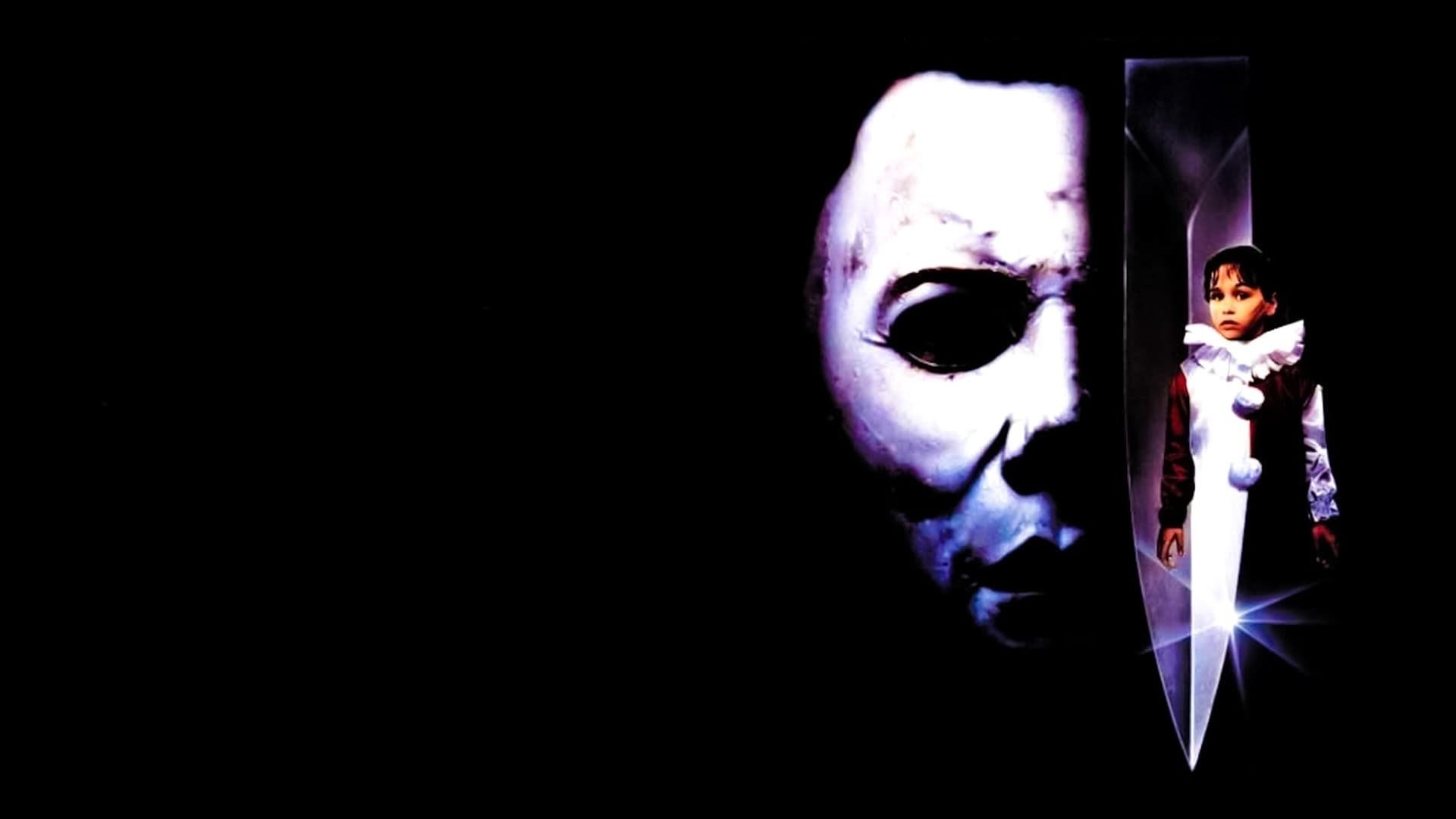
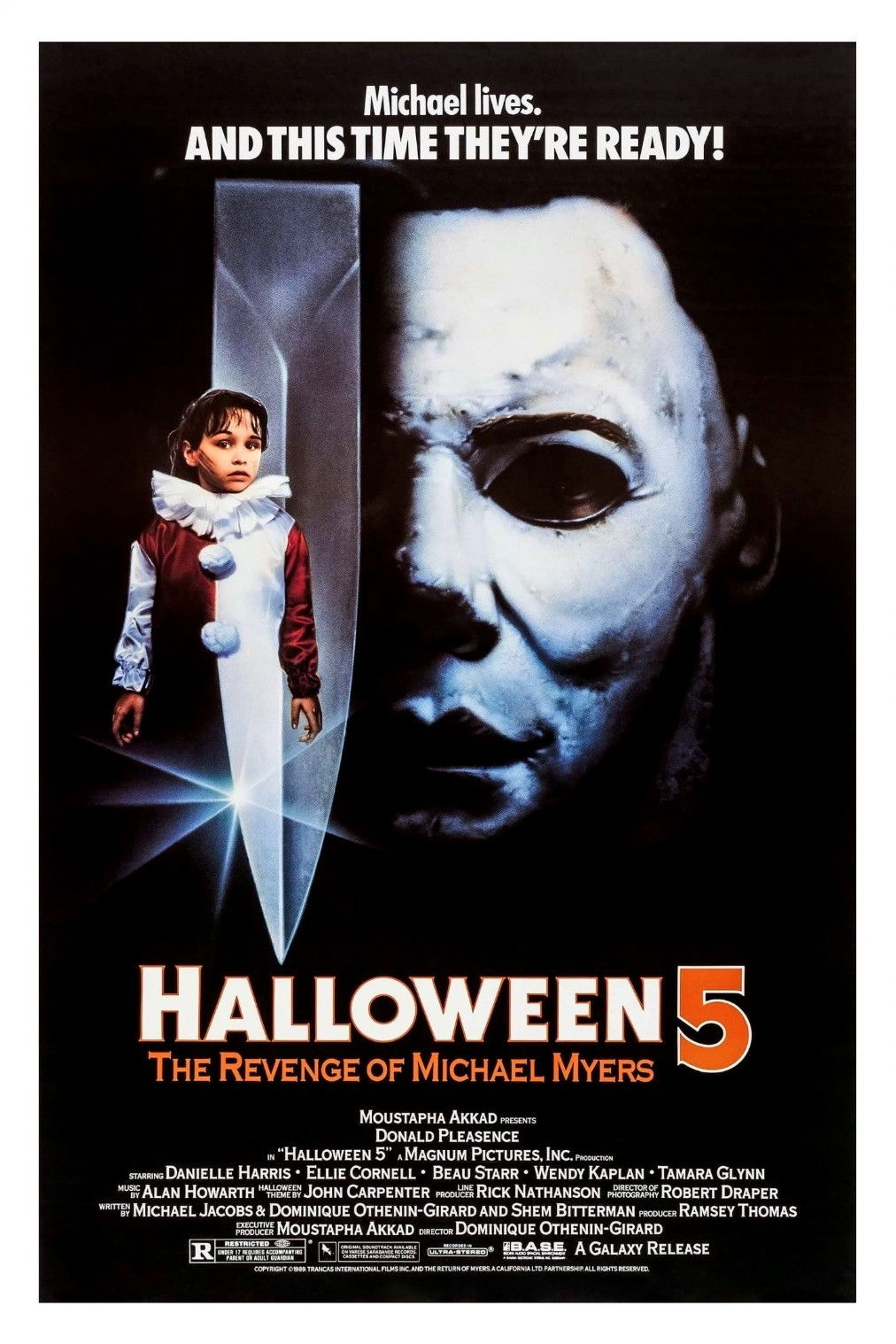
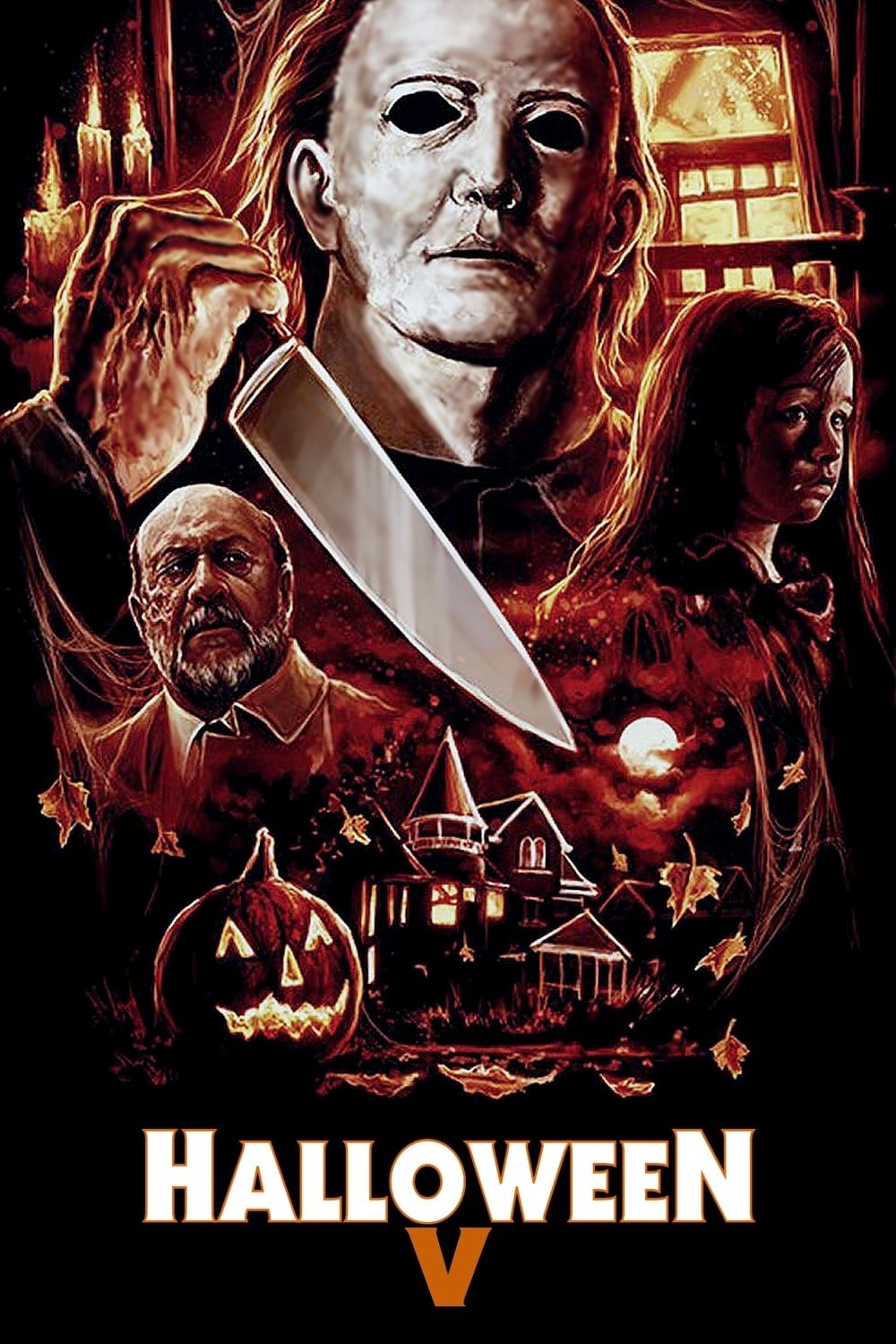
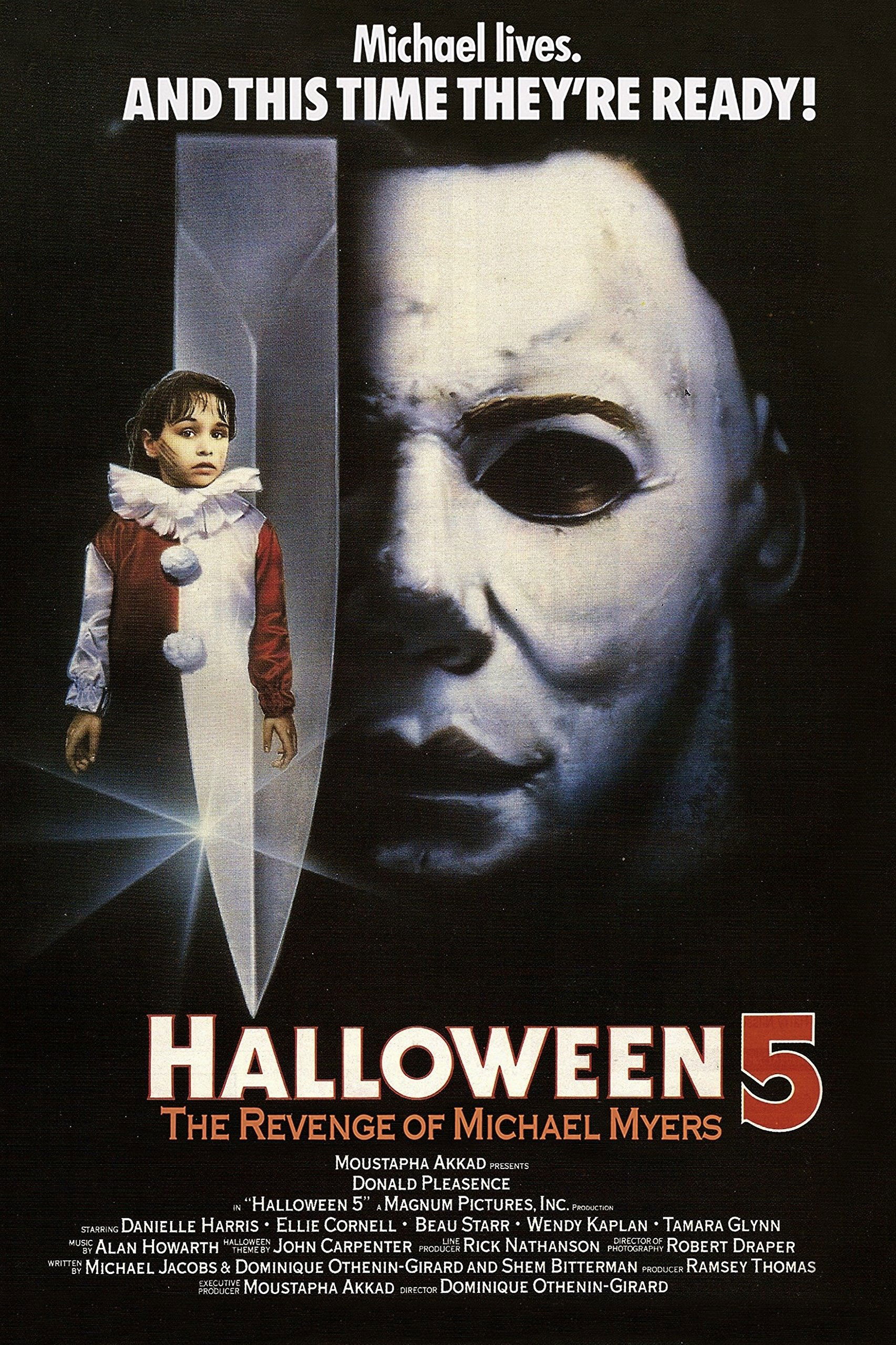
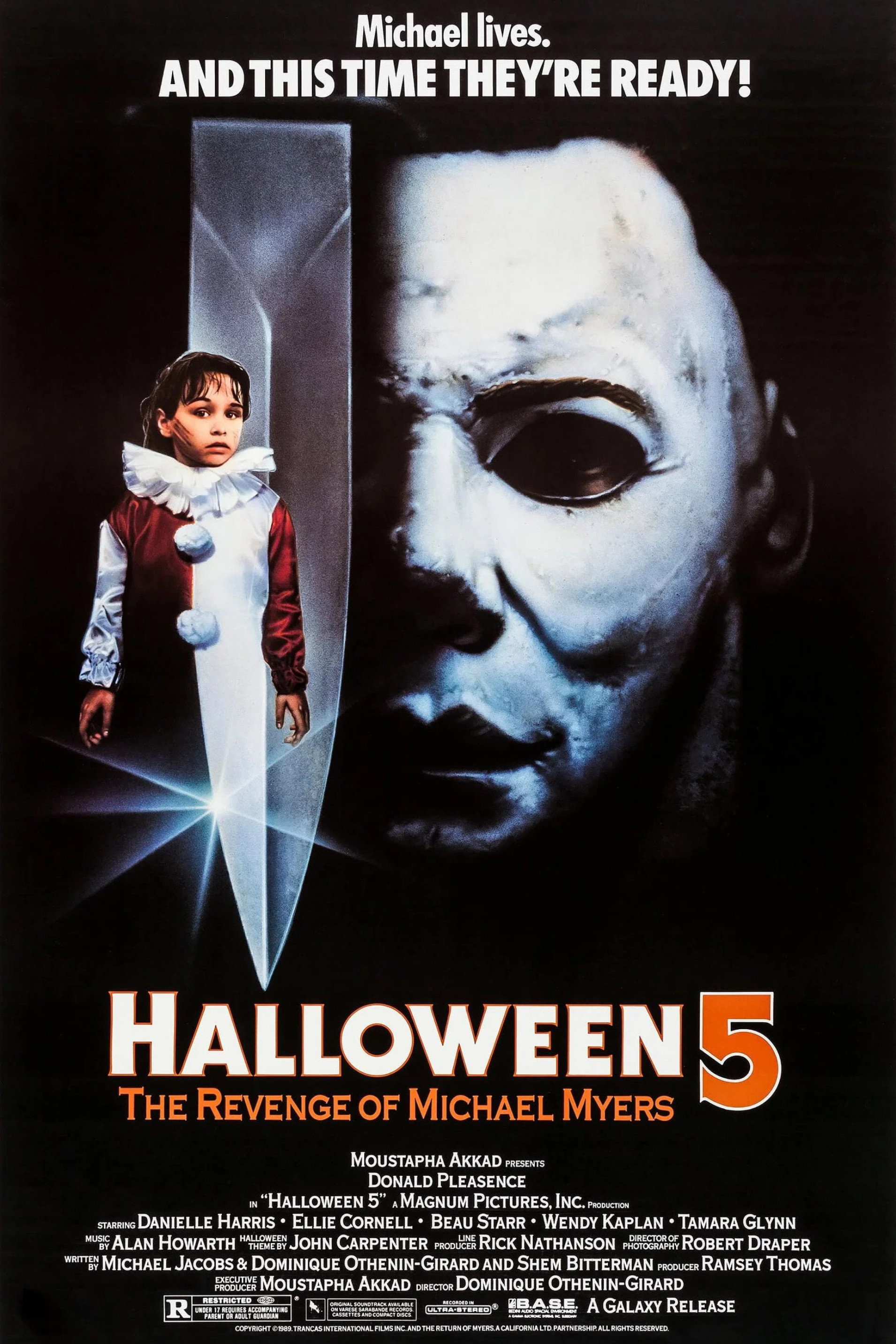
A year after the previous Halloween massacre, Jamie Lloyd is recovering in a children's clinic and struggling with frightening visions connected to her uncle, Michael Myers. Michael has survived and returns to Haddonfield, where Jamie's friends and guardians are placed in danger. Dr. Samuel Loomis believes the girl's unusual connection to Michael may help locate him. At the same time, the arrival of a mysterious stranger introduces questions about the forces surrounding the killer.
Alternative Titles
Halloween V (Australia) Хелоуин 5: Отмъщението на Майкъл Майърс (Bulgaria) — BulgarianHalloween 5: A Vingança de Michael Myers (Brazil) Halloween 5 : La Vengeance de Michael Myers (Canada) 捉鬼节5 (China) 月光光心慌慌5:迈克尔的复仇 (China) — ChineseHalloween 5 (Czechia) — CzechDie Rache des Michael Myers - Halloween 5 (Germany) Show all 40 alternative titlesHalloween V - Die Rache des Michael Myers (Germany) — GermanMaskernes Nat 5 (Denmark) Halloween 5: La venganza de Michael Myers (Spain) — SpanishHalloween 5 (Finland) — FinnishHalloween 5 : La Revanche de Michael Myers (France) Η Νύχτα με τις Μάσκες 5: Η εκδίκηση του Μάικλ Μάγιερς (Greece) — Greek月光光心慌慌 5 (Hong Kong SAR China) — ChineseNoć vještica 5: Osveta Michaela Myersa (Croatia) — CroatianHalloween 5. (Hungary) — Hungarianליל המסכות 5: הנקמה של מייקל מאיירס (Israel) — HebrewHalloween 5 - La vendetta di Michael Myers (Italy) — Italianハロウィン 5 ブギーマン逆襲 (Japan) ハロウィン5 ブギーマン逆襲 (Japan) — Japaneseハロウィン5/ブギーマン逆襲 (Japan) 할로윈 5: 마이클 마이어스의 복수 (South Korea) — KoreanHalloween 5: La venganza de Michael Myers (Mexico) — SpanishHalloween V: Zemsta Michaela Myersa (Poland) — PolishHalloween 5 (Portugal) — PortugueseHalloween 5 - A Vingaça de Michael Myers (Portugal) Halloween 5: The Răzbunarea lui Michael Myers (Romania) — RomanianХэллоуин 5: Месть Майкла Майерса (Russia) — Russianالهالوين 5: انتقام مايكل مايرز (Saudi Arabia) — ArabicHalloween 5: Pomsta Michaela Myersa (Slovakia) — SlovakHalloween 5 La Venganza de Michael Myers (El Salvador) ฮาโลวีน 5: ความแค้นไม่เคยตาย (Thailand) — ThaiCadılar Bayramı 5: Michael Myers'ın İntikamı (Türkiye) — Turkish月光光心慌慌5 (Taiwan) — ChineseГелловін 5: Помста Майкла Майєрса (Ukraine) — UkrainianHalloween 5 (United States) — onscreen titleHalloween 5: The Killer Inside Me (United States) — Working TitleHalloween 5... And Things That Go Bump In the Night (United States) — Working TitleHalloween 5: Michael Myers Báo Thù (Vietnam) — Vietnamese
A troubled 1989 slasher sequel shaped by Jamie Lloyd's visions, a redesigned Myers house, the Man in Black and lost Doctor Death footage.
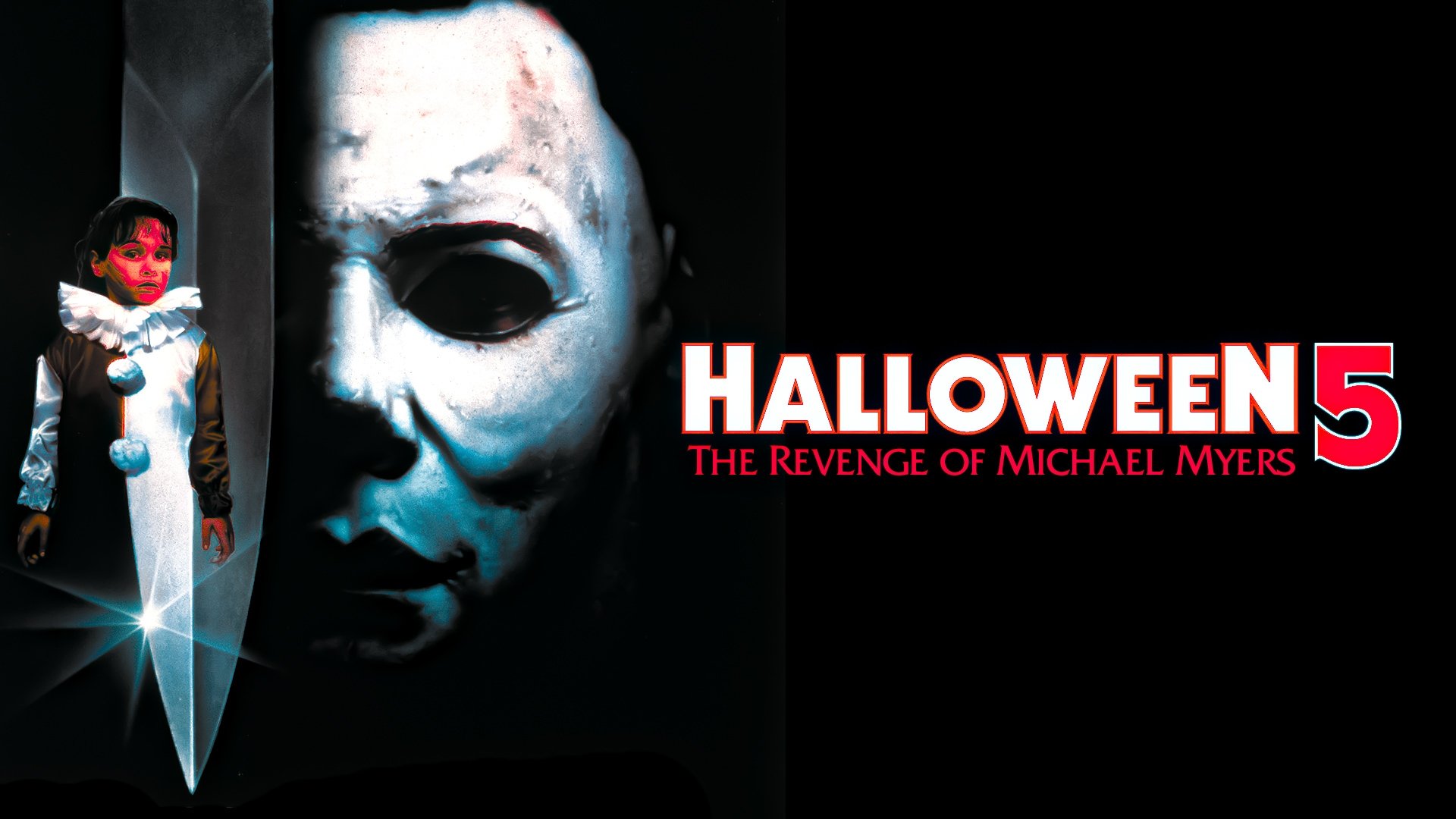
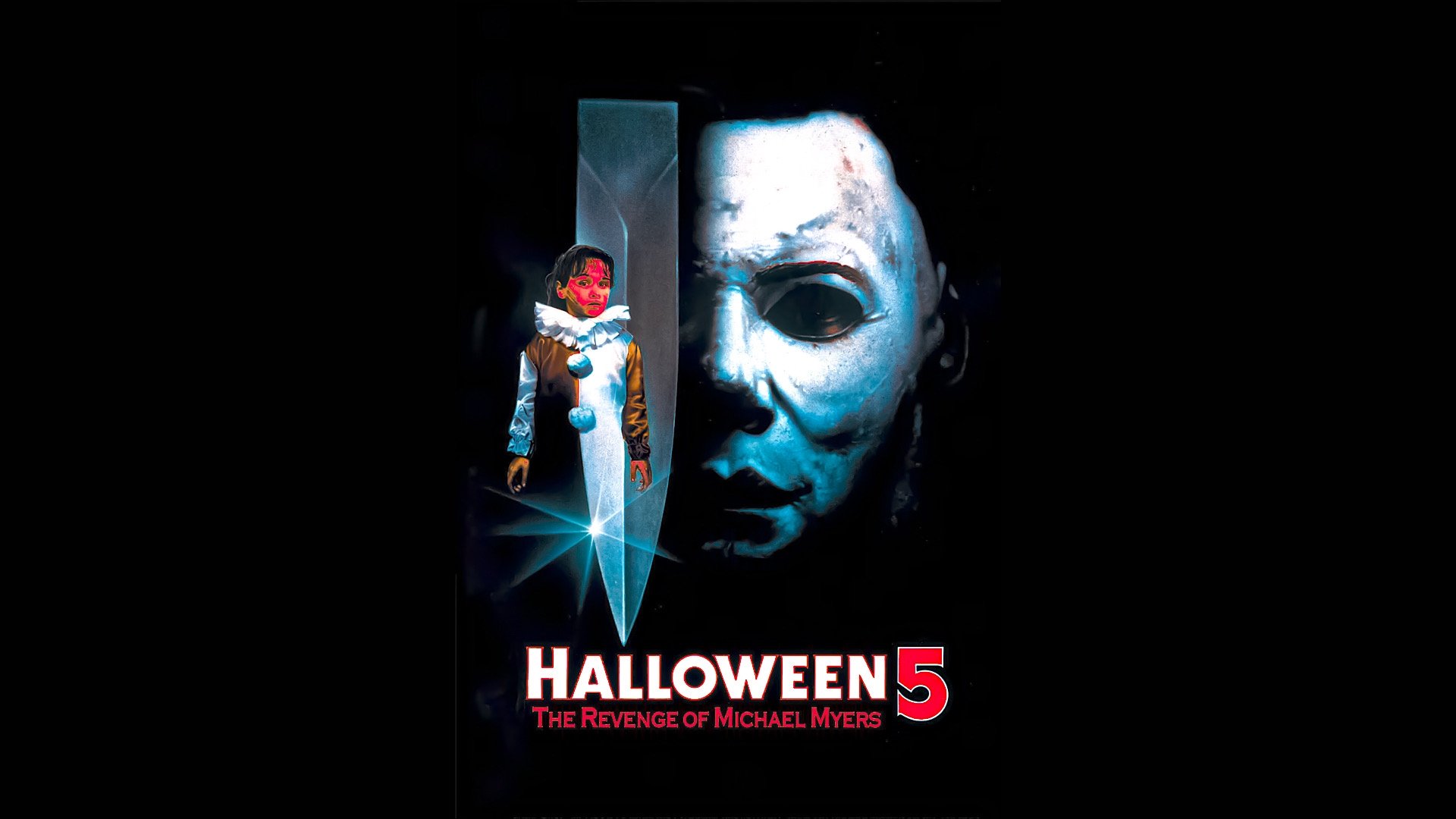
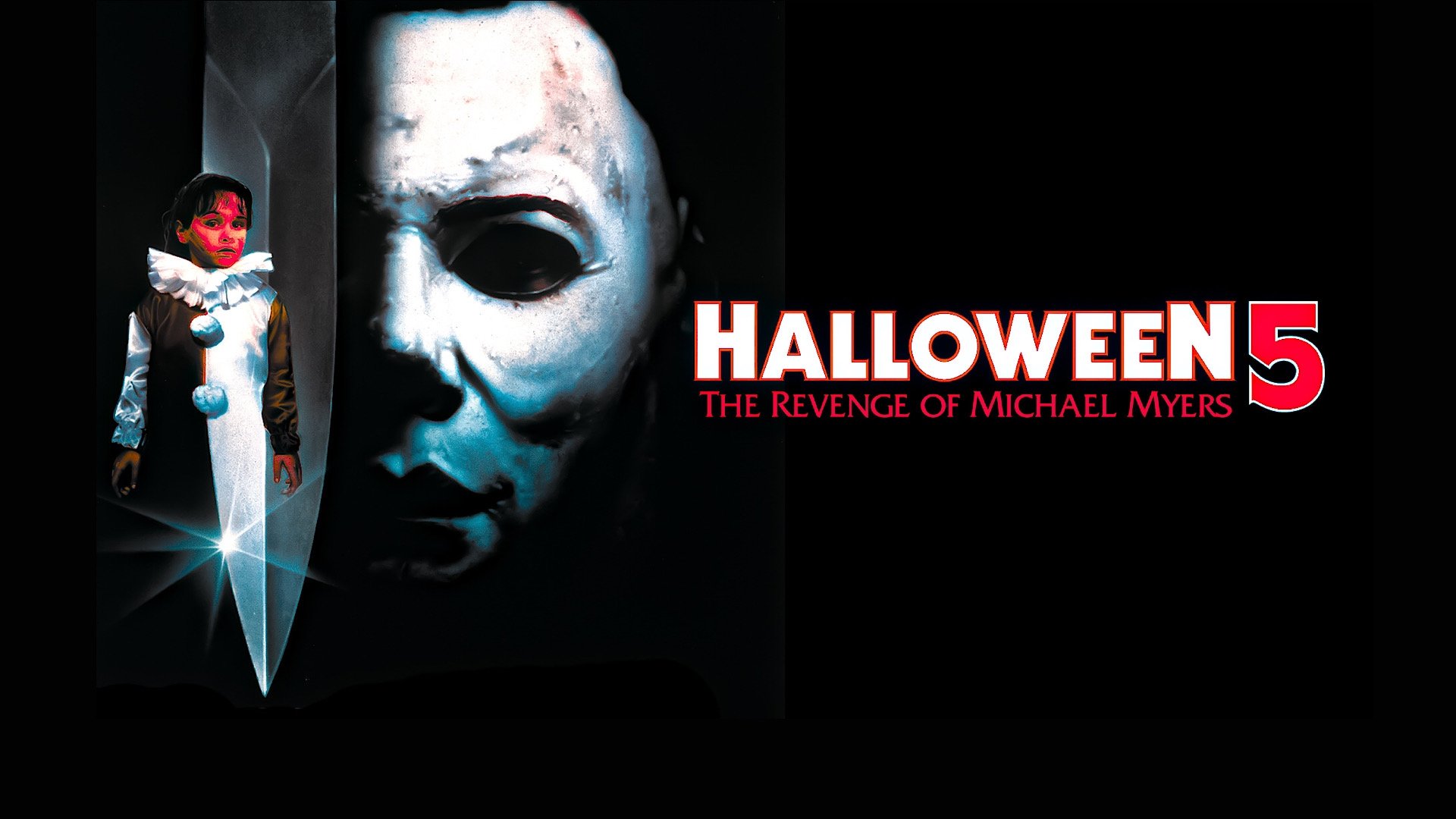
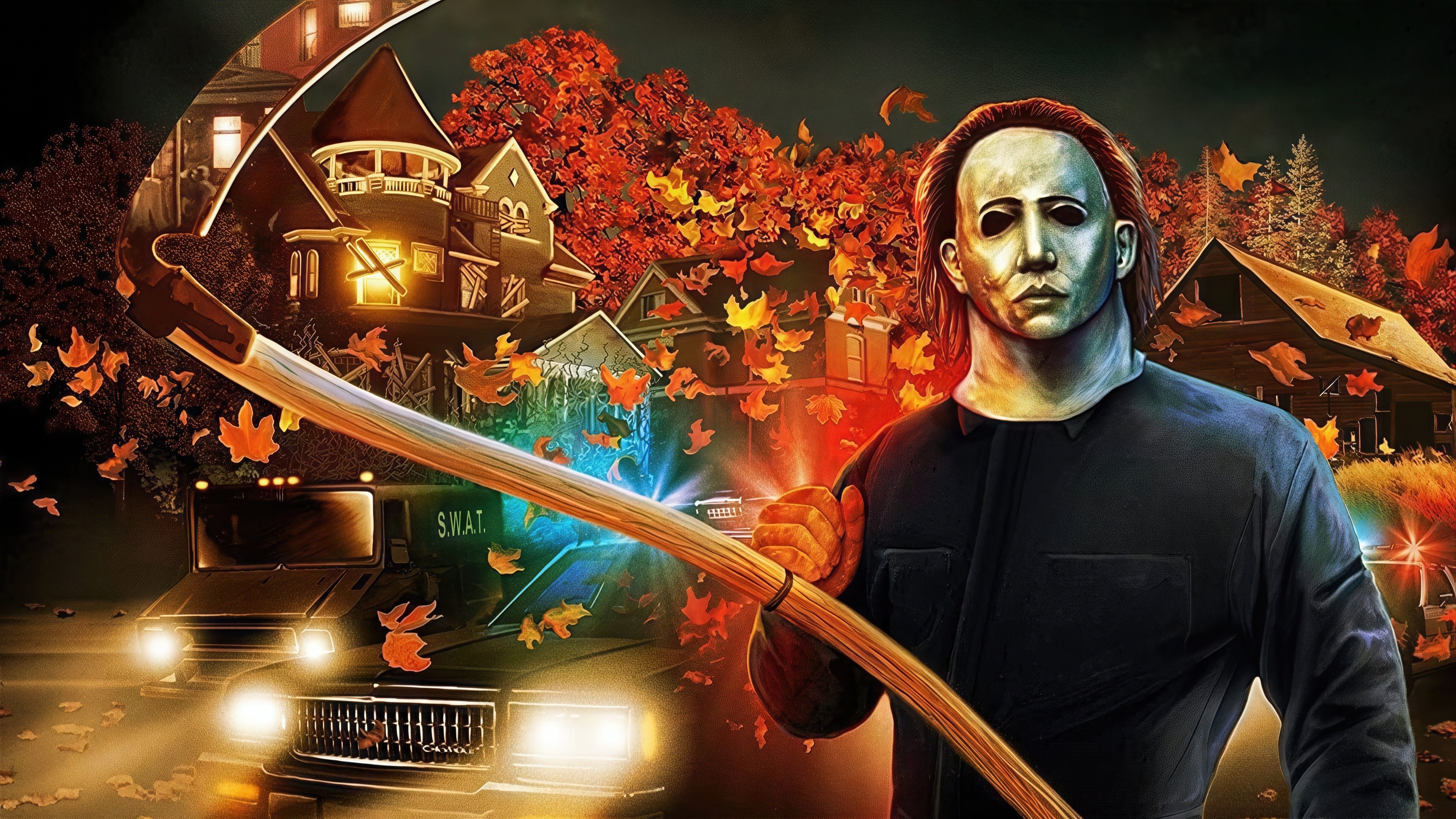
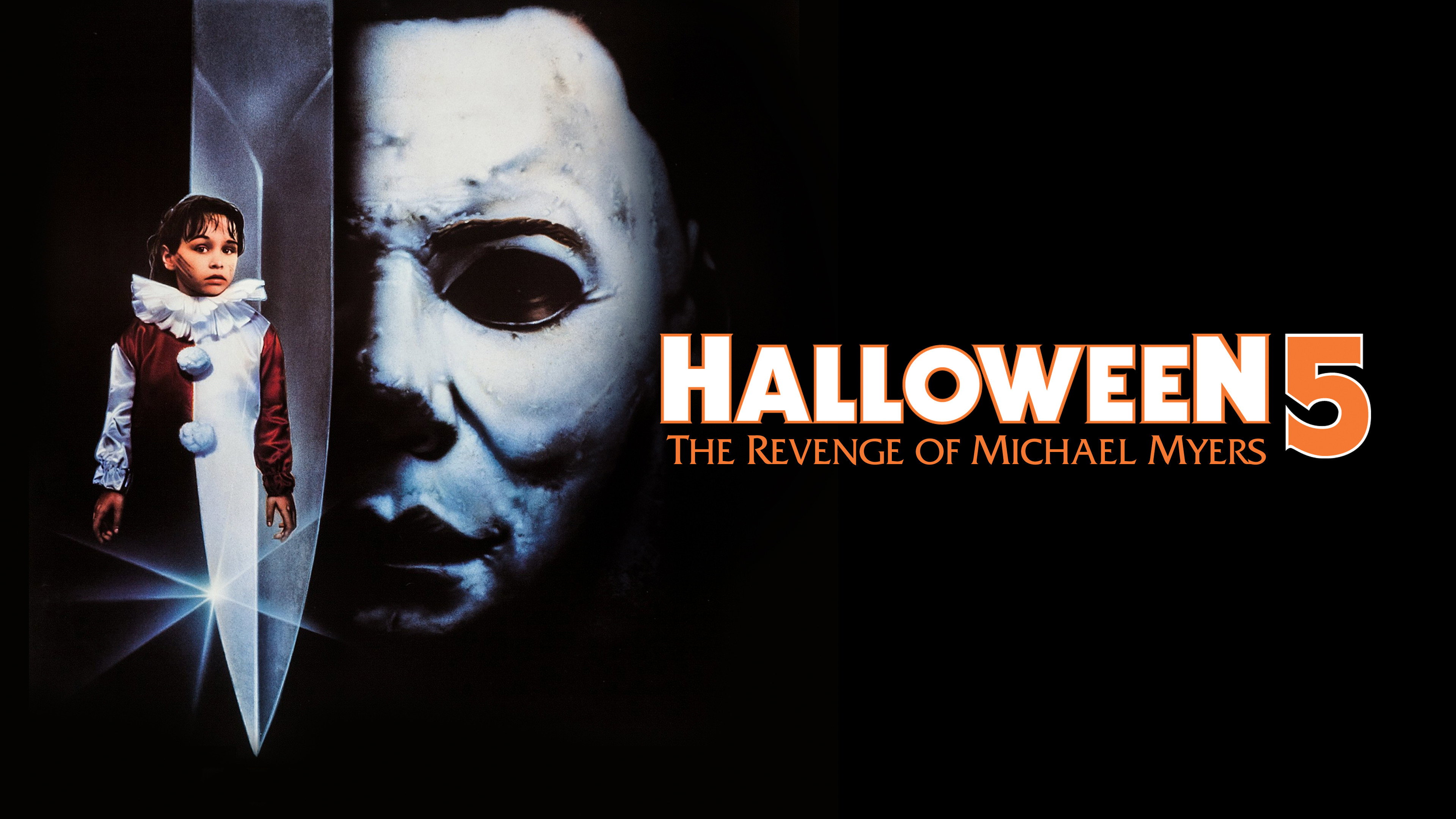
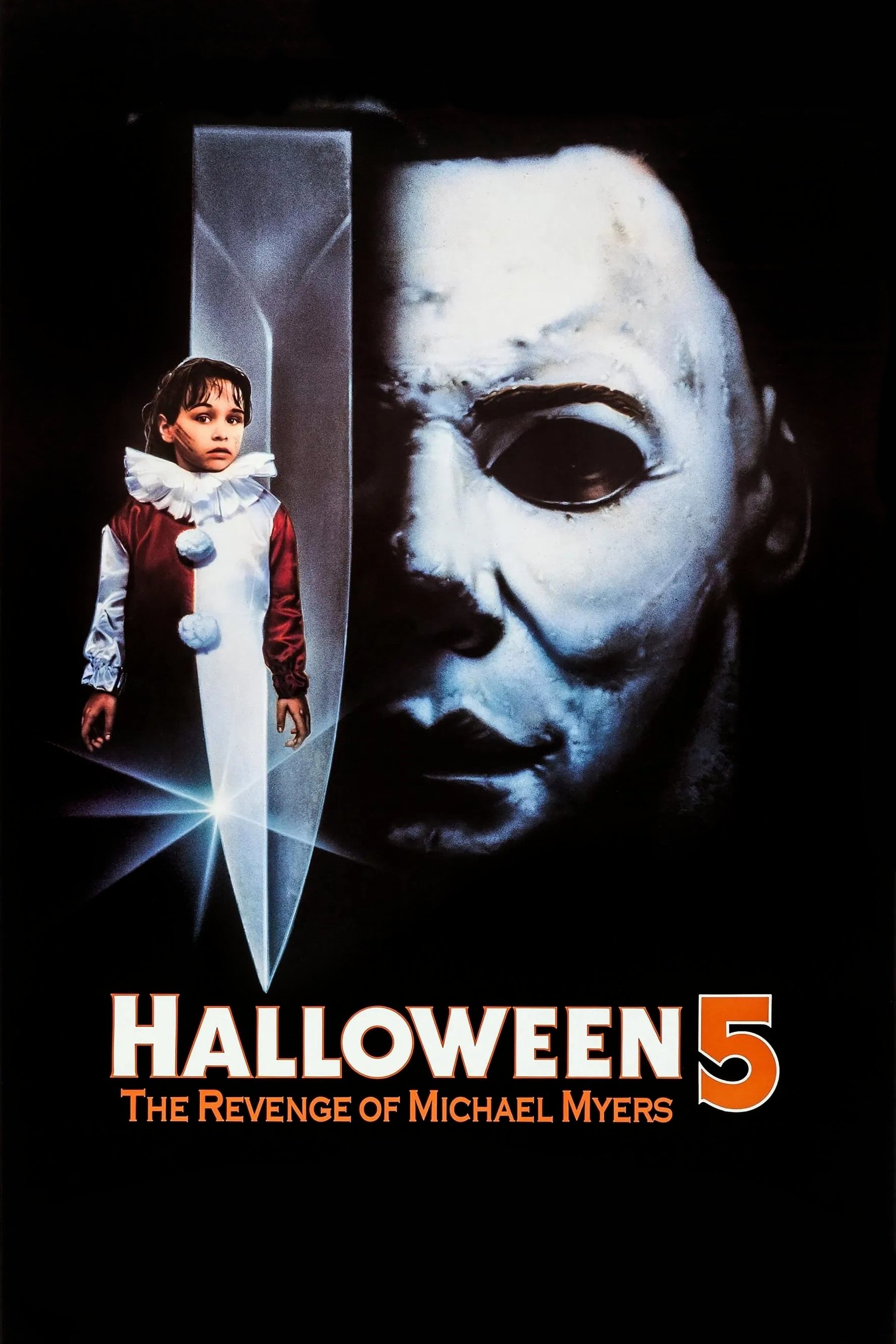
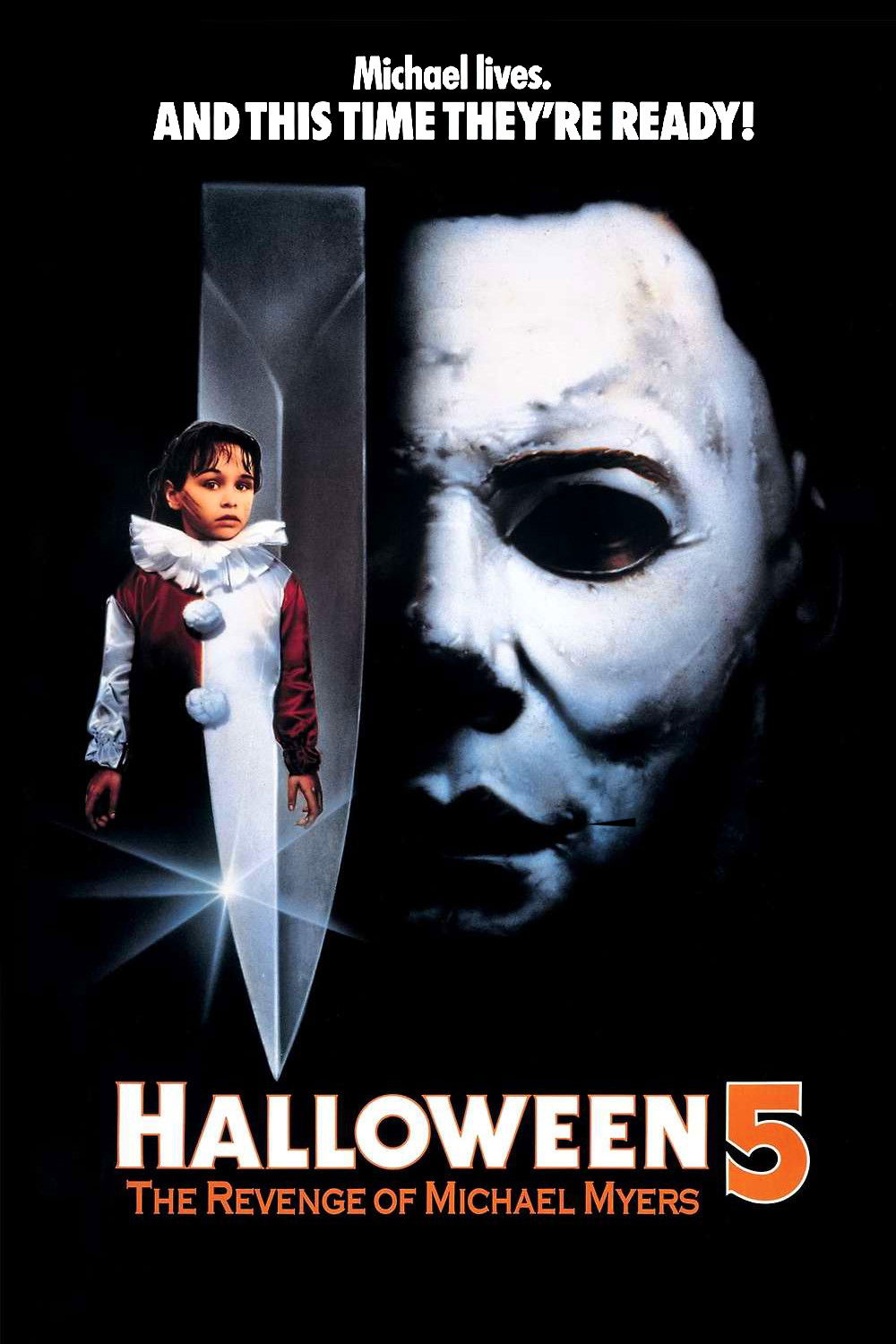
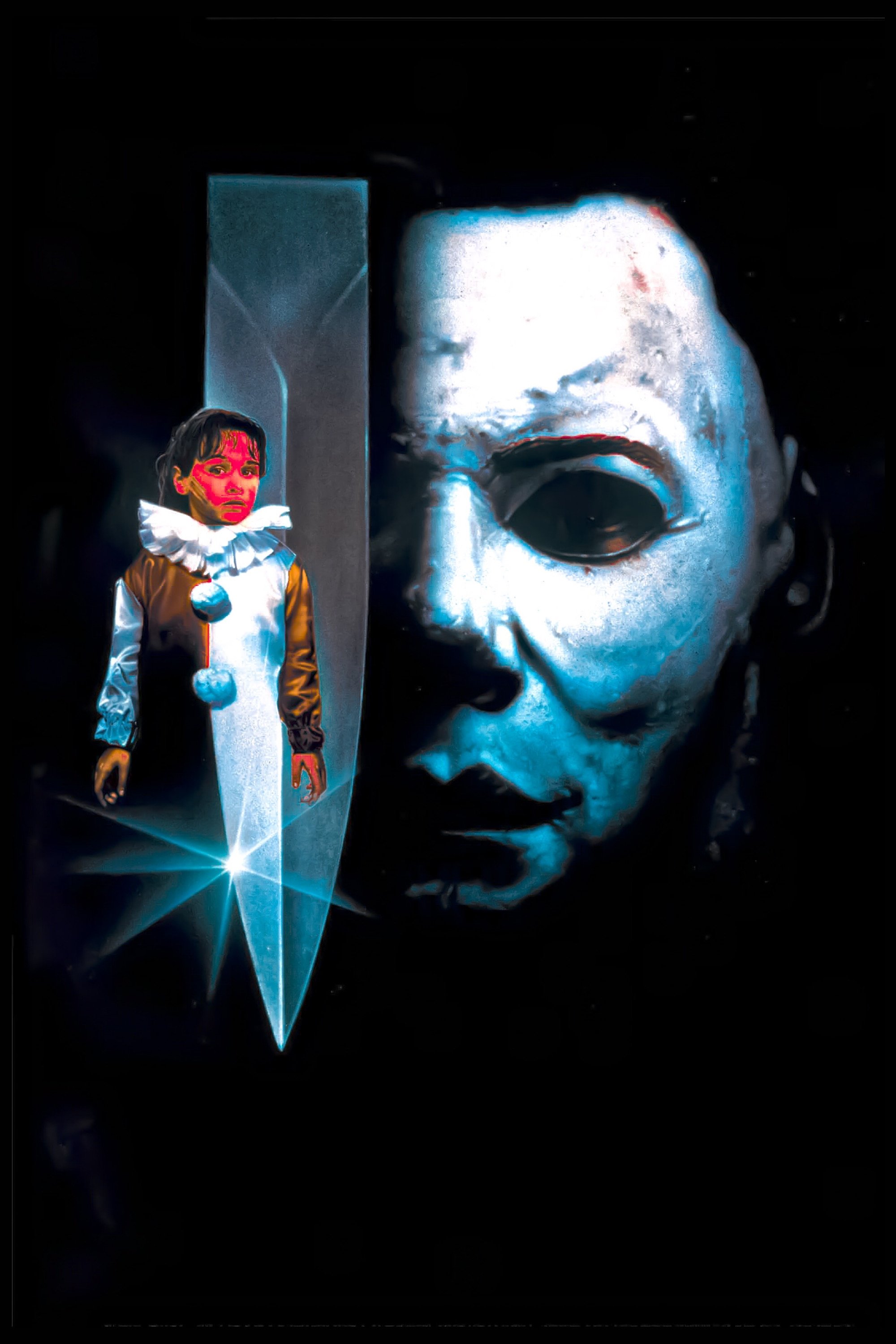
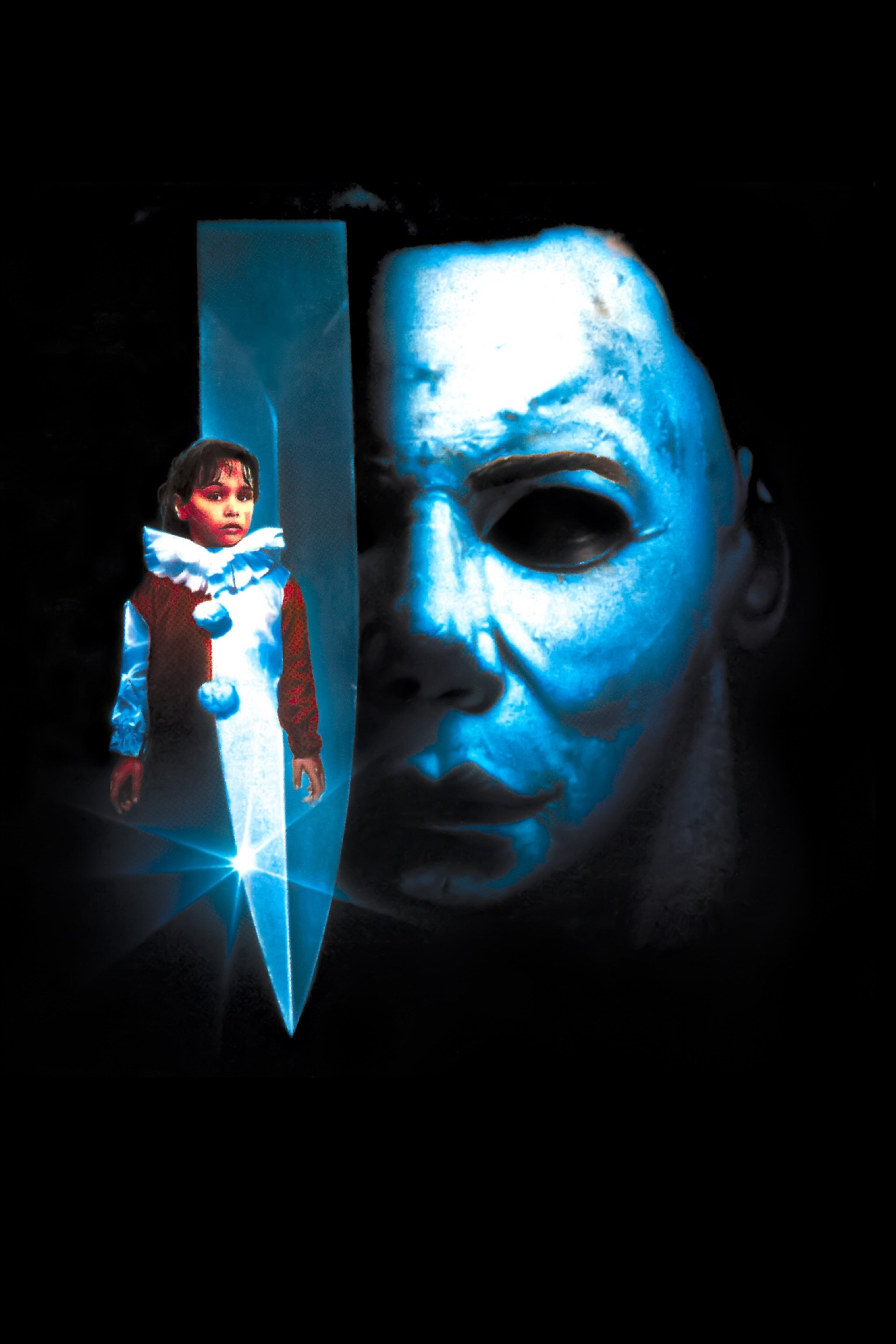
Halloween 5: The Revenge of Michael Myers (1989) arrived just one year after Halloween 4 revived the franchise's original masked killer. Its makers inherited a conclusion suggesting that the young Jamie Lloyd might repeat her uncle's crimes, but the sequel restored Michael Myers to the center of the violence and gave Jamie a traumatic bond with him instead. The film consequently occupies a transitional place in the series. It retains the pursuit, isolated houses and Halloween-night killings associated with the earlier entries while introducing an unexplained stranger, a mysterious mark and a more openly supernatural relationship between killer and child.
Directed by Dominique Othenin-Girard under a demanding production schedule, the picture also differs sharply from its immediate predecessor in visual design. Utah locations stand in for Haddonfield, the Myers residence becomes a Gothic labyrinth, and the final pursuit depends on the movement of a frightened child through narrow interior spaces. Changes made during writing, shooting and editing left traces in both its storytelling and later home-video history. Those decisions, together with the contemporary critical response, offer a particularly revealing case of how a successful slasher series was being reshaped at the end of the 1980s.
A Sequel Built for an October Deadline
The success of Halloween 4: The Return of Michael Myers made a rapid follow-up attractive to series producer Moustapha Akkad. The American Film Institute's history, drawing on contemporary trade reporting, records a scheduled start of principal photography on May 1, 1989, and completion on June 11. The production worked in Salt Lake City, Ogden and Provo, with much of the Utah crew hired locally. This left roughly four months between the end of filming and the film's October 13 theatrical opening. The compressed timetable was especially consequential for a sequel expected to resolve an unsettling cliffhanger while also providing the familiar spectacle of Michael's return.
The first screenplay took a different direction. Shem Bitterman's draft pursued Jamie's apparent transformation into a killer, an idea Akkad ultimately declined to carry forward. Othenin-Girard later described a contentious meeting in which he rejected the existing script and presented his own approach to suspense. He credited Michael Jacobs as his principal collaborator on the resulting version and said that Bitterman retained a credit despite the substantial changes. These are the director's retrospective recollections, not evidence that every abandoned scene can be reconstructed from the finished picture. Actor Don Shanks remembered receiving his script shortly before photography, while cast interviews describe dialogue and scenes continuing to change during the shoot.
Jamie, Loomis and the Change of Heroine
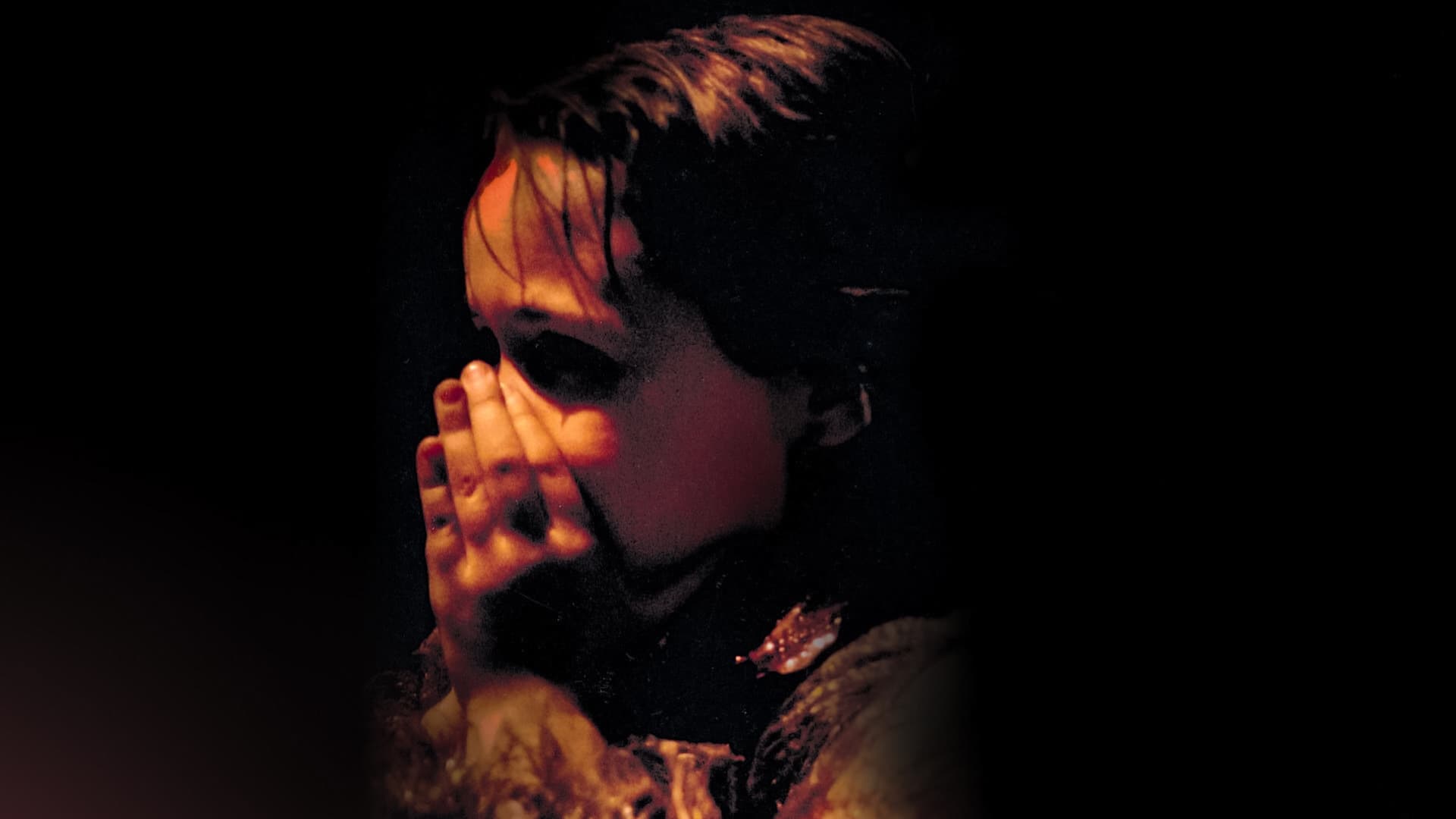
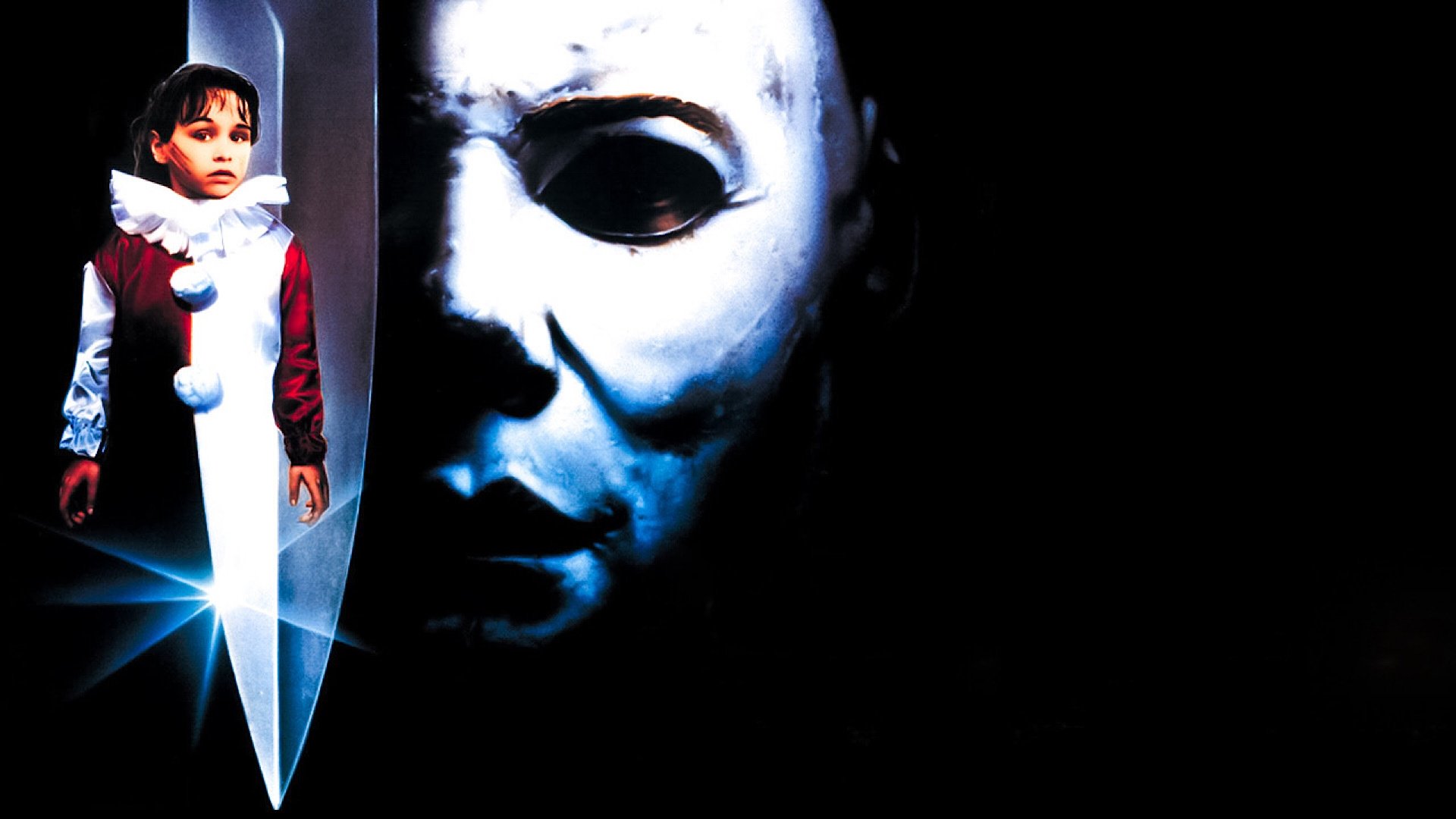
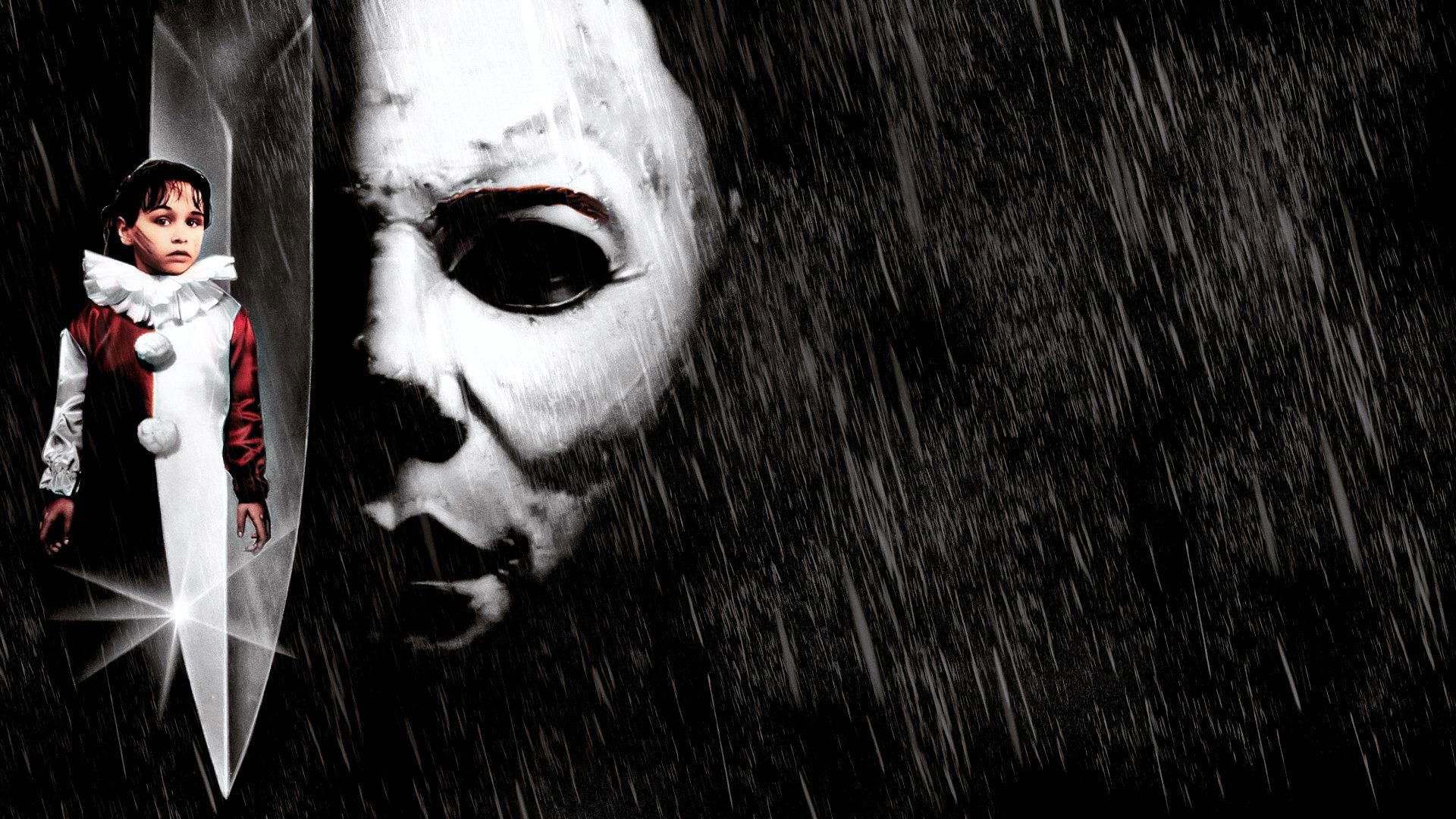
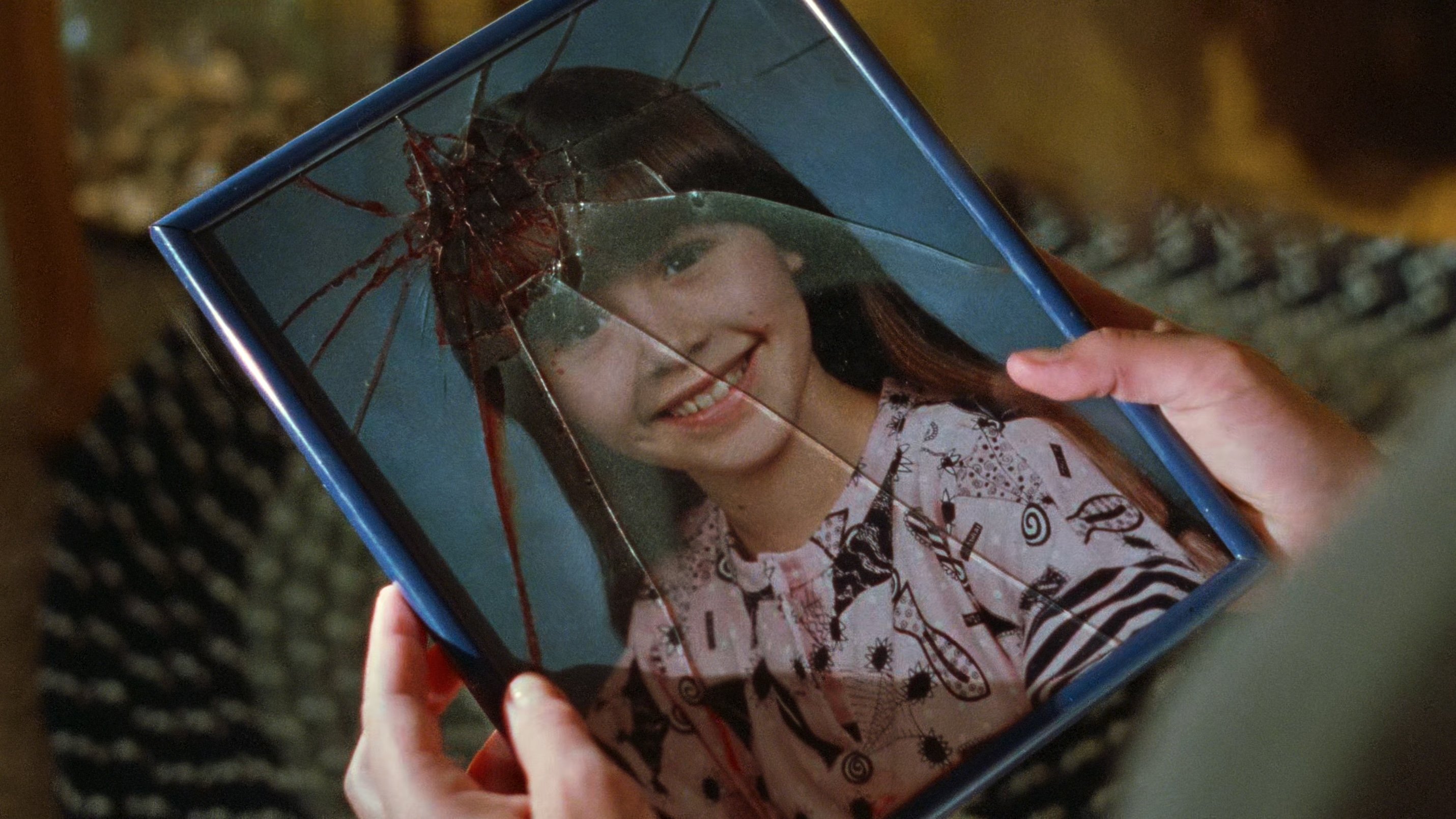
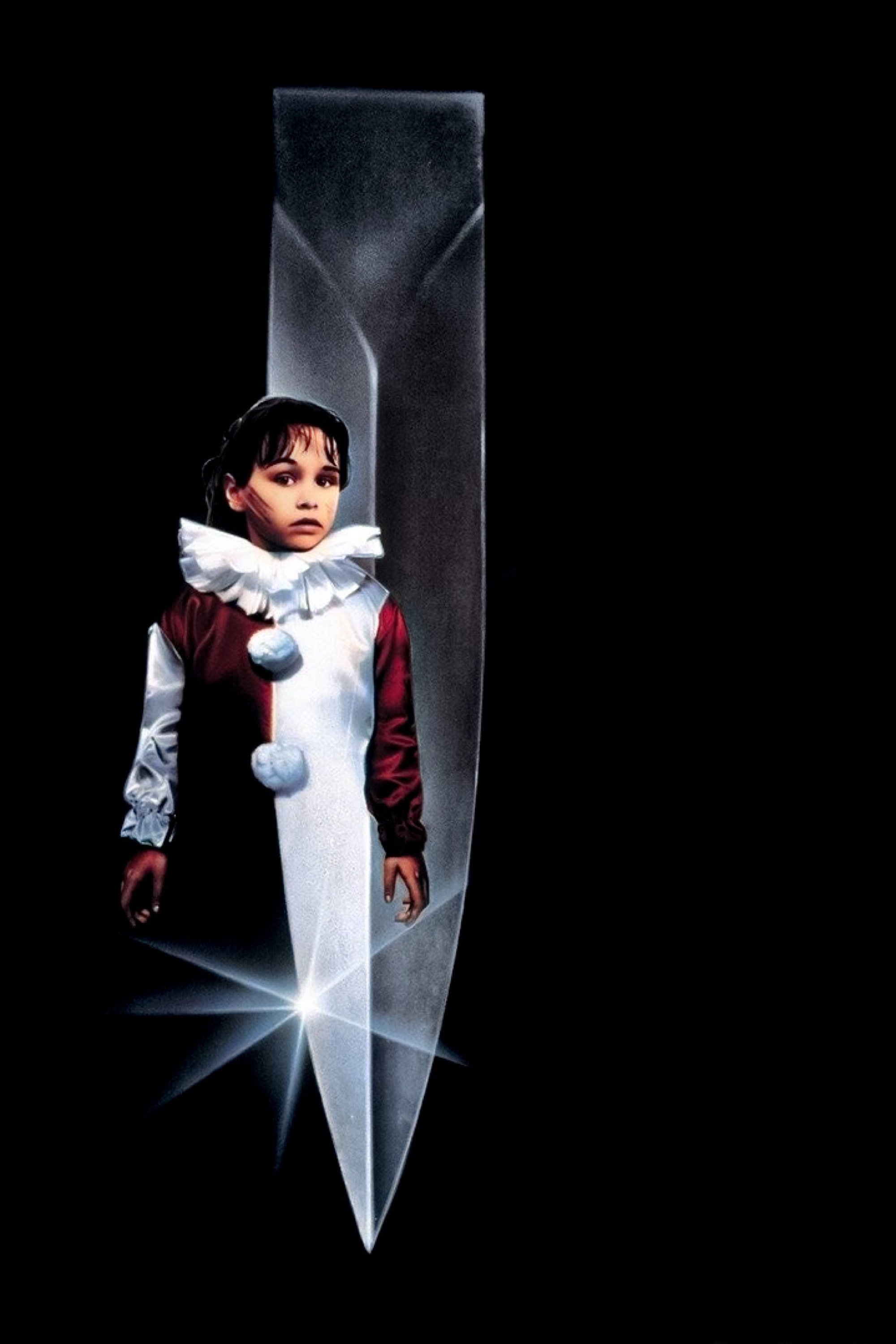
The film reverses the implication of the previous ending by placing Jamie in a children's clinic, traumatized and temporarily unable to speak. Othenin-Girard said he devised her silence as an obstacle the character would have to overcome. He also introduced visions linking her to Michael's attacks, allowing a child who is physically vulnerable to participate in the effort to find him. On screen, these episodes blur the distinction between foresight, shared perception and involuntary identification with the killer. Their exact mechanism is deliberately uncertain at this stage of the series. The choice changes the dramatic center of the story from conventional pursuit to the problem of whether Jamie can use knowledge that also harms her.
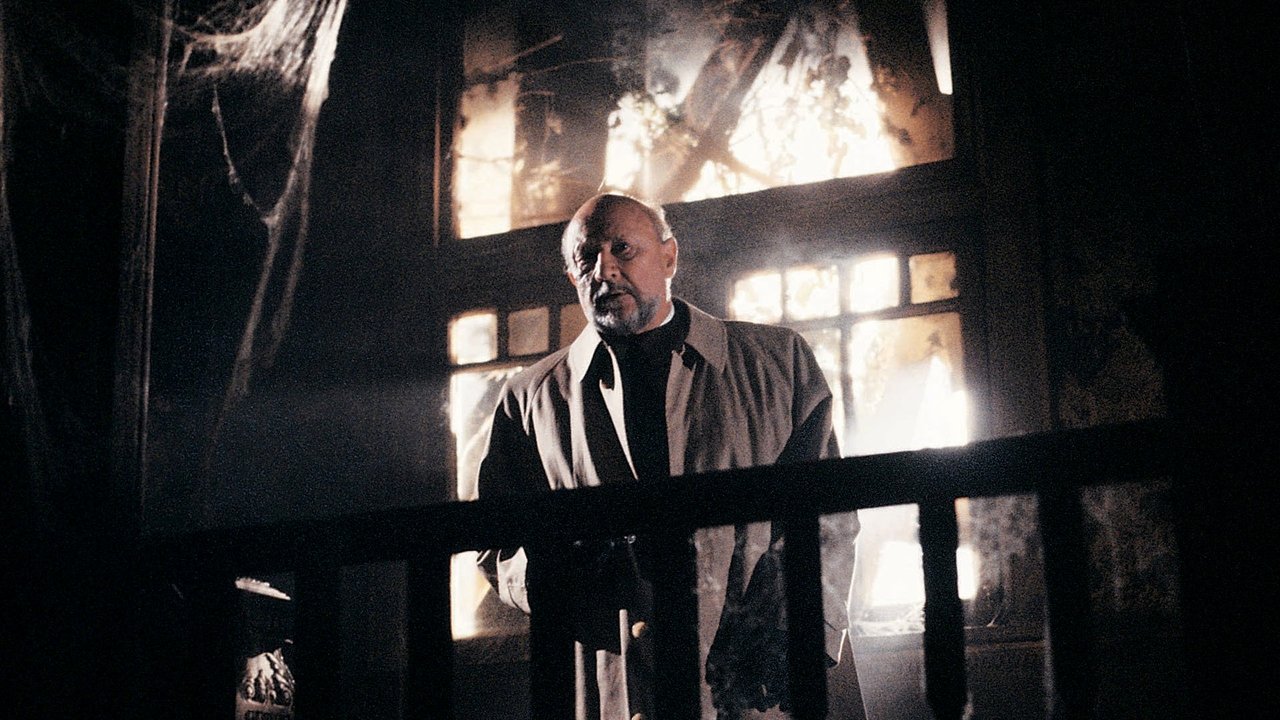
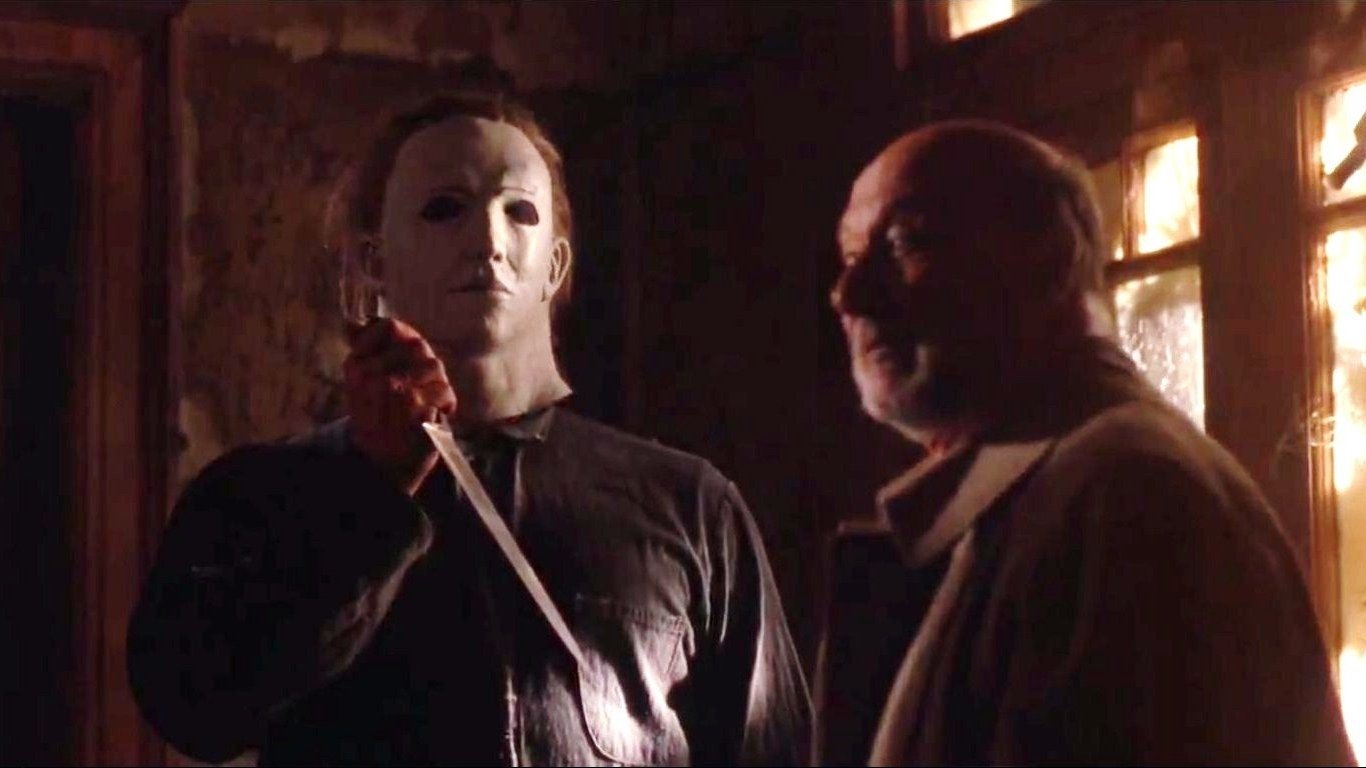
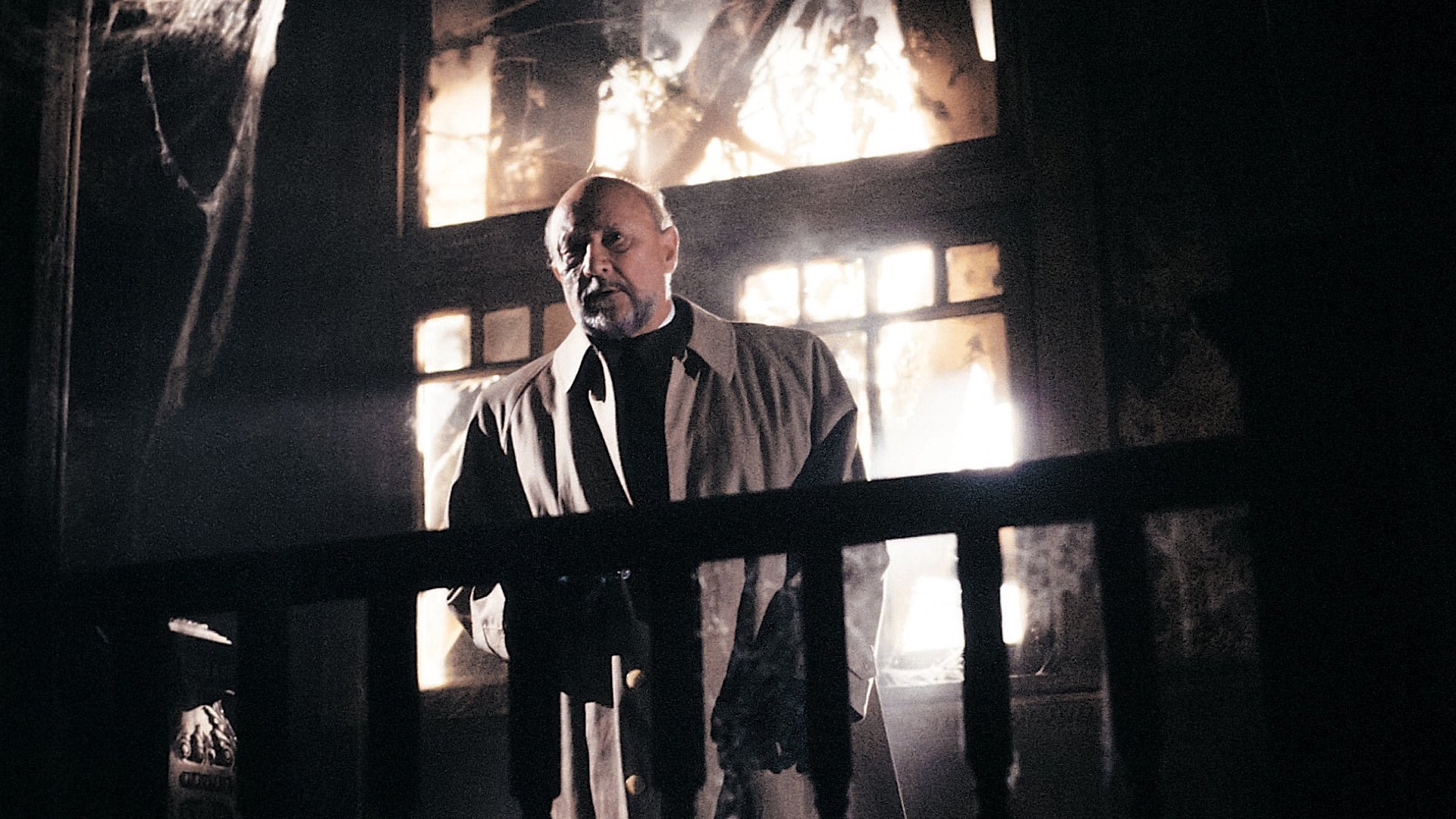
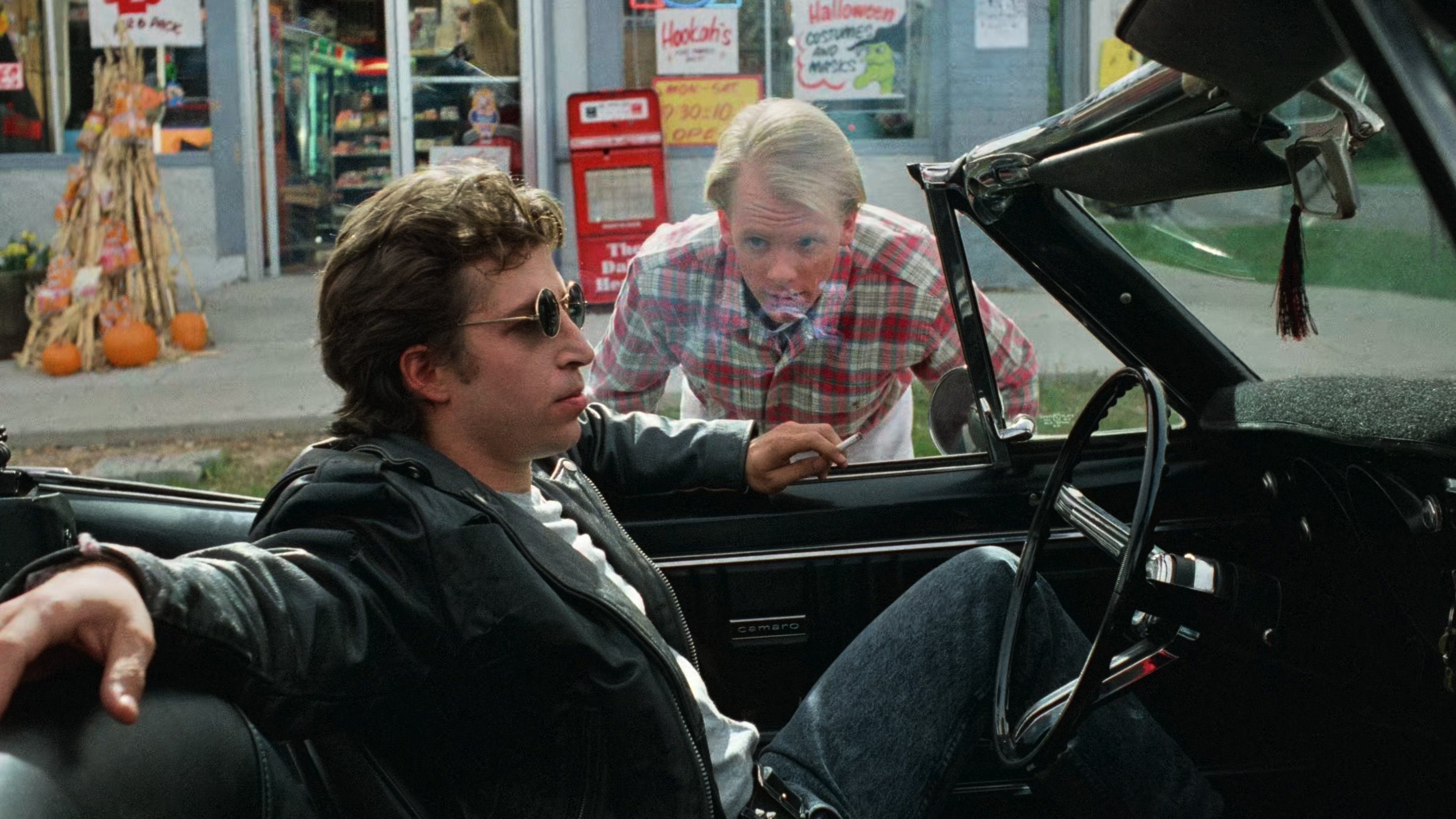
Dr. Loomis responds with an increasingly coercive certainty that the girl can lead him to Michael. His willingness to use Jamie as bait introduces a disturbing tension between protection and obsession. The deaths surrounding her also dismantle the protective network established in Halloween 4. Rachel Carruthers is killed early, leaving Tina Williams, a more impulsive friend, to assume an unexpected caregiving role. Othenin-Girard later acknowledged that eliminating Rachel was meant to unsettle viewers who trusted her survival. Wendy Kaplan, who played Tina, recalled trying to preserve the character's generosity beneath her apparent recklessness. Her account helps explain why the film's shifting focus has remained contentious among its audience.
Utah, Haddonfield and the Gothic Myers House
Filming in Utah meant that streets and buildings could not precisely reproduce the Illinois town imagined in the original film. Othenin-Girard treated that practical limitation as an opportunity to alter the series' appearance. He described a progression from relatively gentle daylight colors toward stronger nighttime contrasts, with cinematographer Robert Draper helping to organize demanding compositions. Exterior scenes continue to evoke familiar suburban territory, but the final act draws the viewer into spaces that feel detached from the town outside. The contrast is noticeable in the movement from the open roads and outdoor gatherings to the heavily shadowed house that becomes Michael's last destination.
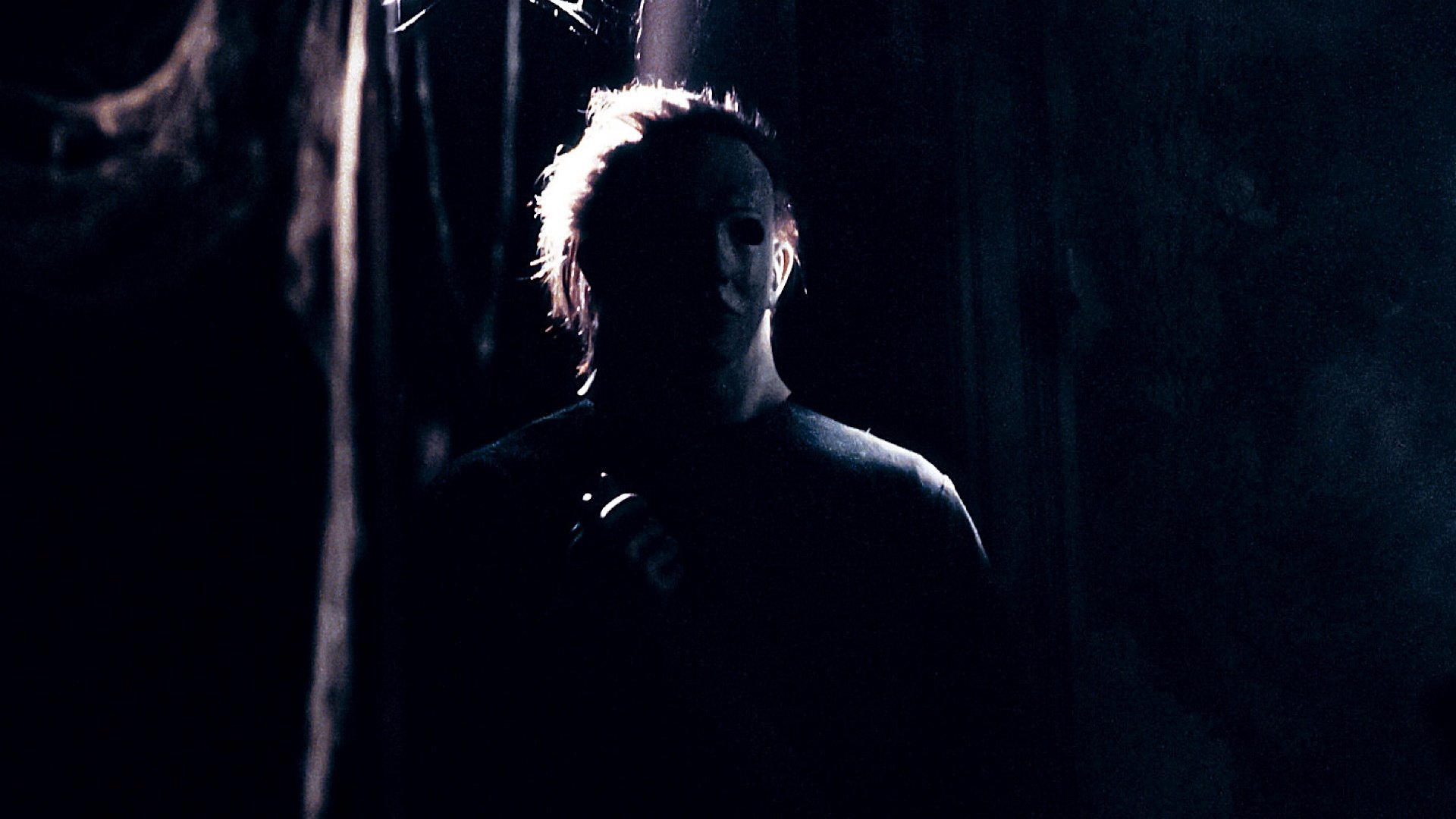
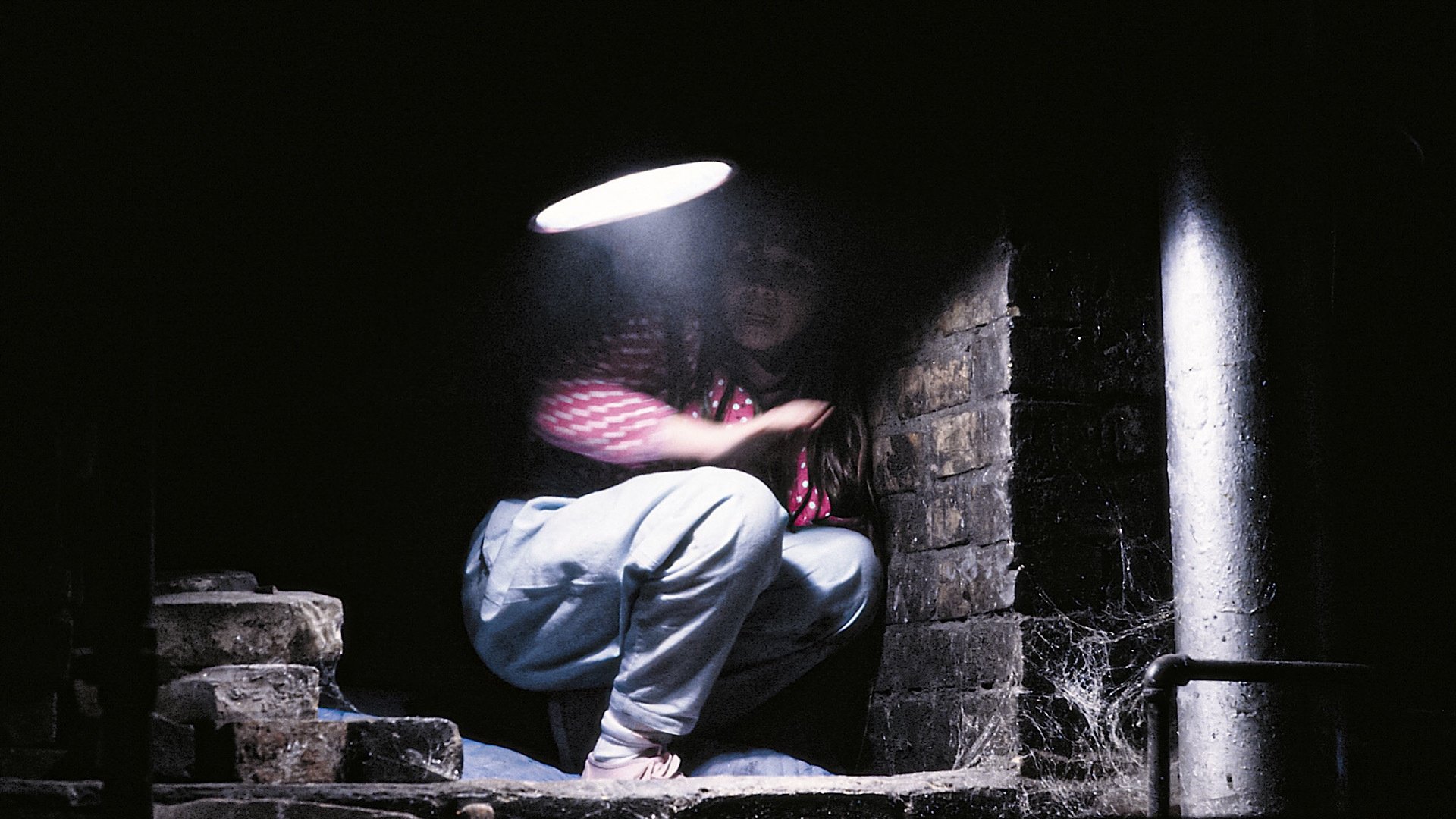
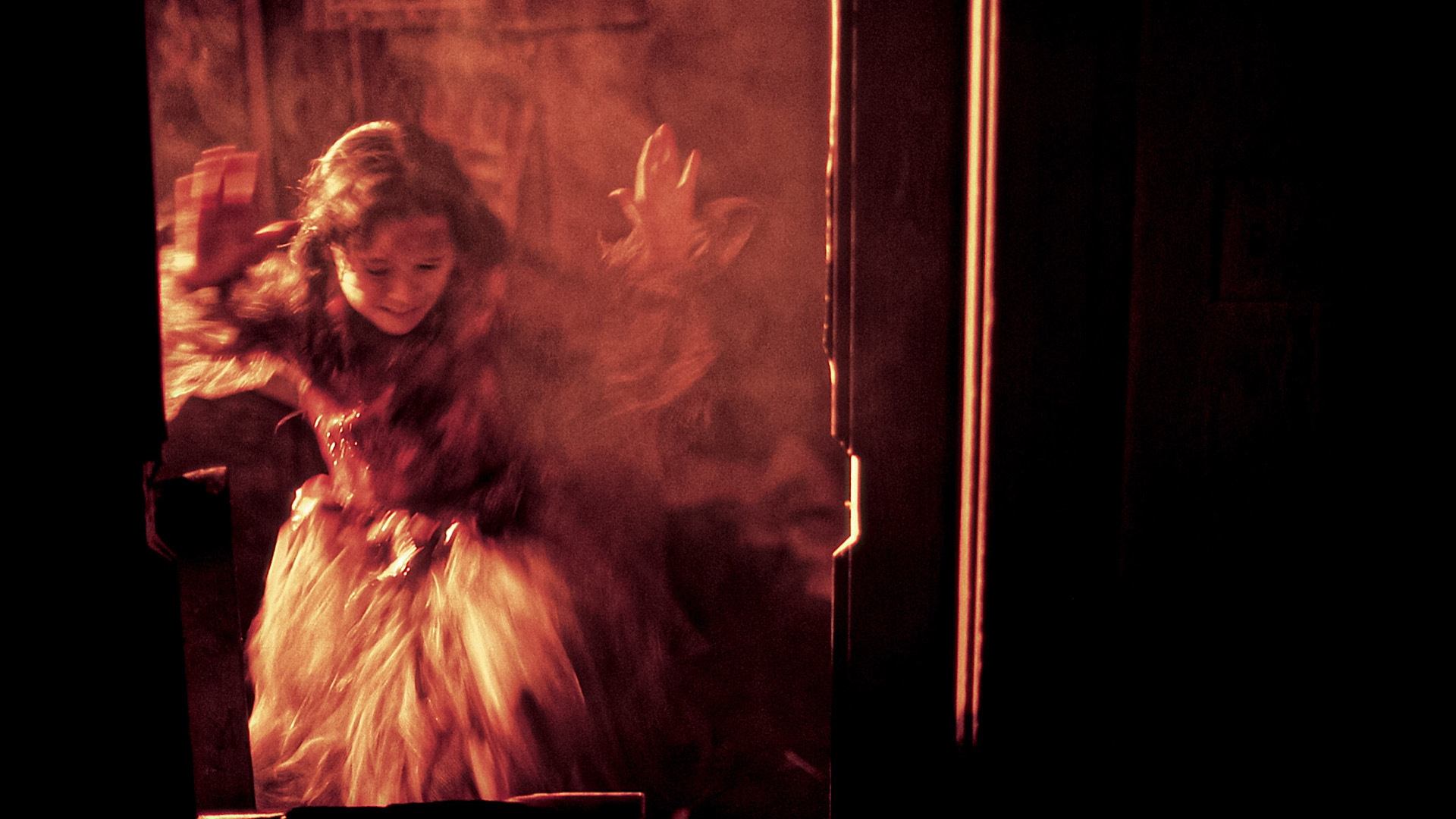
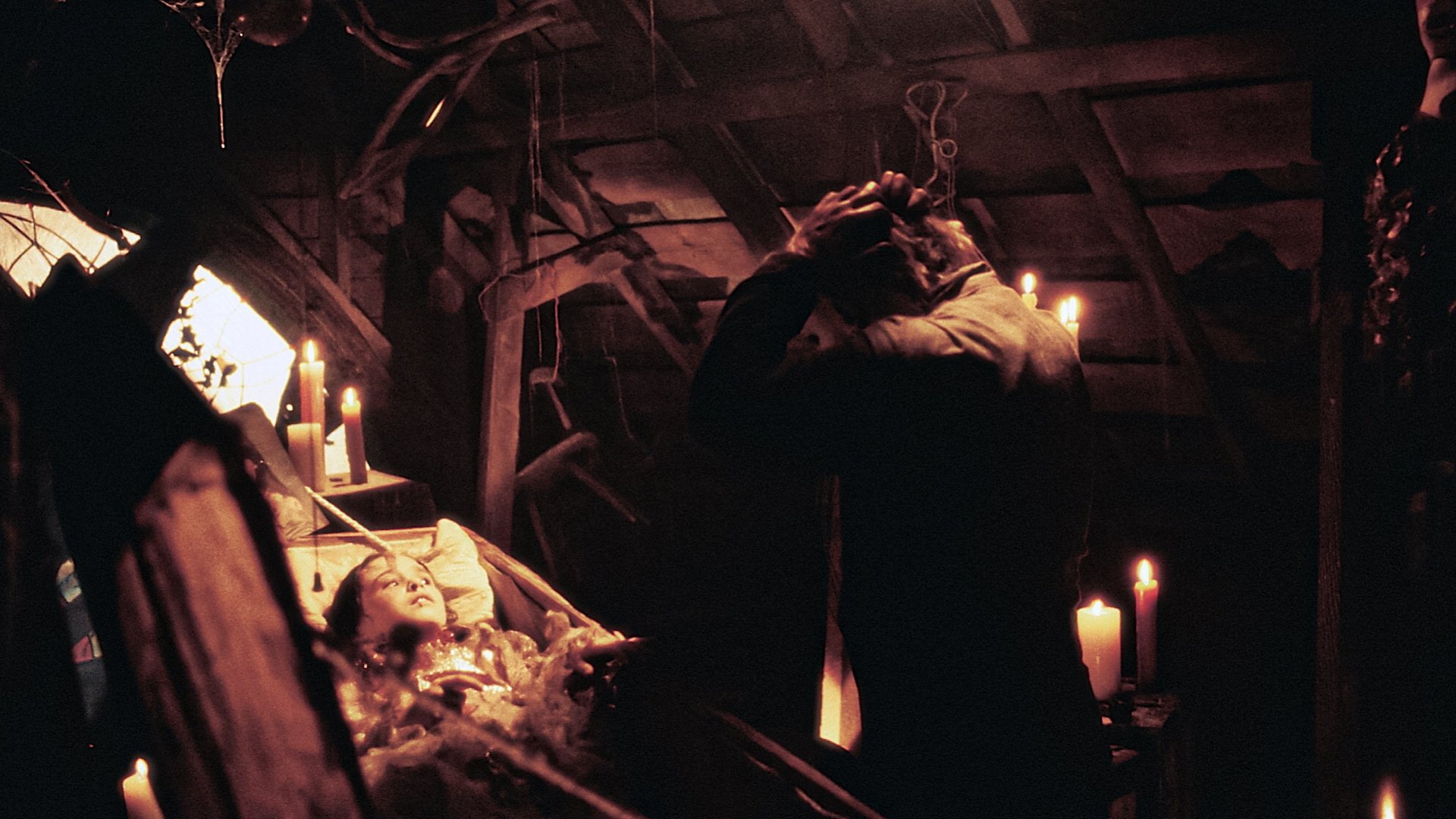
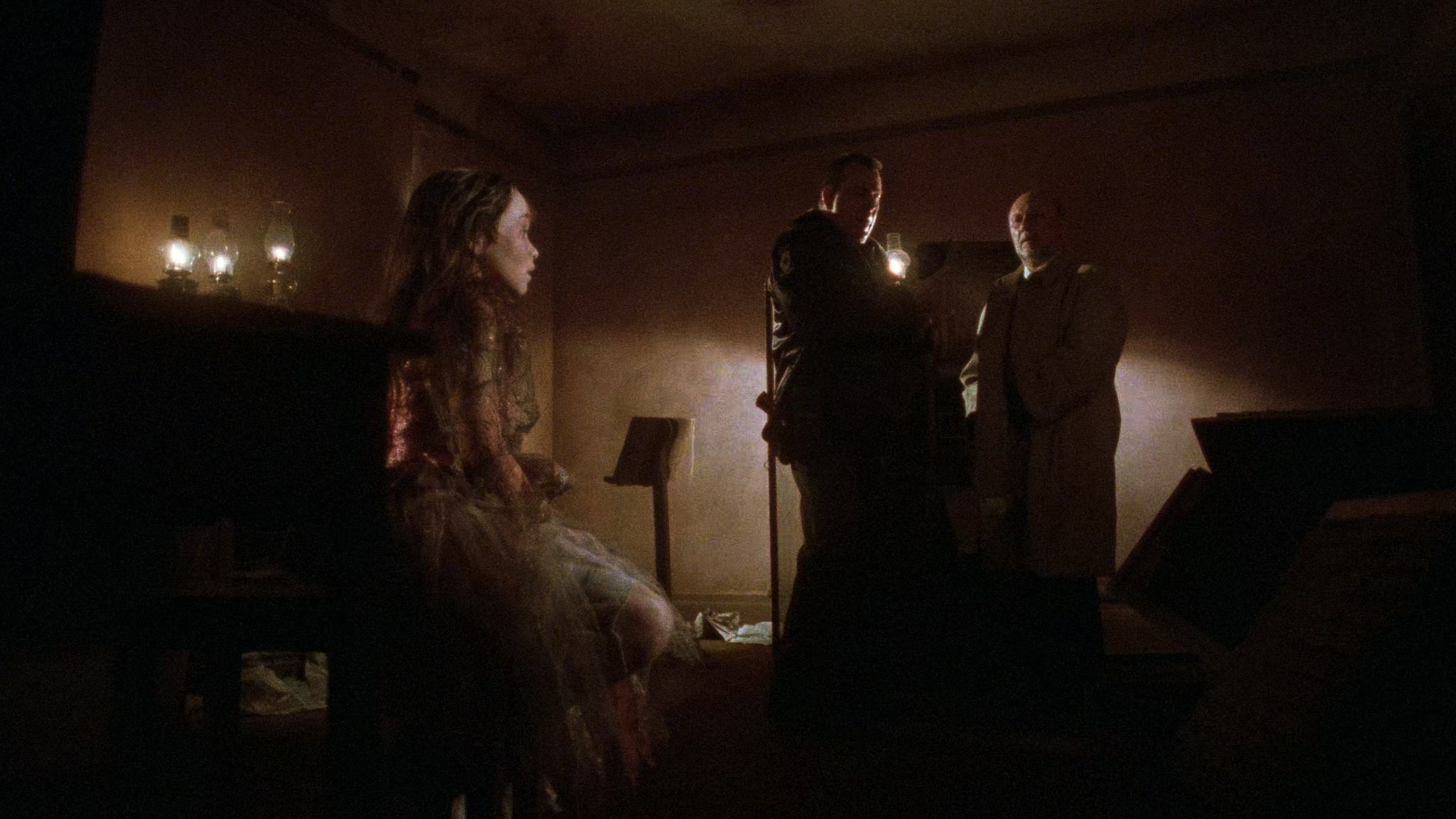
The transformed Myers home has often been criticized for resembling a mansion rather than the modest house associated with the 1978 film. The director explained the alteration as a staging decision: he needed long corridors, rooms with windows, a curved staircase, a cellar and a laundry chute to sustain an extended pursuit. These spaces generate a sequence of changing sightlines and temporary hiding places for Jamie. The chute in particular turns a possible escape route into a constricted trap, while the attic provides a setting for direct confrontation. The geography may disrupt visual continuity, but it supports a different form of horror, in which the building itself controls movement and exposes a child's physical disadvantage.
Michael Myers: Mask, Performance and Sound
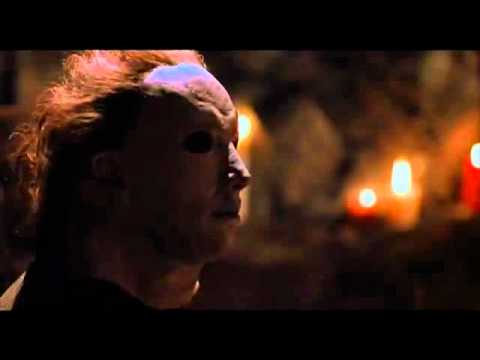
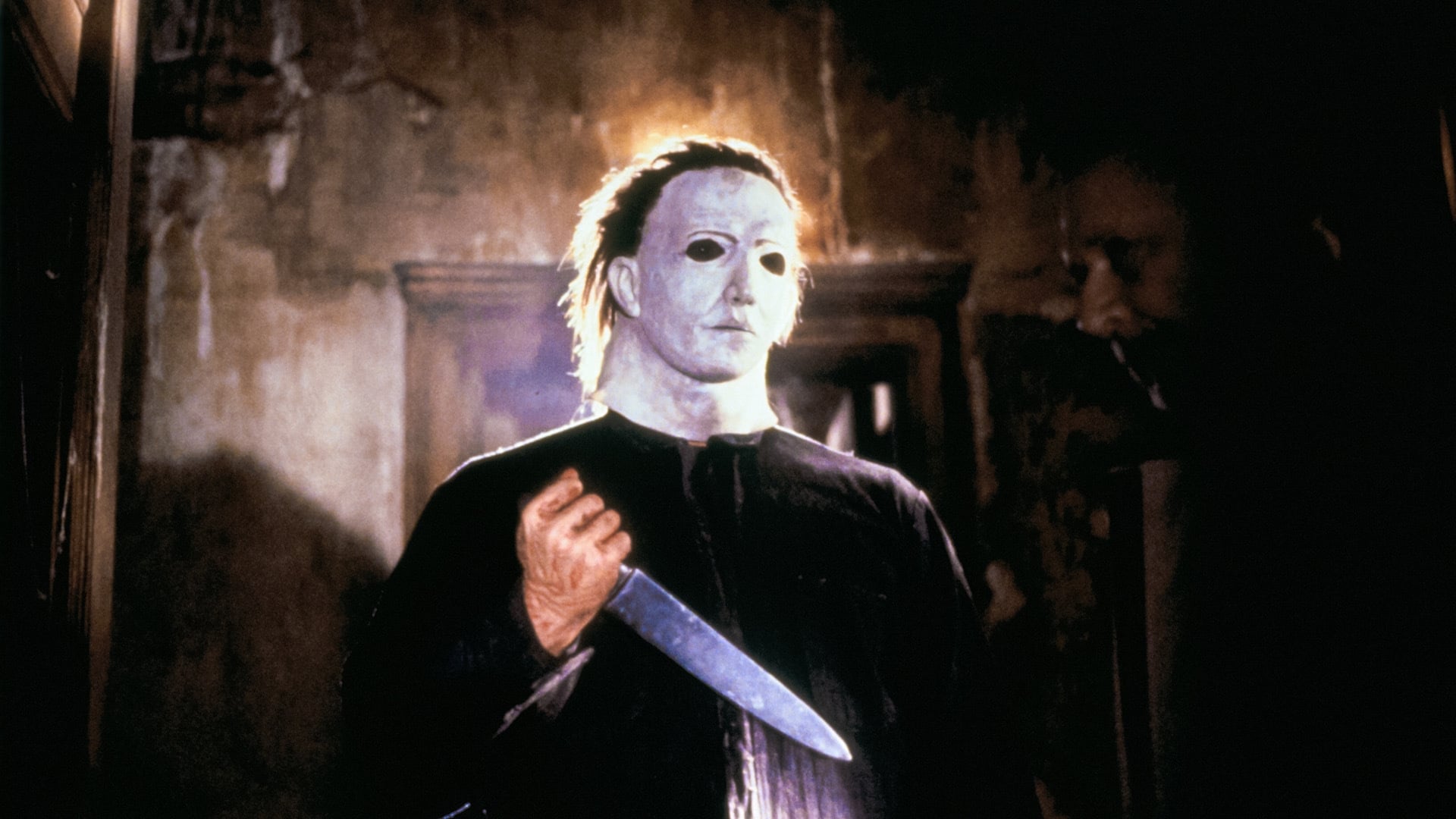
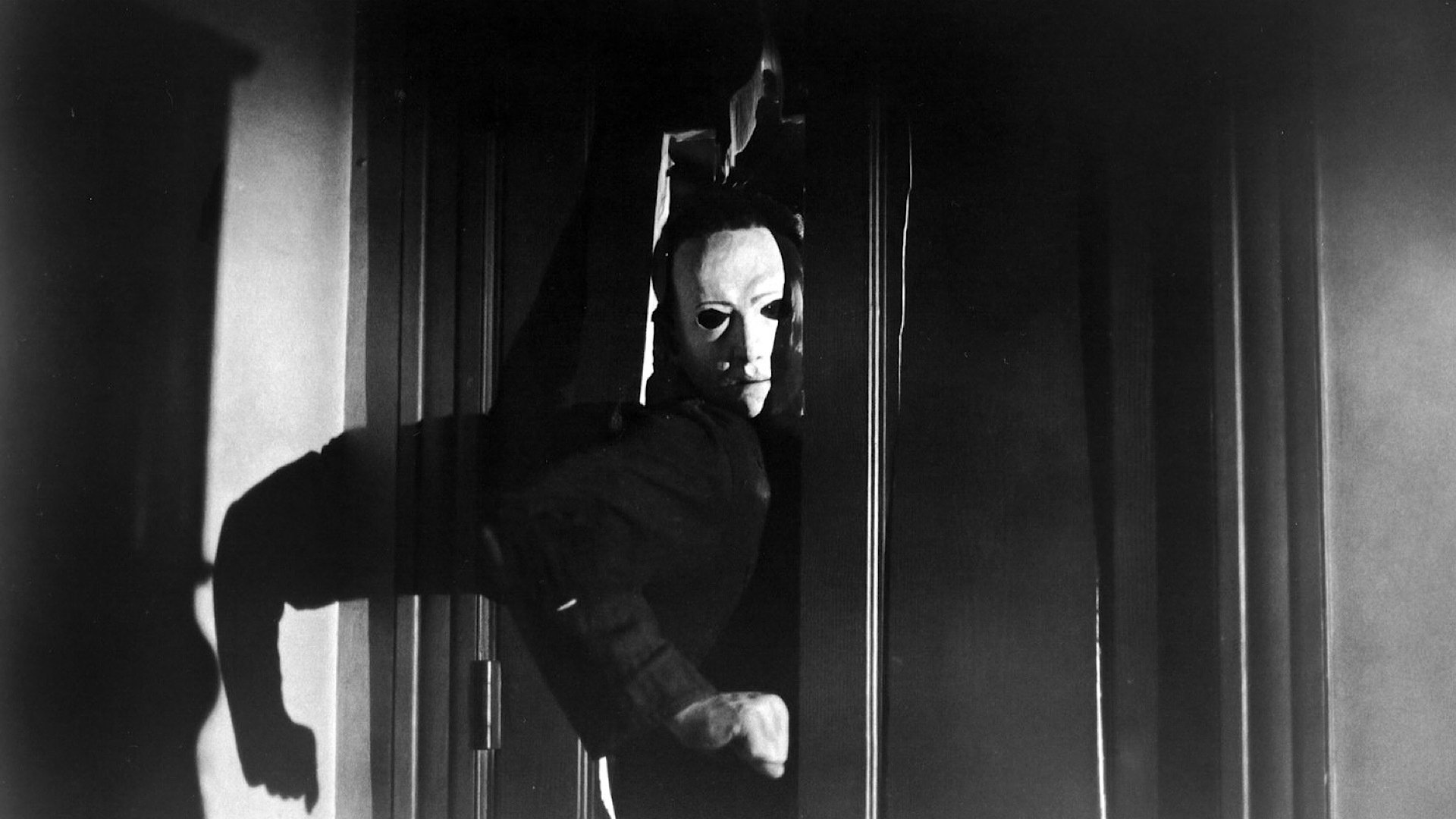
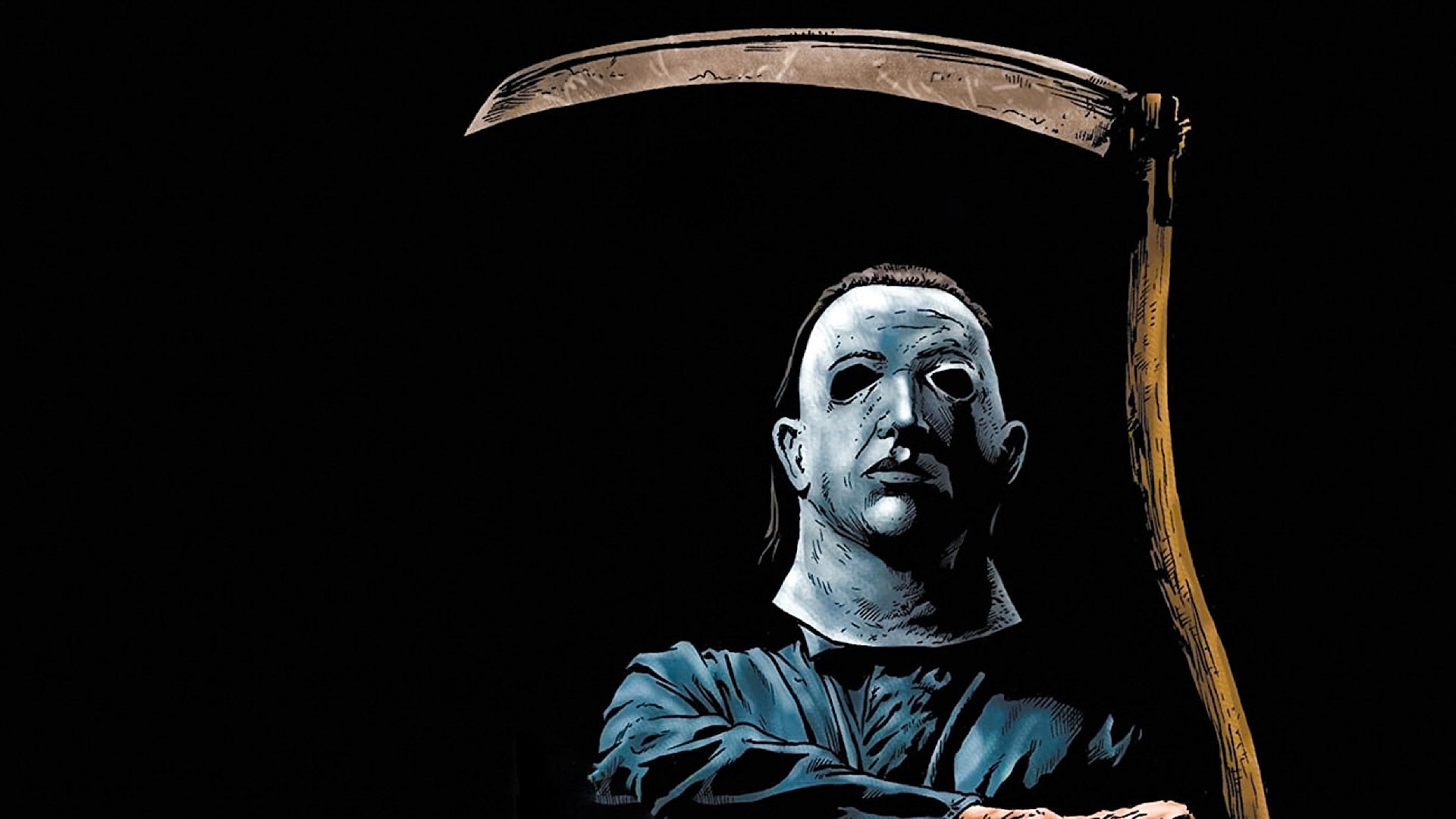
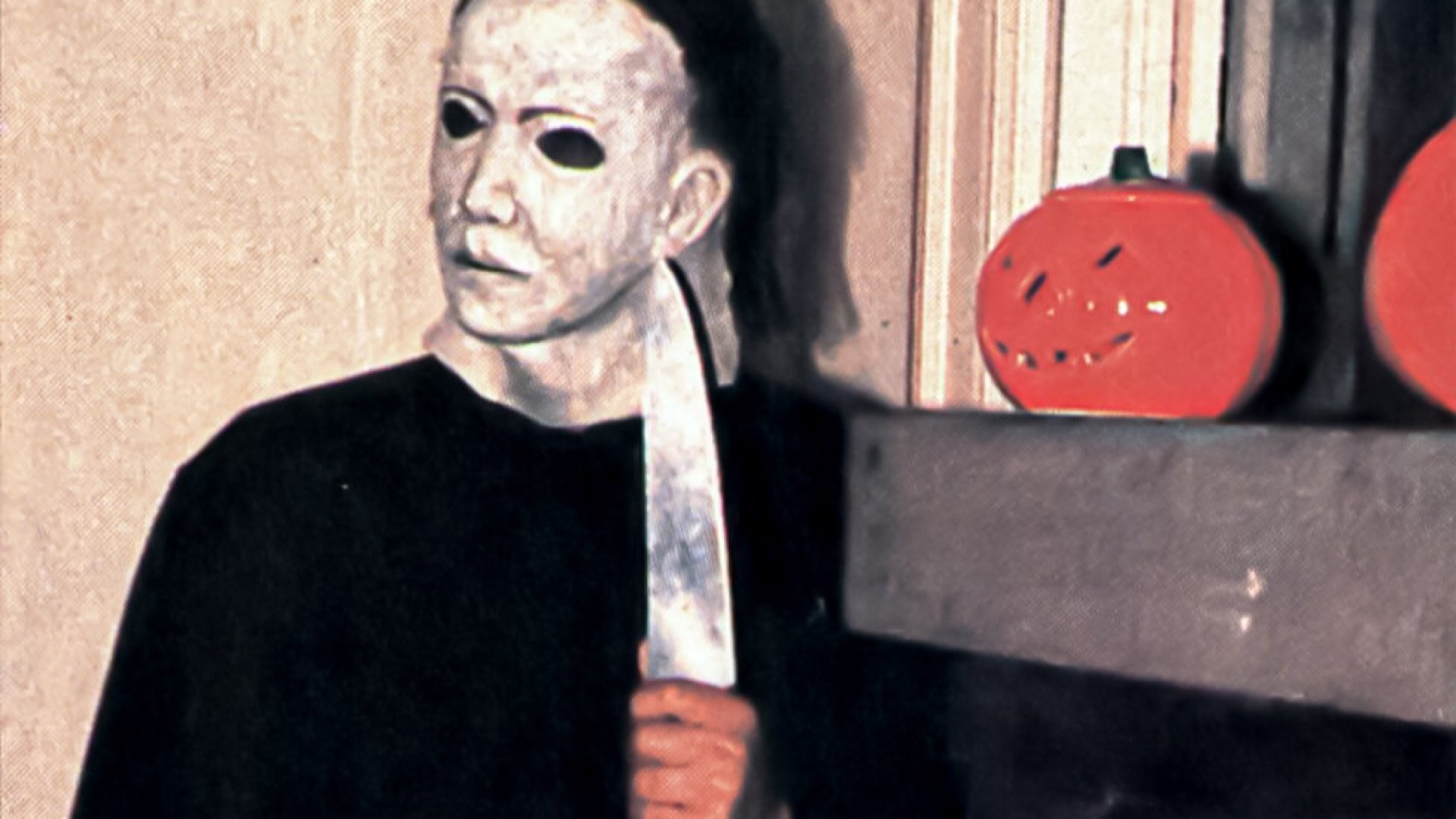
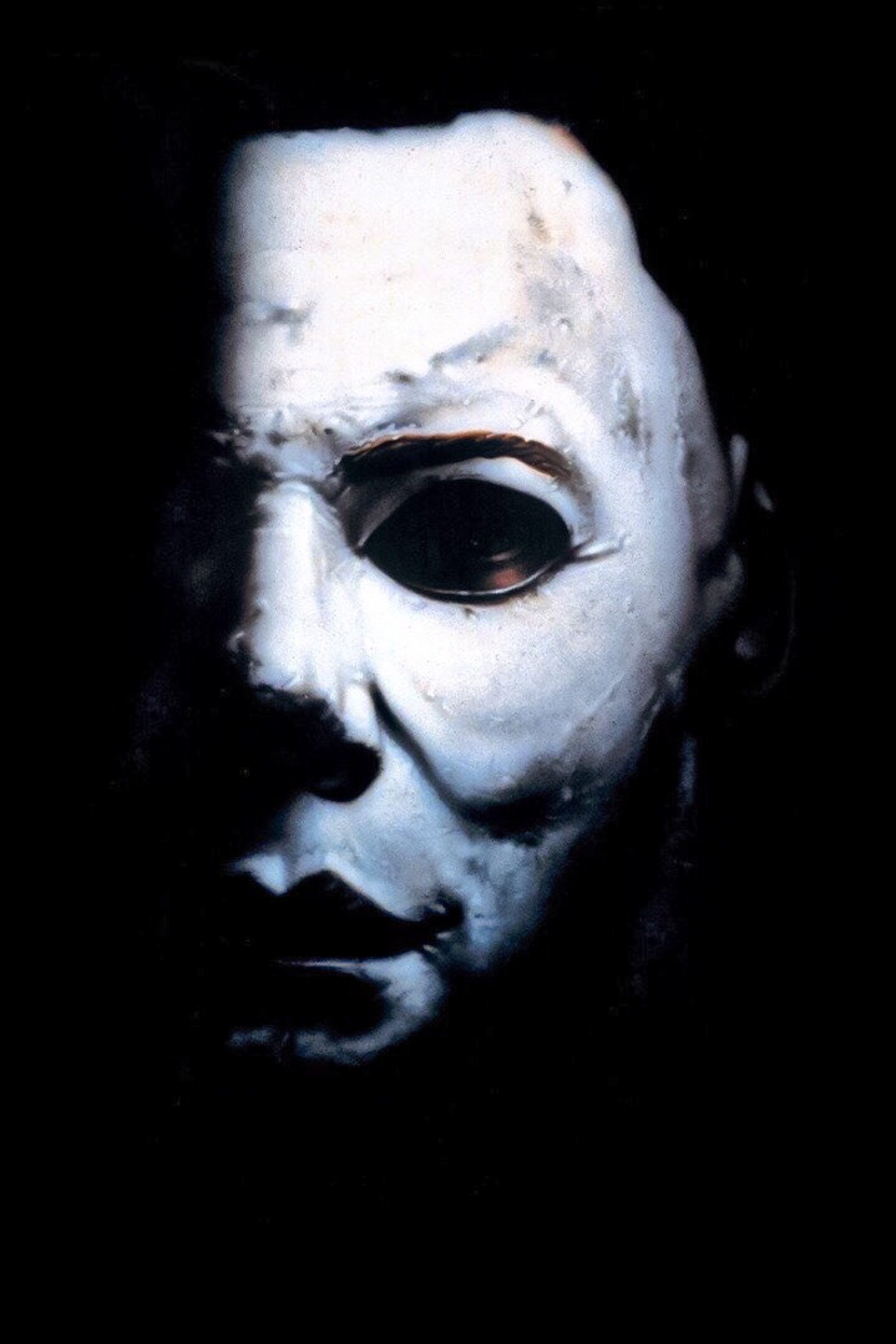
Don Shanks approached Michael as a physical role requiring a distinctive rhythm of movement. He recalled that Othenin-Girard asked him during his audition to demonstrate an unusual, resistant walk, an instruction that helped secure the part. The director was equally concerned with the mask. Working with the KNB effects team, he wanted a face that could suggest a human presence while remaining unreadable. He later recalled changing the nose because its initial shape looked insufficiently threatening in profile. Greg Nicotero separately described sculpting a new mask and adjusting facial features after arriving in Utah. The design's difference from earlier films was therefore an intentional process of redesign, not merely an accidental continuity problem.
The killings favor shocks created through concealment, abrupt violence and the precarious position of potential victims. Othenin-Girard has said that he wanted the audience to feel the injury of each attack without relying on sustained gore. The violent encounter in the laundry chute expresses that intention particularly clearly: limited space prevents Jamie from escaping while the blade approaches from outside her field of vision. Music contributes to the tonal instability. According to the director, composer Alan Howarth worked with themes associated with John Carpenter and adjusted both scoring and sound effects against the edited picture. The two comic policemen received deliberately playful musical treatment, a decision Othenin-Girard later regarded as excessive because it weakened the surrounding atmosphere.
The Man in Black and the Missing Opening
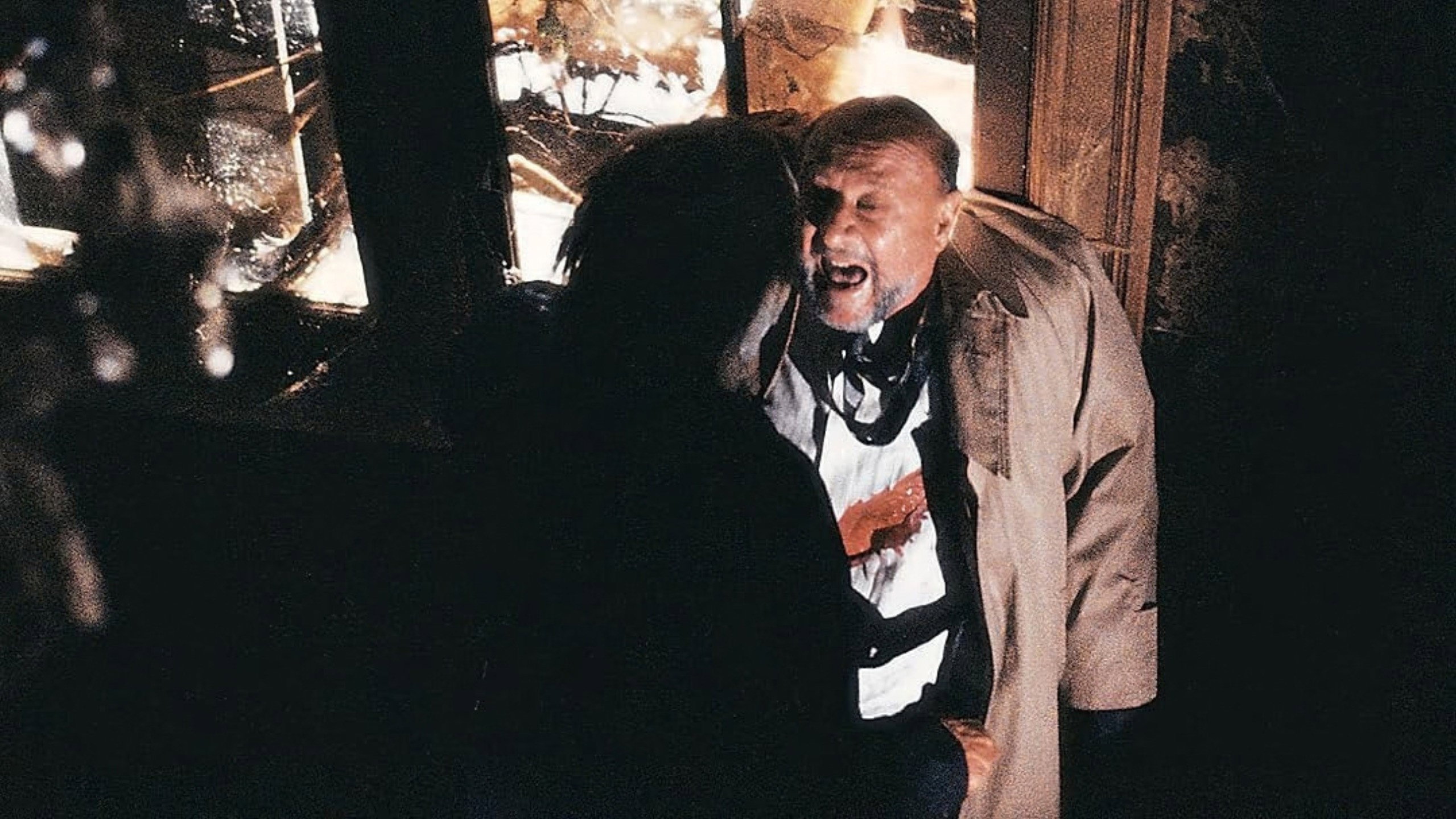
One of the sequel's most consequential additions is the black-clad stranger whose arrival and intervention are never explained within this film. Othenin-Girard said that Akkad asked for an additional hook for a future installment, prompting him to invent the figure during production. He had no fixed backstory for the character and intended to leave subsequent filmmakers room for interpretation. The director also described introducing a matching mark on Michael and the stranger. Although Halloween: The Curse of Michael Myers later developed these ideas into the mythology of Thorn, that explanation belongs to the sequel's later storytelling. Treating the cult as fully planned in 1989 would impose a retrospective coherence the director's own testimony does not support.
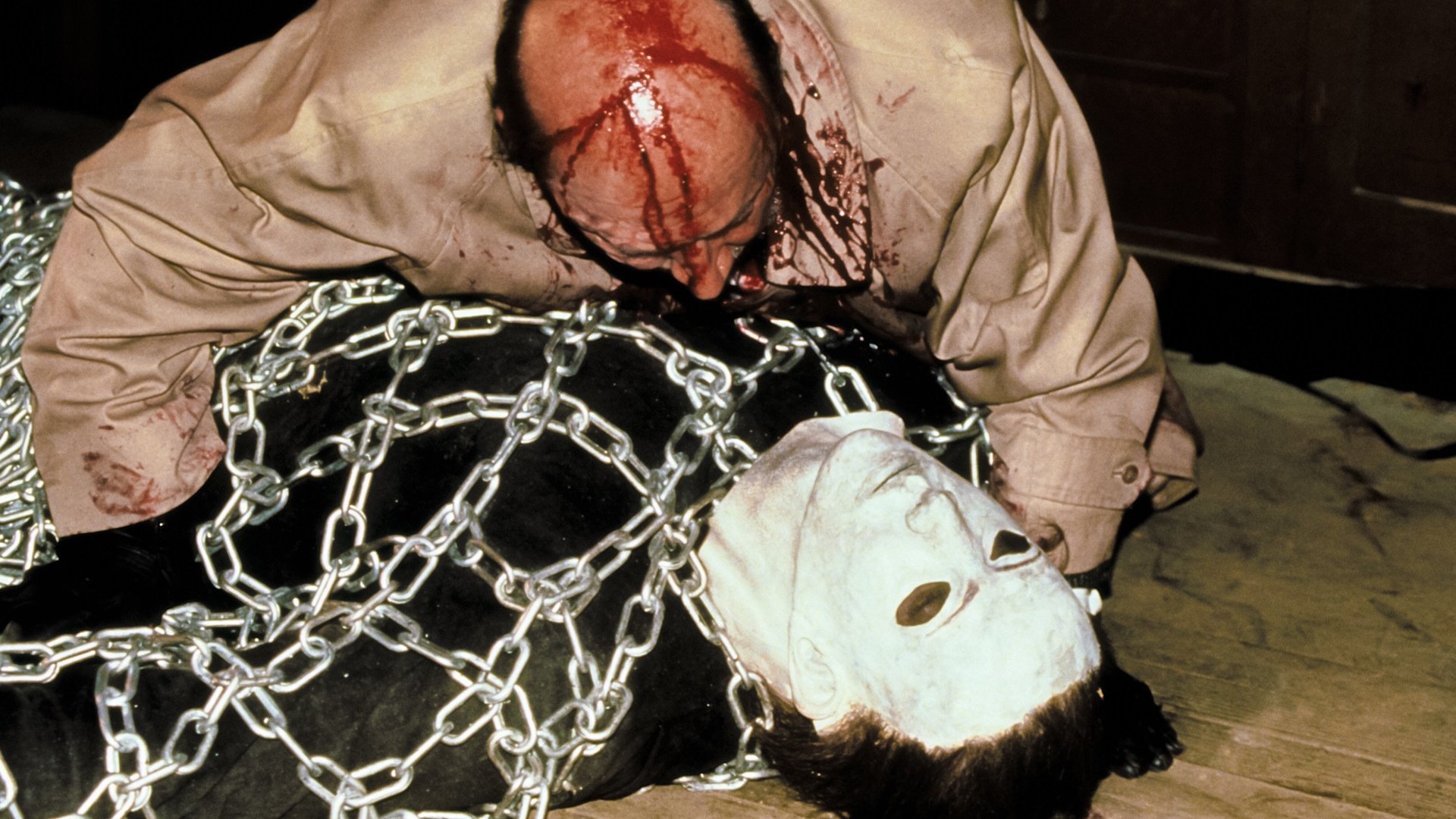
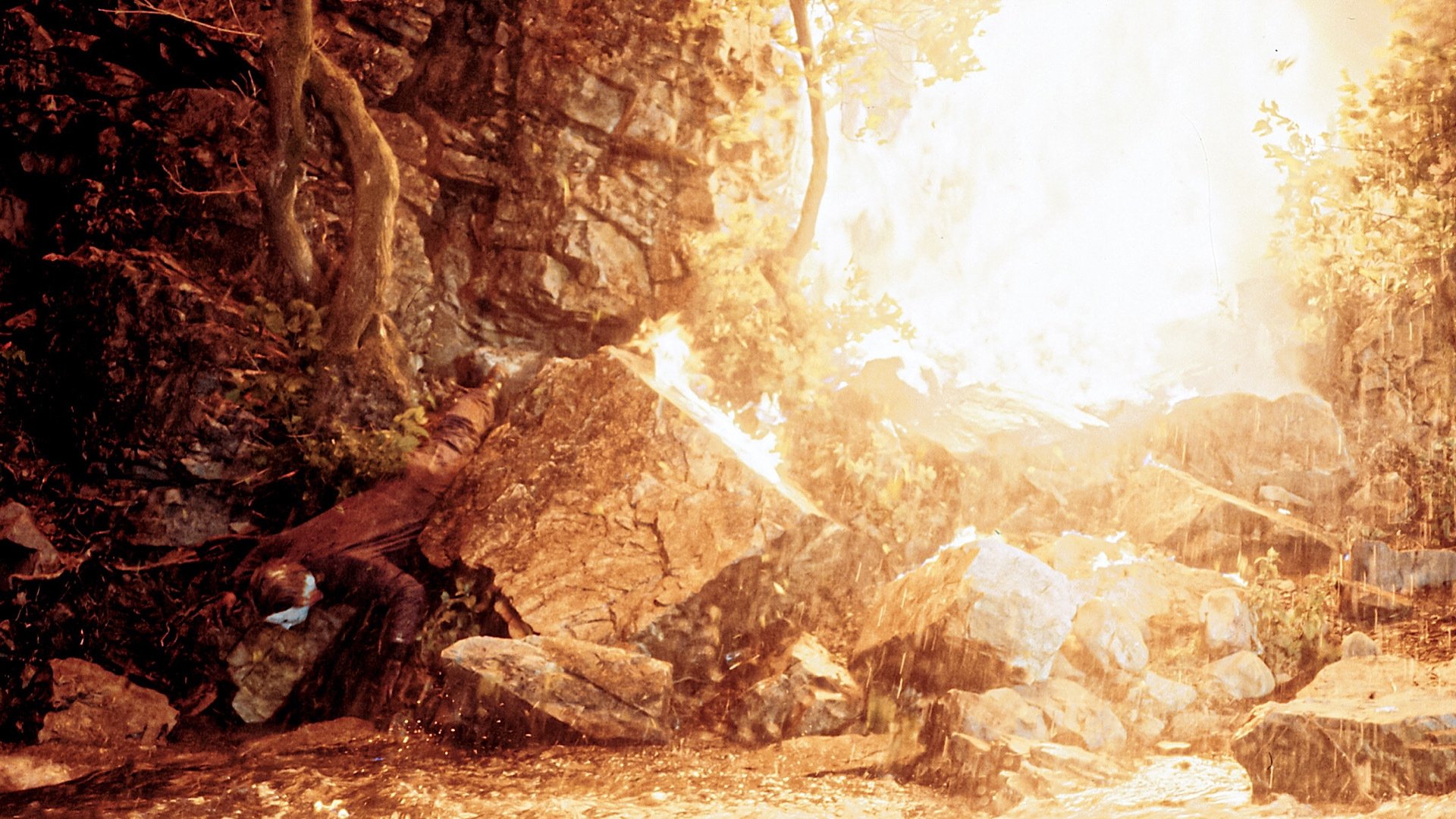
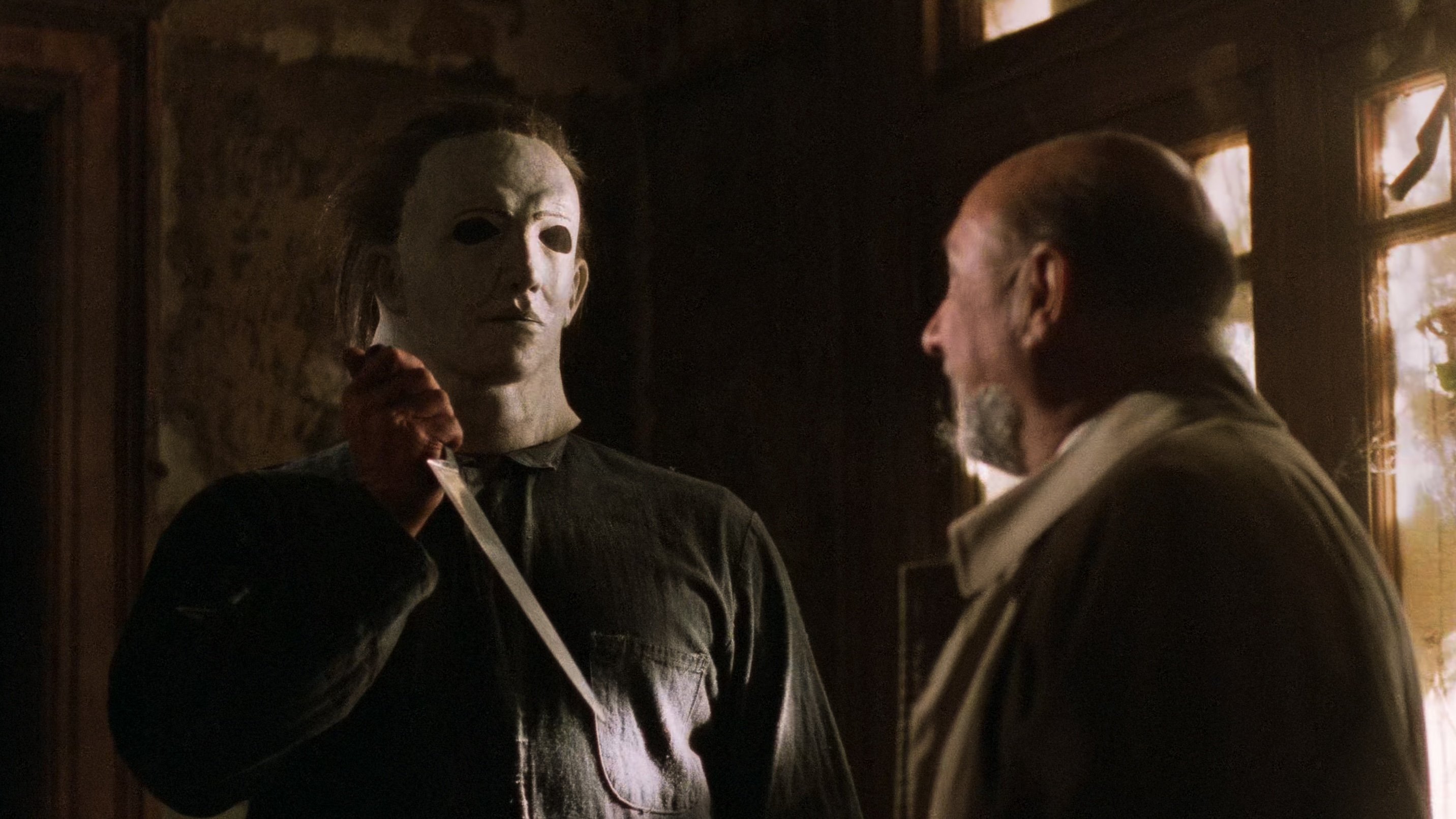
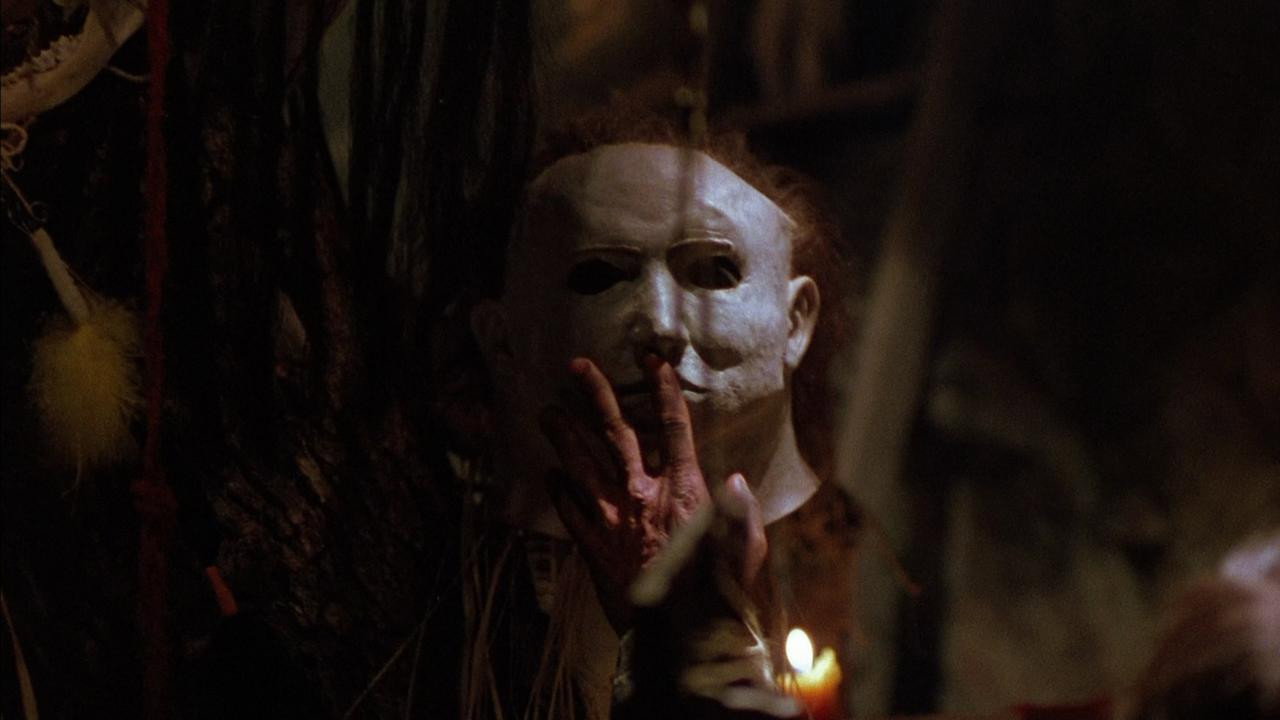
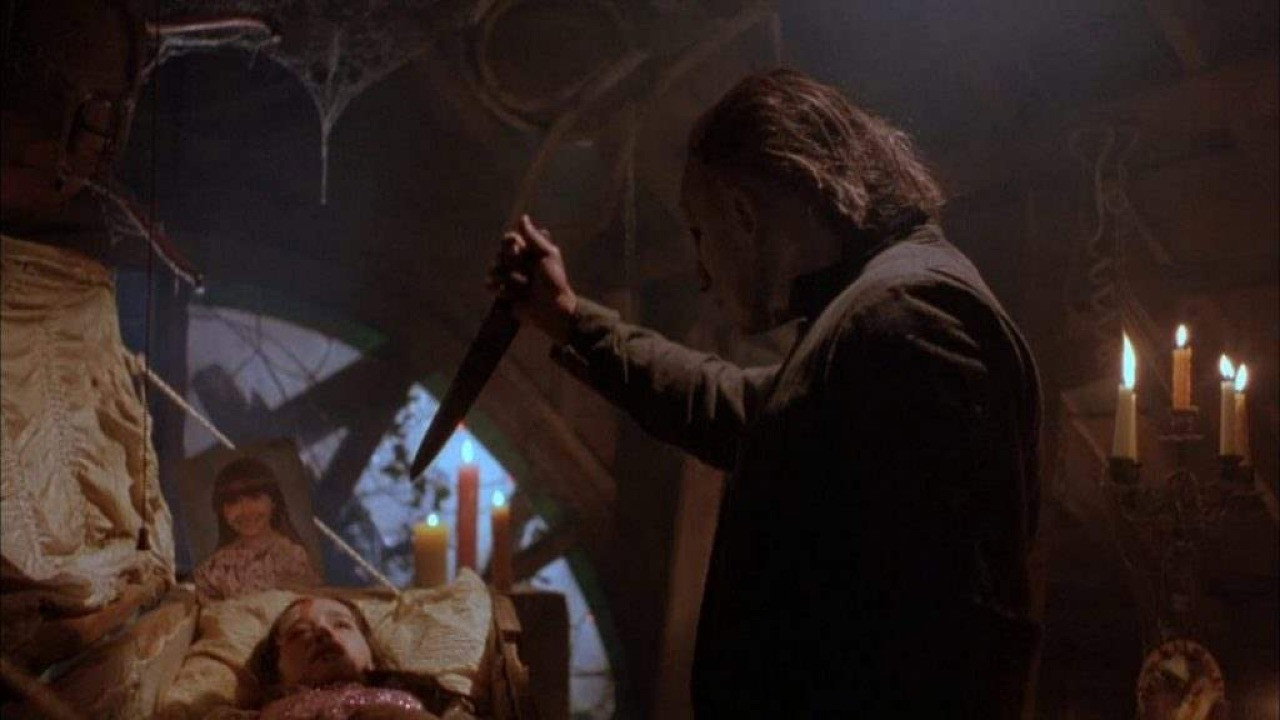
Another abandoned element concerned Michael's survival after the mine-shaft explosion. An opening filmed with performer Theron Read introduced the occultist Doctor Death, whose ritual restored Michael before the killer turned on him. The theatrical release instead uses an encounter with an isolated older man, reducing the explicit supernatural material in that sequence. Accounts from the director and Shanks describe the alteration from different production perspectives, but agree that the opening was reworked. The previously missing Doctor Death footage was located and restored for inclusion among supplementary materials on a 2021 home-video edition, alongside brief violent material removed from the release version. Those recovered scenes are evidence of abandoned footage; their appearance as extras does not establish an official replacement cut of the 1989 film.
Release, Reception and Franchise Direction
Halloween 5 opened in the United States on October 13, 1989, with an R classification and a running time of approximately 96 minutes. Accounts of the production budget differ, so a single figure cannot safely be treated as settled. Contemporary notices document a generally difficult critical reception, though they also register attention to the film's formal choices. In the Los Angeles Times, Michael Wilmington objected to the recycled pursuit structure and questioned the logic of the police response, while acknowledging Othenin-Girard's attempts to intensify the subjective camera style. Such criticism is more historically informative than reducing the film's reception to a present-day score from a review aggregator.
The picture nevertheless made decisions that shaped discussion of the franchise for years afterward. Jamie's visions shifted the explanation of Michael's menace toward inherited or psychic connection, while the stranger's intervention explicitly deferred part of the story to a future production. The elimination of Rachel and the emphasis on Tina altered the usual relationship between survivor and protector. Othenin-Girard's heightened visual approach, particularly inside the Myers house, also separates this installment from the more restrained suburban spaces of earlier entries. The recovered opening later revealed how much stronger the proposed occult material had once been. Halloween 5 is consequently useful for understanding a series caught between repeating an established slasher formula and expanding its mythology without yet possessing a fully determined direction.