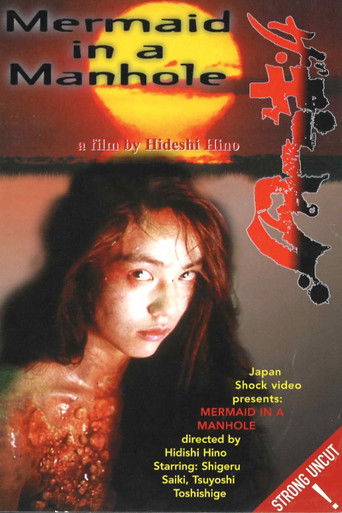
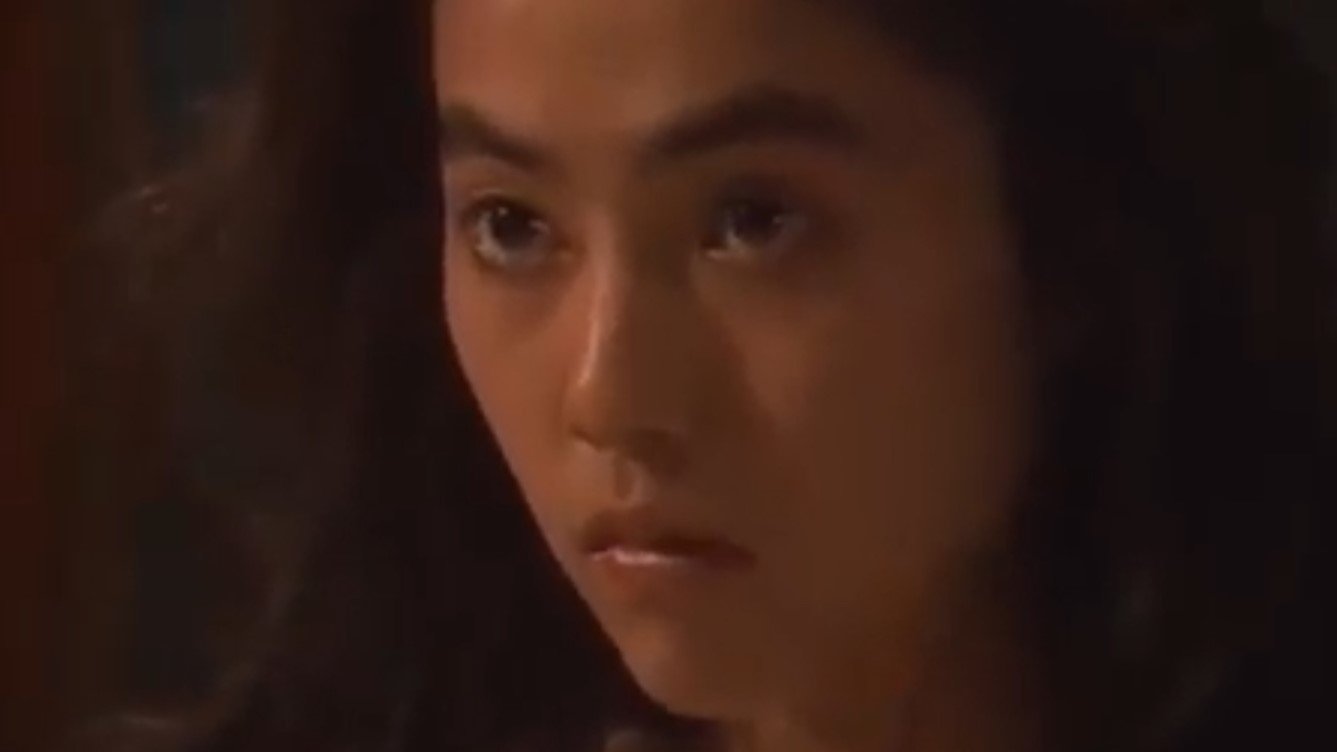
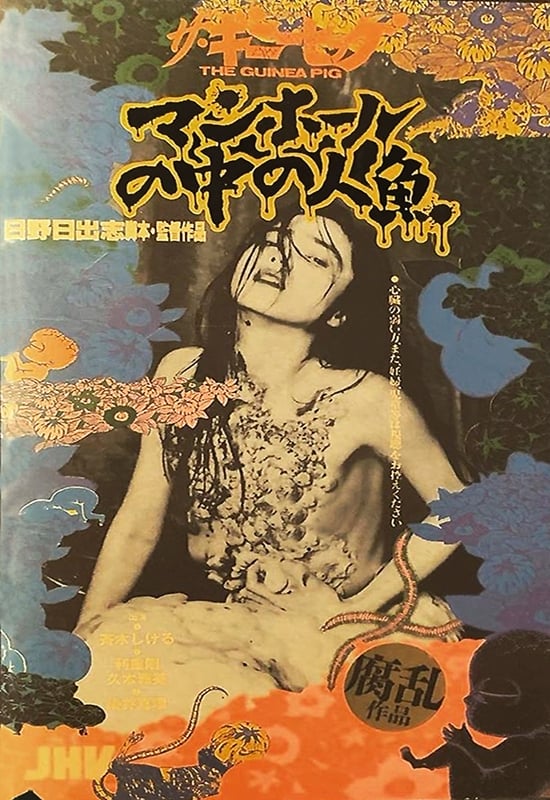
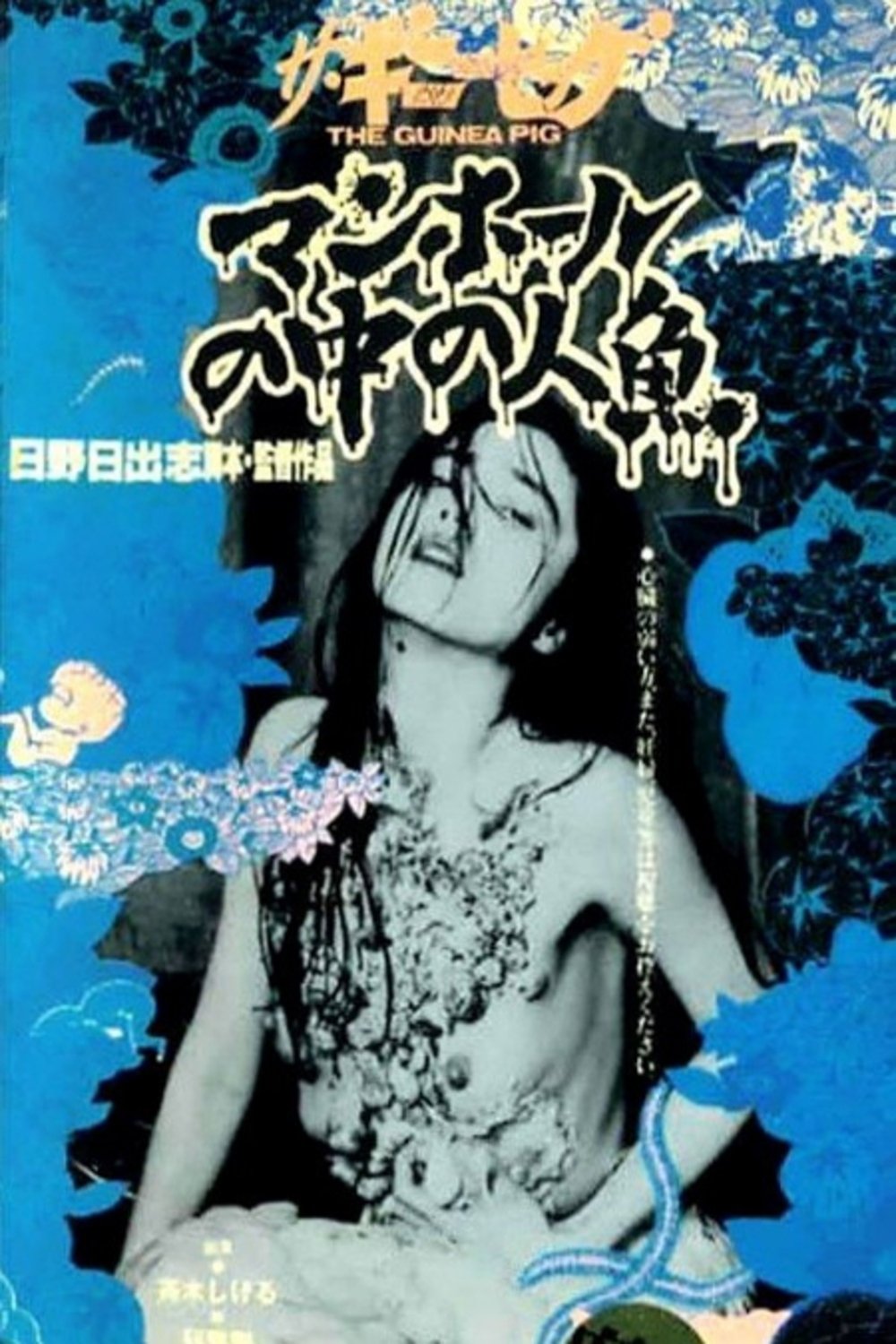
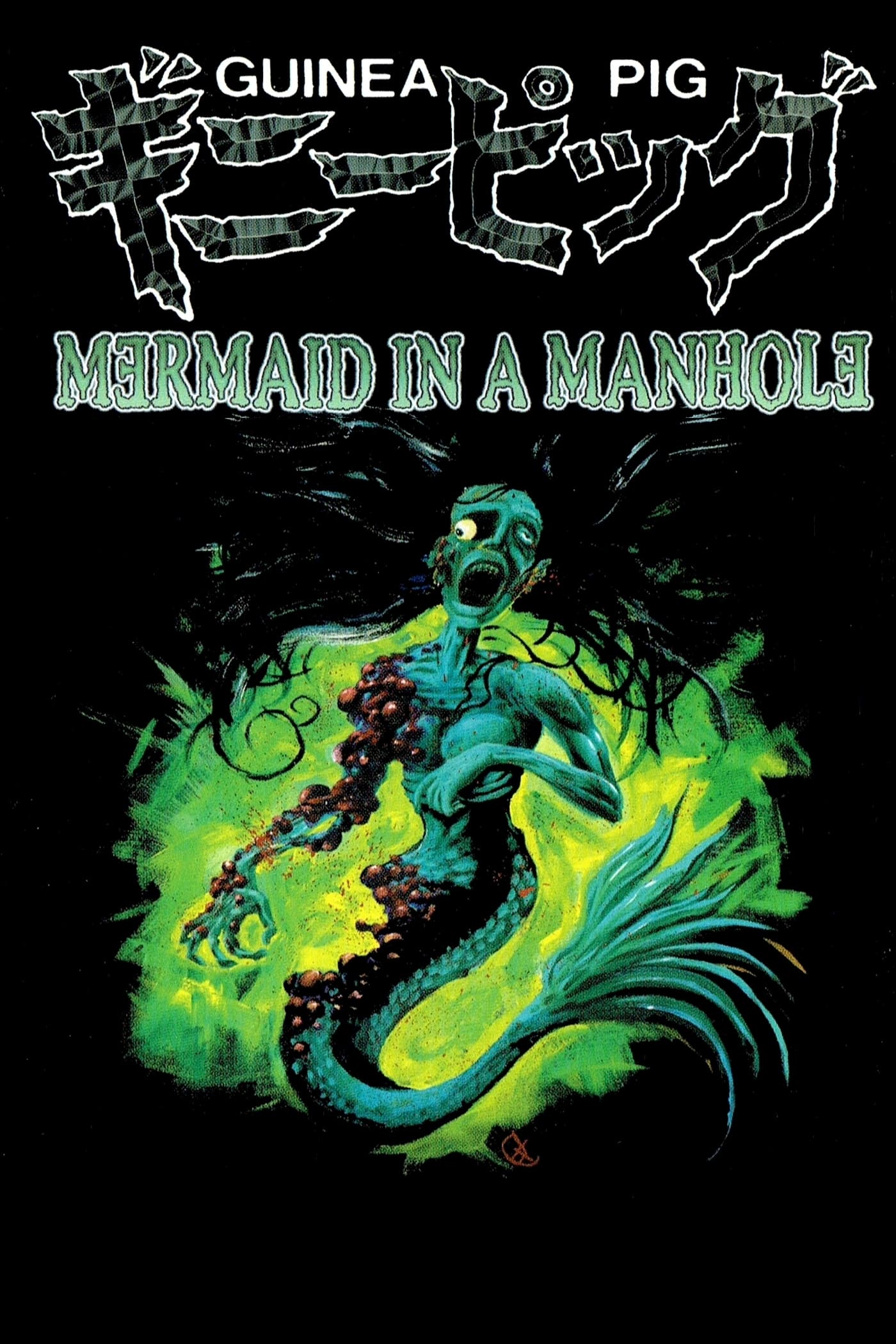
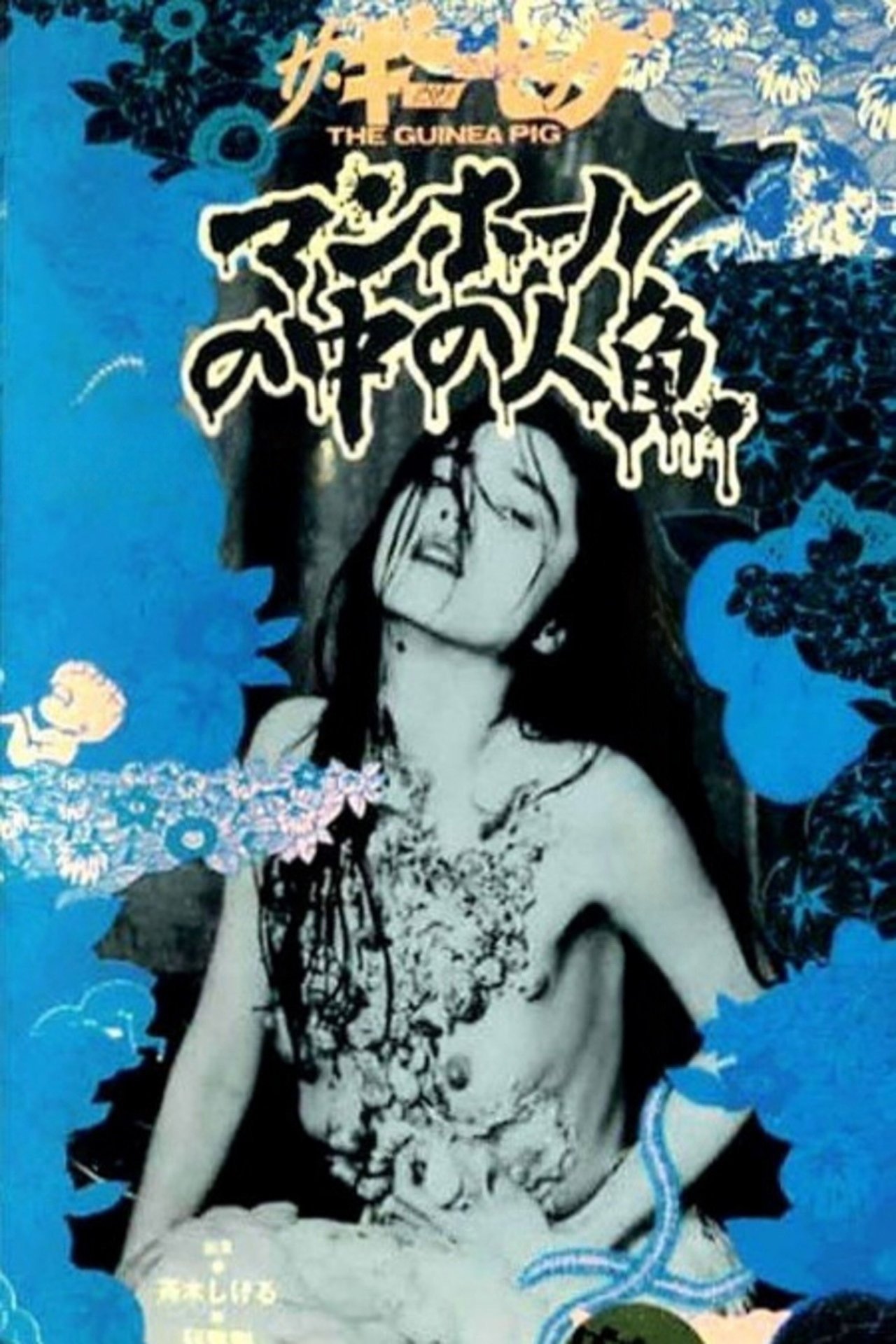
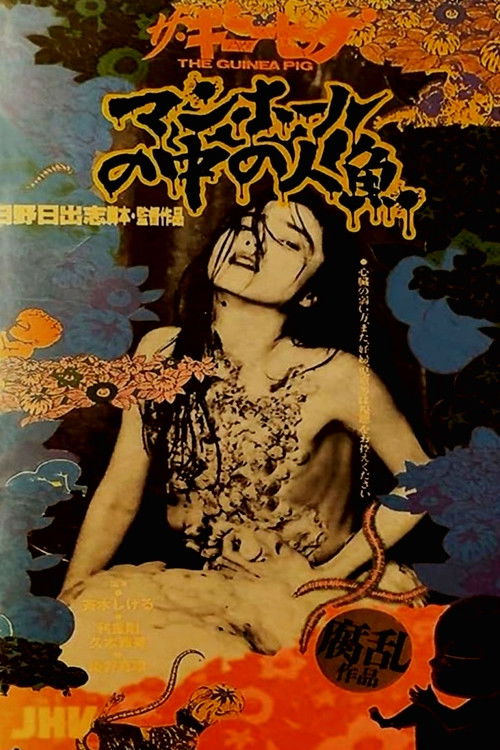
An isolated artist discovers a mermaid in a polluted waterway connected to a place from his childhood. He brings her home, where the effects of the contaminated environment worsen her condition. As her body deteriorates, she asks him to portray the changes in a painting, binding his creative work to her decline. The relationship grows increasingly obsessive as illness and fantasy become difficult to separate. Directed by Hideshi Hino, the film brings a mournful, dreamlike quality to the Guinea Pig series, using elaborate physical effects within a story about memory, artistic devotion and bodily decay.
Alternative Titles
豚鼠5:下水道的美人鱼 (China) — ChineseGuinea Pig: Mermaid in the Manhole (Czechia) — CzechGuinea Pig 5: Mermaid in the Manhole (Spain) — SpanishGuinea Pig 6: Mermaid in a Manhole (France) — French地下道的美人魚 (Hong Kong SAR China) — ChineseMermaid in a Manhole (Italy) — ItalianGinî piggu 5 (Japan) Guinea Pig 5 (Japan) Show all 15 alternative titlesZa ginî piggu: Manhôru no naka no ningyo (Japan) — romanization기니어피그 EP6 : 맨홀 속의 인어 (South Korea) — KoreanGuinea Pig 4 Mermaid in a Manhole (Mexico) — SpanishKrólik doświadczalny 4: Syrena w kanale (Poland) — Polish下水道的美人魚 (Taiwan) — ChineseGuinea Pig: Mermaid in the Manhole (United States) — EnglishMermaid in a Manhole (United States)
▤
Film Guide
Hideshi Hino revisits the Guinea Pig cycle with a diseased mermaid, an obsessive painter and intimate practical body horror.
Guinea Pig: Mermaid in the Manhole (1988), written and directed by horror manga artist Hideshi Hino, turns the Japanese Guinea Pig video cycle toward a diseased fairy tale. Its central relationship joins a withdrawn painter to a mermaid discovered in an underground channel where a river once flowed. Her worsening condition produces an extraordinary succession of simulated infections and bodily eruptions. The painter's attempt to preserve her appearance on canvas gradually implicates his artistic practice in the destruction of the body he studies. The result draws much of its unease from the interval between affectionate attention and the invasive acts required to complete the portrait.
The film also marks Hino's return to the series after Flower of Flesh and Blood, the notorious 1985 entry staged as a record of mutilation. Mermaid retains the emphasis on physical horror while allowing the characters' memories and changing perceptions to shape events. Its historical interest extends to the Japanese original-video market, the circulation of grotesque manga imagery across media, and an unrealized theatrical project later described by Hino himself. Those contexts help explain why a compact exploitation production has attracted discussion beyond its graphic effects.
Hino and the Original-Video Cycle
The Guinea Pig films emerged during the growth of Japanese horror productions made for direct viewing on video. Their early reputation rested on the credibility of staged violence, especially the simulated torture in Devil's Experiment and Hino's 1985 entry. Hino recalled in a 2009 interview that the producer of the original cycle had approached him because members of the team knew his manga. For that earlier picture, he was told to work within severe restrictions, including limited locations and extended takes. He responded by withholding much of the conventional story. Those restrictions pertained to his earlier work; the circumstances of Mermaid's shooting have a less substantial published record.
In Mermaid, Hino builds an extended dramatic situation around a painter whose work begins in the polluted environment beneath his neighborhood. The story introduces a recognizable protagonist, a supernatural visitor and the consequences of bringing that visitor indoors. These elements allow the film to develop through recurring encounters and changes in bodily condition. Its placement within the Guinea Pig catalogue is unusually difficult to express with a single ordinal: English-language editions and retrospective accounts use different numbering systems, and Tom Mes described it as the fourth entry in an earlier release sequence. The designation 'Guinea Pig 6' identifies the title on this database, but should not obscure those differences in historical circulation.
Manga Imagery and the Dark Fairy Tale
Hino's background as a manga creator is evident in the picture's grotesque transformations and its fascination with people isolated from ordinary social life. The mermaid belongs to the fantasy tradition of an elusive aquatic being, yet the discovery takes place among waste and stagnant water. The painter remembers a childhood river that has disappeared beneath the city. His meeting with her consequently links a half-remembered landscape to an underground space of physical contamination. Academic work on Japanese ningyo imagery, including Philip Hayward's study of the changing mermaid figure, offers a useful broader context for the film's mixture of familiar fantasy anatomy and bodily instability. The film's emphasis on vulnerable flesh gives that composite creature a particularly bleak incarnation.
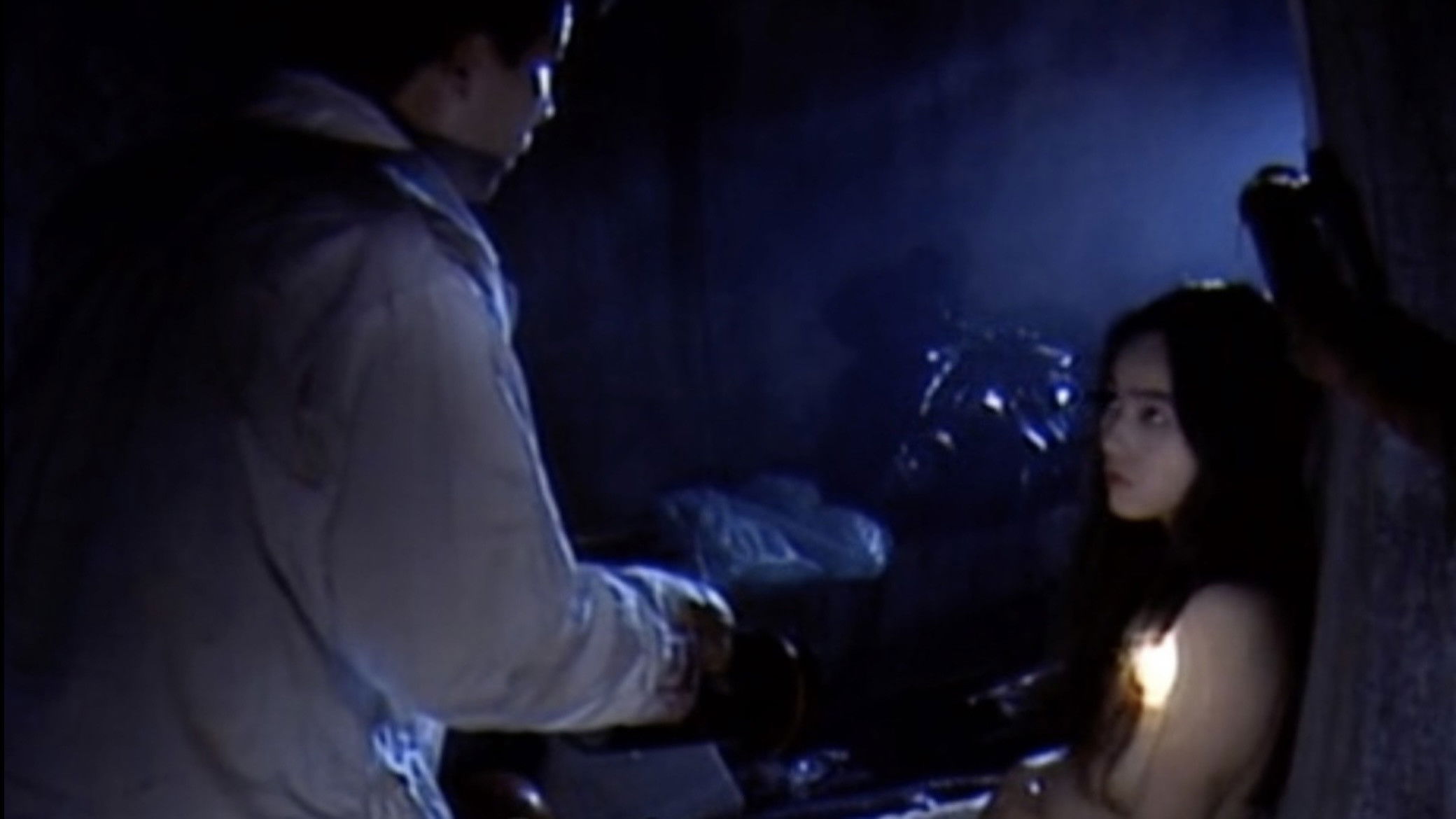
The narrative turns on the decision to move the creature into a domestic bathroom. A place normally associated with washing and recovery becomes a chamber of deterioration, while the mermaid asks the painter to document each visible change. The film's melancholy arises from the persistence of that request as the possibility of healing diminishes. It leaves room to question how much of the encounter belongs to the painter's memory and how much can be trusted as an objective event. The later narrative revelations make this uncertainty central to a story that initially appears to follow the conventions of tragic supernatural romance.
Prosthetics, Decay and Camera Distance
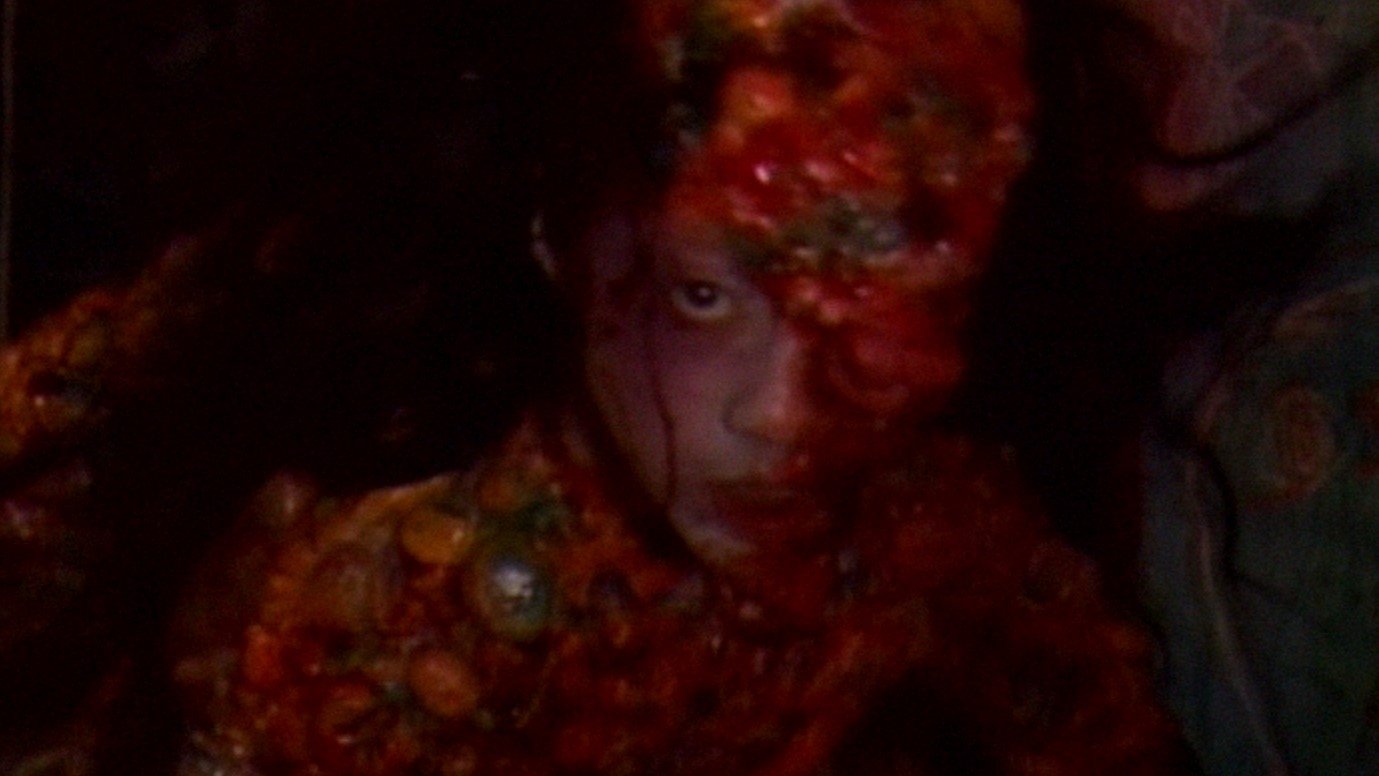
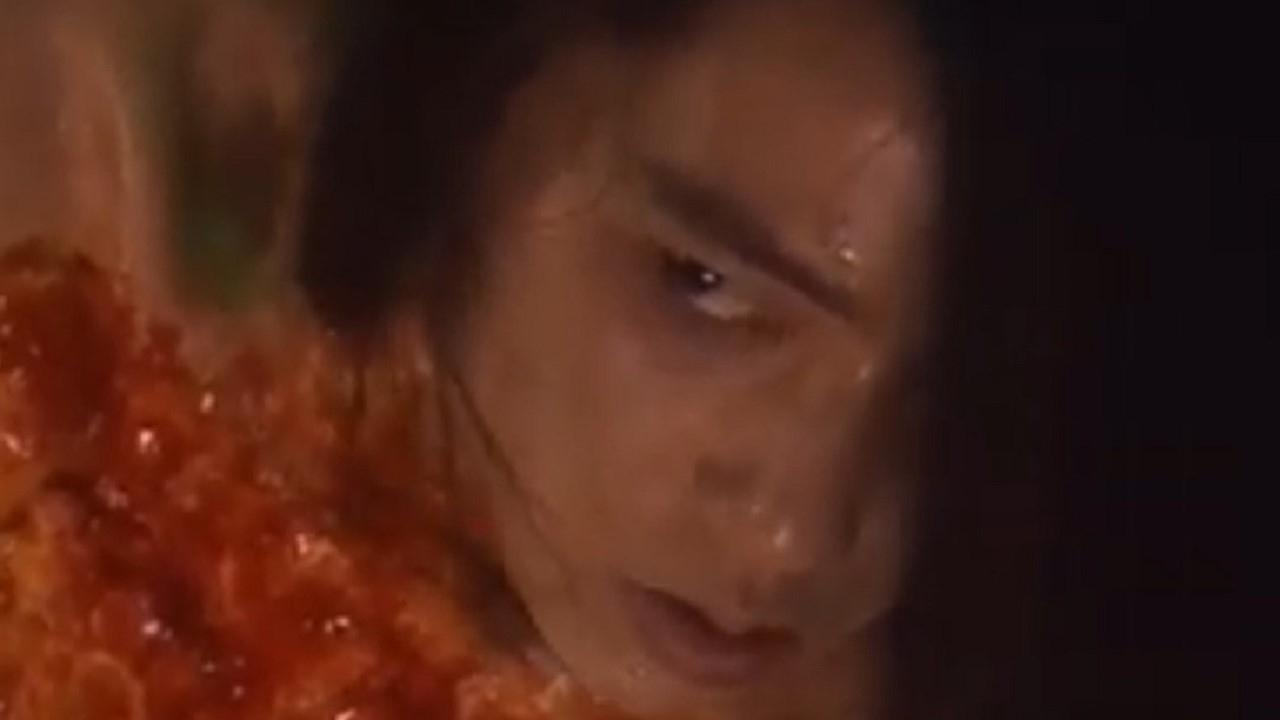
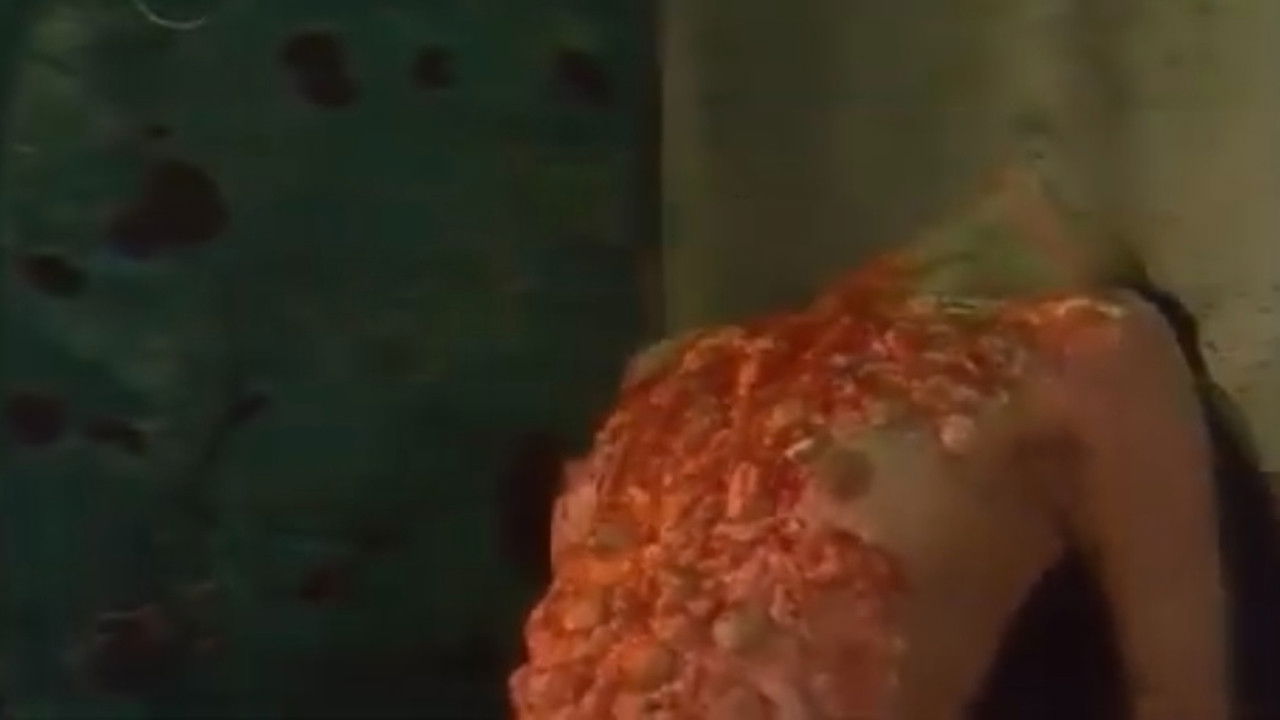
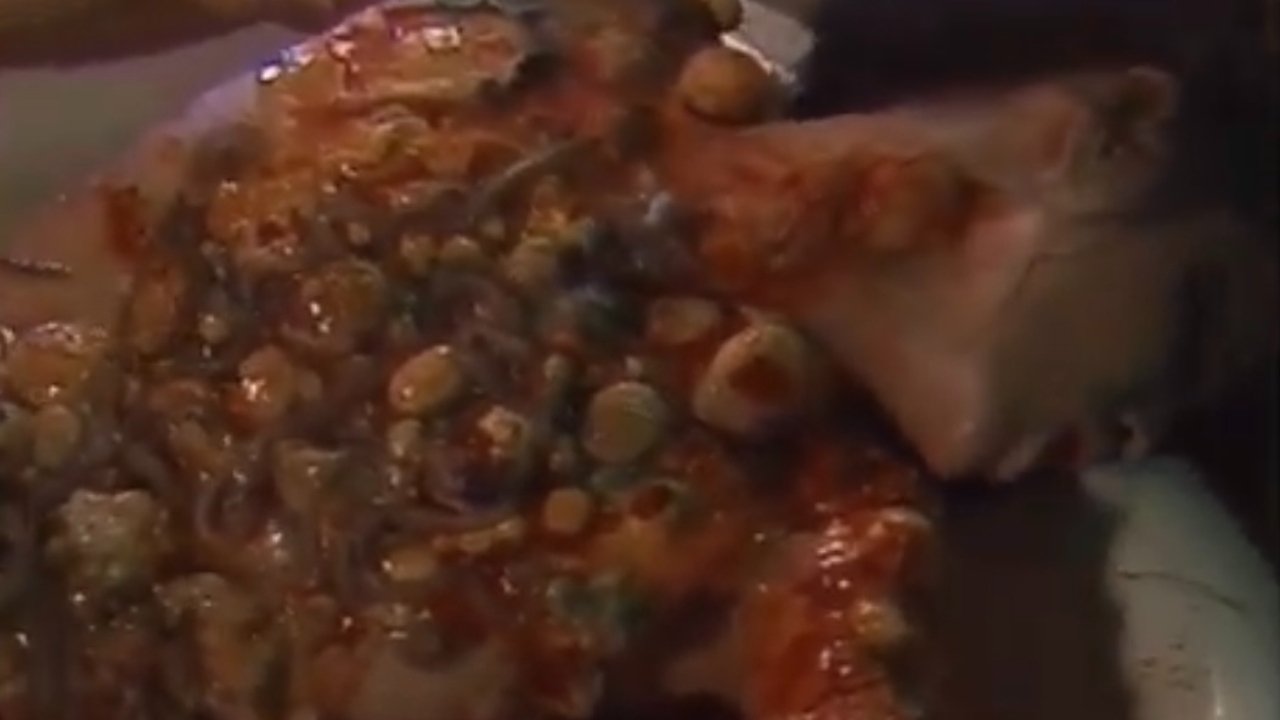
The practical horror concentrates on the progression of the mermaid's illness. Small lesions give way to swelling, open sores and masses of synthetic fluid, with insects and worm-like movement contributing to the impression of an organism breaking down. The effects gain their force from accumulation. Each return to her body exposes additional damage, and the duration of the close views permits the spectator to examine surfaces that would pass quickly in a more action-oriented film. The mixture of flesh tones with unusually vivid discoloration makes the lesions part of the picture's color design as well as its central spectacle.
Hino repeatedly brings the viewer into the restricted bathroom, where the bath and the painter's working area establish a relationship between bodily matter and representation. As the painter runs out of conventional colors, the substance produced by the mermaid's wounds becomes his pigment. That conceit makes the effects serve an unusually specific dramatic purpose: a painter records physical collapse with material taken from the collapsing body. The picture's camera placement emphasizes faces, skin and changing surfaces, a visual approach that carries recognizable affinities with Hino's drawn horror. The controlled domestic setting also heightens the contrast with the sewer: water that initially seems to promise relief becomes a means of exposing how far the illness has advanced.
The Painting, Pollution and Ambiguous Perception
The lost river provides a compact environmental history for the mermaid's suffering. Her confinement in an underground passage turns an image associated with open water into a portrait of damaged urban nature. The painter's visits to the channel also suggest a retreat from his current life into a place bound to childhood recollection. Because the film keeps returning to the same spaces, the deteriorating body and the painter's unfinished canvas begin to register the passing of time. The portrait changes as he becomes more absorbed in the mermaid, until preservation and destruction appear intimately connected within the act of making an image.
Tom Mes, writing for Midnight Eye in 2001, interpreted the film through obsession and devotion, finding its emotional concerns unusually developed for the series. That response offers one reading of the painter's behavior. Other interpretations can emphasize possession, artistic exploitation or his increasingly unreliable understanding of events. None requires presenting the mermaid as a literal symbol with a single fixed meaning. The final disclosures reorganize earlier images and make the relation between lived experience and the painting especially troubling. The close connection between supernatural fantasy and mental disturbance gives the violence a function that reaches beyond the isolated shock sequences for which the Guinea Pig name had become known.
Video Release and the Unmade Theatrical Film
Mermaid circulated as a Japanese video production in 1988. Later sources list conflicting running times and place it at different points in the series, illustrating how the title was repackaged for audiences outside Japan. Midnight Eye, for example, printed a 1991 year and a 57-minute duration in its film header, while other cataloguing uses 1988 and a longer running time. Without copies of the relevant masters or dependable distributor documentation, the discrepancy does not establish the existence of a censored cut. The film belongs historically to a video cycle, and the original appearance should not be relabeled as a theatrical opening solely because a database contains a dated release record.
Hino described a separate plan in his 2009 Vice interview. After completing the story-driven Mermaid video, he said a theatrical feature version entered early preparation. According to his recollection, the controversy surrounding the arrest of serial killer Tsutomu Miyazaki in 1989 brought intense media attention to the Guinea Pig series and made further production impossible. Hino specifically distinguished the video he had already completed from the proposed cinema project. His testimony explains an abandoned development effort; it is not evidence that the original video received a theatrical remake. The account also illustrates how the broader public reaction to the series could affect work only indirectly connected with the earlier simulated-snuff publicity.
Critical Circulation and Place in Horror
International consideration of Mermaid has largely taken the form of retrospective criticism. Writing more than a decade after its initial video circulation, Mes contrasted its emotional narrative with the better-known cruelty of the earlier Guinea Pig productions. His argument focused on the power of devotion to persist through sickness and physical destruction. Such a reading helps account for the film's distinction within extreme horror, where its effect depends on the audience spending time with the relationship before the most elaborate images of decay. It remains a critical interpretation, separate from any documented statement of intention by Hino.
The work also occupies a point of contact between manga horror and the effects-oriented video market before the better-known international expansion of Japanese genre cinema in the following decade. Its most distinctive device is the transformation of an artist's materials into evidence of bodily corruption. The painter's canvas, the polluted channel and the failing mermaid remain connected throughout the story, giving the practical effects a sustained narrative context. Later discussions of Japanese screen violence frequently place the Guinea Pig cycle within the prehistory of the 1990s video-horror boom. Mermaid warrants attention within that history for the persistence of its fantasy imagery and the unusually intimate scale of its body horror, without requiring unsubstantiated claims of direct influence on later filmmakers.
References
Vice — Tomo Kosuga, Flowers of Flesh and Blood: Interview with Hideshi Hino (2009)
First-person account of the Guinea Pig production context, the completed Mermaid video and the unrealized theatrical adaptation following the 1989 controversy.
Midnight Eye — Tom Mes, The Mermaid in the Manhole (2001)
Substantial independent film analysis of narrative structure, obsession, supernatural imagery and the series circulation; its dating and runtime are treated cautiously.
JSTOR / John Libbey Publishing — Philip Hayward, Japan: The Mermaidisation of the Ningyo and Related Folkloric Figures, in Scaled for Success (2018)
Academic chapter identified in the publisher-hosted table of contents, used for the historical context of mermaid and ningyo representations, not unverified production claims.