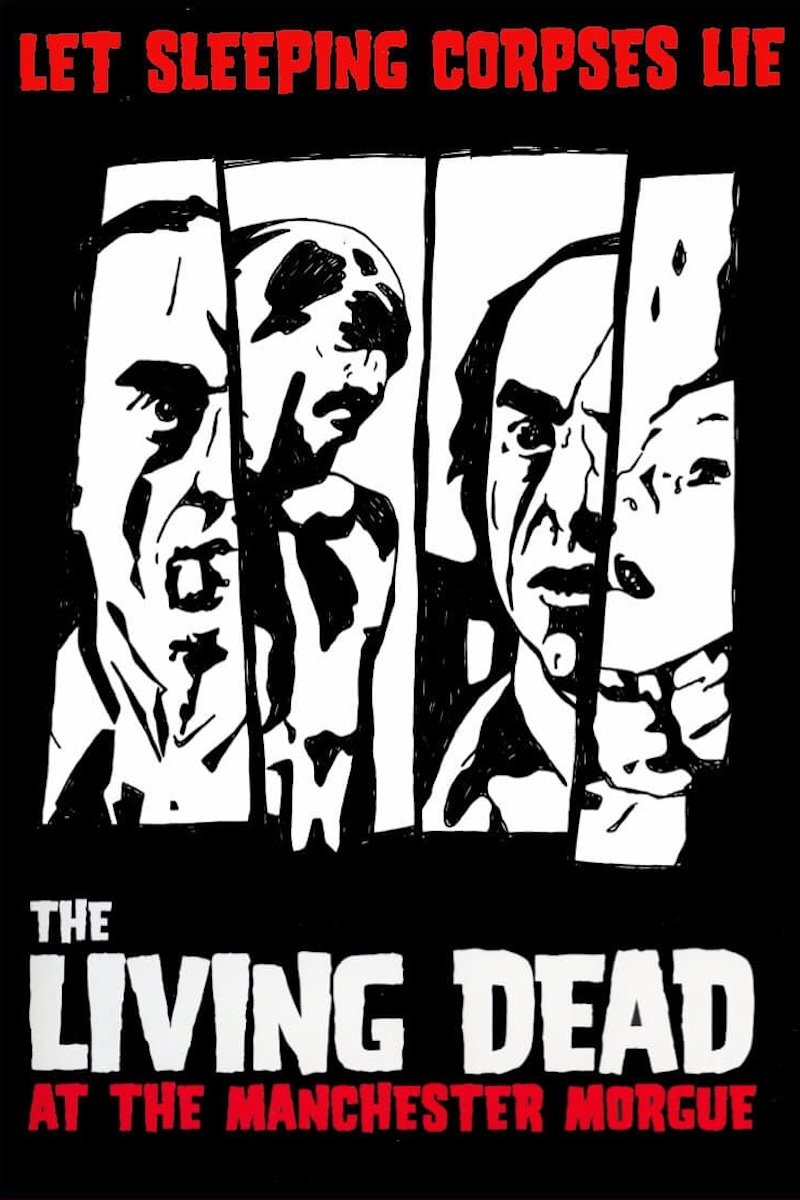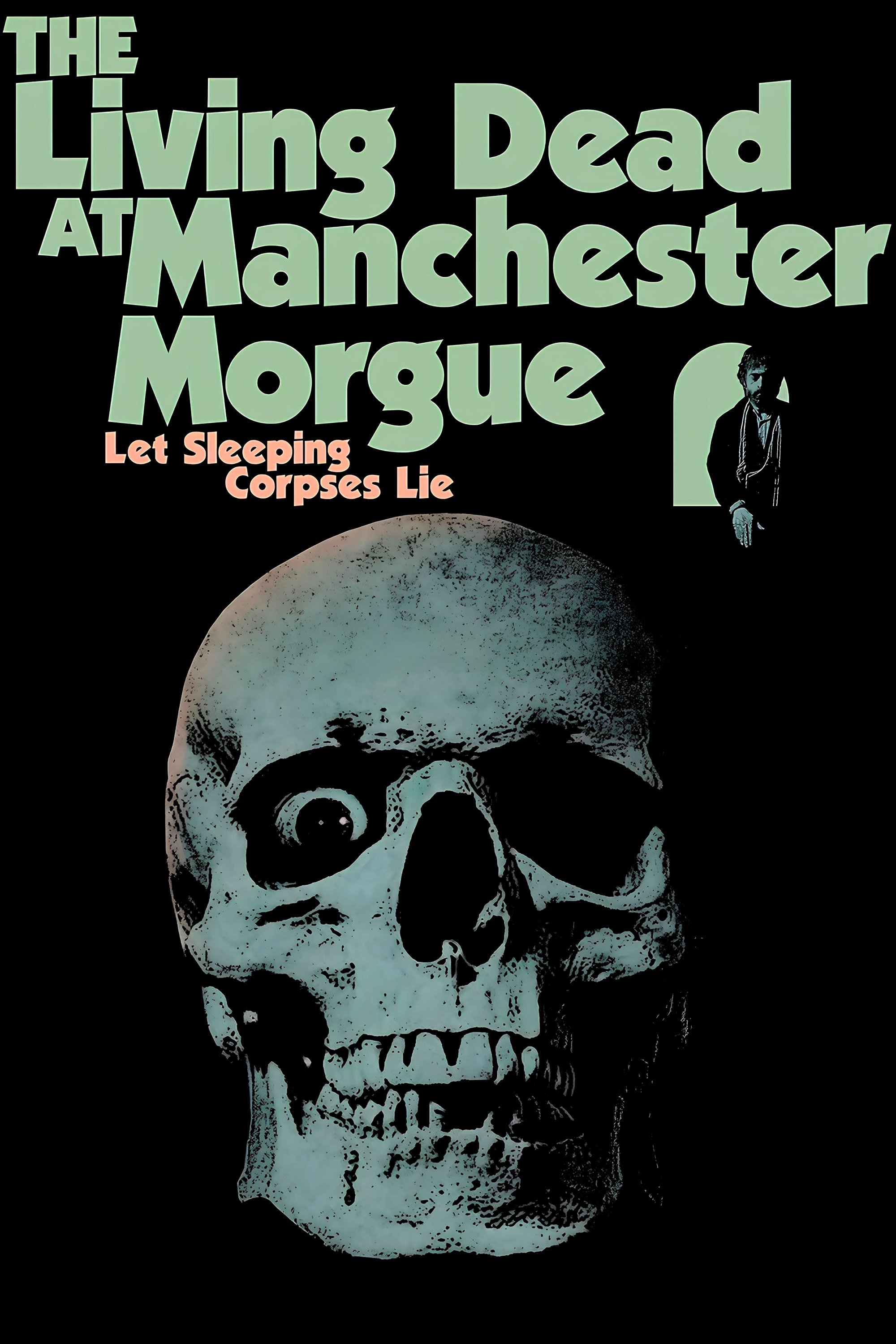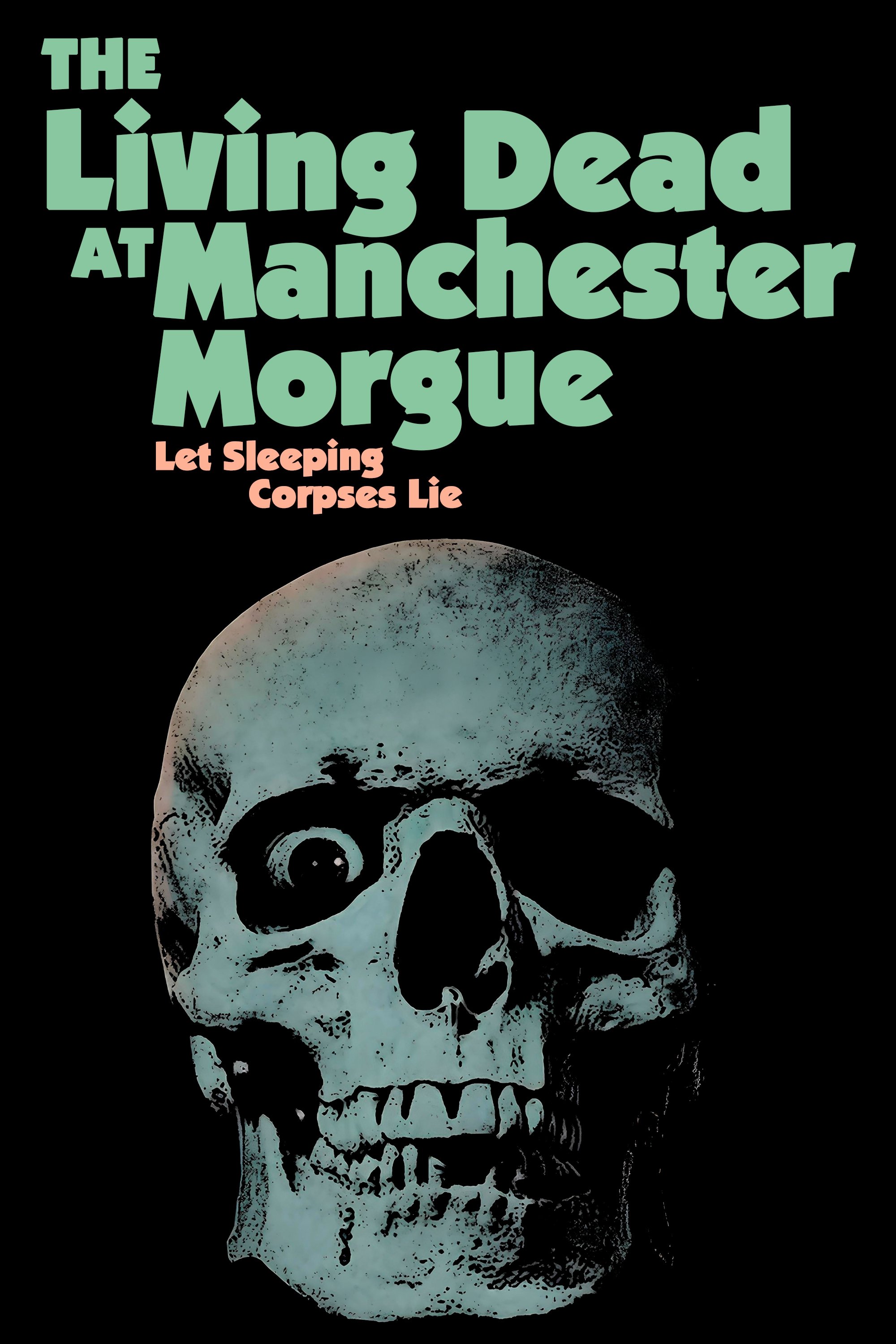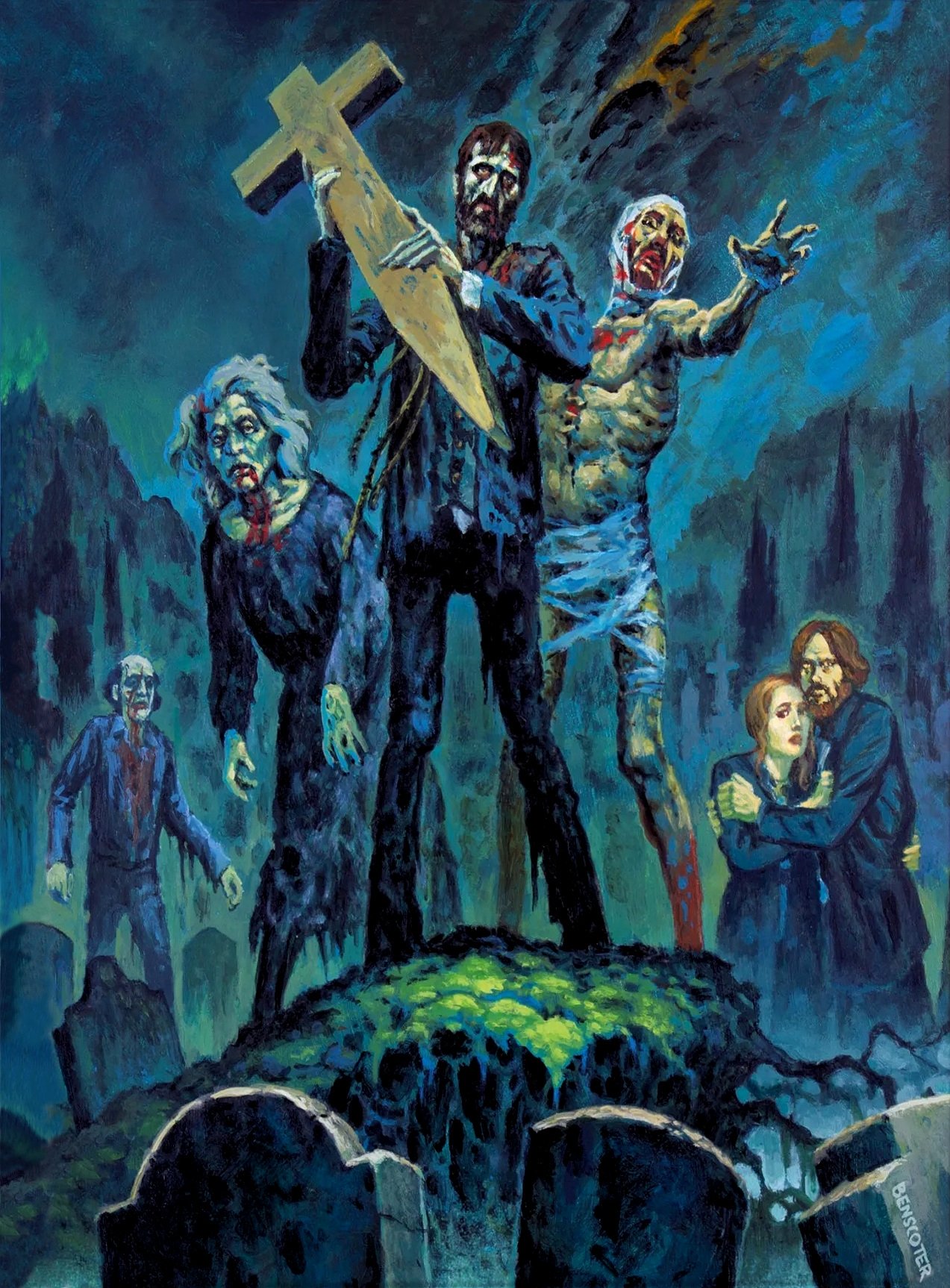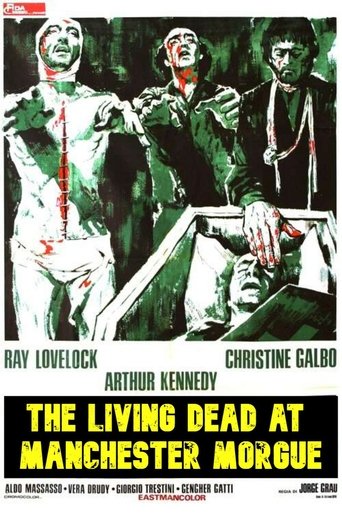
The Living Dead at Manchester Morgue (1974)

IT
HORROR FILM Science Fiction Drama
SUBGENRES ZOMBIE
UK censorship history DPP · Withdrawn / unsuccessful
5.5/10 2 votes
Runtime
95 min
Release
November 28, 1974
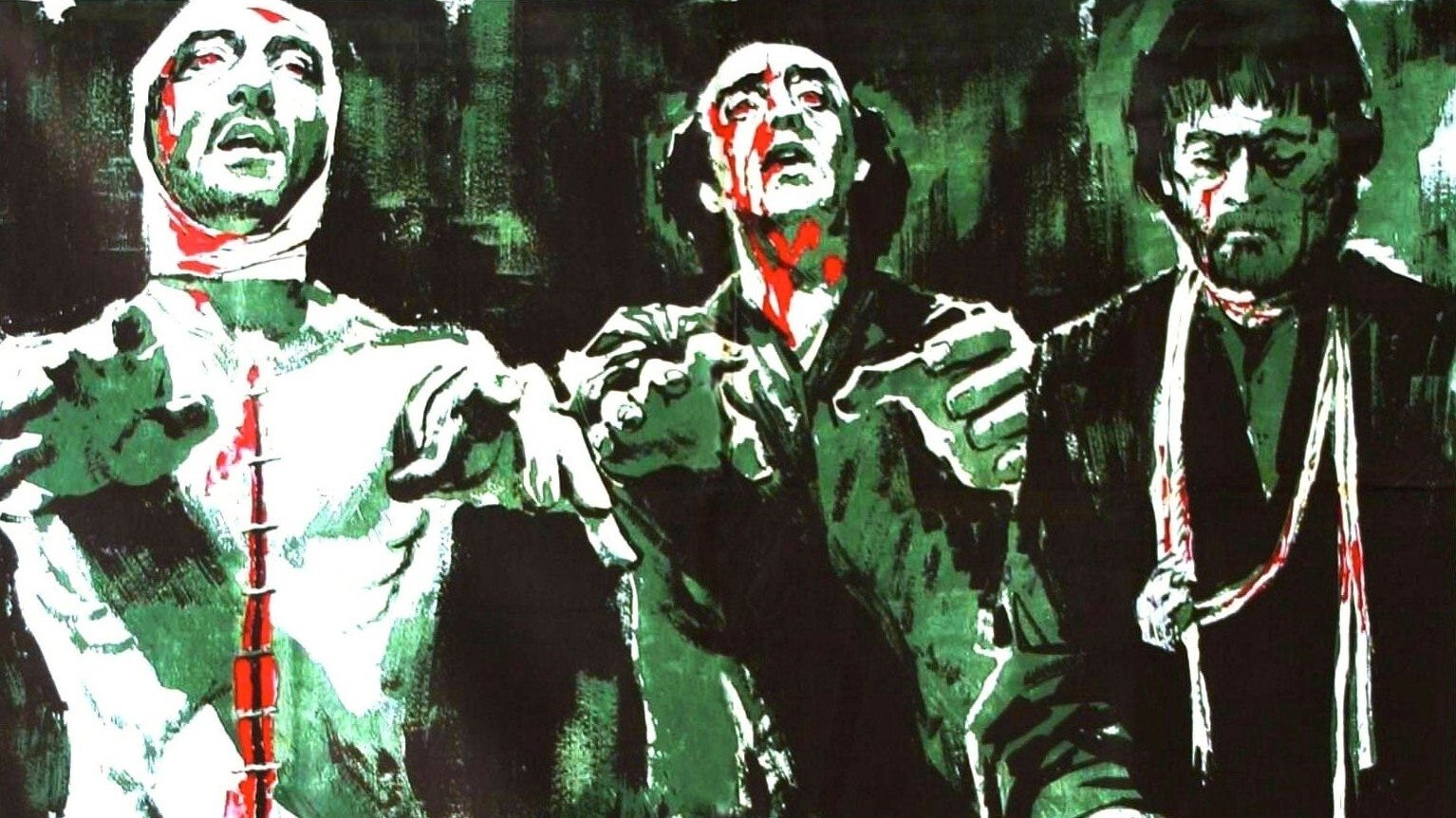
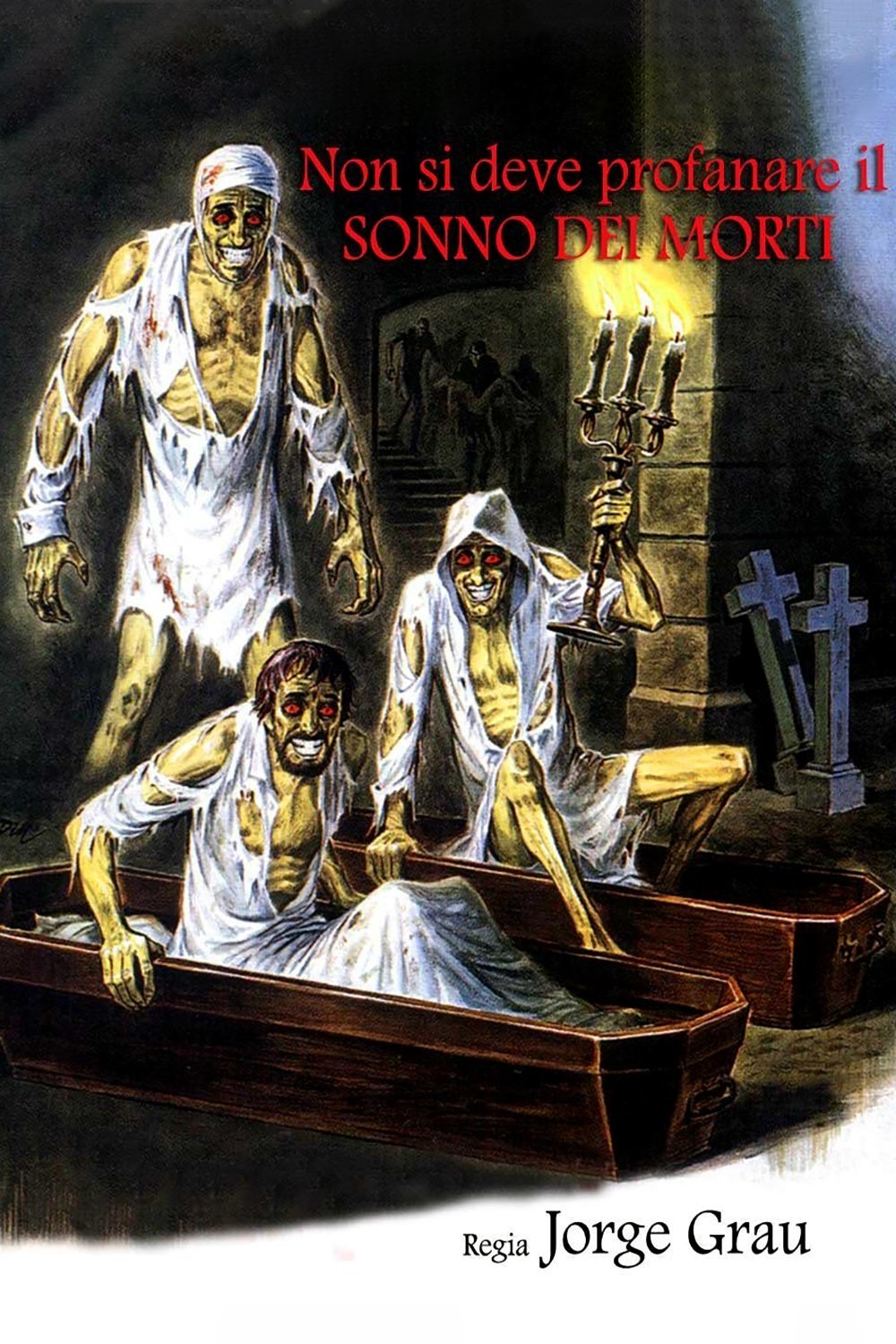
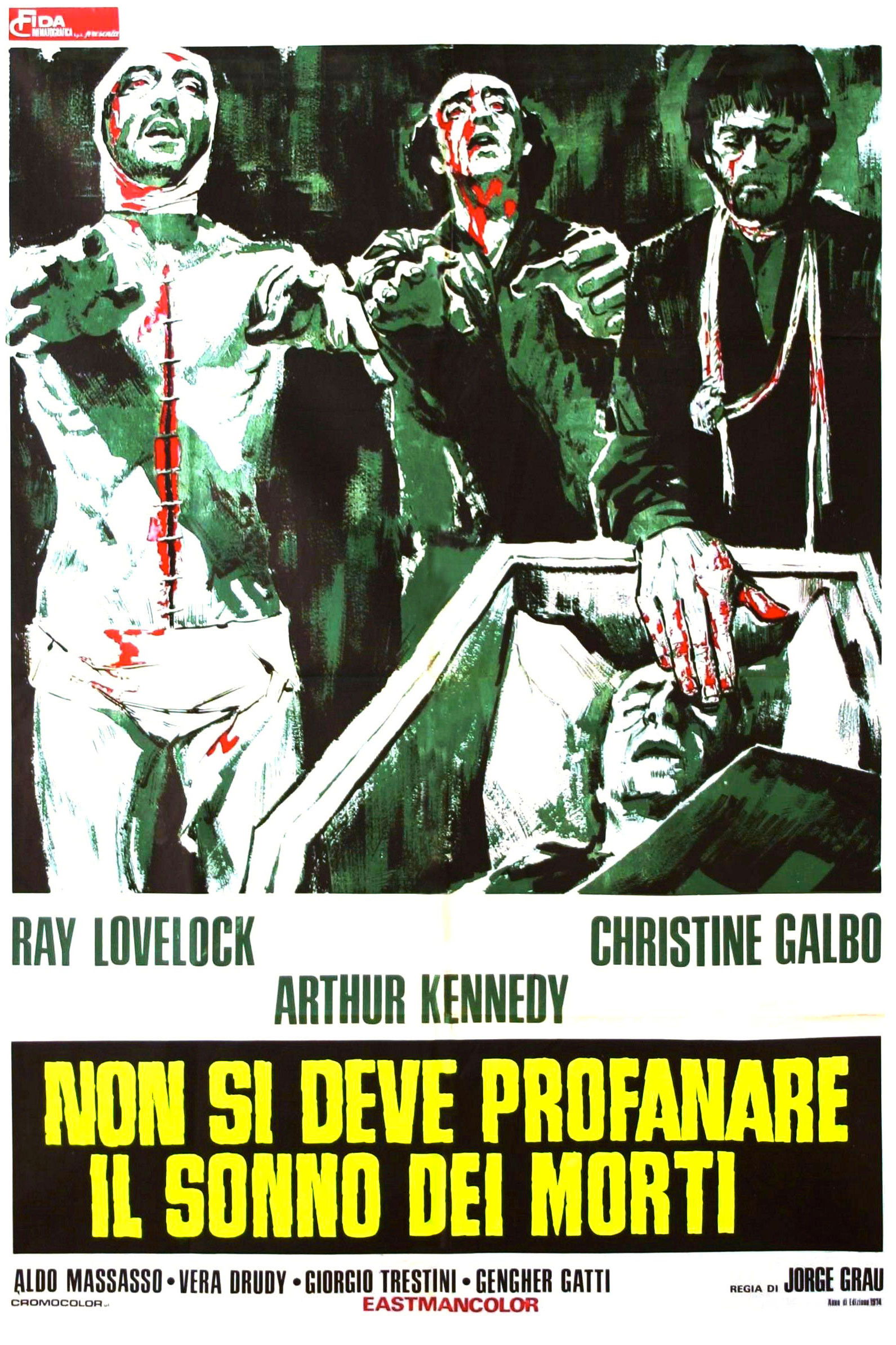
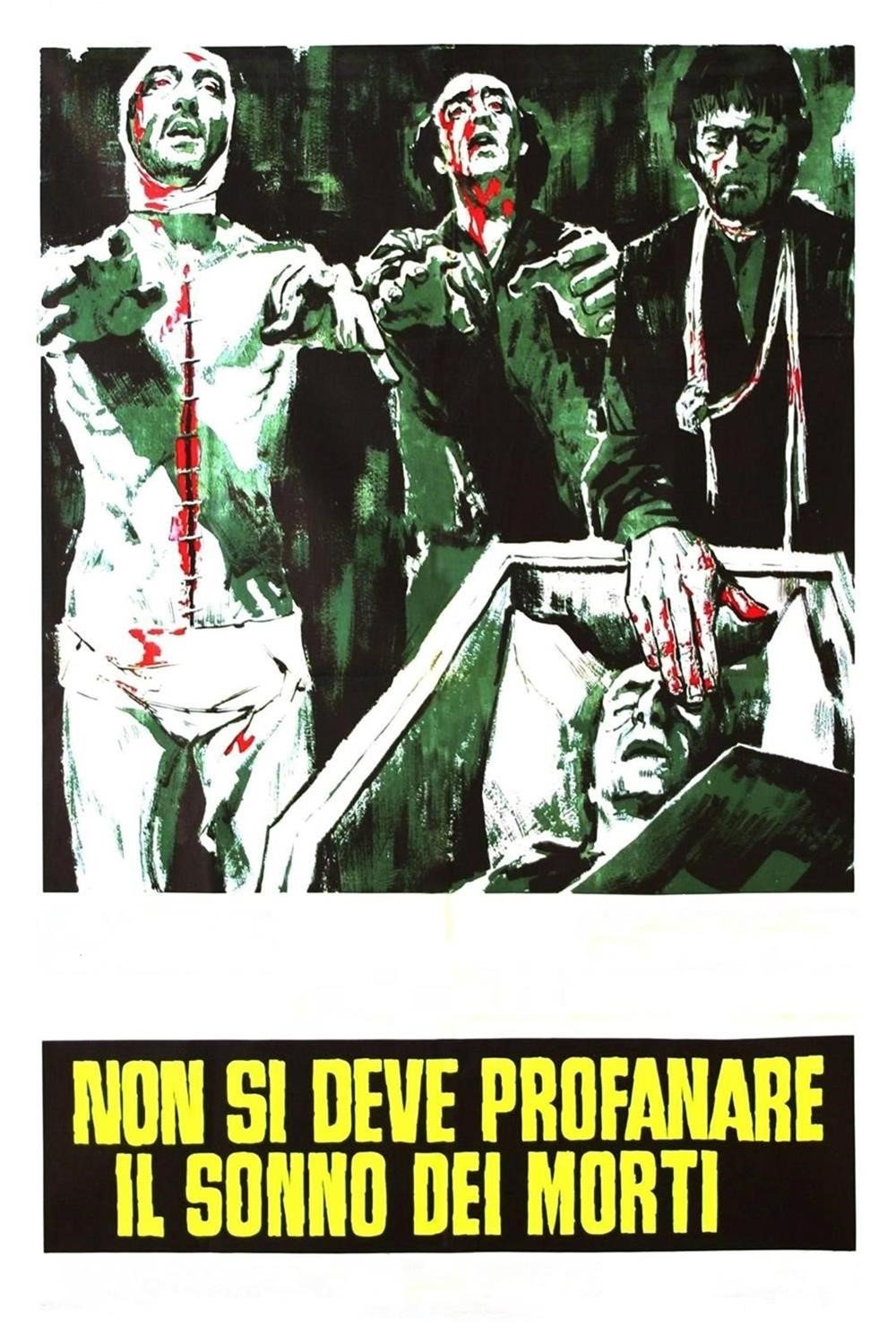
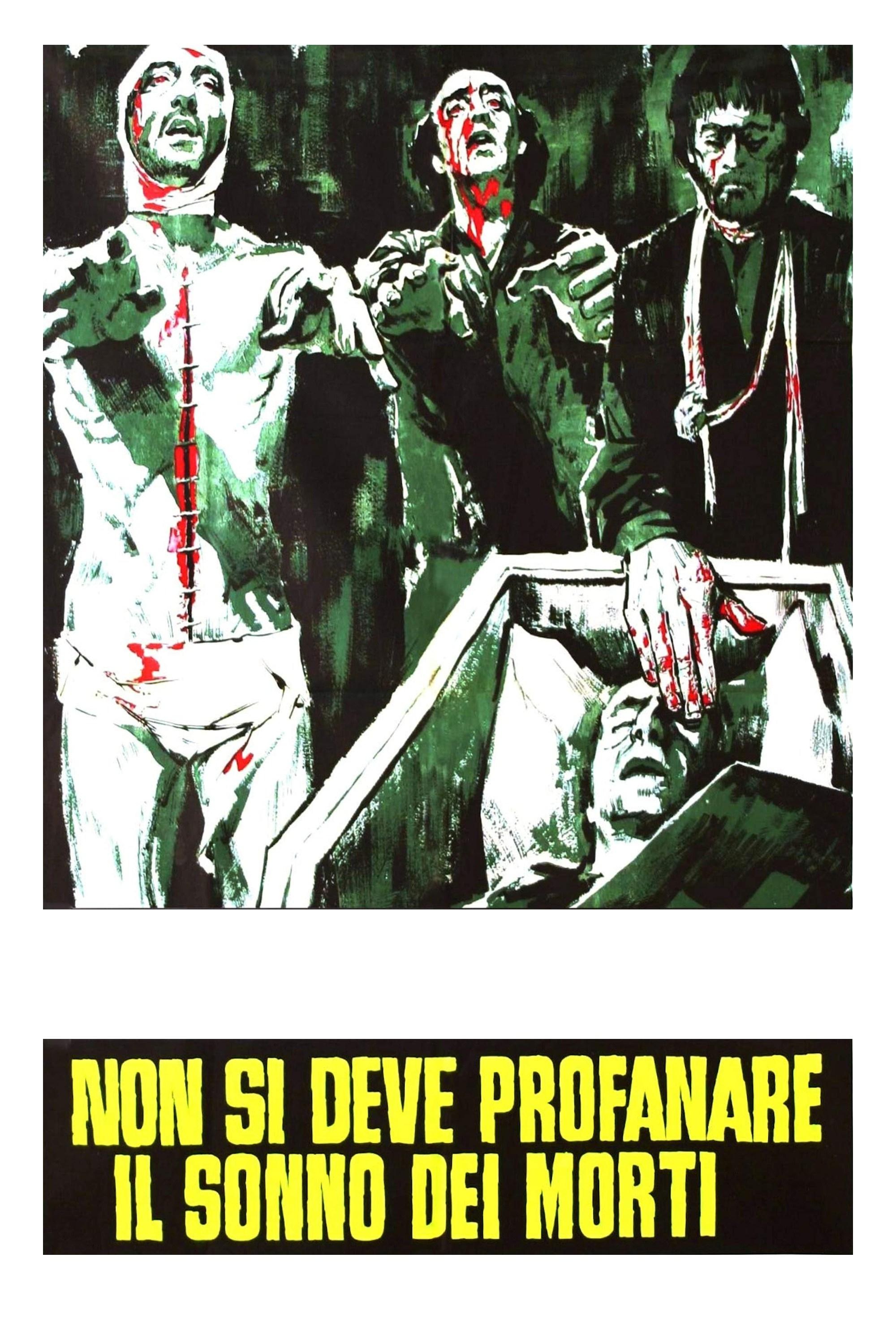
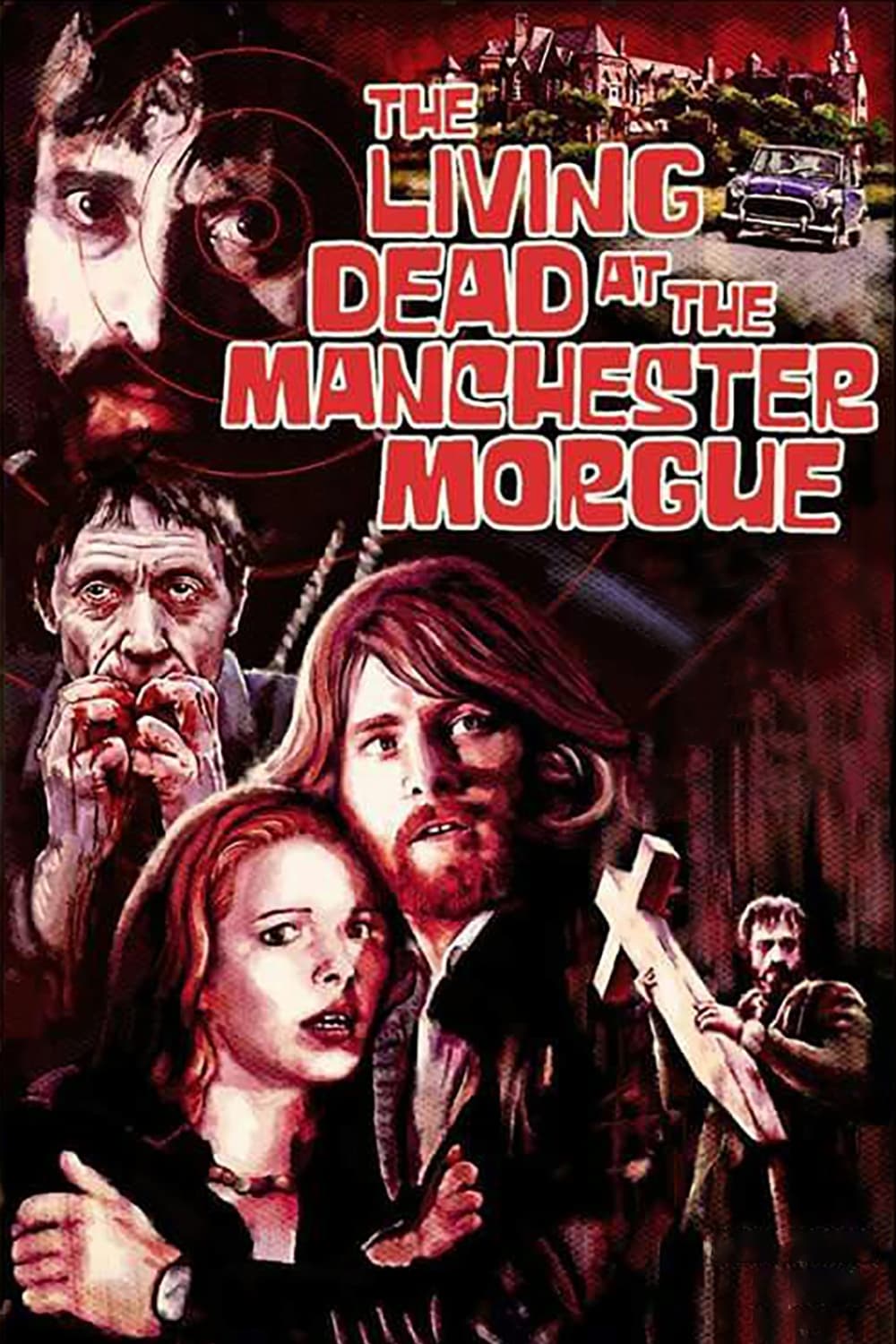
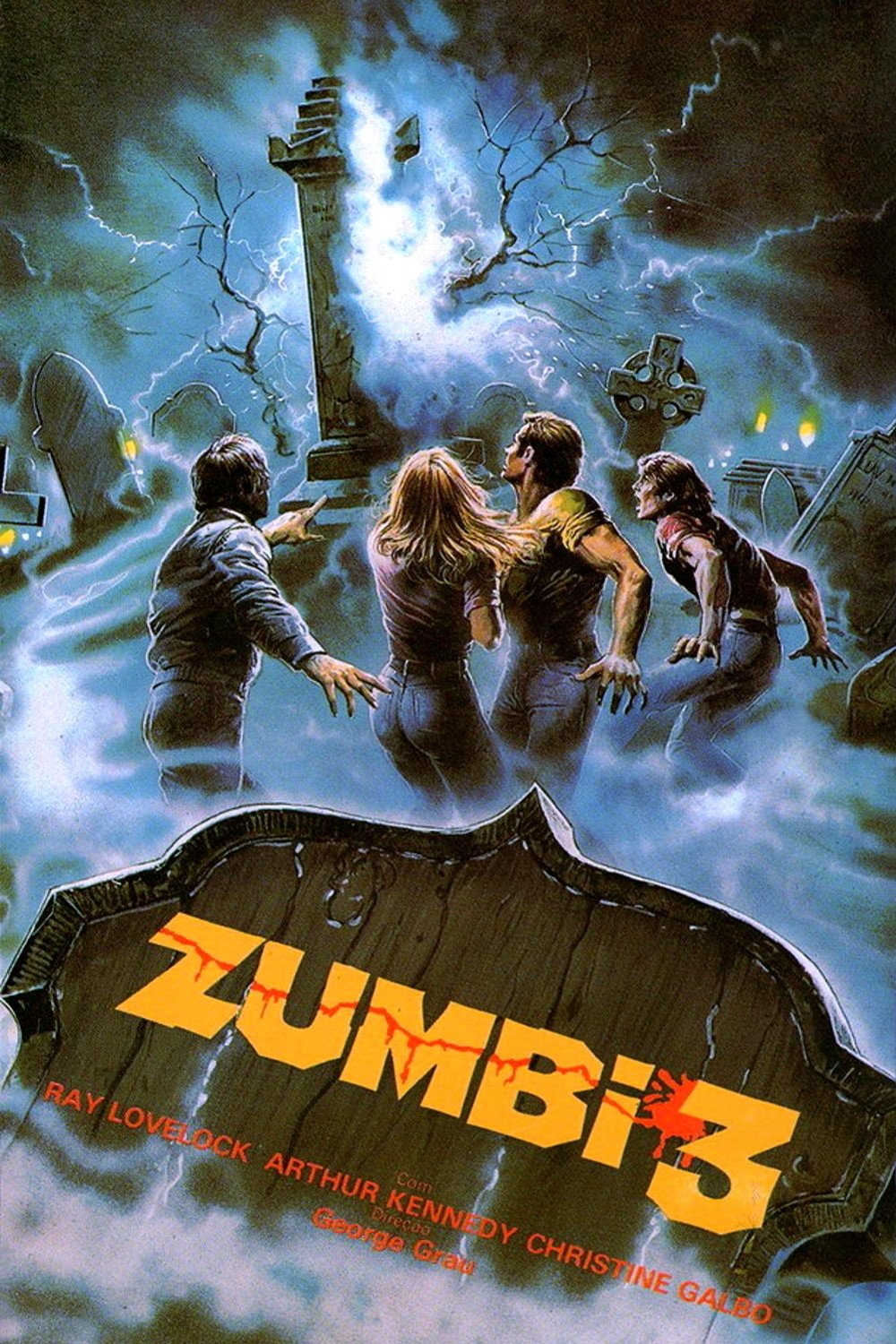
The Living Dead at Manchester Morgue (1974) poster
Director
Production Companies
Flaminia Produzioni Cinematografiche , Star Films S.A.
Plot

When a series of murders hit the remote English countryside, a detective suspects a pair of travelers when it is actually the work of the undead, jarred back to life by an experimental ultra-sonic radiation machine used by the Ministry of Agriculture to kill insects.

Alternative Titles
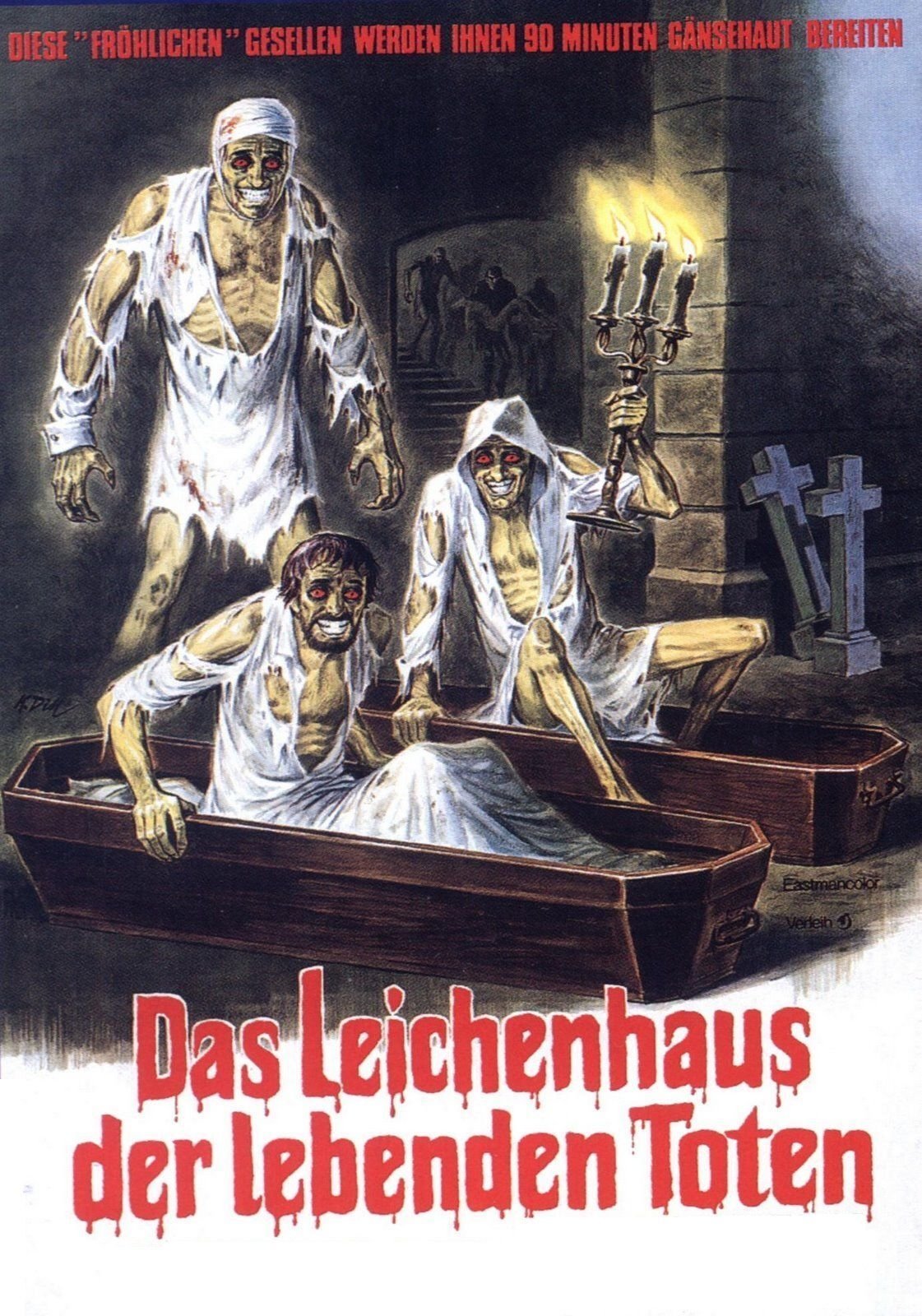
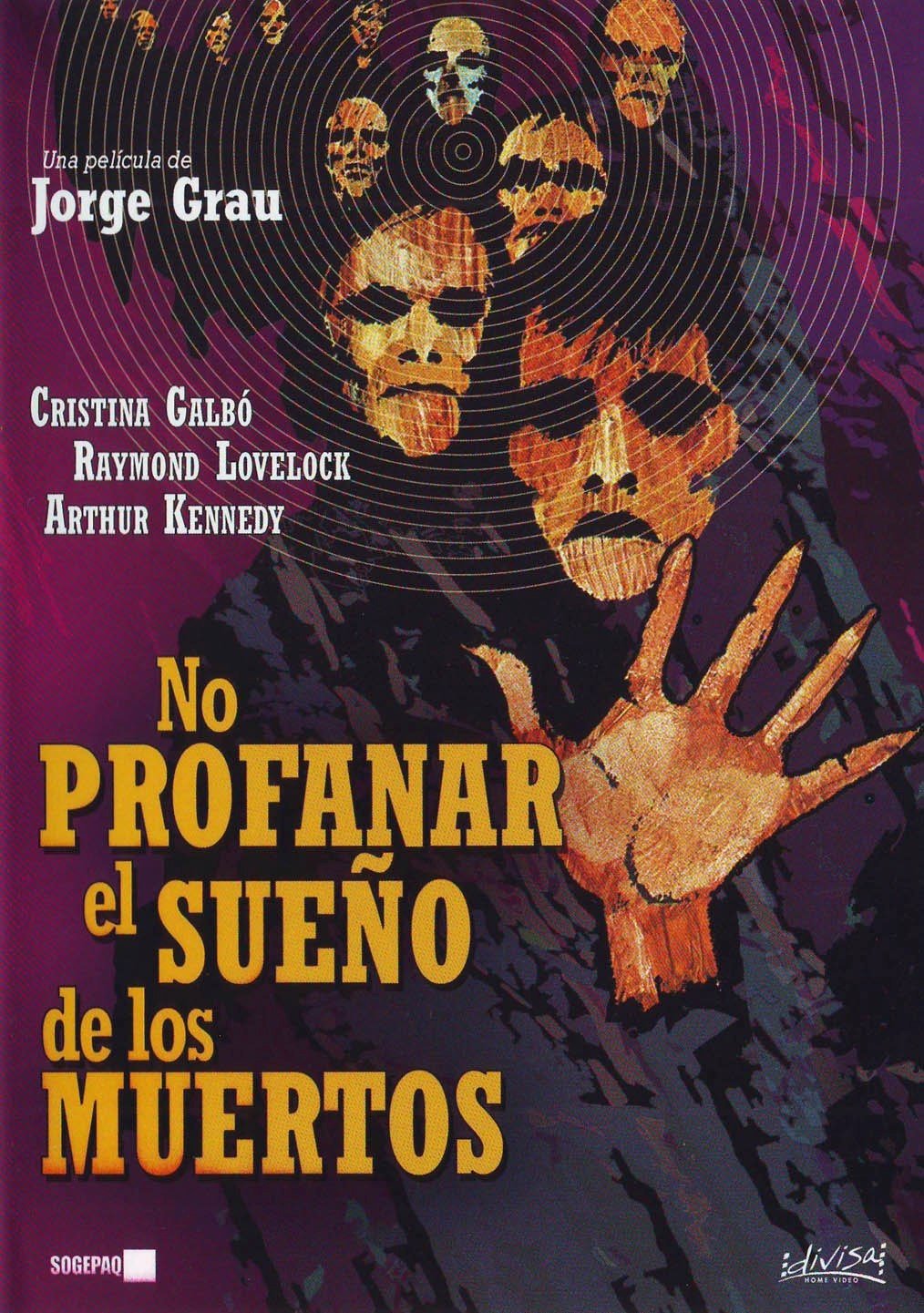
Mançester Morqunda Yaşayan Ölü (Azerbaijan) A Revanche dos Mortos-Vivos II (Brazil) — video box title Não se Deve Profanar o Sono dos Mortos (Brazil) Zumbi 3 (Brazil) — reissue title No profanes el sueño de los muertos (Chile) 僵尸坟场 (China) — Chinese Nehanobte spánek mrtvých (Czechia) Das Leichenhaus der lebenden Toten (Germany)
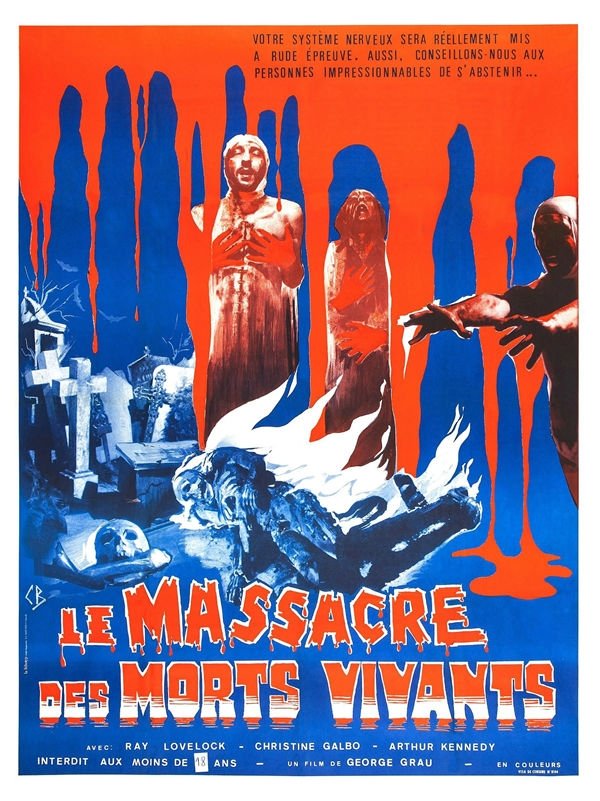
Show all 32 alternative titles Invasion der Zombies (Germany) Fin de semana para los muertos (Spain) — Working Title No profanar el sueño de los muertos (Spain) — Original Title No profanéis el sueño de los muertos (Spain) — alternative title No se debe profanar el sueño de los muertos (Spain) — Informal title Le massacre des morts-vivants (France) Let Sleeping Corpses Lie (United Kingdom) — alternative title The Living Dead (United Kingdom) — alternative title Ζόμπι: Επιδρομή από το Νεκροταφείο (Greece) 僵屍墳場 (Hong Kong SAR China) — Chinese Az agrár zombik támadása (Hungary) Da dove vieni? (Italy) — Reissue title Zombi 3 (Italy) — Reissue title 悪魔の墓場 (Japan) 렛 슬리핑 콥시스 라이 (South Korea) — Korean Dejen que los muertos duerman (Mexico) El profanador (Mexico) Zywe trupy w Manchester Morgue (Poland) Não Perturbem o Sono dos Mortos (Portugal) Пускай мертвые лежат в могилах (Russia) — Russian Пускай мертвые лежат в могилах (Russia) Breakfast at the Manchester Morgue (United States) — Reissue title Don't Open the Window (United States) — alternative title Let Sleeping Corpses Lie (United States)

Trailers & Videos

1 video

Film Guide & Analysis

Jorge Grau combines an agricultural zombie outbreak, British Gothic landscapes and violent police suspicion with practical effects and an experimental score.

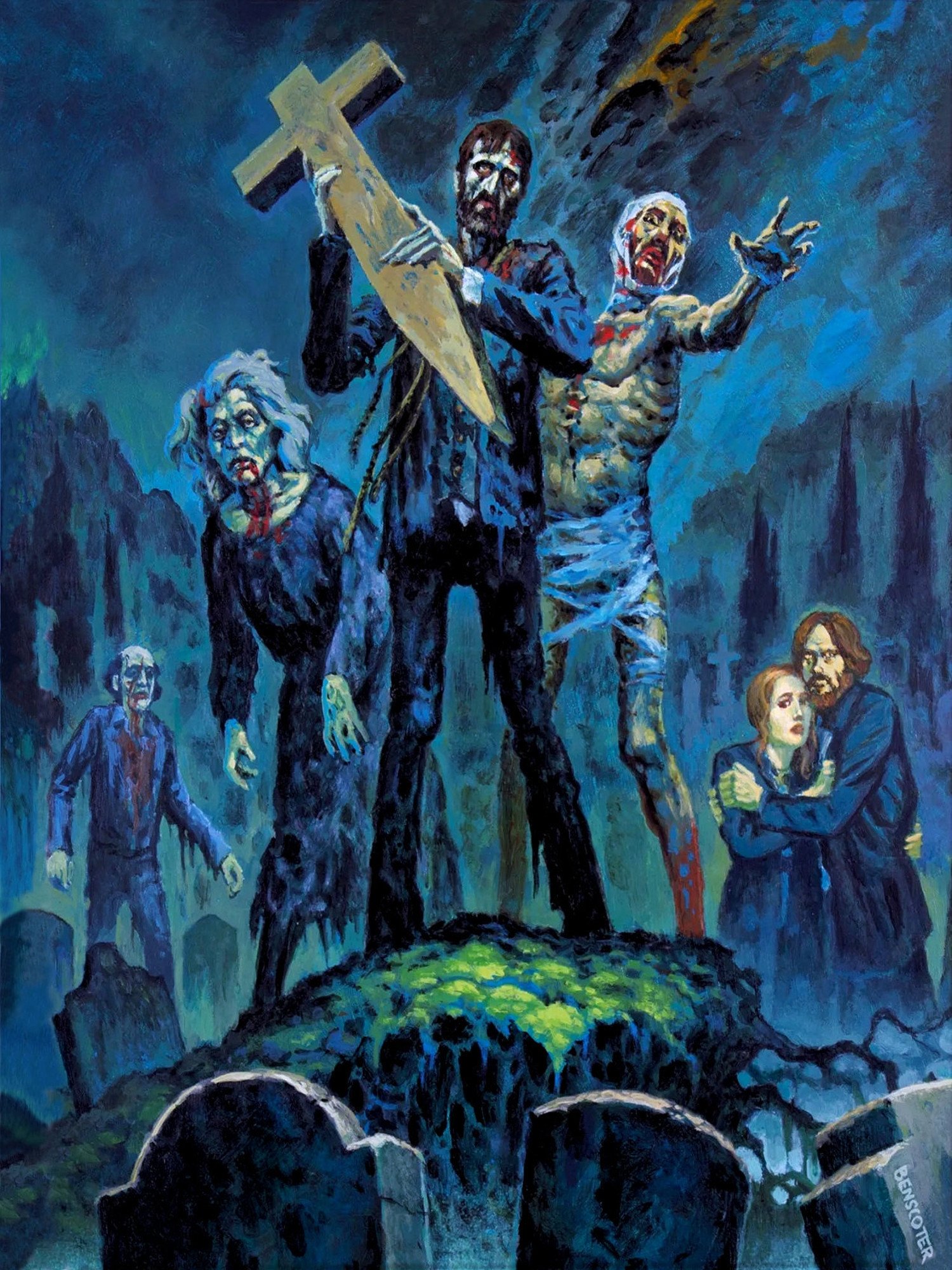
The Living Dead at Manchester Morgue (1974), directed by Jorge Grau, brings flesh-eating corpses into the roads, graveyards and hospitals of northern England. An experimental agricultural device designed to destroy insects accidentally reanimates the recently dead, while a hostile police inspector blames two young travelers for the murders. The film gives the zombie outbreak an explicitly human cause: technology deployed against the natural world creates a threat that officials refuse to recognize. Its combination of countryside photography, police hostility and graphic makeup places it at an important point between George A. Romero's Night of the Living Dead and the European zombie cycle that expanded later in the decade.

The Spanish-Italian production was photographed in actual English locations, with an unusually abrasive score by Giuliano Sorgini and effects associated with Giannetto De Rossi. It also circulated under several international titles, including Let Sleeping Corpses Lie and Don't Open the Window. Its reception at Sitges, British censorship records and a later restoration offer independent evidence of its history. The film's interest rests on the specific way it makes a rural landscape, institutional authority and bodily decay parts of the same horror narrative.

Origins and the European Zombie Cycle

Jorge Grau came to the project after working in Spanish cinema across drama and horror, including Blood Ceremony. Accounts of the production identify a Spanish-Italian partnership, with Edmondo Amati among the producers and screenwriting credits associated with Sandro Continenza and Marcello Coscia. Grau later described being approached about a new treatment of reanimated corpses in the wake of Romero's film. The premise was developed into a story set in Britain, combining foreign genre production methods with recognizable English roads, villages and institutions. The resulting picture belongs to the era before Dawn of the Dead established the template for the Italian zombie boom.

The script follows George, an antiques dealer and motorcycle rider, after Edna accidentally damages his bike. Their involuntary journey together takes them toward the area where her sister Katie lives. The first murder is associated with Guthrie, a recently deceased man who has become active near a river, and suspicion falls on the outsiders almost immediately. Grau allows the police investigation to proceed alongside the audience's growing knowledge of the scientific cause. The central mystery therefore concerns whether authorities can recognize an unprecedented danger before their assumptions turn fatal.

Although the film draws on Romero's flesh-eating undead, its mechanisms are distinctive. The dead are awakened by an agricultural experiment, while the countryside provides Gothic spaces that retain older associations with graves and supernatural visitation. Grau uses that familiar imagery without introducing occult ritual as the cause. This intersection of modern ecological danger with traditional burial imagery helps explain why the film stands apart from both supernatural Spanish revenant stories and the later urban epidemics of zombie cinema.

The Agricultural Machine and Ecological Horror

The outbreak begins with a machine that uses ultrasonic radiation against pests. Agricultural technicians explain that the device affects primitive nervous systems and causes insects to attack one another. In the story the treatment also activates the nervous systems of recently deceased humans. It is a fictional scientific mechanism, not an accurate description of ultrasound or insect control, but its relevance to the horror is immediate: a device presented as useful and safe creates an irreversible threat outside the field where it is operating.

The opening establishes the environmental concern before any corpse appears. George passes through streets marked by traffic, smoke, industrial buildings and neglected urban spaces. These images connect technological development to damaged surroundings. His journey into the countryside seems to promise relief, but the experimental machine has already introduced another form of contamination into an apparently cleaner landscape. The contrast gives the undead an origin in ordinary economic activity and official confidence, so the source of danger is established independently of the victims who encounter it.

The inspector refuses to acknowledge that the machinery could explain the killings. His disbelief is a crucial part of the catastrophe because the audience sees the connection before investigators accept it. The film's ecological interpretation follows from this dramatic arrangement, though it should be distinguished from claims that Grau predicted a specific later environmental disaster. The authorities persist with established accusations while evidence of an exceptional hazard accumulates. Horror emerges from institutional inaction as decisively as from the attacks themselves.

Northern England as a Gothic Landscape

The title gives Manchester a prominent place, but most of the film unfolds elsewhere in northern England. In a detailed 2025 location study, the British Film Institute traced the opening city material to Manchester streets including Victoria Street and Deansgate. Rural scenes photographed around Castleton in Derbyshire stand in for a Lake District setting, while Dovedale and its river crossing provide some of the most memorable exterior images. The distinction between the fictional geography and the actual locations matters: the production constructs a continuous territory from places that are physically far apart.

Grau's visual method gives the landscape substantial time before violence interrupts it. Hills, rivers, village buildings and narrow roads establish distances between settlements and make a search for help feel increasingly difficult. The Old Owl Hotel was represented by an existing Castleton building, while additional institutional settings were found in the region. These authentic exteriors give the film a credibility that would be difficult to reproduce entirely inside a studio. Their beauty does not prevent danger; it increases the shock when a corpse emerges into a previously peaceful setting.

The cemetery and hospital add another register of fear. These are places associated with the management of death, so their occupation by predatory corpses undermines a social expectation that bodies remain safely contained. The film moves from open countryside to increasingly enclosed spaces, culminating in corridors and rooms where ordinary escape routes become unreliable. Rural Gothic atmosphere is therefore built through a combination of weathered architecture, real terrain and a threat whose movement is not limited by the boundaries of the grave.

Young Outsiders and the Police Investigation

Ray Lovelock's George is identified by his long hair, independent habits and impatience with authority. Cristina Galbo's Edna has a more personal reason to reach the countryside: her sister is in serious trouble. Their different temperaments establish conflict before they are forced to cooperate. When Edna describes an attacker whom the police believe to be dead, their explanations become grounds for suspicion. The inspector played by Arthur Kennedy interprets the pair through assumptions about youth, drugs and sexual behavior, making their appearance part of the case against them.

The film repeatedly shows evidence being read to confirm the officer's original judgment. Each new death increases his conviction that the visitors are responsible, even as witnesses and physical circumstances point toward something outside ordinary policing. The inspector's authority allows him to threaten and detain people who could help identify the cause of the attacks. This conflict gives the narrative a political edge: police power turns into an additional threat, operating in parallel with the undead and complicating attempts to contain the outbreak.

The conclusion carries the distrust of authority to an extreme. George's discovery of the source cannot protect him from the inspector's violence, and the final reversal returns the figure of the reanimated dead to a particularly personal encounter. The ending recalls the bitter conclusions of Romero's early zombie cinema, although its details follow Grau's own arrangement of blame and retaliation. The police investigation never develops into a reassuring restoration of order.

Undead Makeup and Physical Gore

The first resurrected figure is disturbing because he retains the recognizable appearance of a recently dead man while moving with purposeful aggression. The effects team uses altered skin tone, damaged surfaces and a lifeless expression to separate the corpse from ordinary characters. Giannetto De Rossi is closely associated with the film's makeup and gruesome sequences, and later interviews document his direct participation. It would be misleading, however, to attribute every technical effect to one person: the official Sitges prize records recognize two other contributors to the effects work.

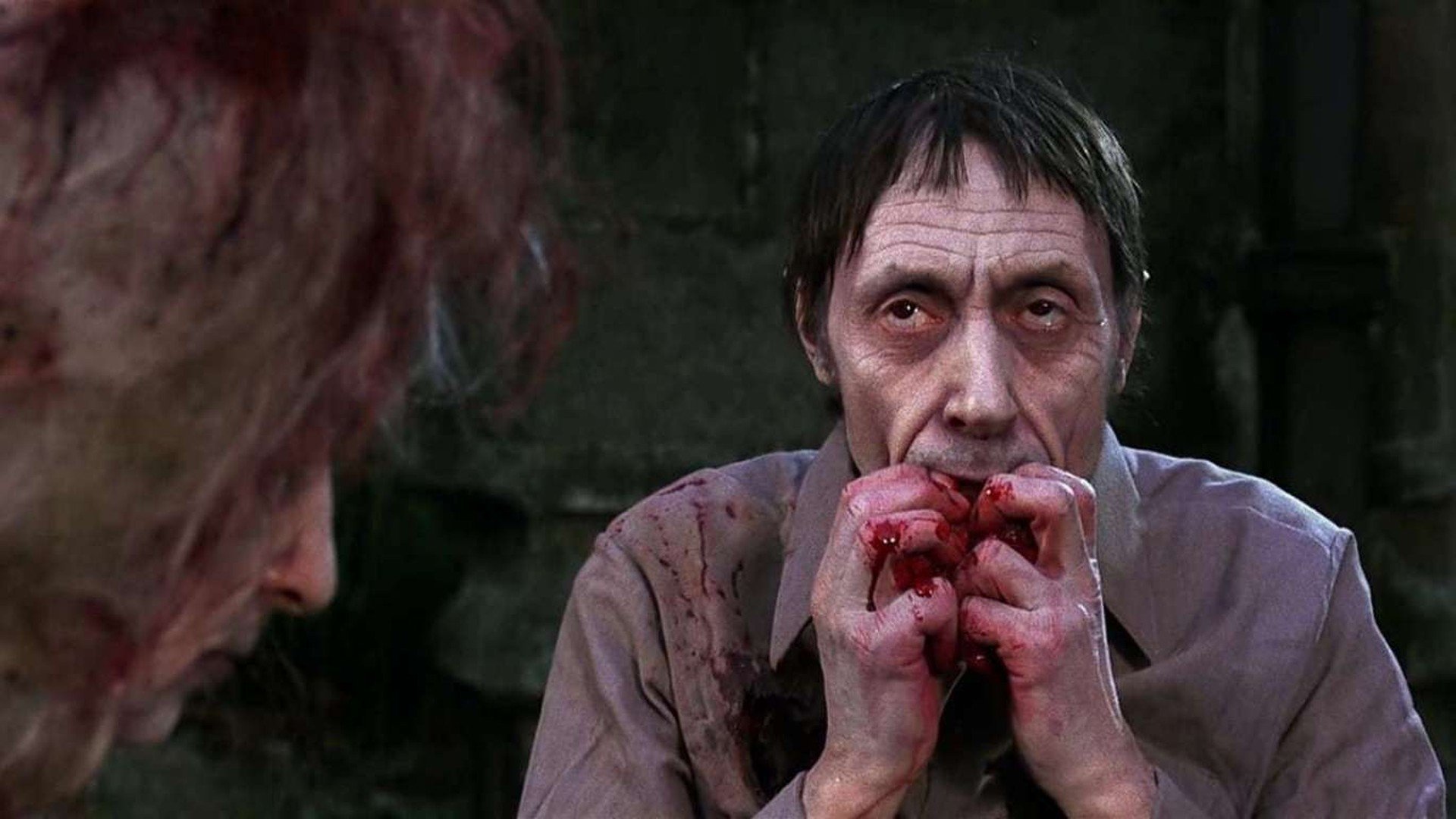
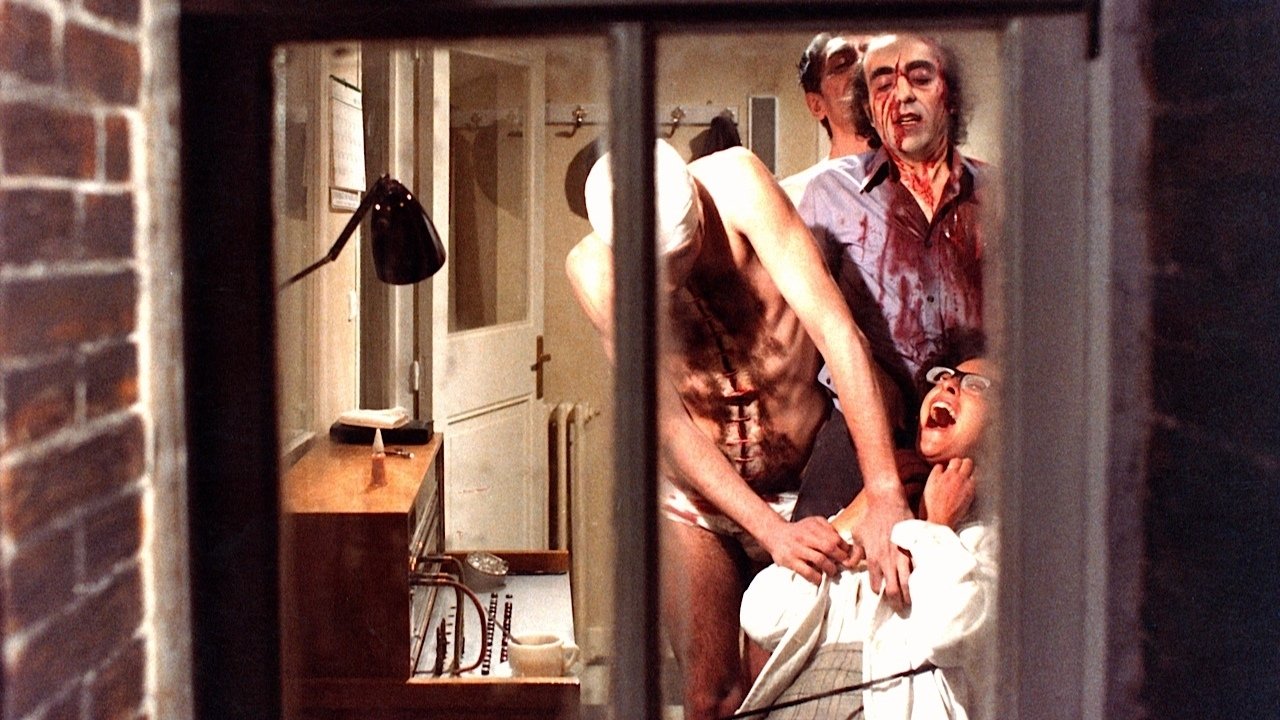
The violence becomes more explicit as the number of undead grows. A cemetery attack places living people near bodies that should remain buried; later scenes show victims torn open and human tissue consumed. The photographic emphasis on flesh and exposed organs extends the cannibalistic implications of Romero's black-and-white imagery into graphic color. These episodes were particularly striking in the context of early-1970s European genre films. Their dramatic effect also depends on intervals of investigation and quiet location photography, which prevent the picture from functioning as an uninterrupted parade of gore.

The revived bodies appear as a relatively small, identifiable group, permitting individual faces to retain a threatening identity. The film uses the particular figure of Guthrie as an early point of recognition and lets the danger expand through encounters in specific locations. Makeup, bodily movement and editing establish the undead as physically present among the living, even though the explanation for their animation remains fantastical. The practical effects contribute to a horror of corrupted human anatomy without replacing the story's concern with how such bodies became active.

Giuliano Sorgini, Music and the Undead Voice

Giuliano Sorgini's score ranges from rhythmic material associated with the contemporary world to disturbing electronic and acoustic passages. Its most unusual components are vocal textures used to give the reanimated bodies an audible presence. Historical soundtrack notes describe the incorporation of cries, breathing and other human sounds, including contributions attributed to Grau himself. These details support discussion of a designed sound world, although individual recording methods should not be inferred from later remasters alone. The score's atmosphere grows out of the same unstable boundary between human and inhuman that governs the makeup.

During attacks, the sound of the undead can announce a presence that the image has not yet fully revealed. Breathing and groaning make closed rooms especially oppressive, while the surrounding landscape initially offers more open acoustic space. Sorgini's contrasting musical approaches help separate the modern streets of the opening from the increasingly threatening rural settings. Later soundtrack restorations and editions have made these elements easier to study, but their release dates belong to the music's archival history, not to the original theatrical chronology.

Sitges, British Censorship and Restoration

The film circulated in 1974 under its Spanish and Italian titles and reached British cinemas the following year. At the 1974 Sitges festival, the official prize archive records Cristina Galbo receiving the Silver Carnation Medal for Best Actress and Luciano Bird and Antonio Baladin receiving the award for special effects. Those distinctions provide contemporary evidence of recognition for the acting and technical work. The film later appeared in numerous territories under different names, with altered marketing in the United States. Alternative release names should not be treated as separate films or as proof of an official sequel.

The British Board of Film Classification dates a cut cinema submission to 20 January 1975, with a recorded runtime of 93 minutes. The movie subsequently became associated with the DPP video-nasty campaign, during which editions with different amounts of violent material circulated. Specialist version histories also describe a further shortened classified VHS in 1985. These episodes belong to different exhibition and legal contexts. Inclusion on a changing police list did not establish a successful obscenity prosecution, and running-time variations across film and PAL video are not by themselves reliable measurements of cuts.

The BBFC records further home-media submissions in 2002 and 2010 without indicating comparable cuts for those entries. Another significant development was the 4K restoration undertaken by Synapse Films from the original 35mm camera negative. In a detailed interview, restoration supervisor Don May Jr. described damage, splices and missing image quality that required months of technical work; the edition also restored the original English theatrical mono track and credits. Recovering those materials helps distinguish Grau's original visual and acoustic design from the alterations and deterioration associated with older distribution copies.

References

  1. BFI Zombies in the Lake District: how locations from The Living Dead at Manchester Morgue look today

    Adam Scovell documents the original English locations, distinguishing Manchester streets from Castleton, Dovedale and the fictional Lake District geography.

  2. Genre Grinder The Living Dead at Manchester Morgue Blu-ray Review/Comparison

    Gabe Powers provides an extended analysis of the film within pre-Dawn of the Dead zombie horror, its ecological politics, De Rossi makeup and preservation.

  3. Sitges Film Festival List of Winners 1974

    The official festival archive identifies the awards to Cristina Galbo, Luciano Bird and Antonio Baladin.

  4. British Board of Film Classification Let Sleeping Corpses Lie - Classification History

    Official records distinguish the 1975 theatrical submission with cuts from later 2002 and 2010 physical-media classifications.

  5. Rue Morgue Exclusive Comments: Synapse and The Living Dead at Manchester Morgue Restoration

    Original interview with Don May Jr. on Cinecittà-held materials, damaged negative elements, the 4K restoration and the original mono soundtrack.

Cast

View Full Cast & Crew →

Release & Distribution

Production Companies (2)

  • Flaminia Produzioni Cinematografiche IT
  • Star Films S.A. ES

Release History (8)

Release DateTerritoryRelease TypeFormatDistributorCertificationNotes
1974-09-30 Spain Premiere — — — Sitges Film Festival
1974-11-28 Italy Theatrical — — VM18
1975-01-29 Spain Theatrical — — 18
1975-03-16 United Kingdom Theatrical — — 18
1975-03-16 Ireland Theatrical — — 18
1975-05-31 United States Theatrical — — R
1975-06-07 Japan Theatrical — — —
1979-05-23 France Theatrical — — 16
They tampered with nature—now they must pay the price …