Production & the Post-Exorcist Cycle
By the middle of the 1970s, Amando de Ossorio had become one of the most prolific figures in Spanish horror. His Blind Dead films had established a distinctive mythology of undead medieval Templars, while productions such as The Loreley’s Grasp and Night of the Sorcerers demonstrated his willingness to move rapidly between monsters, occultism and supernatural folklore. La endemoniada represented another shift, responding to the sudden commercial prominence of demonic-possession cinema rather than extending the mythology for which he was best known.
The relationship with The Exorcist was explicit enough to become part of the film’s later historical identity. Salgado recalled that being selected to dub Linda Blair probably helped her obtain the role in de Ossorio’s production. There is nevertheless an important chronological distinction. Friedkin’s film had already become an international phenomenon after its American release in December 1973, but it did not officially open in Spain until September 1975. La endemoniada had already been released there in February. The Spanish film was therefore responding to a film its domestic audience knew by reputation and international impact before many viewers could legally see the original in Spanish cinemas.
Contemporary production documentation is considerably thinner than for de Ossorio’s better-known Blind Dead series. What survives from participants emphasizes a modest Madrid production rather than an elaborate studio undertaking. Lone Fleming remembered a large ensemble and particularly recalled the demands placed on Salgado by the extensive makeup. That limited documentation makes it preferable to treat the film as a compact exploitation production rather than reconstruct a detailed production history that the surviving evidence cannot support.
Witchcraft, Possession & Religious Horror
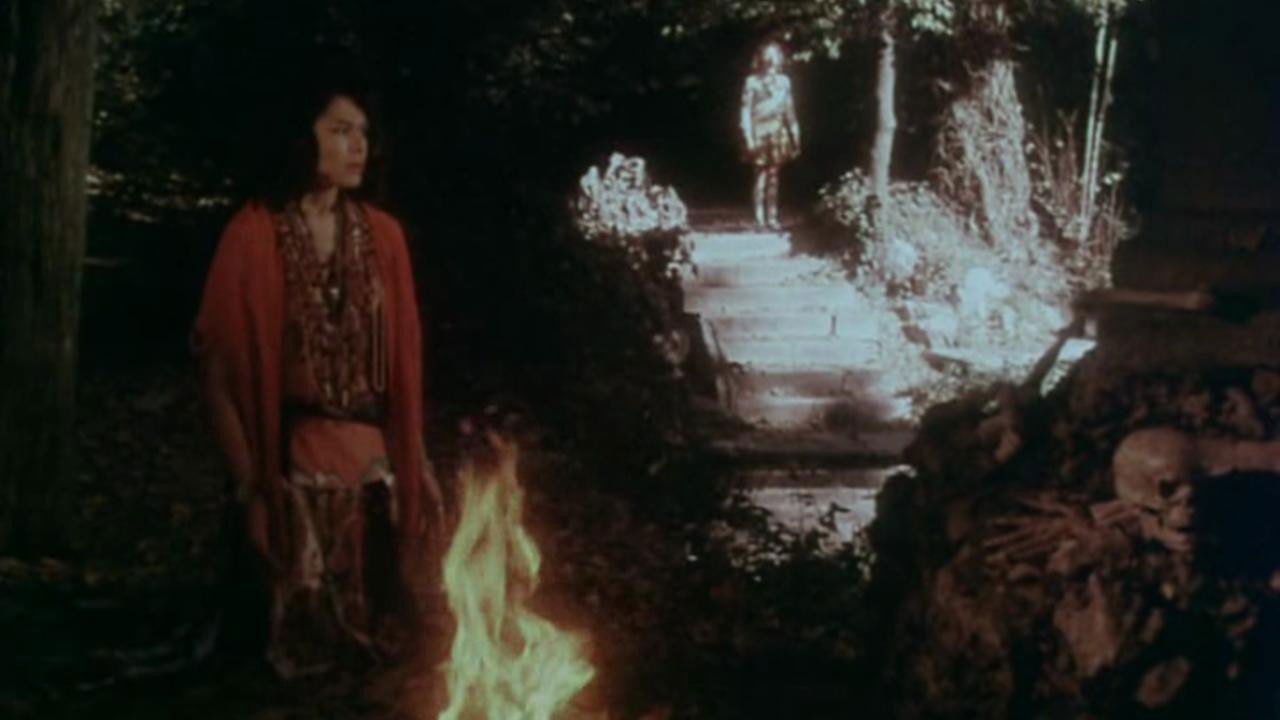
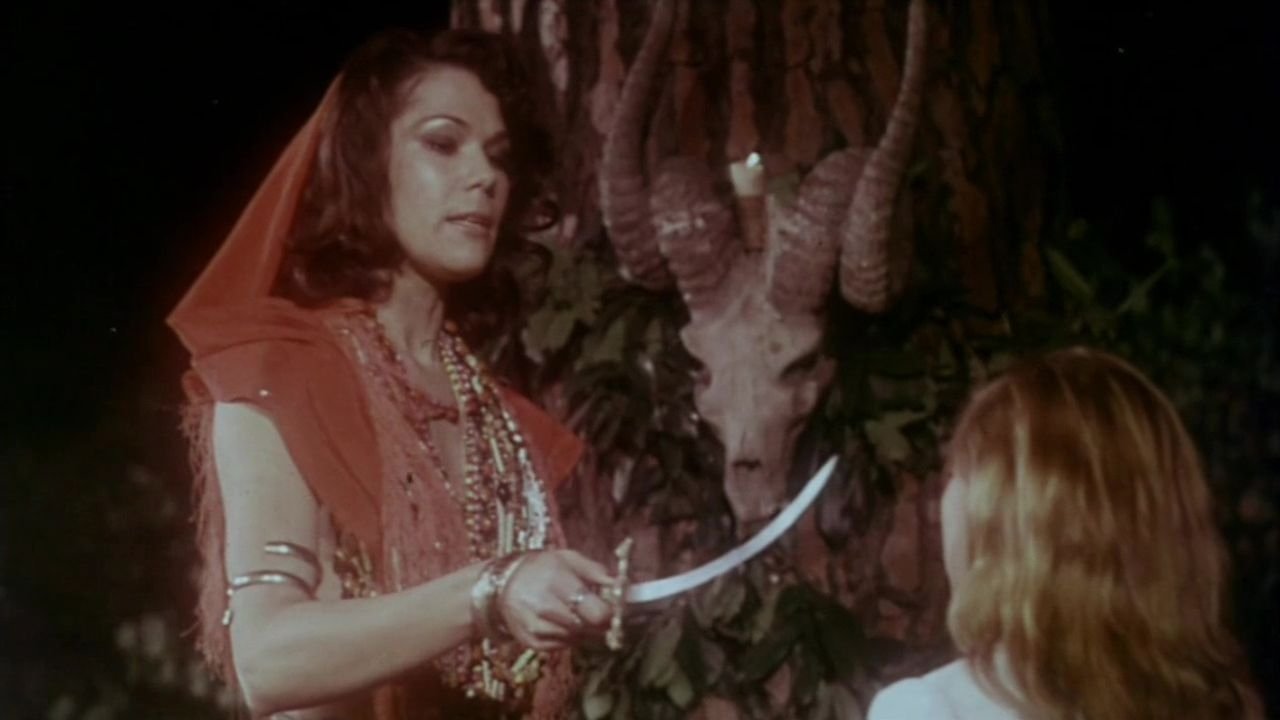
The supernatural mechanism distinguishes The Possessed from a straightforward imitation of The Exorcist. The story begins with an elderly occult practitioner suspected in connection with the abduction of a baby and the theft of religious objects. Following her capture and death, her spirit takes possession of Susan, transforming revenge against the authorities into an attack conducted through the body of a child. Witchcraft and possession are consequently joined from the beginning rather than treated as separate supernatural traditions.
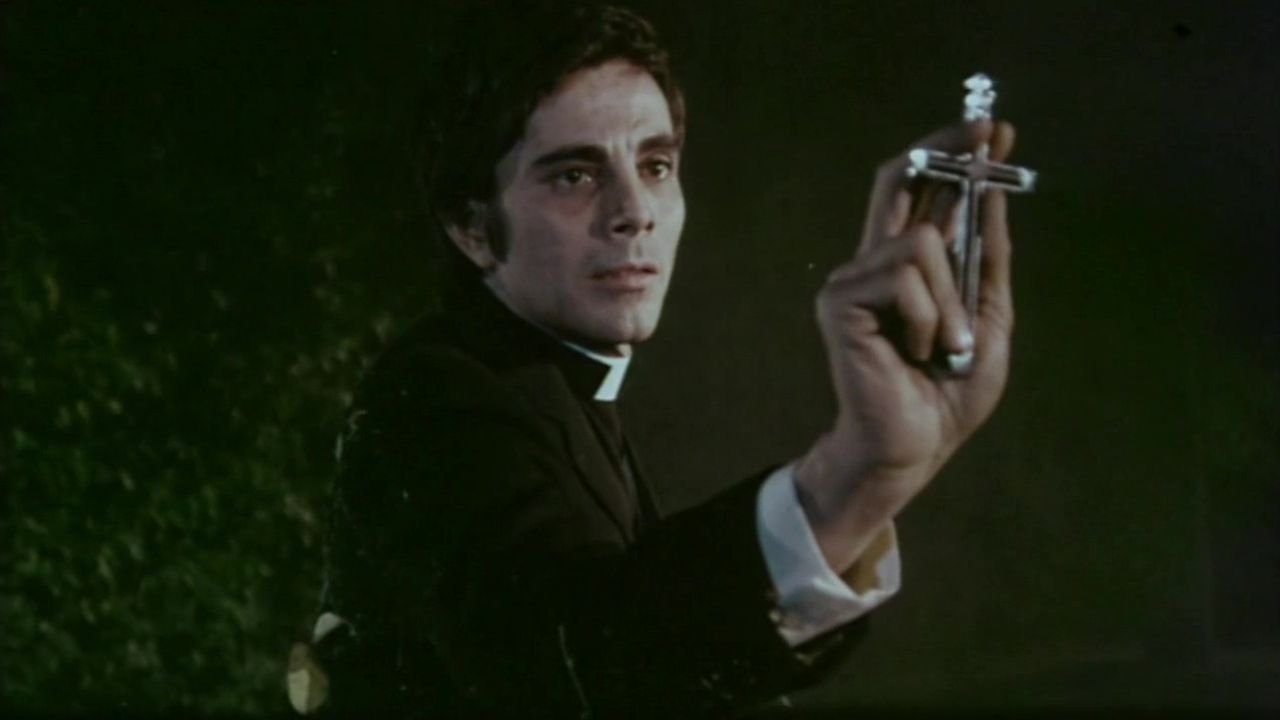
That structure allows de Ossorio to move between several forms of 1970s horror iconography. Churches, stolen sacred objects, occult ceremonies and the eventual intervention of a priest belong to religious horror, while the transfer of the dead woman’s spirit and the surrounding coven material connect the film to witchcraft. Susan’s transformation then introduces the physical signs that contemporary audiences had rapidly learned to associate with possession cinema: altered behaviour, violent outbursts, bodily distortion and the spectacle of an apparently innocent child becoming the site of supernatural aggression.
The result is less theologically concerned than Friedkin’s film. Its supernatural world is more direct and pulp-oriented, with curses, magical objects and vengeance operating alongside the language of demonic possession. The Possessed accepts occult forces as part of its narrative machinery relatively early. That mixture places it squarely within Spanish Fantaterror, where internationally successful horror formulas were frequently combined with older Gothic, folkloric and exploitation traditions.
Marián Salgado & the Possessed Child
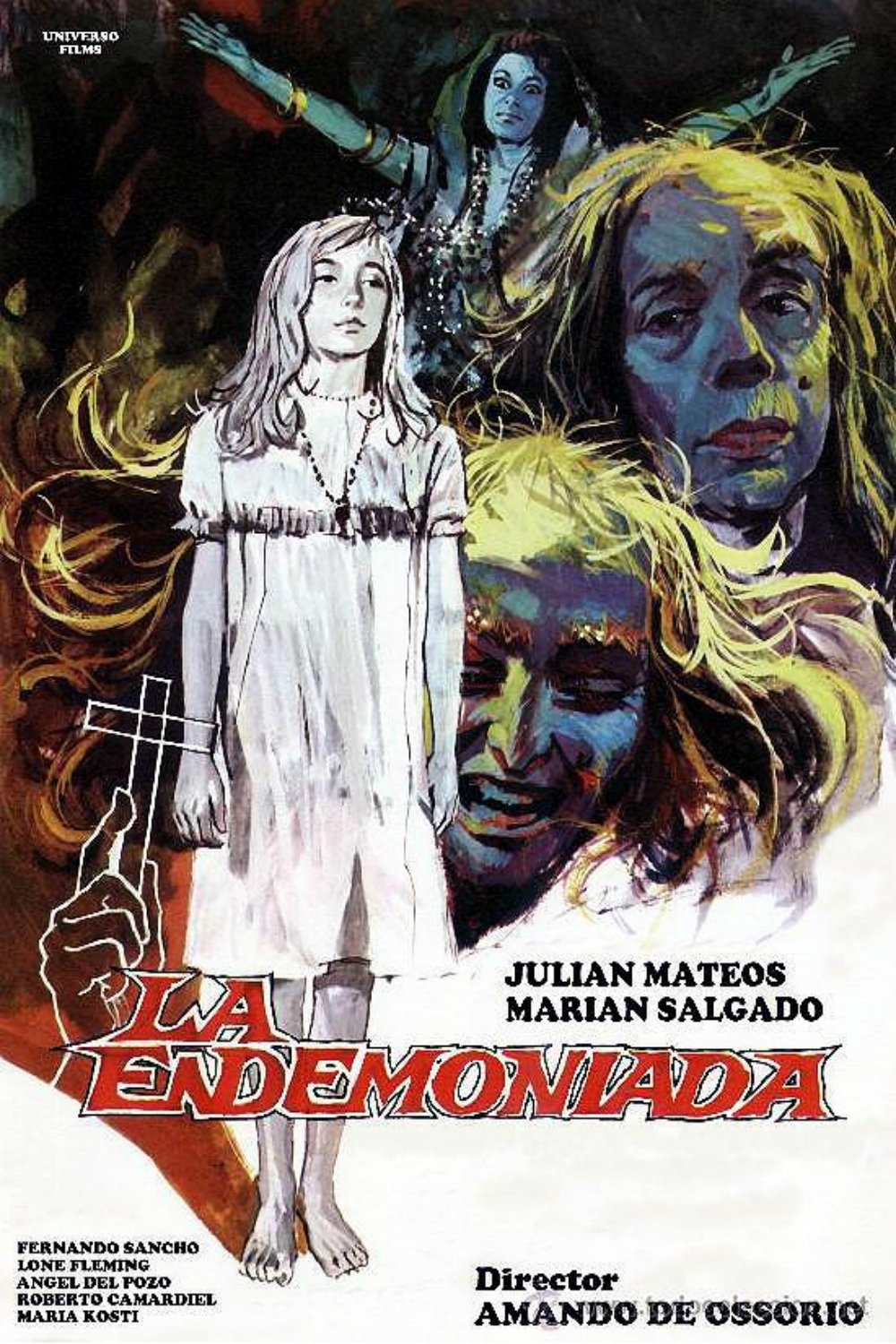
Marián Salgado is central to the film’s identity. She was still a child performer when she made La endemoniada, although she already had substantial experience in television and dubbing. Her involvement with the Spanish-language version of The Exorcist gave the production an unusually tangible link to Linda Blair and Regan, something that later publicity and discussion of the film repeatedly emphasized. Salgado herself has said that her connection with the dubbing likely contributed to her casting.
De Ossorio’s film asks Salgado to move between the ordinary behaviour of a young girl and a much more aggressive physical performance once the possession takes hold. Makeup intensifies that separation. The transformation pushes her appearance toward the elderly witch whose spirit has entered her. The possessed child thus becomes a visual combination of victim and possessor, connecting the supernatural transformation directly to the revenge narrative.
The work was demanding enough to remain prominent in the memories of other participants. Lone Fleming, who worked closely with Salgado during production, later recalled how difficult the makeup process was for the young actress. Salgado herself has described horror as something she never particularly enjoyed watching despite appearing in several important Spanish genre films as a child. That distance between performer and material makes her place within 1970s Spanish horror unusually accidental: within a short period she became associated with The Exorcist, La endemoniada and later Who Can Kill a Child? without pursuing a long-term career as a horror specialist.
Release, Alternate Titles & Distribution
The Spanish film authorities record La endemoniada as a 1975 production directed by Amando de Ossorio and classified for audiences over eighteen. It opened in Spain in February 1975 and accumulated 226,854 admissions. Those figures indicate a real theatrical audience without placing the film on the commercial level of the international phenomenon that had inspired the possession cycle. The Exorcist, when it finally opened officially in Spain that September, would reach an audience measured in the millions.
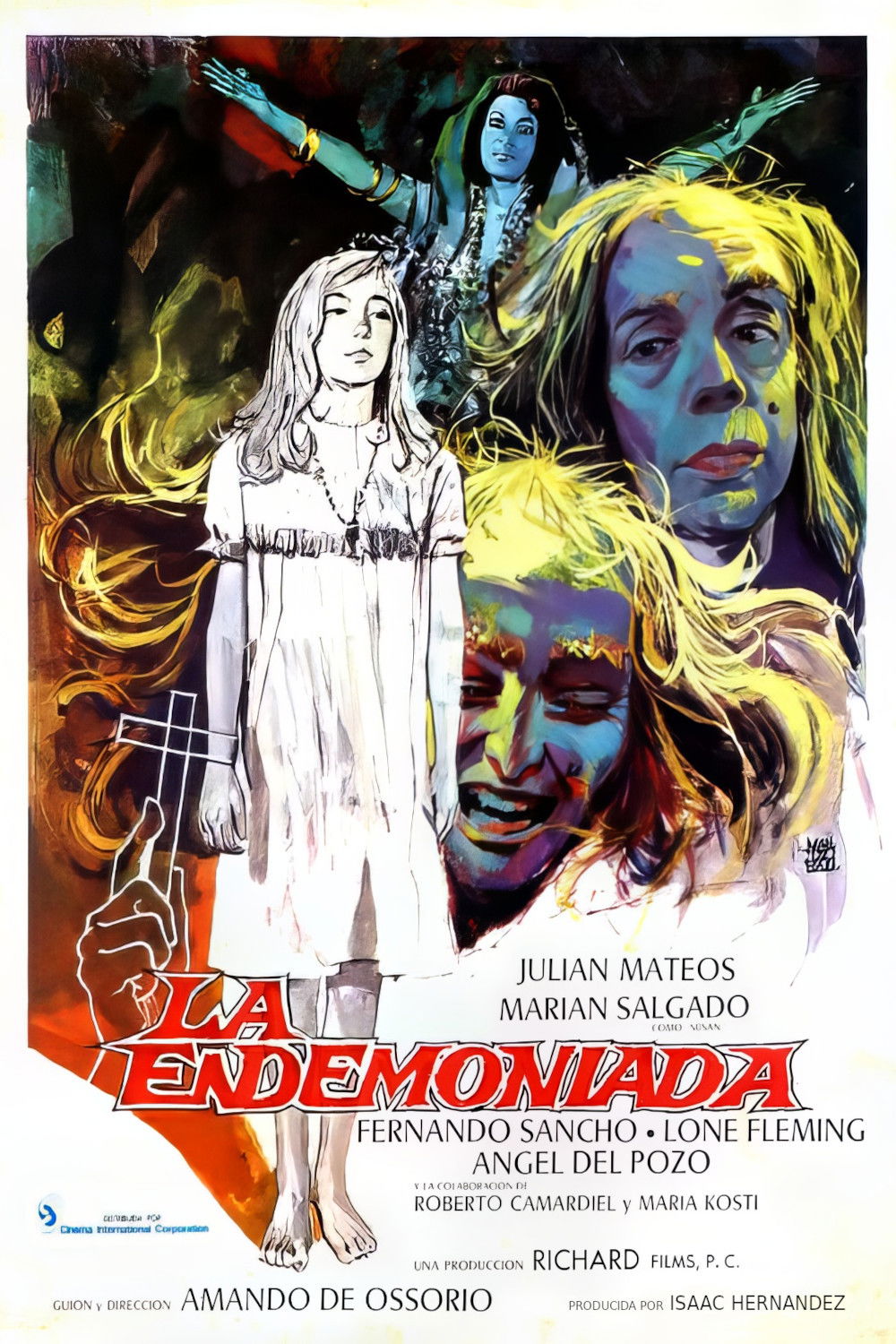
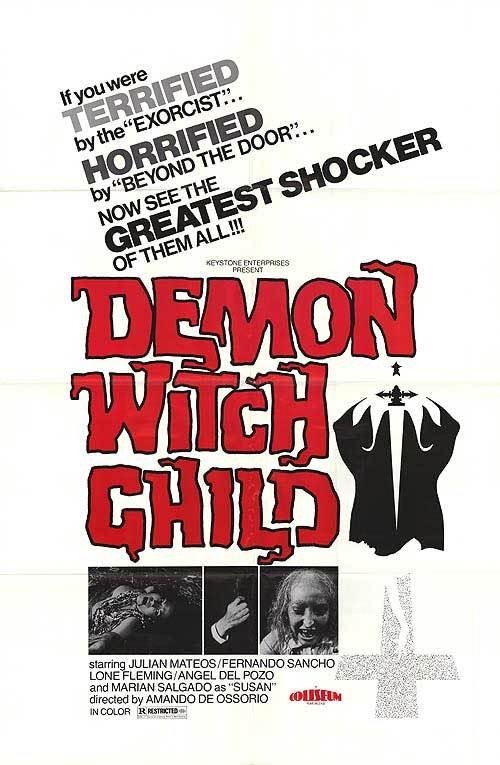
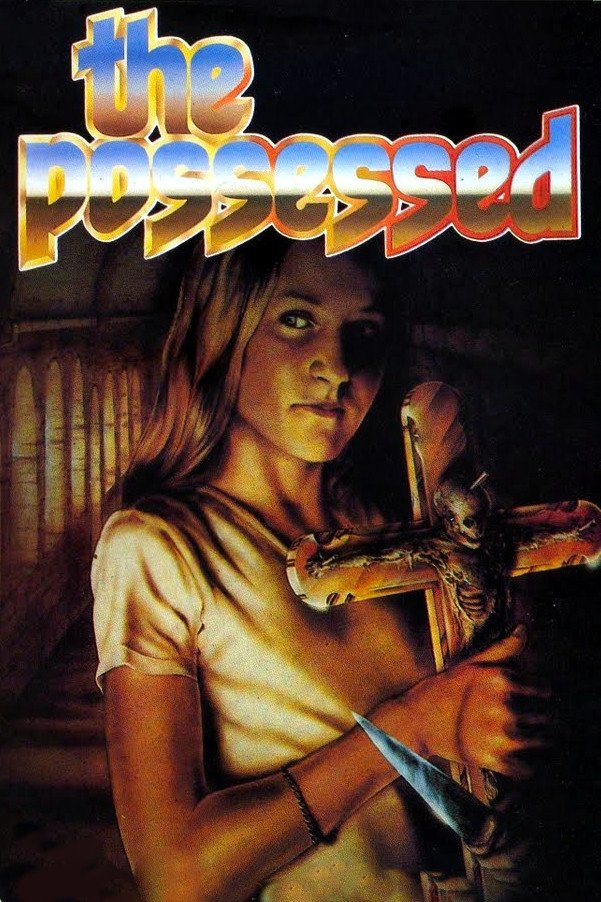
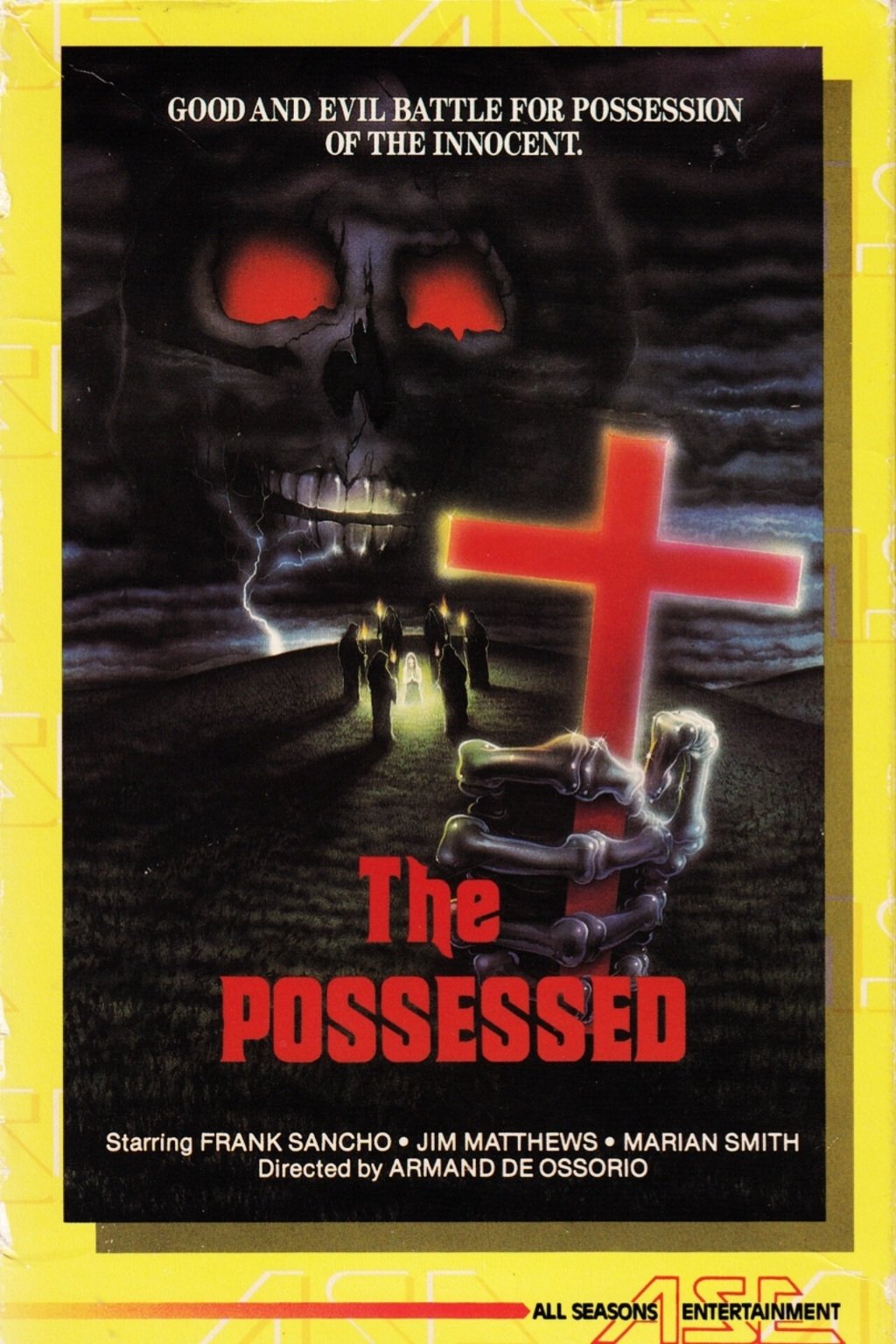
Outside Spain the film acquired an unusually complicated title history. La endemoniada remained its original title, while English-language circulation used both Demon Witch Child and The Possessed. Archival collections of horror advertising material preserve The Possessed as an alternate English title, while American home-video circulation helped keep both English names in use. Italy released the film as L'eretica, and other territories created titles emphasizing either exorcism or the demonic child.
This changing identity is typical of European exploitation cinema of the period, where distributors frequently retitled films to fit current commercial trends. In this case, the alternate names progressively foregrounded possession and exorcism even though the narrative itself remains strongly rooted in witchcraft. The different titles have continued to coexist, which explains why the same film can appear in modern databases and home-video discussions under several apparently unrelated names.
Place in Spanish Horror
The Possessed is not as central to de Ossorio’s reputation as the Blind Dead cycle, and the available historical documentation does not support treating it as if it were. Its importance is narrower but still useful for understanding the speed with which Spanish horror responded to international genre changes during the 1970s. De Ossorio could move from his own established supernatural mythology to a possession narrative while retaining the witchcraft, physical effects and exploitation directness associated with the domestic horror industry.
The film is also a particularly clear example of how The Exorcist generated adaptations rather than simple replicas. A possessed girl, a priest and recognisable images of exorcism provide the commercial connection, but de Ossorio builds them into a story of occult vengeance and spirit transfer. The result belongs simultaneously to the international possession cycle and to the Spanish Fantaterror tradition from which its director emerged.
Its continued circulation under titles such as Demon Witch Child, The Possessed and L'eretica, together with retrospective screenings in Spanish genre programmes, has kept the film accessible well beyond its original exploitation context. It remains a secondary work within de Ossorio’s filmography, but one that documents a specific moment when the imagery of demonic possession was being rapidly absorbed, altered and redistributed across European horror cinema.