House of 1000 Corpses (2003)

US
HORROR FILM
SUBGENRES HALLOWEEN
6.4/10 5 votes
Runtime
89 min
Release
April 11, 2003
Budget
$7,000,000
Revenue
$17,949,758
House of 1000 Corpses (2003) poster
Director
Writer
Plot

Two teenage couples traveling across the backwoods of Texas searching for urban legends of serial killers end up as prisoners of a bizarre and sadistic backwater family of serial killers.

Alternative Titles
1000 cuerpos (Argentina) Къщата на 1000-та трупа (Bulgaria) — Bulgarian A Casa dos 1000 Corpos (Brazil) — Portuguese La maison des 1000 morts (Canada) — French Maison des 1000 morts (Canada) — French Title 千尸屋 (China) — Chinese Dům tisíce mrtvol (Czechia) — Czech Haus der 1000 Leichen (Germany) — German
Show all 39 alternative titles Tuhande laiba maja (Estonia) — Estonian La casa de los 1000 cadáveres (Spain) — Spanish La Maison des 1000 morts (France) — French To spiti me ta 1.000 ptomata (Greece) — transliteration To spiti me ta hilia ptomata (Greece) — alternative transliteration Το σπίτι με τα χίλια πτώματα (Greece) — alternative spelling 千屍屋 (Hong Kong SAR China) — Chinese Ukleta kuća (Croatia) — Croatian Az 1000 halott háza (Hungary) — Hungarian בית 1000 הגופות (Israel) — Hebrew La casa dei 1000 corpi (Italy) — Italian マーダー・ライド・ショー (Japan) — Japanese 살인마 가족 (South Korea) — Korean Tūkstoš līķu māja (Latvia) — Latvian La casa de los 1000 cuerpos (Mexico) — Spanish La casa de los 1000 muertos (Mexico) — Home Video Title Dom 1000 Trupów (Poland) — Polish A Casa dos 1000 Cadáveres (Portugal) — Portuguese Casa celor o mie de cadavre (Romania) — Romanian Кућа хиљаду лешева (Serbia) — Serbian Dom 1000 trupov (Russia) Дом 1000 трупов (Russia) — Russian Huset av 1000 Lik (Sweden) — New Title อาถรรพ์วิหารผีนรก (Thailand) — Thai Cesetler Evi (Türkiye) — Turkish 猛鬼1000 (Taiwan) Будинок тисячі трупів (Ukraine) — Ukrainian American Nightmare (United States) — Working Title 1000 cuerpos (Uruguay) — DVD Title La noche de los 1000 cadaveres (Venezuela) — Poster Title Căn Nhà 1000 Xác Chết (Vietnam) — Vietnamese

Trailers & Videos

1 video

Film Guide & Analysis

Rob Zombie turns a roadside attraction into a feverish carnival of serial killers, corrupted Americana and 1970s exploitation horror.

House of 1000 Corpses (2003) begins as a road trip through the mythology of American murder and gradually becomes one of the attractions it initially treats as entertainment. Four young travelers stop at Captain Spaulding's gas station and Museum of Monsters and Madmen while collecting material about unusual roadside legends. Their interest in the local story of Dr. Satan leads them away from the highway and eventually into the home of the Firefly family, where the distinction between sideshow folklore, serial-killer history and actual violence disappears.

Rob Zombie's feature-directing debut is deliberately excessive. Saturated colors, distorted inserts, old television imagery, music-video editing, grotesque production design and practical gore compete for attention until the film itself resembles a haunted attraction assembled from decades of horror culture. That visual chaos reflects the circumstances of its creation: House of 1000 Corpses originated partly from Zombie's work with Universal Studios' Halloween Horror Nights, was filmed in 2000 and then spent years without a distributor after Universal declined to release it. When Lionsgate finally brought it to cinemas in 2003, the film already seemed like an artifact from a different moment in American horror.

From Haunted Attraction to Feature Film

The project's origins are unusually literal. Zombie was already working with Universal Studios Hollywood on Halloween Horror Nights when he developed the name House of 1000 Corpses for a haunted attraction. While he was at Universal, a studio executive asked whether he had any movie ideas. Zombie later recalled improvising a rough pitch on the spot, going home to write a short treatment and moving into production with remarkable speed. The concept therefore developed almost simultaneously as a possible physical attraction and as a feature film, which helps explain why Captain Spaulding's roadside museum and the later journey through the Firefly property are structured like increasingly dangerous themed environments.

Zombie entered production with extensive experience directing music videos but no feature films. He has described that background as both useful and limiting. Music videos had taught him how departments, cameras, sets and images worked, but his instinct was still to think rhythmically through music and visual impact, giving these priorities unusual prominence within the narrative. Looking back, he recognized this tendency clearly in House of 1000 Corpses and deliberately changed his approach when making The Devil's Rejects.

The film was shot in 2000, including substantial work on Universal's backlot, but the project continued evolving after principal photography. During the long period in which its release remained uncertain, Zombie created additional inserts and pickup material in locations far removed from the original production, including his own home and spaces available while he was touring as a musician. Bill Moseley later recalled that the "Run, rabbit, run" material involving Otis was one of these later additions. The result is a film whose fragmented visual style was partly planned and partly produced by an unusually prolonged post-production history.

Carnival Architecture & Visual Overload

Production designer Gregg Gibbs had previously worked with Zombie on music videos and approached the film's environments through densely accumulated visual detail. He later remembered filling the sets with objects, handmade masks, Halloween decorations, sculptures and paintings, sometimes using a large team of artists to create material that could not simply be taken from Universal's prop inventory. The Firefly house consequently looks less like a carefully decorated movie set than a structure whose inhabitants have spent years compulsively collecting and making disturbing objects.

Captain Spaulding's Museum of Monsters and Madmen establishes this principle before the protagonists ever meet the Firefly family. Murder and atrocity have already been converted into roadside entertainment through crude figures, theatrical narration and carnival presentation. The travelers initially approach serial-killer history as something amusing enough to photograph and document, only to discover that Spaulding's attraction functions as an entrance into a world where those stories are no longer safely contained behind glass.

Zombie's imagery becomes increasingly unstable once the characters reach the house. Conventional narrative photography is interrupted by oversaturated color, projected imagery, negative or degraded-looking inserts and footage that resembles corrupted television or home movies. He later acknowledged that his music-video experience encouraged him to think in precisely this kind of rhythmic combination of pictures and sound. The film consequently operates through sensory association as often as straightforward geography, especially as it descends from the already cluttered Firefly household into the subterranean domain associated with Dr. Satan.

That structure preserves the logic of the haunted attraction from which the idea emerged. Each stage promises something more extreme behind the next door: Spaulding leads to the murder ride, the murder ride leads to the legend of Dr. Satan, the legend leads to the Firefly house, and the house eventually opens into an underground environment that seems to belong to a different form of horror altogether. The apparent excess is therefore also architectural. The film keeps constructing another attraction underneath the one the audience thought it had already entered.

Captain Spaulding, Otis & the Firefly Family

Zombie built much of the cast around performers he specifically wanted. In his later recollections, he identified Sid Haig, Bill Moseley, Sheri Moon and Chris Hardwick among the people he had in mind while developing roles. Karen Black and Michael J. Pollard extended the film's connection to an older generation of American cult cinema, while then-less-established performers including Rainn Wilson and Walton Goggins entered through auditions. Zombie has said that Universal questioned some of these choices because he was deliberately avoiding the more conventional model-like casting common in contemporary youth horror.

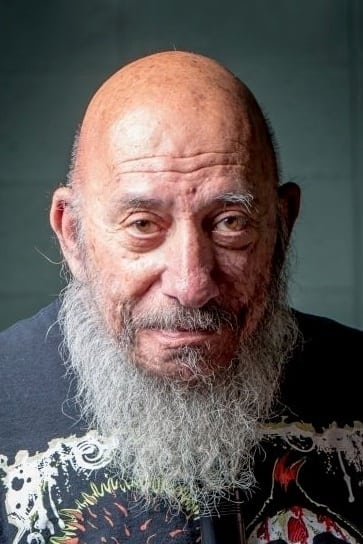
Captain Spaulding became the immediate demonstration that this approach worked. Zombie described his direction to Haig as essentially asking him to make Spaulding simultaneously repellent and likable. The character is vulgar, aggressive and openly dangerous, yet Haig performs him with comic timing and a kind of hostile hospitality that makes the gas-station scenes unusually charismatic. His importance would expand considerably in The Devil's Rejects, but even here Spaulding provides the film with one of its clearest identities despite appearing in relatively limited portions of the story.

Bill Moseley's Otis emerged less immediately. Moseley later said that he only completely understood the character during additional shooting after the main production, especially around the "Run, rabbit, run" sequence. Zombie had first encountered Moseley through his association with Chop-Top from The Texas Chainsaw Massacre 2, but Otis gradually became a separate creation: part family prophet, part sadist and part theatrical performer whose speeches convert murder into a form of private ceremony.

The family as a whole reflects the film's preference for grotesque individuality over realism. Baby's laughter and flirtation, Mother Firefly's theatrical sexuality, Tiny's enormous scarred body and Grandpa Hugo's vulgar comedy create a household in which every member seems to belong to a different sideshow act. This quality would be radically reduced in The Devil's Rejects, where Zombie deliberately remade the characters as more realistic criminals. House of 1000 Corpses preserves them at the earlier stage, when the Firefly family still seems capable of existing only inside its own carnival universe.

Practical Horror, Fishboy & Dr. Satan

The film's makeup and physical effects reinforce its preference for objects that can occupy the same space as the performers. Wayne Toth and other makeup-effects artists created mutilated bodies, corpses, facial appliances and the underground creatures surrounding Dr. Satan. The practical construction is especially effective because the sets are already crowded with mannequins, bones, masks and preserved objects, making it increasingly difficult to distinguish decoration from evidence of actual murder.

One of the film's most memorable images is Fishboy, the grotesque transformation of Bill Hudley. The finished sequence largely reveals the result while withholding much of the mutilation itself, but Zombie later acknowledged that more extensive material existed and that parts of the film were substantially more violent before the final R-rated cut. The grotesque joke is typical of House of 1000 Corpses: Otis converts a murdered victim into an exhibit, treating the body with the same perverse showmanship that Captain Spaulding applies to his museum.

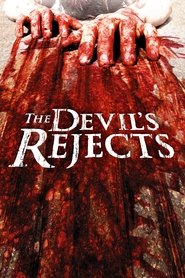
Dr. Satan pushes the movie furthest away from the relatively human horror of the Firefly family. The travelers initially hear of him as a local legend, but the final section enters an underground surgical nightmare populated by distorted bodies and machinery. The sequence makes literal the movie's progression from roadside folklore to impossible horror. Zombie would later remove Dr. Satan entirely from The Devil's Rejects after deciding that the character could not coexist with that sequel's more realistic aesthetic.

The physicality of the effects also prevents the movie's frantic editing from turning everything into abstraction. However aggressively Zombie manipulates color and rhythm, the bodies, masks and surgical apparatus remain tangible. House of 1000 Corpses may behave like a music video or nightmare collage, but its horror world is filled with handmade things. The combination of visual fragmentation and tactile production design became one of the most recognizable differences between Zombie's debut and the cleaner studio horror surrounding it.

Music, Television & Corrupted Americana

Music was never an afterthought for Zombie. He and Scott Humphrey are credited with the score, while the soundtrack moves between Zombie's own music, old popular recordings, country, rock and fragments of dialogue. Zombie described his ideal soundtrack album as an audio version of the film that recreated its atmosphere: hearing it should reconstruct the atmosphere and memories of specific scenes and evoke particular scenes through the track selection.

That philosophy suits a film constantly recycling American entertainment. Captain Spaulding sells murder as tourism; television screens and horror-host imagery interrupt the narrative; country and older popular music accompany images of degradation; and the Firefly family performs bizarre domestic entertainment for its captives. The soundtrack therefore participates in the film's larger transformation of familiar popular culture into something corrupted. Cheerful or nostalgic material becomes disturbing because of the images placed around it.

Zombie's own background also makes this mixture less surprising than it might appear in another filmmaker's debut. His stage shows, album artwork and music videos had long combined horror iconography, exploitation imagery, cartoons, monsters and fragments of popular culture. House of 1000 Corpses transfers that collage mentality into narrative cinema. The result can feel overloaded because almost every element is performing simultaneously, but that overload is also the film's most personal quality.

This relationship between image and music distinguishes House from the more restrained soundtrack strategy Zombie would later use in The Devil's Rejects. In the first film, sound belongs to the carnival itself. Dialogue samples, songs, score and television-like interruptions are mixed into a dense audiovisual environment whose primary purpose is not realism but immersion in the Firefly family's grotesque American nightmare.

Universal, MGM & the Fight for an R Rating

Universal initially financed and produced the film but became unwilling to distribute the finished project. Zombie later described the studio as increasingly concerned that the material might receive an NC-17 rating and would therefore be commercially difficult to release. The situation should not be simplified into a story in which Universal merely saw a completed film and "banned" it. The relationship deteriorated as the movie developed, and Zombie eventually obtained control of the rights and began searching for another distributor.

MGM then became involved and, according to Zombie, played an important role in helping him recut the film toward an R rating. He later said the movie went through at least five recuts. Some removals were rating-related, while others were made for pacing; Zombie specifically remembered cutting material involving the police officers because, however much he liked the scenes, delaying the arrival at the Firefly house weakened a movie whose title promised exactly that destination.

The MGM arrangement also collapsed. Zombie has said that an offhand television joke about MGM having "no morals" was reported publicly and led the company to sever the relationship. Whether or not that single incident was the only factor, the result was another period in which the finished film lacked a theatrical home. By this stage House of 1000 Corpses had been shot years earlier, and cast members later remembered wondering whether audiences would ever see it.

Lionsgate finally acquired the film and released the R-rated cut. The long distribution history is important because it shaped the movie itself. House of 1000 Corpses continued evolving between 2000 and 2003; editing, additional photography, rating negotiations and the search for a distributor continued to affect the form audiences eventually received. Zombie confirmed years later that much of the discarded material can no longer be located, making the long-discussed definitive extended cut unlikely ever to exist.

Release, Reception & Cult Legacy

Lionsgate released House of 1000 Corpses in the United States on April 11, 2003. It opened with $3.4 million from 595 theaters, later expanding to 847 theaters and reaching $12,634,962 domestically. Available international reporting brings the worldwide theatrical gross to $16,829,545 against a reported production budget of $7 million. Those numbers did not make it a major mainstream hit, but they were sufficient to establish that Zombie's long-delayed debut had a commercial audience.

Contemporary critical response was predominantly negative or mixed. Critics repeatedly identified the film's indebtedness to 1970s horror and its frantic accumulation of images as both its defining characteristic and principal weakness. The New York Times found its encyclopedic approach overcrowded, while genre press including Fangoria offered a more sympathetic response, viewing it as an energetic tribute to disreputable 1970s horror that delivered the experience its title and advertising promised.

The film's reputation diverged substantially from those initial notices. Zombie has said that the extent of the cult following became especially obvious to him through fans permanently tattooing characters and images from the movie onto themselves. Lionsgate later marked its twentieth anniversary with an expanded home-video edition, while Universal, the studio that had declined to distribute the film, eventually used House of 1000 Corpses repeatedly as the basis for Halloween Horror Nights attractions.

Its most important legacy, however, is the world it created. Captain Spaulding, Otis and Baby returned in The Devil's Rejects and again in 3 from Hell, but Zombie never again reproduced exactly the frantic aesthetic of his first feature. House of 1000 Corpses remains the Firefly saga before realism entered it: a handmade horror attraction where serial murder, roadside Americana, television, music, underground monsters and carnival grotesquerie are all packed into the same unstable space. Its imperfections are inseparable from its identity as the film in which Zombie learned feature filmmaking while constructing a world excessive enough to survive far beyond its troubled original release.

Connections

Cast

View Full Cast & Crew →

Release & Distribution

Distributors (1)

  • Starz Entertainment US

Release History (37)

Release DateTerritoryRelease TypeFormatDistributorCertificationNotes
2003-03-13 Argentina Premiere — — — Mar del Plata Film Festival
2003-03-21 Belgium Premiere — — 18 Brussels International Festival of Fantasy Films
2003-03-21 Russia Premiere — — — Moscow Film Festival
2003-04-11 Canada Limited Theatrical — — R
2003-04-11 Netherlands Premiere — — — Fantastic Film Festival
2003-04-11 United States Theatrical — — R
2003-05-15 France Premiere — — — Cannes Film Festival
2003-07-03 Russia Limited Theatrical — — 16+
2003-07-25 Australia Premiere — — — Melbourne International Film Festival
2003-08-12 Brazil Physical DVD — 18 DVD
2003-08-14 Germany Premiere — — — Hamburg Fantasy Filmfest
2003-09-23 Iceland Physical VHS — — VHS
2003-10-03 United Kingdom Theatrical — — 18
2003-10-08 Philippines Theatrical — — R-13 Manila
2003-10-10 Denmark Premiere — — — Midnight Movie Madness
2003-10-27 Ireland Premiere — — 18 Dublin Horrorthon Film Festival
2003-11-19 Philippines Theatrical — — R-13 Davao
2003-12-19 Spain Theatrical — — 18
2003-12-19 Sweden Theatrical — — 15
2003-12-21 Finland Limited Theatrical — — K-18
2004-01-09 Norway Premiere — — — Midnight Movie Madness
2004-01-23 Greece Theatrical — — —
2004-01-29 Germany Theatrical — — 18
2004-04-23 Finland Physical DVD — — DVD
2004-05-20 New Zealand Theatrical — — R18
2004-06-04 Austria Theatrical — — —
2004-06-25 Italy Theatrical — — 14+
2004-07-09 Mexico Theatrical — — C
2004-07-22 Argentina Theatrical — — +18
2004-08-14 Japan Theatrical — — R15+ Tokyo
2004-09-16 Chile Theatrical — — —
2004-09-30 Portugal Theatrical — — M/18
2004-10-08 Venezuela Theatrical — — —
2004-11-10 Hungary Physical VHS — — VHS
2006-07-12 France Physical DVD — — DVD
2006-10-27 Panama Theatrical — — —
2021-03-18 France Physical Blu-ray — — Bluray
You'll never get out alive.